← What A Day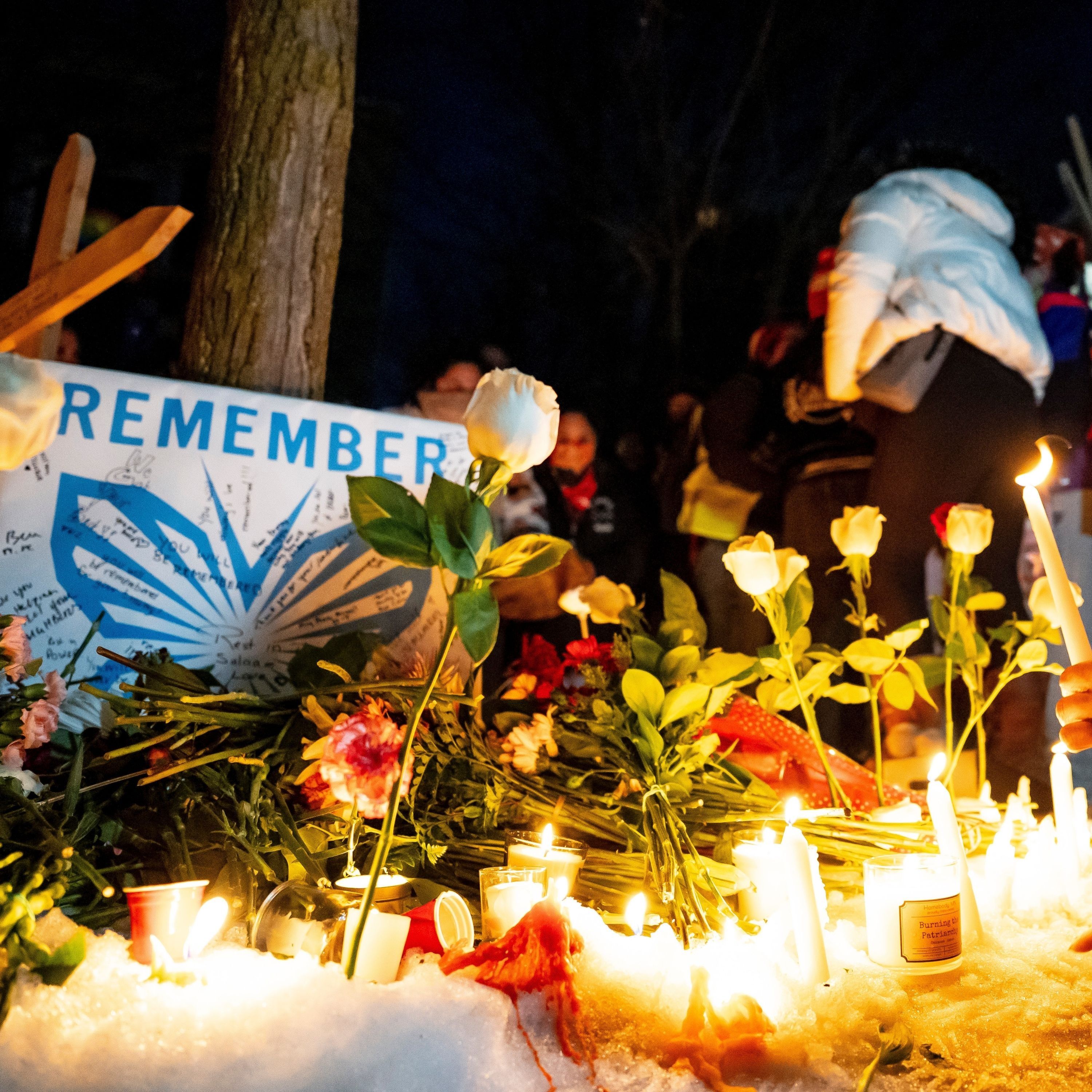
What A Day
The White House Blames Victim In Minnesota ICE Shooting
00:25:19
On Thursday, protestors continued to gather in Minnesota’s largest city to stand up to Immigration and Customs Enforcement after an officer fatally shot a woman on Wednesday. The victim’s name was Renee Good. She was a US citizen, a parent, and a recent transplant to Minnesota. She is being remembered as a deeply loving person – her mother telling The Minnesota Star Tribune she was “one of the kindest people I’ve ever known.” But none of that has mattered to the White House, which has been slandering her memory. To talk more about Minneapolis and the Administration’s disregard for Americans and American life, we spoke to Alex Wagner. She’s the host of Crooked Media’s podcast, Runaway Country. And in headlines, House lawmakers pass a bill to extend the enhanced Affordable Care Act subsidies that expired at the end of the year, New York City takes baby-steps toward universal child care, and President Trump reportedly wants to bribe every citizen of Greenland with greenbacks.
Loading summary
Transcript57 lines
- [00:00]
A
Foreign January 9th. I'm Jane Coastin, and this is what a day. The show that is thrilled to learn that President Donald Trump's ballroom will be just as tall as the White House. Thrilled, jazzed, enthused, invigorated. Just so happy. Can't wait to tell my family. On today's show, President Trump reportedly wants to bribe every citizen of Greenland with greenbacks. That's right, cash, money. And back in the U.S. new York City is taking baby steps towards universal childcare. But let's start with Minneapolis. On Thursday, protesters continued to gather in Minnesota's largest city to stand up to Immigration and Customs Enforcement after an officer fatally shot a woman on Wednesday. Here are protesters offering immigration officers some helpful advice.
- [00:57]
B
Quit your job.
- [00:58]
A
Quit your job. Quit your job. The victim's name was Renee Goode. She was a US Citizen, a parent in a recent transplant to Minnesota. She is being remembered as a deeply loving person. Her mother telling the Minnesota Star Tribune she was, quote, one of the kindest people I've ever known. But none of that has mattered to the White House, which has been slandering her memory. Department of Homeland Security Secretary Kristi Noem said on Wednesday that Good's actions constituted, quote, an act of domestic terrorism. And on Thursday, Vice President Jody Vance defended the shooting during a press briefing, blaming the media and a, quote, lunatic fringe for demonizing law enforcement officers. He alleged that a shadowy leftist network was somehow responsible for an ICE officer shooting a mom at point blank range while she sat in a Honda Pilot full of stuffed animals.
- [01:44]
B
There's an entire network, and frankly, some of the media are participating in it, that is trying to incite violence against our law enforcement officers. It's ridiculous, it's preposterous. And part of our investigatory work is getting to the bottom of it. Who's funding it, who's supporting it, who's cheerleading it, and of course, if there's illegal activity related to that, we're gonna get to the bottom of that and prosecute it where we can.
- [02:06]
A
Gross. President Trump said both on Truth Social and to the New York Times that Good had run over an ICE officer with her car. Then he watched the video of the incident with reporters from the Times, which showed she did not, in fact, run over anyone and said, and I quote, I, the way I look at it, the administration doesn't seem interested in avoiding any future violence either. According to local officials, two more people were shot by federal agents in Portland, Oregon on Thursday afternoon, this time reportedly by Customs and Border Protection agents. So to talk more about Minneapolis and the administration's disregard for Americans and American life. I spoke to Alex Wagner. She's the host of Crooked Media's podcast, Runaway Country. Alex Wagner, welcome back to what a day.
- [02:49]
C
I mean, and in person. And in person, why us this day, but what a day it is.
- [02:54]
A
What a day. Let's start with Minneapolis. Yeah. Vice President J.D. vance gave a press conference on Thursday morning that was supposed to be about announcing a new Assistant Attorney General position focused on fraud. During that press conference, he slandered the victim of a shooting by an ICE officer in Minneapolis as a, quote, victim of left wing ideology and said the victim was part of a, quote, broader left wing network to attack, to dox, to assault, and to make it impossible for ICE officers to do their job. What was your take?
- [03:26]
C
I think, and I'm with Adam Serwer from the Atlantic on this, the administration's ability to do even sort of the basic function, the do no harm response is not even in their role.
- [03:40]
A
No, there's no, like, you know, this is a tragedy. Let's wait for more information. Exactly. It's like they immediately got to, we gotta make content for the worst right wing people on the Internet.
- [03:49]
C
Well, we need to smear the memory of the person who died here because we know we might have done something wrong unless we be held in any way accountable. Let's make it so that her death is a thing to celebrate. And the only way they can do that is by suggesting she's a nefarious actor. I mean, you know, you're on the wrong side of things. When Tom Homan, the border czar, is the one speaking in semi measured tone saying, let's see what the results of the investigation turn up. But it's part of a pattern of, you know, dehumanizing and directly suggesting that those who are of opposing ideologies in this country are worthy of not only punishment, but now death.
- [04:24]
A
My question for you, because so much of your work, and we'll talk about it in a little bit, is about talking to everyday people who are not super online and who are not super polarized people who are everyday Americans and everyday folks around the world. Do you think that this propaganda is very effective? Like the administration being like, actually ICE is amazing and this woman deserved to die. Like, it didn't work on me, but I'm curious as to whether it's working on anyone.
- [04:48]
C
I'm gonna put it on my crazy cynic hat. And I think this is different because it involves a white woman. And I think Americans have become very numb to the Plight of brow and black Americans, especially in the context of shootings by law enforcement. Right. But I think that this is different because it's a white woman who's a mom in a Honda in Minneapolis. And as much as we like to pretend that all unlawful deaths, unwarranted deaths, are cause for concern, that's just not true in this country. We excuse or look the other way when it's people who don't look like us or don't have the same backgrounds as us, the same socioeconomic status. And the fact that this is a woman who is every woman, every. Every woman that knows a white woman, everyone drives a Honda and touches on, quote, unquote, more universally, American identification, at least in the eyes of the Trump administration. That's why I think this resonates, right, that this is happening in Minnesota, which has a very large Somali population and is racially diverse, but I think is thought of as a, you know, sort of white suburban state where nothing ever goes wrong. Well, with the exception of some very bad racist violence. And also, look, I do think it supercharges interests when you have video, and the video, I don't know. I've watched it many times from different. Different angles. This woman isn't trying to run over an ICE agent.
- [06:07]
A
Right.
- [06:08]
C
And I think that because it's gone viral and because there is visual evidence to support the appalling crime, therefore, it raises indignation to a different level than usual.
- [06:18]
A
What do you think the events in Minneapolis can tell us about how this administration perceives blue states more broadly? It seems to me that the Trump White House thinks of blue states as less American and just more broadly criminal and undeserving. Kind of like, you know, as satellite states they need to bring under control. Yeah.
- [06:36]
C
I mean, I think you can just scratch the. It seems to me, I think they do not believe that people that live in blue states hold, quote, unquote, American values. It's not a mystery right there. This administration is acting explicitly to create almost a caste system where blue states and blue residents are less than red states and in this instance, suggest not that subtly that they're deserving of death.
- [07:00]
A
You know, to that point, Jesse Watters basically said that she had pronouns in her bio online and that she was gay. Exactly. And which just, like, ipso facto deserves to die.
- [07:10]
C
Exactly. I mean, and we. You know, honestly, in my most charitable moments, I think, okay, I'm gonna accept the fact that the right wing is largely calling for the extermination of the opposition and try and think ahead to the moment when they lose power and what is incumbent upon progressives, Democrats, and who like democracy, what they do. Because the desire for retribution is going to be so pointed after three more years of this. Like, this is unconscionable behavior. This is decidedly un American behavior.
- [07:42]
A
What you're seeing from this, it also, it seems to be coming from people who firmly believe that they will never lose another election ever again. And that, like, it's interesting to me. I mean, I think that this is a more broad thought and we can get into it, because I want to talk to you a little bit about Trump's foreign policy adventures. So much of this seems to be occurring in a way in which you just assume that elections will never take place again and elections don't matter and everyone's already super into you, but also, you're a besieged minority, which I'm like, these are all very difficult thoughts to hold in your head at once. But, dang it, the Trump administration can do it.
- [08:12]
C
Yeah, totally. I mean, I was talking about this with Ben Rhodes for my podcast this week, and I don't think we should wave away this notion that they have a hard time imagining they won't be in power, because I think it might also be a tell. Do they intend on giving up power? I mean, this is the behavior of people who embrace autocracy and fascism and dictatorship. They've done it on many levels, and they are in some ways telegraphing, we're not gonna lose power because we're not gonna give up power. And that is my great fear. Right. Like, they've already suggested they're gonna try and steal the 2026. They've tried to use the levers of government and the powers that they do rightfully have to try and sort of legitimately steal the 2026 election. God knows what's gonna happen in 2028. You know, I greatly worry about a party that. And a leader that acts with so much impunity, not because he's a lame duck, but because he believes he is impermeable and that his party is. Because it suggests to me that they no longer believe in representative democracy.
- [09:13]
A
I mean, to that point, Donald Trump told the New York Times Thursday that his power was restrained only by, quote, my own morality, which does not sound good, knowing literally anything about anything or about Donald Trump.
- [09:26]
C
But does Donald Trump even have morality? I sort of wonder about that as well.
- [09:30]
A
I'm very curious about this, but it's interesting also. Again, I'm so interested because so much of your show is about Talking to everyday people about the events that have shape our lives. The people who are kind of left in the middle and kind of left as the. In some ways, I think in so many of our media, the flotsam and jetsam of the decisions that get made by really powerful people.
- [09:50]
C
Yeah. And the people who are at the center of the stories that we're covering.
- [09:53]
A
Yes, exactly. And so the people, you know, I just keep thinking about the people who keep being like cheerleading for war in Venezuela and I'm like, you're not gonna have to go and your kids aren't gonna have to go. Yeah. And so I'm curious from you about Trump's foreign policy goals. What are they? And how much do you think he's considering what everyday Americans want in the process? Like. Cuz it just seems like he doesn't care at all.
- [10:15]
C
Okay. So this week on Runaway country, my podcast, I talked to two Venezuelans to get their thoughts about this. And what was so interesting to me about one of them who's here in the United States with papers is she said, I'm really overjoyed about what happened. I think you guys in the US don't understand the crushing brutality of Maduro and the degree to which we don't give a shit if it's US imperialism. We need help.
- [10:38]
A
Right.
- [10:38]
C
This country is broken. And that desperation, I think, shouldn't be overlooked. Right. Like they. Obviously this person isn't speaking for all Venezuelans, but they have hit such rock bottom that I guess Viceroy Rubio seems like maybe not the worst outcome in the world.
- [10:53]
A
Right.
- [10:54]
C
Having said that, the plans that were released by the White House this week to effectively occupy Venezuela and steal their oil at gunpoint like that, while also.
- [11:02]
A
Keeping the same people in charge. You've roving gangs of militias stealing people's phones to see if they've posted anything anti Maduro.
- [11:10]
C
And I'm like, or anti US could be colectivos who were a hallmark of the Chavez government and also of the Maduro government. I mean, still fucking Orwell down there.
- [11:18]
A
Yeah, it is, right?
- [11:18]
C
Delsey Rodriguez, who has been named the Vice president, who was the stooge of Maduro, is now running the country, presumably, in the words of this administration, because she can like keep the peace. But there are so many huge questions about the stabilization of that country, whether we're going to need to bring in US military to keep the peace, what it actually means for the US to be in that country, given how anti American the position of the military is at this state. You know, like, and the oil. Like, oil's at $60 a barrel, Jane. Like, there's nobody. The oil companies don't want to flood the market with oil. It's going to take years to get the infrastructure. Infrastructure back up and running. Jon Favreau thinks this is a jobs creation program for Americans who may be put out of work due to AI in five years. But the reality is, I don't think there's any political upside to this, aside from the sort of jingoistic imagery that the Trump administration is going to pump out with Hegseth and, you know, whatever special ops forces taking a leader and throwing him in a tracksuit and onto court. But how long does that last?
- [12:16]
A
Right. It also seems like there has been so little effort put into this. Like. Well, yes, I'll say this. Like, in 2002, there was some work being done. There were some. There were press conferences. You had Colin Powell going out. Like, Colin Powell holding violence for going to Congress. They were putting in work.
- [12:32]
C
They did.
- [12:33]
A
Your show, to your point, is all about talking about the people at the center of our politics who often are not heard from. Right now I feel deranged. I am furious. I am depressed, and I am so irritated that there are so many people in, like, especially in our media circles who I feel as if aren't taking this seriously enough or are thinking of it in terms of horse race politics.
- [13:01]
C
Yeah.
- [13:02]
A
And it makes me feel insane. So what is bringing you hope right now?
- [13:08]
C
Listen, I think the media's done a terrible job of covering the real grassroots resistance there is to this administration. I think the no Kings protest was a big fucking deal that got not nearly enough coverage in. Not just because the media's lazy and not just because it's overwhelmed by, you know, the sins of the Trump administration. But also it's a sort of a headless movement that is not asking for a specific thing, which I don't take issue with. It's just, I think, harder for the media to ascribe the power that that movement has when the demand is not so extreme.
- [13:36]
A
I also think that the media does this thing where they basically are like, well, most people who I hang out in my actual life agree with this, agree with no Kings. So we cannot cover no Kings because we already know too much about there are no Kings. Yes. But I think that there's a real sense for people. I mean, that's why you got that, like, Trump voters in diners situation, where you have Republicans and Trump viewed as, like, you know, some sort of weird weather phenomenon. And not as an entity that will face repercussions and there could then could be creating a backlash. But I'm just thinking about like there is a real opposition to everything that's going on. And you're seeing it in Minneapolis, you've been seeing in Chicago, you've been seeing.
- [14:14]
C
It all over the place and largely, let's just say, citizen led. And I think that 2026 is gonna be a really interesting and important year for people who, you know, stand in opposition to Trump and his values. Because I do think Democrats are gonna take back the House. And, you know, I'm not sure about I think you're gonna have just more infrastructure of resistance from the top levels of government, which I think will help a moment where you have like a kind of big faceless citizen led movement that doesn't have the sort of tip of the spear action in Washington. And so, I mean, I don't know, is this hope? I guess this is my version of hope for you, Jane.
- [14:51]
A
Alex, as always, thank you so much for joining me.
- [14:54]
C
Thank you for having me, my friend.
- [14:56]
A
That was my conversation with Alex Wagner, host of the crooked media podcast Runaway Country. We'll get to more of the news in a moment, but if you like the show, make sure to subscribe, leave a five star review on Apple Podcasts, watch us on YouTube and share with your friends. More to come after some ads. What a day is brought to you by Quints. Starting the year with a wardrobe refresh, Quince has you covered with luxe essentials that feel effortless and look polished. They're perfect for layering, mixing and building a wardrobe that lasts. Their versatile styles make it easy to reach for them day after day. Like the sweater I'm wearing right now, Quince has all the staples covered from soft Mongolian cashmere sweaters that feel like designer pieces without the markup to 100% silk tops and skirts for easy dressing up to perfectly cut denim for everyday wear. The wardrobe essentials are crafted to last season after season. And like everything from Quint's, each piece is made with premium materials in ethical trusted factories, then priced far below what other luxury brands charge. Some of my favorite Christmas gifts this year were these amazing cashmere sweaters from Quint's that feel so soft I could sleep in them, but they definitely stand out in a crowd. Refresh your wardrobe with Quince. Don't wait. Go to quince.com wad for free shipping on your order and 365 day returns now available in Canada too. That's Q U-I-N-E.com wad to get free shipping and 365 day returns. Quince.com wad whataday is brought to you by Rocket Money how many subscriptions to streaming services do you have and how many of those are you accidentally paying for? Twice, thanks to Rocket Money. The answer for me is zero. Rocket Money is a personal finance app that helps find and cancel your unwanted subscriptions, monitors your spending and helps lower your bills so you can grow your savings. You can set budgets and goals, get personalized insights and regular reports, and receive real time alerts for large transactions, upcoming bills, refunds and low balances. And the app consolidates checking, savings, loans and investments into a single dashboard to give users a clear view of their financial picture. Rocket Money also gives you automated savings that grow towards goals with adjustable amounts and frequency. With a set it and forget it approach, let Rocket Money help you reach your financial goals faster. Join@RocketMoney.com whataday that's RocketMoney.com whataday RocketMoney.com whataday Today's test can help shape tomorrow's health decisions with LabCorp On Demand's suite of lab tests, you can measure everything from hormone levels to nutritional health and track your progress over time. Act now and save up to 25% on select tests. Just visit ondemand.labcorp.com sail to get started, Go test yourself. Here's what else we're following today.
- [17:43]
C
Head of Lines on this vote, the yeas are 230.
- [17:50]
A
The nays are 196.
- [17:52]
C
The bill is passed, and without objection.
- [17:54]
A
The motion to reconsider is laid on the table. In a rare bipartisan moment, House lawmakers passed a bill Thursday that would extend the lapsed enhanced Affordable Care act subsidies that expired late last year. Remember those? They made health insurance more affordable for millions of Americans. They also were the central sticking point for Democrats during the longest government shutdown in US History. A handful of Republicans joined Democrats to force the issue over GOP leadership's objections. The 230 to 196 vote came after lawmakers used a discharge petition, a legislative tool that allows members to bypass Speaker Mike Johnson, putting on display his weak winning grip on his caucus. The bill now moves to the Senate, where senators are also feeling the heat to reach a bipartisan compromise on enhanced subsidies. I guess as higher healthcare costs loom for millions, some Republicans, many facing tough midterms, suddenly found bipartisan cooperation more appealing. It's almost like they could have realized this before shutting down the government and wasting billions of dollars for 43 days straight. In a second showing of bipartisanship Thursday, the Senate took the rare step of telling President Trump to cool it. Lawmakers advanced a War powers Resolution that would limit his ability to carry out future military attacks against Venezuela. But there's a big old but the measure would still need approval from the House, where a similar effort nearly failed last month. And you can almost hear Trump warming up his veto pen. So if it's dead on arrival, why does it matter? It matters because five Senate Republicans joined Democrats in passing the resolution, meaning five Republicans didn't fall into lockstep. California Democratic Representative Adam Schiff shared his reaction with what a day's Matt Berg.
- [19:39]
B
If the administration believes that we should risk the lives of American service members in order to secure the oil resources of another country, let them make that case. But I think we're seeing increasing Republican uncertainty and concern over these uses of the military by the Trump administration around the world and the danger of getting bogged down in Venezuela.
- [20:04]
A
Dare to dream, Representative President Trump hailed the vote as a moment of bipartisanship. I'm joking, of course, he ranted about Senate Republicans on Truth Social, saying, quote, Susan Collins, Lisa Murkowski, Rand Paul, Josh Hawley and Todd Young should never be elected to office again cece the Democratic Party. So Republicans didn't exactly stage a mutiny against the captain, but a few sailors did politely slip their concerns into the ship's suggestion box.
- [20:33]
C
This is the day that everything changes. I am so proud to be here at the Flatbush Yes. To declare that New York State is open for families.
- [20:56]
A
New York Democratic Governor Kathy Hochul and New York City Democratic Mayor Zoram Hamdani expressed their commitment to universal childcare at a press briefing Thursday. The pair announced a plan to provide parents in New York City access to free childcare for two year olds. Hochul also debuted a wider proposal to expand statewide access to childcare in the coming years. Mamdani, whose campaign focused on affordability, told Crooked Media's Pod Save America that New York is investing over $1 billion to help families with childcare.
- [21:23]
B
And what that means in a tangible level is that we're going to be fixing 3K here in New York City and delivering universal 2 care for every single 2 year old across the city in the next four years. And this is something that will transform the ability for working families to actually raise their kids here because it's a city where up until today, childcare has cost an average of $22,500 a year.
- [21:45]
A
Officials said the proposal would first focus on high need areas in the city before gradually expanding. Mamdani told reporters he expects the program to cover around 2,000 kids this fall. Donald Trump famously tried to buy Greenland in 2019. That failed. Now he may be trying to buy its people instead. Four sources told Reuters that U.S. officials have weighed offering cash payments to green lenders to massage them toward seceding from Denmark and potentially joining the US While the exact details are unclear, internal discussions reportedly have included payments spanning from $10,000 to $100,000 per person. This as leaders in Denmark and Greenland insist it's not for sale. How the payments would work and what Greenlanders would be expected to give up in return is still very much an open question. But Trump's strategy to acquire Greenland with that sweet, sweet cheddar offers a glimpse into how the US could try to buy the island of just 57,000 people. $6 billion. That's how much it would cost if Trump doled out $100,000 to every citizen of Greenland. So much for investing in the land of red, white and blue. Secretary of State Marco Rubio has plans to meet with Danish officials next week to discuss options. So to our listeners in Greenland, if you get a 3am text from Trump asking, what's your Venmo? Now you know why. And that's the news. Before we go. The first Polar coaster episode of 2026 is out. Now Dan breaks down the latest polls and public reaction to the week's biggest stories. They include the US Military operation in Venezuela that captured Nicolas Maduro and Tim Waltz's decision to exit the Minnesota governor's race on Venezuela. New polls from the Washington Post and Reuters show most Americans aren't interested in another overseas military engagement. Dan digs into what that reaction tells us and what it means politically. Then he answers great questions from friends of the POD subscribers, including how Democrats should respond. To hear the full conversation or to ask Dan a question yourself, subscribe to friendsofthepod.com friends, that's all for today. If you like the show, make sure you subscribe. Leave a review Contemplate how in a conversation with the New York Times, President Trump referred to Secretary of State Marco Rubio and Vice President J.D. vance as kids and they were wearing shoes he had bought them. And tell your friends to listen. And if you're into reading and not just about how Rubio is 54 years old and Vance is 41 years old. But remember, men are children forever, while women become adults when they're 10, like me, what a day is also a nightly newsletter. Check it out and subscribe@cricut.com subscribe I'm Jane Coston. And side note, if my boss bought me an adult shoes, I would need to be put into a torture device before I'd admit that fact in public. What a Day is a production of Crooked Media. It's recorded and mixed by Desmond Taylor. Our associate producers are Emily Foer and Chris Allport. Our producer is Kaitlyn Plummer. Our video editor is Joseph Tutra. Our video producer is Johanna Case. We had production help today from Ethan Oberman, Greg Walters and Matt Burke. Our senior producer is Erica Morrison and our senior Vice President of news and Politics is Adrienne Hill. Our theme music is by Kyle Murdoch and Jordan Cantor. We had help today from the Associated Press. Our production staff is proudly unionized with the Writers Guild of America East.
- [25:40]
B
Now is your time to get into a new Dr. Horton home by taking advantage of its national Red Tag sales event going on right now through January 25th. Stop by any of its participating communities and find select red tag homes at incredible pricing. So whether you're buying your first home or looking for an upgrade, you don't want to miss the red tag sales event going on right now. Discover the Dr. Horton difference. Tap your screen now or visit Dr. Horton.com Dr. Horton America's builder and equal Housing Opportunity Builder.
- [26:10]
A
Today's tests can help shape tomorrow's health decisions with LabCorp On Demand's suite of lab tests and you can measure everything from hormone levels to nutritional health and track your progress over time. Act now and save up to 25% on select tests. Just visit ondemand.labcorp.com sail to get started, go test yourself.