Loading summary
Transcript63 lines
- [00:00]
Roger Karma
Foreign.
- [00:05]
Jane Coston
March 11th. I'm Jane Coston, and this is what a day. The show that says U.S. special envoy Steve Witkoff should start working on some new explanations for why we're in Iran because this answer to CNBC's Sarah Eisen on Tuesday is not going to cut it on Iran.
- [00:21]
Sarah Eisen
What do you say, people, to Steve, Americans who, you know, are struggling, they're worried about higher gas prices, higher grocery prices, health insurance, you know, making ends meet, you know, don't want foreign wars, certainly ones that don't, don't have end dates and that risk American lives. What do you say to them about why this is so critical for the US to be doing what it is doing in Iran right now? How do you persuade them?
- [00:51]
Roger Karma
I say to them, Sarah, that if
- [00:54]
Chris Coons
they have children, think about what this
- [00:57]
Roger Karma
world would look like if you didn't have Donald Trump as the president.
- [01:00]
Jane Coston
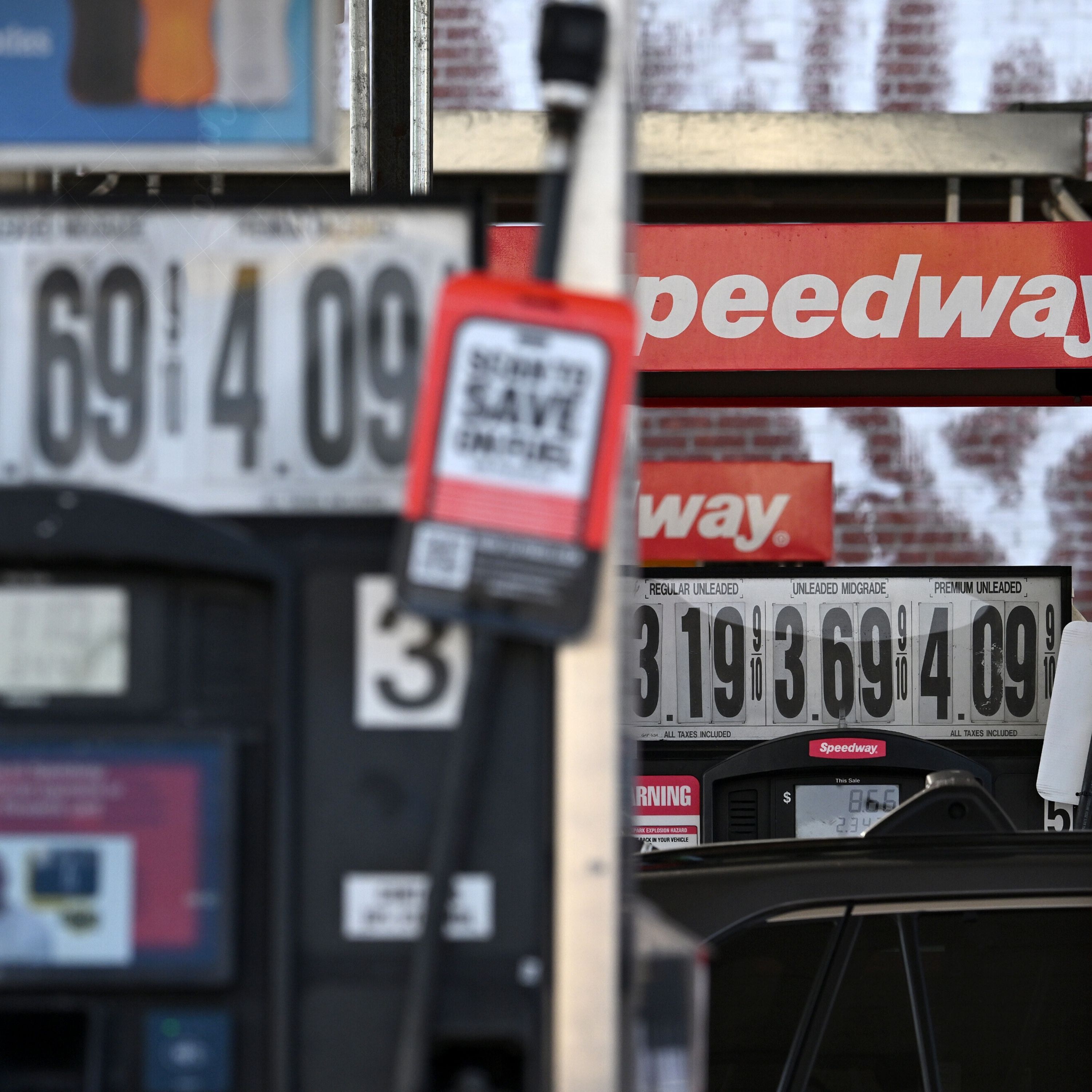
I think about that every single day, Steve, every single day. On today's show, one report says at least 20 countries are now militarily involved in the Iran war and buckle up because we're headed back to the future. Flying cars are actually maybe really happening. But let's start with the economy. In case you haven't noticed, the American economy is not doing so great right now for a lot of reasons. First, there's oil prices, which have been on an absolute rollercoaster since the war began. About 30% of the world's oil comes through Iran's Strait of Hormuz. But the war has essentially brought that to a halt, pushing oil prices and gas prices to their highest levels in years. But according to White House Press Secretary Caroline Levitt during Tuesday's briefing, we all shouldn't worry.
- [01:53]
Sarah Eisen
Once the national security objectives of Operation Epic Fury are fully achieved, Americans will see oil and gas prices drop rapidly, potentially even lower than they were prior to the start of the operation.
- [02:07]
Jane Coston
As we mentioned on the show Monday, this is not the first time a Trump official has predicted oil prices will drop soon, using only vibes. But the problems facing the economy are way bigger than the cost of oil. On Friday, the Bureau of Labor Statistics reported that the economy lost nearly 100,000 jobs in February, pushing the unemployment rate up to 4.4%. Even Labor Secretary and allegedly terrible boss Laurie Chavez Darimer couldn't sugarcoat things to Stuart Varney on Fox Business Friday. Madam Secretary, 92,000 jobs out in February.
- [02:42]
Roger Karma
Fewer jobs in health care, fewer jobs for information services because of AI.
- [02:46]
Jane Coston
The weather hurt things.
- [02:48]
Chris Coons
Government employment down. If you add it all up, it doesn't look good.
- [02:52]
Roger Karma
For the Trump economy.
- [02:55]
Sarah Eisen
Yeah, I couldn't agree with you. I think we have to address the fact that this is not a good report in its raw numbers, but we have to also talk about why this possibly has happened, this snapshot in time.
- [03:08]
Jane Coston
Yes, I would love to know why this is happening. What exactly is going wrong with the economy besides everything? And what can we learn from past economic crises to hopefully avoid another one? To find out, I spoke to Roger Karma. He's a staff writer at the Atlantic and author of the Economy Focused newsletter, work in progress. Roger, welcome to Water Day.
- [03:28]
Roger Karma
Thanks so much for having me, Jane. It's great to be here.
- [03:30]
Jane Coston
Last week, the Labor Department delivered some not good news. Its latest employment report shows that the US lost 92,000 jobs in February. Was this drop expected?
- [03:41]
Roger Karma
It wasn't, Jane. There was a pretty strong jobs report in January that the Trump administration folks were touting. February was supposed to be another strong month. This sort of narrative coming from the White House was that, you know, 2025 is behind us, but 2026 is going to be a strong year. And instead, what we saw was, to your point, a loss of 92,000 jobs, the unemployment rate rising to 4.4%. And perhaps even more worrying, there was a round of revisions that came with this jobs report that showed the January number was actually not as strong as we thought. And actually, in December, which originally had looked positive, there actually was a net loss of jobs, which made 20 the year with the highest number of months of negative job growth since 2010, the depths of the Great Recession. Not good numbers if you're the Trump administration or really anyone in America.
- [04:34]
Jane Coston
No, I was jobbing in 2010. It was terrible.
- [04:38]
Roger Karma
2010 was the era of the PhDs working at Starbucks.
- [04:41]
Jane Coston
Yes, exactly. But why is this happening now? Like, obviously, there's a lot going on with the economy. There's inflation left over from the pandemic, the slate of tariffs, and now rising oil prices with the war in Iran. But I'm sure even that just covers one small slice of what's going on.
- [04:59]
Roger Karma
So the first answer to that question is it's not just now. Right. We're only getting these revisions now. But actually, Jane, Even of the 180,000 jobs that were added last year, 90% of them were added in the first three months of the year. And that should tell you something. In the fourth month of the year is when Trump announced his Liberation Day tariffs. So basically, even of the jobs that were added last year, which, again, were one tenth of the jobs that were added the year before, 90% of them were before Trump's announcement of his Liberation Day tariffs. A lot of economists were warning at the time of these liberation tariffs, this is going to create a huge recession. This is going to maybe even create a financial crisis. We're going to get stagflation. And then months and months went by and the numbers all looked just fine. It wasn't the kind of immediate crisis that people were predicting, but I think maybe what we're seeing now is that an immediate crisis, an economic heart attack, was the wrong way to think about the tariffs. Quite possibly a better way to think of them was more like a chronic disease. The effects didn't happen overnight, but they had these really debilitating impacts that have kind of slowly happened over time. And I think what we're seeing now is they get bigger and bigger and bigger and compound. And then when you're staring down a once in 50 year potential oil crisis, that can be the mass that lights the tinderbox, so to speak.
- [06:27]
Jane Coston
Of course, the economy is not just the job market and it's not just tariffs. What are all of the different factors affecting our economy right now and how are they affecting one another?
- [06:37]
Roger Karma
I think there's a few things that are happening. One is obviously the tariffs, which I think just have caused a huge amount of economic uncertainty. But I think those tariffs were entering into an environment of existing uncertainty. I had a piece that I wrote a little over a year ago. It was before Trump actually took office, and it was called the Job Market is Frozen. And the premise of the piece was that even though at that point the unemployment rate looked really good, it was about around 4% that the hiring rate had fallen to its lowest levels since around 2013, again around the levels of the Great Recession. And this was a mystery to me. Right. When unemployment's low, usually this means it's a robust, flourishing job market. People are getting hired. So what was happening, and what I heard time and time again was that the economy and the labor market in particular has just been pummeled with one event after another that has caused an extreme amount of uncertainty. You had this huge post pandemic hiring spree. You remember this? I'm sure the great resignation workers were leaving their jobs left and right.
- [07:45]
Jane Coston
Yeah, I was thinking about, like, remember when people are quiet quitting, like everybody's working nine jobs, something like that. And now it's like at the exact opposite.
- [07:52]
Roger Karma
Yes. Employers, I think, had a lot of scarring from that period. They were worried about the great resignation and what had happened and so they were less willing to hire and they were less willing to fire because they were. They were worried about the sort of tumult that that could create. There was also at that time, a lot of political uncertainty. But the motto among businesses was thrive in 2025. Like, by the time 2025 comes, the uncertainty will have been lifted. Everything will go back to normal. And then in 2025, we got a lot more uncertainty. We had one of the biggest, you know, deportation campaigns in history of undocumented workers. We had the tariffs come in. And then also now combined with a series of other shocks, right. When we go to war in the Middle east, that then sends energy prices spiking, but it also hurts consumer demand, it raises inflation. There's just a lot of uncertainty coming from a lot of different places. And when businesses face uncertainty, they hire less, they tend to invest less. And that ends up being really paralyzing, I think, for the broader economy.
- [08:57]
Jane Coston
Does this moment remind you of any specific moments from the past? And is there anything we can learn from then that we could look to now?
- [09:04]
Roger Karma
I think it does, Jane. Back in, say, 2022, 2023, there were a lot of analogies being made to the 1970s that didn't quite hold up. I think now the analogy might hold up a lot better. So what happened in the 1970s was we had an economy heading into that decade that looked kind of similar to the one we're seeing now. Economic growth was slowing. Jobs weren't being added as quickly as they were a few years ago. Inflation was being stubborn. And even though it had come down from previous years, it was much higher than the Fed was comfortable with. But all of that was sort of fine. Right. The economy was muddling through. Things weren't great, but they weren't terrible either. And then in 1973, you had the Arab oil embargo. You have all of a sudden a cutting off of supply that sends prices tripling or quadrupling. In some instances, people are paying double the rate that they were paying a year or two ago. And when the price of oil spikes, that feeds through to so much else in the economy. Because we use oil in agriculture for things like fertilizer, we use it in manufacturing for things like chemicals and plastics. It's the entire transportation sector runs on oil. It's not just prices at the P. And so you have the combination of higher inflation at the same time, people are pulling back. And that creates a recessionary dynamic. And that's what leads to what economists now refer to as stagflation this nightmarish combination of rising prices and recessionary conditions, and the fact that we have everything that we've talked about here, Jane, slowing economic growth, a weakening labor market, still too high inflation. And now we have on the horizon, right, news of oil going above $100 a barrel for the first time in four years, with analysts telling me that if the Strait of Hormuz remains closed, we can end up with 200, maybe $300 barrels of oil. When you're staring down that kind of crisis, all of a sudden the 1970s analogies start biting again.
- [11:11]
Jane Coston
Now, here's what concerns me about that, besides everything you just said, other than
- [11:16]
Roger Karma
all those little things.
- [11:17]
Jane Coston
All those things. So the problem we have is that the financial crisis of the late 1970s did not lift with the end of the oil embargo. It did not lift with the election of Ronald Reagan. And actually, like 1981 to 1983, America's economy was shit. How did the US get out of that economic situation? And what can we learn to do better this time?
- [11:45]
Roger Karma
So, Jane, the bad news is that the 1980s and the pain of the 1980s, that was the way we got out of the crisis of the 1970s, believe it or not, right? The response to the 1970s with the high inflation was we need to jack up interest rates. The Fed needs to jack up interest rates so high and cause so much economic pain that people stop spending money and prices and end up falling. That was basically our solution for the inflation of the 1970s, and that created basically all those impacts that you talked about. Again, unemployment reached 11% at one point. It stayed high for most of the decade. Reagan said it was morning in America. It was an awful morning. If it was morning in America, it was. It was quite bad.
- [12:28]
Jane Coston
No, if you look at the headlines about Ronald Reagan's presidency in, like, 1983, you would be stunned to learn that he won a landslide the next year. Like, it is bad. Bonkers.
- [12:38]
Roger Karma
There's some. There's some revisionist history. The bad news is that once you enter one of those inflationary spirals, it is quite bad and it is almost impossible to get out of it without economic pain, at least according to sort of mainstream economic theory. The good news is that we are not there yet. And the good news is that whether we enter a crisis now is under the US's control. Right? This isn't a bunch of Gulf countries imposing an oil embargo on us. This is Donald Trump choosing to go to war with Iran. In a lot of ways, this crisis could end tomorrow if Donald Trump decides to de escalate in Iran, right? If this crisis continues, right? We are going to see the stock market take huge hits. We are going to see prices in the US go up a lot. I have a hard time imagining we are not going to see a recession and quite possibly a painful one. On the other hand, I don't think it's time to panic yet. Donald Trump more than anyone has a good reading of like the political salience of the price of gasoline. He is looking as approval numbers. He knows they already weren't good. It's hard to imagine him continuing to hold on if things got that bad.
- [13:51]
Jane Coston
Roger, as always, thank you so much for joining me.
- [13:55]
Roger Karma
Thank you so much Jane. It's been an absolute pleasure.
- [13:58]
Jane Coston
That was my conversation with Roger Karma, staff writer at the Atlantic and author of the Work in Progress newsletter. We'll link to his newsletter in our show notes. We're all works in progress, aren't we? We appreciate you sticking with us through all of the insanity of this news cycle and we've got more of it on the way. But if you like the show, make sure to subscribe, leave a five star review on Spotify and Apple Podcasts, watch us on YouTube and share with your friends. More to come after some ads. What a day is brought to you by Mill Food waste is one of those problems that feels huge and impossible to fix. But here's the wild Most food waste comes from our homes and that means we can actually do something about it. Mill is the odorless, effortless, fully automated food recycler. Potato peels, avocado pits, chicken bones, even dairy. Mill takes almost anything while you sleep. Mill quietly transforms those scraps into nutrient rich shelf stable grounds. No mess, no smells, no fruit flies. Mill can process up to 10 pounds overnight and it can work for weeks before you even have to think about emptying it. You can use the grounds in your garden, add them to curbside compost, or mill can even pick them up and get them to a small farm for you. We have a mill in our office kitchen and it's been a total game changer. From office parties to just handling fridge cleanouts at the end of the week, we're Mill has made life easier for everyone. And seriously, mill really does take almost anything. Try Mill risk free for 90 days and get $75 off at mil.com wad and use code wad at checkout. That's $75 off at mil.com Wad and use code wad meal.com wad and use code WAD what a day is brought to you by Smalls. Cats don't care about politics, but they do care about food. Actually, they care a lot about food and Smalls is the right food for your cat. Smalls Fresh Cat Food is protein packed recipes made with preservative free 100% human grade ingredients you'd find in your fridge and it's delivered right to your door. That's why cats.com named Smalls their best overall cat food for a limited time. Get 60% off your first order plus free shipping when you head to smols.com wad starting with smols is easy. Just share info about your cat's diet, health and food preferences. Then Smalls puts together a personalized meal plan for your cat. No more picking between random brands at the store. Smalls has the right food to satisfy any cat's cravings. After switching to smalls, 88% of cat owners reported overall health improvements. That's a big deal and the team at Smalls is so confident your cat will love their product that you can try it risk free. That means they will refund you if your cat won't eat their food. So stop guessing which meals will upset their stomach for a limited time because you are a water day listener. To get 60% off your first order plus free shipping when you head to smalls.com wad one last time. That's 60% off your first order plus Free shipping when you head to smalls dot com wad here's what else we're following today. Head of Line
- [17:00]
Roger Karma
Today will be yet again our most intense day of strikes inside Iran. The most fighters. The most bombers. The most strikes. Intelligence more refined and better than ever.
- [17:15]
Jane Coston
Secretary of War slash little boy Pete Hegseth sounded way too excited talking about the next phase in the war at a press conference on Tuesday. And as we heard from President Trump Monday, it is still entirely unclear whether we're at the beginning or the end of the war. I mean, he doesn't seem to know. We're going to try something a little different today. See, there's a lot going on in the news right now and I actually want to talk to someone about it. And who better than what a day Newsletter writer Matt Berg hi Matt.
- [17:43]
Matt Berg
Hey Jane.
- [17:44]
Jane Coston
Let's start with the war in Iran. The Pentagon said on Tuesday more than 100 U.S. troops have been wounded in the Iran war so far, eight severely. Also on Tuesday, Energy Secretary Chris Wright tweeted that the US Escorted an oil tanker through the Straits of Hormuz, which according to the White House, that didn't happen. And that comes as CNN reports that Iran is laying mines in the Strait of Hormuz, the most important choke point for global oil production. Trump also announced that the US destroyed 10 inactive mine laying vessels. US Central Command later said the number was actually 16. Residents of Tehran had already been reporting heavy airstrikes overnight Monday into Tuesday before Hegsest's remarks. Can you talk a little bit more about what Hegsest said on Tuesday? Yeah.
- [18:27]
Matt Berg
Hegseth also shifted blame to Iran for possible civilian casualties, saying they've launched strikes in civilian neighborhoods, near schools, near hospitals to try to prevent our ability to strike. Chairman of Joint Chiefs of Staff General Dan Kaine was also at the press conference with Hegseth, and He said the US has hit more than 5,000 targets during the war. Meanwhile, Axios is reporting that at least 20 countries have gotten involved in the war.
- [18:52]
Jane Coston
Militarily, most Americans oppose Trump's war in Iran. The numbers range across polling, but support is far lower than for past foreign conflicts. Even for our adventure in Libya, for example, the major question for Democratic lawmakers right now, will they support funding for Trump's war in Iran that most people don't like? Hakeem Jeffries wouldn't rule out funding the war on NBC's Meet the Press Sunday said democrats will, quote, cross that bridge when we get to it. You spoke with Delaware Democratic Senator Chris Coons on Tuesday.
- [19:24]
Matt Berg
One of the first things to know about Coons is that he's one of the most influential Democrats on foreign policy. He serves on Foreign Relations Committee and has been in Congress for more than a decade. He told me he's opposed to emergency funding right now because he still has a lot of questions that Trump's team has not answered, like how long will this war last, how much will it cost, and how will American troops be protected?
- [19:46]
Chris Coons
I'm going to have a lot of questions, questions I doubt they can or will answer. We haven't been told yet what's the purpose, what's the duration, what's the cost? We haven't had any public hearings. There hasn't been a vote to authorize this war. I would not vote to authorize this war through a supplemental, but I am interested in and will listen to arguments about what's necessary to protect our troops, what's necessary to protect the American people, what's necessary to make sure that we have the resources to meet future contingencies.
- [20:19]
Jane Coston
Matt, can you explain what a supplemental is?
- [20:22]
Matt Berg
It's additional military funding For Congress to approve during any kind of wartime fighting, the Pentagon is spending billions of dollars, already spent about $5.6 billion, I believe, on the war in the first few days. And they need to get more money from somewhere, and they need to get approval from Congress to do that.
- [20:45]
Jane Coston
Trump has delivered very confusing messaging around how close we are to ending the war that many GOP lawmakers have decided isn't a war. On Monday, he told CBS News, quote, wrapping up is all in my mind, nobody else's. I'm guessing Senator Coons might not agree.
- [21:01]
Matt Berg
Yeah, he does not agree at all. Many lawmakers have a saying, which is that war is easy to start and hard to stop. Coons, as I said, has been in Congress for a long time. He's been briefed countless times on Iran over the past decade. And he also emphasized the Trump administration's glorifications of its war efforts.
- [21:21]
Chris Coons
Despite the choice by the Pentagon to produce these almost obscene mashups of sort of grainy drone strike videos with video games. This is not a video game. You can't just unplug it or turn it off when you feel like it. Or, as other military leaders in the past have said, the enemy gets a vote.
- [21:42]
Jane Coston
Turning to some domestic news, the Democratic National Committee sued the Trump administration on Tuesday in an attempt to get the government to say whether or not it plans to send federal agents to polling locations during the midterms. You spoke recently with Nevada Secretary of State Cisco Aguilar.
- [21:57]
Matt Berg
The chaos is not helpful.
- [21:59]
Roger Karma
The lack of understanding how elections actually work is not helpful. And when it comes down to it, it's all just a bunch of bullshit. We know that the states are responsible running for elections. It just proves that the states are better situated to. To run election.
- [22:12]
Matt Berg
So Aguilar is frustrated in general with Trump's alleged election meddling. That was a separate issue that I'll talk about in a second. But the lawsuit that the DNC filed accuses DOJ, DHS, and the DoD of not providing meaningful responses to 11 Freedom of Information act requests. From October is required by law. No records may exist, but the DNC wants to make sure that it's not being stonewalled. It's the latest sign the Democrats are worried that Trump is going to try to rig the elections in November. In late February, the FBI convened a conference call with state election officials, including Aguilar, and government agencies. And on that call, DHS officials told Aguilari and others that federal agents will not be sent to polling locations. But Democrats just are not buying that
- [23:00]
Jane Coston
Right now, understandably, Matt, there's something else I saw today that I wanted to talk about. Mass deportations. There's only one source for this so far. It's from Axio. But according to the outlet, White House Deputy Chief of Staff James Blair privately urged House Republicans on Tuesday to stop emphasizing mass deportations and instead focus their messaging on removing violent criminals. That tells me that the entire mass deportations thing, you know, the entire emphasis of the 2024 Republican National Convention, so much of the messaging coming from Stephen Miller in the White House, it turns out that it's not going very well. Polling shows that Trump's deportation policies aren't very popular. The midterms are fast approaching. But what do you think about the fact that there's just been this giant switcheroo from. Everyone loves mass deportations. This is so great to just don't talk about the thing that we had you hold signs up signs for at the 2024 Republican National Convention.
- [24:02]
Matt Berg
Well, I think you said it right there. The Trump administration seems to know that Trump's one of Trump's core campaign promises is not going over well. And it's going to be interesting to see how try to walk that back, as they want to keep on deporting people with record numbers. There's no sign really that they're going to stop doing that. But it's hard to see the messaging going well after two Americans were gunned down in the streets this year and the midterms are only months away.
- [24:28]
Jane Coston
And finally, the Department of Transportation announced this week that a pilot program, which is kind of a pun, is starting for what are basically flying cars. And that program could start as early as June. Eight regions of the US Are part of the pilot program, including New York and New Jersey, Texas, Florida and New Mexico. This is also operating without approval from the faa, which makes me anxious, but everything having to do with planes makes me anxious. And these are like plane adjacent. It's close enough.
- [24:57]
Matt Berg
Yeah, that story. I had to do a double take. I was not totally sure if this was a legit thing. But in Wired, they quoted a founder of one of the firms involved in this project who said in a recent earning call. Now, the goal is to have half a million people in the biggest cities in the country start to see these aircraft as part of your everyday commute, just like they started to see Waymos every day. He said, and I don't know about you, but I live on the 14th floor of an apartment building and I would rather not see a car drive by my window.
- [25:27]
Jane Coston
Every day I'm just imagining like, you know, I've taken a lot of waymos in my life and I really like the fact that the waymos are on the ground. I am a Luddite when it comes to air things, but I would love to hear from our beloved listeners. Would you get in a flying car that has been approved by the Department of Transportation but has not been fully certified by the Federal Aviation Administration? Because if so, we have a difference of opinion. Matt, as always, thank you so much for hanging out with me.
- [25:55]
Matt Berg
Thanks for having me.
- [25:56]
Jane Coston
And that's the. Before we go for a smarter breakdown of the global news cycle, check out today's episode of Pod Save the World. Tommy Vitor and Ben Rhodes dig into how AI is entering Pentagon, planning the latest developments in Iran, including the question of a new supreme leader and who's funding the war. And what's happening in Lebanon, Cuba and Nepal, where a former rapper is now a serious contender for prime minister. Watch now on YouTube or listen wherever you get your podcasts. That's all for today. If you like the show, make sure you subscribe, leave a review. Do not tell us, Tell Americans that sure, life is hard now, but it's not the battle of Okinawa. Then tell your friends to listen. And if you're into reading and not just about how Fox News host John Roberts went there on Tuesday, you know,
- [26:49]
Roger Karma
we were reminded earlier today that if you turn the clock back to World War II, that the battle for Okinawa, one island, 470 square miles, took 86 days and 250,000 casualties. So for gas station prices to go up a little bit is suddenly raising so much concern. Think of how much worse it was in World War II than what we're facing now.
- [27:12]
Jane Coston
Like me, what a Day is also a nightly newsletter. Check it out and subscribe@crooked.com subscribe I'm Jane Coston, and I can't believe I need to say this to literally anyone, but Trump's war of choice in Iran does not compare to the Second World War. It is not anything like the Second World War. And when anyone starts comparing a conflict that began for, in my understanding, either 17 different reasons or none to the single most important conflagration in human history, I get a little anxious. What a Day is a production of Crooked Media. It's recorded and mixed by Desmond Taylor. Our associate producer is Emily Foer. Our producer is Kaitlyn Plummer. Our video editor is Joseph Dutra. Our video producer is Johanna Case. We had production help today from Greg Walters, Matt Berg, Sean Ali and Ethan Oberman. Our senior producer is Erika Morrison. And our senior vice president of news and politics is Adrienne Hillary. Our theme music is by Kyle Murdoch and Jordan Cantor. We had help today from the Associated Press. Our production staff is proudly unionized with the Writers Guild of America East.