Loading summary
Transcript23 lines
- [00:03]
A
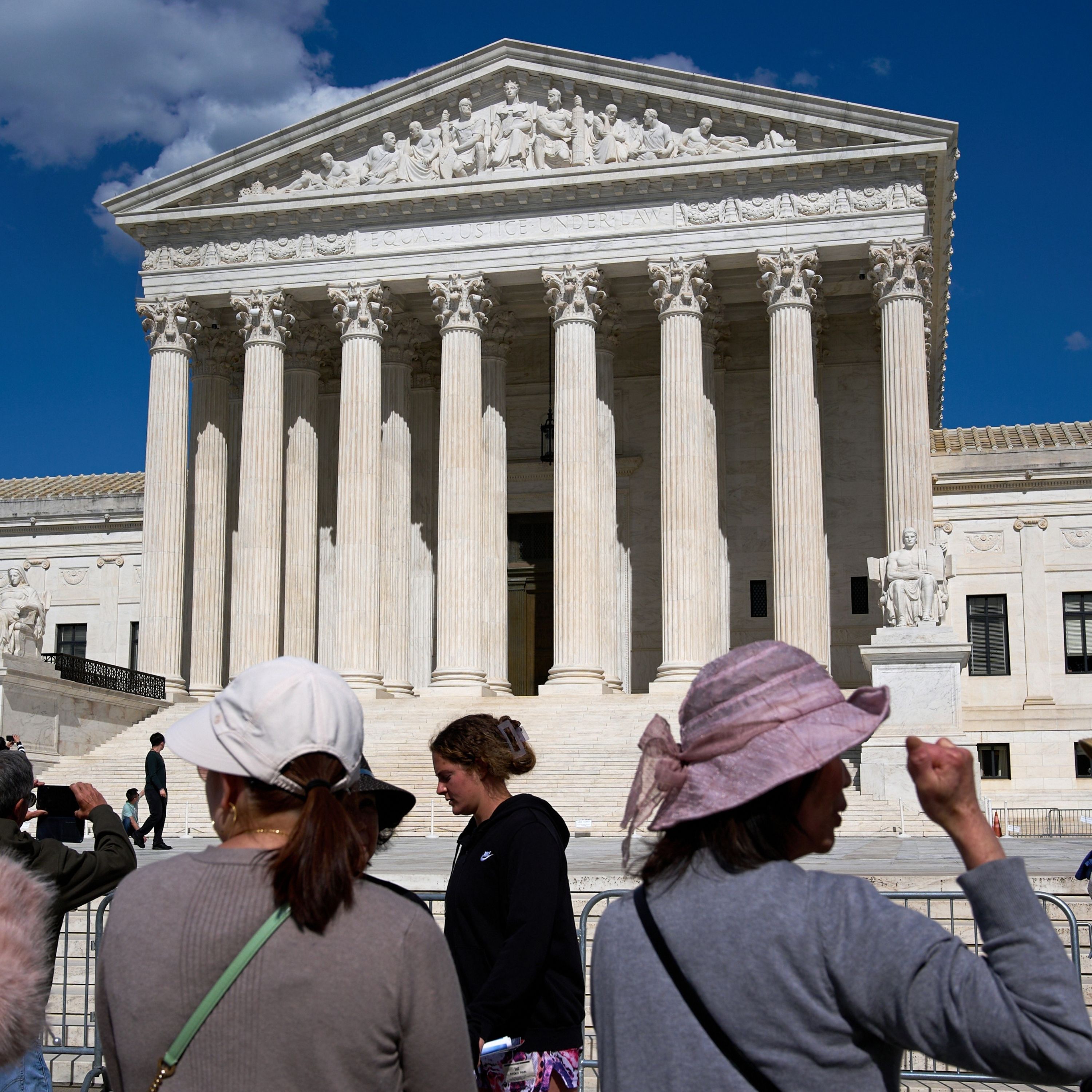
It's Tuesday, May 5th. I'm Jane Coston, and this is what a Day. The show wishing you a happy Mexican victory over the French at the Battle of Puebla de also known as Cinco de Mayo. On today's show, President Donald Trump talks about his Iran mini war during a small business summit. And acting Attorney General Todd Blanche has beef with the meat industry. But let's start with the Supreme Court and the supreme law of the land, the Constitution. The Supreme Court surprised many, okay. It surprised me on Monday by restoring access by mail to a commonly used abortion medication. For at least one more week. I'm going to be real with you. I've been covering politics for a long time, and the Supreme Court is still a mystery to me. For a body that intends to examine the law through the lens of the Constitution, it feels like the court has kind of freestyling a lot of the time. And in the era of Trump, a lot of that freestyling has been in his favor. Were the framers of the Constitution prepared for a moment like this for a president who posts about wanting to blow other countries away, A president who demands Congress bend to his will? To find out, I spoke to Melissa Murray. She's a co host of Crooked Media, Strict Scrutiny and author of the new book the U.S. a comprehensive and Annotated Guide for the Modern Reader. Melissa, welcome back to what a Day.
- [01:28]
B
Thanks so much for having me, Jane. Great to be here.
- [01:31]
A
So the Supreme Court is back in the abortion debate. I'm sure they're thrilled about it. On Monday, the justices temporarily restored access to mifepristone, one of two drugs used in medication abortions by mail. But I'm curious, should people read anything into this? Does this give any light into how they're going to rule on this issue more permanently? Because it's a temporary block until May 11th. Something that seems like good news, but also, I don't know, how should we be thinking about this?
- [02:03]
B
It's a great question, Jane. So this case came to the court. The manufacturers have asked the court to basically stay the Fifth Circuit's ruling on mifepriston, which was issued last Friday. Justice Alito, who got this emergency petition, issued a one week stay. So basically the status quo before the Fifth Circuit's decision is now back in place, but only for a week. And there will, of course, be briefing and whatnot on this question as it goes before the court. But Steve Laudick, a friend of Strict Scrutiny who has A terrific substack 1 First street, noted to me that he thought this was unusual, the one week stay, because as a general matter, Justice Alito, who issues a fair number of stays in his capacity as a circuit justice, often issues indefinite stays. The stays that are of finite duration, like this one, which is only for a week, typically tend to be in the cases where he doesn't agree with the underlying claim. So not surprising that he might issue under that logic a very short stay in a case dealing with abortion. Because I think we know where he will be on this question when it does come before the Court. A bigger question will be where are the other justices when it comes before the Court? Justice Kavanaugh is someone who he wrote in his concurrence in Dobbs that states should be free to do as they like with regard to abortion. This whole question of federalism and state sovereignty, that obviously has implications for Louisiana, which says that it cannot enforce its law and protect the unborn as it wishes to do. If mifepristone can be sent into the state by telemedicine or by mail. But that leaves a lot of room for the court to make a decision that some says, okay, Louisiana, you can enforce this and you can't send mifepristone to Louisiana. But what about the other states? Like the fifth Circuit made this a nationwide ban. So even states that have more permissive laws with regard to reproductive rights would not be able to access mifepristone through telemedicine. It would only be available through in person dispensation. And obviously that makes it a lot harder for certain people, people who work, who can't get to a pharmacy, whatever will make it harder for them to get access to this. So I think that'll be a real question, the court who's here truly for federalism.
- [04:29]
A
But I think that that goes to actually kind of something I was thinking about reading your book, which is that sending the issue back to the states, relying on federalism sounds great, but it's also far more complicated than people tend to think it's going to be because states interact with each other. Something that struck me was that you write that the framers wanted an active president, quote, heavily involved in the day to day administration of the United States. You write about this in reference to the original design of the State of the Union address, but we have seen a massive expansion of executive power. How do you think that design from the founders has impacted the expansion of presidential power we see today?
- [05:14]
B
So first of all, let's just talk about what the framers wanted. They did imagine an energetic and nimble executive who could get things done, especially in the context of foreign affairs. And they contrasted the imagined nimble, agile president with Congress, which was a multi member, deliberative body that was just going to be more sclerotic. I don't think, though, they imagined that Congress would be as sclerotic as our Congresses. I think they imagined a Congress that was getting things done and would be an effective check on a president that was perhaps too agile and too nimble, but they were essentially meant to balance each other out. I don't think that they would have contemplated or approved of a president who had such a muscular understanding of executive authority, because I think they very much understood Congress to have very muscular powers enumerated, certainly, and limited in other respects, but also quite muscular. And muscular in order to be able to check the president and the judiciary, if that was necessary. The thing that they feared above all, when they were writing the Constitution, and they were very clear about it, they were writing this in a state of trauma. This is a trauma, informed document. They had just come through the colonial period where the British Parliament and the British king had literally been on their necks incessantly. And then they just fought a revolutionary war against the greatest global superpower in the world. And they had done it with a government that was basically held together with, like, friendship bracelets and daisy chains. And they were like, okay, we've got to thread the needle somehow. We need a government that's strong enough to get things done, like wage a war, but not so strong that they're going to be on our necks all of the time. And so their whole concept was that they needed limited government. They needed every branch to have their own lane and to be able to do its own thing. And no branch could be so powerful because they feared that the consolidation of government power would lead to tyranny, would lead to the oppression of the people. And that's what they didn't want. So they structured a government that divided power horizontally between these three branches and then vertically between the federal government and the states. And they hoped that that initial structure would be enough to prevent the consolidation of government power. But they wanted limited government.
- [07:41]
A
But why weren't there? I mean, I can't go back. I'm not a founding father. I wouldn't have been allowed to be one. But why weren't there stronger protections against that kind of muscular presidency? Trump is a recent and very bad example. But we've seen that with Woodrow Wilson. We saw that even with Andrew Jackson. You mentioned Andrew Johnson in your book. And I keep thinking about the court's findings with regard to presidential immunity. Did they just not think that a president would try this shit?
- [08:13]
B
So there's a really interesting quote. I think it's from Hamilton's. They contemplated the idea that there might be someone so intemperate that maybe he would seize more power than was necessary. But on the whole, they were pretty elitist, and they believe, for the most part, that the governing classes would be pulled from the classes of the educated elite from whence they came. Right. So if you look in the Constitution, and I urge you to take a look at it, they're really distrustful of the prospect of popular rule. They're really distrustful of ordinary people. The ordinary people. It's why we have an Electoral college. The president's not elected by the people. It is instead elected by a subset of people who are selected by state legislatures who are then empowered to vote on behalf of the people of the state, but it's not by the people themselves. I don't think they had the kind of imagination that would have contemplated someone like the president we have now and those who follow him. I think they always thought there would be this class of people from whom the government would be drawn and that those people and their values would guide the country going forward. And to be clear, I don't know that their judgment was that great. A lot of these people own people. Like, that's never great. But they believe that these people had the best interests of the country in mind and that they would going forward.
- [09:39]
A
Last year, there was a lot of discussion about whether or not this country was in a constitutional crisis or about to be in one, or has been in one. But recently, I feel like I haven't heard anything about that. So after all of the time you've spent with the United States Constitution writing this book, are we in a constitutional crisis?
- [10:00]
B
I kind of think we are. The dog is looking at you, Jane. Like, Jane doesn't think there's a constitutional crisis. Come on, Jane.
- [10:05]
A
I know.
- [10:06]
B
I kind of think we are. I think we have become so anesthetized to the excesses of this administration that maybe we've become just inured to it. But I do think there is a kind of constitutional crisis, in part because. And I felt this, writing the book, there were so many times I was like, when can I lock this book down? When can I send this to the publisher? Because every day it was like, oh, there's a new war. Venezuela. Is that. Like, can he do that? Can he send the National Guard in to do that? Like, there's so many moments where I was like, I've got to like really think about whether this can be squared with the Constitution, whether this is permissible. And I think anytime you're in that space where you're looking at your government and wondering, can they do that? Can they do that? To me, you might be in a constitutional crisis. Like you probably are in something of a constitutional crisis, because the whole point of a constitution is that everyone knows the terms of engagement, everyone's playing by the rules, and you don't have to ask those questions quite as frequently. But I feel like we ask those questions every day. That seems to me the definition of a constitutional crisis.
- [11:19]
A
Melissa, thank you so much for joining me and congratulations.
- [11:24]
B
Thanks so much for having me, Jane. And please, I'm going to send you a copy of this. It's perfect. It comes out on May 5th, Cinco de Mayo. You can put salt on it, lick it, I don't know. It's great with a margarita. That's all I know.
- [11:37]
A
That was my conversation with Melissa Murray, author of the U.S. constitution, a comprehensive and Annotated Guide for the Modern Reader, which is in stores today. We'll link to her book in the show Notes if you also love that the army can't stay in your house, you're a fellow fan of the Third Amendment and this podcast is for you. So subscribe. Leave a five star review on Spotify and Apple Podcasts, watch us on YouTube and share with your friends. More to come after some ads. This episode is sponsored by BetterHelp. Life is a journey. Some days feel good and others feel overwhelming. Whatever's keeping you up at night, it's easy to feel like you have to figure it out all on your own. But you don't. There are people who can walk through your biggest challenges and stick by your side to ensure you aren't alone. Mental Health Awareness Month is this May and it's a great opportunity to check in with yourself. Therapy can be a great path forward. BetterHelp therapists work according to a strict code of conduct and are fully licensed in the US and BetterHelp does the initial matching work for you so you can focus on your therapy goals. A short questionnaire helps identify your needs and preferences and their 12 plus years of experience and industry leading match fulfillment rate means they typically get it right the first time. If you aren't happy with your match, switch to a different therapist at any time from their tailored recommendations. You don't have to be on this journey alone, find support and have someone with you in therapy. Sign up and get 10% off@betterhelp.com watt that's better. H E L p.com wad wad a day is brought to you by oriframes. Auraframes are the perfect gift for any occasion. We just got a good friend who moved away in auraframe and we've loved hearing about how it's a great way for her to stay in touch with her community, even from thousands of miles away. With AuraFrame you can personalize your gift and add a message before it arrives and a gift box is included. Every frame comes packaged in a premium gift box with no price tag. Aura Frames Perfect Gift every time Named number one by Wirecutter. You can save on the perfect gift by visiting auraframes.com for a limited time. Listeners can get $25 off their best selling Carver mat frame with code WAD. That's auraframes.com promo code WAD support the show by mentioning us at checkout. Terms and conditions apply. Here's what else we're following. Remember how I told you yesterday that according to the Trump administration, the Iran war was over? I do, but it's a brand new day and that means the Iran war is not over. On Monday, the United Arab Emirates accused Iran of firing missiles at the country. According to US Central Command, the US Shot down multiple Iranian cruise missiles and drones aimed at American cargo ships and military vessels. Oh, and the price of oil went up again. But don't worry, because President Trump made it clear while speaking at a small business summit at the White House that everything is fine. Just look at the stock market.
- [14:28]
C
We have a stock market that hit even with this military operation. Call it whatever you want. Our country is booming now despite the fact that we're in a. I call it a mini war because that's all they are. Like, we have a war right now. And went to like what, six weeks? They said, what's taking so long? We were in Vietnam 19 years.
- [14:52]
A
I always love when presidents use Vietnam as a litmus test, a war that lasted through five presidential administrations. Always a great sign. Actually, let's talk about that Small Business Summit at the White House. The event on Monday was supposed to recognize National Small Business Week, gathering more than 130 small business owners to celebrate their important work. But that's not what Trump seemed to want to talk about. Instead, he discussed, actually, let's just listen to this together.
- [15:23]
C
You say like somebody was saying, oh, will AI take our jobs? Well, we have a lot of AI up. Is it going to Take jobs. I said, well, you're probably right, maybe a little bit, but it's going to create a lot of jobs. And did you know that more people are working in the United States right now than ever before? They said no. Is that true?
- [15:38]
D
Really?
- [15:39]
C
That goes. That's the end of that argument. And we're leading China in AI. And I'm going to go see President Xi in two weeks. I look forward to that. But I'll say I'm leading. We have. We have friendly. We have very friendly competition. In my opinion, anybody running for president or vice president should take a cognitive test. And no president has ever taken one except me. I've taken three of them, and I've aced each one. And whenever they get a little sassy, like, does he still have it? Does he still have what it takes? I say, all right, I'll take another one. And they are hard. There are many people in this room I know that are smart. They're not going to ace them. There are many people standing back there. The fake news media. I'd like to have them. You know, the first question is very easy. And they always show. The first question is, you have a lion, a bear, an alligator, and a. What's another good. A squirrel. Okay. Which is the squirrel. So they show that question. And then the first four or five questions are. They get a little more difficult. And this way, when I get out of office in, let's say, eight or nine years from now.
- [16:52]
A
Oh, honey, no, no, no, no, no, no. Let's have you look at some more images of bears instead. Speaking of animals a child could identify, let's talk about cows. Acting Attorney General Todd Blanche held a press conference Monday to explain how the Trump administration plans to address the high price of beef. White House counselor Peter Navarro and Secretary of Agriculture Brooke Rollins were also in attendance. Because Todd Blanche can only handle indicting people for Seashell Instagrams on his own. Now, there are lots of reasons beef prices are high, namely, low supply, high demand, droughts, and, oh, yeah, Trump's tariffs, which drove up beef prices so much he had to abandon them in November. But the Trump administration has decided to focus on big meat, and in doing so, sounds kind of like the Biden administration.
- [17:37]
D
We are here to talk about our progress here at the Justice Department to hold meat packers accountable. Last November, the president tasked the department to investigate the costs and prices of beef. As a result, we prioritized investigating potential antitrust violations in U.S. cattle and beef markets. But there is more work to do, and we need your help. I want to remind everyone and anyone in the industry that if you have information about antitrust crimes, about price fixing, bid rigging, market allocation, or even procurement fraud, the Department of Justice wants to hear from you.
- [18:21]
A
Riveting. The Trump administration is even offering whistleblowers potential rewards if they have information about antitrust violations in the beef industry. I wish that applied to the rest of the economy, but this is the Trump administration we're talking about. Oh yeah, and DJ Marky Rubio. I mean Secretary of State Marco Rubio is on the way to see the Pope this week, where I assume he will have to tell Pope Leo that yes, Trump really did say that that AI generated image he posted of himself as Jesus was meant to depict him as a doctor. By the way, check out the video of Rubio DJing over the weekend if you haven't seen it. And that's the. Before we go, the Supreme Court just made it harder for your vote to count and easier for politicians to ignore it. On strict scrutiny Leah, Melissa and Kate break down the fallout from Louisiana vs Calais, a decision that takes a real swing at the Voting Rights Act. Tune in to strict scrutiny now wherever you get your podcasts or watch on YouTube. That's all for today. If you like the show, make sure you subscribe, leave a review, keep Dolly Parton safe and tell your friends to listen. And if you're into reading and not just about how the musical legend announced that her health had improved, but she was canceling her Las Vegas residency so she could fully recover. Like me, what a Day is also a nightly newsletter. Check it out and subscribe@crooked.com subscribe I'm Jane Coston and seriously, keep Dolly Parton Safe. What a Day is a production of Crooked Media. Our show is produced by Caitlin Plummer, Emily Foer, Erica Morrison and Adrienne Hill. Our team includes Haley Jones, Greg Walters, Matt Berg, Joseph Dutra, Johanna Case and Desmond Taylor. Our music is by Kyle Murdoch and Jordan Kantor. We had help today from the Associated Press. Our production staff is proudly unionized with the Writers Guild of America East.