← What A Day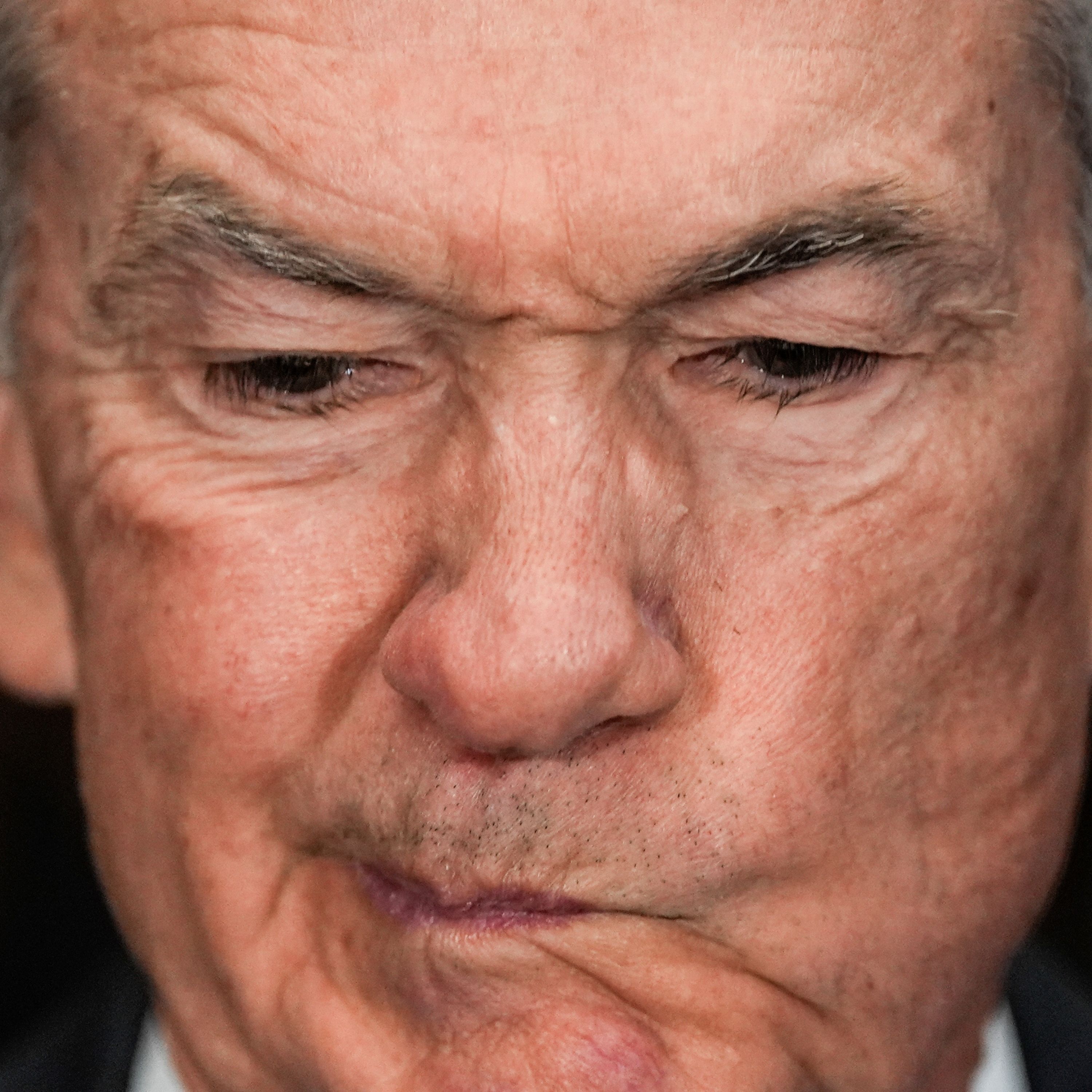
What A Day
Trump v The Federal Reserve Chair
00:22:19
President Donald Trump spent Wednesday refuting reports he plans to imminently fire Federal Reserve Chairman Jerome Powell. The president has been complaining about him for months, accusing Powell of unnecessarily keeping interest rates high. But Trump’s frustrations seemed to reach a new peak this week amid reports he had a letter drafted to oust the man he appointed to the job back in 2017, then asked a group of House Republicans whether he should do it. Firing Powell would undermine the Federal Reserve’s independence. It’s also potentially illegal. Bloomberg Senior Editor and friend of the pod Stacey Vanek Smith stops by to talk about interest rates, inflation risks, and Trump’s very focused campaign of loathing against Powell. And in headlines: Vice President J.D. Vance hit the road to put some proverbial lipstick on Trump’s pig of a new tax and spending law, the Trump administration deported five migrants to the small African nation of Eswatini, and the senior vice president ...
Loading summary
Transcript42 lines
- [00:02]
Jane Kostin
It's Thursday, July 17th. I'm Jane Kostin and this is what the show that was going to ask why President Donald Trump keeps being so weird about disgraced financier and sex offender Jeffrey Epstein, but then saw that Trump wants Coca Cola to use real sugar and Coke and now is totally back on Team maga. Finally, America has returned. Except that Coca Cola hasn't confirmed this is happening, but quote, appreciates Trump's enthusiasm for the matter. On today's show, PBS Kids says new episodes of Daniel Tiger could be at risk because of President Trump's rescissions package. And Vice President J.D. vance travels to Pennsylvania to tout Trump's BBL. That's big, beautiful law, not Brazilian butt lift, unfortunately. But let's start with the economy and specifically the Federal Reserve. Yes, the Federal Reserve. It'll be fine. We can do it together. Jerome Powell is the chair of the Federal Reserve and President Trump is very mad at him. He even reportedly had a letter drafted to fire Powell and asked Republicans this week if he should do it. Never mind the fact that just two months ago the Supreme Court strongly suggested the president can't touch Powell until his term ends next year unless he has reason to fire him. Speaking from the Oval Office Wednesday, Trump refuted any plans to oust Powell while still leaving himself some wiggle room.
- [01:31]
Donald Trump
Of course, I don't rule out anything, but I think it's highly unlikely. Unless he has to leave for fraud.
- [01:38]
Jane Kostin
I mean, it's sure. But Trump is still mad at the Fed chair. He's downright flummoxed that Powell even got the job in the first place.
- [01:46]
Donald Trump
He's a terrible Fed chair. I was surprised he was appointed. I was surprised, frankly, that Biden put him in and extended him. But they did.
- [01:57]
Jane Kostin
Except that the person who first appointed Powell was Trump in 2017. Biden did nominate him for a second term. But once again, the ongoing theme of Does Donald Trump know Donald Trump is president continues. Anyway, the actual reason Trump is so upset with Powell is because he wants Powell to lower interest rates. Like he really, really wants him to lower interest rates to 1%. Currently, they're a bit north of 4%. Here's Trump on Tuesday speaking to reporters outside the White House.
- [02:27]
Donald Trump
I told him he's doing a very bad job. He's way late. That's why I call him too late. Jerome Powell is too late. He's way late. Interest rates should be coming down. We have a very, very successful country. We should have the lowest interest rate anywhere in the world. And we don't Jerome Powell has done a terrible job and frankly, I don't think he could do a worse job. He's called everything wrong.
- [02:54]
Jane Kostin
Too late is definitely his weakest nickname. It's no lyin Ted. Why does Trump want Powell to lower interest rates? Because Trump believes lowering interest rates will supercharge the economy. And yes, there are a few problems with that. Namely, it could cause inflation to spike again. And if I'm remembering correctly, the American people were very mad about paying more for groceries. For good reason. So to talk more about inflation, interest rates, and Trump's very focused campaign of loathing at the chair of the Fed, I talked to Bloomberg senior editor and friend of the pod, Stacey Vanek Smith. Stacey, welcome back to what a Day.
- [03:29]
Stacey Vanek Smith
Thank you. It was good to see you, Jane.
- [03:31]
Jane Kostin
So we are recording this interview at 4:30pm Eastern Time. Yes, all day Wednesday, we've seen reports that Trump is considering firing Fed chair Jerome Powell, who, and I cannot emphasize this enough, Trump picked to run the Fed during his first term. Why is this such a big deal?
- [03:47]
Stacey Vanek Smith
This is a big deal for a few reasons. The Federal Reserve chair, the head of the central bank, is supposed to be an independent position. You're not supposed to be able to oust the person in that position. And in fact, legally, Trump cannot do that. But it doesn't mean he can't try. And it has to do. The independence of the Federal Reserve chair is seen as a really important thing to the economy.
- [04:11]
Jane Kostin
Can you go into that a little bit more like, why is it important that the Federal Reserve chair be independent and why is it important to the economy?
- [04:19]
Stacey Vanek Smith
This has been such a topic of discussion. Economists argue about this all the time. So the argument for having the Fed chair be independent from politics, essentially sort of the same way that a Supreme Court justices it's so that they can make tough, unpopular decisions that might be really good for the economy. So, for instance, dealing with inflation, keeping interest rates high, keeping the economy slowed down. It's no one likes it. People don't like it. Businesses don't like it, people complain to politicians, politicians get thrown out of office for it. That is part of why the Federal Reserve chair has to say like, we're going to protect the currency. We're going to make the tough, unpopular decision. It's going to be painful, it's going to raise unemployment, do all of these things, but it prevents inflation from going out of control. That's the logic.
- [05:08]
Jane Kostin
Now, going to the point you are making about interest rates, that seems to be Trump's main issue with Jerome Powell. But interest rates have been at relatively high levels for the last couple of years to bring down inflation tied to the pandemic. So a few questions on this. Why has the Fed so far kept interest rates high even while other countries have lowered their interest rates?
- [05:27]
Stacey Vanek Smith
I mean, everybody's kind of been watching Jerome Powell with bated breath, and he has lowered interest rates several times. I think he's been slower to lower them because inflation kind of spiked for the first time in a long time during the pandemic. I mean, I think we were all dealing with it. We're still dealing with it. A lot of people say that inflation was responsible for the election of Trump, that people were so upset by the price of things going up. So I think there's this. This feeling that in order to sort of keep prices under control and prevent it from spiraling out of control, you have to keep interest rates high for a while and kind of bring some pain for a little while before you start to see results. I guess the way, like, if you went to the gym, you'd have to, like, work out for maybe longer than you think before you see results. It's kind of that logic.
- [06:19]
Jane Kostin
I know that logic very well. I know. Me, too. And just generally speaking, setting aside current economic conditions, under what circumstances would the Fed typically choose to lower interest rates?
- [06:32]
Stacey Vanek Smith
Well, lowering interest rates tends to make the economy grow. People spend more money. Businesses borrow, they expand, they hire. It does all kinds of good things. The trouble is that it can also cause inflation because you get more money circulating in the economy. That can mean the value of that money is less, so prices go up. So generally, you would cut interest rates if you feel like inflation's not an issue.
- [06:56]
Jane Kostin
So presumably, and I do not purport to see into how Trump thinks, but presumably that's what Trump thinks will happen if interest rates go down, that more people will borrow, more people will do business things. The economy is happy. Yay. But how could Trump, the person and the businessman potentially benefit from lower interest rates? What would he personally stand to gain?
- [07:19]
Stacey Vanek Smith
Oh, I mean, a lot. Right? So his businesses can borrow money for less. And when businesses can borrow money for, like, very cheaply, they can just expand at a very low cost. So they can kind of do all kinds of things. They can kind of get creative and take risks and things like that. And then, personally, he can take out loans and invest that money, and it costs very little. So it creates all kinds of opportunities both for individuals and for businesses to sort of take bigger risks.
- [07:53]
Jane Kostin
Just this week, new federal Data showed that inflation rose last month to its highest level since February. Consumer prices rose about 2.7% last month compared to a year ago. And economists have largely put the blame on Trump's tariffs. So what are the risks of lowering interest rates? Right now?
- [08:10]
Stacey Vanek Smith
The risk of lowering interest rates is that you have another thing pushing up prices. So I think we are potentially starting to see tariffs pushing up prices because there are certain things that are very sensitive to tariffs because we import a lot of them. That would be things like furniture, toys, clothes. Prices of all those things went up, and food too. The issue is, too, if then there's more money in the economy, that will push prices up because supply, if there's more demand, it increases the supply. So suddenly inflation starts to tick up and we start to see things cost more, both because of tariffs and because people have more money to spend because there's more money kind of in the economy. And those two forces together that could create kind of a, a situation where there are two things pushing up prices which could be potentially really bad.
- [09:05]
Jane Kostin
Now, you are the person who explains how the economy works to me. And one thing I currently do not understand is that a lot of people, you know, we talked about it on the show a couple months ago, were talking about how tariffs were going to be very bad for the economy. But since tariffs have been put into place now, not all of them, because a lot of them have gotten postponed. The economy has remained relatively steady since Trump returned to office, even with tariffs. And Trump said on Truth Social last week, quote, the fake news and the so called experts were wrong again. Tariffs are making our country boom. Boom is in quotation marks. I don't know why, but is he right? Have the experts been wrong or is it just way too early to tell he's not wrong?
- [09:48]
Stacey Vanek Smith
I mean, I would say I was one of the people who thought prices were going to go up right away because of tariffs. And that just hasn't happened. But there are a couple potential explanations for this. One that you hear a lot is stockpiling. So companies kind of knew that these tariffs were coming, and a lot of them basically stockpiled as much as they could so they wouldn't have to raise prices. Like Apple famously airlifted all these tons of iPhones into the US right before the tariffs took effect. And so we have a few months of Runway before we see tariffs because stores have all this extra inventory. So that's one explanation. The other one is I've been talking to a lot of small businesses. A lot of them feel like, they cannot raise prices, so they're trying to find other ways to absorb these costs into their business. I was talking to one woman who owns a bakery in Los Angeles, and she was saying that she's just trying to find recipes that don't use cocoa and don't use vanilla, because those are two things that she imports and that are getting more expensive. So she's just trying to find a way to make things that are cheaper or make mini versions of things because she just does not feel like customers will pay more. So that's another explanation, too.
- [10:56]
Jane Kostin
No cocoa and no vanilla. I'm sorry, I don't really know where you go from there, but I don't know. I don't know. But inflation was such a political albatross for the Biden administration. That was something people said over and over and over and over again from basically the entire time of his term. Is there any reason to believe inflation wouldn't be an albatross for the Trump administration, too?
- [11:19]
Stacey Vanek Smith
I mean, my instinct would be to say yes. I mean, people. There's one thing people are sensitive to, it's prices going up, and that is, you know, that will get a politician kicked out of office faster than anything, because, you know, this affects every day of our lives. You get a raise, you're all excited. Well, all of a sudden, the price of everything is going up in a raise, doesn't mean anything, or you don't get a raise, and suddenly you're just watching your savings kind of dissolve. And it's, it's. Inflation is really, really, really destructive. I mean, I, I guess you can say, spin it certain ways, and if you get the message out that it's somebody else's fault potentially, or a temporary thing, I think the Trump administration's been very explicit, like, oh, tariffs will temporarily raise prices, but that is the pain that we need to endure for, you know, a more, you know, independent economy. So I think if he can spin any inflation in a way that people will accept, that's a possibility. But people are really sensitive to prices of things going up. I mean, you know, eggs, coffee. They're both up in the double digits since last year. That's. That. That upsets people. People vote on that.
- [12:34]
Jane Kostin
People do vote on coffee, specifically coffee and eggs.
- [12:37]
Stacey Vanek Smith
Yeah, it's true. They really do.
- [12:39]
Jane Kostin
Stacey, as always, thank you so much for joining me.
- [12:42]
Stacey Vanek Smith
Thank you, Jane. It's a pleasure.
- [12:45]
Jane Kostin
That was my conversation with Bloomberg Senior Editor Stacey Vanek Smith. We'll get to more of the news in a moment. But if you like the show. Make sure to subscribe, leave a five star review on Apple Podcasts, watch us on YouTube and more to come after some ads. What a Day is brought to you by bookshop.org whether you're searching for an incisive history that helps you make sense of this moment, a novel that sweeps you away, or the perfect gift for a loved one, bookshop.org has you covered. When you purchase from bookshop.org, you're supporting more than 2,000 local independent bookstores across the country, ensuring they'll continue to foster culture, curiosity and a love of reading for generations to come. Big news Bookshop.org has launched an ebook app. You can now support local independent bookstores even when you read digitally. Use code WAD to get 10% off your next order at bookshop.org that's code wadookshop.org here's what else we're following today. Head of Lines.
- [13:51]
J.D. Vance
So let me just say a few things about where we are before I get into what I want to talk about, which is the one beautiful bill and the way that it's going to bring Pennsylvania roaring back and American manufacturing roaring back to life.
- [14:05]
Jane Kostin
Can we get a please clap up in here? As you can tell, Vice President J.D. vance was met with uproarious applause when he traveled to Pennsylvania Wednesday to promote Trump's big beautiful bill turned law. Vance spoke to a crowd of supporters in West Pittston. The small town is part of a Pennsylvania swing district where Democrats hope to use the law to attack Republicans in next year's midterms. Funnily enough, Vance didn't talk much massive Medicaid and food stamp cuts in the law. Those cuts are scheduled to take effect after the midterms, which I'm sure is just a coincidence. Instead, he focused on tax cuts, getting rid of taxes on overtime and inflation.
- [14:42]
J.D. Vance
I'm really excited about the fact that for the first time in a very long time, workers wages are rising faster than inflation. You're able to buy more, you're able to do more, and we're just getting started.
- [14:56]
Jane Kostin
Vance, of course, left out the part where that gap between inflation and wages is getting smaller, leaving Americans with less disposable income. Vance's trip to Pennsylvania is the first attempt by the administration to counter negativity about the spending package. Trump told NBC last week he probably won't do much promotion of the bill because, quote, it's been received so well. I don't think I have to, but more than 60% of Americans oppose the big Republican spending law debacle Disaster Adventure According to a CNN poll conducted by a research firm called ssrs, the Senate's VOT is underway, and up for debate are budget cuts to foreign aid and public media. If President Trump's rescissions bill makes it through Congress this week, it would take back more than a billion dollars already allocated to the Corporation for Public Broadcasting, which funds PBS and npr. The move would disproportionately affect people in rural areas, many of whom rely on their member stations as the only source of local news. Sarah DeWitt, senior vice president and general manager of PBSKids, spoke to Water Day's newsletter writer Matt Berg.
- [15:54]
Sarah DeWitt
This is an incredibly fragmented media landscape right now. It's really hard to break through. It's really hard to remind people that there is still this free educational resource that's really good for kids, and it's going to make it harder for us to tell that story.
- [16:09]
Jane Kostin
DeWitt said that while PBS Kids has an impressive library, creating new shows would be difficult, which could affect their ability to keep PBS Kids current in a constantly changing media environment. She also said the budget cuts could jeopardize their ability to make new episodes of existing programs like the incredibly popular Daniel Tiger. DeWitt told us PBS Kids is already facing an existential crisis after Trump's Education Department cut other forms of funding, like the Ready to Learn grant, which provided PBS and NPR with $23 million to create educational shows and games. Trump has warned Republicans who might have doubts about cutting funding for public broadcasting, saying, quote, any Republican that votes to allow this monstrosity to continue broadcasting will not have my support or endorsement. Freedom of the Press the Trump administration sent five migrants to the Kingdom of Eswatini, a country in southern Africa, on Wednesday. None of the migrants are from Eswatini or have any ties to the kingdom. The migrants are from Vietnam, Jamaica, Laos, Cuba and Yemen. And in case your geography is rusty, none of those countries are in Africa. In June, the Supreme Court cleared the way for these third country deportations by lifting an order from a federal judge in Boston that would have required migrants be given a chance to challenge their deportations. The Trump administration claims that third country deportations will be reserved for some migrants, mainly those from countries that won't take their citizens back, either due to a criminal history or a lack of diplomatic relations with the US the White House has fired 50 immigration court judges in the last six months and, according to the union that represents immigration court judges, 17 in the last week. The union claims that the most recent firings were issued without cause there's currently a backlog of about 3.5 million cases in the immigration courts. Virginia Democratic Senator Tim Kaine took part in the scolding and questioning of Deputy Secretary of State for Management and Resources Michael Regas. On Wednesday, Regas testified before the Senate Foreign Relations Committee about the State Department's reorganization, AKA the mass layoffs. During the hearing, Keynes cited reports from Reuters and the Atlantic that tons and tons of emergency food has been sitting in a US Agency for International Development warehouse in Dubai and is set to expire this month. The Atlantic reports the high energy biscuits were purchased by USAID during the end of the Biden administration. Per Reuters, they could feed at least 27,000 acutely malnourished children for a month. But since the State Department absorbed usaid, the food has been stuck in limbo and now the expired food will be destroyed, according to the Atlantic. That's despite numerous reported requests from federal workers to ship the biscuits to other countries in the region while they are still viable. Kaine railed against Rigas over why nothing was done to distribute the food months ago.
- [18:51]
Tim Kaine
Why has the State Department decided to burn it rather than distribute it to starving children?
- [18:59]
Michael Regas
Yeah, I don't have a good answer for that question, Senator. I am as distressed about that as you are.
- [19:04]
Tim Kaine
Okay. So I was gonna ask you, does that kind of make you feel ashamed? Are you proud of it or are you indifferent to it?
- [19:11]
Michael Regas
Look, I don't think it's. You know, I'm not gonna say I'm ashamed or proud or indifferent to it. But you would. I think that was a failure.
- [19:17]
Tim Kaine
How? Just as a statement and proposition. If the US Uses taxpayer dollars to buy specialty foods for starving children, I think it's better that the food be distributed to starving children rather than incinerated.
- [19:31]
Michael Regas
I would agree with that. We agree with that.
- [19:33]
Jane Kostin
The most ironic part about this hearing was that a little before Kaine discussed the tons of food going to waste instead of being given to hungry children, Republican Senator Jim Risch of Idaho said the U.S. is too hard on itself. And there's, quote, no more generous country on the planet than the United States of America. As of our recording time. I disagree. And that's the news before we go. Summer reading alert. Crooked Read's latest book, when we're in Charge by Amanda Littman is out now. It's a guidebook to leadership for the next generation from the founder of Run for Something. And the newest release from Crooked's publishing imprint, when we're in Charge, makes a great gift for new grads. Friends celebrating a big promotion or anyone looking to up their beach reading game this summer. Plus, you can complete your book look with a We do not Dream of labor tote. Perfect for anyone who wishes every day was a summer Friday. Just head to cricut.com store for the exclusive tote bundle or head straight to crooked.combooks to get the book. That's all for today. If you like the show, make sure you subscribe, Leave a review do not bring back this giant flightless bird and tell your friends to listen. And if you're into reading and not just about how, no, I don't care that Lord of the Rings director Peter Jackson thinks that the same company that sort of brought back the direwolf should bring back the moa, a flightless bird from New Zealand that stood 12ft tall like me. What a Day is also a nightly newsletter. Check it out and subscribe@cricket.com subscribe I'm Jane Costen, and seriously, look up photos of the MOA and tell me you don't think that bird looks like he is absolutely down for violence. What a Day is a production of Crooked Media. It's recorded and mixed by Desmond Taylor. Our associate producer is Emily Foer. Our producer is Michelle Aloy. Our video editor is Joseph Dutra. Our video producer is Johanna Case. We had production help today from Greg Walters, Matt Berg, Tyler Hill and Laura Newcombe. Our senior producer is Erica Morrison and our senior vice president of news and politics is Adrienne Hill. Our theme music is by Colin Gilliard and Kashaka. We had help with the headlines today from the Associated Press. Our production staff is proudly unionized with the Writers Guild of America East.