Loading summary
Transcript32 lines
- [00:04]
A
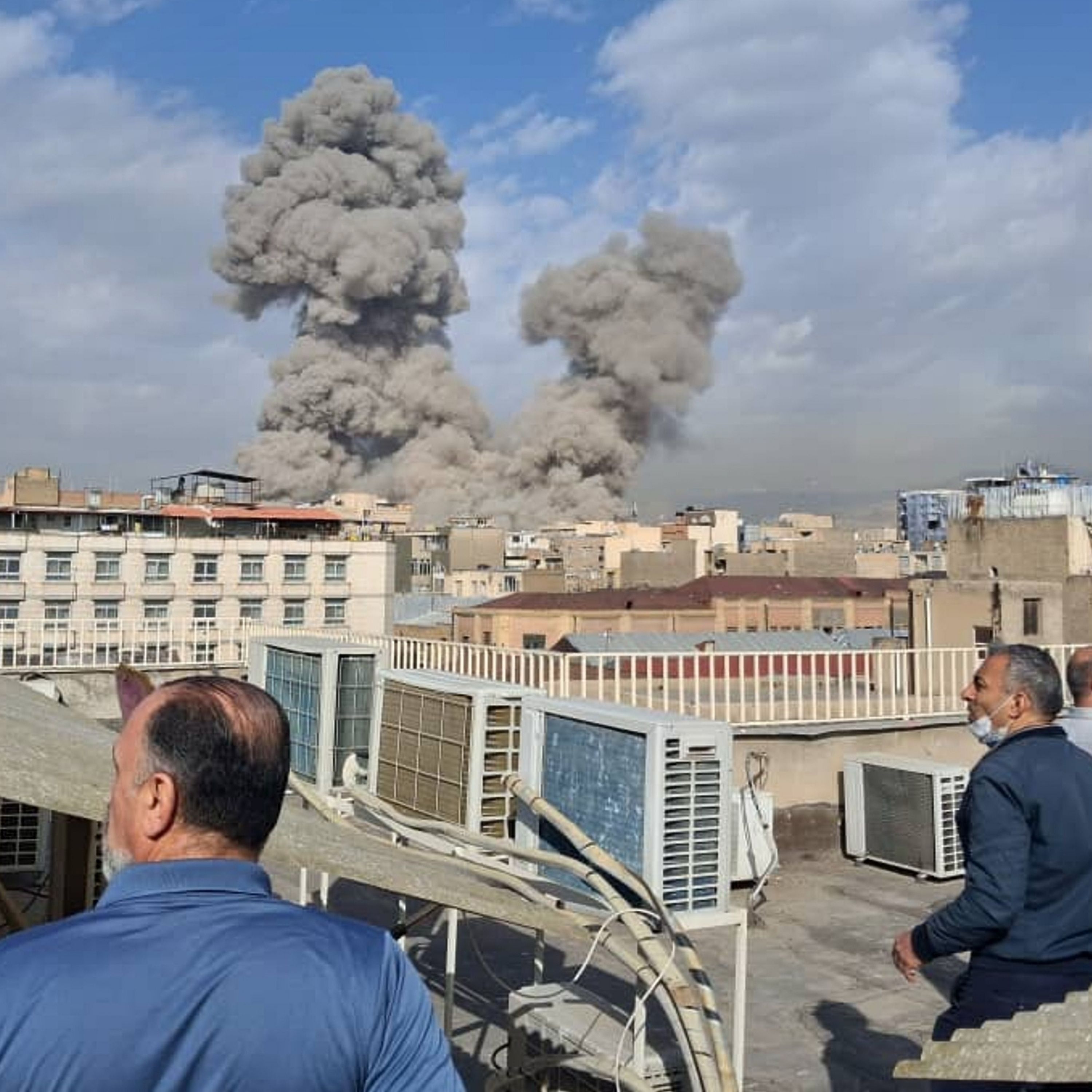
It's Monday, March 2nd. I'm Jane Kostin and this is what a day. The show that is almost longing for the many, many press conferences and made up reasonings of the early days of the Iraq war. Back in 2003, when times were easy, I was 15 and then Secretary of State Colin Powell was waving a vial of fake anthrax in a meeting of the United Nations Security Council memorial. On today's show, the US And Israel strike Iran, prompting retaliation across the region and the GOP reacts to the war it refuses to call a war. We're recording our show at 5pm Pacific Time and the situation is changing quickly. As of right now, American and Israeli forces have reportedly launched airstrikes and bombing runs on more than 2,000 targets across Iran. According to the Iranian Red Crescent Society, more than 200 people have been killed in the attacks. Iranian state media reported that an Israeli strike on a girls elementary school accounted for the majority of those deaths. In response, Iran has launched retaliatory strikes on targets across the Middle East. In a video message released on Sunday, President Donald Trump announced that the US Would continue for the foreseeable future combat
- [01:12]
B
operations continue at this time in full force and they will continue until all of our objectives are achieved. We have very strong objectives.
- [01:23]
A
What are they? We do not know. The president also confirmed that three US Service members have been killed following Iran's bombing of a base housing American troops in Kuwait.
- [01:33]
B
We pray for the full recovery of the wounded and send our immense love and eternal gratitude to the families of the fallen. And sadly, there will likely be more before it ends. That's the way it is.
- [01:49]
A
Likely be more but more casualties. For what? What exactly is the United States attempting to do in Iran? Honestly, I have no idea. And neither, it seems, does the Trump administration or its allies in Congress. We've gotten so many contradictory explanations of why we need to engage in strikes in Iran and what we need to do afterwards. I can't keep them straight. On Sunday alone, President Trump told the Atlantic he'd be happy to have talks with the new leaders in Iran, but he also said in his video address that the US Would stand with Iranian citizens aiming to topple those same and remember how the Trump administration said that the US And Israel had obliterated Iran's nuclear program last year. Now they're claiming there was a, quote, imminent nuclear threat posed by the Iranian regime. Meanwhile, in Iran, the killing of Ayatollah Ali Khamenei On Saturday ended 36 years of rule by a man responsible for the deaths of thousands of Iranian citizens. That includes many killed by the regime earlier this year after massive protests broke out across the country. So what's next for Iran and what's next for the United States as it engages in yet another open ended conflict in the Middle East? To find out, I spoke to Nihal Tusi, senior foreign affairs correspondent and columnist for Politico. Nihal, thank you for coming back to what a day.
- [03:02]
C
Hey, it's nice to be back, though, I have to admit, sooner than I thought.
- [03:07]
A
Yeah. The U.S. and Israel killed Iran's supreme leader, Ayatollah Ali Khamenei on Saturday. And for a minute we were wondering who would be running the country in the immediate aftermath of killing Iran's supreme leader on Sunday. We got an answer. It's an interim leadership council. Who is on this council?
- [03:25]
C
Well, it's the Iranian President, Masoud Pezeshkian, a Chief Justice, Ghulam Hussein Mohsen Ejai, and Ayatollah Ali Reza Arafi, who's a member of the Guardian Council.
- [03:39]
A
I learned this weekend that there are many ayatollahs, but that council is set to run the country until a new supreme leader is set. How is that decided? Because in my reading, I learned that Khomeini, for example, was chosen because the former president said that it was the first ayatollah's dying wish. It's not like there have been a lot of supreme leaders. That's right.
- [03:57]
C
There's only been two. But basically, when a supreme leader dies, the person who replaces him has to be a very highly qualified cleric. That typically means an ayatollah, but there's a process. It's pretty convoluted, but it does involve having an election of sorts of the person who's up for it by what's known as an assembly of experts. And these guys choose the next supreme leader. And even if that person gets in quickly, they have to somehow establish their authority. And there's no one who's a real clear frontrunner either. So it's really going to be tough for whoever the next supreme leader is, if there is one, to really take the lead in the country.
- [04:37]
A
President Trump was calling for regime change and he even told true social followers that the death of Ali Khamenei gave Iranians, quote, the single greatest chance for the Iranian people to take back their country. If the interim leadership council is in charge now and a new supreme leader gets chosen, that just sounds like we just keep doing the Islamic Republic again. Is that what Trump had in mind? Because it doesn't sound like regime change. It just sounds like we just have different people.
- [05:02]
C
I think we have yet to see how far Israel and the US Will go. The signs that we are getting is that President Trump might be willing to stop all the bombing after a couple days and talk to whoever's there. And if they say, look, we're going to keep our system, but we're going to be a bit friendlier to you and we're going to do whatever you want on the nuclear stuff, he might be willing to let the new version of the regime stay in place. But the Israelis seem much more interested in just killing as many of the people in this system as they possibly can to where it has to be replaced by a new system. And let's not forget the regime. It's not just about people. Right, and who's in it. It's also about the process of who gets to do what, and it's also about how power is allocated. So if you just have a system where, you know, they do the same thing, but it's different people and they have. They choose things in the same way and they have the same reins of power, then that doesn't make any differ, really, in the long run. But if they're nicer to us, maybe President Trump might be okay with that. I mean, let's not forget, when it came to Venezuela, he just knocked off the top guy, Right?
- [06:15]
A
Yeah. And replaced Maduro with Delsey Rodriguez, who's a Maduro acolyte. And I've been struck by, in my reading, how anti Americanism is kind of the crux of the Islamic Republic. There was a quote from Khomeini saying that Iran could make peace with America, but the Islamic Republic could not. I think my next question is we've started to see videos of people celebrating, not just in, you know, places where there are lots of Iranian expats, like in Los Angeles and elsewhere, but some small celebrations in Iran. However, we've also started to see videos from smaller towns in Iran of people mourning the Ayatollah. And, you know, it's really unclear how people actually feel in Iran. How likely is it to you that the killing of Khomeini will backfire and strengthen support for the Islamic Republic inside the country?
- [07:08]
C
I think you might see some rally around the flag effect. I think there's gonna be some people who are very much devout, religious people who really believe in this system inside Iran who will say, look, this is a moment where, you know, they've taken away this one guy who's Been in charge the whole time. And I, I don't know how I feel about that. Right. But my sense is that most Iranians were really tired of this particular regime. They don't really believe in the Islamic ideals that it says that it embodies. And they just want a government that's more competent, that's more integrated into the world. And this like, moral, like thing with the clerics, you know, beating you up because you're not wearing a headscarf or whatever just stops. When Khamenei said, oh, Iran might get along with the U.S. but the Islamic Republic won't, he kind of was exposing how, how not Iranian in many ways the Islamic Republic actually has been.
- [08:12]
A
The Trump administration said that Iran's nuclear facilities were, quote, obliterated when the US And Israel attacked them last June. Now the White House is using Iran's nuclear program as part of its justification for the current war. What do we actually know about where the country's nuclear program actually stands at the moment?
- [08:29]
C
Look, they have not enriched uranium since the obliteration in June. There's no sign that they have done that. I think there's still questions about where the pile of enriched uranium that they had still is. But their facilities have been largely destroyed. Right. So for Iran, it was never about like simply being able to just get back up and running immediately. It was, they also had to figure out who all the spies were in their ranks and getting the money and things like that. So the question was, were they going to restart it or not? And the President, I believe, just felt that he could not believe that they would not restart the program at some point and start to rebuild it also. Look, part of it is that when it comes to Israel and the United States, it's not just that like they opposed or distressed Iran's nuclear program. It's that they do not believe and do not trust this particular regime. Right. So the regime can do whatever it wants and offer whatever it wants. Especially for the Israelis. They just don't believe that. When you look at the long history, it's, it is hard to believe the regime on the nuclear program, but that doesn't mean that whoever takes charge isn't going to have some long term plan in Iran to at some point reconstitute that program, especially after they just see what just happened. I mean, the United States is not going after the North Korean regime. Right. And they have a lot of nuclear weapons, and that's probably why we're not going after them.
- [09:56]
A
I want to return to something we were talking about a little bit earlier, which is like, we have no idea what has actually happened in Iran, and we also don't know what the Trump administration wants. Trump said he was attacking Iran for the sake of the future. He said he wanted regime change that would benefit the Iranian people, that wouldn't threaten the US and its allies, and would give up its chances for a nuclear weapon. But already we're hearing US Members of Congress, like, you know, South Carolina Republican Senator Lindsey Graham, saying that the goal of this operation was, quote, to change the threat, not the regime. And we were just talking about how there's a chance that we could end up with a new supreme leader who just is slightly nicer, but nothing really changes. It seems like the future is extremely unclear. And I know that you and I have both been trying to get our heads around what's going on. What should we be watching out for in the coming days and why?
- [10:45]
C
I think we should watch for how far the US And Israel are willing to go in terms of decimating the people and the information infrastructure of this regime. We may not be the ones who are bombing the individuals. The Israelis are. I think the Israelis are much more upfront about wanting regime change. But when it comes to the United States, people like Marco Rubio, Lindsey Graham, others, they're much more careful about what they say. Because if you put regime change as a goal out there and you don't actually achieve it, then people will be like, well, you failed. Right? But The President says 50 different things every minute, Right? So it's hard to use him as a particular standard. The Israelis have also said they are planning to keep at this for quite a while. So they might even go further than the United States wants in terms of the. The regime bombing. I also think we should watch for what else happens in the region. If there is a lot of bloodshed in other countries, some of these Arab states are seeing their infrastructure damage. People are getting killed. They might fight back. They might feel like they have. I mean, they look, they buy all these, like, fighter jets. Are they gonna ever use them to defend themselves? So the conflagration, the possibility that this could explode is very big. But we also saw last June that when Trump wanted to end it, he made it end. He told Israel, hey, bring back those planes. Don't you dare fly those planes. And they stopped it, and they reached a ceasefire. So this is the thing about Trump, is he seems to possess some sort of strange powers. I don't even know how to describe it, but he does seem to sometimes get things done.
- [12:26]
A
Nihal, as always, thank you so much for joining me.
- [12:30]
C
Thank you for having me.
- [12:31]
A
That was my conversation with Nahal Toosi, senior Foreign Affairs Correspondent and columnist at Politico. More news, mostly about Iran because yeah is incoming. If you like the show, make sure to subscribe, leave a 5 star review on Spotify and Apple podcasts, watch us on YouTube and share with your friends. More to come after some ads. What a day. It's brought to you by Americans United for Separation of Church and State hey, what's the most slept on part of the First Amendment? Any guesses? I'm gonna say that it's the establishment clause, the whole freedom of and from religion thing. Since Christian nationalists keep arguing that it's actually totally fine and awesome to violate the rights of every American to practice or not practice the religion of their choice, a threat of Christian nationalism and rampant misuse of religious freedom is all over the place. If you're looking for tools on how to fight back against this or just want to nerd out with other organizers, lawyers, policymakers and folks inspired to protect freedom of and from religion, check out the Summit for Religious Freedom, or cerf. It's the leading event for anyone passionate about defending religious freedom, church, state separation and the many critical rights that depend on them. Taking place April 25th to 27th in Washington, D.C. and online, Surf brings together advocates from all walks of life, religious, non religious organizers with decades of experience and folks just getting introduced to this work. SURF stands as a united front to protect LGBTQ rights, reproductive rights, public schools, and the values that uphold our democracy. At its core, SURF is about collaboration. It's an opportunity to learn from thought leaders and experts working in government, grassroots organizing and nonprofits focused on religious freedom. It's a big tent movement confronting the growing threats of Christian nationalism and extremists working to force their narrow beliefs on everyone. Together, attendees will strategize, learn and build the momentum needed to preserve equality, freedom and democracy for all. Learn more about how you can get involved in this critical fight by visiting thesurf.org that's T-E-Srf.org what a day is brought to you by Fast Growing Trees. Did you know? Fast Growing Trees is America's largest and most trusted online nursery with thousands of trees and plants and over 2 million happy customers. They have all the plants your yard or home needs, including fruit trees, privacy trees, flowering trees, shrubs and houseplants, all grown with care and guaranteed to arrive healthy. It's like your local nursery, but anywhere you live with more plants than you'll find anywhere else. Whatever you're looking for. Fast growing trees helps you find options that actually work for your climate, space and lifestyle. Fast growing trees makes it easy to get your dream yard. Just click, order, grow and get healthy, thriving plants delivered to your door. Their Alive and Thrive guarantee promises that your plants arrive happy and healthy. No green thumb required, just quality plants you can count on. Plus get ongoing support from trained plant experts who can help you plan your landscape, choose the right plants and learn how to care for them every step of the way. I have absolutely loved my experience with fast growing trees which made sure that the fruit trees I gifted to friends arrived healthy, thriving and ready to plant. And now that it's spring, it's time to get growing. You don't need a big yard or a lot of space. You can grow lemon, avocado, olive or fig trees indoors along with a wide variety of houseplants all grown with care and hand selected to thrive in your home. Quality is guaranteed. Every plant is backed with our Alive and Thrive guarantee. Guaranteed to arrive healthy and ready to thrive in your yard. Every plant gets the right sunlight, waters, nutrients and soil and plant scientists are on staff to ensure plants are happy and healthy. Before shipping, all you need to do to order is just click order and Grow online. Ordering is fast and easy and plants are delivered to your door when you need them. You can even schedule your delivery. Get all the plants you need without the messy car or the trip to the garden center. Right now they have great deals on spring planting essentials up to half off on select plants and listeners to our show get 20% off their first purchase when using the code Watt at checkout. That's an additional 20% off. Better plants and better growing at fastgrowingtrees.com using the code WATT at checkout fastgrowingtrees.com, code WAD. Now's the perfect time to plant. Let's grow together. Use WAD to save today. Offer is valid for a limited time. Terms and conditions may apply. Here's what else we're following today.
- [16:40]
C
Head of Lines
- [16:44]
B
the goal of this operation is to change the threat, not the regime. When this operation is over, no matter who takes over in Iran, they will not have ballistic missiles to hurt us, Israel or the region. They will not have the capability to be the largest state sponsor of terrorism. Whether it's their cleric or a group of representative of the country where there's an election, it doesn't matter right now,
- [17:11]
A
South Carolina Republican Senator Lindsey Graham told Meet the Press host Christian Welker Sunday that the plan in Iran is not to end the Iranian regime. And he got very upset when Welker asked if President Trump should have some idea of how he would ensure that Iran isn't the largest state sponsor of terrorism.
- [17:27]
C
Does the president have a plan to guarantee that that happens?
- [17:31]
B
No. It's not his job or my job to do this. How many times do I have to tell you?
- [17:37]
A
What a fascinating response from a man who had Donald Trump sign his Make Iran Great Again hat back in January as a way of honoring the opposite oppressed Iranian people. The Republican reaction to military action in Iran over the weekend was generally as enthusiastic as Graham. But GOP members of Congress struggled to settle on a basis for the strikes as members of the administration stayed away from cameras on Sunday. Over the weekend, Arkansas Senator Tom Cotton told CBS News that we had to stop Iran from building many more missiles than we could swat down with missile defenses. And Oklahoma Senator Mark wayne Mullen told CNN's Wolf Blitzer that this war wasn't even a war since we were only doing regime change, not attacking the Iranian people. But again, according to Senator Graham, getting rid of that murderous regime is not why we did strikes in Iran. The GOP Senate group text must be wild right now. However, the formerly maga, or more accurately, the people who thought they were real maga, weren't having it. Former Georgia Republican Representative Marjorie Taylor Greene tweeted on Saturday, this is not what we thought MAGA was supposed to be. Shame. And Tucker Carlson told ABC News that the strikes were, quote, absolutely disgusting and shameful and posed a threat to Trump's base.
- [18:47]
B
What are we getting out of this? We're not getting regime change to a democracy. We're not going to eliminate their nuclear program. We are going to have regional war breaking out. It won't be the billionaire kids of Donald Trump and his buddies that die. It's going to be the children of middle class and poor families all across this country who are, who are going to die for a war of choice, a war of vanity, an illegal war.
- [19:11]
A
Connecticut Democratic Senator Chris Murphy spoke to CBS's Face the Nation Sunday morning. Murphy echoed progressive Democrats who had condemned Trump's attack on Iran. But party leaders took a milder stance. Take Democratic Senate Minority Leader Chuck Schumer. On Saturday morning, he released a statement saying, quote, iran must never be allowed to attain a nuclear weapon, but the American people do not want another endless and costly war in the Middle East. Schumer and House Minority Leader Hakeem Jeffries both voiced their support for a vote on the War Powers act to keep the Trump administration in check for attacking Iran without congressional approval. A few Democratic war hawks already said they'll oppose the War Powers Resolution. On Saturday, Pennsylvania Senator John Fetterman tweeted, quote, I'm a hard no. My vote is Operation Epic Fury. Sure. After the US And Israel attacked, Iran retaliated by striking multiple countries in the region. Over the weekend, Iran launched missiles and drones at Israel and targeted US Military installations in Bahrain, Kuwait and Qatar. Iranian weapons also rained down on infrastructure in Dubai, setting fire to a five star resort and threatening the world's tallest building, according to U.S. central Command. Three U.S. service members had been killed by Sunday morning and five had been seriously injured, iran's parliamentary speaker said in a televised address Sunday, quote, you have crossed our red line and must pay the price. While people are being killed in the war with Iran, others appear to be profiting from it. According to Bubble Maps, a blockchain analytics firm, 6quote suspected insiders are $1.2 million richer after betting on a US strike in Iran. Bubblemaps said in a tweet that most of the Polymarket accounts bet specifically on a February 28 attack in Biden, just hours before the US strike, and those accounts had not been active before the prediction about the war Suspicious? I'd say so. Corrupt? Probably Also betting on war? Weird. But war is exactly what appears to be trending across prediction markets. There was a similar jackpot collected involving a bet made on the ouster of Venezuela's former president Nicolas Maduro in January. And maybe no surprise here, polymarket is now taking bets on who will be Iran's next supreme Leader. If you are betting on who will be Iran's next supreme Leader, you either have a gambling problem or you are a member of the Trump administration and thus wildly corrupt. And that's the news. Before we go, you see the headlines. ICE and the war on immigrants. Federal police, Takeovers of major cities. Racial profiling. How did we get here? Crooked's award winning podcast Empire City the untold origin story of the NYPD breaks it all down. Host Chenjerai Kamonika traces how the biggest police force in the world was built and what that history tells us about power, policing and public safety. Today, Chenjerai is also hosting a virtual Crooked Ideas Empire City podcast club, kicking off March 31. Together, you'll dig into the themes of the show, connect the dots, wrestle with big questions, and imagine what real safety could look like for all of us. Sign up@crookedideas.org EmpireCity that's all for today. If you like the show, make sure you subscribe, leave a review, contemplate how the Trump administration strikes on Iran have made John Bolton, yes, John Bolton, deliriously happy. And tell your friends to listen. And if you're into reading not just about the former Trump advisor turned enemy who demanded the U.S. bomb Iran 11 years ago, looking mighty pleased with himself, speaking to CNN's Kaitlan Collins Saturday. This is the president who said he was against regime change in the Middle east and he was against starting new wars. What do you make of what would you say to them tonight?
- [22:57]
B
Well, I think they made the mistake of believing that Donald Trump had a consistent philosophy, national security strategy and policy, which he doesn't. My only regret is that I wasn't persuasive enough in the first term to get to this point.
- [23:10]
A
Like me, what a Day is also a nightly newsletter. Check it out and subscribe@crooked.com subscribe I'm Jan Coasten and here's your prize Maga, a happy John Bolton. Enjoy. What a Day is a production of Crooked Media. It's recorded and mixed by Desmond Taylor. Our associate producer is Emily Foer. Our producer is Kaitlyn Plummer. Our video editor is Joseph Dutra. Our video producer is Johanna Case. We had production help today from Greg Walters, Matt Berg, Sean Ali and Ethan Oberman. Our senior producer is Erika Morrison and our senior vice president of news and politics is Adrienne Hill. Our theme music is by Kyle Murdoch and Jordan Cantor. We had help today from the Associated Press. Our production staff is proudly unionized with the Writers Guild of America.
- [23:57]
C
East Sam.