Loading summary
Transcript23 lines
- [00:00]
Amanda Carpenter
The way that I want people to think of it is just that he has opened up the presidency as a personal vehicle for self enrichment, whether that be to advance his personal coffers or his political goals. Everything's for sale.
- [00:26]
Jane Coaston
I'm Jane Costen, and this is what a day show that says. If a company says you need to get a tattoo in order to get a job interview, maybe that company isn't for you. The AI startup Lemon Lime told attendees at a networking party that anyone who got a company tattoo would get a job interview, not the job. To be clear, a job interview. The company has since apologized, but let me say it again as a helpful limerick. If the company wants you to get a tattoo, and that is just for an interview, then maybe, just maybe, don't do it, baby, because that company is not for you. On today's show, we talk to editor Amanda Carpenter about how to stop President Donald Trump from profiting off the American people. Before we dive into Trump's big money pit, here's what we're following today, Friday, July 31,
- [01:14]
Interviewer
on the disarmament deal that you announced, do you have assurances from Israel that they are on board with this deal? And what comes first? Does Israel back and then Hamas disarms, or does Hamas need to disarm and then Israel?
- [01:26]
Donald Trump
So we do have an understanding with Israel. Israel is very happy about it. Israel helped us. And they've been very good. They've been very good about it. Most people said that would be a deal that would be undoable. Now, will it go through its ups and downs? It's a very complex situation over there. The people are very complex and difficult. Many cases wonderful. In many cases not so wonderful.
- [01:50]
Jane Coaston
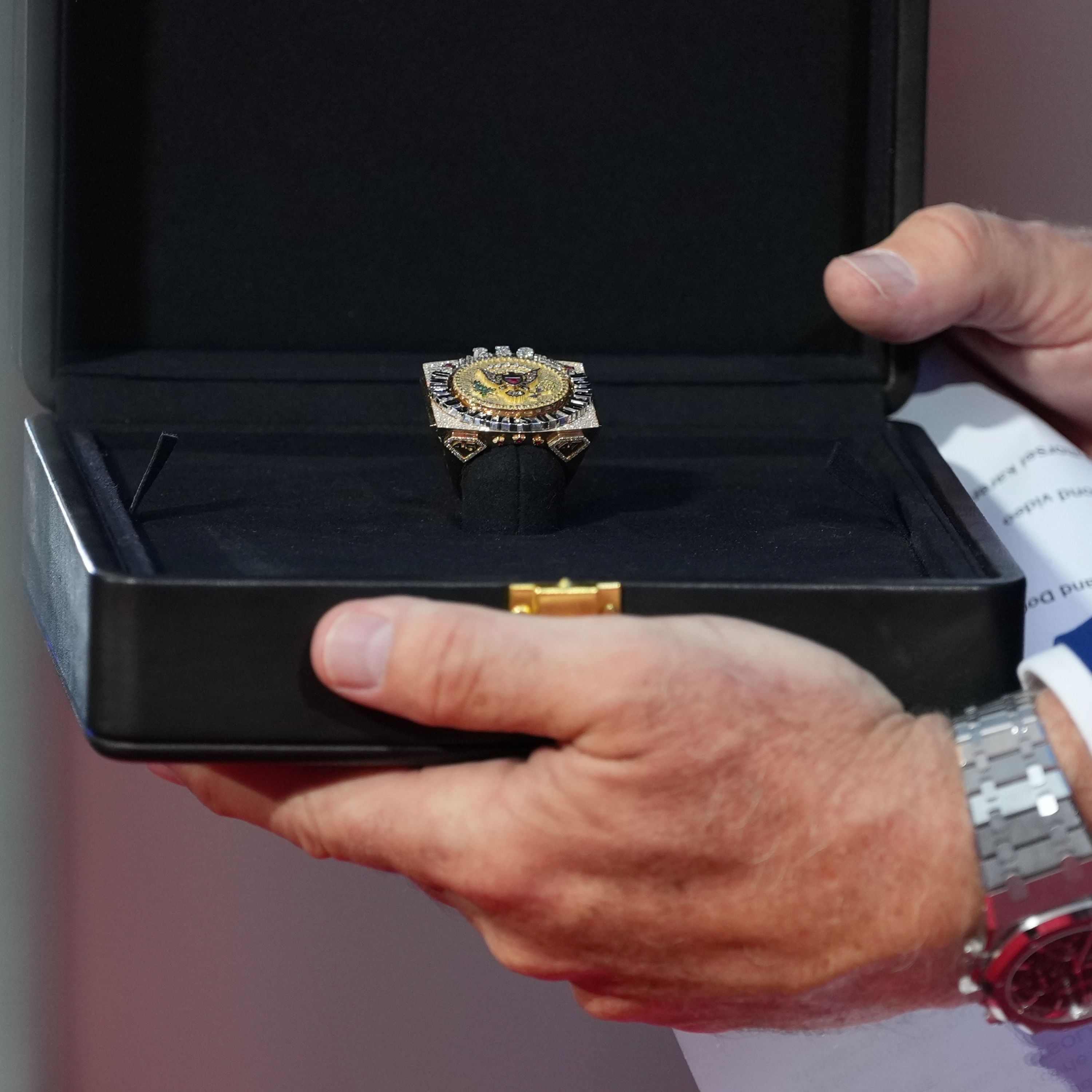
What the peace president is at it again. And there might finally be a breakthrough in Israel's war in Gaza with Hamas 2 1/2 years into the conflict, Maybe. Hamas said today it has agreed to disarm if Israel would stop all attacks, withdraw from the territory, and increase the amount of aid allowed inside. Israeli officials, however, said that a full disarmament by Hamas would have to precede any Israeli withdrawal. So there are still so many ways this deal could fall apart. But Donald Trump doesn't want to talk about that today. He described the agreement as a big step for the Middle east, and people are really impressed by it. I would like to meet these people. Trump's war in Iran is incredibly unpopular with pretty much everyone, even increasingly Republicans. But you know who is having an awesome time right now? Oil companies ExxonMobil and Chevron reported massive profits on Friday, They've made nearly $30 billion in just the second quarter of this year, which began in April. That's a $9.6 billion increase for Chevron over the second quarter of last year, and more than double what ExxonMobil made over the same time period. In fact, ExxonMobil made $160 million a day from April to the end of June of this year. And it's not just these two companies. Shell oil made nearly $10 billion over the same time period, its second highest ever quarterly profit. How are oil companies making so much money from you? Well, more accurately, from the rising cost of gasoline stemming from the war and the resulting shutdown of the Strait of Hormuz. In a totally unrelated note, oil companies combined back in 2024 to give more than $70 million to Trump's presidential campaign and affiliated political action committees. Again, totally unrelated. About 60,000 migrants crossed from Morocco and to Spain's tiny Ceuta territory in the past 24 hours. According to Ceuta's president, dozens of migrants have died on the journey. Many young Moroccans who crossed into Ceuta told the Associated Press that they had hoped to find better work opportunities in Spain, but were returning given the mayhem in the territory. According to the New York Times, the majority of migrants have already left. Ceuta is located on the northern African coast. To get there, migrants often swim about three miles. Authorities in Ceuta and Madrid have linked the border search to a recent decision by the Spanish Supreme Court, which ruled that migrants arriving by sea could not be summarily deported. Unlike those who arrived by land or climb the border fence. Spain's prime minister said that migrant smugglers misinterpreted the ruling. Is it hot in here, or is it just me? Well, according to the Washington Post, it's all of America. July is on track to become the hottest month on record for the entire United states. With temperatures 2.5 degrees Fahrenheit above average average. July could also break the record for highest overnight temperatures and highest humidity. Of course, we'll have to check back in once the month is over and all the data is in. But by the way, my makeup starts running the minute I step outside. I think the verdict is pretty clear. I really wish climate change was a hoax, but here we are, getting hotter and sweatier. And that's the news. Let's talk about Trump. Here's a story you may have missed. About a month ago, the Antwerp World diamond center, which deals with a large percentage of the world's diamonds, made Donald Trump a very special gift purportedly for America's 250th birthday. It's a gold ring encrusted with 321 diamonds alongside sapphires and rubies. There are two T's on the ring, along with a 45 and 47 in recognition of Trump's two terms in office. Engraved on the inside of the ring are the words crafted in Antwerp for Donald John Trump. Then, just last week, the Trump administration coincidentally exempted natural diamonds from its new sweeping global tariffs. Of course, we don't know that the ring was related to the exemption. Still, it doesn't look great, does it? But what we do know is that the Trump administration is neck deep in deals aimed at getting the president, his family and his political organizations paid. As the Wall Street Journal reported on Thursday, Trump is routinely asking for cash from companies and donors so he can build his ballroom or future design projects. The funnel of money aimed at this White House can be almost overwhelming. So what can we do about it? Amanda Carpenter is a writer and editor at Protect Democracy, an anti authoritarianism advocacy group, and she has some ideas. Amanda, welcome to what a day.
- [06:24]
Amanda Carpenter
Hey, thanks for having me. Big fan.
- [06:26]
Jane Coaston
So, before we dive into your piece, let's do a quick Trump lightning round. Because there are so many examples of Trump's, shall we say, Quidditch pro ish quoish relationship with others, his relationship with FIFA, the very fancy diamond ring he got. And then a month later, it turns out the Trump administration isn't going to tariff natural diamonds. The Qatari Air Force One, his cryptocurrency business, the Binance pardon, the Rolexes, the ambassadorships, more pardons. It's hard to keep up. What's your favorite example of Trumpian corruption?
- [07:07]
Amanda Carpenter
Oh, man, my favorite example. I mean, it's. I do think the plane is the most visible in that he's accepted as giant. It is the most visible giant foreign gift. Yeah, it doesn't work. He can't actually use it for the job. We're going to spend billions of taxpayer money making it secure only so that he can take it home and use it as a private citizen or put it in his library. Like he thinks we're going to pay to outfit this personal jet to make it to presidential level security so that he can use it after he's out of office. Like, I'm sorry, as a private citizen, you don't get to have a floating Air Force One. So that thing is the most visible. But there are so many schemes and shakedowns and payoffs happening right now. It's Hard to keep up. And so the way that I want people to think of it is just that he has opened up the presidency as a personal vehicle for self enrichment, whether that be to advance his personal coffers or his political goals. Everything's for sale. And this giant story that came out in the Wall Street Journal in the last 24 hours, we've known a lot of this was happening, but it is stunning the level of open corruption that is happening in this administration. So I think there's a lot of potential for reform once we start shining the spotlight on both sides of this transaction.
- [08:31]
Jane Coaston
Yeah, because the Wall Street Journal story is about how he basically has a person who goes to companies and is like, quite literally the boss wants his money. So it will be for political donations, It'll be for donations to his own campaign. It'll be for donations to pretty much anything, to build the ballroom, to make an arch, to, I don't know, put more gold somewhere else. And to your point, Trump made 2.2 billion last year. And you write that much of that money in your piece, which was excellent, is tied to policy decisions he's made as president. But why is this the first time in America we're seeing a president do this? Because for context, what he's doing is not technically illegal, it's just morally wrong. And no one has seemingly ever thought they would just go do this. Are there no guardrails at all?
- [09:24]
Amanda Carpenter
Well, there's a few things to disentangle from that. Like, on a base level, a president is allowed to solicit donations for personal things, whether it be a presidential library. Now, typically, are you allowed to use your official office to do it? No, they would go out of office. It'd be private fundraisers. But, like, this is all happening, most of it, a lot of it through the White House with official employees. And, you know, we used to be worried about things like the Hatch act, which was a law that applied to all federal employees, that you couldn't use official time to advance political goals. Like, maybe I was a fool because I took this seriously when I worked in the Senate, if we had to do a campaign meeting or anything like that, even a phone call, I would say, hold on, I would walk off the grounds. I would go to a non official office, do that call. We'd have to log our time. I worked with somebody who was a scheduler who got engaged to a lobbyist, and she was so careful about these laws, she logged her engagement ring as a gift, because technically, it was a gift until they were married. So like these are the laws that used to apply. Those are all out the window now. And what is so different is that Donald Trump is not just getting donations for a personal library. That'll come later off campus. He has inserted himself into so many federal decisions where he himself is the deal maker. Right? Like you see Mark Zuckerberg, you see all these CEOs going to Trump personally giving him gifts because they know that he is the decision maker for this. There are regulatory decisions that are not being outsourced to the regular federal agencies through a process. He says, I'm the deal maker. And now we have this considerable reporting that needs to be followed up on that essentially says, yeah, the boss wants the money too. And so that's where I think there's a lot of vectors for reform, for oversight. And Donald Trump has been promising or talking about giving pardons to everyone within 200ft of the Oval Office. Because what they are doing, I think they know it's wrong. I think they know the day is coming when there's going to be oversight, there's going to be investigations, and they think they have a get out of jail free card. And let me tell you what, they do not. There are ways that we can get this money back using, it's called disgorgement laws, essentially that just means if you are getting profits through ill gotten gains, fraud, bribery, extortion, there are ways to get that money back. And so Congress could start now. I think we need a full audit of the White House, everything that's going on in there. We need to be looking at what these companies are doing, the favors that they have received and start to track all that down. There's state AGs who can investigate this on the private side because again, corruption takes two parties. Trump can ask for the money, but all these companies are giving it. And we have a good example earlier in the administration when Trump was trying to shake down all these law firms and there was a lot, they wanted to pay the money first. But as soon as people started talking about oversight on the law firm side and saying, you know, maybe this looks like you are giving a bribe, a lot of them reorient it and they realize, yeah, like we can't have a hand in this corruption too. And so I think companies like Meta and everyone else, like paying for this kind of access, need to get the same signal.
- [12:38]
Jane Coaston
If you also love words like oversight and going after corruption as much as I do, stick around. In the meantime, make sure to subscribe, leave a 5 star review on Spotify and Apple Podcasts. Watch us on YouTube and share with your friends. More to come after some ads Water Day is brought to you by Willy's Remedy. Finally, an alcohol alternative that actually works with an uplifting euphoric buzz you can really feel without any of the negative side effects. Willy's is a premium THC infused social tonic crafted by the legendary Willie Nelson. Inspired by Willy's way of living where peace flows freely and hangovers are a thing of the past. It is a low calorie, low sugar alcohol alternative that actually works, delivering a fast acting euphoric social buzz without the regrets that can come with alcohol. Willy's social tonics come in 5mg and 10mg doses with a best in class flavor experience so smooth and balanced you barely realize you're drinking a THC product at all. You can enjoy the tonics as a shot, sipped over ice or mixed into your favorite mocktail. One shot of Willy's helps you relax, unwind and de stress. Perfect for taking the edge off at the end of a long day or socializing with friends, Willys offers the kind of feeling that makes good company even better. Willys ships directly to your doorstep in 40 plus states and has sold out three times in the first six months with over 300,000 happy customers. So order now@drinkwillys.com and use code WAD for 20% off of your first order and free shipping on orders over $95. And live like a legend. What a Day is Brought to you by HomeServe. Here's the thing about the home disasters that sneak up and bite you. Most of them cost more than a car repair. HomeServe offers plans starting at $499 a month with HomeServe. When something goes wrong, you're not scrambling, you're just making one call. HomeServe is like a subscription for your home. For as little as $4.99 a month, they've got your back. Regular homeowners insurance usually doesn't cover a lot of the day to day wear and tear, plumbing failures, H Vac breakdowns, electrical issues. It's super simple. Choose a plan for your needs and budget and when something on your plan goes wrong, just call their 247 hotline to start the repair process. With nearly 4.5 million customers, a 4.7 out of 5 rating on Trustpilot and an A Better Business Bureau rating, they're the real deal. Your cooling system isn't going to warn you before it quits. H Vac breakdowns burned out motors. These repairs hit hardest. When it's 95 degrees and you need AC the most, don't wait until you're sweating it out to figure out you're not covered. I think all the time about all the stuff that can go wrong at home and I'm so glad that if I needed it, HomeServe would be there to help. Your next costly home repair is already coming. Act now and get protected with a plan through HomeServe for 50% less your first year. Go to HomeServe.com wad to find the plan that's right for you. That's HomeServe.com wad for 50% less savings compared to renewal price Boyd in Florida.
- [15:33]
Tommy
Hey, it's Tommy from Pot Save America and Pot Save the world. Last year, 2,500 people joined us at CrookedCon for conversations with some of the smartest organizers, least annoying politicians, and most interesting voices in politics to talk about how to fix this mess. Even President Obama made a surprise appearance. We're doing it all again November 5th to 7th in Washington, D.C. with even more podcasts, panels and workshops. Plus there'll be drinks, which we'll need after the midterms. No matter which way they go, get tickets at CrookedCon. If you're a friend of the pod, you get a discount to see you there.
- [16:04]
Jane Coaston
Let's get back to my conversation with Amanda Carpenter. I was curious as to your thoughts because I love personally imagining some sort of repo man situation in which somebody goes into the White House and is like, yeah, we got to take all this, but what money or assets are you saying could actually be recoverable?
- [16:22]
Amanda Carpenter
Well, I think the big pots recovery that we can start to look at. Look at the gifts that are made to Trump's nonprofits. Look at the funding for his presidential library. Look at all these lobbying firms that have cropped up for these pay for pardon schemes. I mean it is flagrant. I think a lot of this is traceable. We have a good groundswell of reporting that is happening now and number one, like we can get this money back. Like if Congress starts to follow the money, state AGs start taking an interest in the business side of this. And then also if you get a new administration, there's all kinds of investigative authorities that can be used through places like the sec, the irs. So there's a lot of vehicles to do this. And this is important to the pardon discussion because civil asset forfeiture is not touchable by the pardons. A pardon may keep you out of jail, but it is not going to allow you to keep ill gotten gains.
- [17:19]
Jane Coaston
So what's the roadmap? What needs to happen to start clawing back this money?
- [17:25]
Amanda Carpenter
Number one, you just gotta follow the money. We have to find the money, start to have investigations about like I can tell you where these pots are. And again, I think the reporting gives a really good start. But I think, I think there's gonna be committee interest as soon as some Democrats start to get the gavel. But also they don't have to wait to get the gavel. Right? Like they have staff that can start to put this together. And so, you know, it's just gonna be a matter of where do we focus? Because again, the corruption is so rampant, it's so widespread. I mean, we didn't even talk about all the no bid contracts that are happening now.
- [18:02]
Jane Coaston
The prediction market reflecting pool.
- [18:05]
Amanda Carpenter
Yeah, like a good example. But also part of this discussion has to be why is this not just we're going to get the money back and get these guys and show them where the law is. What they are doing is making life worse in America. Right? Because this corruption is bad. Not just because the bad guys walk out with like a big pot of money. It leads to worse government services, it leads to less competition that make things better and it's just not fair. Right. Like you should not have to pay your way to get a fair shot before the government, whether it comes to a contract or, or a job or whatever. And so I think as a part of the discussion as well, like we also need to do a good job demonstrating how everything ends up like a shit reflecting pool when you let this corruption go on.
- [18:57]
Jane Coaston
You point in your article to Hungary as an example of a country that's implementing an anti corruption playbook post Orban. What are they doing and what would the American version look like?
- [19:08]
Amanda Carpenter
Yeah, so essentially what they did, number one, they campaigned on this and saying that we're going to root out the corruption and throw these guys out because we're going to do something about it. Right? Like it's not just, oh, we got an office now and it's all over. They've set up an anti corruption bureau that unites a lot of investigative power into essentially one agency. And I got to tell you, Chuck Schumer, he did introduce a bill this week that does something extremely similar. Now you can kind of say like, oh, another government agency actually uniting all these things in one house can be very effective in bringing the right people together to track this money down. Because it is gonna be complicated. It's gonna require like a lot of forensic analysis subpoenas, probably hearings, talking to the right people at these companies to find it in order to explain what happens. So just getting those resources ready is really important. But on the front end, what I think was just phenomenal that they did is that they followed up on the campaign promise. Right. They didn't just get up in office. They said, we gotta make sure that this never happens again. And I think we have a lot of lessons to learn.
- [20:14]
Jane Coaston
Amanda, thank you so much for joining me.
- [20:16]
Amanda Carpenter
Thanks.
- [20:18]
Jane Coaston
That was my conversation with Amanda Carpenter, writer and editor at Protect Democracy. We'll link to her piece in the show Notes before we go. America can feel like it's spiraling out of control, but could a state like Wisconsin hold the blueprint for turning things around? Stacey Abrams, Podcast Assembly Required explores solutions for fighting back against fascism and corruption. In last week's episode, Stacey talked with author and former chair of the Wisconsin Democratic Party, Ben Wickler, about how Democrats can win back voters ahead of the midterms. New episodes drop Every Tuesday on YouTube and wherever you get your podcasts. That's all for today. If you like the show, make sure you subscribe, leave a review, relish the one thing that can bring European countries together hating one guy, and tell your friends to listen. And if you're into reading and not just about how all 55 members of European soccer's member association UEFA, along with a bunch of other countries and soccer associations worldwide, say that they will boycott future World Cups if FIFA goes ahead with its scheme to sell stakes and competitions to private investors like me. What a Day is also a nightly newsletter. Check it out and subscribe@crooked.com subscribe I'm Jane Coastin, and nothing brings a continent together like collectively despising one person. What a Date is a production of Crooked Media. Our show is produced by Kaitlyn Plummer, Emily Foer, Erica Morrison and Adrienne Hill. Our team includes Haley Jones, Greg Walters, Matt Berg, Joseph Dutra, Johanna Case and Desmond Taylor. Our music is by Kyle Murdoch and Jordan Kanter. We had help today from the Associated Press. Our production staff is proudly unionized with the Writers Guild of America EAS.