Loading summary
Transcript49 lines
- [00:04]
Greg Walters
It's Wednesday, March 4th. I'm Greg Walters in for Jane Coston. And this is Whataday, the show that noted yesterday, Oklahoma Republican Senator Mark Wayne Mullen couldn't keep straight whether America is at war with Iran or Iraq. And now he doesn't seem totally sure whether we're at war at all.
- [00:21]
Senator Mark Wayne Mullen
This is war. And we're taking out the threat.
- [00:24]
Greg Walters
Got it. This is a war. But I thought only Congress could, could declare a war. You'll concede this is war.
- [00:30]
Senator Mark Wayne Mullen
We haven't declared war. They declared war on us, but we haven't declared war. And Secretary Hex said we haven't declared.
- [00:35]
Greg Walters
Now you said they've called it war.
- [00:37]
Senator Mark Wayne Mullen
They've called it war. What I was saying. Okay, well, that was misspoke. What I was saying that they've declared war on us. But war is ugly. It always has been ugly.
- [00:46]
Greg Walters
You know, at least we can agree on that last part. On today's show, the state. The State Department scrambles to help thousands of Americans stuck in the Middle East. And Department of Homeland Security Secretary Kristi Noem faces tough questions from senators about immigration enforcement and her personal history of canine execution. But first, a very big happy. Oh, my God. The midterms are finally upon us. Day to all those who celebrate because yesterday marked the first official primaries ahead of this November's big vote. Ballots were still being counted as we were recording this on Tuesday evening. And we'll be back tomorrow with a breakdown of who's up, who's down, and what we can learn from the results in Texas, North Carolina, and Arkansas. And that includes how the electorate is feeling about a certain, you know, who, and all of his ludicrous mishigos like this war he just got us into, specifically the kind of war that President Donald Trump spent the last decade promising he would never lead us into. Here he is. During the State of the union address in 2019, as a candidate for president,
- [01:57]
Miles Taylor
I loudly pledged a new approach. Great nations do not fight endless wars.
- [02:07]
Greg Walters
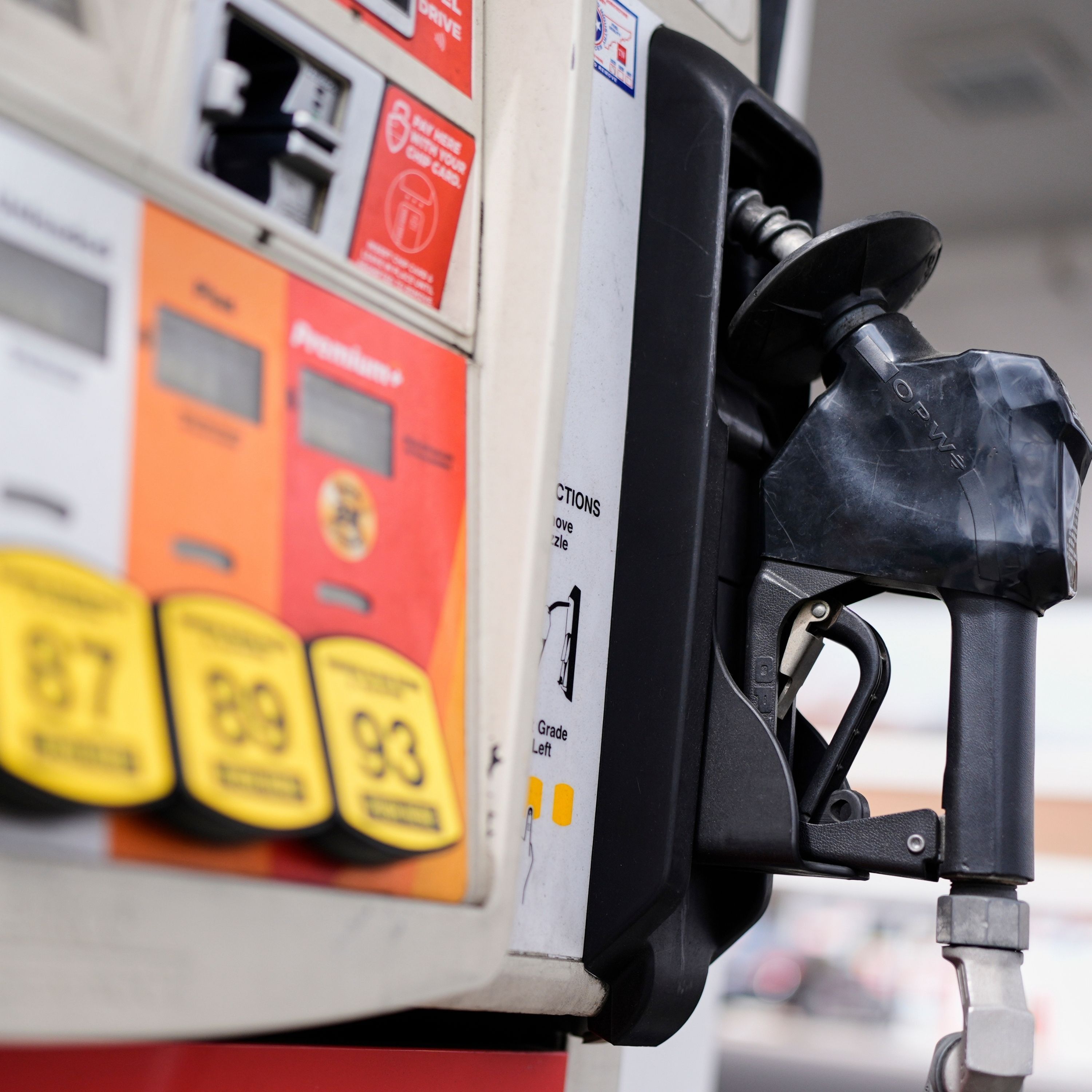
Gee whiz, I never thought I'd get nostalgic for 2019 Trump. But this war in Iran isn't just sowing chaos, death and destruction for an uncertain period of time without any apparent plan or endgame. It's also making one extremely important commodity a lot more expensive. Oil. And I'm no economist, but I recall Donald Trump boasting that he would make the price of oil and gasoline go down or something. And here he is speaking on Sinclair before the election in 2024.
- [02:37]
Senator Mark Wayne Mullen
I'm going to cut fuel prices in
- [02:39]
Miles Taylor
half within 12 months, so that because
- [02:42]
Greg Walters
the energy costs are so high, instead, we're now looking at a bait and switch of downright historic proportions on both fronts. Thanks to his war of choice against Iran, all traffic has stopped in the Middle Eastern waterway called the Strait of Hormuz, which happens to handle one out of every five barrels of oil consumed in the world. Now, you might be asking yourself, is this all part of some diabolically clever plan, run on peace and low gas prices and then impulsively start a war that pushes oil prices up? Or is it? As I once heard someone say, Donald Trump doesn't play 17 dimensional chess. He eats the pieces. To find out, I spoke to Miles Taylor, the guy that you might remember as Anonymous. Now, he served as the chief of Staff at the Department of Homeland Security in the first Trump administration, where he caused a big hoopla by writing an op ed in the New York Times headline, I am part of the resistance inside the Trump administration. That prompted Trump to sign a memorandum stating Taylor's actions might have been treasonous and calling for an investigation. Now, Miles is The founder of Defiance.org, a civic club focused on countering Trump's abuses of power. Miles, welcome to what a day.
- [03:52]
Miles Taylor
Great to be with you, my friend.
- [03:54]
Greg Walters
We've been hearing a lot about the Strait of Hormuz, but what is that, and why should we care?
- [04:01]
Miles Taylor
Well, look, most people don't spend their days too worried about a little tiny waterway in the Middle East. But that all just changed, Greg, because the Strait of Hormuz, which is a waterway that at its thinnest point is only 21 miles across, is a critical choke point for goods and services, but especially one big thing, oil. And within the past two days, the Iranians have sealed that strait. Why does that matter? Well, 20% of the world's oil supply goes through that strait. And even if the Iranians hadn't closed it, shipping companies are so worried that their boats will be destroyed, either in the crossfire or by deliberate sabotage in this war with Iran, that they're not crossing it anymore. Their insurance companies don't want them to do it. Their own boat drivers and employees don't want them to do it. The obvious question that your average person would have is, well, isn't there some other way around this? I mean, if you look at a map and you see the Strait of Hormuz just south of Iran, just north of Oman, you would think, well, there's got to be some way to get this across land. And there are pipelines in the region. But by and large, Greg, the answer is no. You really can't get around it. You can't get that much oil around it. Nothing has been built to make that happen. So you're largely stuck with this problem. If the strait is closed, a lot of the world's oil supply has stopped. And that's bad news, because if 20% of the world's oil supply is choked off for very long, it could have massive repercussions for the global economy.
- [05:37]
Greg Walters
But wait a minute, wait a minute. So I thought America didn't import oil from Iran because of sanctions. So why does this impact us?
- [05:48]
Miles Taylor
Well, look, you think of it like a balloon that you squeeze. If you squeeze it in one place, the pressure is going to go to another part of the balloon. So even if Iranian oil is not coming to the United States, constrictions in the global supply affect the United States. What's more than that, it's not just Iranian oil we are worried about here. And there are folks in the Trump administration who would say, well, don't worry, because we're not dependent on Iranian oil. Yeah, but that's not the only thing passing through the Strait of Hormuz. In fact, most of the oil going through that strait is, isn't Iranian oil. It's oil from other countries in the region that has to transfer through that critical point to make it. Here's the other piece. We have seen this multiple times throughout history. When there is shipping delays, traffic problems with some of these major oil routes that these container ships go through, it directly affects prices at the pump. But that means something else much, much bigger, Greg, which is that groceries, stereos that you buy at the store, all goods you buy in one way, shape, or or form are dependent on oil. They're dependent on gasoline, vehicles, airplanes and trucks and other ships moving those products across the world. So all of those products are going to go up in price because the companies aren't going to want to shoulder that burden. They're going to pass it on to consumers. That leads to the magic word, the dangerous word here, which is inflation. The closing of this little tiny waterway south of Iran and has the capacity to supercharge inflation all around the globe if it lasts too long.
- [07:25]
Greg Walters
So play this out for me. How bad could this get?
- [07:28]
Miles Taylor
Bad. Very, very bad. And here's what I want to compare it to. I don't want to be alarmist. I don't want to make people panic. But the last time we saw a similar series of events like this was back in 2000. 8. Now, oil has gone up and has had spikes certainly since 2008. But this sort of eerie series of events echoes what we saw before the financial crisis. Why? Because back then in 2008, there was a lot of concern that the Iranians were moving towards a nuclear capability. There was concern that that might lead to military conflict in the region. And markets. The jitters in the markets started to price oil higher. Oil started off at the beginning of 2008, around $90 a barrel, kind of historically high, but not terrifyingly high. Then that number skyrocketed to $150 a barrel. That was a historic number in the summer of 2008, which resulted in inflation around the globe. That meant businesses that had tight margins, individual households that had tight margins could not afford the price increases. That is the domino that pushed the markets over the edge. We are seeing something similar happen right now. Just in the handful of days since the Trump administration and the Israelis started to bomb Iran, we've seen oil spike close to $15 a barrel. It's not quite over that $100 a barrel margin that you really start to worry about, but it's trending fast in that direction. That's what people need to keep their eye on. If that price starts to go too high, markets are going to get really worried that there won't be time for a correction, and you're going to see inflation prices start to make their way to store shelves.
- [09:17]
Greg Walters
So you're talking about this war leading to higher inflation. It strikes me there's an irony here, which is that, as I recall, Trump campaigned on a few things, including keeping America out of what he called stupid wars and lowering the price of everything. Does it feel like Trump is delivering on those promises with this campaign to bomb Iran?
- [09:42]
Miles Taylor
No. I mean, look, I'll be honest with you. You would only do something like this if you weren't looking into the future or you intentionally wanted to destroy people's bank accounts. And I cannot imagine that any politician, love or hate Donald Trump, wants to intentionally destroy people's bank accounts. And so it's gotta be the first one. You're doing something so heedless, you're not considering the secondary and tertiary consequences. I mean, anyone who has studied the region knows that the Strait of Hormuz is this critical geopolitical choke point. And there has always been conversation that in a war with Iran, this is one of the first things you would worry about. This was a known. Known, but clearly was something that the Trump administration was not thinking about and is something that's going to have enormous repercussions in the midterm elections. Affordability is the number one thing those Republicans are hearing from their constituents that they are mad about. They are worried they will lose the House and maybe the Senate because prices are so expensive. What has their president, Donald Trump, gone and done? One more thing that has the capability to supercharge inflation and make that problem worse. I cannot imagine that right now on Capitol Hill behind closed doors, there are very excited conversations among the Republican caucus about this war. The this is the type of thing that will guarantee their losses in November if they don't pressure the White House to turn it around.
- [11:07]
Greg Walters
You worked in the first Trump administration and saw how decisions were made firsthand. You're famous for announcing to the world that you were quietly, secretly working against his craziest decisions from the inside. In your view, do people inside the administration now understand these risks that you're talking about? I mean, is there a plan or is this just bomb first, plan later?
- [11:30]
Miles Taylor
Look, Greg, I honestly think it's the latter. And what I did in the first Trump administration is the absolute bare minimum you should expect from any public servant. It's not heroic to comply with the law. That's the expectation. And the only defiance that we undertook in the first Trump administration was saying no when the president wanted to break the law or was going to put lives in danger. I don't see that happening anymore. I don't see folks in this administration saying no. And this heedless attack on Iran that's putting the global economy at risk, by the way, is the perfect example.
- [12:03]
Greg Walters
So tie this all together for me. What does this tell us about Trump's priorities as he's asking Americans to give his party control of Congress once again?
- [12:12]
Miles Taylor
Look, this says pure and simple that Donald Trump cares about Donald Trump and not the average American. And you don't even need to know anything about foreign policy, national security or economics to see that. All you need to do is to look at the side by side. Donald Trump announced this war from his ballroom in Mar a Lago as people feet away, dance the night away. Two days later, his first real conversation about it with the American people was inside the White House, where he stood there and briefly pivoted away from talking about Medal of Honor recipients to talking about the gold drapes in the White House and the giant ballroom he was building. Donald Trump is the most out of touch billionaire that's ever occupied the Oval Office and that is bleeding leading into his actual decision making. One more data point. The Washington Post just reported this week that one of the key reasons Donald Trump wanted to go to war with Iran is that their leaders had targeted him. Their leaders had tried to undermine his personal security and had threatened Donald Trump. And his quote was, I got them before they got me. This is personal for Donald Trump and personally affects the rest of us.
- [13:21]
Greg Walters
Miles, thank you so much for being here.
- [13:23]
Miles Taylor
Thanks, my friend.
- [13:24]
Greg Walters
That was my conversation with Miles Taylor, founder of Defiance.org, and former DHS chief of staff in Trump's first term. And just to clarify, that quote he mentioned at the end was actually from an interview Trump did with ABC News on Sunday. The President was talking about Iran's supreme leader, Ayatollah Ali Khamenei, and he said, I got him before he got me. Unlike the Trump administration, we know what our mission is to bring you more of the news. And that's coming up. But if you like the show, make sure to subscribe. Leave a five star review on Spotify and Apple Podcasts. Watch us on YouTube and share with your friends. Stay tuned after some ads. What a day is brought to you by Zebiotics. Let's face it, after a night with drinks, I don't bounce back the way I used to. I have to make a choice. I can either have a great night or a great next day. That is, until I discovered pre alcohol zebiotics. Pre alcohol probiotic drink is the world's first genetically engineered probiotic. It was invented by PhD scientists to tackle rough mornings after drinking. Here's how it works. When you drink, alcohol gets converted into a toxic byproduct in the gut. It's a buildup of this byproduct and not dehydration that's to blame for rough days after drinking. Pre alcohol produces an enzyme to break this byproduct down. Now just remember to make pre alcohol your first drink of the night. Drink responsibly and you'll feel your best tomorrow. Now, I don't know about you guys, but I just can't drink the way I used to could. And the older I get, the worse these hangovers hit me. Some remind me of the time Ernest Hemingway said, quote, I've had hangovers they could name battleships after. Mine might be more like a dinghy or a sinking canoe, but I knew what he meant. Fortunately for me, when crooked media throws one of our very fun holiday parties, there is almost always somebody passing out the little bottles of Zebiotics, which means I can let loose at the party and still hold it together the next day. The first person who ever handed me a Zebiotics before a party told me it was a game changer and in my experience they were right. March is a marathon of social events from the slopes to the bracket watch parties to Guinness on St Patrick's Day, and pre alcohol is the tool that you need to fully enjoy the end of winter. Go to zbiotics.com wad to learn more and get 15% off your first order when you use WAD at checkout. Zebiotics is backed with a 100% money back guarantee, so if you're unsatisfied for any reason, they'll refund your money, no questions asked. Remember, head to zbiotics.com waad and use the code WAAD at checkout for 15% off. This episode of what a Day is brought to you by Wild Grain. Wild Grain is the first bake from frozen subscription box for sourdough breads, artisanal pastries and fresh pastas. Unlike many store bought options, Wild Grain uses simple ingredients you can pronounce and a slow fermentation process that can be easier on your belly and richer in nutrients and antioxidants. Plus, all items conveniently bake in 25 minutes or less with no thawing required. Wild Grains boxes are fully customizable. In addition to their variety box, they have a gluten free box, a vegan box and a new protein box. Now personally I think there is literally nothing better than the smell of fresh baked bread. It just makes the whole home feel inviting and awesome. And whenever I'm putting together a really kick ass breakfast I go for the Wild Grain croissants. Not only do they just taste amazing, all warm and flaky and buttery, but you. You also get to enjoy the aroma which kicks up the whole vibe to the next level before you even bite into one. Imagine having fresh bakery quality bread, pastries and pasta at home without any trips to the store. And don't just take my word for it. They have over 40,000 five star reviews and have been voted the best food subscription box by USA TODAY for three years in a row. For a limited time, Wildgrain is offering our listeners $30 off your first box plus free Croissants for Life when you go to wildgrain.com wad to start your subscription today. That's $30 off your first box and free Croissants for Life when YOU visit wildgrain.com wad or you can use promo code WAD at checkout.
- [17:40]
Desmond Taylor
Early birds always rise to the occasion for summer vacation planning because early gets you closer to the action. So don't be late. Book your next vacation early on VRBO and save over $120. Rise and shine. Average savings $141 select home only hey
- [17:57]
Kristi Noem
girl, what's happen Is that your antiperspirant?
- [18:01]
Greg Walters
Yeah.
- [18:02]
Kristi Noem
Let me see that can. Aluminum butane I cannot pronounce that. You have to switch to native deodorant. Native simple formula has only clean ingredients. It gives you effective 72 hour odor protection with no hydrocarbon propellant. Wow, this smells heavenly clean. Effective 72 hour odor protection isn't a myth.
- [18:27]
Greg Walters
Here's what else we're following today. Head of Lines
- [18:33]
Senator Mark Wayne Mullen
A drone unfortunately struck a parking lot adjacent to the Chancellery building and then set off a fire in that place. All personnel are accounted for. As you're aware, we began drawing down personnel from our diplomatic facilities in advance of this.
- [18:49]
Greg Walters
Secretary of State Marco Rubio spoke with reporters on Tuesday shortly after an Iranian drone hit a parking lot next to the US Consulate in Dubai, United Arab Emirates. Officials said the strike caused a fire, but that they were able to contain it. This was just one of several retaliatory attacks made by Iran this week against U.S. consulates and embassies in the Middle East. Drones hit U.S. embassy buildings in Saudi Arabia and Kuwait, but no casualties have been reported reported in those incidents either. Iran has also reportedly damaged energy facilities across the Middle East. Deaths from Iranian strikes have been reported in countries including Israel, Bahrain, Kuwait, Oman and the United Arab Emirates, but the death toll in those countries so far remains relatively low compared to the Iranian Red Crescent's estimate of 787 killed in Iran. The State Department is urging Americans to evacuate from more than a dozen countries in the Middle East. The main problem for the people being told to leave is that many airports are closed and airways are restricted amid the war with Iran. The State Department says they are coordinating with around 3,000Americans, who are among hundreds of thousands of travelers trying to leave the region. On Tuesday, Trump was asked why his administration didn't have a better plan to help Americans abroad.
- [20:03]
Kristi Noem
Why wasn't there an evacuation plan and will you send planes to get people out?
- [20:07]
Greg Walters
Well, because it happened all the time, very quickly. And how could Trump possibly have guessed how quickly war would break out when he started it? State Department officials said Tuesday that the administration is working to charter flights to help get Americans out of the Middle East. They've also directed people stranded in the region to a State Department phone number for more assistance. But as of this recording, an automated message that plays out when you call says please do not rely on the US Government for assisted departure or evacuation at this time. Noted a lot has happened since Iran's Supreme Leader, Ayatollah Ali Khamenei was killed in the initial round of U S Israeli strikes in Iran on Saturday. For one, President Trump told the Atlantic he was open to talking with Iran's new leadership. But here's the who would Trump talk to? An interim council assumed temporary leadership duties while a group of clerics called the assembly of Experts was set to select a new supreme leader. Israel's ambassador to the United States, Yahiel Leiter, told CNN that Israel actually targeted the place where the assembly would appoint that new leader.
- [21:14]
Senator Mark Wayne Mullen
We struck in an area where the electors were meeting to appoint a new supreme leader, somebody who would be in charge of spreading death and mayhem both in Iran and outside of Iran, and there is a very good chance that the electors will not be readily available for any further meetings.
- [21:35]
Greg Walters
According to the Times of Israel, an Israeli defense source said it's unclear how many members of the electors were in the building, if any. The New York Times cites the Iranian Fars News Agency, which says that the assembly had met virtually and that nobody was in the building. Department of Homeland Security Secretary Kristi Noem testified in front of the Senate Judiciary Committee on Tuesday. Noem repeatedly dodged accountability for falsely accusing Renee Goode and Alex Preddy of domestic terrorism. Good and Preddy were both killed by immigration officers in Minnesota in January. Democrat Dick Durbin from Illinois was one of several senators who confronted Noem. How did you think that calling them
- [22:14]
Senator Mark Wayne Mullen
domestic terrorists at that scene was somehow
- [22:18]
Greg Walters
going to calm the situation?
- [22:20]
Kristi Noem
You know, Senator, we are working in those situations where there's a tragic loss of life and that there is something that our agents are involved in that we continue to deliver information.
- [22:31]
Senator Mark Wayne Mullen
Is it so hard to say you were wrong?
- [22:33]
Kristi Noem
We continue. As these investigations continue to go, we will, I absolutely strive to provide factual information.
- [22:40]
Greg Walters
Spoiler alert. Noem did not admit that she was wrong. And it wasn't just Democrats who expressed frustration with Noem. North Carolina Republican Thom Tillis even compared Noem's poor leadership to the infamous stories she's told about her decisions to kill a dog and a goat that belonged to her family.
- [22:57]
Miles Taylor
My point is those are bad decisions made in the heat of the moment, not unlike what happened up in Minneapolis, I expect. We're an exceptional nation, and one of the reasons we're exceptional is we expect exceptional leadership.
- [23:14]
Greg Walters
You may not be surprised to hear that Tillis is retiring when his term is up early next year. And that's the news. Before we go if you're trying to keep up with the rapidly escalating war in Iran, tune in to Pod Save the World. This week, hosts Ben Rhodes and Tommy Vitor dropped two bonus episodes breaking down what's happening in the Middle east, including the latest Iran developments and new statements from Trump and Hegseth. Subscribe now to Pod Save the World so you don't miss bonus episodes like these and watch now on YouTube or listen in the Pod Save the World feed. That's all for today. If you like the show, make sure you subscribe. Leave a review Ponder whether we really need a Game of Thrones movie or if we're just gonna get one and tell your friends to listen. And if you're into reading and not just about how Warner Bros. Is developing yet another Game of Thrones prequel like me, what a Day is also a nightly newsletter, one that I just happen to edit. Check it out and subscribe@crooked.com subscribe I'm Greg Walters in for Jane Coston. And if this movie does get made, that doesn't mean George R.R. martin is off the hook. He's had 15 years to finish the Winds of Winter.
- [24:43]
Desmond Taylor
What a Day is a production of Crooked Media. It's recorded and mixed by Desmond Taylor. Our associate producer is Emily Foer. Our producer is Kaitlyn Plummer. Our video editor is Joseph Dutra. Our video producer is Johanna Case. We had production help today from Greg Walters, Matt Berg, Sean Ali and Ethan Oberman. Our senior producer is Erica Morrison and our senior vice president of news and politics is Adrienne Hill. Our theme music is by Kyle Murdoch and Jordan Cantor. We had help today from the Associated Press. Our production staff as proudly unionized with the Writers Guild of America.
- [25:11]
Greg Walters
Eat Waste.