Loading summary
Transcript45 lines
- [00:04]
A
It's Wednesday, April 1st. I'm Jane Coston, and this is what a day. The show that wants to congratulate President Donald Trump on another astonishing achievement. Here's CNN's pollster Harry Entin on Tuesday.
- [00:15]
B
So I went back and I looked at all of the presidents at this point in a presidency.
- [00:21]
A
All of them.
- [00:21]
B
All of them at this point in a presidency. And guess what? Donald Trump is the lowest ever. The lowest ever at this point in a presidency. Lower than Joe Biden, lower than Jimmy
- [00:33]
A
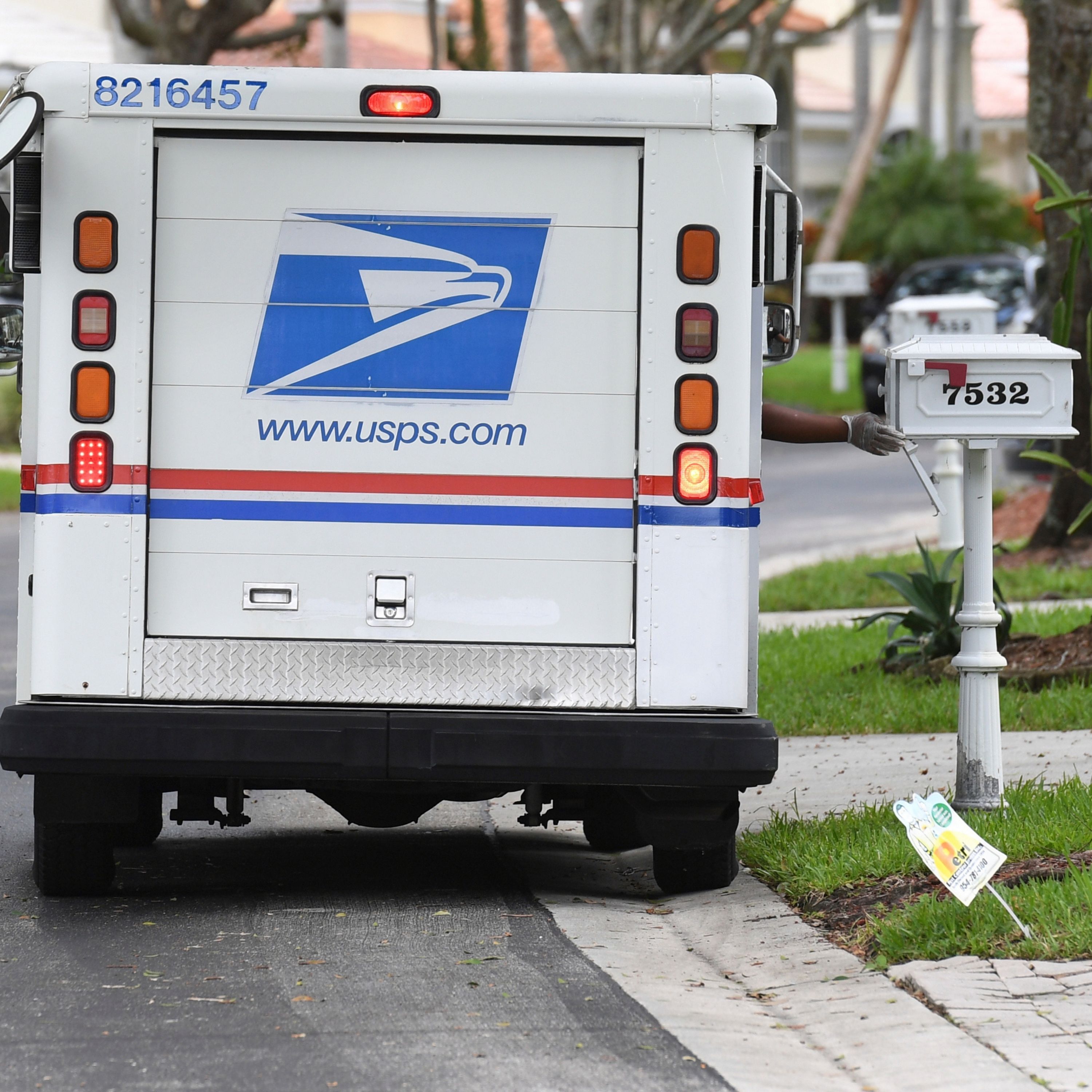
Carter, lower than Ronald Reagan. This is not an April Fool's joke. Donald Trump is currently more unpopular than any US president ever this point in the presidency. Great job. On today's show, President Trump once again lashes out at US allies in true toddler fashion. And who needs a $400 million ballroom where you can have your very own presidential library inside a towering Miami skyscraper? Let's start with the United States Postal Service. Did you know that the Postal Service is the most popular federal agency today? It's true. In fact, since 2014, Gallup has found that it has consistently been one of the highest rated federal agencies, which makes the following piece of information extra tough. The United States Postal Service is basically broke. Here's Postmaster General David Steiner speaking before a House oversight subcommittee in March. At our current rate, we'll be out of cash in less than 12 months. So in about a year from now, the Postal Service would be unable to deliver the mail if we continue the status quo. How did this happen? Steiner points to one phenomenon we're probably all aware of. There's just less mail being sent. Between 2008 and 2025, first class mail volume declined by more than 50%. That means fewer letters, bills, magazines and invitations to weddings. The Postal Service reported losing roughly $9 billion in each of the past two fiscal years. So what needs to happen to keep our letters, medication and college alumni magazines headed to our homes, not to mention our ballots, especially with the midterm elections coming up and the issue of mail in voting sitting before the Supreme Court? To find out, I talked to Hansi Lo Wang about the state of the Postal Service and what Congress needs to do to save the most popular federal institution. He's the correspondent for npr. Hansi, welcome to what a day.
- [02:35]
B
Thanks for having me.
- [02:36]
A
In mid March, Postmaster General David Steiner told Congress that if they don't step in, the Postal Service could run out of money as early as October. How is the Postal Service funded? And why are they facing this financial crisis? Because it feels like this has been going on For a while.
- [02:52]
B
This has been going on for a while because the Postal Service is a self funded government agency. A lot of people think it's a federal government agency, so it must be run mainly based on tax dollars. That's not the case. A law passed in 1970 set up the Postal Service and it set it on a path to become a self funded service. And that means that we get the mail six days a week at almost every address in the country based on stamps, people buying stamps, businesses buying stamps, and other fees that the Postal Service charges.
- [03:26]
A
I know this is kind of a side note, but why did we make this decision like that? Seems like why would we make the Postal Service a self funded federal agency?
- [03:36]
B
There was a lot of concern at the time when this law was passed in 1970 that there was this past history of the Postal Service being a more regular agency funded by appropriations as part of the executive branch. And it ended up in also a fiscal crisis and also a lot of mismanagement at that time. And so there was a compromise reached and this law was passed to set it up as an independent agency of the federal branch and for it to ultimately be self funded. And at that time, the assumption was there would be enough demand, there would be enough people and businesses using the mail in order to cover the costs of this.
- [04:17]
A
Yeah, well, I can see how they thought that in 1970, but a lot has happened. So in response to all of that and the challenges that the Postal Service is facing, what are some of the changes that the Postmaster General says need to happen in order to keep the Postal Service operating? And how much could these changes impact the communities that rely the most on the Postal Service?
- [04:39]
B
Well, the Postmaster General, David Steiner, he laid out a menu of options before Congress, including allowing the Postal Service to increase postage rates above the current limits, including increasing the amount of money the Postal Service can borrow. Currently it's at a limit of $15 billion that's set by federal law and it's been in place since the early 1990s. And the Postal Service says we need to have more flexibility and have more money to be able to borrow. Another option the Postal Service has asked lawmakers to consider is helping it to reform its pension system, its retiree health benefits system. They're both very complic systems and they require pre funding. And it has made the Postal Service face a lot of financial challenges because it's not bringing enough enough revenue to cover it costs and that's adding to the cost. The current system, the way it's set
- [05:34]
A
up, the Postal Service has also recently put out some proposals to raise prices on certain services. What are those proposals and how much could they help the agency with its funding issues?
- [05:45]
B
Well, I think first to point out, it doesn't change the price of a First Class Forever stamp, 78 cents. That's probably the postage that most people pay the most attention to. But for Priority mail, for shipping packages, those prices, the Postal Service has proposed increasing them at 8%. And the Postal Service says it needs to do that to cover transportation costs. This would be a temporary increase starting in April lasting into mid January of 2027. And there's possible consideration of the Postal Service saying bringing this back again if this works out, and it comes again right after the Postmaster General telling con, the Postal Service can run out of money within months. And so this is one of the steps the Postal Service is taking to try to address this financial shortfall.
- [06:34]
A
I think that something people don't get about the Postal Service because I think there are a lot of people who think like, oh, I don't get important mail that much. One, a lot of rural communities rely on the Postal Service and a lot of people get things like medication mailed to them. I know I have. Or they get things that are pretty much essentials mailed to them. How is the Postmaster General talking about trying to balance the needs of rural communities and the needs of, say, older people or people who are maybe housebound due to medical issues with the fact that they are running out of money?
- [07:07]
B
Well, they're running out of money, but they are still under this federal mandate to deliver six days a week to rural communities, to urban communities, to almost every address in the country. So that hasn't changed. There's a question of how long that could be sustained. And the Postmaster Journal is saying if we were to keep the this up six days a week mail delivery, and with the way things are going financially for the Postal Service, this may have to end at some point. He's laid out October as the earliest date. That doesn't seem to be the most realistic scenario because that's assuming this Postal Service is paying its obligations. It's already not been paying its obligations in full. So it could pay partial payments to its pension system, for example, and that could extend it possibly to February of 2027. That's what the postmast general has said. But it really does put into question of how can especially rural communities where the Postal Service is this connection to the outside world. This is a way that folks get medication. It's the way that people Register to vote. It's the way that people vote. It's the way they pay the bills, receive payments. That's also the case in some parts in other urban areas. And so it's a real question of whether or not that service will still be there at some point, given this financial challenge that the Postal Service is facing.
- [08:30]
A
Now, President Trump has floated the idea of privatizing the Postal Service in the past, and I know I've heard that idea years ago from conservatives. Does that idea still have support at the moment on the right?
- [08:42]
B
It's unclear. If you take a look at Congress, there is an effort to declare now Congress is against privatizing the Postal Service, and you have Republicans alongside Democrats signing on to this. And so it's an interesting indicator that there's bipartisan opposition against privatizing the Postal Service. And a lot of that is concern that privatizing the Postal Service, that is selling off either maybe the package side of the business or maybe the mailing side of the business to private companies, that, that would increase the postage rate, the shipping rates, and that would also put into jeopardy service for rural communities, communities where it's not as densely populated and there's not as much money that could be made for a private company.
- [09:32]
A
Yeah. Anyone who's ever had to choose between shipping something through FedEx or shipping something through the Postal Service knows that there can be a big difference. But you mentioned voting. Could the issues that the Postal Service is experiencing end up impacting mail in voting during the midterms?
- [09:48]
B
It's something to watch for. It depends on, you know, how quickly the Postal Service may run out of cash. And, you know, there's projections as early as October. Again, that's a hypothetical scenario, and we'll have to check in a few more months to see how things go. So based on that timeline, there could be some concern there, but it doesn't seem like a likely scenario. I think one thing to keep in mind that I've also reported on is that the Postal Service been undergoing a lot of changes as part of its reorganization plan that's been in place for five years now, known as Delivering for America, that surrounded the last Postmaster General, Louis DeJoy. And one of those changes is that the Postal Service is changing how it's processing mail, how often it picks up mail in some parts of the country. And that changes when someone can assume that their, their ballot or in any type of mail tax filing gets a postmark, that date that gets stamped when the Postal Service has processed your mail and sent it into its system for delivery. That date is really important when filing your taxes in some parts of the country. In some states, that postmark determines whether or not your ballot gets counted. And so getting that postmark and figuring out when that postmark gets on that ballot, that envelope is really important, especially this year, because of all those changes in processing the mail. So the pro tip here is that if you are planning to vote by mail and you are hitting close to that deadline in your state, if you want to make sure your envelope gets a postmark, stop by a post office and ask for a postmark to make sure it gets that postmark date the same day you drop it off. The other thing to think about, other thing to keep in mind is that there is this really major Supreme Court case that I know you've talked about in the podcast before, and the Supreme Court may decide that some states that allow ballots that arise after a deadline that they can no longer be counted. And so that's a big question too, that if there are delays, especially with the Postal Service and delays in some voters putting their ballot in the mail, that could risk their ballots. In some states where it does allow ballots to be counted after a deadline, if they're received after that deadline, those ballots may not be counted. And so it's a really big question, especially for folks who are voting by mail close to a deadline.
- [12:07]
A
Hanzi, thank you so much for joining me.
- [12:10]
B
You're welcome, Jane.
- [12:11]
A
That was my conversation with Hanzi Lo Wang, an NPR correspondent who reports on elections, the Census and the U.S. postal Service. We hope you like us just as much as I like the US Postal Service. If you want to give us your stamp of approval, make sure to subscribe. Leave a five star review on Spotify and Apple Podcasts, watch us on YouTube and share with your friends. More to come after some ads. Waterday is brought to you by Deleteme. Deleteme makes it easy, quick and safe to remove your personal data online. At a time when surveillance and data breaches are common enough to make everyone vulnerable, it's easier than ever to find personal information about people online. Having your address, phone number and family members names hanging out on the Internet can have actual consequences in the real world and makes everyone vulnerable. More and more online partisans and nefarious actors will find this data and use it to target political rivals, civil servants and even outspoken citizens posting their opinions online. With Deleteme, you can protect your personal privacy or the privacy of your business from doxxing attacks before sensitive information can be exploited. The New York Times Wirecutter has named Deleteme their top pick for data removal services. Privacy matters a ton to me, whether it's in my home or online, and Deleteme is the perfect partner to help keep me and my family safe, take control of your data and keep your private life private by signing up for Deleteme now at a special discount for our listeners. Get 20% off your DeleteMe plan when you go to JoinDeleteMe.com wad and use promo code WAD at checkout. The only way to get 20% off is to go to JoinDeleteMe.com WAD and enter code WAD at checkout. That's JoinDeleteMe.com WAD code WAD Wadaday is brought to you by Acorns. So many people are focused on where their money is today. Acorns is a financial wellness app that cares about where your money is going tomorrow. And with the Acorns Potential screen you can find out what your money is capable of. Acorns is a smart way to give your money a chance to grow. Acorns is easy. You can sign up in minutes and start automatically investing your spare money. Even if all you've got is spare change. Acorns grows with you. Whether you're just starting out or thinking about settling down, Acorns supports your big and small goals across every life stage. The Acorns Potential screen shows you the power of compounding and how your money could grow over time. Plus, you can quickly adjust how much you're investing every day, week or month to make sure you're building towards your goals. Sign up now and Acorns will boost your new account with a $5 bonus. Investment join the over 14 million all time customers who have already saved and invested over $27 billion with Acorns. Head to acorns.com wad or download the Acorns app to get started. Paid non client endorsement compensation provides incentive to positively promote Acorns potential. Subject to various factors such as customers, accounts, age and investment settings. Does not include Acorns fees. Results do not predict or represent the performance of any Acorns portfolio. Investment results will vary. Investing involves risk. Acorns Advisors LLC and SEC Registered Investment Advisor. View important disclosures@acorns.com wad support is available 24. 7 with VRBoCare. We're here day or night ready whenever you need help because a great trip starts with the right support. Support is available 24. 7 with VRBoCare. We're here day or night ready whenever you need Help, because a great trip starts with the right support. Here's what else we're following today.
- [15:42]
B
Head of Lines.
- [15:46]
A
Joining me is Crooked's Washington correspondent Matt Berg to talk about the big stories. Hey, Matt.
- [15:51]
C
Hey, Jane.
- [15:52]
A
Matt. We are more than a month into the Iran war, which Trump keeps saying will be over anytime now. Maybe it's already over.
- [16:00]
C
Yeah. To be exact, Trump told the New York Post on Tuesday that the war won't last, quote, much longer.
- [16:06]
A
Sure. You know, so I've been thinking a lot about how we would not be in this mess if Trump hadn't torn up the Iranian nuclear deal in 2018 because he hated Barack Obama. And you spoke on Monday night with Robert Malley, the lead negotiator of that deal. How is he feeling right now?
- [16:24]
C
He's feeling a lot of things. He definitely thinks that the US Would not be where it is right now if there were some sort of deal with Iran in place. But take a listen to part of our conversation about where he thinks this war will go.
- [16:38]
D
I think the most likely outcome still is that President Trump at some point concludes, I've achieved enough and I'm risking too much. I'm going to declare victory and then say, if Iran does anything that is dangerous, particularly if it tries to resume its nuclear program, I reserve the right to whack them again. And hoping then that the war ends. It is possible that Iran continues to wage war precisely because it wants to convince not just America, but the world that it will not take another war lying down and therefore it will be very costly to resume the war three months, six months, a year from now.
- [17:10]
C
So the big takeaway from my conversation with Mali is that he believes Iran will just keep fighting because it doesn't have much of a reason to surrender yet, and that Trump will just one day wake up and try to end things.
- [17:24]
A
Yeah, that sounds not ideal for the US Because Iran is fighting for its survival and Trump is fighting for reasons we still don't know about. And he still seems, like annoyed that the war he started is still going on, posting on Truth Social Tuesday that other countries should, quote, go get your own oil from the Strait of Hormuz.
- [17:43]
C
Yeah, that post surprised a lot of people. I think it also signaled that Trump might be willing to end the war even if the strait stays closed, which would be a huge deal. And at this point, it just feels like he is really scrambling for a solution here because he has absolutely no good options.
- [18:01]
A
So it seems like the thing Trump got out of bombing Iran was teaching the regime, the Iranian regime that it can easily control much of the world's oil supply. Mission accomplished. Hey, speaking of disappointment in our country's leadership, the Supreme Court ruled against Colorado's ban of conversion therapy for LGBTQ youth on Tuesday. Even more disappointing, this ruling came on International Transgender Day of Visibility.
- [18:25]
C
Yeah, for obvious reasons, the timing here could not be worse. And it is worth noting that it wasn't just the court's conservative justice who made this decision. It was an 8 to 1 ruling, and the only justice who dissented was Ketanji Brown Jackson. The ruling could have implications for more than two dozen states, which means that states where conversion therapy is currently outlawed could be forced to lift their bans one day. And Republicans are making light of this very serious issue.
- [18:54]
A
Democrats posted an image on social media celebrating trans visibility. Senate Republicans replied to that tweet, writing, quote, no, and adding a heart emoji next to it because they are garbage. I keep thinking about a woman I interviewed a few years ago for the New York Times. She was elected to City council as a Republican. She's trans. And I think about her a lot, about how her political party has basically declared her an apostate who they don't care about and don't want to be near because of who she is. These are repulsive, garbage people.
- [19:25]
C
But the court actually did pull together a big win, or at least temporarily. A federal judge ruled that Trump's $400 million White House ballroom, which he has been obsessed with for months now, especially this week, it seems, cannot move forward until Congress gives the green light.
- [19:44]
A
So the person standing in the way of this is Mike Johnson, if you
- [19:49]
C
want to call it standing in the way. I think that'd be a generous term. But yeah. So basically no one is standing in the way of this at the time being. And that's going to be the case as long as Republicans have control of Congress.
- [20:01]
A
But they might not be for much longer. I wonder if the ballroom will be, like, half built by the time Democrats stop him. Is this just going to be an eternal empty pit right by the White House? I mean, Trump seems to already have his eye on his next project. He released footage showing his apparent plans for his presidential library in Miami. And it's exactly what you'd expect from someone who must look at, like, Soviet style shrines to pass rulers and think, I want that.
- [20:28]
C
The difference between Trump and those rulers is that Trump wants that, but he wants to make it gold. If you watch the video, you will see this. The video depicts a giant skyscraper made of glass that would house a library and also a golden escalator. And according to reports, the skyscraper would of course be 47 stories tall.
- [20:47]
A
Granted, it's Miami, so it won't be like the most tasteless project around, but it'll be up there. But Matt, you have taste and style to spare. Thanks for joining me.
- [20:57]
C
Thanks for having me.
- [20:58]
A
And that's the news. Before we go this year, Vote Save America is zeroing in on the races that will decide the midterms and whether Trump holds onto his Republican trifecta. VoteSave America has takes and tips on where to donate so your money goes the furthest. How to confidently talk to the people in your life about the midterms and key issues and opportunities to take action in your community. Sign up@votesofamerica.com to make sure you're up to date with the latest. Then send the sign up link to Five Friends page 4 by vote Save America. Learn more at votesaveamerica.com this ad has not been authorized by any candidate or candidates committee. That's all for today. If you like the show, make sure you subscribe, leave a review, honor the memory of March 31, 2016 and tell your friends to listen. And if you're into reading a not just about how that was the day when then candidate Donald Trump told the Washington Post that he could pay off the national debt quote fairly quickly. Like me, what a Day is also a nightly newsletter. Check it out and subscribe@cricket.com subscribe I'm Jane Coston and he even gave a eight years. But that did not happen. Instead, the gross national debt has doubled in the last 10 years from about $19 trillion to nearly $40 trillion, most of that under Trump. What a Day is a production of Crooked Media. It's recorded and mixed by Desmond Taylor. Our associate producer is Emily Foer. Our producer is Caitlin Plummer. Our video editor is Joseph Dutra. Our video producer is Johanna Case. We have production help today from Greg Walters, Matt Berg and Ethan Oberman. Our senior producer is Erica Morrison and our senior Vice president of news and politics is Adrienne Hill. Our theme music is by Kyle Murdoch and Jordan Cantor. We had help today from the Associated Press. Our production staff is proudly unionized with the Writers Guild of America. East. Early birds always rise to the occasion for summer vacation planning because early gets you closer to the action. So don't be late. Book your next vacation early on VRBO and save over $120. Rise and shine average savings $141 select homes only.