← What A Day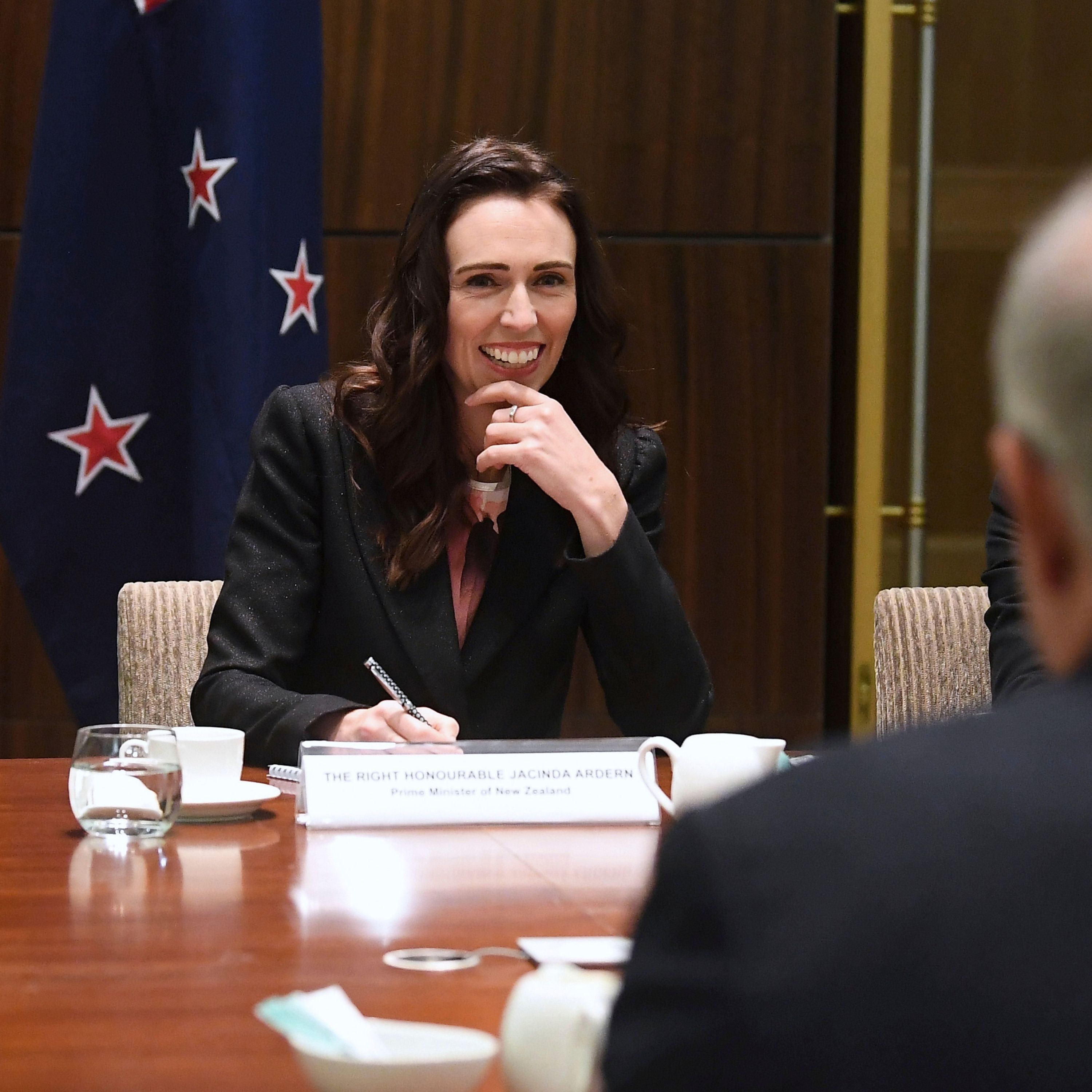
What A Day
What It's Like To Have An Empathetic Leader
00:23:21
What does national leadership really look like? Despite all of President Donald Trump's rhetoric, it's not like running a business. It's not even like running a state. It's running a massive apparatus that employs millions of people and also a military, while dealing with every other country that needs to or wants to deal with your country. Frequently, it also requires doing all of that in the the middle of a crisis. Former New Zealand Prime Minister Jacinda Ardern had to contend with a horrifying domestic terror attack and COVID-19, alongside a political environment in which she needed to appeal to rural farmers, indigenous communities and her Labour Party constituency. She joins us to talk about her new memoir, 'A Different Kind of Power,' about her rise in politics and the lessons she learned about leadership. And in headlines: Early intelligence suggests the U.S. strikes on Iran only set the country's nuclear program back by a few months, more than 100 House Democrats joined R...
Loading summary
Transcript50 lines
- [00:02]
Jane Coston
It's Wednesday, June 25th. I'm Jane Coston, and this is what a day. The show that is pivoting to really emphasizing bear news. The New York Times had a story out Tuesday about two brown bears who broke out of their enclosure at a sanctuary in Devon, England, and ate a week's supply of honey in about an hour. That's your bear news for today. On today's show, early intelligence suggests the US Strikes on Iran did not leave the country's nuclear program, quote, totally obliterated, as President Donald Trump claimed. And a long shot bid to impeach Trump over the strikes overwhelmingly failed. But let's start with a big question. What does national leadership really look like? Because running a country is hard, despite all of Trump's rhetoric back in 2016. It's not like running a business. It's not even like running a state. It's running a massive apparatus that contains millions of people and also a military and also dealing with every other country that needs to or wants to deal with your country or another country you're friends with or not friends with for reasons, frequently, while also managing a crisis. It's no wonder then that every president of the United States enters office after winning the election with joy and excitement and then eventually starts to sound like this, if even just internally.
- [01:19]
Donald Trump
You know what we have? We basically have two countries that have been fighting so long and so hard that they don't know what the fuck they're doing. Do you understand that?
- [01:29]
Jane Coston
Yes, Trump was talking about Israel and Iran on Tuesday, but honestly, he could be talking about pretty much anything. Being president or prime minister is actually kind of a terrible job, which could be why it always seems to me that Trump spends a lot of time trying to find someone else to do the job for periods of time while he focuses on Rose Garden renovations and screaming on the Internet about CNN host Anderson Cooper. A couple of weeks ago, I got the chance to speak to someone who has a lot of experience as the head of a nation. During some of the toughest times in her country's history. Former New Zealand Prime Minister Jacinda Ardern had to contend with a horrifying domestic terror attack and COVID 19, alongside a political environment in which she needed to appeal to rural farmers, indigenous communities and her Labor Party constituency. In her new memoir, A Different Kind of Power, Dame Ardern details her experiences in office, what she learned and how empathy and sensitivity played a role in how she chose to lead.
- [02:24]
Jacinda Ardern
Dame Justin d' Ardern, Kia ora.
- [02:26]
Jane Coston
And welcome to Water Day.
- [02:27]
Jacinda Ardern
Hi, Kia ora Thank you for having me.
- [02:29]
So a major theme of your book is sensitivity. You describe yourself as a sensitive overthinker and quote, no one had shown me you could be sensitive and survive as a young political advisor. What kind of sensitive leaders can survive in the age of maga, even globally?
- [02:45]
It's a good question. And I think, you know, one of the reasons I wanted to share the story of what it is to be a thin skinned politician who, you know, really values things like empathy and kindness is because I actually do think it is possible to not only just survive in politics, but to thrive. And one of the reasons is actually once you're in there, you realise that you've already got some resilience for the mere fact that you're in politics. And secondly, you know, when things do affect you, that's actually something that we need. We need politicians to be affected by horrific situations, to be motivated to change policy. You know, we need them to hear certain criticisms so again, they maintain the motivation we need in office. So rather than see sensitivity as weakness, you know, I think there are strengths to it as well. We don't want people who are devoid of empathy and sensitivity in politics.
- [03:40]
And yet the far right has been decrying empathy as toxic and arguing that it's somehow the downfall of civilization. How do you think we should respond to that kind of rhetoric as empathetic, progressive people?
- [03:51]
Yeah, well, I've said it before, I mean, empathy never started a war. So if we want to look towards those things that should be of concern to us, I think the principles of an approach that people often describe as kind of strongman leadership, that's something that we should be critiquing because, you know, currently the situation that we find ourselves in globally with the political culture is a situation where we're not seeing the crisis of climate being addressed. We have war in Ukraine and the Middle east, we have a deep sense of financial insecurity. And in global surveys we find roughly 60% of people hold some sense of grievance against political institutions or even the private sector. So we've got that type of leadership now and it's not working for people. The strength of empathetic leadership is that ultimately it's people centred, it looks to deliver solutions to the problems people face. And I'd push again back against this idea that it's somehow performative. Empathy is nothing without action. So it is an understanding of the issues in someone's daily life, but also being driven to respond to.
- [04:54]
Speaking of climate change, you spent a lot of time working on that issue. And you talk in the book about how critical it was to developing your politics, but something you had to deal with in office was talking to farmers and folks in rural areas in the south island and elsewhere about climate policy, from water rights to agriculture being included in the emissions trading scheme. How were you able to do so and what can we learn from your trials and tribulations doing so? To talk about climate more broadly, you.
- [05:22]
Know, politics by default is hugely combative and I think probably increasingly, at least in the New Zealand example, we have a history of a parliament where from time to time you have seen consensus between opposition and the government of the day on certain issues. And I think people in the past have really valued that, but you see less of it publicly. And yet the issue where we need consensus is on our response to climate change because it requires a long term set of policy interventions. We can't afford to yo yo every three years in New Zealand's case when we need a 30 year plan. And so I'd watched from opposition where I was for a long period of time before becoming Prime Minister, the issue of how we dealt with agricultural emissions. And the reason this is really important in New Zealand is when you look at our profile, our contribution to climate change, almost 50% comes from food production for us. And I think one of the issues we faced is that in addressing that, farmers really felt blamed, you know, and that's not a good starting point when what we needed to do was develop solutions together. So I remember initially just bringing in all our farming leaders and sitting around a table and just saying, you know, from the start, let's all just share what we value most about New Zealand's position as a high value food producer in the world. What's important to us. And in that exercise it was really clear that regardless of whether or not you believed in a particular policy approach on climate change, everyone understood the importance of our environmental reputation. So whilst I came at it from a moral argument, there were plenty who came at it from an economic argument. So we started with that. We knew it mattered for our trade, we knew it mattered for our reputation, so we worked on solutions together.
- [07:10]
Something you encountered towards the end of your time in office were protests against the labor government's COVID policies. But the weird thing was that a lot of those protests seemed copy pasted from American protests, with some protests outside the Beehive even carrying anti president Joe Biden signs. And we've continued to see a kind of copy paste MAGA in New Zealand, in Australia, in The UK in Germany. How can progressives in other countries counter that unusual form of globalism?
- [07:40]
Yeah, I think it is a recognition that there is a globalization of political culture for lots of reasons. But I think the challenge for us actually, regardless of whether you're a progressive or a conservative, in my mind it's about the health and wellbeing of our democracies and we should all have a shared interest in that. And so in my view, we have to start working on solutions that acknowledge that we've had a disruption to that there's issues around the role of disinformation, the role of foreign interference and I would love to see are coming together because unless we do, I think we will continue to see just western liberal democracies really struggle with not only the health and wellbeing of their democracy, but also their ability to address some of those really important global challenges.
- [08:31]
We have one of the most difficult moments of your time in office and one of the hardest things that's I think happened in New Zealand in the last 50 years was the horrifying shootings at a mosque in Christchurch that killed 51 people and injured nearly 100 more. In response, you became a major figure behind the Christchurch call, which was a non binding agreement to limit the spread of violent extremism online. Looking back on that work now, what do you think of it and where do you think that work needs to go?
- [08:58]
You know, we were able in that moment to build a coalition of different groups, some of which who had, you know, perhaps long sat outside the tent. We had civil groups from civil society, tech companies and governments come together under this unified view of addressing violent extremism and terrorism online. And initially, of course, we had an experience of live streaming. There are a number of policy changes to try and prevent that issue ever happening again. We've got a crisis protocol that's been deployed 300 plus times since our experience. And so you haven't seen the same proliferation of that content from a real life event in the same ways we experienced. However, of course the issue still exists. I think the challenge for us now is to learn the lessons of the past. Guardrails fitted retrospectively are very difficult. And so I think as we look to the development of AI, we have to have that thought process of yes, there's a number of pros, but naturally we have a relatively sceptical population who want to know that there are equally guardrails in place for the situations where the cons of those new technologies may arise.
- [10:06]
There has been a major backlash across the developed world against liberal governments after Covid. And we see this around the world, even in unexpected ways, like in the United Kingdom and New Zealand was no exception, and the US obviously was no exception. How do you think liberals need to respond now?
- [10:23]
The way that I would frame it is we have a long tale of the repercussions of something that really was so disruptive to people's sense of the stability of their worlds. You know, it was created a lot of fear and uncertainty. And so those who governed through Covid or even in the aftermath of the economic consequence of COVID have had to deal with that. And one of the biggest I think we face in politics is that we've always run on this idea that the next generation will be better off than the last. And yet those global surveys again demonstrate at least a third of people don't believe that's true anymore. And they have that, As I say, 60% of people with that sense of grievance. You have people talking about theories of abundance. I think we need to talk about those theories of delivery. And if our systems are getting in the way of our ability to deliver to people, that's one of the things that we need to, as progressives, think about until we present those solutions. Fear and blame are very easy tools in politics to reach for.
- [11:23]
I mean, I think one of those delivery systems absolutely has to be centered around housing. And I know New Zealand has some of the most expensive housing in the world. It's been an ongoing issue. Looking back and looking forward, how do you wish you had confronted that issue? And how do you think the New Zealand government now and governments in the Western world going forward should confront that issue?
- [11:45]
Yeah, well, I tend not to get too much into the crisp. Yeah, I was happy to reflect on my own experience as I should. All I'd say is that on the one hand, the provision of social housing is incredibly important. And so we managed to build more houses than any government had since the 1970s. But the need, the demand was of course, high at that point where we had under provision for so long. But the other issue was in the private market, when you have so much demand, you have an increase in prices and a range of players, there's a real complexity and a number of the things that you might need to deploy, like changing all of the incentives for where people are investing in housing rather than in the productive economy, regulations around how and where you're able to build. All of these things play a part and they take time. People need solutions now. And that's, I think, one of the real challenges when there's a bunch of levers and central government may not have all of them. How do you provide for that necessity as quickly as possible when the need is so high? And it was one of the areas that we struggled with. We found it very challenging.
- [12:55]
What is next for you?
- [12:57]
Jane Coston
Obviously, you've got a book, there's a.
- [12:59]
Jacinda Ardern
Documentary that I'm very excited to watch. But what is next for you and what do you want to see from New Zealand moving forward?
- [13:06]
Yeah, the documentary that you mentioned, it's I hope a little bit like the book, just humanizing leadership and giving a bit of an insight on what it looks like and how it feels. My goal is actually more around how do we spotlight the importance in these times of empathetic leadership? I run a fellowship now on this issue.
- [13:24]
Congratulations.
- [13:25]
Well, thank you. For me, it's incredibly fulfilling to create a network of leaders who are out there already in the field adopting a particular practice of leadership that doesn't get a lot of attention, but is there there are still politicians highly motivated by the idea of politics being an active service and who are trying to lead in a different way. And so I'm very happy to spend my time spotlighting, supporting them.
- [13:51]
Diane Ardern, thank you so much for joining me.
- [13:53]
Thank you so much for having me.
- [13:55]
Jane Coston
That was my conversation with former New Zealand Prime Minister Jacinda Ardern. We'll link to her new book, A Different Kind of Power in our show notes. We'll get to more of the news in a moment, but if you like the show, make sure to subscribe. Leave a five star review on Apple Podcasts. Watch us on YouTube because we do cool things over there and share with your friends. More to come after some ads.
- [14:22]
Dr. Horton
Your new beginning starts now. Dr. Horton has new construction homes available in Ellensburg and throughout the greater Seattle area. With spacious floor plans, flexible living spaces and home technology packages, you can enjoy more cozy moments and sweet memories in your beautiful new home. With new home communities opening in Ellensburg and throughout the Seattle area, Dr. Horton has the ideal home for you. Learn more at Dr. Dr. Horton, America's Builder and Equal housing opportunity Builder.
- [14:57]
Jane Coston
Hey, I'm journalist Sam Sanders.
- [14:58]
Sam Sanders
I'm poet Saeed Jones. And I'm producer Zach Stafford. And we are the hosts of a podcast called Vibe Check.
- [15:05]
Jane Coston
On Vibe Check, we talk about everything, news, culture and entertainment and how it all feels.
- [15:11]
Sam Sanders
That's right, we talk about any and everything on our show, from real life issues like grief to music and movie critiques. And that barely scratches the surface. Yes indeed. And it doesn't stop there. We have got a lot to say, so join our group, chat come to life, follow and listen to Vibe Check wherever you get your podcasts.
- [15:36]
Jane Coston
Here's what else we're following today.
- [15:38]
Sam Sanders
Header Lines.
- [15:42]
Donald Trump
Iran will never rebuild its nuclear from there. Absolutely not. That place is under rock. That place is demolished.
- [15:49]
Jane Coston
President Trump has been insisting the US Strikes on Iran's nuclear sites obliterated the country's key nuclear enrichment facilities. But on Tuesday, a preliminary classified report from the Defense Intelligence Agency suggested otherwise. According to the early assessment, the bombing of those sites only set back Iran's nuclear program by a few months. CNN broke the story and sources spoke to multiple news outlets about the report on the condition of anonymity. CNN reported that sources said Iran's stockpile of enriched uranium was not destroyed and that the centrifuges are largely, quote, intact. The New York Times reported the US Strikes sealed off the entrances to two of the facilities but did not collapse their underground buildings, and much of Iran's enriched uranium was reportedly moved before the strikes. Of course, the preliminary analysis is subject to change as new information about the damage is gathered, but White House Press Secretary Caroline Levitt straight up denied the report's credibility. In a post on Twitter, Levitt said, quote, this alleged assessment is flat out wrong and was classified as top secret but was still leaked to CNN by an anonymous low level loser in the intelligence community. Why does everyone in this administration try to talk like Trump? There's another question for the intelligence community. Iran and Israel agreed to a ceasefire Tuesday after both countries launched another round of attacks on each other. We'll see if it holds.
- [17:13]
Al Green
HREZ537 has been filed because I believe that the President of the United States has committed an impeachable act. Hrez5:7 addresses abuse of presidential powers by disregarding the separation of powers, devolving American democracy into an authoritarian an authoritarian an authoritarian government usurping congressional power to declare war.
- [17:52]
Jane Coston
On Tuesday, Texas Democratic Representative Al Green filed a resolution to impeach President Trump over the US Attacks on Iran. The House voted overwhelmingly to table the articles of impeachment. This is the third time Greene has brought articles of impeachment against Trump. He did it just last month, and during Trump's first term, more than 100 Democrats voted with their Republican colleagues against Green's resolution. Among those Democrats were House Minority Leader Hakeem Jeffries of New York and former speaker of the House Nancy Pelosi of California. Many Democrats have voiced their opposition to President Trump's weekend strike in Iran, including Jeffries and Pelosi. So this latest vote seems to be more of a referendum on the viability of impeachment than on the U.S. participation in the war against Iran. President Trump challenged Democratic lawmakers hoping to impeach him in a characteristically measured and mature post on Truth Social Tuesday, writing go ahead and try impeaching me again. Make my day. Trump name checked New York Representative Alexandria Ocasio Cortez, Minnesota Rep. Ilhan Omar and Texas Rep. Jasmine Crockett in his post, but made no mention of Greene, even though it was Greene who brought the articles against Trump. Hmm, I wonder why. Mr. Secretary, question for you. Did you lie to Senator Cassidy when you told him you would not change this panel of experts?
- [19:13]
Al Green
I never made that agreement.
- [19:16]
Jane Coston
So are you saying that Senator Cassidy lied when he was on the Senate floor? Lied to the American people?
- [19:22]
Al Green
I didn't see that statement by Senator Cassidy. I only heard it from you.
- [19:25]
Jane Coston
But if he said that I agreed to it, it would be inaccurate. Washington Democratic Representative Kim Schreier accused Department of Health and Human Services Secretary Robert F. Kennedy Jr. Of lying during a heated confrontation with the infamous lover of spray tans. The exchange took place Tuesday during a budget hearing held by the House Energy and Commerce Subcommittee on Health and stemmed from a tweet posted by Louisiana Republican Senator Bill Cassidy on Monday. Cassidy criticized the newly appointed members of Kennedy's Advisory Committee on Immunization Practices, or acip, for their lack of expert expertise in, well, basically science, but specifically vaccines. Cassidy was a key vote in Kennedy's confirmation and explained that he voted for Kennedy in part for this reason.
- [20:09]
Al Green
If confirmed, he will maintain the Centers.
- [20:11]
Jane Coston
For Disease Control and Prevention's Advisory Committee on Immunization Practices recommendations without changes, which made things a little weird for Cassidy when Kennedy gutted ACIP two weeks ago and replaced some experts with his own picks, including vaccine skeptics. Cassidy's Monday post on Twitter also called for ACIP meetings set for this week to be delayed until the group is joined by new members with more experience. A draft agenda for the group's meetings shows discussions about the COVID influenza and RSV vaccines on the schedule. Utah Republican Senator Mike Lee's proposal to sell millions of acres of federal land has been ruled out of the Senate Republicans version of the big beat. Lee, who's the Senate Energy Committee chairman, proposed selling millions of acres in the west that belong to the Forest Service and Bureau of Land Management for housing and infrastructure needs. Of course, the idea saw pushback from environmental advocates and hunters and pretty much everyone else who says our public lands are not for sale. But on Monday, senate parliamentarian Elizabeth McDonough, the person who advises the Senate on the rules, found the proposal would violate the chamber's policies. The president of the Wilderness Society called it a victory for the American public, saying, quote, public lands belong in public hands for current and future generations alike. Undeterred, Lee proposed changes to the plan on Twitter Monday night. He said the new legislation would reduce the amount of possible federal land for sale and completely remove Forest Service land. He wrote, quote, housing prices are crushing families and keeping young Americans from living where they grew up. We need to change that. The Senate parliamentarian ruled out other provisions, including construction of a mining road in Alaska and changes to permitting an oil and gas lease policing Still, Republican Senate Majority Leader John Thune told reporters the Senate is on schedule to hold an initial vote on the spending bill by the end of the week. Sure. And that's the news. Before we go the Crooked Store has a bunch of great new merch for all your hot protest summer needs. There's the due process, Freak Tea, Don't Tread on Us Pride tea and a Gay for Due Processed Tea and tank, plus fresh designs of the classic Friend of the Pod tea. The Cricut Store also got a quality upgrade so you can expect more durable materials and updated cuts for year long wear. Nothing warms our hearts during this dark time like seeing our merch in the wild. So when you wear it, make sure to snap a pic and tag rooked media on Instagram so we can respectfully Stan you. Pick up your new favorite summer fit@cricut.com store that's all for today. If you like the show, make sure you subscribe. Leave a review. Contemplate that HHS Secretary RFK Jr. Spent years telling people that WI fi causes cancers and that wearable devices could kill you, and is now excited to share his new national campaign to encourage you to wear a wearable device and tell your friends to listen. And if you're into reading and not just about how RFK Jr. S new enthusiasm for wearable devices might have something to do with two of his closest associates selling wearable devices like me, what a Day is also a nightly newsletter. Check it out and subscribe@cricket.com subscribe I'm Jane Coston and my favorite part of this story is that at no point will this obvious and hilarious conflict of interest get looked into by any member of the Trump administration.
- [23:44]
Jacinda Ardern
Fun.
- [23:49]
Jane Coston
What a Day is a production of Crooked Media. It's recorded and mixed by Desmond Taylor. Our associate producers are Raven Yamamoto and Emily Foer. Our producer is Michelle Aloy. We had production help today from Johanna Case, Joseph Dutra, Greg Walters and Julia Claire. Our senior producer is Erika Morrison and our executive producer is Adrian Hill. Our theme music is by Colin Gilliard and Kashaka. Our production staff is proudly unionized with the Writers Guild of America East.
- [24:33]
Dr. Horton
Your new beginning starts now. Dr. Horton has new construction homes available in Ellensburg and throughout the greater Seattle area. With spacious floor plans, flexible living spaces and home technology packages, you can enjoy more cozy moments and sweet memories in your beautiful new home. With new home communities opening in Ellensburg and throughout the Seattle area, Dr. Horton has the ideal home for you. Learn more@drhorton.com Dr. Horton, America's builder and equal housing opportunity builder.
- [25:05]
Al Green
USAA knows dynamic duos can save the day like superheroes and sidekicks or auto and home insurance. With USAA, you can bundle your auto and save up to 10%. Tap the banner to learn more and get a quote at usaa. Com. Bundle restrictions apply.