← What A Day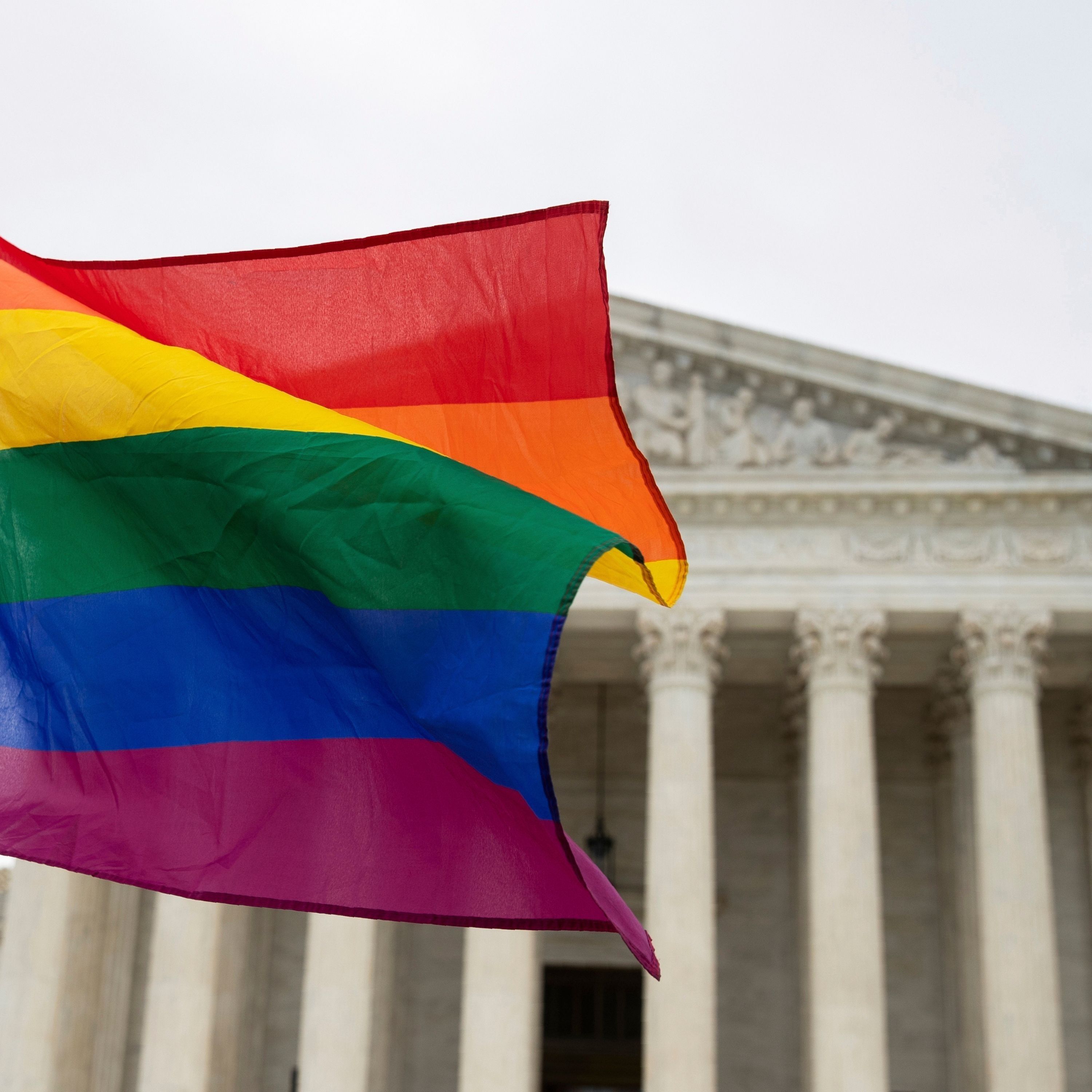
What A Day
Will SCOTUS Greenlight Trump’s Worst Ideas?
00:25:18
The new Supreme Court term started on Monday, and the justices have a lot on their plates. They’ll be deciding a host of big issues in the coming months – including if Trump can fire board members of the Federal Reserve and whether his tariff policy is overstepping presidential authority. But first, on Tuesday, the court heard arguments in Chiles v. Salazar, a case focused on whether conversion talk-therapy for minors is protected by the First Amendment. So, for more on this Supreme Court term and what we can expect, we spoke to Kate Shaw, co-host of Crooked Media’s Strict Scrutiny and a law professor at the University of Pennsylvania. And in headlines, National Guard troops arrive at an Army training center outside of Chicago, Attorney General Pam Bondi avoids questions from Democratic lawmakers, and more terrible news for furloughed federal workers.
Loading summary
Transcript73 lines
- [00:03]
A
It's Wednesday, October 8th. I'm Jane Coston, and this is what a day. The show applauding the late Bob Ross for still making an impact on Public Television 30 years after his passing. 30 paintings by the happy trees enthusiast will soon go up for auction in multiple cities to help with the cost of programming for public television stations in the rural areas hit hardest by Trump's federal funding cuts. The auctions are expected to garner more than a million doll. On today's show, more terrible news for furloughed federal workers and the First National Guard troops sent to Chicago by President Donald Trump arrive at a nearby army training center. But let's start with the Supreme Court. You know those nine lifetime appointees who get to decide how we live our lives. The Supreme Court term started on Monday, a term that to me seems centered on one big, glaring question. Can the president of the United States do pretty much whatever he wants? Okay, yes. The court will have to answer a few other questions, too. On Tuesday, the court heard arguments in Chiles v. Salazar, a case focused on whether conversion talk therapy for minors is protected by the First Amendment. And based on the questions the conservative justices asked Colorado Solicitor General Shannon Stevenson, the attorney defending the state's ban on conversion therapy for minors, it looks like the court's answer will be yes. Here's Supreme Court Justice Samuel Alito questioning Stevenson, who had noted previously that medical consensus held that conversion therapy was dangerous and ineffective.
- [01:36]
B
I mean, the medical consensus is usually very reasonable and it's very important. But have there been times when the medical consensus has been politicized, has been taken over by ideology?
- [01:55]
C
We have no facts about that in this case, but I wouldn't disagree that that's possible.
- [01:58]
A
And I think that's a really, isn't.
- [02:00]
B
It a fact that it's happened in the past? I think that three generations of idiots are enough.
- [02:05]
C
I think that's certainly a concern.
- [02:08]
A
That three generations of idiots are enough, quote is a reference to the 1927 Supreme Court decision Buck v. Bell, which found that states forcibly sterilizing the, quote, unfit, including the quote, feeble minded, did not violate the due process of those being sterilized. Basically, Justice Alito is saying that if doctors were wrong in 1927, what if they're wrong in 2025? Now, there are a few issues the court has decided it doesn't have time for, like convicted sex offender Jeffrey Epstein's co conspirator Ghislaine Maxwell. On Monday, the court declined to take up an appeal of her 20 year prison sentence for child sex trafficking. But the court will be deciding a host of big issues this term, including if Trump can fire board members of the Federal Reserve and whether or not his tariff policy is overstepping presidential authority. So for more on this Supreme Court term and what we can expect, I spoke to Kate Shaw, co host of Crooked Media's Strict Scrutiny and a law professor at the University of Pennsylvania. Kate, welcome back to Whataday.
- [03:08]
C
Thanks so much for having me back.
- [03:10]
A
So Monday was the start of a new Supreme Court term, and they have a lot to do. On Tuesday, they heard arguments in Chiles vs Salazar, the case weighing the legality of Colorado's conversion therapy ban. What were the major takeaways of that debate?
- [03:25]
C
I think Colorado's ban on conversion therapy is likely going down, which is not terribly surprising, although if the court were being consistent, it decided to defer to the Tennessee legislature. When the Tennessee legislature decided to ban gender affirming care for trans youth, the court said, we're going to be very deferential. We'll let Tennessee decide in the face of some scientific uncertainty if it wants to ban certain kinds of care. You would think that the court would extend the same deference to the Colorado legislature when it tried to ban conversion therapy. But if you are expecting consistency from the Supreme Court, you're going to be disappointed. So I think despite having upheld that Tennessee law, it's likely to strike down this Colorado law.
- [04:04]
A
And I want to go back very quickly to the issue at hand, because there have been historically many horrible kinds of conversion therapy that have involved using electroshock therapy, have involved restricting food and other forms of punishment to fix people's sexual orientation or gender identity. But in this particular case, what type of conversion therapy are we even talking about?
- [04:30]
C
Yeah, and actually, the lawyers challenging the Colorado law basically said we're not actually saying here that physicians or, you know, caregivers should be able to do that sort of thing, electroshock therapy, exposure therapy, other sorts of medical interventions. What's at issue is talk therapy. So it is still therapy designed to convert, right, to talk individuals out of being gay or trans, but using the tools of therapeutic conversation, dialogue. And so what the challenges are saying is because this is about speech, the First Amendment applies. And so if what a therapist wants to do is support therapeutically a patient who presents already wanting support choosing something different, this is sort of the rhetoric that came up at the argument that the state should not be permitted to prohibit that kind of care on the part of the therapist.
- [05:22]
A
What else have we heard from the court so far? Is there anything about this term looking different than a typical term? I mean, just in terms of, like, caseload?
- [05:29]
C
I mean, it's a light term so far in terms of the number of cases the court has decided to hear on the merits, like with briefs and oral arguments and then decisions. But I think you can't look at the Supreme Court right now in the context of just the cases, on what we think of as the merits dockets, because so much of the Court's most important work right now happens on the shadow docket. So these emergency applications from the administration, after losing either in a district court or the court of Appeals or both, sometimes skipping the court of Appeals and going directly to the Supreme Court. And you know, there's been a challenge that the president has taken some action that is precluded by statute or inconsistent with the Constitution. And usually a lower court has agreed with the challengers and the Supreme Court. It is not accepted and decided to hear those cases. It has simply issued a preliminary ruling, almost invariably over the last four months, resulting in a big win for the Trump administration and for the ability of the president to just proceed, even in the face of statutes and constitutional provisions that seem to prohibit what it is the president is trying to do. So that's sort of the shadow docket in terms of the merits docket cases. The court is going to hear this challenge to the president's sweeping tariffs. They are hearing not just the child's case about conversion therapy, but two separate cases involving state bans to trans athletes participation in school sports. They are going to hear a case about whether the president can fire members of independent commissions like the Federal Trade Commission. And they're going to hear part of a case about whether the president can fire the Federal Reserve Governor, Lisa Cook. So those are some of the bigger cases the Court has decided to hear on the merits docket.
- [07:05]
A
I want to get back to the Lisa Cook case, because that's of particular interest to me, because that seems to be an issue that the Supreme Court is treating very differently from other issues. She's the only head of an independent agency or the only part of a head of an independent agency the Supreme Court has not allowed the president to temporarily remove. Why is the Federal Reserve so different?
- [07:26]
C
So the cynical explanation is that the Court is just reasoning very pragmatically, and it is not necessarily as concerned about what the Constitution and a proper understanding of presidential power has to say or what the Federal Reserve act actually means as it is about what it would do to the US Economy and the global economy. To let the president fire a Fed governor and threaten this core tenet of Fed independence that has been kind of a central feature of our economy for over a century. They may offer some distinctions that they try to draw between the other agencies where they've let the president fire heads and the Fed. But I think that the people who really know the Fed and the history find those distinctions pretty unconvincing and think that if the court goes in a different direction here, then it will just be because they. They're concerned about the kind of instability that it might create to let the president fire Cook.
- [08:23]
A
So you've been referencing the shadow docket. Can you explain how the Trump administration has been using the shadow docket and kind of really what it is? Because it I have said this phrase, the Supreme Court allowed the Trump administration to do X, at least for now, so many times. But the for now seems pretty important when the actual ruling on any of these incidents would seem to be coming months in the future.
- [08:49]
C
Yeah. So there has always been this separate track of emergency appeals that have gone to the Supreme Court, and that has typically been a very low volume of cases with a very low rate of success at getting the justices to intercede. The longstanding kind of normal order of operations has been the justices stay out of the way while the lower courts decide what to do in, you know, all kinds of challenges, including to executive action. And once all of that litigation has run its course, then maybe somebody is successful in getting the Supreme Court to review whatever the final disposition below was. But starting really about 15, 20 years ago, we saw a major uptick in the number of applications that have gone to the Supreme Court. And starting in the first Trump administration, we saw an enormous increase in the success of those applications. So you have the executive losing in case after case in the lower courts, and the Supreme Court in several cases not involving Lisa Cook, but other cases basically said, no, we're going to let the president proceed for now. Right. Using the phrase that you just quoted, letting the administration dismantle the Department of Education, letting the administration kick trans service members out of the military, letting the administration refused to spend $4 billion in funds appropriated by Congress. These are all lawsuits that lower courts found the administration was likely to lose, and the Supreme Court nevertheless stepped in, and sometimes with a little explanation, and sometimes with no explanation, put those lower court rulings on pause and let the president resume the conduct that is likely unlawful. So, sorry, that was a long answer. But that, in a nutshell, is the shadow docket, and that is what it looks like and what it is doing today.
- [10:35]
A
Now that we've seen the shadow docket used in such an unprecedented way, do you think there's any going back, like, will we see future administrations just go straight to the Supreme Court for any challenge that comes from a lower court?
- [10:48]
C
I think we will likely see it. What I don't know if we'll see is the Supreme Court responding in a similar way in the event there is a future Democratic president who tries to assert similarly muscular executive authority. But I do think that presidents will keep asking because there is now this sort of established set of grooves where if you lose in the lower courts, you run immediately to the Supreme Court and, you know, try your odds there.
- [11:12]
A
Kate, as a person who is full of anxiety, I have to ask about Kim Davis. If you have been a longtime follower of the fight over marriage equality, which had been ruled a national right in 2015 in Obergefell v. Hodges, Kim Davis was a clerk in Kentucky who refused to sign marriage certificates, and she has continued to challenge efforts to basically make her do her job. Is this actually going to be something that is heard by this current court? Yeah.
- [11:46]
C
So Davis has already, I think, twice been unsuccessful at trying to get this Supreme Court to review her case. Basically, you know, since 2015, marriage equality is the law of the land. I think it is right to worry about what the Supreme Court, which appears increasingly maximalist in its willingness to not only authorize executive authority, as we've been talking about, but to torch precedent and unsettle settled expectations. So while I believe there are probably two or three justices on this court who would vote to overrule Obergefell, I actually don't think there are five right now. And obviously you need five justices to reach consensus to overrule a precedent of the Court. And I actually think that the very pragmatism that I was just talking about in the Lisa Cook sit will be enough to cause enough justices pause about just the chaos and also the backlash it would create to undo a right to marry that I actually don't think the justices would have the votes to do it. But it is terrifying that it could be as close as it could be.
- [12:46]
A
As we embark on this new term. If there was a theme to this upcoming Supreme Court period of cases, what would it be?
- [12:54]
C
Is the separation of powers? Question mark. Does the president have constraints? Question mark. I mean, I think those two things are going to be front and center. So even cases that are not, you know, that are about the Constitution, but aren't so obviously about executive power like the birthright citizenship case. And that's a case I haven't mentioned yet because it hasn't been granted. The court hasn't decided to hear the case. But it's a case where I think the President will lose and the Constitution and its clear terms will win. But I think the President has a very good chance of prevailing in most of the other cases before the court this term about firing, about spending, about tariffs and you know, whether the court is holding its fire so that it can actually constrain the President if and when there is some break glass moment, or whether the court really doesn't think there are any limits to presidential power that should be recognized. I think that we are heading to a very dangerous place and just kind of how quickly we are headed there and whether there is any sort of spine left in a majority of the Supreme Court to stop the President. We have some sense of, I think right now we will have a fuller sense of by the end of this term.
- [14:00]
A
Kate, as always, thank you so much for joining us.
- [14:02]
C
Jane, thanks for having me.
- [14:04]
A
That was my conversation with Kate Shaw, co host of Crooked Media's Strict Scrutiny and law professor at the University of Pennsylvania. And if you're yearning for more smart legal content from people just as annoyed with all of this as you are, we'll link to Strict Scrutiny in the show notes. We'll get to more of the news in a moment, but if you like the show, make sure to subscribe, leave a five star review on Apple Podcasts, watch us on YouTube and share with your friends. More to come after some ads Waterday is brought to you by Deleteme. Deleteme makes it easy, quick and safe to remove your personal data online and a time when surveillance and data breaches are common enough to make everyone vulnerable. Deleteme does all the hard work of wiping you and your family's personal information from data broker websites because Deleteme knows your privacy is worth protecting. Sign up and provide Deleteme with exactly what information you want deleted and their experts take it from there. And Deleteme sends you regular personalized privacy reports showing what info they found, where they found it, and what they removed. As someone with an active online presence, privacy is really important to me if you're online, especially in this age of doxxing and privacy breaches, Deleteme is a must have. Take control of your data and keep your private life private by signing up for Deleteme now at a special discount for our listeners. Get 20% off your delete me plan when you go to JoinDeleteMe.com wad and use promo code WAD at checkout. The only way to get 20% off is to go to JoinDeleteMe.com WAD and enter code WAD at checkout. That's JoinDeleteMe.com WAD code WAD hi, this.
- [15:46]
C
Is Kirsten Gillibrand, your DSCC chair. Donald Trump and his MAGA agenda are tearing this country apart. But while Trump attacks our rights and our values, Americans are uniting. We're making our voices heard, and in every single state, we are taking a stand. If you're ready to fight with us.
- [16:04]
A
Sign my petition today to stand up against Donald Trump. Add your name@dscc.org fight paid for by.
- [16:12]
C
DSCC dscc.org, not authorized by any candidate or candidates committee. At Maurices, we're all about great jeans. You know, the ones that fit you just right. The ones that go from work days to weekends and everywhere in between. The ones that simply make you feel good because you don't just wear jeans, you live in them. With 25 sizes, five lengths and six denim brands, you've got options and fit experts in every store. To make jean shopping easier, find great jeans starting at $29.90 in stores and at Marisa's.com.
- [16:47]
A
Here'S what else we're following today. Header lines Is it the White House's position that furloughed workers should be paid.
- [16:57]
C
For their back pay?
- [17:00]
B
I would say it depends on who we're talking about. I can tell you this, the Democrats have put a lot of people in great risk and jeopardy, but it really depends on who you're talking about. But for the most part, we're going to take care of our people. There are some people that really don't deserve to be taken care of, and we'll take care of them in a different way.
- [17:18]
A
That's not not a threat. Furloughed federal workers may not have guaranteed back pay from the government shutdown, according to a draft memo circulated by the White House Tuesday. After the longest government shutdown in 2018, Trump signed into law legislation to ensure federal workers receive back pay during any federal funding lapse. But a senior White House official told Axios, quote, does this law cover all these furloughed employees automatically? The conventional wisdom is, yes, it does. Our view is, no, it doesn't. In the new memo, Trump's Office of Management and Budget says back pay must be provided by Congress if it chooses to do so as part of any bill to fund the government. Trump said this to reporters at the White House.
- [18:00]
B
I follow the law and what the law says is correct. And I follow the law.
- [18:05]
A
Do you like, have you read the law? Refusing retroactive pay to workers would be a stark departure from norms and would almost certainly result in legal action. But not all Republicans seemed on board with the idea. North Carolina Republican Senator Thom Tillis criticized the Trump administration for leaving furloughed workers with uncertainty about their paychecks and left us with this encouraging sentiment.
- [18:29]
B
I believe it's a strategic mistake to now let those folks know or let them think that they could potentially not get back pay. If I were them, I'd start looking for another job.
- [18:40]
A
Great. Transportation Secretary Sean Duffy said Monday that the government shutdown is putting more pressure on air traffic controllers. They're considered essential workers and exempt from being furloughed during a shutdown, but are of course not being paid. Unsurprisingly, controllers are reporting a certain psychological state. As Duffy said in a CNBC interview Tuesday.
- [19:04]
B
They've got houses, mortgages, car payments. They have to put food on the table.
- [19:08]
A
They're concerned they may not get a paycheck.
- [19:09]
B
Right? They'll eventually be paid, but the shutdown is forcing them to work without the guarantee that their paychecks come in in a timely manner. So they're stressed.
- [19:18]
A
Yet I would be stressed too, if my paychecks were in the hands of Trump and Republicans. And if anything makes me feel safe, it's the words stressed and air traffic controller in the same sentence. Staffing issues affected flights at numerous airports, including Newark, Phoenix, Denver, Las Vegas and Burbank, where California Democratic governor Gavin Newsom said no controllers were on duty Monday night. Controllers from a San Diego facility handled traffic into and out of Burbank while its tower stood there ornamentally. Trump was asked Tuesday about whether he's concerned about the delays. And of course he said this.
- [19:53]
B
Oh, sure. I mean, it's they're all Democrat delays. There are delays at the airport.
- [19:58]
A
That's standard because as we all know, there are three reasons for delayed weather, mechanical and Democrat. If that weren't enough, the shutdown is about to impact the Essential Air Service, which keeps flights running to rural communities that can't sustain them on their own. Duffy says its funding dries up October 12th. Have a safe flight. Remember Trump's ongoing effort to send very real troops into a very imaginary crisis in Chicago? Multiple sources reported that National Guard members from Texas were settling in at an Army Reserve center outside the city on Tuesday night. This is the most visible sign yet of The Trump administration's plan to send troops to the Chicago area, lawsuits be damned. Illinois Democratic Governor J.B. pritzker, who has accused Trump of using troops as political props and pawns, said he didn't get a heads up from Washington. Shocking. Trump has repeatedly described Chicago in hostile terms, calling it a, quote, hellhole of crime, a hellhole in which actual police statistics show significant drops in most crimes, including homicides. Federal courts in two states will take up the National Guard mobilizations Thursday morning. The Trump administration is appealing a judge's order in Oregon that temporarily blocked troops there, while a judge in Illinois refused to issue a similar block. But we'll hear the state's emergency challenge later this week.
- [21:19]
C
You're sitting here grilling me, and they.
- [21:21]
A
Are on their way to Chicago to.
- [21:23]
C
Keep your state safe.
- [21:24]
B
Madam Attorney General, it's my job to grill you.
- [21:27]
A
That exchange between Attorney General Pam Bondi and Illinois Democratic Senator Dick Durbin was just one of many that helped set the combative tone during a congressional oversight hearing Tuesday. Bondi testified before the Senate Judiciary Committee. And by testify, I mean she repeatedly refused to answer questions posed by Democratic lawmakers. Did the FBI find incriminating pictures of Trump with half naked young women? She avoided the question. And did Bondi talk to anybody in the White house about the DOJ's scandalous indictment of former FBI Director James Comey, which Trump publicly urged in an apparent frenzy of revenge against his personal enemy? She also declined to answer. Huh. Remember that bribery investigation into border czar Tom Homan that was quickly and quietly slammed shut under the Trump administration? Well, Rhode Island Democratic Senator Sheldon Whitehouse asked Bondi what happened to the $50,000 Homan allegedly accepted. The FBI, Senator, as recently stated, the investigation of Mr. Homan was subjected to.
- [22:27]
C
A full review by the FBI agents.
- [22:30]
A
That's the Department of Justice prosecutors.
- [22:34]
C
They found no evidence of wrongdoing.
- [22:37]
B
That's a different question. What became of the $50,000? Did the FBI get it back?
- [22:44]
A
Mr. Whitehouse. Excuse me.
- [22:46]
C
Senator Whitehouse, you're welcome to talk to the FBI.
- [22:49]
B
The report to you. Can't you answer this question?
- [22:52]
C
Senator Whitehouse, you're welcome to discuss this with Director Patel.
- [22:56]
A
White House spoke to Crooked Media's Matt Berg after the hearing, calling it, quote, very unusual. He said he thinks Bondi's marching orders were to bury the facts and, quote, own the libs.
- [23:06]
B
Clearly, she came in to hide things that mattered and dump, I guess I'd call it squid ink. You know how a squid works when it feels endangered, it squirts out a little ink blob and then jets away and hope that people get distracted by the blob of squid ink. So it was a weird day.
- [23:29]
A
You can say that again. And that's the news. Before we go. You've been hearing me talk about CrookedCon for weeks now, and here's the deal. It sold out faster than ever expected, so it's getting an upgrade and we're releasing more tickets. CrookedCon is officially moving to a bigger location and that means more tickets, more panels, and more guests. The new venue is the Ronald Reagan Building and International Trade Center. Your favorite crooked podcast hosts will be there. Plus Kentucky Governor Andy Beshear, Anderson Clayton, Ben Wickler, Arizona Senator Ruben Gallego, Maurice Mitchell, Hasan Piker, and more. And we're adding a Vote Save America Action Hub, a space where our partner orgs can hang out and focus on activism so you can leave with the tools you need to fight for democracy. This event just keeps getting better, so don't miss out on this last batch of Tickets. Head to crookedcon.com to get yours today and we'll see you on November 7th in DC. That's all for today. If you like the show, make sure you subscribe. Leave a review. Consider a new study arguing that inhalers like Farasma create the emissions equivalent of more than half a million cars. And tell your friends to listen. And if you're into reading and not just about how the Journal of the American Medical association found that inhalers generated nearly 25 million metric tons of carbon dioxide between 2014 and 2024. Like me, what a Day is also a nightly newsletter. Check it out and subscribe@cricut.com subscribe I'm Jane Coston, and as an asthma sufferer who also really loves the environment, this is a bit of a pickle for me, honest. What a Day is a production of Crooked Media. It's recorded and mixed by Desmond Taylor. Our associate producers are Emily Foer and Chris Allport. Our video editor is Joseph Dutra. Our video producer is Johanna Case. We had production help today from Greg Walters, Matt Berg, Sean Ali, Gina Pollack and Caitlin Plummer. Our senior producer is Erica Morrison and our senior vice president of news and politics, Adrienne Hill. We had help today from the Associated Press. Our theme music is by Colin Gilliard and Kashaka. Our production staff is proudly unionized with the Writers Guild of America East.
- [26:19]
C
Oh, hey, love your shoes. If you're hearing this, this is your.
- [26:23]
A
Sign to try those on. Trust.
- [26:26]
C
You can totally pull them off. In fact, try on every shoe here if you want.
- [26:30]
A
We won't stop you.
- [26:31]
C
In our house, you've got unlimited freedom to play. And hey, fall is the perfect season to do wear, be whatever you want.
- [26:40]
A
And with tons of shoes that get.
- [26:41]
C
You at prices that get your budget.
- [26:43]
A
We'Ll give you something to brag about. So go ahead, try them on.
- [26:47]
C
Let us surprise you. On New Year's Eve, 1969, three men snuck into Chip Yablonski's childhood home and gunned down his family while they slept.
- [26:57]
B
They killed them. They killed them all.
- [26:59]
C
Chip was convinced that the president of the United Mine Workers, one of the most powerful labor unions in America, was behind the murders.
- [27:07]
B
And I'm saying hang on, you son of a. Because I want you to get your just desserts, binge all episodes of Shadow.
- [27:14]
C
Kingdom wherever you get your podcasts or on Apple Podcasts.