Loading summary
Transcript48 lines
- [00:09]
A
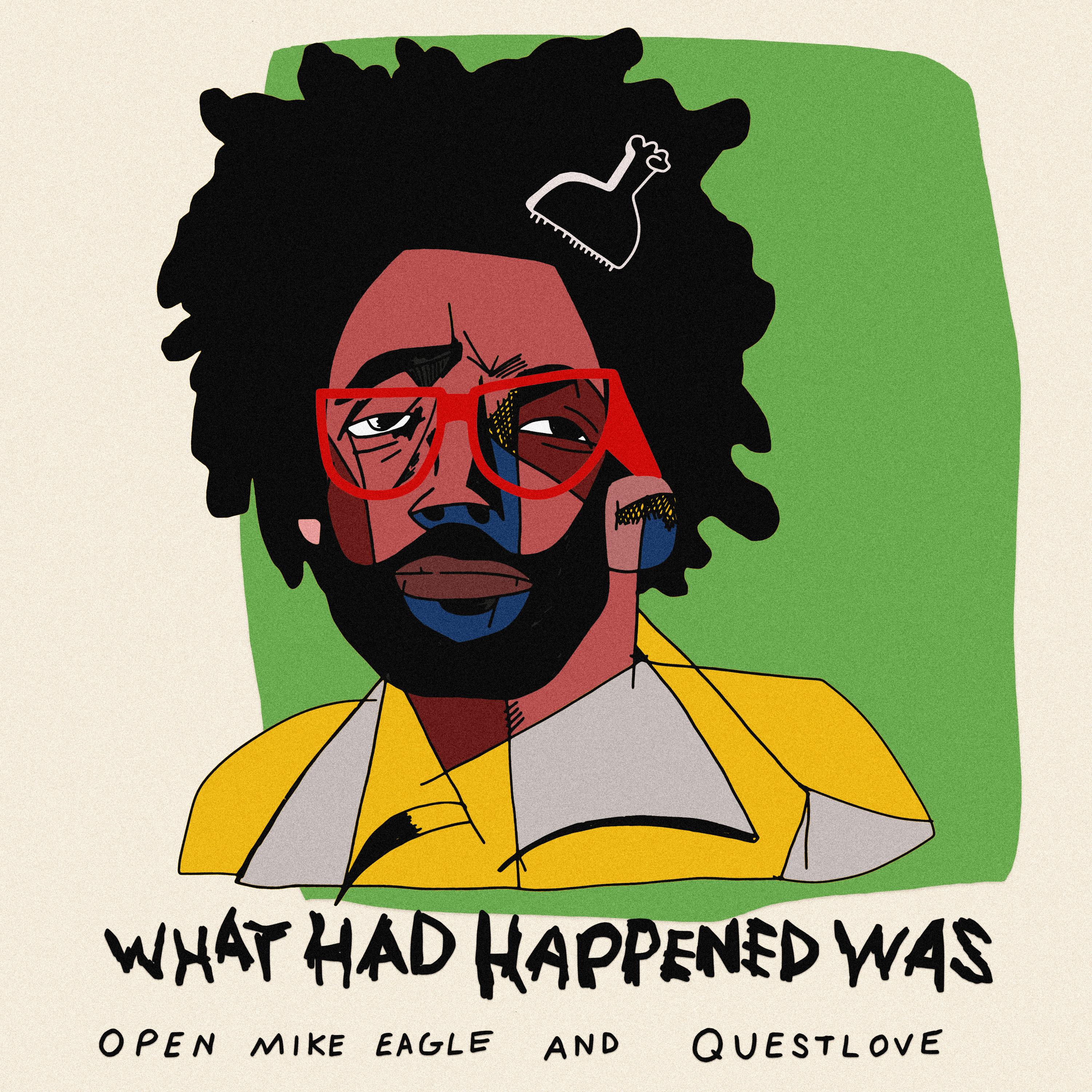
Yo, what up? This is open Mike Eagle. It's been a long time. I shouldn't have left you without a podcast to listen to. I'm gonna do a thing sometimes. It's called what Had Happened Once, one off conversations that sort of tie into the history of this thing that we love called Hip Hop. I had the pleasure of of interviewing Dr. Todd Boyd live as part of the Chicago Humanities Festival 2024 for his new book Rappers Deluxe. After listening to it and receiving this audio, I thought, why not start what Had Happened Once with this. Hope you Enjoy. This is Dr. Todd Boyd on his new book Rappers Deluxe what Had Happened Once.
- [00:57]
B
Welcome to Chicago Humanities, where we create.
- [01:03]
C
Experiences through culture, Creativity.
- [01:20]
B
And connection. Stay inspired, enjoy the best moments of.
- [01:35]
C
Our events and conversations with our new culture filled podcast, Chicago Humanities Tapes. Find us on your favorite podcast platform.
- [01:44]
B
We encourage you to share on social.
- [01:46]
C
Media and tag hi Humanities.
- [01:50]
B
Become a Member.
- [01:51]
C
Members get discounts, access to exclusive opportunities and make our programs possible and accessible for everyone. Thank you. Learn more@chicagohumanities.org thank you for joining us. Please silence your devices and enjoy the program. Doctor Todd Boyd, aka Notorious, PhD and is the Catherine and Frank Price Endowed Chair for the Study of Race and Popular Culture and Professor of Cinema and Media Studies in the University of Southern California School of Cinematic Arts. A media commentator, author, producer, consultant and creative force who transcends boundaries and defies conventional categorization. In the immediate Aftermath of the 1992 LA riots, Dr. Boyd arrived in USC and began developing a new field of study centered around Hip Hop culture. His pioneering work made connections across film, music, arts, sports, fashion and politics, establishing him as a preeminent expert and distinctive, authoritative voice on the role of culture in American society. He's appeared in numerous documentaries, including the Last Dance, winner of the Emmy Award for Outstanding Documentary on Nonfiction series, and 20ft from Stardom, winner of the Academy Award for Best Documentary Feature and Grammy Award for Best Music Film. He has also written over 100 articles, essays, reviews and other forms of commentary with his work, having appeared in the New York Times, Los Angeles Times, the Guardian, ESPN and Chicago Tribune, among other publications. Rapper's How Hip Hop Made the World is his eighth book. Our moderator, Open Mike Eagle, spent the 2010s finding comedy and rap music and American nightmares. With over a dozen solo and collaborative projects to his name, Eagle has spent his career redefining and expanding the perimeters of art rap, the term he coined as a short term for left field and avant gaunt rap music. Known for its hilarious sociopolitical insights Via halfstrung verses laid atop progressive production. His music has received acclaim from publications like Pitchfork, Rolling Stone, and npr. Eagle is the co founder of stand up meets music variety show the New Negroes, as well as founder of Auto Reverse Records and Stony Island Audio digital podcast network. Please join me in welcoming Dr. Todd Boyd and open mike Eagle.
- [04:28]
A
How's it going everybody? Well, all right. We're here to explore and celebrate the release of the book Rappers Deluxe by our guest here, Dr. Boyd. So my first question to you, and I think I might know the answer, but I wanted to put this to you, is what led you to putting together this history of hip hop in this particular moment?
- [05:05]
B
First of all, let me say. Can you say shy city?
- [05:09]
A
Hey.
- [05:12]
B
Much love to everybody. Thank you for coming out. You know, I think it's because the magnitude of the history over multiple decades, and so it's like to tell a story that's 50 years old, 50 plus years old. I mean, that's, you know, that's half a century. That's a long time. And I feel like it took that long to be able to tell the story I was trying to tell. You know, I've been in hip hop for a long time. And to say to people, you know, back in the 80s or even early 90s, this is it. This is what's poppin', this is what's happening. This is something you should seriously pay attention to. You know, you needed more time, right? And so once you got to the point where people are like 50, and when I was writing a book, honestly, I didn't even recognize the 50th anniversary. It just kind of popped up as I was finishing and I'm like, oh, that'll be a nice hook. But I think it just felt like I needed the time to tell a story I wanted to tell. And. And it wasn't a 20 year story or a 30 year story. It was a 50 year story. And so the timing was right and then I could like lay it out over that whole period of time to get people to see what I was saying. A lot of times, you know, I say something about hip hop and I get these reactions from people like, that's for kids, or I'm clearly not a kid. That's, you know, fun, or which is kind of dismissive. I'm like, to get across the magnitude, we need that 50 year arc. And so that's really what motivated. I couldn't have written it 20 years or 30 years ago. I could only have written it when I did because I Needed all that time to tell a story.
- [07:09]
A
In this 50, those 51st year. Now, of course, there were a lot of celebrations, a lot of exhibits last year for the 50th anniversary of HIP hop. And I'm wondering in any media you saw around that and people trying to tell that 50 year story, was there anything that you were like, this is missing or this is under reported, like, what do you think that there's any big angle that people were missing out on in celebrating the 50th anniversary?
- [07:42]
B
I mean, I probably had that reaction more often than not, I bet. You know, if you watch the NBA, one of the popular slogans, cats say father time is undefeated, right? So when you think about it in terms of father time, which to me that's history, mother time, if you prefer you think about it in that way, it's like it depends on at what point people came into the equation. So somebody who's been there for 50 years is going to look at it differently than somebody who's going to be there who's been there, I'm sorry, for 20 years or 15 years. And so it depends on who was talking as somebody who, like, you know, I mean, I start the book off in the 1970s when, when I was a kid growing up before hip hop was really hip hop, it was developing. But I'm talking about all of these cultural examples from the early 70s that would influence hip hop and hip hop would go on to influence so many other things. So, you know, my father has taken me to see blaxploitation movies and you know, his record collection was something that like, you know, really inspired me. And I'm watching Muhammad Ali and Richard Pryor on television. And so to have been there from that point when there's really only hip hop in New York to being in college and you know, everybody else is listening to Thriller and 1999 and I'm bumping Run DMC and Grandmaster Flash. Like the perspective I have on it is historical. So depending on who's talking about it in their assessment, they can only talk about what they know. And so, you know, I can appreciate that people want to recognize it and celebrate it, but depending on when you come into the conversation and how much research you've done, and we have this really twisted sense of research now, I constantly had to tell people there's a difference between doing research and doing a Google search. Those are two different things, right? So, you know, depending on who it is talking about it, their perspective is relevant. But it's probably not going to mean the same thing as somebody who has maybe that much more time invested in it, Right?
- [10:10]
A
And you do start off the book in the 70s, and you point to specifically August of 1973 being a very pivotal moment. And since I came into the culture later, that was actually context that I didn't have. For people who are unfamiliar with the impactful things that happened that month, I wonder if you would talk about a few of those things.
- [10:37]
B
So, you know, there's this, what I call origin story, right? Mythical origin story of hip hop and DJ Kool Herc throwing a party in the South Bronx. You know, his sister wanted to, as the story goes, make some money so she could buy some new clothes for school, which I could certainly identify with, you know, back in the day, maybe it's still the case. But when I was going to school, the first day of school, you had to be fresh, you had to be clean. Now, you might not be clean the rest of the year, but the way I grew up, the first day of school and Easter Sunday were synonymous. You're going to be clean on those two days, right? If no other time. So the idea that she wants her brother, Clive Campbell, otherwise known as Kool Herc, to throw this party and she's going to charge people in the rec room and apartment building they're in and use this money to buy some gear, I could identify with. But in talking about that, what I was interested in was what else is going on in the culture at that moment. Because unless you're in the South Bronx, where that's taken place, you don't know anything about it. There was no Internet or social media. If you weren't there, you didn't experience it. And so I went and I realized the number one movie at the box office that week was Pam Grier's film Coffee. That was the number one movie in the country, which, if you think about it, I mean, the 70s is really, in my mind, the heyday of American cinema, certainly in recent times. So there are great movies coming out, you know, throughout that decade. And the number one movie in the country is Pam Grier's Coffee. And I thought that was kind of perfect symmetry, because, of course, when you get to the 90s, the rapper Foxy Brown, right, based on another Pam Grier film, as well as Quentin Tarantino's film Jackie Brown, which stars Pam Grier. So you have this kind of retro respect, appreciation, recognition, celebration of that moment in the 70s. I thought that was perfect that the day hip hop was born, that same week, what's dominating the culture you have to understand for a blaxploitation film to be the number one movie at the box office is major, right? The Godfather, one of the greatest of all times, gets knocked out of the top spot of the box office a year before that by a film called Superfly for three weeks. Okay, this is how big blaxploitation was, right? So when I thought about the connection, I'm like, well, this is perfect, because a lot of the things you experience in the 70s, and this is what I talk about in the first chapter of the book. A lot of the things you experience in the 70s, hip hop, would later reference through sampling, you know, characters adopting their Persona, et cetera. So that's why that moment in the 70s is so integral to the beginning of the book.
- [13:54]
A
Also in the book, around that. That time, in that early chapter, you have a lot of the graphic images of the show flyers from that very, very early time in hip hop, those original parties and jams that kind of defined that origin story that you speak of. How hard was it to track down those images? I mean, for these parties that were thrown 40 and 50 years ago?
- [14:26]
B
You know, that's a great question. The thing about the book is there's. There's sort of two levels to it. I curated all the images and, of course, wrote it. So it's like, you know, a sort of visual component and a written component. But I had a great team. The editors at Fighton, you know, are known for doing these really impressive, like, visual books. And so I had the benefit of working with them. And a specific designer, a cat named Hassan Rahim 1201, was also, you know, integral in this. And so there's a point when he was telling me about, like, the sort of graphic design of all these old flyers, and we were talking about how we would do the COVID of the book. And I wanted to create something that was more than just a book. I wanted it to feel like an experience. So when you looked at it, when you touched it, when you carried it around, you know, when I was growing up, we would sometimes carry albums, like, just for the sake of carrying them, just kind of to flex, you know. So I wanted. I was thinking about that. I'm like, I want people to carry my book around. Kind of like it's a status symbol, you know. And so in collaborating with Hasan and the people at Fighton, they actually found for me because I told them this is what I wanted. We want to try and recreate that era. They managed to find all those flyers. So they're great artifacts from the earliest days of the culture. And just, you know, at the time, nobody really thought about that as something anybody would pay attention to. They're just flyers promoting a party. But all these years later, they're art, you know, and they're artifacts. They're art and artifacts. And I wanted to include that in the book.
- [16:20]
A
You talk about wanting your book to appear to be a status symbol. It really is a really beautiful book.
- [16:27]
B
Big thank you.
- [16:28]
A
Beautiful book. And in the book, you describe the aspirational components of hip hop a lot. And for you and your writing, it seems that it makes a lot of sense for you that hip hop is about achieving and showing status symbols. I'd wonder if you'd speak to that some. Why you think that's such an earned thing in hip hop, that the status symbols are always in the front of the conversation?
- [16:56]
B
I mean, you know, I think hip hop, ultimately, hip hop was not something created by wealthy people. It was not something created by people with means. It was created by people who wanted something but didn't necessarily have anything. But that didn't stop them from wanting it. So, you know, the book, as I say to people, is personal and it's professional. When I was growing up, there were variety of people, you know, going to work every day, and there were other people who didn't go to work. Right. Or at least not in a, you know, traditional. Not.
- [17:41]
A
Not in an office.
- [17:41]
B
Yeah, not an office or a factory or anything like that. But it's like if you saw somebody and they were clean, people commented about, oh, so and so is clean. Or if they had a new whip, you know, or all these material possessions that a lot of people kind of, you know, would look down on you for. You know, why are you so focused on material? But to me, that's something that grows out of people who have something. If you have it, then it's no big deal. I was listening to Mark Cuban, you know, former owner of the Dallas Mavericks, who's now still running the team, of course, but sold off, you know, huge stake. And he was like, clothes don't matter. And I remember thinking, they don't matter to you. And maybe if I had that bag you had, it wouldn't matter to me either. I doubt it, though. Cause, you know, I'd still want to be clean. That's just the way I grew up. Right? So people who didn't have a lot, so some clothes, a car, you know what I'm saying? Anything like this, it meant something. It got you respect. And that helps you get through the day. It made you feel good maybe when some other things weren't, you know, making you feel good. So to me, that's always been an integral part of hip hop. If you listen to Rapper's Delight, I always had to stop now. Cause I kind of remixed the title Rapper's Deluxe. And I'm quick to say the title of my book, but I'm referring to the song here. You listen to rappers that like, you know, I got a color tv, so I can see the Knicks play basketball, right? Got a Lincoln Continental. Definitely ain't the whack. Like, you know, got more clothes than Muhammad Ali. I dress so like, from the very beginning, it's about like, I'm clean, I'm riding nice, I look good. When I go down the street in the hood, people show me love. Like, that's the culture. And it's not negative. It's not just materialism. That's about a group of people trying to get respect in whatever way is accessible to them. If they had money, if we had money, probably wouldn't be necessary to do all that. I remember when I went to college and, you know, you grow up where you grow up, and, you know, if you go to college, you now are around people very different than the way maybe you grew up. And I see all these people looking real bummy, look like just shabby. And I'm like, what is this? Because, you know, when I was going to school, if you were looking bummy, somebody was going to say something, and they gonna say something that you won't like. And, you know, if you didn't look right, you might have to throw hands. I mean, that's just real. So it's like one of the reasons, when I was young, you know, I always try to rep the fashion. I've been doing this a long time. I realized at a certain point, if I come to school and I'm clean, that'll keep these motherfuckers off my ass. You know, that'll help. I'm looking for a strategy. This is hip hop to me. This grew up in the culture. So when you hear somebody bragging, it's not necessarily negative. What they're saying to you is, I exist. Pay attention to me. Give me some respect. Show me some. It's just articulated a certain way based on the circumstances people grew up in. And so I wanted to touch on that because, as I say, I lived all this. At a certain point in my life, I started to do research about it, write about it, lecture about But I lived it. And so I wanted to be able to hit both of those things at the same time in the book. So that's why I talked about. I mean, you know, notorious Ph.D. the brand is associated with fashion, right? They always talk about, like, you know, the drip. Like, that's always been my thing. I wanted to convey that in the book because I think it's been misunderstood by a lot of people.
- [21:58]
A
I think that's important, too. You touched on the Sugar Hill Gang song, Rapper's Delight. Again, the title you remixed for the book. Fun song, important song in the history of hip hop. But as a lot of people don't know, it's a lot of. There's some controversy with that song. And for those who aren't aware, could you tell people the controversial aspect of Rapper's Delight?
- [22:25]
B
So this is a great story. It's great for a number of reasons. So the Sugar Hill Gang, if you're not familiar, had never recorded as a group. They never existed as a group. Woman by the name of Sylvia Robinson, often referred to as the godmother of hip hop, not to be confused with Griselda Blanco, if anybody knows that reference. The original godmother, Sylvia Robinson once performed as the R and B singer Sylvia and prior to that had a group, Mickey and Sylvia, a song called Love is strange from late 50s, early 60s. If you know Martin Scorsese's Casino, that song has a very prominent place in the film. And so Sylvia wanted to record one of these hip hop parties that people could only experience. She wanted to put it on record. And so her son Joey happens to be in a pizza parlor, and he hears these dudes kind of rapping along. Turns out, dude has a cat by the name of Grandmaster Kaz's, like, rhyme book. And Joey says, you know, hey, we got a studio. Would you guys come to the studio? You listen to Rapper's Delight. Well, I brought two friends along, right? And so they go to the studio and they record Rapper's Deluxe. I mean, Rapper's Delight. I promise you this is not intentional, but it just, you know, if it reps my book, so be it. But they were not a real group. I think it's kind of funny because if you know hip hop, you know, hip hop has always been invested in authenticity, like what's real, right? The beginning of the culture. Not what's happening with Kool Herc in the South Bronx, but when the public got access to it. I think it's kind of funny in an ironic way that the beginning of the culture In a commercial sense, came from this group that had never recorded before as a group. It kind of shows us when you take something outside of people's experience and put it on record at that time, turn it into a commodity, something you can sell, mediate it, play it on the radio, it changes. And so I've always thought it was kind of funny that the actual first commercial hip hop song was by a group that otherwise didn't exist with somebody else's rhymes. It's bogus. But when I heard that song in 1979, I didn't know all that. And honestly, if I did know it, I don't know if it would have made any difference. Not at the time. Because once you heard Rapper's Delight at school, I think I was in 10th grade when that song came out. Once you heard it, it was like, how fast can you memorize it, right? And then it was like people would have contests who memorized, like the song the Best. And there were two versions. There was the regular radio version, but then there was a seven minute version, right? You had to remember the long version. Have you ever gone over a friend's house to eat and the food just ain't no good? You know what I'm talking about? Right. So it was like we were caught up in just the experience of this, like, new form that felt familiar in one sense, but was also brand new. And so that origin story of the commercial evolution of the culture is tied to what was really this kind of bogus moment. But of course, it outlived all that.
- [26:21]
A
And an interesting dichotomy that creates too, right? Because they weren't a group, they weren't performing, nobody knew them, right? So the beginning of the hip hop music business, coming from that group, it sort of made everything that was authentic, the underground, right? And I'm wondering, just in terms of the history of hip hop, all 50 years of it, what do you think the importance is of the underground? Like, what's going on in hip hop that's not represented in the sales charts?
- [26:58]
B
I mean, I think, you know that Kool Herc story. Throughout Most of the 70s, hip hop is underground, right? Because unless you're in New York and living in those neighborhoods, you're not experiencing it. But think about it this way. If it had only stayed within those neighborhoods, we wouldn't be sitting here because you had to put it on record and play it on the radio for people outside that neighborhood to hear it in order for it to blow up, right? So I have a great deal of respect for the underground in all artistic endeavors. But one of the things I think that has distinguished me from some other people is I've never had a problem with getting paid. I've never had a problem with, as they say now, getting a bag, right? Because if you don't put it on record and it's not for sale, people can't hear it, people can't buy it, and it doesn't grow, right? There's a scene in the Godfather that anybody who knows me, I quote this scene all the time, but it's like, you know, people sitting around at the table, heads of the five families. If Don Corleone had all the judges and the politicians in New York, then he must share them or let others use them. He must let us draw the water from the well. Certainly he can give us a bill for his services. After all, we are not communists, right? So by it being for sale, and I'm not saying commercialism in and of itself is great, but this is capitalism, right? We buy and sell things. So the fact that it could be something available to purchase meant more people could hear. It also meant that it could be diluted. And so there's a line there that I think you have to pay attention to. But the underground, I think, is extremely relevant and has always been. That's where it's bubbling up before it hits the surface. But once it hits the surface, it can go in a million different directions. And we may not be happy with all of those directions, but I think that's just the nature of culture for sale in a society like the one.
- [29:23]
A
We live in, that touches on a convergence that has always been so fascinating to me, because hip hop does start as sort of a countercultural force, like you said, from people who don't have a lot of means, who don't have a lot of resources. But somewhere along the way, even though it was there, a thread of it was there the whole time. Somewhere along the way, I feel like hip hop truly embraced capitalism to the point where these days, that's almost what's expected from it. And I'm just curious to hear your perspective on just what that journey has meant for hip hop to go from where it came to where it is now, specifically as it intersects with capitalism.
- [30:20]
B
I mean, you know, if you go to the, say, second chapter of the book, and the book, by the way, is divided by decades. So, you know, 70s, 80s, 90s, et cetera. So you get into the 80s, and particularly late 80s, right? People refer to it as the golden age, right? So I'm in college in the 80s, and then I'm in graduate school in the late 80s, early 90s. And there's a very important film that came out in 1983 called Scarface, right? Legendary. Now, Scarface was released in theaters. It was kind of a. Wasn't a bomb, but didn't do as well at the box office as they had wanted because it cost so much to make. And they got kicked out of Miami and kicked out of Fort Lauderdale and ended up shooting part of it in la. And so it was kind of a disappointment at the box office. But hip hop culture would come and make Scarface into a classic, right? People watching it on videotape from back then. And Tony Montana's motivation was to get paid. But I often tell people, if you've ever watched Scarface, a lot of people, they kind of forgot what happened at the end, right? Scarface is a cautionary tale. It's a cautionary tale. Don't get high on your own supply. Tony Montana violated his own rule. You're not supposed to be imitating him. But a lot of people miss that. So I think about that film and I think about that era, and I think we wanted to get paid again. If you start with nothing, you want something. By the mid-90s, hip hop had blown up and was all over the place. And you could see its influence in film and sports and other examples of culture. And people were constantly rapping about getting paid. And there was also a whole conversation around politics, social justice, activism. A lot of people learned about figures like Malcolm X, Angela Davis, what have you from listening to hip hop. So it had that element, but it also had that get paid element. I've always felt like both things can exist, but one is going to inevitably dominate the other. My guy, Chuck D of Public Enemy, the opening kickoff event for the book back in February, we did out in LA at the Broad Museum. Chuck D and Public Enemy were bringing some real knowledge to the game. And there were others, po righteous, teachers, brand newbie. And at that time, you know, conscious hip hop, that was a real thing. But there were also people like Big Daddy Kane, who had bars, right? And Kane even had, you know, some knowledge in what he was rapping about. I think hip hop at his best, can do both. Oftentimes, though, the commercial aspect is going to get more attention than the underground political aspect. Doesn't mean it doesn't exist. But I don't think we can expect if we consider how culture is sold and marketed. And this is beyond even the people creating hip hop. You're not going to expect that somebody, you know, big up in Malcolm X is going to get the same attention as somebody saying, let's get this money, right? I mean, if you're smart, you're not going to expect that those things are going to be equal. So. But as I say, I feel like at its best, hip hop is able to do both.
- [34:03]
A
So in, you know, paying attention to this culture as you have for pretty much the entirety of it, and as you said, you know, at different times you might not have been able to put this story together because maybe people weren't able to see the full picture of it until right now. And since there were things that you were able to see early on and maybe other people weren't because you were paying so close attention, I wonder if there's anything you're seeing now that might speak to the future of the culture that people aren't necessarily hip to.
- [34:42]
B
I mean, it's interesting right now because everybody is really, as we were talking about backstage, everybody's caught up in this so called beef. So called. And I keep saying, you know, which is something else that grows out of the culture. I'm an og, right? I am more observer than, than I am participant at this point. So I observe and I listen to the conversations people are having. And not just about hip hop, but just, you know, Father Time is undefeated. The older you get, the more you kind of move away from something and you get a broader vision. It's different when you're in the midst of it. So what I realized, and I'll give like a parallel example, so if you, you know, you're on social media or whatever, pay attention to the conversations people have. And this is a perfect place to mention this. There's one of the conversations that's recurring these days about who is the greatest basketball player of all time. Right now I'm in Chicago, so. And at the same time, many of you may have seen me in the Last Dance. So you know where I'm from, no disrespect, but you know, I gotta rep Detroit. But at the same time, is it Jordan or is it LeBron? I'm so tired of this conversation. So tired of this conversation. Why? Because when people had this conversation, what they're doing is they're saying, I like LeBron better than I like Jordan, I like Jordan better than I like Kobe, or whatever the case may be. Seldom are they talking about facts. It's all emotion and someone's personal perspective which is relevant, right? But I guess when I think about that relative, who's the goat? We have that conversation multiple times a day, every day, every day. The goat this morning is going to be different than the goat this evening. Same with hip hop. But this is what people are doing. And I'm standing back saying, much respect. The NBA didn't start in 1984 when Michael Jordan came to the Chicago Bulls. There's a whole history to the NBA before we get to 1984. A history that inspired Jordan, a history that inspired me and a whole lot of other people. Bill Russell is not irrelevant just because you didn't see him play. Wilt Chamberlain is not irrelevant just because you don't know anything about him and you have some half baked idea about the level of play at that time was no good. We're talking about facts. I was in speaking at Nike once on the campus up in Oregon and I'm in the car, me and the late great coach John Thompson, legendary coach, Georgetown's men's basketball, right? And it's early in the morning and if anybody remembers Coach Thompson, he was a giant, literally and figuratively. And Coach Thompson had like flown from D.C. to Portland and it was early in the morning and he wasn't feeling it. And I could tell by. And that was my guy, but I could tell from his energy. Just let me wait till Coach Thompson gets, you know, kind of wound up and then we'll talk. I ain't saying nothing to him. And this guy who's driving us says, hey, you played with Bill Russell. And he just nods his head. He's like, can I ask you a question? Coach Thompson doesn't say anything. Guy asked the question anyway, how good was Bill Russell? And Big John looks at him and says, think about it this way. The man had 10 fingers, but he got 11 rings. It's like, think about that. That's all he said. The point being what Bill Russell accomplished, no one else has won 11 rings. You can dismiss the people who played during that time if you want, but nobody else was able to do what he did. That's not suddenly irrelevant just because it's not on YouTube. So I think both, using the basketball example, flipping over to hip hop, it's like, I think now people have more access to knowledge than they've ever had and they're probably more misinformed than they've ever been. So that's what I noticed. Whether it be talking about basketball, hip hop or what have you, having access to all these resources has not necessarily made people smarter. And as that reflects itself in conversation, that's One of the things about hip hop where I'm like, I'm an observer, I'm watching, but I'm not participating in that because it's not grounded enough in knowledge and information. So.
- [39:58]
A
So we're almost out of time, but we did want to get some questions from people attending and I think we have a mic that's going to go around. So somebody's raising their hand already. We can go ahead and take that question.
- [40:11]
B
I am so excited to be here. I've been to a lot of hip hop conversations. I'm not necessarily one of the fans of hip hop. AARP is chasing me down as we speak. So I grew up in the Midwest and at 18 years old, I was outside the warehouse waiting to go hear some house music. And at the time in the neighborhoods, there were a lot of schools and community groups that really sheltered and took care of youth. So by the time hip hop was accessible to me, after the Sugar Hill Gang in Curtis Blow, like say about five years later, there was no access point for me because at that point I was a bitch. And there was something that I had been taught and something that I was feeling as I tried to access hip hop. Even the guys that I had respect for were repeating words that were offensive to me and very damaging. So I'm just so. I feel like the original people in hip hop are the fathers of our sons today. What do you think? Where's the place for women in this and how do you see the next 50 years? I mean, one of the things I talk about in the book is the place that women have always occupied in hip hop, starting with recognizing Sylvia Robinson. Right. Like hip hop perhaps doesn't exist without Sylvia. And I don't think that gets mentioned and celebrated enough. Like, you know, a woman was key to the development of this whole thing. And you know, you go through various eras and you know, Queen Latifah and Moni Love and you know, ladies first in that. In the 90s, you got lil Kim and Foxy Brown, you know, contemporary. A lot of rappers, women rappers now who are getting a lot of attention. Before this so called beef started, women's rappers were the ones in contemporary culture getting perhaps more attention than they've gotten over time. I mean, I think women have always played a prominent part in hip hop. I also think there are certain things that hip hop can be criticized for. What I have always said to people is that you have everything in hip hop from sexism and misogyny to pride and like support. You have all that is to Me never been one thing. So there have been certainly elements of that. I don't think that's ever fully defined the culture. And generally hip hop has been its own best critic in speaking to that, as opposed to forces from the outside not invested in the culture, who might have used that as an opportunity to dismiss the culture for disingenuous reasons. So throughout the book, you know, I point out at various stages, Lauryn Hill in the late 90s dominating the Grammys. So many people these days talk about the Grammys, excluding hip hop. And I'm like, lauryn Hill ran the Grammys in 1999 when she's on the COVID of Time magazine and walks up to receive the last award of the day and says kind of to herself, but out loud, this is crazy, because this is hip hop music, right? So, you know, I think women have always played a part. There have always been things that could be criticized. And in terms of right now, there's a visibility around women in hip hop that maybe hadn't existed in the same way, certainly in a long time. In terms of the second part of your question, I hate making predictions because I don't want to be wrong. So I don't know what's going to happen in the next 50 years. If I'm still here to talk about it. In 50 years, I'm going to be a very, very old man. But I'm interested in seeing it. But at the same time, I feel like the 50 year foundation we have now is something hip hop can build on and that didn't exist 50 years ago. So to me, there's something in place that can help it go forward and hopefully in a positive direction.
- [44:27]
A
I want to just say real quick, just as somebody who's a little more actively in the culture, I guess I still travel around rapping, even though sometimes it's a bad idea. And, you know, I'm at the point where I'm aging out of it a little bit as well. But I can say from my vantage point that the issue you bring up, I think is a single most important issue to the viability of hip hop. That there is. I think it's really at a crossroads right now. And I think that inside of hip hop, we are going to have to deal with that question in a way that we've avoided for a very long time. I think that, you know, as a culture, we've downloaded a lot of the American culture that we exist within. And I think some of our energy, some of our resources inside of it have to go to Making sure that there is a space for women and minute. Yes. I'd also like you to speak on, because a lot of people, when they say hip hop, they only think about the rap component. There are very other elements to hip hop also. The biggest thing that influenced me was to seek knowledge was to. In my era, when we came, I remember from 1970s through the 80s when they came conscious that to rap you had to have some book knowledge or some wisdom. You couldn't just get on a rhyme, on a mic and say anything and be unacknowledgeable or like to say, take the mic from you, kick a hold of your speaker and jet. So can you speak on how hip hop came about consciously from Reaganomics, from the part of New York was burnt out, why it came about, how it is and where you see it going?
- [46:18]
B
I mean, what you're referring to speaks to the first and the second chapter of the book. You know, New York as we know it now is very different than New York in the 1970s. So I talk about, you know, New York on verge of bankruptcy. I talk about the image of New York you get from films like the warriors as well as Taxi Driver, right? You know, New York now looks and feels very different at the time, though, you know, the South Bronx was considered a hellscape. And I also talk about the election of Ronald Reagan in 1980. And we have. There's a great photo in the book of Reagan attempting to speak to inhabitants of the South Bronx. And you know, if you've ever seen the footage of that, you know, he got like shouted down. They're not feeling nothing, he's saying, right? And then you get to this point, of course, in the 80s, when you have the emergence of like the crack cocaine epidemic, right? So when Jay Z says, blame Reagan for making me to a monster. Blame Oliver North. And I ran Contra Iran, contraband that they sponsored, right? So you're right. Like, even from a street perspective, the expectation was that you would drop some knowledge. Like you weren't like, Chuck D says, I don't rhyme for the sake of riddling. Right? It wasn't just about that. It was about like, are you saying something? I think over time, as hip hop has become bigger and more commercial, there's a whole lot of people who are good at rhyming, right? I mean, just pure rhymes, not content. But I am like, okay, cool. When Lil Wayne was blowing up, I'm like, dude can rhyme. No disrespect. He can rhyme. He got bars. But what is he saying? So I'VE always been interested in finding something of substance, even if it came from the street. Because I'm from an era. Everybody's house you went in when I was a kid had one book. Iceberg, Slim, Pig, everybody, whether they were conscious or not. But it was, like, considered almost required reading. Right? So knowledge can come in many different facets in many different shapes and forms. And that fueled hip hop for a long time, and I think it still does for a lot of people. But then at the same time, you have a lot of these descendants of the Sugar Hill Gang who are rhyming for the sake of riddling. Let me say something real quick. One of the other things I talk about in the book is the difference between rap and hip hop. Rap. I say I'm kind of remixing KRS1. Rap is what you do. Hip hop is what you are. Hip hop refers to the culture. Originally that was, you know, break dancing and graffiti. And, you know, over time, it's kind of grown and evolved, and those things got less attention. Right? But there's the act of rapping, which I don't take as necessarily negative. Some people use that word, rap, as negative. But there's the culture. My book is about the culture because it's deeper than rap. It's bigger than rap. It encompasses a whole culture. And as I said earlier, if not, I don't know that we're sitting here talking about it, because had it just stayed within the context of. Of rapping, I don't know that we'd be here 50 years in. But it's because it affected so many other areas of the culture that we can come and have this conversation at this point in time.
- [49:56]
A
Do we have any other questions? There's one in the back. Thank you. Thank you both. Both for being here and for what you all have done continuously for the culture. Open mike, Eagle. Respectfully, I disagree. You can still wrap your ass off. And what happened was. Is an incredible contribution to the history. So thank you. Thank you both. Thank you. Appreciate y'. All. Two quick questions. One, you know, being Midwest guys, there's a lot of conversation in this city about hip hop, of course, being a diasporic forum, but there's a conversation where it really started in the roller skate rinks in Chicago in the 60s. Now, that's debatable, of course, but I'm wondering about dislocating that narrative a little bit from the South Bronx in 1973, if that is of interest. Especially Dr. Boyd thinking about ticking and the garage parties on the West Coast. Things of this nature and then open mike eagle. I was wondering if you had any thoughts about the Nacrobats and Chicago hip hop in the 90s.
- [51:07]
B
You know, one of the things I talk about in the book is that, you know, hip hop may have started officially in the South Bronx, but it's drawing on so many other cultural influences that that location just kind of coincidentally happened to be where all those forces came together. But you can't talk about hip hop if you only want to focus on that. I talk about, for instance, one of the people I mention in the book is a cat by the name of Nipsey Russell. Nipsey Hussle appropriated his name. When I was a kid, I used to see Nipsey Russell on talk shows and he always had a rhyme. Okay, so there are examples like this to me in a lot of ways. One of the original rappers is the great Muhammad Ali. Because Ali had rhymes for you, then he would whoop your ass, right? If that's not hip hop, I don't know what is. So the cultural influences of hip hop are part of the black American diaspora that evolved in, of course, Chicago. Detroit, where I'm from, was one of the places that absorbed a lot of that energy. And those examples you mentioned, I think lead directly into the creation of hip hop. It just so happened to be in the South Bronx when they are doing that specific thing. But the influences, jazz, I mean, there's so many places that the influences come from that it's not just the South Bronx in 1973 though, that happened to be the place where this specific iteration of it took off and grew.
- [52:53]
A
Just real quick, speaking to the nachrobats, question. I'm born and raised in Chicago. My first hip hop organization that I was part of was the Nacrobats here on the south side. And just in the context of the conversation we're having, if we're having a conversation about the story of hip hop and that's starting in these gatherings people were having in the South Bronx. And because it wasn't an industry, because it wasn't people selling media, it was an experience you had to. It was the thing you had to experience in person with like minded people all doing the same thing. And I've always been in the underground. And my experiences with the underground here in Chicago, that shaped me. And then understanding how that connected to the underground in New York that I would hear on WHPK radio here on the south side and the underground in LA with like Project Blowed and those places, like the underground I think in the lineage of those original South Brocks, parties are about being in a location, they're about being in a place here. For the Nakrobats, a lot of it was on 55th and the lakefront at Promontory Point. Just getting together, rapping, breakdancing, sharing graffiti piece books, cats, DJing. Just being there in the spot was how the culture happened. And it's just a huge part of my development and the reason I'm here today. Honestly, I don't know if we had any more questions. I also don't know if we have any more time, so that question might answer itself. Can I get a time check from anyone? I mean, sorry, in terms of how much time we have left.
- [54:42]
B
You can have another five. If there's another question, we have time for it.
- [54:45]
A
Okay. Is there another question, anyone? We have one in the front here. And I suppose this will be our last.
- [54:57]
B
Seeing as we have time, how about we broaden the conversation out slightly beyond the United States? Hello, everyone from England, you may have seen. UK rap coming through recently has taken the Chicago drill style. We've got UK drill, people like Central C and Dave doing real good numbers. Over half our charts are now forms of music that are based on loop samples, whether it's hip hop or dance. So I think, like prospects are great. I was just curious what you thought about. I appreciated your distinction. Team rap, which is something that I do. I do nerdcore music and like musicals and stuff. Way not cool enough to claim the hip hop label. I was just curious, do you think that the rap form of just the real estate words per minute there is going to be the most enduring global influence? And do you think that hip hop will continue to be more US specific? I'm just curious if you thought about that. You know, the subtitle of my book is How Hip Hop Made the World, right? It's not local. It's not just local and it's not just national. It's global. Back in the early 90s, I had the opportunity to travel to Europe for the first time. And I remember being in Paris and anybody's ever been to this department store in Paris, Galeries Lafayette, right? Big, you know, department store. When I went in, it kind of reminded me of being in the Nordstrom's or what have you, Macy's or Bloomingdale's, that type of place. And so this is early 90s and they're bumping this French cat, MC Solar McSolar. All right, now in the 90s, in the early 90s, if you went to Nordstrom's or Bloomingdale's or Neiman Marcus or any of these American department stores, I guarantee you they were not playing any rappers. And so for me, it was like, wow. Like, you know, they would not play an American rapper in an American department store. But France is so cool. They're bumping McSolar in this, like, you know, huge mainstream department store. And that kind of clued me in. I'm like, you know, I'm a jazz head, right? So there's so many jazz artists, Miles, Dexter Gordon, so many, like, who traveled through Europe and were embraced in Europe more so than they were embraced in the US at the time. And so I thought about all that, and it's like, you know, it's always been global. We just introduced it, you know, it's like the dream team in 92. The dream team introduces the game, relatively speaking, to the world. Who you looking at when you look at the NBA now? Luka Dontage and, you know, the Joker and Joel Embiid, and you gotta go a few spots down on the list to find, like, the best American player. That used to be a given. It's not anymore. So I think in the same way, and this is, I think, the brilliance of black culture, we planted a seed that has grown all over the world. I'll tell you one more quick story about how this manifests itself. I love telling this story. I was in Tokyo, this is back in the late 90s, and I met this Japanese dude and he was like a real hip hop head. He directed TV commercials. And he's like, I want to take you to this spot. And so he took me to this Japanese club, and I walk in and they're like, bumping Biggie Smalls. So I'm like, okay, cool, right? And there are all these Japanese people dancing to Biggie Smalls. And I see this woman and she's like, deep into the groove. And they're playing. I remember we went to Tennessee when we came home, mad messages was on my phone. Like, I'm like, whoa. And this woman is like, reciting every word precisely. And I'm just kind of fascinated. I'm like, just watching. And so song finishes, and I'm so impressed. I, you know, I gotta say something to her.
- [59:11]
C
And.
- [59:12]
B
And I walk up to her to compliment her, and she says, I'm sorry, I don't speak English. And I stopped and I thought. And I'm like, this is deep, because she doesn't speak English, but she speaks Biggie. She speaks hip hop. So what it said to me was our culture had gone all the way to Japan. And in spite of the fact that she didn't speak English, she knew every English word to this rap song because of the culture. And so that said to me, this is where it's going to take off once everything in the US has kind of like become a foundation. And I think that speaks to the global hip hop. Anybody in any place in the world that has their own language can rap. So I feel like hip hop and the game of basketball, we gave that to the world. Now it's time for the world to do their own thing with it, which people are certainly doing.
- [60:11]
A
That's great. And I believe. I believe that's all the time that we have. There's going to be book signing shortly. I'd like to thank you all for attending. And in the spirit of hip hop, please make some noise for Dr. Todd Boyd.
- [60:35]
B
Thank you. Thank you. Thank you.
- [60:39]
A
All right, peace.