← What Had Happened Was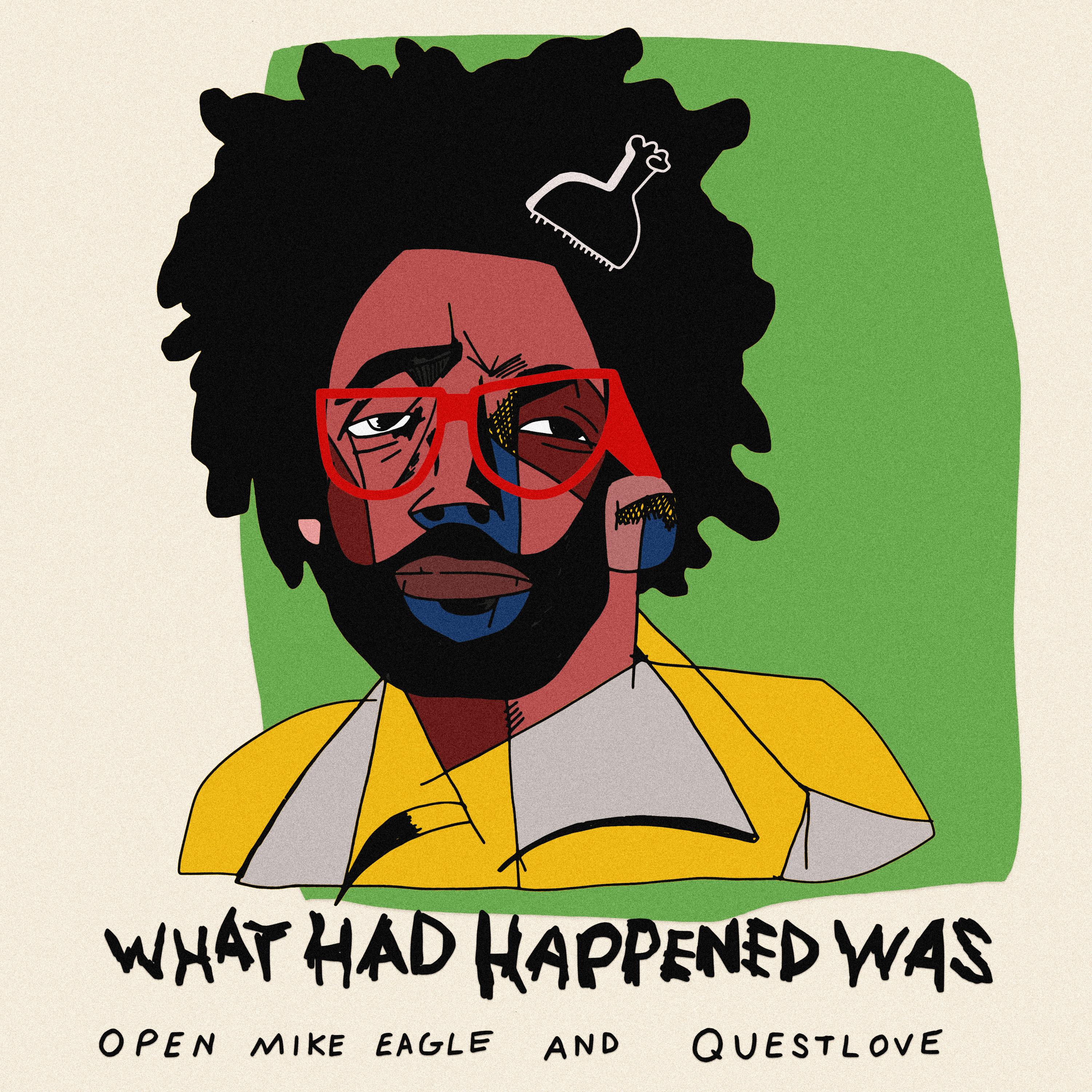
Loading summary
Transcript112 lines
- [00:08]
A
It's been a long time. I shouldn't have left you without a podcast to click through something like that. This is Open Mike Eagle. This is what Had Happened Was. And here in between seasons, we present another episode of what Had Happened. Once I got a chance to talk to PG County's own IDK about his new excellent project. He calls it a mixtape. Feels like a great album to me. But we discussed that in the interview called Even the Devil Smiles that is out now. And just to give you an update, we're hard at work over here at Office Space Studios preparing the next season of what Had Happened Was. So you'll be hearing some updates on that soon. In the meantime, this is me and IDK on Even the Devil Smiles. Yo, Peace. How you doing today?
- [01:05]
B
I was well, man. Just cooling, man. Album time, you know, all that or mixtape time? Let me be more specific.
- [01:14]
A
You know what? And. And. And that's. That's one of the questions I want to ask because I think this project is just. It's so dope. It's so well put together. It's so well handled from, you know, obviously, the writing, but then the recording, the mixing, the production, everything. I'm like, damn. And, you know, the guest stars, all of that, it really feels like a great album to me.
- [01:40]
B
Thank you.
- [01:42]
A
For you. What makes it where this is a mixtape and not quite a full LP.
- [01:48]
B
Release, I think we tend to. I don't want to say disrespect the mixtape, the name of what a mix or what a mixtape means and stands for, but I think we missed the point of how genius the idea of a mixtape was when, you know, hip hop wasn't widely distributed. And the reason why a lot of things sounded the way they did was cause, you know, rappers were making a bunch of music and they were like, yo, we want to release it. But then the labels couldn't release it fast enough. Or even in the beginning of rap when they didn't even care to release. Reminds me of prison, you know, where you meet a bunch of people who know how to take a pack of noodles and turn it to a stir fry, or they can take a sweater and then turn it into a pair of shorts. You know what I mean? Think it's like the genius in using what you have and the resources you have to make something that's great. I think people forget what that is. So obviously today we have way more resources. I have the resources to do what I need to do on my mixtape. So I wanted to create something that I could take around the different museums. We did something at the Mocha, and we were talking with Smithsonian and different places, because that's where I believe the genius in the art of the mixtape should be presented. So that's why I decided to call it that. Like, it shouldn't be like, oh, a mixtape is when it's not that much effort put into it or just giving it away for free, you know, mixtape. That's the. That's the essence of rap music and hip hop.
- [03:23]
A
So in your mind, is there a difference in how you would approach creating a mixtape versus creating an album?
- [03:30]
B
Not anymore. Not when it comes to rap, no. I. If it's less rap and more melodic, which is something that I'm. I also, you know, tend to do or can do, then all right, maybe it's an album in that sense, you know, if we want to call it that. But as far as rap goes, I mean, I don't think there's nothing cooler than a mixtape that's just, like, fly to me.
- [03:55]
A
Like, you know, that's what's up. Projects. ETDs.
- [04:00]
B
Yeah.
- [04:01]
A
Is that a. Are you explaining to people what them letters stand for in terms of talking about the project?
- [04:08]
B
Yeah. ETDS stands for I think I see.
- [04:10]
A
It on your hat now.
- [04:13]
B
Even the devil smiles. It's just basically me realizing that this is a twofold thing. So when I went to prison and I was going for sentencing.
- [04:28]
A
The people.
- [04:29]
B
Who came to court for one of my cases, they were a white couple, and they basically had their impact statements, and they basically were saying things like, if he was doing this at 17, imagine when he gets older and he's the devil, and he deserves to be in prison for as long as possible. And they wanted me to get the maximum sentence. And it's like the innocence. The smile is the innocence. You know, like, it's like, yo, I'm not. I'm not a horrible person. The circumstances made me do something maybe that I definitely wouldn't do today. And then there's the flip side of this, the music industry side of it, where even the people that you think are real people or good people, they don't have some of the principles and morals that I learned actually being in prison, where you can't hide from people and say you're gonna do something and not do it, you know? And so that made me realize very quickly that some of the people that I thought were nice people are actually the devil in disguise. So it's the flip side of those two coins, both on my side and both on the side of People that I see and I encountered in the music industry.
- [05:42]
A
How long was you in prison for?
- [05:45]
B
So it's a tricky thing, but basically I got sentenced to 15 years. It got suspended to three, and that three was supposed to be on private home detention. So private home detention is. You have to pay every month to be on home detention. And it sounds like it's sweet, but when you're struggling to kind of just be like a teenager or like trying to become a man and take care of bills. My parents at the time, you know, I grew up in a middle class neighborhood surrounded by the hood in PG County, Maryland. I went to school in the hood. So I had like this kind of juxtaposition of my life daily that I didn't realize would shape me in a.
- [06:26]
A
Way that it did.
- [06:27]
B
But also that was around 2009, you know, when all of the stuff happened with real estate. So there was times where we didn't have lights in the house, you know what I'm saying? Like, we literally didn't have electricity. We were running off a generator, things like that. So I say all that to say, you know, I was getting into certain shit and, you know, my, my. When I went to prison, pretty much they. They gave me that time. I got out, violated pro parole and probate. Sorry, violated probation because of me not paying for the box or whatever. The case may be going back. So in a year in total, I did about a year of that time state prison, a little bit in jail. But it was a constant thing of going back. I went back three times, you know, and nothing's the only thing worse than going to jail is going back. You know what I mean? So pretty much that was kind of the whole way the sentence was set up. I would have actually been getting out last year, 2025.
- [07:35]
A
So I mean, a lot of the project seems to be informed by that experience. And there's a lot of reflection that you go through and you're writing from. On this project. Is this the first project where you've really gone into that story and sort of laid that out in the music?
- [07:50]
B
Yeah, I've touched on it on a project I have called I Was Very Bad. I like to call this a spinoff from that mixtape. I Was Very bad was in 2017 and I kind of talked about my relationship with my mom, losing my mom at that time, and then also.
- [08:12]
A
A.
- [08:12]
B
Little bit of being in prison. This one is like the spinoff in the sense of I got a lot more deeper into the prison aspect of.
- [08:23]
A
Sounds like that experience was Very impactful on you. And it seems like in a lot of ways, you're a different person now than you were when you had those experiences. What would you say is the biggest difference in your life now versus your life then, or how you see the world?
- [08:38]
B
I think I have a lot more compassion, dude. Like, the kind of person I was when I was younger, man. And I think that's where a lot of the frustration in the record came from. You know, there was respect for some of the things that I got into and, you know, a lot of things that I did. People probably would fear me to some degree. You know, not that I was, like, a crazy, tough guy, but you just never knew what I would do, like.
- [09:06]
A
Or what I was willing, unpredictable.
- [09:09]
B
Yeah, I was really, like, kind of, like, about certain things. And so some of the frustration comes from seeing some of these dudes like, bro, if this was like. If we was on that type of time, bro, y' all wouldn't even be able to, like, you couldn't even talk to me, let alone try to play with, you know what I mean? Like, so a lot of that comes. That frustration was put into this record.
- [09:33]
A
You know, when we talked a little bit offline, you were telling me how, you know, while you was away, you saw, you know, things popping up in the rap game that seemed, like, real interesting to you or ordered. You know, rap seemed very different on the other side of it. For people who don't know your experience with that, what was that like? Like, what did you see happening when you was away in the rap game? And what made you want to go and explore that when you got out?
- [10:07]
B
Just really, like, people locked up with me, seeing me write rhymes because I was just bored. I would memorize music from the radio. When I would go out to the yard where we had service, I'd catch the beats that were hot at the time, and then I would rap to the memory of those. I'll write to the memory of those beats. For me, I kind of just like, you know, I remember seeing, like, Tyler, the creator in the XXL magazine, thinking, this guy's weird as shit. I didn't quite understand it. And then obviously, when I got out and I started to increase my palette of what I listened to and things like that, you know, I got on that. But, you know, Frank Ocean was new on the radio at that time, thinking about you, the Weeknd, loving the crew, or crew Love, you know, that's all the stuff that was on the radio, Chief Keef, you know what I'm saying? And I was just getting on that wave. So when I got out, everybody was just talking about Chief Keef. That's just what everybody's talking about. I remember one of the first songs I heard on my way back from prison was Understand Me, which featured Jeezy, which is one of my favorite Chief Keef songs to this day.
- [11:22]
A
Like, you know, you gotta join on here Cell Block Freestyle. And it really does feel like, you know, Cypher behind the Walls did that. Like, was that an experience that happened a lot when you was in it? Was it a lot of rapping? Was it a lot of rappers, a lot of freestyling? Like, what was that part like?
- [11:44]
B
Yeah, that's why I got my wings, man. That's why I jumped off the porch. You know, it'd be like people just making beats or like, got a little. Somebody had the. I think it was the Black Album that had a beat cd, and they had all the instrumentals from that, and they had that. And somehow they had a little boom box or whatever it was, put the CD in. They like, yo, Jay, come rap, man. Like, we be seeing you. Da, da, da. So I'm here. I'm like, all right, man, let me get in there real quick. And that was kind of like how I started. That was my. My first time ever ciphering was in prison.
- [12:15]
A
So just straight freestyling or people was kicking, memorized raps. Like, how was that?
- [12:20]
B
Both, both, both. It was like straight memorized raps, freestyling. It was like all that, like a mixture, just whatever you could do to get your shit off. And, you know, you kill a little hour or something just doing that. You know what I mean? Yeah.
- [12:36]
A
I feel like in my imagination, right? Cause I ain't never been locked up, but I feel like I would expect to hear somebody do, like, the firest, craziest rap I ever heard in my life. You know what I'm saying? Like, somebody who maybe been locked up for years, who was a rapper before they got in and just been like, refining their craft over and over again when they really got that time to focus. Did you experience that? Like, rappers who just blew your mind.
- [13:02]
B
When you was in prison, man, there was definitely people who had came with that shit, but I think I know that a lot of people said I stood out in the bunch because of what I used to rap about, the content. I wasn't really rapping about street shit. I was rapping on, like, fly shit, intellectual shit, like, storytelling. Like, you know, I remember somebody compared. He was like, man, you got that different Style, like. Like Lupe or something. You. You could make it like, you know, obviously his point of reference was Lupe being an artist who has something to say. Not necessarily I sound like him, but, you know, everybody else was rapping straight, like rough street shit, like, you know what I mean? So that was what it was.
- [13:49]
A
Who are some of your biggest influences? You know what I'm saying? Like, who do you think really influenced your approach to writing and making songs? Like, you know what I'm saying? Who's the North Star for you? Damn.
- [14:05]
B
It's all different points in my life where it changed. There's a one point it was like Jay Z. There was one point where it was Tribe Called Quest. There's one point where it was Andre 3000. You know, it's just kind of what inspires me in a certain chapter in my life. It's so many people that just really good dude. Like, you know, Royce the 59 is like one of my all time favorite rappers. Bar for bar. I just think he's nasty, bro. He just. It's just one of those things where you agree or you disagree. I don't think too many people would disagree if they know who this guy is, but yeah, yeah, yeah, yeah.
- [14:48]
A
Royce is a monster, man. Like, I feel like we be taking for granted how good dudes like Royce are, you know what I'm saying? Like, that whole slaughterhouse click, like, all of them dudes were incredible, you know what I'm saying? And like, they would rap 75 bar seats on the track. And. And I feel like we took that for granted now, like, in this era, you know, I look at like, you know, the Coast Contra cats, like, Rascast is the homie. So, like, his kids being in Coast Contra and them barring out, like, that's super ill. But I feel like we had an era of lyricism where that was still very much valued even by, like, the record industry. And we sort of let it go and took it for granted, you know what I'm saying?
- [15:32]
B
I think my theory is it's the same way hip hop became widely distributed. It's like we do our thing, we be in our corners having our fun. Maybe not making too much money, but just loving what we do. And then once we start organically drawing a crowd, and then when we start drawing a crowd, they like, oh, yeah, those guys, they, they. This. This hip hop thing or this movement in. In Detroit or this movement in Da da Da. You know, Florida is hot right now. And these are the guys. It's almost like they like the FBI, and they put your face on the wall and shit, and they like, all right, that guy right there, he's the ringleader. We gotta get him. And then they sign somebody, and then they try to capitalize, and then they end up breaking up the thing. And then when you get signed now, you start getting a nicer crib. You know, you got your little jewelry, all that shit. Then you got to maintain that shit. So now your decisions are made, even if it's subconsciously off of a lifestyle, off of trying to get certain money, right? And then they dry it out. They try to take everything from it. And then once it dries out, like, all right, hip hop's not hot no more. Let's. Let's go over here to country real quick. And then the same thing happens again. You seeing it right now with, like, Mavi and Mike and Sage, Navy Blue, all of those guys like Earl. Like, it's like the movements coming back. I mean, there's a lot of other movements, like obviously SDKID and Fake Mink and all that. There's a bunch of them, but they seeing the ones that's popping. They see trying to. You know what I mean? And then let's see what we could do. I think that's always been the cadence of rap, and I think that it's always just kind of been built to not really care about the, like, preserving it and just trying to get, like, capitalize off of it, you know?
- [17:28]
A
Right. Do you feel like you're part of a particular wave? Is that something that you feel like you need to be conscious of as an artist to stay successful?
- [17:38]
B
You should. I think that's. If I have any issue or challenge in my career, I just don't be fucking with niggas like that. Like, it don't mean, like. Cause it's part of is the music, but I just live such a unique life that it's hard to relate with certain people. So it's like, when I move certain ways, it's like, I do have people that I like personally, but maybe our music ain't exactly the same. You know, the lifestyle I live, what I be around, like, you know, it's a little different than some of the guys that maybe I hang I like personally. So I think my thing is, like, that's why I channeled, like, 50 Cent and, like, who kid? And bring him in the project. Because it's like, I'm almost like, I gotta just do my. I gotta have my own G. And then just be on that. Like, man, if you either with me or against me. You fuck with me, cool. If you don't fuck with me, fuck you. Like, that's kind of what it's been. Because I don't. I never had no thing, like, maybe like. Like an art future or anything where I came up with niggas in Iron Sharp. It's just like, the niggas that I got to look on the Internet, really, to see that we ain't all together all the time or we didn't grow up together. DMV is a little interesting because we have really cool movements and we're extremely influential, but in a lot of ways, like, a lot of the new sound of what rap is is coming from the DMV offbeat flow that people like Zanman and Young Manny kind of brought into the game a couple years ago. So, you know, we got the influence, we got the style, but we don't have a movement coming out of there just yet that's strong enough to really impact and bring light to the artist. So it's always been those. Those challenges. But I use the word challenge because it's just like, that's life, man. I got shit that I have advantages over. You know, in certain things, I have to embrace that the same way I embrace the challenges. I can't be focused on just the challenges alone.
- [19:35]
A
You know, it's interesting you brought up. Who kidding G Unit and all that. When I was listening to the project, I was thinking about something that the game said one time where, you know, he was on his own studying the game before he really got into it, right. And when he was on the outside of it, looking in, he was saying that he felt like everything people said in their raps was stuff that they really did. Like, he thought that it was. He didn't think there was a separation between a person's rap Persona and who they were as a person. So he was saying he thought that, you know, and no pun intended, he thought the game was realer than it was when he got into it. And I'm wondering if you had a similar experience being that you coming from a situation that's like a real situation. It's not playing. It's not play acting. It's not putting on a costume. What your experience has been like coming into rap where a lot of people talk tough and they reference experiences that maybe they haven't really had.
- [20:40]
B
Yeah, bro. I used to try to hide the fact that I went to prison, bro. Cause I just didn't want to be that. I didn't want people to look at me like, oh, he's one of those guys again, you know, another one of them. I just didn't like it. I only really embraced it because I realized how. How important it is to be real in your music, your art. It's got to be. It's gotta come from your DNA, the truth. And I've. And once I embraced that, then I just started telling people how I really feel. You know, I'm a very unique individual because I'm not, like, I'm not a tough guy in any way, shape or form. You know, one thing I don't like is people trying to bully me or bullies. I hate that. That's a problem for me. And that's when maybe you see a certain side of me that I don't like people to see. But I'm not really, like, you know, a tough guy in that sense. And I think that it's confusing for people to know. Like, you came from. You live in Maryland, but then you grew up in Maryland in a dmv, but then you was born in London. Then you went to prison, but then you teach a class at Harvard, but then you, you know, you. You know these niggas in the streets that move this way. But you don't rap like you from the streets all the time. You may say certain things, but that's not. You don't make street music necessarily. It's. That's kind of what my life is. And I've always had to just be like, that's what it is. And the people that get it, get it. And I'll, you know, when I feel like having conversations, I have them, but when I don't, it's just for the people that get me. You know what I mean?
- [22:15]
A
What I'm. I'm so interested in how you put this project together. Yo, as far as I can tell, because I'm the kind of person, like, you know, I see music, I check it out. I always look and see what the record label is, you know what I'm saying? I'm always very interested in, like, how some music has made it to my ears and to understand the systems and all of that. Most of your records seem like they're independent.
- [22:38]
B
Mm.
- [22:40]
A
The quality of this music, the level of the relationships that you were showing in order to have, like, the guest stars you have on here, you know what I'm saying? Pusha T. Black thought, like, they feel like very major label connections, you know what I'm saying? I'm curious how you navigate it. If you feel like, it's important to stay independent. Like, or how much of the major label system do you, like, are you comfortable engaging in in order to, like, you know what I'm saying? To keep your career where you want it to be.
- [23:18]
B
I mean, look, man, I don't need a major label when I can majorly DM niggas. You know what I'm saying? That's what I do. I just hit a D, like. Cause I got a rap. I got a track record where people at least. Everybody in rap, for the most part, has at least heard of me at some point. I've just been doing this, and I've been hustling and on it and keeping my name out there for quite some time. So, like, I'm probably the safest stock in rap music. Like, my shit be, like, always, always going up. You know what I mean?
- [23:55]
A
But you're. I could dig it out.
- [23:57]
B
I go back up.
- [23:58]
A
So if you zoom out, it's always up. You zoom in. It might be flat sometimes.
- [24:02]
B
It's always going up. So I think that. So when I reach out, like, Tariq, I just DM'd. Push. Followed me. Years back, we did a song before. Tyler was actually supposed to be on that song. Jid is on that song as well. And then, yeah, we, like.
- [24:29]
A
I just.
- [24:30]
B
I think people come across me. I meet people out. I DM people when I really hear. See a vision. And sometimes it don't work out, but a lot of times it do. I DM Slick Rick because I heard the beat. I'm like, slick Rick would be crazy on this.
- [24:42]
A
I gave a couple joints. I feel like Slick Rick could have been on here. Yeah, yeah.
- [24:47]
B
Shout out to the ruler. But, like, literally, he. I just DM. I just be DMing people, man. And they be responding. And then we connect and then we see if we can make something happen. You know, I get to hang out with really cool people because of that and stuff like that. So I just. That's what I'm saying. Like, that's definitely not, like, no major. Like, a label has never gotten me a feature or anything like that. You know, management, none of that shit. Like, very rarely has things like that happened. But I say what happens is I just kind of just pay attention to the game. I see where I make sense, where I fit, and then I try to do business the right way to make sure I'm positioned in a place where nobody will be wasting their time. Like, if we do records, because I can push the record to a certain degree, you know, that's kind of how I be. Be moving. And as far as a major label goes, I'm not saying you don't need one. I'm not saying you do need one. I think it's all depends on your situation and what you want to accomplish. You always work backwards from your goal. I think the biggest thing is, like, understanding what artists you want to be and then who can get you there and help be a part of that and what they get out of it as well. And then I kind of just work from there. So there's a world where you could do major label distribution. There's a world where I do this shit on tunecore. I got shit on tunecore. Like, you know what I mean? It just depends, you know?
- [26:14]
A
So you feel like with the goals you have in mind, you can get there on your own for the most part, or do you feel like at some point you might have to pivot and get deeper into that system to get where you're trying to go?
- [26:30]
B
The problem with the challenge with answering that question for me is I don't really know the Illuminati part of this music industry, meaning at what point is it like NASA, if you ain't with these niggas, you can't get to the top. You know, I'm so early in my career where I don't know what I need for a number one record. I don't know if I need, you know, if I'm not Kanye as an independent artist, it's. Is it impossible? You know, who was a billionaire at the time? You know what I'm saying? Like, I don't know. He might still be, but, like, that's the problem. I don't. I don't really know all that.
- [27:13]
A
Right, right, right, right, right.
- [27:14]
B
So I think. I think you could do anything you put your mind to. But I. You know, I don't know what the realities of the. The politics at that high, high level are. I never. I never been in those rooms.
- [27:25]
A
I feel you from my vantage point, and I'm. I'm even more outside, obviously, than you are, but it looks like, to me, it's just all about having the resources to check those boxes, like, being able to, you know, have a hit on the radio. From my understanding, it always took six figures worth of radio marketing, so you had to have that come from somewhere in order to really make that. That happen. And so typically, people go to the majors because that's. Who's gonna have a line item for that, versus, like, if you funding it yourself, are you necessarily Gonna have that six figures. You know what I'm saying?
- [28:02]
B
I think I would say it's a little deeper than that, because. All right, let's say you got that six figures, and that person got that six figures, but that person is signed to. I don't know, you know, but I say, I heard, you know, Irvin Az off is like a big person in the music industry. I don't know this. I'm just, you know.
- [28:20]
A
Yeah, yeah, yeah, yeah.
- [28:23]
B
And okay, well, you got six figures. You got six figures. But so and so gonna make that call. Like, now we're doing Saturday Night Live and we have a Grammy coming out. We need this, you know, and modest. You know, Remember I did that thing for you when I die and so.
- [28:37]
A
Relationship. Yeah.
- [28:39]
B
You know, I got so and so too. And they gonna come through. Their album's coming out. So we wanna. You want that interview? You know, we gotta make sure we make it make sense. And I don't think it's that gangster. It could be, but I'm saying that, like, that's what I mean by, like. I don't know. Cause those radio spots is really competitive. It ain't just about.
- [28:56]
A
It's not just the resources. Yeah. Ah.
- [28:59]
B
Cause like, think about like this. I got my one six figure play, but what if a manager comes in or a label comes in? They got 10 of them joints coming down the line. Matter of fact, they got 10 $50,000 joints. I got one 100,000, man. They gonna rock with the 10. You get what I mean?
- [29:16]
A
Right, right, right. They gonna take the long math over the short play. So it's B. I feel you.
- [29:22]
B
I'm not saying it's that black and white, but I have a feeling that maybe it has something to do with that a little bit to some extent. I. You know, this is. Listen, man, this is modeled after the music game is a stick figure version of the Mona Lisa, which is politics and economics. You know, like, politics and economics ain't been doing this at the highest level in the most complex way with way more money on the line. We in the music industry are the stick figure version of that same thing. The simple, simple, simplified version. But nonetheless, we are a version of that. So if I know that in politics and economics those things are going on, I know for a fact it has to trickle down into music.
- [30:07]
A
You know, that's real. And you. You reminded me something too. It's a lesson that I learned that I forget about sometimes. I remember asking my booking agent, like, yo, Coachella, obviously you got the big Names, Right. But I'd be looking at these little names at the bottom or the Friday, Saturday, Sunday, and I'm like, I feel like I could be in one of them. And my booking agent was like, yo, so how that goes down is you see that big name, that agent is not only that big artist agent, but they a lot of the artist agent on them, the bottom rows too. So like you say, it's like a package deal type of thing. You know what I'm saying? It's not always, but that's a part of the equation sometimes. And it's like, oh, I don't always be thinking about it like that, but it's another version of what you're saying where it's like, we don't always know how those competitions work on that higher level and who could be benefiting, you know, just because they part of a package with the big artists. Because a lot of that is often outside of our purview. You know what I'm saying? Yeah.
- [31:20]
B
No, we don't. And. And you'll lose your mind trying to think about that shit, like hustle and make your moves with this interesting, like, tunnel vision that allows you to kind of look when you really need to. Or even better, you got people around you that'll tell you what's going on. And you just rock. You just rock the way you rock. That's why a team is important, you know? Right, right. Like, that's like a huge part of this whole stuff. Whole thing. But. But that's my. My 2 cents on that for sure.
- [31:56]
A
Word. So, like on this project, right?
- [31:59]
B
Mm.
- [32:00]
A
Man. It's one of. It's one of the best. It's one of the best projects I heard in a minute. And there's like high level beats of raps all over this thing. You got this one joint stigma, though. Mm. It's like a drum and bass joint. Mm. What's your experience with that genre? Like you. You. Is that something you listen to on your own? I was curious about his placement on the project.
- [32:23]
B
Yeah, I love that. I love it. I love it. Jungle music, all of that stuff. So Goldie is a part of that. Goldie is the originator of that style of music out of London. Okay. And I've done a song with him prior to that. So it's just kind of like a more eclectic version of what rap is. To me, it's just adding that other layer and that other dynamic to show people that, you know, along this journey, I kind of was like touching on different eras of rap music. In general, as much as I could, production wise, while still feeling like it made sense for me, you know?
- [33:01]
A
So, yeah, Sean, you got a feature from DMX and the feature from MF Doom on here. MF Doom, that's my favorite rap all time. Tell me a little bit about how those came about.
- [33:16]
B
So Doom with dmx. Let's start with X. X. I did a feature for him in 2020. I think it was 2020 or 2019, one of those. And obviously everything happened. Years later, he passed away, Rest in peace. And I just randomly got a beat from K. Trinada. Well, actually it was a beat I originally passed on. And I was just going through stuff and listening to it and listening to different beats. And I was like, yo, this is actually perfect for dmx. I was like, I wonder what those vocals were. So I hit up Pat. And Pat's like, oh, yeah, I got him. I got you, no problem. And I put them on there. And they're basically the same bpm.
- [34:02]
A
It sounds so natural. I wouldn't even have known it came from something else, man.
- [34:06]
B
That's what everybody said. K. Specifically, everybody. So I took the vocals, put it on there. It was perfect. I did my stuff, put it together. Cause I think I'm a producer before I'm a rapper at the end of the day. So I know how to kind of make things make sense. And then when that went. Came together, that was the record. And obviously I had to get the blessing from the family and the state and everybody. And that's the way you go about it. I find it difficult to believe that people do that without that. And they do. I just don't. I don't get down like that. So that was that with Doom. Man, that one is really special, man. I actually. I'm getting chills thinking about it. So he did a verse for me a long time ago for a record on. I was very bad called Pizza Shop. And I had. Originally, he. It was just me, him and young Gleesh. Right, right. Like, it's. I love doing things like that anyway, and. And then Dell, the funky homo sapien sent me a verse for it. And I was like, okay, Dell and Doom, I gotta figure that out. But song six minutes long. I was like, all right, let me cut down the verses a little bit. And I had a little bit left over from Doom. Maybe at least like 8 bars or something like that. And that was the record. And then I just held on to it. I used a piece of it for a song I got called Red when he was. He was alive at the time when we did it, but by the time it came out, you know, he had passed away. That came out. That's me. I'm doing a cash money hook. And then it's like Doom Mike Jones did some ad libs for me.
- [36:01]
A
Okay.
- [36:01]
B
And Jay Electronica on the back end of it. So it's like me, Doom, Mike Jones, Jay Electronica. And the hook is Cash money Millionaires, so. Or Big Timers. And so that being said, I had a little piece left. And when I started putting this record together, it just so happened the piece that was left was him talking about prison. And I couldn't believe that that was exactly what he was talking about in that piece. So I did the. I put it together, me and him going back and forth, which is. It was beautiful. And then obviously go through the proper channels, talk to Sadiq and Jazz, shout out to Sadiq to make sure that we do it right. Yeah. And I didn't even wanna list it as a feature because one, it's a hook, it's not like a full verse. So I just don't wanna get people too overly excited about that particular thing. And then also I just like the idea of people just kind of finding it and they do what they want with that information as opposed to me telling everybody it's there, you know?
- [37:23]
A
But yeah, beautiful collaborations, man. It takes a lot of. A lot of tact to pull that off, you know what I'm saying? And it came together real beautiful in both instances.
- [37:36]
B
Yeah. Thank you. I appreciate that heavily.
- [37:41]
A
You got a joint? Scary Mary now, You know, at first glance, it sort of sounds like, you know, like you robbing folks on Christmas, you know what I'm saying? And it's, it's humorous, but it also simultaneously, it feels deeper than that, you know, so talk a little bit about that song.
- [38:01]
B
You know, I say this, there's a lot of. What's the best way to put it without incriminating myself? I'll just say that's a good song, a good story. And the whole idea was kind of putting you in the shoes of 17 year old me. If I was alive, if I was doing certain things today, a lot of experiences, I won't specify the ones that are and aren't are things that really was real. But the idea of it is karma. It's like I'm doing all this stuff to all these people and then at the end of it, they try to charge me for something way worse than what I actually did.
- [38:50]
A
I see.
- [38:51]
B
You see what I'm Saying, oh, the karma is what the aspect. Like, that's what I was kind of just kind of getting to by the end of it.
- [39:01]
A
Speaking of that, like on the joint, scrambled eggs at the end of the project, it sounds like you're rearing in a vulnerable space, and it sounds like you're dealing with some of what you're talking about right now, the karma of it, and sort of like holding yourself accountable for these actions that you've done, even outside of whatever cost you might have paid with the judicial system. You know what I'm saying? Like, how, as a. As a person, how do you work through that? Like, what's. What's the journey for working through the actions of who you used to be now that you got a new outlook on things?
- [39:43]
B
It's been a quiet journey because I, you know, sometimes I feel bad, man. Like, I. I have the guy that you're talking to sitting, you know, on the screen right now. Man, I've had people's lives in my hands. That was like, a decision. I could have changed what they were gonna go, how they were gonna. How their families and everything. I could have. I could have done that to people. I know that look on people's face, that level of fear. And at 17, you know, not because I'm like, I ain't really about to do this to them, but I'm gonna make them feel like that. Because I need what I need now. I just be. I'd be feeling sad about it because it's like, bro, like, I wasn't trying to do that to those people. And then that time, they really thought he was gonna die, right? And I don't like that. I don't like that I did that to somebody, and they gotta live with that for the rest of their life. But at that time, man, I wasn't moving, like, you know what I'm saying? I wasn't thinking. I didn't have that conscience. I had a juvenile mind, you know? So that was me kind of like talking about that. I know karma is gonna come at some point, if it hasn't already. I just hope it ain't that ugly. I hope God has grace on the fact that I just didn't understand what I was doing in those moments, in those times, you know? But that was what scrambled eggs is, you know? Cause my boy who's. Throughout the album, who, you know, is in prison, I met him in prison. He was one of the main people that encouraged me to rap. He is like, man, the streets will scramble your eggs if you let It. That's how he starts off the song, and that's real. Streets definitely scramble your eggs. It's just like, just a matter of time. So, you know, that was just the whole concept of that.
- [41:38]
A
I really felt it, though, you know what I'm saying? Like, I really felt it. Like, it really felt like it came from hard work, you working on yourself, you know what I'm saying? And I would. I guess I would ask just for the cause. Some people are gonna hear your story and be inspired. They're gonna know changing their lives as possible in a way that they might not even have thought of before, you know what I'm saying? And I'm curious from you having the experience, like, what do you think is the biggest reason some people go through these things and challenge themselves to change and some people don't. Some people end up doing the same thing their whole life.
- [42:22]
B
Circumstances. I was in a circumstance where there was a choice to do the right thing to some degree, because of how I grew up and how I came up. But other people, they don't have the. The ability to. To do that. Their circumstances are a lot different. Their circumstances force them to continue going down a certain path. I remember I was talking to my. A friend of mine who was from southeast D.C. from a neighborhood called Simple City. We were in prison together. We was in jail together. And when we were locked up and we were talking about some. And he was like, how he robbed some people coming out of a Range Rover for Christmas. And he took. He's pretty sure he took their Christmas gifts. And I was like, damn, bro, you ain't feel bad for doing that, because it was like a kid there and all, and he got really upset and was like, why would I feel bad? Then people, they could buy more gifts. Like, I come from this. And I remember at that moment, see how they looking at it? I got you. Whereas that's where you find yourself in that situation when you go back home. And then it's like, everybody like, you got all these stripes. Everybody like, you did time. You ain't snitch. You this, you that. They with you. And then. Then, like, now it's like, all right, on top of that, I'm getting praised for something that I need to do to survive, because I don't know nothing else. That's where. That's where they get you. That's where it gets you.
- [43:55]
A
That's how you end up stuck in a cycle of it.
- [43:58]
B
That's exactly how you end up. And then come and then don't even not that you mention. When the police see you come back home, man, they trying to figure out what they could put on you, what body you may or may not have. They just like, all right, we need him. He makes our job hard every time he's here, so let me figure out another way to get him back in there. People really do that, man. It's terrible. It's terrible, man.
- [44:23]
A
On a joint, evil evol love backwards. You talk about how the rap world was different when you got out, and we touched on it a little bit earlier. But what's been most surprising to you since you got in the game from being on the outside looking at.
- [44:47]
B
People, bro, how they just can say something and then duck, you know, when they see you. Because where I come from, you get stabbed, man. You get stabbed for that. You get beat for that.
- [45:01]
A
You.
- [45:02]
B
You have to check in and go to PC for that. Like, you ain't. You can't live a comfortable life moving like that.
- [45:09]
A
Saying you're gonna do one thing and then doing another.
- [45:12]
B
Yeah, because it's so disrespectful. Because you know you're gonna see me. So you really, like, you really are on that. Like, you really know you're gonna see me. That means you think that when you see me after you do that, I'm not gonna do nothing to you. And that's something I had to adjust to. But I'm. I'm really good at calling people out. Before it ever gets to that point, I'll be like, yo, I've been texting you. You ain't respond. If you don't want to do it, it's all good. But let me know, right? That's all I'm asking. If you changed your mind. But you count my time, like, ain't like, it ain't free, bro. I can't just be setting up calls or planning to do this and then you, like, chasing you around for some shit. And I realized that even more when I became. I had a little run with Warner. So when I became independent again, I was like, bro, this my real money. We dealing with, bro time everything. My love for what I do. I don't got time for these games, bro. Just say no. It's okay to say no.
- [46:18]
A
Why you think that's so hard for people to understand in the industry?
- [46:25]
B
Well, people don't like to say no to the artists. I noticed that. It's so fucking annoying, bro. It's like I'm a grown ass man before I'm an artist. You know what I mean? But Whatever. And then people, I think, have trouble saying no in general. Just in general in life. That's like not a thing that they were. Like, they learned. It's not like a thing they learned to do. So, you know, it's that kind of shit. You know what I mean?
- [46:55]
A
Well, brother, again, I'm heaping a lot of praise on this project, but I think it deserves it. This is a joint that I hope everybody taps in and listens to. I know it's hard because it's always a million things coming out all the time, but I think this is worth people's time and attention. What's the best way people can support the project? Like, are you doing physical releases at all? Or is it. Is it. Is it just a streaming? Like, how. Is. How. How are people able to, like, support it?
- [47:31]
B
Yeah, the way I'm able to support it, I mean, way people can support it is just going to the website, you know, copping some vinyl merchandise, streaming it, I guess on top of that, you know, I mean, it's great to stream it, but it's like copping a vinyl and then streaming. It really, really helps. So the website is e t--s.com. if people could go there and, you know, support the vinyl, things like that, man. And, you know, that. That I think, goes such a long way now, man. It was very like, people don't realize, like, the ability to even do this, man. This is a field where it could be discouraged. It's definitely gonna be more discouraging than encouraging in terms of what you gotta go through. The critics, the people who have a voice and they're wrong and loud. The. The. The people that just don't support in general, feeling like you're invisible. I mean, everybody goes through that to some degree. So I think when you. When people show support, real support in those ways, that goes a long way.
- [48:51]
A
Well, that's what's up, man. This is. It's great work. And was there anything that you wanted to say about it that you didn't get the chance to say?
- [49:05]
B
I just think that, like, for me, just take the time to understand my journey and understand how real this is, you know, how. How part of my life, these conversations and these things I'm saying are, you know, I. I don't. I don't want people to overlook that because they're just focused on who the features are or whatever the other stuff is that's kind of shiny. Those are just things that I wanted to do because artistically they made sense for me, and I liked the idea of the opportunity to do them, but just take the time to get to know me through that project. That's really it.
- [49:42]
A
And I think you do get a sense of who you are and what you've been through, and I think that's a testament to how high quality of a work this is. So everybody out there, if you listen to this, if you ain't heard it, go tap in. Even the devil smiles. Idk.
- [49:57]
B
Thank you, brother. Appreciate you, man. And thank you. And I'm glad we was able to do this, man.
- [50:02]
A
Yeah, for sure. First. First. First conversation of many.
- [50:05]
B
Yes.
- [50:05]
A
You know what I'm saying?
- [50:07]
B
Yes, sir. Thank you, bro.