← What Next: TBD | Tech, power, and the future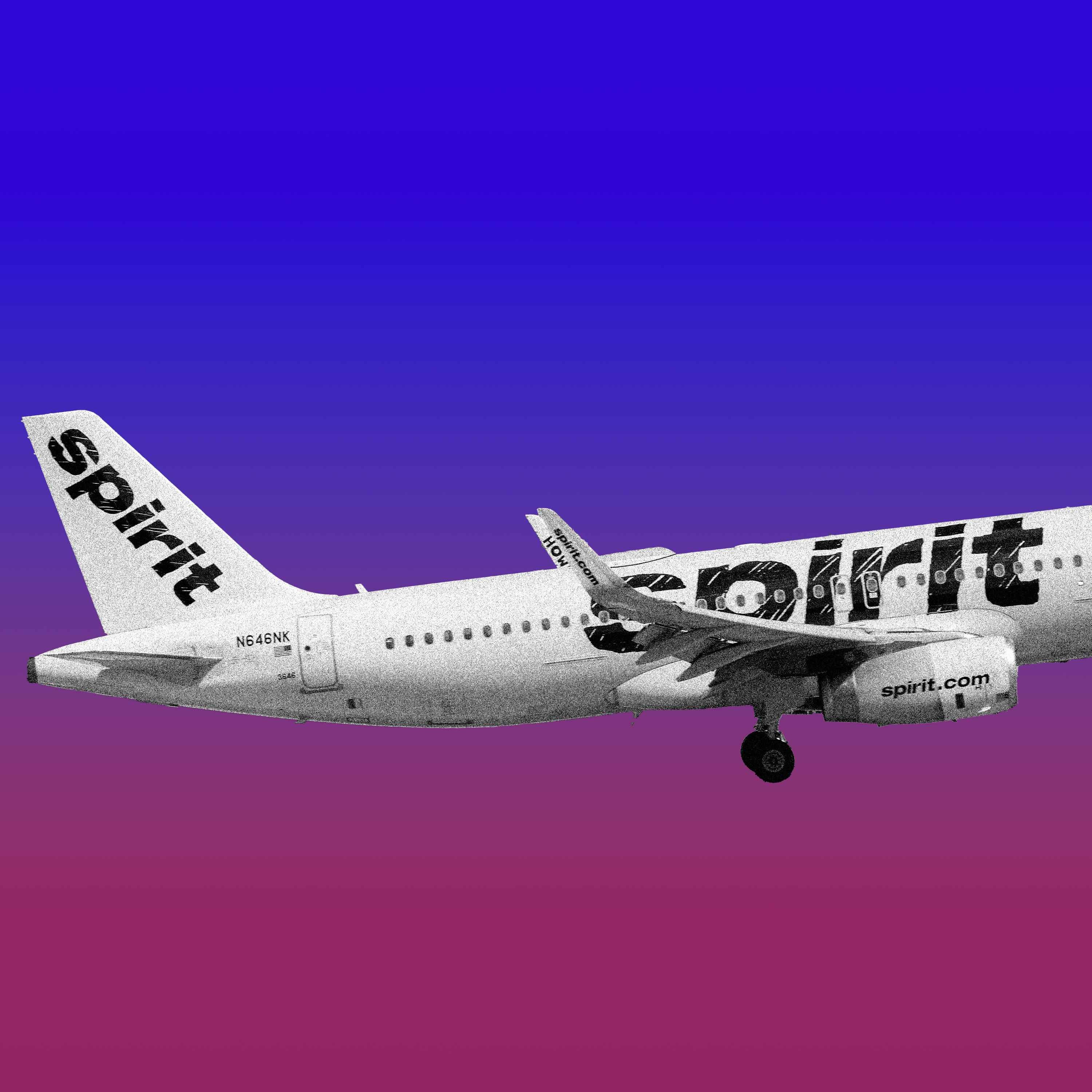
What Next: TBD | Tech, power, and the future
Buy Your Flights Now
00:21:00
It wasn’t always fun to be their passenger but you’ll miss them when they’re gone.
Loading summary
Transcript44 lines
- [00:00]
Will Giesbond
Par le tu francais hablas espanol? Parl italiano?
- [00:04]
Babbel Advertiser
If you've used Babbel, you would Babbel's conversation based technique teaches you useful words and phrases to get you speaking quickly about the things you actually talk about in the real world. With lessons handcrafted by over 200 language experts and voiced by real native speakers, Babbel is like having a private tutor in your pocket. Start speaking with Babbel today. Get up to 55% off your Babbel subscription right now at babbel.com acast spelled B A B B E L.com acast rules and restrictions may apply.
- [00:43]
Smart Travel / Monarch Advertiser
This episode is sponsored by Smart Travel, a new podcast from NerdWallet. You know that one friend who always finds the best travel deals, picks the right cards, and somehow ends up in first class for the price of coach? Smart Travel is like that friend, but in podcast form. They cover things like how to book tickets for spring break even when every other family has the same week off, or what exactly you should spend those 90,000 points on, or which airport lounges are actually worth it and which are just free chairs. NerdWallet's trusted travel experts are here to help you put your dollars to work with practical tools and smart strategies you'll find yourself using every time you need to book a seat. Smart Travel knows that planning is half the batt. They make it easier for you to button up a schedule, put away the laptop, and finally go exploring. Travel smarter and spend less. With help from NerdWallet. Follow Smart Travel wherever you get your podcasts.
- [01:56]
Shana Roth
If you're familiar with late night tv, you know Spirit Airlines is a frequent punchline. This past Monday, though, was a funeral for the joke.
- [02:05]
E
The high price of fuel took its toll this weekend because yesterday Spirit Airlines shut down. Oh no, I have three more weeks of shows to do. Now I won't have Spirit Airlines jokes Quick, somebody check on Arby's.
- [02:24]
Shana Roth
Spirit Airlines, a frequent punching bag of comedians like Steven Stephen Colbert, had announced over the weekend it was shutting down immediately. You're probably familiar with Spirit as the extremely cheap airline. The quality of service had become a running joke on the Internet, but despite its reputation, their shutdown is serious. Will Giesbond is a reporter at the Air Current, an aviation news and analysis outlet.
- [02:50]
Will Giesbond
I think for all the folks there are thousands of employees there and the pilots and the consumers who were stranded. It's obviously sad, but again, not not surprising.
- [03:01]
Shana Roth
Spirit had been in trouble for a while. The company was in debt. There was talk of A merger. But then came the war in Iran, which while it's had a major impact on all airlines, especially affected Spirit.
- [03:16]
Will Giesbond
Spirit alone in a bankruptcy filing said that between March 1 and April 30, their incremental fuel costs was nearly $100 million. I mean, that is sort of a stunning amount in the span of only two months. I would say anyone who was sitting here, who's next to me was airline CEO, they would say it's always been tough now. Yeah, when fuel goes up in price, it becomes that much more difficult. And I think if you look at Spirit's bankruptcy filings, you will see clear as day that they really pointed to fuel as the final nail in the coffin, if you will, in their unfortunate liquidation.
- [03:48]
Shana Roth
And while Spirit is not the only low cost airline, with it gone, there's a shift in the skies
- [03:57]
Will Giesbond
to Spirit's competitors. The hairline was, you know, in one way much more valuable to them dead than alive.
- [04:05]
Shana Roth
But while other airlines see an opportunity in the demise of Spirit, consumers might end up getting a raw deal. Today on the show, Spirit Airlines is dead right as summer travel picks up. What does that mean for your summer travel plans? And maybe more importantly, what does that signal about the broader airline industry? I'm Shana Roth filling in for Lizzie o'. Leary. You're listening to what Next? Tbd, a show about technology, power, and how the future will be determined. Stick around.
- [04:46]
Smart Travel / Monarch Advertiser
I hate to break it to you, but summer is almost here. And if you want to plan that vacation and not worry about whether you can afford it at the last minute, it is time to organize your finances so you can enjoy your summer without freaking out about your money. Monarch is the personal finance app that tracks everything, accounts, investments, savings goals and spending. Get your first year of Monarch for half off just $50 with promo code TBD. Monarch is like having a financial advisor in your pocket. You can use the investment view to compare your portfolio to the S&P 500 and see how it stacks up. Most apps only tell you what you've already spent. Monarch helps set goals, map out big purchases, and see if you're actually on track before it's too late to adjust. You can ask Monarch's AI assistant anything about your finances, like how much did I spend on travel last summer? Or can I afford this vacation without touching my savings? Those are the things that can help you plan. You can split the check without the headache. With Monarch's bill split, just scan the receipt. Everybody claims what they got and then settles up. You don't need a separate app. What I love about Monarch is how it made me a fully customizable budget in minutes while also giving me the freedom to adjust it how I see fit. Plus, its sleek interface makes it super easy to stay on top of my finances even when life throws the inevitable curveball. Use code tbdonarch.com to get your first year half off at just $50. That's $50 off your first year at monarch.com with code TBD this episode is brought to you by AT&T Business during Small Business Month. Starting your own business is never easy. Starting your own podcast? That seems easy, but actually there are a ton of landmines to step on along the way. Finding producers, selling ads, connecting to wi fi. Oh, does that sound straightforward? It's not talking about sitting in coffee houses for hours after buying one scone. I'm talking about sitting in hotel lobbies and pretending your backpack is luggage. It's torture. I spent so much time making my home office look professional, but my connection didn't get the memo. The last thing you want during a major interview is for your guest's voice to turn into a stutter. When your bandwidth can't keep up with your ambition, your home office starts feeling like an amateur operation per pretty fast. And for a podcast, the Internet is key because the Internet is how we talk to almost everyone. And no matter the guest, a laggy connection can ruin an exclusive interview. Great connectivity isn't a bonus, it's the whole game. And ATT Business is a reliable provider for small business owners. For Small Business Month, we celebrate small businesses by helping them run better. This means reliable uptime, easy switching, smart communications AT&T business built to work get AT&T business@business.att.com.
- [07:58]
Capital One Advertiser
This episode is brought to you by Capital One. Capital One's tech team isn't just talking about multi agentic AI. They already deployed one. It's called Chat Concierge and it's simplifying car shopping using self reflection and layered reasoning with live API checks. It doesn't just help buyers find a car they love, it helps schedule a test drive, get pre approved for financing and estimate trade in value. Advanced, intuitive and deployed. That's how they stack. That's technology at Capital One.
- [08:31]
Shana Roth
What sort of role did Spirit play in the airline industry? What was, what was their market proposition?
- [08:39]
Will Giesbond
Spirit has been operating for decades, right? And they really kind of honed in on this idea that you could create an airline that would provide low fares to consumers and operate a sort of no frills service Right. So today, you know, if you go fly one of the main carriers, you have a bunch of things included, right? You get on the airplane, they offer you a snack, they offer you water or, you know, one of those Biscoff cookies or something. And maybe you have a free checked bag and maybe you have a carry on that you, you can bring. And the idea with the low, what we call the low cost or what they prefer to call value carrier proposition is, is that what if we were to strip all that away and you can pay to add those things on top, but we want to be able to offer you, at its core, just the basic service of going from point A to point B. And we can do that at a really low price. But I'll be quick to point out that I don't think that Spirit's demise is necessarily indicative of the broader business model. They had their own unique struggles that kind of put them in a tough spot there. Tons of low cost carriers across the globe who are, seem to be doing, you know, just fine today.
- [09:47]
Shana Roth
It seems like airlines, like a lot of things in life, are sort of segmented into different tiers of the types of airline companies. So who are the low cost carriers, who are the middle? Who are the high end? Can you sort of define those tiers for us?
- [10:03]
Will Giesbond
So Spirit was a part of a group, at least in the US I'll stick to the US for now. About a handful of what we call low cost carriers. That's Frontier Airlines, Breeze and Avella, which are little newer folks like Allegiant I would put into that category as well. Sun country, they're a little bit smaller as well. And then, you know, on the top side of that, that spectrum, you have your kind of mainline, what we call mainline legacy carriers. So that's United Airlines, American Airlines, Delta, Southwest is kind of increasingly sometimes lumped into that these days after the merger. But with Hawaiian Airlines, Alaska Airlines Group is also folded into that as well. And then in the mid middle tier, you may have folks like Alaska and Southwest, you have folks like Jet in there as well. I would say those are probably the biggest folks on the playing field right now.
- [10:52]
Shana Roth
And when we're thinking about the tiers, is it just a matter of price of tickets or is it like how nice the planes are, what type of service you get and things like that?
- [11:01]
Will Giesbond
It's more about the business model, I'd say. So those folks at the low cost carrier side, they're focused again on that sort of no frill service targeting those price sensitive customers these days. Our legacy mainline carriers, especially those sort of main three, United, Delta and American, really are moving towards what we're calling this premiumization of air travel. So, you know, now United, for example, they've rolled out a new product at the very front of their long haul airplanes that is sort of a business class plus product. And so it's like a bigger suite and a bigger TV and there's a sliding door and, you know, all these, all these new things that they think customers want. And as we look at how those big three airlines are ordering airplanes, they're actually configuring their airplanes to have increasingly more premium seats. So business first class and the premium economy, which is sort of like a, a middle tier.
- [11:53]
Shana Roth
JetBlue and Spirit attempted to merge a few years back. How does that failed merger influence where we're at today?
- [12:01]
Will Giesbond
In 2022, JetBlue sort of won out over, over Frontier Airlines, another low cost competitor, in a really intense bidding war for spirit, striking a $3.8 billion deal to absorb the carrier. You know, after they had kind of gone through this bidding war, they had to approach the government and receive regulatory approval. In the end, then President Joe Biden's Department of Justice actually sued to block that deal on antitrust grounds and it was struck down by a federal judge in 2024. And the carriers kind of shortly after, you know, terminated their effort to merge. In the wake of Spirit's liquidation. A lot of folks really, you know, that the Trump administration and its allies have said, hey, you know, if Spirit was allowed to be absorbed by JetBlue, we wouldn't be in the situation. And that very well may be true. Although I kind of like to point out to folks that, you know, there are so many other factors here when we think about why an airline might liquidate. As the bankruptcy filings show, Spirit believed that they had a plan coming out of their now second bankruptcy to save the airline. And I'm going to read just a quote from their chief financial officer, Fred Cromer, from a bankruptcy filing. He said just weeks ago, the debtors were poised to implement a comprehensive and sustainable financial and operational restructuring. And then later he says, but when fuel prices spiked and stayed high and it became clear to the debtors that the reorganization contemplated was no longer feasible due to these unforeseeable circumstances. And I think that really drives home this point that they felt like they had a navigable path towards profitability, or at least that's what they had agreed to with their debtors. And fuel was really the last nail in the coffin. So of course, if Spirit didn't exist today because they were a part of JetBlue, that would have been totally changed the situation here for consumers and for the airline industry. But there are other things involved there. Importantly too. Now, ex Biden administration officials have been quick to point out that they believe the strikedown of the merger in 24 went through the legal process. So there was a lawsuit involved. A judge ultimately made that decision and they also ended up approving under different circumstances, albeit a merger between Alaska Airlines and Hawaiian Airlines in 2024.
- [14:19]
Shana Roth
Given how unique Spirit going under has been, what has been the reaction from people in the commercial airline industry, the major players, regulators, business leaders, what have they been thinking? What have they been saying?
- [14:34]
Will Giesbond
The industry, I think, was sort of ready for this. They were poised to kind of take advantage of some of the gaps in Spirit's network, so to speak. So its competitors are moving quickly to kind of take advantage of that. I would also say that this idea that the government was planning to provide some sort of lifeline, I think a lot of folks, even in the president's own party, so on the Hill, in Congress and also on the regulatory side, kind of breathed a little bit of a sigh of relief almost when this was done, I think because they knew if there was a lifeline provided, they would have opened up a whole can of worms and set up a totally different precedent for federal relief than we do have today. So you look at folks like Ted Cruz for example, who really came out against this deal on television and on social media and so on.
- [15:28]
Shana Roth
After the break, how the Trump administration sees their role in all of this.
- [15:46]
Capital One Advertiser
This episode is brought to you by Capital One. Capital One's tech team isn't just talking about multi agentic AI. They already deployed one. It's called chat concierge and it's simplifying car shopping using self reflection and layered reasoning with live API checks. It doesn't just help buyers find a car they love, it helps schedule a test drive, get pre approved for financing and estimate trade in value. Advanced, intuitive and deployed. That's how they stack. That's technology. At Capital One, the youth mental health
- [16:16]
Gab Advertiser
crisis is growing and social media is a major driver. Kids are spending up to nine hours a day on screens, often unsuperv. And studies show a direct link to anxiety, depression and even suicidal thoughts. That's where Gab comes in. GAB offers safer phones and watches for kids with no social media, tailored to every age, offering the right tech at the right time or tech in steps from GPS Tracking enabled watches for younger kids to phones with parent enabled apps for teens. Each device allows kids to more safely grow their independence. Visit gab.com getgab and use code getgab for an exclusive offer. That's G-A-B-B.com getgab Gab Tech in steps independence for them Peace of mind for parents.
- [17:10]
Shana Roth
I wanna zoom out a little bit here. What are the short term effects for the airline industry? Is it a price increase across the rest of the industry? Is it companies, you know, buying up spiritual planes or taking over their routes? What's going on here?
- [17:26]
Will Giesbond
So I think the biggest things are obviously like you said, for the consumer. A lot of competing airlines kind of came together and said, hey, we're going to offer rescue fares for consumers and make sure pilots can fly in our jump seats and so on. Which was I think really, really fantastic and shows kind of the resilience of the industry in these kind of challenging times. And for consumers, again, you know, folks who had scheduled trips who now have those canceled and they'll get refunds obviously through the airline. That process is happening automatically, but it just obviously kind of throws a wrench in everything when we talk about fares. Yeah. So typically when a low cost carrier exits a market, its competitors swoop in and raise fares. And I think that has been a piece of the puzzle. We think about its competitors being okay with Spirit going away as they're able to come in and raise some fares. And especially when we look at this volatile fuel situation right now and how much that's costing them, that's probably welcome. And we'll see kind of what happens, which airlines kind of take over what aspects of Spirit's flying capacity and how that pricing may level out. So it's probably too soon to say exactly what that looks like, but in the short term, yeah, a lot of volatility on pricing, a lot of volatility in terms of Spirit's employees and crew members, where they might go if they're able to stay in the industry and so on. Yeah.
- [18:46]
Shana Roth
What type of traveler does this affect? Is it most? It sounds like it's mostly going to hurt lower income travelers.
- [18:52]
Will Giesbond
I would say it's Spirit's customers were the price sensitive customer. Right. Folks who did not want to spend that much on air travel and found a way to do so via their no frills fares. I will say though, there, there are other low cost carriers in the market today. We just named five or six earlier and they offer a similar value proposition through their own products as Well, I
- [19:17]
Shana Roth
look at Southwest's changes to their business model last year to try to more closely align themselves with United, American or Delta, like you mentioned that they were trying to do. You know, they have assigned seats, extra legroom seats, et cetera. JetBlue recently announced a partnership with United. There is lots of movement happening in air travel right now. How would you define the strategy that airlines seem to be targeting higher paying customers?
- [19:45]
Will Giesbond
Yeah, absolutely. I think I go back to this premiumization of travel. Right. You know, it's becoming increasingly clear to airlines that there is money there. When we think about lucrative credit card programs, I mean, some of these credit cards, you know, you're paying almost $1,000 a year in an annual fee. And that's not even before we think about the deals that exist between credit card companies and the airlines who sell and trade their sort of points or their like miles, whatever you will. That's very lucrative for an airline. Many of these airlines would not be profitable without their credit card premium credit card programs. And that goes with, you know, all the fancy stuff like lounges and, you know, premium seat upgrades and all that stuff. And so when we look at the macro environment, and I think, you know, you mentioned Southwest, like those moves reflect this shift that we're seeing in air travel. You know, United Airlines CEO Scott Kirby, he's a very outspoken personality in this industry. You know, anyone who's listening to this may remember just weeks ago that he had flown included a potential tie up with American Airlines, which would create the largest carrier on the planet. This unprecedented idea that no one had ever really thought of before. His carrier made a bet a few years ago that premiumization would continue to evolve and be a key part of this business. And that's paying off for them. And so we'll see whether or not airlines maybe are over rotating right now. I think some of the, for instance, new airplane owners are coming in with all these premium seats. Will that trend continue? It's hard to say. I know I don't have a crystal ball, but I think right now that is a huge part of this industry. And I think folks like Southwest, for example, are noticing that.
- [21:33]
Shana Roth
Yeah, I want to stay on that rumor of a United American merger. How is that idea going down in Washington? Because it feels like there could be some antitrust issues going on there.
- [21:47]
Will Giesbond
Totally. And you know, it was a really remarkable chain of events. So this news was first reported by Bloomberg a few weeks ago and you know, folks reacted. The president himself in the Oval Office said that he would prefer not to have These airlines merge, which is quite interesting when we think about, you know, how the President otherwise has approached the industry and approached other big acquisitions and mergers between large corporations and other industries. And then United, they released a letter from their CEO, sort of saying, hey, our conversations with American have ended, but I did approach them about a merger. And here's my sort of vision for what could have been. And I think I will leave it to listeners to sort of interpret Scott Kirby's words in whatever way they would like. I think there are many ways to read into what he said, but, yeah, I mean, there have been tons of questions about what this would look like. Kirby himself said that hubs and certain parts of each airline's route network would have to be dismantled in order for this to happen. But he saw it as this way for the United States to have a truly competitive or something like that carrier with the rest of the world. But to even have this administration, which I think has been pretty friendly to corporate tie ups and murders and acquisitions, to say, hey, wait a second, we're not quite sure about this, when I think is pretty telling. The Secretary of Transportation, Sean Duffy, had said, you know, Scott, you know, needs to do a better job of selling this. Which I think is a nice way to say it. Right.
- [23:22]
Shana Roth
It's so interesting to me because you have on the one hand the Trump administration kind of feeling not happy with the United American airline merger. But at the same time, the administration had signaled, at least initially, that they might have been interested in a deal to save Spirit. Why didn't that happen? And what is the difference going on here? Is it just because Spirit was based in Florida, which is a very politically important state for the Trump administration, or is there other things going on here?
- [23:53]
Will Giesbond
Yeah. So there is a really interesting discrete link between United and Americans merger proposition and Spirit's demise. But as it relates to your question regarding sort of why the Spirit talks failed and this sort of interesting difference in policy between how the administration is approaching that versus United American. You know, they haven't really said beyond, hey, we were trying to save those jobs. Right. And the numbers kind of vary. Spirit has about 7 to 9,000 employee, or they had rather 7 to 9,000 employees on their direct payroll, but they sort of encompass as much as 19,000 employees. And you looked at contractors and furloughees. So it's a lot of people that this liquidation was affecting. We have largely confirmed that talks largely dissipated late last week after the creditors and the government simply just couldn't come to an agreement about who was going to be where in this sort of pecking order of who got what assets when things inevitably kind of went under. And so that disagreement ultimately just resulted in no deal. But we had reported that the Trump administration had explored as much as a $500 million bailout. Others had reported that there was a government stake involved here, potentially northward of 90%. The president actually in the Oval Office said, hey, we might as well just buy the airline, which is sort of a never before done proposition. And also they had quietly been asking around other carriers, hey, like, do you want to buy Spirit? Is that, does that interest you? JetBlue, as we reported, was one of those folks that the government asked, hey, you know, would you want to, you know, rethink this merger proposition between you and Spirit? None of that ultimately dissipated. I thought it was particularly interesting that we learned, you know, none of the other carriers were particularly interested in doing some sort of tie up with Spirit or emerging or acquiring them. They just didn't feel like there was a strong value proposition there. So that kind of tells you what you need to know about how the industry is thinking about this.
- [25:55]
Shana Roth
You've talked a lot about how airlines are looking upmarket and mergers are not rare in air travel. How do you think the next era of the American travel industry will be defined?
- [26:08]
Will Giesbond
You know, I think that what became clear in Spirit's demise was that everybody was focused on making sure that folks have choices, right? The United States is the most mature, safest aviation system in the world. We have the most traffic, the most throughput, the most complexity that has created challenges. I spend most of my time covering air traffic control, and we have a lot of issues there with modernization and making sure that our equipment is up to date to handle that amount of traffic. But as it relates to the consumer, I think, you know, you can confident, be confident that folks will always have choices. And I think that very much is a clear issue that everyone sort of agrees with. Now, how that goes down and what those decisions look like to accomplish that goal look wildly different depending on who you talk to. And that will be very interesting for us to follow over the next few years, depending again on how long this conflict lasts, if it does seem to be something longer term, that could have really lasting impacts on the airline playing field and also their products as well.
- [27:17]
Shana Roth
Will, thank you so much for talking to us about the state of air travel.
- [27:21]
Will Giesbond
Of course. Thanks for having me.
- [27:24]
Shana Roth
Will Giesbond is a reporter at the Air Current. And that's it for our show today. What next? TBD is produced by Patrick Fort. Our show was edited by Evan Campbell. Paige Osborne is the supervising producer for what Next and what Next tbd. Mia Lobel is the executive producer of Podcasts at Slate. TBD is part of the larger what Next family. We'll be back next week with more shows. I'm Shayna Roth filling in for Lizzie o'. Leary. Thanks for listening.
- [28:02]
Capital One Advertiser
This episode is brought to you by Capital One. Capital One's tech team isn't just talking about multi agentic AI. They already deployed one. It's called Chat Concierge and it's simplifying car shopping using self reflection and layered reasoning with live API checks. It doesn't just help buyers find a car they love, it helps schedule a test drive, get pre approved for financing and estimate trade in value. Advanced, intuitive and deployed. That's how they stack. That's technology at Capital One Security program
- [28:32]
Vanta Advertiser
on spreadsheets, new regulations, pilot and audit dread. It's time for Vanta. Vanta automates security and compliance, brings evidence into one place and cuts audit prep by 82%. Less manual work, clearer visibility, faster deals, zero chaos. Call it compliance or call it compliance. Get it join the 15,000 companies using Vanta to prove trust. Go to vanta.com calm.