← What Next: TBD | Tech, power, and the future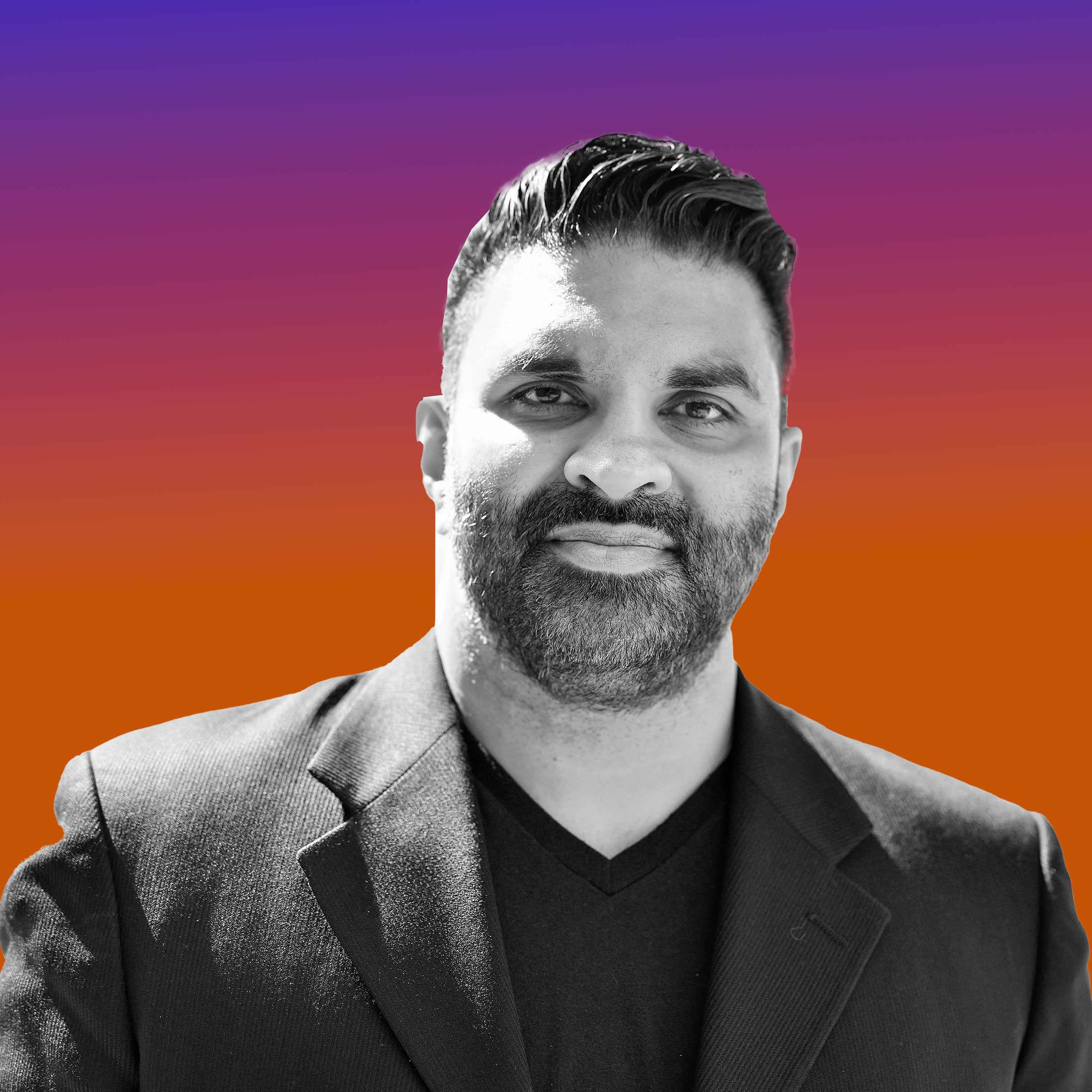
What Next: TBD | Tech, power, and the future
Does Anyone Like A.I.?
00:31:44
Besides the executives raking in millions right now.
Loading summary
Transcript77 lines
- [00:00]
Nilay Patel
Over 90 of the top 100 US accounting firms trust Bill to handle bill pay processes. Why? Because our tools are built on over a trillion dollars of secure payments. We're not just moving money, we're powering financial workflows for half a million customers. That's a level of expertise you just can't fake. Ready to talk with an expert? Visit bill.comproven to get started and grab a $250 gift card as a thank you. Terms and conditions apply. See Offer page for details.
- [00:34]
Lizzie O'Leary
This episode is sponsored by Smart Travel, a new podcast from NerdWallet. You know that one friend who always finds the best travel deals, picks the right cards, and somehow ends up in first class for the price of coach? Smart Travel is like that friend, but in podcast form. They cover things like how to book tickets for spring break even when every other family has the same week off, or what exactly you should spend those 90,000 points on, or which airport lounges are actually worth it and which are just free chairs. NerdWallet's trusted travel experts are here to help you put your dollars to work with practical tools and smart strategies you'll find yourself using every time you need to book a seat. Smart Travel knows that plan planning is half the battle. They make it easier for you to button up a schedule, put away the laptop, and finally go exploring travel smarter and spend less with help from NerdWallet. Follow Smart Travel wherever you get your podcasts. If you are a regular consumer of tech related news, you probably know this guy.
- [01:53]
Nilay Patel
Hi, I'm Neil Ipatel. I'm the co founder and editor in chief of the Verge and host of the Decoder podcast and co host of the vergecast podcast.
- [02:00]
Lizzie O'Leary
I wanted to call up Nilay because he came up with a concept that blew my mind, one that I think is a skeleton key for this moment in tech and the economy. It's called Software Brain. So I asked him, what is softwarebrain?
- [02:16]
Nilay Patel
Software Brain is the name that I have given to a particular way of thinking that has been around in the tech industry for a very long time, but which has become dominant in the age of AI. And it's the idea that if you can just capture the world in a database and issue some structured commands to that database, you can make utopia. And there are really simple ways of thinking about this. I have a lot of friends who are addicted to productivity software and they're always switching from notion to todoist to whatever or they're hacking up their own. And if they can just get everyone to use the Same system that they're using. Everything will be completely under control. Like, everybody who's ever worked in any company in the world has had the person who's been like, if we can just switch from trello to airtable, everything will get better. That is like definitionally software brain.
- [03:17]
Lizzie O'Leary
How did you start thinking about this idea?
- [03:19]
Nilay Patel
I mean, we cover a lot of software at the Verge. We cover a lot of tech products. So many tech products are fundamentally databases. Like in the most simple, reductive drives everyone crazy way, everything is just a database that you are trying to issue commands to. I have a whoop band. A whoop band is like a fitness tracker.
- [03:41]
Lizzie O'Leary
Fitness tracker, yeah.
- [03:42]
Nilay Patel
It's very popular. It is. It's just recording everything about your heart rate and your body and it inside that database, it very confidently makes determinations about how healthy you are. And that is nowhere near all of the information that it can have or should have or even needs to make those kind of determinations. But you understand why it's so addictive. Like, I have one for a reason. I think it is useful in some minor way. And then I have friends whose entire lives are optimized around their whoop bands. And this kind of thinking that if we can just collect enough data, if we can just structure the database correctly, we will create a set of better outcomes has a lot of power, and it also has very clear limits. And in AI in particular, the more data the AI systems have, the more context you give them, the better they are. And so you just see this whole industry is racing to turn us all into databases so that the AI can talk to us in more useful ways. And I just think that that is. It's going to end in where it's ending, which is people don't like the products.
- [04:51]
Lizzie O'Leary
Today on the show, Software Brain is eating Silicon Valley. It is inside the heads of the big tech CEOs, and it might be the reason why so many Americans hate AI. I'm Lizzie o' Leary and you're listening to what Next tbd, a show about technology, power, and how the future will be determined. Stick around. This episode is brought to you by AT&T business during Small Business Month. Starting your own business is never easy. Starting your own podcast, that seems easy, but actually there are a ton of landmines to step on along the way. Finding producers, selling ads, connecting to WI fi. Oh, does that sound straightforward? It's not talking about sitting in coffee houses for hours after buying one scone. I'm talking about sitting in hotel lobbies and pretending your backpack is luggage. It's torture. I spent so much time making my home office look professional, but my connection didn't get the memo. The last thing you want during a major interview is for your guest's voice to turn into a stutter. When your bandwidth can't keep up with your ambition, your home office starts feeling like an amateur operation pretty fast. And for a podcast, the Internet is key because the Internet is how we talk to almost everyone. And no matter the guest, a laggy connection can ruin an exclusive interview. Great connectivity isn't a bonus, it's the whole game. An AT and T business is a reliable provider for small business owners. For Small Business Month, we celebrate small businesses by helping them run. This means reliable uptime, easy switching, smart communications AT&T business built to work Get AT and t business@business.att.com I hate to break it to you, but summer is almost here and if you want to plan that vacation and not worry about whether you can afford it at the last minute, it is time to organize your finances so you can enjoy your summer without freaking out about your money. Monarch is the personal finance app that tracks everything accounts, investments, savings goals and spending. Get your first year of Monarch for half off just $50 with promo code TBD. Monarch is like having a financial advisor in your pocket. You can use the Investment View to compare your portfolio to the S&P 500 and see how it stacks up. Most apps only tell you what you've already spent. Monarch helps set goals, map out big purchases, and see if you're actually on track before it's too late to adjust. You can ask Monarch's AI assistant anything about your finances, like how much did I spend on travel last summer? Or can I afford this vacation without touching my savings? Those are the things that can help you plan. You can split the check without the headache. With Monarch's bill split, just scan the receipt, everybody claims what they got and then settles up. You don't need a separate app. What I love about Monarch is how it made me a fully customizable budget in minutes while also giving me the freedom to adjust it how I see fit. Plus, its sleek interface makes it super easy to stay on top of my finances even when life throws the inevitable curveball. Use code tbdonarch.com to get your first year half off at just $50. That's $50 off your first monarch.com with code TBD.
- [08:32]
Commercial Announcer
Now more people than ever can bring in their bill for a better deal at Verizon. Got AT&T or T mobile. We got you Xfinity or Spectrum. You too. So tell your friends, your family, your quirky neighbor Jeff, grab your megaphone and yell it from the rooftop. Get a better deal at Verizon because chances are anyone in shouting distance is included. Bring in your at&t t Mobile, Xfinity or Spectrum bill and we'll give you a better deal on the best network come by Verizon today. Best network based on root metrics Best overall Mobile Network Performance US Second Half 2025 all rights reserved. Must provide recent consumer Mobile bill in the name of the person redeeming the deal. Additional terms, conditions and restrictions apply.
- [09:06]
Lizzie O'Leary
Nilay has been thinking about the idea of software brain for a while, and he places the beginning of this story in 2011 with the venture capitalist Marc Andreessen's essay why Software Is Eating the World.
- [09:21]
Nilay Patel
I think Software Is Eating the World is one of the most important essays in the history of the tech industry. Maybe in the history of economics, What? Maybe in the history of business. It's very funny because a lot of
- [09:31]
Lizzie O'Leary
it is about Adam Smith.
- [09:32]
Nilay Patel
Come on, it's there. It's right up there. It is one of the best shot calls of all time. And you can have a lot of feelings about Marc Andreessen. He called the shot and he was totally right. And the thing that he was describing in that essay is that if you were running a business 70 years ago, you probably had no software in your business, right? You had a set of business processes. But if you were running a taxi company, you spent all day thinking about taxis, like literal the hardware of taxis and whether they had enough gas and oil and whether the tires were wearing out. And you spent your days in the world of atoms. And that was pretty durable in a way. And most businesses lived in that world of atoms. When you got to, oh, you can run an Uber, and now Uber is a software company that dispatches taxis and they don't think about the hardware of the cars at all. The CEO of Uber was just on decoder and he was talking about all of his bets in autonomy. Autonomy is the biggest thing that will happen to taxis in our lifetime if it actually comes to pass, right? The cars will drive themselves. This will be a big deal. Uber's making investments in other companies that might be doing that. They're making no bets of their own, right? Like they are not investing in the literal hardware of the cars. It just does not matter to them. This is the thesis that Andreessen was getting at some point, your business process can be abstracted into Software and the companies that become software companies first will dominate everything. And every company will feel the enormous pull to become a software company because the margins in software are so much better, because the efficiency of running software is so much better. Where did that leave the companies that do Adams? I think probably not in as healthy a spot as anyone wants them to be in America in 2026. But he was correct that looking at the world as a series of business processes to be automated through software meant that you could very confidently say software was going to eat everything. And he was absolutely correct. There isn't a. A business in the world right now that isn't run on some sort of software business process.
- [11:38]
Lizzie O'Leary
So I think the apotheosis of your kind of software brain train, right, like it goes to AI and it goes to this place where polling shows people hate AI. I think you cited the NBC News poll showing that AI has worse favorability than ice. Like, that's pretty stunning. And so I wonder if you could articulate why you think there is this huge gap between where Silicon Valley and the executives, certainly of a handful of leading companies feel about AI and where everybody else seems to be.
- [12:20]
Nilay Patel
Sure. I didn't put this in my piece because I didn't want to open this door too much. I think the first. Sorry, that's fine. I'm eager to talk about it. The first thing I would say is that hundreds of millions of people, up to a billion people, have used the free consumer versions of these AI products. And I'm a product reviewer and I will just tell you these products aren't any good. And I have talked to a lot of tech executives, like big fancy tech executives, and they know it. They just know it. The free version of ChatGPT is not a great product. It is a product that lots of people use because it's there and it's free. But if you just sit with it for any period of time, you're like, oh, this isn't any good. Like, it asks you leading questions. It does a bunch of engagement bait stuff. It's like talking to a BuzzFeed listicle from 2017, right? There's something about it where, like, this is dumb and stupid and I hate it. AI overviews in Google, sure, they're useful and Google is a monopoly in search in the way that it's monopoly in search. And they constantly tell you how many people are using the products. But there's no competition there. They just put AI overviews in front of everyone. Everyone has had the experience where they're broken or they get something wrong, or they just hallucinate something. It. The idea that there is a set of meaningfully revealed preferences about consumer behavior because of the uptake rates is a fallacy. The products themselves aren't any good. They're not great. I think they're interesting and they're fun. You can certainly have a long conversation with ChatGPT. But to do the things that might upend our economy, you need to pay a lot of money. And most consumers are not paying that money. OpenAI's own numbers show that the vast majority of its users are not paying them a dollar. So you have this problem where the people who run the tech companies are paying enormous amounts of money for tokens to automate the thing that they do, which is make software. And the products are good at making software. Also, those companies own their own databases, right? If you're Google, you own a database of everything on the web. You own a database of all the videos that people want to watch on YouTube. You own your own code repository and you can set your fancy engineers off with coding agents to access those databases, which you have completely open access to. If you're, if there's some database that's broken, you can call up your vendor and demand that they give you the access you need. And you can do this amazing stuff. You can write code faster than you've ever written before. And there's this huge yawning gap between that experience, which is driving a bunch of Silicon Valley bananas, and the experience of regular people using the free products. And that to me is like, oh, you can't market your way through that. You have to make the products as good as the products.
- [14:51]
Lizzie O'Leary
You can't buy TVPN and just be like, see, look at us, we're fine.
- [14:54]
Nilay Patel
Yeah, because you can't. People are going to open a free version of ChatGPT and use it. And that's the experience you're going to have. And you can't promise them that, yes, this might take all the jobs. Like, yes, this might be the biggest cybersecurity problem in world history and you should love it. Even though this product you're using every day doesn't appear to have those capabilities, it doesn't appear to be making your life better in any meaningful way.
- [15:15]
Lizzie O'Leary
So does it matter if people hate AI in the sort of consumer facing version, if they're not going to cover OpenAI or anthropics or Google's bills? And the thing that is actually going to pay those bills if this goes forward is the US Government Some other government, the Pentagon. Looking at Silicon Valley's pivot to defense tech, there's this part of me, this very cynical part of me that's like, oh, these are government and enterprise targeted software packages and people don't matter. And like all the talk about regular people isn't really relevant to how these companies are operating.
- [15:59]
Nilay Patel
Yeah, I mean, I can draw this line pretty far back. The consumer software business has been a bad business since the iPhone came out. That's. It's just true. Right? Like, you can't think of a consumer software company outside of Free to play games that has really emerged in a meaningful way because Apple controls distribution on the iPhone and the whole Valley has pivoted to B2B SaaS applications. There's a reason. It's a joke and a cliche. There's truth to it. The founder ecosystem is a bunch of B2B SaaS companies. Because that's where the money is. It's in the enterprise. It's obviously in government contracts. Those are where the big pots of money are. And consumers, by and large, expect everything to be free and ad supported. And it there's not. So there's only so many applications for consumers that can be free and ad supported at that scale. You can't build productivity software for consumers and be like, there's ads in it. You have to charge the money. And eventually you run out of consumers who are willing to pay money for your productivity software and you become an enterprise application. This happens to every single productivity software package that we cover. So you just see that the industry has already been organized around business software and government contracts for a long time, like the longest time that you can think of. And that whole founder ecosystem, the VC ecosystem with AI, they get to run it back, they get to start over. And you know, Andreessen has said this is how computers will work now. So I get to do it again.
- [17:26]
Lizzie O'Leary
But that's all well and good until you have to build a bunch of data centers in a town where people hate you.
- [17:32]
Nilay Patel
Yeah, this is a. This is like, you know, people want to ascribe this to NIMBYism, but I think the reality is if you just told people that's where Netflix comes from, like, those are the hard drives where Netflix is. They would feel differently about the data centers. They would feel differently about the value exchange.
- [17:49]
Lizzie O'Leary
You think so?
- [17:51]
Nilay Patel
Yeah, because they would see what the value that is being brought to them looks like. Instead, you have an enormous amount of investment that is driving up the cost of GPUs for video games that is driving up the cost of RAM in every product in the world. That is making it impossible to start any company that doesn't have the word AI in it. All this cost, power, energy costs are going up and what is the value to the everyday person? You cannot tell me that it's free ChatGPT or AI overviews in Google Search. It is not those things. Okay, what is it? And I don't think the industry has coalesced on a product that looks that valuable. I think for a minute OpenAI thought that it could take over Google Search, right? The, the, the user interface of ChatGPT and the ability to ask it open ended questions and, and get pretty rich answers would demolish Google. And Google at that time had been pretty and shit ified to borrow a phrase from Cory Doctoral. Right. They'd loaded up with ads. It was every. You know, the economics of SEO meant that all the poor recipe writers had to write these like searching personal narratives
- [18:54]
Lizzie O'Leary
like this is the recipe that made my husband fall in love with me.
- [18:57]
Nilay Patel
But, and they didn't, they didn doing it. They just understood that there was, there was a whole set of economic incentives that made them have to do it. That was pretty bad. And so OpenAI showed up with a product that was a little bit better. They could deliver a better user experience. I think they might have thought that Google's business, which is the best business in the history of the world, was just theirs for the taking. And then Google decided to compete and then Anthropic decided to focus on enterprise and you have the one player that was going to build the consumer replacement for search kind of get knocked on its ass. And I don't know that there's a great consumer product in the waiting that would make all of the investment worth it to regular people.
- [19:37]
Lizzie O'Leary
Okay, so I want to talk about this thing then that these CEOs seem to think they need and I believe Satya Nadella said this to you to earn the social permission to consume energy.
- [19:48]
Nilay Patel
Axios. Not to me.
- [19:49]
Lizzie O'Leary
Okay, Axios.
- [19:50]
Nilay Patel
Yeah.
- [19:50]
Lizzie O'Leary
But that they need to earn the social permission to consume energy because we're doing good in the world. What does that social permission look like? I don't know. Make it real for me legitimately.
- [20:02]
Nilay Patel
I think it's just making things people like. I don't think social permission is that hard to get. You can buy an expensive GPU and run it red hot to play video games on your gaming PC and you're not going to get people in your town coming to scream at you about Power usage. Right. And obviously the scale of data centers is vastly more enormous. But the moral dimension of what do we use electrons for in computers? Has only existed in this way with data centers. And it's because there's no value on the other side for people. I think if any of these companies could legitimately show up and say, here is the product. That's great. On the other end of this, I think they would earn some of that social permission instead, because I don't think those products are easy to build or economically viable. You end up with a bunch of loose talk about curing cancer. Right. Or solving all the world's economic problems, and Elon saying, everyone will live in a penthouse in the future. And that seems much harder to me than building a great consumer product. But that's what they got. And Sam Altman told this fantastic story about someone curing their dog's cancer with ChatGPT, and we dug into it, and it absolutely did not happen in that way.
- [21:10]
Lizzie O'Leary
Oh, yeah, this guy. Yeah, yeah, right. He.
- [21:12]
Nilay Patel
He prompted chatgpt, and then he worked with some actual researchers, and it helped him structure his conversation with the researchers. But the researchers made the drugs they gave to the dog, and the dog was getting traditional treatment as well. So you can't even ascribe the. The outcome to the process. But we're so stuck looking for social permission that we're telling tall tales about dogs, dogs with cancer, getting cured. This is a problem. Like, in just a real way. This is a problem this industry has bought for itself. They're constantly talking about the social change they will cause.
- [21:44]
Lizzie O'Leary
When we come back, is there anything that AI companies can do to actually win over users?
- [21:59]
Commercial Announcer
When you manage procurement for multiple facilities, every order matters. But when it's for a hospital system, they matter even more.
- [22:05]
Lizzie O'Leary
Grainger gets it and knows there's no
- [22:08]
Commercial Announcer
time for managing multiple suppliers and no
- [22:10]
Lizzie O'Leary
room for shipping delays.
- [22:11]
Commercial Announcer
That's why Grainger offers millions of products in fast, dependable delivery. So you can keep your facility stocked, safe, and running smoothly. Call 1-800-GRAINGER Click grainger.com or just stop
- [22:23]
Lizzie O'Leary
by Grainger for the ones who get it done.
- [22:29]
Commercial Announcer
Now more people than ever can bring in their bill for a better deal at Verizon. Got AT&T or T Mobile. We got you Xfinity or Spectrum. You too. So tell your friends, your family, your quirky neighbor. Jeff, grab your megaphone and yell it from the rooftop. Get a better deal in Verizon. Verizon. Because chances are anyone in shouting distance is included. Bring in your at&t t Mobile Xfinity or Spectrum Bill. And we'll give you a better deal on the best network come by Verizon today. Best network based on root metrics. Best overall mobile network performance. US second half 2025. All rights reserved. Must provide recent consumer mobile bill in the name of the person redeeming the deal. Additional terms, conditions and restrictions apply.
- [23:03]
Lizzie O'Leary
So how existential is that issue? And like, how much time do they have? Because at. At a certain point, and it's different, right, Depending on the interest rate environment, we are no longer in kind of the era of free money. We have the Molotov cocktail thrown near Sam Altman's house. We have the bullets fired at an Indianapolis city council member's home.
- [23:28]
Nilay Patel
I think with this government in particular, their response to political violence is to crack down in civil liberties. They want it. I think the Trump administration would love some political violence, some unrest, so they could tamp down on our civil liberties. You can already see it all the time. And so I'm just, you know, I feel like it is important to say out loud, don't do violence. It's just something I believe our algorithmic filter bubbles have created synthetically communities of people who are reinforcing their belief that we should do violence. If I were these companies, I would be looking at that and saying, one, we made this, we should stop that. And two, it's wild that there are communities of people that our algorithms can bring together who are basically like, yeah, we should kill all of you, because you shouldn't have communities of that size that the algorithms can find and deliver to tens and thousands, if not hundreds of thousands of people. I think that these companies need to look at that reality.
- [24:23]
Lizzie O'Leary
You're kind of making the case against the Internet.
- [24:26]
Nilay Patel
Well, no, I mean, there was a time when these companies had vastly more content moderation, and they would prevent these kinds of communities from forming on their major platforms.
- [24:33]
Lizzie O'Leary
There's also a time, but they stop doing that.
- [24:35]
Nilay Patel
That they super stop doing that. There was also a time when we would cover fantastic claims from Google and Facebook and the other big tech companies about what they would accomplish. We had covered fantastic claims from Elon Musk and Tesla, and we were met universally with excitement. Right. We've been running the virtual 15 years now. I can point to the time when that kind of news was met universally with excitement. We used to cover Elon Musk, like the way that celebrity magazine would cover the biggest celebrities in the world, because he'd show up and he'd be like, look, the rocket's going to go up in the air, and it might explode the first few times, but then it's going to land. And then we would cover every minute of it until it landed. And our whole audience was thrilled about all of this. All of that has changed, right? Whatever deal that those companies or those characters got in exchange for being innovative has changed because people feel exploited, they feel taken advantage of. And with the enormous amount of data center buildup, the spiking cost of energy, I will come back to the fact that you can't buy a stick of RAM to save your soul. This feels abstract to people, like it's not in the mainstream. People want to build gaming PCs. They want to buy computers, and they cannot because the RAM is in the data centers. All the fabs are being used to make RAM for data centers. So there's this, like, very tangible cost and there's no benefit. And these characters, these guys have all become the characters who have turned off all the content moderation and allowed the racism and the violence on the platforms. Where are you going to earn your social permission back from?
- [25:55]
Lizzie O'Leary
Is there anything they could say, do you think that would earn that social permission, or is it like, we're going to take a wholesale look at how we do business again?
- [26:05]
Nilay Patel
I think the easiest thing they could do is build a great product. I think great products overcome everything all the time. The examples I will give you are The Tesla Model 3, which is a great product, and people keep buying it regardless of what Elon Musk says or does. I know a lot of people who are utterly repulsed by Elon Musk, and they go to buy an EV and the right answer is the Tesla Model 3. And they just overcome it because it's a good product. It just happens. Another really good example is Uber. Uber in its early days had infinite regulatory problems, right? Like, Travis Kalanick went and found them. Like, he was like, my whole vibe is, I'm going to go find your city government, I'm going to piss it off, and I'm going to win. And the way he won was that people liked Uber a lot. And so you had angry taxi drivers, you had all kinds of labor issues, you had all kinds of safety issues. And the local governments would say, we're going to shut down Uber. And they would put a banner in the app and say, call your local council member to make sure they don't shut down Uber. And people push that button over and over and over again. Because the political capital of a product people love could overcome almost anything. If you put a button in OpenAI products today. If you put a button in ChatGPT today that said call your local council member to support data center build out, no one would push that button. In fact, they would call the local council member and say, this dumb company is trying to get me to support a data center. Don't do it. That is the problem that they have.
- [27:25]
Lizzie O'Leary
How much of that also comes from their chosen alignment with the Trump administration? I mean, the Trump administration has basically killed all AI regulation. Now there's this, like, we have to look at your model first, maybe executive order. I wonder if that's tarnished them as well.
- [27:44]
Nilay Patel
I think so. It's hard to say, you know, they're all rich people making rich people decisions and they want a deregulated environment. Tim Cook his prostrated himself in front of Trump in all kinds of ways.
- [27:56]
Lizzie O'Leary
It doesn't seem you gave him a shiny trophy.
- [27:59]
Nilay Patel
It doesn't seem to have hurt Apple's image. Like, maybe on the margin it has, but Apple seems to be fine. They issued new pride bans for the Apple watch this week. Like, some of them can walk the line, some of them can't. I think all of them are just trying to operate. If you run companies of this size, you're sort of inherently a politician. It comes out on decoder over and over again. They have to deal with the Trump administration. They can't turn away from it. And there's only one way to deal with the Trump administration, which is to flatter Trump. It's, it's not a, it's not a well run bureaucracy that we have at the top of our country right now. There's like one guy who like, says weird stuff and then like an army of doofuses. I, I have sympathy for it. I don't think they've all made the right decisions. I think they've gotten themselves twisted in all kinds of ways. I think, you know, anthropic fighting with the Defense Department at the same time that it's working with Scott Besant to roll out model safety in different ways
- [28:51]
Lizzie O'Leary
and also still working with the Defense Department.
- [28:54]
Nilay Patel
Right. It's just emblematic of the amount of chaos from the Trump administration. You talk to these guys, you know, before and after the show and when they're a little looser and all of them are like, we're just trying to get through the day. Like, if we, if we put up the fight, there's a chance that this administration finds a way to actually kill us. And, like, that's a bad outcome to you. I Don't know. Like I do think the fact that all of the tech, I don't know,
- [29:17]
Lizzie O'Leary
they can read a poll, they can
- [29:19]
Nilay Patel
read a poll and I think, I think it's turning and I think the fact that they all showed up at the inauguration and they're all spending money on the ballroom, they're not getting everything they wanted and in fact they're trashing the reputations of, you know, 50% of the public. We'll see how it plays out. I'm just also not blind to the fact that Apple is the global economy.
- [29:39]
Lizzie O'Leary
Right. I mean, I guess some of this turns on how much slash whether AI is a smokescreen for layoffs or an impetus for layoffs, because that then makes people angry. When people are angry, they vote for change.
- [29:56]
Nilay Patel
You know, it's unclear to me what the AI layoffs in the non tech parts of the economy are actually caused by. I don't think it's caused by a bunch of agents showing up at white collar law firms and doing the job. I think there was a bunch of overhiring in the pandemic and now these companies are cutting costs and you can do that and that's fine. And the economy is so broken and weird right now that maybe everyone's just getting ahead of something they see coming that's bad in tech. I do think there is a shocking amount of AI related layoffs happening and it is because a senior person with a bunch of agents can ship a lot of code in big ways. AWS just announced that a team of engineers, like a small team of engineers at AWS rebuilt an entire production system like while it was running with agents in like half the time that ordinarily a team of like 50 people would have taken a year to do.
- [30:51]
Lizzie O'Leary
Right.
- [30:51]
Nilay Patel
So again there's product market fit and coding.
- [30:54]
Lizzie O'Leary
But then you have the Pocket OS situation where Claude just like whoopsied their entire database.
- [31:00]
Nilay Patel
Yeah. You know, like some people are idiots. Like I, like I've covered the tech industry for a long time. Like, like there's always been idiots and they're like a lot of software is making promises that you can't keep. Like the entire business software universe is showing up at a mid sized bottling plant in the Midwest and saying if you would just deploy SAP, you would increase your margins 30%. And then an army of consultants shows up to build you an SAP system. And maybe that was worth it and maybe it wasn't. But that is the nature of software development forever. Right. We're going to do a big data migration to the new platform. And that's going to cost a lot of money. But at the end, we'll finally be able to see everyone's calendar at the same time, like, this is the thing that this is what this industry sells to people. I think you can get twisted and be like, AI's made it worse. At its core, it's so much the same thing. It's just enterprise software. Again, what we're seeing is the cost of deploying that enterprise software is these massive data centers. The cost of automating software development is these massive data centers. And is that worth it to make a handful of companies richer than they were before? I don't think so. Is it going to be how business software is built and deployed in the future? 100%, yes.
- [32:14]
Lizzie O'Leary
Last question. I took the subway here today, and I am always fascinated by the ads on the New York City subway because they tell me something about the economy. Economy going all the way back to doctors is more. But now when I get on, it's all AI platforms, usually human resources and back of the book stuff for your small business. And there's one that I see a lot that says, track your agents like you track your macros, which, number one, makes me want to vomit. But it also has this vibe that this is inevitable. This is where we're going. This is how your future office will run. And I wonder if you think that's true. Is this the future? I don't think we are talking about, you know, pets.com, but part of me does wonder if we're a little bit in the, like, crypto of spring 2022. And I don't know yet. I'm curious how you look at the cloak of inevitability that all of this is surrounded with.
- [33:21]
Nilay Patel
I do think there's a bubble. I don't think it's quite like the crypto bubble. The crypto bubble was born of the pandemic in such a specific way, where a bunch of people were super bored and they're like, what if we did gambling on our computers? And they tried, man. Like, what if instead of collecting Beanie babies, we did NFTs? And boy, did they try. And regular people looked at all that and they're like, this is for crimes. And they just walked away. There was never any inkling that a regular person could or should care about that stuff. And the only reason anyone ever cared about bitcoin to this day is because of dollars. If you take away the value of bitcoin as expressed in dollars, the thing itself is no longer interesting. So that was just its own kind of very odd bubble. I do think that what the industry learned from all that was, boy, it would be great if everyone was on the Internet all the time. Mark Zuckerberg was like, I'm gonna put your head in a helmet, and then you will exist in the Internet and I will control every experience you have. And he tried really hard to make that happen. No legs. He was like, I'm gonna get this helmet on you and you're gonna live in the metaverse. And that would be better because he could see what it looked like when everyone was stuck at home using the Internet.
- [34:28]
Lizzie O'Leary
That didn't go great for his company.
- [34:29]
Nilay Patel
It did not go great for his company. But they're still trying. We'll see if that goes great for them in the future. The comparison I would give you is actually to sort of the great eras of technological change, the pets.com bubble, the early.com bubble. The bet was that we would move the economy onto the Internet. Right? That you would do all of your shopping on the Internet, that companies would set up storefronts. All this stuff would happen on the Internet.
- [34:57]
Lizzie O'Leary
Yeah. And then all my friends got fired
- [34:58]
Nilay Patel
and everyone I worked at aol, it was not great. It's going to happen. I think the idea that you were going to sit down at your Dell PC with a CRT monitor and interact with the world that way, like, the technology was just not ready for the scale of the bet. There's some stuff that lasted right. We have fiber optic cables all over this country. They're finally being used at massive capacity. There's some money that floated around, but the bet that we were going to move the economy to the Internet, that was the dot com bubble, and it failed. That bet happened again with phones in a real way. We started the Verge on the basis of that bet. Basically 15 years ago. We're like, I think these phones are going to be important. And people. It's hard to imagine people didn't believe us, which is just a weird thing to remember. But the economy moved to phones. All the things happened, they just happened on phones. Because the phones are the perfect form factor for shopping, for travel, for media, for everything. And we did it. We moved the economy onto phones and then onto the Internet. And now it's everything. Software has eaten the world. The AI bet is we're going to do it a third time. We're going to move the economy onto agents. We're going to move the economy onto automated business processes. If you're a small company, you can buy an automated HR service and maybe you don't need to be a big company. Right? We can manage your costs in different way and maybe our companies will grow up and have different org charts entirely. Jack Dorsey thinks 6,000 people should report to him directly at Block because of the power of AI. I have no idea if that's going to work. I keep joking that Decoder is fundamentally a show about org charts. I'm like, well, I got the next 10 years of my show right? Like we're on the cusp of some of the weirdest org charts in history. But the bet is that we're going to move the economy to AI in some way, that we're going to refactor how computers work and how computers interact with the world around us. And I'm reasonably confident that in the case of business that that will happen. I can see how and why it should happen. I can see the value of it happening. I do not know if it's going to happen everywhere else. And I think these companies need to take a big step back and realize that being the biggest, baddest SAP that has ever existed does not actually buy them any of the social permission we've been talking about to to impose the kind of costs they are demanding. Especially when they say those costs are no one will have a job and they have not. Their solution to this is to say they have a marketing problem, but I think fundamentally they have a products problem.
- [37:32]
Lizzie O'Leary
Nei Patel, thank you so much for your time.
- [37:34]
Nilay Patel
Thanks for having me. This is really fun.
- [37:37]
Lizzie O'Leary
Nilay Patel is the editor in chief and founder of the Verge and the host of Decoder. And that is it for our show today. What Next TBD is produced by Evan Campbell and Patrick Fort. Our show is edited by Paige Osborne, who is the senior supervising producer for what Next and what Next tvd. Mia Lobel is the executive producer of podcasts here at Slate. And TBD is part of the larger what Next family. We will be back next week with more episodes. I'm Lizzie o'. Leary. Thanks for listening.
- [38:20]
Commercial Announcer
48 million people in the United States are adolescents between the ages of 14 and 24. They're working, parenting, leading, sometimes all at once.
- [38:31]
Lizzie O'Leary
I'm balancing work and being a mom at the same time. And I'm still on track to graduate with my Bachelor's next year.
- [38:38]
Commercial Announcer
So what do today's young people need to truly thrive? Tune in to good things from Lemonada Media to hear the six part Thrive series. Now more people than ever can bring in their bill for a better deal at Verizon. Got AT&T or T Mobile? We got you Xfinity or Spectrum. You too. So tell your friends, your family, your quirky neighbor Jeff, Grab your megaphone and yell it from the rooftop. Get a better deal at Verizon, because chances are anyone in shouting distance is included. Bring in your at&t, t Mobile, Xfinity or Spectrum bill and we'll give you a better deal on the Best network Come by Verizon today. Best Network based on RootMetrics Best Overall Mobile Network Performance US 2nd Half 2025 all rights reserved. Must provide recent consumer Mobile Bill in the name of the person redeeming the deal. Additional terms, conditions and restrictions apply.