← What Next: TBD | Tech, power, and the future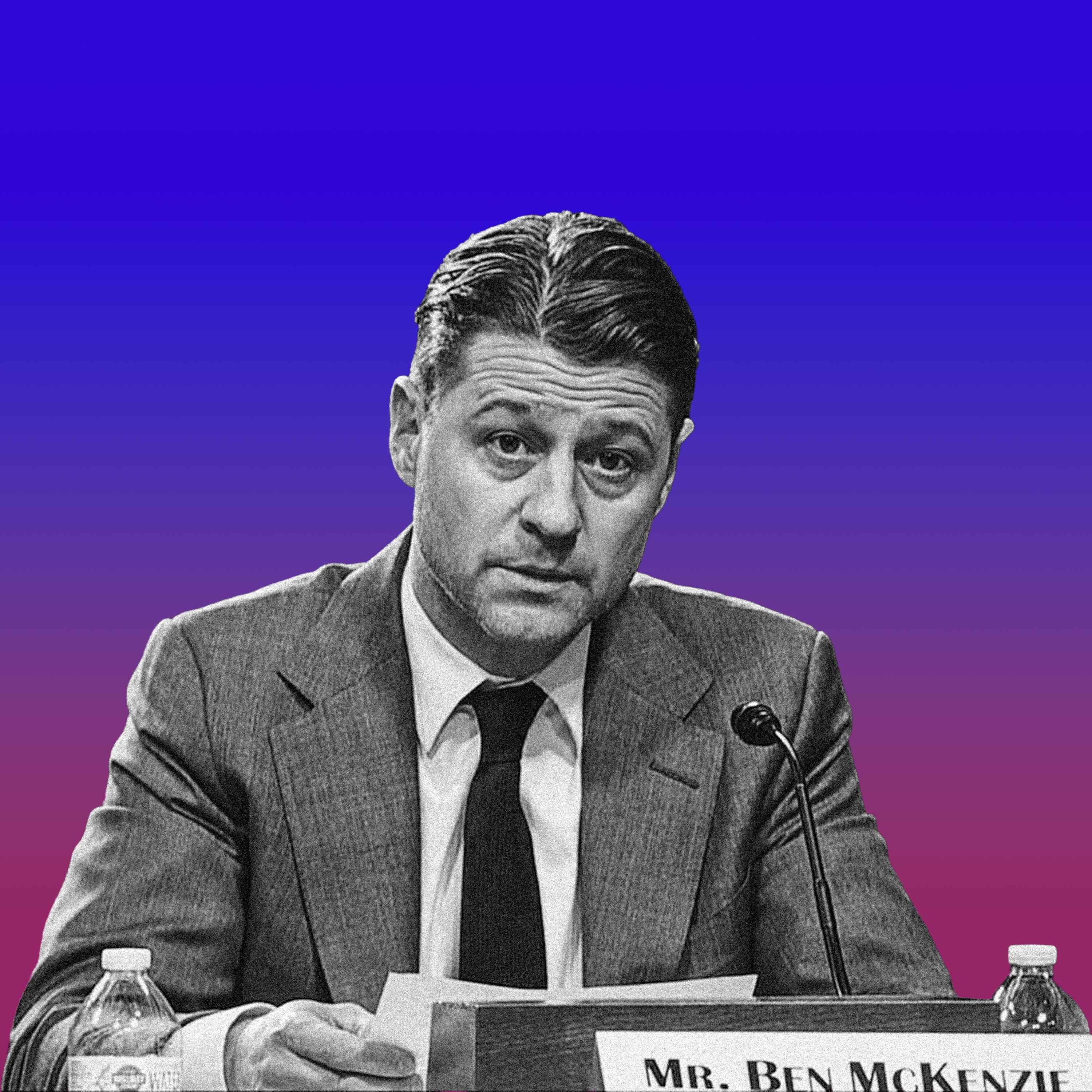
What Next: TBD | Tech, power, and the future
Everyone Is Lying to You For Money
00:34:45
You might know him from the OC, but Ben McKenzie wrote the book—and directed the documentary—on cryptocurrency’s core fraudulence.
Loading summary
Transcript66 lines
- [00:00]
A
Refresh the rooms you love for spring with Pura's collection of floral, citrus and fresh scents. Bright, airy and made for the season. Open the door to spring in every room. Learn more@pura.com the Scouting Reports end Unlock
- [00:16]
B
the savings at Boost Mobile. Get unlimited wireless for $25 a month forever. And keep your phone. It's a veteran move. Unlock the savings@boostmobile.com Unlock $25 forever requires customers to remain active on Boost Mobile Unlimited Wireless plan. For full offer details, visit boostmobile.com.
- [00:39]
A
The thing that Ben McKenzie knows, maybe above all other things, is that you know him as Ryan Atwood from the OC Yes. Ben co wrote a book about crypto. He's written for Slate about crypto. Now he's made a documentary about crypto called Everyone Is Lying to youo for Money. And yet the Ryan thing keeps coming back. It's even a running gag in the movie when things like this happen. Ben McKenzie, best known for his starring roles in TV shows the O.C. and Gotham, well, he's made an unexpected career change. You might recognize Ben McKenzie as Ryan Atwood from the O.C. ben, you're an actor.
- [01:22]
B
You've played cops. You've played rogue teenagers. Ro. Teenagers.
- [01:26]
A
Yeah. Why become the guy that hates crypto? I interviewed Ben and his co author Jacob Silverman back when their book came out. And I realized while watching Ben's new movie that I did the Ryan Atwood thing to him, too. So when I sat down with Ben earlier this week, I apologized.
- [01:47]
B
No, I mean, don't. Don't apologize. This is just my life. This is my life.
- [01:52]
A
Are you ready for another round of this? Cause it's gonna happen.
- [01:55]
B
Oh, yeah, Yeah. I mean, you know, I was in my mid-20s when I was playing a teenager, and so I've been dealing with this. I'm now in my mid-40s. I've been, you know, up and down understanding my relationship to this character for, for many, many years. So at this point in my life, I am totally used to it, happy about it. And if it gives me some, you know, relationship with a potential audience member who might, you know, like, like me from TV and they're willing to come to see a documentary about cryptocur, um, and I can make them laugh then, then great, I'm happy to do it.
- [02:34]
A
Okay, so everyone is lying to you for money. Do you think having this documentary out in the world might actually change your perception from teenage heartthrob to, like, crypto skeptic slash journalist?
- [02:50]
B
I think that this has Only happened a couple of times, I want to be clear, but a couple of times there's been a. It's usually a guy in finance and they don't know my acting work. They only know the fact that I've written a book and that I've been on, I don't know, CNBC and Bloomberg or something, talking about it, like, oh, he's an actor. I didn't know that. And that is. I can't tell you how warm and fuzzy that makes me feel on the inside. It just makes me so happy. Not that there's anything wrong with being an actor. I love being an actor. But particularly when you're known for a particular role that happens to be kind of your first role and you haven't done anything else when you're young. It's hard when people are like, Ryan, Ryan, and you know, you're. I'm not. I'm not a fictional character. I'm a real person and I'm going to do great things at some. At some point in the future. It's hard not to internalize the objectification or whatever. And I am in a much better place now and very happy that the documentary is being well received and people are liking it. So
- [03:59]
A
today on the show, Ben McKenzie's new movie on crypto is out now. So is everyone lying to you for money? I'm Lizzie o' Leary and you're listening to what Next? Tbd, a show about technology, power, and how the future will be determined. Stick around. Starting your own business is never easy. Starting your own podcast, that seems easy, but actually there are a ton of landmines to step on along the way. Finding producers, selling ads, and connecting to WI fi. Oh, does that sound straightforward? It's not. I'm talking about sitting in coffee houses for hours after buying one scone. I'm talking about sitting in hotel lobbies and pretending your backpack is luggage. It's torture. I spent so much time making my home office look professional, but my connection didn't get the memoir. The last thing you want during a major interview is for your guest's voice to turn into a stutter. When your bandwidth can't keep up with your ambition, your home office starts feeling like an amateur operation pretty fast. And for a podcast, the Internet is key, because the Internet is how we talk to almost everyone. And no matter the guest, a laggy connection can ruin an exclusive interview. Great connectivity isn't a bonus. It's the whole game. And ATT business is here to help. They've got the tools, team and expertise you need for a stable network you can rely on. And when you can rely on the network, you can get back to thinking about the more important stuff, like nabbing that great guest and getting back to work at and T Business Built to Work get at and t business@business.att.com. This episode is brought to you by Bill, the intelligent finance platform that helps businesses and accounting firms scale with proven results. Here at WhatNextTBD, we know business and in businesses across America, smart people are stuck doing the grunt work. You know the drill. Those hours when you could be brainstorming big ideas, you're instead filling in spreadsheets, filling out invoices, or hunting down somebody else's signature. Bill wants to change that. With AI powered automation, Bill removes the busywork from your account's payable workflow. They handle capturing invoices, routing approvals, and syncing with your accounting software so that your team can focus on growth in instead of paperwork. Bill is so reliable, over 90 of the top 100 accounting firms in the US trust it to simplify and secure their bill payment processes. Bill's handled over a trillion dollars in secure payments and is ranked number one overall on G2's 2025 list of best accounting and finance products. So stop the guesswork and start scaling with the proven choice. Go with the company whose financial infrastructure is trusted by nearly half a million customers. Ready to talk with an expert? Visit bill.comproven and get a $250 gift card as a thank you. That's bill.comproven. terms and conditions apply. See Offer page for details. This episode is brought to you by Pebble. The TBD team is small, but we're mighty. And I know exactly how important hiring is. From combing through resumes to asking just the right questions to finally making that offer. I also know the last thing you want is to be tripped up right at the finish line. And when you're hiring overseas, that's where things get complicated. But that's where pebble can help. You can send offers in minutes to anyone in the world and get them onboarded fast. Pebble is an AI powered human resources platform built for founders, HR leaders and operators who are hiring and supporting teams around the world. Pebble helps you hire, pay and manage talent in over 185 countries with fast onboarding that can be done in minutes. Instead of juggling separate tools for contracts, payroll, benefits and compliance, pebble brings everything together with built in guidance and local expertise to support you. This is especially helpful if you're managing teams internationally or planning to grow. The fastest growing companies in the world use pebble to stay organized and reduce risk. And founders use it to scale faster without feeling like they need to become HR or compliance experts. Bottom line, it simplifies global people operations so you can spend more time growing the business and supporting your team. Pebble's new standard, discounted pricing at US$399 per month per employee helps you contain costs. Go to hipebl AI to get a free estimate. That's HIPEBL AI for a free estimate. In the documentary you talk about, you tell this anecdote of your friend Dave, who's an old friend who gets you into crypto. But it also seems from watching it that you were really bored during the pandemic. Is that a fair assessment of like how you went down the crypto rabbit hole?
- [09:08]
B
Oh my God, absolutely. I mean, for actors, there was nothing to do. If you were a writer, I suppose you could write a script. If you were a director, you could sort of imagine a new project and maybe do some sort of pre production work remotely or something. But for an actor, when the pandemic hit, there was nothing to do. You can't practice.
- [09:29]
A
Did this come first or the book?
- [09:32]
B
The book. The book was something where I went down a pandemic rabbit hole because of my buddy trying to convince me to buy it and emerged very quickly on the other thinking, this is really suspicious and a scam. And then I reached out to Jacob Silverman, this reporter, in order to write a book because I realized I didn't know how to write a book. It is interesting that I thought of a book first, even though I'm in the movie business. But the movie only came about after Jacob and I had sold the book proposal and started reporting on things in the real world. I just decided I would bring a camera along to document the experience. And the first day that we filmed was when I ran into Alex Mashinsky, the CEO of a crypto company called Celsius, the first day. And he's now in jail. And so I figured I should probably keep going with this, this filming stuff.
- [10:25]
A
So Celsius provides like one of the big early beats in the movie. And. And I think one of the things that is so fascinating about this documentary is that you are there at these big important moments in kind of pre2022 crypto. You go to El Salvador, you go to a big crypto conference in Miami. I want to talk through those. Tell me about the El Salvador trip. Because you go to where bitcoin city was supposed to be built and meet a lot of people there in a way that a lot of journalists no longer have the funding to do. Tell me about that trip and the people you met.
- [11:06]
B
It felt critical to go there because it was the only country in the world that was supposedly trying to use this thing called cryptocurrency as real money. Even though crypto calls itself a money, it's not really used as money for regular people, retail traders who are just buying it, hoping to make money off of it. But the dream was always for the crypto advocates was that you could use this as real money and it could be the foundation of an economy. And so the president Bukele had been elected in somewhat of a landslide and had decided that bitcoin would be legal tender. It would be accepted alongside the US Dollar as a form of payment. And he was also going to build this bitcoin city in the east of the country. Well, when I landed in San Salvador, the capital, and walked through a market trying to pay for things with bitcoin, it was very clear that the first part of the story was not true. It looked at me like I was, well, like the stupid gringo that I am. Like, what are you doing? We're not going to. We want dollars, buddy. Bitcoin, No. Bitcoin, no. Except Thomas bitcoin. Bitcoin, no.
- [12:14]
A
No.
- [12:15]
B
Okay. I thought for a second, okay, except Thomas Bitcoin, no. Bitcoin. So then I figured, I'll go to the bitcoin city, right? I mean, that'll be interesting. So we drove 100 miles east to this tiny little fishing village, very remote part of eastern El Salvador, and there was nothing there. There was. I mean, almost literally nothing there. The only thing person we could find was this one guy who is. He claims to be the first official resident of bitcoin city, and his name is Corbin. He's from Illinois, and he has moved down there and built a cinder block house near the beach and is kind of just hanging out waiting for this magical city to arrive. And that felt like a pretty good distillation of some of the dynamics you're talking about in terms that I'm talking about in the film and in the book, in the sense of how ephemeral all this stuff is, how so much of the crypto story is just a story. It's not real. It doesn't actually exist, and. Or it's not true. So Corbin was quite a vivid illustration of that, I felt.
- [13:33]
A
You also met a fisherman whose. Whose land was basically taken over for the airport.
- [13:38]
B
Yeah. And so they were building this airport to service this fictional city, which again doesn't exist even now in any way, shape or form. They were going to mine bitcoin from a volcano and then this was going to provide all this money that was going to build this beautiful bitcoin city that had a rendering that was like all gold, very Gaddafi esque city. And you know, none of this was happening. But the airport is apparently moving along in the process. And what they did is they, they kicked out this whole community that was living there, including a fisherman, wilfredo who I spent some time with. And they relocated all of them, paid them far less than what their land is worth. It was sort of take it or leave it. I mean, Bukele controls the judiciary now at this point as well. So, you know, there's really no appealing to a higher authority for what, you know, it's, it's basically, as I understand it, they may have leveled the ground for the airport, but there's no city. There doesn't seem to be any sign of a city. So I don't know what that is. They have an International Airport only 100 miles away. It's a country the size of New Jersey. So I don't know why they have another airport in an obscure area of the country. I would just point out this is of course not related at all. There is drug smuggling in El Salvador, there is money laundering. Just wanted to point that out.
- [15:03]
A
No connection to crypto?
- [15:04]
B
No, no, no, not for me.
- [15:08]
A
You mentioned Celsius. You talked to a lot of people who lost money when Celsius collapsed, fell for bankruptcy starting in 2024. Creditors were supposed to be able to start getting their money. Do you know if any of the people you talked with for the movie actually got any money back?
- [15:26]
B
I know one dynamic. One thing that happened was these bankruptcy proceedings take a very long time. And I believe in Celsius case the investors were basically unsecured creditors. So they were sort of last in line to get whatever money was left. And a lot of them sold their stakes for pennies on the dollar to get some money out. And hedge funds went in and bought them en masse at pennies on the dollar so that they could then negotiate for a higher rate. So it's a pretty, uh. I don't know if any of the individual, I can't remember if they got any money back, but they all tell
- [16:06]
A
you they're like, yeah, no, I still, I'm, I'm still interested in crypto. Like they didn't. They didn't seem dissuaded by that experience.
- [16:13]
B
No, no. Every single one of them said they still believed in cryptocurrency. They would say they don't believe in Celsius. But bitcoin, they would all have different reasons. It's usually bitcoin is sort of lionized in the crypto community. It's obviously the original cryptocurrency. It's by far the most valuable. People make all sorts of arguments as to why that's the case, but I think a large part of it is that it was first and a limited supply of it can only ever exist. Only 21 million Bitcoin could ever exist, so it's thought of as scarce. So they had those reasons. But I really think when we're talking about the hardcore believers in cryptocurrency, we're sort of outside of the world of what we traditionally consider finance and investment decisions, quote, unquote, rational decisions by rational actors. We're really talking about belief systems. To give you an example, Corbin, who has uprooted his life and moved down to El Salvador, had purchased some amount of bitcoin. He wouldn't tell me how much. And I said, well, it's clearly a lot to you. If it means this much, why don't you sell it? Sell it. And you're living in a cinder block house on the beach in El Salvador. I don't know, you could buy a motorcycle or a better house or something. And it was very clear he was never going to sell it. He was not going to sell it. Because to sell it would be to give up on the dream of crypto.
- [17:35]
A
And was that dream the decentralized finance we have taken the big mercenary banks out of the equation dream?
- [17:43]
B
Yeah, it was like he was going to live in a paradise and avoid whatever difficulties he was facing back home and live in a utopia with this currency that he can't spend. I mean, I don't. It's hard to make it rational. Right. I think it's sort of. There's about 5 or 6% of the population that's really, really into cryptocurrency. It's a relatively small percentage of the population, but it's mainly men. And amongst that hardcore group, I think you're really dealing with dynamics of a cult in the sense that, you know, there's a great paper when prophecy fails about what happens to cult followers when the prediction of the cult leader doesn't come true, do they disavow the cult? And, you know, Turn against him? No, they double down. They believe even more because it's much more painful to sort of have to reconcile or deal with the fact that they've been scammed or defrauded or, you know, indoctrinated into some cult than it is to say to keep hope alive and to just keep. Keep the dream alive. So that's how I make sense of it anyway.
- [18:55]
A
One of the fascinating points for me in this movie is when you interviewed Sam Bankman fried, July of 2022, not that long before everything blew up. He looks so nervous during this interview. You also look nervous in this interview. Do you remember your thought process then? Because there was just some part of me that's like, oh, what was Ben thinking? Were you thinking, this is a scam and I can prove it, or like, maybe I got it all wrong, this guy's really rich.
- [19:31]
B
I couldn't prove it. I knew I couldn't prove it because I didn't have any of the data to prove it. But I had a lot of reasons to be suspicious of him. And my goal in getting the interview and doing the interview was to have a real conversation, as real as we possibly could, where I could ask him quite well intentioned serious questions about, explain something good that cryptocurrency does. Let's have a conversation about whether it's a net negative, net positive for the world. But also I wanted to press him on things that just felt to me. I couldn't. I would not have guessed that they were illegal per se, but they were, they felt dangerous. He was spending so much money on politicians, he had spent so much money backing Democrats, outwardly spent $40 million on the Democrats, but what we would later learn is he was secretly running a straw donor scheme and giving through his employees to the Republicans. And it was 100 million. So he was playing both sides fairly evenly. And the strange. One of the strangest moments in the interview is when I asked him about his money to politicians and he really cannot answer me. He really, really struggles to look me in the eye. So I didn't know exactly what he was doing, but I. But I wanted to get beyond the talking points that he'd rehearsed. This does not seem like the decentralized, democratized future of money that we were promised. I think we've seen all the major carnage in the crypto industry already. I think that things are on a bit of a recovery path from here. But to be honest, Sam, it doesn't feel like it's creating a lot of good for people. It feels like it's a net negative because quite frankly, the mainstream financial media was swallowing his story hook, line, sinker. Everybody, including Michael Lewis, who's briefly in the movie, they really were buying into this thing.
- [21:31]
A
I would exclude Matt Levine and a
- [21:33]
B
few other oh, Matt Levine, definitely, definitely excluded. But there were a lot of folks who and I, you know, it's interesting, obviously I was not a journalist before this. I don't really consider my journalist myself a journalist now. But I have dabbled and I have certainly been around a lot of journalists like Jacob and others. And one of the things I found sort of sobering about your profession is that there are different kinds of journalists and there are journalists who are really, you know, I'm I don't want to talk smack about an entire station, but the CNBC esque financial journalism as entertainment is a different thing and it has the unfortunate consequence of making people feel comfortable with these things that are very speculative investments and sort of making them feel safe for people. So I really wanted to get beyond that with Sam and put him out of his comfort zone. And that's why I brought the mug to the to the interview.
- [22:38]
A
When we come back, Ben grapples with the resurgence of crypto under the Trump administration. Think Verizon is expensive? Think again. Anyone can bring their AT&T or T mobile bill to a Verizon store today and we'll give you a better deal. So bring us your bill, walk in running pogo sticking teleport if you can ride on the back of a rollerblading yak or fly in on the wings of a majestic falcon. Any way you can bring your AT&T or T mobile bill to a Verizon store today and we'll give you a better deal on the best network based on routemetrics Best overall Mobile Network Performance US Second Half 2025 all rights reserved. MUST provide a very recent postpaid consumer mobile bill in the name of the person redeeming the deal. Additional terms, conditions and restrictions apply.
- [23:25]
B
It's deck days at Lowe's and the savings are stacked right now. Pros get 15% off all in stock compos decking from top brands like Trex, timbertech and decorators. Plus get a free Dewalt 20 volt max 5amp hour battery when you buy a select dewalt tool the decks stacked in your favor with brands pros trust our best lineup is here at Lowe's valid through 422 while supplies last selection varies by location.
- [23:57]
A
Your movie ends with you know the collapse of FTX sentencing of Sam Bankman fried and then some of these bank runs on banks that were really intertwined with the crypto industry. And yet here we are, it is 2026. The President and his family are deeply involved in crypto. Crypto is arguably stronger in many ways than it was in 2022. How do you feel about that as someone who was like out there trying to be an anti crypto prophet?
- [24:26]
B
I mean, tough bitter pill to swallow, I guess, in that respect. At the end of the movie I say, you know, Marina's asking me what I made of my experience and I'm saying I feel like I was as right as I hoped to be or more. And yet I had less of an effect. At the end of the day, these things are way beyond any one individual's ability to, you know, investigate, educate, entertain folks with the story. Debunking crypto myths. That said, because things are so bad and because crypto's everywhere, it's a good time to have a documentary about it, especially a documentary that makes fun of it and is a fun 90 minute romp. You know, I think people are hungry for this kind of thing. The real challenge, quite frankly, if you want the honest truth, has been getting it out.
- [25:17]
A
Yeah, you had a lot of trouble with distribution. Tell me about that.
- [25:20]
B
Yeah, I mean, I don't want to talk about specific meetings, but I definitely have met with streamers before and showed them the movie. And the movie, I think, I mean, people will judge for themselves. But I made it to be a piece of popular entertainment. It's 90 minutes. It's got me and my much more famous wife and Jerry Butler and, you know, it's got fun stuff, plus interviews with people who are now in jail and, you know, Senate testimony. It's got a lot of things. And the response was crickets. The response was nothing. And, yeah, I will never know what they were thinking, but I would just say this was summer of last year and Trump was really cracking down on free expression. And this was Jimmy Kimmel and Stephen Colbert. And so I do think, regardless of how they made their decision, just from a macro perspective, the intimidation of artists through these corporations coming directly from the President in many cases is terrifying. It's the death of art. Of course, to have people sort of pre surrendering to the notion that they can't purchase a pretty funny documentary, that's pretty lighthearted.
- [26:31]
A
So streamers with business interests before the administration were cowed by that.
- [26:35]
B
Yeah, I mean, why buy a documentary that you don't have to buy? People are still going to have their subscriptions to whatever your service is and risk incurring the wrath of the Trump administration.
- [26:49]
A
And you could finance Melania.
- [26:51]
B
Yeah, well, so here's the funny thing, right? So that's $75 million, and it cost $75 million to make into in P and A. And it made about 17, I want to say, or something like that. Maybe that's what it's called. 20 million. You have to split 50 of that with a theater. So it's really only like 10 or 15. I console myself with the fact that if we can somehow manage not to lose 50 to 60 million dollars, my film will be more profitable than Melania. And yet Melania, because it was distributed so widely through Amazon, will probably end up making the most money of any documentary this year. And making in the sense of box office receipts, not net. And that tells you a lot about the state of the documentary business and the film. It's not in a great place. That being said, audiences are loving this movie in the theaters. It's funny. It's a cathartic experience for people. We sold out our first sneak peer review last night. We have another one on Wednesday that's also sold out and people are really digging it. And if people come and the box office is good, relatively speaking, it's a small amount of money we need to make per theater. The thing could take off and it could, it could get out there. But that's really our best, Our best shot is this organic word of mouth campaign because that's all we can afford. We can't afford advertising.
- [28:24]
A
So right now in Washington, there's actually a current regulatory fight going on over crypto legislation for the past decade, mostly under Gary Gensler. I would argue that crypto regulation has happened via enforcement. Right. Because there were no rules. Now you have a bill where the banks want one thing, crypto wants something different. Like is this, do you view this as progress or is this just a sup to the industry that spent a lot of money in an election cycle?
- [28:55]
B
I mean, my personal opinion is not only is it not progress, it's regress. It's a. The crypto industry has already passed one bill, gotten one bill passed called the Genius act, which if you know this Congress, if it's called the Genius act, it's gotta be stupid. And it allows corporations to issue their own money in the form of stablecoins, these cryptocurrencies that are pegged one to one with real dollars. So we're talking about actual corporate money. And later this year you may see corporations rolling these projects out. This has long been something that corporations like Meta have, have fantasized about where basically to spend money on their platform. You would have to convert your real dollars into Meta dollars or whatever they are. And it's very clear to see how the corporations would benefit from having all this money sort of stuck on their platforms that they can earn interest on. But how do the customers benefit? And does corporate money sound like a good idea? Does that seem like something that the public is really clamoring for? So they've already gotten bad legislation passed and the bill that's pending in Congress, that has not been passed yet, but threatens to be, is even worse. It would allow crypto to be regulated under the cftc, which is the weaker, smaller regulatory agency.
- [30:14]
A
Commodity Futures Trading Commission.
- [30:16]
B
Commodity Futures Trading Commission. And I know this is an academic or sort of an esoteric point, but it is important to understand that crypto wants to be weakly regulated. It wants to have its own rules. So it doesn't have to play by the rules of either the securities laws or banking laws. And so right now there's a fight over the bill between the banks and crypto exchanges like Coinbase, because Coinbase wants to offer return on parking money there, that they could give you a percentage interest, like in the form of a.
- [30:49]
A
Yes. And the banks don't like that because they're like, wait, no, we do interest. What?
- [30:51]
B
That's our business. Yes, exactly, exactly, exactly. So you know you're in a bad place when the banks are the ones holding up the, you know, the rule, rule of, rule of law, so to speak. You know, they're the ones saying, well, you know, you guys should probably. It's funny, it's very, very funny. I mean, whenever you attack crypto, you're immediately accused of being in favor of the banks being a shill for the banks. Which is pretty funny. I mean, if you know anything about
- [31:19]
A
me, which also happens to you in the film, like you get all these DMs.
- [31:22]
B
Yeah, yeah. And it's just like, guys, both things can be bad. We don't have to choose.
- [31:26]
A
So I did want to sort of push at one issue with you. You sort of posit that a crypto collapse would have this huge knock on effect on the economy. Right. And I guess when I look at what happened in 2022, that didn't happen. But then also, if you've got some 3,179, or 100, yeah, 97 billion of trading volume per day, it's not a huge Amount of the global market. Right. Like, it's pretty small. And so I guess, I wonder, like, where would you see that happen? How could that happen? If we're talking about these small amounts, is it via stablecoin that you would see a run on the banks? Like, I want to understand where you think the danger is systemically.
- [32:14]
B
It's the integration of the crypto ecosystem into the regulated financial system. And you are correct that there's very little real money, often very little real money, backing these speculative cryptocurrencies. And so that's one reason why they're so volatile. They go up a lot and they go down a lot.
- [32:35]
A
A lot of leverage.
- [32:36]
B
Yeah, a lot of leverage. And you are also correct that in 2022, the overall system, I mean, it's interesting, three banks went down. They're all tied to crypto. Silvergate, Silicon Valley Bank, First Republic. Except for. I might have the third one wrong. Anyway, they're all tied to crypto, and the Fed very swiftly came in and bailed them out to keep the contagion from spreading, which in the abstract is. Is what they should have done. But to me, it was more of a warning of how much worse this could be if more banks and bigger banks were compromised by crypto, which is where we're heading. They're applying for banking licenses now, a lot of these crypto companies. And the more our systems get integrated, the more the fake money mixes with the real money, the higher the systemic risk is. If you ask where it comes from. That's the thing about systemic risk. It's very hard to know in advance how the thing is going to go down. And often you don't even understand it years after it did. Exactly. Because these are very complex systems. But on a fundamental level, to mix this thing, which is essentially private money, money issued by corporations, with this public good that is our monetary system, that helps all of us. Not as well as we want it to. We could definitely, should definitely fix it and improve upon it. But to mix those two together seems like a recipe for disaster.
- [34:13]
A
Is there any way you could ever see crypto as something legitimate, or is it always is? Like the premise, illegitimate from the jump?
- [34:20]
B
Well, money's a tool, and you can certainly use crypto for good. I heard about a woman in Afghanistan who couldn't get banking out of the Taliban, was running a business, and was using cryptocurrency to run her business instead of dollars. Understandable. Laudable, right? We all support her. But there's also an enormous amount of criminal activ that's facilitated via crypto. Enormous amount. Last year, a crypto company estimated $154 billion of illicit activity in 2025 alone. And that was a crypto company that was estimating. So I'm just going to guess that's on the low end. So it's a lot of crime. And if you accept the good, you also have to deal with the bad. And to me, the bad is far worse than the good. So to me, it's not a question of, you know, crypto is always going to exist. I mean, we could outlaw it tomorrow and it would go underground as it started and it, it would still be around. People will, as I say in the movie, the crypto industry will keep selling the story as long as people are buying it. And some people will always be buying that story, no matter how bad it gets. So I don't think that we're ever going to get rid of it. What we should do, in my opinion, is regulate the speculative cryptocurrencies like Bitcoin, Ethereum, Fart Coin, Cumrocket Trump Coin, Melania Coin, regulate them as securities. The stablecoins, which are, are pegged one to one with the US Dollar, except they're not actually backed by real. They're not backed by the full faith and credit of the United States. They're not issued by the government. They're corporate, they're issued by corporations. I think we need to have a conversation about whether that should exist, because to my mind, what you're doing, if you're claiming something's a dollar, but you're not actually backed by the social consensus that underlies the social construct called the US Dollar, aren't you issuing a counterfeit dollar? I don't know. I don't know that you can marry those two. The reason that people use the bad guys, use the stablecoins is to get around the regulations of the banking system so that they don't have to have know your customer and anti money laundering. They don't have to pass those tests,
- [36:28]
A
which are laws that banks have to
- [36:29]
B
follow, that banks have to follow. And they can get around all sorts of things like, you know, tankers in the Strait of Hormuz using cryptocurrency to pay their passage to the Iranians because the Iranians are shut out of the banking system. I think we need to have a deeper conversation about is this worth it at all? And if it's not, what are we going to do about it?
- [36:56]
A
You testified before Congress. You're questioned by Sherrod Brown, who At the time was the chair of the Senate Banking Committee. He is no longer in the Senate. He was beaten by Bernie Moreno, a blockchain entrepreneur. Crypto spent $40 million on that race. I was just looking at some numbers by Molly White's group, Follow the Crypto, who found that crypto companies have spent $272 million so far to influence the 2026 elections. How did crypto get this powerful? Only, like 5% of Americans have crypto. How did our Congress get so captured by this industry?
- [37:33]
B
Well, yeah, the crypto industry has made an enormous amount of money. Where have they made that money? I would argue off of their customers. Right. And if you think of crypto as just a story, then it's really just marketing and as buying political influence. It's kind of reworking the rules so that you can keep the story going. And so the massive amount of money that they've. That they've earned, contributing a couple hundred million dollars, investing it in manipulating our political process, I hate to say it, it's pretty wise investment. What else are you going to use the money for? And so what they're doing is, as you say, they're going after people like Sherrod Brown and spent $40 million attacking him. And then they're boosting people, people that are friendly to them. They put money into their campaigns. And Ruben Gallego has gotten $10 million from a cryptocurren.
- [38:32]
A
What's
- [38:34]
B
frustrating to me is that I do not think, based on my conversations with several prominent lawmakers, I do not think this issue is well understood on Capitol Hill. I think that there's a lot of, well, we're scared of the lobby. We don't want them to come after us. And so we're going to do the politically expedient thing and sort of quietly support it, while at the same time trying not to draw any attention to the fact that we're doing so. The genius act. 100 Democrats voted for it, including Chuck Schumer, including Hakeem Jeffries, including my own congressman, Dan Goldman. That's why I'm supporting Brad Lander for Congress. I am incensed by this because, unfortunately, I don't expect more of the Republican Party under Donald Trump, but I do expect more of my party. And if, if this party means anything, it should be standing up for people instead of corporations. And if you're hedging on that and you don't quite know which direction to go, my humble advice is to get the fuck out of the party. I'm pretty angry about it. And I know I come across as quite intense on the issue, but when you get closer to crypto, it just stinks so badly that you end up getting pretty fired up about it.
- [39:59]
A
Ben McKenzie, thank you so much for your time.
- [40:01]
B
Thanks, Lizzie.
- [40:02]
A
Ben McKenzie is the director of Everyone Is Lying to youo For Money in theaters now. And he is forever Ryan from the oc. All right, that is it for our show today. What Next? TBD is produced by Evan Campbell and Patrick Fort. Our show was edited by Rob Gunther. Paige Osborne is the senior supervising producer for what Next and what Next tbd. And Mia Lobel is the executive producer of audio here at sl. TBD is part of the larger what Next family. And we'll be back Sunday with an episode about Iran's impressive trolling operation. I'm Lizzie o'. Leary. Thanks for listening. This episode is brought to you by Capital One. Capital One's tech team isn't just talking about multi agentic AI. They already deployed one. It's called Chat Concierge and it's simplifying car shopping using self reflection and layered reasoning with live API checks. It doesn't just help buyers find a car they love. It helps schedule a test drive, get pre approved for financing and estimate trade in value. Advanced, intuitive and deployed. That's how they stack. That's technology at Capital One.
- [41:24]
B
Security program on spreadsheets, new regulations piling up up and audit dread. It's time for Vanta. Vanta automates security and compliance, brings evidence into one place and cuts audit prep by 82%. Less manual work, clearer visibility, faster deals, zero chaos. Call it compliance or call it compliance. Get it join the 15,000 companies using Vanta to prove trust. Go to vanta.com calm.