← What Next: TBD | Tech, power, and the future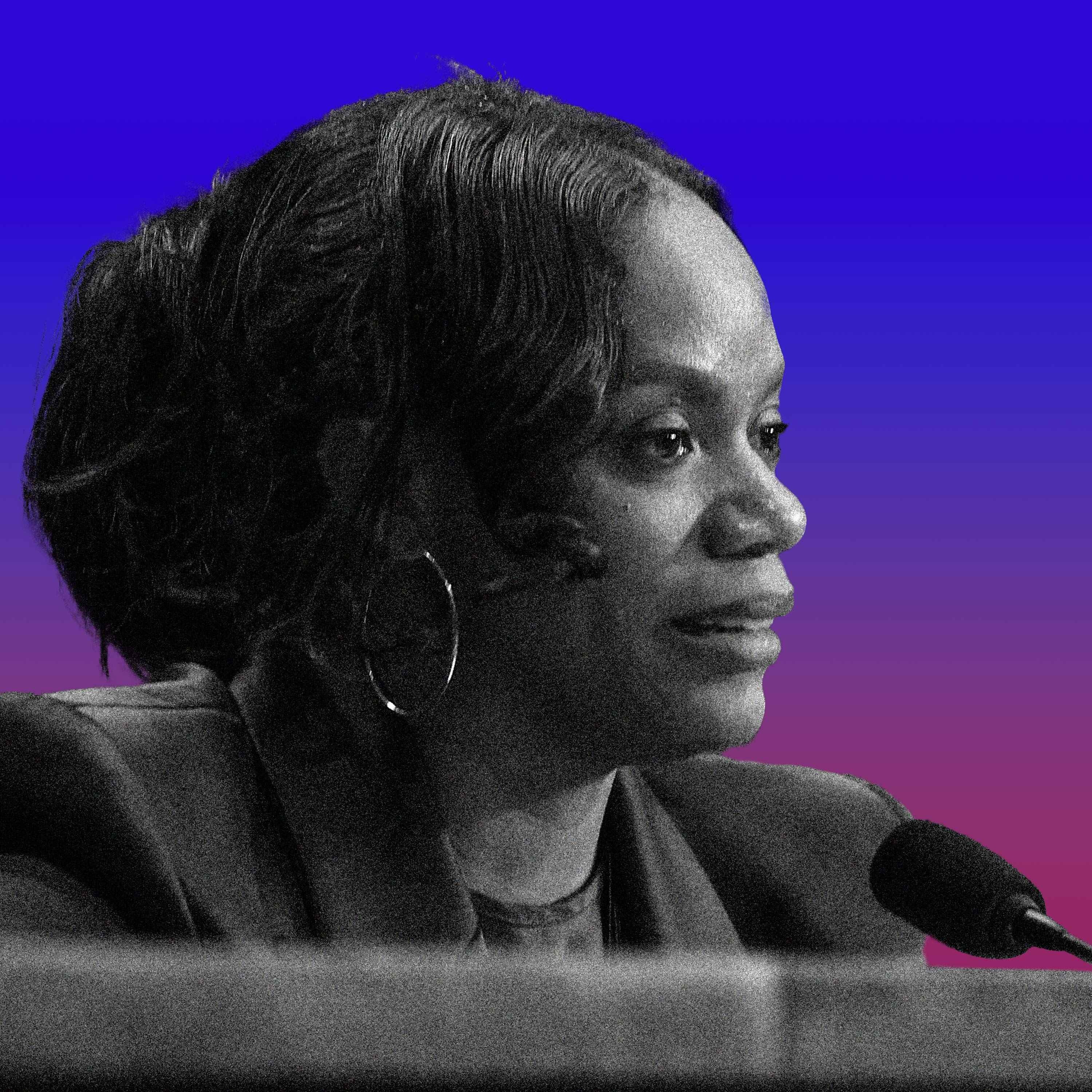
What Next: TBD | Tech, power, and the future
How to Rein in ICE and A.I.
00:30:42
Congresswoman Summer Lee has a plan
Loading summary
Transcript58 lines
- [00:00]
Verizon Advertiser
Think Verizon is expensive? Think again. Anyone can bring their AT&T or T mobile bill to a Verizon store today and we'll give you a better deal. So bring us your bill, walk in running, hogo, sticking teleport if you can ride on the back of a rollerblading yak or fly in on the wings of a majestic falcon. Any way you can bring your AT and T or T mobile bill to a Verizon store today and we'll give you a better deal on the best network based on RouteMetric's best overall mobile network performance US 2nd half 2025. All rights reserved. Must provide a very recent postpaid consumer mobile bill in the name of the person redeeming the deal. Additional terms, conditions and restrictions apply.
- [00:34]
Lizzie O'Leary
This episode is sponsored by Smart Travel, a new podcast from NerdWallet. You know that one friend who always finds the best travel deals, picks the right cards, and somehow ends up in first class for the price of coach? Smart Travel is like that friend, but in podcast form. They cover things like how to book tickets for spring break, even when every other family has the same week off, or what exactly you should spend those 90,000 points on, or which airport lounges are actually worth it and which are just free chairs. NerdWallet's trusted travel experts are here to help you put your dollars to work with practical tools and smart strategies you'll find yourself using every time you need to book a seat. Smart Travel knows that planning is half the battle. They make it easier for you to button up the schedule, put away the laptop, and finally go exploring. Travel smarter and spend less. With help from NerdWallet. Follow Smart Travel wherever you get your podcasts. Congresswoman Summer Lee, thanks so much for coming on.
- [01:50]
Congresswoman Summer Lee
That's good to see you. Thanks for having me.
- [01:54]
Lizzie O'Leary
Summer Lee represents Pennsylvania's 12th district. That's an area in and around Pittsburgh. She's a progressive Democrat and I've wanted to have her on the show for a while now because she sponsored a couple of really interesting bills about AI. When I got her on the line, I wanted to know how she got interested in AI in the first place.
- [02:15]
Congresswoman Summer Lee
That is, I love that question because I need you to know that I am actually such a technophobe. Really, I am like technology is actually not my thing. It's, you know, math, technology, things of that nature. It's why I went to law school. But I will say I was actually on science based technology last Congress because it actually is really important economy for Pittsburgh, for Western Pennsylvania. I Know, a lot of people would never think that, you know, people are probably like steel manufacturing. No, we're actually ads, meds, robotics, tech, AI. Right. Is where our, you know, where we are headed towards. But also for me, on the civil rights side of it, that's my real interest. And even when I was deciding to join that committee as a nobody technophobe, it was this idea that we need to have people in these spaces who are, who care about guardrails, rails, who care about the trajectory of technologies if they are, you know, implemented without any sort of mind or any sort of care for discrimination, for racism, for biases that we already have. So that is really my angle here.
- [03:31]
Lizzie O'Leary
How did you get interested in the facial recognition part of this?
- [03:35]
Congresswoman Summer Lee
I'm black and I'm a woman. I'm black and I'm a woman. Right? And we're just, we are more likely to be misidentified. And just like so many different things, you don't come into it with, you know, like educational expertise. It came into it with, you know, just lived experience. What happens if, you know, what happens when we're misidentified? What happens when these technologies are used to harm us? And as a black woman, unfortunately, it's just more likely. It is more likely to do so.
- [04:09]
Lizzie O'Leary
I would imagine that you are familiar with the work of people like Joy Buolamwini, who has found that facial recognition technology performs worse when looking at darker skin tones, especially on darker skinned women. Do you think your white colleagues understand that facial recognition technology just doesn't work as well for black people?
- [04:36]
Congresswoman Summer Lee
Just. That is such an interesting question. I actually do not. No, I. No, I don't think so. No, no, no. And I don't also think that that's an excuse. I think that that's also not an excuse. I think that like with so many different things in policy, it is easier to legislate, to create policy within your wheelhouse, the things that you have lived, experience or professional expertise around. And it just so happens that if you are somebody who is not impacted by something, it's usually something that's just not on your radar. So when we talk about the criminal, before we even add AI to this, we already have a criminal legal system that disproportionately impacts marginalized people, black people, brown people already, when we think about just so many of these other things where AI is now being implemented already disproportionately impacting black people. And that wasn't enough to stop policymakers and to make policymakers go on A different. A different route. But no, I would imagine, because I know, because on my committee, I talk about algorithmic bias a lot, and the comment sections always say the same thing. Are you saying that AI is racist? How could an algorithm be racist? And we get it so much if you.
- [05:57]
Lizzie O'Leary
And what do you say to them?
- [05:59]
Congresswoman Summer Lee
Well, sometimes I don't say anything at all because my team really wants me to not be a reply guy. But when we do answer, we talk about the fact that algorithms are trained. It is a. It is a data set that. That human beings used to train algorithms, which means that they are embedded with the exact same biases, implicit or explicit, as the people who are training them. So if people are biased, if they are, if they exhibit any sort of sexism or racism or homophobia or whatever other ism that there is, the algorithms, the AI will pick up on that, because that's what is. Because that's what's in the Internet. That's what's in the world. That is where they are pulling their knowledge base. Artificial intelligence is not just. It's not pulled from the sky. It isn't something. Believe it or not, artificial intelligence is not that artificial. It is pulling from existing intelligence and existing knowledge.
- [07:00]
Lizzie O'Leary
Today on the show, a conversation with a congresswoman who wants to write the rules right now for how we use AI. I'm Lizzie o', Leary, and you're listening to what Next? Tbd, a show about technology, power, and how the future will be determined. Stick around. Starting your own business is never easy. Starting your own podcast, that seems easy, but actually there are a ton of landmines to step on along the way. Finding producers, selling ads, and connecting to WI fi. Oh, does that sound straightforward? It's not. I'm talking about sitting in coffee houses for hours after buying one scone. I'm talking about sitting in hotel lobbies and pretending your backpack is luggage. It's torture. I spent so much time making my home office look professional, but my connection didn't get the memo. The last thing you want during a major interview is for your guest's voice to turn into a stutter. When your bandwidth can't keep up with your ambition, your home office starts feeling like an amateur operation pretty fast. And for a podcast, the Internet is key, because the Internet is how we talk to almost everyone. And no matter the guest, a laggy connection can ruin an exclusive interview. Great connectivity isn't a bonus. It's the whole game. And AT&T business is here to help. They've got the tools, team, and expertise you need for a stable network you can rely on. And when you can rely on the network, you can get back to the thinking about the more important stuff, like nabbing that great guest and getting back to work. AT&T business Built to Work get att business@business.att.com. Today's episode is brought to you by Quo, spelled Q U O Spring is here. That means it's time for some spring cleaning, including streamlining some of the messier parts of your business. Quo is the number one rated business phone system on G2, with over 3,000 reviews built for how modern teams work. That's why more than 90,000 businesses, from solo operators to growing teams, rely on Quo to stay connected, professional and consistently reachable. Your entire team can handle calls and texts from one shared number. No more missed messages or disconnected conversations. Everyone sees the full thread, making replies faster and customers feel genuinely cared for. It's easy. Calls, texts, voicemails, transcripts and contact details all live in one clean view with full context at your fingertips. Your team communicates faster, stays aligned and delivers a more personal experience. Make this the season where no opportunity and no customer slips away. Try quo for free plus get 20% off your first six months when you go to quo.com TBD that's quo.com TBD quo no missed calls. No missed customers.
- [10:11]
Verizon Advertiser
Think Verizon is expensive? Think again. Anyone can bring their AT and T or T mobile bill to a Verizon store today and we'll give you a better deal. So bring us your bill. Walking, Running. Pogo Sticking. Teleporting. You can ride on the back of a rollerblading yak or flying on the wings of a majestic falcon. Any way you can bring your AT and T or T mobile bill to a Verizon store today and we'll give you a better deal on the best network based on RootMetric's best overall mobile network performance. US second half 2025 all rights reserved. Must provide very recent postpaid consumer mobile bill in the name of the person redeeming the deal. Additional terms, conditions and restrictions apply.
- [10:44]
Lizzie O'Leary
An important thing to know about AI and specifically facial recognition technology is is that the government is using it already, most controversially, within the Department of Homeland Security. I asked Congresswoman Lee if she thought
- [10:59]
Congresswoman Summer Lee
that should be happening this bill, and not just this bill. I think that so much of the work that we are now attempting to do in Congress really exists because what we're trying to say is, is that as our government, and obviously not just our government, right, private companies Also are adopting, you know, they're doing this, they're adopting AI algorithms. They're doing it as well. But as our government does this, our contention is that we cannot move further into, deeper into this technology without some guardrails, without some appropriate oversight that ensures that implementation is fair, that implementation is safe, that we have accounted for the various ways that adopting this sort of technology could help or harm people. And I think that too often we do think about the help. We think about the ways in which technology, especially AI, can revolutionize so many industries, can help society in all of these various ways. I think about the ways in which, you know, the debate around automation and whether or not we should, you know, move towards that. And then the debate around disability justice and should we use the knowledge that we have and the technology that we have to make life easier and better for people, especially with disabilities. But all of us, but that debate, I think really shines a light also on this larger debate. Should we, can we, are we doing it the best way or the questions that we need to ask. So for us, should DHS be using facial recognition technology when we know that it is more likely to disproportionately misidentify black people? No. When we fear still that it can be used to help ice deport human beings, to target people in ways that we have seen has been violent? No. Should we be using it in ways that, you know, harm people from children on up to elderly? No. But should we create guardrails right now for the future so that we can figure out how we can implement certain technologies if we choose to, if we are able to? That is. That is the question. That's. We are.
- [13:11]
Lizzie O'Leary
Now let's talk about this bill that you introduced in December with Senator Markey from Massachusetts. So this is the Artificial Intelligence Civil Rights Act. It would ban algorithmic discrimination and it would require algorithm developers to take reasonable measures to prevent algorithm induced harm. Tell me what that means.
- [13:32]
Congresswoman Summer Lee
So again, right as we are talking about training AI, the algorithms that are being implemented, right Again, they pull from the same prejudices, the same biases or discrimination that the human beings do. So we have to make sure that we are aware of those things. We have to make sure that we are mitigating our own biases so that they are not just being encoded, enshrined, embedded into technologies that will have, that will be so much more far reaching than an individual. One individual human can be, one individual sector or agency can be. And this is for private companies. Right. So the one that we have because we have two different ones.
- [14:12]
Lizzie O'Leary
Yes.
- [14:12]
Congresswoman Summer Lee
The one that we have, that you just mentioned, that is one that is targeted towards private companies to make sure that they are not adopting algorithmic biases, that they're not enshrining it. We know that algorithms are now used for housing, to decide who gets a house, to decide who gets a job. Algorithms are being used for risk assessment, whether or not a defendant gets more time or not, whether or not somebody has health risks at the va. Right. So between the private and the public sectors, algorithms are being used increasingly in every aspect of our lives. And we have to create policies that account for those sorts of biases, that make sure that companies and the government. So on our, on the, the Eliminating Bias act and on the AI Civil rights bill, making sure that private companies are not able to, to discriminate or to basically just shred our civil rights as much as the federal government shouldn't be able to shred our civil rights.
- [15:17]
Lizzie O'Leary
And the way I understand it is that on the private company side, Americans would have the right to choose whether an algorithm or a human is like the final decision maker in whatever they're doing. I can imagine that's something that's going to get a lot of pushback from the companies that make this kind of software.
- [15:37]
Congresswoman Summer Lee
Yeah. You know, for the company, at the end of the day, you know, their bottom line is their bottom line. Yeah, they are, I think, just like so many different sectors. There are monopolies in this sector already and they're looking to make a dollar and some of them, some of them are looking to make a dollar and some of them are looking to, you know, see how far, how fast they can push technology. And that can't come out. That can't come to the harm of the people who are impacted by it. So, yeah, I imagine that we're going to. I don't imagine it. We already get this sort of pushback. Right. We already get it because otherwise these bills would move. We would take the necessary steps right now because industry has such an influential role in policymaking in our elections. Right. It makes it so much harder for us to kind of take these common sense approaches.
- [16:27]
Lizzie O'Leary
Yeah, I was going to ask you about that. What kind of support are you seeing from Leader Jeffries or from the rest of your caucus? Because the Democrats don't seem to know kind of where to go first with a lot of different pieces of legislation.
- [16:41]
Congresswoman Summer Lee
That's so true. That is true. And I think that with technology, I think that there is still a fear around it moving to a Different world. Where I. I think Occupy Space. I would say the super pac. The elections, Right. Democracy, Reform. That piece about who owns your Senate, who owns your Congress, and your Congress member. I do not take for granted that to come to this place, exorbitant amounts of money are spent. If you look at the Illinois primaries. Am I allowed to talk about this? If you look at the Illinois primary. Right. AI and crypto packs play heavily in those primaries and these primaries, making them some of the most expensive primaries in American history. And it's only going to intensify. So AI is now taking a strong stance. They are here not just on the side of technology. They're here in the part about governing, about making sure that this industry is not or is regulated in the way that they want. So these politicians now have to consider that as we are putting forth legislation that I think so many of us think are common sense, we also are not gonna get pushback from a lobby that just flexed its muscles. And I imagine they will continue to do so for good, bad, or for ugly. So where the Democratic Caucus is, we gotta get this money out of politics. And then you ask me, where are they actually?
- [18:05]
Lizzie O'Leary
Well, yeah. I mean, does Hakeem Jeffries agree that these bills should move forward?
- [18:10]
Congresswoman Summer Lee
Is he on the bill? I mean, to be fair, I mean, I can't answer. I can't answer for Leader Jeffries, though. We will ask. And of course, every time we introduce a piece of legislation, we want it to move. Now, Leader Jeffries, of course, does not control that right now. The question will be, if we earn a majority, if the Democrats earn a majority, will we make sure that we move this? I think that we will make a really good case for this because fundamentally, these are civil rights bills. These are bills that harm black people especially. So I will absolutely be making an appeal to the Black Caucus for that.
- [18:45]
Lizzie O'Leary
Let's talk about how facial recognition tech is being used right now. Because, you know, the highest profile case is ice, especially tools like Mobile Fortify feels especially relevant at the time you and I are talking, ICE is in airports, though they mostly seem to be standing around. According to your colleague Benny Thompson, ICE says that apparent biometric match by Mobile Fortify, you know, when they use their app, is a definitive determination of a person's immigration status, even if they have documents that say differently. Under your bills, especially the one applying to government, would DHS and ICE be able to rely on Mobile Fortify and facial verification to determine someone's immigration status?
- [19:30]
Congresswoman Summer Lee
So go to eliminating bias. Right, because that is the Bill that we have that would really regulate the agencies, it would go to the federal government. Right now what that would do is a couple things. It would make sure that every agency has a civil rights office that within that civil rights office are experts on algorithms, on making sure that these algorithms are being implemented in a way that is just that accounts for these biases and that there is interdepartmental communication. So in a sense, I will say not direct, not directly, but what it would do would ensure that if these algorithms, facial technology, any of the IAI that our agencies are adopting, if they are used in discriminatory ways or if there is a disproportionate discriminatory application, then they would have to account for it. We would have to provide some sort a an accounting for it. That to the Congress that hey, we've seen this technology, these algorithms have a disproportionate impact on immigration status or whatever it may be, report back. And they also have to report back ways that they think that we should be fixing it. So in a sense it would give us the opportunity to actually from experts know what is happening to us and propose solutions that the Congress could then implement.
- [20:48]
Lizzie O'Leary
I think one of the things that seems tricky about that though is right, this technology is moving so fast. I mean there are things that are happening now that were not happening four months ago. How do you reckon with the fact that the legislative process by design is slow? It feels like the law cannot catch
- [21:09]
Congresswoman Summer Lee
up to this tech and that's intentional. The first thing that we have to do is that we have to recognize that the law, the legislature, the legislative process is slow by design. Particularly when Congress people, when the government wants to drag its feet. I will tell you something though. When the, when the government full consent, like when the with the full complement wants something to get through, it gets through. So the reason why we are not keeping up with the technology and yes, it is exploding, we are so far behind. I mean but we're not even just far behind on AI on algorithm. We're far behind on privacy law in general. Like before social media, all of these things. We are so, so so far behind. And the reason we are is because there's not the willpower to move faster. What is actually happening is, is like we are allow of these technologies as they are. You know, basically it's like a little pocket. It's like, you know, we just don't say anything, right? So it's like, oh well, we see it happening and if we don't get on top of It. We are simply. We are essentially giving our consent to it being applied this way. We are giving it consent for it to develop in this way. And then if in the future, when in the future we inevitably see these harms, then we will allow a future Congress to have to figure it out. So I want to. I say that because it is intentional that we are choosing as a Congress to not get on top of this. And it's irresponsible. It's so irresponsible because those people who are experts, not the people who are on the bottom line, not the shareholders, but actual experts, can all see the trajectory right now. And we are prioritizing the desires of the industry, the desires of the CEO of the corporations over what we actually should be doing to protect American people.
- [22:53]
Lizzie O'Leary
Who in Congress is slowing that down?
- [22:55]
Congresswoman Summer Lee
I don't think it's. I don't have. Well, first of all, who in Congress? I would start with the people who actually hold gavel. So Mike Johnson and Senator Thune. Those are people who you can look to. You can look to Donald Trump, especially with this trifecta where Donald Trump wants something to move. He just tweets about it or truths about it, whatever they call that thing. Truth. He truths about it. Notice that he has not truthed about algorithmic biases. He has not truthed about just the explosion of. Of AI technology and any sort, and the fear of what happens if we don't regulate it. They're actually anti regulation. They're anti regulation when it comes to, you know, every other industry. So why would they not be here? So I would start with them, but I would say that it's, again, more so than it is an individual congressperson. It takes very few people here to hold something up in the House. One person can hold something up.
- [23:48]
Lizzie O'Leary
Yes. AI, which we're talking about. And technology, a lot of that is being developed in your district. Right. Like it is. I went there 10 years ago to talk to people who were making robots and were working on the sort of front end of artificial technology, artificial intelligence technology. What do they tell you they want from Congress?
- [24:13]
Congresswoman Summer Lee
I don't know if they are just blowing smoke up my ass. Am I allowed to say that? Bleep that out.
- [24:19]
Lizzie O'Leary
It's a podcast.
- [24:21]
Congresswoman Summer Lee
I don't know if they're doing that, but I'll tell you what they're telling. They're saying back to me the same things that we are putting out. They're talking about guardrails. They're talking about how do we ensure that two things actually both the reason why I joined science based and technology last Congress that we do want to see more representation from marginalized communities. Especially when we think about Pittsburgh. If this is the new economy, then I want to see that young black kids and brown kids, that poor kids from the Mon Valley are able to access an education that will funnel them into a career that will keep them at home, that will keep them right here in our own ecosystem and learning and helping us to figure out there are so many different ways that you can touch the technological ecosystem, the AI robotics ecosystem. So they do want to make sure that more people have access to it. They're telling me that they are telling me that they want to make sure that we have guard rails. So that is not becoming too unethical. So that is not falling off of the rails. Right? That's. That is the point. That's what I'm hearing. But that's also what I lead with when I go to CMU or when I go to our private because we have private robotics companies and private space because we also have the space industry. It's not just Houston anymore. When I go and I talk to them, this is what I bring them. I talk about civil rights. I talk about how do we make sure that that kid in Braddock, where I'm from, you know, is prepared for these future economies
- [25:53]
Lizzie O'Leary
when we come back. Do you feel like you could decline a facial scan? If ICE is watch.
- [26:11]
Verizon Advertiser
Think Verizon is expensive? Think again. Anyone can bring their AT&T or T mobile bill to a Verizon store today and we'll give you a better deal. So bring us your bill. Walk in, run in, Pogo sticking, teleport. If you can ride on the back of a rollerblading yak or fly in on the wings of a majestic falcon. Any way you can bring your AT and T or T mobile bill to a Verizon store today and we'll give you a better deal on the best network based on RootMetric's best overall mobile network performance. US second half 2025 all rights reserved. Must provide very recent postpaid consumer mobile bill in the name of the person redeeming the deal. Additional terms, conditions and restrictions apply.
- [26:41]
Lizzie O'Leary
Open the door to Spring with Pura. Refresh every room with transportive fragrances like soft florals and clean, energetic citrus. Get started with a free Pura 4 diffuser when you subscribe to 2 cents monthly for six months. Shop now at pura.com. One of the most striking places that people see facial recognition tech is at a TSA checkpoint. Imagine you're in line at the airport. People are cranky behind you, everybody's tired. You could opt out of having your face scanned, but you have to tell TSA ahead of time. It's a whole thing. Now imagine an ICE agent is waiting there watching you go through the line. Would you feel comfortable saying you don't consent to facial recognition? Would the ICE agent take that as a sign that you're trying to hide something?
- [27:35]
Congresswoman Summer Lee
Yeah. It is a negative incentive. Right. It's like you want to. As long as you want to hold out on so many technologies in our, in our community, in our society, convenience is the one that they will kill you by inconvenience. And if you're looking at Atlanta Hartfield right now, where they have six hour waits, you will be shamed to not do anything that would move the line faster. You would be ashamed to. People would say that. You would be the ones who would waste time. But even if you don't care about the public gaze, you yourself are trying to get through safely. We saw ICE attack a woman at an airport recently. You want to get through safely. You want your family to get through as quickly as. Not as you want to put your head down. And you just want to get to your dest. And that gives such an incentive for you to opt in, to opt into these types of technologies.
- [28:28]
Lizzie O'Leary
It sort of feels to me, and you can tell me if I'm going too far a little bit. Like where you sit in your own caucus, you sit to the left flank of, I would say, much of the Democratic leadership. There is a lot of debate in Democratic politics right now about where the Democrats should go. Should they tack to the center to pick up some independents? Should they not do that? Should they stick their heads down and try to muddle through? What do you think?
- [28:55]
Congresswoman Summer Lee
I think that a we are. It should be. I think we should aspire to being a representative democracy. And at the end of the day, where everybody's voice has an opportunity to be heard, you have a little bit more of a fair system. That's not the case right now. So, Adam, not gonna say I can tell you what people in the black community and urban community and Pittsburgh want. That's my job. My job is to tell you what Pittsburgh wants. My job is to tell you what my constituents want. I do think that all Americans, rural and suburban and urban and black and white and anyone who is not uber wealthy, who is not running an AI technology company, probably wants Democrats to do two things, be bolder and willpower and they want you to willpower for them. And right now, while we're talking about should we be more left or more center or more right, what we should do is be more for working people, more for people, and not for these corporations, not for the industry. And at the end of the day, do we represent, I guess the corporations that are in our district, not more than we represent the other 755,000 of our constituents. Too often they see Democrats making decisions that they would not have made otherwise if it were not for some lobbyists, some industry, some special interest. So many things have common sense, consent, health care in the middle of the largest cuts to Medicaid, we still can't get Democrats to say Medicare for all. Right? While we are looking at a housing crisis, we still can't necessarily get Dems to move. Some of that is because we're serving two masters. So I think people, I think that people don't orient themselves all the time on this left, white right battery. They want to see courage, they want to see their material conditions change. And I agree. I agree.
- [30:45]
Lizzie O'Leary
In the early hours of Thursday morning, the Senate cut a deal to fund dhs, except for ICE and cbp. Representative Lee and I talked before the funding deal was reached. But I asked her what it would take for her to vote yes on funding dhs. ICE being abolished, just full on abolish.
- [31:04]
Congresswoman Summer Lee
I think that ICE should be abolished. I think that people must remember that the systems that we have now did not always exist. ICE hasn't always existed and certainly ICE hasn't always existed as the personal army of a very vindictive wannabe dictator. Right. This is not something that is inevitable. It's not inevitable that this is the way that we do immigration, it's not the way that we do law enforcement.
- [31:27]
Lizzie O'Leary
But the Democratic leadership doesn't seem to be willing to go much farther than like don't surveil protesters certainly kind of seems to be where they end.
- [31:36]
Congresswoman Summer Lee
That's the place where we are not in the same spot. We're not the same place. And I think that is in a real democracy. I'll remind you, we are now in a democracy that is failing. We are approaching our post democracy days in the United States. That's a very scary thing to say.
- [31:52]
Lizzie O'Leary
That's a very scary thing to say.
- [31:54]
Congresswoman Summer Lee
It's a very scary thing to say. But once you can see the fissures in your democracy, you already have deep, deep problems. We know that the moves that Trump and his administration and even the Congress have made are deeply authoritarian. Right? We already know that definitionally we can accept that. But in a rural democracy, in our days of a democracy, people would make their case to their elected officials and the majority wins. My job as not just an elected official, but as an organizer, somebody who has lived my life as an organizer, is to organize the voices of Americans who believe that we can come up with a better, safer system, people who believe that we can go about and create policies that are more just, that actually address the root causes of immigration or crime, whatever it may be. And I have to go and make that case to them. So no, I don't think that my leadership is where I am right now, but I do think that is our collective job. If we collectively believe that something is better to do the work to get them there. And I'm committed to that.
- [32:59]
Lizzie O'Leary
How do you, how do you stay optimistic then? Because this is tough.
- [33:03]
Congresswoman Summer Lee
It is. I say optimist A, because a. Because I believe that I'm a part of the majority. I do. I believe that I'm a part of the majority of Americans who can look at many situations and when they are not confront, when they are not just overloaded with disinformation and misinformation, when they're not overloaded by just blatant lies. Your average American can look at so many things and say, that's common sense. I want that. That's common sense. I want that. So I just put in my mind, I implement a plan. What is the priority? We got to get money out of politics. What is the priority? We got to empower people. When we do that, once we've done that, we got to organize. Where are. There's our power lie. Our power lies in our organized money and our organized labor. How do I know that we can conceit can succeed? Because we've seen it before. Because this is not the first storm that America's ever faced. Right. You got to think, my people in particular, why we have survived chattel enslavement. We survived Jim Crow, we survived the war on drugs, the mass incarceration era. Right. I know because we have proof points that we can also survive this. And here's how. So I focus on the here's how. And I try to give that to other people too, because I know that mass discouragement is the greatest weapon against us right now. Well, I don't have time to be too discouraged because we gotta move.
- [34:26]
Lizzie O'Leary
Do you feel that toward the midterms, like, do you, do you feel like you can channel that energy?
- [34:32]
Congresswoman Summer Lee
I personally, yes. But I'll remind you. We are a team. This is a team sport. So we have to get every player in the team. We're no stronger than our weakest link right now, which means that we have to fortify every link on the chain. So we need Democrats or whoever, people of good consciousness, whether they're Democrats or independents or even Republicans. We need people to decide what direction they want this country to go in, and we need them to fight for it. Am I free for the, for the, for the midterms? Yes and no.
- [35:02]
Lizzie O'Leary
Really?
- [35:03]
Congresswoman Summer Lee
Yeah. Yes and no. Right. I see what direction we're going in, but we have data now that shows us that Americans are not really happy with the direction that authoritarian Trump in his administration are trying to take us in. Doesn't mean that they're happy with us. So where I fall in is it's like just because one thing is true doesn't mean that another isn't. We still have to work. We still got to get up every day and fight like hell to earn support. That's why I say if we earn the majority, because it isn't just that someone's going to give it to us. They're done with that. We got to go and earn it. We got to go and earn trust. We got to go and prove that we're going to will power for people. We got to show who we're going to serve. We got to pick our master. And I think that we have a little bit of time to do that. Not a lot of.
- [35:49]
Lizzie O'Leary
Representative Lee, thank you so much for your time.
- [35:52]
Congresswoman Summer Lee
Thank you.
- [35:54]
Lizzie O'Leary
Summer Lee is the U.S. representative for Pennsylvania's 12th congressional district. And that is it for our show today. What Next? TBD is produced by Evan Campbell and Patrick Ford. Our show is edited by Rob Gunther. Paige Osborne is the senior supervising producer for what Next and what Next tbd. Mia Lobel is the executive producer of audio here at Slate. And TBD is part of the larger what Next family. We will be back next week with more episodes. I'm Lizzie o'. Leary. Thanks for listening.
- [36:35]
Congresswoman Summer Lee
This episode is brought to you by Progressive Insurance. Do you ever think about switching insurance companies to see if you could save some cash? Progressive makes it easy to see if you could save when you bundle your home and auto policies. Try it@progressive.com Progressive Casualty Insurance Company and affiliates. Potential savings will vary. Not available in all states.
- [36:55]
Verizon Advertiser
Think Verizon is expensive? Think again. Anyone can bring their AT&T or T mobile bill to a Verizon store today and we'll give you a better deal. So bring us your bill. Walk us Walking, running, Hogo, sticking, Teleport. If you can ride on the back of a rollerblading yak or flying on the wings of a majestic falcon. Any way you can bring your AT&T or T mobile bill to a Verizon store today and we'll give you a better deal on the best network based on RouteMetric's best overall mobile network performance. US second half 2025 all rights reserved. Must provide a very recent postpaid consumer mobile bill in the name of the person redeeming the deal. Additional terms, conditions and restrictions apply.