← What Next: TBD | Tech, power, and the future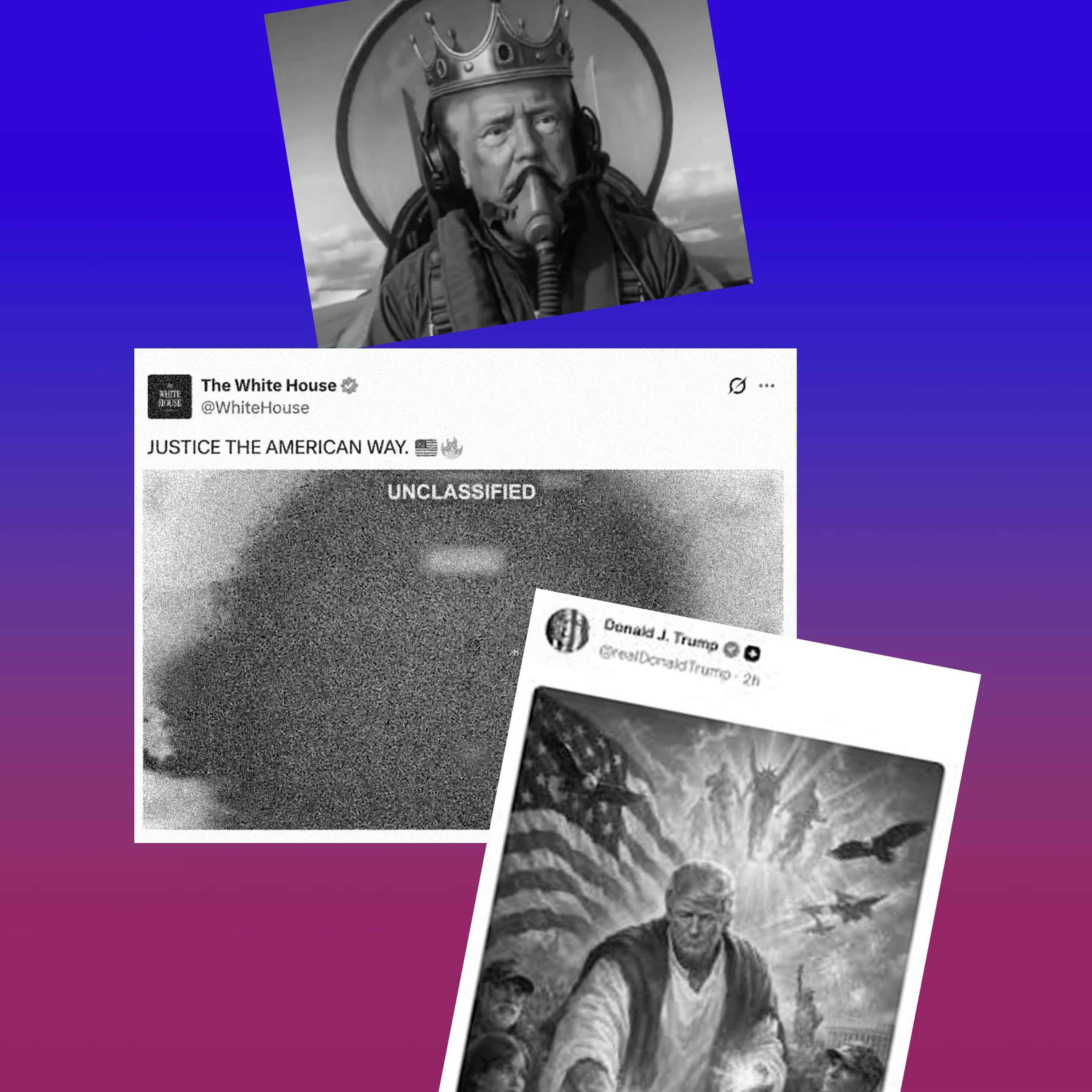
What Next: TBD | Tech, power, and the future
Iran's Memes Are Winning
00:26:37
Chad Iran mocks Virgin Trump.
Loading summary
Transcript88 lines
- [00:01]
Stamps.com Advertiser
Shipping, billing, admin, payroll, marketing. You're managing all the things so why waste time sending important documents the old fashioned way. Mail and ship when you want, how you want with stamps.com print postage on demand 247 and schedule pickups from your office or home. Save up to 90% with automated rate shopping. That's why over 1 million small businesses trust stamps.com go to stamps.com and use code podcast to try stamps.com risk free for 60 days.
- [00:30]
Boost Mobile Representative
Boost Mobile is now sending experts nationwide to deliver and set up customers new phones.
- [00:34]
Boost Mobile Enthusiast
Wait, we're going on tour?
- [00:35]
Boost Mobile Representative
We're delivering and setting up customers phones. It's not a tour.
- [00:38]
Lizzie O'Leary
Not with that attitude.
- [00:39]
Boost Mobile Representative
Introducing store to door switch and get a new device with expert setup and delivery.
- [00:43]
Boost Mobile Enthusiast
Delivery available for select devices purchased@boostmobile.com.
- [00:53]
Babbel Advertiser
You crossed the ocean just defied your credit Sacrificed your own boys for a lie Listen. Yeah yeah Make America great again.
- [01:07]
Lizzie O'Leary
When I called up Ali Breland at the Atlantic, I wanted to talk to him about this music video which popped up on the Internet in late March.
- [01:16]
Ali Breland
Everyone in the video, it's like a Lego kind of video, like Lego Batman, except LEGO Geopolitics.
- [01:21]
Lizzie O'Leary
The video starts with a LEGO Donald Trump holding dice. He rolls the dice and then suddenly LEGO Trump is on the deck of an aircraft carrier in storm tossed seas. Then we see fires, wreckage on the water, and a lot of military helmets. The video is from an account called Explosive Media that appears to be Iranian and the song is titled Loser.
- [01:52]
Ali Breland
The main chorus is L O S E R and it sort of is calling Trump. It's very directly calling Trump a loser. But then it's also making points about the war and like letting Iran kind of slide its propaganda in. And this sort of catchy musical kind of. I would maybe compare it. The rap style is a little bit different to Hamilton, but that's kind of like a version of what we're getting at here. It's maybe a little bit more like pop, rap infused. But they're making a diss track. They're speaking to Americans in the format that we're familiar with with Kendrick versus Drake and Drake versus Meek Mill. It's a very time honored American tradition.
- [02:26]
Lizzie O'Leary
Yeah, it says welcome to the graveyard of your vanity, your secrets are leaking. There's like an Epstein files reference. Yeah, this is like a hip hop diss track, I guess, which just what
- [02:41]
Ali Breland
it makes sense and kind of betrays. Like whoever is doing this has like a pretty good understanding of America. Not that it's like some secret that you know Diss tracks are a very big part of American culture, that rap is a part of American culture. But, like, it was done in a way where, like, the rap is didactic, like, it is making fun of Trump. It's like doing certain things, but also it's just like, if this is how you want to hit, like an extremely wide demographic of people, like, this is kind of the way to do it.
- [03:08]
Lizzie O'Leary
And the way to do it involves speaking a very internety language, one that Ali has written about for a long time, the language of virgins and chads.
- [03:21]
Ali Breland
There is this like, long standing dynamic on the Internet that's been around. It came out of 4chan, which is like, secretly. It's this message board that like, at this point a lot of people might know has like, influenced American right wing politics. But it's this like, secretly, like, very influential message board on the Internet. And it's this thing called the chad virgin dichotomy. The Chad virgin meme. It portrays things that the person who's making the meme that they like is virtuous and good, and it's a sign of strength and how good you are in the world.
- [03:49]
Lizzie O'Leary
That's a chat.
- [03:51]
Ali Breland
That's a chat. And then the version is these sort of pathetic things. So maybe if you like tennis a lot, you would portray tennis as this beautiful, heroic sport. And pickleball is this sort of wimpy, weak thing that is associated with virgin dom. And they're not chads like you. And so what did Ron subtly did was play very hard into this dynamic. And they didn't use the chad virgin meme explicitly, but they understood the mechanics of, like, what makes a person a chad on the Internet and what makes someone really weak. And they tried to portray Trump as this sort of like, weak, feckless virgin. And like all of the videos, the loser video is like the most explicit example. But in all the videos, he's crying, he looks flustered, he looks like he doesn't know what he's doing. And they're trying to portray him in positions that like, are existing in the real world. He's like, considering different kinds of actions that he would take in the war, like whether or not to bomb Iran, like, what to do. And they're recontextualizing those things as like the product of a person who is like, fundamentally weak, confused and clueless. And they're portraying themselves as like sort of these stoic figures that are simply handling like this war that has been foisted upon them. And they're dunking on Trump and making fun of him in a way that other people have tried to do throughout Trump's career to him to make him look stupid, but have just like never been able to do. No one has had like the chutzpah to like actually sort of like outdog Trump in his own territory. And Iran, at least online kind of figured out how to do that.
- [05:13]
Lizzie O'Leary
Yeah. Would you say they're succeeding?
- [05:14]
Ali Breland
I think so. Some of it's like difficult because it's like they showed up to a fight that Donald Trump was already losing. The poll numbers were like very immediately bad on this. I think they were a little bit higher than Vietnam towards the end of the war. But like to say the poll numbers are a little bit higher than the Americans feeling on Vietnam is like a statement unto itself and kind of illustrates the point. But they took already existing sentiment and like really sort of like drove the point home. And so I think in that sense, like they succeeded.
- [05:44]
Lizzie O'Leary
As Ali puts it, Iran out trolled the troller in chief today on the show. How did we end up in a world where public diplomacy is conducted via shitpost? I'm Lizzie o' Leary and you're listening to what Next tbd, a show about technology, power and how the future will be determined.
- [06:03]
Podcast Producer/Host
Stick around.
- [06:15]
Lizzie O'Leary
This episode is brought to you by Bill, the intelligent finance platform that helps businesses and accounting firms scale with proven results. Here at what Next cbd, we know business, and in businesses across America, smart people are stuck doing the grunt work. You know the drill. Those hours when you could be brainstorming big ideas, you're instead filling in spreadsheets, filling out invoices, or hunting down somebody else's signature. Bill wants to change that. With AI powered automation, Bill removes the busywork from your account's payable workflow. They handle capturing invoices, routing approvals, and syncing with your accounting software so that your team can focus on growth instead of paperwork. Bill is so reliable, over 90 of the top 100 accounting firms in the US trust it to simplify and secure their bill payment processes. Bill's handled over a trillion dollars in secure payments and is ranked number one overall on G2's 2025 list of best accounting and finance products. So stop the guesswork and start scaling with the proven choice. Go with a company whose financial infrastructure is trusted by nearly half a million customers. Ready to talk with an expert? Visit bill.comproven and get a $250 gift card as a thank you. That's bill.comproven terms and apply. See Offer page for details. Starting your own business is never easy. Starting your own podcast, that seems easy, but actually there are a ton of landmines to step on along the way. Finding producers, selling ads, and connecting to WI fi. Oh, does that sound straightforward? It's not. I'm talking about sitting in coffee houses for hours after buying one scone. I'm talking about sitting in hotel lobbies and pretending your backpack is luggage.
- [08:04]
Podcast Producer/Host
It's torture.
- [08:05]
Lizzie O'Leary
I spent so much time making my home office look professional, but my connection didn't get the memo. The last thing you want during a major interview is for your guest's voice
- [08:14]
Podcast Producer/Host
to turn into a stutter.
- [08:15]
Lizzie O'Leary
When your bandwidth can't keep up with your ambition, your home office starts feeling like an amateur operation pretty fast. And for a podcast, the Internet is key because the Internet is how we talk to almost everyone. And no matter the guest, a laggy connection can ruin an exclusive interview. Great connectivity isn't a bonus, it's the whole game. And AT&T business is here to help. They've got the tools, team and expertise you need for a stable network you can rely on. And when you can rely on the network, you can get back to thinking about the more important stuff. Like nabbing that great guest and getting back to work. AT&T business built to work get AT&T business@business.att.com. This episode is brought to you by Pebble.
- [09:04]
Podcast Producer/Host
The TBD team is small, but we're mighty. And I know exactly how important hiring is. From combing through resumes to asking just the right questions to finally making that offer. I also know the last thing you want is to be tripped up right at the finish line. And when you're hiring overseas, that's where things get complicated. But that's where pebble can help. You can send offers in minutes to anyone in the world and get them onboarded fast. Pebble is an AI powered human resources platform built for founders and HR leaders and operators who are hiring and supporting teams around the world. Pebble helps you hire, pay and manage talent in over 185 countries with fast onboarding that can be done in minutes. Instead of juggling separate tools for contracts, payroll, benefits and compliance, pebble brings everything together with built in guidance and local expertise to support you. This is especially helpful if you're managing teams internationally or planning to grow. The fastest growing companies in the world use pebble to stay organized and reduce risk and founders use it to scale faster without feeling like they need to become HR or compliance experts. Bottom line, it simplifies global people operations so you can spend more time growing the business and supporting your team. Pebble's new standard, discounted pricing at $399 per month per employee helps you contain costs.
- [10:28]
Lizzie O'Leary
Go to HIPL AI to get a free estimate.
- [10:32]
Podcast Producer/Host
That's H I PEBL AI for a free estimate.
- [10:43]
Lizzie O'Leary
When you wrote about this, you said the war the United States fought against Tehran has been accompanied by a social media trolling contest. When and how do you think the trolling contest began?
- [10:57]
Ali Breland
It probably began sort of like immediately in this sort of braggadocious way that the Trump administration, Trump himself, Hegseth kind of started immediately flexing and bragging about the strikes that they were launching on the country and then Iran through explosive media. Again, I want to clarify like it's, you know, the links between Iran, explosive media.
- [11:22]
Podcast Producer/Host
Yeah, we're going to get.
- [11:22]
Lizzie O'Leary
I'm going to. But get into that.
- [11:24]
Ali Breland
Yeah, like, yeah, they responded like pretty quickly. It was like rolled out as though it were like a natural function of war. Not something that was like built to, but like a thing that like they had ready to go. They'd already made the account prior in 2025, before this even started.
- [11:39]
Podcast Producer/Host
Huh.
- [11:40]
Lizzie O'Leary
Let's talk about just like the video genre in general before we get deep into what we know about who's producing it. Like they kind of seem to me like the Lego Movie but drunk.
- [11:53]
Ali Breland
Yeah, A really sort of cynical, pessimistic read is that Americans love ip, they love intellectual property, which is what Hollywood has figured out with re releasing a bunch of Marvel movies and I don't know, movies about Battleship or whatever sort of existing IP Barbie. It's a way to get eyeballs on you without having to draw up as much interest. People already care about Legos. They make the videos. So I don't know. Yeah, I think that that's a part of it. The Lego's a bit drunk like it is. It's. Yeah, it has like a dark LEGO element to it. I don't think that Lego feels probably great about how their stuff is being used. Usually they'd prefer it to be in a sort of like uplifting kind of profit line thing like Batman, Lego Batman or Lego Star Wars. But yeah, this plays on that.
- [12:39]
Lizzie O'Leary
What's the purpose here? Like is this. Do we think this is the modern day version of a psyop? Is this just propaganda?
- [12:46]
Ali Breland
Definitely. It's like a well run. I think that maybe some psyops, depending on where you look in the history of them, are trying to potentially sometimes create ideas out of whole cloth in this Case it is an attempt at propaganda to sway public opinion. But they don't have to do a lot because they're already drawing on a lot of existing public opinion. A lot of the sort of points that are in the video, with some exceptions, are things that already existed on the American Internet. Perspectives about the war being fraught, perspectives about if we send troops, if the United States sends troops into Iran, it potentially makes them sitting ducks. This is like a point that I've heard both on the left and when I listen to sort of more far right wing podcasts, like Joe Kent was on the Sean Ryan show, which is a very popular right wing podcast, talking about this exact same point. So Iran didn't have to do a psyop to make these things up. They just. A lot of the work was already done for them, which makes this kind of thing really easy to do.
- [13:41]
Lizzie O'Leary
So what do we know about explosive news, explosive media? The account that seems to be behind
- [13:47]
Ali Breland
all of this, we don't know a lot. Initial reporting that came out on them, like there's like a trail that they have online. So they have like a one of these like link in bio kind of things, which is just a webpage that shows like all of the things that they have links to. And they've made accounts for every kind of platform you can think of and then ones you wouldn't even think of. They actually have a Pinterest that they don't seem to use that much.
- [14:10]
Lizzie O'Leary
They have a Pinterest?
- [14:11]
Ali Breland
Yeah. But it's not like they're not like doing like, you know, like southern wedding aesthetic things. It's like just links to their videos on the Pinterest. That would be incredible if they had like mood board. Yeah. Like, because this is like fashion goals for the year. The most popular platforms are like the ones that they obviously would use like TikTok, Instagram and Twitter. Their YouTube keeps getting banned. I think their Instagram got banned, but they remade it. But it shows up, it starts making these videos that like start going viral. People are reposting them and then we kind of. They start talking to the media. So like the New Yorker, I think, was one of the first people to reach out to them. And they talked. And at that point the account or the person behind it was very cagey. They didn't really reveal a lot about themselves. They've since told the BBC that Iran is one of their clients. I tried talking to them and both for timing, constraints and their lack of responsiveness, I didn't get a lot. But they did Confirm to me they said that they're based in Iran.
- [15:06]
Lizzie O'Leary
That was one of my questions is like, are they actually based there, given the constraints around the Internet?
- [15:12]
Ali Breland
Neuron, they told the BBC this. They have special. They have special Internet journalist access that's granted to them by the government because the blackout is very bad there. Like, I have. I'm half Iranian. I have family there. And like, and I've heard stories too, from journalists about this. You really cannot get through. Like, maybe you can get through for like a minute at a time, but this person is clearly, like, being supported by the government. There's like, they have some either explicit or tacit sign of approval to. To do this, and they're. They're being supported.
- [15:40]
Lizzie O'Leary
That, I think is like, a really important point to make because this question of, like, is it the Iranian regime? Is it not? Well, if they have Internet access, they at least have some backing from the government.
- [15:55]
Ali Breland
The other thing, too, that this isn't like a damning sign that this, like, is the product of the government. But tonally it matches. I don't know if you've seen, like, the embassy tweets. Yes, it's the official. What appear to be the official embassies. And at least, least one case. It's like, hard to verify on Twitter
- [16:14]
Lizzie O'Leary
what is real and what isn't, especially on 2026 Twitter.
- [16:17]
Ali Breland
Yeah, yeah, the one that has been created by Elon Musk. But they are tweeting also in this sort of braggadocious, aggressive tone, depending on the embassy. Like, the South African embassy is much more aggressive than the Kenyan embassy, for example. I think it's the Tajikistan embassy. Tajikistan embassy is also quite aggressive. They actually just tweeted a really good AI video. It's like very Internet fluent in that. They took the Trump meme of the image of him as Jesus Christ, which has already caused a separate controversy, and they showed Jesus coming in and smacking him into a pit, a flaming pit of hell, which is just by an objective measure, in posters parlance, a very good post. This is Chad behavior portraying Trump as the virgin. Really, really.
- [17:11]
Lizzie O'Leary
Well, who's the audience for these posts? Because Iranians are not seeing these.
- [17:17]
Ali Breland
Yeah, I think the audience is like a few different. It's like, in one sense, very clearly like the American public. Like, the messages are tailored towards them. Like, they, you know, they do care about rap in Europe, but, like, that's like a pretty American art form. It's a lot of the videos are in English with English subtitles. They're structured. They're making references towards American things. Sometimes, though there appears to be nicher audience targets. I do think that they are also trying to communicate things to the troops. When they show coffins, American flag coffins, that's something that is a message that will resonate with all of the country. But they're also trying to show nervous troops and the sort of stress that would entail of an American ground invasion and how these people would be sitting ducks. There's kind of been internal, like domestic unrelated movements to let people have or push people to get conscientious objector status. There's been like rumors this is like very unverified about people, like trying to fill drug tests. People seem stressed out and so like I think that that's also like a sub audience as well.
- [18:29]
Lizzie O'Leary
When we come back, the long geopolitical tale of tweeting through it.
- [18:46]
Verizon Advertiser
Think Verizon is expensive? Think again. Anyone can bring their AT&T or T mobile bill to a Verizon store today and we'll give you a better deal. So bring us your bill. Walk in, run in, pogo sticking, teleport, if you can ride on the back of a rollerblading yak or flying on the wings of a majestic fellow falcon. Any way you can bring your AT&T or T mobile bill to a Verizon store today and we'll give you a better deal. On the best network based on routemetrics Best overall mobile network performance US second half 2025 all rights preserved. Must provide a very recent postpaid consumer mobile bill in the name of the person redeeming the deal. Additional terms, conditions and restrictions apply when
- [19:17]
Grainger Advertiser
you manage procurement for multiple facilities. Every order matters, but when it's for a hospital system, they matter even more. Grainger gets it and knows there's no time for managing multiple suppliers and no room for shipping delays. That's why Grainger offers millions of products in fast, dependable delivery so you can keep your facility stocked, safe and running smoothly. Call 1-800-GRAINGER Click grainger.com or just stop by Grainger for the ones who get it done.
- [19:53]
Lizzie O'Leary
As you have noted, this like, approach to the Internet is pretty Trumpy. Or at least like 2019 Trumpy. Like, is that why they work? Because they kind of like clap back in a language he understands?
- [20:10]
Ali Breland
Yeah, I think that's why they work. Like Trump, whether or not you, like him, has like, figured out a really good strategy to combat with people, both in real life. At the debates, he was just like extremely good at the debate. He's a shitposter no one else has been able to replicate like him, but, like, Iran kind of has, and they are operating like him, and that's why it's been successful, because he did something that was super, super rare and super, like, impactful, and they figured out a way to translate it. And they don't have to answer to any sort of contingency. I think that maybe sometimes Democrats are afraid of putting off their own base because by acting like someone that their base hates, they're going to, like, be rub people the wrong way. Iran doesn't have to, like, worry about these things. They're, like, playing from a position on their back foot. They have almost nothing to lose because things are so dire. So it makes this kind of thing more attractive.
- [20:57]
Lizzie O'Leary
Let's talk about the Trump posting. We have the Jesus thing, which. Let's just leave that over there because we don't have enough time to unpack that. But the administration is sort of doing their own version of this. Like, they're splicing together, like, Wii Sports footage with real bombs or what appear to be real bombs. Like, how would you say their social media game in this war compares?
- [21:33]
Ali Breland
They seem like, I guess, in recent weeks have backed off of that after the sort of, like, large negative response they got of making these videos that are spliced to make it seem like it shows real bombing footage, but it makes it appear as though it's in Call of Duty. It makes it appear as though they're making references to Grand Theft Auto. I think one, people are very critical of this because, one, they're already very frustrated, I think, by the war. Again, the public polling is very bad on it. One of the initial strikes on the war hit a school which killed hundreds of school children of little girls. That was something that people thought was gross, as these videos of destruction were immediately coming out. So they're already starting on their back foot in a position, not in a position of strength. But also there's not like a human element to the videos. There's not like a message being communicated other than sort of like wanton destruction, which isn't a very persuasive argument if you're already skeptical. There's not like a human element being made. So, like, you have one message that's like talking to the American public. It's like these things you don't, like, you are stressed about will happen if you invade Iran, if you continue this war. And then you have the counter message, which is just images of bombs being blown up. Like, these things are incongruent. It's like non responsive. It's not very helpful. You have one group, Iran, talking to people, and you have another group just like making videos almost for itself. It's just like, hey, look how sick this is. It's like a guy trying to show you his whittling stuff, like you don't care about it or something. Or someone showing you their pet project. It's like niche. It's not convincing. It's not that useful.
- [23:05]
Lizzie O'Leary
One of the things that I find really interesting is that this is not the first time, I'm sure it will not be the last, that groups, countries, organizations have kind of memed their way through conflict. And I wonder if you could tell me a little bit about the background of this and how it has grown over, say, the last 10 years.
- [23:28]
Ali Breland
Yeah, Trump was an early pioneer in memeing his way through geopolitics and through domestic affairs. I think that he was probably one of the first presidents that started to materially move stock prices through just tweeting. I think he wiped out $43 billion of Amazon's market cap in 2017 through tweeting something critical about them. But then he was also conducting foreign policy through his tweets. He was tweeting at Kim Jong Un and sort of starting mild to significant geopolitical crises by signaling what he might or might not do on Twitter. And then also around the same time, or even a little bit before that, Iran and Israel were getting into sort of posting spats on Twitter. There was a thing that I wrote about, and I think think it was 2018, about Israel tweeting some sort of mean girls meme at then Iranian President Rouhani. And then Iran was also responding at the time too. So these kinds of more populist governments, Israel, the United States, and then even Russia as Well back in 2016, 2017, 2018, were starting to engage with the Internet in a way where they saw diplomacy and matters of geopolitics not just as these sort of technocratic highbrow affairs that were only happening in meetings or occasionally in these sort of highfalutin public statements or public speeches, but a thing that could exist on a plane that everyday normal people were looking at all the time. And it could also be used both to communicate something to the adversary, but then also communicate something to the general public and their base as well.
- [25:06]
Lizzie O'Leary
I mean, I just find that completely fascinating in that it is this multi, kind of multi audience approach. ISIS also did this.
- [25:18]
Ali Breland
Yeah, like a kind of, kind of a government, I guess, like stateless, but like they were maybe one of the earliest pioneers in like, a sort of government, quasi government kind of, like, thing using the Internet in a very explicit way. So, like, they ran this campaign online to try to recruit people, and they were, like, posting a lot. Became a very early scandal for Twitter and other social media platforms who faced a lot of very clear, justified pressure in getting them off their platform. But the other thing that they were doing too, is they, in addition to posting, like, propaganda and like, kind of SIOPI messages and recruitment messages, they were also. This is also a different version of that, but they were posting, like, cat memes and showing humanized versions of themselves with cats to try to, like, make it seem like this wasn't just this, like, hardened thing by these, like, weirdo religious freaks, but it was also the product of people who were very normal and were just like me and you and enjoyed a good cat meme. Yeah, they're really early to this and they kind of built an early framework. And it kind of speaks to the asymmetry of this and how valuable it is to. Flash forward to now. Iran is doing well for themselves, but is still a smaller, less powerful military with significant deficiencies. They have to lean really hard on these kinds of external tools that provide a potentially asymmetric advantage if they use them. Right. ISIS was a different version of that that was also trying to find loopholes and shortcuts to power that it couldn't get otherwise.
- [26:48]
Lizzie O'Leary
I think one of the things that is so interesting about this conversation is that if you and I were having this conversation ten years ago, five years ago, we would be talking about content moderation at these platforms. We would be talking about the trust and safety teams at these platforms and whether and how they were going to take these things down and how they were going to deal with them. And essentially all of that is. Is gone now. Like, it feels like it's just a. Posters free for all.
- [27:15]
Ali Breland
Yeah, exactly. I saw a tweet from someone in Silicon Valley just like yesterday, actually. And who knows if it's real, but whether or not it is, it makes the point, like, they said that they overheard someone going, remember, trust and safety and moderation. Because it's the thing that is. It's still, like, I think it exists in some ways, like on the margins. Like, I know that. I think that LinkedIn has some stuff that they still, like, consider and care about. And, like, there are people kind of doing some moderation, but, like, it's just a shell of what it was. It's just not like people don't care about it the same way these things are. It's like a secondary or tertiary conversation. Yeah, Things have, like, really changed. And I think that it's kind of a free for all on the platforms. Like, don't feel a sense of accountability to any of these kinds of issues.
- [28:05]
Lizzie O'Leary
The other huge change here obviously is generative AI, the ability of one person or two people to make something so much more complicated with animations and layers of reference. How do you think AI changes the way people, companies, countries post their way through conflict?
- [28:31]
Ali Breland
I think that it is really helpful and effective because the Internet used to be a more niche product. Even for a long time, memes were still a thing that I remember. I want to say it was in 2019. I don't think that they were out of touch for asking this. My parents were asking my brothers and I one Christmas and we were all home. They're like, can you explain memes to us? And we were trying to show them and they were like, so they're just pictures, but weird. And they, like, didn't have a framework for it. It was still a thing that was mainstream, but, like, the provenance of the Internet and AI has really taken a format that requires a little bit of knowledge and skill to parse the structure of an image versus text and made it a thing that anyone can understand. I could show these Lego videos to my grandmother and she would get it. It sort of completed the loop on this process of post literate society that we're entering. As the text written, words become less valuable as images rise. The AI components in AI videos are the final step in making it so that everyone can not necessarily read about news in the same way, but just get a video that kind of explains something to them very quickly that they can understand, regardless of how technologically literate they are or aren't.
- [29:49]
Lizzie O'Leary
Maybe it's because I'm 50, or maybe it's because I have covered a lot of things where I. A lot of people have died. There is a flattening that comes along with Internet language, right. Like a layer of humanity is sanded off. And to be honest, it scares me. Those Wii Golf bomb videos frighten me, even as I found some of the explosive news videos funny. I don't know what to do with that. I don't know what to do with the way making something internety makes it both more human in that lots of people can access it and less human in that it takes away the real stakes and pain that exist.
- [30:45]
Ali Breland
Yeah. I also have mixed feelings, and I don't really know. On one hand, it's, it feels like a not good development in that it does simplify things. It flattens language. I don't know. In years, people like Susan Sontag wrote about this in I believe it was like, I forget if it was the Gulf War, the Vietnam War. But the point that she made was like showing people images of these kinds of conflicts sort of deadens their response in a surprising way. Instead of getting people to react in this aggressive way like you actually sort of like make people numb to the realities and the darkness that can exist.
- [31:24]
Lizzie O'Leary
It's in regarding the pain of others.
- [31:26]
Ali Breland
Yeah. At the same time, like, I also feel like you've seen a material change in how people process conflicts, like what's happening in Gaza because of the images that like have come out of that. And like, I think that it's kind of made the Ukraine war at the same time. People become numb to it. But it made the Ukraine war a lot more palpable to see the kinds of footage that's kind of been buried now. But I do think that if they were a ground invasion and we were seeing American troops get killed in first person videos by drones, that that would still, there's a flatting effect, but that would still show people, I think, a horror of war in a very direct way that would still prompt action. And maybe on a long enough timeline people will just adjust to it as they tend to do. But I, yeah, I remain of two minds about it.
- [32:14]
Lizzie O'Leary
La Breland, thank you so much for talking with me.
- [32:17]
Ali Breland
Thank you so much for having me.
- [32:20]
Lizzie O'Leary
Ali Breeland is a writer at the Atlantic. And that is it for our show today. What Next? TBD is produced by Patrick Fort. Our show is edited by Evan Campbell. Paige Osborne is the senior supervising producer for what Next and what Next tbd. And Mia Lobel is the executive producer of audio here at Slate. TBD is part of the larger what Next family. We will be back next week with more shows. I'm Lizzie o'.
- [32:45]
Podcast Producer/Host
Leary.
- [32:45]
Lizzie O'Leary
Thanks for listening.
- [33:03]
Boost Mobile Representative
Big news. Boost Mobile is now sending experts nationwide to deliver and set up customers new phones at home or work.
- [33:08]
Boost Mobile Enthusiast
Wait, we're going on tour?
- [33:09]
Boost Mobile Representative
Not a tour. We're delivering and setting up customers phones so it's easier to upgrade.
- [33:14]
Boost Mobile Enthusiast
Let's get in the tour bus and hit the road.
- [33:16]
Boost Mobile Representative
No, not a tour bus. It's a regular car we use to deliver and set up customers phones at home or work.
- [33:20]
Boost Mobile Enthusiast
Are you a groupie on this tour?
- [33:21]
Boost Mobile Representative
We deliver and set up phones. It's not a tour.
- [33:24]
Boost Mobile Enthusiast
Oh you're definitely a groupie.
- [33:26]
Boost Mobile Representative
Introducing store to door switch and get a new device with expert setup and delivery wherever you're at.
- [33:30]
Boost Mobile Enthusiast
Delivery available for select devices purchased at
- [33:32]
Ali Breland
boostmobile.com par le tu francais hablas espanol parl italiano.
- [33:37]
Babbel Advertiser
If you've used Babbel, you would Babbel's conversation based technique teaches you useful words and phrases to get you speaking quickly about the things you actually talk about in the real world. With lessons handcrafted by over 200 language experts and voiced by real native speakers, Babbel is like having a private tutor in your pocket. Start speaking with Babbel today. Get up to 55% off your Babbel subscription right now at babbel.com acast spelled B A B-B-E-L.com acast rules and restrictions may apply.