← What Next: TBD | Tech, power, and the future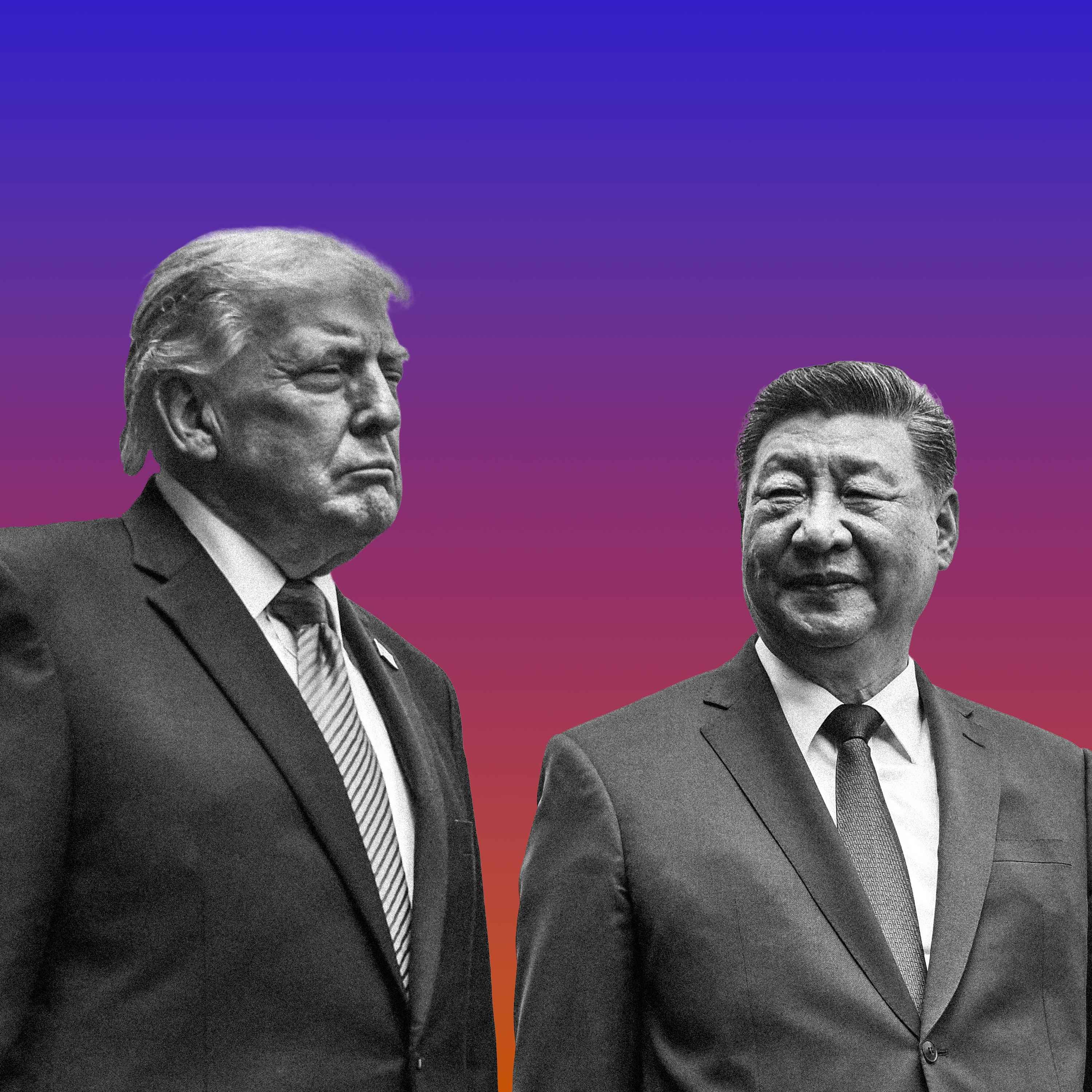
What Next: TBD | Tech, power, and the future
Trump Visits the First World
00:22:09
The president dozes off to China to pass on the global hegemon torch.
Loading summary
Transcript47 lines
- [00:01]
Aramco/Advertisement Voice
Seeking, pushing, optimizing, creating, learning, discovering. At Aramco, we believe in harnessing the power of data to push the limits of what's possible. That's how we deliver reliable energy to millions across the world. Aramco, an integrated energy and chemicals company. Learn more about us@aramco.com ActiveCampaign is the marketing automation platform built for big swings and big dreams. Generate ideas in seconds, import your brand, and create full campaigns with simple prompts. Get started for free@activecampaign.com.
- [00:53]
Lizzie O'Leary
Recently this one concept has been circulating on Chinese social media kill line, which
- [00:59]
Josh Chin
is a which is sort of gamer speak for the point at which a video game character can be killed off with one blow.
- [01:07]
Lizzie O'Leary
That's Josh Chin, senior global correspondent for the Wall Street Journal, based in Asia,
- [01:13]
Josh Chin
and Chinese social media users for the past several months have been talking a lot about the American kill line. This idea that life in America is so precarious that anyone is just like a lost job away from being homeless and you could lose your health insurance, you could not be able to pay rent, inflation is out of control, and that people in the US Are always on the verge of some sort of disaster.
- [01:44]
Lizzie O'Leary
I feel pretty confident that this was not the idea of America that President Trump, his administration, and the tag along band of CEOs at the US China summit wanted to convey. It's telling that one of the first things Xi Jinping did upon meeting Trump was tell him that not handling Taiwan correctly could lead to an extremely dangerous situation. You don't generally lean on a country. You're threatened by this message that the
- [02:13]
Josh Chin
US Is this sort of dangerous and chaotic place is starting to gain traction in China in a way that I don't think we've seen before. And that can't help but have an impact on the way that any US Leader is interacting with a Chinese leader. In the past, most Chinese people sort of saw the US As a shining city on a hill. And they really, you would have George H.W. bush, George W. Bush, Bill Clinton, Barack Obama. When they visited, they would have these public events and there'd be huge crowds who come out to see them. And they were quite admired. And even Chinese state media would carry their, I mean, obviously censored versions of their remarks, but they would carry their remarks. And you just don't get as much of that. I mean, partly that's because China doesn't want to give Trump that sort of platform, but also I think there's just the feelings that Chinese people have towards the US Are much more complicated than they used to be.
- [03:14]
Lizzie O'Leary
Today on the show, a fractured America, a skeptical China, and a profoundly interconnected economy. I'm Lizzie o', Leary, and you're listening to what Next tbd, a show about technology, power, and how the future will be determined. Stick around. This episode is brought to you by Bill, the intelligent finance platform that helps businesses and accounting firms scale with proven results. Here at what Next tbd, we know business, and in businesses across America, smart people are stuck doing the grunt work. You know the drill. Those hours when you could be brainstorming big ideas, you're instead filling in spreadsheets, filling out invoices, or hunting down somebody else's signature. Bill wants to change that. With AI powered automation, Bill removes the busywork from your accounts payables workflow. They handle capturing invoices, routing approvals, and syncing with your accounting software so that your team can focus on growth instead of paperwork. Bill is so reliable, 98 of the top 100 accounting firms in the US trust it to simplify and secure their bill payment processes. Bill's handled over a trillion dollars in secure payments and is ranked number one overall on G2's 2025 list of best accounting and finance products. So stop the guesswork and start scaling with the proven choice. Go with a company whose financial infrastructure is trusted by nearly half a million customers. Ready to talk with an expert? Visit bill.comproven and get a $150 gift card as a thank you. That's bill.comproven. terms and conditions apply. See Offer page for details. This episode is brought to you by AT&T business during Small Business Month. Starting your own business is never easy. Starting your own podcast? That seems easy, but actually, there are a ton of landmines to step on along the way. Finding producers, selling ads, connecting to WI fi. Oh, does that sound straightforward? It's not talking about sitting in coffee houses for hours after buying one scone. I'm talking about sitting in hotel lobbies and pretending your backpack is luggage. It's torture. I spent so much time making my home office look professional, but my connection didn't get the memo. The last thing you want during a major interview is for your guest's voice to turn into a stutter. When your bandwidth can't keep up with your ambition, your home office starts feeling like an amateur operation pretty fast. And for a podcast, the Internet is key, because the Internet is how we talk to almost everyone. And no matter the guest, a laggy connection can ruin an exclusive interview. Great connectivity isn't a bonus, it's the whole game. And AT&T business is a reliable provider for small business owners. For Small Business Month, we celebrate small businesses by helping them run better. This means reliable uptime, easy switching, smart communications AT&T business built to get ATT business@business.att.com. You ever realize how many customers slip through the cracks? Missed calls, follow ups that never happen. It adds up fast. That's why today's episode is brought to you by Quo, spelled Q U O the business communication system built so you never miss a call. Your entire team can handle calls and texts from one shared number, so no more missed messages or dropped conversations. Everyone sees the full thread, replies are faster and customers actually feel taken care of. Quo is the number one rated business phone system on G2 with over 3,000 reviews. Built for how modern teams work. More than 90,000 businesses, from solo operators to growing teams, rely on it to stay connected, professional and consistently reachable. Quo works wherever you are, right from your phone or computer. Keep your existing number, add teammates in minutes, sync your CRM and let the call routing handle itself as you scale. It's easy. Calls, texts, voicemails, transcripts and contact details all in one clean view so your team always has the full picture and can show up for every customer conversation, ensuring a seamless and more personalized experience. Experience. Money is on the line. Always say hello with Quo. Try quo for free plus get 20% off your first six months when you go to quo.com TBD that's quo.com TBD. I want to talk a little bit about the sort of historical relationships between these two countries and how the US has been perceived in China because I feel like it's important context for people to understand. How would you say historically Chinese citizens have viewed the U.S. yeah, you know,
- [08:26]
Josh Chin
I mean, it's always been complicated, of course, because, you know, we're talking about two big countries with lots of people and a lot of pride on both sides. But I'd say, you know, for as long as I've been covering China, which kind of dates back to the late 90s, early 2000s, there's always, you know, for most of that period, most Chinese people have seen the US as a sort of inspirational place, like a place that is a land of opportunity has rule of law, a place where you could go and where you could work hard and the fruits of your labor will be your own to enjoy. I remember I would sort of quiz friends of mine when I was in China and ask if you could move to the US have everything about your life, be the same. You wouldn't make more money, you'd have the same sort of job, the same sort of life, but you'd be in the US Would you do it? And almost everyone would say yes, which I found really striking. Right. But just like that idea, I think mostly of these stable institutions that sort of guarantee freedom and rule of law was really appealing to a lot of Chinese people.
- [09:33]
Lizzie O'Leary
When did that start to change in general?
- [09:37]
Josh Chin
There were sort of doubts about the US Started, I think, back during the financial crisis. You started to see a change then a little bit. People sort of felt like, oh, maybe the US is not this great steward of the global order that it pretended to be. But even after that, people still went to the US in droves and they wanted to study there and stay there if they could. In a lot of cases, I think the election of Trump in the first term did start to make people think a little bit. Just confused people in China. Like, it confused a lot of people around the world. And then I think the fact that he was elected a second time, and I think particularly now, you just have just the appearance and sometimes the reality of really blatant corruption in the U.S. government. And you do have, I mean, you do have these sort of this image that Trump himself and a lot of people in the sort of MAGA movement present of the US as this kind of fallen place that's dangerous, that is crime ridden. And like, a lot of Chinese people have absorbed that message, even though a lot of it is not true. They sort of have taken it on board. And so I think there is a sense that now in China, the US has a kind of more dangerous, more chaotic place with fewer opportunities.
- [11:01]
Lizzie O'Leary
Has that led to a more favorable view of Xi Jinping from the Chinese people? Like, does it help him in these talks?
- [11:10]
Josh Chin
It's interesting because, you know, things are not great in China either. Right, right.
- [11:14]
Lizzie O'Leary
I mean, right now the economy is not doing well.
- [11:16]
Josh Chin
No, no. I mean, they have immense, extremely high unemployment, especially amongst young people. And the, you know, the property market has tanked. And that was where almost all Chinese people kept their, their money investments was it was in property that, you know, housing prices have been falling for years now. There's, you know, a lot of anxiety, you know, just generally about the economy. People are sort of reducing their consumption, all these sorts of things. So it's not great in China right now. But for one, Xi Jinping doesn't have to worry as much about public opinion, obviously, as Trump does, because he's not up for election. You know, he has the ability to control Chinese society through, you know, state surveillance, which we've talked about before. And. But then this sort of image of the US As a sort of chaotic place, it does help him, right? It does bolster his position. Certainly.
- [12:15]
Lizzie O'Leary
We've had already a warning over Taiwan in these talks. And one of the things that I wanted to ask you is about the presence of these chief executives who are along for the ride, because this show primarily focuses on tech. And so, yeah, this summit has, like, all these different layers to it, right? There's the Taiwan aspect, there's the war in Iran. These are intimately tied together in terms of how the two governments negotiate. And then you've got a bunch of CEOs along for the ride. What are they doing there?
- [12:51]
Josh Chin
It's really fascinating, right, because I think Trump sort of made his name in his first term, and one of the things that he is best known for sort of in the international sphere, is promoting this idea that the. The US Needs to decouple from China, right? That China is this place that's been taking advantage of the US that it's stolen American manufacturing, that it cheats and steals American ip and that the economies need to be unwound and separated. He takes credit for that idea, or he used to take credit for that idea. And I think a lot of people who politically aren't extremely opposed to Donald Trump credit him with actually in some ways seeing clearly the ways in which China was taking advantage of the US and that was for. That has been for the past decade, almost the consensus is that bipartisan across the aisle, Democrats and Republicans all agreeing that China and the US need to pull their. To defend their own interests and pull their economies apart. And now he's back there with all these billionaires. And the message is kind of the opposite, right? That actually we need to do more business. Now it's time to get to. So basically, I think it's Elon Musk. It's Jensen Huang, the founder CEO of Nvidia, the AI chip company. Tim Cook is there. I mean, it's all the tech folks with Elon Musk. Tesla has a huge factory in China. And so these are people who are doing a lot of business or in China already want to do more. And I think that's. And that is something that China is also interested in, right? Because of course, they're happy for more foreign investment and more business with the US and that's a stable, comfortable place for them to be. And so it is really interesting that that's the message he's sending by bringing them is that it's time to set everything else aside and just try to make money.
- [14:59]
Lizzie O'Leary
Well, and it is also, as your colleague Greg IP wrote some time ago, basically a command economy move from what is supposed to be a capitalist free market economy to be like, here we're moving all these things under, you know, if not state control, then some real state elbows.
- [15:17]
Josh Chin
Absolutely. I mean, you should say that in the past, American business leaders have always sort of tagged along on these trips. So it's not totally unusual, but certainly that is a really striking aspect of the second Trump administration, is that he has really adopted a lot of the state capitalist playbook that Xi Jinping helped write and that Trump used to criticize. So the complaint and the in his first administration was that China's subsidizing all these, all of its tech companies and hardware companies, and the US can't compete. And now he's taking stakes in intel and the government is getting into all kinds of businesses in the U.S. some of that started under Biden, but Donald Trump has really taken it to the next level.
- [16:09]
Lizzie O'Leary
Okay, so let's talk about AI And I'm using air quotes here. AI Race. There's been a lot of coverage of it between these two countries. How important is AI to this summit?
- [16:21]
Josh Chin
You look at the people who are with Trump, Jensen Huang and Elon Musk, at least are very much involved in AI on the US Side. There is just prior to this trip, we had all of this talk about Anthropic's latest model, Mythos, and all of this sort of cybersecurity risks that come along with that. And this idea that, you know, AI is now getting to the point where it really could start to compromise security in some, in some pretty serious ways. So I think that is kind of bumped it up the agenda a little bit. The Chinese are interesting because they are willing to regulate it. They've always been willing to regulate it to a much greater degree than the US side, but mostly for domestic political purposes. Right.
- [17:11]
Lizzie O'Leary
Which you wrote a book about. Yeah, the surveillance part.
- [17:14]
Josh Chin
Yeah. And they want to use it for social control, but they also want to regulate AI to make sure that it doesn't threaten the Communist Party's messaging. Right. And so that's how they've been regulating large language models. So we'll see what they say, what comes out of this meeting. I'm not sure we'll have some sort of grand bargain on AI safety, but I think certainly there will be some conversations. We may not hear about them. Right. Away, but they'll probably come out that I think you are going to start to see. These are the two countries that if there is going to be regulation of AI and guardrails put up around these models, they're only really going to be effective if China and the US have some basic agreement on what they should be. So I think you might start to get a little bit of that discussion
- [18:10]
Lizzie O'Leary
when we come back. Is this the beginning of the end of American dominance? Have you looked at your utility bill
- [18:27]
T-Mobile Customer/Advertisement Voice
recently and thought, how is it this high? You're not the only one. Something that we would hear often was, I couldn't pay my power bill. I'm no longer turning on my ac. Rising energy costs can feel inevitable, but voters have more power than they think. Listen to good things from lemonada Media to hear how communities are fighting back for energy affordability. Now more people than ever can bring in their bill for a better deal at Verizon. Got AT&T or T Mobile. We got you Xfinity or Spectrum. You too. So tell your friends, your family, your quirky neighbor, Jeff, grab your megaphone and yell it from the rooftop top. Get a better deal at Verizon because chances are anyone in shouting distance is included. Bring in your at&t t Mobile, Xfinity or Spectrum bill and we'll give you a better deal on the best network come by Verizon today. Best Network based on RootMetric's best overall mobile network performance US 2nd Half 2025 all rights reserved. Must provide recent consumer mobile bill in the name of the person redeeming the deal. Additional terms, conditions and restrictions apply.
- [19:27]
Lizzie O'Leary
Let's talk about Iran, because everybody's got a leverage point here, right? The US Wants China to pressure Iran to reopen the Strait of Hormuz. China does not want the US to have weapons build up in case of conflict in Taiwan. They would like the US to sort of chill out there. The US Needs to replenish its stockpile of weapons and needs rare earths from China. Like if this is like the end of Reservoir Dogs, like everybody's got something going on here. How does this issue hang over these talks and are we in a sort of a safe face and talk about the real stuff in the private room moment? I just wonder how they navigate through this.
- [20:19]
Josh Chin
The war in Iran is. I mean, it really has changed the landscape of this meeting. So it was actually something that was supposed to happen a couple months ago and I had to be delayed because of the war. And since then I think it's become clear that Yeah, I mean, the war is bad for China in some ways. I mean, obviously, China buys a lot of Iranian oil. It's not getting that oil. Like we said, the Chinese economy is not great. So any disruptions to the global economy are not good for China. On the other hand, it gives China really a lot of leverage. Right, because they are the only country in the world that has the weight to lean on the Iranians to go to the negotiating table and to agree to things they might not want to otherwise. And you may have noticed that the Iranian foreign minister visited Beijing and met with the Chinese foreign minister in Beijing last week, which is not the most subtle signal to be sending ahead of Trump arriving. So, clearly, the Chinese are saying to the US and to the Trump administration that we have the ability to bring an end to this war, which is what Trump wants now. And it means that they. But they're not going to do it for free. And so it's just a question of what does Trump give them in exchange. And you mentioned Taiwan. That's the one thing that is really, really important to Xi is that he wants the US to back off its support for Taiwan. And actually, today, the very early part of this meeting, one of the first statements to come out of it was a really, really strong language from Xi on Taiwan, basically saying that if this is handled poorly, the Taiwan situation, it could lead to an extremely dangerous situation.
- [22:20]
Lizzie O'Leary
So not subtle?
- [22:21]
Josh Chin
Yeah, no, not subtle. Not subtle at all. The US Statement after the first day of meetings didn't mention Taiwan, but no doubt it was a major focus. And at the very least, I'm sure she is pressing Trump to delay weapons sales to Taiwan, and then he might try to get more.
- [22:45]
Lizzie O'Leary
If you are a regular person, either in the US or in China, and I realize I'm talking about an enormous number of human beings, Where does this leave you? Should you be watching with bated breath? Or is this one of those summits where the point is that they're photographed together and then they work things out in the back rooms and through intermediaries.
- [23:15]
Josh Chin
We shouldn't expect any sort of major diplomatic breakthroughs or huge announcements out of this meeting? I mean, they may come. It's possible. I think the important thing is that they are talking and they're sort of basically putting a. At least trying to give the appearance of putting a pin in the tensions that have existed before. And I think that's. I mean, I think that's important for a lot of people. I mean, it's not going to be, you know, immediately dramatic. But it, but, but the relationship between China and the US Affects so much, and it really does trickle down into daily life. I mean, obviously Iran is the first issue. If China does help the Trump administration with Iran, that, that can, you know, they get the Strait of Hormuz open, somehow oil starts flowing again. That's going to, that's going to be really important for, for everyone's pocketbooks. You know, in terms of Taiwan, you know, the Taiwan is the manufacturer of the world's, all of the world's, or nearly all of the world's most advanced computer chips. And, you know, if people remember Covid and the chip shortage that happened, then people, you couldn't buy cars because the automakers couldn't get the chips to build cars. I mean, all of this stuff does kind of kind of tumble downhill eventually. So it's certainly worth paying attention to. I don't know if there'll be anything really, really dramatic happening now. I think actually what you're, you know, the outcome that both sides are hoping for is that this kind of nothing really dramatic happens and both countries can go back to dealing with their own problems instead of creating new problems for each other.
- [24:56]
Lizzie O'Leary
This is all taking me back to this piece you wrote about how the US Is viewed in, in China and kind of where we are now as a globe. It does make me wonder, like, does this meeting pinpoint the moment when the age of American dominance ends?
- [25:23]
Josh Chin
There are certainly people in China who are promoting that idea. I mean, that is like a, that is a. You know, Xi Jinping has been saying this actually for years now, that the east is rising and the west is declining. That's been his, that's been one of his sort of signature.
- [25:38]
Lizzie O'Leary
And it's like it's propaganda. But also, does he have a point?
- [25:42]
Josh Chin
Yeah, you know, I mean, I think Xi is really has a lot of reasons to be confident. Right. I mean, you have just one example of this now that you're starting to see that some of my colleagues were reporting on before the summit is the flow of Chinese STEM graduates back to China from the U.S. i think it's increasing every year. It used to be that the overwhelming majority of Chinese people who went to the U.S. especially if they got advanced degrees, would stay in the US I think still there probably is a majority that, that want to do that, but more and more coming back to China. I think there's a lot of anxiety in the US about funding for science outside of tech, outside of AI anyway, and some doubts about these sort of Fundamental pillars of U.S. power and influence like rule of law, innovation, freedom of speech, all those sorts of things seem to be sort of crumbling. And so I think there is a sense among some people in China that the government is certainly happy to amplify that maybe the age of the US or the age of the US model is coming to an end. I mean, there are certainly a lot of people in China who don't believe that there are skeptics and there are many, many problems in China. Interesting. I think it's, you know, it's really, I think the first time we've had like a genuine debate where, where people with reasonable opinions can take, you know, both sides of the, both sides of the argument.
- [27:43]
Lizzie O'Leary
Josh Chin, as always, it is a pleasure to talk to you. Thank you.
- [27:46]
Josh Chin
Absolutely.
- [27:49]
Lizzie O'Leary
Josh Chin is a senior global correspondent for the Wall Street Journal. And that is it for our show today. What Next TBD is produced by Evan Campbell and Patrick Fort. Our show is edited by Paige Osborne, who is the senior supervising producer for what Next and what Next tbd. Mia Lobel is the executive producer of podcast here at Slate and TBD is part of the larger what Next family. We'll be back on Sunday with another episode. I'm Lizzie o'. Leary. Thanks for listening.
- [28:28]
Aramco/Advertisement Voice
Seeking, pushing, optimizing, creating, learning, discovering. At Aramco we believe in harnessing the power of data to push the limits of what's possible. That's how we deliver reliable energy to millions across the the world. Aramco, an integrated energy and chemicals company. Learn more about us@aramco.com.
- [28:58]
Lizzie O'Leary
We're lost. It feels like we're going round in circles.
- [29:02]
T-Mobile Customer/Advertisement Voice
I'm going to ask that man for directions. Hi there.
- [29:06]
Lizzie O'Leary
We're trying to get to the state fairgrounds.
- [29:08]
T-Mobile Representative/Advertisement Voice
Well, you're going to take a left at the old oak tree at this here road. Nah, I'm just kidding. Let me get my phone out.
- [29:14]
Lizzie O'Leary
How is there signal out here?
- [29:16]
T-Mobile Representative/Advertisement Voice
T Mobile and US Cellular are coming together so the network out here is huge. We get the same great signal as the city. Saving a boatload with benefits. And there's a five year price guarantee too. Okay, here's the turn.
- [29:28]
T-Mobile Customer/Advertisement Voice
Actually can you pull up the way to a T mobile store?
- [29:32]
T-Mobile Representative/Advertisement Voice
America's best network just got bigger. Switch to T mobile today and get built in benefits. The other guys legend leave out plus our five year price guarantee. And now T Mobile is available at US Cellular stores in Hermiston Best mobile network based on analysis by Uklo Speed test intelligence data second half of 2025 bigger network the combination of T Mobile's and US Cellular's network. Footprints will enhance the T Mobile network's coverage price guarantee on talk text and data exclusions like taxes and fees apply. CT mobile.com for details.