← What Next: TBD | Tech, power, and the future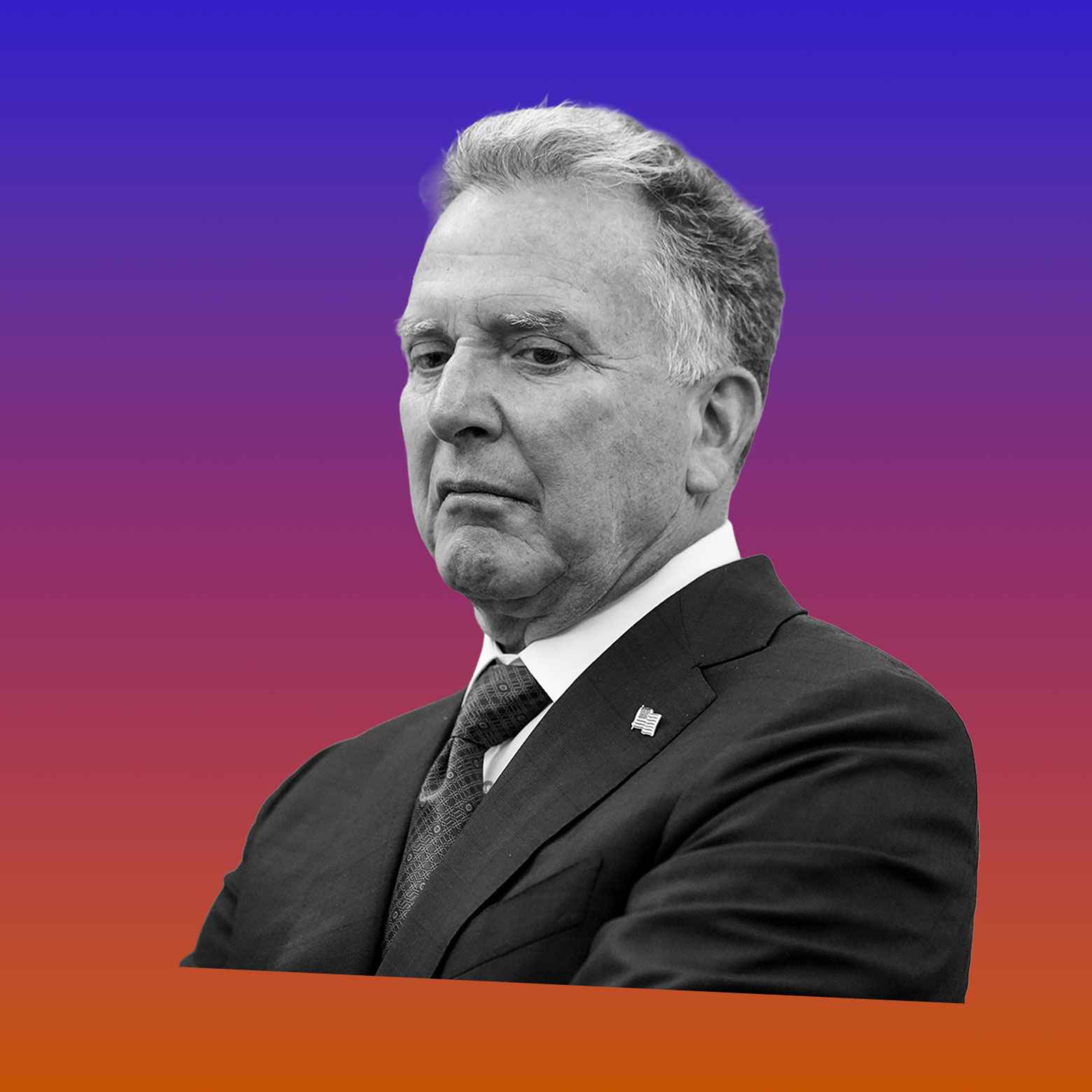
What Next: TBD | Tech, power, and the future
Trump’s Only Friend
00:24:16
Steve Witkoff is doing deals. For America, and the Trump family.
Loading summary
Transcript41 lines
- [00:08]
A
When it comes to thinking about how Donald Trump and money and power and a kind of New York real estate mindset all converge, there's only one person I want to talk to.
- [00:20]
B
My name is Andrea Bernstein. I am an independent journalist and author of the book American Oligarchs, the Kushners, the Trumps and the Marriage of Money and Power.
- [00:30]
A
Andrea has been covering Donald Trump and his world for decades. She knows his history in New York, the stories beneath those stories, and the people who populate his orbit. One of those people, especially lately, is Steve Witkoff.
- [00:45]
B
And he was sort of around a little during the first Trump administration, but he wasn't one of the like, sort of major people. There were a lot of people to pay attention to, and he was sort of slightly on the outside.
- [00:56]
A
But then Sometime after the January 6 attacks, when some people in Trump world distanced themselves, Witkoff moved in the other direction.
- [01:05]
B
I began to notice that he was sort of getting closer and closer and closer to Trump and more of a name that people were bandying about. And as I began reporting, I started talking to people who had worked with him, particularly in New York development. And, you know, the comments were. Were assertive. Steve Witkoff, what a world. Steve Witkoff. Can you believe it? Because people knew him as somebody who put together building deals.
- [01:31]
A
Now, Witkoff's name is on a very different series of deals, or attempts at deals anyway, on Iran, Ukraine, Gaza, all in his capacity as President Trump's special envoy for peace missions. But what Andrea's reporting foundation is that he has not left his New York real estate mindset behind. Witkoff approaches these deals more like a businessman.
- [01:55]
B
So what are the assets that we have that we can bring to bear? What are the assets that the other party has? What do they want to keep? What can they give up? That is very much the frame that he is viewing these deals from all my reporting. And it's a real shift. I mean, there is one person who told me a story about how during the Obama administration, there's a delegation that went to somewhere in the Middle east and they arrived in hotel rooms and everybody had been given an iPhone, and everybody shrieked in horror because that seemed like such a breach.
- [02:35]
A
Big diplomatic. No, no, you're not supposed to do that kind of thing.
- [02:38]
B
But for, you know, Steve Witkoff, Donald Trump, Jared Kushner, who's sort of a third member of this triad business, is integral. They see it as integral to doing these international deals. That is a huge paradigm shift and one that we are only beginning to grapple with. And Understand
- [02:57]
A
today on the show the World According to Witkoff, he's the President's point man on a series of raging geopolitical crises. And he's creating a new kind of foreign policy, one with business deals that help the Trump family at its center. I'm Lizzie o' Leary and you're listening to what Next tbd, a show about technology, power, and how the future will be determined. Stick around. Let's back way up. How did these two guys meet?
- [03:31]
B
So I should just back up and say that Steve Witkoff and Trump were golf buddies for a long time. They were kind of bobbing in each other's orbits. During the interregnum between the presidencies, Steve Witkoff became sort of, at least outwardly, much, much closer to the President or than the former and would be president. And he started showing up in all of these things, including at his civil trial. This was a trial that the New York Attorney General brought for a decades long fraud, business practice. And the ruling was against Trump. And he got a fine of when you add in all the interest of somewhere approaching half a billion dollars. The fine was thrown out on appeal, but the ruling was upheld. And now Trump has appealed that ruling. So that's the case. And Steve Witkoff shows up as trying to be an expert witness in the case, showing that he's a sort of real estate guy and really backing up Trump. And he tells the story of how they met. And he talks about how when he was this junior associate, this law firm just a couple years out of Hofstra Law School, he was out at three in the morning in New York. And this was such an 80s scene in New York. All the lawyers are up all night putting together deals. And he goes out to a deli at three in the morning to buy sandwiches for the team. And he runs in, as he describes it, to Donald Trump. And Donald Trump says, I don't have any money, can you buy me a sandwich? And Steve Witkoff, according to his testimony, says, yes, sure. And he buys him a ham and Swiss sandwich and that's that. And then Steve Witkoff kind of watches Trump go in and out of the law firm. Of course, in the 1980s, I mean, this is peak Trump. This is the art of the deal. Trump, yes, Coward Trump, Ivana and Donald Trump on the sort of covers of the New York tabloids every day. And Steve Witkoff's looking at him and he says, I wanted to be him.
- [05:21]
A
One of the things that is so striking in your story is the portrait you paint of Witkoff. At Trump's trial in 2024. Just sitting there. Yeah, almost every day, so present and really unlike anyone else in his orbit. Why was he always in court there?
- [05:43]
B
So, I mean, a lot of people showed up who, you know, clearly wanted to be seen, clearly wanted to be noticed, that they were coming and doing this fairly unpleasant thing, which was sitting on these really hard benches in this kind of unbelievable courtroom. It's not fun, it's not plush, it's not a federal courthouse. It is a state criminal courthouse. On other floors, people are being tried for homicide and rape, and it's just a kind of overall grungy experience. So you go there and you're sitting in the court, and. And there are all these people sort of, you know, there to be seen. Some of them are holding press conferences during lunch hour or afterwards. And there's Steve Witkoff, and he's just kind of quietly there. He's there a lot of days. And I was sort of looking at him, and I'm like, yeah, I know that guy. Who is that guy? And, you know, as one does, he was just sort of sitting there. And, you know, I happened to be placed close to the seat of seeds of Trump supporters, and I leaned forward and I said, you know, why are you here? And he said, I'm here for my friend. And that really kind of struck me because, you know, I wrote a book about Trump, and I did a podcast about Trump, and I've covered Trump forever. And in the New York real estate world, people don't think Trump has friends. And, you know, they sort of think he has his family and he has sort of people around him who are in his favor. But that is the view. I've heard it so many times. He's not one of us. He doesn't show up for other people. He's there for himself. And one of the things that sort of fascinated me is I learned fairly early on in my reporting that, so Steve Witkoff son, Andrew, died really tragically of an OxyContin overdose. And this was in 2011, and Donald Trump showed up at his memorial. So when I called people and I would say, like, can you talk to me about their friendship? People would be like, well, you know, then everybody would say, well, Donald Trump doesn't have friends. And, you know, the sort of tape would start and. And I would say, well, you know, what about the fact that he went to Steve Witkoff's son's memorial? And one person sort of in this world of, you know, New York politics and real estate, when I Told him that. He said he did. It was just so shocking for them. So to me, this is a really, you know, kind of interesting thing about the Trump family and the Steve Witkoff family is that Donald Trump did something that he didn't always do, which is showed up at the memorial for the child.
- [08:06]
A
So how do we go from friend who clearly has some emotional touchstone with Trump to business partner because they go into business and create World Liberty Financial, Right?
- [08:18]
B
Well, the story is that it comes from their sons, Don Jr. And Eric. TRUMP and Zach would cough. And Alex Witkoff. Zach Witkoff now runs World Celebrity Financial. He is the CEO of the company that they knew about it. They were like, you should get into this. I have seen Don Jr. And Eric talk about it very frequently, and their lore is, after January 6, no banks would do business with us. It was so unfair. It was discrimination based on viewpoints. And we wanted to create a business where anybody could participate in banking. It is sort of a. Let's just say it's a foundational myth about World Liberty Financial. But they set up this cryptocurrency business. And, you know, Donald Trump had famously called it a scam. But he.
- [09:06]
A
Yeah, he called bitcoin a scam in 2021.
- [09:08]
B
But he went, like, much further. He was like, you know, this is something that can be used by bad actors. He didn't say bad actors, but essentially it was like, this is sort of, you know, something that can be a tool of people who are up to no good.
- [09:18]
A
I don't like it because it's another currency competing against the dollar. Essentially, it's a currency competing against the dollar. I want the dollar to be the currency of the world. That's what I've always said.
- [09:30]
B
So, you know, people in the kind of crypto community who I spent a lot of time talking to, especially sort of early on in the Trump administration, it was clear that he's doing so many things that were favorable to the cryptocurrency industry. Were sort of elated because they were like, well, we've been on the outside and now we're on the inside. And Donald Trump shows up at the Bitcoin 2024 war conference, and he says, you know, I'm going to make the US the crypto capital of the world, and I'm going to fire Gary Gensler, who.
- [09:57]
A
That's a huge applause line in the crypto world, right?
- [10:00]
B
They love that. I mean, it was just, you know, sustained applause lines. He's the former head of the sec, a real hated figure in that community and they're jacked. And then just a, you know, a few weeks later, Steve Woodkoff and members of the Trump family begin sort of hinting, you know, something's coming, something's coming, we're going to have something. And then lo and behold, in September, just one day after the second assassination attempt on Donald Trump's wife, which happened while he was playing golf with C. Witkoff, the next day they unveil this company, World Liberty Financial, and Donald Trump is all over their business materials, the Witkoffs. I mean, when Donald Trump won the election and Steve Witkoff was appointed special envoy, they changed their status on the paperwork to co founder emeritus, but their pictures were on there until this year. So people who are listening, who know or watching and know about business will understand that that is a signal.
- [11:04]
A
Yeah, I actually wanted to ask you about that. This sort of emeritus status. They say they've divested from World Liberty Financial, number one. Is that true? But then also, their sons are still deeply enmeshed in this.
- [11:20]
B
Well, exactly. Okay. So like, this requires, as with everything, like a little bit of untangling so Donald Trump doesn't have to divest and he hasn't. And in fact, when he released, you know, not quite a month ago, his financial disclosure forms, we learned that he had made just from World Liberty. So we're not even including his meme coin, which is a whole other thing, but just in World Liberty, he had made, you know, 800 plus million dollars. So the arrow is pointing towards a billion that's just in 2025 of money that he has made from this company, which because he is president, he is allowed to do. Now, employees are in a different situation. So Steve Witkoff filed a disclosure form that, that was released last summer and it showed he had in fact divested of his real estate company, but he was still listed World Liberty as among his assets. The White House has been saying as of the fall he has divested, but we haven't yet seen the forms that show that. But they've said it pretty clearly and declaratively. He has now divested, but he hadn't in the early Trump administration, which is potentially a significant thing. But getting to your question about the suns, one of the people that I spoke to was a former high level official at the SEC under Biden, and he talked to me about the moment at the SEC where they start this company and there's this sharp intake of breath. People are like, what is happening? Like we are trying to regulate cryptocurrency and Here is the president and his family. And I mean, not Special Envoy yet, but Steve Woodkoff and his family setting up this company right before this election. There were conversations, I was told about what to do. People thought about it, but the clock ran out. And one of the officials, who was sort of their top cryptocurrency person, said to me, what is happening here is that even if Witkoff is not involved in any way, and I should say that no evidence has emerged that he's done anything like saying, give me some money. It's just his name is Witkoff, and so is the name of the guy who runs the company, and that is his son. And everybody in the world knows it. People can make the connection. And one of the things that is so striking is some of the people that Steve Witkoff did deals with. For example. So there's an Emirati sheikh named Sheikh Tanun.
- [13:56]
A
Yes. And this is like the part of the show where I feel like if we had a giant board with red strings a la Charlie Day in the meme, like, we would be able to show the.
- [14:10]
B
I'm going to try to tell this with no rant.
- [14:11]
A
Walk me through the players.
- [14:12]
B
Okay, so Sheikh Tanun is known as the Spy Sheikh because he runs the Emirati spying agency and his brother is the president, but he also runs a lot of companies, and he also very significantly controls sort of $1.4 trillion of Emirati wealth to invest. These are the kinds of figures that Steve Witkoff has found himself sitting across with. There's another one in Russia named Kirill Dmitriev, also the head of that country's sovereign wealth fund. So he is sitting and he is negotiating with people who are money men for their country and who, if not talking about business, have an understanding of the world that really aligns with Steve Witkoff's. So Steve Witkoff, after he's named special envoy, before Trump is inaugurated, Steve Witkoff starts working on a Gaza ceasefire and Biden. Administration officials and people and diplomats said to me that they were very appreciative at the time. They thought he was helpful, that these were, in fact, people that he knew, these Gulf leaders, because he'd done business with them, because he'd done business with them, generated a level of trust. So they were like, yes, he's being helpful. And what the White House says very clearly is he was there to talk about ceasefire, he was there to talk about peace. He's there with Sheikh Tanun. At the same time, Sheikh Tanun is. Is becoming a. Unknown to the entire world stakeholder In World Liberty Financial, he purchases a 49% stake in World Liberty Financial in a deal that comes together days before the inauguration.
- [15:55]
A
Almost half of the company.
- [15:56]
B
Almost half of the company. So you have Steve Witkoff negotiating a deal, diplomatic deals, and you have Zach Witkoff, the son of Steve Witkoff, negotiating the money deals. And on top of this, the spy sheikh has a specific mission. The specific mission is get access to AI chips in the US The Biden administration super against this. They were like, no, no, no, no, no. But very early on in the Trump administration, shake tuner is successful, and he gets access to the chips. Now, the White House was like, well, Steve Wickass wasn't involved in that. The New York Times reported that he'd advocated for that, for the chips. The New York Times reported that he was in on some sensitive meetings. The White House says, no, no, no. Those were just briefings, and he was a special envoy, so of course he was going to be briefed. But in all of this, what do we have? We have a situation where the father is a diplomat, the son is the money man, and they're all making money. He is making money. $800 million for the president's family. And, you know, in the context of everything else that goes on in the administration, it's a signal to the world.
- [17:14]
A
We'll be right back after a quick break. There is this very telling quote from Witkoff in your piece, and he's talking about Russia and Ukraine and how he sort of hopes that everyone will become business partners. And he says if we do all that and everybody's prospering and they're all a part of it, and there's upside for everybody, that's going to naturally be a bulwark against future conflicts there, because everybody's thriving. And I thought either that is the most naive thing I've ever heard or the most amoral or the most. Just sort of like, we've all got some stake in the game, so we're all going to be okay.
- [18:02]
B
I mean, I think it's really important to understand that Donald Trump, Steve Woodcoff, Jared Kushner also, they see all of these relationships that they have as good, not just fine, but good, as helpful.
- [18:14]
A
Beneficial to the country.
- [18:16]
B
Beneficial to the country because everybody can prosper and profit together, is their view. Now, of course, the Russian thing, I mean, there is sadly no peace between Russia and Ukraine. The deal didn't come together. But it really is such a distillation of his view. His view is, let's do business. And in doing Business rising tide will raise all boats, the board of Peace, the whole Gaza redevelopment, that is another vision of that. We will all prosper. And even in the two page memorandum of understanding with Iran, they there is a provision for what, $300 billion in economic development. And I was told by someone who sort of has back channels with Iran that the Iranians want to be in the deal because they understand Donald Trump as someone who is sensitive to money.
- [19:05]
A
Is there a universe in which that is just realpolitik where that's maybe a savvy position for the Iranians to take?
- [19:16]
B
Well, you know, it's interesting too because I did ask this of diplomats and one of them, he said, well, in Ukraine, sort of, you know, back in the day, there were a lot of politicians who were like, I'm corrupt so I can deal with the Russians. The language was very different, right? No one in the Trump administration says we're corrupt. They say, we are interested in business. But in Ukraine, they were like very direct. They were like, I'm corrupt, I know how to deal with the Russians, so I'll be able to negotiate something. And he was like, yeah, no, it didn't work. So it's a different tenor. But there is no template for this actually working around the globe. I think when we were beginning this discussion, we were talking about why are we in this sort of rinse and repeat cycle of Iran bombing. I mean, I don't mean to be flip about it because know, people are dying, but one of the reasons why we seem stuck in this is because there is not a sort of systematic toiling in the vineyard diplomatic approach. There's a belief if we sort of go in, totally do it differently, we'll be successful. And so far in this case, it isn't working.
- [20:39]
A
I think one question I have, if we're thinking back to our wall of connections, right, where are the rules here? Are any of these things illegal? Are they just understood to be unethical or wrong? Because I don't see any way of looking at all these different financial entanglements and not saying, boy, it seems really hard to separate the self interest from the diplomatic interest. Right?
- [21:12]
B
Well, this is something that one of the things that really drew me to covering this story in the first place. So Trump, as mentioned, is in his own category, but you know, U.S. government officials, the whole idea of conflict of interest laws is not necessarily to block somebody from actually profiting, although that is part of it. The idea is to create confidence in government. You shouldn't get near anything. You have an Interest in. And that has always been, up to now, sort of the way it's worked. I mean, Barack Obama famously had to see if he was allowed to have Verizon for his BlackBerry because he might do make a decision as president that had some impact on Verizon. So I did some reporting also on Jared Kushner. So Jared Kushner in the first Trump administration was in the White House and had to file disclosure forms. And from everything that I heard from my sources, really hated and resented that and was not going to come back in this administration because he didn't want to file those disclosure forms. So the White House has created a category I've never heard of before called volunteer for Jared Kushner. And that is their position. Their position is he doesn't have to file disclosures because he doesn't work for the government. He's a volunteer. Well, that has never been a category that has existed. And so this thing is happening in a way that we have never seen before in any administration in the history of the country, which is now the moment. I'm going to talk about the founders, which is to say the founders thought corruption was as big a threat to the country as war. And they tried to put in all these guardrails because they saw corruption as something that kings in Europe did, and they did not want that for this new republic. So they were going to put in all these guardrails and try to make it so that no one would ever cross any lines in this country. And for a long time, with varying degrees of success. But in general, the consensus held that, yes, that's the value, corruption is bad, and it is an artifact of recent modern history that that has fallen by the wayside. And we are left in the situation we are now where the president, I mean, I covered a lot of Trump business and I looked at a lot of business documents and I sat through a five month trial in Trump's business. He has arguably made more money in his first year as president than any other endeavor he's ever been involved in. And that is really saying something about how the paradigm has shifted.
- [23:36]
A
Andrea Bernstein, such a pleasure to talk to you. Thank you.
- [23:40]
B
And you. So great to talk to you.
- [23:44]
A
Andrea Bernstein is an investigative journalist and that's the show what Next TBD is produced by Rob Gunther, Evan Campbell, Madeline Thames Ducharme and Patrick Ford. Paige Osborne is the senior supervising producer of what Next and what Next tvd. Mia Lobel is the executive producer of podcasts here at Slate. Ben Richmond is the senior director of Podcast Operations. I'm Lizzie o'. Leary. You can track me down on blue sky. I'm IzzyOrealy. Thanks so much for listening. Talk to you soon.