← What Next: TBD | Tech, power, and the future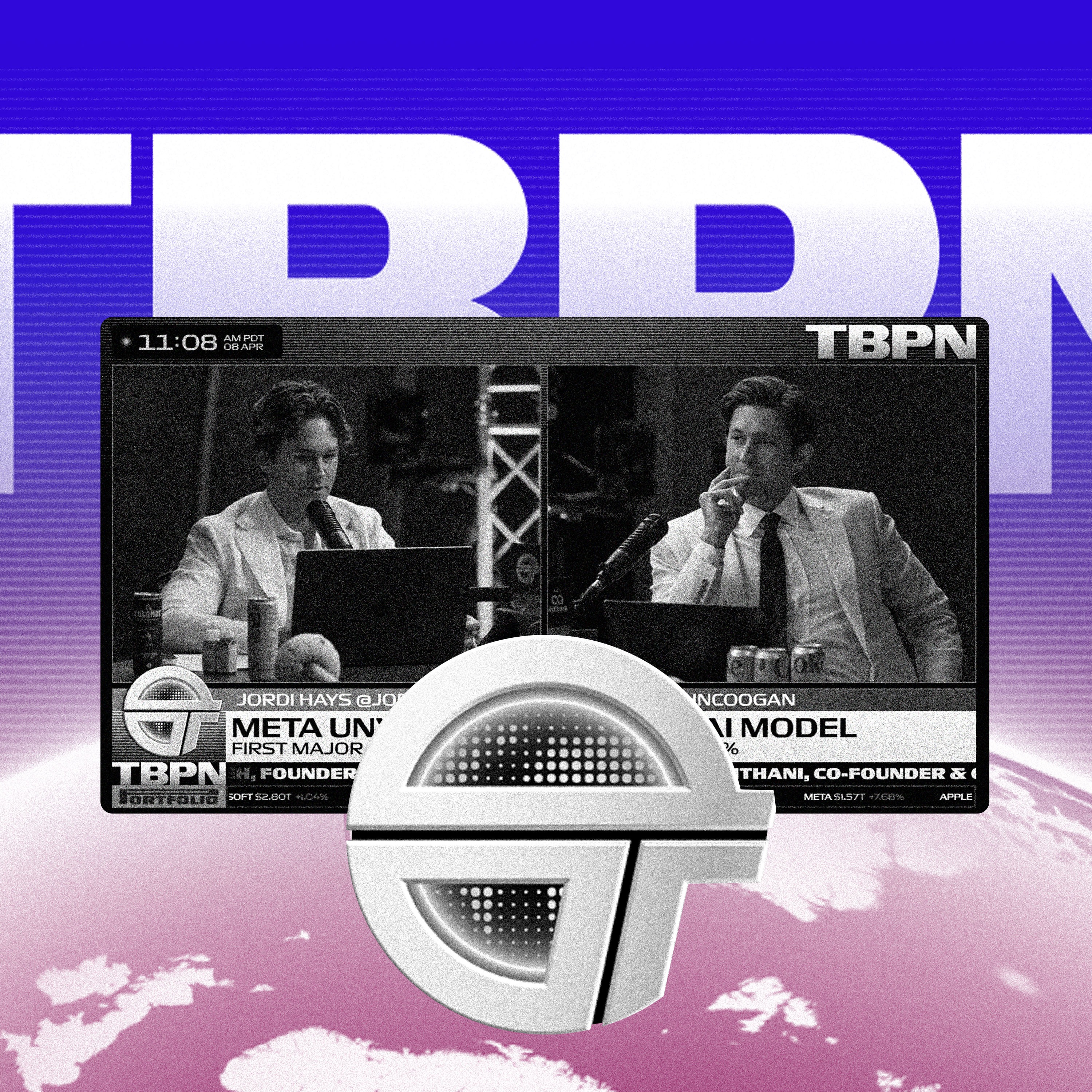
What Next: TBD | Tech, power, and the future
Why OpenAI Bought a Talk Show
00:20:47
Is it a PR strategy, or another business blunder?
Loading summary
Transcript56 lines
- [00:00]
Verizon Advertiser
Think Verizon is expensive? Think again. Anyone can bring their AT and T or T mobile bill to a Verizon store today and we'll give you a better deal. So bring us your bill, walk in running, hogo, sticking teleport if you can, ride on the back of a rollerblading yak or fly in on the wings of a majestic falcon. Any way you can bring your AT and T or T mobile bill to a Verizon store today and we'll give you a better deal on the best network based on RouteMetric's best overall mobile network performance US 2nd half 2025. All rights reserved. Must provide a very recent postpaid consumer mobile bill in the name of the person redeeming the deal. Additional terms, conditions and restrictions apply.
- [00:34]
Lizzie O'Leary
This episode is sponsored by Smart Travel, a new podcast from NerdWallet. You know that one friend who always finds the best travel deals, picks the right cards, and somehow ends up in first class for the price of coach? Smart Travel is like that friend, but in podcast form. They cover things like how to book tickets for spring break, even when every other family has the same week off, or what exactly you should spend those 90,000 points on, or which airport lounges are actually worth it and which are just free chairs. NerdWallet's trusted travel experts are here to help you put your dollars to work with practical tools and smart strategies you'll find yourself using every time you need to book a seat. Smart Travel knows that planning is half the battle. They make it easier for you to button up a schedule, put away the laptop, and finally go exploring. Travel smarter and spend less. With help from NerdWallet, follow Smart Travel wherever you get your podcasts.
- [01:47]
Mike Isaac
Without further ado, we have our first guest of the show, Sam Altman, the CEO of OpenAI. He's in the Restream waiting room. Welcome to the show, Sam. How are you doing?
- [01:53]
Verizon Advertiser
Welcome back.
- [01:54]
Capital One Advertiser
Good.
- [01:54]
Mike Isaac
Thank you guys for having me back. Thanks so much.
- [01:56]
Lizzie O'Leary
Back in February, Sam Altman went on a little streaming show called TVPN to chat about his company, its models, and generally chop things up with the hosts.
- [02:06]
Mike Isaac
What'd you launch? So we launched 5.3 codecs. It is, I think, the best coding model in the world. We took a lot of the feedback that People had about 5.2, 5.2 codecs and got it into one model. It is much smarter at programming, but it's also way faster. You can interact with it mid turn. I think it's got a much better personality
- [02:26]
Lizzie O'Leary
for someone like me with a Hard news background. I'd call this a pretty friendly interview.
- [02:31]
Mike Isaac
I mean, I think it was probably pretty typical of a lot of TBPN interviews.
- [02:38]
Lizzie O'Leary
That's Mike Isaac, he covers tech for the New York Times.
- [02:42]
Mike Isaac
The CEOs that come on the show often have something to promote the latest feature release or something like that, and pretty friendly. I know the TBPN guys well. I've written about them before and I would say it's not exactly sitting down with let's say the New York Times and getting hit with a bunch of punch you in the face questions. But to their, to be fair to them, that's not what they aspire to be. It was a pretty chummy affair, let's say.
- [03:12]
Lizzie O'Leary
What's the CEO rationale for going on TBPN versus a New York Times interview, A CNN sit down, whatever.
- [03:19]
Mike Isaac
I think in tech today a lot of tech executives believe folks like me or other colleagues at the New York Times or just the mainstream media in general are not going to give tech executives a fair shake in interviews. They feel like we're all, you know, cynical, which fair or at least like not as optimistic on tech as they might be. And, and so their whole thing is often like, why would I go sit down with the, with any of these mainstream old school media folks when I could go on a show with two people who were once in tech or still kind of are in like tech media, know what it's like to create a company and build, build something and go through adversity and will interview me in ways that I feel more interesting and might end up with a better, better outcome or something.
- [04:17]
Lizzie O'Leary
TBPN, which stands for Technology Business Programming Network, streams for three hours each weekday on X and YouTube. It's not actually that big. Some 47,000 people watched the Altman interview on YouTube, but its audience is hardcore Silicon Valley and those who aspire to be. And so those Silicon Valley heads turned when the News broke that OpenAI was buying TBPN just two months after Sam Altman sat down with its host posts.
- [04:50]
Mike Isaac
I think I dropped it in my work chat and said, wow, it's the last thing I expected, particularly because I wrote about them last year, TVPN last year, and all startups kind of say some version of we have no intention of being acquired and we don't want to like expand the business. We don't want to like oversee a dozen anchors or whatever. And I guess, stupid me, believe that. But also, when Sam Altman backs a dump truck full of money at your doorstep, then your aspirations start to change, but I really didn't quite understand why initially. You know, like the the gut instinct for me is like, why are you buying the streaming show when at the same time you've been trying to prepare for an IPO and trying to simplify your business and trying not to be in a bunch of different things at once.
- [05:42]
Lizzie O'Leary
Now, we don't know exactly how big that dump truck of money is. The Financial Times reported that the deal was in the low hundreds of millions, but it's a lot of money. Which raises the question of why. Why would a company like OpenAI do this? Why does Sam Altman think he needs a streaming booster ish talk show? Why do it? As the company gets ready to go public today on the what's the plan here? Do tech CEOs hate the mainstream media so much that they want to build a separate ecosystem? Or is there some other goal? I'm Lizzie o', Leary, and you're listening to what Next tbd, a show about technology, power, and how the future will be determined. Stick around.
- [06:32]
Mike Isaac
Foreign.
- [06:40]
Lizzie O'Leary
Starting your own business is never easy. Starting your own podcast? That seems easy, but actually there are a ton of landmines to step on along the way. Finding producers, selling ads, and connecting to WI fi. Oh, does that sound straightforward? It's not. I'm talking about sitting in coffee houses for hours after buying one scone. I'm talking about sitting in hotel lobbies and pretending your backpack is luggage. It's torture. I spent so much time making my home office look professional, but my connection didn't get the memo. The last thing you want during a major interview is for your guest's voice to turn into a stutter. When your bandwidth can't keep up with your ambition, your home office starts feeling like an amateur operation pretty fast. And for a podcast, the Internet is key because the Internet is how we talk to almost everyone. And no matter the guest, a laggy connection can ruin an exclusive interview. Great connectivity isn't a bonus, it's the whole game. An AT&T business is here to help. They've got the tools, team and expertise you need for a stable network you can rely on. And when you can rely on the network, you can get back to thinking about the more important stuff, like nabbing that great guest and getting back to work. AT&T business Built to work Get AT and t business@business.att.com. Today's episode is brought to you by Quo spelled Q U O Spring is here. That means it's time for some spring cleaning, including Streamlining some of the messier parts of your business. Quo is the number one rated business phone system on G2 with over 3,000 reviews built for how modern teams work. That's why more than 90,000 businesses, from solo operators to growing teams, rely on Quo to stay connected, professional and consistently reachable. Your entire team can handle calls and texts from one shared number. No more missed messages or disconnected conversations. Everyone sees the full thread, making replies faster and customers feel genuinely cared for. It's easy. Calls, texts, voicemails, transcripts and contact details all live in one clean view. With full context at your fingertips, your team communicates faster, stays aligned and delivers a more personal experience. Make this the season where no opportunity, a no customer slips away. Try quo for free. Plus get 20% off your first six months when you go to quo.comtbd that's quo.comtbd no missed calls, no missed customers.
- [09:23]
Capital One Advertiser
This episode is brought to you by Capital One. Capital One's tech team isn't just talking about multi agentic AI. They already deployed one. It's called Chat Concierge and it's simplifying car shopping using self reflection and layered reasoning with live API checks. It doesn't just help buyers find a car they love, it helps schedule a test drive, get pre approved for financing and estimate trade in value. Advanced, intuitive and deployed. That's how they stack. That's technology at Capital One.
- [10:00]
Lizzie O'Leary
Okay, so for people who are not in Silicon Valley all the time, who are not online all the time, what is tvpn? Can you just describe it for, for
- [10:11]
Mike Isaac
a normie, I'm assuming you like me, doesn't have a streaming sort of show, a streamer on Twitch in the background at all day for your at all times?
- [10:21]
Lizzie O'Leary
No, I do not.
- [10:22]
Mike Isaac
Neither do I. I'm 41. I'm too old for that. Or I just miss that era of like media I think. But a lot of people have that playing in the background a lot of, a lot of their days. You know, whether it's an engineer at work, at home or people like watching gamers stream. And so TVPN sort of tapped into that I think. So started as one guy doing his own YouTube show. This guy, John Coogan, former co founder of Soylent, if you remember. Soylent.
- [10:50]
Lizzie O'Leary
Yes, the funky drink much mocked slurry.
- [10:55]
Mike Isaac
Yeah, it's a nutrient slurry of choice for tech people. He met with another guy named Jordy Hayes and they just, they both really liked talking about technology. You know, they both kind of worked at different tech companies. John worked at Founders Fund, which is like a blue chip VC firm out here, and decided they wanted to sort of talk about it all day long, or at least for three hours a day, five days a week. Quickly though, it became a thing, if not widely, because anyone outside of the Valley and maybe New York doesn't really know about this show. All the tech CEOs really liked what they were doing and these guys were very attuned to the Internet, attuned to Twitter. Um, and the way I described it in my piece was like, sports center for the LinkedIn crowd, right? They treat this like a game, basically.
- [11:46]
Lizzie O'Leary
And they have like little like, I don't even know what to call them. Stings, like sonic things like founder mode.
- [11:54]
Mike Isaac
Yeah, yeah, I'm like, imagine like Shaq like hitting a button and some funny graphic like hitting the screen. But it's not like I don't, I don't watch sports. It's not like some basketball guy. Jesus, that's embarrassing. Getting traded. It is. You know, Mark Zuckerberg updates his LinkedIn profile or something like that, and it's like very tongue in cheek and self aware. Like, they know it's kind of ridiculous, but there's an audience for it. It's. And it's like really this techie online, super online crowd, I would say that's
- [12:28]
Lizzie O'Leary
the thing I find so interesting is that it is both like sort of self aware in a vaguely meta way, but also seems to be really pro Silicon Valley, really pro founder, tech. Buying into the mythology. You wrote about them both recently and last year. And I'm curious about how they find that little sweet spot where they, they're like a little snarky, but the CEOs still want to come talk to them.
- [12:59]
Mike Isaac
It's interesting because I feel like tech CEOs kind of have to have some sense of humor, even though most of them don't that often about themselves sometimes, you know, like. But I think of the ones that I speak to or hear about, they just take it differently when it's from an outsider. Like if it's from you or me, like throwing jabs or whatever, they can be like, oh, you don't know, man, you're not in the trenches, you've never built, blah, blah, blah, blah, blah. But like, I think it lands a little bit different from these guys who they feel are like a part of them, you know, like they've been in it and, and also, like, look, they're not going fully for the jugular. A lot of the time when they do criticize these companies Which I think matters. You know, they. They'll poke fun. They'll sort of like, have fun with it. But it has, like a Twitter like sensibility in their humor and like, very. In jokey, super online tech guy Twitter sensibility that I think resonates with a lot of the Valley people out here who are all, like, glued to Twitter still all day long.
- [14:07]
Lizzie O'Leary
Okay, so now we get to the why. Because that, I think, is the question where people from many walks of life are scratching their head. Why would OpenAI want to buy this company? It doesn't, on its face, make a ton of sense.
- [14:24]
Mike Isaac
This has been very divisive among tech folks who have watched this. There's some analysts, like this guy Ben Thompson, who's like, this is stupid. There are some other people who are like, oh, this is brilliant. It took me a minute to register. I think it's basically a marketing sort of ploy for them. Right. Like they have for a while. I know I've done reporting on this. They've struggled on their comms message.
- [14:51]
Lizzie O'Leary
I think they being OpenAI, they feel
- [14:54]
Mike Isaac
like being open AI in particular, feel like they're not getting a fair shake. Everyone hates them. I think people are. And by people, I mean, like, the average person is starting to internalize anxiety. It went from like, this is stupid and doesn't work to, oh, man, they're. They're laying off swathes of workers at these companies or like they're seeing some of these coding tools that actually have started to work in the past six months, let's, let's say, and be more useful. And I think the fears around what this could do to the economy and job losses are scaring people. And then they've also had like two to three years of headlines about data centers like, you know, bulldozing grandma's house or whatever.
- [15:41]
Lizzie O'Leary
And like, they pull quite badly.
- [15:45]
Mike Isaac
Yes, right. And people don't particularly like them, and people don't particularly like Sam Altman. It seems like just the general public. And that's a hard thing to do. So the question I have is, like, why do you need to own TVPN to own that message? You know, like, it was already out there serving you already. Why do you need to bring it in house? I'm very sort of skeptical that they needed to do this acquisition because TBPN was pretty helpful for them to begin with.
- [16:17]
Lizzie O'Leary
So there's this thing that has happened recently, I would say, in a couple of different aspects in Silicon Valley, where company CEOs or VCs kind of create their own media arm. And what I can't understand is whether that has worked for them. So you have someone like Marc Andreessen has done that. Sequoia Capital has got its own thing. Like what do they get out of that? Because at least to me, and again, this is my jaded reporter mind. That's not real, that's PR. And so when you have a TVPN that is owned by OpenAI, does it lose whatever credibility it had beforehand that made it an attractive investment?
- [17:06]
Mike Isaac
I think that's a great point. Like this is for me, it just feels like these CEOs like something so much that they just want to grab it and like make it like theirs and like make it so they're like, this is what media should be, right? This is how we should be covered. And look. To be clear, this keeps happening over and over and has happened for a while, you know, like there's been Andreessen, who you talked about. Andreessen Horowitz has tried creating their own blog like publications like years ago which petered out very quickly because they suddenly realized it's hard to get people to write things. Just ask our editors or you know, Mark Zuckerberg tried to clone substack. You know, there's, there's these like everyone has a podcast out here today. Every like CEO wants to start their own. So like I think there's a strong desire to create what they see as like a fair minded and generally tech positive alternate media sphere because they're just fed up with mainstream media. That said, they still really care about mainstream media. They care when we have a bad story or a story that's not great for them. Like it bothers them and they still mail home print copies of whatever magazine or whatever that did a big feature on them because it still matters. I think it bothers them that it matters. But like the way of reckoning with that a lot of the time is like, well, we're going to make our own thing and make this the gold standard.
- [18:39]
Lizzie O'Leary
When we come back, do the vibes around this deal feel a little desperate?
- [18:55]
Capital One Advertiser
This episode is brought to you by Capital One. Capital One's tech team isn't just talking about multi agentic AI. They already deployed one. It's called Chat Concierge and it's simplifying car shopping using self reflection and layered reasoning with live API checks. It doesn't just help buyers find a car they love. It helps schedule a test drive, get pre approved for financing and estimate trade in value. Advanced, intuitive and deployed. That's how they Stack. That's technology AT Capital One.
- [19:24]
Verizon Advertiser
Think Verizon is expensive? Think again. Anyone can bring their AT&T or T mobile bill to a Verizon store today and we'll give you a better deal. So bring us your bill. Walk in running ho go stickin' teleport if you can ride on the back of a rollerblading yak or flyin on the wings of a majestic falcon. Any way you can bring your AT&T or T mobile bill to a Verizon store today and we'll give you a better deal on the best network based on route metrics Best overall Mobile Network Performance US Second Half 2025 all rights reserved. MUST provide a very recent postpaid consumer mobile bill in the name of the person redeeming the deal. Additional terms, conditions and restrictions apply.
- [19:59]
Lizzie O'Leary
How do people in Silicon Valley look at this deal? What are people telling you?
- [20:04]
Mike Isaac
Everyone here likes John and Jordi. Like, they're rooting for them, right? And frankly, it makes perfect sense for them to do this deal. Like, they get a huge payday. They, you know, like, I definitely don't blame them for taking that. I think the question that folks have who are rooting for John and Jordi and the guys on this TVPN show is, is it still going to be the same thing that we know and love? You know, part of why everyone in the Valley who may love OpenAI, who may hate OpenAI, they loved TBPN because there was a couple dudes of their own sort of riffing and having fun and talking positively about tech. So how does that change when Sam Altman and OpenAI owns this company? Are they going to have Mark Zuckerberg on the, on the show anymore?
- [20:53]
Lizzie O'Leary
That was my next question. Zuckerberg did an interview and, you know, clearly he was kind of enjoying himself. What happens when that is, you know, under the aegis of OpenAI? I mean, I don't exactly see Daria Amade being willing to sit down for an interview when this thing is owned by his chief rival.
- [21:16]
Mike Isaac
I agree. And like, I think they're going to. It's like a rosy point of view to say we have they made this, like, special contract or covenant, like sort of declaring, here's all the ways we can still be independent. You have to promise us you can't have, you know, sway over what we cover. But, like, I don't think other companies care about that. I mean, there's a version of this in which, like, all of the companies working together could have this nice show where everyone is promoted and it's a pro tech environment, but that doesn't really work when one of those companies owns the show. Like I would argue there was more value for all of the tech people who want positive, unilat, generally positive coverage to have TDP and stay by itself. So I think this is going to be a real litmus test for them and like how the show goes on. And I think people are generally like worried that it's going to change this thing that they love.
- [22:13]
Lizzie O'Leary
Do you think that we can slot the sort of OpenAI TVPN purchase into the same universe as Jeff Bezos buying the Washington Post? A very different era, 2013, or David Ellison and the Ellison family going after CBS like big tech guys allied with the Trump administration having their own media platform. They're very different, but it is a kind of attempt at a direct microphone.
- [22:44]
Mike Isaac
Yeah, I think the circumstances around all of these are pretty different. Just in terms of Bezos is probably like ego, you know, like, oh, I could buy this for chump change because Don Graham came up to me at a party or whatever and Ellison is trying to create his legacy. And, you know, but this is something that all of these moguls have never had control over. For as much power and as much money as they have in each of their respective industries, I think media has always been somewhat elusive. Like it's this one thing that they can't put their thumb on the scales of. And they can't, they can't at least as easily.
- [23:23]
Lizzie O'Leary
You know, one question that I've had is how this reflects on OpenAI kind of separate and apart from the direct megaphone. Because OpenAI has been through, I would say, a somewhat challenging period. The Disney deal is blowing up. They're getting rid of sora. This just feels a little weird.
- [23:48]
Mike Isaac
Yeah, I mean, it's a large amount of money to spend for what is essentially like comms and marketing help and like trying to sort of shift the narrative on AI. And I think it felt kind of out of left field for a lot of folks. That said they kind of need people to not hate them and hate the industry. And like, I think they are really worried about an AI backlash, whether that's in communities and policy and like, you know, keeping them from expanding or raising more money or further adoption of their products. Like, and it's not just them, it's everyone in AI, I believe, which is part of, part of this is kind of self inflicted too because a lot of them have been, including OpenAI have been crowing about how this is the most dangerous, powerful technology that exists for like three years now, if not longer. And I do think that, like, AI as an existential or AI panic is something that they're very concerned about. The question I would have is, is this the right way to combat that?
- [24:52]
Lizzie O'Leary
If you have a gazillion dollars, why do you care? Like, who cares if I'm a little mean to you?
- [24:58]
Mike Isaac
If I had a gazillion dollars, I'd log off Twitter and not care what everyone thought. But I don't think that's right. I think that you get to that level of power over basically every other part of the world. You know, like, you're essentially ahead of state in a lot of ways. I think it bothers you when there's something out of your control, necessarily when there's some, some folks, when you feel, also when they feel that they are genuinely being wronged by the coverage, when they feel like this is unfair and if only we had, like, a better way of expressing ourselves or someone who didn't hate us, then we'd get a better shake. And I think that probably bothers them a lot from an honest point of view and then from probably an ego point of view. And then there's all the practical stuff we talked about, like, policy influence and like the general public and like, if the public hates your business, it's bad for business. But, like, I do think there's an element of ego involved in just wanting the story to be right and rightly told in their eyes.
- [26:06]
Lizzie O'Leary
Mike Isaac, thank you so much for coming on.
- [26:09]
Mike Isaac
Thank you for having me.
- [26:11]
Lizzie O'Leary
Mike Isaac is a tech reporter for the New York Times. All right, that's it for our show today. What Next? TBD is produced by Patrick Fort. Our show is edited by Evan Campbell. Paige Osborne is the senior supervising producer for what Next and what Next tbd. Mia Lobel is the executive producer here at Slate. And TBD is part of the larger what Next family. We will be back on Sunday. I'm Lizzie o'. Leary. Thanks for listening.
- [26:51]
Verizon Advertiser
Think Verizon is expensive? Think again. Anyone can bring their AT&T or T Mobile bill to a Verizon store today and we'll give you a better deal. So bring us your bill. Walk in running pogo sticking teleport. If you can ride on the back of a rollerblading yakker, fly in on the wings the of a majestic falcon. Any way you can bring your AT&T or T Mobile bill to a Verizon store today and we'll give you a better deal on the best network based on route metrics. Best Overall mobile network performance US second half 2025 all right preserved Must provide a very recent postpaid consumer mobile bill in the name of the person redeeming the deal. Additional terms, conditions and restrictions apply.
- [27:21]
Capital One Advertiser
This episode is brought to you by Capital One. Capital One's tech team isn't just talking about multi agentic AI. They already deployed one. It's called Chat Concierge and it's simplifying car shopping using self reflection and layered reasoning with live API checks. It doesn't just help buyers find a car they love, it helps schedule a test drive, get pre approved for financing and estimate trade in value. Advanced, intuitive and deployed. That's how they stack. That's technology at Capital One.