
Podcast
Omnishambles
Hosted by Virginia Heffernan and Cy Canterel · EN
What Rough Beast, hosted by Virginia Heffernan (Wired, Trumpcast) and Cy Canterel (Abstract Machines) is a podcast where we bear witness to America’s demise, and ask what might be built from the rubble. The sludge. The sparkly phosphorescent faerie dust of recombinant DNA.
It is a spiritual successor to Trumpcast, but with a radical reimagining. Instead of focusing on opposing Trump or trusting institutions, this podcast explores imaginative, unexpected responses to our current political moment. The show takes inspiration from the '68ers' motto "all power to the imagination" and seeks unconventional solutions beyond traditional political frameworks.
virginiaheffernan.substack.com
virginiaheffernan.substack.com
21episodes
Episodes
Newest firstAll episodes

Who pulled the trigger?
Mar 2201:08:21Tap to summarizeThis is the final episode of What Rough Beast—and the first of something bigger. We’re becoming Omnishambles: same commitment to getting inside what’s huge, opaque, and frightening. Wider aperture. No more holding back. Virginia and Cy are co-hosting from here on out, and the new show launches next week. If you want to come with us, subscribe (it’s free!) at Omnishambles—link below.For this finale, Virginia and Cy are joined by Siva Vaidyanathan—Robertson Professor of Media Studies at UVA, author of Antisocial Media—to ask: when a bomb drops on a girls’ school in southern Iran on day one of a new war, who is the author of that decision?In this episode:* How AI-assisted weapons systems are being used in Iran — and why authorship of the strike may be genuinely unanswerable* The thread from Palantir in Afghanistan → Gaza as AI laboratory → Iran* Why the 70 days it used to take to make a decision was a feature, not a bug* Deliberative democracy, the kosher laws, and putting a brake on zeal* Why these tools are a siren song for anyone who doesn’t want accountabilityThis is the last episode under this name! We’ll see you at Omnishambles. This is a public episode. If you'd like to discuss this with other subscribers or get access to bonus episodes, visit virginiaheffernan.substack.com/subscribe
Transcribe →
We Found the Missing Epstein Documents
Mar 400:57:18Tap to summarizeFederal prosecutors alleged internally that the state attorney's office colluded with Epstein's defense team to engineer the 2007–08 plea deal — and we have the emails. When Congressman Thomas Massie stood on the floor of Congress and said the documents around that plea were missing from the DOJ's recent file drop, he wasn't wrong that they were hard to find. But Cy Canterel found them. And what's in them is worse than we knew. In this episode, Cy walks Virginia through an extraordinary deep dive into newly released internal communications between federal prosecutors, the state attorney’s office, and Epstein’s own legal team, revealing not just how the infamous 2007–2008 “sweetheart deal” was constructed, but how it was systematically manipulated at every level after it was signed.They cover:* How Palm Beach police went directly to the FBI after state attorney Barry Krischer slow-walked the case — and why that’s nearly unheard of* The “armada” of defense attorneys Epstein assembled before he was ever charged, including Alan Dershowitz, Kenneth Starr, Jay Lefkowitz (Kirkland & Ellis), and local attorney Jay Goldberger* How Epstein ghost-wrote his own legal defense — literally drafting language that ended up word-for-word in his attorneys’ memos* The deliberate strategic recusal of prosecutor Lana Belalovic (who was married to Goldberger’s law partner)* The non-prosecution agreement that shielded Epstein’s entire network — and how victims were kept in the dark by exploiting a loophole in the Crime Victims Rights Act* The chain of judicial sleight-of-hand that moved Epstein from county jail to a minimum-security stockade — and into 12 hours of daily unsupervised “work release”* The email in which a defense attorney memorialized a quote from Krischer on the day the plea was signed — specifically for “future pardon ammunition”* The FBI financial records showing Epstein paid Dershowitz $2.5 million* Carl Schmitt’s “zone of exception” as a framework for understanding how oligarchic power bends legal systems to its will* The Bannon interview — and what Epstein’s blank affect reveals about the psychology of sovereign impunityWhat Rough Beast is a listener-supported publication. To receive new posts and support this work, consider becoming a free or paid subscriber. This is a public episode. If you'd like to discuss this with other subscribers or get access to bonus episodes, visit virginiaheffernan.substack.com/subscribe
Transcribe →
The Memes Made Us Do It
Feb 2501:03:30Tap to summarizeThis week, Cy and I talk with Giorgio Angelini, award-winning filmmaker and architectural designer whose documentaries have a way of making you feel like you’ve been staring into the abyss, and then somehow leaving you with a little hope anyway. Angelini is the director and producer of OWNED: A Tale of Two Americas, which traced how postwar housing policy divided the country along racial lines; producer of Feels Good Man, the Sundance-celebrated documentary about cartoonist Matt Fury and the slow-motion alt-right hijacking of his beloved Pepe the Frog; and co-director of The Anti-Social Network, his 2024 deep dive into the platform machinery that birthed QAnon, Pizzagate, and the January 6th insurrection. He also scored the video game Red Dead Redemption, which is both extremely cool and, as you’ll hear, kind of relevant.We discuss:* How Pepe the Frog went from a lovable indie comic character to a designated hate symbol, and what his trajectory tells us about how meaning gets made (and stolen) on the internet* The Epstein files and their surprising intersections with 4chan, hacker culture, and the absolute spectacular dumbness of powerful men who think they understand technology* Meme magic: why the occultist John Michael Greer might be the most compelling theorist of how internet culture actually works* Clavicular, incels, and the aestheticization of nihilism—a container with no content* What the return of punk rock, the ICE protests, and a generation unashamed to give a s**t might actually mean for where we go from here* And the only note we’re willing to end on: hardcore happiness.What Rough Beast is a listener-supported publication. Please consider subscribing to help us keep this weird wonderful thing afloat! This is a public episode. If you'd like to discuss this with other subscribers or get access to bonus episodes, visit virginiaheffernan.substack.com/subscribe
Transcribe →
She's in the Epstein Files
Feb 1701:03:59Tap to summarizeShe’s in the Epstein files. It’s fine. She’s fine.This week, Virginia and Cy are back together to dig into Virginia’s latest piece for The Nerve—Carol Cadwalladr’s new media venture—and it drops some bombs. Virginia recently discovered she appears in the Epstein files, thanks to her time as a client of literary agent John Brockman and his organization, Edge. You know, the “intellectual salon” secretly bankrolled by Jeffrey Epstein. The one with no women, no cameras, and a whole lot of evolutionary psychology. Totally cool & normal stuff.Virginia takes us inside how it happened—the pick-me dynamics, the billionaire dinners dangled like bait, the former Playboy Club office—and what it means that so many of the people we were supposed to think of as The Serious Thinkers were, it turns out, neck-deep in all of this.We get into:* How Virginia ended up in the Epstein files (and the surprisingly upsetting moment she realized it)* John Brockman, Edge, and the intellectual-salon-as-grooming-operation pipeline* The “pick me” trap: why smart women signed on, and what it cost them* Social Darwinism dressed up in a blazer: the eugenics project hiding inside prestige science* Why the books on the front table of Barnes & Noble were always kind of b******t* Atomized ontology vs. relational ways of being (yes, we go there — and it rules)* What getting out actually looked like, and why it felt like finally being able to breathe* The emergent systems that might—might—give us a future worth havingWhat Rough Beast is a reader-supported publication. To receive new posts and support this work, consider becoming a free or paid subscriber. This is a public episode. If you'd like to discuss this with other subscribers or get access to bonus episodes, visit virginiaheffernan.substack.com/subscribe
Transcribe →
The Epstein Files: The FBI Interviewed an Underage Trump Accuser
Feb 1701:58:50Tap to summarizeThis is a public episode. If you'd like to discuss this with other subscribers or get access to bonus episodes, visit virginiaheffernan.substack.com/subscribe
Transcribe →
Inside the System as It Falls Apart
Feb 1300:59:20Tap to summarizeThis week we talk to friend of What Rough Beast Cy Canterel—whose Substack Abstract Machines is essential reading right now—about why Canadian Prime Minister Mark Carney just gave a eulogy for neoliberal capitalism at Davos, and what comes after the fiction falls apart.We discuss:* Why Carney’s Davos speech was the diplomatic equivalent of taking down the communist party slogan from the greengrocer’s wall (Václav Havel would be proud)* The surprisingly dark connection between Horatio Alger, Jeffrey Epstein, and the extractive core of the American Dream* What H-Mart Gate revealed about proximity to power, model minorities, and who gets to be Cassandra* Why we need to stop asking powerful people to change themselves (because they won’t)* Mass transitions, rubber bands, and the moment before the grid snaps* How level three maintenance techs have more power than your congressman (and what that means for resistance)* Direct action vs. endless petitioning: where the real pressure points are in a failing system* Cy’s wild career arc from coding on Andy Warhol’s software to working inside GE as it collapsed to becoming a perfumer because smell can’t be digitizedPlus: why hope means accepting that the future is dark (impenetrable, not doomed), the wealth defense industry as target, and what it means to finally stop living by lies.What Rough Beast is a reader-supported podcast. To receive new posts and support my work, please consider becoming a free or paid subscriber. This is a public episode. If you'd like to discuss this with other subscribers or get access to bonus episodes, visit virginiaheffernan.substack.com/subscribe
Transcribe →
Dispatches from Minneapolis
Feb 600:31:00Tap to summarizeThis week on What Rough Beast, we talk to Trevor Mitchell, a reporter on the ground in Minneapolis for the nonprofit publication MinnPost. We wanted to discuss with him what everyday life looks like under ICE occupation—and how the Twin Cities are fighting back. We discuss:* Why the most important stories are the hardest to tell—and why print journalism can reach people cameras can’t* Mutual aid networks sprouting everywhere from churches to sex shops as neighbors step up to protect each other* The Women with Walkers—senior activists protesting from chapel pews who’ve been doing this since 1967* How half of the city’s Spanish-speaking students don’t show up to school and parents are too terrified to send their kids outside* Whether this feels like war reporting, pandemic reporting, or something entirely new* Why Minnesota—and what it means when 3,000 federal agents occupy American streetsWhat Rough Beast is a reader-supported publication. To receive new posts and support this work, please consider becoming a free or paid subscriber. This is a public episode. If you'd like to discuss this with other subscribers or get access to bonus episodes, visit virginiaheffernan.substack.com/subscribe
Transcribe →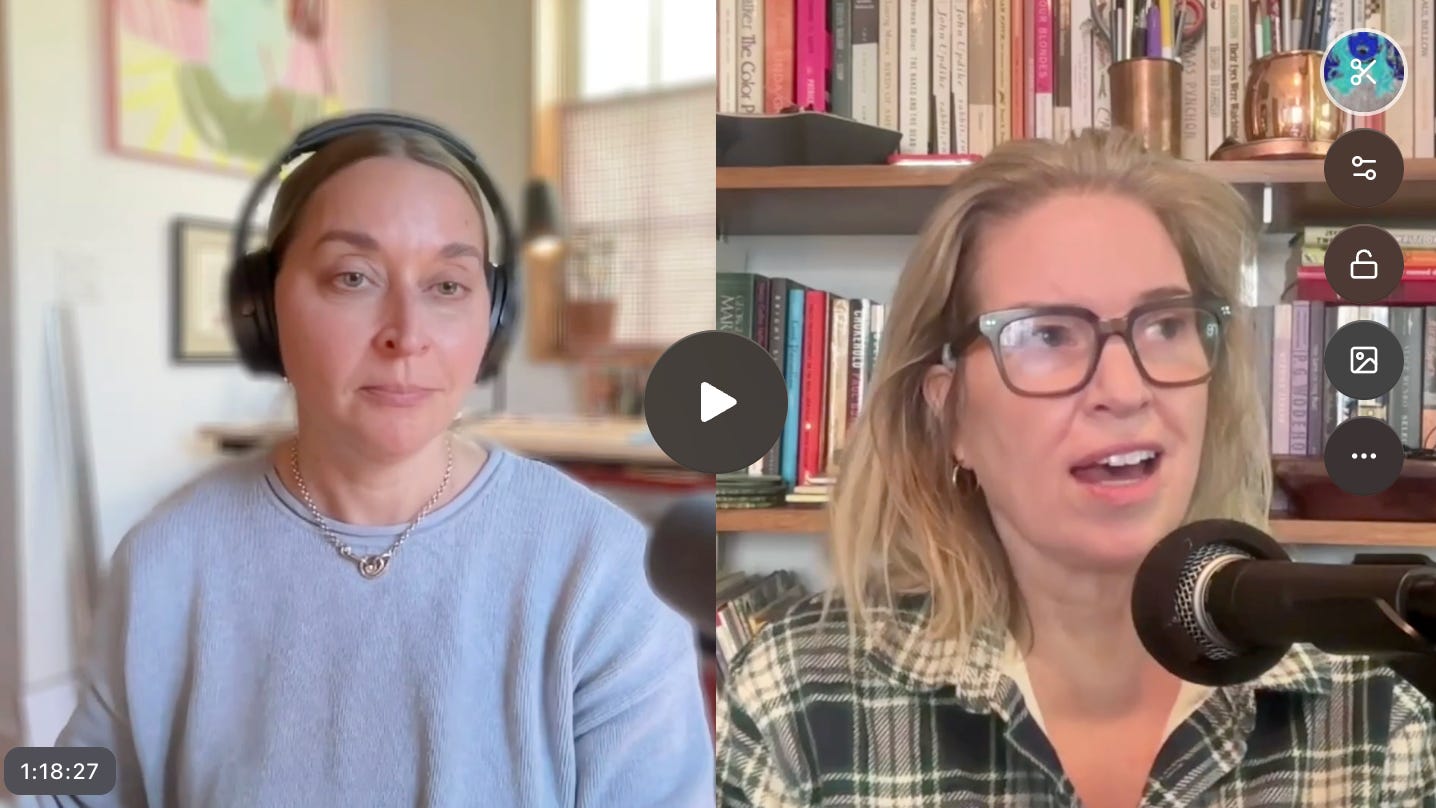
The Paradox of Tolerance
Jan 1901:18:28Tap to summarizeThis week we talk to “What Rough Beast” regular Cy Canterel about fractured realities, fascism’s fatal flaw, and why keeping a diary might be the most radical act you can do right now. She joined us for a live this past week. We discuss:* How the Renee Good murder revealed that motivated reasoning—not actual ambiguity—is fracturing American reality* Why the paradox of tolerance matters now: what does a pluralist society owe people who … can’t handle plurality?* The underground genealogy of the current moment (spoiler: it’s been brewing in evangelical Christianity since the 1960s)* Iris Origo’s war diaries and why putting pen to paper might save your sanity when propaganda becomes a deafening cacophony* The difference between teaching and indoctrination—and what happens when a Mormon girl looks at a map and asks “wait, what are the chances?”* Why fascism is constitutionally terrible at survival (it’s suicidal by design) but also: the body count still matters* Mutual aid, record-keeping, and how to not go insane while toggling between doomscrolling and actually living your lifeThis post is free! But, sadly, the work we do here is not :( Won’t you chip in just a few bucks a month to keep us going? This is a public episode. If you'd like to discuss this with other subscribers or get access to bonus episodes, visit virginiaheffernan.substack.com/subscribe
Transcribe →
On the 5th Anniversary of the Insurrection
Jan 800:50:57Tap to summarizeThis week, on the occasion of the five-year anniversary of the January 6 attack on the U.S. Capitol, I want to share a couple of conversations I had on the first anniversary of the insurrection with Reps. Jamie Raskin and Hakeem Jeffries, and Jamelle Bouie. What you’ll hear are vivid accounts of that day, and you’ll hear about what this seemed to mean for who we are as a country, and where we were (and are) headed. What Rough Beast is a reader-supported publication. To receive new posts and support my work, consider becoming a free or paid subscriber. This is a public episode. If you'd like to discuss this with other subscribers or get access to bonus episodes, visit virginiaheffernan.substack.com/subscribe
Transcribe →
Trump's Godfather foreign policy
Dec 1800:50:13Tap to summarizeThis week we talk to Fred Kaplan, the national security columnist for Slate and author of seven books, including The Bomb: Presidents, Generals, and the Secret History of Nuclear War (his most recent non-fiction), The Insurgents: David Petraeus and the Plot to Change the American Way of War (which was a Pulitzer Prize Finalist), and his most recent, A Capital Calamity, a thriller-satire novel.We discuss:* The Venezuela “double tap” incident — why shooting survivors of a speedboat attack is literally the Pentagon’s textbook example of a “clearly unlawful order”* The end of Pax Americana — Trump may have cultivated the appearance of power at a catastrophic cost to actual American power, and what happens when Europe no longer needs us* Why no one is speaking out — the terrifying silence from military leaders and Republicans who know what’s happening is wrong, and what Trump’s threats against Mark Kelly reveal about the new rules* Trump’s mob politics — how his favorite movie (The Godfather) explains his foreign policy better than any traditional framework, and why strongmen from Putin to the Saudis appeal to him* What comes after — when other countries can finally “go their own way,” the resentment built up from decades of subjugation could leave America isolated and weakenedWhat Rough Beast is a reader-supported publication. To receive new posts and support my work, consider becoming a free or paid subscriber. This is a public episode. If you'd like to discuss this with other subscribers or get access to bonus episodes, visit virginiaheffernan.substack.com/subscribe
Transcribe →