← What the Fundraising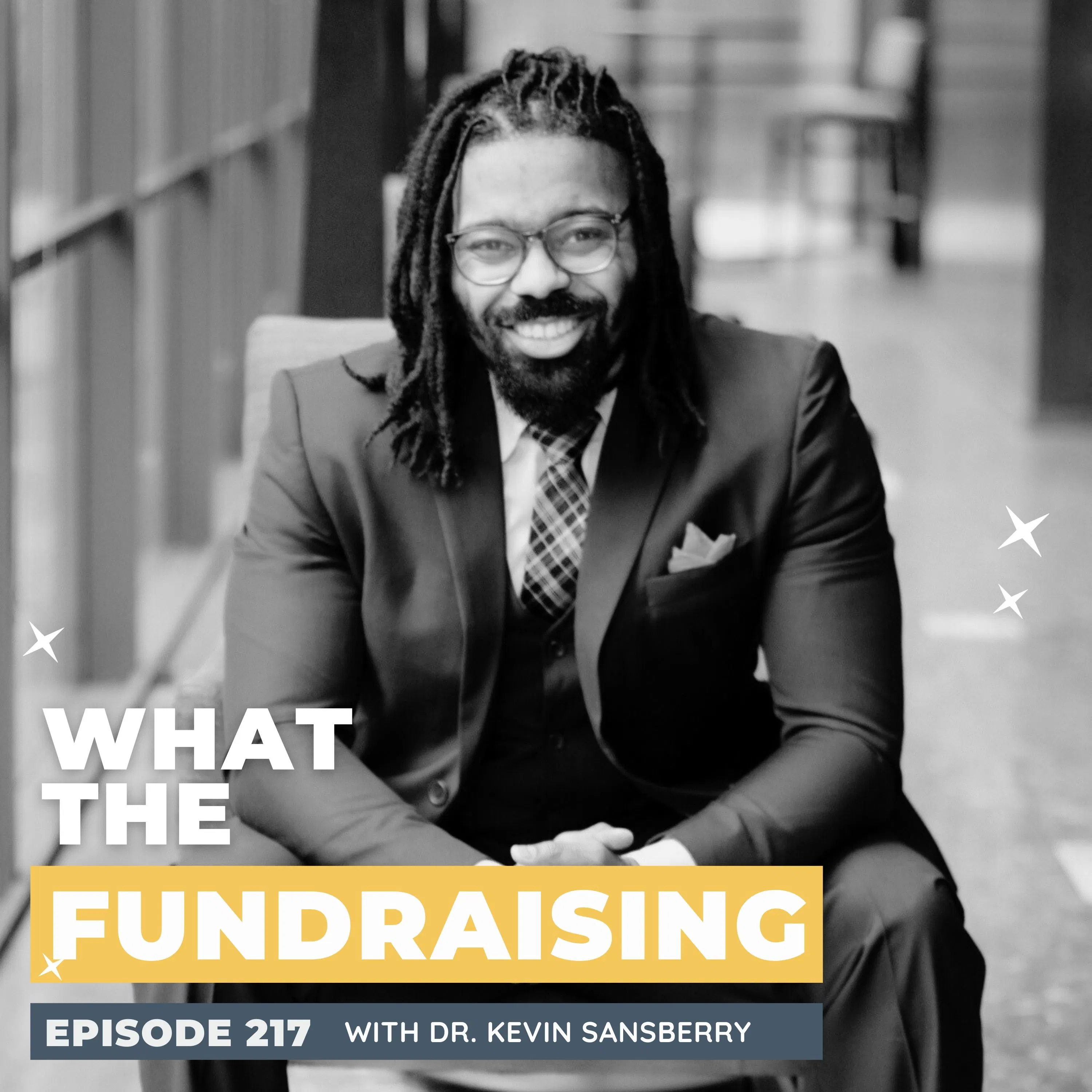
Loading summary
Transcript63 lines
- [00:05]
Mallory
Hey, it's Mallory. Before we jump into today's episode, I just want to give you a name to look out for in 2025. It is rare that I come across a tech tool that's designed to help address fundraiser burnout by actually reducing our overwhelm and making actions easier to do. But I was floored when I saw the magic of Cadenza. So I want you to keep an eye out for that name, Cadenza. Make sure you're subscribed to the podcast and my email because we are going to have some fun analys announcements coming in 2025 and if you just can't wait any longer, you can go check out what they're building@get cadenza.com that's get cadenza.com I can't wait to hear what you think.
- [00:48]
Dr. Kevin Sansberry
But the key is I'm not blaming other people on where how the system got here. That's like, we get too caught up into that and I don't see that as like a solution. So if I look at, like, how am I solving, I'm looking at how do we build collective action? And that's using everybody with their formalized power and informalized power to commit to the change.
- [01:11]
Mallory
Hey, my name is Mallory and I'm obsessed with helping leaders in the nonprofit space raise money and run their organizations differently. What the fundraising is a space for real and raw conversations to both challenge and inspire you. Not too long ago, I was in your shoes, uncomfortable with fundraising and unsure of my place in this sector. It wasn't until I started to listen to other experts outside of the fundraising space that I was able to shift my mindset and ultimately shift the way I show up as a leader. This podcast is my way of blending professional and personal development so we, as a collective inside the nonprofit sector can feel good about the work we are doing. Join me every week as I interview some of the brightest minds in the personal and professional development space to help you fundamentally change the way you lead and fundraise. I hope you enjoy this episode, so let's dive in.
- [02:05]
Welcome everyone. I am so excited to be here today with Dr. Kevin Sansberry. Welcome to what the fundraising.
- [02:12]
Dr. Kevin Sansberry
Absolutely. Thank you for the invitation.
- [02:15]
Mallory
So let's start with you giving just a little intro to yourself. I first got to hear you and hear about your work on the We Are for Good podcast and then you have done a number of incredible things inside social impact in the social sector, and we have a lot to dig into. But give everyone some framing for what brings you to our conversation.
- [02:34]
Dr. Kevin Sansberry
Yeah, so my background originally was in human resources. So that's kind of where I kind of got into the. The field of work, I guess I would say. I've worked in higher education. I've worked in educational nonprofits and focused in on racial equity, diversity, inclusion, and HR. Started my own firm in 2021 where I use behavior science in organizations. And so I work with professional sports organizations ranging from Major League Baseball to municipalities across the United States to tech companies in Silicon Valley, and, of course, nonprofits. And so I love the work that I do, really. Using science, like. Like in your book using science and, you know, psychology as it relates to how do we make, you know, these systems better? That's what I focus on.
- [03:20]
Mallory
Well, I'm. I'm so grateful for the work that you do and the lens that you bring to the work we do. I was saying, you know, before we hit record, that, yes, like, the work that we have a lot of synergy in the way we, like, think about the things we ultimately want, I think, for this sector and the people in it and my lens and in writing what the fundraising was really through that individual lens, because that's where my sort of, like, expertise starts and stops. And I wrote this in the book. But the. The most sort of immediate feedback is like, okay, what does this mean for larger contexts, whether it's inside an organization or at that systems level, if funders were going to adopt it and try to make more cultural shift? So I'm excited to dig in because my. I've been sort of saying to everyone, like, yep, I want to know those things too. Let's find the experts and ask them those things. And so that's how I really feel like getting to bring you here today. So should we dive in?
- [04:18]
Dr. Kevin Sansberry
Let's go. Yeah.
- [04:19]
Mallory
Okay, so first, just for folks who are coming to this conversation with sort of, like, fresh eyes, can you talk to us a little bit about sort of, like, how you think about that relationship between the person and the organization and the culture of the organization and the system, just to sort of, like, lay the groundwork for kind of the layers of transformation we're talking about?
- [04:43]
Dr. Kevin Sansberry
Yeah. So essentially the way we can think about it is I love the person role system framework. And what that does is it looks at people and the person. It looks at our roles as, you know, what we do in these systems, and it looks at the system as well. The reason why I like this and I, you know, steer towards this is because it doesn't ignore the system. A lot of times, you Know, if we focus too much on the individual level, it almost becomes like, and I'm just using an analogy because it feels like blaming the victim in a way to me, where it's like, you know, it's 2024. I was telling off the call, like, there's not a lot of new techniques we're going to learn at the individual level. There are, but what I'm trying to say is we've put so much onus on, like, people to, like, change yourself, when in reality we need to catalyze and, like, inspire these people to change the system. Because the system is, like, the root cause of a lot of the angst that people have, whether it's with fundraising, whether it's in the workplace, et cetera, et cetera. And one thing I'm going to say is there's no magic button you press to say, okay, systems change. You, systems change requires you to work with people, too. So. But what I'm saying is we shouldn't be looking and blaming people at the people level. We need to look at, okay, how can we be gentle on each other and tough on the system together? That's really what I look at as it relates to, like, when I say systems change.
- [06:05]
Mallory
Okay, I love that. And I'm curious, like, how. So it's interesting hearing you sort of say some of that with, like, fresh ears, because. And this is absolutely true for my book, I mean, most of my book, the, the strategies and stuff that I'm pulling together, like, I didn't create and I cite the people who did, or where I read it. Right. It's not new strategies and tools. It might be the first time that people are really applying it to fundraising kind of in this sequence and their experience, fundraising. But to your point, like, yes, like, we don't want to over, like, put the burden back on the people who are suffering from the oppressive systems to be solely responsible for, like, taking responsibility. Right. For all of that, like, systems level change on an individual level, I'm curious, like, okay, we're going to dive into the different pieces of this, but I'm curious, like, how do we, on that individual level, maybe first balance personal accountability in a way that does feel empowering. Because sometimes when we feel like, okay, this whole system is out there and it's not like this line between it's not your fault and you have a role. Right. Like, like, and how do you toe that line?
- [07:22]
Dr. Kevin Sansberry
Yeah, I mean, it's. To me, it's. It's more so, like, let's have a conversation with everyone's both formal and informal power. And we all have a shared commitment to shift the system for the greater good. And so what that does. I mean, because I'm not going to ignore it. There are people who have more formalized power in these systems. So it requires us to bring them to the table. And how can they say, okay, I am the director of fundraising, or I'm, you know, whatever my role is in this system, here's what I can do in my role. Because again, it's person role, system. So you have to utilize your role to shift the system. So here's how I can do that. And so the CEO, all the way down. We all have different forms of power. So I think, like, the commitment has to. That's where the individual level comes in. You're responsible for your contribution. And so. But the key is, I'm not blaming other people on where. How the system got here. That's like, we get too caught up into that. And I don't see that as, like, a solution. So if I look at, like, how am I solving? I'm looking at how do we build collective action? And that's using everybody with their formalized power and informalized power to commit to the change. The problem is we can't agree on what the system needs to be changed or not. We can't agree on it. And the elephant in the room is that a lot of people who don't agree with system change are profiting from the current system. They just not saying it. And so elephant in the room. And so I think, like, being able to have those levels of conversations about, you know, you committed to this, you know, before you got the job, and then you got the job and now you're not doing it. It's like, let's. How do we call that out? How do we create norms where that is a continual conversation. I think that's important, too.
- [08:56]
Mallory
Okay, before we go into that, you'll be like, mallory, I thought we talked about systems. And here you are on the individual level, because I. Okay, yes. I so appreciate what you're saying there. And I'm gonna speak, like, from my. From, like, some of my perspectives, to not call anybody else in or out or whatever, that this. I think about this in my own journey all the time. Right. The things that I say I'm gonna do, the things that I say I care about, and then. Exactly like going against a system. There are so many ways, as a white woman in the nonprofit sector, that I benefit from these systems. And there are times where I notice it and, and change course or do something to make sure I'm opening a gate and leaving it open and shuffling people in. And there are other times where I don't. And what I do recognize it. What I've noticed a lot more in my own work around this is the discomfort, the visceral discomfort that comes from, from stepping out of those norms and giving up privilege. And so in the book, I talk about discomfort and I talk about discomfort coming from, like, our need to sort of understand that discomfort comes from all these different things. Right. Sometimes discomfort comes from being out of alignment, from being sort of manipulated by us as a. Sometimes discomfort comes from holding yourself into alignment despite the fact that there's all this pressure around you or all these sort of societal norms or pressure maybe from your organization that's actually trying to get you to do something else and the people pleaser in you or, you know, wants to do it. And so it's so uncomfortable. And that's the type of discomfort that I feel a lot in my own work around, like, recognizing. So I'm curious, just like, before we go into all of that for those positional leaders, do you have any recommendations around how they grow their capacity around discomfort to really be able to do this?
- [10:56]
Dr. Kevin Sansberry
Yeah, I mean, so first off, discomfort is going to be a normal part of the process, but it's uncomfortable in the discomfort manifests because we're latched on to an invisible system that we got born into and nobody ever defined it. Nobody said you were born to be hyper individualistic. You're going to care about yourself even though you act like you don't. Um, you're gonna go, go and maximize profit. You're gonna not care about, you know, climate or people suffering. Like, nobody said that when you were born, but you were born into a system that elicits some of those responses through people's behavior. And so I like to call stuff out and say, okay, there are invisible norms that exist in society and how can we. Okay, so for the first step is what are the new anchors I want to adopt, like, and so like that. And I'm talking collectively. So in said system, let's say it's an organization. Let's define the new reality that we're going for. Let's call everything out, let's talk about it, what's possible, let's all anchor to this vision. You have to have that. Because it gets way uncomfortable when I feel like I'm not. Because you say, okay, I can buy into, I'm a white woman. And you know, I have certain privileges and I have certain, you know, oppressions and things like that. I can buy into that philosophically. But then when I do it, I feel uncomfortable because I'm not replacing it with anything. What are you replacing? So you're like, basically it's. It feels like you're replacing the unknown. You don't know what you're going to. And so what I'm saying is, okay, before we get into the discomfort, let's just pull everybody to the table. Let's define the new reality together. And so you define the new I'm. And I'm in my brain, I think visually, I think like, let's just get it. What's the new post it note with the new values? The what? You know, we, we know in our goal, we know we want something, we want a better system. Let's define it. And I'm getting whether organizational. Whatever your system is, community. Whatever your system is, define what you're all can like co create that vision together. Because now we all can like say, okay, let's move the anchor. This is our new goal. And then you go back to what I said originally. How can I utilize my power vote, both formally and informally, to move myself there through my actions and behaviors. That's where it gets uncomfortable though. Cause we haven't done that. We haven't talked about what systems came. Where are we going? Where are we going? And so I really stress the need of defining that collective vision and co creating that new reality together as a first step. Because if everybody knows we're going somewhere, that alleviates some of the discomfort. And again, we are gentle on people and we are tough on the system. So that gets us to be tough on the system. Like, okay, let's get tough now because we know we're moving to.
- [13:26]
Mallory
Okay, I love that. How. Maybe this is an impossible question that I'm asking, but how long does a process like that typically take to like, identify that kind of vision? Is that. I know, I'm sorry, did I just shoot myself in my own foot with that?
- [13:42]
Dr. Kevin Sansberry
It's just funny. It's funny because you're like, you're like, we'll give you the time frame.
- [13:45]
Mallory
I know, I'm like playing the role of a listener, right?
- [13:48]
Dr. Kevin Sansberry
And I'm like, it takes like to me, to be honest with you, it's kind of a cycle anyway. Because we're talking systems. These systems that are in place are like hundreds, if not thousands of years old. You know, if we're talking like caste systems that have Been on Earth for, you know, thousands of years. So, like, these systems have been in place for so long, I view it as kind of like what? Like, okay, so here's what. Let me just tell you how it happens in real life. In real life, how that happens is you say systems change and y'all start talking about it. You put up a new post note, what are the things we want? What are we going for? You, you tend to learn your boundaries real quick. And you, you actually, your vision might be a thing, but you say, okay, well, we can only focus on this process or policy or this initiative or this one thing this year, you know, so it's like, it's kind of like you know what you want from a new reality, but you might find out, oh, legal said we can't do this. The board doesn't want us to do that. You know, so then you start getting tapered down and your scope gets a little, you know, you get. Your aperture gets a little smaller. So to be honest, it's kind of like a, A vision any org, any other organization would have. It's an ongoing pursuit. It's just how you address that will just shift on an annual basis. But we all know we're moving from. To a continual thing.
- [15:02]
Mallory
So.
- [15:02]
Dr. Kevin Sansberry
So to answer your question, just very opaquely, it never ends. Because doing one exercise like this is not systems change either. This is orienting the people to engage in systems change.
- [15:13]
Mallory
Okay, okay, well, I love that like sort of ground setting a little bit. And I'm curious, okay, so how much. And maybe that's layered into what you were just explaining. But I think about this relationship between our personal growth and our ability to even have some of these conversations, vision, what might be possible. And so do you find that sort of ads people are at that table or grappling with these things that there are things that they can be doing to. To, I don't know, kind of navigate all the personal stu that comes up. Right. Because it's. What's so hard with. I feel like you were also kind of not calling me out in a loving way about is like the desire to once again fit this in to the way in which we typically do things, which is like, give me the timeline and give me the process.
- [16:05]
Dr. Kevin Sansberry
Yeah, whatever result.
- [16:06]
Mallory
And you're like, lady.
- [16:07]
Dr. Kevin Sansberry
I'm like, hold on. But no, look to that standpoint. That's part of why, like, okay, we're talking systems change. From a systems change standpoint, I wish everybody that's on this call had a therapist for free. Like, I Wish that, but you don't. So like, because if you did, you'd be doing your self work outside of these conversations, right? So you talk about. Okay, so, so with that being said, that's why stuff gets slow. Because what's required is you have to look inward and be like, why am I offended because somebody called me out? Why am I this because of that. Why am I frustrated because I don't have the mic in my hand and I'm the CEO, CEO. Why am I frustrated? As Gen Z employee is giving me ideas and everybody likes it, but they don't like my idea so I get frustrated, you know, like, like why, why are you frustrated? You know, so I've done a lot to unpack at the, at the individual level. And so when we think about systems change, systems change does not change without the people within the system change and transforming. And so what's required is self work along the way. Again, in the way I live life, that's, that's a no. You know, there's no question that I have mental health work and therapy and stuff like that. Just all day, you know, every day. That's part of my foundation. And so what's going to be required in this work is people have to do their own work. You know, I talk about, you know, shadow culture, shadow organizational culture, where on the wall you have your espoused organizational culture values and everybody just assumes because we posted on the Internet, that's a thing and we do this. Well, no, you also have a shadow organizational culture that people really experience, but we don't talk about it. That same thing happens with personalities at the individual level. And so, but your job is not your therapy. So like what I'm trying to say is you, you must do your own individual work, just bare minimum if we're looking at changing a system. Otherwise you're basically going to replace oppression with oppression, which is a cool new name. Like so it's like how do we do our own work? So for me, when I talk about systems change, self work is a prerequisite and it's required like concurrently.
- [18:01]
Mallory
Okay, so when you think about, okay, at the very beginning of this and a little bit before we, you know, got on the call, we were talking about the elephants in the room. Like what are the things that inhibit likely both of these pieces? The like personal work and those conversations at the tables to actually be meaningful and real and not just repeated like fancy packaging for the same crap? Yeah, you know.
- [18:30]
Dr. Kevin Sansberry
Yeah, absolutely. Yeah, absolutely.
- [18:32]
Mallory
So, so can we just like hear, like hear some of those.
- [18:37]
Dr. Kevin Sansberry
Sure. So. Well, first off, give me some, give me some context.
- [18:41]
Mallory
Yeah. So I'm like, I'm thinking about, you know, it's interesting, when I wrote the book, part of actually what I tried to do was name a lot of those elephants in the room from a, from a fundraiser's perspective. Right. They're all these modes of being out in the world that I felt like, you know, where I thought, okay, everybody just talks about building relationships, for example, but they tell you to do so and not be transactional, which means don't talk about money. But somehow you're expected to get somebody's money. And really what you're expected is in 12 to 18 months for them to like you enough that they just want to give you some of your money. And you are building an authentic relationship, but never really talking about your true goal or intentions around the relationship. So it doesn't have actually any of the healthy, like relationships connected elements.
- [19:32]
Dr. Kevin Sansberry
Right.
- [19:32]
Mallory
So like, but nobody talks about that because everybody's just trying to do the best they can. Doing.
- [19:37]
Dr. Kevin Sansberry
Sure.
- [19:38]
Mallory
Right.
- [19:38]
Dr. Kevin Sansberry
Because we're short. We have a short term mentality.
- [19:40]
Mallory
Yep, right, exactly. So there are elephants in the room around, you know, power dynamics when it comes to fundraising that are like. I mean, the first time I did a part, a multi part series on sexual harassment and fundraising, it was like, correct. Like, okay, like, are we going to talk about these things? Are we just going to keep perpetuating the same issues?
- [20:00]
Dr. Kevin Sansberry
So let me elephant that. Okay, so you're talking about, so that's a power. You're talking about power dynamics. Underneath those power dynamics is the elephant in a room of financial instability. Many non profits have limited funding and they rely on maybe a smaller number of donors or they have a unstable business model. So like, underneath the, like the sexual harassment that's happening is not necessarily elephant. That's an outcome of the elephant. The elephant is, y'all ain't got no money. And it's the, you need you. You're gonna keep quiet because you don't have money. That's the elephant. And so when I dig, that's like when we talk about root cause. When I dig deeper, financial instability is on that leader's mind. And so they will put up with stuff like what you just described, because financial instability is the elephant that, that's the undiscussable because people will bring up sexual harassment, but we won't bring up the fact of why did we allow that to occur. You said you're going to have a conversation with this person and it was just some light hearted thing and they're still showing up at events and oh, but they're our biggest donor. That's the undiscussable and that's the elephant. Okay. It's like so like, you know, so like we peel it back and here's the thing, that leader, their goal is to keep the lights on, you know what I'm saying? Like they want to make sure they keep the lights on. I hear that a lot from leaders that I'm coaching. But how can we look for like, once we get to that level of conversation about why we don't address the outcomes like, like you just described like harassment or whatever. Because, because I've also seen racial microaggressions, like racialized microaggressions against black women, for example. I've seen that too. And I'm like, why did you say anything? Ah, well, they're one of our major donors and we're just going to move this person, we're just going to limit their exposure to the donor, whatever. And I'm like, okay, so you know, like that's not the thing. So if we're allowed to have, you know, bring to the table these undiscussables and discuss them, we could probably look at, okay, well, if we know what financial instability is driving us to do, behavior we don't agree with, how can we make progress out of financial or diversifying our, our funding? You know, that's the conversation to have. And so because we have a single point of failure right now, we got to keep this person happy. And da, da, da, da. And you see that a lot. Nonprofits, where I'm not saying the board is ineffective, what I'm saying is, you know, your funding and stuff like that. So that's something you might not want to talk to the board about due to fear of conflict or, you know, or further financial destabilization. Right? So it becomes a nightmare almost. And then what happens? People leave and a lot of women and a lot of women of color and nonprofits have that revolving door where you bring people in and they leave because, oh, it was too hot in the kitchen, they couldn't handle it. No, it was toxic and they left for their own peace. But again, the root cause to a lot of behavior that we allow is the financial instability that we don't discuss, that we don't talk about.
- [22:39]
Mallory
Hey, it's Mallory. I remember the frustration of managing multiple tools, payment processors, spreadsheets, CRMs, all while syncing data manually. It was inefficient. Prone to mistakes and worst of all, created missed opportunities to connect with donors. But now there's GiveButter plus, designed to simplify your fundraising. GiveButter plus reduces tool management complexity, helps you save time, and most importantly, enhances donor experiences. I'm so excited about this because your time should be spent on building connected relationships, not juggling tools. Start your free 30 day trial today@givebutter.com backslash Mallory.
- [23:25]
Okay, so tell me if this is a root cause or, like, coming. There's another root cause that's leading to this. So I'm thinking about, I'm thinking about, like, when I think about that, financial instability. If I were going to go deeper, part of what creates some of that is that the fact there are way too many nonprofits doing way too many of the same thing.
- [23:46]
Dr. Kevin Sansberry
Okay, yeah.
- [23:48]
Mallory
Wait, did I go too far? Or, like, are we allowed to talk about that?
- [23:52]
Dr. Kevin Sansberry
No, no, because you're hitting on that. Now. That might be outside of our scope. If I was talking about my organization, that's outside of the organization scope, but that's something else to think about too, right?
- [24:01]
Mallory
Like, I mean, in some ways it's out of our organizational scope, but, like, you know, one of the things, one of the last organizations that I ran that I sort of did not want to become the executive director of, but did for reasons we had anyways. And then once I was. And I could see underneath the hood, I was like, this model is not sustainable. Like, we were running ourselves ragged. Everybody was underpaid. There were just massive issues. And I was like, I don't think that this organization can keep running the way that it is running. It's too top heavy. And it needed to be for a certain reason for, like, you know, anyways, I. My, like, final big push was to get it acquired. And I found an organization that would take us in, cut, take care of that full, like, top piece that was sinking us. Because they ran a similar model, but they would retain our brand, they would retain our program. And I put it in front of the board. It was in, you know, and they said no. And I ended up leaving because I was just like, to me, it was like everything that wasn't working, it could have been resolved with that partnership. And I was just like, you know what? I don't. I can't do this. That I, like, see the writing on the wall. And they were like, oh, no, you're just maybe the wrong leader. We're going to hire this white man and pay him twice as much as you. And then he Bankrupted the organization in 18 months. But I think about like, it was not my organization. I didn't found it. So I didn't have that sort of like ed like connection, although I had grown it for five years. I cared so deep about it, but I was like, look, if our goal is that this work gets bigger, goes on all these things, then like, it's not about us, it's about like what is going to. But I know that a lot of times organizations are made because of, you know, created because of personal experiences that people had. They're deeply tied to the mission. They want to. They have all their own reasons for why they want to start it. And then they struggle on the financial side of things. And the real elephant in the room is that maybe there isn't a model there that can work. Maybe there are other people doing similar things better. Maybe there are ways that they should combine with other organizations. And if we are not willing to have those conversations, then we keep spinning all those wheels. We keep having that financial instability, taking like letting all these other systems of oppression run wild inside our organization, all because we won't have this conversation.
- [26:28]
Dr. Kevin Sansberry
Yeah, yeah, I agree with that. Yeah, I totally agree with that. And we tend to have, you know, it's called the Endowment effect. That nonprofit got created and we want to keep it alive for. To the detriment of the organization. You know, so it's like because if you were for profit, mergers and acquisitions happen all the time. Like, that's common and in its strategic Right. But what you see a lot of times are that's, you know, these ethical dilemmas that occur where it's like, no, we got to keep this afloat or we got to keep this going this direction, which leads to, you know, like you said, the improper management of funds, which leads to toxic leadership and toxic organizational culture. And basically you are exacerbating, you know, the problem that exists because the staff keep leaving. So how are we taking care of the community? You know, are we really. They have no continuity, you know, so it's like exacerbating the problem. You're not really. Your function is not really helping anymore. So. Yeah, totally agree. I think that's a thing too. That has to be honest. Like some of that elephant in the room is more so like there are some nonprofits that got created for tax break purposes or ego purposes.
- [27:24]
Mallory
Yeah. So, you know, if we be real.
- [27:27]
Dr. Kevin Sansberry
You know, so like, yeah, y'all just doing stuff. Y'all not really doing things effectively or efficiently. You just have financial backing and Y'all are doing stuff, but, like, people are in and out of this place. It's not effective. You don't, you know, you're not reaching your goal that you said you were going to reach. You're blaming Covid or something. Like, you know, that is some people's issue. But I'm just saying, like, you're not reaching your goal. Your model doesn't work. And so I think, like, looking in the mirror is hard to do when it's your job, though. So I do have empathy for that. It is hard to. What you did was awesome. Like, that's, like, that's good. That's great. Not a lot of people would be able to do that, I'm gonna tell you that.
- [27:58]
Mallory
Okay, this is so interesting. And I think this relates to some of maybe what we wanted to dig into, which is this idea of, like, kind of loss aversion and not wanting to lose anything but wanting change. And when I think about some of the things that you said, right. Like, some of why I think they wouldn't let go of the organization is like these tiny little things that were special about the organization were not going to be the same anymore. And but like, the core, the purpose, the mission, that all those things, like, they would have gotten to stay. But yeah, the little, little things were not going to be the same. And maybe those felt bigger to other people, and I'm minimizing them because they didn't feel as big to me. But at the end of the day, I think really what was happening and what happens in a lot of these scenarios is that people don't want to lose anything, but they still want to change. And so I'm curious, like, how you think about this idea of sort of anticipating, expecting, and being able to, I don't know, welcome maybe is way too of a positive word. But like, this idea of loss and letting things fall away to allow for this other vision, this other way. I know you were saying before, like, yeah, well, you don't want to just take something away and have nothing in its place. But even when something was so clearly in this organization's place, they were so afraid of that loss.
- [29:19]
Dr. Kevin Sansberry
Yeah, people are so afraid of loss that they would go against their own self interest. And as intelligent as we are as a species, that's actually one of the most fascinating things I find about us is we have, like, loss aversion is so strong, we wouldn't even go after some benefit. We would. We would ignore benefits to our own self. Or sometimes instead of losing, we would welcome harm. We would sit in harm. We would accept harm. Even if we have evidence that something's harmful to us, we don't want to lose. And so to that standpoint, I mean, my first statement is rewind. We're going to rewind the tape and go back to the self work stuff I talked about. That's, that's important. But second, how can we look not, you know, I'm going to evoke growth mindset here. How can we look at loss? Not as a loss, but as an opportunity to do something new, the opportunity to do something different. The opportunity. And so that goes back to that post it note. What if y'all had a new post it note of, of like, here's what we want to be as an organization. And that move that you brought forth to the board, you tied it to the vision that everybody agreed to. Then we see it as like a path to stuff. We don't see it as a loss because it's only a loss if I'm still attached to that other post it note. It's only a loss if I'm still attached to the old vision or the old what we, where we were or who we thought we were, not who we want to be. And so that's where people feel like it's a loss because they're still attached to the old vision. And so that's why bringing everybody together to say, look, because here's the thing, if you brought everybody together and then the powers that be is like, oh no, there's no problem. There's no change needed. You know what to do. You, you now know. But if you could bring people together and like, the people that work on the, like the grassroots from the grassroots and the people that work from the grass tops perspective could come together and share different things and say, you know, when we think about our vision, we want to be able to like create a new reality. Then y'all did it together. So when you point these things out, it. That's, that's our, that's all of our recipe. We made, we all made that together, board included. People feel lost because they're still attached to the old post it. And I'm using again, I'm using post it notes in my head, like, you know, but people are feeling lost. And so I think like that's important. And then another elephant that occurs in a lot of nonprofits is mission Drift. And you know that Mission Drift, you know, we, we drift away from our core mission and stuff like that. Again, these exercises where you kind of have that collective pause and reflection allow you to identify, do we have mission drift? What's our new mission based on the new market? You can, like, kind of talk about that instead of making assumptions. The elephant in the room here is we have such a hurried culture that all the stuff I'm talking about sound really simple, but we don't do it. And we have a very hurried culture. It's unfortunate that we're so hurried, but we're also so short term. So we're. We're hurry. We're also short term, you know, so, like, we don't really think about the future. We don't really think about the future because we're putting out fires. Right. And so I say this all sounds very simple on a podcast, as you all are listening to it, but I understand that it's hard. And that's also reflected by the fact that you don't see a lot of this pausing or reflecting in common practice. You know, we pause and reflect when we had a critical incident. That's when we pause and reflect. And again, I venture to say pause and reflection ought to be how we operate. Point blank period. But that's just not what it is, and that's a cultural elephant in the room.
- [32:32]
Mallory
Yeah. Well, okay. No, no, I'm so glad you are. It's interesting seeing the overlap, actually. I didn't all call them elephants in the room, but in some of the things that you're saying and some of the norms that I talk about in the book related to, like, how the system is set up, that has lead to. That led to these, you know, beliefs and, you know, urgency at all costs. It's like sort of one of the ways we see that manifest. Right. In fundraising, I guess. Like, I'm so curious. How does. How do we know. Is there a way for folks who are listening to this, who are, like, I'm thinking about, you know, my last staffer board meeting, and I'm wondering if we were talking about the elephant or if we were talking about the manifestation of that element. Like, we thought we were talking about the root cause, but maybe we weren't. Do you have some questions that help people kind of identify what layer perhaps they're at?
- [33:32]
Dr. Kevin Sansberry
Yeah, I mean, there are, you know, common ways to do that. You know, you've probably heard of the five whys is a great technique where you ask, why? Why did that happen? Why did that happen? Why did that happen? That's a really great one to start with. Right. So I think that's a good one. There's Also like again, when I talked about pause and reflection, what we are not really good with is tension in silence. And tension and silence are some of the most biggest flags that you would have in a group meeting. Typically the things that get really tense and the things that we get really silent on are those sensitive areas and those are the undiscussables because we're, we're tense and we're silent. So I'll give you an example on both ends. So from a tension standpoint that you can see conflict arise in when a certain topic gets brought up and it's kind of like a thorn in your body. We're going to do everything we can to build around that thorn. We're going to talk about it. We're just going to build processes, systems, you know what I'm saying? Like, you know, we're going to build around this happy little thorn and the moment you touch it, oh, I'm going off and it's getting really tense and it's getting, you know, so whenever, think back to your non profit experience, folks. If you ever had that meeting where somebody's yelling really loud and they're upset about something and you like dang, this is irrational, you just touch the tinting point. That's a thorn, that and you know, you hit an elephant, you know you're, you know, you know you're there. Okay, next think about your non profit experience. Silence. That, the other one, that's the, the harbingers of elephants. You got silence. All of a sudden people aren't laughing and joking anymore. Here's a good elephant in the room. Sometimes that happened when the Ed walked in the room. The whole climate changes. Your ed's behavior is an elephant in the room. And it's because it's, you know, based on, it's a silence. And so look, the tension and the silence are really great. Like look fors when it comes to group dynamics because that's telling you something. Unfortunately, a lot of our antennas may not be up to see that or notice that. But that's what I look at when I go into rooms and I love pointing it out because I've never fixed something, you know, so, so like they put on their RFP request that we need a culture thing and da da, da da. And I do the culture thing. But then I'm looking for the tension and silence when I get into public and then I'm like, okay, there's something here because that's what I really need to work on. That's the shadow culture. And those are the elephants. So that's. So, yeah, that's behaviorally how I do it. Yeah. So I guess I'll put that there. And then my last thing, I'll say. My last thing, I'll say, this is the behavior. So nonprofits, whether we're talking about the Midwest or on the west coast or on the east coast, where I've worked, they do this thing where they put stuff on the parking lot and then they never revisit it ever again. And on the west coast, we call it the bike lot. So they put stuff in the bike lot, you know, gotta be, you know, e. Friendly, environmental, healthy, you know, but so. So. So there are things that people do bring up sometimes. So there are some people who bring up the elephant in the room. Oh, let's. Let's put that in the parking lot. That's out of the scope of here. And yada, yada, yada. I actually rarely see people revisit that bike lot or that parking lot, like, off, like in the level. It should have been revisited. You know what I'm saying? Like, somebody brought it up in the meeting where everybody's here, and instead of like, like, let's. Let's sit down and talk about it, they instead say, look, we'll follow up with you about your issue. Right. When in reality, that parking lot issue, that one person could have been representing, like, 10 times the amount of people, but they're silent. Right, But. But they follow up with that one person who brought up that thing to deal with them because apparently only they have the problem. But we never talk about it as a group, you know, so, like, that's another elephant in the room piece that happens. But that, that whole strategy is a very divide and conquer way to, like, kick somebody out of the organization too.
- [37:09]
Mallory
So, yeah, to, like, isolate them.
- [37:12]
Dr. Kevin Sansberry
Like, I'm isolating that. Yeah, we're gonna isolate this person. They become othered, you know?
- [37:16]
Mallory
Yeah, yeah, right. Okay.
- [37:19]
Dr. Kevin Sansberry
Who?
- [37:20]
Mallory
All right. Well, I really look for folks who are listening to this. I think, like, throughout the last three years, I've had a lot of experiences where people have said, I can't believe you said that out loud. And I recognize that right now one of my positions of privilege is that I'm not inside an organization that I don't have a board. I don't have anybody telling me what to do. I don't have anybody who. I mean, sure, I have partners who, like, might not want to work with me after I say certain things or, you know, but I think, like, I know there are a Lot of people listen to this podcast who are also in positions like mine who aren't in house. And so one of the things that you're. That. That you are making me, like, remember and that I really hope is that. And this sort of goes back to what you were saying at the very beginning that, like, everybody has their role from their position that they can play in creating change. And I. I think it's a great reflection for everybody to do in terms of where they sit in this ecosystem and where they have power and privilege to say some of these uncomfortable, uncommon things, even to help people realize that, like, hey, that is a thorn. That somehow we've built an entire funding model around instead of just saying, that's a thorn. Right. And I think, like, corporate partnerships are a really important example of this. Right. And, like, where I feel like I always grappled as a fundraiser and still grapple with it as a coach, I teach how to build aligned corporate partnerships. I talk about it in the book, and I talk about, like, I understand that fundamentally there is a question here around whether or not this makes sense, given that the problems that organizations are solving are primarily, like, rooted in the outputs and the outcomes and the downstream effects of what these. Of what many of these companies are doing. And so. Right. There's, like.
- [39:15]
Dr. Kevin Sansberry
Which is ironic.
- [39:16]
Mallory
I know the whole thing. Right. But I just think one of the things that I hope people are also hearing in this conversation is that, yeah, like, it. Maybe it is, you know, maybe it is scary to say it the fifth time, but I will say for me, it was really scary to say some of these things the first time. It's a lot less scary to talk about them now. And I think, like. And not everybody has the privilege to do that. Like, and has the position and has the ability to do that. And so I think for everybody, though, to take a moment of reflection and recognize where they do have power and privilege and access to be able to talk about these. These things. So I don't know if we want to sort of wrap up with something. I know you and I have talked before about kind of the difference between or, like, the way in which authenticity, for example, something that's very regularly talked about in leadership, in fundraising and all these things isn't accessible to everyone. And. Yeah. How do we kind of approach the next steps from each of where we sit?
- [40:15]
Dr. Kevin Sansberry
I used to feel guilty that, like, I wasn't your typical, like, activist kind of person about social issues. I used to feel really guilty. Like. And what I mean by that is, you Know, you see people marking on tv and I'm like, oh, I wish I was that person. And I, I've, you know, I've done it before, but I'm. I have a. I have certain roles that I play in different communities. And I ignored all the stuff I actually do. I ignored all the things I can do through my role, that I have done through my role, through my positionality in said society. And so what I want to say is, your power doesn't have to look the same as everybody else's. Your role is also not the same as everyone else's. And so what that means is, let's say you're a teacher. You know, your role might be in the classroom. Let's say you're a, you know, leader in your organization. Your role might be, what power do you have with your team? Let's say you're working in an Amazon warehouse. Your role might be some social media stuff you do. I don't know, like. But like you, everybody has different ways to engage as it relates to collective system change. Because if it, if we all did the same thing, it really wouldn't be like, you know, you wouldn't change anything because we're all doing the same thing. And there's not enough. There's not room for everybody to do the same thing. There's room for everybody to do their thing. And so, oh, and don't forget, you're a parent. Your role might be the dinner table. You know, so, like, what. Whatever we can think about. We all have something we can be doing to evoke systems change, and that could be learning more about the system that we, you know, when you say the word system, what are we even talking about? I'm sure plenty of people are like, what are they talking about? What's. What system? Yeah, well, you. I don't. That's a good question. What system? Because if it's invisible to you, that's. That's something to think about. And so my point on, we talk about authenticity. And, yeah, authenticity is a very privileged construct, meaning some people show, you know, you and I are both can. Like, outside of the traditional, you know, work structure. We have our own organizations, you know, businesses, stuff like that. So, yeah, there are a lot of things I can say now that I didn't say when I was in the role because I felt like I couldn't say it right. And I did say certain things, but, you know, I held back on other things. You know, I get that. I get that privilege. I'm also a man. I get that privilege, too. And so what I want to say is, do what's authentically right for you at that time. It's very contextual. There's no need to feel guilt or shame in how you modulate, you know, your. How you show up for safety, for, you know, continuity of income, you know, and your limit's going to be your limit. You know what I mean? Everybody's going to have their own limit. And so I think this is one of those situations where I say, you know, though authenticity has, you know, definitely privilege from other people, you know, through. If we compare ourselves to other people, don't compare yourself to somebody else, you know? You know, so as you're thinking about, you know, if I were putting on a piece of paper, you know, what are my. What's my privilege in this situation? What's my power in this situation? Like on the top of the paper, let's cut the paper in half. The top of its power, the bottom of its privilege in this situation. And then I'm also going to cut the paper in half at the top to say informal and formal. As I'm looking at my informal, formal power and my privilege in any given situation, that allows me to develop my plan of action and what I can do and how I can show up. Because we do a lot of comparison about what somebody else does. When in reality, you might have two. Two white women, but one white woman might have family trauma that she walks around with. Well, guess what? Y'all actually show up differently despite the intersectional similarities, right? And so you have to do your own plan of action as well as we think about this work. Because what a lot of people do is they guilt themselves into like, oh, I'm not doing enough. And then they start tokenizing people because they're overdoing it. Then they start, you know what I mean? Then they talking over people of color, and it's like, hold up. You were too much. Who are you? You know, you're not the ally we thought you were. So what I want to say is, do your own work, because you're going to find out your biases, your privileges, your hangups, because a lot of times in stress, some of those things come out. But if you've already done the work to mitigate those things, you lessen the fact of toxic behaviors from manifesting. So do your self work both on the bright side and the shadow side? You will thank yourself later.
- [44:14]
Mallory
Oh, my Gosh, I have 4,000 more questions. But I. I'm so grateful for the way you, like, even as you just broke down that piece, still doing that from the framework of the post it at the beginning. Right. Like I think you really sort of walked us through from that to that in a way that I really appreciate. How can folks learn more about your work, hire you, work with you, tell them all the things.
- [44:44]
Dr. Kevin Sansberry
Yeah, yeah. So I'm, I'm the founder and operator of Kevra Consulting LLC and I can be reached at kevraconsulting.com or you can find me at Dr. Kevin Sansberry on LinkedIn. I post Monday through Friday. You know I'm, I'm always calling out different things. So if you are sensitive to like change, that's I'm not probably not the best person to follow because I talk about, I point stuff out, I talk honestly about things. I have really awesome conversations with leaders all around the country and around the world. You also Hear me on LinkedIn. I have a LinkedIn Live show called Working Wisdom where we do have conversations just like this. And then I also host the Toxic Leadership podcast which you can find on all your podcast streaming where we reach 86 countries and we're, I think we're top 3% podcast in the world but we've been around for a long time so we have a lot of, a lot of followership, a lot of listeners and stuff like that and I thank them for continuing to follow she for listening. But yeah, you can find me at all those places. I'll fly to you any town near you.
- [45:39]
Mallory
Oh my God. Thank you. Thank you everyone. We'll make sure all of those links are in the show notes and stuff too so for can quickly go over follow the pot, subscribe to the podcast, go get all that wisdom. Thank you so much for sharing all of this with us today. I'm so grateful.
- [45:55]
Dr. Kevin Sansberry
Thank you. Take care.
- [46:02]
Mallory
I hope today's episode inspired or challenged you to think differently. For additional takeaways, tips, show notes and more about our amazing guest and sponsors, head on over to Mallorykson.com podcast and if you didn't know, hosting this podcast isn't the only thing I do every day. I coach, guide and help fundraisers and leaders just like you inside of my program, the Power Partners Formula Collective. Inside the program, I share my methods, tools and experiences that have helped me fundraise millions of dollars and feel good about myself in the process. To learn more about how I can help you, visit MalloryErickson.com PowerPartners Last but not least, if you enjoyed this episode, I'd love to encourage you to share it with a friend you know would benefit or leave a review. I'm so grateful for all of you and the good, hard work you're doing to make our world a better place. I can't wait to see you in the next episode. Hey you. I hope you're loving all the free value you're getting right now from our guest. And speaking of free value, I've raised millions in the nonprofit space without sacrificing my integrity or my alignment. And I'm sharing how I did it in my free webinar how to harness the Power of Prioritization to raise more without burning out. Go to mallorykson.comworkshop to register for the free training right now. I cannot wait to see you there.