← What the Fundraising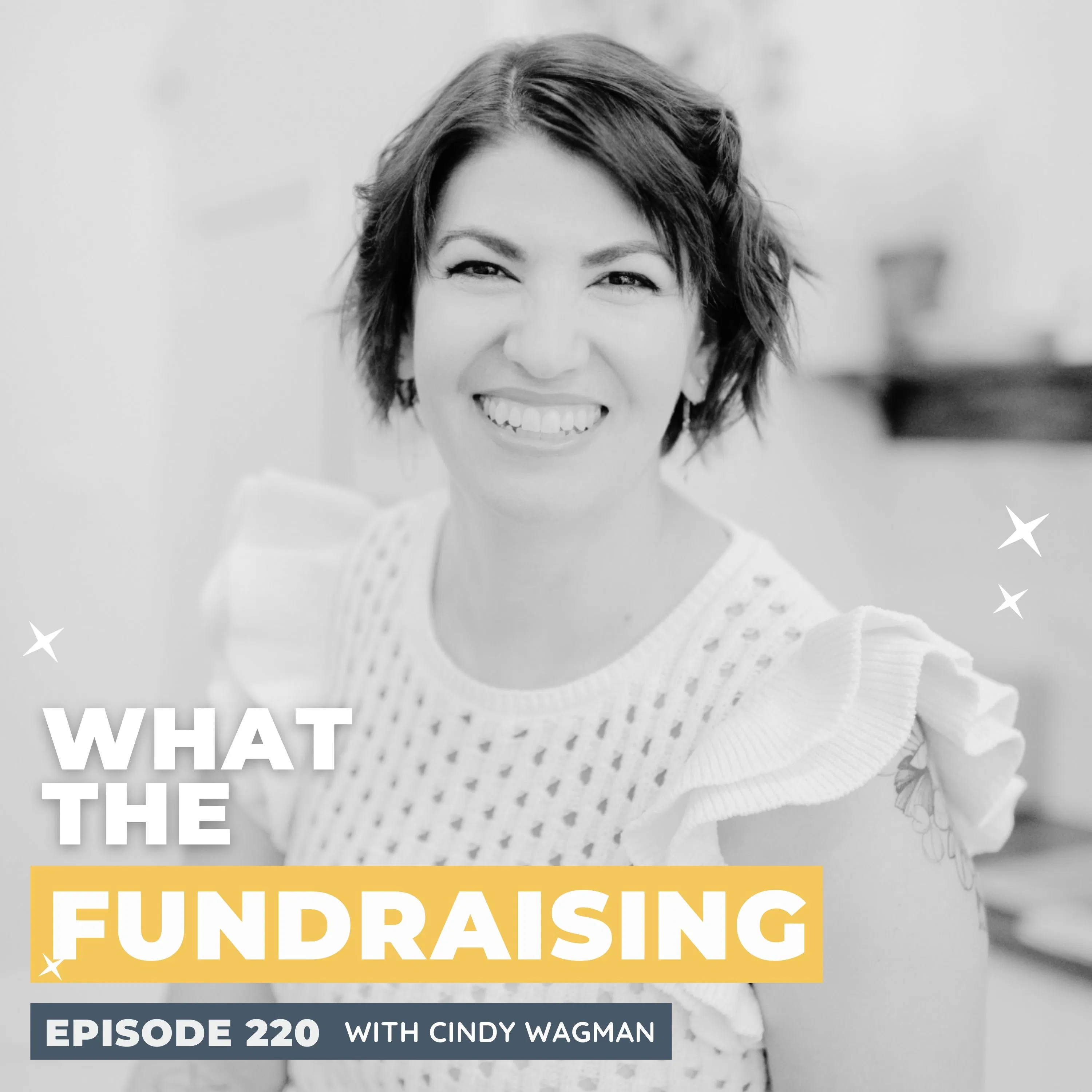
What the Fundraising
220: Redefining Nonprofit Success: Insights on Fractional Fundraising with Cindy Wagman
00:28:22
Loading summary
Transcript36 lines
- [00:05]
Mallory
Hey, it's Mallory. Before we jump into today's episode, I just want to give you a name to look out for in 2025. It is rare that I come across a tech tool that's designed to help address fundraiser burnout by actually reducing our overwhelm and making actions easier to do. But I was floored when I saw the magic of Cadenza.
- [00:24]
So I want you to keep an.
- [00:25]
Eye out for that name, Cadenza. Make sure you're subscribed to the podcast and my email because we are going to have some fun analys announcements coming in 2025 and if you just can't wait any longer, you can go check out what they're building@get cadenza.com that's get cadenza.com I can't wait to hear what you think.
- [00:48]
Cindy Wagman
You need to be experienced. I say seven plus years of fundraising experience. There are consulting opportunities where you can do it without that much experience, and there are lots of different areas where you can go. But if you want to be fractional, you have to have this strategic experience to really fulfill that promise.
- [01:16]
Mallory
Hey, my name is Mallory and I'm obsessed with helping leaders in the nonprofit space raise money and run their organizations differently. What the Fundraising is a space for real and raw conversations to both challenge and inspire you. Not too long ago, I was in your shoes, uncomfortable with fundraising and unsure of my place in this sector. It wasn't until I started to listen to other experts outside of the fundraising space that I was able to shift my mindset and ultimately shift the way I show up as a leader. This podcast is my way of blending professional and personal development so we as a collective inside the nonprofit sector can feel good about the work we are doing. Join me every week as I interview some of the brightest minds in the personal and professional development space to help you fundamentally change the way you lead and fundraise. I hope you enjoy this episode. Let's dive in.
- [02:10]
Cindy Wagman
Welcome everyone. I'm so excited to be here again with my friend Cindy Wagman. Cindy, welcome back to what the fundraising.
- [02:17]
Thank you so much. Love having conversations with you and even better for your podcast listeners.
- [02:23]
So thanks for I feel like this is like in sort of the new iteration of the work that you're doing and so I'm so excited for you to tell everyone about what you're up to, what's going on, and then we can dive in.
- [02:34]
Yeah. So what am I up to? I over the last couple years sort of have been transitioning to focus on the role of fractional Executives in the nonprofit sector. So specifically, I actually teach fundraisers, experienced fundraisers, how to start consulting as fractional executives. But I'm on this broader mission of having these conversations and thinking critically about the role of consultants of human resources in our sector and how we can do things differently in a way that is win for organizations. Specifically for me, small organizations, those are the ones that are closest to my heart, but also to the people who work in them.
- [03:21]
Okay, so there's so much here. And one of the things that I want everybody who's listening to this, if you are not already following Cindy on LinkedIn, you should be, because what we're not going to get to capture today is just, I feel like the way you thread a nuance needle through all of this and really hold the balance, I'm going to be so honest and transparent. For the first time ever recorded when you first started doing this, I had this drop in my stomach at first around, I hate that our sector needs this. Not that fractional executives aren't everywhere and there isn't a role for them. I use them in my own business. I think that's important. But I think part of the problem that you're solving, I wish wasn't a problem a hundred percent.
- [04:02]
In some ways, I think it's growing popularity in our sector is an indication of a broader problem that we're not entirely solving. But I also think it's a yes. And which, you know me, I love a good yes. And I definitely think we should all be talking about how we treat people, how we compensate people. Those are the deeper underlying problems. And at the same time, fractional executives is also growing in popularity outside the nonprofit sector. So there's some other things that I think are still really valuable to organizations where we can pay people well, treat them well, give them time off balance flexibility, and still have a role for fractionals. I'd love to see both. And I think that they, as always, to me, good things uplift good things. So hopefully in the growth of this movement or popularity of fractional executives, we're also shining the light on some of the problems that need to be fixed.
- [05:08]
And I think you do such a good job of that, of acknowledging that and providing a solution for the moment that we're in, which I think is really important for us to be able to hold that balance. We need to address why we are growing this need and also we are growing this need. So let's solve this problem in the organizations that are struggling right now. Can you break it down for folks who Maybe are new to this type of conversation. Can you back up and explain a little bit about fractional and who you think it's right for and maybe who it's not right for.
- [05:36]
I still feel like we're a little bit in the wild west of fractional executives. I've been doing this work for a number of years and worked with probably 70 plus nonprofit fractionals. So I speak from that perspective. But I'm not saying my definition is the only definition. I'd love us to have a shared understanding of what fractional executives are and what they do. So I'll give you mine and hopefully it makes sense to other people. The first thing we think about is what do we need? And then simultaneously, what is our budget? Usually the budget is the biggest constraint and it prevents most organizations, but especially small and mid sized organizations, from. It prevents them from hiring the skill level and expertise they need to meaningfully alleviate some of the stress and responsibility from an executive director. Fractional executives are basically C suite or director level experienced people, but you're basically hiring them for a fraction of their time, for a fraction of the cost. They're not staff, so you manage them. And the relationship around management is different where you're not really hiring someone to just delegate all the work to. You're hiring someone who can be a thought partner with you as a leader, driving strategic direction and implementing the work. Typically we think we're going to hire someone full time in house. They're inexperienced, we have to delegate, we have to teach them. Most organizations, small organizations, typically consulting, we think, okay, someone's gonna come in and give us advice and then we have to do the work. And sometimes that's really helpful. But in small organizations, sometimes we need more hands on deck. Right. And so those are often the options we look at. Fractional is this really beautiful sort of in between. We're not sacrificing the strategic oversight or the implementation.
- [07:41]
And I remember you and I having a conversation about this, I can't remember which one, where that piece around kind of the, the way in which a fractional fundraiser set boundaries or expectations can actually have this really positive impact on the organization, not just in terms of the work they accomplish, but also in requiring that the organization get clear on their priorities. Both of us have been frontline fundraisers, particularly in small organizations. We get the priority list, but every week you also have this other priority. And it can make it just so impossible in that position to take action, to not feel horrible about all the balls that are being dropped. You don't feel like you're in a position to just push back and say, we actually need to get really clear. Because you're like, well, I just want to do whatever is being asked of me to do. So talk to me a little bit about that.
- [08:34]
Oh, yes. So part of how I came to this was from my experience in my early days of fundraising. I so distinctly remember all the experiences I had where I was doing things that were not a good use of my time. I'm a fundraiser. My first fundraising job, I would go to a conference, learn from the best fundraisers in the world about how to write a fundraising appeal, and come back, write a beautiful four page appeal. The chair of the fundraising committee would take her red pen and cross out all the stories. At the time, best practice was four pages was like, this is way too long. It needs to be a page and a half. We need more stats. Like, just flat out wrong. But because she was on the board and chair of the fundraising committee, I was like, okay. And then of course, the board was like, we need to write a letter to Oprah. And I wrote a letter to Oprah. We need out of home advertising campaign to raise awareness about our organization, this small little women's shelter in North Toronto. And I'm like, do we though? But I ran it because for an organization that is so strapped for resources, we often spend a lot of time and resources wasted on things because someone at the top doesn't understand, but they think they do and they're nervous, so they just don't know how to manage fund. In this case, fundraisers, but so many other functions too. And that was my experience very early on. At the time, I didn't have the experience to push back. I didn't have the voice, you know, I don't want to ruffle feathers. I'm talking to these senior people. And so this shifts that dynamic. But I also think role models, as you said, for organizations, how we can get really clear and focus and let go of some of the things that are actually not that meaningful. We need strategy, we need the experience, which is one of the things that's really hard to hire for in smaller organizations because we don't have the budget.
- [10:39]
And not even just the expertise. It's like we need the restraint. In my last role at an organization, once I finally found my version of alignment fundraising, I was working 15 hours a week and raising four times as much as I had been raising at the beginning of that. And it was like, you don't need me full time. Actually, I can raise the whole thing in 15 hours a week. And I was ruthless in my prioritization. Only high impact activities, that can be a hard thing to do when you're a small organization and you're still in that scattered space of like, gosh, I have done everything under the sun from selling chocolate to coffee subscription campaigns. The thing that's really interesting is that a lot of those strategies are our ways of inadvertent, like accidentally fundraising or like inadvertent. Right. It's like we don't want to really ask people for money. So we're going to create this whole way where we get 17% of the outcome of this thing that takes so much time and energy, but we didn't have to ask someone directly for money. And that the fractional fundraising piece flips that on its head, not just because it's somebody highly skilled telling you here are the high impact thing. But I will do that. Yeah.
- [11:57]
Oh, the biggest thing. And you will appreciate this because your book and thought leadership is around what we think and feel about fundraising a hundred percent. Those are avoidance activities that look busy but don't have good results. They don't feel as scary and threatening to us if we're not fundraisers, if we don't have that fundraising experience. So, yes, that comes up a lot. I teach fundraisers how to start their fractional fundraising business. This comes up over and over again. I teach the consultants this because without a doubt, organizations like. But we shouldn't reach out to donors, you know, like mindset out the wazoo. Overwhelmingly, that is one of the biggest underlying problems. Part of what we're seeing in the sector as this human resource problem is that when people leave, we just add more work to the people who are there. We're overworked, we're unfocused, we're trying to do all these different things. And at the end of the day, everyone's trying to avoid fundraising to begin with. And which leads to more and more burnout and a cycle of really wasted money. Because what we spend time on and what we resource. What I saw over and over again is small organizations would hire that junior fundraiser and they'd last for like eight to 12 months because the organization was like, why aren't we raising money while you're selling cookbooks and holiday cards, not actually asking for money? The junior fundraiser feels like garbage because they're not getting results. They don't have someone meaningfully managing lead them. And so that's like eight to 12 months of someone's salary gone with no return. So I saw this cycle over and over again with small organizations and that's how I started doing this work. When I started consulting, I was like, this is the problem I want to solve for. So, yeah, it's very cyclical.
- [14:02]
Okay, so now I'm going to ask maybe an unexpected question. I think the value of.
- [14:11]
Mallory
Hey, it's Mallory. I remember the frustration of managing multiple tools. Payment processors, spreadsheets, CRMs, all while syncing data manually. It was inefficient, prone to mistakes, and worst of all, created missed opportunities to connect with donors. But now there's GiveButter plus, designed to simplify your fundraising. GiveButter plus reduces tool management complexity, helps you save time, and most importantly, enhances donor experiences. I'm so excited about this because your time should be spent on building connected relationships, not juggling tools. Start your free 30 day trial today at givebutter.com Mallory.
- [14:57]
Cindy Wagman
Somebody who's inside a fundraising role in an environment that is not taking care of them or they don't feel like they're able to take care of themselves. The jump to becoming a fractional fundraiser seems very nice. There's many times where I'm like, oh man, I wish Cindy's program was around when I started. I'm like, holy moly, I want that program. We will tell people everywhere they should go if they are in house. Thinking about wanting to become a, you know, consultant fractional fundraiser because you have so many great resources out there and a really cool quiz to help people identify. So we'll drop all those. But I'm curious, I'm curious what you think from your perspective around the changes we need to make inside shops to really be able to identify. Okay, here's a great example of where a fractional fundraiser could take an organization to a particular place and then, yes, your goal is to bring in a healthy full time fundraiser for that role. What do we do to keep those folks in their roles and not miserably? I'm not. My goal is not to keep people unhappy and miserable and suffering in their roles. Of course not. Right. So I'm just curious some of your thoughts there.
- [16:09]
This goes back to the yes. And which is there are organizations best suited for fractional fundraising support. Then there's a lot of square peg and round hole situations. I always focus on who is this right for? Because it's not a perfect solution for all these other issues. The organizations that are going to best benefit from a fractional fundraiser in particular are ones where they have some budget to hire. They're looking at we need to hire someone to help us with our fundraising implementation. But we don't have a budget for a senior level position. Right. So we're probably hiring at that junior level. But our executive director and other leadership don't have fundraising expertise. So there's no strategic oversight of that position. Those two things combined. And usually there's no one else fundraising. Sometimes you can have like a fundraising admin or like, you know, the kind of like general admin who does some fundraising support, donation processing, that kind of thing. Some organizations might have a couple fundraising staff members, but to me, that's a little bit off that core. Perfect fit, really. You don't have anyone doing fundraising. You need to grow your fundraising. You don't have the strategic oversight to make a meaningful investment in someone junior without much experience. That, to me, is the perfect ladder. In my ideal world, it's not a bridge between point A and point B, really a ladder. You're getting the organization to a place where they eventually can hire in house. They have the budget and the resources and the history and track record where they can hire that senior level position without worrying about who's going to supervise them. So that's the sweet spot for me, where fractional fundraisers in particular can really shine.
- [18:17]
That makes a lot of sense. So for folks who are in house or even folks who have been doing consulting, but in a way that doesn't feel really sustainable, there have been so many times where people have said, did you become a consultant because you wanted more flexibility? And I'm like, you have no idea.
- [18:34]
What my calendar 24 7.
- [18:39]
I went from a job where I was doing the whole job in 15 hours a week. So I went from maximum flexibility to actually very rigorous, like building this. And so I'm actually thinking about those folks, like which types of consultant who maybe have been doing it other types of ways. Is this really a great fit for.
- [19:03]
So again, specific to fractional fundraising, you need to be experienced. I say seven plus years of fundraising experience. There are consulting opportunities where you can do it without that much experience. And there are lots of different areas where you can go. But if you want to be fractional, you have to have this strategic experience to really fulfill that promise. So that's the first thing. You have to have the experience it's right for you. If you like the sort of hybrid of strategy and implementation. A lot of consultants and I used to think this was consulting where we give advice, right? I tell you what to do and you go do it. And a lot of people go into consulting. When they're near retirement and they don't want to do the hands on work, they want to just dish out advice. That's great for so many organizations, but often that doesn't translate to small ones. If you're a fundraiser, fractional means you are still doing the day to day work. I think of it as you're a good fundraiser and you don't want to get caught up in the, you know, politics and stuff of, of in house. You just want to show up and do a good job, focus on doing the good work. So that's who it's good for. It is stable. The way I teach it, you work on 12 month retainers, you charge four to five, sometimes more thousand dollars a month per client. So you're fully booked, you're making six figures. You're not constantly doing business development. I'd see a lot of fundraisers or consultants who do project based work or fundraising plans. They often will add something like fractional to their service model just to give them that sort of baseline stability. I have a number of people in our network who do this. They're like, I'm going to work with one or two fractional clients and then I'm going to also do other projects.
- [21:07]
I love what you said at the very beginning around experience because I think it's so interesting in our space. I feel like you and I have both been very transparent about being in the small nonprofit space. I get questions all the time about capital campaigns. I'm like, yeah, I've never run one of those. Really trying to be explicit about what I have and haven't done. We can be curious and have conversations. But I do feel like one of the dangers we're seeing in our sector right now is people going straight to consulting or having one year and some strong opinions and going into consulting and that there isn't a lot of like it. I mean, it's one of the reasons I've been an advocate for coach certification and hiring certified coaches. When you're in sort of an unregulated environment, it can make it hard. And people get burned by consultants all the time. And it's like, I don't want to work with, we don't want to hire another consultant. It's like tech trauma. They're consultants.
- [22:03]
There. If you're listening to this and you're like, oh, I only have one or two years of experience, work in an agency, go work somewhere where you can still consult, get experience. But there is a lot of bad experiences with consultants and I Will say also with the consultants who have 20, 30 years experience too. It is not specific to experience. And I always ask myself, how can I help? Right. Consulting is not just what's in it for me. Yes, it's nice. I get more control over my time. I decide how much I work, how much I want to make, who I want to work with, which is a big one. But at the end of the day, my consulting business is only going to be successful in the long run if I'm actually doing something meaningful for my clients. If I'm building a reputation where people know that by hiring me or my small agency, it's going to be good for them.
- [22:58]
Right.
- [22:58]
It has to be impactful and that's why we all get into the sector. But I do feel like sometimes people go adrift because our sector can work in weird ways sometimes. But yeah, the experience piece. And I'm not saying you have to be 60 years old to consult because that's another big myth. I had that experience that so many people have where I was in house as probably around my late 20s, early 30s and I was in an organization, I was a director level. But the board, we were all like a bunch of old white dudes. And they brought in this other consultant. He basically said exactly what I've been saying. I've been saying this for months. We've had that experience too. I said, you don't need to be 55, 60 years old to consult. I started consulting when I was 35. My older son was about 3 years old and the younger was maybe 9 months old. I started with a fractional client which gave me stability because I needed to make money. I'm a significant contributor, probably the primary earner in my family and I couldn't take risks with that stability that we needed. So you can consult when you're younger, but you have to have the experience to deliver results and impact. Otherwise you're building something on shaky ground.
- [24:18]
Yeah, totally. I appreciate that clarification around like the only bad consultants are not new consultants. But I feel like it's important like just like the self awareness. And it's not even about being bad, it's about being honest about where our expertise is and what we have the capacity to do and not do. And I think one of the things I really like as we're having this conversation is that a lot of people become consultants because they don't like asking people for money. And I always like when people are asking how should I evaluate hiring a consultant? I'm always clear about their Comfort asking for money. Not because in California we have regulations where I can't make direct solicitations, but you'll notice it in certain advice or things like that. If the consultant is afraid or deflecting or suggesting things that are kind of roundabout ways to raise money, that's a sign to me that they're not going to be the empowered shepherd of a fundraising plan that prioritizes the element critical to your success. What I like about the fractional model is that because they are doing the work, they didn't go into this so they can stop actually doing the work. So you have an upcoming conference. This will be the last thing. Tell us about it. People are going to sign up right away. We'll drop the link, but tell me where they should go.
- [25:36]
The conference is called Fractional Shift and it's for nonprofit fractional executives. So anyone who is in our sector who's either running a consulting business doing fractional work, or curious about running a consulting business doing fractional work, fractional fundraising, fractional cmo, cfo, hr, all the things coo, you can sign up at nonprofit fractionals. Com. It's on January 14th and 15th and that leads into the enrollment period for my program called Fractional Fundraiser Academy. And if you go to fractionalfundraising CO Waitlist, you can join the waitlist for that. We enroll people twice a year. I love the program, a community, everything about it. If you're curious, join the Waitlist. We have a private podcast where we interview alumni from the program. If you think this could be for you, sign up. If you want to hire a fractional fundraiser, that's also really important. CO/ inquiry. I have an intake form where I will match your organization with someone from our network who I have trained. So I know that they understand this fractional model in the way that I've described it. I'm happy to make introductions.
- [26:54]
Amazing. Thank you for everything that you do for our sector and all the ways you lift people up. Consultants and fundraisers and organizations. I'm so grateful to have you in this ecosystem and thank you for joining me today.
- [27:07]
Thank you. You also uplift people and champion people and speak for what's right in our sector. Thanks, Mallory.
- [27:20]
Mallory
I hope today's episode inspired or challenged you to think differently. For additional takeaways, tips, show notes, and more about our amazing guest and sponsors, head on over to Mallorykson.com podcast hosting this podcast isn't the only thing I do every day. I coach, guide and help fundraisers and leaders just like you inside of my program, the Power Partners Formula Collective. Inside the program, I share my methods, tools and experiences that have helped me fundraise millions of dollars and feel good about myself in the process. To learn more about how I can help you, visit MalloryErickson.com PowerPartners Last but not least, if you enjoyed this episode, I'd love to encourage you to share it with a friend you know would benefit or leave a review. I'm so grateful for all of you and the hard work you're doing to make our world a better place. I can't wait to see you in the next episode. Hey you.
- [28:19]
I hope you're loving all the free.
- [28:21]
Value you're getting right now from our guest. And speaking of free value, I've raised millions in the nonprofit space without sacrificing my integrity or my alignment, and I'm sharing how I did it in my free webinar, how to Harness the Power of Prioritization to raise more without burning out. Go to Malloryerickson.comworkshop to register for the free training right now. I cannot wait to see you there.