← What the Fundraising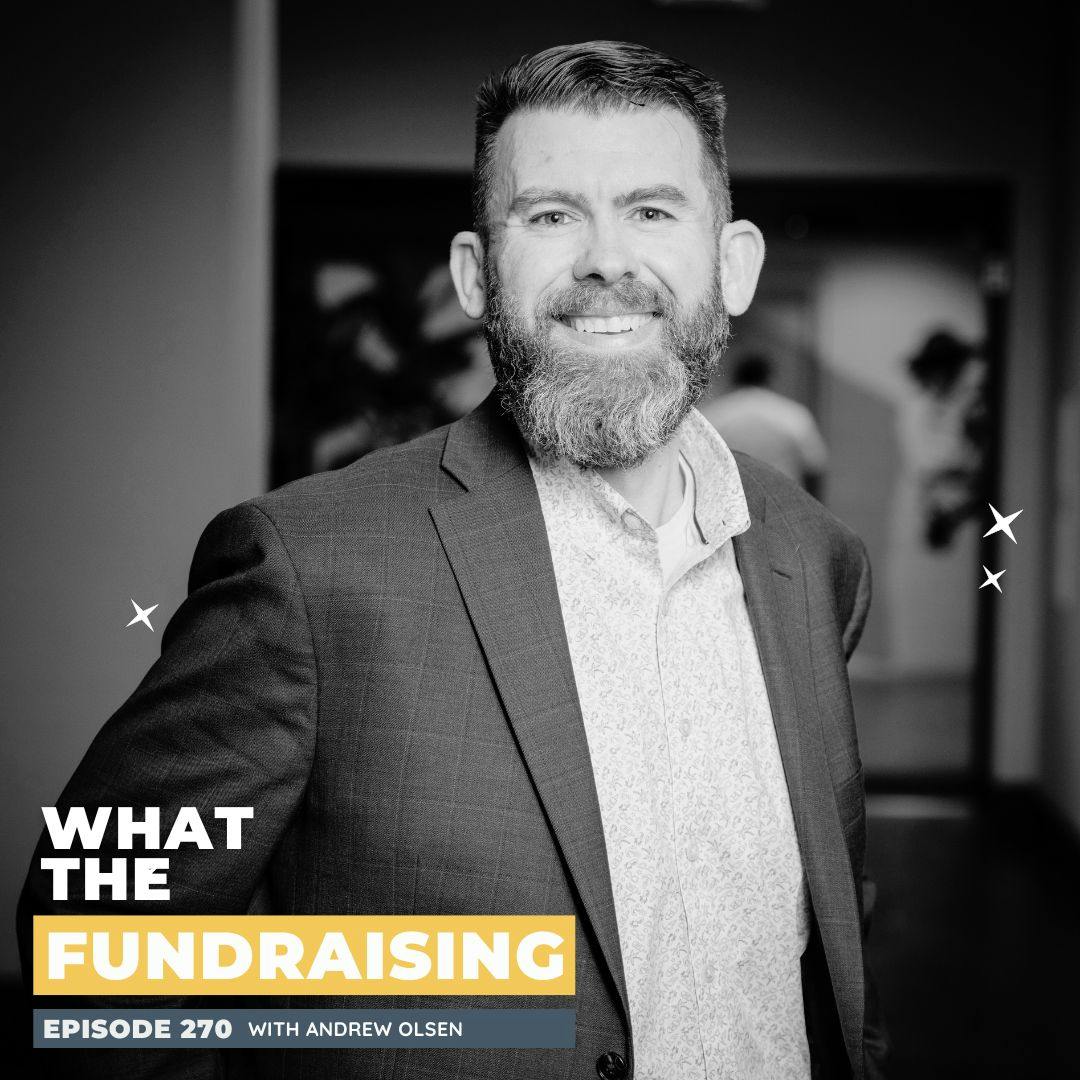
What the Fundraising
270: The Cost of Standing Still: Rethinking Change in the Nonprofit World with Andrew Roger Olsen
00:25:35
Loading summary
Transcript38 lines
- [00:00]
Andrew Olson
Foreign.
- [00:04]
Mallory Erickson
This episode is brought to you by our friends at Zefy. I have been excited to learn about Zefy and what a game changer it has been for so many organizations. Plus, the platform is 100% free. They even cover credit card and transaction fees. You can set up donations, sell tickets, and manage your donors all in one place. And it only takes 15 minutes to get started. Start fundraising today at Mallorykson.com backslash zeffy that's Malloryerickson.com z e f F Y.
- [00:39]
Andrew Olson
We're going to make it harder on our people so it's easier on us in the budgeting process and so we don't have to fight fights that are uncomfortable and not realize just how detrimental that is. Not just to our ability to accomplish mission in the immediate future, but our long term growth. Because that's one of those ways where somebody goes, you know what it's really like. I love our mission, I love what we do, I love my colleagues. But it kind of sucks to work here. It's really hard. So I'm going to go do this very same thing somewhere else where they actually have vision and budget.
- [01:13]
Mallory Erickson
Hey, my name is Mallory and I'm obsessed with helping leaders in the nonprofit space raise money and run their organizations differently. What the Fundraising is a space for real and raw conversations to both challenge and inspire you. Not too long ago I was in your shoes, uncomfortable with fundraising and unsure of my place in this sector. It wasn't until I started to listen to other experts outside of the fundraising space that I was able to shift my mindset and ultimately shift the way I show up as a leader. This podcast is my way of blending professional and personal development so we as a collective inside the nonprofit sector can feel good about the work we are doing. Take join me every week as I interview some of the brightest minds in the personal and professional development space to help you fundamentally change the way you lead and fundraise. I hope you enjoy this episode, so let's dive in.
- [02:07]
Podcast Host
Welcome everyone. I am so excited to be here today with Andrew Olson. Andrew, welcome to what the fundraising.
- [02:14]
Andrew Olson
Thanks Mallory. I'm so excited to be here. It's great to see you again. I'm looking forward to our chat.
- [02:19]
Podcast Host
Me too. Let's start with you just telling everybody a little bit about you, your background, your work and kind of what brings you to our conversation today.
- [02:27]
Andrew Olson
Sure. Professionally, I'm the Executive Vice President of Fundraising Solutions at Dickerson Baker. We're a consulting firm that serves nonprofits and ministries all over the world and I lead some of our fundraising work. But I've been doing this for 25 years. I've worked both inside a children's hospital, leading development, but also as a consultant to all sorts of different organizations, different shapes and sizes. Personally, I live on a little family farm in Knoxville, Tennessee. You might hear a rooster outside as we're talking because it's a real thing. And my wife and I are raising three girls and trying to teach them resilience here on the farm.
- [03:00]
Podcast Host
I love that. And I feel like you and Nathan Chappelle need to have some, like, farm animal content collab.
- [03:06]
Andrew Olson
Nathan is going to be out here sometime in September.
- [03:11]
Podcast Host
Amazing.
- [03:11]
Andrew Olson
And we're going to spend a day together. So. Yeah, I just saw him last week at Bridge and we chatted about lots of farm animals.
- [03:19]
Podcast Host
Yeah, I love that. Well, there are so many different things we could talk about today, but I feel like we're in this moment right now in the sector that is calling us all to be more. I love what you said about, you know, your girls on the farm and resilience. And that's word I've been thinking about a lot as our sector has been under a lot of additional pressure this year. And I want to talk about change and culture and what are some of the things that are getting in our way and what can we do about it? And just to sort of frame this up maybe one step further. I feel like it's so interesting, the tension around change in a change making sector. Like, I just, it kind of like makes me pull my hair out sometimes where, like, we are responsible for being the change makers. We pride ourselves on being change makers. We, we are working to do things that have never been done before, to solve problems that have never been solved before. But then when you get down to the nitty gritty of changing our behavior, our strategy, our tactics, we freeze up. And so I'm curious, like, from your perspective, like, why can't we reconcile those two pieces of who we are?
- [04:33]
Andrew Olson
I have so many thoughts on this and I'm so glad that this is what we're talking about. So my snarky response is that I feel like there are a lot of people who've made it into middle management in organizations who believe that their title is Director of Stagnation. Right? Because it's like there are so many great ideas that go into a vortex and just get stalled, but when we actually peel back a few layers. And so our firm studied this over the last two years. So two years ago we did a study where we talked to a couple thousand nonprofit leaders and development leaders and actually like Iran, kind of covered the spectrum of roles that we surveyed. And one of the most interesting findings that we had in 2023 was that the majority of C suite leaders and frontline development folks in a variety of roles said, we know we need to change and we actually know the things that we need to change. Like 87%, some ridiculously high number. There was a ton of agreement. But then what shocked us was that like two questions later they said like over 60% said, but we have no plan to change. And so we thought, well, wait a minute, that's also a really high, like it's, it's a majority, right? Why is it that there's such a high recognition for the need for change and yet such a high barrier? So in 2024, we rolled out a study where we specifically asked more questions about change. And we did two things. We did a standard survey, but then we left a lot of space in that survey for open ended feedback. The things that impede change in organizations, according to the survey findings that we have, are not going to shock you, right? People said to a very high degree, we don't have the budget for change, we don't have the technology or the capacity to leverage technology internally to effectively manage changes. And our people are burned out and there's too many things going on, too many priorities. So like, we just can't get to it. And then we also heard a lot of talk about either lack of communication or poor communication across organizations that stymied change. And none of these are surprising, right? You didn't sit there and go, oh my goodness, I can't believe they said that, right? You're like, yeah, of course it's those. As we peeled back and asked people to talk more about it, you know what, what we found is that there's actually a really high level of agreement on certain things that need to change within organizations. But a lot of it comes down to the prioritization, right? So I was a little bit shocked that CEOs said things like, my people are so busy, they're doing too many things in. My natural response to that is like, and you're the leader, you get to set the tone for how many things get done, right? And so, you know, I'm looking at this saying, so many people in leadership need to take a different posture, right? And maybe these are going to be some unpopular statements, but just going to make them like, as leaders, if we are not setting the tone and saying, well, wait a minute, don't do the unimportant things so that you can do the things that are critical. That's our fault. That's not the fault of the employee who has no agency and can't make the decisions, can't change direction. Like, that's purely a leadership issue, right? If we're saying, you know, our people are so overworked, they're taking on too many things, okay, well, as the leader, you set the framework for that, right? And so I feel strongly that a lot of this sits on leaders who are either allowing their people to take on too much and not reining things in or who are simply putting too much on their people. Right? And it's one thing to say we have high expectations, we do a lot of work. You know, we get a lot done. But it's another thing to say those things and then to also say, and burnout is critically high in our organization, and we're losing people every 12 months and we can't retain staff. Like, those two things have one reason, right? It's purely because of leaders not showing up. Well, and not taking the initiative to say, we're going to stop the craziness. And then the technology piece, like, we've all seen it. You and I were laughing about this before we came on camera together, right? The poor nonprofit organization who's, like, on Windows 7, still trying to get things done in a world that has leaped ahead of them by 20 years, but they can't get the budget to update their computers, right. Or they're working in a CRM that doesn't allow them to do anything that they need to do because there's not been any. Any expenses budgeted for growth and development in the tech space. Or if they did, let's say they bought it nine times out of 10, they didn't buy training, right? And so, like, from where I sit, so much of that, again, is about we're making fast decisions, but not necessarily right decisions. And I think that we need to step back and say, well, wait a minute, if we need to get better in this area, we have to fund these things. We have to fund them to an acceptable level, and we have to prepare for. For our people to have a certain level of training and development expectation. So if we're gonna fund a new CRM, we've gotta fund training or we're gonna be in the same boat that we were when we had the old CRM and we're not gonna be able to use this effectively, right? So these things are all leadership decisions. And I feel like One of our biggest challenges is we've not equipped our leaders to make those difficult decisions in a way that actually advances our mission.
- [10:10]
Mallory Erickson
Okay.
- [10:11]
Podcast Host
There's so much here. I was just taking some notes because there's a few, like, kind of through lines that I feel like I'm hearing and what you're saying and I want to say them back and hear if you agree or if there's like something else here. One is that like underneath all of this is just the lack of value of our time. Like our time, our team members time. Like if we think it's less expensive to not buy a new computer than to have our staff members struggling at spending 15 hours doing something that should take two. Like, to me, that is just this like really undervaluation of human costs.
- [10:53]
Andrew Olson
Yep. And I, I put that squarely on the board. Right?
- [10:57]
Podcast Host
Yeah.
- [10:57]
Andrew Olson
Here's the conversation that happens. I've already that human capital is a sunk cost. I already went through the fight to get the budget for that. So I can make them do whatever at whatever level. And that's better than having to go back to the board and argue for $1,000 for a new laptop or a whatever. Right. And so you're exactly right. We've said we're going to make it harder on our people so it's easier on us in the budgeting process and so we don't have to fight fights that are uncomfortable and not realize just how detrimental that is. Not just to our ability to accomplish mission in the immediate future, but our long term growth. Because that's one of those ways where somebody goes, you know what it's really like. I love our mission. I love what we do, I love my colleagues. But it kind of sucks to work here. It's really hard. So I'm going to go do this very same thing somewhere else where they actually have vision and budget.
- [11:54]
Mallory Erickson
Have you all heard about zefie? I've been excited to learn about this new platform and all they're doing to support fundraisers like you. I recently heard about a fundraiser who used Zephy for an event where normally fees had eaten up hundreds of dollars. Instead, they kept it all. That's because Zefy always covers credit card and transaction fees. So 100% of what you raise goes to your mission. Setup takes less than 15 minutes. If you want to be like the 50,000 nonprofits already using Zefy and have more of what you raise, go straight to your cause. Start fundraising today at Mallory Zeffy. That's Malloryerickson.com Z F F. Yeah, I.
- [12:39]
Podcast Host
Mean, it feels like this. I talk about this a little bit and what the fundraising in a different, you know, I, I say, I like have this quote inside the book that is like, you know, if you think it's uncomfortable talking to a donor about, you know, a disagreement or something like that, you know, you know, before you get the money, just imagine how uncomfortable it's going to be later on, you know, like the money. And so there's like this deflection of immediate discomfort at the expense of so much long term pain. And I just, it's like, so. And do you think that's rooted like from your perspective in this like scarcity mindset? Because it's interesting, like I'm in the, you know, the AI world more now between fundraising AI and practivated. And I'm thinking about so many of the ways in which we're hearing AI talked about, right? Like reducing team, reducing your time to do this, and all about kind of increasing your capacity quickly. Hearing you talk about Windows 7, I'm like, oh my God, we had the opportunity to do this for years, like without AI, just by like updating our systems and we could not find, like that was not valuable enough to us. And so I'm just, what is that rooted in?
- [13:57]
Andrew Olson
Yeah, so I do think a lot of it is that scarcity mindset. But this is also not unique to nonprofits. I think it's amplified in nonprofits. But I see it in the corporate world all the time too. Right. Part of it, I think is that we, we don't teach and train leaders to lead, right? We identify someone who is really good at something and we say, because you're good at that something, we're going to put you in charge of the people who do that something. You may have zero skills and capabilities to lead an organization or to lead a team, and God forbid we invest in leadership development because that's just a cost, right? There's no revenue associated with it in a direct way. So we can't go to the board and go to our CFO and say, spend this $3,000 on training and you're going to get 10,000 out of it. No, we say, well, if you want training on that, that's got to come out of pocket because we're about mission, right? And so we have these people that we've promoted into roles and given a set of expectations and a set of goals, but haven't equipped them to actually get there. Right? And so I think that's a big part of it. I think the other Part from a financial perspective is I've served over a thousand non profits and I think I've met two that have a financial strategy. They all have a finance department. They all measure what comes in the door and what they spend, but the majority don't have a financial strategy. And what I mean by that is these other two organizations, what's unique about them is they, they look at their budget every year in the planning process and they say, okay, this is what, this is what we need to fund operations. This is where we want to grow. But we also know we're going to do some things that aren't going to work this year. Right. We're going to test some new things, we're going to try some things. They're not all going to be successful. So we have to create a reserve capital fund that we can use when some of those things don't work to offset the potential loss. And we also need to fund, you know, growth capital. We need to say we're going to set aside $20,000 to test this other thing and if it works, it's going to make us a million dollars over the next two or three years. So few organizations think about finance in a strategic way. And so because of that, they're like on this hamster wheel. They're chasing every dollar and every reporting cycle. And you know, it's all about what shows on my 990 versus how do I grow this organization. And I think it's an area that, where we're woefully like under leveraged in that sort of financial strategy arena. There just aren't enough really good financial strategists in organizations. There aren't enough C suite leaders who understand finance. Right. I mean, and that's not a knock on them. Think about how most leaders came up, right? They came up through a program role. Right. They weren't likely responsible for budget management, for P and L, for financial strategy. No one said to them, hey, as you elevate into these new roles, we need you to really be good at this. And we also aren't equipping them with staff that know that have those functions and those capabilities either. So like, it's a vicious cycle.
- [16:56]
Podcast Host
Yeah, I mean that was absolutely true for me. Like when I became an ed, like the financial piece was like, without a doubt the most overwhelming where I had the least skills. And I was very lucky to have like a board treasurer who really sort of took me under their wing and spent a ton of time with me building that skill there. And then they Sent me actually through some training programs at a local, like, nonprofit capacity building organization. So I totally, I completely agree with you. And that R and D budget component, to me also just feels so like as we're talking about it, just so basic in a certain way because of course we are going to fail at certain things. And this is the other piece of the leadership thread that you were, that you were talking about before is like, I feel like we have this real tension with leadership in our sector around what we say we want from our staff and what we model as a leader. So I'm thinking about related to things like perfectionism and failure, right? We're like, this is a place for innovation. But then don't tell me what you care about. Show me what you pay for, what you track. Like, how do we get people to sort of like, understand the inconsistencies in what they say they want and what they're ultimately allowing to happen based on the structure and budget of their organization?
- [18:19]
Andrew Olson
Yeah, absolutely. And you know, it's so interesting. So I was talking to an organization recently and they said, you know, we want to evolve our messaging strategy and our fundraising strategy to go from talking about the thing that we've done for the last 30 years to talking about the thing that we do now, which is, is fairly different. Right? And in theory, that makes a lot of sense. It papers out nicely. But when that change causes some donors to say, well, wait a minute, I'm not really in for that thing. Like, that's not the thing that got me here. And so I'm just not going to respond. I'm not going to give it the same level. When it impacts cash flow, all of the vision tends to go by the wayside, right? So unless you've intentionally prepared for it and you understand that there's risk and you're willing to go through it, the likelihood is that you go, oh, wow, that first thing didn't work. Go back to what we used to do, right. And that just keeps organizations in that same cycle. And I think part of that is purely fear based, right? It's leaders who don't want to sit in front of the board and talk about, you know, the thing that failed and be labeled the failure. But also it goes back to finance, right. If you're not building a reserve capital fund somewhere where you can draw down and say, well, you know, if this performed at 15% lower than we expected, we've still got to cover that cost. Right? Very few have that. And we've got into this mentality of Saying we are going to budget to the penny. So if I'm going to raise $2 million next year, we're going to, I'm going to spend $2 million instead of saying, you know what, we need to grow a lot in the next decade, maybe I'm going to raise 2 million, I'm going to spend 1.4 and I'm going to put 600 aside and I'm going to use that to create leverage and growth over the next couple of years so that we get close to where we need to be in a decade. There's such a mentality of like, spend every dollar that you raise every year and that hamstrings so many organizations. Wow.
- [20:20]
Podcast Host
There's so much in here that we could explore. I'm curious, like, for folks who want to take one step forward here that, like, maybe they are really scared to talk to their board about it and, or their staff, like, want to make one incremental change towards aligning what they want with how they do things. Like, what would be your top one to three recommendations?
- [20:45]
Andrew Olson
Yeah. So I think the first one goes back to something you said a minute ago. Before you do anything like this, you have to create a culture that appreciates change. And so the first thing you have to do is do the internal work so that when someone fails, they don't get smacked over the head with a brick because they screwed something up. Right. You have to start to build the sort of the muscle memory in the organization that says failure is about learning and it's not a catastrophe. Right. It's something that we all do and it's acceptable and it's encouraged. Now fail fast and fail as inexpensively as possible, but don't not fail. And so if we don't have that as sort of the foundational understanding in our organization, then any kind of change initiative is probably not going to get off the ground. Because the minute you change one thing and it doesn't result in what you expected, someone's going to get, you know, taken to task for it and the entire organization is going to go, oh, yep, they said they want to change, but look how they responded to Sally. Right. And then you're done. Right. So the first thing you have to do is really work on that. And that's, that's a leadership level thing. Right. Like, that's not something that the average employee can totally adjust on their own. A leader has to come to the table and say, change is important, safety is important in our organization, culture is important, and we're going to do the hard work to prepare for that.
- [22:09]
Practivated Representative
This.
- [22:09]
Andrew Olson
Right? Someone, you know, anyone can surface that conversation and begin the dialogue. But ultimately, the leadership team has to endorse it and. And really embrace it. And it. The board also has to do that. Right? I think beyond that, I would say test small things, right? I. I had a conversation with Brady Josephson recently over at Charity Water, and we were talking about innovation, and he was like, look, there's capital I innovation, but there's also small I innovation, right? Like, not everything has to be swinging for the fences. And so if you really want to build that skill set, start with small things, test little things, learn from them. But don't just test and learn and move on. Like, that's when you have to say, okay, we learned this. Now how do we apply it to our entire business? Right? This thing that we tested and learned from taught us four different things. How do we use those and make sure they spread across the entire organizational structure so that everyone gets value out of them? And then you build on top of that next, right? I think one of the things that we as an industry are really good at, we'll test a bunch of stuff, we'll say, oh, yeah, we learned all of this, and we don't apply it. We don't make sure that it gets rolled out across the entire business, if you will. And I think that, you know, because of that, we also have a lot of leaders who are like, look, I'm tired of testing and innovating and changing because we change one thing and then it doesn't permeate. And we're back where we were a year ago, right? So we've got to get really disciplined about that. And then the other thing I think is if you really want to be successful, I don't care what role you're in an organization, if you don't understand the P and L, you will never be as successful as you can be.
- [23:40]
Podcast Host
Ooh, okay. So much wisdom in such a short amount of time. Andrew, thank you for joining me today and just sharing all of this.
- [23:48]
Andrew Olson
Thanks for having me.
- [23:49]
Podcast Host
Where can folks go to connect with you? Follow along. Yeah.
- [23:52]
Andrew Olson
Learn more from me. Easiest place is LinkedIn. Andrew Olson or Pretty Simple Rebel. I'm there all the time. You can connect with me whenever you can. Also hit me up@dickersonbaker.com it's Baker with two Ks.
- [24:03]
Podcast Host
Yeah.
- [24:04]
Mallory Erickson
Okay.
- [24:04]
Podcast Host
Thank you so much. I'm so excited for folks to get to listen to this and so grateful for the work that you're doing to support leaders in our industry and support change and likewise.
- [24:15]
Andrew Olson
Yeah, thank you.
- [24:22]
Mallory Erickson
I hope today's episode inspired or challenged you to think differently. For additional takeaways, tips, show notes, and more about our amazing guest and sponsors, head on over to Mallorykson.com podcast and if you didn't know, hosting this podcast isn't the only thing I do every day. I coach, guide and help fundraisers and leaders just like you inside of my program, the Power Partners Formula Collective. Inside the program, I share my methods, tools and experiences that have helped me fundraise millions of dollars and feel good about myself in the process. To learn more about how I can help you, visit MalloryErickson.com PowerPartners Last but not least, if you enjoyed this episode, I'd love to encourage you to share it with a friend you know would benefit or leave a review. I'm so grateful for all of you and the good, hard work you're doing to make our world a better place. I can't wait to see you in the next episode.
- [25:22]
Practivated Representative
Fundraising is hard. Every donor conversation carries pressure and most fundraisers are expected to just figure it out through trial and error. That's why we built Practivated, the first ever AI powered donor conversation simulator. Made just for fundraisers. It's a safe, judgment free space to practice your pitch, refine your storytelling, and build the confidence that drives real results for your mission. Because conversations move missions forward, with Practivated, you and your team can practice anytime, get real feedback instantly and walk into donor meetings ready, not rehearsed, but prepared. See how practice changes everything? Try practivated today at www.practated and start building confidence one conversation at a time.