← What the Fundraising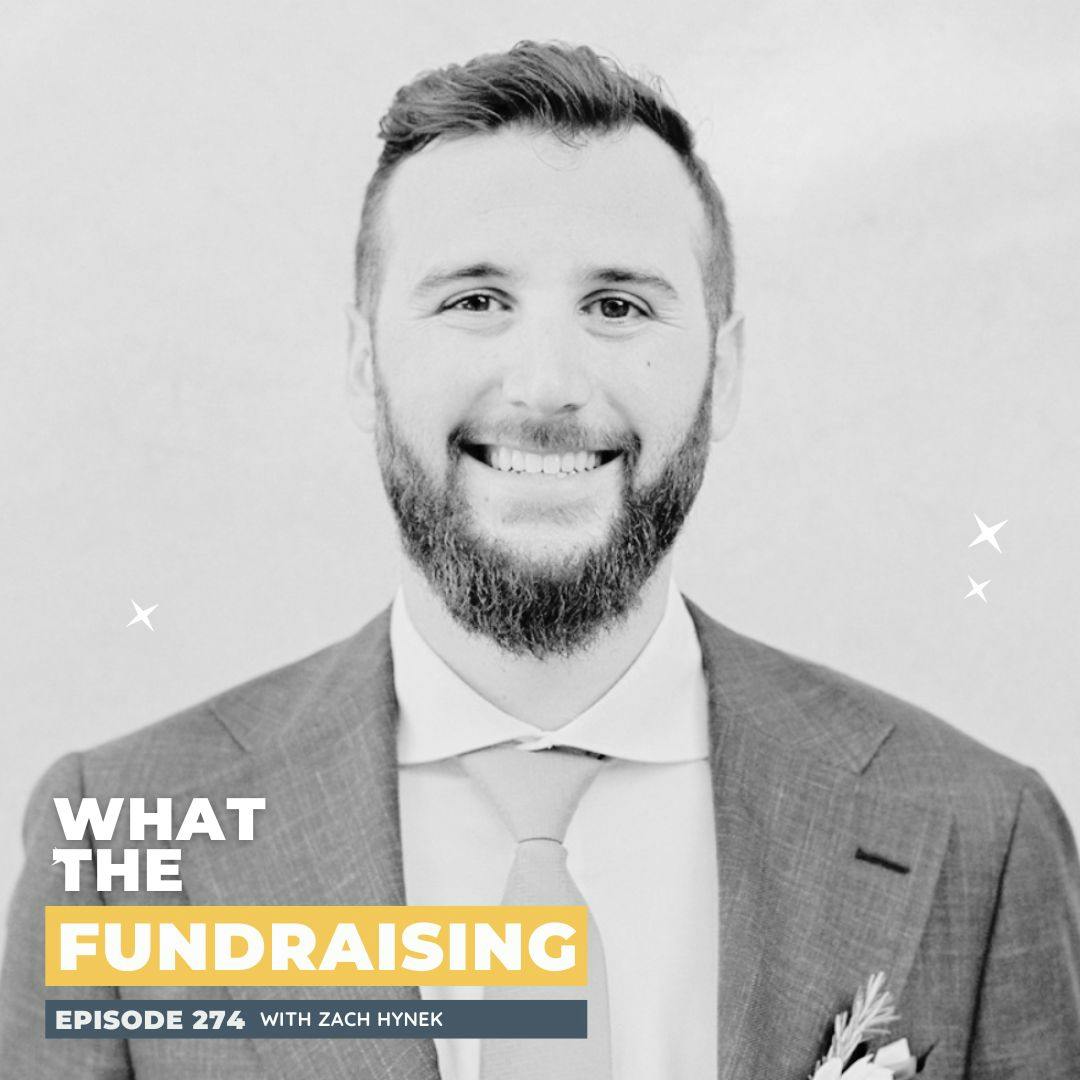
What the Fundraising
274: A New Era of Fundraising: Blending Purpose and Profit with Zach Hynek
00:22:27
Loading summary
Transcript29 lines
- [00:00]
Zach Hynek
Foreign.
- [00:04]
Mallory Erickson
This episode is brought to you by our friends at Zefy. I have been excited to learn about Zefy and what a game changer it has been for so many organizations. Plus, the platform is 100% free. They even cover credit card and transaction fees. You can set up donations, sell tickets, and manage your donors all in one place. And it only takes 15 minutes to get started. Start fundraising today at Mallorykson.com backslash zeffy that's Malloryerickson.com z e f F Y.
- [00:39]
Zach Hynek
There are so many of these funders who they see in ones and zeros, right? And I think that how do we help start aligning some of the story, at least a part of our messaging to that, which is there's a level of financial rigor to that, there's a level of quantitative storytelling that I think is really impactful. And also where I see is things like AI being such a great tool that I see as empowering an industry and sector that finally has an opportunity to do more with less. And then I see there's so many people who want to immediately shun it because we see, frankly, we've been lied to before about positive impacts and things like social media. You know, it's all going to be good and we're sitting around waiting like, where's the positive impact on that side?
- [01:24]
Mallory Erickson
Hey, my name is Mallory and I'm obsessed with helping leaders in the nonprofit space raise money and run their organizations differently. What the fundraising is a space for real and raw conversations to both challenge and inspire you. Not too long ago I was in your shoes, uncomfortable with fundraising and unsure of my place in this sector. It wasn't until I started to listen to other experts outside of the fundraising space that I was able to shift my mindset and ultimately shift the way I show up as a leader. This podcast is my way of blending professional and personal personal development so we as a collective inside the non profit sector can feel good about the work we are doing. Join me every week as I interview some of the brightest minds in the personal and professional development space to help you fundamentally change the way you lead and fundraise. I hope you enjoy this episode. So let's dive in.
- [02:18]
Podcast Host
Welcome everyone. I'm so excited to be here today with my friend Zach Hynek. Zach, welcome to what the fundraising.
- [02:25]
Zach Hynek
Thank you, Mal. It's good to be here. I think last time I saw you we were in California together going on a little stroll with the kiddos. And now here we are, back as we say, pumping vibes into the the ecosphere pumping Vibes.
- [02:40]
Podcast Host
The name of today's episode is Vibes with Zach and Mallory. And we're excited to talk to y' all today about like, Zach has had just such an interesting career in social impact. I'm excited for him to tell you a little bit about that, sort of all the ways that he works to make change in communities and beyond. And then we're going to talk a little bit about kind of like what it takes to show up in that way. And we want by the end of this episode for you to feel motivated, inspired, sort of recognize all the different tools and options available to you because we know that this is a particularly hard time. So, Zach, take it away. Tell everybody a little bit about you.
- [03:19]
Zach Hynek
Yeah. So I guess if you do hear a new dad is first as I'd start it. And we're on dad duty right now. So if you hear a little cooing in the background, it's not to be alarmed. I'm not like smuggling hamsters or anything. This is a real baby that we have that you might hear in the background. But beyond that, I've been spending the last few years, just right now, getting my MBA at the University of Chicago. I've started a few different kind of new ventures. Whether that's on the social impact side or if that's on the, if that's not going to be the most exciting or worst part of your day of hearing this baby cry in the background, we'll roll with that too. But as we started out these new ventures as well, it's also been juggling, I'd say becoming a first time dad, going to grad school, and also just trying to think about how can we be able to find right mission and alignment that resonates not only with the world and solving the most problems and creating as large of an impact as we can. Whether that's the nonprofit sector, a lot of STEM driven organizations that we help support. And I think for us right now it's really just how can we help people navigate a lot of the changes and turbulence, but also talk about some of our favorite topics which are fundraising and how can we best get the resources and access to the help that we need to be able to do our best work, I think is the mission that we're most centered around and aligned with today.
- [04:44]
Podcast Host
One of the things that I feel like why we've always felt like in sync with each other is I feel like we have a North Star around like the impact that we want to make. But we're not overly Committed to the way we're going to make that impact. And so, like, that feels very true for me too. Right. I want to improve the lives of fundraisers. I want to change the way that money moves in society. And so I will try different models, different strategies in order to be able to do that, which led me to practivated, which I would have never expected. Expected. Right. But I just want to solve this problem. And I feel like you're really oriented towards that too, making a positive impact. You have a lot of areas you want to make that in, and then you are open to the journey that gets you there and trying different things to achieve that. So tell me a little bit about that. Like, sort of how you think about your orientation around impact and like, what keeps you going when you try something that, like, doesn't turn out the way you wanted it to.
- [05:40]
Zach Hynek
Yeah. So I think there's also this blend between a new phrase. I think it has been around, but it's the social venture, it's the social entrepreneur. People who are actually starting for profit businesses and entities with the sole purpose in mind of completing a mission. And I think one thing that I've always been, I say, a big fan of is I've seen the access that I think having resources and capital can be able to give you. From getting to serve on the board of a family foundation that was started by my grandfather back in 2001, that he was able to donate a large portion of his wealth too, to be able to just create good in this community. So while I say that was also the kind of underlying theme that we've really faced up until this point, I know I've always wanted to be able to, as I'm thinking about how do I be able to not just create the most good on our side, but also to be able to, you know, actually think about it from a perspective of how can we pay ourselves a living wage and actually be able to put food on the table for our families? And I think when we think about supporting the nonprofit sector, I often call it one of the most under resourced, underutilized, and sometimes just undervalued kind of sector within our economy? And I think how can we be able to not just be able to think about things such as unrestricted grant giving, how do we think about things of supporting the operations that actually get the mission completed? I think oftentimes that comes to fundraising and that comes to at least telling your story in a way that we often talk about from a grant writing perspective. We say funders are still looking for an roi. That ROI is just really a return on impact as opposed to return on investment. And we're seeing more and more of people really want to be able to fund not just scientific research, but also can be just funding great organizations. Also great for profit startups that are helping tackle a problem that has a good and positive outcome, but isn't exactly specific to just exactly charity work.
- [07:47]
Podcast Host
I feel like he has a lot to say about this.
- [07:52]
Zach Hynek
Podcast.
- [07:55]
Podcast Host
Yeah, I think that is, you know, you're in business school. I never went to business school. And I think one of the things I never really considered when I was starting out was like thinking about the different structures of money and investment and pathways to making change. And I do think 20 years ago it also felt a little bit different. It was like you went to business school if you wanted to make money. These are the nonprofit sector or, you know, the public sector if you wanted to do good. And I love like sort of that zooming back out because there are so many different ways and so many different models and so many different types of leadership that ultimately lead towards like, impact and change and, and thinking through, like, how does, how do you move money to even empower, like, and enable that type of thing? I'm curious. This is not what we said we were going to talk about, but now I'm here, so here we are. One of the things that I remember when I first started to like, learn more about business and the startup world after, you know, a career only in the nonprofit sector, and this was maybe like 10 years ago, five years ago, when I really first started thinking about this and I started to learn about how startups fundraise and how they either they set a goal for their raise, how much money they need to do X, they either raise it or they don't. They don't raise a tenth of it and then still do it anyways. It's so different than nonprofit fundraising, right? Where we're like raising a little bit here to keep the lights on to do this thing. Like, it's just such a different mindset around, like, clarity of like, it's going to take this amount of money to do this thing, and if we don't get there, we don't do it. And I'm not saying that the nonprofit sector should like necessarily adopt that completely, but I do think there's something really interesting about that sort of mindset and the rigor that it takes to be clear around what you need for a certain phase of development in what you're working towards and also the probably like really hard boundary around like, wow, build enough interest in this thing or we couldn't find the people or we couldn't build the messaging. And so we have to do this differently or we have to start over. Because I just worry about that like slow burn that nonprofits are always facing. Right. And like the, you know, okay, we, yeah, our goal is to raise a hundred thousand dollars to do blank. We raise 20, we're going to do it anyways. I'm worried about like the message that sends to donors, but I'm also worried about the message it sends to the organization that like do more with less consistently. And I'm just curious, like, how do you like, what do you think about that? Have you ever thought about that? Big difference in fundraising.
- [10:46]
Zach Hynek
Sometimes it's also like just to equate the for profit sector or when you call fundraising sales, it's like the dirtiest word that you can be able to speak on and say. And I think we think a lot about just especially you do on your side. It's almost whether it's the psychological impact of fundraising and donating or whether it is how do you help align the right incentives, which is just behavioral economics, which is principles that they started coming out with even out of the University of Chicago. And I think those are some of the topics that why are we so afraid to adopt, like successful strategies that we know are proven to work, especially when we know our mission is to be able to do usually more often than not good in our sectors and whatever our unique mission purpose is. I think there's so much that we could be able to actually adopt from. I don't want to just say the for profit structure, but just working with some of our great business schools and universities and behavioral economics and sociologists who have been studying a lot of these topics of how do people act, why do people choose to donate? Why do I choose to make a purchasing decision? Because at the end of the day, I'm exchanging dollars one way or another. And I think it's something that until we get a little bit more critical on ourselves of how do we actually capture and quantify the results of our programs, the impact. Because when I think about fundraising from even a business perspective, you're talking to investors, you're talking to people who went to business school who think in spreadsheets. And I know we also love to emphasize the qualitative and the story and the human part of it. But there are so many of these funders who they see in ones and zeros Right. And I think that how do we help start aligning some of the story, at least a part of our messaging to that, which is there's a level of financial rigor to that, there's a level of quantitative storytelling that I think is really impactful. And also where I see is things like AI being such a great tool that I see as empowering an industry and sector that finally has an opportunity to do more with less. And then I see there's so many people who want to immediately shun it because we see, frankly, we've been lied to before about positive impacts of things like social media. You know, it's all gonna be good. And then we're sitting around waiting, like, where's the positive impact on that side? So that's where I see that balance of like a true, like free market capitalism society that we are watching. Okay. It doesn't seem to be working always, especially in the favor of the little guys right now. So to me, nonprofit usually does help fill that gap. Who are the people left behind? Who are the people that aren't on the forefront of who's going to make me the most money? But there's a lot of funders and people who want to support founders like myself who are trying to build tools and trying to be able to do things like my company now, Morton Labs, which is saying, hey, how can we help take some of these tools and help organizations fundraise more effectively, tell more data driven stories and actually apply for grants, whether that's on a federal level or, you know, individual giving level, it's maybe often just about finding that alignment. And as opposed to having to search the whole Internet yourself to find high impact funders like now we have tools that can go do a lot of that due diligence for us and find alignment to then book you the in person or human meeting. And it's still, I think, those relationships that are going to take center in this next chapter.
- [14:16]
Mallory Erickson
Yeah.
- [14:17]
Podcast Host
Wow. Absolutely.
- [14:23]
Mallory Erickson
Have you all heard about zefy? I've been excited to learn about this new platform and all they're doing to support fundraisers like you. I recently heard about a fundraiser who used Zephy for an event where normally fees had eaten up hundreds of dollars. Instead they kept it all. That's because Zefy always covers credit card and transaction fees. So 100% of what you raise goes to your mission setup takes less than 15 minutes. If you want to be like the 50,000 nonprofits already using Zefie and have more of what you raise, go straight to your Cause start fundraising today@mallorykson.com Zefie that's malloryerickson.com Z E F F Y.
- [15:08]
Podcast Host
What would you say? I know we're almost out of time, but I feel like in all your roles and like, how do you balance the number of relationships that it takes to build anything? And I'm just curious, like, personally for you, like, you're also in grad school. You're a new dad. Like, you do so much. Like, I have no idea. I'm like, this guy must not sleep. I am not somebody who cannot sleep. I need sleep. But I'm like, one of the things that I personally feel overwhelmed about sometimes is, like, exactly to your point. Like, we know that those connected human relationships are going to be what move things forward in whatever pocket of the. Of the ecosystem we are moving things. And the amount of, like, pings and dings and notifications and just like, all the things can make it feel so overwhelming to, like, continue to build social networks and manage that amount of relationships. I know this is an area I have felt really overwhelmed with, you know, in the last year in particular, but. But even before that, especially being neurodiverse and like, that, having a whole range of other challenges. I'm just curious, like, do you have any strategies or recommendations for folks who are like, okay, yeah, I'm down. This is. I want to build this web and this ecosystem, but, like, does that mean I have to talk to so many more people and how do I keep track of all of them?
- [16:31]
Zach Hynek
I think those are the challenges because showing up really does matter, you know, and we both. We go to these events, you know, we go to these conferences, and, you know, you're traveling now with little kids at home, too, where I think the first thing I'd say is, I have an amazing wife, Katie, who I think we really do support each other, and I think we really do. Well, I'd say this woman is a superhero. I often put the spotlight on the dads out there, too, but it's almost like they just don't step up and think that she has a career and a life, that she's trying to take advantage of her. Also her mental health, postpartum and thinking about all those steps, and, man, do we just try our best to always feel appreciative. But then I know that relationships are hard. I think there's a reason why you look at anthropology and our communities, tapped out right around 100 people. I think they say psychology, like, you can't. You probably don't know, like, 150 or something, then, like, you actually can't store that many, like, relationships or meaningful relationships in your head. So I think there's some things that aren't meant to be scaled or automated or. And we could really pour gas on this fire. That's like the business guy who's, like, always thinking about efficiency, but sometimes the world. It doesn't work in that capacity or that way. And I feel like that's something taking that pressure off yourself and kind of giving yourself this acknowledgment of, you know, there's only so much I can be most effective. So that's where that alignment really is most important. It doesn't mean you're kind of looking at everything like a transaction or especially not your relationships, but show up and help people, but realize that you have so much to offer, whether it's through your organization, through your own work and mission, to where. I think that's where having kids has taught me that it's like, man, am I selfish with my time, because I just want to go back and spend more time with my newborn son. And I feel like that's something that priority and focus. But I really try to especially help younger men see that you can balance a career and even grad school and also being a good husband throughout the process. And I'm sure there's a lot more work I have to go on on all those fronts, and I feel like I'm just skating by, but, man, am I trying to at least have a lot more fun with it at this point in time and remembering that I'm in a point of privilege and position that I think I can contribute a little bit more. Maybe it's our inner Jewish guilt on Yom Kippur coming through at the end here, but I think those are the things that at least I want to be spending my time and energy doing as much good for as long as I can for as hard as I can. Man, am I not inspired by getting to work with people like Mallory and, you know, people in our sector, especially, who I know need some love and support right now, but by God, can we at least spend. Do kindness and positivity for free?
- [19:20]
Podcast Host
Yeah. Oh, my gosh. Okay. That's the perfect bow to tie our little vibe episode with. I actually think there were so many wonderful nuggets of wisdom in here in terms of, like, thinking outside the box, how you focus on alignment and kind of, like, purpose at the core of everything, giving yourself a break from having to do it all, and sort of like recognizing that yeah, sometimes is just about prioritizing. And not everything's going to happen. Not every relationship is going to move forward and not everything we try is going to work. And like, that's okay. And especially when we're trying to change big things.
- [19:55]
Zach Hynek
Also shout out to remote work because how we would not be able to do any of this if not having more flexibility. And I think sometimes while there's a big back to the office push or even, you know, everyone's trying to clam down, it seems like something that we are very appreciative of on our side right now of. It's not the craziest thing if your kid shows up on a zoom call and kind of normalizing that relationship of, yeah, we're all just not employees from 9 to 5. It's we are human beings 24 7. And I think that's something that I always appreciate, you know, the work that you put into the space and trying to normalize the human part of fundraising at the center of everything you do. So, Mal, I adore you as always.
- [20:43]
Podcast Host
Thank you.
- [20:43]
Zach Hynek
Come on, virtual hug for everyone.
- [20:46]
Podcast Host
I know. I was just thinking, I was like.
- [20:48]
Mallory Erickson
I wish I could hug you.
- [20:50]
Zach Hynek
No, this is great. We've got this. We're gonna keep on fighting the good fight. If you got some energy to give, like, shoot good time, get some extra capital to give. Oh, come on. Spend those checks. Totally time. We've got some work to do. So back at it, my friend.
- [21:07]
Podcast Host
Here we go.
- [21:14]
Mallory Erickson
I hope today's episode inspired or challenged you to think differently. For additional takeaways, tips, show notes, and more about our amazing guest and sponsors, head on over to Mallory Eric's podcast. And if you didn't know, hosting this podcast isn't the only thing I do every day. I coach, guide, and help fundraisers and leaders just like you. Inside of my program, the Power Partners Formula Collective. Inside the program, I share my methods, tools, and experiences that have helped me fundraise millions of dollars and feel good about myself in the process. To learn more about how I can help you, visit Mallory Erickson. Last but not least, if you enjoyed this episode, I'd love to encourage you to share it with a friend you know would benefit or leave a review. I'm so grateful for all of you and the good, hard work you're doing to make our world a better place. I can't wait to see you in the next episode.
- [22:14]
Practivated Sponsor Voice
Fundraising is hard. Every donor conversation carries pressure, and most fundraisers are expected to just figure it out through trial and error. That's why we built Practivated, the first ever AI powered donor conversation simulator. Made just for fundraisers. It's a safe, judgment free space to practice your pitch, refine your storytelling, and build the confidence that drives real results for your mission. Because conversations move missions forward, with Practivated, you and your team can practice anytime, get real feedback instantly and walk into donor meetings ready, not rehearsed, but prepared. See how practice changes everything? Try practivated today at www.practivated.com and start building confidence. One conversation at a.