← What the Fundraising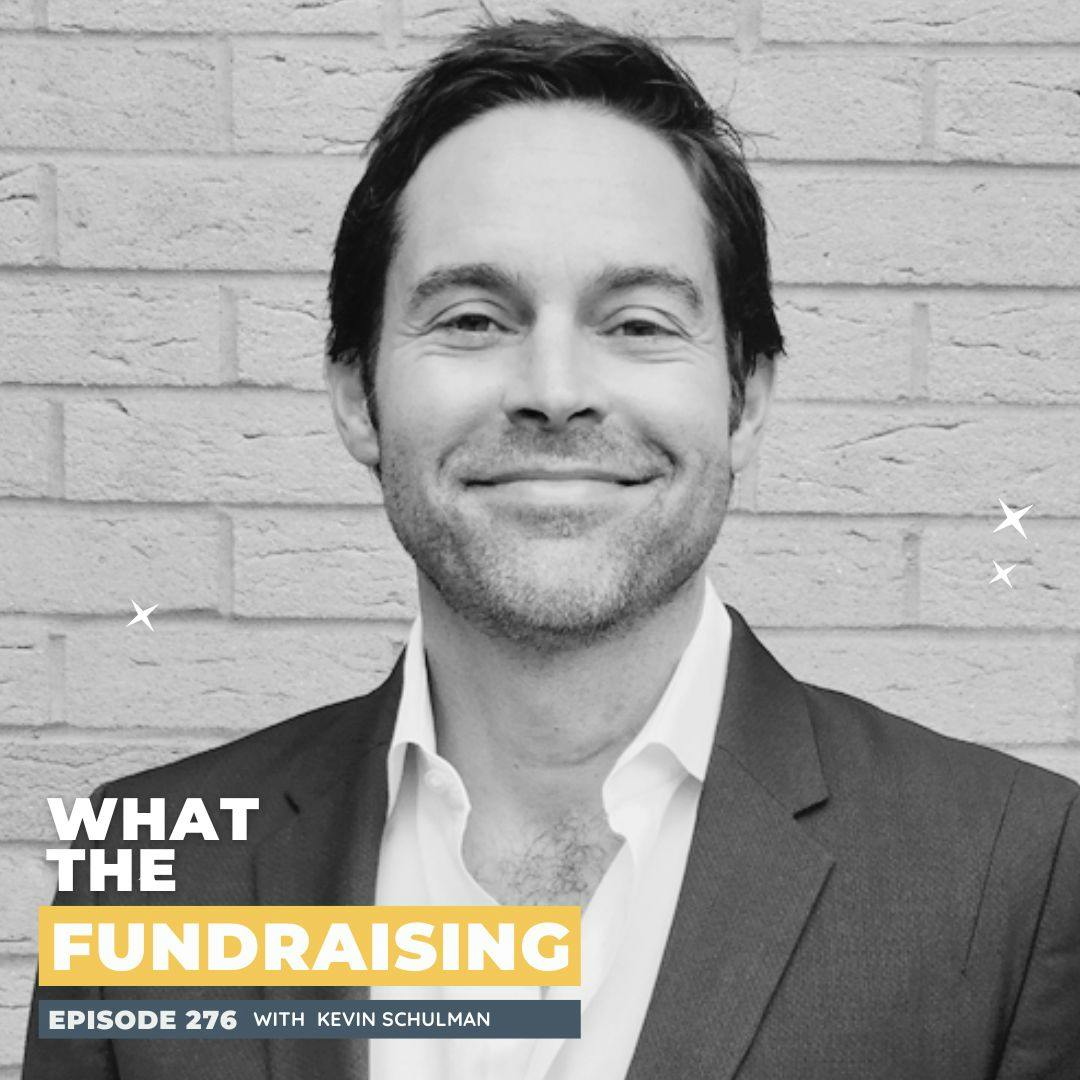
What the Fundraising
276: Unlocking Donor Motivation Through Behavioral Science with Kevin Schulman
00:27:57
Loading summary
Transcript26 lines
- [00:00]
A
When you think about fundraising and sort of the dollars in and dollars out, if you were to. Just as a thought experiment, if you were to take your fundraising spend for the upcoming year and take it to zero, not a single penny gets spent, what do you think would happen to the revenue? It wouldn't go to zero, not right away. I mean, yes, that's the track it would be on, but if you didn't spend a single dollar on fundraising, you would still bring money in.
- [00:28]
B
Hey, my name is Mallory, and I'm obsessed with helping leaders in the space raise money and run their organizations differently. What? The fundraising is a space for real and raw conversations to both challenge and inspire you. Not too long ago, I was in your shoes, Uncomfortable with fundraising and unsure of my place in this sector. It wasn't until I started to listen to other experts outside of the fundraising space that I was able to shift my mindset and ultimately shift the way I show up as a leader. This podcast is my way of blending professional and personal development, so. So we, as a collective inside the nonprofit sector, can feel good about the work we are doing. Join me every week as I interview some of the brightest minds in the personal and professional development space to help you fundamentally change the way you lead and fundraise. I hope you enjoy this episode. So let's dive in. Welcome, everyone. I am so excited to be here today with Kevin Schulman. Kevin, welcome to what the fundraising.
- [01:29]
A
Thanks, Maddie. Thanks for having me. Love the name. By the way, what's the fundraiser?
- [01:33]
B
Oh, thank you. Thank you. Yes. It gets a lot of laughter, which I, you know, I'm always trying to cause, so. Well, I have been such a fan of your work and your content and the way that you just so generously use your experience to educate the sector, particularly on LinkedIn. And so I'm really excited for this conversation today. I'd love to start with you, just sharing a little bit about you, your journey, kind of what brings you to the work that you do today, and then we'll dive in.
- [02:06]
A
Yeah, sure. And thank you for that feedback. So, for want of a better title, I'm the founder of Donor Voice, which these days, and it's evolved over time, these days we describe, I think accurately as a behavioral science fundraising agency. I started the business in 2012 and prior to that was in commercial sector. And my first foray into nonprofit got me noticing that a lot of what I was doing in prior life was not being done here. And that was really the genesis or the catalyst for starting Donor Voice.
- [02:37]
B
Okay, so Tell everybody a little bit about what you do at Donor Voice and how it's different than maybe what they might assume that means.
- [02:48]
A
Yeah, the behavioral science term can kind of mean lots of different things. So it means everything, nothing, all at the same time. So I think that it's worth. Worth kind of deconstructing. I would say we've got a pretty broad expansive definition and it goes well beyond any association you might have with nudges. So social proof and altruism and prospect theory and all these sort of nudge du jours that I think these days probably occupy 10% of our time at best. So ours is a bit more expansive. I think you can simplify it. And there's lots of sub disciplines within psychology and social science. But why do people do what they do is what keeps us motivated. It's what informs the way in which we fundraise, which is both a blessing and a curse in that it's probably 180 degrees from what I see as best practice. And that has been our kind of mission. Sometimes Don Quixote ask it feels like to trying to get folks to rethink this, this best practice, but starting with a very simple premise that is we need to build a business around why people give.
- [03:55]
B
Talk to me a little bit about the best practice side, like what are some of the trends or institutional quote unquote best practices that need to be evolving that aren't just to sort of anchor some folks who might not even know what those are?
- [04:14]
A
Yeah, and I'll keep it high level, I suppose. And I should acknowledge that growth is really hard. I don't care if we're talking commercial sector, nonprofit. It's hard and there's often going to be a dearth of it. Our sector is suffering from a dearth growth. And sometimes I wonder if fundraising has lost in the plot. Our purpose for Bing is helping these organizations grow. And I would argue that the the problem with best practices, it's sort of been reduced down to these four inter codependencies. The first returning back to why people do what they do. It seems to me just based on behavior, watching what people do and how organizations behave and how agencies behave is that we've somehow decided that people give because we ask. And if you believe that to be true, it's that simple, then that invites more asking. So the volume model has been birthed on this too simple idea that people give because we ask. And then if people are giving because we ask and really what we need to do is kind of proliferate the asking across channels and all sorts of other ways, then, you know, efficiency would dictate that if it's really just the act of asking, that does the trick. I probably should just send the same thing to everybody that's super efficient. Why try to optimize and match up to the person? It's really just this kind of brute force thing. So that sameness is almost born out of this desire for efficiency. It's just quicker and easier aversion set of things. And over time, there was a time that was never the right answer, but it quickly, unquote, sort of worked. Back in the old days when people could mail acquisition mail and make money, I mean, that hit a lot of sins that were kind of underneath all of that. You're at a, at a point now where those days are long gone and when the sameness and the volume doesn't work, I think gimmicks have kind of stepped in as a quick fix. And I put a lot of things in the gimmick category. The premiums, the faux deadlines, the matching gifts. I saw a stat that 88% of acquisition mail is in that category. It's either got a premium, what I would describe as sort of a faux fake membership or matching gift offer. So that is an awful lot of sameness, not just within an organization sending the same thing to each folks, but sameness across charities. And then it all gets cemented in with what I would describe as funnel vision, which is this obsessive focus on the very bottom of the funnel, when in reality the growth problem is never going to be solved with a higher conversion rate on your donate page, ever. I'm not saying that's a waste of time, but I am saying that that is not your pain point. The bottom of the funnel pain point is the top of the funnel.
- [07:14]
B
Okay. I love that you said, quote, unquote, worked. Because I feel like actually that is at the crux of so many of these conversations is like, how do we define what works? Right? And our willingness to redefine it. Right? Like, because I think some people just define what works honestly at this point by what creates the least turbulence in their organization. Right? They're like, oh, this end of year campaign works. And it's like, well, why? And so I really like that you said that in that way. How do you define like today? How do you define? Or what do you look for to understand if something is quote, unquote, truly working? Like, what are some of those indicators and what do you want to see?
- [08:00]
A
Yeah, I would argue if, whether you're on charity side or agency side, if your very first dashboard metric that you look at isn't a growth metric for, for the business, for the charity's business, not the agency, it's. Then you don't have the North Star that matters. And so whether that is revenue or donors, and they're highly correlated, of course you. That ought to be your North Star. Are we growing? And that's just a simple calculate. Well, you can look at it at any given point and compare yourself to last year's priors. And so there's awful lot of charities and then agencies by extension who are just sort of managing decline. So it starts with looking at what matters, revenue and. Or donor count and acknowledging that there's a problem. That bar chart should not go down into the right. The kind of the next layer of what works. And this is also a very big missing ingredient when you think about fundraising and sort of the dollars in and dollars out. If you were to, just as a thought experiment, if you were to take your fundraising spend for the upcoming year and take the zero, not a single penny gets spent, what do you think would happen to the revenue? It wouldn't go to zero, not right away. I mean, yes, that's the track it could be on, but if you didn't spend a single dollar on fundraising, you would still bring money in. You would have people that have strong relationships with the mission and it's just baked into the cake that they're going to give at a certain time of year. You've got people who are on sticky credit card payment, you've got requests that'll come in. Money would still flow in. Okay, there is this baseline amount of revenue that is coming in with zero fundraising. Now recognize that that amount is currently being attributed to our fundraising effort. So that is kind of artificial. Our reporting is not accurately reflecting that we're not responsible for all the dollars that come in that year. And we've got to look back in history books to find people who are actually responsible for those dollars. So then if you do some fundraising, whatever that is, we're at your base level now, you're going to raise more than if you were at zero, hopefully. Right. And so I've got some activity I put on top of my baseline, which is what was going to happen if we took it to zero, theoretically. And so I've got some extra dollars. And let's just say for the sake of argument that that makes sense, that you ought to have some fundraising activity and it should raise extra dollars above and beyond. If you went to zero, the next question to ask, which is never ever answered with the kind of testing that we do now typically in the sector, is what if I was to add an extra appeal? So if I'm at six appeals this year, or six campaigns, multi channel, whatever, what would happen if I added a new channel to the mix? It might have started texting people or if I started do connected tv. And the question that you need to ask is how much incremental revenue would come in with that new activity? Above my baseline of zero, above my extra that I'm getting with my fundraising activity today. How, how much extra? And it is very rare, I would argue that the test is being done to answer that question, what's the incremental increase? And the only way that you can know is if you're going to do the extra appeal as a test, then we have to split the file and have to have some people who don't get the thing. Same thing with sms. If I'm going to introduce that into the mix, let me put SMS in the mix and have some people who receive those texts in addition to the baseline amount of fundraising and some who don't. So this notion of incremental testing to see if there's true lift, or more often what happens is that you run sms, you just throw it out there. If you ask the SMS platform, it's definitely going to tell you that it raised dollars. And what you have to live in fear of forever is that you didn't raise any extra dollars. It was the exact same sum and now we're just divvying it up by more people claiming credit. And there's an enormous amount of fundraising spending, it is not producing incremental dollars, it's just clarity for credit. So that has to be your next level of understanding on what works. Once you find out that yes, doing SMS actually does create incremental dollars, then and only then should I start doing some A B testing where you get treatment B and I get treatment A on the SMS and we find out kind of preference wise, which one of those works better. So there's some kind of like, we need to step back, tear the house down to the stud and start to re examine what the heck we're doing. And the impetus for that ought to just be back to our North Star. If we're shrinking, that's a problem.
- [12:42]
B
Okay, so how does this relate to the sort of omnichannel argument that just seeing things in all of these different modalities, even if folks can't attribute like, is there a space for it to be not all or nothing. Right. So that the text message didn't drive the giving, but it also wasn't nothing when it comes to like another prompt or reminder or keeping something top of mind. How do we thread that needle?
- [13:17]
A
Yeah, well, I mean, most fundraising activity, if it's working, if it actually is producing incremental dollars, it's not a direct line, it's an indirect line. So that's critical. And using that SMS examples, let's say we set that test up properly and we brought some universe of people that are going to get SMS and some that aren't, then you're absolutely right. You do not want this definition of success to be only evaluating. Did they click on the link in the SMS and actually donate number one? And number two, you have to have a little bit longer Runway. You're not running this for a week because if it has an effect, most of it tends to be indirect. These channels do tend to work together, not in isolation. And so the way that most of the attribution gets done is pretty crappy. So I would want just a longer window of time, let's say six months. I'm going to run the SMS campaign for three months. I'm going to have a window of valuation that is six months long and the only thing that matters is the bank account. And so I've got one group that got SMS for three months. And yes, you, if you ask the SMS platform during that three month period, I guarantee it will tell you that it is raising dollars and you always have to be skeptical and dubious. Bank account is what matters. Let's find out six months from now. Do we have a pile of money with the people that got the sms that's bigger than the pile for those who didn't. And that is where you don't have to perfectly parse out. Direct versus indirect. Bank account don't lie.
- [14:53]
B
Okay, interesting. I really like how you're talking about kind of pulling away or just like breaking everything down and like getting back to, I don't want to say basics, but like really understanding, like what are we doing? And have we just been layering all these things on top of each other because someone told us we should and to your point, we've sort of like lost the plot of the whole purpose. If you're thinking about a small organization who they're like, okay, we are managing decline and we're managing decline for a lot of different reasons this year in particular. And we feel like we're really struggling for attention like how to break through the noise. Also, what are some of your like recommendations there Particularly when we think about more like resource strapped orgs.
- [15:41]
A
Yeah, well just to turn to the comment you made, it's definitely not getting back to basics and in fact that becomes part of what we're arguing for is that we need to define success upward. I think we've got kind of some lowest common denominator kind of thinking around what fundraising is and how it's supposed to work and the job it's supposed to do. And so stripping it down to the studs as the metaphor means that we need to build a much stronger, better house. It's not the three little pigs on the straw. We need the brick house and to do that we need to things are actually going to get a little more complicated, not less and that's because humans are messy. So with that in mind I do not have any simple quick wins that it's going to be more involved process. And so for the I think for the cash trap hoard or the well I think most crypto parties fast track regardless of what the revenue wise and there is a room whether you're small, medium or large and encourage the large one just or growth is my north star. And if most of my spends forget what labor we put on it there tends to be fundraising biggest pile of money. So most of my fundraising spend is on bottom of the funnel stuff which means that I'm putting it against mailing the house file. I'm taking the current list of donors and I'm uploading it to the ad platform and I'm doing retargeting and I'm doing paid search and I'm especially doing paid search for my brand name because that looks like a really attractive roas. And so you're doing all of these forms that are marketing the same people over and over Even in acquisition where you're only really evaluating did it work in a very short window. We tend to be showing it to the same people over and over and direct response advertising works because it's got a call to action. There's a very specific architecture kind of science to getting a direct response thing to work. It's very different from a brand ad whose job is to a have it very clear if I was to expose myself to that ad or that whatever that medium is very clear that I know an organization is running this ad and very clear that I know what category generic category you live in. So if I'm doing a Google search for group that helps children in my area and you've got paid search. On those generic terms, I instantly recognize your name and the way that the brand ad is constructed. Beyond just wanting to have those goals of they need to know it's me. They need to know what category generically I live in. I have to have some other memory associations tied to my brand. Whether those are substantive or more superficial, memory associations matter. So if I say color red, you probably think of a charity. A lot of people might think of Red Cross or Salvation army or Doctors Without Borders. If I say Panda, almost everyone would say wwf. Those sorts of memory structures. So those are real signs to brand building. Brand building does not have a ROAS return on ad spend metric that's going to look Good. ROAS is 100% efficiency metric. It's trying to evaluate a brand ad on instant return is like trying to weigh yourself with a measuring tape. So there's a real need for organizational dollars to be put into brands. And now the ratio might change a bit. If you are truly struggling to keep the doors open and you've got to have higher percentage of your budget on I need dollars in today. I don't have six months or nine months or a year sort of ramp here. I need dollars in today. You should put more of your spend on the direct response, but it shouldn't be 100% and way too many organizations are at 90% plus on where they're spending and it's only going to get worse, not better. It may feel like a win in the beginning to keep the doors open, but there is no path to prosperity with continuing to just market and remarket to the same people over and over, desperate for more awareness, more reach, more unaided recall and just being known in the marketplace and has a lot of that and there's very little spend that's put against it.
- [20:18]
B
So I'm curious about this and I'm sorry, I don't know if you saw that there was an earthquake here in the middle of this. Did you see that happen?
- [20:25]
A
Did not. Oh.
- [20:27]
B
So first actually. So I think I got a little rattled and when I was talking, literally rattled actually. And when I was talking about back to basics, I actually what I was thinking was in terms of the stack of tools that executes a strategy, not the old school strategy of just asking, kind of on repeat. Because I'm really curious about what you said. I think that's a really important point. And what you said about it's going to get more complicated before it gets less. Talk to me about what you Mean, and if you mean complicated in like channel and approach or complicated in the layers of nuance that we bring into understanding our donors and who they are and what they care about and what motivates them?
- [21:13]
A
Well, probably both. And that if they're not doing brand spend, they need to get some brand spend and recognizing that the, the engineering of that brand ad is different than the direct response one. So in that way it feels more complicated, involved. Another specific example, if we can agree just in our normal human lives, not fundraising work lives, that people are different and that we probably ought to have fundraising that acknowledges that. And so that that one size fits all has been wildly efficient and wildly ineffective. And so more complicated means that I'm sending one version, I need to send two, which all of a sudden it feels like double the work. And I'm not talking about a random split test where you get version A and I get version be. I'm thinking about what it is that I know about you that's different from what I know about me and then having the message be tailored accordingly. And so one specific, for instance, we are tailoring copy to big five trait profiles and we have a way to sort of know decent resolution and accuracy. Your trait profile, based on how you show up in third party data lands, turns out that our personalities help determine what we give attention to and where we make choices. And so third party data is nothing more than choices you've made, typically in kind of consumer lifestyle and whatever else. And so without getting into all the weeds around that, we are tailoring the message to match personality because we know that if it matches your trait profile, you are more likely to see it regardless of where it's showing up, what channel, you're more likely to give it a certain amount of attention, you're more likely to agree with it and more likely to act on it. That's more involved, that's more complicated. And so that's what I mean by it's going to get. It needs to get more complicated because people are messier and the job growing is messier.
- [23:17]
B
All right, I could talk to you forever. I have like 40,000 more questions in my brain, but what's the one, like most important one that I should have asked you, that I didn't ask you?
- [23:27]
A
Well, I guess if people don't give because we ask, then why do they give? And this all sounds super obvious after one says it out loud and hopefully intuitively matches up. The only giving that's sticky. The only giving is sticky where you've got some personal connection. And so it tends to be a kind of values goal based. I'm talking mostly psychological goal based match to not to the brand but to the mission. So your job in fundraising is not persuading. Persuading is a fool's errand. If that's the assignment, don't take the assignment. Our job in fundraising is attraction and that means that I need to have some understanding of kind of your motives and values and goals. And then my job is just to match the message to you. And because people are different and they might have different reasons for supporting the same organization, your message is likely to be different than mine.
- [24:27]
B
I love that. Okay, tell everybody where they can go to follow along with you to learn more about your work, connect, et cetera.
- [24:35]
A
Well, you can certainly check out the website thedonorvoice.com they're still trying to hold us hostage on buying donorvoice.com so the was born as an article in front. We have a blog publish three times a week at the Agitator. So you can google that and sign up for that or just follow me on LinkedIn. We tend to repost a lot of that there as well.
- [24:58]
B
Amazing. Thank you so much for all of your knowledge and wisdom and for this conversation today. I really appreciate it.
- [25:04]
A
Well, thank you for the time and you were a pro as you just worked right through the earthquake. That's crazy.
- [25:16]
B
I hope today's episode inspired or challenged you to think differently. For additional takeaways, tips, show notes, and more about our amazing guest and sponsors, head on over to Mallorykson.com podcast and if you didn't know, hosting this podcast isn't the only thing I do every day. I coach, guide and help fundraisers and leaders just like you. Inside of my Program the Power Part Partners Formula Collective Inside the Program I share my methods, tools and experiences that have helped me fundraise millions of dollars and feel good about myself in the process. To learn more about how I can help you, visit MalloryErickson.com PowerPartners Last but not least, if you enjoyed this episode, I'd love to encourage you to share it with a friend you know would benefit or leave a review. I'm so grateful for all of you and the good, hard work you're doing to make our world a better place. I can't wait to see you in the next episode.