← What the Fundraising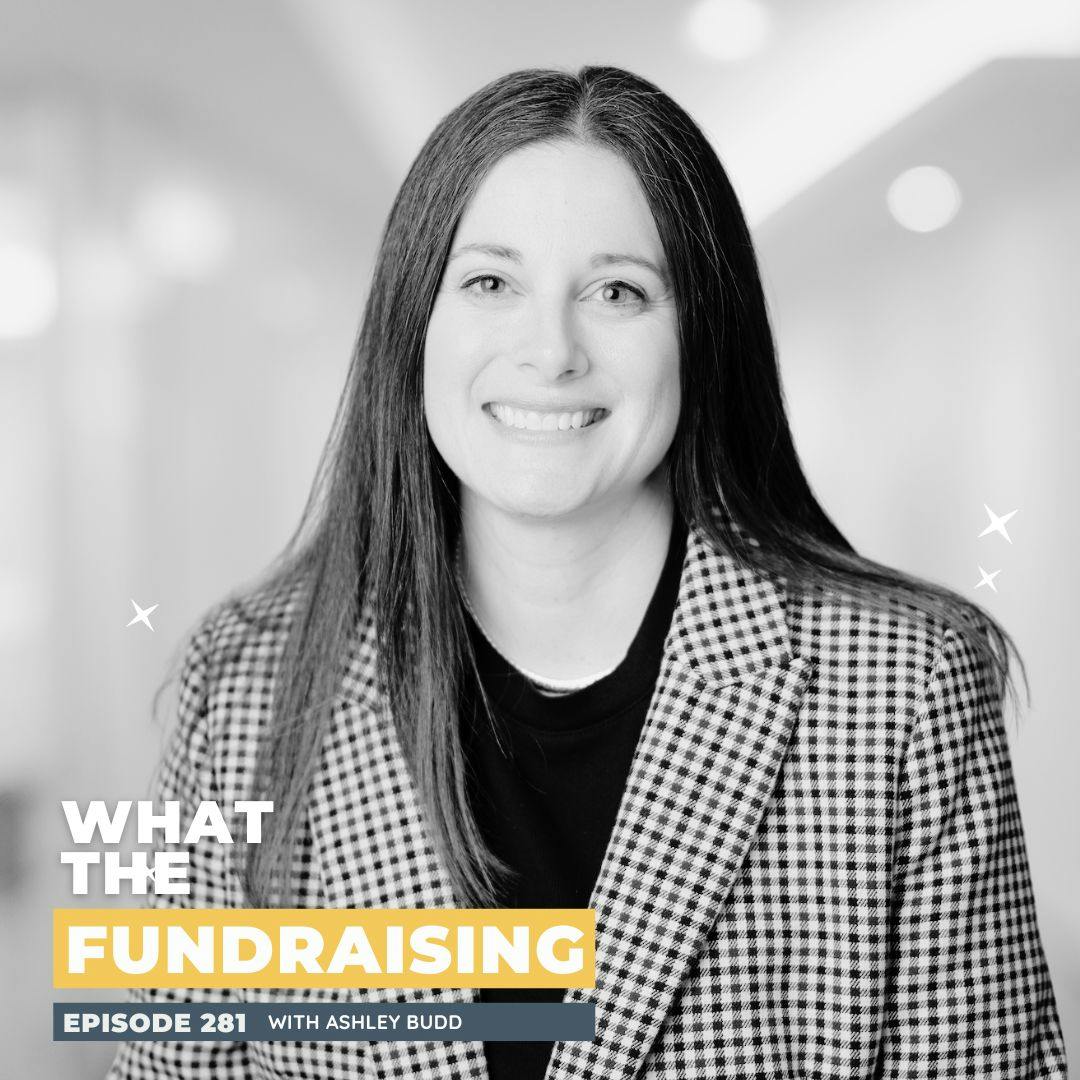
Loading summary
Transcript47 lines
- [00:00]
Ashley Budd
What is authentically you and your organization? Are you the ones that are all over social media with a kajillion followers and that's part of your identity? And yes, then you need to show up in that space and maintain that identity. But if that's not you, if you're like the small community org that puts more of their effort into coffee talks and one on one conversations, there's no reason for you to chase those same ideals. It's not authentically who you are.
- [00:32]
Mallory Erickson
Hey, my name is Mallory and I'm obsessed with helping leaders in the nonprofit space raise money and run their organizations differently. What the fundraising is a space for real and raw conversations to both challenge and inspire you. Not too long ago, I was in your shoes. Uncomfortable with fundraising and unsure of my place in this sector. It wasn't until I started to listen to other experts outside of the fundraising space that I was able to shift my mindset and ultimately shift the way I show up as a leader. This podcast is my way of blending professional and personal development so we as a collective inside the nonprofit sector can feel good about the work we are doing. Join me every week as I interview some of the brightest minds in the personal and professional development space to help you fundamentally change the way you lead and fundraise. I hope you enjoy this episode, so let's dive in. Welcome everyone.
- [01:28]
Podcast Host
I am so excited to be here with Ashley Budd. Ashley, welcome to what the fundraising is.
- [01:33]
Ashley Budd
Thank you so much for having me. I feel like this is a long time coming for us.
- [01:38]
Podcast Host
Finally colliding, finally. I know. I'm so excited for this conversation and to have you on the show. Why don't you start just telling everybody a little bit about you and your work and then we'll dive in.
- [01:49]
Ashley Budd
Yes. Well, hello everyone. I am a career, higher education, career person, I guess, not always fundraising. But I crossed over from enrollment in my early career into the advancement world and I thought I might land somewhere centrally at a university someday. But you're never getting rid of me. Fundraisers I have found where I belong. I love the advancement space. So where I thought I was going for the to the dark side for a minute, it turns out no, I was just going where I was supposed to be. So I have been at Cornell university for almost 13 years, which is super wild. I thought I would be there for maybe six months to then get my central job somewhere else. But 13 years doing all sorts of things at Cornell and then probably for the past handful of years I've been consulting with other nonprofits and other colleges and universities and doing a whole lot of speaking. And then just last year wrote my first book about email. So I'm kind of all over the place, but not right.
- [03:00]
Podcast Host
I mean, it seems like what you're like, tell us kind of the central thesis of the book in email and, like, how that email marketing piece relates to the work that you love to do, both at Cornell, but also, you know, with your other clients, and then why you really wanted to make sure you got to highlight that in a book.
- [03:19]
Ashley Budd
Yeah, I think the through line, through everything that I have done in the university space has been digital and really fell in love with marketing because it's predictable. And we can go through a whole cycle analysis about why predictability. And me it's like, probably in, like, therapy session. Like, why I love finding things that are predictable so much and, like, patterns and human behavior and, like, why do people do things? And so that, I think, is what really drew me into marketing, certainly marketing for good and like, using these powers for good instead of evil, because we know they can do both. And when we got our new robot friends on the scene, I saw this, like, really crowded market space, the email space, things that were working really well in that space. And then like, people that were just stepping into all sorts of holes. And when Chat GPT started writing emails for people, I was like, oh, no, the models do not know what I know. And we're just going to get a whole lot more junk in our inboxes if we don't get what my co author, Jake Hibbalds and I, what we knew was working in email really wasn't in any other books. We would find some, like, really good stuff buried in business books, but not a whole dedicated book to email communication. So it was at that point where there was just like this real urgency to get it out or be buried in inbox hell, which I think a lot of us still feel exists in our lives.
- [05:02]
Podcast Host
Yeah. Okay, so let's talk about the AI piece because I think it's so interesting, right. I feel like one of the main ways that fundraisers are told to save time and be more efficient is around using generative AI to help them write emails.
- [05:20]
Ashley Budd
And.
- [05:21]
Podcast Host
And then that I think based on your work and your speaking, there's, like, some ways to do that that can still be beneficial and maybe still hit on some of your primary email recommendations. And then there are ways to do that that break the whole purpose of sending the email in the first place and maybe just have us doing all of the wrong Stuff faster.
- [05:42]
Ashley Budd
Yes, yes, wrong. Stuff faster, I think was the main fear that I had because, yes, to be able to draft a communication or to work from your own draft and get it better quicker with assistance. Everybody would love assistance in doing that kind of monotonous, repetitive work. But like I said before, the tools are going to model based off of what they've seen out there in the world. And there's just so much junk out there and so much stuff that's like not effective. And even marketing tactics that were effective 10 years ago might be what's showing up through these generative tools and not what works today. So for that reason, Day and I created a custom GPT. So there's a mailed it GPT out there in the chat GPT universe that uses our rules instead. And I think you made a great point about like, yes, use it as a tool to help you. But the way we designed ours was really to teach people along the way so that you don't need to use it as a crutch. Like you don't have to use a robot to write your emails for the rest of your life. And so ours is really teaching people. These are the reasons we put these phrases in this order. Or this is how to make this easier to scan and to learn those tips so that you don't have to rely on the tool forever.
- [07:03]
Podcast Host
Okay, I love that. And do you feel like some of the reason why people like over rely on AI like that is because they feel like how to do email right is changing too fast or there's too much advice for them to keep track of or they don't know what the good advice is. So like, well, maybe if I just have this tool do it, it's going to know better than me. Or is it? Or do you see it more sitting in the, like, I don't have time.
- [07:29]
Ashley Budd
Just do this. Yeah, I think it's like that instant satisfaction, like quick output, like, oh, I know I have to write this email to Mallory, but like here, write this for me in two seconds, right? Like the speed of that output is just so satisfying. And if you look at it and see like, yep, it has all of the points that I need in there. This is good to go. I think a lot of people will feel good with that output. There's just such little nuance in what we've learned about how to craft a subject line, how to get your message across for people that are only looking for two seconds at it. And like all of these little things that I think you can still get tripped up with. If you're counting on those models to give you the answer versus the expertise that still relies, that still is in, like, our human brains. There is some that still exists that is only in our human brains for now.
- [08:27]
Podcast Host
And it sounds like, I mean, I haven't really, like, thought about this before, but I'm kind of surprised I haven't thought about it before, but what you're saying is making me think. It's sort of the difference between just writing the email to, like, check something off your list. Right. To just like, send the email versus the purpose of why are you sending that email in the first place? Right. Like, you're sending the email to make an impact on the reader, whether that's to drive them to take an action or learn something. I've been experiencing this with my newsletter a lot. Like, I have just been so overwhelmed with the amount of things that I used to write a newsletter every Tuesday. And I've really broken that cadence recently. Like, I haven't gotten it out yet this week and I could have just thrown something into a generative AI tool and had it write it. But I'm like, the point is not to send an email on Tuesday. The point is for me to write to my people. And I needed. I need more time. Like, it's been a hard week. I'm still like, sorting through how I feel about. Certainly I want to write about. So talk to me about how you think about that and how you kind of coach organizations and around that piece.
- [09:30]
Ashley Budd
Yeah, I really don't think it is a shortcut in that way. Like, your example of your own newsletter. I can think about mine too. Where you want to send something quality and your readers do not care if you don't send your email on Tuesday. Right. They're not like, sitting there being like, oh, no, what's going on? They just want you to show up and give them something good every time you show up. So I appreciate not like, trying to just ship something for the sake of shipping it. That's just adding to clutter. But I also have tried myself to see, like, where I can gain efficiency in my own newsletter like that. So in that same example, I know what I want to talk about and share with people. Like, how can I take the notes inside my head and talk to an assistant in a way that is more in line with, like, my own workflow? So I have a custom GPT that I've relied on now that has all of my past newsletters. Right. It knows every week the like format and the way that I want to craft things so that I can start to say, here's things that I want to promote, here's the story I want to tell. And it does help me like stay organized and like have momentum, but it just has not cut back on time. And that is because I am making sure that I am the writer at the end of it and I am the copy editor and I'm so I'm still putting in the same amount of time. I think a lot about people that are using our tool in the offices. There's a group that's doing like mass solicitation kind of stuff that I think will find some of the tweaks that we're offering for like skimmability really super helpful. But then I think about the gift officers who are planning visits. That's the other like that, like one to one communication that I've also seen a ton of success in because the traditional, you know, a gift officer will sit down and start writing and they'll like transfer into their twilight zone of like formality and all of these words and I am coming to visit you and blah, blah, blah, blah. And the same thing, like the GPTs will be like, oh, I hope this email finds you well in the spirit of our, you know, our mission that we care about so much. And it's like when those people that you're trying to make visits with are in their inbox, they're like, what do you want? Who are you? What is this? And the effectiveness is like being a lot more like, I think people feel like it's even cold, but it's short, right? It's hi, I'm reaching out to you because I want to book a time to meet with you, like, tell me what you want up front. And those are so much more effective. And the responses that people get back from those people are very short. It's usually like, yes, five works. The coffee is great, you know, like very short responses too. So yeah, I think there's still that certainly that like human element to it that's gonna make the magic happen in the email world. But I can see the space for the assistance too.
- [12:38]
Podcast Host
Yeah, no, that makes a lot of sense. And I also really appreciate what you just said about that, like transparency in communication. Because the amount of times I'll get a message on like linked where it's like, hello or how are you doing? And I'm like, what do you want? Like, tell me what you want. And so that like the need to be as human as possible in our Communications and it doesn't mean we don't get support allowing us to connect in that human way at scale more frequently. But we aren't losing the like, what does it actually take to connect as a human?
- [13:15]
Ashley Budd
Yeah, and I think I know some of the work that you're doing is along the same lines too, right? Like how can we teach people better practices at scale quicker? Yeah, that's what I see. Our custom GPT is going to help people learn this new way of writing shorter, clearer to the point, faster. And it's still giving them that quick satisfaction of like, okay, here's your draft of what you should send. But then also, and here is why, right? Like I shorten this because you were too wordy. It says the same thing. Or I move the call to action up where people will see it because you buried it. Or we change your subject line to something that was like totally non informative to exactly what people need to know is in the email. You know, and over time, hopefully in doing that they'll just learn how to write that way instead of having to go to another tool and write in there and then go back to the tool that they're using and paste things in. So yeah, it's like using those tools for what we need people to learn versus a crutch. Right? Like this is not the crutch that we want you to have to now use because it's not really saving you time. You're not really learning anything if you're.
- [14:33]
Podcast Host
Doing it that way and you're not maybe getting the response that you want. So it's like maybe you've sent. I mean, I'm curious how you think about that. Cause you were mentioning this before a little bit, but then also thinking about kind of like how it increases your efficiency. But I'm, I am like curious about that line behind between quality and quantity. So. Because I think there is. We have been told in the marketing space so much and I'm not a marketer, so I've only really learned it from like kind of mass what I feel like we see what I've absorbed like in the social media ecosystem mostly right around consistency and touch points. And honestly all these things that make me feel like I'm never going to be good enough. Like I'm like I never, I'm never going to be that consistent. I'm never going to be able to have the time for that many touch points. And so I feel like some people fall into AI because there feels like this gap between what they quote unquote should be doing and what they feel like they have the capacity to do. Right? And so they're just like, well, I can never do that. Like, I just had a situation with my team member where I had invited a bunch of people to a LinkedIn event via LinkedIn and he was like, next time can you like send them the link? Because then we'll get their emails, we can communicate with them more easily as opposed to just inviting all of them on LinkedIn. And I said to him, I said no, because I was like, I would have never had time to DM that many people clicking invite on LinkedIn. It wasn't an either or, it was a this or nothing situation. And I feel like sometimes when we use AI, even if we're doing it from a more like conscious, not just like urgency perspective, it's like, well, I either do this using AI or I don't do it at all. What's better? How do you like, think about some of those, like, trade offs?
- [16:24]
Ashley Budd
Yeah, yeah. Especially when I'm talking to organizations that are like all different sizes. Right?
- [16:28]
Podcast Host
Yeah.
- [16:29]
Ashley Budd
So I think it comes back to like, what is authentically you and your organization? Are you the ones that are all over social media with a kajillion followers and that's part of your identity? And yes, then you need to show up in that space and maintain that identity. But if that's not you, if you're like the small community org that puts more of their effort into coffee talks and one on one conversations, there's no reason for you to chase those same ideals. That's not authentically who you are. And so when I think about the consistency part of that, it's like, how are you aligned for your audience in a way that feels like really logical to them? Like, okay, this is your identity. You have lots of close relationships, one on one with people. You pick up the phone and you show up in person. If that is you, it's consistent with your online presence. Right. And you don't have to chase those other ideals. But if your online presence is more about connecting with as many people as you possibly can and being the one that's showing up in your feed every day, because that's your identity, then yes. Right. But I think we're. If it's working for you to post on LinkedIn and not be in the DMS, like, fine, that's fine. And I think like, and that's consistent with who you are. Right? So I think we actually, in the book we reference this one trust building model and we Call back to it as the trust triangle. Frances Fry and Anne Morris wrote an article, kind of coining this trust triangle. And the points are authenticity, empathy, and logic. Those three. And if you have all three in balance, great, like, you are going to have a trusting relationship. If any one of those is wobbly, you've lost trust. And so I think about that logic piece, right, as that consistency piece that you're talking about. If I don't understand why you're trying to do all the latest memes and, you know, like, why is mallory doing these TikTok trends? Like, I don't get it, right? Like, you're gonna lose trust in, like, whatever. We know. Why is Mallory all of a sudden, like, blowing me up in my DMs? What's changed? Right? So you might not have to do all of the extra things and trying to just keep it more aligned with who you are, how you're showing up, doing that consistently. And then I think I love thinking about the other end, the empathy end of the triangle for our people. Coming back to that, like, immediacy and the, like, short, to the point emails, we know that your inbox is crowded. All of ours are. It's gross. It's like a gross place to be. So I'm showing up with this very short, punchy email for you as, like, an empathy play because I know how. I know how it is out there. It's not pretty.
- [19:27]
Podcast Host
Yes. Oh, my God. My inbox is just, like, not a place you ever want to be.
- [19:30]
Ashley Budd
No, I don't want to be there. And if, like, if you think about me on the other side of that opening, like, show up with that same energy. My energy is like, what do you want? What is this now? Right? And if you're showing up like, rah, rah, cheerleader, I might be like, God, no, back it off. Like, just tell me what you need. Yeah, that's a fun exercise, too. Thinking about the person on the other end who's, like, opening their. Your email in bed or in the bathroom or, like, where are they really? Do they have their credit card out ready?
- [20:10]
Podcast Host
This is like, you know, I have studied under Dr. BJ Fogg over at Stanford on his behavior lab work. And so his behavior model is all about, like, in a moment, we want someone to take an action. Do they have enough motivation to take the action? Do they have the ability to take the action? And then have they been prompted to take the action? So I think about that thing that you're saying all the time, right? And it's A big reason why I say sometimes email volume needs to go up. Not bad emails, right? We don't want to do more of the bad stuff faster or more. But people need to be prompted at different moments because sometimes it's just going to hit at a time where you can't take action. And even if you have the motivation and the ability and like it is also like loving and caring to say, hey, I wanted to drop this to the top of your inbox. I know things are really busy, but I also think you care about this and probably wanted to see it.
- [21:01]
Ashley Budd
Yes, yes, yes. Those are like that line of thinking, super empathetic, right? And like day and I talk about what those call to actions are in email so much because what used to work before does not work anymore. Give now does not work. Learn more does not work, right? Like I need to know what am I learning more? Why am I reading this story? You can't just say read the story. You have to say like you're going to get inspired by this story. Like give me, tell me the reason why. I'm going to take a few extra seconds here. And in all of these end of year or like deadline oriented emails, we keep saying give now, give now, give now. Like tell me what the deadline is. Like what's your real timeline? Right? If it's give by December 31st or it's give by, you know, the end of whatever campaign you're running, that is a much more helpful call to action to me so that I can plan right? If I am statistically speaking, millennials are very comfortable checking their email while they're in the bathroom. Like to know, yeah, do I need to do this right now? Or like what is truly your timeline? How can I help? Like help me rationalize what it is you're asking me to do rather than all the fake urgency that's out there. And we see it like in applying for grants, like apply now. Like how long does it take to apply for something? What is the actual timeline? So it's like being really brutally honest with our word choices and how people can take the action that we're asking them to take.
- [22:38]
Podcast Host
Okay, you said something super interesting there around empathy. So when I had given that example of like a follow up email, you had said like that's a really empathetic response. And I think sometimes our fear brain and like our self doubt about bothering people, most people might think that that follow up was like going to bother people or actually not necessarily, you know, customer centric or reader centric in their Experience. So can you help me bust some of those myths? Because I think that's the way that like fear can sound like compassion or empathy or strategic, but it's really just like our fear and discomfort.
- [23:22]
Ashley Budd
Yeah. Yeah, for sure. One of my favorite strategies that we use is we've called it our self aware opt out. In a lot of our really high volume communication. We don't just use the tiny little like six point unsubscribe or manage your preferences thing in the footer of our email. We use like arguably the most read part of the communication, the PS statement to tell people like are we a lot for your inbox right now and you don't like, then put this on pause if now is not a good time for you financially, we understand. And it's so disarming for people as they're about to rage. Unsubscribe from our communication to see a message that is like we understand. And you can pause this for as long as you want to pause just by putting a statement like that, which could be scary because you're gonna tell people to remove themselves from your list from a time we see such a drop in the unsubscribe rate just by putting that statement there because it's disarming. Because people see that we are thoughtful humans on the other side that aren't just sending you emails for a money grab, but we're like trying to be here in a time that makes sense for you or not. Right? Like if we're not, it's not a good time, fine, but don't write us off forever. Like let's revisit this when it's a better time for you. So that came to mind immediately when you said that. And I think that the analogy that I make a lot when I'm trying to make the same argument is how expectations have shifted for people in when we are reminded to do things right. So how many times do you need to communicate something to somebody before it sticks or before they they're gonna take an action that I think people understand. They've heard like the same car jingle a million times on the radio growing up that you can make that analogy. But now I expect that you will reach out to me more than once. Right? Like I expect that there's going to be a little notification for my next meeting. I am relying on the abandoned car email so that I don't forget to check out. There's so many of those things that have become an expectation that we can't think about it as annoying people like, this is what's going to help them take the next step. And they're counting on us to give them that extra nudge. And if we don't, they might see it as like, oh, I guess it wasn't that important for them. They didn't come chasing me. I'm not gonna go, I'm not gonna go do that. Go the extra mile for them either.
- [25:59]
Podcast Host
Okay, so. Oh, we're getting some fun stuff. Okay, so let's talk about ghosting. Because I just read, I just read this post on LinkedIn the other day and I very rarely publicly disagree with the post only because I would never want people to sort of like, layer on or. I, you know, I try to be really, really positive. But I read this post about somebody talking about how ghosting is a good thing and my two cents. And. Because it tells you who somebody is. And I went into the comments and I said, you know, first of all, like, it's awesome that this person has reframed how she views ghosting to make it more manageable in her own body to handle it. Like, I think that's awesome. Any reframe you can do to, like, be able to handle a common experience, I'm all for it. But I was like, I am concerned about ghosting for most fundraisers because when we are actually ghosted, like, it's very bad for our nervous systems, right? We lose our sense of belonging. Like, am I here? Do you see me? And it, like, has our system kind of freak out and get into that. This, like, really dysregulated state. So in general, I'm not a big ghosting fan, but I also said in the post that, like, right now, the volume of communication that we all get is so high. I have ghosted people that I care about, conversations I do care about, and it's not who I am, but it's like, I can't respond to 500 emails, DMS, text message kids, group threads, and WhatsApp. Like, it's just impossible. So how do we, like, hold both of those? How do we. And I feel like some of what you're talking about here is like, right, we need to redefine how we think about, are we really being ghosted or not? And, like, then what is, like, engagement and normal, like, understandable engagement look like?
- [27:52]
Ashley Budd
Yeah, yeah. And I think it would be scary to ask the question, are you not that into me anymore? It would be scary to be that direct, but also really helpful to know. So it's almost the, like, I would put that same Question to the organization. If somebody is not responding to you, like, are you responding to that? Are you doing anything to try to understand why? And it could just be like, offering, I am too busy. You're like, I will. I will come back around another time. I think it's really valuable to offer a kind of pause or a way to narrow down why somebody may or may not be hanging on or if they're not, like, if it's really trying, you know, time to break up. I have an annual breakup email that I send to my newsletter list just to kind of, you know, I don't want to be the clutter for people either. I don't want to be associated in their inbox as, like, another email. Like, I don't want my name associated with that feeling. Right. So I will send to a list of people who haven't engaged. If I don't hear from you, I'm gonna remove you from this list. Like, I don't want to be that. That for you. And some people will respond to that saying, like, no, no, like, don't remove me. I'm still here. And then if I don't hear from them, I'll take them out. And that is, like, it kind of like, closes the circle for me on that relationship. And they can always come back like, you know where to find me. But I think entering that in a. Not like, I've lost you and now, like, I feel failed, but more of a, yeah, people have other shit going on, and maybe I don't need to be associated with the one. As the one person who's, like, showing up with things that are not as important as whatever else is in their life.
- [29:48]
Podcast Host
Yes. Yes. Yeah, I actually have run. I haven't. My new email platform doesn't have the same functionality, but when I had a more intense. When I had, like, kind of a breakup flow all the time where I was, like, looking at the house. Like, if someone hadn't read an email in 90 days. Exactly like, checking in on them and being like, hey, I don't want to be spam. I don't want to be. The last thing I want to do is be adding to your overwhelm. Everything about my, like, decrease it. Right. And so, yeah, I think. And also I've done to. Back to what you were saying before about the unsubscribe. Anytime I've ever run a sales sequence, actually at the top of the email, I've said, like, hey, if you're not interested, like, in the power partners formula right now, just like, click here or will take you off. No more emails about this. And I just feel like that conscious choice piece is so important, whether it's in mass email or one to one. Like, I love the breakup email or not even the breakup. Just like the opt out like that. If this isn't interesting to you, Like, I'm like, a no is so clear, you know, it's so loving. Like, it does. It respects our time. Like, yeah, we have a challenge.
- [30:58]
Ashley Budd
I think that's where I can live in the. In a math equation different than I find other leaders. Like, they see the big picture. Everyone who has ever touched this organization in their entire lives, like, that is the big number of. How many hundreds of thousands of alumni does Cornell have or how many don't learn have we ever had over the course of a campaign? Like, those really big numbers. But I can live with a much smaller number, right? Because my goals don't rely on me having to reach every single person to meet those goals. It's like, who is the. That is gonna make the next thing happen for us? And that's where you can become more sane. And again, getting back to, like, my predictability and in marketing and what I love, like, if I know what the denominator is, I know what the outcome is, right? Like, if I know how many people in my audience I have, like, I can tell you right now how many I can convert. I can feel really confident in that. And it doesn't have to be the huge number all the time. But that is also a really hard conversation to have with others who will say, like, but these other people, why aren't we reaching out to them? Or you have to reach out for them. And understanding that not every offer is for every person all the time, it's kind of. It's a kicker, and it's a hard one to swallow.
- [32:20]
Podcast Host
I can imagine. This has been true for me too. Like, what? Because you are being so specific about kind of making sure that the right person is in the right place at the right time. How much kind of support then does that give you to make sure that you're able to write the content to. For those people? Because I think of. Right, like, that's the tension. It's like, you're keeping everyone. I had this happen with an organization where they had donors on their list from 20 years ago. The organization had changed so much, they didn't know how to communicate about things anymore because they were like, well, half of these people. But I'm like, you don't even do that anymore. So like, why are we not kind of making sure that they're like on this bus or not so that you're not constantly sending messaging that's about something that like trying to bring them over. It's like, yeah, so how do you like, think about the relationship between that kind of the care in which you take care of those people and then your ability to be like super specific in your communication?
- [33:21]
Ashley Budd
It becomes so much clearer and so much more effective when you do that. And if you don't believe it can work, like, test it because it will show you, you will see. I can think about it. A first quarter campaign that I run probably half a dozen times at this point for renewals. Like, how many people can we renew in the first quarter of the year and like get them on the books and like feel good going into the year strong that like we've renewed all of these people already. And when you talk to that audience and say, you showed up last year, like, I need you to do it again right now. You can be so specific. This is what you did last year. Can you do that again right now? But the times when we've said like, oh, that worked really well. What if we went to some lapsed people and did the same thing? No, they didn't. Like, it's now the message is like you may or not have participated with, right. Like, like you didn't just do something. The effectiveness is in that audience and that specific message. And once you try to broaden that, it becomes less specific to the person that you're speaking to. And so you're right. Like as you narrow down and folk and like hone in on. I know what the conversion rate for this kind of campaign is. This is how many people I need in that audience. Like, that's where I'm sitting really comfortable in, in goal setting. And when we're just thinking about like, we have to talk to everybody because that is our, our list, then we kind of get into like crazy land. Messaging becomes super generic and the individual communications are less effective because of that.
- [34:59]
Podcast Host
Okay, so this brings me to like kind of an overarch. How much do you think about kind of pre planning a campaign communication strategy versus agility maybe in the moment to make changes to an email sequence or a strategy. Because I love what you're talking about and thinking about kind of like the metrics and planning side. And so I. But I. My guess is you're balancing that with also looking at things really closely as they're happening and like balancing that with some midstream changes.
- [35:36]
Ashley Budd
Yeah. I really try to let a campaign run its course because especially what I have found in email specifically and in digital behavior has been changing to like move toward the deadline. We start saw this in like a wave during COVID when everything became super digital, people started making decisions way later where they would have showed up. Like they would have RSVP'd on the first email. Now it's like, oh yeah, I'll rsvp. I know I'm going to that. You know, like the delay is wild. So I had to kind of, you know, like, yes, agility, yes, watch your metrics. But also don't panic if you don't see year over year the same numbers that you did the year before because that delay is happening. And so sometimes I'm like, trust the plan, they will show up. Like, let's not emergency send five more emails because it's not there yet. Like let's stay the course people. But at the same time I have found that year over year we've had to increase volume to get the same result. So some of that is in the planning. Right? Like okay, last year we sent three emails in this series we know behavior shifting, we're going to send five and at email three we're not going to panic because we know we already planned for two more. I will also say that there's some things that would make me go, oh, I gotta like, I gotta change course mid stream. And that would be if our open rates weren't anywhere near where I thought they would be. If anybody is seeing, and I know because some of my clients are seeing this right now, if you're seeing open rates below 20% like we have to, we're in trouble, we're in spam, we're not delivering emails to people. So if I were to see something like that happen. Yes, remediation, get in there, start texting people, start going to other channels. But yeah, I think one of the things that I've really taken away from growing these email programs into series of emails and not just one offs is the time it needs to take. It takes people to like understand what we're asking them to do.
- [37:44]
Podcast Host
Right.
- [37:44]
Ashley Budd
Like they need to have enough awareness about whatever the campaign is. They need to feel connected to it and then they will show up. So it takes a series to get them to that next step. Unless they're you're super fans who are gonna, you know, convert on the first thing you send out.
- [38:01]
Podcast Host
Okay, this is really good insight and it brings me to maybe like a very big Question to sort of be rounding out with. But I'm curious. I feel like in the past five, six years, and maybe it was true beforehand, and I'm just more up close to it now. There's always something happening around us that could be considered like, kind of like, crisis communication or derailing a message that we want to send. And, I mean, I launched my first ever product, my signature program for the first time. The first email for my first launch went out on the day of the insurrection.
- [38:37]
Ashley Budd
Great.
- [38:38]
Podcast Host
And I, like, Right. Like. And so I just feel like since then, there has. There's always something. And I'm thinking about this balance of, like, holding to a campaign mixed with the empathy needed on the reader's side and, like, how you think through, like, when and if something changes in a campaign based on a contextual change in the environment around.
- [39:06]
Ashley Budd
Yeah. Oh, my gosh, you see so much of this in the higher education space. We had a running joke, which was probably, like, running trauma for years with our Giving Day. Every single Cornell Giving Day for, I think, eight years had something totally crazy happen. We were bombed with fake news before I knew fake news was a thing. In year one, we had, like, snowstorm that closed down all of campus. Right? Like, just, like, we had, like, all sorts of, like, things that would be totally unexpected in 2020. Cornell Giving Day was on March 12, 2020. And every year we did it, one year we had to postpone. We had our president passed away. Like, these are. This was the Giving Day curse that we dealt with that year. We postponed every other year. We were like, no, we're not stopping what we're doing because of this other external force. There's still a need. There is still, like, our mission is not stopping. Our communication's not gonna stop. And it can feel, I think, for a lot of organizations, during a time of crisis, can feel like we need to pull back. We need to, like, give people space. Right. Like, we should not be communicating with people or community members over the world. So when there are fires, when there is war, you know, we ask these questions, should we be communicating? And the answer is, yes, you should maybe change what you're communicating. But the practice of suppressing people from communication, and I really don't like the university making that decision for people. I rather them say, I want to pause than me say, I'm going to put you on pause. We're not going to offer you the things that we usually offer you, because we're going to. We have a hunch that maybe we're annoying, right? Now. And so many schools in the COVID era stopped communicating because they thought, how could we fundraise during this time for our needs when there's so many other needs? And they paused and they lost so many people and they're still digging out of that hole. So lots happening in the higher education space. One of the structural things that we have going for us at Cornell is that strategic communications is staffed, like fully staffed separately than marketing communications. And I really feel for the executive directors and the one comms person who does it all right. Because when something external lands on your plate, that is the priority. And it's really hard to keep the rest of the machine running or to think about what that messaging pivot might look like in that time when you're dealing with something else. And so it can feel impossible to keep keep it all afloat. But we always think about the community and what they need. And it's not to pull back. It's to lean in and communicate with them in a different way in that time and to keep the connection between everybody there. Keep that strong.
- [42:14]
Podcast Host
Oh my gosh. Okay. I could talk to you forever, but you have given so much incredible advice to everyone listening. Is there anything I didn't ask you that I should have asked you that. You want to make sure folks, folks here before we sign off, if I.
- [42:28]
Ashley Budd
Sparked your curiosity about all of the email things, we have a lot of free resources on our book website. It's emailbook co. So free templates. The free GPT is there. Can check out the book. We also have an on demand online course if you want to take the full course. But always happy to nerd out on any of this stuff. So thanks again for bringing me on and letting me ramble.
- [42:54]
Podcast Host
Oh my gosh, not at all. Are you kidding? And make sure you connect with ashley. Also on LinkedIn, you're always posting helpful things and stuff like that too. So I'll make sure all the links to everything that you shared are below. Thank you so much for joining me and for just sharing so generously with everybody.
- [43:12]
Ashley Budd
Of course. Thanks for the invite. Talk to you again soon.
- [43:20]
Mallory Erickson
I hope today's episode inspired or challenged you to think differently. For additional takeaways, tips, show notes, and more about our amazing guest and sponsors, head on over to Mallorykson.com podcast and if you didn't know, hosting this podcast isn't the only thing I do every day. I coach, guide and help fundraisers and leaders just like you. Inside of my program, the Power Partners for Formula Collective. Inside the program, I share my methods, tools, and experiences that have helped me fundraise millions of dollars and feel good about myself in the process. To learn more about how I can help you, visit MalloryErickson.com PowerPartners Last but not least, if you enjoyed this episode, I'd love to encourage you to share it with a friend you know would benefit or leave a review. I'm so grateful for all of you and the good hard work work you're doing to make our world a better place. I can't wait to see you in the next episode.