← What the Fundraising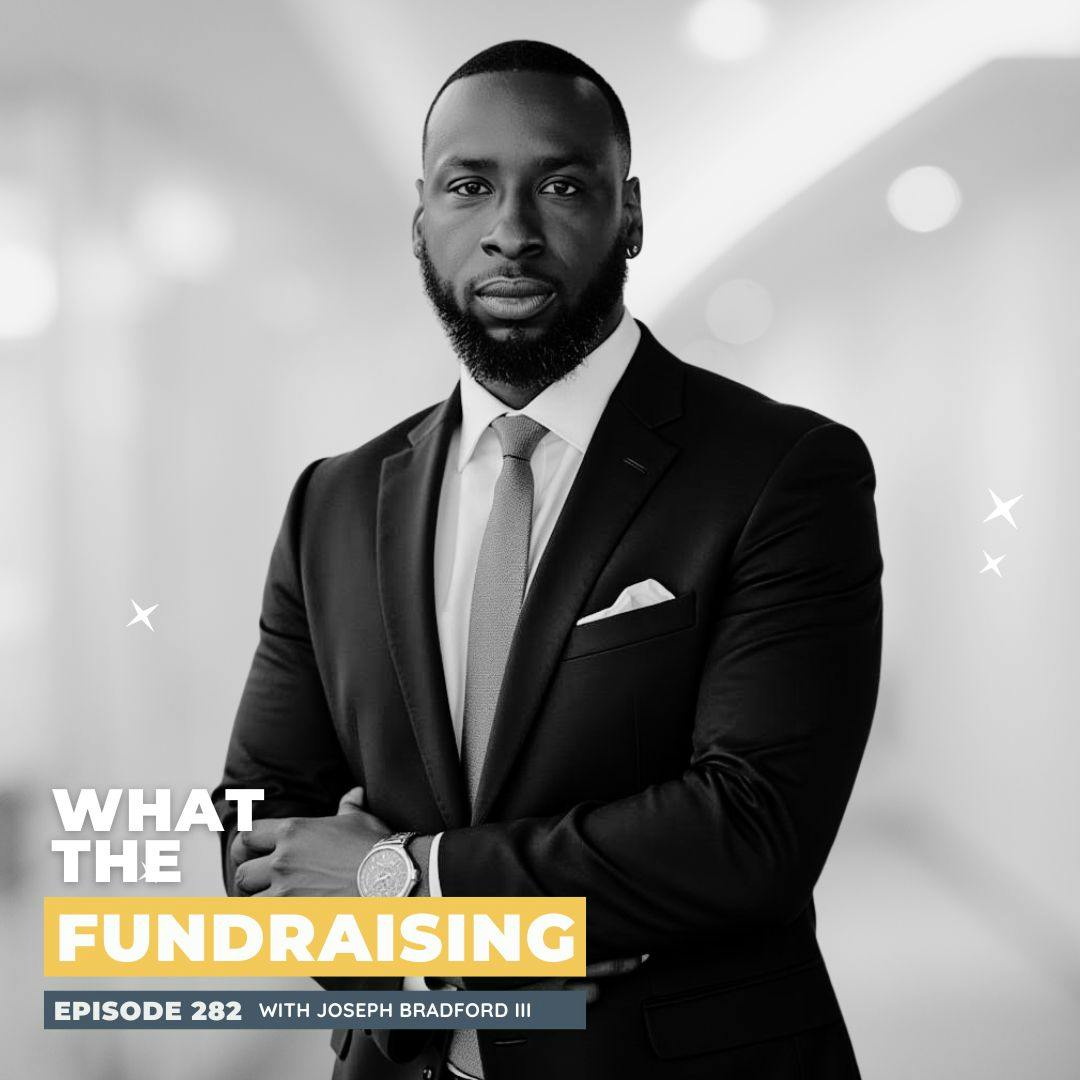
What the Fundraising
282: Building Trust & Breaking Myths: Humanizing Housing Insecurity with Joseph Bradford III
00:28:24
Loading summary
Transcript26 lines
- [00:00]
A
I think that sometimes the byproduct of whatever they went through led them to drugs. And now when we meet them, yes, they might have a substance abuse issue, but not everybody wants to be there. It's oftentimes a lot more complicated and some of us have additional resources that we can tap into. Grandparents, godparents, or maybe your parents are in financial situations that could help you when things are going wrong way. But oftentimes people always think that everybody wants to be outside. And so since they say, well then it's a choice, well then I'm not going to help them because they want to be there, so I'm not going to help. And I'm saying no. We have to build trust with the community.
- [00:47]
B
Hey, my name is Mallory and I'm obsessed with helping leaders in the nonprofit space raise money and run their organizations differently. What the Fundraising is a space for real and raw conversations to both challenge and inspire you. Not too long ago, I was in your shoes, uncomfortable with fundraising and unsure of my place in this sector. It wasn't until I started to listen to other experts outside of the fundraising space that I was able to shift my mindset and ultimately shift the way I show up as a leader. This podcast is my way of blending professional and personal development so we, as a collective inside the nonprofit sector can feel good about the work we are doing. Join me every week as I interview some of the brightest minds in the personal and professional development space to help you fundamentally change the way you lead and fundraise. I hope you enjoy this episode, so let's dive in. Welcome everyone. I am so excited to be here today with Joseph Bradford iii. Joseph, welcome to what the fundraising.
- [01:50]
A
Hello. Hello. Thank you for having me.
- [01:52]
B
I'm so excited for this conversation and for everybody to get to know you. Why don't we start with you just introducing yourself, telling everyone about you, about your organization, and then we'll dive in.
- [02:04]
A
Well, like you said, my name is Joseph Bradford iii. I am the president and founder of bear. We are a nonprofit organization. The letters BEAR stands for balance, ambition, respect and encouragement. And so I was born and raised in Kansas City, Missouri. Started the organization in Los Angeles. Just I moved to LA after college and just kind of wanted to change the scenery, see what the west coast was about and just was out there working. I was promoting clubs and met a guy that was sleeping in front of a Rite Aid and went up and talked to him. Like that's just kind of how this. This thing kind of kind of all started happening.
- [02:43]
B
Okay, well tell me More like how did. Tell me about the evolution, like from that moment into the organization that it is, because I can only imagine what it took to build what there is today.
- [02:56]
A
So if we take it back a little bit. In Kansas City, I'm the oldest of five kids. My mother had me very young. My father passed away when I was 7 years old. And right around 12, our house caught on fire. And so when that house fired, that forced us into homelessness. So I always tell everybody, no, I didn't live in a tent or in a car. But when our house caught on fire, we spent the next like year and a half in a shelter, in a, in a regular shelter and then like a battered women's shelter. And so that lived experience later on in life. Now as an adult, after college, now I'm meeting this guy and I'm just talking to him every night because in Kansas City it snows. You know, in la it snows, it's sunny, it's nice. And so for me, I wanted to understand, like, why are you outside? Because I would see this guy night after night and I would give him like my half eaten sandwiches or whatever else like that. And then it was just pure curiosity. I just wanted to know because this part just didn't make sense. And after just talking to him for a couple of weeks, then it was like, well, what's your name? And then like, what do you want from Denny's? And that just showed me that, oh, he's a human. And that like humanize him and just kind of let me into like everyone is going through something you don't know. In me and this guy, we had like pleasant conversations over time. Now did it make sense to me why he didn't want the same things that I wanted? No, that didn't. But it allowed me just to, to ask questions and develop a bit of a friendship at that moment. And from there I just kind of. Now it was like my eyes were open to like this problem and I was still new to, new to Los Angeles. And then I would go around to 7/11 and I would ask for those old burritos and stuff like that. And I'm saying, oh, it was like they couldn't sell them. They were still good, you can still eat them. But they had a for sale date. And so 711 would just throw them away and I would just ask for them. I would ask and they wouldn't give them to me. And then they end up telling me to. I asked the guy, can you just put them in a bag and he would throw them in a dumpster. I would jump in the dumpster and go get them, and then I would go, like, pass them out to people. And I did that maybe almost a year. Then the guy was like, don't worry about it. You could just come in, and he would put them in those black crates. And so I would just walk in, wave, go to the back. And he was like, you got to make me a promise. Bring back the crates. I'll give you more food. And so that was like our little deal. And I would have these crates, and I would go out and. And just trying to find people to give it to as many people as possible. And then after so much of that, the man was like, hey, I got a cousin that owns this 7 11, an uncle, and this one. So now I had, like, a route of 7/11 that I would go pick up food from. And by this time, I've kind of reached out to the local, like, pizza shops and stuff like that, because I'm like, what are y' all doing with this old food? That was what I was always trying to figure out. And I just had to, like, swear to secrecy. I wouldn't tell nobody, because, you know, they were worried about getting sued if somebody got sick. It's different, things like that. And then from there, like, I would have all this food, so then now I would have to go find, like, who and where to give it out. So now I'm at the Promenade in Santa Monica. I'm all through Venice. I'm over by Kaiser, underneath the freeways and just talking to people and building with people and building and building and building. And people would ask me for brooms and dustpans and clothes and shoes, and I would try to give it to them. I would try to kind of give them to them. And this time I was promoting clubs. But now this has been a several years of this kind of journey. And by this time, I've transitioned out of promotion and then now managing apartment buildings to house homeless people. So that was a very strategic goal on my side, because I wanted to know, like, the. The game of it here in la, because I wanted to do housing, because I'm meeting so many people that are telling me that they don't want to be on the streets, but there's still thousands of people on the streets every night. So I'm using kind of the resources that I had in the daytime to now, you know, go out and feed people at night. And I would just be out talking to people, and people would see me People would see me and they would stop and they would ask me, like, what church am I from? Or what organization? And at this time, I was just a guy. I was just a guy just out here feeding people. And I would ask people like, hey, help me. You want to help? And it was like, oh, I will give you this hundred dollars, but I can't get the write off. I couldn't get the write off. And that just kind of annoyed me because it was like, you're telling me you want to help, but you need to benefit to help. And it was just weird. And I just was kind of just. I just said, forget it. And I just was doing it myself and just out there every night and just really just kind of trying to understand people and their needs. And that process allowed me to humanize people that we've dehumanized for so long. Right. And so I started this journey in maybe 2012. It was like 2012. And around 2018, I finally got the 501C3 status because I needed the validity. I needed a website. I needed something where people can check. Because people didn't want to help me. They said they did, but now I'm like, well, if I do this part, then now you, you know, you have no more excuses. And I battled internally about that, about do I want to turn into an organization? And all of that, because truly, I didn't understand what all that entailed by turning it into an organization when I was just trying to do the work in the beginning.
- [08:35]
B
Okay, talk to me about that, because I think it's. That's a really interesting reflection. I actually feel like a lot of nonprofit leaders, maybe there are more than I realize that have that tension. I feel like in this sector, we see the opposite tendency a lot, which is people caring about something and starting a nonprofit before doing the work and maybe even before seeing if there are other solutions or organizations or people doing the work. So I'm really fascinated by that, like, personal introspection and like, some of your thinking there's.
- [09:12]
A
Yeah, well, for me, it was just because I. When I'm meeting people now and I'm meeting women and sometimes meeting kids, like, it just made me realize, like, that was once my mother, and that little kid was once me and my siblings. And so it was just always a call on my heart to help and just do what I could, you know, because when I was in that situation, I wish people would have helped us a little bit more. I wish somebody would have came and kind of pulled us out. I wish People would have asked my mother more questions or been a little bit more patient with her, but that didn't. All those things didn't happen. And I'm a product of it, which is okay. But now that it was my turn, I just kind of felt compelled to do something about it. And that's where every night that I went out, it just gained more and more, like, clarity around, like, okay, Joseph, this is what you're supposed to do. And that's when I said, that's when I specifically targeted the company that was housing. And then now I was able to get the skills that I needed to do this part of it. And then now, when it was time for me to create the organization, yes, it was the pool, because I didn't know anything about nonprofits. I mean, yeah, you hear about the Salvation army or Red Cross and stuff like that, but you don't know. And I didn't know that wasn't one of my areas where, you know, I knew anything about. And so it was just all a learning curve the whole time. But what I did know is that I needed the validity. People didn't trust where they dollar was going. People wanted to know, if I give you this, this dollar, what are you doing with it? And that was the reason why for me, I was like, no, come out, come out. You can be there right with me. You don't have to give it to me. Buy a broom, buy some trash bags, you know, just come out and help me feed. And when I seen, for me personally, that just pick up enough traction, that's where I feel like maybe this is the right route to go. So, like, for two years, contemplating and saving money because one, I took the job managing apartments, and I was underpaid, right? But I took it because I needed to learn. So that was a trade off. I wanted to learn. So I did this. And so now I'm using all of my money because there was no grant funding. There was no anything around that I didn't even know what the grant funding or grant writers. I didn't know anything about that at that time. So this is really all of my money putting to the side while continuously trying to help people as well. So it took me a little bit of time to save up the money because I wanted to do it for the state. And everybody was like, you can do the paperwork yourself. And I was like, no, I just want to pay just to get this done. And I just want it done right, and I want it done fast. So that's why it took me a Couple of years to get it done, but I finally got that done and was able to kind of continue to build on that, get a website, because now everything cost. An email address costs. Because then, now since your organization, you don't want to get use your Google email, you need to get an official truth email. What in that cost? The website cost? Who's going to build the website? So it was all these different things that went around just trying to help people. So I was like, this is the decision. I felt like this is where God was calling me to continue going that way and walking down that path. And I just never looked back. I did it and I just kept moving forward and trial and error, trial and error. I failed. I learned something. I failed. There was some tech stuff and I failed. And it was just like all through this process I was able to do that. But I was also saving money over here on the side so that I can lease the first house. Because now I'm meeting all these people. And because of the job that I had in the daytime, I was able to meet social workers and people that were looking for housing for their clients. That was one of the other very strategic reasons why I wanted to do it. Because I know I can meet people in the space. And so whenever I had my first house then I knew all of the people that could help me kind of fill it up and kind of work with them that way.
- [13:01]
B
Wow. Okay. I also think we should just take a moment to recognize like what all of that hustle has done. Because over 200 families and individuals have been connected to housing since 2018. Over 500,000 meals served since 2019. So 17 communities in four states since 2018. Do you ever take a moment to like hear your own story and just like recognize what you've done?
- [13:34]
A
I would love to tell you yes. And in moments like these, yes, I guess I do. But my day to day is not because there's something else that needs to be done. There's something else that needs to be done. Now I have almost 80 employees. We run multiple different shelters in LA and work with the mayor's office, the housing people. And so now this is like it started off me just feeding in 2012 to now this full fledged organization where I have case managers, I have therapists, I have all these finance people that do all of these different tasks to kind of continue this train of moving. So it's always something. I mean, that's the best way to say it. There's. There's something to do. And I love what I do. And it. Because I feel like I was called to do this. This is not work, it's really my life. And every day you just live life. And we put out fires, we house people, we try to connect people from the streets into permanent housing. And that's the goal.
- [14:30]
B
Wow. What do you feel like the organization has gone through such a tremendous growth and evolution and sort of like, like you were saying before, like all the iterating and all the failing and figuring it out and doing something wrong and then figuring out the way we. Like you've gone through a tremendous evolution. I mean to be the leader who can lead an 80 person team in such a complex organization trying to address the root causes, but also temporary and permanent solutions for so many different people. What has been for you some of the biggest like leadership growth that you've noticed, like in becoming the leader you are today?
- [15:17]
A
Not everybody's the same. Some people that work for me, they love it as well. They might have some lived experience or a family member or something like that. And not everybody is here for that. And so my job isn't to say that everybody has to had been homeless when they were 12 or anything like that. What I'm always trying to get everybody to do is to buy into the mission. And the mission is to always serve and help people. So that is where we're always just. Let's stay focused on the goal because I will tell you, last month we moved 17 people into permanent housing from our shelter programs and everything like that. And 17 people in a month is a lot of people into permanent housing. Right. I told my finance all the way down to my security, I said, you guys are all a part of this. From a security standpoint. You guys are the first people that they see when they walk in the building. You guys make sure that we're all safe, there's no weapons or anything that can hurt us and put out any of the little fires there. Although that you did not complete the paperwork, although you didn't go with them on the housing visits, although you didn't do the computer work. But you doing that allowed everybody else to do their job freely. It allowed all of the participants to come in and not essentially get kicked out because of bringing something in. So it allowed them also to see and say, nope, I'm not going to do that because my goal is to get my own house. And so for my finance people, them doing their part and making sure that the finances are coming in so that the people that are working with them are getting paid on time. And nothing's right with their paychecks. Because what we do know of, if people are not getting paid, they're not going to come to work, they're not going to have a good attitude, they're not going to do what they need to do for people. So it's a complete effort from the whole team. And I have a great team and everyone is focused on doing their job. And that's where for me, it's just been trying to make sure that everybody understands, first of all, what they have to do, what their role is. And let's do that to the best of their abilities. And if they can't do it, then let's figure out a way where they can. Because I feel like there's something in there that we can maybe change. Maybe they need a little bit more for me, or maybe they need a little bit more training or coaching. And I think that once you really look at people and analyze people and their needs and I feel like we can help them.
- [17:50]
B
How do you help your team and maybe even yourself, you know, you, you're dealing with situations that have a lot of, like, urgency around them. You're also, it sounds to me like really trying to create systemic solutions. Right. And I, I was looking on your website around the symposium that you put together and kind of pulling back all of these, all of these other challenges we see and face in society and, and connecting them to housing. And how do you hold both of those truths, like, how do you make sure you don't treat everything as a fire in order to allow you the time to do the system building while also balancing, you know, for you and your team that like, these are real lives and real people and real circumstances that oftentimes do require, like, urgent responses.
- [18:43]
A
Well, for me, I think it's just understanding who I'm talking to at that moment. I tell my, my team to be intentional, right? Can I, Joseph, sit there and have an hour conversation with every single person? I cannot. But sometimes with some people, you have to give them this where everything else just has to stop and give them this. And so for me, understanding if I have a shaky foundation, then the whole house is going to fall down. And so I spent a lot of time making sure that we have a rock solid foundation so that we can build on from there. So that's why when fires do happen, we already have a plan, a procedure of exactly how we deal with this specific situation. Sometimes, you know, things come up, of course, but for the most part, I feel like we've done a great job to anticipate issues and put in fail safes around it. And that's why I said we're a team. We're not relying on one person to do any one thing. This person has a supervisor and this is who you report to. This is what you're supposed to say. Make sure that we're on communication. Make sure I'm in communications with it, but I'm also making sure that this team that works maybe in the office is doing what they're supposed to do as well as the people that are maybe in the streets.
- [19:59]
B
Yeah. Wow. I mean, it's a lot like, what do you wish? I have two questions to be sort of as we start to. I could talk to you forever, but I'm going to be sensitive to time. The first question is, what do you wish people knew or understood about housing and housing insecurity and the unhoused population that you feel like is a big, like, misunderstanding or misconception or that is getting in the way of us solving these challenges as a society that everybody.
- [20:31]
A
Wants to live in a tent and that everybody is doing drugs now? I think that sometimes the byproduct of whatever they went through led them to drugs. And. And now when we meet them, yes, they might have a substance abuse issue, but not everybody wants to be there. It's oftentimes a lot more complicated and some of us have additional resources that we can tap into. Grandparents, godparents, or maybe your parents are in financial situations that could help you when things are going wrong way. But oftentimes people always think that everybody wants to be outside. And so since they say, well, then it's a choice, well, then I'm not going to help them because they want to be there, so I'm not going to help. And I'm saying no, we have to build trust with the community. And once we're able to build trust, then now we can start knocking down the walls and really get to the root of the problem. Because just like my mother, my mother didn't choose to be homeless with five little kids. That wasn't a choice. That was a product of what happened. Our house caught on fire and she didn't have the property, finances and support to help us out. And so we had to live in a shelter for the next year and a half. But there's so many people that are on the streets. Something happened. Or foster care. I'll tell people foster care adds 60 to 70% of the people that are homeless because once they age out of 18, they have nowhere to Go. They have no family. They didn't get taught the same thing. They might have never been told that they loved them. I have two boys right now and I tell them I love them every single day because I always want them to know that. But not everybody that I meet have ever been told they love them or ever hugged them or ever been hugged. The misconception of they chose that is false. Or they want to be on drugs is false.
- [22:18]
B
Yeah, it breaks my heart even to like, hear you say those things. But like, yeah, like the judgment that gets passed when so many of us are like one emergency, one crisis away from like, our cards falling.
- [22:32]
A
Yes, yes. Medical. Just to give a personal story, my mother recently just got diagnosed with stage four lung cancer. Well, now she can't work. Yeah, she was working. She's been working all this time, but now she can't work. She just physically can't work. So because she physically can't work, she doesn't have a lot of income coming in to sustain her life. You know what I mean? And so that she didn't choose that, she wouldn't, she didn't go to the doctor's office and pick this, this is something that happens. And so then, now just imagine if we were still kids and this would have happened to her then. Now we would have also just been falling or she would have been trying to work and physically wouldn't have been able to do it. And so that's my situation as a person. That's. That houses hundreds of people every single day. Now my mother in Kansas City is going through the same thing right now as we speak.
- [23:26]
B
I'm so sorry.
- [23:28]
A
Thank you.
- [23:28]
B
All right. This was not going to be my second question, but now I want to ask it. So I have two little kids. I have a six year old and a two year old and we live in Berkeley. And so there are a lot of kind of quote, unquote tent cities around us. And my daughter asks a lot of questions. And I'm curious what you would say to parents about how we can best talk to our kids to, to help rewrite some of the narratives that you want adults to. The myths we want to bust as adults. What should parents be saying to kids to ensure that we're not bringing them up with all those same myths?
- [24:07]
A
I don't think it's something that you say. I think it's something that you do. I have two kids, like I told you, I have two boys, they're eight and nine. And my kids have fed with me side by side on skid rows since they were, since they were babies. My kids have grown up in the streets, quote, unquote. And they see them. My kids love going out there to help because now what they do see is they see their father always helping people and then they see the other side of it. When people are saying God bless you or thank you or whatever else, are they looking forward to it or seeing the interactions that I'm having with people. And sometimes, unfortunately, we see what we see on the streets. So I can't control it. But I just show the love that I have for people and I want my kids to grow up with that same type of love, which they do because then they turn around and say, hey, can we stop and do this? Or can we give somebody this? I've watched them out of their own self or go help up their teammates. It's because of this world that they've actually been able to see. And that's an experience that I've been able to give them and I'm proud of that.
- [25:07]
B
Oh my gosh, that's amazing. And the perfect note, tell everybody where they can go to connect with you to donate, to learn more about the organization to to help. Where should folks head?
- [25:19]
A
We go to my website, which is Bare B A r e truth inc.org and you click that it have the donate. It have our social links. It have everything right there.
- [25:31]
B
Thank you so much. Thank you so much for joining me today and for this conversation. I'm so grateful. I hope today's episode inspired or challenged you to think differently. For additional takeaways, tips, show notes, and more about our amazing guest and sponsors, head on over to Mallorykson.com podcast and if you didn't know, hosting this podcast isn't the only thing I do every day. I coach, guide and help fundraisers and leaders just like you. Inside of my program, the Power Partners Formula Collective. Inside the program, I share my methods, tools and experiences that have helped me fundraise millions of dollars and feel good about myself in the process. To learn more about how I can help you, visit mallory.com powerpartners Last but not least, if you enjoyed this episode, I'd love to encourage you to share it with a friend you know would benefit or leave a review. I'm so grateful for all of you and the good hard work you're doing to make our world a better place. I can't wait to see you in the next episode.