← What the Fundraising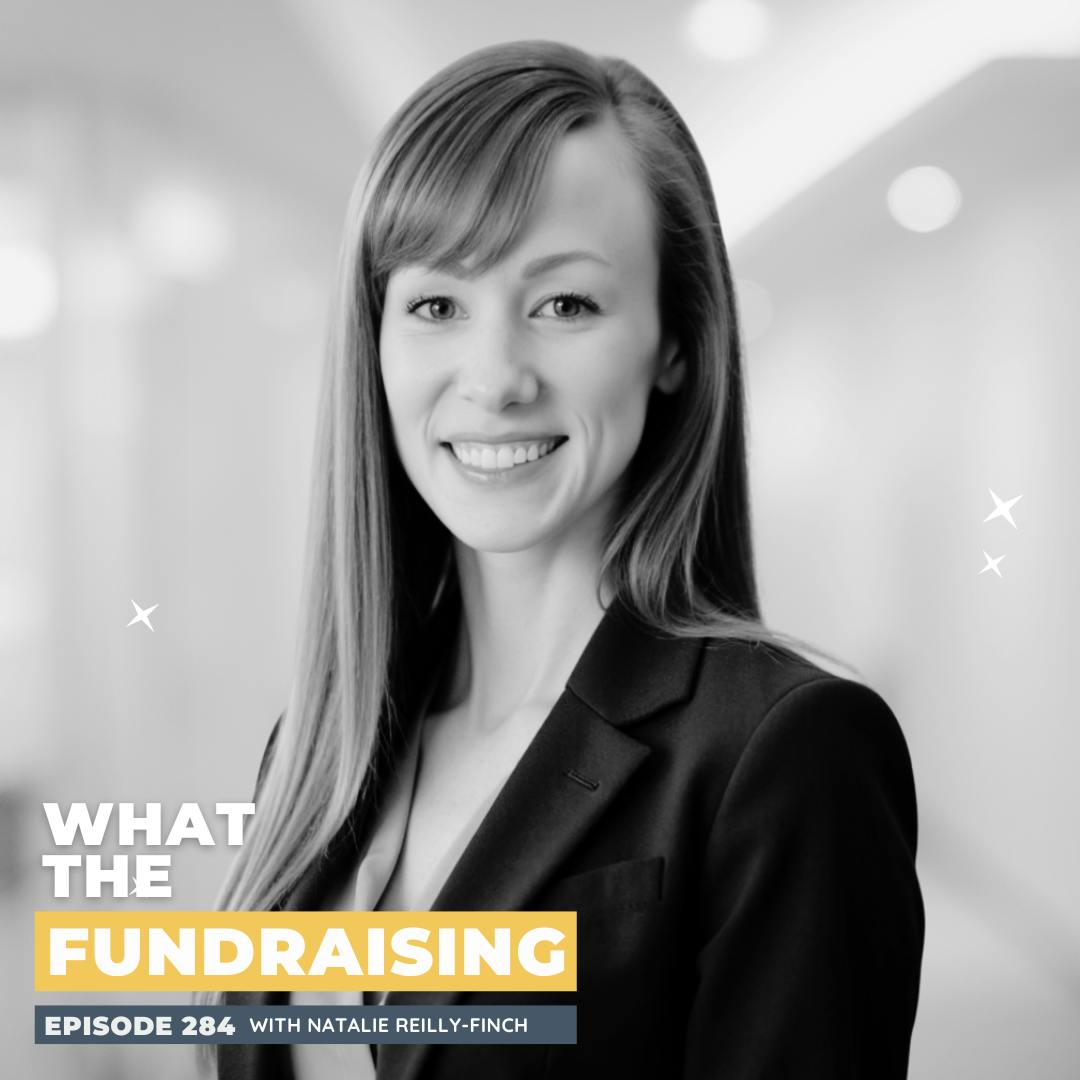
What the Fundraising
284: Breaking the Stigma: Fundraising and Hope in Lung Cancer Research with Natalie Reilly-Finch
00:25:42
Loading summary
Transcript36 lines
- [00:00]
Natalie Riley Finch
There's sometimes I have donors where I will say, let me tell you about this other organization. And that sometimes is scary to a fundraiser. But I want them to do whatever is most meaningful for them. And sometimes me opening that door, they'll go do their advocacy with them, but their dollars will still come to us because I made that connection. And it's not losing a donor, that person still being philanthropic. Rising tide lifts all boats type of mentality. If they're supporting another lung cancer organization, we're still all working toward a cure for lung cancer. So let's do it right.
- [00:36]
Mallory Erickson
Hey, my name is Mallory and I'm obsessed with helping leaders in the nonprofit space raise money and run their organizations differently. What the fundraising is a space for real and raw conversations to both challenge and inspire you. Not too long ago, I was in your shoes, uncomfortable with fundraising and unsure of my place in this sector. It wasn't until I started to listen to other experts and outside of the fundraising space that I was able to shift my mindset and ultimately shift the way I show up as a leader. This podcast is my way of blending professional and personal development so we as a collective inside the nonprofit sector can feel good about the work we are doing. Join me every week as I interview some of the brightest minds in the personal and professional development space to help you fundamentally change the way you lead and fundraise. I hope you enjoy this episode, so let's dive in.
- [01:30]
Podcast Host
Welcome everyone. I am so excited to be here today with Natalie Riley Finch. Natalie, welcome to what the fundraising.
- [01:37]
Natalie Riley Finch
Thank you. Nice to see you, Mallory.
- [01:39]
Podcast Host
It's so good to see you. And I've loved every conversation and DM exchange that we've been able to have over the last few years. Why don't we start with you just telling everybody a little bit about you and your work and then we'll dive in.
- [01:53]
Natalie Riley Finch
Yeah. So I'm Natalie. I'm the vice president of Growth Lung Cancer Research Foundation. I have been fundraising since I was 18 and I was in college, so I've actually never done anything else and I currently live in Minnesota, but I've lived in a lot of places
- [02:10]
Podcast Host
and when we first you've had a very interesting and sort of exciting fundraising career. One of the things that we of hit it off around when we were talking, given our overlapping experiences in like healthcare or disease focused organizations, is this idea of fundraising, how to fundraise for stigmatized causes, which I think is actually in some ways becoming more and more of a conversation. Whether you considered your work a stigma. Having stigma around it before, but I just. In the day and age that we're in. So I'm curious, like, for you even just hearing that, like, or knowing that you're going to be fundraising for a cause, like, tell everybody a little bit about the work you do in lung cancer and how that has changed or opened your eyes to the difference in fundraising for work like this.
- [03:01]
Natalie Riley Finch
Yeah. So it's one of the hardest things that we deal with. I think that lung cancer sometimes gets a bad rap. It does have some stigma attached to it around smoking and other things. I don't think many people think of it as a women's disease, but. But it truly is. We've seen in past years that we lose more women to lung cancer than cervical, ovarian and breast cancer combined. So this is truly affecting women. And so that's something that I realized that I didn't know until I worked here. And what we are trying to do at Lung Cancer Research foundation, we're actually the largest private funder of lung cancer research, and we're really filling the gap. So it's very political how federal funding happens in the medical research space and we often are overlooked. Last year receiving $0 federally, whereas those other types of cancer that I mentioned that take less lives actually receive much more funding than we do, which is wonderful for them. But we're trying to fill that gap of we really need to figure this out. We need to increase survival. We need to figure out why young women in particular are being diagnosed at higher incidence lately. And that's what we're trying to accomplish anyway.
- [04:12]
Podcast Host
So I had shared when we had talked last time that, like my grandmother had experienced, had been diagnosed lung cancer, was not a smoker. So I was like, somewhat familiar with some of the stigma that you deal with when you think about it from a fundraising perspective and like, how you're building relationships with donors or. And maybe we talk about it both as sort of like the. I don't know if I want to use the word marketing, but the, like, awareness work that you do and how it factors into how you think about that all the way down to those, like, one to one, like, donor conversations. Like, how does it influence. Maybe let's start with like, the awareness messaging. How does that influence how you all think about how you approach that.
- [04:50]
Natalie Riley Finch
Yeah, so it's definitely. It's different when I have donors who have been personally touched by lung cancer, Whether it's themselves or a loved one, they sort of get it right. They get the stigma. They. They're on board with us, they're using the same megaphone we are. And so that's a little bit easier when we're trying to reach out to folks that are new to funding lung cancer or maybe don't know enough about it. That stigma plays a big role. And it's hard for us, for me, especially, to toe the line between really getting out the information that if you have lungs, you can get lung cancer. So that's the only prereq. Right. And so even if you haven't smoked, it can be radon pollution. It could just be a gene mutation that you have. And so that's one of the messages that we often say. But at the same time, what am I saying about smokers when I say that? Right. If I'm high, if I'm highlighting a quarter of people diagnosed now with lung cancer have never or are currently not smoking, why am I differentiating that? Right. Because even if I did smoke, that doesn't mean I deserve lung cancer. That doesn't mean that my outcomes are any different once I'm diagnosed. And so it's sort of hard for us to create that awareness without sort of making two camps of people living with lung cancer, because that's not what we're trying to do.
- [06:07]
Podcast Host
Okay, so I'm so curious, like, because I dealt with this a little bit in the diabetes space as well. Right. So there's a lot of stigma. Well, sometimes there's stigma around diabetes in general and a conflation of type 1 and type 2. Or sometimes, if people understand the distinction or know that there are multiple types of diabetes, there's additional stigma on type 2 diabetes. And so I became very familiar with this space of, you know, one sometimes wanting to make sure people knew from an education perspective that, like, there are two types of diabetes and you are not protected against all diabetes just in the event that you make all these lifestyle choices, because that's not how it works. And, like, wanting to educate people there, but then also, to your point, not wanting to, like, demonize one type of diabetes over another. Like, how does that show up in how you all talk? Or if you have any kind of, like, language guidelines or even just how you talk amongst your team around it.
- [07:15]
Natalie Riley Finch
Yeah. So one example is one of the donors that I met when I first started at LCRF that really keeps inspiring me every day to do this work. We are the same exact age. We grew up in the same city. We are super similar. We've just kind of become friends. And she has stage four lung cancer, and I don't and she's never smoked, neither have I. But she has it because of just a gene mutation that's just in her DNA. Nothing she did to make that happen. And so I sometimes talk about her as my inspiration because she is. But I was in a phone call with a donor where I said something about young non smoking women who are being diagnosed. I use her as an example. And that donor was the one that sort of called me out on it and said, well, I did, I have lung cancer, likely because I did smoke for 30 years. But is that different? Is that you're funding research for both of us, Right. And it was this moment. It's similar to this, toeing the line between urgency and progress. So I love when donors call me out. I had a donor call me out. We were sitting at a gala that I had been in charge of and we had multiple speakers on the stage who had lost someone to lung cancer. And they were really driving that message of like, we're losing our loved ones and we have to fund this and we need a cure. And a donor, a big donor that was sitting next to me turned to me and said, this whole event is depressing. And it, it hit me, right? And yeah, you know what it is? And we are told oftentimes, like those of us especially who write direct mail, that it's urgency. It should be depressing. It should pull on the heartstrings. You're trying to get donations. You're telling the story of the non smoker young woman to pull on those heartstrings. But what stories are you not telling if that's all you're focused on? Right. I want to talk about the dad who's 65 that smoked his whole life and worked in the trades. Now he has lung cancer. We don't want to lose him either. We want to tell the story that last year LCRF funded over 5 million in research. That's a huge win. We have more therapies for lung cancer than we've ever had before. And celebrating that progress doesn't make the urgency any less. We still need a billion more dollars to get to a cure. So it's these messages where we're trying to figure out how much to lean in, in these different angles and who's the audience. And it's hard. Yeah.
- [09:40]
Podcast Host
I think that even just illuminating, like the complexity there is so important. Right. Because I think a lot of times when people like approach some of these questions, they're also trying to get it all down to a sign, a sound bite, where they're saying all the things, right. And then they can't and then they're stuck and they're like, well, this is going to be imperfect or this isn't the whole story, or this is just one piece of the puzz. How do you kind of handle knowing that? Okay, maybe in an event you can create a more well rounded experience around the stories that are being told, but sometimes you're going to have to send an email with one story that isn't going to tell the whole picture. How do you handle that? And I mean, I'm actually thinking about that beyond just the, in the writing, but like, just like in yourself. Like how do you think about that?
- [10:37]
Natalie Riley Finch
Yeah. So one of the things that I'll say about the writing in particular is that we really lean into segmenting. We try to have really solid data for those segments to be effective. So within lung cancer there's a bunch of different types, subtypes, categories of lung cancer. And so we try to track which of those are do our donors care about and use stories that are similar. So when it comes to writing, I think segmenting, if you have the right data is really helpful. And then as far as if it's a one on one conversation, I've just realized that I need to listen more and shut up. And I think that has helped me do my job so much better. Because before I go into my elevator pitch, before I try to tell them every little thing about LCRF and why we're so great and why we're different, I try to ask the questions. Because even if it's three minutes of some rapport and questions and finding out a little bit more about them, they'll say a couple keywords that then I can dive into that area of lcrf because we do so many things, like you said, I can't say it all on the phone call. So I try to figure out where are you coming from? So that I can show you where we're aligned instead of let me tell you all of the things.
- [11:48]
Podcast Host
Yeah, it's so interesting. I feel like that has been a really big shift for me too. And that the reason I would jump into my pitch was a lot of the times just nerves, right? Like I was like so nervous to get it out. And so I didn't spend the time opening up those discovery questions and then sort of building the muscle memory of okay, like, and listening. Right. So it's like you can't just ask the questions, but you have to really hear what they're saying and really know, like when Is there maybe another question under there that gets at the core of why they're really meeting with me or what they really care about? And one of the things I've learned over the years is like, oftentimes this is a little bit different when in a like disease state area like this. But what one of the things I've been surprised about through my like tenure is how different the core reason, like for their core for their involvement is than the surface level reason that I saw. So like, yeah, maybe they've been impacted and this has actually been true even in this area. But like, maybe the easy way to sort of classify their involvement is my child has type 1 diabetes or I've been impacted in this way, but actually like underneath that there's this other. They're like, I really like your focus on mental health related to this. That feels really different than how other people talking about solutions here. Have you found that to be true and what are some of the things you listen for to uncover maybe those deeper areas of alignment?
- [13:30]
Natalie Riley Finch
Yeah, it's interesting. Like I said, LCRF funds a lot of different things. And so one of the things that we're working on right now is a collaboration and it's all about climate health and pollution and how does that tie into lung cancer. And it's currently a smaller subset of what we're spending our money on. But it's a very important thing and we're just sort of dipping our toe in that collaboration. And it's not something I generally talk about on calls. One, because I don't know enough about it to be honest. I'm not the staff person that knows everything about it. And because I just really focus on our traditional grants and what we're traditionally funding. This is sort of a one off. But I asked the right questions on a call the other day with a donor, found out she really cares about the environment and the other things that she does philanthropically is around climate and pollution. And so I was able to dive right into that and make that connection. I would have never known to even and bring it up. I've never brought it up with a donor before. And she has lung cancer and I could have just given her the general preamble about who we are, but because I figured that out, I was able to make it a little more personalized.
- [14:39]
Podcast Host
I love that, I love that. And I feel like some of what holds us back from doing that is that we're afraid of the donor saying something that then we don't have an answer to. Right. I feel like, we. I tell stories a lot about, you know, I did this, and then I was surprised with this, like, really great area of alignment.
- [15:00]
Mallory Erickson
Right.
- [15:00]
Podcast Host
But sometimes I've asked a deeper question, and what I've actually found is like, maybe we're not aligned.
- [15:06]
Natalie Riley Finch
You know, we have sister organizations that are also wonderful that do lung cancer work, and we all sort of have our own focus. If you really want to fund the research, we are your best option. If you want to go do advocacy and knock on doors in D.C. there's a different organization that I would send you to because they're doing that better than us. And so there's sometimes I have donors where I will say, let me tell you about this other organization. And that sometimes is scary to a fundraiser, but I want them to do whatever is most meaningful for them. And sometimes me opening that door, they'll go do their advocacy with them, but their dollars will still come to us because I made that connection. And it's not losing a donor. That person still being philanthropic, rising tide lifts all boats type of mentality. If they're supporting another cancer organization, we're still all working toward a cure for lung cancer. So let's do it right.
- [15:58]
Podcast Host
Oh, my gosh, I love that story. Because when we think about our role with donors, I think that really is like the at the core, like, what partnership looks like, right? Like, we can't say, oh, I'm looking for alignment, and then not be willing to notice or say something when we see that it's not there or that there might be an opportunity with another organization that creates that deep alignment for them. Like I always say, like that. That's the difference. Like alignment as a strategy versus alignment as an intention. Like, anybody can say, can send an email saying, I want to see if we're aligned on X, Y and Z. But, like, are you really looking for alignment in your intention with the donor? And when you see something like that, saying something, because your deep desire is that they find meaningful aligned opportunities.
- [16:48]
Natalie Riley Finch
Right? And my goal is that I work myself out of a job because we don't need funding for lung cancer anymore because we have figured it out. We've done all the breakthroughs. And if that means that person wanted to knock on doors instead of send a check to research, that's fine, because we need both. And yeah, the other thing I'll mention is that how we talk to donors. I also don't think there's ever a time, though, that I have to say, oh, we don't do that. One of the hardest things for us is I have donors who really care about a very small, specific part of lung cancer research. And they say, can I restrict my dollars to that? And it'll be the most minute part of lung cancer research. And I'm thinking about all the research projects we're funding. Maybe we don't have one in that right now. And that's what stumps me, is because I can't say, yes, I have the perfect thing for you and we're going to restrict your dollars. But I can politician a little bit with my answers. Right. And talk about how that ties in to what we are funding and what. You brought that up. And it's not a priority for us right now, but that's a great idea. So why don't you become a research advocate? We have a group called Research Advocates. They're patients who help us define what our priorities are. So they kind of sit on a council and help us figure out who we should be funding. And they work alongside our scientists on that. It's really cool. But I try to find ways to get them more engaged because if they care enough to suggest that we should be doing something differently than we already are, I want to hear them out. And in the meantime, hopefully they fund something a little more general.
- [18:19]
Podcast Host
What's also like, striking to me about what you just said in that sort of story is like, it does require you to be thinking about, like, the systems, you know, like around and the ecosystem at play in solving the problem that they deeply care about.
- [18:35]
Natalie Riley Finch
Right.
- [18:35]
Podcast Host
I think I have found a lot in those conversations where somebody kind of comes in hot wanting to restrict something that really at the core or deep down, like, what is the thing that they care so much about that they believe that restricted funding is going to solve? And how can I help them understand that that thing that they care so much about is actually also being solved through these other vehicles, or that the ecosystem of research in this area impacts the outcomes there that they care about. But all of that, again, requires that going a layer deeper and not just saying, okay, no, we don't need a truck, or yes, we do need a truck, because now I'm going to buy a truck because you want to buy a truck, but we don't really need a truck, but, okay, let's buy the truck, and instead being learning that, okay, you think the truck is the mechanism to delivering all of this food. And actually what I get to share with you is the ways that we can actually increase that delivery that aren't. Don't have anything to do with the trip.
- [19:37]
Natalie Riley Finch
Right, Exactly.
- [19:38]
Podcast Host
Yeah. I love that. What would you say to a fundraiser who was new to working in. You know, we diverged a little bit beyond just the stigma component, but I actually think everything that we've said is like all the more important in a stigmatized area because it's all about kind of going those, the layers deeper, past the clickbait top line. Right. But what would you say to a new fundraiser raiser coming into like a, an environment where maybe what they're fundraising for is stigmatized either in one community or, you know, nationally or globally? What advice would you have for them?
- [20:17]
Natalie Riley Finch
Yeah, it took me a couple years. I had a good learning curve when I came to lcrf. Before that I had worked for Ascension for I think almost seven years. And in a healthcare setting. Right. I would get patient names every day that were pre qualified. I could call them up. It was, I won't call it easy, but it was much easier than what I'm doing now. And one of the things that I would say is you have to meet people where they're at because how they feel about the stigma will change throughout their disease journey. Right. So I have donors who are newly diagnosed and haven't even told their family yet. And they're calling us for support, they're talking to our social worker, trying to figure out what to do. I have a donor who has a TV show. She's very famous. I know that she has lung cancer because she donates to us, but she doesn't want her producers to know because she doesn't want to get canceled. But then I have the people who are like, let's break this frickin stigma. And I'm going to send an email to every single person I know and I'm going to fundraise that. I'm going to be your best peer to peer fundraiser and I'm going to raise a ton of money around this and get people excited. And I think all of those people are equally as important in your ecosystem of prospects. And so really figuring out where they're at in that journey will help you coach them to have the best donor value for you. Right. The person that's on TV every day. I would love for her to be on TV and talk about lcrf. She's not ready to do that. So how else can I use her? Well, what I did is I used her help with our gala and she helped us think through the production and the run of show and you know, use some of her skill set for that and just continue to engage with people where they're at and stop trying to make them do the things that you think would be more helpful than what they're already doing.
- [22:07]
Podcast Host
Yeah, that's such good advice. That's such good advice. Well, I could talk with you forever about this, but I'm really grateful for your time and your wisdom and for you joining me on the show. Where can folks go if they want to just connect with you and anything else you want to make sure you get to leave folks with.
- [22:24]
Natalie Riley Finch
Yeah, so I don't have social media besides LinkedIn. I'm pretty lame. I don't have Facebook or anything, but I'm on LinkedIn and lcrf.org is our website and also reach me there. And if you have a loved one that fits the screening guidelines for lung cancer, give them a nudge. Ask them to get screened. Less than 15% of people who are eligible for the screening are getting screened so that other 85% fix it.
- [22:51]
Podcast Host
Amazing. Natalie, thank you so much for joining me.
- [22:55]
Natalie Riley Finch
Thank you.
- [23:01]
Mallory Erickson
I hope today's episode inspired or challenged
- [23:04]
Podcast Host
you to think differently.
- [23:05]
Mallory Erickson
For additional takeaways, tips, show notes, and more about our amazing guest and sponsors, head on over to Malloryerickson.com podcast and if you didn't know, hosting this podcast isn't the only thing I do every day. I coach, guide and help fundraisers and leaders just like you. Inside of my program, the Power Partners Formula Collective. Inside the program, I share my methods, tools and experiences that have helped me fundraise millions of dollars and feel good about myself in the process. To learn more about how I can help you, visit Mallorykson.com PowerPartners last but not least, if you enjoyed this episode, I'd love to encourage you to share it with a friend you know would benefit or leave a review. I'm so grateful for all of you and the good hard work you're doing to make our world a better place. I can't wait to see you in the next episode.
- [24:01]
Practivated Announcer
Fundraising is hard. Every donor conversation carries pressure and most fundraisers are expected to just figure it out through trial and error. That's why we built Practivated, the first ever AI powered donor conversation simulator. Made just for fundraisers. It's a safe, judgment free space to practice your pitch, refine your storytelling and build the confidence that drives real results for your mission. Because conversations move missions forward. With Practivated, you and your team can practice anytime, get real feedback instantly and walk into donor meetings ready, not rehearsed, but prepared. See how practice changes everything. Try practivated today at www.practivated.com and start building confidence. One conversation at a.