← What the Fundraising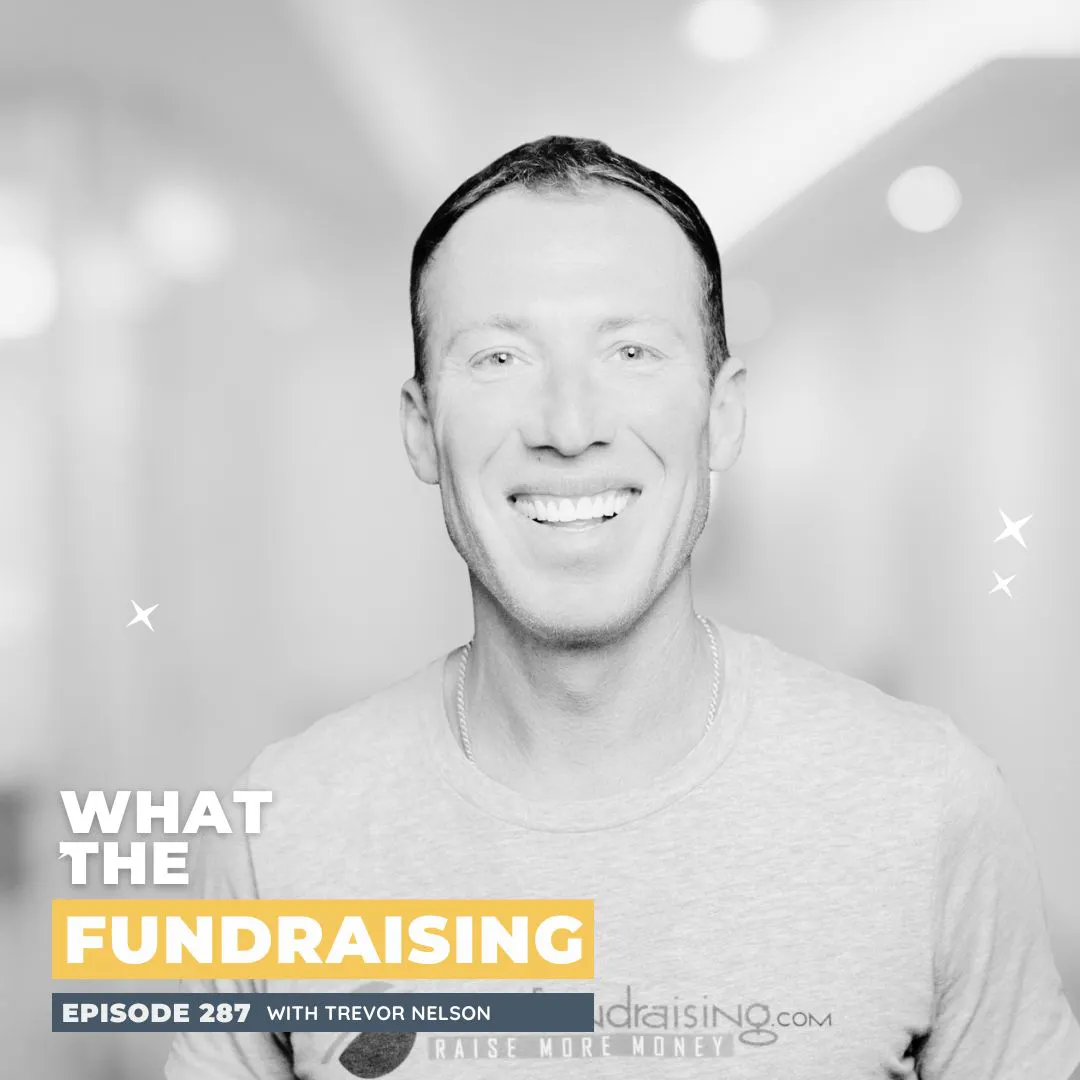
What the Fundraising
287: The Fundraising Reset: Patience, Gratitude, and Real Connection with Trevor Nelson
00:27:29
Loading summary
Transcript51 lines
- [00:04]
Mallory Erickson
Before we dive in, I want to give a huge shout out to donorperfect for supporting this podcast and the fundraisers who listen to it. They're not just a CRM. They're a partner in helping fundraisers feel more confident, aligned, and supported. Learn more@donorperfect.com Mallory,
- [00:25]
Trevor Nelson
Fundraising is a relationships business. I know you're so plugged into technology, and you and I know a lot of the same people, and I'm so grateful for what you say. And people that are leading the charge with AI and what have you is that like, hey, these tools are here so we can focus on the people. I find myself saying this like, right, like, the technology exists. All of these things exist so we can focus on people. Because I believe in, like, the most powerful fundraising tool that you have is your phone. The most impactful thing that you can do, folks that support your organization, your donors, is pick up the phone and call them. Like, I'm so cued into, like, that personal piece.
- [01:06]
Mallory Erickson
Hey, my name is Mallory and I'm obsessed with helping leaders in the nonprofit space raise money and run their organizations differently. What the fundraising is a space for real and raw conversations to both challenge and inspire you. Not too long ago, I was in your shoes, Uncomfortable with fundraising and unsure of my place in this sector. It wasn't until I started to listen to other experts outside of the fundraising space that I was able to shift my mindset and ultimately shift the way I show up as a leader. This podcast is my way of blending professional and personal development so we, as a collective inside the nonprofit sector, can feel good about the work we are doing. Trust. Join me every week as I interview some of the brightest minds in the personal and professional development space to help you fundamentally change the way you lead and fundraise. I hope you enjoy this episode. So let's dive in.
- [02:01]
Welcome, everyone. I am so excited to be here today with Trevor Nelson. Trevor, welcome. To what? The fundraising.
- [02:08]
Trevor Nelson
Oh, thanks so much for having me. Looking forward to it myself, Miller. I appreciate the audience.
- [02:12]
Mallory Erickson
Yeah, I'm so excited for this conversation. You're such a bright light in our space and I love all of the things that you do. Why don't you start with just telling everybody a little bit about you, your work, and then we'll dive in.
- [02:24]
Trevor Nelson
Oh, thank you. Well, I am Trevor Nelson, Chief Gratitude Officer at HGA Fundraising. We're a family business. Our day to day is we provide auction items that folks use in their at their events. So we're very, very cued into event fundraising. However, just as the years have passed and what have you, we've created this really, really beautiful, like I said, family business. My business partner is my best friend. Our first employee was my sister. Our second employee was his daughter. Now there's 21 of us. I was just addressing the entire team today in an email because we do a monthly meeting all together and I like to do funny recaps and stuff like that and make fun of myself. But there's 21 of us now and yeah, and we've also realized it's fun to talk about auction audience, but that can get a little boring. They raise a lot of money and it's awesome. We're so, so now focused on, you know, our little media company, hey Nonprofits, where we have the podcast that you've been on live weekly webinar, free coaching. Because we identified that our space in particular, and I think our space in general needs to be served and more than ever needs encouragement and needs to be nudged and needs to giggle and all these things. So we've set out. I hope it doesn't sound too cliche to put our best information out for free. A lot of time that's riding on the coattails of special guests like yourself when you come on. And other great. Our greatest fortune has been the people that we've got to meet in this space. And I'm just so enthralled. I still feel like it's the very, very beginning. You know what I mean? In a good way. You know, so. But yeah, that's a long answer to a short intro.
- [03:53]
Mallory Erickson
I love. You know what? I didn't know before this moment was your actual title. And it's so perfect for you because you just lead with so much gratitude. And I feel like you attract all of those things that you love about the sector and this space and the work because of how you show up. And so yeah, I can't believe I didn't. I didn't realize that title before. That's amazing. So tell me. Okay, having a look inside, tons of different organizations, lots of different, like the work of a lot of different thought leaders. What, like in this moment, you know, sort of still beginning 2026. I don't know how long we get to say that for, but I'm going to probably say it till like June or July. What is top of mind for you as you think about some of the most important conversations happening in this sector right now or the needs of the organizations that y'? Supporting? Like, what's your kind of state of the union?
- [04:52]
Trevor Nelson
That's a. Yeah, we're getting right to it, huh?
- [04:54]
Mallory Erickson
Yeah, I know. I'm gonna throw a softball just to get you warmed up.
- [04:59]
Trevor Nelson
Exactly. No, I'm game for it.
- [05:01]
Practivated Sponsor Voice
Yeah.
- [05:02]
Trevor Nelson
You and I could riff for a long time, but for me, having so many conversations with so many bright minds, once again, I mean, I get to talk to the most brilliant minds in fundraising all the time. Like, it's pretty wild and pretty, pretty cool what we've been able to trip and fall and find ourselves at. But recency bias is what I mean by that. With all these conversations that are so current for us, it's because of our day to day. We're focused on auction items. We're right in the middle of event season. We're so focused on events, but we really like to peel the curtain back and use our tools and what we do as a business to not reframe, but really, really, really remind folks that this is a. Obviously it's a relationships business. Fundraising is a relationships business. I know you're so plugged into technology and you and I know a lot of the same people and I'm so grateful for what you say. And people that are leading the charge with AI and what have you is that like, hey, these tools are here so we can focus on the people. I find myself saying this like, right, like the technology exists, all these things exist. So we can focus on people. Because I believe in like the most powerful fundraising tool that you have is your phone. The most impactful thing that you can do, folks that support your organization, your donors, is pick up the phone and call them. Like, I'm so cued into like that personal piece. I'm not trying to be a throwback. I'm not trying to go old school. It's just becoming such talking to everyone. I could talk to like one of the most prolific fundraising auctioneers in the country, and I could talk to the inventor of fundraising, AI Right? And it's like people. It's people. And it's like, I'm so into the idea that, like, if someone shows up to your event and they've never been there before, what a wonderful opportunity to shake their hand. And people give to people they like. And all the. I'm so, I guess I. My big thing is people. I think we get so caught, like red herring almost. Right? Like in different, like, opportunities and different things that exist and what have you. And I just want folks to realize, like the biggest rock, the biggest, like, thing. Not like a daily to do, but the biggest thing is the people. Yeah, I Hope I'm not coloring outside the lines too much when I say that, but that's it. Just the conversation keeps coming back to relationships.
- [07:11]
Mallory Erickson
Yes. Yes. Yeah, I love that because I feel like in the world of overstimulation, like, there was this quote I read on Instagram once, and I'm going to totally, like, butcher it, but it was basically like, the world will always tell you, like, this is important and this is important, and this is important, and this is important, and, like, your job is to sort of, like, pull your hand back, put it on your heart and say, like, this is important. You know, like, no, this is important. And that's something I, like, think about a lot, is in the world of, like, overstimulation, which I feel like AI in a lot of ways is just, like, increasing the number of emails we're getting or text messages or spam. Like, my WhatsApp has, like, 996 unread messages because somehow, like, everybody has figured out how to add me to some crypto group that I never belonged in in the first place. And, like, at the end of the day, like, all of those things are, like. So many of those things are, like, disregard, regulating and overwhelming, and it makes perfect sense and is, like, neurologically, like, important. Is, like, what actually feels good is, like, being in connection with each other. And so it's like, in the midst of just this, like, chaos, it's like the coming back into relationship and ensuring that we have the capacity for that real connection that is going to be, at the end of the day, the only thing that can really carry us through.
- [08:38]
Trevor Nelson
Yeah, I couldn't agree more. And I think, Mallory, when I hear you say that, I'm not trying to make it selfish, but I'm going through this myself.
- [08:46]
Mallory Erickson
Yeah.
- [08:46]
Trevor Nelson
Like, that's the thing. Right. Like, I actually like the connectivity that we all have with what we're all dealing with. I'm witnessing it and writing about it to my, you know, and spending time in my own thoughts about it quietly and. And really, really, really trying to be deliberate about protecting my time, my sanity as a result, and focus on those things. Because there are so much that will take us off the path that we need to be on to affect the people that are closest to us positively and then work outwards from there.
- [09:17]
Practivated Sponsor Voice
Right.
- [09:17]
Trevor Nelson
As a result. But, yeah, it's something I suffer from. And so I'm very, very sensitive to fundraisers that are dealing with the same thing and wondering, like, what do I do next? You know? Right. Like, yes. So I'm dealing With that in my own life as an operator, you know?
- [09:33]
Mallory Erickson
Yes, yes. And that's what. When we're over, when our system is overwhelmed. Like, I feel like I have fundraisers more now than ever before, being like, just tell me what to do. Like, just tell me what to do. And I'm like, okay, well, like, that. The reason I'm gonna make you do a nervous system thing is because your desperation for someone to tell you what to do is coming from dysregulation. Right? Like, that's like, you do know what to do. But accessing it in the midst of that kind of overwhelming chaos is so hard, whether you're in, like, fight or flight. And you're in that, like, kind of frantic bazillion tabs on your computer. Open, scatter, spray, fire, or freeze, which is like, I cannot do anything because my system is so overwhelmed. You know, either way, it's like, we're just like, tell me what to do. And I get it. I feel it, too, all the time. Like, in my business, in my life, Like, I was joking with my husband. I'm like, the reason I had to start, like, a meal delivery service is I was like, I needed somebody. Just tell me, eat this.
- [10:34]
Trevor Nelson
I've been there. Yeah, no, I've already. I've been there. Absolutely. I totally get it. I totally get it. Like I said, we're living it, and I'm grateful that we have the platform. I'm grateful that we're talking about it. You know what I mean? Because the thing of it is, just because you have all these successes and doing all these amazing things and creating and. And what have you, it doesn't mean that we have it all figured out. I just love that we have the ability to have the conversation. Also something, you know, like you said, top of mind. Top of mind for me right now as well, is like, of course it's real. Not knowing what to do. It's like, what do I do next? And I've been saying, because I've been asked this quite a few times recently about, like, having a partnership, starting a company with your best friend, and how to navigate this and all those things. Top of mind for a reason. And I think it's really, really cool. You know, one of the things I keep coming back to saying is, like, a rule that I have is like, no one ever said, I wish I was less patient during that time, or, I wish I was less patient with that person, or, I wish I was less patient with my children. You know, Another thing is, no one ever Says, I wish I was less patient with myself. And I keep coming back to, like, be patient with yourself. And you know what I mean? Like, it's just like, I read something very interesting, like, overnight successes take 10 years. You're not going to become a world class fundraiser overnight. I'm not going to build a giant business or company overnight. Neither are you. If you do, hats off to you, you know, Mazel. It's fantastic. Like, you know what I mean? That's amazing. And I wish that for everyone. I really, really, really do. That's not typical.
- [12:03]
Mallory Erickson
Yeah.
- [12:04]
Trevor Nelson
So I keep coming back to. And once again, I hope I don't sound cliche, but it's like a rule of mine is like, be patient with everyone because. And this is coming from, like, a person that was horrible with patience growing up. Because I'm quick. You know what I mean? I'm quick and I act like a child at 45, you know, but we're
- [12:21]
Mallory Erickson
similar in these ways.
- [12:23]
Trevor Nelson
Totally, totally.
- [12:25]
Mallory Erickson
Yeah.
- [12:26]
Trevor Nelson
Yeah, absolutely. And yeah, I want it all right now. It's just not possible. And learning that has been really cool, actually, and very eye opening, frankly. And just talking, saying it out loud to you is cathartic and good. So.
- [12:37]
Mallory Erickson
Yeah.
- [12:40]
There are so many lessons in this episode that are so critical to so supporting your fundraising. But I know we can't capture all of the tips and tricks here, which is why I'm so grateful for our friends and sponsors over at DonorPerfect who've created a number of wonderful resources for nonprofits and fundraisers to help you improve your fundraising practices. Head on over to donorperfect.com Mallory to learn more about their CRM and click on the resources section to grab all of their helpful information today.
- [13:15]
It's interesting because I. I mean, I share a lot of those tendencies and I'm not a very patient person. And although I do think I'm much better than I used to be or much more patient than I used to be. And actually, motherhood is really what. What taught me that. Because I had this moment one time where I was like, kind of rushing my oldest, who's now 6, and I can't even remember. It's gonna make me emotional to, like, recall this moment. But I was sort of. I was frustrated with whatever she was doing, and I think she was like two or three, and I, like, had this moment of, like, sort of seeing outside of myself, like, my frustration. And then, like, having this moment of being, like, wow, I'm, like, frustrated at this, like, developmental level. Right. Like, she's what she's doing is, like, totally appropriate for, like, two and a half or whatever it was. And it was dysregulating for me, but it was completely appropriate. And I kind of saw this impatience in myself. And then I had this weird moment of asking myself, do I actually want her to grow up faster? And everything inside of me was like, of course not. I want to freeze time. Are you kidding? I want to savor every second of her. And I was like, so what am I rushing her for? Where are we going? The only rush here would be for her to grow up faster, which I don't want. And I think I love hearing you say that about patience, because I'm like, what are we rushing towards? And I know that sometimes with, like, change makers, that urgency does feel really rushed because it's like, hey, like, lives are impacted for every moment we aren't solving this. And, like, there's, like, real things at stake in the moments in between. But I've also seen a lot of organizations that weren't patient with themselves or their leaders or their fundraisers or whatever. And I watch them just, like, not just burn out, but, like, grow wrong, you know? And I think there's a lot to be said for, like, the way in which. Which is a reminder I constantly need to hear myself. So I'm, like, saying this mostly for myself right now. Right. Which is in the savoring of growth and in the slower growth one, we get to enjoy the moment so much more, but we also get to be, as you were saying, kind of so much more intentional and conscious around how we are growing, which I think is ultimately what everybody deeply wants. We just have so many things around us telling us that growth is what's virtuous.
- [15:44]
Trevor Nelson
Yeah, agreed. And, like, you know, you said about, like, the rush and, like, what. What is the rush? I've succumbed to it. And we expect every. We're in a hurry. We don't even know why. Yeah, we're in a hurry, and we don't even know why sometimes. And the world is working in that direction for us. I think there's a really cool renaissance that we're going to witness, and you're way more plugged in than I am and what have you with these changes because of who you surround yourself with and what you're building and all these things. I'm presupposing this. I'm pretty. I'm sure I'm pretty. Right, right. But I'm a good observer, you know? But there's going to be a renaissance, right? And it's okay to keep talking about the same things. Put it on your calendar, go for a walk, write things down, spend 15 minutes by yourself. Our friend Nathan came on our webinar recently and was like, I have a tech free zone where there's nothing enters. It's just me. It's me. I'm alone with my thoughts, you know, things of that nature. I'm just like, oh my gosh, that sounds so good, right? Like, yes. And it's very easy for us to get pulled away from those things. I find myself once again, I am an imperfect study, but I'm very self aware. I'll blink and I'll get out of habits for like a year. And you know what I mean? And it's because I'll think back, I'm like, how did I get out of that habit that was so good for me? Like, I spent the time to build it and the habit within myself and the discipline that it took. And I got so much gold out of it. But I like, I let negotiating with myself and letting other people negotiate with my time take me away from it. And like I said, I'm experiencing, it's like, it sounds like I'm experiencing my own renaissance. I'm just very self aware of it now. But I think that we're in a space where people are really, really. And I know our space needs it.
- [17:18]
Mallory Erickson
Yeah.
- [17:19]
Trevor Nelson
I think we're at a time where I'm pretty certain that we're going to see some really cool changes in that regard. And I'm hopeful for the outcome. I still believe it's the greatest time ever to be alive. I don't mind saying that out loud. I believe as a company, I believe as a space, I believe our greatest opportunities have always been in front of us. They still are. Regardless of what kind of hits were taken or gut punches, so to speak. I'm very, very optimistic as a person in general. Right. But it takes constant work. It's not getting easier.
- [17:46]
Mallory Erickson
Yeah, yeah.
- [17:47]
Trevor Nelson
It gets better, but it doesn't get easier.
- [17:48]
Mallory Erickson
Yeah. There's so much in there that I just agree with all of that. And it's interesting what you said about. It's repeating a lot of the same stuff. It's like I always say to people when I talk to them about positive self talk is I'm like, think about how many negative things you say to yourself every day. Like, you need to like triple that with the positive things. So like you think, oh, I just said something kind to myself. Like, that's enough. But it's like, you have no problem spiraling in your head for two hours and beating yourself up. I mean, I get pushed under eye cream on social media 20,000 times a day. I might as well remind myself that a quick walk is valuable. 5. You know, so I feel like we have to remember too that, like the volume of men messages that we're getting to distract us, like, we have to match, at the very least, match that volume with reminding ourselves of the other point or it is a losing battle, right? We. We can't just tell ourselves something nice once and beat ourselves up the rest of the time and be like, why didn't it stick? That positive self talk thing I did
- [18:53]
Trevor Nelson
that one time, I think that's massive. I've been in the dumps a few times where I've not forced myself, but I've like curated like, different things where I was like, I'm just going to write down some things that I've done that I'm proud of myself for. And it's not even like a validation thing. So the same thing that I believe at least, because once again, I'm a work in progress, right? It's like the same things that we were talking about with our own self and our own self talk are things that I also believe that we exude to others especially closest to us, right? And that we can learn from that. And I've gone down a rabbit hole the last, like, decade since, like, life got really good for me. I met my wife and started a company. And it's like my life went sharp and to the right, you know what I mean? Like, and it's interesting because I do think this actually bleeds into our professional life as well. There's this thing where it's like, I call it no news is good news. It's like, you know, I care about you. You know, I'm grateful for you. You know that I thank you. You know that I'm grateful that you made supper. You know, I'm grateful that you cleaned your room, little girl. And then it's, you know what I mean, with my daughter, right? It's like. And then it's like into our professional life, hey, you know, I'm grateful that you wrote that check. You know, I'm grateful that you showed up at that event for the third year in a row. And I know that's just like the magic bullet, so to speak. And we get away from that. For some weird reason. I do think that this lends itself to how we speak and how we view ourselves too. I Don't know how we found ourselves in the zeitgeist of, like, not saying those things out loud. The people that are most. I'm not typecasting everyone. Like, we all have that affliction. I've noticed it in my own personal life. And I'll tell you something what's really interesting, Mallory. I've motivated myself with negative self talk, however unhealthy that sounds. But, like, I have found myself the most important person. I believe angels exist because of my wife and my daughter. Like, I really feel that way. I've been through a lot with them and health and whatnot, and life happens. Right. But, like, I found myself sometimes when I really wanted to express my most gratitude for even my wife. Like, I was afraid to do it because I was afraid I was gonna break down in front of her and, like, think, like, things, and it can't be that way. And, of course, I have to, like, you know. Yeah, I have to break through that, and I have to do it and say. And I found that when I started exercising those principles in my own life once again, like, no news is not good news when I come home and, like, oh, this is done, or that, or whatever. It's like, oh, thank you. I just feel like we get away from that so easily. And I think that, honestly, you know, I'm creating some symmetry or I think that we get away from that in our professional life, too. And I think, and I'm constantly saying, like, the most powerful fundraising tool you have is your phone. And I know asking people for money is hard, but if someone's given your organization and you pick up the phone and you don't know what to say, say thank you. Let's start there. You know what I mean? Like, things like that. Like, no news is not good news. And I think that a lot of people in our space have gotten away from that, frankly, where it's like, oh, it'll be there. Oh, they know. Do they know? You know what I mean? I don't know. Yeah, like a little soapbox there.
- [21:47]
Mallory Erickson
But, no, I love what you're saying, and I love you sharing that about your own emotional experience. And I think as a society, we are really not. And especially for men, like patriarchy, like, we are not taught that tenderness is virtuous, and it is. And so we, like, avoid it. Those moments of connection, like, of course you get choked up. You're letting yourself not just express gratitude, you're letting yourself feel gratitude. Like, that is tender. And I think that's what makes life so Beautiful. And you're right, we feel. You know, it's so funny because people, like, make fun of me sometimes for how much I cry. And I'm like, I love that I have access to my emotions. Like, I love that about me, that I can, like, tap into that. But I spent a long time being told I was too sensitive and I spent a long time thinking those were bad things about me. And it really took actually, like a mentor of mine who I made cry one time or. And she started to cry and I apologized for starting to make her cry. I was like, oh, I'm so sorry, I'm so sorry. And she turned to me and said, I love that I can access my emotions this deeply so quickly. And it totally changed things for me. Like, I was like, wow, I can love that about me. That can be like a special part of me. And I tell my colleagues and our friends in this space all the time how much I love them. Nathan and I hang up the phone saying, we love, love each other. And I do, like, with my. And I think your point around, like, especially in a moment, that is so hard.
- [23:28]
What better thing could we possibly do
- [23:31]
than share our hearts with each other, than be tender, than actually be willing and open and available to connect. And so I love that reminder. And it's okay. Like, I know not everybody wants to cry as much as me, and that's totally okay too. But we have this myth that we're all going to fall apart if we let ourselves feel. And actually it's the exact opposite. Like, letting ourselves feel allows us to move through things instead of be trapped inside of them. Tears have toxicity in them that could kill a rat. Like, think about what happens when we don't let that come out of our eyes. Like when we're sad, toxic when we're sad, tears, not feeling things deeply. But so I think that, gosh, what a good message to send. What a good, like, thing to be
- [24:18]
inviting our sector into.
- [24:19]
I'm so glad, I'm so glad you said that and brought that up. Okay. I could talk to you forever, but I know that we're out of time. So we're gonna have to leave everybody with this like heart jerking teaser. But tell folks where they can connect with you because there's just so much more goodness in your content too. And everybody should be following you. So tell them where to go.
- [24:42]
Trevor Nelson
Oh, thank you. Well, it motivates me to do more, so thank you. Appreciate that. Well, Trevor Nelson, super easy to find on LinkedIn. Kind of live there, right? I just Love putting my business in the street. You can email me trevorjfundraising.com I love talking to people. I just, like I said, I don't think. I know our space needs to be served and I think that we're doing a really, really good job. I'm very, very focused on that. We've got an amazing team around us, so that's the easiest way to find me. You can go to our website, you can visit the hey Nonprofits channel or anywhere you listen to your pods or anything like that. Like I said, we got this little budding media company and just trying to put goodness out there. We think the sector needs it, but really stuff that hopefully hits people in the chest too and really, really helps with their fundraising. That's what we're doing, right? We believe in a way of going about it. But yeah, easiest way to get ahold of me.
- [25:31]
Mallory Erickson
Amazing. Thank you, thank you, thank you for all your time and wisdom. I'm going to be thinking about this conversation for the rest of the day and just. Yeah. I'm so grateful for you.
- [25:41]
Trevor Nelson
I appreciate it. I'm grateful for you too, Mallory. Thanks so much for having me on. It was a real pleasure.
- [25:50]
Mallory Erickson
I hope today's episode inspired or challenged
- [25:53]
you to think differently.
- [25:54]
For additional takeaways, tips, show notes and more about our amazing guest and sponsors, head on over to Malloryerickson.com podcast and
- [26:03]
if you didn't know, hosting this podcast
- [26:05]
isn't the only thing I do every day. I coach, guide and help fundraisers and leaders just like you. Inside of my program, the Power Partners Formula Collective. Inside the program, I share my methods, tools and experiences that have helped me fundraise millions of dollars and feel good about myself in the process. To learn more about how I can help you, visit MalloryErickson.com PowerPartners Last but not least, if you enjoyed this episode, I'd love to encourage you to share it with a friend you know would benefit or leave a review. I'm so grateful for all of you and the good, hard work you're doing to make our world a better place. I can't wait to see you in the next episode.
- [26:51]
Practivated Sponsor Voice
Fundraising is hard. Every donor conversation carries pressure and most fundraisers are expected to just figure it out through trial and error. That's why we built practivated the first ever AI powered donor conversation simulator made just for fundraisers. It's a safe, judgment, free space to practice your pitch, refine your storytelling and build the confidence that drives real results for your mission. Because conversations move missions forward With Practivated, you and your team can practice anytime. Get real feedback instantly and walk into donor meetings ready, not rehearsed, but prepared. See how practice changes everything. Try practivated today at www.practivated.com and start building confidence. One conversation at a.