← What the Fundraising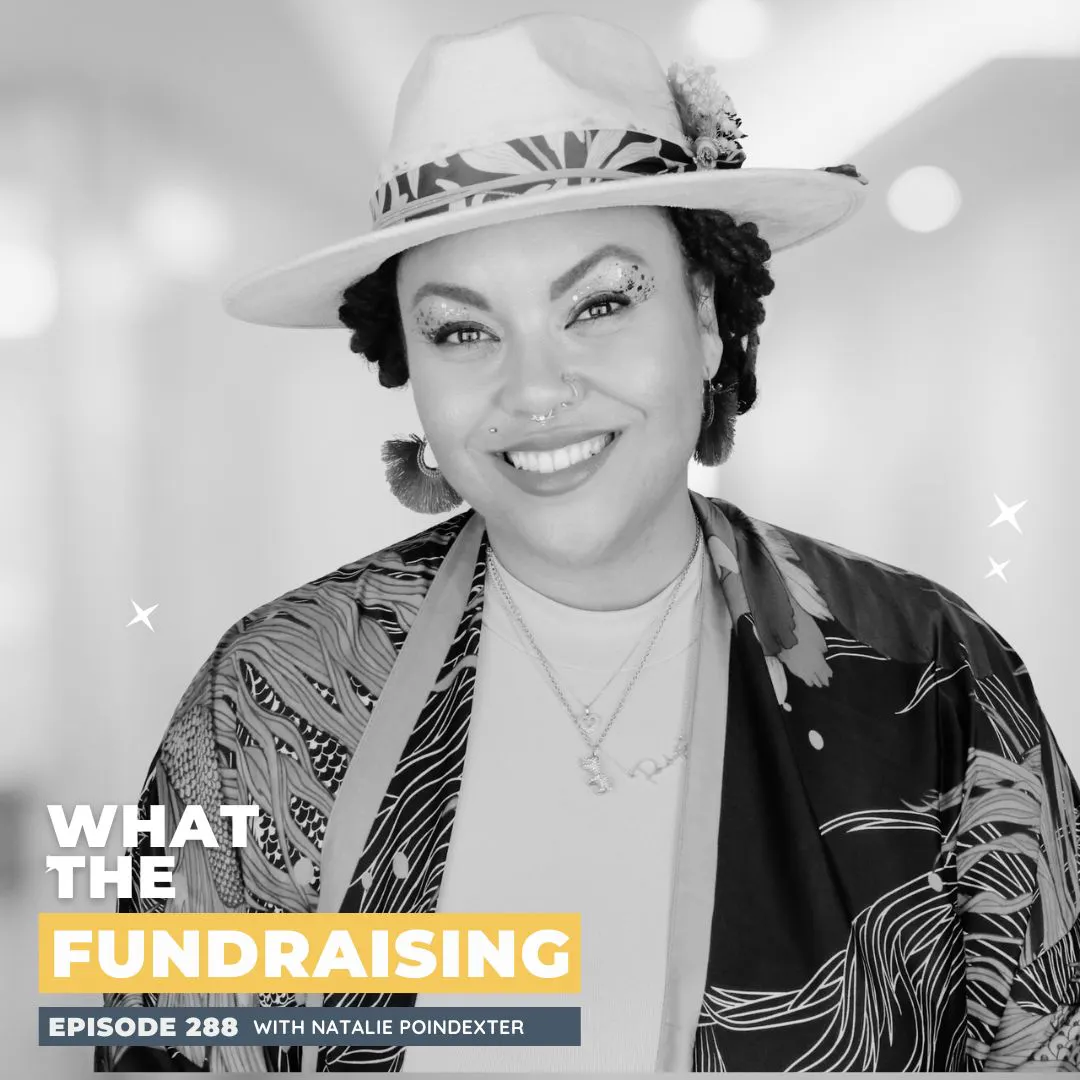
What the Fundraising
288: Delusion, Disruption, and the Future of Fundraising Systems with Natalie Poindexter
00:26:32
Loading summary
Transcript28 lines
- [00:05]
Mallory Erickson
Do you ever feel like fundraising is a little foggy? Like you have goals to hit, donors to connect with, and about 12 tabs or 47 open, trying to figure out what actually works. The good news is that you don't have to figure it out alone. The 2026 donor perfect community Conference is a free virtual event designed to help fundraisers clear their vision, illuminate what's possible, and get glowing results. Join me and some other amazing speaker on June 2nd and 3rd for practical tools, real stories from nonprofit leaders, and a supportive community that truly understands the work. Because when fundraisers come together, we know that things start to look a whole lot brighter. Register now for the Donor Perfect community conference@donorperfect.com donorperfect conference.
- [00:57]
Natalie Poindexter
I think that being a woman that is not a tech person, and then being a woman of color building this product, I had to learn to be a little delusional of my own success and to really dig deep and find out my why. Like, why was I doing this? What was my big goal so that I could keep going. Because it was challenging. And it still is challenging, I should say. It's still. And so I say all of that to say, find your people who believe in you more than anything else.
- [01:32]
Mallory Erickson
Hey, my name is Mallory and I'm obsessed with helping leaders in the nonprofit space raise money and run their organizations differently. What the Fundraising is a space for real and raw conversations to both challenge and inspire you. Not too long ago, I was in your shoes, uncomfortable with fundraising and unsure of my place in this sector. It wasn't until I started to listen to other experts outside of the fundraising space that I was able to shift my mindset and ultimately shift the way I show up as a leader. This podcast is my way of blending professional and personal development so we, as a collective inside the nonprofit sector, can feel good about the work we are doing. Join me every week as I interview some of the brightest minds in the personal and professional development space to help you fundamentally change the way you lead and fundraise. I hope you enjoy this episode, so let's dive in.
- [02:26]
Welcome everyone. I am so excited to be here today with Natalie Poindexter. Natalie, welcome to what the fundraising.
- [02:34]
Natalie Poindexter
Hey. Thank you so much, Mallory. It's so good to be here.
- [02:36]
Mallory Erickson
So tell everybody a little bit about you and your background, your work today, and then we'll. We'll dive in.
- [02:43]
Natalie Poindexter
Yeah. Okay. So the 90 second overview. I fell into grant writing and realized I wanted to do more in the education role, but also make a bigger impact. So I operate as what I have deemed myself as a funding systems architect, and I also do that as a consultant. So I work as a fractional development department. So I bring myself, my team, and we support nonprofits and standing up their programs, their infrastructure, all of those things. I have also built a technology tool that is myself, in a way. Her name is Scaffina. She is a her because it's built by women, for women. Because I'm recognizing that more and more women are the ones doing this work. We are the development directors, the grant writers, the funding strategists, the cfres. And I want us to reduce our burnout. I want us to regulate our nervous systems. And what better way to do that with a solution that actually supports you? So that's what I do now. But my background is branched from lifeguarding to teaching middle school to being an emt, to working the pandemic as a public health professional.
- [04:00]
Mallory Erickson
Wow. I'm curious, actually. It's interesting, like, when we first met and got to talk a little bit about the different tools that we were building and our orientation to the solving the problems that we care about solving, like, hearing then a little bit about, you know, the different things that brought you to this moment in your life, like, how do you kind of see those coming together to, like, why are you choosing this problem, this tool, like, this moment, to try to solve it?
- [04:29]
Natalie Poindexter
Okay. So almost three years ago this March, I had the opportunity to speak at south by Southwest, which is large conference, happens here in Austin, Texas. It's a. It's a global stage. And myself and a few other entrepreneurs had the opportunity to speak, be a guest with a US SBA administrator and Mark Cuban. And so we're on stage, and the ladies that went before me, you know, they had questions for Mark Cuban, and they were like, how do we get on Shark Tank, basically? And I was like, I don't have questions for him. At least not on camera. Right? Like, my questions for him are off camera questions. I have lots of questions for the administrator. And at that point, she was the highest ranking Latina in the White House. And I'm giving this context because I asked her, what is the SBA doing to support, at that point, procurement and for profit individuals in accessing this funding and how and what resources? Basically, I was asking her, what are you doing for technical assistance? That was my big question. And she looked at me kind of like, I know this woman did not just sit on this stage and ask me this question in front of almost 200 people on camera. And I was like, hi, yeah, because I have questions. And so I was just like, what are you doing? Because you're asking these companies to come and get this money, but you're leaving billions of dollars on the table. Her answer was very political. Her answer was, it sounds like we need disruptive consulting at the White House. And I was like, you don't make enough money for me to come and help in the White House. However, I feel like you're just giving me a very political, whitewashed answer, which is, we don't know. We're not doing anything. Fast forward. It still hasn't happened. There still isn't a solution and system to provide technical assistance from an educational perspective to businesses, whether it's nonprofit or procurement. And I took the bodacious moment to be like, whoa, why not me? That was a very long answer to say I was challenging White House staff on what they were going to do, and they didn't do anything. So I thought I could do it.
- [06:42]
Mallory Erickson
Okay, I love that. And that's the other reason why we really hit it off, because I had a little bit of a similar founding story, although I was not challenging somebody like that, but I was so tired of asking other people to build the thing that I felt like we desperately needed. And I was like, okay, why not me? Like, why not? Like, why shouldn't I go for this? And so I love that. What do you think, like, being maybe a. And I say this term actually in a totally endearing way because I feel this way about, like, myself, but being an outsider to the tech world, like, what do you think? What superpowers do you feel like that gives you in, like, how you're approaching solving this problem differently?
- [07:22]
Natalie Poindexter
Yeah. I recognized that I needed a tool that worked for the end user, and I realized that a lot of tech folks are like, oh, well, what language are you coding in? And I'm like, dude, I don't know. I think it's SQL. I think it's Java. Like, I don't know. I don't know what I'm coding in. What I am doing is getting the thing I need at the end. I'm getting the product I need at the end. I am not caught up in the language I'm caught up in. Is this system, this clickable process, actually helping someone? And if. If not, then what do we need to change to do that? Because I cannot hang with the ctos of the world, and I will not try. But what I can say is my users aren't CTOs, so they don't Care what language it's being coded in. Either they care, does it save me time, does it actually work and can I use it tomorrow? And so that's what I think is a little bit different about being a non tech person. And I also want the feeling to be specific. I want you to feel good when you're like clicking around in this product and not be like, this is a little cold and sterile. It's kind of feeling like a robot. I don't know if I want to talk to another robot. I want it to feel like, oh, I'm talking to Greta. Oh, Greta is this person who supports me. Yeah, her. I like her. She helps me. That's how I feel about it.
- [08:53]
Mallory Erickson
What do you. I mean that's really interesting and I. We obviously think about that a lot inside proactivated because it's voice driven coaching and training and support. And so there's like this really interesting kind of. I keep grappling with this challenge around. I want it to feel good, I want it to feel supportive. I want it to feel like usable and action oriented. I think all day, every day about the fundraiser and manager experience. And I also know that like with AI there's a little bit of a risk of like forgetting for a second that we aren't talking to a real person. And I think there are some like big existential questions that I also, that also keep me up at night are around how do we protect end users from anything that could lead them astray because they feel like it is a real person in a moment in the platform. And this is something I think about a lot in how we build, practivate. I'm curious, like if you've been grappling with this and sort of how you think about it.
- [10:06]
Natalie Poindexter
Yeah. So one of the special pieces about this subscription based tool that I've built is there's still human support. So you still are connecting with a human once a month at the base and then sometimes you're just having your human work with you regularly at the highest level of this. So they aren't completely separated by the voice of Greta and then the voice of their actual grant specialist. So these are grant experts that are needing that structure so again they can build their capacity. Because that's genuinely why I built this platform was like, I can only help so many organizations.
- [10:46]
Mallory Erickson
Yeah.
- [10:47]
Natalie Poindexter
As a human and I can bring on people and I can bring on people and I can bring on people, but I'll still never truly scale at large because I still have quality that I need to provide to people. So how can I do that? And it was like, oh, the repeatable steps, let's make those techs supported and the human side of it, let's still integrate it but at a low risk, a low cost where you're still getting that help. So I do think that it's this conversation of also education with our users that Greta is only producing the content for you. You still have to deliver on whatever was written. So make sure that you've read what was written or had your grant specialist audit that content for you or even write that content for you so that you're not promising to end world hunger on a hundred thousand dollar grant.
- [11:50]
Mallory Erickson
Yes. Yes. Yeah, yeah. So interesting. And it's, I mean I really like, I'm such an advocate for like human in the loop and respons sensible use of AI. Right. And I love like at practivated too. We actually have an agency program where coaches and consultants can use our platform in their coaching practice and consulting practice tailored to their methodology. And, and so, and, and we, it was really important to me like as a coach and consultant myself that like how we were showing up in the, in the space, especially in the social impact space, that we were like you know, supporting coaches and consultants at the same time as we were supporting the frontline folks. So and so I love that I'm curious like for you as a like tech CEO, but also with like a lot of hats and a lot of things and like being a woman in this space and being a woman of color in this space, like what is this like, what is this like mean to you? And is there anything you want to share about like your experience that you want other people to hear?
- [12:54]
Natalie Poindexter
Ooh, it's been challenging. It has, it's been challenging. When I first had this idea, I didn't know how to activate it, which is wild to say that two years ago I didn't know what vibe coding was, but I thought I had to go the traditional path. But which is exhausting because I think it's like two something percent of women actually get VC funding and less than 1% of women who are of color get VC funding. So I was just like how in the world am I going to build this thing that I don't know how to build? And so a lot of it of my journey has been learning the technology. It's been learning how do things speak to each other, what exists, what doesn't exist, what's real to be able to do. And I'm grateful for the programs that I went through. So I spent last year, I did a fellowship program, an accelerator, and then a business development program. And through that journey one I realized there's not a lot of women looking at it from this perspective, looking at grant writing, grant solutions, grant systems. But then I also recognized that there's so many other paths than traditional VCs. I learned what angel investors were. I didn't know what an angel investor was two years ago, let alone a year ago. I knew what they were, but I didn't know they were for me. And I think that being a woman that is not a tech person, and then being a woman of color, building this product, I had to learn to be a little delusional of my own success and to really dig deep and find out my why. Like, why was I doing this? What was my big goal so that I could keep going. Because it was challenging. And it still is challenging, I should say. It's still. And so I say all of that to say, find your people who believe in you more than anything else, because those are the ones that are going to send people to you that are going to refer people to you, that are going to pick you up when you're exhausted and remind you you're doing a thing that you're supposed to be doing. And that's okay that it's a little hard or it's a little challenging or you're feeling a little defeated. That's why you find your people. And so that would be my recommendation of finding the people who don't believe in boundaries for you. Right? They believe in your boundaries, but they don't believe in boundaries for you. People who believe in your product so much that they're your cheerleaders, even though they probably will never use it. And I think the last piece would be spend time taking care of yourself. The idea that the only way you can be successful is working 16 hour days and 80 hour work weeks. And if you don't do that, if you don't grind and if you don't hustle, you won't be successful. And it's like you, you won't be successful because you'll probably be hospitalized. Like you are going to be burned out, exhausted and quit. So take care of yourself.
- [15:51]
Mallory Erickson
Yeah. Wow.
- [15:56]
I have to be honest, more than anything right now, people are asking me, just tell me what to do. I know that so many people are sitting down to work on fundraising and thinking, okay, where do I even start? You're juggling campaigns, emails, donor meetings, events, and about a hundred other things. And sometimes it can feel like you're trying to navigate it all in the dark. That's exactly why I love the Donor Perfect Community Conference and why it was created. This free virtual event is designed to help fundraisers clear their vision, illuminate what's possible, and get glowing results. On June 2nd and 3rd, you'll hear real stories from nonprofit leaders, learn practical strategies you can actually use, and connect with a community of people who understand the challenges of nonprofit work. Join me and some other amazing speakers, including Joan Gary, Clay Buck, and Julia patrick, for the 2026 Donor Perfect Community Conference. Register for free today at donorperfect.com donorperfect-conference I can't wait to see you there.
- [17:04]
I was realizing or recognizing that like as you're saying that I'm a year out from having Bell's palsy and I actually got it. It actually wasn't really work triggered. Well, it's you only get one nervous system, so I'm sure it was everything. But I had only. I had lost my grandmother in it and she was very, I was very close with her and her end of life had been very hard. And then she passed and I think like the grief just sort of like my body was like, no thank you. Like, but in the middle of her passing, her sort of end of life, I was also closing the round on practivated and it was like wild. I was like going back and forth between like investor meetings at her kitchen table and bringing her water. And I think and then it all happened so fast. Like I closed the round, she passed away. Half my face was paralyzed. I actually lost my eyesight for a month because I had a reaction to the medicine they put you on. So here I am at like maybe a moment that should have been like a peak career moment and ended up being like the craziest start to the craziest adventure of my professional career. And I was just, earlier today I was thinking about that and like yesterday I, you know, at 2pm every Wednesday I go to acupuncture and I was thinking about like I had this moment recently. Something happened on our team and I needed to free up more of my calendar and I had this like this kind of like auto response of like just like clear it Wednesday afternoons. And then I was like, no. Like, no. Like, do you remember doing every demo with half your face? Like, do you remember like what happens when you don't take care of yourself? And I wish sometimes have to really bang my head against the wall to learn those lessons. But I think what you're saying is so important because especially when you're trailblazing, especially when you're one person in the room and that looks like you or sounds like you or is like you, there's a toll that takes that's not just calculated in hours and time. And I think, like, that's been maybe, like, some of my, like, hardest learning, too.
- [19:20]
Natalie Poindexter
They don't talk about that as entrepreneurs. There's this sexiness in the hustle. And I. Speaking of Mark Cuban, I remember he said a quote on in, and he was saying that I would rather work 80 hours a week for myself than 40 hours a week for somebody else. And I recognized that. But then I also thought to myself, what if I just worked, like, 30 hours for myself and I had support and I had a team? Because the whole reason I did, you know, I got into this. This philanthropic space was to make an impact and to have the ego to believe that I could do this all as one person. I remember I went to the doctor, and I was just like, I don't know why I keep gaining weight. I don't know what's going on. They're like, what, are you sleeping? I'm like, well, let's sleep, you know? And I just, like, started going down this list of, like, what's your eating like? And I was like, well, you know, I order food here and there. I eat when I eat. You know, my water intake is questionable at best. I also used to work in health care. I'm a terrible patient. I am a terrible patient. But I knew. I was like, this is probably going to affect my kidneys at some point. This is. This is probably not good. But we don't talk about it. And so as someone who could only imagine being in that space, and then also, we don't talk about grief, but that's a whole nother conversation because our brains don't understand the difference between pain. The receptors are the same. So, like, we need to give ourselves some grace. We're doing a lot of things.
- [20:56]
Mallory Erickson
Yeah. Yes. And I wish. You know, it's interesting. I. I also, like, saw a thing. I don't even know I'm supposed to know what this famous guy's name is, but I don't even know. I saw some real. On. Or do they call that on LinkedIn. I have no idea what it's called. I saw a video on LinkedIn recently of some entrepreneurial, you know, entrepreneur who I'm sure has made a ton of money, talking about, like, if you want to make it, like, your wife, of course, is what he said, your wife is raising those kids alone and you know, you're working like, da, da, da, da, da. Like you'll see them in 10 years. And it's just like really famous. What is his name? And I was just sitting there and I was just like, no, no. Like I just know and. But I think what is so hard about the position that we're in is like, it's so hard when you don't have models for the way that you do want to do it, you know, like, that is so hard. And I think, you know, I hope for folks who are listening to this, like, the other thing I will say, and I'm curious, like how you feel about this too. The other thing I try to be really gentle with myself around is like when I fall back into capitalism traps, right? It's like, we don't have models for this. We're out here trying to like break the way that it's always been done. But like, everything in society tells us to do it one way. And I get swept up in it plenty of times. And then I'll catch myself and I'll be like, oh man, I'm really tired. And I'm like, oh, yeah, you like, didn't do those things, you know, And I've just, I've really tried to like increase my self compassion in those moments to be like, yeah, like, course it's hard to remember, like it's. Of course it's hard to remember these intentions when you have an entire world shoving a different message down your throat all day, every day.
- [22:48]
Natalie Poindexter
I feel like I shared with someone recently about being a disruptor. And my conversation with them was that was around imposter syndrome. And I had some advice given to me. And I feel like this is in alignment with what you were just sharing of like not having role models. I was reminded, I was working in healthcare and I was reminded by a doctor that imposter syndrome is a term that was created by two women in the 70s who were uncomfortable in the workplace, Right? And I mean, you know, we look at history and was it the 50s that they finally put bathrooms in place for women in the workplace? Because it wasn't made for women, the workplace was made for men, so why would they need bathrooms, right? And so the physician, she was explaining to me, she said, natalie, it's a construct to make us feel comfortable or feel comfortable with being uncomfortable. But in fact, we're disruptors. We are disrupting the workplace. We came in as women and disrupted how men did business. And that has Stuck with me of, I think women are waking up. We are realizing that the way men have been doing things is okay. They've done what they've done, how they can do it, but they're not doing it from our level, our power, our abilities. And I think that in this time right now, the motivation behind a lot of us can be we are disrupting what society is telling us you have to do to be a successful entrepreneur. And I think if we start having those conversations, these conversations, more, we end up realizing that's how men do it, but we do it differently. And now we're. We as women are deciding to do it differently and still show you what success looks like. That's my two cents.
- [24:44]
Mallory Erickson
Yeah, I love that. I love that. Okay. Tell everyone I want to be sensitive to time. And I'm sure There's probably a V2 and V3 of this conversation that we need to have, but I just appreciate the candor. And, you know, I think for so many folks who are listening for nonprofit leaders, like, they're all builders, they're all entrepreneurial in their own way. They're all doing things that have never been done before, whether it's because somebody like them has never done it before or because they're change makers. And so they're doing things differently. Like, all of that falls into this story that we're talking about and so. And letting them into our journeys, which have a lot of overlap. So tell folks where they can go to connect with you, to learn more about you, just to hear more about the tool, all the things.
- [25:26]
Natalie Poindexter
Yeah. I am on every platform under Natalie Poindexter. N A T A L I E Just in case. I know there's so many people that want to spell Natalie differently, but the traditional Natalie, you can find me online under NataliePoindexterinitiatives.com on LinkedIn and Instagram and YouTube.
- [25:44]
Mallory Erickson
Amazing. Thank you so much for all of your wisdom and for joining me today.
- [25:50]
Natalie Poindexter
Thank you for having me, Mallory. And I'm excited to be able to have this conversation with your community.
- [26:00]
Mallory Erickson
I hope today's episode inspired or challenged you to think differently. For additional takeaways, tips, show notes, and more about our amazing guest and sponsors, head on over to Mallorykson.com podcast and if you didn't know, hosting this podcast isn't the only thing I do every day. I coach, guide, and help fundraisers and leaders just like you. Inside of my program, the Power Partners for Formula Collective. Inside the program, I share my methods, tools and experiences that have helped me fundraise millions of dollars and feel good about myself in the process. To learn more about how I can help you, visit MalloryErickson.com PowerPartners Last but not least, if you enjoyed this episode, I'd love to encourage you to share it with a friend you know would benefit or leave a review. I'm so grateful for all of you and the good hard work you're doing to make our world a better place. I can't wait to see you in the next episode. Fundraising doesn't have to feel like a solo battle. My book what the Embracing and Enabling the People behind the Purpose offers practical strategies and frameworks to help you navigate the challenges of fundraising with ease and impact. And with our free discussion guide, you can deepen learning and collaboration with your team or book club ready to transform the way you Fundraise. Head to MalloryErickson.combook to order your copy today anywhere books are sold and you can grab the guide there too.