← What the Fundraising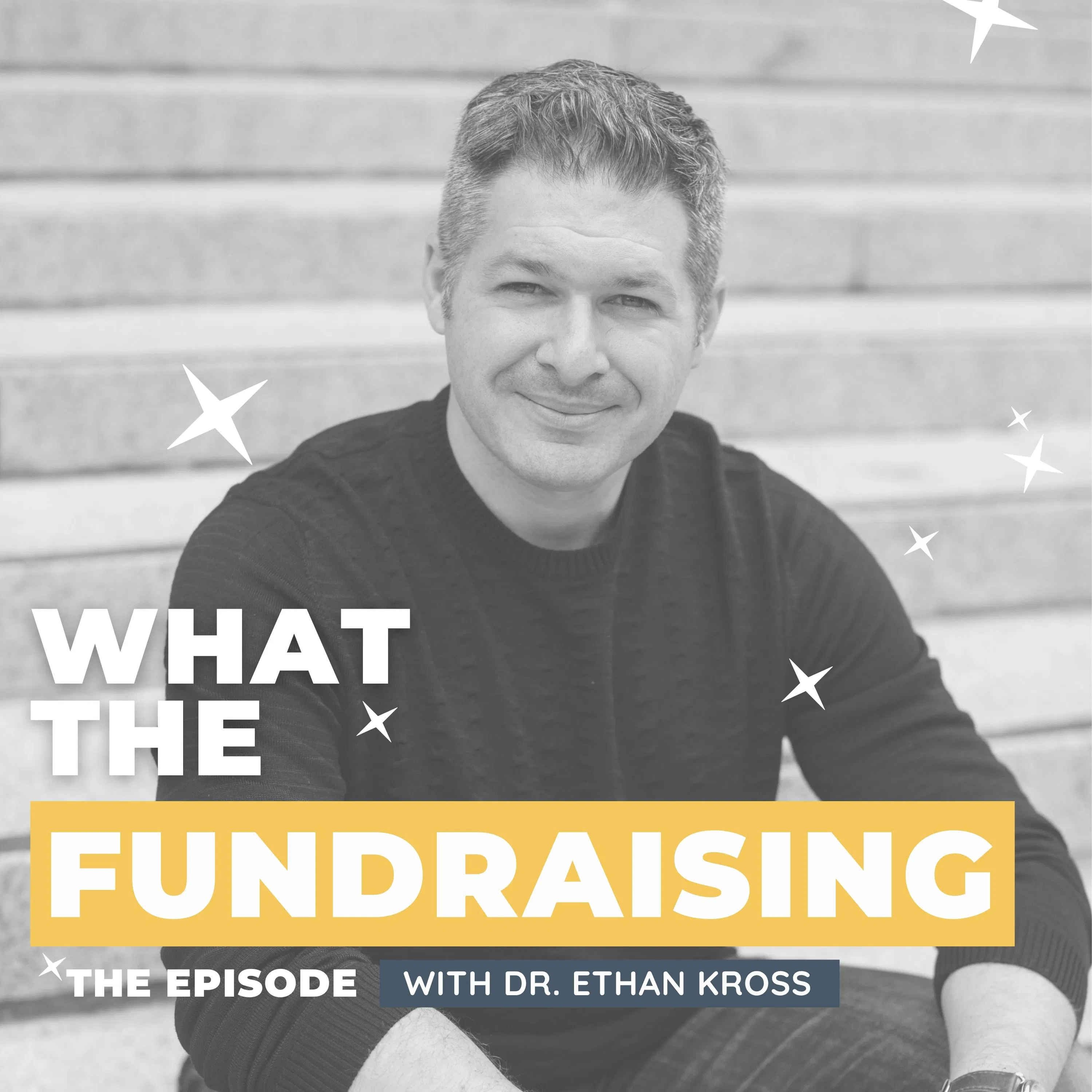
What the Fundraising
291: Harnessing Your Inner Voice for Fundraising Success with Dr. Ethan Kross
00:53:15
Loading summary
Transcript52 lines
- [00:00]
Dr. Ethan Cross
And the reason why is. I mean, it's often a matter of perspective. We're so zoomed in on the potential threat of rejection, we're not thinking about that bigger picture. And so once you know how to zoom out, you can get shifts pretty quickly.
- [00:26]
Mallory Erickson
Welcome to episode one of what the Fundraising. I'm your host, Mallory Erickson, and this podcast is for impact leaders and change makers who are looking to fundamentally change the way they fundraise. Today I'm interviewing Dr. Ethan Cross, who is one of the world's leading experts on controlling the conscious mind. He's an award winning professor at the University of Michigan, my alma mater. And the truly amazing thing about him is how he utilizes and implements his research on how the conversations people have with themselves impact their health, performance, decisions and relationships. And today we're talking about fundraising. Recently wrote his first book, the Voice in Our why It Matters and How to Harness it. And I literally devoured it in 24 hours. And as soon as I finished it, I messaged him on Instagram and I said, this book can change fundraising forever. It's what inspired me to start the podcast, which is why he is with me for episode one. I am so thrilled and honored that he said yes. Because what I believe to be a fundamental truth is that the solutions we desperately seek as nonprofit leaders and fundraisers exist, but they exist outside of the sector and they exist in uncommon places. When I read Chatter, I had this deep feeling that if every fundraiser could control the chatter, control the negative narrative in their head, that leads to paralysis, that things would change, that the way we asked for money would change, that more money would move into the sector, that we would be able to solve the biggest problems of our time. And that fundraisers that you would feel empowered and confident in the work you do in the way that you deserve to feel every single day. So here we go, episode one. We are going right to the heart of the matter.
- [02:28]
Well, here I am with Dr. Ethan Cross. Ethan, thank you so much for joining me today. Ethan is the author. I'm just going to hold it up of Chatter, one of honestly my favorite books of all time. So the voice in our Head, why It Matters and how we harness it. And I'm so excited to talk with you about it today and talk a little bit about how we can apply your learning to through the lens of a fundraiser or a nonprofit leader who often, you know, learn kind of personal or professional development tools, but don't integrate them into the ways they show up as fundraisers. So thank you.
- [03:02]
Dr. Ethan Cross
Yeah, thanks. For having me. Thanks for your kind words about chatter, and I'm excited to chat.
- [03:07]
Mallory Erickson
Well, you know that I. You know, I've been thinking about doing this podcast for a long time, and then I read your book in 24 hours. I literally couldn't put it down. And I messaged you right away, and I was like, you, I have to launch this podcast with you and with this book because there just has been. It just resonated so strongly with me. And I also just want to give it one more praise. I mean, everyone should be buying it right now. But I. The other thing I just want to say is just what an easy read it is and how hard that must have been to take complicated scientific studies and make it just so digestible and the storytelling. So I just cannot imagine kind of the labor of love that went into it and just want to appreciate that.
- [03:48]
Dr. Ethan Cross
I thank you for saying it. And I would invite you to not imagine it because it was not a fun enterprise. I mean, it wasn't all misery, doom and gloom, but it was. It was a lot of work. So. So it's really. It's just, you know, it's wonderful to know that the message is landing and the intent of the book, which really was to take science and make it meaningful for other people and not get hung up on the terms and the jargon. I think it's so easy to lose sight of the big picture when we start using complicated concepts and terms and we don't have to do that. So thank you.
- [04:25]
Mallory Erickson
Yeah. Oh, my pleasure.
- [04:27]
So tell us.
- [04:28]
I know a little bit about your background and what brought you to this moment, but just for all of our listeners who are getting to know you for the first time, will you share a little bit about your journey here?
- [04:39]
Dr. Ethan Cross
Sure. So I got interested in this. I've been doing research on introspection, turning our attention inward to make sense of our problems, using the voice in our head to do that. I've been doing that formally for about 20 years, but I've been thinking about that for much longer. More like 35, 36 years. Because when I was a little kid, my dad used to continually tell me, whenever anything bad happened, go inside, try to find a solution to your problem, introspect, and then move on. And that advice served me really well throughout my childhood and adolescence. Bad things happen. Nothing crazy, but, you know, rejected arguments, things like that, and I turn my attention inward to problem solve, and that'd be it. I'd move on. And so this was a skill that always served me really well. And then I got to college, I took my first psych class, and we started getting to the topic of introspection. About halfway through the semester, what I realized is that a lot of people do exactly what my dad told me to do, but they don't always benefit from it. In fact, this is what makes life miserable for many people. That is, they turn their attention inward, and rather than coming up with solutions for their problems, they end up worrying and ruminating and catastrophizing, getting lost in thought in the most harmful ways.
- [05:58]
Mallory Erickson
And.
- [05:59]
Dr. Ethan Cross
And so I got really interested in why it is that sometimes introspection can be this amazing tool going inside, right, can help us solve problems, be creative, control ourselves, so forth and so on, but at other times, it can make life pretty miserable. And so I went to graduate school to figure out how to use science to try to figure out the answers to that puzzle. And I've been doing science on a topic ever since. And. And the book Chatter tells what I've learned during those intervening 20 years about this.
- [06:32]
Mallory Erickson
So is Chatter only the kind of negative thoughts or. When you use the word chatter, are you using it to describe both what people are having success with, that internal dialogue and challenges, or. Tell me about that.
- [06:49]
Dr. Ethan Cross
Yeah, it's a great question and really important, I think, to clarify. So if we step back, when we use the term, when I use term voice in our head or inner voice, what I'm referring to is our ability to use language silently to reflect in our life or do lots of different things. And this, like language, is a tool, and it's a remarkably useful tool that lets us do many, many different things. I often describe it as a type of Swiss army knife of the mind. So your inner voice lets you do things like remember what groceries you have to buy when you're in the grocery store. So if I were to ask you to repeat a string of numbers in your head, like 0, 2, 3, repeat that right now three times. Did you do it okay? Was it easy to do that? Good sign. That means, I mean, you've just used your inner voice. So we use language often to keep information active in our heads. We do it when we're memorizing a phone number, when we repeat it in our head. We do it when we repeat what we need from the grocery store and countless other things. That's one basic function that our inner voice serves, but also lets us do lots of other things. Like when I'm preparing for a big presentation, I will walk around the neighborhood and I will simulate in my head What I'm going to say. I'll go through the talking points in my head, I'll rehearse them. I'll then sometimes get to the end of the speech in my head and I'll hear what the audience, what questions they're going to ask. And then I'll practice responding. This is all happening in my head and my inner voice is allowing me to do it. That's another thing our inner voice lets us do, simulate and plan. It also lets us control ourselves. Like when we're working on a really difficult puzzle, which for me nowadays is figuring out how to put together toys for my kids with like instructions that come in a four point font. How the heck do I do this? Okay, hold this piece here and then screw this here. I literally coach myself through it. We use our inner voice to do that. And then finally, our inner voice helps us make sense of our, of our experiences in the world in ways that shape our understanding of who we are. So bad things happen all the time. We get rejected. People we love die, get sick. You know, you could fill in the blanks for all the different kinds of adversity we face. Many people when they experience adversity, they reflexively turn their attention inward to try to make sense of. So why did I get rejected? Why did this person die? There's nothing wrong with him. Why am I feeling this way? And what we're doing there. By turning our attention inward, we're trying to come up with some explanation or a narrative or a story to explain our experiences. Stories help us make sense of who we are, and our inner voice helps us do that. So I mentioned in the book, it storifies life. So if you step back and think about all those different functions our inner voice provides, it's an amazing tool that you would not want to live life without. In fact, people who have their inner voice incapacitated, like from a stroke that wipes out their language centers, this makes it really hard to live life. The only other point to emphasize here though is despite all these, these assets that the inner voice provides you with, sometimes, like many listeners will no doubt have experienced, we go inside to activate this useful tool and we don't get a useful benefit as a result. Instead we, we end up spinning. We ruminate, worry, and that's chatter. And chatter is specifically the negative dark side of, of the inner voice that, that is totally common. It is very normal and something that I think most people have had experiences with.
- [10:40]
Mallory Erickson
Okay, I love that and I really like, I mean, I love the use of Your word harness. And I know you use it really intentionally, right from what I. When I've heard you talk about this before, that it isn't about sort of making your inner dialogue out to be some demon, but to recognize that, like, there are times when it really serves you, there are times when it's not serving you. And in those moments where it's not, how do you harness it? And you know, so many of your tips and like, I love at the end that there's a toolbox. I just think that's so kind of critical. You know, so many of them are really quick. Like, I, you know, I've been coaching for years now, and a lot of the principles that I coach around overlap with a lot of the themes. So like, the folks who work with me, when they read this book, they're going to be like, oh, oh, oh. But there were some things in there that totally blew my mind. Like, I think when you talked about using your own name, I was like, whoa, whoa. No one. In all the things I've ever read, you know, that advice had never come out before. And I was like, that's just so quick, right? Like the self distancing, using your own name to pull you out of that sort of like tunnel vision moment where you're not seeing opportunity. And I do it, and I think so many of us do it, right? We're like, okay, Mallory, you can do this. Or like, okay, you know this. You've done something this scary before. You know, Janet, you got this. Like, we do those things maybe without realizing it. And I think for me to be like, oh my gosh, that is how I pumped myself up in a scary moment was just. And I know you have a fun story about how you kind of came upon that one too.
- [12:19]
Dr. Ethan Cross
Yeah. So, you know, with a lot of the tools that I talk about, there are 26 tools I talk about in the book and I list them at the end. Some of these things, as you say, we've stumbled on, we somehow they're in our repertoire for managing adversity. You see a lot of instances of people using these tools, but they're often doing it without even being aware of it. And as a scientist, I find that absolutely fascinating. I can tell you we don't yet understand exactly how some of these tools have gotten into people's toolboxes. And we're doing studies to figure that out. But we do know that they could be useful and help people. And so the distance self talk where you use your name and the second person pronoun you to coach yourself to a problem. This is an instance of one of those tools that many people just reflexively revert to when they're under stress. I was just talking to someone earlier today who had experienced the loss of a child. Really devastating experience. Arguably one of the most devastating experiences you can imagine most chatter provoking. And the person was really struggling. And what they told me is the way they broke out of it is they stopped at one point and just said, I'm not going to say the name for confidentiality purposes, but they effectively said, what are you doing? You need to stop this using their name. And that helped them. And we see instances of this play out time and again. And importantly, experiments show that when you tell a person who's struggling with chatter, hey, try to give yourself advice, coach yourself through the problem like you were talking to someone else and use your name to do it. It helps people as to why this works so quickly, which we find both very interesting and also exciting because we know people are more likely to use tools that are easy to use. Two things we know are this. Number one, it is much easier for us to coach other people on their problems than it is to take our own advice. Mallory, you are a coach for a living. I am going to be willing to guess we haven't talked about this. Swear to God, we have not talked about this before. So I am going on the limb here. I am going to guess you have been able to coach your clients through issues really well, seamlessly, but when the very same issues have occurred in your own life, you've maybe struggled a little bit more. Is that fair?
- [14:33]
Mallory Erickson
100%. I mean, I say all the time that every good coach has a coach 100%, right?
- [14:40]
Dr. Ethan Cross
There's even a technical name for this. We call it Solomon's Paradox. It's named after the Bible's king Solomon, who to this day is still known for being one of the wisest leaders of all time. But if you dig into his personal story, you find that he made a slew of terrible decisions when it came to his own life. So he didn't live wisely himself, but was able to coach other people. So, first thing we know, much easier to coach others than ourselves. Then let's think about this distant self talk, this seemingly odd tactic where people use their own name to advise themselves through a problem effectively. What do we know about names and second person pronouns like you? These are parts of speech that are almost exclusively used when we think about and refer to other people. Most of the time when I use Names like I'm using the name of my kids, my friends, right? We're thinking about others. So in the mind, there's an incredibly tight link between names, second person pronouns, and thinking about others. And the idea here is that that link is so tight and when you use your own name to think about your problems, it's in essence activating the neural machinery that we use to think about others. And because of that we have the distance, the space, the objectivity to weigh in on our own problems more effectively. So that's how that works. And it's a really, I mean, I use that tool quite a bit and it's a fun tool for sure. You do want to do it silently, not out loud.
- [16:16]
Mallory Erickson
So I don't want to put a banner behind my desk that says, mallory, you can do it.
- [16:21]
Dr. Ethan Cross
Well, as long as no one else sees that banner, you'll be fine. There are potentially some value that comes from talking out loud. There's surprisingly a lot less research on the function of actually talking out loud to yourself. But what we do know is that you don't want to walk down the city street talking because that violates social norms. I want to say one more thing about this distance self talk though, and it'll link us back to some of the other ideas that we've been chatting with about and maybe we'll chat more about. This is one tool and one theme of the book that I really lean into, and it's a message I really believe very strongly and is that there are no single panaceas, no cure alls, no individual tools that work well for all people in all situations. And by way of metaphor, no one would expect another person to be able to build a house, for example, with a single tool, right? Like a builder comes in a carpenter, he's got. He or she has a whole tool belt with lots of different tools. They're used in combination to achieve the goal of building a house. And yet if you think about our daily life, that assumption doesn't always translate over. We're often looking for a single quick fix and, and studying this for over 20 years, I can tell you I have not come across any single quick fixes. What we do know though, are that there are lots and lots of different tools. And the idea is that using some of these tools in combinations can be really helpful. And maybe different combinations or cocktails, non alcoholic cocktails that different people may benefit from.
- [18:04]
Mallory Erickson
I really love that, and I love that theme in the book too. And it reminds me, my sister recently had a baby and and her and I were talking and she was like, well, she used to like this thing, this chair, and now she doesn't. And now she likes this thing. And I said to her, I was like, you know, the reality of early, like infant babies is that you just kind of move them from thing to thing and you see what works in that moment and what doesn't. And they might have loved the boppy yesterday and tomorrow. They love the docket and it's just about having. I was like, that's why there's so many baby things, you know, because you're kind of finding what fits that moment. And so as you were talking about that, I was like, that's another kind of metaphor and I think is really empowering, you know, to be like, look, you try this one thing, it doesn't work. You have so many other things to go to. You know, I'm curious, what do you see in terms of the, like, I like that. Thinking about the tool belt. Another visualization I have a lot is around, like muscle building, right? Like, I sort of talk about how, you know, with things like chatter that maybe happen in a really high profile situation, you know, a fundraiser is like shamed at a board meeting, for example, for not closing a certain grant, right? The chatter that comes from that is so intense, right? The self doubt, the language that, the deep beliefs that it's triggering around them not being good enough. And so one of the things when I start to work with them around the narratives and sort of controlling the language in their head is like, yes, like that's going to be a really hard situation to start using some of these strategies with. But as you start to incorporate them into maybe lower state situations throughout your life, they then become more kind of accessible and available or even think about them more than when there are these bigger situations. What do you think about that?
- [19:55]
Dr. Ethan Cross
Well, you know, I think it's interesting. And in our own lab, we've done a lot of research taking some of these tools. We first study them in, let's say, medium intensity situations. And then once we get a sense of how they work, we typically then try to amp up the volume even further. And we do that in a few ways. Sometimes we make the stressor, like more intense. So we make those boardroom people that you're talking about, like really intimidating, really nasty, or sometimes we just bring into the lab people who, who are predisposed to experience chatter. So we all vary our tendency to experience this and some are more prone to it than others. And what we tend to find Is that the strategies that many of the strategies in the book, not all of them, but a lot of them, they work as well, but sometimes they're even more effective in the high intensity situations, which is somewhat like that going into that work, like years ago, that was not obvious that that would happen. And my interpretation of that is that you might call it like the Tylenol effect. So if you take Tylenol and you don't have a fever, it's not going to move your temperature at all. But as your fever goes up, there's more room for the Tylenol to bring down your fever. Right. So there's more signal to play with. And I think that is true of how some of these strategies work as well. If like, if you're not really experiencing chatter, if you're not truly distressed, there's not a whole lot of work for these strategies to do. Like right now, you know, thank goodness I'm not, I don't know why I'm doing this, but I'm not chatter at the moment. Right. And so, you know, how are you going to manage this? Well, I got nothing to manage, so doesn't do it. But if I'm really struggling, then there could be room for it. So to bring it back to the question of try it here versus and then build it up, I would say just try using these strategies how they work and start self experimenting. Because the beauty is the commitment that is needed to try is so low because most of the tools are so simple to use. Just give it a shot. It's not like you're committing to like three months of therapy or anything.
- [22:14]
Mallory Erickson
Yeah, you know what, that is such a good point. Like, I think that's another reason why I love this book so much, is that the tools were just like right there at your fingertips.
- [22:22]
Right.
- [22:22]
Like everyone can use their name and you know, you. And I think some of the deeper coaching work tends to be like belief work. Right. It's like you believe that you have to be perfect or else you're going to get fired. And so when you have a situation that illuminates the fact that you're not perfect because nobody is perfect and the stakes are lower, that's a certain level of chatter versus when you're shamed at a board meeting for not doing something perfectly, like the depth of that belief is just like so, you know, intensified sort of and that. But that's different than I think your strategies which are just like you're spiraling down in that chatter and you need immediate distance from that. And so these are the tools to allow you to do that. And then maybe you go at some point to the belief, the deeper belief work there. Yeah, well.
- [23:18]
Dr. Ethan Cross
And sometimes, you know, when you get this, using some of these tools will just help with the belief work too. Like when some people are really struggling with chatter and they use tools, they start off in total threat mode thinking, I can't do it, I can't do it. I'm not prepared, or it's too intimidating. But when they switch to, let's say, using your name, like, all right, Ethan, can you manage this? How are you going to manage it? Well, yeah, you know what? I've done lots of these board meetings for, and some of them have been really tough. And this might be tough, too, but I'll get through it because I seem to have done so every other time I've tried. And so some of the beliefs there, you get some reframes there as well. So I think it's hard to know when that those beliefs will click in those belief shifts. But I also want to emphasize that when we talk about distance, sometimes people think that distance means avoid thinking about the problem. And that's not at all the way that we're talking about it or that I talk about in the book or the way it's been studied. What distance really speaks to is the ability to just step back a little bit, to then approach the problem with a tiny bit more objectivity that will hopefully let you see the bigger picture in ways that are useful. So it's not avoiding the problem, which we don't want to encourage folks to do.
- [24:37]
Mallory Erickson
Yeah, no, yeah. And I, in another life, was yoga teacher certified. And there's a term that they use there called cultivating the witness, which I think also, I feel like some synergy. There just. There have been moments where I've sort of called myself to do that and just sort of stepped back and tried to observe a little bit more objectively, like, what just happened. And instead of internalizing, maybe anger that came my way or something, just to sort of assess and then figure out, like, how I want to engage and how I want to participate in it.
- [25:12]
Dr. Ethan Cross
Totally, totally. I mean, the idea of being able to distance or detach has been with us for millennia. It's spoken about in both Eastern and Western philosophy. The way it's been translated often, often differs a little bit depending on the practice and the tradition. For example, some yogic philosophies and other meditative practices emphasize witnessing and observing and not reacting at all, accepting the presence in my mind, that's distancing in order to just observe, but then you can distance in order to problem solve. Distancing isn't synonymous with observing. There's lots of things you could do once you step back. And I think value. You can get value from doing many different things from a distance.
- [26:02]
Mallory Erickson
Yeah, I really appreciate that too. Like kind of that differentiation there. And just really how all of this is focused on, okay, how do you apply this? How do you get this to help you do the thing that you're trying to do? Right. So that's why when I read this book and I was like, oh, my gosh, fundraisers need to read this is because there is so much chatter that inhibits action as a fundraiser. So, you know, being in the society that we're in today, you know, money still being a very taboo subject, there's a lot of stigma around the nonprofit sector. Right. I mean, the amount of times in my career, I would say, like, I'm a fundraiser and. And I would either hear like, oh, my gosh, wow, I could never do that, or I'd hear, don't ask me for money. You know, like those types of things, they're just so, you know, as fundraisers, we sort of live with this, like, perception of what we do every day. And so I think that can lead sometimes to a lot of chatter, like, okay, if I ask this person to increase their gift, right? They gave $2,500 last year. I really, I know they have the capacity to do more. I've been building a relationship with them. I want to ask them to give $5,000 this year. We start to hear chatter like, oh, no, if you give them more than that, they might not give it all because they might be upset that you ask them for more. Or what if they don't like you? There's a lot of pre action chatter. And then when people say no, there's a lot of post experience chatter.
- [27:35]
Dr. Ethan Cross
Yeah. You're not describing a fun state of mind to be in. But, you know, that's also like, as you're describing it, another theme of the book is when we experience chatter, we zoom in on the negativity and the potential negatives. And so one of the reasons why we think distancing is useful is because what distancing helps us do is step back and focus on the bigger picture, broadens our perspective. And if you apply that to the world of fundraising. Yeah. You know, like, it's not. There's a taboo in this culture about talking about money. There's A taboo, let alone asking about money. I mean, I was just in a previous conversation a few days ago, it was literally about money. The whole conversation was about money. And yet we couldn't talk about money. But why can't we talk about money? That's, you know. And so, you know, there's a very strong taboo. And if that's your whole work life centers on that, that can be troubling. But going broad, I think, in the nonprofit fundraising space can be really helpful. Because why are you asking people for money? Well, it's to support these great non profits who have these wonderful goals to do X, Y and Z. And guess what? If they don't have money, they can't do what they need to do. It's not unlike a physician. Like, physicians are tasked with saving lives. Physicians work hard for their services. They can't do what they need to do. Same thing goes for basic science. Like, if we don't have grants, like, I'm applying for money all the time because I needed to run my lab. We don't have money to do that. We can't do the science. So for better or worse, money is something that allows great things to happen. So what I've done here is I've mushroomed out. I've gone away from this tunnel vision. Oh, my God, what are they going to think about me if I ask them for more money? They're going to think I'm Weasley and, you know, all the associates that come up. And instead I'm now, bigger picture. What's the goal? What's the mission? What's the purpose? And then it becomes a lot easier, I think, to have the kinds of difficult conversations that you're describing.
- [29:44]
Mallory Erickson
I love that. And I would say, like, another strategy that I ask people to think about is not even just like, what is the organization doing, but what does inviting someone to participate in giving do for that donor? Right. Like, we go right into that kind of tunnel vision or that, you know, about the negative aspects of money movement. Right. But people love. You know, one of the things I hear a lot is don't make it transactional. This is like a term we hear a lot in fundraising. Don't make it transactional. I was thinking about this the other day, and I was like, a transaction is not inherently bad. People buy a house. That is a wonderful transaction. You know, people buy a car to what? People love that transaction. So what are the beliefs? What's the chatter around giving to nonprofits being transactional? And how can we start to sort of Address that, to recognize actually it's a really amazing opportunity for someone to get to change the world in the way they want to change it. How cool is that? And so if we can start to pull back into some of those narratives, then we're going to show up totally different.
- [30:56]
Dr. Ethan Cross
Totally. I mean, even you describing that makes it more exciting and wanting to get involved. And what you've done there is. You've just broadened my perspective surrounding this topic. Right. It's not just about getting money from one bucket and putting it in another. It's about change. And it's not. This is not distortive in any way, this narrative. And I think that's another important thing to emphasize to listeners what these distancing tools and perspective broadening tools, they're not leading you to inauthentically live life to come up with these false narratives that, you know, explain your existence. Instead, these narratives are often reflective of reality. It's just we're not focusing on the bigger picture often because we're so zoomed in on the potential threat.
- [31:47]
Mallory Erickson
I love that. And I think what you're also sort of talking about is that oftentimes the chatter that we've developed or that is happening is based on a false assumption that we're making even. Right. Like we're sort of telling this story that making an ask is like, you know, we're guilting someone into doing something they don't want to do. We like made up this whole narrative around the interaction that then is leading to this sort of like false chatter.
- [32:16]
Dr. Ethan Cross
Well, I mean, you know, we do know that. And this is something that is important for listeners to remind themselves of. There's a lot of evidence suggesting that bad is stronger than good, so losses loom larger than gains. Basically what that all means is that we are predisposed to over focus on the negative side of things as compared to the positive. And so when you talk about like the false narrative, it's all a matter, I think, of degree. And what we choose to focus on and what we choose to focus on has implications for the narratives we create. And recognizing that in general, we choose to over focus on the negative stuff. And so, you know, pulling back a tiny bit can be really useful for correcting that.
- [33:04]
Mallory Erickson
I love that. But I really like what you're saying about our predisposition to focus on something negative. And that kind of goes back to something you were saying before, which is when you were using that distant self talk to say, you've done this before, you've done this before. And it's been incredibly successful. That's what's a little bit mind boggling to me about fundraisers. Right. Is like, they have been fundraising successfully, most of them, for many, many years. But successful fundraising inherently involves rejection. It's a numbers game. Right. So it's like, not everyone is going to be aligned with you. That's okay. Like, right. It's about finding the right funders for your organization who want to make the change that you are trying to make. And the process of fundraising is just figuring out who those people are. Right. But there is so much focus on kind of the constant rejection as opposed to the fact that you just raised like $3.5 million last year. Like, why don't you think you can do it again?
- [34:07]
Dr. Ethan Cross
Yeah, exactly. Well, and the reason why is, I mean, it's often a matter of perspective. We're so zoomed in on the potential threat of rejection, we're not thinking about that bigger picture. And so once you know how to zoom out, you can get shifts pretty quickly. Like just last week I had to give a presentation. It was a pretty big deal presentation, and not everything was going right about it. Like, the organizers initially wanted me to tape record it and I sent them the tape recording and I well, it's not. The lighting's not good. And then I do it again. And then it got cut off, like, well, just do it live and blah, blah, blah. And I started to get a little bit filled with chatter. And then I Ethan, you've literally done hundreds and hundreds and hundreds of these. And guess and Ethan, they've never gone bad. And once that broadening of perspective set in, it was easy. So that's really what we're talking about. But then again, this is just one tool we're talking about amidst lots of ways of doing this. And so I think that's the other thing. And there's no way we're gonna be able to talk about all these different tools. And we don't need to. They're all in the back of the book. You go to my website, you can also get. There's some downloads there. But the beauty is that a magical kind of discovery that I had researching the book was this, this awareness that tools are all around us. Like they're hidden in plain sight. They're in our minds, they're in our relationships, they're in our physical environments. So they're there and they're just, you know, they're kind of waiting to be used. It reminded me of by way of analogy or metaphor, I guess. Several years ago. My wife is from South Africa and we visited her family and then we took a couple of days into the, in the bush where like, you know, animals and all sorts of predators that I don't really like. And we spent one day in the bush on a nature walk. And like, when I looked, I was like standing super close to the ranger, like super close, probably uncomfortably close because he had the gun. And I wanted to be close. Just being very clear. I don't. Grew up in the city don't mesh with me very well. But as we're walking, all I see is bleakness and like potential threat, like death. I'm seeing predators in the distance. And this guy instead starts pointing things out. He likes. He points to this raggedy looking bush and he's like, you see what that is? It's like a dead plant. He's like, that's Charmin. You know, that was like toilet paper if you're in there. And then he points to another bush and he's like, that's, you know, like an antibiotic. And he does this for all these different things. And if you know where to look, you could find tools, resources. And I would argue that the same is true when it comes to chatter. Like, if you know where to look for the tools, they're there and you could avail yourself of them. So the hope is conversations like this, the book and so forth really help people find those tools.
- [37:14]
Mallory Erickson
Yeah, I totally agree. And I also highlight and people all make sure have the links to all the things, you know, buying the book, getting the toolkits. But I really like the diversity of tools that you talk about. Right. You talk about nature, like getting out in nature and how that is helpful for chatter. Talk about physical touch, you know, appropriate physical touch, which is so interesting. I was, as I was, you know, thinking about our conversation today, I started to reflect on that and I'm not, you know, if you do the love languages thing, like, I wouldn't. I don't score very high on. Physical touch is like something that I feel like I crave. But what's really. When I was thinking about it last night, I thought about how I have a daughter who's almost two. And I was thinking about how like even on the hardest days, she grabs my hand or sits on my lap and it's just like it's gone, you know, like even if I'm spiraling, it's like something about that zooms me way out to the bigger picture, you know, and you talk about. That's another one I Won't go through all of them because you're right, there are too many. But you talk about awe and I think about in the nonprofit sector, we have the ability to be awe inspired all the time. And I am. You know, I look at my clients, I look at the organizations I work with, and I'm in utter awe in the same way as I am when I travel and the same way I am when I watch her learn a new word, you know, and recognizing, taking that moment now to be like, wow, that was awe, involuntary awe, but is also this tool that I need to remember when I am feeling like, man, running my own business as a new mom is not easy. But like, where can I sort of pull back and infuse these different tools that do work for me that I have found through that experimentation that you recommend and really build them into my life?
- [39:00]
Dr. Ethan Cross
Yeah, I mean, you're describing the value of being aware of what the tools are and then using them flexibly, beginning with affectionate touch that's wanted in both directions. I mean, you know, touch is so interesting because it's such an easy tool to lose sight of. But touch is probably the first, the most primitive tool we use to regulate ourselves. Like the moment a baby is born into this world, what do we do? We put the baby on the mom's chest, like skin to skin contact. You hold the baby when our kids are in distress. Right. We console them, we hug them, we give them kisses. And we value touch throughout our lifespan. There's research which shows the simple affection embrace releases stress fighting chemicals. And of course, it also reminds us of that there's more to life than what we're dealing with. So yeah, so this is why it's not about one tool. You know, a little distance, self talk, mix in some touch, affectionate and wanted. We have to get the disclaimers always.
- [40:00]
Mallory Erickson
Yes.
- [40:01]
Dr. Ethan Cross
You know, find some awe. Go for a walk in a green space. Perform a ritual, Find a chatter advisor to talk to. Someone who's skilled at really helping you work through your problems, not getting you to room anymore. Like we just gave a cocktail to someone to help them with their, their chatter. And so the hope is that people learn about this information and then they start doing some self experimentation to figure out, well, which are the tools that really work best for me, given the unique chatter triggers that I face in my life.
- [40:34]
Mallory Erickson
There are two questions I really, I'm just dying to ask you, but one is like, do you find. I was talking about how fundraisers have kind of like that pre event chatter and post event chatter. Do you find that when people use strategies in kind of their post event chatter, like, you know, they're beating themselves up about something that they did and they have success there, that it naturally decreases the pre event chatter, or is it all pretty disconnected and sort of compartmentalized to the moments that we're in?
- [41:09]
Dr. Ethan Cross
Well, you know, unfortunately there's not enough data that like you're asking a really great and sophisticated question, which is, does the implementation of different tools following a chatter provoking event buffer you against subsequent bouts of chatter? And we just don't know the answer to that question. So I wish I could answer with like a clear cut answer, but I can. That's good news. It keeps people like me in business to keep. So if you ask me now not to cite a specific study, but if you're just asking me for my intuitions about what I think is that the better you get at using these tools, the shorter the period of chatter becomes. So you get to nip it in the bud much more quickly. And I do think that that has some downstream implications for how potent subsequent episodes of chatter are. Because you're getting better at correcting it and nipping it in the bud right away. So you're shortening the period in which it happens. I don't think we're ever going to rid ourselves of chatter altogether. We can't possibly predict like the range of situations that are going to instigate it. Right. Like something can happen that might be devastating to you. Right. Like, and it's just unpredictable. And so you would expect a person, when in the face of extreme adversity to begin to experience chatter. So I don't think we can ever totally buffer ourselves against it, but we can certainly minimize in a significant way the negative effects it has on our lives.
- [42:46]
Mallory Erickson
Yeah, I love that. And I think that goes back to your point about it's not all bad. Right. Like there are important reasons why we hear this chatter. And I tend to think when my chatter is increasing that it's kind of a good sign, like I'm doing, I'm leveling up. I figured out how to control the chatter on X, you know, But I, but here's a new thing that I'm doing and so this is here to like remind me that when I'm really taking risks and doing something bigger that I'm going to hear a little bit more of that and then I'll learn how to control it and I'll use my strategies and I find with myself then they go down over time, right. The 10th time I do a webinar, there's way less, you know, or it's much quicker, I guess, to overcome the chatter. But then when I do my first new thing somewhere else, it comes back. And. And I think we talked about this a little bit before around how fundraisers sometimes learn skills or tools like this, and they apply it in other areas of their life, but they don't apply it to their fundraising. And I think what you're really kind of illuminating through the book and this conversation and some of the other talks that you've had is just how important it is to consistently be trying out different tools in different situations. So if one tool worked for you when it came to chatter around your marriage. Right. And it doesn't work for you when you try it immediately preparing for that donor meeting, that means nothing about whether or not you can actually control the chatter around that major donor meeting. It just means, like, you got to go look in your toolbox because you're trying to build your kids playhouse with your actual table saw.
- [44:26]
Dr. Ethan Cross
Exactly. I mean, you've got it exactly right. So a plus 102.
- [44:33]
Mallory Erickson
I'm back in Michigan and I'm doing great.
- [44:38]
Dr. Ethan Cross
I mean, you said it perfectly. Just to summarize, negative emotions aren't something we want to avoid. Negative emotions are elegantly adaptive. It is useful to experience a small jolt of anxiety or even a medium jolt before doing something consequential that's new. That anxiety motivates you to do what you need to do. So I don't really ever set my alarm clock. I don't have to, because I know that if there's something important that I need to do, my internal alarm clock will get like, I'll have some motion that gets me going that says, okay, you know, time to wake up at six to start working on this presentation or paper or whatever. That's okay. And we want to listen to those negative emotions and let them do the good work they're designed to do, which is prepare us appropriately for what we're facing in the world. What we don't want to have happen, of course, is have those negative emotions morph into chronic chatter, which then makes it hard to do what we want to do. Like, one of the reasons why chatter is so toxic is it consumes us so it doesn't leave over any attention for us to focus on the things we need to focus on. Our jobs, our presentations, our kids, and so forth. So we don't want to get rid of the negative side of life. A little bit of negativity is, okay, we want to get rid of the chatter. And then, yeah, don't use a saw to do the job of a hammer and preferably bring both tools to any given situation so that you have the flexibility to figure it out. Because, you know, another way to think about this is you may be presented with a new puzzle, let's say, and. And you may not know which tool is best for that puzzle, but if you have Both or all 6 or all 26, then you can start experimenting to figure out which key fits the lock, so to speak. So I think that just gives people a lot more opportunity to be successful than if they put all their quote, unquote money on one tactic.
- [46:41]
Mallory Erickson
I love that and I just love the capacity, the way that harnessing this chatter builds capacity of people by reducing paralysis or the time they're spending obsessing about something when they want to be in action. These fundraisers, they do want to be raising more money, and I think if they can harness the chatter, they're going to. That's what I said when I first reached out to you. I think this is it. People think that the secret to fundraising more is in this next tech tool or in this net, you know, having a different job, having a different, you know, management system, having a different whatever. I actually think this is it. I think if people can harness the chatter around fundraising, we will see a revolution in the nonprofit sector. We will see so much more money in this sector, which is not a fixed. The reality is the nonprofit sector is as big of a market as we can inspire people to be a part of. And so, you know, I'm just, I'm so grateful for your work and for this book and we. I did say that I want to end these episodes with you giving you a chance to highlight a nonprofit that you really care about and inviting our listeners to go and check them out to just bring this full circle in support of the sector.
- [48:03]
Dr. Ethan Cross
Well, a, I couldn't agree with you more. I really do think that solving the chatter problem would have transformational effects. So I hope we can do it. And I value the work you're doing to help make that happen in terms of a nonprofit that I find really inspiring. I would say Angela Duckworth's the Character Lab, which is a nonprofit that's devoted to taking scientific insights and applying them in schools so that you can give kids a science driven edge when it comes to their social and emotional lives.
- [48:36]
Mallory Erickson
Oh, I love that. Okay, everyone go check that out right now. And you know, there's so many amazing nonprofits that we don't hear about. And so I love giving, just shining, having an extra chance to shine a light on them. So thank you. Thank you so much, Dr. Cross, for joining us today and for helping, you know, launch this podcast with something so meaningful and so transform. Transformative. I'm incredibly grateful for you.
- [49:00]
Dr. Ethan Cross
Well, I'm grateful for all the work you're doing, and I'm honored to help you kick it off. And I will be tuning in to see how things are going and having my fingers crossed.
- [49:11]
Mallory Erickson
Thank you.
- [49:18]
All right, friends, do you see why I had to bring on Dr. Cross for episode one? So much of what we covered today describes my experience as a nonprofit leader and fundraiser. The spiraling negative thoughts, the paralysis. And I wish that 15 years ago I had access to these tools and tips and this awareness. I still use things like this every single day in running my business to keep me inspired and motivated and grounded and to help me stay on track and take risks. And I know that a lot of what I do as a business owner is the same as what you do and what you need as nonprofit leader and fundraiser. And so I hope you're ready to try these different things. See what you can put in your tool belt, what works for you in different circumstances and situations. There's so much here. And at the back of his book, Chatter, he has an entire toolkit for you to try and take away. And to get one all the show notes from today's episode, head on over to Mallorykson.com podcast. You'll find links there to Ethancross.com and be able to order Chatter, which you should do right away. And you'll also find other tools and resources for my 15 years of fundraising. Most importantly, if you're still here with me now, thank you so much for spending this time with us today. I know how busy you are, and the fact that you just spent an hour of your time learning how to fundamentally change the way that you show up and feel as a fundraiser is critically important. I'm so grateful to you and to the entire nonprofit sector for the good, hard work that you do each and every day. My goal is to help you feel more empowered, more confident in the work that you do because it is critically important. So thank you. And if you miss me between episodes, you can go on over to Instagram at what the fundraising underscore. I'd love to hear from you. Send me a dm and if not, I'll see you here next week. Thanks for being a part of episode one and the launch of this podcast. I am so grateful for you. Have a great day.