← What the Fundraising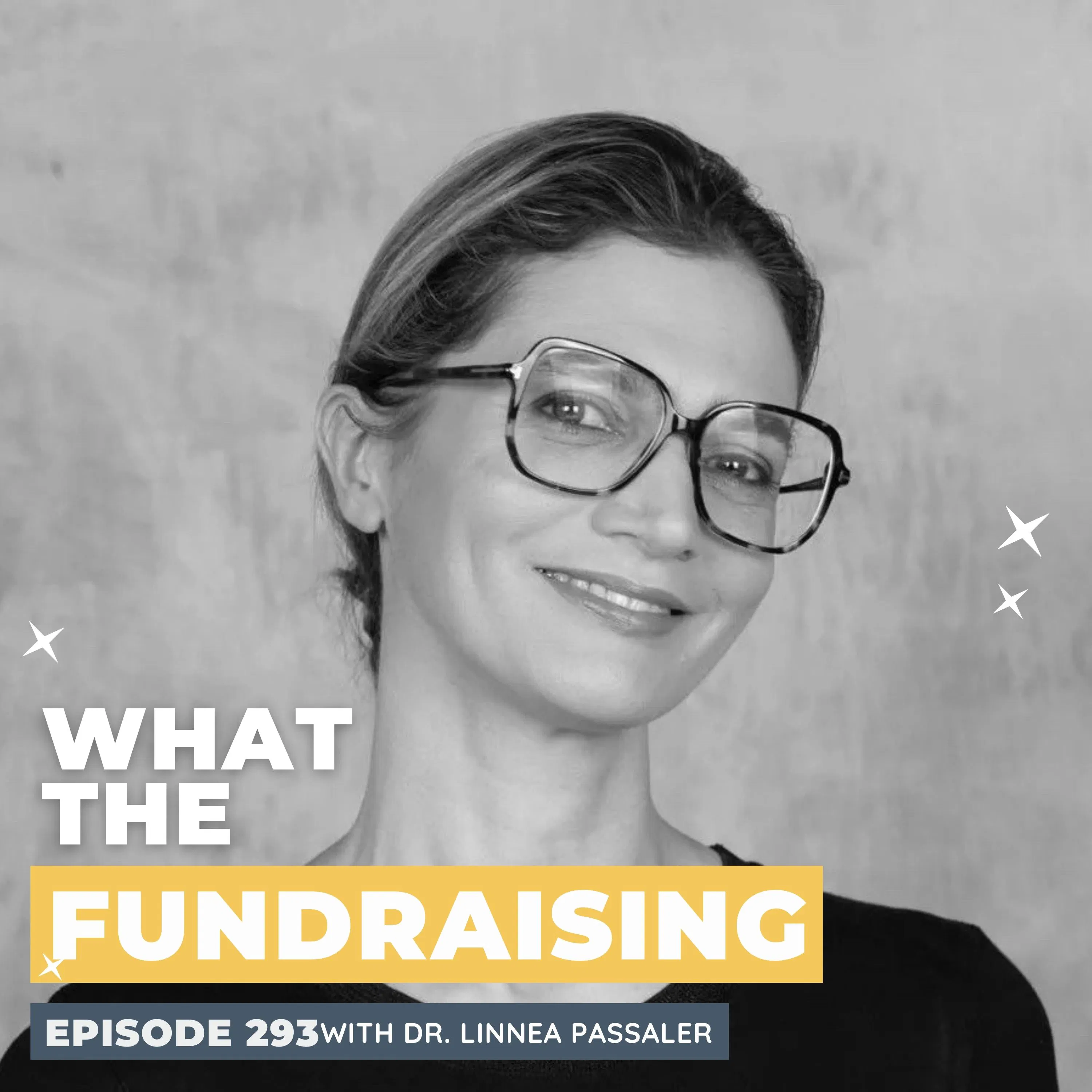
What the Fundraising
293: Fundraiser Wellness & Healing Your Nervous System with Dr. Linnea Passaler
00:49:49
Loading summary
Transcript41 lines
- [00:05]
Donor Perfect Conference Host
Do you ever feel like fundraising is a little foggy? Like you have goals to hit, donors to connect with, and about 12 tabs or 47 open trying to figure out what actually works. The good news is that you don't have to figure it out alone. The 2026 donor perfect community Conference is a free virtual event designed to help fundraisers clear their vision, illuminate what's possible, and get glowing results. Join me and some other amazing speakers on June 2nd and 3rd for practical tools, real stories from nonprofit leaders, and a supportive community that truly understands the work. Because when fundraisers come together, we know that things start to look a whole lot brighter. Register now for the Donor Perfect community conference@donorperfect.com donorperfect conference.
- [00:57]
Dr. Linnea Pasler
About a nervous system that is overwhelmed, that is working beyond its capacity. That's when we feel powerless. And powerlessness is actually the root of that wound that we can call trauma. We can call it emotional wound. That experience of feeling powerless in front of a stressor is what changes our biology and creates dysregulation in the nervous system
- [01:26]
Mallory Erickson
welcome back to what the Fundraising. I'm your host Mallory Erickson and this podcast is for impact leaders and change makers who are looking to fundamentally change the way they lead and fundraise. This episode is brought to you by our friends at Instill. Today I'm interviewing Dr. Linnea Pasler. Dr. Linnea is the founder and CEO of Heal youl Nervous System, a digital health startup that uses a combination of neuroscience and somatic work and to help those struggling with overwhelm, trauma, burnout and anxiety to heal their dysregulated nervous system and thrive. This episode is particularly important to me because the more I have learned about the nervous system over the years, the more I have realized that one of the main barriers that fundraisers face is that the work of fundraising can be very dysregulating and without the right understanding tools and frameworks. We don't understand why we're constantly experiencing low energy, dread and burnout. We keep trying to manage our time, but I really think it's all about how we manage our nervous system. In this conversation, Dr. Linea gives us insight into how burnout affects highly sensitive, passionate people like non profit leaders and teaches you the process for regulating your nervous system so that you can handle stress and your fundraising work without it leading you to dysregulation and burnout all the time. So if you've been feeling powerless, constantly overwhelmed, or finding a lack of purpose in your role as a fundraiser, first of all Know that you are not alone. But let's dive in so you can learn from Dr. Linea and even hear some good news about our capacity for healing.
- [03:13]
Welcome, everyone. I am so excited to be here today with Linnea Passler. Linnea, welcome to what the fundraising.
- [03:21]
Dr. Linnea Pasler
Thank you. Thank you so much. I'm so excited to be here. Mallory, thank you.
- [03:25]
Mallory Erickson
I have been such a huge fan and admirer of your work for so long. Can we start with you just telling everyone a little bit about you and the work that you do and. And then we'll dive into all the juicy applications for the nonprofit sector and fundraisers.
- [03:42]
Dr. Linnea Pasler
My background is a little complex because I started off in the science world, in the medical world. I originally took dental school to become a dental surgeon. And then I was completely interested in biology neurobiology from a very early age, from the very beginning of my career. So I spent time in a molecular biology lab for a couple of years, and then in this thing remained within me. And then fast forward several years later as I was really trying to find ways for my patients to understand the connection between the body and mind, between what happens in our body, because we think about the body as a compartment, but everything is connected and everything is connected with how we think and how we feel. And so I started on a completely different path in order to help as many people as possible to understand its connection and to really empower themselves. Because unfortunately, a lot of the narrative out there, especially in the. In the medical world, doesn't really allow us to become our own chief medical officer. And so I first started with a digital company in Italy. I exited it, but it's still there. And it helped people get information and choose medical facilities and choose doctors in the process. I was also an oral surgeon by then. So I completely burned out my body and my brain couldn't take it anymore. So I developed rosacea, IBS and so many health problems. And so that's where I started on my own journey of healing and understanding, you know, maybe I should take my own medicine and start practicing a little bit more about this. And so that's what really started me on a different journey where I started researching and training myself into somatic work, into the connection between the brain and the body in a way that could actually allow us to heal. And so pretty recently that I started healing nervous system. It was about 2020, you know, the beginning of the pandemic. And then finally this thing started to take a life of its own. I mean, I wasn't really planning on things going this way. But the message resonates a lot with many people. And so now we have a whole team of researchers, coaches, somatic coaches, trauma coaches, and a fantastic team that supports our work to help people in that field.
- [06:07]
Mallory Erickson
Wow. Can you talk to us a little bit about, you know, I have just started in the last year, maybe talking more specifically about our nervous system and the normal nervous system of a fundraiser. But can you just give us a little bit of an overview around what our nervous system really is and how do we experience it on a daily basis?
- [06:34]
Dr. Linnea Pasler
The nervous system is essentially the filter through which we experience reality, both our external reality as well as our internal reality. And so it's really that mind, body connection, you know, because it's what generates our feelings, our emotions, our thoughts, but it's also what directs everything in our body. And so I like to use the analogy of a fern, a regulated nervous system. A nervous system that works well is like a fan that flexes and flows under external stressors. So it's not a nervous system that is relaxed all the time. So that doesn't mean you're regulated. It's completely fine. It's physiologic to go into different states many times throughout the day. The point is being able to flow with the. Just the flow of life and flow, follow those ups and downs in a way that does not feel chaotic and out of control. So when we are able to embrace this idea of a flowing nervous system, a nervous system that is flexible, that means we can let go of this idea of perfection, of having everything under control all the time. And that is actually what a regulated nervous system is, is a nervous system that can quickly rebound under stressors. If we think about a nervous system that is overwhelmed, that is working beyond its capacity, that's when we feel powerless. And powerlessness is actually the root of that wound that we can call trauma, we can call it emotional wound. That experience of feeling powerless in front of a stressor is what changes our biology and creates dysregulation in the nervous system. This memory of. Of powerlessness gets played over and over. It becomes part of our biology and it's what actually causes havoc in our body and mind. And so this is due to the neuroplasticity of the nervous system. So the nervous system is constantly learning and changing, and so it can learn and absorb, essentially embed this wound, but it can also heal. So it can reverse this damage. Because of its neuroplasticity, we can reverse this damage that is being embedded. When we feel overwhelmed, when we Feel powerless in front of an event or a situation, Something that happens in our life. And so that, I think, is the powerful message, which is, yes, we can experience trauma. A wound can be embedded, and that changes the biology, but also healing changes our biology. So that's the really key message to know about the nervous system and how it plays out in our life. Ooh.
- [09:26]
Mallory Erickson
Okay. There's so much I want to ask you about that. One of the things I want to make sure that I'm understanding right is like, when we stay in that consistent state of choicelessness you were talking about, the way that choicelessness, that sort of trapping keeps us in, it sounds like this very chronic state stress, chronic activated state. That's what ultimately leads us to burnout.
- [09:55]
Dr. Linnea Pasler
Yeah. So specifically, this mechanism is at the base of trauma and usually is an acute event, although it can happen a certain amount of time. And so also, we can think about this living on a spectrum. Even a small event can create a wound. And then, of course, there's all this discussion about what's trauma, what's not trauma. But regardless of what we call trauma, when an experience feels overwhelming for the nervous system and we have this experience of feeling powerless, individuals who are more sensitive, even just one event is enough to create that biological change. Okay. So it learns very quickly. When we're talking about burnout, Burnout is a little bit different. There's a lot of speculation about the fact that there are a lot of symptoms that overlap between trauma and burnout. But we know that when it comes to these mind body conditions, a lot of the symptoms overlap, and a lot of the feelings that we experience as well as the symptoms, they are similar. That doesn't mean that they are the same thing. So burnout is a little bit different from a neurobiological perspective. But again, some of the symptoms can be similar. So when people are experiencing burnout, they have this lack of energy throughout the day. They have this feeling of being emotionally drained and exhausted. They can have a reduced sense of fulfillment of purpose. These are all the symptoms that are described with burnout. But then some people experience and start having chronic symptoms, chronic pain, dermatological conditions like rosacea and many other conditions, gastrointestinal problems, immunological problems. So there's a huge variety of. Of symptoms. These are often conditions that overlap with burnout.
- [11:53]
Mallory Erickson
Okay. And so when people are experiencing an environment that exposes them to the same wound potentially, and they're also simultaneously experiencing at least symptoms of burnout and maybe wondering if that's where they ultimately are, can they simultaneously heal their burnout while they continue to be exposed to the environments that wound them?
- [12:25]
Dr. Linnea Pasler
That's a tricky question, because it depends on the level of burnout. So that's one of the reasons why it's so important to really start taking care of this as early as possible and possibly preventing it, because studies say, is that there is essentially like a slow burn, and then in like six months, things get really bad. And that is when essentially this condition of burnout can get to a point where it's really hard to come back. So that doesn't mean that we can't heal. Even extreme stages of burnout. It just takes more time. And in those situations, oftentimes people have to leave their job. So that's why it's so important, because once we get to that level, that's when our system is essentially burned out, right? So we want to take this and realize that something is not going well when we are in that burning out phase versus the completely burned out phase, because that burned out phase requires a lot more work. And that's where a lot of people actually quit their job. And that's where a lot of people completely lose connection with their sense of purpose. And I think in this industry, for the nonprofit sector, people are so connected with the cause, they are so driven by this cause. And so, unfortunately, what burnout can do is it destroys that sense of purpose. We become cynic, we become emotionally disconnected. We lack that sense of purpose. That is one of the signs of burnout. So it's not because you don't care about that cause anymore, but that's how your brain and body have changed. And so in brain scans, we see the changes, the atrophy, essentially, that happens at the brain level. The good thing is that these changes, we can revert them, we can heal them. But. But the longer this situation goes on, the longer it takes afterwards to heal. That's why I think it's key to identify this. And the other thing is people who have a highly sensitive nervous system, who are particularly motivated by big causes, people who have this sense of purpose in life, are the ones that are more at risk of developing burnout. So you'd say, well, maybe someone who. They're just working because they need to work, or they go to work and they're not very motivated. Maybe those are the people who burn out the most. No, actually, that's the paradox of burnout. It hits people who are more connected to a sense of purpose. It really devastates people who are living for their purpose, for Their cause. And so that's something that I think it's really important to be aware of when you're working in this sector.
- [15:25]
Mallory Erickson
Okay, wow. That is such an important framework. And I love what you said at the very beginning around the fact that a regulated nervous system is not a nervous system that is not exposed to stress. It's about how do we have the tools to be able to manage and to be able to handle the stress without it keeping us in sort of like a heightened nervous system state for a long period of time, because that's ultimately what leads to these longer term sort of harm or damages. And am I summarizing that correctly? Okay, so that, to me is really interesting because when I think about some of what you were just saying around highly sensitive people, the rate of burnout, and I think about fundraisers in particular that have a lot of activities or environments around them that could be, you know, deregulating, like getting ghosted by a funder or dealing with rejection. There's a lot of moments. It's really interesting what you said about that powerlessness business, because I actually think there are a lot of moments in fundraising where fundraisers feel powerless. Whether that's in a donor meeting that is going sideways and they don't feel like they have the agency or influence or power to speak up. Whether they don't feel like they have enough influence around their fundraising, achieving their fundraising goals for the year. Maybe their board isn't listening to them. They keep saying, hey, we need to do this. And the board keeps saying, no. There are all these moments where they feel. Feel powerless. And so I know that piece in particular is, like, related to some of that wound. I also hear you saying that there are ways that we can increase the neuroplasticity of our brains in order to be able to be more resilient. It sounds like to some of these, like, deregulating moments.
- [17:17]
Dr. Linnea Pasler
Yeah. So, of course, if we are particularly sensitive and particularly connected to a cause, we are more at risk of developing these problems. But there is the good side of this trait, which is that we are more likely when it comes to being exposed to positive environments, when it comes to taking the right actions for our nervous system regulation and for our health, we are more likely to respond positively. And we don't yet have everything clear in terms of the neurobiology. There are ideas and there is research going on about why there is neuroplasticity. This increased neuroplasticity. It seems so a lot is going on. But what is clear is that you Are more at risk of developing burnout, but you're also more likely to reverse the damage and to heal if you take the right steps. So the right steps. We could talk about hours about the right steps, But I think when it comes to a situation like the one you described, I think part of the work has to do with going to some of those wounded parts inside yourself, right? So a lot of it has to do with am I ready to start on a journey of radical self inquiry? Because that is often overlooked. And for me, in my own journey in the nonprofit sector, I think a lot of it was this sort of bypassing of my own things that I needed to heal from. And a lot of it was putting everything into this cause because it felt like this was healing me. It was making me feel better. It was making me feel like I was doing the right thing. And when we have that sensitivity, we have this innate desire to do the right thing, to feel that people see that we matter, that we are doing the right thing. And so that can become a way to bypass your inner wounds. And so I wasn't aware of that at the time. I had no idea. But now that I see it, because I came to a point of complete breakdown, I had to go deep into those wounds. And so I think a lot of the mentality around sacrifice, around giving everything, yes, there is a culture problem, There is a big culture problem because we are exposed to this idea of hustling and grinding because we need to get to a certain place. So part of that culture is unhealthy. But a lot of it is also, how willing am I to really going deep in what is it that is inside of me? I think this is a key issue because it's one thing to connect to a big cause from a place of scarcity, of needing to fill a void. It's a very different thing to connect to a big cause from a place of self regulation, of having done the work and feeling like you can be in the presence of other people and not necessarily be drawn into a dysregulated state because of what happens around you. So when a donor rejects you or when anything goes on around your life, it becomes about you, because all of those wounded parts get triggered, and so all of these protective parts come up. And so you become a perfectionist. You become. So all these are ways to protect yourself. So maybe you get angry, maybe you start trying to fix the situation. So all these are ways to protect that deep place that you don't want to go to, because it's A very deep wound.
- [21:08]
Mallory Erickson
Okay, I want to talk about how folks can start begin their healing journey. But before we talk about that, something that you just said sort of hit on a topic that I've been thinking a lot about recently, which is our relationship to being helpers. Like, a lot of your story is very similar to my story in joining the nonprofit sector. And there was not a lot of consciousness that I held around why I joined the nonprofit sector, other than that it felt really good to help. And then ultimately being driven by that addiction to fixing things around me.
- [21:50]
Donor Perfect Conference Host
I have to be honest, more than anything right now, people are asking me, just tell me what to do. I know that so many people are sitting down to work on fundraising and thinking, okay, where do I even start? You're juggling campaigns, emails, donor meetings, events, and about a hundred other things. And sometimes it can feel like you're trying to navigate it all in the dark. That's exactly why I love the Donor Perfect Community Conference and why it was created. This free virtual event is designed to help fundraisers clear their vision, illuminate what's possible, and get glowing results. On June 2nd and 3rd, you'll hear real stories from nonprofit leaders, learn practical strategies you can actually use, and connect with a community of people who understand the challenges of nonprofit profit work. Join me and some other amazing speakers, including Joan Gary, Clay Buck, and Julia patrick, for the 2026 Donor Perfect Community Conference. Register for free today at donorperfect.com donorperfect conference I can't wait to see you there.
- [22:58]
Mallory Erickson
Led to complete burnout, cross chronic pain. I was bedridden. And so it really also took me this, like, rock bottom moment to be like, okay, like, the only way out of here is to figure out what the heck is going on. And in the work that I do as a coach, I give an assessment to folks that I work one on one with. And there are these energy leadership levels in this assessment. And everyone gets a primary leadership level. And then they get a level of what happens when they're activated into stress. And a pattern I started to notice when I first started coaching. I was coaching women primarily, but in all different sectors. And people would have all different primary leadership levels. And then I started to find that everyone who was in the nonprofit sector had a primary level of 4, which is helper, and they had a primary stress reaction of one, which is victimhood or martyrdom. And I started to see this, like, really thin line between when we show up as helpers or being helpful, at least without consciousness. That seems to be when we're showing up without boundaries, without any real awareness around, do we want to be doing what we're doing right now or are we afraid if we don't do it then? Which it sounds like is really similar to this dynamic that you're talking about right now too. Does that resonate?
- [24:29]
Dr. Linnea Pasler
Yeah, absolutely. I think in order to address those really wounded parts that are usually coming from very early in life, in order to be able to address those, it's really essential to start a journey, to follow certain steps. Because if you start thinking, well, okay, I shouldn't be a helper, I shouldn't try to fix others. And so I'm going to focus on things like boundaries and self care, etc. That doesn't really work over the long term because it doesn't come from a place of, you know, having created certain tools in your mind and body to regulate yourself and having done the work of healing those parts of yourself first. That's where you can start connecting with others. Rather than from a place of empathy, from a place of compassion, from a place of equanimity. That's what Buddhism calls it. So I'm not trying to fix you. I'm here to help you do the work. I'm here to help create a situation that works. But that doesn't mean that this is a way for me to somehow fix you. I'm not trying to stay away from my wounded parts. So this is about you. It's not about me trying to protect my wounded parts. That is the profound change, helping others and being supportive of others, not from a place of scarcity within myself. And that is the difference where you are moving in a space of being deeply grounded, deeply regulated, and you're connecting with everything good and bad from that space. Space. So the question I think is what kind of leader can you become if you commit to radical honesty, radical self inquiry and you come out on the other side after this journey, that is the big change. That's where, you know, boundaries become essentially a consequence. They're not a tool, they become a consequence of this work. They're not a way for you to essentially create a barrier with the rest of the world because it's triggering. So of course this is a long term journey. I'm not saying that this is something that happens overnight, it takes time. But it all starts with this decision, with this conscious decision of saying, I'm going to sit here and be radically honest with myself and look into the parts that are so scary that I'm not even aware of it. Because I have just disconnected completely at an emotional level, at the physical level, I have completely disconnected. So what happens if I stay here and accept whatever is coming my way as I go through this journey?
- [27:29]
Mallory Erickson
Okay, can you talk to us a little bit about what those steps are and what support people need along the journey to go there, to look at those pieces and in ways that are. I don't know if safe is the right word, but as healing as possible.
- [27:47]
Dr. Linnea Pasler
So this can get complicated. And that's why part of the work we have done in the last year or so is to create this five step framework, because it can get really, really confusing for people. Because we hear a lot about nervous system regulation and regulate your dysregulated nervous system, but what does it actually mean? And what are the steps? And that's one of the questions that I get the most. So that's why we developed based on what we saw. You know, we've been working with thousands of people in our programs, with our coaches, et cetera. So we have seen the challenges and so we came up with this five step framework. The first step is awareness. So this is the step where you need to be able to be an observer and observe what happens at the nervous system level from a neurobiological perspective. So really recognizing what's happening in the body, what's happening when this happens in the body, what happens in the brain, et cetera. So being an observer and being an observer from a place of self compassion, that is the first thing, because people tend to judge themselves. And that's why it's so scary to go to a healing journey. Because we don't want to look at these things and we keep checking out. So the first step is really developing that awareness coupled with compassion. And that is one of the most challenging things. Even though people think, oh no, no, I'm aware, you know, I have done the awareness because I'm doing meditation and I'm doing this, and that's great, but it's different. You can do meditation for years, you can do yoga for years, etc. But still bypass those difficult things. So the first step is awareness. The second step is regulation, which is essentially creating this sense of safety at the body level. Because when we work on deeper things, we want to always be able to bring our bodies back to a state of safety. And that looks like, let's say, a variety of tools. Where we work with the body, it can be touch, it can be breath, there's a whole range of tools. But the difference is instead of using it to fix a certain situation. You know, I'm feeling anxious, so I'm going to do some breath work. That's not the end of it, it's the beginning of it. So we're not doing this to just fix whatever we're feeling in the moment. We are doing this so that we learn how to downregulate the system, how to create that sense of safety. Because then the next stages need to happen. So this awareness and regulation, which are the most difficult ones, they're all challenging, but that's where people get stuck in the beginning. But that is just the beginning, because the next stage, which is restoration, that's where we go deep. And so this is when trauma work happens, attachment work happens, because attachment is the way we have learned to regulate in our early years. And so if there's an attachment wound, by healing that wound, we know that a lot of the other problems take care of themselves. So work on doing the deep work of going to these wounded parts and with a lot of compassion and possibly, of course, help, you know, because again, we all fall somewhere in this trauma spectrum. So maybe we just have some simple wounds that are keeping us stuck. And so we want to work with those. So depending on how deep the wound is, we will need different kind of support. So this could look like some degree of self work, work within a community, within a group, or work with someone one on one. So this really depends on where you fall on that spectrum. So this restoration work is really the key. And then the following steps are. Connection. Now we're a place of connecting with others, from a real sense of compassion. What I was saying before, so people's wounds don't trigger us. We are not trying to fix them. We don't get angry at them because they're triggering parts of ourselves. So this is where we can connect from a deep sense of purpose and from a deep sense of giving back to others. So that's where, you know, it's not so much about boundaries because they sort of become part of who you are. You don't let other people's wounds take you down. So that's where you become the best leader, the best parent. You're really giving from a place of abundance rather than scarcity. And then the final step is expansion. And this is where we are working to grow our capacity for stressors so we're becoming able to take on more. But again, this is not grinding or hustling. It's about how can I give my nervous system everything it needs so that it can expand and stress Is fine, because stress is part of this. Stress expands our capacity when we are coming from a place of regulation. So that's where we can actually do more. And that is one of the unique advantages of sensitivity, because that vantage point becomes an asset then, because that's when you can really expand what you give and how you give back to the world. But it's the end of the journey. And so that's when you are embodying all of that sense of purpose from that different perspective. Ooh, okay.
- [33:26]
Mallory Erickson
That framework is so helpful. What I think I hear you saying is like the healing piece of it starts at step three. Is that right? Like when you get into that, that, that's really when, like when we think about that difference between trauma and nervous system.
- [33:45]
Dr. Linnea Pasler
So I would say that healing starts immediately because you are starting to create the change at a neurobiological level from stage one. But that change in the first two steps is necessary to be able to go deep into the healing part. Because going to these parts, if you haven't gone through those previous stages of healing, it can become so triggering and so overwhelming that you risk getting traumatized all over again. So that's why in the trauma world there is so much attention to these first two steps. Because when we go and touch those really wounded parts, it can backfire. That's what we never want to happen. Because we don't want people to get worse because that's going to wound them so much more and it's going to take them away from the healing journey. So that's why for us, we spend a lot of time in creating those first two steps because we want people to have acquired certain tools, have tested them, and being able to create a sense of safety and regulate themselves and regulate in connection or self regulating before they attempt to touch those deeper parts.
- [35:02]
Mallory Erickson
Okay, so can you talk to us a little bit about some tools around like regulating in the moment or how we think about that step two in particular?
- [35:15]
Dr. Linnea Pasler
Yeah, so what we do is we. We give a series of what I call portals. And the reason I call them portals is essentially work on different sensory systems plus something like breath. So of course we know and we now have a lot of evidence supporting these ideas. I mean, it's in the early stages, but we are starting to see a lot of studies that demonstrate that, for example, specific skin stimulation, for example, using touch, which can be a massage, it can be self touch, et cetera, it triggers certain areas of our nervous system that are connected to certain parts of the body. And so this creates Regulation, it distresses the system. So all these are ways to distress the system and decontract. This creates a sense of safety in the nervous system. So for example, one of the simplest ways to regulate in the moment that we could suggest. Actually there was a study that just came out from Andrew Huberman and his lab about using the physiological side, which is a way of breathing that we can all try. It simply involves doing one big taking in breath for once and then a second one very quickly and very short, and then slowly breathing out. So I can show you. It's like this. So one big breath and then the second one. This simulates the physiological side. When we sag, that's what our nervous system does. And it's a way of resetting the system. That's a very simple one that you can use anytime. And you do a cycle of these, let's say five to ten times, just really trying to do these two in breaths and then slowly breathing out. And let's say you're in a very stressful situation. Doing that really helps reset your system. But it's really important that all of these ways that we see as ways of regulating ourselves in the moment, those quickly wear out if there is not an ongoing work, like a longer term commitment, because they can become a way to fix ourselves, a way to bypass that work. So I always say I'm not a big fan of putting out a lot of tools. You can use four or five simple tools to calm yourself in the moment. Again, the breath, self touch or massage. Just doing some very simple exercises to relax. What really makes a difference is doing this in a practice, in a daily practice, as you take your journey of healing. So if you just do those when you're not feeling well, a lot of people tell me, oh, I don't sleep well, okay? But sleeping at night comes from what happens in the day. So if you are working through the day and creating this situation, then sleep will come easier. But it's not doing that meditation last minute before going to sleep that is necessarily going to change things.
- [38:20]
Mallory Erickson
Okay, this is maybe a weird question to ask, but are there any circumstances in which we experience some level of dysregulation where step one and two are really helpful, but maybe there's not a deep wound related to it to explore? Or is all dysregulation ultimately the result of there being a wound below it?
- [38:47]
Dr. Linnea Pasler
I think all of us carry some degree of healing that needs to happen, right? We all have our life and our childhood and our like, we all have stuff to Heal. But that doesn't mean that we're all traumatized by any means. So using those steps, if someone is experiencing no symptoms and no problems, it may be enough. And so actually they are ways to prevent experiencing more. But when someone is already experiencing symptoms like anxiety beyond, oh, I'm anxious because I have to do a presentation. Right. That's completely normal. So our threats system is designed to keep us safe. So it's perfectly normal to experience these things. But when they start taking control of our lives and when they start becoming something that is a presence in her life and we feel powerless in front of these situations, that's where we need to go deeper. So working out and doing all the wonderful things that help our nervous system regulate, but are not enough if we don't go into a deeper journey.
- [39:54]
Mallory Erickson
Okay, that prevention piece is really interesting to me, and I'm thinking about for fundraisers for nonprofit leaders in particular. Like, do you have any recommendations around daily prevention practices? Yeah, yeah.
- [40:09]
Dr. Linnea Pasler
If we want to focus specifically, for example, avoiding burnout in an organization, there are some things, some, let's say, hygiene practices that would be really important to implement. And of course, there's no way to get around this. But excessive work hours are one of the culprits. Right. So working a sustainable amount of hours is key in this process. And so it's okay to take maybe, you know, you have a couple of weeks where a deadline, it's fine to do more because as I said, the nervous system can become dysregulated and then regulate itself. But if it becomes a chronic problem where you work excessive hours for months, that's where the damage starts to accumulate. So having enough downtime is really important. Sensory overload is one of the issues, especially if you're working in a crowded office, especially if people are sensitive trying to create an environment that is not sensory overwhelming, but can be soothing forces, because that's an additional stressor that goes on for many hours. So I'm a big fan, working from home of creating situations where your nervous system feels safe. It doesn't feel overwhelmed sometimes working from home with four kids. So going to an office is a dream. Right. The other, I think two things that are not really practical but are still very important is lack of autonomy and creativity. Whenever you feel that you have a sense of powerlessness that you lack efficacy in your work, that is one of the top predictors of burning out. So giving people a sense of autonomy and giving them a sense that they have a degree of autonomy, even if they're doing the most simple job, feeling that they can do it, that they have the power to do it, that's very powerful for the nervous system. And also a sense of injustice is super triggering. And it's one of the ways in which the nervous system gets overwhelmed and goes into burnout. So having, let's say, a reward system or having accountability in the workplace, feeling valued, feeling supported in your contribution, this is really key to prevent that burnout. And then finally having the resources that you need to complete a job. Let's say you're going through a transition, you're restructuring your organization, you're downsizing. It's really important that people feel they have the resources, the support they need to go through those transitions. So I think these are ways in which, when you're in a leadership place and you're leading other people, it's really crucial that you prioritize these things, because that's going to create a culture of regulation, of sustainability from a nervous system perspective versus creating a condition for your team to burn out.
- [43:13]
Mallory Erickson
Okay, I have to tell you what is so important about what you just said, in addition to the leadership component, is that funders need to hear that, because some of those pieces that you said at the end, the autonomy piece and the resources, you know, there's a huge conversation in the nonprofit sector about restricted funding versus unrestricted funding and how much funders restrict and don't give nonprofits essentially autonomy to make decisions about how funding is going to be used or where they can pivot, where they have flexibility. And so hearing that autonomy and that decision making has such a huge impact on burnout. And. And then knowing that a lot of autonomy is taken away by the relationship between funders and nonprofits, I just think there is something so important there for this sector to be talking about. So I really appreciate hearing that.
- [44:10]
Dr. Linnea Pasler
It's important for any sector, but particularly for people who are drawn to the nonprofit because they have that big sense of purpose. Right. So if you take that away, it's destructive.
- [44:22]
Mallory Erickson
Okay. Is there a question I haven't asked you that you feel like I should be asking you?
- [44:27]
Dr. Linnea Pasler
So if we're talking about shame and powerlessness, one of the things that people hear about is this term rejection, sensitive dysphoria. And it's when a person feels this intense emotional pain related to rejection, and it's actually studied in a researched condition, and it's very connected to people who are highly sensitive. Now, we could talk about whether this comes from those wounds that we mentioned, from the trauma, et cetera, or it may be a way of being particularly sensitive to this. And there's even a term, and it's a studied situation, right? So it's important that we are aware that we have this different sensitivity. So when we start to be aware of it and we start to treating this with compassion, when the rejection comes in and we are looking at what happens in the body, you know, maybe we feel our chest tightens, we observe the reactions at the body level, and instead of falling into the shame narrative, we think, oh, my body is becoming dysregulated because I'm experiencing this rejection. And I know I'm particularly sensitive to rejection. So we start talking to ourselves with compassion and with acceptance. This is the way I am. So this is what changes the neurobiological wiring of the brain. If we stop falling into that trap, we just take a moment to look at what's happening in the body and. And we know that there's this sensitivity in us that changes how the brain works. When it starts happening and we start doing it and it becomes a habit with time. Instead of falling into that shame trap, which then triggers all of the pain and shame and anxiety, et cetera, we are reversing that wound and we are replacing those neuron pathways with new ones. When we don't fall into that shame, we start looking at ourselves from a place of self compassion. And that's where this rejection sensitive dysphoria becomes less and less because we're changing the way the brain works. Wow.
- [46:52]
Mallory Erickson
I love that. And I love it paired especially with the way you've talked about how our high sensitivity has positives and challenges. And so I really appreciate that framing. Tell everyone where they can find you and learn more and get involved in your work.
- [47:08]
Dr. Linnea Pasler
They can definitely find me through our Instagram community, heal your nervous system. And if they go to helionevasystem.com we have this test where you can learn if you are an orchard, tulip or dandelion so you understand where you are on the sensitivity spectrum. Plus, they get on our newsletter where I share a lot of these insights and ideas.
- [47:30]
Mallory Erickson
Yes. And we'll put the link to the quiz in the show notes as well so folks can go straight there. Thank you so much for sharing all of this wisdom with us today and for all of your work. I'm so grateful.
- [47:42]
Dr. Linnea Pasler
I'm grateful that we have connected. Thank you so much.
- [47:51]
Mallory Erickson
Okay, I could be summarizing this episode for the next hour, so let me try to dwindle down some of my very top takeaways. Number one. Think of the nervous system as the mind body connection. It's important to pay attention to what your mind and body are telling you, especially when you're overwhelmed, so that you can properly nourish yourself and prevent burnout. Number two Repeated trauma, like the intense stress of fundraising, causes repeated feelings of powerlessness which if left untreated, can lead to burnout over time. 3. Because of neuroplasticity, our brains can reverse the damage done by overwhelmed trauma and powerlessness. This is good news, but it means we need to prioritize healing. Number four There are ways you can increase your neuroplasticity to be more resilient to situations that may cause nervous system dysregulation. It starts with radical self inquiry and facing the wounded parts of ourselves. And I love her five step framework to heal your nervous system which is awareness with self compassion regulation. That's the internal safety restoration connection and expansion. And then lastly, working as a sustainable number of hours, avoiding sensory overload, creating soothing environments and promoting a sense of autonomy are few ways to prevent burnout in fundraisers and nonprofits. So if you're a leader listening to this, it is crucial to prioritize these things. Okay, for additional takeaways and tips inside this episode, head on over to Malloryerickson.com podcast to grab the full show notes and resources now. You'll also find more information there about Rosa and our amazing sponsors Instill thank you for spending this time with us today. If you enjoyed this episode, we would love it if you would give it a rating and review and share it with a friend. I'm so grateful for all of my listeners and the good hard work you're doing to make our world a better place. And if you miss me between episodes, stop by and say hello on Instagram under what the fundraising underscore.
- [50:01]
Have.
- [50:01]
Have a great day and I'll see you next week.
- [50:17]
Practivated Ad Narrator
Fundraising is hard. Every donor conversation carries pressure and most fundraisers are expected to just figure it out through trial and error. That's why we built Practivated, the first ever AI powered donor conversation simulator made just for fundraisers. It's a safe, judgment free space to practice your pitch, refine your storytelling and build the confidence that drives real results for your mission. Because conversations move missions forward. With Practivated, you and your team can practice anytime, get real feedback instantly and walk into donor meetings ready, not rehearsed, but prepared. See how practice changes everything? Try practivated today at www.practivated. com and start building confidence. One conversation at a.