← What the Fundraising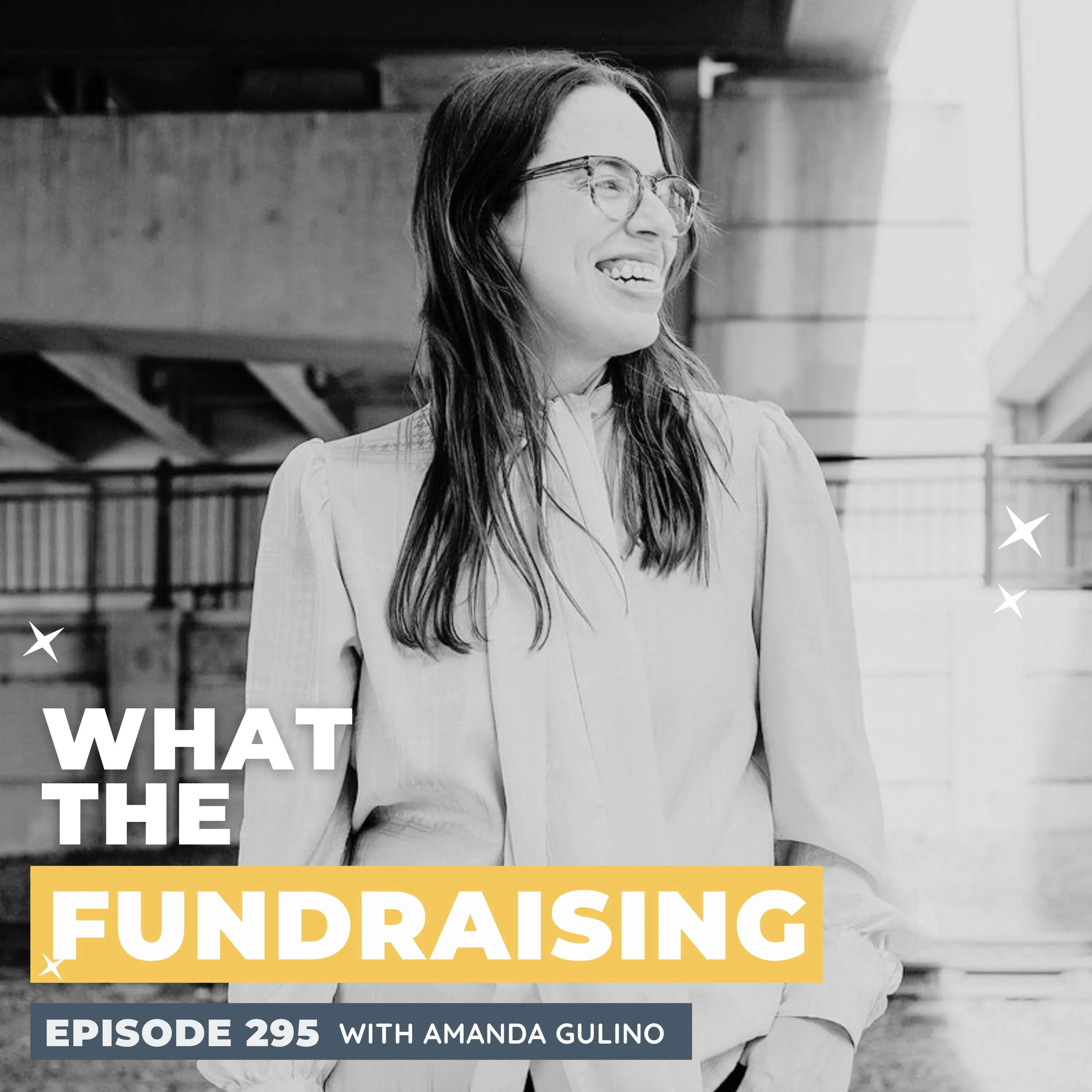
What the Fundraising
295: Breaking the Cycle: Empowerment, Stress Management, and Sustainable Leadership with Amanda Gulino
00:51:05
Loading summary
Transcript54 lines
- [00:05]
Mallory Erickson
Do you ever feel like fundraising is a little foggy? Like you have goals to hit, donors to connect with, and about 12 tabs or 47 open, trying to figure out what actually works? The good news is that you don't have to figure it out alone. The 2026 donor perfect community Conference is a free virtual event designed to help fundraisers clear their vision, illuminate what's possible, and get glowing results. Join me and some other amazing speaker on June 2nd and 3rd for practical tools, real stories from nonprofit leaders, and a supportive community that truly understands the work. Because when fundraisers come together, we know that things start to look a whole lot brighter. Register now for the Donor Perfect community conference@donorperfect.com donorperfect-conference.
- [00:57]
Amanda Gulino
If we take every fundraiser and kind of think about each person, while we may have parts of us that are shared, right, shared aspects of our identity, shared ways of growing up, whatever, there's still a lot of uniqueness inside of each person in terms of what our buttons are, what the push and pull is. And so is there a solve? Not necessarily. But the way I like to think about this is are there ways that we can get closer, right, to releasing some of that stress?
- [01:25]
Mallory Erickson
Hey, my name is Mallory and I'm obsessed with helping leaders in the nonprofit space raise money and run their organizations differently. What the Fundraising is a space for real and raw conversations to both challenge and inspire you. Not too long ago, I was in your shoes, uncomfortable with fundraising and unsure of my place in this sector. It wasn't until I started to listen to other experts outside of the fundraising space that I was able to shift my mindset and ultimately shift the way I show up as a leader. This podcast is my way of blending professional and personal development so we, as a collective inside the nonprofit sector can feel good about the work we are doing. Join me every week as I interview
- [02:06]
Podcast Host (Mallory Erickson)
some of the brightest minds in the
- [02:08]
Mallory Erickson
personal and professional development space to help you fundamentally change the way you lead and fundraise. I hope you enjoy this episode. So let's dive in.
- [02:20]
Podcast Host (Mallory Erickson)
Welcome everyone. I am so excited to be here today with my friend Amanda Golino. Amanda, welcome to Wet the Fundraising.
- [02:27]
Amanda Gulino
Oh, thank you so much. After years of listening, I am so excited to be here with you.
- [02:34]
Podcast Host (Mallory Erickson)
It's long overdue, but let's start with you sharing a little bit about you and your work and then we'll. We'll dive into our super juicy topic for today.
- [02:43]
Amanda Gulino
Oh, I can't wait. Amazing. So let's see. I love to introduce myself in kind of two ways. One is who I am. The second is what I do. Because they are connected, but they're also different. Right? So who I am, let's see. I am a wife. I am a dog mom, I am a runner. I am a person that reads like eight to 10 books at a time. I am 37 and I am at a place where I really have found so much meaning in my work that it's almost hard to like stop sometimes. Not out of a over producing way, but just out of a genuine love way. Those are. And I would say I am a deep, A person deeply connected to nature and all that it offers us. What I do, I am so privileged. I started my small business a better Monday almost nine years ago, which is jaw dropping. Which means, Mallory, I must have met you around eight or nine years ago now.
- [03:39]
Podcast Host (Mallory Erickson)
Yeah, totally.
- [03:40]
Amanda Gulino
We'll have to tell that story one day because that's a fun story about relationships. Right? And then so now what I. The business has evolved a bit, but these days what I my whole world is centered around is reimagining how we lead and work together differently in the day to day and for the long haul. And that's primarily through facilitation and coaching, both one on one and team. So thrilled to be here.
- [04:05]
Podcast Host (Mallory Erickson)
Amazing. Okay. And you have been through. So it's so funny because we met. I cannot even remember how we met. So we're going to have to revisit that story. But then we became pretty like fast friends. We ended up doing some like a speaking thing together when I was pregnant with my first daughter. And you were already doing tons of incredible work. And then you ended up going through the same coach training certification program that I had been through with IPEC and got certified in the Energy Leadership Index assessment. And so I talk a little bit about energy leadership on the podcast and this idea of catabolic and anabolic energy, this really, like, draining and resisting energy, that's the catabolic energy, you know, fueling, healing, motivating energy, being that anabolic energy. And then there being this spectrum of energy levels from level one to level seven. And for those of you who are listening, if you're like, okay, I'm not tracking all of this, don't worry. But I'm sharing that, like, slight background because I want to frame up this conversation today by saying, I reached out to Amanda because I was like, there's something coming up for me in how energy leadership is playing out for nonprofit fundraisers right now and some, like, consistent blocks that I'm Watching fundraisers have. And I want to have a real and organic conversation around how we help people move through this. So level one energy in the Energy Leadership Index assessment is victimhood, martyrdom. Feeling at the effect of our life, right? Not feeling in control of our decisions, feeling really trapped. This was 100% the way that I felt as a nonprofit executive director. And I think I would have been really offended to hear myself say the word martyr. But that was the truth. That was the truth that I really. I was, like, resentful. I was not taking a lot of accountability for my actions. I was in a really challenging, really stressful situation, and I felt like I had no choices, and I was just, like, doing the best I could. But what that resulted in, what that feeling and all of that level one energy resulted in, in my leadership, was me taking a lot less actions that could have ultimately both improved my experience, moved my organization forward, raised more money for our organization. And as I was saying before we recorded, then. I'll be quiet in a second, but I just want to sort of, like, walk people into where we're going is like. As I've learned more and more about the nervous system over the last few years, I have realized that that, like, freeze state is level one, right? When we're in paralysis, we can't make decisions. Things feel really cloudy or binary, and we maybe find ourselves in more of that kind of, like, perfectionism paralysis. We can't take an action. And I recognize and, like, my book is about this, that there's so many systemic things around fundraisers that lead to a level of chronic stress and overwhelm that. That lead us into freeze. And while those systemic things are not our fault, we as fundraisers and leaders have to figure out ways to navigate that stress and overwhelm so that we are not frozen, so that we are not at the effect of the environment around us if we want to ultimately build and create the change that we want to see in the world. So I reached out to Amanda because I was like, I feel like this is, like, especially in this moment, one of the, like, key questions for change makers and. And I. And so we are entering this conversation as, like, two friends who have the same background of this framework, really trying to, like, think through this together with all of you.
- [07:57]
Amanda Gulino
I love that it's going to be messy and juicy in a good way. Right. Because there's no clear answers here. Right. And, like, then there's the. If we take every fundraiser and kind of think about each person, while we may have parts of Us that are shared, right? Shared aspects of our identity, shared ways of growing up, whatever. There's still a lot of uniqueness inside of each person in terms of what our buttons are, what the push and pull is. And so is there a solve? Not necessarily. But the way I like to think about this is are there ways that we can get closer, right, to releasing some of that stress so that we're out of. Like, with level one, I often think of that as I can't. Like, we feel just whether it's real or perceived, the body doesn't know a difference. Like, we feel powerless. There's no options and how powerful it can feel or really empowering it can feel to actually see maybe just one extra option, like, what that can do. And so I like to think about this in terms of baby steps. And now I'm getting excited. But all that sounds fantastic.
- [08:57]
Podcast Host (Mallory Erickson)
Okay. Yes. Let's just actually dive right in there. Like, when I first kind of proposed this to you, what were some of, like, your initial gut reactions around, like, okay, if I had a fundraiser in this position, here are the things that I would kind of focus my coaching on with them.
- [09:16]
Amanda Gulino
Oh, my gosh. Fundraisers, folks in sales, inside nonprofits, are out. Like, really, anybody that is speaking on behalf of something that matters, which many of us do in our work. But I think specifically for fundraisers, it's never about the thing, right? So often people write to me about coaching, like, I need help with presentation skills or public speaking or negotiating or asking hard questions or whatever it is. And I'm like, yep, for sure. And then we get on the call and then we get to the actual thing, right? Which is the internal block. Right? The blocks. There are external blocks for real. And I don't want to diminish that. Right. We all work in systems. So there will be blocks, right? There are and there will be, and there's a lot of internal blocks, right? About what? How do I see myself, right? Irrespective of how others see me potentially, how confident am I in my ability to deliver this meeting, right. In a way that meets this fun, this potential donor where they are? So let's get to the real reason we're here. And then that's not to say people are covering it up. I don't think we know, right? We're like, this is a problem. I want to solve it. And then what we often realize is we've got to go in. It's an inside out job. We got to go in, figure out this map, this internal map so that we can do differently.
- [10:44]
Podcast Host (Mallory Erickson)
Okay, I love what you're saying right now. And I guess my question is, do you think that we feel that like the narratives in our head are telling us that we feel stuck and trapped and at the effect of our life because of the external environment around us, but once we start to dig deeper, what we actually discover is that the reason we feel stuck and trapped are because of the beliefs we hold about ourselves.
- [11:11]
Amanda Gulino
I think it's a both and like it. Having also worked in the nonprofit sector internally for 10 or 12 years, and I also work with nonprofit leaders and with nonprofits as organizations now, there is no doubt that there are real external barriers that come from the kind of just how nonprofits work at a systemic level, how they're even positioned right in this work that's really ultimately about communities. Right. This is really like the nonprofit, industrial complex stuff comes up. So there's no doubt that it is complex, challenging, sometimes politically charged, all of this stuff to work in the system. The barriers are real. Right. And as much as there are external barriers, there are no doubt internal ones as well. Right. We don't have a ton of control. We may have some influence, but we don't have a ton of control over a lot of these external barriers. This is stuff that I think our sector is going to be navigating in our lifetime and beyond. Right. And system change is very slow. The only thing we really have control over is what we think, what we believe and what we do. And that's kind of it. And so if we're feeling overwhelmed and stressed and we don't know what to do, we're stuck. My first kind of inclination is, well, what is actually something that I have agency over right now? Is it getting up and taking a five minute walk? Is it delaying this email response 24 hours? It can be microscopic. So I do think it's both. It's a both. And, and where I go with this is, well, what is actually within your agency to do something about. That's where our energy is best suited.
- [12:55]
Podcast Host (Mallory Erickson)
Okay, so I'm like tapping into my like inner martyr here and like thinking about and like going back in time and thinking about what I would have said if I had just heard you say those things. And I, I can like imagine myself saying something. My like old Mallory saying something like, oh my God, go for a walk. Like number one, who has the time to do that with all the things that I have in front of me to do, but also like amand, that's way too small of a thing. To actually have me address the, like, level of over, like, going for a walk, like, and so I have my own. Then coach. Like, I'm like, the two little sides in my own head. I have my own coach response to that. But I'm curious, like, if that was the resistance to what you just proposed, how would you coach old me in that moment?
- [13:42]
Amanda Gulino
Totally. I would go immediately next to. So let's go. Actually, if we can, like, see, stay in that martyrdom for a moment or. I don't want to misappropriately use that word. Whatever you just used, Mallory. I would then go to, what does it bring up emotionally? What are the emotions that you can feel? So if you could go back for however many years ago, what would have been some of the emotions, maybe two to three, that you recognize in yourself?
- [14:08]
Podcast Host (Mallory Erickson)
Ooh, I think, like, just, like, overwhelm, you know, Frustration, fear. I don't know that I would have said fear then. I think I, like, recognize it as that now, but I would have said, I don't even know. Truthfully. I don't even know if I was that in touch with my emotions. Like, it still felt so cognitive, you know, like, even though it wasn't, of course, it was, like, in my body, and it ultimately led to all this, like, chronic pain. And it was these ways that I felt, but it felt like I was having anxiety because of these environmental factors, and they felt so real and true that I'd be like, emotions. Like, it's not about emotions. Like, have you. Do you know how many things I have to do and how little support I have to do it? It was like that totally.
- [15:01]
Amanda Gulino
And that's exactly why I would go there. And it would probably have pissed you off. You would have been like, I didn't come here to talk about emotions. I came here to fix this. Right. And what I would say that to you is, there's nothing wrong with you. There is nothing wrong with you. Right now. You're experiencing some stuff. And the part about, like, if I. If I can do anything in my life, it would be to. Not to have us be able to see emotions as just as valuable information as our thoughts, because that's what they are. They're. They're signposts. That's it. And so if I. I would. If 10 years ago, me would be like, you're fucking crazy. Like, that is not even remotely. Because that's not. Like, that's not what we were socialized in, at least in the nonprofit sector I was in. It was like, work hard at all costs, get it right. And there's no rest in this. It's actually like you're rewarded for working harder, not smarter, at least when I was kind of using air quotes growing up. And so I would want to stop you and say, what are you actually feeling right now? Because those things are meant to tell you something. So what are they telling you? And then we would use that to then guide. So what do you actually think your body needs right now? Do you need a two minute walk? Do you need to breathe? What do you. If you're angry, you often don't need to breathe. You actually need to get up and move like it. Meditating can make that worse. Right. And so that's why we go to the emotions, just briefly, just enough to learn from them to guide what we then would do next.
- [16:38]
Podcast Host (Mallory Erickson)
Okay, so what if the level of. I remember working with a somatic therapist once, sort of in this space accidentally. And. Well, because I was dealing with this really hard situation with an old executive director and, and I was trying to figure out how to deal with this, like, chronic pain. And I remember her walking me through kind of something similar to what you're talking about right now, but really around. Yeah, like really around tapping into those feelings in my body. And I remember saying, I can't believe I'm gonna say this podcast, but I, I remember saying, like, I feel like I might die. And if I go, like, if I really feel this feeling, and not that I thought I would die, but. But I was like, it feels like you're asking me to step off of a ledge into a black abyss of the unknown. And it, it feels so scary that I can feel my body, like, afraid of something as serious as dying. And this is a simulation of feeling my feelings. I don't know. And I will say that before this moment, I just deflected away from feelings. Right. And I just to all your other points because I was like, I can't go there. Like, I can't touch that. That's too big. Like, and you know, she obviously, she walked me through taking steps forward. And I've since then been worked with coaches who have also in those moments sponsoring my business. I had such intense emotions around that too, where I was like, I felt my body, like, wanting to shut down. And I'm just like, I'm thinking about one, like, how to like, gosh, it's so scary to start to feel things that you have resisted feeling for a long time. And I'm wondering like, how we as coaches can create some. I Don't know, like, safe playgrounds for feeling feelings in ways that, like, help us take to your point at the very beginning. Incremental steps forward that then ultimately rewrite our behaviors.
- [18:50]
Amanda Gulino
Yes. Yes. Yeah. I'm so grateful you shared that. Right. Because it brings up a couple things. Sometimes level one does get truly so intense because we've been there for so long. This overwhelm is real and it was showing up in your body. Right. I cannot tell you the number of people that I work now that we're like, I'm a millennial. So kind of getting into late 30s, early 40s, are like, oh, my God, what has happened to me physically as a result of all this doing. Right. And so that we can get to a place where it's actually not responsible to go any further to coach anymore. So it's actually like sometimes the turtle, I call it turtling. Level one. That's how it manifests for me. I like, imagine I've covered myself with something protective and I just need that. You might need to stay there a little longer because you. It sounds to me like you might have gone into panic zone. And that's just another form of. This is just another way to have more cortisol running through your body and your body screaming, no, not now. And so I would imagine if we were in this coaching conversation, what I would have said is, now's the moment to actually press pause on this, because the intensity is real. And sometimes, like, when we get to level one, this has actually been asked this a lot of times with coaching clients because the lines can get blurred around. Like, what is coaching and what is therapy and what's therapeutic? And then what is therapy? That I learned that from Trudy LeBron. She had a trauma informed coaching program that I took in the height of the pandemic. And that was a big one. Like, is it therapeutic or is it therapy? Because there is a difference. But there will sometimes be a line where coaches, we are not prepared for this. This is not what we have studied to support. Right. It can dip over into real deeper health concerns. And so there's an important kind of internal compass that I think you just develop over time as a coach, or I would say I have developed over time as a coach. But no matter what, no matter what, if we're. If somebody in front of me is going into panic zone, we need to stop. It's too far. Does that resonate at all with what you were experiencing, panic zone, or not so much?
- [21:08]
Podcast Host (Mallory Erickson)
Yeah, it does. I'm just. What I Guess I'm wondering is, like, how I feel like there are probably a lot of fundraisers, like, right there, right? And so, like, what I'm wondering is, like, what does it look like to support them, to walk through that? Like, I recently had a client actually up against this moment, and they are also working with a therapist. So I felt like they had the therapy support that they needed around this, which is great. And I always recommend, especially if you're dealing with trauma or like, anything like that, that you're working with a coach and a therapist. But actually, what we did when they were like, in this moment was we just, like, sat there and, like, held space. I just, like, held space space and didn't leave. And just, like, at first I gave some options, and then I realized that they weren't really capable of even exploring those options that they were trying. And maybe they said, you know, one sentence a minute for 30 minutes almost on the call, but we walked through that together. And then they created some, like, rituals the next day for themselves to, like, come back into their body and come out of freeze. And so I think, like, I love that you're talking about this, like, boundary kind of around coaching and, like, when in the moment should you pause or stop where you're going from that sort of, like, exploration perspective and really let yourself be protected by that level one energy. And then I also wonder for folks who are experiencing that, what they can do for themselves or spaces that they can find that let them see. The thing I said to them, to my coaching client was, I know I can tell that you're in the middle of this really dark tunnel and you can't see the light at the other end. And so all I want you to know is that I'm going to walk in the dark tunnel with you. And
- [23:23]
Mallory Erickson
I have to be honest, more than anything right now, people are asking me, just tell me what to do. I know that so many people are sitting down to work on fundraising and thinking, okay, where do I even start? You're juggling campaigns, emails, donor meetings, events, and about a hundred other things. And sometimes it can feel like you're trying to navigate it all in the dark. That's exactly why I love the Donor Perfect Community Conference and why it was created. This free virtual event is designed to help fundraisers clear their vision, illuminate what's possible, and get glowing results. On June 2nd and 3rd, you'll hear real stories from nonprofit leaders, learn practical strategies you can actually use, and connect with a community of people who understand the challenges of Nonprofit work. Join me and some other amazing speakers, including Joan Gary, Clay Buck and Julia patrick, for the 2026 DonorPerfect Community Conference. Register for free today@donorperfect.com DonorPerfect Conference. I can't wait to see you there.
- [24:31]
Podcast Host (Mallory Erickson)
So we're just gonna sit here until there's something else you want to share. And if you want to leave at any point, you can. You're not trapped here with me. Right. So, like giving choices, but. Yeah. What do you think about that?
- [24:45]
Amanda Gulino
I mean, I. I think what you did was brilliant. Right. So something I catch myself saying constantly these days is the only way out is through. Right. And so I love that analogy. If I'm in a cave right now and it's really dark and I cannot see the light, and yet if we know the only way out is through no amount of stressing or doing or strategizing in those moments that especially if we're flooded in that moment, it's not going to go anywhere. And so what I see that you did so beautifully is you actually, you paused, you created a lot of space that could be filled or could just grow. Right. And then you created consistency by saying, I will be here with you. And you, baby steps. Baby, baby, baby steps. And I will be with you. You know, I think something that's coming up. I led a session last week, group of directors that had just all been through reorg after reorg. They've lost colleague. You know, it's been tough times. And something that each of them said was, I just felt like I was alone in this. And because I felt alone, it actually doubled down on me, maybe even choosing to stay and the turtle shell or the dark cake, because at least I knew it. Right. And so we actually did peer coaching that which is not me. Right. We taught, we kind of practice what are peer coaching skills, what's a challenge you're facing, and then actually practice them getting support from each other in a different way. Now I'm in a tactic right now. Like, that's not what I would recommend for this situation you just described necessarily. But what it did was suddenly people said, oh, well, I'm actually not alone in this. I just thought I was. And we were all kind of spinning in our own heads, which, as we know, leads to more overwhelm, leads to more stress. It sort of doubles down. And so what I experienced that did was just release a little bit of pressure so that when I leave, they now know how to release a little bit more pressure as it comes up.
- [26:55]
Podcast Host (Mallory Erickson)
Yeah, I love that. And I'm curious, like, so one of the things that I think is so interesting and I'm like being really sensitive to like people's actual nervous system response to listening to us talk about this. And like, I can imagine that for some people they might even want, they might even be like, oh my God, should I turn this off? This is too much. This is really intense to like hear some of these things. And I, first of all, I think like honoring like your, where you're at in your body and in your mind at every point is really, really important. And something that was coming up for me earlier when we were talking about level one and this sort of like, you know, martyrdom being at the effect, and I gave that example of my resistance to your walking suggestion in my like old Mallory version is that even these things that feel really small, what happens when we choose them is that we are reminded that we have choice. And so, and in all the suggestions that you were just taking, like making as well, like when we do these things, no matter how small they are in practice, what we're actually practicing is choosing, choosing. And in doing that action, we are acting beyond our level one. Right. Like, and it might not be the perfect thing. And so in, in IPEC and the energy leadership level three is this like rationalization level that often helps us get into more anabolic energy. And I think about sometimes with level three rationalization, we, we take something that isn't perfect. Yes. Going on a 10 minute walk is not going to solve all your problems. It's not going to solve all your fundraising. Like, that's not the point. Right? But sort of rationalizing that it's valuable for reason, you can realistically rationalize in your head to get yourself to do it proves to yourself that you have agency, that you have choice, that you have a sense of control. And in doing those micro things, even in. That's why I give my, my client, why I give my client the opportunity to jump off the call. I wanted them to express a choice, right? I wanted them to make a choice, to realize they had options in that moment. And so talk to me a little bit about like I see these like micro coaching opportunities for us to have people be able to practice that they are not at the effect of everything in their life, even in their little engagements with us that then help their body and their nervous system and their brains know, I can actually do this. Totally.
- [29:19]
Amanda Gulino
That's exactly it. Right? That's exactly it. I heard a couple of things in there. It's like one knowing More maybe in deeper than a knowing, but a knowing that there we have multiple centers of intelligences in us. This comes from the Enneagram, but I do think it applies here, which is we have. Our brains are brilliant, but they are not everything, even though we like to think that they are, right? Our brain. So we have kind of mental energy or mental. A mental center of intelligence. We also have one that I would call like more meaning and purpose. Some people call it spiritual, you can call it whatever you want, and then also emotional. So I heard you kind of very beautifully like playing across all three of those so that we are not over relying on our brains that know how to trick us, right. We're listening to other centers of intelligence and there's no accident that there's three, because you can always break a tie, right? I don't think that's an accident at all. So often what I have found, and by the way, I have been in intense therapy and coaching for years to get to this place. I would have probably flipped myself off and turned this podcast off a few years ago because I'm like, this is not going to help me do anything better. It's not. And one thing that might speak to fundraisers is an energy bank account. So, Valerie, I don't remember if we ever talked about this years ago, but one of my favorite things to do is to think about the things we do, right? A walk, a sip of water, picking up the phone, versus texting, whatever it is, is this action going to more contribute? So am I making a deposit in the energy that I have within me or the resourcing I have within me, or is it going to drain me further? Right. And so what I often find with fundraisers and other folks who get to this point of severe overwhelm, their body screaming at them like it's. There's a lot of pain and struggle in there, is that we are all withdrawals and very little if any deposits, at least not enough deposits to kind of balance out the withdrawals. And so it's kind of like ending up in. In the red. I mean, if you think about it from a money perspective that we can apply that logic minus the transactional nature, right to ourselves, right? We've got to if we want to have the energy that we need to do this work that really matters, right? Resource generation for missions we deeply care about. We can't do it if we don't have resources. And by resources, I mean your internal, your physical energy, mental, emotional, and that purpose, or spiritual energy, whatever works for you. We have to have it or the body will break down. And I don't mean to say that to scare folks. That's not it. But I've been. I've been there myself. Like, if I think back 10 years ago, I. Levels one and two play together really well. For me, level two is all about anger. And that was more kind of where I was. I was ready to burn this place down. When I was leaving, I was so pissed off at the inequities that I saw internally, but because I worked in people and culture, couldn't talk about that, I let it literally kind of like, eat at me inside. I had no way to process it out. And it's the only real time, like, when I look back on my career and I'm disappointed in myself, what it comes back to is I just didn't have the resources to know what to do with all of that. I didn't understand how much was draining out of me and how little I was putting back in for years, really. And so none of this is coming from a place of judgment. It's coming from a place of deep care. None of us were taught this growing up. I have not encountered many people that
- [32:59]
Podcast Host (Mallory Erickson)
were, wow, yeah, I really appreciate you sharing all of that. And yeah, I. I also want to sort of double click on what you're saying there, which is like, there are a lot of different emotions that can. Or experiences that sort of can illuminate that you are experiencing a lot of catabolic energy. So for some folks, it can be resentment. For some folks, it can feel like more combativeness for some folks. Right. It's not always. And those are still highly catabolic levels that often keep us stuck in binary thinking or not feeling like we have a lot of control or feeling like we're at the effect of our. That of our lives and our fundraising. And. And so it doesn't all have to be this sort of, like, paralysis state that is just like, when we think about the nervous system stuff, right? It's like, I think about fight, fight being that level two, and then flight kind of being this, like, bouncing back and forth between these different levels of, like, trying to end our anxiety by digging into something and being busy somewhere else. But really what we're just doing is trying to avoid our feelings of anxiety related to, you know, something else. And then when we go into that full freeze, that's where we're in more level one. But, like, what we know from our training, we're never all one level and we're always this combination of different levels. And so there are a lot of different ways this could be manifesting for you or showing up for you. And what we want you to know is that like, number one, that there is like hope, that there are absolutely ways to like we have both been there. And I. It would have been hard for me to hear probably like that there are ways out of this. And I think this is like a topic like when I reached out to you about this that I feel so sensitive to because I want so desperately for fundraisers to feel a sense of ownership and empowerment around their reality. Because I know what doing so did for the way I felt as a fundraiser on a day to day basis. And I also know. And so I want there to be a level of fundraisers taking accountability for their daily experiences. Because I think accountability, it gives us power and it gives us a say and it feels good when we're taking it. And so I want that. And I also recognize that so much of the things that have led to this chronic stress and burnout and martyrdom mentality are systemic. But to your point, at the very beginning, and I talk about this in the book too, I talk about scarcity mindset and I say in the book, I'm like, material scarcity is a real thing and it does impact nonprofits in very real ways and individuals who work in nonprofits in very real ways. And on top of scarcity, material scarcity, scarcity mindset holds us back in outsized ways beyond the material scarcity that we're experiencing. And so we need to be able to like hold this nuance, this like both. And in a way that allows us to take control, to your point, at the very beginning, over the things that we actually do have control over.
- [36:17]
Amanda Gulino
Yeah, that's the word that was coming up as you were talking about is two words actually came up. One was just empowering myself, like, I don't know, I felt this like energy movement. How do. What does self empowerment look like? And then before we even get to that is the way I loved how you described accountability is kind of showing up for myself, right. And what is happening here so that I can show up for others. I think that's beautiful. Right. And there's a. Have y'. All. I don't know if you've. Have you seen the Tim Wise. It's like a short clip. I think it's called guilt versus responsibility and it, we use it a lot and equity work. And basically what he's saying is that like, let's say you inherited a Budget. You're a cfo, you inherited a budget. The budget is not balanced. We are in the negative. That may not be my fault. And so I don't need to feel guilty because that happened, but it is my responsibility going forward to do something about it. The same applies to our energy. And really the video, to be very clear, it's about isms and oppression and what is our role. It's about white guilt and all that stuff. I think the lessons, the nutrients apply here too. What is in my, it's not my fault. I didn't create this system, but I've chosen to work in it. I don't have to, but I've chosen. I say that a lot in sessions. I'm like, we have chosen to work inside of a system that is broken. And so you can undo that choice and work on the outside at any moment, which is what I do. I'm more effective punching in right from the outside. But if you choose to work inside of a system, that's going to mean a certain set of things. It doesn't mean you created it, but it is your responsibility to navigate it. And so what does that then look like is I think the application here.
- [38:02]
Podcast Host (Mallory Erickson)
Okay, I love that. And it also then just double clicks on this piece around being reminded of choice. Right. And so it's so interesting that you said that because on days where I have like had really hard, really hard business days, and I'm like, I don't think I can do this, this. It's so unfair for like, you know, working moms with littles to try to build a scaling business. And I have all my own, like the martyrdom, it still comes up, right? And when I catch myself in those moments and it does not mean that there are not structural inequities that make capitalism very hard to participate in across a lot of different intersectional identities, way more for marginalized people. Right. All those things are very true. And I have chosen to start my own business. And so what I do actually in a lot of those moments where I'm like, I can't do this. And I feel my level one, my martyr, is I give myself the opportunity to quit.
- [38:59]
Amanda Gulino
Yes.
- [39:00]
Podcast Host (Mallory Erickson)
I'm like, I love that. Okay. I'm like, okay, Mallory, like, so then close your business. Like, go get a full time role. Like, you don't have to do this. Like you wanted to do this, like you wanted to do this work. So, like, you don't have to. Who's making you do this? You. So, like. And I really sit with it. And I really give myself that choice. And in choosing again to do this work, I like come back. It's like the biggest shift, the biggest, most powerful shift to my energy. And so I actually, and I'm saying that to all the folks listening to this and maybe your answer is actually to quit. And if that's your answer, that go with your answer, like listen to your answer. I'm not saying like, do use this as a strategy to stay, but I'm suggesting that you ask yourself the question to give yourself choice. And if what comes up from for there is I want to make a choice that I don't feel like is available to me. Like I want to leave, but I don't think I can because X, Y and Z, then I think it's like, what's the next micro accountability you can take moving towards that truth? Right. Because if you've illuminated a trap, a way in which you feel trapped and then you don't take action on that, then it is really hard to get out of the level one feelings of being trapped.
- [40:28]
Amanda Gulino
Yes. Because you're just collecting more evidence that you're trapped. Right, right. Understandably, that's. I love that. It's like when often in coaching people will be like, well, what if it fails? And I'm like, absolutely, let's talk that through. And then I'd also love to talk through, what if it just goes okay? And then what if it's amazing? Like, can we give energy? That's also choice. Right. Like if we think about scarcity mindset. Scarcity mindset. We, there's no problem with our brains. Like, we need to be scared sometimes. And to be thinking about like that is appropriate at times. This is, we're talking about a misapplication. Right. When we overuse that mindset, it can start to cause us real challenges. Right. So can we break in an element of choice into all of this and look at all the options or at least a couple to spread the energy out a bit. Right. And make more conscious choices about stuff.
- [41:28]
Podcast Host (Mallory Erickson)
Okay. I love what you said there about the misapplication because I think what's really important about that language is to. The thing that you keep saying that I think is finally like really hitting me around, like there's nothing wrong with you. Right. So we end up doing this thing where we, our brain, you know, misapplies a tool to the wrong thing. Then we start to beat ourselves up, up about that being applied to the wrong thing. And then we're like, oh, why am I always like this? Like, why can't I just like, da, da, da, da, da. And we like keep that sort of like negative hamster wheel going. Other than saying like, oh, this skill that I have around protecting myself, this actually got super important skill. And very much why my ancestors survived generations, right. And. And now in modern society, it doesn't know exactly when to show up and when it isn't needed because it might feel scary, but it isn't going to kill me. It might feel like I might die, but I'm not going to. And like actually giving ourselves the space to disconnect that emotion from the reality we're experiencing.
- [42:40]
Amanda Gulino
Yes, yes, yes, yes. Because what you're doing there is saying, I'm having a thought, but it's not me. I created a thought and their two things are actually separate. Right. And I don't have to believe everything. I think I can have a thought and be like, oh, interesting. Not sure I'm going to take that one for. But thank you for the yellow flag. Something I've been playing with personally lately. This actually came up in therapy and I'm like, I'm going to use this in coaching and facilitation is. Let's say I have a chat. I'm facing something. Let me actually think of a real example right now. I mean I'm perpetually. This will probably resonate with fun way. There's working on my money stories because the money stories I heard growing up were all about scarcity, right. Because my grandparents were immigrants, right. Like we have all the. And my family was by no means wealthy whatsoever. And so money doesn't grow on trees. Work hard, you'll make. It's all of that stuff deeply ingrained in me. And so finally a few weeks ago, my therapist was like, what would happen if we just wrote that out on a scene sticky note and put it in between us. So I took it out of my head. I wrote it on something that's distinct from me and put it across from the person I was chatting with. And so suddenly what she noticed, she told me she was like, your language changed how you were talking about this. It wasn't so much I am. It was like I am afraid of money or I am afraid to not have enough. It was. There are times when I feel this and I think it comes from this place. So I could put a little space between the core of me and a thought that I have. Right. Does that make any sense? I'm still playing with.
- [44:21]
Podcast Host (Mallory Erickson)
Yes, totally. And I think it's really interesting because I remember when I first started coaching somebody and I was like, going through the. Some of the IPEC tools with somebody. They were like, you want us to talk to ourselves? And I was like, you are talking to yourself or like there is a voice in your head talking to you all the time. That if we do not examine and get curious about, we are accepting as truth and as our deepest self. And I play a little bit with, like, the. Is it me? Is that voice me? Is that voice not me? I think a lot of people, like, might identify with that where they're like, that voice. Like, it does sound like me. Like, it is me. And so I think about it for me as like, my true. My, like, deepest knowing versus my, like, protective self. Because I have trouble feeling like it's not me at all, but I can really, like, separate the like, okay, but it's not my, like, deepest core alignment, right? It's not my, like, deepest true self. It's my, like, protective self. And so I recognize that voice as that version of me, which is not who I want to be or how I want to make decisions or, you know, make choices in my business, if it's about money or any of those things. And so I think. But to your point, like, starting to hear it as something separate from your deepest truth and knowing and decision making and then deciding how you want to incorporate that message and that voice and those things into your decision making, once again, a choice, right? It, like, yes, I think anything we can do that creates distance between the automatic narratives that roll around in our head and how we apply those narratives to how we feel and what we
- [46:18]
Amanda Gulino
do, the better, 100% the magic. If you're looking for, like, okay, what am I going to do after this? Okay, that there is no magic. There is no magic. But what I can tell you, if you build a habit, and habits take time and effort, right? We build a habit around space. Like Viktor Frankl says, between stimulus and response. There is space. If you can create a pause button of some sort or even a second of space between I have the thought and then I act on it. That's if we can interrupt that automaticness. That's not even a word, but I made it up. Interrupt some automaticness in there, that is where we can introduce tips. And so what we need to do that, everybody's going to be different. But here, how you start a new habit, you first need a cue so that you don't put up any more work on yourself. So for me, anytime I'm trying to build a different practice or Reimagine a current one. It starts with a very bright colored sticky note that whether I know it or not, my brain is conscious. It's unconsciously absorbing it all the time. I think our brain's taken like 11 million bits per second or something like that. Like a lot of information. Most of it we're not aware of. And so that is seeping into me without me even knowing it so that then it can show up in my choices eventually. But the only. There's no secret. The. The only way out is through. But taking. Practicing the pause could be a second, could be minutes, could be a week. Doesn't matter. But practicing a pause is the habit.
- [47:53]
Podcast Host (Mallory Erickson)
Yeah. Okay. I love that. And I would say for people who are like, I don't even know how to pause. Have you seen my schedule? Because again, I'm just like playing my old version on this call is start to note. Maybe the first step is noticing at the end of the day where you didn't pause where you wish you had and not in a way that shames yourself or beats yourself up for not noticing. But I've noticed that sometimes I have to build an awareness, like a post awareness habit. And then as I start to like build that muscle of like, oh, yeah, that was a place I could have paused.
- [48:23]
Amanda Gulino
Her.
- [48:23]
Podcast Host (Mallory Erickson)
Oh, that was a place I could have paused. Then I start to like slowly integrate that into that real time, like use case.
- [48:31]
Amanda Gulino
Exactly. Because what if we're operating out of a stressed state? Our ability to pause is like next to nothing because that's not where we are. We're moving, we're going, we're stressed. Systems are flooded with catabolic energy. Right. That those are not the moments where a pause is going to seem super accessible. Hence, let me look back and what can I learn from this? That often hits real different when we say, wow, I can see the impact on me. And then the cue, right? You got to take the effort off of yourself. Where you can you put up a cue. You don't have to remind yourself when you're super stressed, because you probably can't. Hey, I need to take a two minute break or I need to breathe before I respond to this like, asshole email. Like, whatever it is, you can't. We cannot expect ourselves to remember that when we're already as deeply stressed as we are in the moment.
- [49:25]
Podcast Host (Mallory Erickson)
Yes. Amazing. Okay. We could talk about this forever. I am so grateful. I feel like we like talked through a lot of different strategies depending on where folks are at, sort of in their own journey, maybe even just opening up their own curiosity around how this might, this energy level might be showing up for them. So I'm so grateful for you. I know we're at time tell folks where they can find you to learn more about your work. And just thank you so much for being willing to dig into this conversation with me.
- [49:53]
Amanda Gulino
Of course. I'm so glad we got to do it. I can't wait to listen to it one day and be like, oh, I've learned so much more about this. Like, that's the journey of life, right? So you can find me. I'm on LinkedIn under my name, Amanda Galino. G U L I N O. My website is A Better Monday Co and that's the name of my business because that's how I want Mondays to feel for us. And then lastly, I am on Instagram. It's at a Underscore Better Underscore Monday and that is where you can find me.
- [50:22]
Podcast Host (Mallory Erickson)
Amazing. Thank you so much. I'm so grateful.
- [50:26]
Amanda Gulino
Thank you. Same here.
- [50:33]
Mallory Erickson
I hope today's episode inspired or challenged you to think differently. For additional takeaways, tips, show notes, and more about our amazing guest and sponsors, head on over to Mallorykson.com podcast and
- [50:45]
Podcast Host (Mallory Erickson)
if you didn't know, hosting this podcast
- [50:47]
Mallory Erickson
isn't the only thing I do every day. I coach, guide and help fundraisers and
- [50:52]
Podcast Host (Mallory Erickson)
leaders just like you.
- [50:53]
Mallory Erickson
Inside of my program, the Power Partners Formula Collective Inside inside the program, I share my methods, tools and experiences that have helped me fundraise millions of dollars and feel good about myself in the process. To learn more about how I can help you, visit MalloryErickson.com PowerPartners Last but not least, if you enjoyed this episode, I'd love to encourage you to share it with a friend you know would benefit or leave a review. I'm so grateful for all of you and the good, hard work you're doing
- [51:22]
Podcast Host (Mallory Erickson)
to make our world a better place.
- [51:24]
Mallory Erickson
I can't wait to see you in the next episode.