← What the Fundraising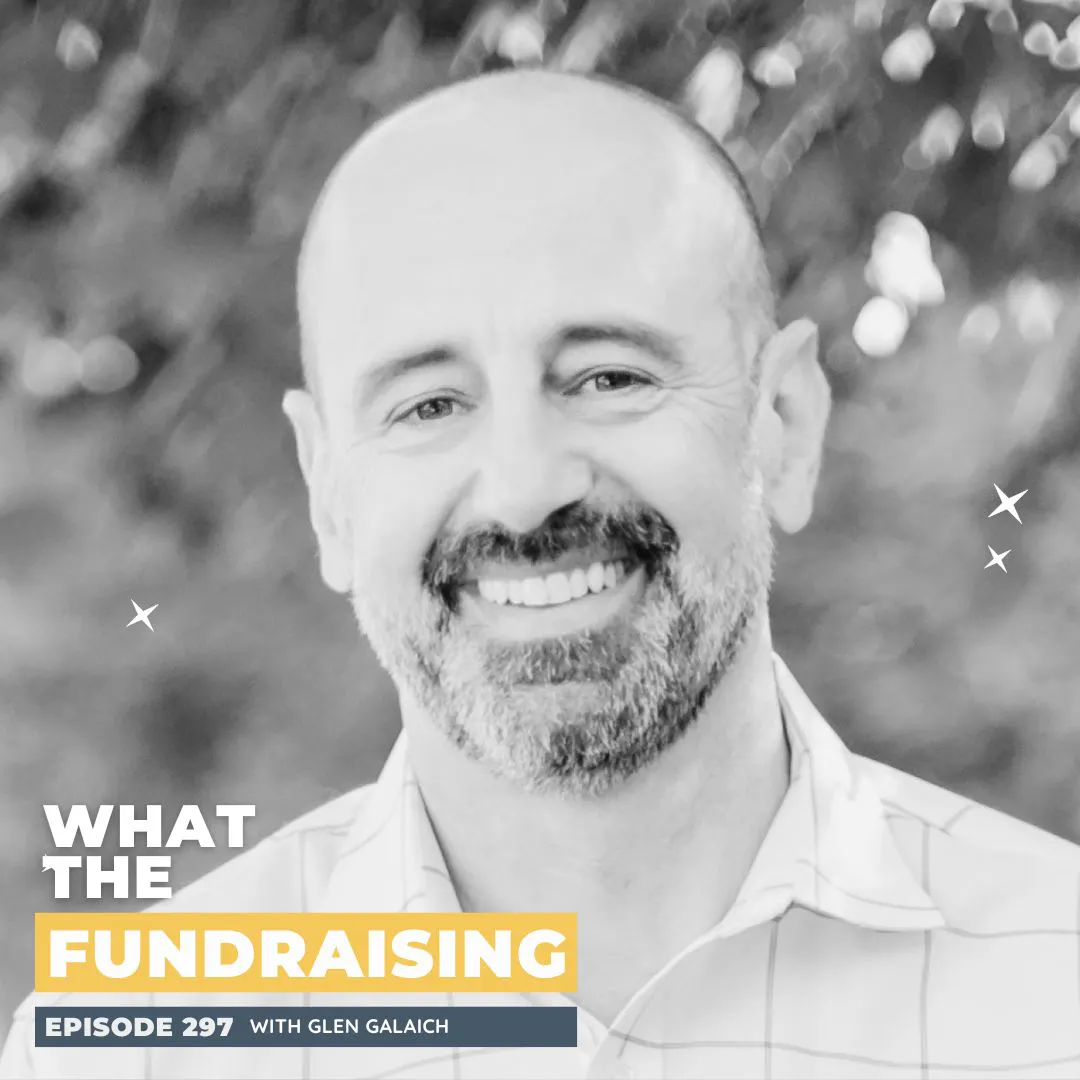
What the Fundraising
297: Why Big Giving Falls Short and How Fundraisers Can Push Back with Glen Galaich
00:46:43
Loading summary
Transcript41 lines
- [00:05]
A
Do you ever feel like fundraising is a little foggy? Like you have goals to hit, donors to connect with, and about 12 tabs or 47 open, trying to figure out what actually works? The good news is that you don't have to figure it out alone. The 2026 donor perfect community Conference is a free virtual event designed to help fundraisers clear their vision, illuminate what's possible, and get glowing results. Join me and some other amazing speaker on June 2nd and 3rd for practical tools, real stories from nonprofit leaders, and a supportive community that truly understands the work. Because when fundraisers come together, we know that things start to look a whole lot brighter. Register now for the Donor Perfect community conference@donorperfect.com donorperfect conference.
- [00:57]
B
With Control I'm asking donors to please look in the mirror and ask how am I showing up in a controlling way and to what extent am I actually being responsive to the communities I want to serve? And am I acting as a public steward or am I doing a lot of this for me? And that was a process we went through here at Stupsky. And that's the point. The book really is I don't believe you can really do trust based philanthropy. You can't do participatory grant making. You can't be in solidarity with communities if you're all caught up in your own control.
- [01:40]
A
Hey, my name is Mallory and I'm obsessed with helping leaders in the nonprofit space raise money and run their organizations differently. What the Fundraising is a space for real and raw conversations to both challenge and inspire you. Not too long ago, I was in your shoes, uncomfortable with fundraising and unsure of my place in this sector. It wasn't until I started to listen to other experts outside of the fundraising space that I was able to shift my mindset and ultimately shift the way I show up as a leader. This podcast is my way of blending professional and personal development so we as a collective inside the nonprofit sector can feel good about the work we are doing. Join me every week as I interview some of the brightest minds in the personal and professional development space to help you fundamentally change the way you lead and fundraise. I hope you enjoy this episode, so let's dive in. Welcome everyone. I am so excited to be here today with Glenn Galich. Glenn, welcome to what the Fundraising.
- [02:41]
B
I love the title of this show. This is fun. Thank you for having me.
- [02:45]
A
Thank you. Well, I have followed your work and appreciated your work for many years and it's really such an honor to get to have you on the show. Why don't you start by just telling everybody a little bit about you and your work. I know, I know the big question I'm going to ask you this simple softball to start, but give everyone a little intro into you.
- [03:05]
B
Sure. I have been in philanthropy for over 25 years now. Time flies. Started out more in the donor education space as we called it back then. It's now they've come up with all kinds of fancy terms now. Philanthropy, supporting organization. I hear that is being retired for philanthropy, operation, organization, all these different terms. But bottom line is you're working with donors. You're trying to get all forms of donors to be more I guess strategic would be the word. I bristle at that word more these days, but let's just use it. And I've done a lot of fundraising, it turns out. I always find it pretty funny that donors like to have these so called no pitch zones. But when you're actually in a room full of donors, guess what? They do more than anybody. And I find it all hysterical that they don't know no one should ask us for money unless they have money. Then they can ask us for money. So I've done more fundraising as a donor than when I was someone chasing them. And then I've also now been running a foundation for over 10 years, a spend down foundation called the Stepsky Foundation. We're located in the Bay Area and we work primarily in San Francisco. Some work in Oakland and in Hawaii and they are all different environments. So we have different people working on them in four different issue areas which I will not list here because we will not get through the podcast if I do. But you can go on the website and then most recently I wrote a book called Control why Big Giving Falls Short and it has been out for one month and it has been an exciting ride so far.
- [04:37]
A
So okay, I want to start with some of the kind of thesis in the book because it's interesting looking at some of the topics that you talk about in the book. In my book what the fundraising I go through some similar reckonings but through the lens of a fundraiser. Right. Less about kind of through the lens of I do some kind of overarching sector work. But I'm really curious for you to just sort of bring people in around. Donor centrism is something as a fundraiser that you are thinking about every single day. Whether you're adhering to the principles of Penelope Burke or you are trying to unwind yourself from that and implement more community centric fundraising practices. It I don't know if you can, like, spend a day in a fundraising training land where you do not hear donor centered mentioned many, many times. And in the book, you talk about, like, where that. We experience that on the fundraising training side of things, but where some of that, like actual structural centering comes from. So talk to us a little bit about that.
- [05:44]
B
Yeah, well, you know, I think it's credited with Carnegie, and I think it's only because he wrote about it. I don't know. There probably were donors before Carnegie that shared his perspective, but he wrote about it, and he wrote about it in the gospel of wealth. And for him, the gospel was, some of us are unique characters who have this extraordinary intellect for the economic system, and we are going to have the capacity to succeed in that system, and we're going to have a lot of money as a result. And then the rest of you who do not have that intellect will need for us to give to you our wealth. And we should, as the intellectual economic genius, we should. I mean, as opposed to, like, Ayn Rand, whose view. And maybe this is the same as, like, Mark Andreessen and Peter Thiel. Once you make the wealth, you hammer people with it. You don't actually give it to anybody. He had a different view. So the upside is he had a view of giving. So therefore we say, awesome, Andrew, nice. But he had this other side of him that we really lean into in our foundation system and to some degree, our philanthropy system, although it doesn't tend to apply to small donors as much as it applies to large donors. And that is that the more money you have, obviously, the more you know. So, for example, if you have invented an operating system, or better yet, you've stolen an operating system that is on everybody's computer, and you've made billions of dollars as a result, naturally you should be able to solve malaria. Or take another example, you've invented an online auction system where I sold all my Star wars figures. You should be able to save democracy. So we've equated the brilliance of someone who has succeeded at making money with the brilliant and made that brilliance also apply to all of society's problems. And so as a result, we've kind of centered the brilliance of a person of wealth who then makes a donation to an entity that they then named themselves and then wrote the bylaws to put their family on to then generously steward what are now public assets for our benefit. So that becomes. All goes back to Carnegie's view, really. From what I can tell, there really hasn't been another way. We're starting to see challenges to Carnegie's view. But they all still kind of tie into donors having the center on it. Right. Like trust based philanthropy and is something I believe very strongly in. And it really ties to the centered donor. You know, like we're asking the donor to please trust community more. Please donor. And we're asking the donor to be more trustworthy. And so it still all ties to that. We can't get around it. And my book doesn't really try to get around it. It just tries to take it on a little bit.
- [08:51]
A
Yeah. I mean, do you feel like in a capitalist society where money is value over everything, that there is a way that there are examples of the prioritization or the virtues of other things over who has the most money?
- [09:11]
B
Yeah. So that's interesting. I think on a systemic level, it's hard when you. I mean, we do honor and we really, I don't want to say appreciate, but we really honor the wealthy. Even the slimiest of wealthy, we still give them a pass. There's something, you know, bulletproof about, about the wealthy. So, yes, I think that you can't deny that as a society. It is something that we very much prioritize, however, as individuals who may not have, who may not be multi billionaires, but just I am astounded and just. It's overwhelming the amount of philanthropy that goes on every day that's not tax deductible or tax exempt. And from small checks being given out to helping neighbors, to helping parents. I mean, look at our entire caregiving system. We would be bankrupt as a country if we had to pay for the amount of caregiving that goes on at the family level. And no one's going to see a tax benefit from that. No one's going to end up on the COVID of Chronicle of Philanthropy for it. Yet we all appreciate it and we're willing to make those sacrifices for the people we love or people, even people we don't know, we're willing to do it. So there's something there. There's a tension there. And the other part that I do find really interesting is when the foundation sector is under threat, as it was last year, there's a quick push to ensure that we. There's a statement that's made every time that if we don't continue to give tax benefit to wealthy people, they won't give. So then it kind of leans in even harder to your question, which is the wealthier we get, the more miserly apparently we become. And the only way we're Going to give is if the general public subsidizes us even more. And the general public is willing to do it because we value how you made your wealth. That's all I can come up with on that. But we don't tend to. I like so many things. The working class of America is really just kind of ignored as a force behind all of this. All of what we have as a country, really, even the wealthy, and even how the wealthy get to give, they're dependent upon our willingness to give a tax break and pass. I'm putting that money in the treasury so that they put it into some other entity to give away. Don't even know if that made sense, but that. That there's something there. I know it.
- [11:36]
A
Yes. Yes. Well, okay. So do you. So being in rooms with folks in these positions, do they believe that they are being generous? Because I'm sitting with this. As you were talking, I was like, okay, what's the distinction between generosity and philanthropy? Because those are not actually the same thing. And so I'm curious if, like, when I think about mutual aid, I'm like, that's generosity. But I'm curious, like, in the foundation world, even when people are saying things like that, like there has to be a tax benefit, does it feel like a generous act to be giving because of a tax benefit?
- [12:19]
B
I have not had that question asked that way. I don't know. I don't know what they would say about it. Now, there are people who I reference in the book, donors, who talk honestly about why they started a foundation. So what I've always said, and I'm always happy to be proven wrong, it would make me so happy to be proven wrong, is that if someone tells you they started a private foundation, not a public one, so. And I'll. The difference being Susan G. Komen versus Bill Gates. Okay, so Susan G. Komen is a public foundation raising lots of money, lots and lots and lots of money from lots and lots and lots of people. Therefore, it's called a public foundation. A private foundation has raised money from one donor. So my argument is no private foundation has ever been started for charitable reasons. It's been started for tax reasons. And now that I may be wrong about that, and there is like, I've had people push me on this, and they say, well, what about the next gens that get an inheritance and they start a private foundation? Even there, I'd say, I'll bet you there's an estate planner somewhere, floating around somewhere, and that estate planner is putting a menu in front of a wealthy individual and saying, here are all the various choices you have for reducing your tax obligation. And one of them is this thing called the foundation. And, you know, you have to give away 5% each year. And that can be a burden sometimes, but, you know, you can do it and that's all you have to do. And it's cool. Like, you can do things like bring your family together, you can go on trips together, you can do site visits. You know, if the kids have gone wayward, you can bring them back in with the incentive of helping something. Kids these days, they all care about stuff. So, like, we can all, you know, like, these are the ways I think these things are formulated. And I have had plenty of donors share that with me. But the question around generosity doesn't really come up. I've not really heard anyone refer to their foundation as a generous action. I haven't. It doesn't mean they don't think it, but it really starts with a tax strategy and then it's. They discover the foundation later. And why do they discover it? Oftentimes it's because there's been a terrible health outcome in the family. Somebody contracts a very rare form of cancer, maybe even the donor, and they say, well, this can never happen again. So turns out we've got this pile of money in a foundation, and so we're going to go after that thing. They don't think to themselves, hey, we are publicly stewarding money, so we should move this money for health equity. They say, well, we don't want anybody else and probably our other our own family members. Like, I was struck, I believe that I might have this wrong, but Sergey Brin is a big donor to Parkinson's. I'll bet you there's a Parkinson's person somewhere in his orbit, maybe even very close to him, maybe even a threat to his own health. So that's where you see the discovery of the foundation. But even then, I don't know if people say, well, I'm going to be generous with this money. And they're not typically generous with it. You know, they give at the minimum.
- [15:36]
A
Yeah, yeah, right. And so it's so interesting because when I think about the identity of the philanthropist, I think in a fundraiser's mind, they are trying to inspire generosity. Right. They're trying to motivate generosity. And ideally, not just like, the identity of, like, who that person wants to be and believe about themselves in terms of the change that they want to make or the way they want to support their academic institution or. And what's striking me about this conversation is how to identify, even in donor conversations, if generosity is the identity that people want. Right. Or is it not? Like when you were saying that piece around. We've decided that these donors are. Because they know how to do this. They know how to solve this problem. Right. I've been in a million nonprofit rooms where the nonprofit leaders are rolling their eyes at like, the advice coming from their board or their donors. Right. But they would never say it. And we've chased a million, like, tangents in this sector because of this. And so part of me is like, is it that we think that they know how to do it, or is it just to the title of your book, control? You know, is it just that money buys you the ability to try to control everything, even things you actually know nothing about? And is it about ego and control or change in generosity? And like, how does that distinction, in terms of how people show up to their philanthropy ultimately really drive the way that the money moves?
- [17:21]
B
I can tell you from doing this job for 10 years now that I have most definitely with the kinds of ways that people ask me questions, show up when I talk, give me attention I most definitely don't deserve. You can very easily start to believe that you're something. And I think that this whole thing is feeding itself. I think I'm not too interested in, but maybe I should become more interested in what people are like before and after they gain wealth. I didn't ever get to meet Larry Stupsky, who generated the capital that's in our foundation. He was critical to making Charles Schwab into an international brand, and in doing so, he made a lot of money. My understanding of Larry is that he grew up in poverty and through a football scholarship, he made his way to Princeton. And from Princeton he went to Yale for law school. And apparently there were steps in between of other things. So he's obviously a really smart guy and apparently a heart attack that effectively killed him and he was revived on the table changed him. And most what I've heard of Larry is that he was a pretty hard driving guy, had the heart attack and the philanthropist came out of him and he became someone that people really wanted to be around and wanted to hear from and really appreciated. So I don't know how much of that's lore and how much of it's truthful, but it's the closest I've come to like hearing a before and after story. And something happens. There's definitely. I mean, you've done a lot of fundraising, so you've been in the room with wealthy people. There's a way about them. My experience, many of them. I don't want to generalize to everybody because I also have a lot of very wealthy friends who are not like this. But there is, like. You can almost guess if you were to walk into the first time you're going to meet a wealthy donor, you're going to. You're standing outside their penthouse door, and you're about to walk in, you could probably already kind of run the criteria on what you're gonna see on the other side. Someone who may be very insecure, but it's gonna cover that with a lot of big talk. Someone who's gonna. You're gonna walk into a room filled with all kinds of baubles that are gonna wow you. They're gonna dominate the scene. You're gonna let them dominate the scene. And all of that, I think, is fed by everyone who's walked through those doors before you. So I first had a couple of my first CEO experiences because I didn't work at a. I didn't really work in a programmatic role at a foundation until Stubbsky. And, well, after a couple of meetings, especially when Joyce was in the room, who was the donor? I realized my role walks in the room before I do. And they're roles. They're in their roles. Everybody's in their roles. Especially if you had a. I always. Because I'd been a development person, I always go to the development people first and just try to kind of get a sense of who they are, what they're trying to do, what kind of fundraiser are they? I would be paying attention to them. Joyce would be paying attention to the executive director, whoever would come in. Because if you're going to get Joyce in the room, you're sending in the top team, right? There's always a development person who's quietly sitting at the end of the table, observing the whole conversation. All of this is feeding, feeding, feeding, feeding our roles, feeding me, making me think I know something more than I do, allowing me to say all kinds of things in the room that no one should be paying attention to. It's all part of the dance that we do. And I think it gets the donors to believe they really are special. They should. They should feel that way. There's nothing telling them otherwise except themselves. And that's really what my book is about. It's really asking every donor who not. I mean, it's very rare. The donor that makes the donation to the foundation named after them and says I'm going to step away. Like Jim Casey may be one of the only ones to do it, who founded Marguerite and Annie E. He's one of the few that I'm aware of. Maybe Chuck Feeney at Atlantic, although he would come in and kind of shake the place and walk out again. But most donors stay and they do the donor thing, which is encouraged. And so with control, I'm asking donors to please look in the mirror and ask, how am I showing up in a controlling way and to what extent am I actually being responsive to the communities I want to serve and am I acting as a public steward or am I doing a lot of this for me? And that was a process we went through here at Stubsky. And that's the point. The book really is, I don't believe you can really do trust based philanthropy. You can't do participatory grant making. You can't be in solidarity with communities if you're all caught up in your own control.
- [22:09]
A
I have to be honest, more than anything right now, people are asking me, just tell me what to do. I know that so many people are sitting down to work on fundraising and thinking, okay, where do I even start? You're juggling campaigns, emails, donor meetings, events, and about a hundred other things. And sometimes it can feel like you're trying to navigate it all in the dark. That's exactly why I love the Donor Perfect Community Conference and why it was create. This free virtual event is designed to help fundraisers clear their vision, illuminate what's possible, and get glowing results. On June 2nd and 3rd, you'll hear real stories from nonprofit leaders, learn practical strategies you can actually use, and connect with a community of people who understand the challenges of nonprofit work. Join me and some other amazing speakers, including Joan Gary, Clay Buck, and Julia patrick, for the 2026 Donor Perfect Community Conference. Register for free today at donorperfect.com donorperfect-conference I can't wait to see you there. Yeah, I mean, I think, which sort of winds all this back to, like, how do we get people to have that kind of reflection of, like, what's the point of all of this anyways, right? Like, what are we. I mean, I think especially given, you know, what's happened in this country over the last year or so, and I've been following a lot of the advocacy that, that, you know, you've been doing online and others, and I think so many times over the last year, I've been like, what are we doing here? Like, what is, what are we doing here? And at what point, what will it take for us to realize or recognize or be willing to give up something? And that something might be even just the protection of the perception of power and wealth when we walk into a room. Because, you know, we change how we work with the people around us. Or, like, some of the things that I think we're retaining are truly for vanity alone. Right. And they are at the expense of actual change. So. But what does it take to get people to, like, wake up? To, like, what do you want? You want to die with all of this inside your bank account still? Because you gave away this small percentage every year to look. Okay, but nothing ever changed in the world?
- [24:42]
B
Yeah. I mean, that's the question I'm asking, too. I don't have an answer, really, for what that will take. I've tried to in my. In all my advocacies. I appreciate you been paying attention to some of it. It really has been to just ask some of those. Well, sometimes it's asking those questions. It's screaming things that gets me in trouble every time I've been kicked out of a few rooms recently for screaming too loudly. But. And that comes from just a. Just a sheer place of frustration.
- [25:12]
A
Yeah.
- [25:12]
B
Here's the challenge to this whole thing, and that is that from what I can tell, is that we can tell ourselves anything we want to tell ourselves to justify anything we do. And there. And especially in philanthropy, because. Well, I've been thinking a lot, a lot about this, Mallory, because I'm about to get to what it is. But very recently, I think, first of all, I had no idea what a book would do because I've been on LinkedIn for years now. I've said a lot of things that I thought I would send it, and I think I'm going to get it for this one. And no one would. Certainly not philanthropy. Foundations rarely, rarely respond. Even though I've learned that a lot of people are reading my stuff, they don't want to be associated with it. And since the book has come out, which has, like I said, been a little over a month, I've been doing the same stuff I've always been doing, but this time, certain people saw it and they really didn't like it. I've had words thrown at me like insulting, betrayal, harmful. And what I realized, because at first I took this all in. I'm a pleaser. You know, I'm a fundraiser. So to do our job, we, like, we have to please people so that they. Everything we've talked about, they Feel good about themselves and they'll give money. And the same with. When you're working in a foundation, in many ways, you are also still a fundraiser because you're trying to get the donor and the board to give money. And even though we're set up to do that, we all know foundations are not great at giving money. They're pretty bad at it, actually. Like, we only give the minimum in most cases, and when we do give, it comes with tons of restrictions. It's highly wasteful in time and energy and thought. It's like a terrible process for most foundations. And so I kind of started questioning some of this and I realized that for some people, for many people, this work is good work, quote, unquote. We're doing things to be good people. We're trying to be good. We're trying to do good things. And it's interesting to me that the more you're trying to be good, the more fragile you become. Meaning, like the critique of you doing something good or doing something in a way that you meant to be good but may not have been as good as you thought, or someone is telling you it's not as good as you think is really difficult for people. And they get very defensive and they come back at you, well, what are you doing that's so good? You ask questions of our community and you did it publicly, and that's a betrayal of our community and you need to leave. And so it's interesting, when you think about people that do bad things, their skin is pretty tight. Like, they can take it if you. I think about all the stuff, all the bad stuff that goes on, and people are screaming, you're this and you're that. And they. They seem to roll pretty well with it. So I don't know what this dynamic is, but what I do know is that the veil of good, and by the way, that is the intention, the person is actually trying to do a good thing. I'm very aware of this, but I'm learning. I'm not good at it yet, but I'm learning. Like, how do you talk to someone who is maybe unintentionally doing something bad within their good so that they can see it and get better impact for it?
- [28:39]
A
You know, it's interesting because I feel like this is something that I've explored a bit also in my, like, executive coaching work. And then I. And in some of the, like, nervous. In some of my, like, white supremacy work and looking at that and mapping that against nervous system dysregulation and sort of like, what creates discomfort and then our defensiveness, which is a protection mechanism for our brain, Right. To just say like that vulnerability. And I've seen, you know, similar patterns a lot in when I've done like, like anti racism trainings and right. People are in a training and then they get feedback about something and they're like, I'm here. Like, isn't that a good thing? You know, yes, like, and so I think it's this like tenderness where we're trying to believe something we want to be a certain way and that is going to be this messy, imperfect process. And I think when I think about philanthropy and change making on both sides, the donor side and the fundraiser side, like I will always say to fundraisers, like, gosh, like, can you imagine? Like, if we knew how to solve some of these problems, we would solve them. You think you're going to go and run this organization and never make a mistake? This problem has never been solved before.
- [29:52]
B
Right.
- [29:53]
A
This is not a straight line situation. So we have to have the nervous system regulation, the neuroplasticity to be able to handle and hold discomfort and tenderness and uncertainty and change. And if we don't, we always fall back into these defensive patterns where we go back into protection mode, which sends us right back into control.
- [30:16]
B
Yeah, that's well said. That's well said. You should mark that and put it on your website.
- [30:24]
A
Well, I think, you know, it's like these are felt experiences and I think what you're talking about is it's so I think, which is why I'm grappling with in your book, the piece around the mindset traps of like donor psychology and I. And like it sent me sort of down this path of like similar, I think to grappling with what you are in the book around gosh, how do you also give donors that opportunity to come along for a journey that is going to be imperfect without it feeling like a value statement around them being good or bad. But then also, how do you do that without totally centering them and placating them throughout the process and you know, kid gloving the whole thing.
- [31:07]
B
Also, I've been very fortunate in that I've been able to, I've tried to recognize the power I've held in this position and to try to be, to use it to be critical. And I've been fortunate that so far no one has like walked up behind me with a steel pipe and taken my legs out because the level of fragility is just really, really high. And so really how do you get people to just kind of step away from that and just realize that the objective we're all trying to get to is a better world? Whether you've succeeded at that or not is not relevant. Because we all have something to learn from how everybody moves forward. And I can tell you, I do really relate to this, and I still do. I mean, I've got a director's meeting in an hour and a half. I promise you, a couple of my directors are going to ask questions of me in the meeting, and everything you just said is going to happen. I'm going to feel defensive. I'm going to. They're going to, you know, and why? Because I think I'm really good at leading this organization. And they're going to ask me a bunch of questions that are going to make me wonder, am I good at this? And it all comes down really to self esteem. It comes down to, like, are you comfortable with who you are in this moment? And whether you're good at it or not is irrelevant. Or good at giving or good at helping the world or whatever is irrelevant. Are you comfortable with who you are? And I think a lot of the foundations and a lot of donating and a lot of that is, unfortunately, people are dealing with their securities and insecurities and esteems and self esteems through giving and volunteering as a way to prop themselves up. There's so many other ways that can show up, and it does. And it's not healthy in many ways to be addressing those problems through giving. And that's the part that I wanted to point to also, is that I talk about this in some sections of the book. I don't actually use this language. I wish I had. But for a lot of people that have these foundations, it's a hobby, you know, it's like a fun thing they get to do. I do tell a story of this woman who. And this one has been so controversial for people. I don't know why, but she told me, very wealthy woman from one of the wealthiest families of this particular state. I was in where they were. I was talking to a group of donors, and she caught me backstage, and she wanted, you know, she wanted a good talk. She wanted to be like, you're good. And she started to ask, tell me about how she gives all of her grandkids $5,000 every year, Christmas, to give away to a cause. And this is so that they learn how to be philanthropic. And I asked her, is it coming from the foundation? Yes. Okay. So my reaction right away was, oh, My God, she is using public dollars and giving it to 5 year olds to decide. Now, maybe for some people that's a good thing. Maybe they'd rather have a five year old deciding what to do with this money than Mike Johnson and D.C. but it struck me like the disconnect that these dollars, you are publicly stewarding these dollars, $5,000 in some communities is so critical. And you're handing it to your grandkids because you want them to be philanthropic. That's great. You are from one of the wealthiest families in this state. Use your own money for that stuff. That's hobby stuff. Take the grandkids to Yosemite to help build trails with your own money. And I've had people say to me, that's harsh. Why would you criticize Grammy for wanting to help the grandkids? And it's not that I'm criticizing her for helping the grandkids. I'm criticizing her for taking a step away from her responsibility as a public steward. That's it. And so there's a good example. You can imagine Grammy were sitting here right next to me, how offended she would be by questioning her for doing this. And she would be offended because she feels she's doing something really good. And she is. It's just how she's doing it that I'm asking her to reflect upon.
- [35:05]
A
Yeah, and you're asking people to hold space for nuance. Right. That it's just not binary. Like. And I think one of the reasons why I've appreciated your work and your advocacy is because, yes, I don't want things to just be good or bad and binary in that way. But I do think the ways that you talk about things can reorient people's understanding of what good looks like. Right. Like to sort of all your points in the book, if this is where philanthropy came from and what we've been told for generations is what makes something good, you know, good philanthropy. The only way perhaps for us to do things differently is to actually understand and create experiences and opportunities for people to realize actually maybe there's something even better.
- [35:56]
B
Yeah, no, I, you know, first of all, I want to give credit to someone here, and that's Elise Belousa at the Terra Health foundation, because their foundation has been really investigating and exploring good, the word good. And I've been in these conversations with her for about two years. And I have to be honest, I hadn't really thought about. I'm like, why is she so caught up in this? And it wasn't until this last Month with some of the backlash that I've gotten that I thought, oh, my God, she's so on it. Like, these people really struggle. And I struggle. I think it's really, you've got to get very open to the idea that you can be good and bad at it. You can be. You could be really bad at being good. Not in a harmful way, not in a hurtful way. But like, for example, the one that always gets me is the argument for perpetuity, which I think is a really, really bad argument that everyone accepts as good. The argument goes as follows. We can't do as much now for the problems we're living in because we need to be around later to do not enough then for the problems we'll have then. That is the argument. Now, you can spin it another way. You can say we need to be around for future problems, but the sacrifices you're making to be good later are really bad now. Right. And that's what's undermining the foundation response to the crisis we're in right now. That nonprofits today are going to struggle and potentially go out of business because we're going to help the nonprofits of the future. It doesn't make any sense when you think about, really, really think about it. But it also, because we lean on that, it allows us to do a lot of things. It allows us to build institutions out of tax deductible entities. Right. It turns a tax shelter into an institution. It allows us to hire people who will be there for the long haul. It allows us to build big brands that we're going to lean on forever. It allows us to have the big view of the future and be an authority. That perpetuity gives us so much more than being good. And we don't talk enough about that. And again, depending on who's listening to this right now, if there's a big foundation CEO who believes in perpetuity listening, they are rolling their eyes at me and they're mad at me right now because I'm questioning what they believe is a very good argument, even though it's a bad one.
- [38:27]
A
Yeah. The thing I would invite that CEO to recognize, though, is that that anger is protection. Like that defensiveness is to protect something that maybe feels more tender and more vulnerable and is scary. And that's okay to be scared about change and it's scary to change your mind. And that's okay. Doesn't mean it's right to continue that path. But, like, that's good information. Anger is great information.
- [38:52]
B
I think so too. That's a good point. That's a good point. How are we help. How can I help fundraisers here as we're kind of thinking this through? How can I be helpful to a fundraiser? What does control do in your mind as you've been reading the book and thinking about it, and you are a elite fundraiser. So when you think about that, like, what does knowing about control mean to you?
- [39:15]
A
I think there's actually a lot of things that you've talked about here. And this podcast, I mean, when I started this podcast, I didn't even bring people on with fundraising advice. I interviewed neuroscientists and therapists and psychologists because I actually think that, like, fundraisers, knowledge of the system around them and what's happening in their bodies, like all those things give them so much valuable information as they navigate the complexity of the world around them. So just to say that I think everything you've shared is so valuable to them, and we know the science of fear is that one of the things that decreases fear is increasing knowledge. And so just understand, understanding sort of what's at play here is so valuable for them. And I think some of the other things that I am reflecting on from this conversation is like that piece that you said around the hobby is really interesting because I think that begs some kind of curiosity on my end around, like, what does that mean for the fundraiser?
- [40:09]
B
Right.
- [40:09]
A
They're walking into the room with the stakes being so high, and the other person might be walking into the room playing badminton.
- [40:19]
B
Sure. No, you. I mean, absolutely, absolutely. In fact, in the book, I have a character in there also controversial. From a lot of people have come, including my staff. I've had a member of my staff say, this is a very mean story you tell. Of course, she's never been met a person like this, but there's a character named Vanessa in the book, and Vanessa is an amalgamation of many people I've met. But I'll leave it here and just say Vanessa's are quite you. As a fundraiser, you're meeting a lot of Vanessas and you're meeting a lot of Vanessa's husbands and vice versa. And it is a hobby for Vanessa. And so there's a whole bunch of priorities, from like kitchen remodel to other things that are going to be more important to Vanessa even. I mean, you set that up so well. You're going in as a fundraiser and you're trying to get the biggest thing you can get for this cause that you care about. You think nonstop about this thing. And Vanessa is thinking about what kind of access she's going to get at your gala dinner. And again, I'm not trying to put down Vanessa. It's just a reality of how this all works. And the question again is for all of us to ask as tax paying Americans, who could have Vanessa's dollars in our treasury instead, Vanessa's dollars are in another organization that she sits on the board of. Is Vanessa the kind of public steward we are looking for? Is Grammy's five year old grandkids? Are they the public stewards we're looking for? And if not, how do we get the kind of public stewards we want on these public assets? It's not their money. Even though they'll tell you it is. It is not. It's again, not their fault because they just don't know. No one has said to them, it's not your money, it's the public's money. So how do we ensure that we have the right boards, the right staff, the right kinds of rules and practices to ensure that the money is flowing to communities with community engagement and without harm? Because unfortunately, the person who's going to decide that is Vanessa. And we've got to challenge Vanessa and that's okay. She might get frustrated. She's trying to be good. She doesn't want anyone questioning her good, but she's bad at being good. And so what can we do as a society to ensure that that doesn't happen more?
- [42:49]
A
Yeah. And I think, you know, again, I said this before we clicked record, like I never want to put more pressure on fundraisers when they are. But I do think, and I say this in my book in a very loving way, like we also need to be honest around when we are perpetuating some of these things. And I think there are opportunities for all of us to get curious and ask questions and give people opportunities to be truly good with a little bit of help from us maybe about what that looks like. And that does involve us as fundraisers being a little bit more honest about what really would make change and being a little bit more honest about why it should be unrestricted funding. And we have to grapple with some of our own discomfort in those power dynamics which make perfect sense that we experience. But I do think it is going to take so many conversations in so many rooms at so many levels for some of this to change. But I'm really grateful for the rooms you're having this conversation and I'm really grateful that you're putting yourself in front of people. And I know I can't imagine what it's like to get those emails or that pushback or from a community that you're a part of. But as somebody who sits on the other side of those, with the people who sit on the other side of all those conversations, we are really grateful for you.
- [44:00]
B
Well, thank you.
- [44:01]
A
Thank you.
- [44:02]
B
I'm really glad to hear that because those have been some lonely, dark days. But it is good to hear. And you'll, you'll. I'll definitely keep that in mind because I'm sure more will come.
- [44:11]
A
Well, thank you. Tell folks where they can connect with you or you'd like them to buy the book if there's anywhere in particular you want to support.
- [44:19]
B
Well, of course I'm going to encourage you to go to your independent bookstore if you do get it from your independent bookstore. For some reason, I'm encouraged. I'm told by my publicists and others to still go on to the very largest retailer of books and write reviews. So if you don't mind doing that, all reviews are much appreciated and you can find me on LinkedIn. I'm getting more careful about what I say on there, but I am on there and I'm always eager. Mallory, you and I met on LinkedIn. I look forward to connecting with people and messaging with people and any thoughts you have, any, anything you want to say. I'm always eager to hear it because I really believe this sector is in dire need of debate, discussion and difficult conversations. And clearly many of my peers are just simply not ready for it. And I'm ready for it, so go ahead. In fact, I know you want to wrap it up, but I got this great review from someone who I just admire so much. His name's Kevin Starr, and Kevin slams me in the review. But he does say this book is very disappointing, but you should read it. And I really appreciated. I just really, I invited him onto our podcast and I really look forward to talking with Kevin because he's such a thoughtful, smart person. I knew he would be very disappointed in parts of my book, so it came as no surprise. But I appreciated that he wanted to have a public conversation. And I wish more leaders could. They just. But it's just hard for them. They don't want to feel like they're bad at being good. And anyway, so thank you so much for having me on. It's been a real delight. I love the topic of your show. I love that you're out there for fundraisers and I love that we're both with Wiley. How cool is that?
- [46:02]
A
Very Cool.
- [46:03]
B
Thanks again.
- [46:04]
A
Thank you. I hope today's episode inspired or challenged you to think differently. For additional takeaways, tips, show notes and more about our amazing guest and sponsors, head on over to Mallorykson.com podcast and if you didn't know, hosting this podcast isn't the only thing I do every day. I coach, guide and help fundraisers and leaders just like you. Inside of my program, the Power Partners Formula Collective Inside the program, I share my methods, tools and experience, experiences that have helped me fundraise millions of dollars and feel good about myself in the process. To learn more about how I can help you, visit Mallorykson.com PowerPartners last but not least, if you enjoyed this episode, I'd love to encourage you to share it with a friend you know would benefit or leave a review. I'm so grateful for all of you and the good hard work you're doing to make our world a better place. I can't wait to see you in the next episode.