← What the Fundraising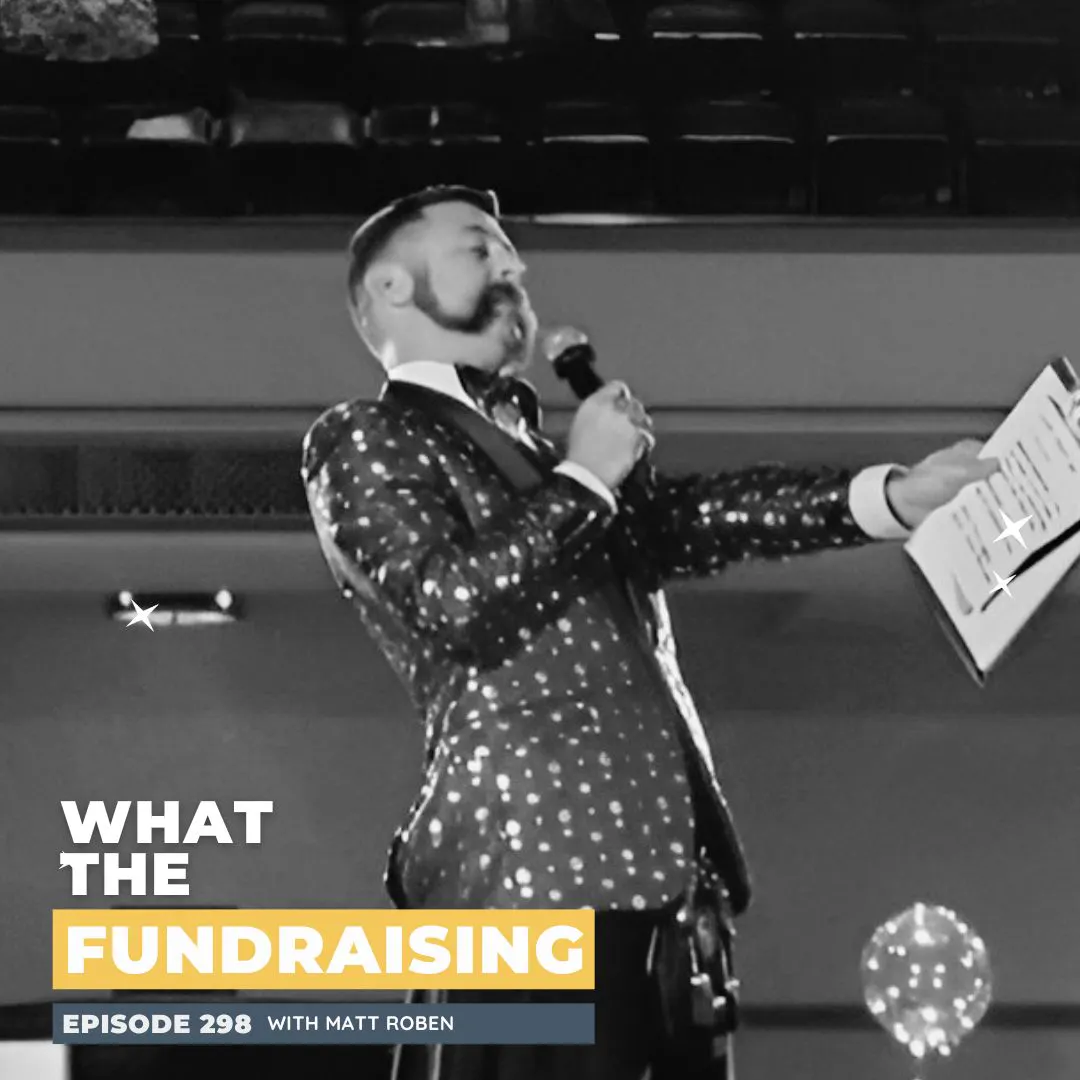
What the Fundraising
298: What if Fundraising Were Really About Connection, Not Money? with Matt Roben
00:26:24
Loading summary
Transcript22 lines
- [00:00]
A
I think intentionality overall. What is the purpose of this? Why are we here? Why here? Why now? And why is my money going to move the needle today versus me giving another time or not giving it all? Why is this so important? I think that's a huge thing you have to answer. There's like the seven layers of why. What is the name of your organization? Or what does your organization do? We help farm animals. Why? Because they need a forever home. Why? Because people don't care. Take care of them. Like when you can get to that seventh layer of why, then you have the real answer to what you're doing.
- [00:35]
B
Hey, my name is Mallory and I'm obsessed with helping leaders in the nonprofit space raise money and run their organizations differently. What the Fundraising is a space for real and raw conversations to both challenge and inspire you. Not too long ago, I was in your shoes, uncomfortable with fundraising and unsure of my place in this sector. It wasn't until I started to listen to other experts outside of the fundraising space that I was able to shift my mindset and ultimately shift the way I show up as a leader. This podcast is my way of blending professional and personal development so we, as a collective inside the nonprofit sector can feel good about the work we are doing. Join me every week as I interview some of the brightest minds in the personal and professional development space to help you fundamentally change the way you lead and fundraise. I hope you enjoy this episode. So let's dive in. Welcome everyone. I am so excited to be here today with Matt Robin. Matt, welcome to what the fundraising.
- [01:36]
A
Thanks, Mallory.
- [01:37]
B
Okay, so I just got the super fun introduction before we clicked record that. Now I'm wishing I had clicked record for but tell everybody a little bit about you and then we'll dive in.
- [01:48]
A
I always say it's the 30 second background, but it's more like the minute and 30 second background. So grew up in the Bay Area. Totally regular family. Nothing out of the ordinary. Mom was an art teacher, dad was an engineer. Typical Bay Area job. Started doing theater when I was about 10, 11 years old and a friend's mom invited me one day to see Cirque du Soleil when I was about 12. Fell in love with Cirque du Soleil and thought someday I want to join the circus. Started doing birthday parties as a clown and making balloon animals in restaurants. Spent my whole childhood kind of entertaining people doing theater. Graduated high school in 1995 and went to the National Circus School in Montreal, Canada. There I spent two years learning how to do juggling ACROBATICS tight wire, trapeze handstands, trampoline dance. You name it, we did it. I spent about 20 years after that, 25 years performing professionally in the circus. Worked on cruise ships, we did bulls halftime shows, Got to perform at the Grand Ole Opry, San Francisco Symphony, like all sorts of fun stuff at the same time. Went to college around 30, got a degree in human nutrition. Was a personal trainer for a while. Just, you know, things related to performing. Keeping myself in shape. Always tons of special events, fundraising events, but never paid attention to it really. Started a nonprofit in the mid teens. 2013, I think. Ish. Started a circus festival in Chicago. Went great the first year. Not so great the second year. I got stuck with the bill. Didn't have a board who fully supported me. So we paid it off. Burnt out and frustrated around 40, ish, I decided it was a great time to become a police officer. Living in Chicago, that meant I was a cop in Chicago. I worked near Wrigley Field in Boys Town. I was on a bicycle team. Got to ride around on a bike and would tell people if I arrested them, they had to sit on my handlebars. Obviously they didn't, but, you know, always the joke. I would make balloon animals on traffic stops. I'd be like, mallory, you know, Ms. Erickson, the reason I pulled you over is. And when I'm done, I'd be like, what's your daughter like, a balloon animal? And be like, I'm sorry, what is this a punk? Or like, what's going on here? So anyways, I started gardening, raising some chickens in a backyard. And that I would say fell down a rabbit hole, but fell down a chicken hole pretty hard. We started with three chickens. By the time we moved back to California in 2020, we had six chickens, one duck and two goats. And my wife and I now run a 12 acre, 270ish animal farm animal sanctuary called Rancho Roman Rescues. We take care of horses, alpaca, goats, pigs, chickens, ducks, geese. The dog that's gnawing on my finger, her name is Valkyrie. You can see from her ears if you're watching. We will kind of take anything that we have the capacity to handle. And then about four years ago, I was at a fundraising event and saw a, an auctioneer do a paddle raise and said this is what my entire life was moving towards. Started studying it, listening to a lot of podcasts, watching a lot of videos, reading a lot of books, and started fundraising about three and a half years ago professionally. And I do probably 30 to 40 events a year now. We'll travel all over the country. Primarily focused in the Bay Area, though, and I absolutely love it. So was that 30 or 90 seconds? Probably more like 90.
- [04:40]
B
Well, it's okay. It was great. And wow, you've lived, like, 12 lives, which I'm obsessed with. One of the through lines. It's interesting, like you said, the piece around, like, that kind of performance through line. One of the through lines that I feel like I heard in there and correct me if I'm wrong, is also just about, like, presence and connection. And we talked for a minute kind of before about, you know, Cherry and Koshy's work around neuro giving. And I know you've seen my work around, what, the fundraising. And one of the through lines, I think, or the connective tissue between mine and Cherian's work that we talk about a lot, is that presence, that connection, both in terms of what's happening on the donor side, but also what's happening on the fundraiser side and the conditions that really create connection. So talk to me a little bit about that and how you think about that through the lens of what you do now in the fundraising space.
- [05:34]
A
Yeah. So, I mean, you know, and this goes back to every career I've ever had. People always said, I don't understand how you went from this to this to this to this. And I said, well, it's really all about helping people. And as much as that sounds weird, right? Like, when you're a performer, your goal is to transport people to another universe. Essentially, it's the story of the play, the musical, or in the case of circus, just whatever the circus wants to be. Right. It's fun. As a personal trainer, I was helping people achieve their fitness goals as a dietitian, you know, help them achieve their, you know, typically weight loss, but sometimes weight gain controls goals. Little secret there. If you want to gain some weight, eat peanut butter with everything, and then becoming a police officer, as much as you don't think about it, yes, you're helping people when they're having a bad day. But I like to say, look, the worst day you're having is the day you've decided to commit a crime. And I'm helping you to stop that. When I arrest you, it is not, you know, I have no. Nothing personal. There's no skin in the game other than I want to take care of society and help people. So, yeah, when I first saw an auctioneer do a paddle raise and saw what they were helping a nonprofit do, I said, this is incredible. And all the skills I had had. I did stand up comedy for a while. I was terrible at it, but I always enjoyed being the host. I put together a couple of standup nights at different bars in my area, and I was a great host, but I was a terrible standup. I wasn't great at writing my material. I had some jokes that worked, but it was so hit or miss. And. But what I found I was really in connection with was the crowd. So again, it was about connecting with the crowd. I didn't like pre writing things, pre scripting things. It was, you know, how do I connect to the people in the room right now? And so having seen an auctioneer do that and then proceed to raise a better part of a half a million dollars, and in five to 10 minutes, I just said, you know, this is what I'm meant to be doing. So as I got into it, it was with that, you know, that goal of really wanting to connect with people, whether it's a nonprofit or the people that they're serving, or, you know, the donors who are able to help that community and making sure that, you know, it's not just the kind of what it would be considered the old, you know, donor centric fundraising model of, hey, let's celebrate the rich people. Like, no, let's celebrate everyone, because we really need to make sure that the clients feel equal to the people who are helping support them and that the staff feel equal to the C suite or, you know, beyond, and that everyone, ultimately, that we're taking care of each other. And I love traveling for work, but I really, really love being local and doing local events because it's me truly helping my community. Now a lot of the times when I'm traveling, it's because the area I'm going to doesn't have a local fundraising auctioneer. You know, they might have a great cattle auctioneer, they might have a great car auctioneer or antique auctioneer, but I don't sell cattle, antiques, or cars. And I hope they're not trying to do fundraising auctioneering, because there's so much more than just getting up on stage, being good on a microphone, and talking to a crowd. It's how do you make that connection? And I always want to be at the event before it starts. I want to connect with the staff and make sure they're doing okay. And all the volunteers know what, you know, their role is and how I can be of help and then just be there. One of my clients at the is the San Jose Symphony, and I said, hey, I would Love to come see the symphony. And I would love to be in your VIP donor suite so I can just start connecting with these people so that by the time they see me on stage, it's not just the guy in the, in my case, sequined jacket. Usually the guy in the sequin jacket and the kilt, but, you know, the guy who I was friends with and had a conversation with. And it is genuine for me, it's not. I'm not doing it with an ulterior motive. I want to connect with people because that connection ultimately is great for everyone. So. Yeah.
- [08:58]
B
Ooh, okay. So you said something there that is really interesting, that piece around ulterior motive and something I talk about a lot with fundraisers is when I talk about alignment is I'm like, alignment can't just be your strategy. It needs to be your intention. Because anybody can say, I want to see if we are aligned in an email. But if your real underlying intention is to convince them to give to your organization no matter what, that's actually not. You're not actually seeking alignment, you know, trying to convince them of that. And then that is this felt experience that changes what happens in the room. Right? And so, but for fundraisers, that can be so hard because they feel the very real pressure. They feel the stakes, right? Which are real and urgent for a lot of the causes that they're working in. And so when you're coaching or supporting the organizations that you work with, especially around events where it's like, the stakes are so high in this very time boxed moment. Like, if I told you all the, like, things I've done around events, like I backed a U haul into a car one time. I, like, drove away from a gas pump with it still in my car. Like, my nervous system around events was just like, totally off the wall, right? Because there's so much stakes in this, like, super compressed time. So how do you work with your clients to like, ensure that they can also show up to their events, like, open to and ready for connection?
- [10:29]
A
Well, I think a huge part of it is preparation. So one of the things I enjoy the most about my job is not. I mean, I love being on stage. That we'd be very clear. I absolutely love being on stage. But one of the things I loved about being in the circus was being the guy who literally drove that 24 foot box truck full of circus equipment and then helping unload it and helping set up the. The whole tent and being a part of the experience from the second, it's kind of being Planned to the second it. It actually happens, and then packing it up and going home. Now, in the case of auctioneering, it's, hey, what are, you know, what are your goals? Like, what is your event? And I use circus as a perfect example all the time. I spent many years performing as a circus artist at fundraising events, and it was always just like a fun extra. But as I like to say to my clients, how does this connect to your mission? If there's a way to connect it to your mission, I'm in. But if you're just doing it because you feel like you need to throw, you know, more is more. It's like, no, less is more. So how do we make it all about your mission? How can we make it about the people that you serve? You know, who are your clients and what are their stories? And how do we tell those ethically without putting somebody up on stage who is currently going through it? Who is it that man? I can't remember who the quote is from, but it's basically, you know, this person should be looking at their story through the, the rear view mirror. They shouldn't be currently driving down the road going through this. And if they're telling their story in that moment, it's not necessarily something they might feel totally comfortable telling it, but they might also feel like they owe you something. And so being able to do that after the fact, to me, is so important that it is not kind of inadvertently taking advantage of somebody. And I think going back to the thing we were kind of talking about, which I'm mind blanking on the word were talking about when we got into this question, initially, presence, not presence, it was something related to taking advantage or.
- [12:12]
B
Oh, intention.
- [12:14]
A
Intention, yeah. Sorry. Thank you. So the intention of why you're speaking with somebody. Right. And to me, this is what it ultimately is in a very roundabout way. We're getting back to the original point of the question. I want my clients to understand that fundraising is more than just making one ask. It is that year long donor engagement. I forget where I read it, but it's something like 25 connections throughout the year, whether it's through emailing or phone calls or sending a video or a text. And, you know, I'm a big fan of whatever works for the client, right. Or the, the donor. So in the case of my clients, it's, hey, if you have a text relationship with somebody, just text them a picture. And I use this with my farm sanctuary all the time. I mean, even with our smaller donors, I'll just text a picture of our new miniature donkey, Timothy, and be like, this is the cutest thing you're ever going to see. So let's send a video of this. And I'm not asking for anything. I'm sharing. And then I'll send another thing. And, hey, when are you going to come up to the farm? We'd love to have you back, but by the time I do, say, hey, we're going to be building a barn in about two years. We would love for your name to be on one of those stalls for $10,000. Is that something you'd be interested? I would love to see your family name or your business or you. You guys have been so important to us as family and friends and whatever that was, and we would be honored to have your name on our barn so that people can see it forever. And, you know, so that is a genuine relationship. And this isn't me falsely working my way towards that. I mean, if you can't have true empathy and true connection with people, if you're a fundraiser, I think you're probably going to want to find a different career.
- [13:42]
B
Yeah. Wow. Okay. I love everything that you just said. I was taking some notes. What do you think are the biggest myths that people hold? You sort of alluded to some of them and how you explained that. But, like, if you could bus or change, Everybody in the sector's thinking around two things related to events that we really don't understand or get wrong. What would they be?
- [14:07]
A
I think intentionality overall. What is the purpose of this? Why are we here? Why here? Why now? And why is my money going to move the needle today versus me giving another time or not giving at all? Why is this so important? I think that's a huge thing you have to answer. There's like the seven layers of why. What is the name of your organization or what does your organization do? We help farm animals. Why? Because they need a forever home. Why? Because people don't care. Take care of them. When you can get to that seventh layer of why, then you have the real answer to what you're doing. And I. So I love that kind of a concept. And honestly, I don't know if I've ever gotten there with a lot of the things. I think I can get to about 5 pretty comfortably, but, man, it's a. It's a challenge to get to that last one. And the other is that none of this happens by accident. Fundraising is intentional. You know, the way you approach your donor. And this is not to trick them. Right. But it's the difference between asking for a donation and giving somebody the opportunity to support something, as you mentioned earlier, that they're aligned with, asking a lot of open ended questions so that you can connect to why this organization matters to them and why the difference between the gift they thought they might give and the gift they might end up giving is even more important. You know, and then again, it goes back to having those connections. If you're just calling me once a year, I don't feel the love. Yeah, I understand you're doing your job as a, as a development person and in the fundraising department, but just send me that message, hey, let's grab a drink sometime and I'll probably buy it for you. Right. And so it's not taking your donors for granted, not taking your clients for granted, not taking your mission for granted, and certainly not taking the event for granted. Right. It is the run of show. And the last part of that I'll say is in the sense of the run of show, less is more. Nobody needs five speakers to talk for seven to 10 minutes a piece or five videos to go. You know, seven to 10 minutes. I like to tell my clients we have 60 minutes from the time we sit them down and start on the microphone to the point where we need to basically release them from hostage land. And so we started with a very short welcome from the executive director or whoever, the best person is for that. And we, if we can have a nice short org video, this is who we are, this is what we do. And then, hey, we're going to bring out our fundraising auctioneer, the kilted auctioneer. And they're going to say, you know, welcome to the stage Matt Robin, the kilted auctioneer. And I come out and I play a game with them. Well, that game is intentional. The game is to get everybody focused on one moment. And part of it is a lot of the things I do when I ask people, how many of you have been to a fundraising event before, they raise their hand. And I say, that was a trick question. You should have raised your paddle. And so now they raise their paddle. So what am I doing? I'm already getting in their brain that raising their paddle is a safe thing to do. It feels good. They're laughing, they're having fun. And then the very next thing after that game is going right into the live auction and explaining my auction rules. And have fun with that. And then once we get to the paddle raise, it's putting your hands together, putting your hands in the air. Anytime I can get people to do that. They feel okay, they feel comfortable. And it's about getting the. To use Cherry Ann and also Paul Zak's work. It's about the oxytocin dopamine response. It's not about the adrenaline, norepinephrine, you know, so we don't want that fear factor to be in there. And kind of related to that in a roundabout, unrelated way. People often ask me, like, man, are you comfortable? Like you. You just. You don't get nervous getting on stage? I said no, because my brain identifies excitement, it doesn't identify fear. So it's not stage fright for me. It's stage excitement. It's the exact same neurological response, right? My heart rate's going to increase, my mouth is going to dry, my respiration is going to increase, my pupils are going to focus. Everything's going to go for, like, this is my hunting the bear moment, but to me, the bear. And it's terrible to use the haunting analogy as a farm sanctuary, but it's like, that was our ancestral lizard brain, right? We had to focus for this. And I'm sure a way better hunter was the guy who, or gal who was excited by the hunt, not the one who was terrified they were going to get speared by the woolly mammoth. So I feel like I'm the hunter back in the day who was excited by the hunt, not terrified of it. And then it was, why? Why was I excited by that hunt? Because I get to bring back the woolly mammoth to help feed and clothe and keep warm my society. And that's ultimately what I'm doing as a fundraising auctioneer. Never thought about it that way before.
- [18:20]
B
Something that you're making me think about a lot. I was speaking last week in Iowa, and when I arrived there, there was a tornado warning. And the next day when I was speaking, there was a train going over the event hall.
- [18:36]
A
And.
- [18:37]
B
And I didn't know it. I didn't know there was a train there. And so all of a sudden there's just this, like, very loud rumble, and my nervous system gets activated. And everybody can, I think, see the fear maybe in my. And so they tell me, like, oh, that's a train. And I. And I sort of jokingly said, like, right, you guys have a different system for tornado warnings, right? Like, you guys will tell me if that's coming back. And. And I just started to joke with the audience a little bit, and then I said to them, you know, you might notice that I make a lot of jokes when I speak. And I said, you know, it's not because I think I'm that funny, but actually more that I want to regulate your nervous system. I know that I'm talking about all of this big intense stuff. I'm asking you to reflect, I'm asking you to go deep. And so I create these moments of release when I speak to regulate you, to bring you back into the present moment. And I've never thought about, I never realized so many years of doing events and auctions and how important that you're co regulating the room. And in doing that, you're creating a felt experience that allows people to show up as their like best selves and their favorite selves. And then they get to express their generosity in alignment with that. And so I just am so here for this.
- [19:47]
A
And I love the, the last thing you said, which is expressing their generosity. I will. And this is very much something Cherry and talks about. A neurogiving is helping people identify as being generous. You know, would you tell a crowd that they're generous? They want to live up to your expectations. You don't know me, but you want to make sure that I don't dislike you. And it's not a trick. Again, this is not a trick. It's changing your wording so that you're just like you said, you're helping people regulate their nervous system. I make very certain to tell my clients that when they have their speaker, you know, talk after their paddle raise video, the video about why it's so important to support the organization for the fun and need or the paddle raise. And ideally it's the story of one person. And when that person is done telling their story on video, they come out on stage and you know, this is swaying strategies, the fundraising elevator. They talk about this all the time. You have that person come out and they say, I was this person before I was with this organization. Now I am this person. It is because of generous people like you. I hope you will support this organization tonight. And they make very certain to say, don't say thank you. Because when you say thank you, you are telling people they have accomplished the goal. And so I tell them we will say thank you after we're done fundraising and I will say thank you to every single bid number. I say, I will say number one, four, seven. Thank you. Two, five, three. Thank you. But I'm not doing it until the donation has been done. And so part of that is we want them to feel the adrenaline or the norepinephrine that goes along with we haven't resolved this situation. And it is. Once they get to make that donation, that situation has been resolved for them. I can thank them. They can get that dopamine oxytocin release, and everybody goes away happier and healthier. You know, going back to farm world, I was at Tractor supply one time, and they sell oxytocin in a bottle because it is what you would give to a mama cow or an animal when it's going to go into birth. It's the molecule that the body releases when you go to birth, when you go to give birth to. To your. Your little baby. And so not that I could inject it into humans, but, you know, that's the work that Paul Zak did. He was able to actually administer it to people and saw that because of the release of oxytocin and dopamine, people were more generous. I wish there was a way to make a cocktail with it and just ask half the crowd to, like, enjoy the oxytocin cocktail and see what happens.
- [22:11]
B
Wow. Oh, my gosh. Okay. I love that. And I could talk to you forever, but I know we are at. We are at time. So tell everybody. This will be everybody's little teaser episode, and then they can go look up like me, the farm, and maybe we just meet there next time. Everybody with the goats, which is what I'm dreaming about. But tell everyone where they can go and find you, work with you, etc.
- [22:33]
A
Yeah. So my website for auctioneering. I'm the kilted auctioneer.com the. You know the word the. And then kilted K I L t e d auctioneer.com. you can also find my farm animal sanctuary is Rancho Robin Rescues. Robin is spelled R O B E N. We're located in the east foothills of San Jose, and we welcome visitors. We also have a fun little Airbnb. You can actually spend the night on a converted school bus and hang out on the farm and enjoy the pool and wake up to the sound of an adorable donkey, you know, welcoming you into your morning. And then I'm available for anyone, anywhere. And, you know, we didn't get into it, but I love practivated and I love what you've got with practivated. So I'm offering that to all of my clients now as a way to just improve their ability to connect with people. So I think the. The moral, if we had picked, like, the word of the day, I think it's connection.
- [23:23]
B
Connection. I love it. Thank you so much for being here with me, Matt, and thank you for all the work that you do and just the message that you're sending about what's really the most important. I'm so grateful and so feel so lucky that we get to work with you.
- [23:36]
A
Thank you, Mallory.
- [23:43]
B
I hope today's episode inspired or challenged you to think differently. For additional takeaways, tips, show notes, and more about our amazing guest and sponsors, head on over to Mallorykson.com podcast and if you didn't know, hosting this podcast isn't the only thing I do every day. I coach, guide and help fundraisers and leaders just like you inside of my program the Power Partners Formula Click Collective. Inside the program, I share my methods, tools and experiences that have helped me fundraise millions of dollars and feel good about myself in the process. To learn more about how I can help you, visit Mallorykson.com PowerPartners last but not least, if you enjoyed this episode, I'd love to encourage you to share it with a friend you know would benefit or leave a review. I'm so grateful for all of you and the good, hard work you're doing to make our world a better place. I can't wait to see you in the next episode.