← White Horse Inn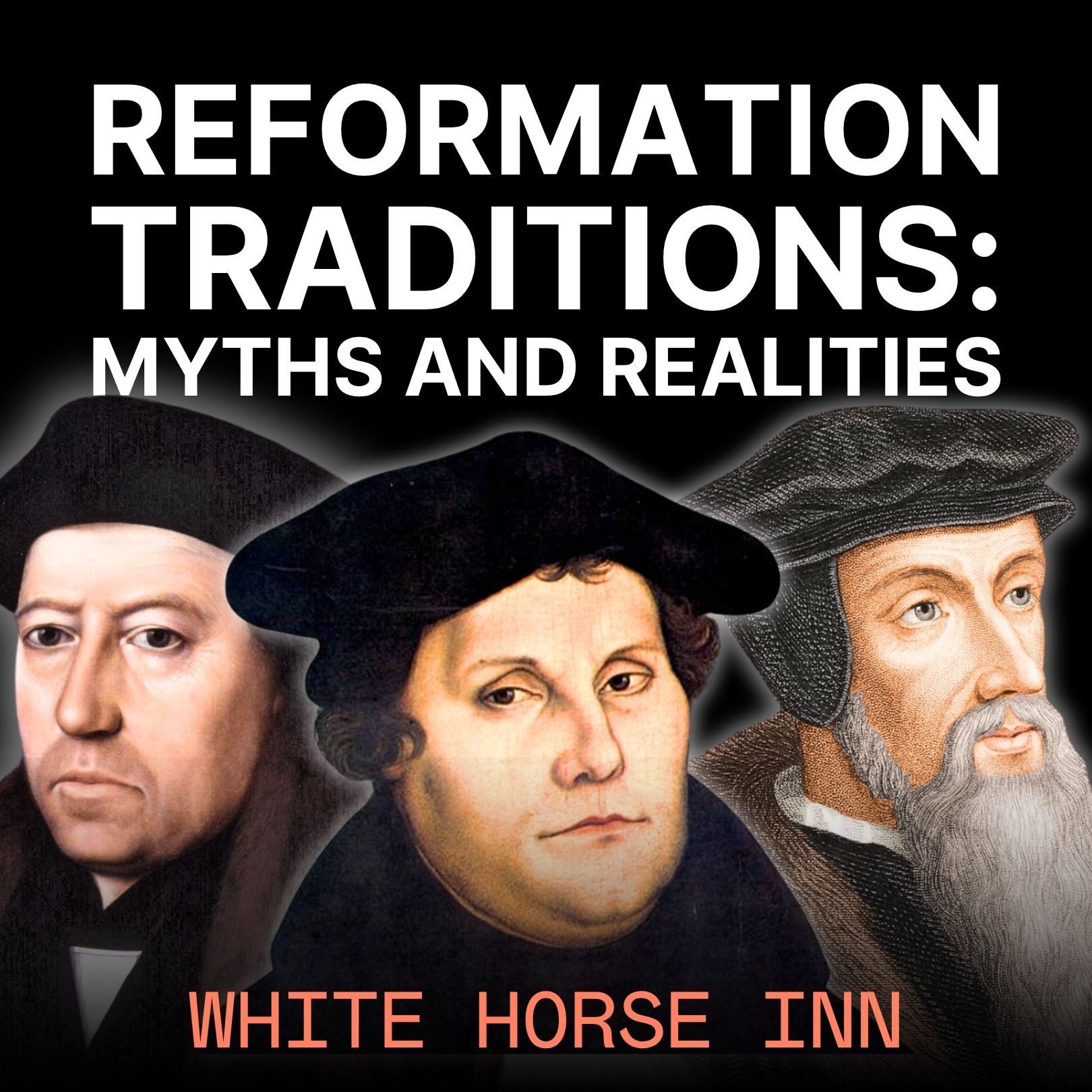
White Horse Inn
The Most Misunderstood Tradition of the Reformation
00:45:11
Is Anglicanism merely a “via media” without convictions? Was Cranmer only Henry’s pawn? This conversation shows the depth of Anglican theology, the doctrinal weight of the Prayer Book, and the enduring mission of a communion shaped by the...
Loading summary
Transcript55 lines
- [00:00]
Host
Is God the author of sin and evil? Do we actually have free will? Did Jesus die for everyone or just some? In For Calvinism, Michael Horton provides a deep and thoughtful response to some of the most common misconceptions of Calvinism. He explores the historical roots of Reformed thought, unpacks doctrines like election and perseverance, and encourages faith and practice in today's world. This month, when you support our work with a gift of any amount, we'll send you a copy of this book for Calvinism. Get your copy today with a gift of any amount@solamedia.org offers. This conversation was recorded prior to the Church of England announcing a new Archbishop of Canterbury. After our recording, Gafcon released a statement about the Anglican Communion. In response to that, the Anglican Communion Secretary General, Bishop Anthony Pogo, wrote a pastoral letter. What follows reflects the context of the Anglican Church. Prior to the events described.
- [01:08]
Justin
He was creating public theologies with the Book of Homilies and the articles, the Book of Common Prayer. He is taking every opportunity. And this is not opportunism, but there's this sense of being God is up to something. I am committed to this big idea. I'm thinking of like Isaiah Berlin's big idea of God's love in Christ for the ungodly. And that's what Cranmer is all about. He's getting influenced by the Reformation and so now he starts just building this and he's like, well, I have this opportunity. I got in this position because I know this guy and he needs me to do something. But now I'm writing all of these things, I'm framing the prayer book, I'm changing some things around. He kept some. This leads into another one of them misconceptions is that it's really just Roman Catholic stuff with, you know, without a Pope and we can get to that one. But he's being really intentional about the. The flow. He's baking in. He's baking into the liturgy and the prayer book, these new reformational principles.
- [02:20]
Host
Applying the riches of the Reformation to the modern church. This White Horse Sin, a weekly roundtable discussion about theology and culture.
- [02:42]
Justin
We are ending a series on the misconceptions of the traditions out of the Reformation and today is on Anglicanism, which is the most misunderstood heir of the Reformation, perhaps heir not error. Right, Mike? Of the Reformation. And there are a few misconceptions floating around out there. See if you guys. If these are yours and we want to talk about them, isn't that via media thing, that Anglican thing, really a compromise to have no theological convictions. The Book of Common Prayer seems really neat, beautiful, amazing, great, like literature and, you know, nice historical document, but it's not really doctrinal, is it? And then aren't you basically Catholic, but just without a Pope? And why would you replace the Bible with the Book of Common Prayer, which is actually mine? So I can tell some stories about that I remember, and then I'll throw it to you guys. And having this conversation are Walter Strickland, Bob Hiller and Mike Horton. And I did not grow up as an Anglican. I grew up going to in a different tradition. And I remember one of my friends, he was the guitarist in the band that I was in. His dad was an Episcopal priest. And so we would go over to his house and we'd go take a break. The guys would go off and get a smoke break and I'd go in and talk to his dad. I just had theology questions and I sat down with him and I said, okay, what's up with the liturgy? Just seems so formal. And I grew up in a tradition that was non denominational, charismatic and not, you know, liturgical in an intentional sense. Every church has a liturgy. Obviously we talked about that. And I said, okay, what about baptism? He walked through that. What's up with the Book of Common Prayer? Like, why, why do you have those right next to the Bible and everyone's reading from that thing. And I was, that was a problem for me. What's up with all the weird vestments? I mean, I was asking all these questions and it was fascinating. And finally I remember when he said. And he answered my questions brilliantly and he said, tell you what, why don't you come to church some Sunday, see how this all works out. Yeah, brilliant. I mean, brilliant. I remember going and thinking, this is amazing. Like the, the theology is it's not only something, not only something that I'm hearing, which I'm not opposed to hearing that, but it's just all around in every little thing that you're doing. If you're, why are you kneeling and you're confessing sin and. But still I couldn't get over the, you know, we're all just reading the same thing. Like we're like robots. Anyway, so that was a liturgy question, so I'll stop there. But because I threw in one of my own about the whole Bible and become prayer. What would be helpful to start with, Jen?
- [05:29]
Walter Strickland
Let me, let me dive in first because I love the history of this stuff. I think the misconception about Cranmer, who's kind of the father of Anglicanism. Maybe, if that's a fair way of saying maybe, that's a misconception. But often they'll say that Cranmer was just kind of a pawn of Henry viii and he would do whatever Henry VIII wanted do. And. And so Anglicanism got started because Henry VIII wanted a divorce and no one would give it to him. So Cranmer said yes and then sort of reaped the benefits. What's. What's off in that history there? Justin, how does Anglicanism come about real quick?
- [06:04]
Justin
I mean, just the. We talk about Anglicanism as Church of England and Reformational, but there was a church in England. So Anglican is referring to England and Church of England. So, you know, St. Albans, there were. There was a history of the church in England before that. Many people, when they go Anglicanism, they'll go back to like, you know, second, third century. They don't start with English Reformation. So it is. It's just how some people want to expand broader. But what we're talking about is with Cranmer and he hardly really a pawn. He was friends and maybe too close of a friend with Henry, and he was wanting to get an annulment and he was moving away also from Rome for political and dynasty reasons. So it wasn't just gotta get married. Let's see if we can get this thing done. As most misconceptions go, it's a little bit too simplistic. And so Cranmer, he was a don at Cambridge. Let's go back a little bit with him. Born in 1489, married into the Osiander family. So he's already part of this kind of reformational connection. Marries Margaret in 1532. So he got ordained, I believe, in 1520. So he has these fascinating impulses from these different regions. So he ends up becoming the Archbishop of Canterbury in 1533. And then you have moving off from Rome and he already annulled the marriage so he could, you know, get his. He already said it was. It was to be done away with. He never. And Henry never really embraced Cranmer's theology. And so it wasn't.
- [07:49]
Bob Hiller
No.
- [07:50]
Mike Horton
He got the title Defender of the Faith for. From the Pope for writing against Luther.
- [07:55]
Justin
Yes. Yeah. So then you have Cranmer's. Largely. His influence is restrained for the most part. And so for him to be a pawn doesn't really fit that well. You also have the political landscape that's all over with the Tudor system. And. And so for being a pawn. And I get it, they're like, oh, Anglicism started because the King wanted to break off from Rome. So there was no real. The rub. There is. There's not an actual theological reason for doing this. It was just this power play this guy was making. Well, that's the opposite. That's not what Cranmer was doing. I mean, he had a very clear understanding of the sufficiency centrality of Scripture and his theological method. That's all the way through. He was robust with his. He was creating public theologies with the Book of Homilies and the articles, the Book of Common Prayer. He is taking every opportunity. And this is. It's not opportunism, but there's this sense of God is up to something. I am committed to this big idea. I'm thinking of, like, Isaiah Berlin's big idea of God's love in Christ for the ungodly. And that's what Cranmer is all about. He's getting influenced by the Reformation, and. And so now he starts just building this, and he's like, well, I have this opportunity. I got in this position because I know this guy, and he needs me to do something. But now I'm writing all of these things. I'm framing the prayer book, I'm changing some things around. He kept some. This leads into another. One of the misconceptions is that it's really just Roman Catholic stuff without a Pope, and we can get to that one. But he's being really intentional about the flow. He's baking in. He's baking into the liturgy and the prayer book, these new reformational principles and these doctrines, these shifts that are taking.
- [09:49]
Walter Strickland
Place and not unopposed.
- [09:52]
Justin
Right.
- [09:52]
Walter Strickland
I mean, there is a lot. Like, this is where a lot of this stuff falls short. He's got people breathing down his neck all the time, trying to get him in trouble with Henry, trying him to get. And he's fighting like crazy to get what he believes is faithful theology into the pulpits of his.
- [10:07]
Mike Horton
Of his area, including the Lord Chancellor, who was persecuting Protestants.
- [10:11]
Justin
Yeah, well, this whole story, I mean, we can look at the prayer books and how these went back and forth. You can trace the prayer books and who was in charge, king or queen at the time. So 1553, Mary one ascends and he is imprisoned. So then in 1555, he's tried before papal and royal officials because he challenged not for. Not for justification, not for purgatory. It was because he challenged papal authority and transubstantiation. Those are the doozies for him. Late 1555, early 1556. He then signs these self incriminating recantations. And he was recanting the papal authority and transubstantiation critique. And then he is eventually burned in March 21, 1556. And so he was challenged and he.
- [11:10]
Mike Horton
Put the hand he signed the recantation with into the fire before his whole body.
- [11:17]
Justin
The hand that recanted is the first one to go. And that's the other piece is, man, this guy is just this poor pitiful guy, like he's a pawn of the king and that's what he's doing there. And then, I mean he's out of power at this point. Ashley Null, if you read Doctrine of Repentance and some of Ashley Null's stuff, he says, man, this is a guy who was lonely, he was despondent. He, Roman Catholicism has kind of come back with this resurgence. And he, he's like, I just, I just want to. The price I pay him on Christian Friends, like I just want to be a part of this. Not because he's compromising. And maybe he, maybe he was. But there's a different read than just boy, this guy was a coward, he was an opportunist. He was an opportunist to become the archbishop and now he's just recanting. That he was in a moment of despondency is the null read. So he was. You can also trace, you know, this is how the prayer books got modified depending on who was in power. You know, the first prayer book was a nice shift, but it was still too Roman Catholic for many. That was 1549. And so 1552, it shifts away from some Roman Catholic commitments. And like Eucharist, the main one is you can trace the words of distribution at communion. The body of our Lord Jesus Christ given for you. That's 1549. So the words of distribution that he then shifts to 1552, take and eat this in remembrance that Christ died for you and feed on him in your heart by faith with thanksgiving. This is a very different shift. One is this objective element, the body of Christ given for you. Then it's in the receiving, eating and faith. You can see the shifts. And so there was opposition across the board. He didn't have the luxury of just kind of sitting down figuring out here a few confessions. We're all going to be on board because this is all bubbling up. He's trying to make friends with Melanchthon. He's writing Melanchthon and Calvin. There's a great story. So Martin Luther writes to his wife for the Mardburg colloquy and says, okay, we're getting all together, we're doing great except for Eucharist and. And then you have. Cranmer on February 10, 1549, writes to Melanchthon this. I'm aware that you have often desired that wise and godly men should take counsel together and having compared their opinion, send forth under the sanction of that authority some work that should embrace the chief subjects of ecclesiastical doctrine. The object we are anxiously endeavoring to accomplish with our utmost power. We therefore request you to communicate your counsels and opinions to us in person. And then Calvin receives a similar letter and his reply from Geneva in 1552 says, I'm all in support of this gathering, says most illustrious Lord, which is how I would like the Reformed people to refer to me from now on. Mike.
- [14:19]
Mike Horton
No, I know you've mentioned that.
- [14:20]
Justin
Okay. You truly and wisely judge that the present disturbed state of the church no more suitable remedy can be adopted than the assembling together of godly and discreet men while disciplined in the school of Christ, who shall openly profess their agreements in the doctrines of religion. Never made this trip, but if I can ever be of service, I shall not shrink from crossing 10 seas. I hope you want. My want of ability will occasion me to be excused. So you have. He's looking for friends who are like minded and across, you know, across the seas in different countries. So pawn is a misnomer because it minimizes the reality of his experience. And opportunist is not. And it's implying that he was just there, he got this thing. And now we have this Anglican tradition because of this, you know, philandering king.
- [15:11]
Mike Horton
He didn't have to be burned at the stake. All he had to do was keep the recantation he'd already made. And no, he. He walked into the flames. I think too, you know.
- [15:26]
Justin
We can.
- [15:27]
Mike Horton
Talk about this for a while if you want, Justin, but it's interesting that, you know, people talk about Anglicanism. Yeah, Anglicanism didn't really exist as a separate tradition. Peter Newman Brooks makes the argument that Cranmer went through first a Lutheran, then a Zwinglian, then a Calvinian view of the Lord's Supper. And then of course, Martin Bucer and Peter Martyr Vermili came over and helped him revise the Book of Common Prayer and so on and so forth. So I mean, you look at the documents and all the way to King James. We follow the best example of the Reformed churches on the continent, or they Say we are the Reformed Church in England.
- [16:21]
Justin
Yes.
- [16:22]
Mike Horton
And it's really after the Arminian High Church, William Laud comes to the scene under King Charles I that you have a shift and something is invented that Cranmer never wanted to invent anything. Right. Didn't think of Anglicanism, thought of, thought of the historic Catholic Reformed Church that goes all the way back to the apostles. And it's interesting, Calvin even said in one of their exchanges, Cranmer said, could we have one Reformed Church that is like one denomination we would call it today? And Calvin said, sure. And he says, but what about bishops? And Calvin really did believe that all ministers are equal and there should be that presbyter and bishop are interchangeable in New Testament. He really believed all that. But he said, I believe in love more. The Bible more clearly teaches charity among the brethren than it does the discipline of the church. And so he said, I would be willing to do that. And so.
- [17:45]
Justin
Which is an explanation of your friendship with me, but doesn't explain, which doesn't explain why you didn't come to my.
- [17:50]
Mike Horton
Prosecution for you, Justin. But you know, the Hungarian Reformed Church had and has bishops, so it wasn't a big deal until later. And the idea that it was a via media from the beginning, that it was this idea that we want to kind of drive a middle way between Rome and Geneva here. There wasn't anything like that.
- [18:19]
Justin
That's an old. That one's been put to bed a while ago, kind of like between Rome and Geneva. And it's just a compromise of both. The best of both worlds.
- [18:28]
Bob Hiller
Yeah. So, Justin, along those lines, can you explain more clearly this via media between the two expressions of faith? I mean, because that's definitely something that I hear. It's somebody who's unable to make a commitment is someone who's going to be a part of the Anglican Church.
- [18:45]
Justin
Yeah, well, via media just means middle way for sure. And the misconception is, okay, you got Geneva on one side, Rome on the other side, and we'll just do a compromise between the two and kind of whatever comes together is what we're going to be looking at. And that's not really what's happening, is Mike was kind of giving the history. You're like, okay, you got this like Lutheran, Zwinglian, Calvin, you know, this experience that he's going through. And so that via media between Rome and Geneva has been put to bed. Dewey Wallace says this is his phrase, that because of Cranmer, the Anglican Church is a reformed church with hankerings after Lutheranism, which is pret. Funny summary. It's not doctrinally vague. So the via media is decided. It is big tent. Anglicanism does have some big tent nature to it, but that took place, as Mike said, after William, after laud and other things kind of get brought back in when you're having the English Reformation and you're trying to. You have the 42 articles, you have a prayer book. Prayer book is how theology gets done. So what you do with the prayer book is making really huge, significant shifts. And it's not just going, okay, we want to try to take this Reformed theology of justification by faith and just kind of leave the trappings. That's the misconception. Let's just keep all the trappings, the form, but change the content. And that's maybe the via media or let's just keep everybody happy. Now, part of that comes with. Just back to the history. There was a practical kind of via media because you have these. It's not without conviction, but you end up having. Going back to the prayer book on the words of distribution, you have the body of Christ given for you, receive this in eaten faith. And then you have the Elizabethan settlement. Well, how do they put them together? You say both the body of Christ given for you take and eat this. And so that's one way. So you do have some liturgical blending of these traditions, but you have the rejection of purgatory, you have rejection of transubstantiation. You have the centrality and primacy of Scripture. This was in going back again to Mike, connecting what is the Anglican Church? Well, like all of our traditions, they went back to the patristics. I mean, all of these eucharistic prayers are from third, fourth. I mean, they're going way deep. And then the Reform catholicity is a move, a term that some of my friends here at Reformed Theological Seminary, Scott Swain and Mike Allen, have been talking about the past 10 years. They recently did a journal on 10 years of reformed catholicity. Reformed catholicity is what I think of for Anglicanism. It keeps on going back to the Catholic doctrines of God, the way of doing theology, that scripture is foundational. Scripture is first primary tradition is important, but it is a ministerial authority, not a magisterial authority. You're not redoing any of that. You're retaining all of that. But now we're looking at, okay, how does law and gospel, nature, grace, confession, how does all of that work out? And what you have between all of the traditions with Luther and Calvin and all the others is this Law Gospel. That's what was baked in so deep. I mean the prayer book is a law gospel theology. Our doctrine of repentance, or penitential order is you read each one of the commandments and collectively or individually you say, lord have mercy, incline our hearts to obey what you command.
- [22:46]
Host
At Sola Media, we're committed to helping Christians deepen their faith through clear, Christ centered teaching rooted in the riches of the Reformation. Every podcast, article and resource we produce is offered free of charge and it's only possible because of generous monthly supporters. When you become a partner today, you'll receive two remarkable books as our thanks. Rediscovering the Holy Spirit by Dr. Michael Horton and Praying with Jesus by Pastor Adriel Sanchez. We believe these books can guide you into a clearer understanding of the Spirit's work and a richer prayer life. To become a partner and receive these two books, visit solamedia.org Partner.
- [23:39]
Justin
Noel has a book called the Cranmer's Doctrine of Repentance. And he says repentance is the heartbeat of Cranmer's theology. That it's the repentance isn't the thing we do to receive God's grace. It is the fruit of God changing our heart so we will repent. So he goes through and says, okay, confession is law gospel, faith, love. That's what he's committed to. And you see that throughout, how confession's talked about, the flow of morning prayer, evening prayer, communion. That's where Cranmer's deeply commit this. The comfortable words, you confess your sin, you are absolved. And then you hear the comfortable words for those who repent and then gratitude. I mean that's the love is what comes from the Christian because of the grace they have received. And so that's baked in all the way. That's not a compromise like, well how do we, how do we talk about this law gospel thing? Because it's really committed Law gospel and justification. That is so Lutheraneers, Lutherans can read this and go, oh that makes complete sense. Reformed folk read that, that makes complete. They see it. And when I did a law gospel teaching last year with the clergy and I went through and I said this is not this, this is not a Luther Calvin just influencing the prayer book. This is from the Christian tradition. First of all they refined it and Cranmer joined in with this movement that's taking place and then the whole liturgy is built around it. And that via media kicks in with there's like an idea that Anglicans are crypto Lutherans kind of Zwinglian and confused, you know, reform people because the reason is because people can see some of their commitments that were there or Cranmer had a Zwinglian moment that he moved on from. But the law Gospel piece, the if you read the articles, very similar to Article 11 is on justification. Article 17 is on predestination and sounds like Calvin talking about what Mike was saying about predestination. Cramer goes straight to the Predestination can be used in a horrible way. And if you fixate on it as a general just doctrine and not it won't cause harm, but it brings sweet, unspeakable comfort for those who are in Christ. It's an assurance. He uses predestination for assurance, not for fear. He talks about. So he uses the word comfort there and then the other place he uses the word comfort is with regard to justification, justification by faith. And he says this is filled with sweet comfort. You have Cranmer very intentionally doing doctrinal work in the prayer book that is pastorally thick and robust because he's responding to medieval penitential God is angry. He's looking for someone who he can crush, repent properly, do it the right way or else. And when he's talking about the comfortable words, his doctrine of repentance, he is responding to the medieval spirituality at the time of the doom Christ who is just looking around for someone to crush. I'll stop here just because you guys got me going. I get all excited to be able to talk about this stuff because no one else listens to me. The language of heart is woven all throughout the prayer book. And it's not like head versus heart. He's just saying this is your hearts are dark, your hearts are renewed. And so it's just beautiful seeing this thread of heart. So he has a very pastoral, passionate intent with this doctrinal intentionality of things that he's grabbing and learning and loving from the Reformation that's taking place in England.
- [27:43]
Mike Horton
And there's more, wouldn't you say, Justin? There's more Bible in the Book of Common Prayer than in an average evangelical church service today.
- [27:54]
Justin
Thank you, Mike. Yes, one of the biggest this was mine was why are we focused so much on the prayer book? I'm not hearing a 45 minute hour long sermon in these Anglican churches. And I was comparing them to another way of doing that, which is you read maybe a paragraph and then someone talks for 45 minutes. And then I learned, oh, about 75% of the book of Common Prayer is either direct quotation of Scripture or very close summary of scripture. And there's a joke. It might not be a joke. It kind of actually happened with one of my daughters. But a cradle Episcopalian grew up on the prayer book. And then after about 50 years of being there, kind of had this zeal. I'm going to take up my Bible and read it. And then starts reading the Bible and says, how did so much of the prayer book get in the Bible? Because he'd been. He'd been so shaped by the prayer book, which is drenched soaked in scripture. And my daughter said one of the same things. She said there's a she that the Bible and the prayer book sound very similar sometimes. And I was like, oh, how cool is that? It starts coming out real quick. Also, I want to go back to the doctrinal thing. Worship, liturgy and the prayers the colleagues Cranmer crafted. Amazingly powerful, beautiful literary, pastoral and doctrinal prayers. I mean, those prayers, that's. That's kind of the. When people say the prayer book's really beautiful. But I mean, I mean, is there really any substance in it? There's tons. Yeah, but going back to the Bible.
- [29:36]
Mike Horton
You have to say you're a miserable sinner. That's substance.
- [29:39]
Justin
Sure is. But the. But the Bible we are. And this is not a competition, so I'm not critiquing you all. But we're the Bible Bible church. And I know we all read lots of the Bible. But it is in our. If you follow morning prayers, a two year cycle, morning evening prayer, and you go to church and we have a three year lectionary cycle, you will have gone through the Bible in total at least once, if not one plus times. And so our morning prayer, communion, worship, Eucharist service are just filled with scripture. You go to our church, you are going to hear an Old Testament passage read. And I know other denominations do this. I'm not comparing.
- [30:19]
Walter Strickland
Yeah. How unique. Justin, this sounds so unique to you.
- [30:24]
Justin
I'm just qualified that. Get over yourself, Bob.
- [30:27]
Walter Strickland
I won't.
- [30:28]
Justin
We got it from you guys anyway. It's okay. So you have Old Testament, you have New Testament epistle, you have a psalm, and then you have the Gospel. And so, so much of the service is not just someone pontificating for 45 minutes on the text as if they're a Protestant pope kind of reflecting for. But you're actually letting the scriptures be that perhaps the Holy Spirit who inspires that scripture is the same Holy Spirit who illuminates it in the hearing of scripture. And of course we preach, we Point to Christ, we point to the Scriptures. But we are Bible people. And I'm emphasizing this, Bob, to those who grew up, like me, who thought being a Bible person means maybe having three or four verses read and someone talking about it for a really long time. And there's other ways of being a Bible church, which is maybe you read a lot of it and you would give them the tools individually, as a family and as a group to read through the entire Scriptures every two to three years.
- [31:29]
Mike Horton
But what would you say, Justin, to people who have heard all that and say bible church. What. So the Church of England, the Episcopal Church, not really buying the whole Bible church thing.
- [31:47]
Justin
Yeah.
- [31:47]
Walter Strickland
Can I share a story real quick?
- [31:49]
Justin
A few years ago, that'd be great.
- [31:50]
Walter Strickland
I went to an. I went to a. An Episcopalian ordination. And what I noticed there was that I knew the whole liturgy because it was just like the Lutheran liturgy. It was wonderful. But then I noticed in the sermon, it seemed to be lacking a lot of Bible. So one of the misconceptions or proper conceptions I would like for you to clarify this is Anglicanism, worldwide Anglicanism, Episcopalianism, whatever, is a very big tent. And pretty much any theological position can go so long as you stick to the Book of Common Prayer.
- [32:26]
Justin
Yeah. And that's completely different from all the other traditions that are out there, like Lutheranism and reform stuff.
- [32:31]
Walter Strickland
Well, anyone who says otherwise, from what I say, Lutheranism isn't technically Lutheran, so I don't know how that seems fine to me.
- [32:38]
Justin
Yeah, I know what you're saying.
- [32:39]
Walter Strickland
I'm not trying to be rude, Justin. I really not. I'm trying to figure this out.
- [32:42]
Justin
My response is, having fun. Yeah, I wasn't. I'm not being defensive. Like I said, I was earlier a few episodes ago.
- [32:51]
Mike Horton
A little passive aggressive there.
- [32:53]
Justin
Well, no, I'm, I'm. I'm. I'm. When Mike's question is, well, Bible church, pretty wide berth on what gets to, you know, count within your tradition. And that's. That's true. There is a big tent nature. But this is how. This is how when we're talking about all of our traditions, we could look in every single one of the Lutheran traditions and go, oh, I mean, now one group is going to say we're really Lutheran. Other groups say we're really Lutheran. But there's numerous Lutheran churches that are very opposite. Same thing with the Reformed tradition. You'll be looking at a few churches and being. How wide is that spectrum? Same thing with Baptists, with Anglicans, we have the same Spectrum, we just haven't broken off and started other denominations. We just stayed under the same title. I mean, so we have this same breadth that if you said Lutheran and you don't just mean Missouri surname, but you mean how many different types of Lutheran are there now? So that's one way that it gets understood and it really comes down to there's a global dimension to this. I mean, there's 42 autonomous churches that are bound together through the instruments of unity, which are connection to the Archbishop of Canterbury, the primates, the primary, the presiding bishops or archbishops of each One of those 42, the Anglican Consultative Council and Lambeth, all the bishops getting together. That's what creates the collegiality, the group. But they don't influence each other. And so you have this reality of 42 different churches where you have some churches that are on the spectrum on one end, and then you have other churches that are on the other end that are still under the global Anglican Communion because of how Anglicanism is defining itself. We're still figuring that out too, because while there was a Reformation, the spread of Anglicanism is really recent. I mean, there's, you know, late 1800s, they're figuring out with colonialism and the spread of, of the Anglican tradition all over the world, we're still trying to figure out what actually is. And so there's a whole movement right now. There's, there's proposals called the Nairobi Cairo Propos, where we're saying, okay, our Archbishop of Canterbury isn't a pope, has convening power, but doesn't speak ex cathedra authoritatively to other ones. And so in one sense, we're realizing the Church of England isn't Mother Church. What does that mean then? If you have all these wide groups with different, you have a different archbishop, you have different bishops in a region, and then you have clergy. So there's a lot of diversity. So in the diocese where I serve, there's diversity. Then in the Episcopal Church, there's diversity. So here there might be a majority in a certain direction, and there might be a group that would feel like a minority group within the diocese. Then you go to the next level of the Episcopal Church and there's going to be a trajectory, majority trajectory, but they intentionally are making room for the other group with whom they would broadly disagree on a few, a few issues. Then you get to the Anglican Communion, which is very different. So it really is, it's amazing because you can go to an Ordination Service 20 years ago, as you're saying, and hear the whole service and go, oh, that doesn't. That's not what I was anticipating. So I think part of it comes down to the ecclesiology.
- [36:16]
Mike Horton
But the vast majority of Anglicans today are actually evangelical and conservative. They're just not in the west, just worldwide.
- [36:26]
Justin
Yeah, yeah. There's 85, 90 million worldwide. And right now, I mean, they're trying to figure out, okay, they have the majority of people. I was in Zimbabwe last year for a safe church, Anglican Communion, safe church event, and the province. The province. So One of the 42 churches just voted. The night we were there, they voted to divide into, I think, three other provinces or four. Three or four. Because there were so many Christians, so many Anglicans that they needed more leaders that they were. They were replicating and multiplying provinces, not diocese, a province. So we're going to have in like a year or two or three, like, 44 churches. You know, there were 38, you know, eight, nine, 10 years ago. Now there's 42. There's going. So the. Worldwide, there are 8590 million Anglicans. I was ordained in Sudan, and when I, When I was. When I was there, I mean, that is the primary Christian expression in that country. When Mike and I go around the world, we go to East Africa, we go to Egypt, we're hanging out with a bunch of Anglicans because that's. That's the reality. And. But then you have other churches that are just smaller, different. And now the global communion is trying to figure out, okay, what does that mean for us to be in communion? What does communion look like when there's very significant differences theologically, not just on particular social or pastoral issues, but doctrinally there's a difference. And so there really is wide spectrum. So there's a commitment to. There really is a commitment to stay together as much as possible. That's what Anglicans do. Now, that is part of the via media thing is, well, sometimes there is compromise, perhaps maybe that is taking place. And then I think of Lancelot Andrews. Let me just read one quote. This one gives me a good kind of like, what's the heartbeat of Anglicanism? One canon reduced to writing by God himself, two testaments, three creeds, four general councils, five centuries. And the series of fathers in that period determined the boundaries of our faith. And I think that's what they're trying to do is the church has been wonky for the past 2,000 years, and there's been these ebbs and flows. And there's a. Similar to when we start talking About, Well, Luther didn't think he was starting a new church. He was trying to stay within the structures that were there and bring revival, reformation, protesting, some things they disagreed with. And that's where a lot of where Anglicans are sometimes is okay, we're, we're staying and going to do our thing here.
- [39:18]
Bob Hiller
So I love your explanation of. And I'm hearing, I wish I could experience the reality of just having the prayer book done in a corporate worship environment and just the scripture rich reality of the services. Because I'm always telling my students that we need to not just be the people who read three verses and then go off on our own tangent for 35, 40 minutes as if we're inspired and the text is on the sideline for all that time. So as you guys are reading scripture, it's woven through the prayer book. It's in sermonic sort of moments as well. Yet there's still a lot of diversity. So the scripture rightly interpreted is what we would say is authoritative. So how are you helping folks in a practical way, I guess, to interpret the scripture that they're reading since they're getting so much of it through the prayer book and through other aspects of worship.
- [40:16]
Justin
Encouraging discipleship, telling the ministers, it's not just the doing of the liturgy. Lead the liturgy, do that. You know, have Christian education, Show them, don't just pick one of the readings. Maybe show them how they relate to one another, how scripture, interprets Scripture. Show them how. The same thing you would say on this sermon you can say from that text and that text, text highlight the fact that in our liturgy we say the word of the Lord. I mean, just what we say. You read the scripture, you say the word of the Lord. What does it mean that we're saying this is the word of the Lord, the authoritative. And then practically encouraging ministers who will proclaim the gospel, give promises, not just kind of point to the liturgy for the liturgy sake, which is some people like to, you know, kind of just. Or give life advice. We don't do that. We have talked about the need for someone to walk away knowing that a promise had been made. And so show them in your preaching and in your teaching how scripture, what is in scripture? You know, there's, there's the law gospel. We did a whole thing on that last year. This year we're focusing on promise. What is the promise that is being made in scripture to God's people? And then that, you know, I say regularly, hey, point out that we're not making this up. This is Bible Stuff like these beautiful words about, we don't come to you on our own merit in righteousness, but in another righteousness. I mean, there's parts of the liturgy that just make me weep. I can't even. I can't. I can't finish the prayer. And I have one in mind right now. Write one. There's a certain line. Every time I read it, I'm just like, man, like. I get. We get to say this, but point out where we're not getting this from yourself, but it's from. And show that you need it. Show how the authority of scripture has worked and how you've made decisions about what ministries you're doing, what God says about himself and us in the world, what the gospel is. Walter, you mentioned that you might want to go to an Anglican service, so I'll give you a little foretaste in case you show on up to one of the churches or find a place. And now keep in mind, I argued earlier that Cranmer's real heartbeat was God's loving Christ for ungodly sinners. And he loved talking about the heart. And it's not heart versus head, but it's making sure it's sinking home to where real life is because he wants to give people comfort. That's the justification. Predestination. And the words of comfort. After. After confession, absolution. And then my favorite paragraph. It's right one. It's the Eucharist service is saying, hey, we're not re. Sacrificing. We're not offering any sacrifice except the one that is just. Let me really read to you the last two paragraphs of that, or let me give you a few. Actually. This is how we end our Eucharistic prayer. And we earnestly desire thy fatherly goodness mercifully to accept this, our sacrifice of praise and thanksgiving. Most humbly beseeching thee to grant that by the merits and death of thy Son Jesus Christ, and through faith in his blood, we and all thy whole church may obtain remission of our sins and all other benefits of his passion. And here we offer unto thee, O Lord, ourselves, our souls and bodies, to be reasonable, holy and living sacrifices unto Thee, humbly beseeching thee that we and all others who shall be partakers of this holy communion may worthily receive the most precious body and blood of Thy Son, Jesus Christ, and be filled with Thy grace and heavenly benediction and made one body with him, that he may dwell in us and we in Him. And although we are unworthy through our manifold sins, to offer unto thee any sacrifice. Yet we beseech Thee to accept this, our bounden duty in service, not weighing our merits, but pardoning our offenses through Jesus Christ our Lord.
- [44:27]
Host
Is God the author of sin and evil? Do we actually have free will? Did Jesus die for everyone or just some? In For Calvinism, Michael Horton provides a deep and thoughtful response to some of the most common misconceptions of Calvinists. He explores the historical roots of Reformed thought, unpacks doctrines like election and perseverance, and encourages faith and practice in today's world. This month, when you support our work with a Gift of any amount, we'll send you a copy of this book for Calvinism. Get your copy today with a Gift of any amount@solarmedia.org offers.