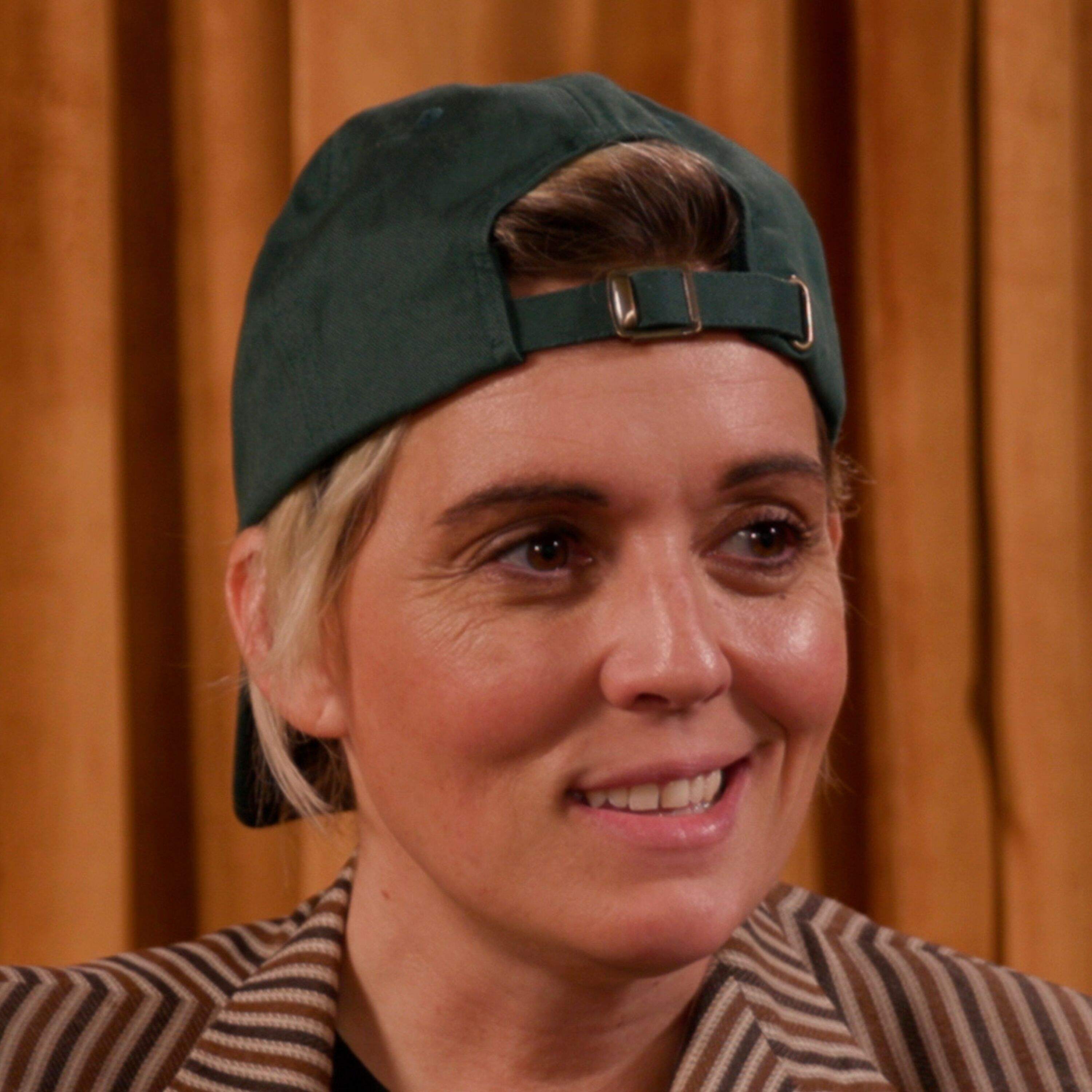
Loading summary
Transcript357 lines
- [00:00]
Advertisement Voice
This message comes from Carvana. Buy a car 100% online@carvana.com with financing to fit your budget. Enjoy seven days to return. If it's not a fit, limitations and exclusions may apply. See return policy@carvana.com.
- [00:17]
Rachel Martin
Hey, it's Rachel. I have got some really exciting news to share at the top of the show. Wildcard now has our own YouTube page. You can subscribe to it by searching for P rwildcard. Not only is there video of today's episode with Brie Randy Carlisle there, but we've also got videos from a whole lot of our favorite conversations from the past year with Michelle Obama, Marc Maron, Zadie Smith, John Green, Brett Goldstein, Brene Brown, Harrison Ford, and so many more. And I'm telling you, being able to see people laugh is contagious. And watching their faces as they think through our questions or tap into something emotional gives our show a whole other dimension. So go check it out and make sure to subscribe again. Search for PRWildcard on YouTube. Okay, on with the show. What have you found surprising about getting older?
- [01:09]
Brandi Carlile
What I found surprising about getting older is that I really like it. I like the way it feels in my heart and mind. I like the way I look, like the way my face looks. I don't think. I love being young or having that kind of chaos meteor tale behind me, you know?
- [01:28]
Rachel Martin
I'm Rachel Martin, and this is Wildcard, the show where cards control the conversation. Each week, my guest answers questions about their life, questions pulled from a deck of cards. They're allowed to skip one question and to flip one question back on me. My guest this week is Brandi Carlisle.
- [01:45]
Brandi Carlile
One part of me wants to don a sequin suit and belt out a power ballad on stage at Carnegie hall, and the other one wants to be in rain gear, filthy dirty, on a fishing boat, catching halibut.
- [01:59]
Rachel Martin
You know, that band or musician that keeps you company on a long drive or while making breakfast on a Sunday morning or on your worst day when you can't see the light in all the darkness? For me, that is Brandi Carlisle, and it's mainly because she makes music and poetry out of ideas that are already swimming around in my head. That's why her songs feel so personal to so many people, and she's won 11 Grammys as a result. She's also pretty good at singing and wears really awesome suits. Her latest album is called Returning to Myself, and I am so happy to.
- [02:30]
Brandi Carlile
Welcome Brandi Carlisle to Wildcard. Thank you. I'm so happy to Be here with you.
- [02:33]
Advertisement Voice
Yay.
- [02:38]
Rachel Martin
First three cards, Memories round. You pick 1, 2 or 3?
- [02:45]
Brandi Carlile
2.
- [02:48]
Rachel Martin
What do you think your birth order says about you?
- [02:52]
Brandi Carlile
What do I think my birth order says about me?
- [02:54]
Rachel Martin
Where are you in your birth order?
- [02:56]
Brandi Carlile
I'm a big believer in the birth order kind of concept. It's just I've seen it too many times that your birth order affects who you are. Yeah, I'm the eldest daughter, so I was just had an inflated sense of self importance, like from the get go. And I think it says a lot about who I believe I am in the world. You know, I have a penchant for matriarchy and I strive for, like, to be in a leadership role whenever I can, and I get into trouble with those concepts.
- [03:35]
Rachel Martin
What did that look like when you were. When you were little, Finding your leadership way?
- [03:40]
Brandi Carlile
Little Brandon Carlisle? I don't know. I just used to, like, lay in bed just dreaming I was saving the world or saving my family from a burning house or that I had a black belt in karate. And I was just like. I had like all of these fantasies of just being. I don't know, like having people need me, want to be near me, and being able to provide in ways that I think. I don't think my brother and sister even crossed their mind.
- [04:11]
Rachel Martin
Were they Did. Were they cool with this dynamic or they're like, brandi, we're good, step off.
- [04:19]
Brandi Carlile
Yeah, I think that one. I think, brandi, we're good. Step off. For sure. Yeah. And to this day, I think that the dynamic just plays itself out as accurately as it did when we were little babies.
- [04:30]
Rachel Martin
Isn't it so weird how you get together with your siblings? I totally become the exact same person I was. There are three of us too. And all of a sudden I'm. I don't know what I can.
- [04:40]
Brandi Carlile
Which one are you?
- [04:41]
Rachel Martin
I'm the eldest.
- [04:42]
Brandi Carlile
Okay.
- [04:42]
Rachel Martin
You're the oldest. And I have a brother and a sister, a younger brother and a sister.
- [04:45]
Brandi Carlile
Yeah.
- [04:46]
Rachel Martin
And. Yeah, same. All of a sudden, I'm the person who's. They're like. They gang up on me and I like, tell them what to do. And I'm like, how did I fall back here?
- [04:57]
Brandi Carlile
Right. And then you're right back in that space again, just taking responsibility. You wanna hear something crazy there?
- [05:00]
Rachel Martin
Yeah, I do.
- [05:02]
Brandi Carlile
So I am the eldest, and that is like, intrinsically woven into who I think I am. But I found out that my dad had a daughter before me.
- [05:12]
Rachel Martin
Oh, see, this is fascinating.
- [05:15]
Brandi Carlile
I think I found this out when I was like 13 and we just never talked about it again until I was, like, in my 30s, and I found her. I went and found her.
- [05:26]
Rachel Martin
So you did not have a relationship with this person?
- [05:28]
Brandi Carlile
No.
- [05:28]
Rachel Martin
You did not know this person?
- [05:29]
Brandi Carlile
I found her for my father and my brothers and sisters. I felt like, you know, it was my job to find this woman, and I found her, and I. And I called her, and it was a long journey, but I figured it out. A lot of Facebook sleuthing. Wow. But I called her, and I don't know why these words came out of my mouth, but I was like, you know, I'm your sister. Why don't you come and stay with me for a while? I invited this stranger to my house for, like, a week.
- [05:54]
Rachel Martin
She said yes.
- [05:55]
Brandi Carlile
She said yes. She drove from Oregon to my house with her husband and three kids. And the minute I saw her, I knew her.
- [06:04]
Rachel Martin
Whoa.
- [06:04]
Brandi Carlile
But I still felt like the oldest, even though she's older than me. I don't know why.
- [06:08]
Rachel Martin
Did she know about you?
- [06:10]
Brandi Carlile
No, not for a really long time. She knew that, you know, some other guy was her dad, but she didn't know about me or who I was or what I did or my brothers and sisters or anything until I reached out and found her.
- [06:25]
Rachel Martin
Now I'm really getting into it with you. But just for clarity's sake, did your mom.
- [06:30]
Brandi Carlile
My mom knew. Do you want to know how my mom knew?
- [06:31]
Rachel Martin
How?
- [06:32]
Brandi Carlile
Okay. This is actually cinematic. So this was like. My dad was young, I want to say, must have been 17, 18, when he got this woman pregnant. And she.
- [06:41]
Rachel Martin
Her parents freak out, right?
- [06:43]
Brandi Carlile
Because my dad's like, the town problem child. They freak out. They make them sign a thing. Don't ever reach out to us. You do not exist. They left the state to get. You know, and it was like, okay, fair enough. And my dad wore, like, all leather and drove a motorcycle and everything. So they leave. She goes off and has this baby. He meets my mom almost immediately and gets my mom pregnant with me. And she's just getting ready to have me. And she's on the phone with her little friend, right? She's literally like a teenager. She's on the phone with her little friend, and she's scribbling on a pad of paper with the side of a pencil. And as she's doing her little doodles and making her drawing, this writing starts to appear because my dad had written a letter on the pad too hard, and it created these indents. So these words start to appear, and my mom lightly colors in this whole piece of Paper and sees this entire letter that my dad had written the mother of his other child. That's how she found out.
- [07:42]
Rachel Martin
What?
- [07:43]
Brandi Carlile
Yeah.
- [07:44]
Rachel Martin
That's crazy.
- [07:45]
Brandi Carlile
I know, I know. And then they told me when I was 13.
- [07:48]
Rachel Martin
Oh, my God. There's so many follow up questions I have, but we have so many more questions to go through.
- [07:53]
Brandi Carlile
No, no, no. This one's too intriguing not to go down that road. Wow.
- [07:56]
Rachel Martin
Also, okay, so your parents are.
- [07:59]
Brandi Carlile
They are very young. My parents are like 63 and 64. And I'm 45, so they're. Yeah.
- [08:04]
Rachel Martin
And are they still together?
- [08:05]
Brandi Carlile
Yeah.
- [08:06]
Rachel Martin
Wow.
- [08:07]
Brandi Carlile
Yeah.
- [08:07]
Rachel Martin
That is so cool.
- [08:08]
Brandi Carlile
Yeah, we're really, really. We're all really tight. Really dysfunctional. It's fabulous.
- [08:12]
Rachel Martin
And your sister, your newly found sister, has she been integrated into the family?
- [08:17]
Brandi Carlile
Fully and in the most inexplicable way. She's just us. And we don't know how or why, but she just is. She's funny. God, she's funny.
- [08:26]
Rachel Martin
What a lovely thing.
- [08:27]
Brandi Carlile
Yeah.
- [08:28]
Rachel Martin
But when you're all together, you're still like, sorry, oh, this has shifted my identity. Main character.
- [08:35]
Brandi Carlile
And I know who I am.
- [08:40]
Rachel Martin
You can come into our family as long as you know that I am the worst. Let's be clear. Oh, my God. That is a crazy story. I know.
- [08:49]
Brandi Carlile
Sorry. I figured you can add them. Okay.
- [08:53]
Rachel Martin
Three new cards. One, two or three.
- [08:56]
Brandi Carlile
Okay. Okay. Memories.
- [08:58]
Rachel Martin
Memories.
- [08:58]
Brandi Carlile
Stealing memories.
- [08:59]
Rachel Martin
We're still in memories.
- [09:00]
Brandi Carlile
Okay.
- [09:00]
Rachel Martin
Yeah, we get three in each.
- [09:01]
Advertisement Voice
All right.
- [09:01]
Rachel Martin
What you got? One, two, three.
- [09:03]
Brandi Carlile
One, one.
- [09:05]
Rachel Martin
Where did you shine the most as a teenager?
- [09:09]
Brandi Carlile
Where did I shine the most? Where did you feel like you shone? Shone. Shone the most. Shined as a teenager. Um, I feel like I came into my own when I cut off my hair and came out of the closet.
- [09:29]
Rachel Martin
How old were you?
- [09:30]
Brandi Carlile
I was. It was 1997 when everybody came out because Ellen DeGeneres came out. So that means I was born in 1981. Does that make me 15? Yeah, it was right then I had a real coming of age moment where I just sort of claimed myself. And then I feel like even though it didn't make me popular in a small town, even though I'd never met a gay person in my life or had a girlfriend or anything, that. That sort of like self assuredness was the first time I think I ever really shone. Shone. It's a weird word.
- [10:07]
Rachel Martin
I'm changing it.
- [10:08]
Brandi Carlile
Yeah, we'll go with it. Somewhere there's an English teacher just like, oh, cringe.
- [10:16]
Rachel Martin
Was it Ellen, really?
- [10:17]
Brandi Carlile
I mean, that was a really big part of It. I heard the Indigo Girls for the first time. I had be. I about four years into being the biggest Elton John fan on the planet. Saw the movie Philadelphia. There were a lot of turning points, but Ellen DeGeneres coming out was a big one.
- [10:32]
Rachel Martin
Yeah.
- [10:33]
Brandi Carlile
Yeah.
- [10:33]
Rachel Martin
Did you cut your hair first or have a conversation with your parents first?
- [10:37]
Brandi Carlile
I cut my hair.
- [10:38]
Rachel Martin
Cut your hair first.
- [10:39]
Brandi Carlile
Yeah. My mom was really disappointed. I worked at a grocery store, and there was a Supercuts next to it. And I just went in and I'm like, off with it.
- [10:48]
Rachel Martin
Yeah.
- [10:48]
Brandi Carlile
And I don't need to. Like, even now, I know my hair doesn't make me gay or not gay. It doesn't really say anything about my gender. But for some reason, it was symbolic. At that time, that was my separation moment, I think.
- [11:00]
Rachel Martin
And how was your mom? How was your dad?
- [11:02]
Brandi Carlile
Oh, my mom was so bummed. She was bummed.
- [11:05]
Rachel Martin
Yeah.
- [11:05]
Brandi Carlile
But my dad wasn't. And so it was a long process for my mom especially. Yeah.
- [11:13]
Rachel Martin
Yeah.
- [11:15]
Brandi Carlile
Three more.
- [11:20]
Rachel Martin
One, two, or three?
- [11:22]
Brandi Carlile
I mean, I gotta go with three, because I already did the one and two. You choose, lady. Yeah.
- [11:29]
Rachel Martin
What's something that clicked for you in your 20s?
- [11:39]
Brandi Carlile
I mean, everything. If you're doing it right, that's when the clicks happen. That's when the clicking starts. You know, in my 20s, I got a record deal.
- [11:50]
Rachel Martin
Yeah.
- [11:51]
Brandi Carlile
And we got it. We bought a van, me and my band. And that's when I first started to travel out of Washington state. I didn't even see an airplane until I was 17. And I went to Manhattan for the first time in my very early 20s. I want to say, 2021. And seeing a city like that after being, you know, coming from such a small place but dreaming of the whole world. Dreaming of the whole world was just when it clicked how big the world is and how we're all just these, like, specks of dust. And I realized that I had so much to learn about a world that I really, really love.
- [12:41]
Rachel Martin
And you wanted to be out in it.
- [12:42]
Brandi Carlile
I wanted to be out in it with people all the time.
- [12:46]
Rachel Martin
What'd the van look like?
- [12:48]
Brandi Carlile
It was white Ford Econoline. And, yeah, we drove it. We put tens of thousands, maybe even hundreds of thousands of miles on that van. And then, you know what's so cool is during the pandemic, our little, like, hometown record store, Easy Street, Easy Street Records, they were like. Cause everything was shut down. They were doing record vinyl deliveries to people's houses, and they were going to this burger joint called Dick's and getting Burgers. I know Dick's. You know Dick's.
- [13:20]
Rachel Martin
I know Dick's.
- [13:20]
Brandi Carlile
Oh, it's the.
- [13:21]
Rachel Martin
I went to college in the Pacific Northwest.
- [13:23]
Brandi Carlile
Yeah. Oh, the Dick's jokes.
- [13:25]
Rachel Martin
I know.
- [13:25]
Brandi Carlile
They abound. Plentiful. They are many. He would go and he would pick up burgers and fries and shakes and bring people vinyl. And we gave them, we donated our van to them.
- [13:38]
Rachel Martin
Oh, that's awesome.
- [13:39]
Brandi Carlile
Yeah. It was such a good feeling to see it go to something so worthwhile and indie and music oriented.
- [13:46]
Rachel Martin
At what point when you were in your 20s, when things are clicking and you're like, I got a record deal, I got a band, I got a van, I can afford to fly, did you ever feel secure, like this is happening, I got what I wanted and I'm on the trajectory and dreams are coming true?
- [14:04]
Brandi Carlile
Yeah. I felt like that the whole time. I felt like that from the beginning. I always felt I had made it or was in the process of making it and that it was a foregone conclusion. It just never occurred to me that it wouldn't, that it would be otherwise happen. And I just, I'm looking back on it now a lot because I'm in my 40s and, and my niece is trying to do it and she has that same thing, that willful ignorance blinders on. She doesn't see that she's climbing. She's just moving forward.
- [14:37]
Rachel Martin
Yeah.
- [14:37]
Brandi Carlile
And it's like I, I felt that way. I really felt secure. Huh. And safe, like I had made it.
- [14:56]
Advertisement Voice
This message comes from Saatva, official mattress and restorative sleep provider for Team USA, who won 231 total medals at the Olympic and Paralympic Games, Paris 2024. But could they have done even better if they were getting deeper restorative sleep? Ron Rudson, Saatva CEO, was determined to find out. So Saatva will provide mattresses for the LA Olympic and Paralympic Games. You can get deep restorative sleep, too. Visit saatva.com NPR and save $200 on $1,000 or more. This message comes from the NPR Wine Club, which has generated over $1.75 million to support NPR programming, whether buying a few bottles or joining the club. You can learn more@nprwinclub.org podcast. Must be 21 or older to purchase.
- [15:45]
NPR Announcer
This message comes from Instacart. Did you see the game last night? Of course you did, because you used Instacart to do your grocery restock. Plus you got snacks for the game, all without missing a single play. And that's multitasking so Instacart isn't saying it's a hack for game day, but it might be the ultimate play this football season. Enjoy. $0 delivery fees on your first three orders. Service fees apply. Valid on three orders within 14 days. Excludes restaurants. Instacart. We're here.
- [16:20]
Rachel Martin
We're going to talk about the album. Congratulations.
- [16:24]
Brandi Carlile
Thank you very much.
- [16:25]
Rachel Martin
It is beautiful.
- [16:26]
Brandi Carlile
Thank you.
- [16:27]
Rachel Martin
I mean, how does it feel to be performing these songs? These songs are about. I mean, the whole thing's called returning to Myself. So these are. This is a very personal story. Your music is, on the whole, very personal. But this is a different project for you.
- [16:42]
Brandi Carlile
It is a different project. I think if you can address and almost kill identity, your prior identity as an artist and, like, let yourself free fall by starting over. It's the only way to, like, authentically feel the way I feel right now when I'm playing these songs. Like, I've never done it before. Like, I don't know what I'm doing. I want to. I want to feel like I don't know what I'm doing when I take the time to reinvent myself as an artist. And that's how I feel.
- [17:20]
Rachel Martin
Why? Why was that? Why did you feel that craving? Like, what about all your success made you feel like, this is not me, I gotta return to me? And I don't know what that is necessarily, but I gotta. I mean, in your words, like, kill your own identity.
- [17:36]
Brandi Carlile
Yeah. It's like, a lot of the artists that I love the most have done it. They've had eras where they've looked a certain way, acted a certain way, sounded a certain way, written a certain way, played a certain kind of instrument, and then just, like, death to that thing and switch. Because, like, maybe they. I know, but with myself, I start not believing myself. I start becoming an entertainer. I love to entertain. I sang background vocals for an Elvis impersonator from the time I was, like, a teenager. And I love Elvis Presley and I love, like, the great entertainers who. They have a grandiosity about them and a sparkliness, but there's also a selflessness in setting self aside to entertain, to make someone laugh or cry or dance, you know? And I think that to keep that fresh, you have to kind of kill the entertainer in you every. Every so often. And that's what I've done. And she'll come back when she learns the songs and feels a little less vulnerable singing them. But right now, she's not there, and it needs to be that way.
- [18:47]
Rachel Martin
The whole thing I'VE heard you describe it as a U shaped journey for yourself.
- [18:57]
Brandi Carlile
Not Y, O, U.
- [18:58]
Rachel Martin
Not Y, O, U. The letter U of. In the course of rediscovering who you are, going deep in that self exploration when you're stripped down of all the artifice and the entertainer. But who are you, Brandi? And then the U shape comes up on the other side and then you come out of that. Yeah, but you're in the bottom of the, um, you've said you're still.
- [19:22]
Brandi Carlile
So I'm out of there.
- [19:23]
Rachel Martin
Oh, you're out.
- [19:23]
Brandi Carlile
Yeah, I did it. I'm not staying in there.
- [19:27]
Rachel Martin
Discovery has been discovered. We've moved on.
- [19:31]
Brandi Carlile
I want people. It's like, who am I? So you go down and then you figure it out. Maybe, maybe you don't, but you decide to come back out. Just like water. You can't stay under there forever. And you come out, you go in there saying, who am I? And you come out saying, I'm yours, you know, I belong to other people. That's what I want for my life.
- [19:57]
Rachel Martin
Were you unsure about that in the beginning? Like, what provoked the whole thing anyway?
- [20:02]
Brandi Carlile
Well, you don't want to have a made up mind, you know, But I've always been accused, maybe appropriately, of codependence.
- [20:11]
Rachel Martin
I mean, I feel like. I feel like we should just take a pause and explain how many people you live with.
- [20:17]
Brandi Carlile
Yeah, I actually can't even count.
- [20:19]
Rachel Martin
There are so many people.
- [20:20]
Brandi Carlile
Yeah, yeah, you say. I don't know. I mean.
- [20:25]
Rachel Martin
It'S a beautiful community.
- [20:26]
Brandi Carlile
I've lived in the same log cabin since I was 21. I'm 45 now. I have twin brothers in my band. Twin brothers are codependent by default. Identical twins. They don't even have their own face. They share everything. So there is no sense of anonymity or agency really in relationship with people like that. Twins are fascinating beings and they are.
- [20:51]
Rachel Martin
Just to be clear, they are not your brothers, but they are twins.
- [20:53]
Brandi Carlile
Well, they aren't, except one of them married my sister. And then, you know, then the niece and nephew were born and they're like, that's my family. And they are also my next door neighbors, so we all live on one property together. And then Phil's twin brother Tim and his wife Hannah and their two kids, Wilder and Waverly. They live with us too, so they're on. And then my wife Kathryn, she's got two sisters and they fell, left. Fell in love with people in my band, married people in my band, and then they moved out there with us. So the two sisters, one's married to the cello player, one's married to the engineer and they live there. And then my ex girlfriend lives also next door.
- [21:37]
Rachel Martin
Oh, wow, I didn't know that one.
- [21:38]
Brandi Carlile
Yeah, that's very lesbian. And I think there's a couple more, if I'm honest. So that's my whole. And we do our holidays together and we do our loss together. And we do. And we have fights and we have. We get together and suss through conspiracy theories and have interventions and talk with someone, but.
- [22:00]
Rachel Martin
That sounds beautiful. That doesn't feel. That doesn't seem codependent.
- [22:03]
Brandi Carlile
I don't think so either. That's what I think I've learned in the U shaped journey is that actually it's okay to just belong to other human beings.
- [22:13]
Rachel Martin
Yeah. You know, what do you like when you're alone?
- [22:17]
Brandi Carlile
I don't like being alone.
- [22:19]
Rachel Martin
That is not your preferred state of being? No. Do you? Oh, yeah.
- [22:23]
Brandi Carlile
Oh, yeah. What do you do?
- [22:25]
Rachel Martin
I mean, stare at a wall? I like.
- [22:28]
Brandi Carlile
I can do anything. What do you do with your mind?
- [22:30]
Rachel Martin
Well, there's a lot going on in there. But I have had to learn which interactions restore me and which ones deplete me. And I'm a person who will go hard externally for a while in a certain circumstance, and then I gotta retreat. But that is not you.
- [22:49]
Brandi Carlile
Yeah, don't wanna.
- [22:50]
Rachel Martin
You don't wanna do it?
- [22:51]
Brandi Carlile
No. I mean, I feel like I can retreat right in front of you. Like, right in front of you. I will just play Zelda. Like, you come over to my house and like, you know, I'll show you where the fridge is and there's food in there. But I like, may stay in a bathrobe, talk to you for two hours because. But it's like. But I would love that you're there. I love that you're there doing you parallel to me doing me. And it's like I think that that's where I'm at and maybe I always have been. My brother and sister certainly have accused me of being unaware of how the way I'm acting affects other people. But I think I know how to be alone and surrounded by people at the same time.
- [23:34]
Rachel Martin
I do have to ask you about the song, the tribute to Joni Mitchell.
- [23:38]
Brandi Carlile
Oh, I love this. I know.
- [23:41]
Rachel Martin
It's such a good song. I mean, there are beautiful songs on there, but there is a song. Joni Mitchell has been a longtime inspiration and friend of yours.
- [23:48]
Brandi Carlile
Are you a Joni fan?
- [23:49]
Rachel Martin
I'm a Joni fan, yes. I am.
- [23:51]
Brandi Carlile
Tell that story one more time, Jonah. Won't look away.
- [23:59]
Rachel Martin
So did you hear it? Yeah, she heard it, listened to it.
- [24:03]
Brandi Carlile
Yeah.
- [24:03]
Rachel Martin
Was that crazy to play it for her?
- [24:05]
Brandi Carlile
I was really worried to play it for her because one thing about Joanie is like, she won't be sussed out. She won't be figured out.
- [24:12]
Rachel Martin
Right.
- [24:13]
Brandi Carlile
So I don't know what she's gonna think is funny and what she's not gonna think is funny. I don't know. I don't know with her until it's happening in real time.
- [24:24]
Rachel Martin
So she's not gonna blow smoke in your direction. She's gonna tell you this sucks or that's fine, Brandy.
- [24:32]
Brandi Carlile
She would. She would. Yeah, she would. She wouldn't say this sucks or something. She would say, oh, that sounds like something I've heard before. Or I, you know, she would say, like, that's worse. Yeah. You know, or she'd make a smart ass remark or something like that. But, yeah, I drove that one up to her house. Cause I couldn't handle the anxiety anymore of her having not heard it.
- [24:51]
Rachel Martin
Yeah.
- [24:51]
Brandi Carlile
But it came out in such an honest way that it was almost like an inside joke I didn't know if Joan was gonna get. And then when I realized that she did get the joke, I felt so loved and seen by Joanie in a way that was actually, like, transformative. When I tell you I love you and you tell me, okay, I know you believe me and that's love in your way. And it kind of wrapped up the last six years with such a sweet bow of like, oh, we do think the same thing.
- [25:33]
Rachel Martin
Yeah.
- [25:33]
Brandi Carlile
You know, it was really cool.
- [25:34]
Rachel Martin
And it's such a lovely placement on this album, which is about you doing your own journey, but remembering and coming out on the other side. Remembering that you are a people who needs people. And so much of your career is built on these beautiful collaborations that you've done with other artists.
- [25:48]
Brandi Carlile
Yeah.
- [25:49]
Rachel Martin
And so it was lovely to see, like, an explicit shout out to her.
- [25:52]
Brandi Carlile
Yeah. And she does not need people.
- [25:55]
Rachel Martin
Yeah.
- [25:55]
Brandi Carlile
She's not that girl. So it was when I played her returning to myself, and it ends with, you know, returning to myself is such a lonely thing to do. She was just looking in a mirror and putting butterfly clips in her hair and listening to that song. And it ended. And she just looked at me and went, no, it isn't. That's so awesome. That was really awesome. Yeah.
- [26:22]
Rachel Martin
Okay, we're going on round two. Insights.
- [26:26]
Brandi Carlile
Insights.
- [26:27]
Rachel Martin
One, two or three?
- [26:30]
Brandi Carlile
Three.
- [26:34]
Rachel Martin
When are you. The truest version of Yourself.
- [26:38]
Brandi Carlile
Flip.
- [26:40]
Rachel Martin
Okay.
- [26:41]
Brandi Carlile
I want to know that because I am fascinated with people who ask other people questions. I want to know this about you.
- [26:50]
Rachel Martin
Yeah, well, it took me a long time to figure out what work I wanted to do that was gonna make me feel like the most true version of myself. And I did a lot of other jobs that I felt like I was supposed to do. I was the anchor of big news show, and it was generally important, and I feel good to have done it. But doing this. I know this sounds cheesy, but this is what I want to do. All I want to do is talk to other people.
- [27:28]
Brandi Carlile
Who?
- [27:29]
Rachel Martin
I don't know. Strangers. I wanna talk to strangers, and I want to tell them things about me. And I want them to tell me things about them. Because that's how I think we build empathy in the world. And so I feel really lucky that way. And also when I'm home in Idaho, that's the other place where I feel.
- [27:49]
Brandi Carlile
Idaho where?
- [27:49]
Rachel Martin
Idaho. Where I was. I'm from Idaho Falls, five generations.
- [27:54]
Brandi Carlile
Cool.
- [27:54]
Rachel Martin
Yeah.
- [27:55]
Brandi Carlile
That's where I took my very first flight was to Idaho.
- [27:57]
Rachel Martin
Oh, really?
- [27:58]
Brandi Carlile
Yeah.
- [27:59]
Rachel Martin
When you were 17?
- [27:59]
Brandi Carlile
Yeah. To go see a girl. And I went to. I was called McCall.
- [28:04]
Rachel Martin
McCall.
- [28:04]
Brandi Carlile
McCall, Idaho? Yeah. Out middle of nowhere. Not a great place for a lesbian to go see a girl.
- [28:08]
Rachel Martin
Not really. I can't believe that happened.
- [28:10]
Brandi Carlile
Listen, when you take. You need to kind of take the risk sometimes. Yes, you do.
- [28:14]
Rachel Martin
You gotta take the risk. Okay. Truest version of yourself where.
- [28:20]
Brandi Carlile
Wait, I have to.
- [28:21]
Rachel Martin
Yeah, you still have to answer it.
- [28:26]
Brandi Carlile
Fishing.
- [28:27]
Rachel Martin
Fishing.
- [28:27]
Brandi Carlile
When I'm fishing. Yeah, A while ago, I. And it's like, I don't like choosing one because there is, like, I'm a proper Gemini, where one part of me wants to don't a sequin suit and strike a Shakespearean pose and belt out a power ballad on stage at Carnegie Hall. And the other one wants to be in rain gear and filthy dirty on a fishing boat catching halibut offshore in the Pacific Northwest. And I don't. And reconciling those two things is what aging is about for me. I actually went and saw like a hypnotist one time about this, like a psychosympathetic nervous system sort of specialized speech therapist person that does a hypnosis type thing. Because right around the time that I got nominated for all those Grammys with Joke, I started getting sick. Every time something big would happen in my life, I would get sick. You know, I couldn't sing. I chest colds. And so at one point I had Got asked to sing on some big awards show, and I was sick again. And I got recommended to go talk to this therapist. And she basically told me to, like, close my eyes and envision myself, like, on the stage, like, the world stage. And I could even, like, see what I was wearing. I was, like, wearing a velvet suit. It was really glamorous. And then she asked me to, like, visualize the opposite self of that. That, like, exists in me. And I saw myself in a place called Nia Bay, which is a. Is the macaw reservation at the northernmost tip of the west coast of the United States. And then I had to have those two women have a conversation. And the conversation was, which one of these selves is true? Which one of these cells is truer? And are you willing to coexist and listen to one another? Which, when. When one becomes ignored, it will do something to your body to make sure you're paying attention to the other. And that is how I stopped getting sick and letting pressure drive me to. Into the.
- [30:49]
Rachel Martin
Paying too much attention to one and.
- [30:50]
Brandi Carlile
Not the other into the other one. Just wanting to get into my sweatpants and get a trout pole. It's like, now if I feel like I don't want to do something, I have to say no instead of say yes and get sick. So that's my truest self, is, I think, whichever one I'm listening to more.
- [31:08]
Rachel Martin
And that equilibrium between the two halves of you.
- [31:12]
Brandi Carlile
Three more.
- [31:13]
Rachel Martin
One, two, or three. Three new cards, by the way.
- [31:16]
Brandi Carlile
Okay, two again.
- [31:18]
Rachel Martin
What have you found surprising about getting older?
- [31:27]
Brandi Carlile
What I found surprising about getting older is that I really like it. Hmm. I really like it. I like the way it feels in my heart and mind. I like the way I look. Like, the way my face looks. I think I always believed I was older, and now I sort of feel like I'm coming into a zone that I prefer being in. I don't think I loved being young or having that kind of chaos meteor tale behind me. You know, I feel really settled into the aging process. Like, I'm where I want to be. And I got a lot of older friends, like we talked about, and so I can see the end of the road. I know what it looks like. And I feel like I get a little bit of a sneak peek into what the second half could be if I'm contemplative and present for it.
- [32:24]
Rachel Martin
And that doesn't wig you out? That doesn't intimidate you. It just is.
- [32:29]
Brandi Carlile
I mean, I'm terrified of, like, death, and I'm not A big mortality Zen person. But I do like being getting older a lot. Do you?
- [32:40]
Rachel Martin
That's a lovely position to be in. I feel. I feel ambivalent about.
- [32:49]
Brandi Carlile
Do you?
- [32:52]
Rachel Martin
I'm a little older than you are, Brandi Carlisle, and things start to happen to a woman's body and there are parts of the aging process that really suck.
- [33:05]
Brandi Carlile
Yeah. But I mean, I do hurt. I mean, the aches and pains.
- [33:09]
Rachel Martin
That's a weird joint pain.
- [33:11]
Brandi Carlile
That's a bummer. I know what you mean.
- [33:12]
Rachel Martin
I'm like super scratchy on my back all of a sudden.
- [33:15]
Brandi Carlile
Scratchy? I don't know.
- [33:16]
Rachel Martin
There's all kinds of weird symptoms with menopause. I digress. But I do like being in a place where I don't care so much.
- [33:29]
Brandi Carlile
Yeah, that's the best.
- [33:30]
Rachel Martin
It's really a freeing thing. And to release kind of what we were talking about before, to release other people's expectations about what I'm supposed to.
- [33:37]
Brandi Carlile
Be or what.
- [33:40]
Rachel Martin
Success looks like. And just to be like, I don't care what anyone else thinks. This is kind of what I want to do and how I want to be and how I want to present in the world. And, you know, I want to wear weird clothes to my kids baseball games.
- [33:56]
Brandi Carlile
All that is better than not being sore, honestly. Yeah, it is.
- [34:00]
Rachel Martin
It outweighs the downsides of the aging right now for me too, I guess. You talk me into it. Yeah, yeah, sure, I'm into it. Let's do it. Yeah.
- [34:10]
Brandi Carlile
Just embrace the heating pad.
- [34:11]
Rachel Martin
Yeah.
- [34:11]
Brandi Carlile
Yeah.
- [34:12]
Rachel Martin
I mean, I do. I have three heating pads now.
- [34:14]
Brandi Carlile
Three. Oh, my God. You know, I'm not trying to name drop, but my friendship with Annie Lennox consists of us sending each other pictures of our heating pads and our bed before we go to sleep in random hotel rooms. When I met Alanis Morris in May, she's sent me three heating pads. Since I met her, she's got like all of these heating pads that she recommends. Come on. Yeah. That girl is all about, like, taking care of yourself.
- [34:39]
Rachel Martin
Yes. And the heating pad is a magical, magical thing that more people should understand and use on a regular basis.
- [34:47]
Brandi Carlile
Uh huh. Underrated. And they can go anywhere. Commercial flights. Totally. People look at you funny. Just take them out, plug them in, and just be comfortable.
- [34:56]
Rachel Martin
That is a great idea.
- [34:57]
Brandi Carlile
I know.
- [34:58]
Rachel Martin
It may be the most important thing I've learned today.
- [35:00]
Brandi Carlile
Yeah. Okay, three more.
- [35:03]
Rachel Martin
Last one in this round. One.
- [35:04]
Advertisement Voice
Two or three?
- [35:07]
Brandi Carlile
Three.
- [35:08]
Rachel Martin
What does age teach you about love?
- [35:22]
Brandi Carlile
I think age teaches you that love isn't a feeling. I think age teaches you that Love is an action. It's a. I don't want to say, I don't want to sound too dutiful or too eldest child, but that it's something that you do. It's a commitment to a certain kind of fidelity and an honoring of someone else, even if that someone doesn't love you. And then that frees you from wondering what this means. If the feeling changes, it means that the feeling changed. It doesn't mean that the love changed. And that if love is something you.
- [36:12]
Rachel Martin
Do.
- [36:14]
Brandi Carlile
That'S powerful, endures, and you can come in and out of entertaining and understanding the feelings, but it's something that you do as you love.
- [36:24]
Rachel Martin
This has been a recent epiphany, or do you feel like you've always kind of known that? Or is it genuinely something that has come with time?
- [36:33]
Brandi Carlile
Not really recent? I think everything that's happened to me big in my life has taught me more about unconditional love, commitment and fidelity. Whether it was the. My relationship with the twins, my acceptance, good humor, forgiveness and admiration for my parents when I reached a certain age and saw them differently. Falling in love with my wife, which started as a feeling and has evolved into something so much more all consuming. And then having children is, I think, one of the purest forms of recognizing what love in action can look like.
- [37:14]
Rachel Martin
Yeah.
- [37:14]
Brandi Carlile
And then finally the world that we're living in right now, learning to love complicated people who have complicated beliefs that don't align with my own and my feelings don't love those people. But my actions have to do you have.
- [37:35]
Rachel Martin
Because I'm genuinely curious. Are there people like that in your life where you get to work on this on a day to day basis or.
- [37:41]
Brandi Carlile
Oh, girl, yes. Yeah, I live in the mountains. Yes, yes, absolutely. I'm a fisherman and I ride a four wheeler. I guarantee you I'm surrounded by complicated people. And it's. Yeah. It's brutal and. And really mind expanding.
- [38:08]
Rachel Martin
And a practice.
- [38:09]
Brandi Carlile
And a practice. Yeah, totally. Meditation even. Totally.
- [38:25]
NPR Announcer
I'm Ira Glass. On this American Life, we tell real life stories, really good ones.
- [38:29]
Brandi Carlile
My mother said, I'm sorry that you weren't here because Father Sager was here visiting and he found a very nice orphanage for you. And I said, but I'm not an orphan, Ma.
- [38:44]
NPR Announcer
Surprising stories in your podcast Feed this American Life on the Throughline podcast from npr, the story of the undersea cables that run the Internet.
- [38:56]
Brandi Carlile
Other historians have compared it to the Apollo missions of going to the moon.
- [39:02]
Advertisement Voice
Listen to Throughline in the NPR app or wherever you get your podcasts.
- [39:11]
NPR Announcer
Hey, it's Mike Danforth, executive producer of Wait, Wait, Don't Tell Me. Here's a great way to get the perks of being an NPR producer without doing any of the work. Join npr. With npr, you get extended interviews, inside looks at your favorite shows and more, all while supporting NPR and never having to pull an all nighter. Or if you work on one of the news shows, an all morninger.
- [39:32]
Rachel Martin
Sign up@plus.NPR.org Evergreen trees are Pacific Northwest icons in journalism. An evergreen story isn't tied to one news cycle. It goes deep and helps you understand the world. The Evergreen is also a podcast from OPB about the Northwest. I'm Jen Chavez. Listen to the Evergreen podcast from OPB every Monday, part of the NPR Network. Round three. Brandon Carlisle, Almost done. Three new cards.
- [40:03]
Brandi Carlile
Beliefs, beliefs, beliefs.
- [40:06]
Rachel Martin
The big ones. One, two or three?
- [40:08]
Brandi Carlile
One.
- [40:10]
Rachel Martin
Are you preoccupied with the past, the future, or neither?
- [40:13]
Brandi Carlile
Oh, well, my parents are really impulsive. Like, my parents are really exciting. Yeah, they're young. They're very impulsive. They're addicts. Oh, they currently, well, practicing, non practicing. You know, my dad, I was raised by an alcoholic. And when you're raised by an alcoholic, everybody gets to be an alcoholic. You get the privilege of all of those character. Everyone's open, you know, defaults. And you're raised. I was raised in Al Anon and everything, just understanding the concept of addiction and how impulsive it is. And so I think that all of us have that in us. And that puts me in the moment all the time. You know, If I have $100, I will spend $100. If I have something I want, I will get that thing with absolutely no thought to what I'll do the very next day. And it's been like that for me since day one. And there's something about that pattern of impulsiveness that has lent itself really well to what I do with art.
- [41:25]
Rachel Martin
Yeah.
- [41:28]
Brandi Carlile
So I would say I'm pretty in the present, but not always in the healthiest way, just in that I absolutely don't know how to think about the next moment. Wow.
- [41:40]
Rachel Martin
Does that mean you can't think about consequences of things? Cause then that's maybe a negative of that.
- [41:45]
Brandi Carlile
Yes. I actually read this amazing article that talked about the kind of like, I'm gonna really paraphrase and make it dumb it down because this is all like, this is how I understood it. The like the stupidity or the audacity in like believing in yourself, like unconditionally in this way that like the confidence that it takes to do my job is like a lack of intelligence. It's not like an extra layer of it. And they sort of likened it to like athletes who do like penalty kicks or free throws that like basically. And it's been this way since I was a little girl. Like if my job is like free throws, I absolutely do not believe that for any reason I will miss. It's not possible. And then when I do miss, it's like that was a fluke that'll never happen again. And that's how I feel about failure. Or the waterfall ahead of me on the river. Or the future.
- [42:48]
Rachel Martin
Everything's fine. Everything's gonna be fine.
- [42:50]
Brandi Carlile
Everything's gonna be fine. And then if it's not, it's like, that was weird.
- [42:54]
Rachel Martin
That was just like that's not gonna happen again in the space time continuum.
- [42:58]
Brandi Carlile
Yeah, exactly.
- [43:00]
Rachel Martin
But yeah, it goes back to what you were saying about being able to do this in the first place. Like if you start, you become so encumbered by self doubt. Then you would never like try to be a musician in the first place. It's just untenable.
- [43:15]
Brandi Carlile
You've seen like penalty kicks or what are the kicks at the end of the soccer game? My daughter plays soccer. What is that called? The shootout. Yeah. Yeah. How did they.
- [43:25]
Rachel Martin
It's very stressful.
- [43:25]
Brandi Carlile
How do they do that? You know, it's like that's the thing, they don't believe. If they don't believe that they will miss, chances are they won't. And if they do, they don't believe they'll miss again. That's a very. In the moment of flow state. And that you've. That's never been shattered for you for some reason? No, no, let's keep it that way.
- [43:49]
Rachel Martin
That's a beautiful thing. 1, 2 or 3? 3 new cards.
- [43:55]
Brandi Carlile
3.
- [43:57]
Rachel Martin
What's your best defense against despair?
- [44:02]
Brandi Carlile
I mean, it's going to sound simple. My best defense against despair is singing and praying.
- [44:10]
Rachel Martin
How do you pray?
- [44:12]
Brandi Carlile
I just say prayers.
- [44:13]
Rachel Martin
You do?
- [44:14]
Brandi Carlile
Yeah, yeah. I just hit my knees any time of day, wherever I am, bow my head, sneak off into a bathroom and say a little prayer and you know, ask God to be the outcome of whatever it is that I'm about to do. And I feel despair when I am afraid. So that's, I think what leads me to prayer.
- [44:48]
Rachel Martin
Is God real for you now at 44?
- [44:52]
Brandi Carlile
God's more real to me at 44. Thank you. God ever was. And they say that that happens to spiritual people. They have a second calling. Like there's the faith that you were raised with or the faith that you were sort of most, you know, steeped in growing up. And then there's something you find later on, and that's the one that. That's the one that sticks. That's the one I have, and that's the one I spend on all my. All my time talking through with my kids.
- [45:26]
Rachel Martin
Yeah, yeah. You were raised in a religious environment.
- [45:33]
Brandi Carlile
Yeah, off and on. Yeah.
- [45:36]
Rachel Martin
But it wasn't. It was something that you left behind, or was it always with you? This is just a new incarnation of it, I think.
- [45:44]
Brandi Carlile
When. So when I was a little kid, you know, I had. I got meningitis and I was in a coma, and I had really young parents. And so when I came out of the coma and I lived through that, my parents got pretty religious after that, I think, for quite a while. And you can understand why. And it was a really beautiful thing for me. Then I really felt saved and, like, there must have been a purpose, you know, to me sort of coming out of that and stuff that gave me. Fed the inflated sense of self importance we touched on earlier. But that faith was always with me and a really innocent, whimsical, and artful belief in Jesus, in the Jesus story. And I had a lot of heartbreak and trauma with that when I realized I was gay as a teenager. I think a lot of LGBTQIA plus people in the west, but particularly in America, walk around with quite a lot of hell trauma. And it took me a long time to walk that back. And I read books by spiritual leaders that I really loved and love now, like Richard Rohr and Rob.
- [47:07]
Rachel Martin
You're Richard Rohr, right now?
- [47:08]
Brandi Carlile
Are you the universal Christ naked now? Yeah. That's amazing. And Rachel Held Evans when she was alive. Nadia Bolz Weber, some really amazing leaders that spoke to me in a language that I understood and that I feel like I was born to understand. And then I found my faith. So like Kim Ritchie says, I lost my religion and I found my faith.
- [47:33]
Rachel Martin
I'm still working on mine.
- [47:35]
Brandi Carlile
I mean, we always gotta be working on it. There can be no end.
- [47:40]
Rachel Martin
Okay, last one. 1, 2, or 3?
- [47:44]
Brandi Carlile
2.
- [47:48]
Rachel Martin
What's an experience you wish you could give every person?
- [47:55]
Brandi Carlile
This is the last question.
- [47:55]
Rachel Martin
Is the last question.
- [47:56]
Brandi Carlile
So I didn't do a skip. I hope that's not disappointing in the game, but I'm definitely not skipping this one. Good, because I wish every single person could get up in front of an audience and sing. Hmm. I really wish that. Yeah, I don't think that there's much More in the world. That gives you that feeling of love and safety and just being understood, you know? And it's a very powerful thing, and I'm so lucky to get to do it. I don't know who I would be if I didn't get to do that. So I wish it on everybody. And I actually think that every show, I sit up there and I look at an audience and I go, I wish you could all experience this.
- [48:39]
Rachel Martin
This is why karaoke, when done well, is a magical, religious, beautiful experience. Don't you think?
- [48:50]
Brandi Carlile
Can we just sit with that for a second?
- [48:51]
Rachel Martin
Can we sit with it?
- [48:52]
Brandi Carlile
The truth in that statement. That's what it is. It is. Yeah.
- [48:55]
Rachel Martin
I've had incredibly important, like, experience, spiritual experiences in karaoke.
- [49:02]
Brandi Carlile
Yeah.
- [49:02]
Rachel Martin
Where it is this safe place, and who knows who's walking in the door? Some stranger. Some little old lady who lives down the street. Some guy who just closed down, working at a bar down there. Some working mom. Everybody comes in and they have their moment. They've got their song. They feel good about their song.
- [49:18]
Brandi Carlile
Got their song.
- [49:19]
Rachel Martin
They've got it.
- [49:20]
Brandi Carlile
They got their moves.
- [49:21]
NPR Announcer
Yeah.
- [49:21]
Rachel Martin
They got their.
- [49:22]
Brandi Carlile
They don't even look at the screen anymore.
- [49:23]
Rachel Martin
No. They know how they're gonna sing this. They know how they're gonna present. And everybody is so into it. They're so happy for them.
- [49:30]
Brandi Carlile
Yep.
- [49:31]
Rachel Martin
And it is so beautiful.
- [49:33]
Brandi Carlile
It is so beautiful.
- [49:34]
Rachel Martin
So we can't all be pop stars on a huge stage and have that adulation. I can't even imagine what that feels like, having, like, thousands of people, but you can recreate it in small little ways.
- [49:45]
Brandi Carlile
Everyone can sing karaoke.
- [49:46]
Rachel Martin
Everyone can sing.
- [49:47]
Brandi Carlile
You want to take that experience up a notch? Gay bar karaoke, dude. Yeah, I know.
- [49:51]
Advertisement Voice
I bet you.
- [49:52]
Rachel Martin
Gay bar karaoke. That's the way to do it. Amazing. We end the show the same way every time with a trip in our memory time machine. You pick one moment from your past to revisit. It is not a moment you would change anything about. Just a moment you'd like to linger in a little longer.
- [50:18]
Brandi Carlile
A moment that haunts me that I come back to all the time and have such complicated feelings about was possibly the moment that led to this album, which was the Hollywood bowl with Joni Mitchell the second night, sitting next to her, best seat in the house. Shotgun seat next to Joni freakin Mitchell for the last time while she sang Both sides now. And I knew it was the last time. And there is a last time for everything. And you won't know. You won't know when it is, you know, but that was the last time I got to sit there. That, that got to be my role. And my spot was to be with Joni when she sings that otherworldly once every thousand year song. And I go back there and I feel like so proud and kind of grief stricken at the same time because that was a, that was a step away that I had to make myself take. And that was a moment of teetering on the edge. And I think that's probably one of the most powerful moments of my life as an artist.
- [51:43]
Rachel Martin
Wait, why did you have to make yourself do it?
- [51:45]
Brandi Carlile
Well, because Joni is very, very special. And when you're with Joni in music and community and you're working on art, with Joni, it's all you can do. I couldn't do anything else. I couldn't focus or think about or talk about anything else. And I knew, I just felt it end on both sides now. And it was like a beautiful end, like amazing. And it was something I was choosing. And I also knew Joni was probably not going to do that kind of thing again either. And so it was just such a complicated feeling. I mean, of course there are other moments, powerful moments in life that have to do with my family and children and my faith and then my love of nature and times and places when I've experienced really important things in the wilderness. But as an artist, which is kind of my principal life, I would say that's probably the one of the most important spiritual, artistic moments I've lived through.
- [53:00]
Rachel Martin
Brandon Carlisle, this was so fun.
- [53:02]
Brandi Carlile
Thank you. Thank you. I loved it. I could talk with you all day. Thank you.
- [53:06]
Rachel Martin
The new album is called Returning to Myself. It is out now. Thank you so much.
- [53:10]
Brandi Carlile
Thank you so much.
- [53:18]
Rachel Martin
If you like this episode, I recommend going back and listening to the conversation I had with another Grammy winner, Casey Musgraves. She gave this beautiful description of the plot of land that her family owns where she grew up. It was sort of a cozy story and also it freaked me out a little bit. So perfect for October. This episode was produced by Lee Hale and edited by Dave Blanchard. It was mastered by Patrick Murray and Robert Rodriguez. Wildcard's executive producer is Yolanda Sangweni and our theme music is by Ramtin Arablouei. We'll shuffle the deck and be back with more next week. Talk to you then.
- [53:55]
NPR Announcer
Hey, it's Ray from Car Talk. Are you tired of all the depth and thoughtful care that goes into NPR shows? Want some good old fashioned goofing around in stumbling to figure out what's going on. Well, I've been taking occasional car questions again. You can hear them by signing up for NPR along with lots of other bonus content. Just go to plus.NPR.org hey, I'm Daoud Tyler Amin.
- [54:20]
Rachel Martin
And I'm Ant Powers.
- [54:21]
NPR Announcer
We are an editor and a critic at NPR Music. And we're also friends who love digging into music histories and thinking about how songs can change over time.
- [54:30]
Brandi Carlile
And we're doing that on a new show we're totally nerding out about the.
- [54:33]
Rachel Martin
Songs that just stick with us and why.
- [54:36]
NPR Announcer
Find our first episode in the All Songs considered feed on October 23rd.
- [54:41]
Brandi Carlile
Hi, it's Terry Gross, host of Fresh Air. Hey, take a break from the 24 hour news cycle with us and listen to long form interviews with your favorite authors, actors, filmmakers, comedians and musicians, the people making the art that nourishes and speaks to our times.
- [54:58]
Rachel Martin
So listen to the FRESH AIR podcast.
- [54:59]
Brandi Carlile
From NPR and whyyy.