Loading summary
Transcript175 lines
- [00:00]
A
This message comes From NPR sponsor FX's the Lowdown. Starring Ethan Hawke, this new crime drama follows quirky journalist Lee Raybon, whose obsession with the truth always gets him into trouble. FX's the Lowdown. All new Tuesdays on FX Stream on Hulu.
- [00:18]
B
Hey, it's Rachel. As of October 1st, NPR and its stations are operating without federal support for the first time in over half a century. That may feel uncertain, but what is absolutely certain is that public media is. It is independent, it is resilient, and it is people powered. NPR is a place that belongs to everyone. And no matter the moment, we'll keep showing up for you. Just a heads up, there's a bit of cursing in this episode. What feels unreachable to you?
- [00:52]
C
Oh, my Faith. God, that's my favorite part.
- [00:56]
B
Wait, that you never get there.
- [00:58]
C
Yeah.
- [00:58]
B
Well, that seems frustrating.
- [01:00]
C
No, it's like pickleball.
- [01:05]
B
I'm Rachel Martin, and this is Wildcard, the show where cards control the conversation. Each week, my guest answers questions about their life, questions pulled from a deck of cards. They're allowed to skip one question and to flip one question back on me. My guest this week is Brene Brown.
- [01:22]
C
Like, haven't you ever wanted to solve a problem so bad? And that process gave you so much that solving it actually came with kind of a wah, wah, wah.
- [01:32]
B
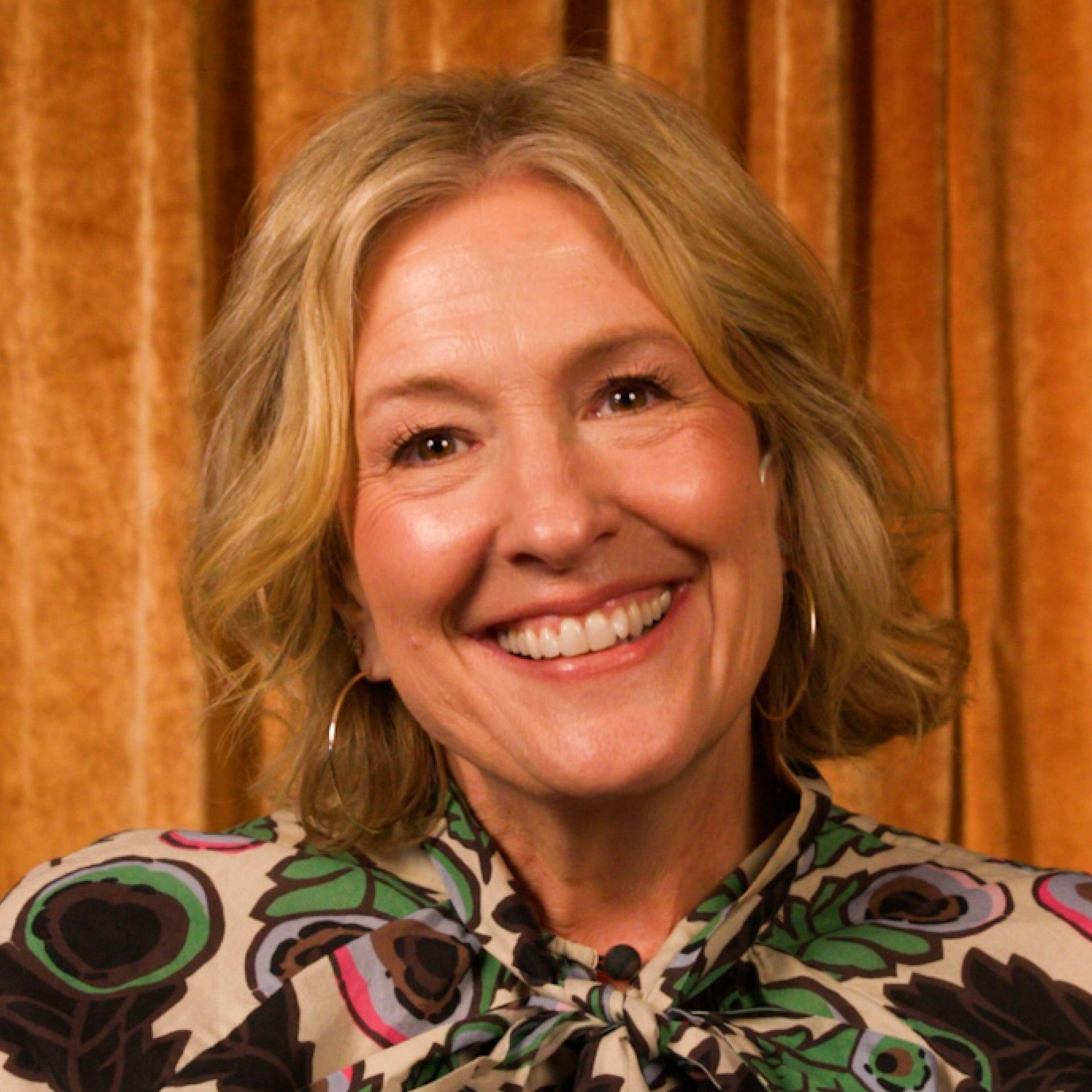
I went back and watched the TED talk that Brene Brown did in 2010, the one about vulnerability. This was before a lot of her best selling books, before the Oprah interviews and her podcast and her Netflix special. And I'm telling you that watching Brene stand on stage talking about how you got to be vulnerable to get to courage, it felt as new and as important as it did 15 years ago. It doesn't hurt that she has always had this vibe, like she is your smartest best friend who is funny and irreverent, and she isn't telling you things because she has a hunch. She's a research professor who uses facts to dissect feelings. Her latest book is called Strong the Lessons in Daring. The Tenacity of Paradox and the Wisdom of the Human Spirit. And I am so happy to welcome Brene Brown to Wildcard. Hi. Hey.
- [02:19]
C
I'm so excited. I'm excited and scared.
- [02:23]
B
I think that's a. I mean, I don't love scared, but I like the part of scared that's like a little anticipatory. I'm gonna frame it that way.
- [02:32]
C
Yes.
- [02:32]
B
Yeah.
- [02:33]
C
Yeah. I have anticipatory anxiety. Not anxiety, anticipatory. How is this Shit gonna go down. What is that called?
- [02:42]
B
Is that an official feeling? Because you've written books, you've mapped out all the emotions and that is a feeling. How's this crap gonna go down? I feel like is an official feeling.
- [02:52]
C
Yeah, it's a feeling.
- [02:53]
B
Okay, great. So you know how this goes. We're just gonna start with round one. Memories. Are you ready, Brene Brown?
- [03:02]
C
I am so ready. Let's go, let's go, let's go.
- [03:06]
B
Three random cards. I hold three up, you pick one, two or three.
- [03:11]
C
Three.
- [03:12]
B
Three. You already knew.
- [03:13]
C
Oh, yeah.
- [03:15]
B
Who did you eat lunch with in high school?
- [03:20]
C
Anyone who would have me. Yeah. I went to like brutal suburban football high school. And even this is true in Texas, we should say Texas, Texas high school. Even Today I will call the feeling that I get my sweaty palm tray holding feeling like I've got the lunch tray. But I will say that this was the good news about like being my age is my high school had a smoking section.
- [04:01]
B
Wait, what?
- [04:04]
C
There's a smoking section for the kids? Well, yeah, yeah. I smoked Marlboro Lights. Yeah. And so I was either sweaty palmed with a tray looking for the least horrible people in my high school or I was in the smoking section with what we called the heads back then. Yeah. I just survived high school and then I went to my 30 year high school reunion.
- [04:39]
B
Ah, did you?
- [04:40]
C
Yeah, by myself. I told my Steve, my husband Steve, I loved him too much to bring him with me. And I went in and I was in there for 15 minutes before someone said something deeply racist in front of me and I laughed. And it was such an interesting experience because you know when you're little and you see a stream and your memory of it as an adult is. It's a river and it's huge. And then you go back and you think my. I thought that thing was a. I thought that was a gushing. You know, I was so pleased. I was like, this shit was as bad as I thought. And every night from the time I was like maybe a junior, I spent a lot of time in the library. Smoking section. Library were the hideouts. If you could smoke in the library, to me, that would still be like heaven on earth at my age. Like, if I die and there's a library with ashtrays, I will know I have done something right in my life. I don't smoke anymore. So keep your hate mail till you smoke.
- [05:51]
B
I sort of believe you. Yeah.
- [05:52]
C
Yeah. Although I will say, last time I got my hair cut, I told the person cutting my hair I want a bob, but I want a bob that makes you think I possibly smoke. Not a sideline of the soccer field Bob. And he was like, I totally get that. Okay. But I found a book in the library. I don't know what it was doing there. It shouldn't have been there. Called Birds of Paradise. And it was a book about Studio 54. And I think. I'm pretty sure that was the name of it. And so from that moment on, I just had like a prison calendar countdown that said, I'm gonna be in New York City in this number of days. I'm gonna be in New York City this number of days, minus one, minus two.
- [06:36]
B
So you had it fixed in your.
- [06:38]
C
Mind that you were gonna go there after and I was gonna go to Fit F Technology. Like, get the hell out of Dodge.
- [06:44]
B
Yeah. Okay, second question. One, two or three?
- [06:48]
C
Three.
- [06:50]
B
What's a moment with a stranger that made you feel loved?
- [06:55]
C
I am pretty sure that I have escaped death every time I fly. I'm pretty sure it's not. We're not supposed to be doing that. And I continue. Yeah, I continue to get on planes. Cause I have to for my work. But I do believe it's death defying every time. And so over the past 20 years, no matter who's sitting next to me, if the turbulence gets bad, I will say, I will play the same game. I'm like, hey, I'm scared. And I was wondering if I could just talk to you for a few minutes. And they're usually like, sure. And then I say, what's your favorite type of food? You know, and they'll say, italian. I'll say, what's your favorite Italian? What's your favorite dessert? And I kind of just engage with them that way. And I don't know, I think it. I don't know if it makes me feel loved, but it makes me believe in love. Because I think if you put the person who I hate today the most, which will be someone around politics, probably in a seat next to me, and we're going down, we're probably gonna hold hands and pray. One of my big things is to try to find the face of God in everyone. And mostly I see people and I wanna punch them in the throat. And so it makes it really hard because you don't want to ever punch God in the throat. I mean, like, I can be irreverent. But no, I think it's just a weird reminder that in some really deep way, we belong to each other.
- [08:42]
B
Are people mostly receptive when you're having one of those moments and you're like, I need to talk to you right now. Like, are they doing it reluctantly or are they. They're like, I get it. Are they generous with you?
- [08:53]
C
One time, one guy was kind of an asshole and it was helpful because in that moment I was like, lord, deliver me from this earth and these people. He still helped. He just wasn't a willing participant. I was just like, ah, yeah, okay.
- [09:10]
B
This is my time.
- [09:11]
C
This is take me to the promised land.
- [09:23]
B
Support for this podcast and the following message come from Dignity Memorial. For many families, remembering loved ones means honoring the details that made them unique. Dignity Memorial is dedicated to professionalism and compassion in every detail of a life celebration. Find a provider near you@dignitymemorial.com this message.
- [09:44]
D
Comes from Progressive Insurance and the name your price tool. It helps you find car insurance options in your budget. Try it today@progressive.com, progressive Casualty Insurance Company and affiliates. Price and coverage match, limited by state law. Not available in all states. This message comes from BetterHelp. To mark World Mental Health Day. BetterHelp is thanking the therapists who change people's lives all around the world by providing accessible mental health Support. With over 12 years of experience matching clients with therapists and one of the world's largest online therapist networks, BetterHelp can help you find the right therapist. Visit betterhelp.com NPR for 10% off your first month.
- [10:24]
A
This message comes from Mint Mobile. At Mint Mobile, their favorite word is no. No contracts, no monthly bills, no hidden fees. Plans start at $15 a month. Make the switch@mintmobile.com Switch that's mintmobile.com Switch upfront payment of $45 for three month, 5GB plan required, equivalent to $15 a month. New customer offer for first three months. Price plan options available. Taxes and fees extra. See Mint Mobile for details.
- [10:59]
B
Okay, we're going to pull back from the game.
- [11:01]
C
Okay.
- [11:02]
B
And talk about your book, Strong Ground. Congratulations.
- [11:08]
C
Thank you.
- [11:09]
B
So I want to understand as a person who has written many books about leadership, about courage, about vulnerability and shame, and many, many offshoots of those ideas. When you called up your book agent and you pitched this idea, what did you say?
- [11:26]
C
I think I said I want to write a leadership book about what I think we're going to need in order to navigate the future and the complexity and the uncertainty and the technology. Because when you're in the room with the folks who are developing and leading these platforms, what you hear over and over is, I don't let my children anywhere near these.
- [11:53]
B
Right. And phone technology, social media. Right, right, right.
- [11:59]
C
And so I think what I'm trying to do is in this tempest of uncertainty and complexity, technology, geopolitical instability and volatility, we need to find the ground and we need to get really tethered in the ground, in our values, our thinking, our awareness.
- [12:22]
B
I mean, is that possible in a world that is transforming so quickly? I mean, it's not just like you're not trying to help people lead through fast change. It's like chaos. It is moving so quick. The pace of change in technology.
- [12:42]
C
In.
- [12:42]
B
Our lives, in parenting, in politics. How do you get people to slow down when it doesn't feel like there is space for that?
- [12:53]
C
The last chapter in the book is called the Space Between Stimulus and Response. And this is a quote that's been attributed to a bunch of people. Stephen Covey, Viktor Frankl. We've talked to their teams, we've talked to the people that studied under them. We don't know where the attribution of this quote, we don't know where it's from. But what the quote is is that between stimulus and response, there is a space. And in that space is the power of choice. And in that choice is our growth and our freedom. And I understand right now that stimulus and response are just smashed together. I mean, that's how I grew up. That's how I was raised. And it's taken me a long time to run toward that elevator and just get a foot in before stimulus and response close. But it's the job right now, I think, of great leaders, I think, in our families, in our own lives, to create a space between stimulus and response. Because I think without it, we will not have growth and we will not have liberation and we will not have freedom. And, you know, I think the Buddhists would call it the sacred pause. I think in my faith tradition, we'd call it contemplative prayer. But there is no humanity without space. And the more things are swirling around your head and coming in fast, the deeper your commitment has to be to that space.
- [14:24]
B
It's definitely not de rigueur, though. I mean, look at the leadership trends out there at the moment. Go in, break things, change things. It's not a welcome message. In some corners of corporate America, there's some cultural headwinds against the message, I guess.
- [14:45]
C
I don't think in history of the world there has ever been meaningful, courageous change that didn't happen with a headwind. I'm not afraid of the headwinds. What I'm Afraid of is the headwinds blowing so hard that people forget that. It's just people like that show up every day and choose something different that changes the momentum. Yeah.
- [15:24]
B
There's a lot of wisdom in the book. I highly recommend it. Congratulations again.
- [15:29]
C
I really appreciate it. Thank you.
- [15:30]
B
Yeah. So we're going to move back into the game. You up for it?
- [15:34]
C
Number three. I'd made a commitment.
- [15:39]
B
I love the consistency. Oh, yeah, I love it. Three new random cards. Round two insights. You pick three. One, two, three. Here we go. How comfortable are you, Brene Brown, with change?
- [15:57]
C
I'm pretty comfortable with change. I'm very uncomfortable with a lack of control. So if I understand the change and I have some semblance of agency around it. Let's go. If it's change pushed upon me and my agency's in question, I get panicked about that. And so there's a difference there.
- [16:26]
B
Can you give me an example of when there was a change that came upon you in which you did not necessarily have agency and that ticked you off?
- [16:39]
C
My answers. The answers I have to that question are more about grief, which is my least favorite emotion in the pantheon of shitty emotions. My children leaving for college. That's a change that, you know.
- [17:03]
B
And a grief.
- [17:03]
C
Yeah, and a grief. My mom being diagnosed with dementia and having to change. Hard to talk about. Actually a really important movie in my mind about what this time in my life would look like with my oldest getting married, you know, in 2026. And so I think loss is a property of change as a broader category. That's hard.
- [17:43]
B
Yeah, it just is.
- [17:45]
C
It just is. And it's. I don't care how good the quote is, and I don't care how aligned it is with my faith beliefs. It still sucks.
- [17:56]
B
Yep. Yeah, it does.
- [17:58]
C
Yeah. Can I. Can I answer the question and turn it back to you?
- [18:04]
B
Sure.
- [18:06]
C
I'm super curious how you would answer the question about change.
- [18:10]
B
Um, I'm sort of addicted to it, actually. I'm like. I seek it out constantly.
- [18:19]
C
Okay, I love this. Say more.
- [18:22]
B
My husband's like, are we cool?
- [18:26]
C
Wait. Say more.
- [18:27]
B
Let's paint the house. Let's paint the house. Let's not, like change, which I did just paint the house, but I love change. And I've actually had to learn to just stop it a little bit and settle into it, really. Like getting married, having children. It forces the mind. It forces you to think about, I don't want to change this. I'm into this. I mean, it's hard. Parenthood and marriage are both Hard things. But I'm into it and I want to stay in it. And so what is the depth that can come from that? And then it just means I have to find change in other places. I left a big job because I was like, I need change right now. And that's not serving me, to use the parlance of the day and not to be flipped. But I did just pay my house because I'm like, I need to change something. I need to change something. I need color. The world feels dark and I want an orange door. Yes.
- [19:27]
C
Wait. I love this.
- [19:29]
B
So I'm into change.
- [19:31]
C
I'm loving this. And this is a hard move to stay in one place and go deeper. It is. Okay. I love this. I'm so glad I turned this on you. Okay. For my own benefit.
- [19:41]
B
It's good. It's good. I'm into it. I'm into standing still. Okay, well, let's check. Where are we? Okay, we're in the second question in the second round. Insights. 1, 2 or 3?
- [19:52]
C
3.
- [19:54]
B
When have you felt overlooked?
- [19:57]
C
What do you mean by overlooked? How would you define that?
- [20:01]
B
Not feeling recognized, not feeling seen or understood. But you can also skip it.
- [20:06]
C
Pass.
- [20:07]
B
Yeah.
- [20:08]
C
Yeah.
- [20:09]
B
I don't.
- [20:09]
C
I don't know. I have something connecting with you.
- [20:14]
B
Yeah. What are you stubborn about.
- [20:20]
C
My faith?
- [20:22]
B
Yeah. Stubborn is. It is an interesting word to associate with your faith.
- [20:28]
C
Uh huh.
- [20:29]
B
Yeah.
- [20:29]
C
Yeah.
- [20:30]
B
Tell me why. Tell me what specifically.
- [20:33]
C
It's a stubborn love. Yeah. I get very frustrated with my faith. Like when I'm ready to go and be like, you know what? No, I'm not doing this anymore. I don't believe in this. Then I'll search for confirmation bias. Like I'll read really terrible things about organize religion. And then I'm like, yeah, but that's not my faith shit then. Or I'll say, well, faith can't answer this. Yeah. And then I'll say, oh man. It's not faith's job to answer it. It's faith's job to pose the question. Like, so I think I'm very stubborn in my belief that we are inextricably connected to, to each other by something greater than us. I call that thing God. Most of my family members call it fishing, you know, like it's nature. I don't know what it is for different people, but I do believe that we are inextricably connected to each other by something greater than us. And that thing, whatever it is, is rooted in love. And when I feel really hateful or I feel really like I'm not that the faith juice is not worth the faith squeeze.
- [22:06]
B
Yeah.
- [22:09]
C
I'm pretty stubborn.
- [22:12]
B
Has the doubt ever won out in any chapter of your life?
- [22:18]
C
Yes, but it just led me into my faith even deeper. My faith just says, you know, the Richard War and Lamont. My faith just says, oh, your doubt is the most holy thing about you. We're not about certainty over here. Go get that from the political bullshit world. We're all about doubt. You're in the right place. Welcome. Like so, you know, I went to church for a long time, and I only went for three reasons. Pass the peace, sing with people I can't stand, and take communion with people that I want to just knock their block off. And so everywhere I turn, there it is. I can't. It's so unrelenting.
- [23:11]
B
You would identify as a Christian.
- [23:12]
C
No. Well, I would identify as a member of the Episcopal Church, which is code for something. I don't know what it's code for. I think it's code for. I don't know. I guess if you had to get really down to it, I'm probably.
- [23:34]
B
Oh, am I gonna say this out loud? Do it.
- [23:37]
C
Yeah. I'm probably like a mystical Catholic. Yes. Who prefers the church sans the guys leading it.
- [23:54]
B
But how do you separate that? I have a hard time separating a lot of things, and it's made me closed the door on that part of my life and I feel like some regret over that.
- [24:09]
C
I mean, I think we all know that as history has shown, men with a lot of power are going to burn everything to the ground before it's over. And then we'll rebuild. And they just don't get my church. They can have the church. What they don't get is my relationship with God. That's not bernadownable or whatever that word is. That's flame retardant. Yeah. Like the pajamas from the 80s that said that we put kids in and then it said, don't get close to a flame. I don't get it. But like, I think Brene Brown.
- [24:52]
B
I can see the title of this podcast episode. Brene Brown's Faith. Or like the flame retardant pajamas from the 80s?
- [24:58]
C
Yeah, yeah. And she said it while puffing on a Benson Hedges. I believe in a God that you can't light on fire. Yeah, that's it. I mean, yeah, that's me in a nutshell, actually. Like, you got to the essence.
- [25:15]
B
There it is. Okay, one more in this round. 1, 2 or 3?
- [25:19]
C
3.
- [25:21]
B
What feels unreachable to you?
- [25:26]
C
Oh, my faith God. Ah, that's my favorite part.
- [25:30]
B
Wait, that you never get there.
- [25:32]
C
Yeah.
- [25:34]
B
Well, that seems frustrating.
- [25:36]
C
No, it's like pickleball. No, it is like pickleball. It's like the pursuit of mastery. Like Sarah Lewis from Harvard, her book the Rise where she talks about mastery and how the thing about it is it's a curved line because if you have the passionate pursuit of. If you're just into the passionate pursuit of something, it would be so devastating to get there. Like with pickleball, because I was a former athlete and then I never thought I'd be able to have that identity again in midlife. And let's be honest, I'm in midlife like, you know, like a 10 year old's a toddler, but like, I'm like in like the final throes of midlife before they're like almost dead life or whatever comes next. But who thought I would ever be able to be competitive again and become a student of a game again and never want to stop playing because you never get there. Like, I. That's a thing that I wish people understood about what's uniquely human is the joy of mastery and the joy of pursuit. Like, haven't you ever wanted to solve a problem so bad and had so much that process gave you so much that solving it actually came with kind of a wah, wah, wah, like, okay, that's how I feel about faith. Like, as soon as I feel really good in my bones about something, the earthly world delivers someone new for me to dislike so profoundly that I must go deeper.
- [27:27]
B
I'm starting over.
- [27:28]
C
Yeah, yeah, yeah, yeah, yeah. I'm starting deep.
- [27:30]
B
I'm starting over, starting at zero.
- [27:33]
C
And so that's what I. That's unreachable. I love it. Foreign.
- [27:44]
A
This message comes from Jackson. Seek clarity in retirement planning@jackson.com Jackson is short for Jackson Financial, Inc. Jackson National Life Insurance Company, Lansing, Michigan, and Jackson National Life Insurance Company of New York, Purchase, New York. This message comes from Paca. Everyone's got that one hoodie they practically live in. But the Pakka hoodie, it's on another level. Softer than cashmere, warmer than wool, and still breathable, this alpaca fiber hoodie goes from airport to mountain trail to couch without missing a beat. Right now, grab a Pakka hoodie and score a free pair of alpaca crew socks. Moisture wicking, odor resistant and guaranteed for life. Level up your hoodie game@go.pakaapparel.com NPR Code NPR.
- [28:35]
D
This message comes from Warby Parker. What makes a great Pair of glasses at Warby Parker. It's all the invisible extras without the extra cost, like free adjustments for life. Find your pair@warbyparker.com or visit one of their hundreds of stores around the country. This message comes from Carvana. Selling doesn't need to be stressful. With Carvana, it's quick, easy, and all online. Enter your license plate, get a real offer, and get paid. Visit Carvana.com to sell your car today.
- [29:09]
B
Okay, so now we're at the last round, which is called beliefs. And these questions are about beliefs. But I feel like we already. We already talked about some of those things, so it may come up again. I don't know. We'll see. We'll see what happens. The cards are in control. 1, 2, or 3?
- [29:24]
C
3.
- [29:27]
B
Are you comfortable with being forgotten?
- [29:31]
C
Oh, my God.
- [29:33]
B
You're like, forget me already.
- [29:35]
C
Yes, I. Someone asked me the other day, what do you want your legacy to be?
- [29:41]
B
Yeah.
- [29:42]
C
I was like, wait, I'm going to be dead. I've spent my whole life working to not care what other people think about me. And you want to know what I want them to think when I'm dead? And that shit is not even going to come up on my radar. Like, no, I do not care. You know why? The only people that truly, truly know me and see me, Steve, my kids, my sisters, some of my close friends, they know me. They'll always know me. And I care deeply about what they think, and I check with them and their opinions about things when I'm trying to make decisions. But that's not legacy. That's love. And I hope, you know, if anything, I hope my kids will be able to say she scored a first down. She didn't lead us to a touchdown, but she moved the ball 10 yards down the field from where she came from. And then we'll pick up the ball and move it 10 more yards like, that's it. But like, legacy. No. Like, no, I'll be dead. I'm gonna be playing dominoes with my mom and my grandmother. Yeah. And guess what else I'll be doing while we're playing dominoes?
- [31:11]
B
Smoking a damn cigarette.
- [31:12]
C
I'll be smoking a damn cigarette. I'm gonna stay sober in heaven. I've decided I just worked too hard for it here. Like, 20. I'm, like, not going to go there.
- [31:23]
B
Okay. One, two or three?
- [31:26]
C
Three.
- [31:27]
B
Three. Is time a positive or negative force in your life?
- [31:36]
C
It's a truth teller. And sometimes the truth is great, and sometimes the truth is hard.
- [31:45]
B
Say more about what that looks like.
- [31:47]
C
It'S just not open to interpretation. Like it is, right? It is.
- [31:52]
B
It just is.
- [31:53]
C
It just is. And I'm keenly aware of it. And terrible at tracking it at the same time.
- [32:08]
B
Are you?
- [32:08]
C
Oh, yes.
- [32:09]
B
In your day to day, are you bad with time?
- [32:11]
C
Oh my God, yes. Yes, yes, I am bad with time. I'm sure if my team was watching right now, they'd be breaking down the doors into the studio to say she's awful. But sometimes it's just the truth. Time is truth. Yeah. Spend it wisely, I guess.
- [32:36]
B
Last three cards, Brene. One, two or three?
- [32:40]
C
Three.
- [32:40]
B
Oh, I was looking at it and I'm like, okay, that's.
- [32:45]
C
Do you want to advise me against three?
- [32:47]
B
Well, no, no, I want you to answer it. I feel like you may have touched on this earlier, but it's just a direct question. Do you prefer mystery or certainty?
- [32:58]
C
Yes, I prefer mystery and certainty together. It's just.
- [33:05]
B
Yeah, you don't have to plumb further. Yes is your answer. I'm gonna do a dealer's choice. Cause it's my show.
- [33:15]
C
Oh, I like it.
- [33:16]
B
And you also refer to yourself as a mystical Catholic, so that's why I'm just interested. Have you ever had a mystical experience?
- [33:27]
C
Oh, yeah, tons. Yes. I mean, look, God shows up in weird places. I'm not a woo hoo y person. Like, I have a playlist called Thin Places, you know, that is kind of my spiritual playlist, but it's mostly like Willie Nelson, Charley Pride, Loretta Lynn, you know, like, I'm salty. Woohoo. Like a beer joint. Woo hoo. Maybe. Yeah. Like, I just, I once heard this quote and I think it was attributed to a roadie from acdc, but I'm not sure. But the quote was so. Which I think would be perfect if that's true. The quote is, God is the blanket we throw over mystery to give it shape.
- [34:18]
B
Yes. God, that's so good.
- [34:20]
C
It's so good. And see, that shit can only come from a roadie from acdc. This is what I'm saying. Like, keep your puritanical, tell everybody what to do gender role, bs, fake power over, you know, control stuff to yourself or at least lock it up in your wherever you want to keep it. But if you really want to get to the heart of it, you gotta look where things are. Kind of messy and gritty and dirty. Yeah, I'm into a rock and roll. Jesus.
- [35:09]
B
We end the show the same way every time with a trip in our memory time machine. You revisit one moment from your past. It is not a moment you would change anything about. It's just a moment you would linger in. You would like to linger in a little longer. What moment do you choose?
- [35:25]
C
Sitting across from Steve, laughing with my children so close to me. I can smell their hair. Mm.
- [35:37]
B
Yeah. How many of them are in college now?
- [35:40]
C
Um, both. Both gone.
- [35:44]
B
Mm.
- [35:45]
C
Yeah.
- [35:46]
B
Yeah.
- [35:46]
C
Restructured nest or some BS thing you're supposed to say to feel better about it, but.
- [35:54]
B
But they come back. That moment exists in your presence, and.
- [35:58]
C
They like to hang out with us. That's how I got through. The individuation part is I said, you know, if you want them to boomerang, you got to watch your step right here. Brene, like, let him go. So that they come back of their free will. Yeah. And a good restaurant helps when you're paying. When you're paying.
- [36:25]
B
Yeah. Brene Brown. Her latest book is called Strong the Lessons in Daring, the Tenacity of Paradox, and the Wisdom of the Human Spirit. Thank you so much, lady.
- [36:45]
C
Thanks for having me. So fun.
- [36:57]
B
Now that the episode is finished, could you do us a favor and go rate and review our show? Maybe leave a little note about what you like about listening to Wild Card? Becca Wallingford told us she's a middle school counselor who to used uses Wild Card questions in her therapy sessions. She even made her own deck. She says, I wrote down every single question and put them on a literal set of cards. I've ended up gifting these handwritten sets to friends and still use them in my work. That is amazing, Becca. I love that. If you also love Wildcard, let us know by rating or reviewing it. It'll help spread the love to new listeners. And if you're looking for another episode like this one, check out my conversation with Elizabeth Gilbert. Liz Gilbert, of course, wrote Eat, Pray, Love, and in our talk, she reflected on her new memoir, all the Way to the River. And truly, she is the embodiment of vulnerability in a way that I know Brene would appreciate. Today's episode was produced by Summer Tamad and edited by Dave Blanchard. It was mastered by Jimmy Keeley and Patrick Murray. Wild Card's executive producer is Yolana Sangweni and Arthur. Theme music is by Ramtin Arablouei. You can reach out to us@wildcardpr.org we'll shuffle the deck and be back with more next week. Talk to you then.
- [38:13]
A
This message comes from Mint Mobile. At Mint Mobile, their favorite word is no. No contracts, no monthly bills, no hidden fees. Plans start at $15 a month. Make the switch@mintmobile.com Switch that's mintmobile.com Switch Upfront payment of $45 for 3 month 5 gigabyte plan required equivalent to $15 a month New customer offer for first 3 months only, then full price plan options available, taxes and fees extra. See Mint Mobile for details.
- [38:43]
D
Support for this podcast and the following message come from Leesa. Leesa has a lineup of beautifully crafted mattresses tailored to how you sleep. Each mattress is meticulously designed and assembled in the USA and designed with specific sleep positions and feel preferences in mind. Visit Lisa.com for 20% off plus get an extra $50 off with promo code NPR. That's L E dashes.com promo code NPR.