Loading summary
Transcript180 lines
- [00:00]
Sponsor/Advertisement Voice
This message comes from Amazon One Medical. Your body talks to you. Symptoms are the body's way of asking for help. AmazonOne Medical has 24. 7 virtual care with providers fluent in body talk. Thanks to AmazonOne Medical, healthcare just got less painful.
- [00:19]
Rachel Martin
Hey, it's Rachel. Wishing you a very, very happy new year. And as we are all looking forward to another fresh start. I know I definitely am. I. I wanted to reshare one of my very favorite conversations. It's with the writer John Green. And John has this idea of hope being the right response to the human condition. And that to me, just feels like the exact right thing to think about as we look forward to a new year. So with that, enjoy. Do you spend more time in your head or in the world?
- [00:55]
John Green
It's not a particularly close competition there, Rachel. I spend more time in my head by a very wide margin.
- [01:03]
Rachel Martin
What's it like in there?
- [01:05]
John Green
Pretty intense, to be honest with you. A little overwhelming sometimes.
- [01:08]
Rachel Martin
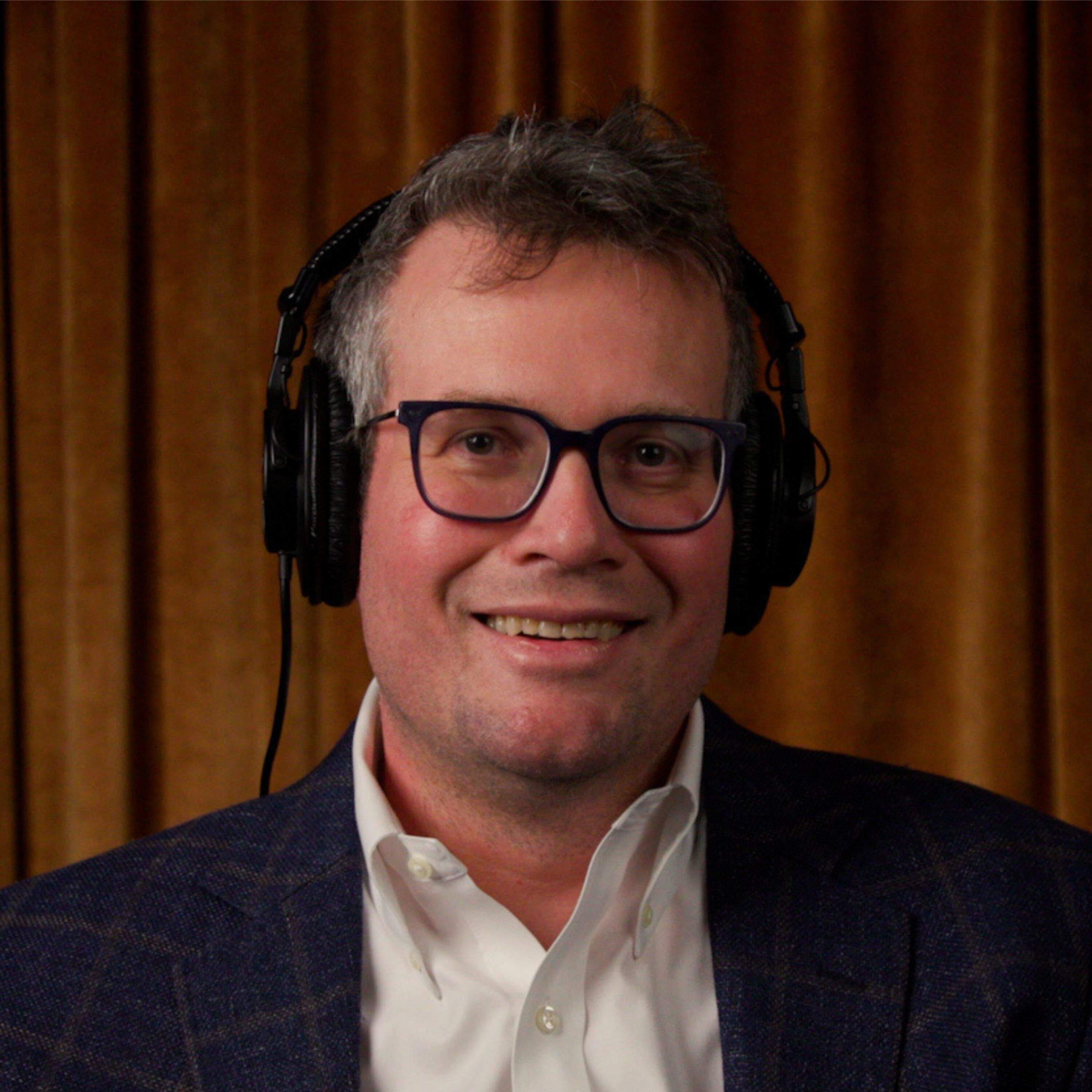
I'm Rachel Martin, and this is Wildcard, the game where cards control the conversation. Each week, my guest answers questions about their life. Questions pulled from a deck of cards. They're allowed to skip one question and to flip one question back on me. My guest this week is author and YouTube star John Green.
- [01:30]
John Green
The idea that I can write a story and that story is going to live in someone else's mind and they're going to bring, if they're generous, they're going to bring their deepest selves to that story. That is genuine magic to me.
- [01:45]
Rachel Martin
Different people have different reference points for John Green. He is most famous as the YA author who wrote the massively popular book the Fault in Our Stars. But then there are the millions of people who know and love him from his YouTube channels, especially Vlogbrothers and Crash Course, which he does with his brother Hank. His latest project is another book, but it's way different from his coming of age stories. It's titled Everything Is Tuberculosis. And it is, as advertised, a nonfiction account of the most deadly disease on the planet and how simple it would be to wipe out if societies just made it a priority. But this book makes sense coming from John Green, because everything he creates, books, essays, YouTube shows, they are all designed to make us engage with the broader world and to care about other people. John Green, welcome to Wildcard.
- [02:36]
John Green
Oh, my gosh. Thank you so much for having me.
- [02:38]
Rachel Martin
So we're just gonna get going.
- [02:40]
John Green
Let's do it.
- [02:41]
Rachel Martin
You feel good?
- [02:42]
John Green
I feel great.
- [02:42]
Rachel Martin
Okay, let's go. Let's do it. Round one, the Memories round. First three cards 1, 2 or 3?
- [02:51]
John Green
Going to go with 2?
- [02:52]
Rachel Martin
2. What's something your parents taught you to love?
- [02:59]
John Green
You know, the only way I can make my parents proud of me is not worldly success, but engaging in the world in a loving, contributive way. So my parents were both. They both worked at nonprofit organizations. My dad worked for the Nature Conservancy for many years, and my mom was a community activist and organizer in Orlando. Florid. And we grew up being taught that the way that you live in the world has to be. You have to contribute something. My parents, I never feel like they're proud of me when I win an award or my book hits the bestseller list or any of that stuff. What makes them proud of me is when this hospital that my wife and I and our community helped fund called the Maternal center of Excellence, is gonna open next year. And when I told my parents that, they were like, I'm very proud of you. That's what makes them proud. So I think the thing that they taught me to love more than anything was, for lack of a better term, and I realize this sounds a little cheesy, but humanity, they taught me to be in favor of humanity. To think that humanity maybe isn't good news now, but might be good news. Like, we can be good news.
- [04:15]
Rachel Martin
The potential.
- [04:16]
John Green
Yeah, yeah. That there's some potential for us. So that's the first thing that comes to mind in terms of, like, what they taught me to love is people. Hmm.
- [04:26]
Rachel Martin
That's big. Where's your hospital?
- [04:28]
John Green
It's in the Kono district in Sierra Leone in a city called Koidou Town. And it's not my hospital, to be clear. It's the Sierra Leonean People's Hospital. It's owned by the government and owned by the people through their government. So I'm very, very proud to have played a little bit of a role in it, though.
- [04:48]
Rachel Martin
And we're going to get to that hospital and your time in Sierra Leone and what it inspired in the form of this book and so much more. But thank you for that answer. Okay, next. Three. One, Two or three?
- [05:04]
John Green
I'm going to go three this time.
- [05:05]
Rachel Martin
Three. Okay. What was your form of rebelling as a teenager? You started laughing before I even got the sentence out, John.
- [05:21]
John Green
Well, it's funny that this refers to form singular.
- [05:27]
Rachel Martin
I don't want to limit you. By all means. If there were multiple forms of the rebellion.
- [05:32]
John Green
Please. I was an unbearable teenager. I'm gonna. I'm gonna turn this one on to you. I'm making you Answer this one so I can think about what I'm willing to say on this show and what I'm not willing to say.
- [05:45]
Rachel Martin
That's totally part of it, right? Like there's the truth and then there's what's the truth that I can share?
- [05:51]
John Green
What's the palatable truth?
- [05:55]
Rachel Martin
Okay, my form of rebelling. So I was a good kid and I very much wanted my parents approval. I was not the rule breaker of the family, but you know, I did something almost more cruel. The only anecdote that's coming to mind is it was around Christmas and I was in our front hall closet and I was kind of notorious for snooping around looking for Christmas presents. And I saw at the top shelf, tucked back, were three Velcro wallets. And one of them was Garfield. I don't know, Spider man maybe. And then there was a Michael Jackson wallet and his face was just on it. And I knew. I'm like, mom picked out this Michael Jackson wallet for me and I hate Michael Jackson and how could she do this? Like she didn't know me or something. And so I just walked around the house talking about how much I hated Michael Jackson. Like, what a spoiled little brat. That's what came to mind.
- [07:03]
John Green
So I also had very loving parents, grew up in a very communicative household. It was very difficult to rebel against my parents, but I found many ways to do it anyway.
- [07:14]
Rachel Martin
You persevered, John Green.
- [07:16]
John Green
I persevered. I believed in myself. Since you told a story about how unbearable you could be as a teenager, I'll tell one about me. I was smoking on my parents back porch. I went to boarding school when I was in high school, but I was home for the summer and I was smoking on my parents back porch. My mother came outside and said, you can't smoke out here. Like you can't smoke cigarettes, you're a child. And I said, what are you gonna do?
- [07:42]
Rachel Martin
The contempt, the contempt, contempt.
- [07:45]
John Green
The utter contempt for authority in all its forms. I was a tough kid and yet I had parents and teachers who refused to let me go. Like they refused to stop believing in me. And that made all the difference. Like, no matter how unbearable I was in class, many of my teachers were still like, yeah, but I believe in you, huh? And that made a huge difference in my life.
- [08:08]
Rachel Martin
Were you just not interested in school? You were curious about the things that were being.
- [08:15]
John Green
I was extremely curious. I was a very poor student, but I was intellectually engaged. So I read all of the books for English class. I just didn't Read them when I was supposed to. I would read them after I was supposed to. Or I would read them was just. I think I desperately wanted attention. I desperately wanted to be special. I wanted to be acknowledged as special. And the thing that terrified me most deeply was the thought that I maybe didn't have that much potential. I wanted to not live up to my potential because that meant that I had potential. And I was deeply terrified as a kid that I wasn't special, that I didn't have any kind of extraordinary abilities. That was my biggest fear. And so.
- [09:04]
Rachel Martin
Right, because if you don't try, then you don't fail.
- [09:08]
John Green
Exactly. And so I didn't try and I didn't fail. Except it turns out that you do fail if you don't try, both literally and figuratively. And it was only when I was a senior in high school that I finally figured out that, like, learning is a privilege. It's an incredible privilege to be able to better contextualize yourself and your place in the universe. Universe is. It's not something that we do to get a piece of paper that says we can be an adult now. It's something we do because that's the privilege of a lifetime to be able to understand the world around us. That's what we're here to do. I believe I'm so grateful to those teachers for not giving up on me. Yeah.
- [09:46]
Rachel Martin
Okay, this is the last one in this round.
- [09:49]
John Green
Okay.
- [09:50]
Rachel Martin
One, two or three?
- [09:51]
John Green
I'm gonna go two again.
- [09:53]
Rachel Martin
Two. Were you obsessed with a particular cosmic question as a kid?
- [10:00]
John Green
Oh, yeah, a bunch of them. But, yeah, I really was.
- [10:05]
Rachel Martin
Give me one. Not everybody says yes.
- [10:09]
John Green
I was a very cosmically minded child. I was very upset about the nature of the universe.
- [10:17]
Rachel Martin
What was upsetting?
- [10:19]
John Green
Well, dude, I don't know if you've heard, but in about a billion years, the oceans are going to boil because the Earth is going to become so hot.
- [10:30]
Rachel Martin
So that is upsetting. Yes.
- [10:32]
John Green
And then the sun is going to consume the Earth, and all that we were and thought and did will be part of the sun.
- [10:39]
Rachel Martin
This was vexing you from a young age.
- [10:41]
John Green
Yeah. I was in a planetarium when I found out about it. I remember it very vividly. At the Orlando Science Center, I was in a planetarium. And they were like, so listen, yeah, we're good for like a few hundred million years. And back then I thought that humanity was just inevitably going to go on, you know, I didn't have any apocalyptic anxieties, unlike now when I got them by the boatload. I didn't have any apocalyptic anxieties back then. I just thought of humanity as being this sort of semi permanent phenomenon. And I remember being in this planetarium and no one else was freaking out about the fact that the oceans were going to boil and that life was going to be completely impossible and that Earth would become like Mars. I just. I was very upset about it. And so from a very young age, I've been concerned with what I now know as humanity's temporal range. Like, every species has a temporal range. Like, elephants have been here for about 3 million years. We've been here for about 300,000. There's a reptile species I'm obsessed with called Tuatara that have been here for 250 million years. And I've been obsessed with the question of, like, when this is going to end and what its ending means for me and for everyone I love. And for the question of eternity. I was always very concerned about the question of eternity. Like, what happens with us not in terms of, like, heaven and hell, but, like, what happens with the memory of us, with all the work that we did, with all the stuff that we figured out. Yeah. What does it mean that, like, we worked so hard to figure out what's keeping the stars apart and someday that knowledge will be consumed alongside everything else we ever did or thought. How old were you, like 10?
- [12:27]
Rachel Martin
Yeah. Yeah.
- [12:30]
John Green
It was a real bummer.
- [12:31]
Rachel Martin
Two boys, and my eldest, who's 12, is going through some of the same stuff.
- [12:37]
John Green
Yeah.
- [12:38]
Rachel Martin
And I was a really religious kid, and so I had a framework that made sense. And so that's where I leaned on to answer those questions. And my kid doesn't have that. And so I'm seeing him have these kinds of existential questions at this very young age. Especially what you said about where does the knowledge go, where does the memory go, where does our collective understanding go? And to just try to help him be okay with the not knowing of it all.
- [13:12]
John Green
Yeah. I think what I would say to your son and what I would say to my childhood self is it is a bummer. I don't want to take anything away from the size of the bummer, that this is all temporary, but also the fact that it's temporary means that it really matters. We really have an obligation to each other. And that obligation isn't forever. It's for now. The obligation is to this moment we live in, this moment of not yet. And as long as we're in that moment of not yet, we have to fight for each other.
- [13:45]
Rachel Martin
How did you get out of that young paralysis, that young mental cosmic paralysis. Or you just learned to better manage it.
- [13:53]
John Green
Yeah, I still feel it sometimes, to be honest with you. Different versions of it. I mean, I think now it mostly takes the form of like, how do we allow such injustice in the world? How do we allow such profound unfairness and inequity and just go on in the face of it as if it's not overwhelming and consuming? That's the form it takes now, because I don't feel as much existential dread. I mean, to be honest, I don't feel that much existential dread because I think it's okay that we're going to end. I don't think it's bad news. We live in a universe where everything that we've ever observed ends. That has to be okay. That's the way it is.
- [14:57]
Sponsor/Advertisement Voice
Foreign. This message comes from Mint Mobile this holiday season stop overpaying for wireless and switch to Mint Shop. 50% off unlimited plans@mintmobile.com Switch limited time offer upfront payment of $45 for three months, $90 for six months or $180 for 12 months. Taxes and fees extra initial planned term only above 35gb network may slow when busy Capable dev availability, speed and coverage varies. See mintmobile.com this message comes from Amazon One Medical. Your body tells you all kinds of stuff. Headaches and hair loss are its way of saying something is up over here. Amazon One Medical has 24. 7 virtual care, so there's always someone available to listen and help with whatever your body is trying to tell you. Thanks to Amazon One Medical, Healthcare just got less painful.
- [15:56]
Rachel Martin
This message comes from Mint mobile. Starting at $15 a month, make the switch@mintmobile.com Switch $45 upfront payment for 3.
- [16:05]
John Green
Months 5 gigabyte plan equivalent to $15.
- [16:08]
Rachel Martin
A month Taxes and fees Extra first 3 months only.
- [16:11]
Sponsor/Advertisement Voice
See Terms this message comes from Wise, the app for international people using money around the globe. You can send, spend and receive in up to 40 currencies with only a few simple taps. Be smart. Get Wise. Download the Wise app today or visit wise.com Ts and Cs apply.
- [16:35]
Rachel Martin
Okay, so before we start round two, I want to push back from the game for a minute and talk about your new book. It is called Everything is Tuberculosis and you read this beautiful book and the image I had upon completing it is is you like shouting, you know in like a shopping mall. Like you know there's a Auntie Anne's pretzel shop here and then an Orange Julius and John Green's in the middle going, like, doesn't everyone get that tuberculosis is awful and it can be fixed and we're not doing it? Is that the. The emotion behind why you focused on this topic?
- [17:15]
John Green
Yes. In another world, I would be one of those, like, preachers outside the mall with a little. Little amp amplifier next to me, and I'd be like, tuberculosis is the world's deadliest infectious disease, and we know how to cure it. How are we letting this happen?
- [17:28]
Rachel Martin
Yeah.
- [17:29]
John Green
Before you go into the mall, please consider what it means that we're letting this happen. Like, how do we. How do we keep letting. How have we let this happen for 70 years? I mean, the disease has been curable since the 1950s. And since it became curable, we've allowed over 150 million people to die of it. That is unfathomable to me. It's beyond outrageous.
- [17:48]
Rachel Martin
So this is the question you're getting all the time, but still, it needs to be asked, how did the author of the Fault in Our Stars become myopically obsessed with tuberculosis?
- [18:01]
John Green
Well, I mean, to be totally honest with you, I think the Fault in Our Stars and the success of that book bought me a certain amount of creative freedom and the freedom to follow my interest and my passion. And I am as surprised as anyone that the place where that took me was tuberculosis. But in 2019, when my wife and I were in Sierra Leone to learn about the maternal healthcare system there, on the last day of our trip, we were asked by some doctors to visit a tuberculosis hospital. And I was like, a tuberculosis hospital? Like, is that still a thing?
- [18:32]
Rachel Martin
Yeah.
- [18:33]
John Green
I considered myself pretty well versed in the world of health, but I would never have guessed that tuberculosis was still the deadliest infectious disease in the world. And so we visited this TB hospital, and when we got there, I met this kid whose name was Henry, which is also my son's name. And this kid looked to be about the same age as my son, who was 9 then. And Henry started walking me all around the hospital. He took me to the laboratory, he took me to the wards where I saw patients who were sicker than anything I've ever seen. I used to work in a children's hospital, and I still had no frame of reference for how sick these folks were. And then eventually, Henry took me back to the doctors and nurses who were meeting to discuss cases they were concerned about. And they sort of shooed him away very lovingly. And I said, whose kid is that? Is that one of your kids? And they said, no, he's a patient, and he's one of the patients we're really concerned about. And it turned out Henry wasn't 9. He was 17. He was just so emaciated by malnutrition and TB that he looked much younger. And it was really. Henry's story is the reason I'm obsessed with tuberculosis. Henry is the reason the book exists.
- [19:44]
Rachel Martin
So, I mean, you could have witnessed that and devoted more of your time, more of your money, your energy, and your wife on that issue. But why did you decide that it's where you wanted to put your creative focus and write a book about it?
- [20:05]
John Green
Well, when I reunited with Henry four years later and we became friends. So he eventually survived tuberculosis. He almost died. He was essentially on his deathbed when he finally got access to the kind of personalized care that you or I would expect and deserve. He finally got access to that care. As a result, he was cured of his tb. He lived. He's still here with us today. He's a junior at the University of Sierra Leone. And when we met again and became friends, he asked me to share his story. He wanted me to share his story. And. And I'd also spent the last four years becoming obsessed with tb, trying to learn about TB when I got home from that first trip. And so it was a mix of that. It was a mix of Henry wanting me to tell the story and me wanting to tell the story, and frankly, some support from my publisher. You would think that my publisher would be like, this sounds like a departure and not in a good way, but actually they were very supportive. They were like, yeah, let's do it.
- [21:04]
Rachel Martin
Is it just about making it a priority? Like, why does tuberculosis still kill so many people in 2025?
- [21:13]
John Green
I mean, the short answer to that question is us. You know, at this point in the 21st century, as I argue in the book, you can't really say that tuberculosis is caused by a bacteria because we know how to kill the bacteria. Tuberculosis is caused by us, by human choice, by human built systems that exclude some people and say that some people's lives are less valuable than others. You know, I mean, it would cost about $25 billion a year to eradicate TB globally. And that's a lot of money, but it's also not a lot of money. Like, my brother had cancer a couple years ago and he's fine now, but when he had cancer, not once did anyone say, I'm not sure if this is cost effective cost, about 150 times more to cure my brother's cancer than it Costs to cure Henry's tuberculosis. And yet Henry was told over and over again, this just isn't cost effective. We don't have access to the medicines. It doesn't make sense to treat people like you and my brother. Never heard that.
- [22:10]
Rachel Martin
Yeah. I mean, the morality of that is awful. Like choosing one life over another over another life.
- [22:17]
John Green
Yeah. And it's very difficult to reconcile with what we know to be true, which is that all human lives have equal value.
- [22:24]
Rachel Martin
Yeah. Congratulations on the book. It's really, really wonderful. Everyone should read it. You feel ready for more Game?
- [22:33]
John Green
Yeah. Let's do it.
- [22:34]
Rachel Martin
Let's go. Round two. This is Insights. Insights. Okay, three cards in my hand. One, two or three?
- [22:45]
John Green
Let's go.
- [22:46]
Rachel Martin
One, one. Do you spend more time in your head or in the world?
- [22:52]
John Green
It's not a particularly close competition there, Rachel.
- [22:57]
Rachel Martin
Somehow I thought you were going to say that, say, ransom, I spend more.
- [23:01]
John Green
Time in my head by a very wide margin.
- [23:04]
Rachel Martin
What's it like in there?
- [23:06]
John Green
Pretty intense, to be honest with you. A little overwhelming sometimes, but I almost can't say what it's like in there. It's like trying to describe the ocean to somebody who's never seen it. What did Kafka say? That a book can be the ax that breaks the frozen sea within. I'm always trying to break that frozen sea within. There's always rooms inside of my mind that I've never visited or I don't know how to get to. And that's a lot of why I make creative work, is because it's a chance to visit those rooms somehow. A chance to feel my understanding of my own self expand in some ways. But I spend a lot of time in my head and not all of it is healthy, if I'm honest with you.
- [24:00]
Rachel Martin
You've been open about that, about talking about ocd.
- [24:03]
John Green
Yeah, I have pretty severe ocd, and so it's well treated. And I work really hard to treat my chronic illness like a chronic illness. But it is a chronic illness and it is something I live with every day. And so sometimes what's in my head is just like a flurry of worries. There's this great Edna Saint Vincent Millais poem I think about all the time, where she says, I think she's writing about depression more than obsessive thoughts. But I think it's the perfect summary of obsessive thoughts. She's writing about a snowstorm, and she says, three flakes, then four appear, then many more. And it's like that with my worries sometimes where it's like you just have a worry that kind of crosses. Crosses across your bow, and then another one, and then another one, and then many more. And it becomes like a snowstorm, just absolutely blinding. Impossible to see anything other than the fear. And that's a really difficult, really scary experience because then it feels like you're not in control of your own thoughts. Like you're not the captain of the ship, of yourself. You're just along for the ride and somebody else is steering the ship. And that's quite a scary thing to think about your own self.
- [25:11]
Rachel Martin
You wrote about this very intimately, personally, in the novel Turtles all the Way Down. What was it like to ascribe language to things that you didn't think you could find words for? I mean, was it just actually very difficult to write the book because you couldn't find language to describe what was happening in your head?
- [25:33]
John Green
That's exactly what it was like. It was like trying to find language for these deeply abstract experiences. You know, trying to find some kind of form or direct expression for something I've only ever felt as feeling. And in some ways that was extremely difficult, but in other ways, it was extremely fulfilling. And hearing from people who feel like. Who also have OCD or other mental health conditions associated with spiraling thoughts, hearing from them that it might have given form or language to their own experience is one of the great. The great things that's ever happened to me in my career. So it was hard. It was the hardest book to write that I've ever written, for sure. But it was also really fulfilling. And I felt like I was trying to bring to the surface what my experience of being alive has been for so. For so long.
- [26:31]
Rachel Martin
Is there anything positive about it? Is there anything beneficial about it besides the fact that it is who you are?
- [26:42]
John Green
But, yeah, yeah, it is who I am. I mean, I find it to be mostly downsides, to be honest with you, mostly bummers. And so it's hard to. Of course, I don't know what I would be like without ocd. And so I can't imagine what it would be, but I'm sure I would be different in ways I can't imagine now.
- [27:01]
Rachel Martin
Yeah, it is who you are.
- [27:03]
John Green
Yeah, I like that way of saying it. But that, like, there is an upside, but the upside is that it is who I am. I've never thought of that before. This is like a therapy session. Thank you.
- [27:13]
Rachel Martin
I have a person, dear, in my life who suffers from ocd, and it has been instrumental. It has been helpful to. To learn more about it and to learn how. Yes, it is debilitating. It can be debilitating, but it is who this person is.
- [27:36]
John Green
Yeah.
- [27:37]
Rachel Martin
And this person is wonderful.
- [27:39]
John Green
And you're worthy of love. You know, like, it's maybe the only thing we're worthy of, but, like, you're worthy of love is exactly as who you are. And so the fact that this is who you are and this is part of who you are means that this is also worthy of love.
- [27:53]
Rachel Martin
Right? Yeah.
- [27:54]
John Green
Yeah. Oh, that's so beautiful. I've never had that before. That's such a gift to me. Thank you.
- [27:59]
Rachel Martin
Oh, you're welcome. Thank you for talking about it. Okay, three more. One, two or three?
- [28:09]
John Green
Has anyone ever made you pick?
- [28:12]
Rachel Martin
Someone did.
- [28:14]
John Green
All right, then I won't do that. I won't do that. I won't do it.
- [28:18]
Rachel Martin
You gotta be like, I like that. You're just like, I want to do something different.
- [28:21]
John Green
Yeah. I want to. I'm just like my high school self. I want to be a special little boy.
- [28:25]
Rachel Martin
Oh. You know who did it? Ira Glass did it. So you're in good company.
- [28:28]
John Green
Okay. Of course he did. Yeah. Then pick one. Pick one.
- [28:31]
Rachel Martin
All right, fine, I'll pick one.
- [28:33]
John Green
All right.
- [28:33]
Rachel Martin
It's kind of cheating, but. But see, then the game's not in control. And I like having the game in control, John, because.
- [28:40]
John Green
Three, three. Three, three. Okay, my bad. I shouldn't have messed with the game.
- [28:46]
Rachel Martin
The game is its own thing. The game is like the third presence.
- [28:51]
John Green
Yes, exactly. The game is important and must be honored.
- [28:54]
Rachel Martin
That's right. What's a lesson you keep learning again and again?
- [28:59]
John Green
Oh, what a great question. Give me a minute.
- [29:05]
Rachel Martin
Yeah. Yeah. Think.
- [29:12]
John Green
I keep learning again and again that hope is the right response to the human condition. And I have to learn this over and over again. Because despair is an incredibly powerful force in my life and something that I have to battle on an almost daily basis. So much of my brain tells me that there's no reason to get out of bed or do anything because nothing matters. Because the oceans are going to boil in a billion years. Because the world is going to end long before that for me and for everyone I love and probably for humanity itself. And people are so monstrous and capable of such horrific behavior toward each other and toward the world. And that despair is so powerful because it tells this complete, holistic story. It explains everything. Everything is the way it is because everything and everyone sucks. What an incredibly powerful way to look at the world. It just happens to not be true. Right. Like, it happens to be a lot more Complicated than that. The truth is much more complex than that. And so I have to remind myself of that almost every day. I have to relearn that lesson that, like, there is cause for hope. I actually. I don't have it with me because they made me take my phone away. But I keep in my wallet a little note that says, the year you graduated from high school, 12 million children died under the age of 5. Last year, fewer than 5 million did. That progress, which is real and which is felt in the lives of millions of human beings and the tens of millions who love them, that progress was not natural. It was not inevitable. It did not happen because it was always going to happen. It happened because millions and millions of people, hundreds of millions of people, maybe billions of people, came together to make it happen, to make the world safer for children. We decided that we were going to prioritize that. And when we prioritized it, we had tremendous success. And I keep that because I want to remind myself that this is the truth. Like, that is an inalienable truth, that we can make the world better for the most vulnerable among us. We just have to decide it's a priority. And so there is cause for hope. There's always reason for hope, because we have this incredible capacity to collaborate together, to make the world better together. And yet at the same time, we also have the capacity to make the world worse together. And it is so much easier to destroy progress than it is to build it, as we have lately found out. It is so much easier to destroy institutions than it is to build or maintain them. And I have to hold those competing ideas in my mind at the same time, which is the hardest thing in the world for me, but also kind of the most important.
- [32:05]
Rachel Martin
What's the first rung on the ladder out of the pit? You know what I mean? Like, when you wake up and it's there again, and the darkness and the despair and the oceans. And when you look for the evidence that people don't suck, what's the first step?
- [32:22]
John Green
See how we can love each other.
- [32:24]
Rachel Martin
Yeah.
- [32:25]
John Green
See how extraordinary the human capacity for compassion and sacrifice is? I saw a video the other day. This is going to sound dumb as hell, and I apologize, but it really moved me. I saw a video of a. There was a sea turtle that was caught in between rocks, and this guy scrambled down very dangerously and probably foolishly scrambled down these rocks toward the ocean and freed this sea turtle. Because when we're close to suffering, when we are proximal to suffering, we are astonishingly generous. We are capable of tremendous sacrifice. We will take risks for each other. We will show our love for each other and for the life in this world in profound ways. And when we do not let ourselves become close to other people's suffering or the suffering of other animals, we are capable of absolute monstrosity. And so that's the first rung out for me is like remind yourself that humans are capable of astonishing acts of compassion and sacrifice.
- [33:23]
Rachel Martin
Baby sea turtle.
- [33:25]
John Green
I love a human saving a sea turtle. It gets me every time. I think I can't cry anymore because of the medications I'm on. And then I see a human saving a sea turtle and I'm just a bundle of tears.
- [33:48]
Rachel Martin
This message comes from Apple Card Apple Card members can earn unlimited daily cash back on everyday purchases wherever they shop. This means you could be earning daily cash on just about anything, like a slice of pizza or a latte from the corner coffee shop. Apply for Apple Card in the Wallet app to see your credit limit offer in minutes subject to credit approval. Apple Card issued by Goldman Sachs Bank USA, Salt Lake City branch terms and.
- [34:13]
Sponsor/Advertisement Voice
More@Applecard.Com this message comes from NPR sponsor Capella University. Sometimes it takes a different approach to pursue your goals. Capella is an online university accredited by the Higher Learning Commission. That means you can earn your degree from wherever you are and be confident your education is relevant, recognized and respected. A different future is closer than you think with Capella University. Learn more about earning a relevant degree@capella.edu. this message comes from NPR sponsor 1Password. Anyone else feel like 99% of your emails and texts are password reset codes trusted by millions of users and over 175,000 businesses? 1Password lets you skip the resets and sign in securely with strong, unique passwords that autofill across all your devices. You can safely share login store cards and files. And finally, stop using your pet's name as a password? Try it free for 2 weeks@1Password.com NPR this message comes from CookUnity Stuck in a dinner rut? Let CookUnity handle dinner with chef crafted meals delivered right to your door. Cookunity makes it easy with new menu drops, weekly recommendations and a growing community of award winning chefs. Plus over 400 flavorful meals for every palate. Shake up your meal routine. Go to cookunity.com mealtime50 or enter code mealtime50 before checkout for 50% off your first week.
- [35:51]
Rachel Martin
Okay, you made it to our last round, John. All right, Beliefs sort of touched on some of this, so we're gonna See how it comes up through these other cards? 1, 2 or 3?
- [36:04]
John Green
How about 2?
- [36:06]
Rachel Martin
What's the most religious thing about you?
- [36:10]
John Green
Oh, wow, what a good question. I'm a pretty religious person. I don't go to church as much as I used to, but I was actually a student chaplain at a children's hospital before I became a writer and I thought I was going to become a minister. I was enrolled in divinity school. But the process of being a chaplain was so devastating to me and so overwhelming to all my fancy ideas about why evil exists and why bad things happen to innocent people and all that stuff that I just couldn't pursue the ministry. I couldn't work from inside the church. It really.
- [36:45]
Rachel Martin
Because these were very sick kids.
- [36:48]
John Green
Yeah. I mean, I was with a lot of kids as they died and with their families as they died. And that's impossible to make sense of. I mean, other people can make sense of it. And I'm very grateful to the people who can make sense of it and who can do that work in a long term, ongoing way. Whether it's being a chaplain or a social worker or being a nurse or doctor in a children's hospital. Those are my absolute heroes.
- [37:11]
Rachel Martin
But that breaks a lot of people's faith in God or religion.
- [37:15]
John Green
Yeah.
- [37:15]
Rachel Martin
And it didn't for you?
- [37:18]
John Green
Oh, it did, but it came back slowly and in pieces and different from the way that it started out. You know, like these days, this will bother a lot of people who believe in God and also a lot of people who don't believe in God. Like these days I consider myself a religious person, but I don't spend a lot of time worrying about the question of whether God is really real. Like, whether God is real or a construct is just not that interesting to me. To me, the interesting questions are, what does God want from me in the world? What does God expect from me and ask of me? And I can answer those questions or at least find paths toward answering them without having to grapple with whether that God is real in some kind of real according to someone else's definition of real. If that makes sense.
- [38:14]
Rachel Martin
Sort of. I mean, you're basically saying I don't. It sounds like you're just saying I'm not interested in debating the existence of God because his, her, their existence is real to you. So the end.
- [38:27]
John Green
Yeah. Or at least, like, even if it's a construct, it doesn't really matter to me that it's constructed. Whether we made God or not. God still feels real in my life and I still look for Answers in my faith tradition, which is Christianity, to try to answer those questions.
- [38:51]
Rachel Martin
And you find that to be a useful sustaining framework for you?
- [38:55]
John Green
It's a helpful framework for me.
- [38:57]
Rachel Martin
Is that settled law or is there anything about that?
- [39:01]
John Green
No, man, no. That's all subject to change. Ask me in three weeks. Very little is settled law with me. The only thing, you know, the only thing that settled law. That's a really interesting question. Like, what is settled law for you? Like what? What are you not willing to move on? The only thing that settled law for me is that I believe absolutely that every human being is worthy of loving and worthy of being loved and worthy of understanding and worthy of being understood. I believe that absolutely that human lives have enough value that every person deserves to be loved, like so many in so many ways. Deserving is this terrible framework that we try to apply to all kinds of things where it clearly doesn't apply. Like, my brother didn't deserve to get cancer. He also doesn't deserve all of the fame and wealth that has come his way. Deserving is just the wrong framework through which to think about that stuff. But we all deserve love.
- [40:00]
Rachel Martin
I have nothing more to add to that. Three more cards. One, two or three?
- [40:09]
John Green
Two.
- [40:10]
Rachel Martin
Two. Well, I think we already tackled this one, but I'll ask it. How often do you think about death?
- [40:23]
John Green
Yeah, occasionally. It's come up. It's come up. One time I was on. Can I tell you a little, like, behind the scenes story? One time I was on Fresh Air with Terry Gross and she asked me, why do you write so much about death? And I was like, are you kidding me? Like, are you not aware? Have you not heard the news?
- [40:49]
Rachel Martin
Have you not heard?
- [40:55]
John Green
You're gonna die?
- [40:56]
Rachel Martin
The orange Juliet's the sandwich board. Death is coming.
- [41:00]
John Green
Death is coming for all of us, Rachel. Death is coming. Universally. There's one person widely believed to escape it, and we made him our God. That's how big of a deal it is. Like, what do you mean? Why do you write so much about death? Like, what else are you gonna write about?
- [41:21]
Rachel Martin
Because death is living. Death is.
- [41:23]
John Green
Yeah, it is there. It is omnipresent for me. And so, yes, I think about it a lot and I dread it because I love being in this world. Like, like I said earlier, and this is true, that I struggle against despair. I struggle all the time. I mean, I've lived with terrible, crippling depression in my life at times. And yet I love being in this world. I love being here with you right now. I really do. I am so grateful to all the past me's who, like, fought and scrapped to make it possible for me to be alive today. Because I love being in the world. It is such a gift to me to be able to be alive, to be in community with other people, to love and be loved. It means so much to me. And that will be taken away. Like, that will be taken away when I die. That is immensely sad to me. But like you said, death is also life. Death is also an inherent part of living. Everything dies. Not just like us, but stars. I think, like, 100 million stars are gonna die today. An astronomer told me that once, and I almost threw up.
- [42:38]
Rachel Martin
Sorry, it was terrible. I used to laugh at your.
- [42:42]
John Green
No, no. I mean, it's bad news, man. I can't handle stars. I can handle me dying. I cannot handle a star dying. That feels. That's too much.
- [42:51]
Rachel Martin
Yes. Uber sad.
- [42:53]
John Green
Too unbearable. But, yeah, death is a huge deal for me. I don't understand why it's not a huge deal for other people.
- [43:01]
Rachel Martin
I mean, it has centered a lot of the last few years of my life, too. Like, it's the same thing. I was talking to a dear friend who just recently lost his mom, and it's like, when you suffer a grief, it's the only thing you can think about. And again, you're walking around the world like, don't you know she died? Like, why are you all still walking around? And it's, you know, it can be all encompassing. And at the same time, it is that same loss that makes you appreciate the life that happened.
- [43:39]
John Green
Yeah. A writer I like, said once that when someone you love dies, you live on planet. This person died, and everyone else lives on planet Earth. And it's so weird because you're so sure that your world is the world. Like, I remember my friend, the great writer Amy Cross Rosenthal, when she died, she was a really dear friend of mine. And when she died, for months, I was just. Every day I would wake up and I would be like, amy's not here. What a weird situation. Like, the world is still here and Amy's not here. That doesn't make any sense. It's crazy. And yet, like, that is the world. That is the nature of the world. Everyone who's here will not be here in the fullness of time. I texted my brother once. I was in an airport and I texted my brother, do you ever think about the fact that when you're in an airport that everyone inside that airport will be gone in a handful of decades? And he was like, no, I Think.
- [44:37]
Rachel Martin
About that all the time, do you? Yeah. When I'm driving, just whenever I'm in a situation where a lot of people are passing me like a crowd of people, I sort of get overwhelmed by their life and their death.
- [44:51]
John Green
But also, what a gift that we get to share this moment. We won't share any other moment. This is the only moment we get to share. This is the only time we get to be alive. And I often feel really bad for young people because they've grown up in such a difficult time. They've grown up amid a pandemic. They've grown up amid all of this political instability. They've grown up amid this technological revolution of the Internet and all that stuff that we don't know what any of it means yet. And that's a very difficult time to share, but it's the only time we get to share, and we have to find a way to share it as well as we can. Yeah.
- [45:33]
Rachel Martin
Good one. Okay. Three. These are the last three.
- [45:37]
John Green
Okay.
- [45:38]
Rachel Martin
One, two, or three?
- [45:40]
John Green
Three.
- [45:43]
Rachel Martin
What feels like magic to you?
- [45:46]
John Green
Telling stories? I mean, telling stories is magic. The idea that I can write a story and that story is going to live in someone else's mind, and they're going to bring. If they're generous, they're going to bring their deepest selves to that story so that their reading of that story will be different from anyone else's reading. That is genuine magic to me. Like when someone tells me that they read the Fault in Our Stars and they thought about their own person in their life who died too young. When someone tells me that they read Turtles all the Way down and thought about their own experiences of obsessive thoughts or their own life with OCD or whatever it is. It just means so much to me when people will bring their deepest selves to one of my stories that they can. They take a book that's maybe okay, and they make it amazing, and they make it amazing through their generosity. That's really magic to me.
- [46:48]
Rachel Martin
We end the show the same way every time with a trip in our memory time machine.
- [46:54]
John Green
All right, let's do it.
- [46:55]
Rachel Martin
Here we go. We're there. We're in it right now. So, John, pick one moment from your past. It is a moment you would not change anything about. It is just a moment you would like to linger in a little longer. What moment do you choose?
- [47:15]
John Green
I am 17 years old. I am driving home from having seen Angels in America, the great play with my friends from high school. We are packed into a car and we are having one of those deep conversations that you know while you're having. It is a conversation that you'll remember for the rest of your life. And I would just love to go back there and be with those people again, some of whom are gone now, and be with them and feel that feeling of being deeply woven with them.
- [48:04]
Rachel Martin
John Green his newest book is called Everything Is Tuberculosis. It was such a pleasure. Thank you.
- [48:11]
John Green
Thank you.
- [48:21]
Rachel Martin
If you like that conversation, you should go back and check out my episode with author Ann Patchett. Both John Green and Ann had these really interesting ways of holding onto parts of the faith that they were raised in, and both of them left me just feeling better about the world. This episode was produced by Summer Tamad and edited by Dave Blanchard. It was mastered by Patrick Murray. Wildcard's executive producer is Yolanda Sangweni. Our theme music is by Ramtin Arablouei. You can reach out to us@wildcardpr.org we're going to shuffle the deck and we will be back with more next week. Talk to you then. This message comes from Bombas when you're playing sports, you're focused. Your socks should be too. Bombas engineers socks to fight sweat and cushion impact for every sport.
- [49:16]
John Green
Visit bombus.com NPR and use code NPR.
- [49:20]
Rachel Martin
For 20% off your first purchase.
- [49:23]
Sponsor/Advertisement Voice
This message comes from NetSuite. Every business is asking, how can they make AI work for them? No more waiting with NetSuite by Oracle. You can put AI to work today. Trusted by over 43,000 businesses. It's the unified suite that brings your financials, inventory, commerce, HR and CRM into a single source of truth. That connected data is what makes your AI smarter, helping you make fast decisions. Right now, get the business guide demystifying AI free@netsuite.com story this message comes from NPR sponsor Capella University. Interested in a quality online education? Capella is accredited by the Higher Learning Commission. A different future is closer than you think with Capella University. Learn more at Capella. Eduardo.