Loading summary
Transcript189 lines
- [00:00]
Sponsor/Announcer
This message comes from Schwab. With the new Schwab Teen Investor account, teens can gain hands on investing experience and build positive money habits. It's an account co owned by you and your teen so you can monitor and engage with the account while your teen learns how to invest and manage money. Learn more@schwab.com hey, if you love our
- [00:20]
Rachel Martin
show and you live in the greater Los Angeles area, I have got fantastic news. We're coming to your city for a live taping of Wildcard in collaboration with Laist. It's going to be at the Crawford Family Forum in Pasadena on May 7, two weeks from when this very episode publishes. And I am beyond thrilled to announce that the guest is going to be the incredible, the radiant Tracee Ellis Ross. Of course, you know her from Blackish, American Fiction and Girlfriends. You can find tickets to the event in a link in our show notes or head to las.com events I so hope you can make it. It's going to be an amazing time. Just a heads up, this episode does have some strong language. What do you like when no one's around?
- [01:06]
Lena Dunham
I would say my most like true place is I'm in my bedroom, which is a melange of colors and lots of stacks of books and I've got cats and dogs and bunnies running around
- [01:16]
Rachel Martin
and I so you're not ever really alone.
- [01:18]
Lena Dunham
I love to have lots of little energy. I explained to my friend Alyssa because my rabbits were sitting on the end of my bed and she's always saying like, how do you have so many pets? And I said it makes me feel like Snow White. Like it makes me feel like have, you know, bluebirds helping put on my dress.
- [01:34]
Rachel Martin
I'm Rachel Martin and this is Wildcard, the show where cards control the conversation. Each week my guest answers questions about their life, questions pulled from a deck of cards. They're allowed to skip one question and to flip one question back on me. My guest this week is Lena Dunham.
- [01:51]
Lena Dunham
Something that I love about getting older is I feel like I get closer to the person that I was as a child. Like that I took a little vacation away from her and now I've circled back.
- [02:03]
Rachel Martin
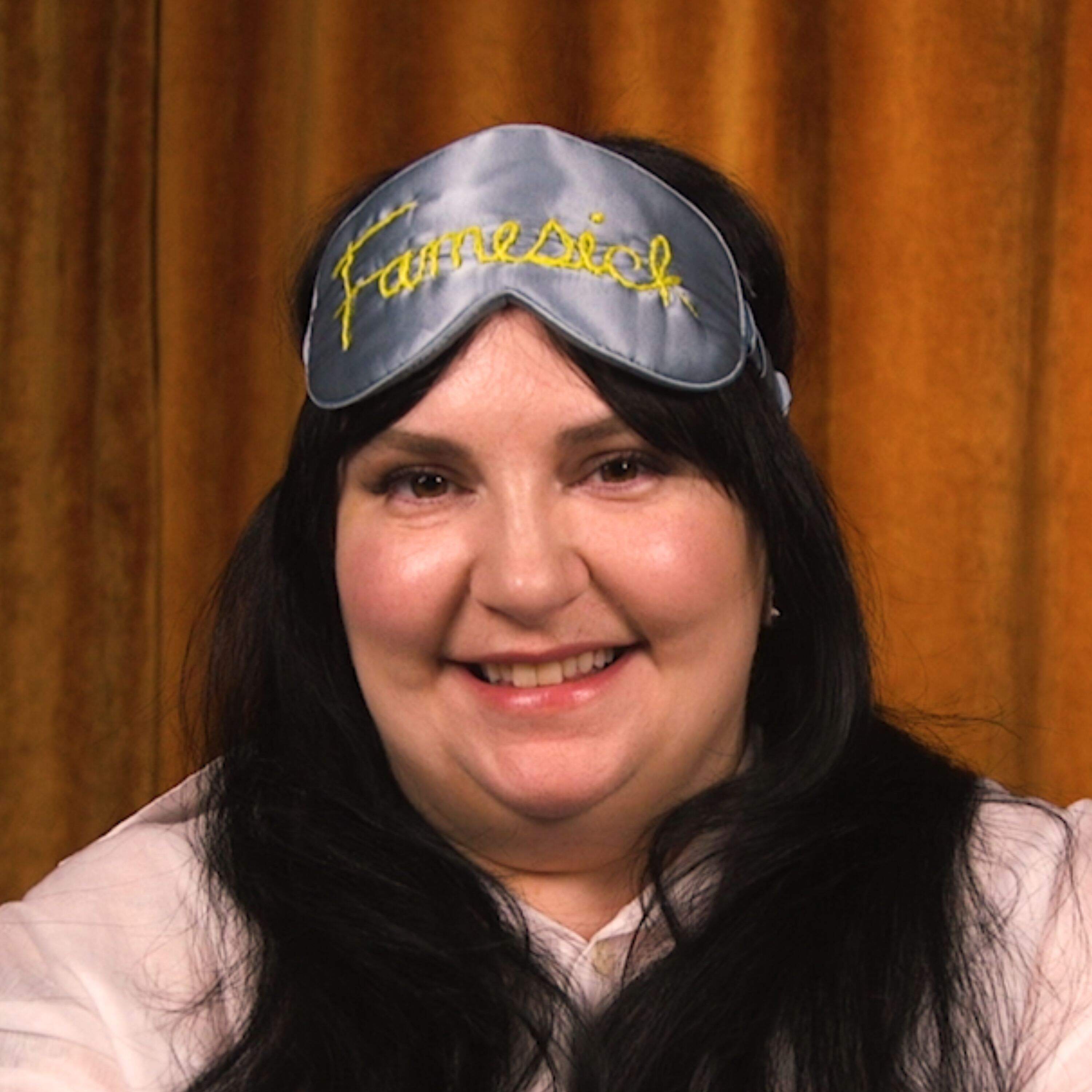
Lena Dunham got famous for creating and starring in the HBO show Girls, an unvarnished look at a certain kind of 20something woman trying to figure out how to be in the world. Lena Dunham has been working on that in her actual life ever since. How to be in the world in a way that feels honest and creative without turning her openness and vulnerability into a liability she writes about all of it in her new memoir. It is called Fame Sick. And I am so very happy to welcome Lena Dunham to Wildcard.
- [02:33]
Lena Dunham
Hi. Hi, Rachel. I love that you joined me in the pajama chic theme of my book tour and my life.
- [02:43]
Rachel Martin
Yes, I happen I will fess up that I was looking at your Instagram and I saw a post. You were doing your audiobook of Fame Sick, and you were so comfy in your jams, like, on a couch, and you were, like, so fully in your pajama era. I was like, this is such a great excuse for me to wear pajamas to work.
- [03:02]
Lena Dunham
My mother's. One of her only rules, and my parents didn't have a lot of rules, was, you will not wear pajamas out of the house. And when I grew up, it was the rule that I flouted the most and the most immediately. So thank you.
- [03:19]
Rachel Martin
This is round one. Memories first. Three cards, Lena. One. Two or three?
- [03:25]
Lena Dunham
Three, please.
- [03:25]
Rachel Martin
Three. Where would you go when you wanted to feel safe as a kid?
- [03:32]
Lena Dunham
Where would I go when I wanted to feel safe as a kid? What a great question. My grandma's house.
- [03:37]
Rachel Martin
Yeah.
- [03:38]
Lena Dunham
My grandmother, whose name was. My father's name is Carol Dunham. His father's name was Carol Dunham, and his mother's name was Carol Dunham.
- [03:48]
Rachel Martin
I mean, once you find a good
- [03:49]
Lena Dunham
name, just keep it going. Carol and Carol met and they went, well, it seems pretty clear what we have to do. And she was just the most. I think a lot of people would have found her a little bit gruff and sort of keeping people at a distance. But I was her first grandchild, and we had a very special relationship. And she loved to read, she loved to sew, she loved to watch movies. And I would go to her house, and the minute I walked in, it smelled like. It smelled like mothballs. Very classic grandmother smell. And I would go for every school vacation for two weeks in the summer, and it was like.
- [04:33]
Rachel Martin
And we should just say, you're a city kid. I mean, you grew up. I was up in Manhattan. This is a big difference to go to Manhattan.
- [04:40]
Lena Dunham
Honking noise alarms. Someone's car radio was always being stolen on the block. And so to get to her house, I would fall asleep in the car. And then when I'd wake up, we'd be just in, like, wilderness. And she lived in, you know, in a town, Old Lyme, home of Lyme disease. That's what Lyme disease is named for. So one of its claims to fame, but it's like a really beautiful Rural seaside community. We just actually went back this year, my father and I, because I wanted to visit her grave, because she died exactly 25 years ago when I was 14. And that was a big turning point in my life. But I still really feel her with me in a lot of the important ways. And sometimes I'll have a dream where I go back to her house and go in, and she's just always been there. Like, she. And I'm like, what? You didn't call me? You've just been here.
- [05:37]
Rachel Martin
Totally.
- [05:38]
Lena Dunham
And she's just happily reading a book or eating a steak sandwich or any of the many things that you're feeling. Aren't those dreams the best?
- [05:44]
Rachel Martin
I have those about loved ones who've passed, too. And it's just they're living beside you in a parallel life. And it's like every once in a while, a dream will happen, and it's just like, little door over there, and you're like, oh, you are still there.
- [05:56]
Lena Dunham
That's exactly what it is. And there's so much more real. Like, I can feel her skin. I can smell her smell. And they often happen around big, important events. And so she's been a real protector for me. And once in my time, the word
- [06:13]
Rachel Martin
safety does apply to her. Like, it did feel safe.
- [06:16]
Lena Dunham
She was the safest. I don't ever remember her being cross with me in any way.
- [06:22]
Rachel Martin
No.
- [06:23]
Lena Dunham
I don't ever remember her reprimanding me. I remember everything that I sort of was told was odd or frustrating about myself. She just kind of rolled with. If I was scared to sleep, she made a nest on the floor next to her bed. If I didn't want to eat dinner, then we ate pound cake. But it wasn't like that thing of sometimes there's someone who kind. It wasn't being spoiled, it was being seen, if that makes sense.
- [06:47]
Rachel Martin
Yeah. Yeah.
- [06:48]
Lena Dunham
That's lovely.
- [06:49]
Rachel Martin
I'm so glad you had that.
- [06:51]
Lena Dunham
I feel so lucky that I had it, too. I feel so lucky that I had it, too. Okay, so thank you for letting me talk about her. She was amazing.
- [06:59]
Rachel Martin
I love it. Okay, next three. One, two, or three?
- [07:06]
Lena Dunham
I'm getting a vibe from one.
- [07:07]
Rachel Martin
Love it.
- [07:09]
Lena Dunham
Okay, good.
- [07:10]
Rachel Martin
What's an early experience of appreciating beauty?
- [07:14]
Lena Dunham
What is an early experience of appreciating beauty? What an incredible question. These are all incredible. When I was a kid, my family, like, some families go to church or they go to synagogue on Sundays. We always went to the Metropolitan Museum of Art on Sundays because it's in New York. We're in New York. And your parents are artists. They're artists. And they wanted. And we would alternate. Every one member of the family would get to pick which wing they wanted to go to. My brother always picked either, like, Egypt, like, knight's armor or ancient coins. I was like, do we really have to look at the ancient coins again? Oh, my God.
- [07:57]
Rachel Martin
Can I just tell you how different my childhood was?
- [08:03]
Lena Dunham
I think that's the magic. We all have different childhoods, and then we collide in adulthood and get to learn about each other. But I think an early experience is going to the kind of. The kind of classical painting wing. And I was obsessed with. There's a portrait there of Joan of Arc sort of having her first vision. She's getting her first whatever, like, signal from God. Yeah, Joan, it's you. We want you. And she's sort of standing in the garden in this beautiful, like, kind of ripped burlap bodice with two braids. And she's, like, looking up like this, like, absolutely beatific. And you can tell. I mean, potentially. Now we understand having a first experience of psychosis, but that is not what the essence of the painting was giving. And I just was obsessed with it. I would go with my sketchbook and try to copy it. I had a postcard of it. I just loved it. I loved how strong she looked. I loved how connected she looked. I loved her outfit. I wished I could mimic it.
- [09:11]
Rachel Martin
How old were you, do you think, when you first encountered her?
- [09:13]
Lena Dunham
She was eight.
- [09:15]
Rachel Martin
Wow.
- [09:15]
Lena Dunham
Young, Young. And I just loved. I loved what she was giving me. And I always was fascinated by the paintings there that were of young women and how they were depicted. And my father's a painter who'd always sort of talk me through what period it was from and what he thought the artist was getting at. And those times also spent with both of my parents, kind of giving me, giving me. Not telling me what to think, but sort of offering me this window of my own to appreciate art in my own way.
- [09:50]
Rachel Martin
Well, and it's so important, I think, as a parent, I think about this all the time, too. Is helping your kid understand that beauty is. Is available to them. It is open and available to you wherever you go, if you are.
- [10:04]
Lena Dunham
That's exactly. I remember once going on a bike ride with my mother in Connecticut, and her being like, this is called Magic Hour. A lot of filmmakers or photographers come out to shoot at this time because the light has this very specific look, and it's a little bit gold, and it gets cooler as the night goes on. And it's warmer during the day. And look how the. How different the colors of the flowers and the leaves look at this particular moment. And those moments where I never felt like my parents were pushing me to be anything specific or. It wasn't like when you see sort of, you know, a kid being sort of screamed at by their parents to, you know, practice your cello. Practice more and more. It was exactly the thing you're talking about, which is the world is open to you. And these moments that seem random, you're just chugging along on your bike with training wheels, wishing that you were home watching Total Request Live or whatever. Actually watching your reruns of Total Request Live that you tape on a vhs. You actually. There's so much for you to see in the world. And I think still, sometimes I go outside and I kind of hear my mom's voice really encouraging me to look around and enjoy it. I love that.
- [11:22]
Rachel Martin
Okay, last one in this round. It's because of the pajamas. I find myself sinking lower and lower into the chair.
- [11:29]
Lena Dunham
No, I think it's really good. I love when I get a little hint of your knee. And it's really giving me pajama vibes.
- [11:34]
Rachel Martin
I have matching pajama pants.
- [11:36]
Lena Dunham
They're great. And your socks are perfect. Thanks, man.
- [11:40]
Rachel Martin
Okay, one, two or three.
- [11:47]
Lena Dunham
I'd say let's go two. Oh, my God.
- [11:50]
Rachel Martin
I love you for vibing and picking up the vibe of the card.
- [11:54]
Lena Dunham
Okay.
- [11:54]
Rachel Martin
That is what it's all about. Yes. You have to feel which card? What's something someone told you that changed your trajectory?
- [12:04]
Lena Dunham
What is something that someone told me? When I was, I don't know, probably in like fifth grade or something, I had decided. I had agreed, not agreed to. I had wanted to go to this very specific drama camp that was for musical theater and it was like a two week program. But it was, you know, I think it was called Applause. I think it was called Applause. And I was very excited about it. And I couldn't stop talking about how I was going to go to applause and we were going to perform Joseph and the Technicolor Dream Code and whatever. And. And then I got to applause and I just. It was just not like the kids were like little musical theater sharks. Which is what? Like that very classic depiction of musical theater kids who would truly throw one another in front of a moving bus if it meant sort of getting out, making it up from understudy or whatever. And I was in the chorus. And your job as the chorus was, you know, you had to Be there all the time, even though you're really mostly just waiting around. And I got home and I was like, mom, I really don't like applause, but I can't be a quitter. And my mom went, why can't you be a quitter? What's wrong with quitting things? Quitting. And I think she actually said, quitting is fun. I love quitting. And my mom is someone who is extremely ambitious and dogged, but also, if she's not feeling it, she's not feeling it.
- [13:31]
Rachel Martin
Yeah, yeah.
- [13:32]
Lena Dunham
And I think that there's this sort of idea that following through despite everything is a value. It's a value in relationships, it's a value in work. It's a value. And it often prevents us from accessing our own instincts. And there's plenty. The thing I think she was really trying to say is there's so much in life you can't quit. You know what I mean? Like, you can't quit your family, you can't quit your body, you can't quit your brain. And so if there's something like you have agency over.
- [14:05]
Rachel Martin
Yeah.
- [14:06]
Lena Dunham
So you have agency over. Have agency over it.
- [14:08]
Rachel Martin
Yeah.
- [14:09]
Lena Dunham
And in my adulthood, it has often come back into my brain. Quitting is fun. And last week my brother texted me about quitting something and he went, I love quitting. Just like Mom. And I was like, yeah, so do I. And there's lots of stuff that I will never quit. But I did quit. Applause. And then I stayed home for, like, two weeks in red, and it was fantastic.
- [14:27]
Rachel Martin
And it was great. Yeah. I remember when someone told me I could stop reading a book and it was so liberating. You know when you're like, in a book and you're like, I don't. I'm not into this book, but I
- [14:37]
Lena Dunham
gotta keep reading this book to the end. And then until I was like, 20, I didn't know that you could stop reading a book, right? And now I stop reading books all the time.
- [14:47]
Rachel Martin
All the time.
- [14:47]
Lena Dunham
It's. So I pick them up and read 15 pages of them and I go, I got what I needed from that.
- [14:52]
Rachel Martin
That's right. And now we're done.
- [14:53]
Lena Dunham
And if I feel compelled to finish it, I will.
- [15:07]
Sponsor/Announcer
This message comes from Betterment. You know when you sell a stock or any investing asset and start to feel the dread of getting a surprise tax bill? Betterment's tax impact preview tool shows you the estimated tax impact of the sale so you can make informed tax smart investing decisions. Get started today@betterment.com investing involves risk performance, not guaranteed. Betterment is not a tax advisor nor should any information herein be considered tax advice. Please consult a qualified tax professional. This message comes from Whole Foods Market. Make Mother's Day special with brunch or dinner from Whole Foods Market. Start with quality cheese and charcuterie with no synthetic nitrates. Then choose sustainable, wild, caught or responsibly farmed seafood on sale. Finish with seasonal bakery treats like strawberry pretzel cream pie. Or keep it easy with Ready to heat Quiche Lorraine, deviled eggs and fresh cut fruit. Celebrate mom with Whole Foods Market.
- [16:03]
This message comes from NPR sponsor Carvana. Carvana believes selling your car should be refreshingly simple. Enter your license plate or vin, get a real offer down to the penny and schedule a pickup on your time. No surprises. Sell your car today@carvana.com pickup fees may apply.
- [16:26]
Rachel Martin
We're gonna pull out of the game and talk about your book, Fame Sick. It's just a wonderful read. So let's get into some of the themes in it. First, the Time Band, because this is about a particular decade, right?
- [16:41]
Lena Dunham
It is. So the book basically goes the book basically goes from 2009 to 2021, but it really focuses on the kind of period between 2010 and 2000. It's sort of like there's a little precursor in 2009, a little coda in 2021, but it's really about that decade between. It's really about what do we call 2010 to 2020. Was it the. It's not the aughts.
- [17:08]
Rachel Martin
What do we call that?
- [17:10]
Lena Dunham
I don't know. A nightmare? Do we call it a nightmare? Rachel? I think that's. Do we call it my personal hell? No. It's about those years, which did have a lot of magic in them and a lot of joy and a lot of education. And there was also some really challenging stuff that looking back, I can, looking back, I'm able to see how. What a thicket I was moving through. But at the time, that had become pretty normalized for me.
- [17:43]
Rachel Martin
So can you ground us in time? I mean, how old were you when you started Girls?
- [17:48]
Lena Dunham
We shot the pilot in the fall of 2010, when I was, I recently turned 24. And then you're like barely out of
- [17:59]
Rachel Martin
the womb, like, it must be said 24.
- [18:02]
Lena Dunham
Well, I see that now. Like when I see I literally said recently someone said, I'm 24. And I said, you should still be inside your mother. Like, what are you doing walking around? I mean, it was a truly wild thing to be given access to this job that I was. Had such reverence for and also this world of, you know, I had always been a kid who loved films and who was interested in Hollywood and who, you know, read Us Weekly on Wednesdays. Not every. It came out on Wednesdays, and I would pick it up at the newsstand near our house. Not because I wanted. Had some idea that I wanted to be famous, because I was just like many young people compelled by this. The narrative magic of these Hollywood lives. And so suddenly, to be engaging with actors and making this work was unbelievable. And then for it to then be sort of welcomed into some kind of cultural conversation and to be kind of have the carpet laid out for you. But I was not prepared for everything that came with that.
- [19:11]
Rachel Martin
How could you be? I mean, it's just. It's huge. It was so huge. It's hard if people. Younger people won't remember. But this was such a phenomenon, and
- [19:19]
Lena Dunham
you were thrust in the spotlight, you know, young. When I see young people in the public eye now, there's much more of people know the term media training. They understand that what the Internet is and what it's capable of, there's. Doesn't mean that they don't get up to trouble. But there's a different kind of consciousness if you've grown up with it. And this was sort of the Wild west, so. So these years were very dense with creative education. And I had amazing. I mean, Judd Apatow was my television mentor, and he took me through this process. And I worked with an incredible cast and an incredible crew. But I also was extreme feeling. I am by nature, which sometimes I'm very introverted. I think if we're defining introvert by sort of being around people either gives you energy or reduces your energy, not based on how loud your voice is, which I think was the old definition. And I need a lot of time alone. I need a lot of time to recharge. And I also have chronic health issues that I've had my whole life that I didn't have any language around, because we know that especially for women that, like, delayed diagnosis for so many of these things is huge. So all of that was hitting at the same time. And so the book is a lot about grappling through this. And there's a lot of comedy to it because it's funny to be, you know, standing at the Met Gala unprepared or talking to Barbara Walters about anal sex or whatever may befall you. But there was also a lot of pain and confusion and fear.
- [20:56]
Rachel Martin
The way you Write about your castmates from Girls in the Book is so lovely. I mean, it wasn't just a regular work relationship or even regular friendships. Like, it was such an intense bonding experience that you all had. It's beautiful.
- [21:12]
Lena Dunham
I feel like they'll be my sisters always. Like, there are things I experienced with Sasha and Jemima and Allison that no one else will ever understand. But when we were together, you always knew that there was a hand that you could reach over and squeeze. Like, you always knew there was someone's head you could put your lap in. Lap. You could put your head in or put your lap in. And it was a very powerful, formative relationship. I mean, those were. Zasha and Allison were 22 when we started. Jemima and I were 24.
- [21:47]
Rachel Martin
You guys grew up together?
- [21:48]
Lena Dunham
Yeah. And we felt like they were like our little sisters. We were like, we know so much that you're gonna know when you hit. When you have two more years of life, you're gonna know it too. Then you'll know.
- [21:58]
Rachel Martin
Adam Driver is someone. You also had a close relationship. The degree to which you could. With who he is. And you write about it in the book. He was such an important part of that show deeply.
- [22:10]
Lena Dunham
And he's such a defining. He was not meant to be necessarily move through the six seasons of the show. He was meant to be this sort of. In a little bit of the way that Sex and the City is like the boyfriend of the week. I think that was more the role that he was gonna play. And he was so clearly just had this. That character just had this gravitational pull, and it was clear that. And he. And his career exploded. And to his credit, he stayed with us and he stuck it out. And he cared so much about that character. Yeah.
- [22:44]
Rachel Martin
You two had complicated relationship things. The easiest way to put it. And at one point in the book, you include this scene when you were in a fight about something related to the show, and you got angry, and he let his anger get the best of him, and he threw a chair at the wall that you were standing against. It didn't hit you. But that's a frightening experience. And as a reader, you take. It's jarring, and that feels very scary and explosive. And I guess my question is, why did that feel like a detail you wanted to include?
- [23:21]
Lena Dunham
I think it was really important to me to make it clear in the writing that it was not. He did not hurt me. His aim was great. He didn't get me. He was in some way trying to get my attention. He was trying to end Something that we were always coming up against, which I think I was trying, is that you have these work relationships with people that you might never encounter in regular life. Like, Adam and I have different interests. We come from different places. We have had really different life stories. Adam is from Mishawaka, Indiana. I come from downtown New York. Adam had been through the military in Juilliard. I had had this sort of hippy, dippy liberal arts education. We were formed in really different ovens. But I think it was really important to me to show that we were sort of doing the best we could to understand each other. But we were almost like two different species circling each other in the woods. And I can see that so clearly now, you know, 15 years later, that we were missing each other's signals. We both had just inherent qualities that were very. I'm extremely non confrontational. I am like a. I will do anything to keep it sweet. All my confrontation, I can do it on camera, but off, it's very hard for me. And I think sometimes that surprises people because my writing is considered provocative or intense. But. And he was someone who thrived on, like, honesty and intensity. And he also was someone who needed a lot of space. And I was somebody who felt like, you know, we should all be besties at the slumber party. And we were clashing, and so I wanted to find a way to talk about that. And I felt like that particular incident made it very clear sort of how deep at times the frustration ran on both ends. But then there's also a scene later in the book when the show ends and we're hugging and we're crying. And he kind of said. I sort of apologized to him for, I'm sorry for any times I misunderstood you or for any times that I didn't give you what you needed. And him sort of saying it was all as it was supposed to be. And he's. I mean, he was in Star wars, so he gave me that. Gave me that Jedi wisdom. And he was out. So all. All hail Adam driver. Deep gratitude, deep appreciation, and I hope that that can be felt in the.
- [25:56]
Rachel Martin
Round two.
- [25:57]
Lena Dunham
Okay. Great.
- [25:58]
Rachel Martin
Cards are Blue Insights. Beautiful insights.
- [26:01]
Lena Dunham
They match my nails.
- [26:02]
Rachel Martin
Yes, they do. Also, nice ring. I love it.
- [26:05]
Lena Dunham
Thank you.
- [26:06]
Rachel Martin
Okay, one, two or three?
- [26:08]
Lena Dunham
Two, please.
- [26:09]
Rachel Martin
Two. What do you like when no one's around?
- [26:14]
Lena Dunham
What do I like when no one's around? I mean, I would say that my happiest place besides, you know, with my husband and our pets or with my nuclear family. And I do also really love being on set. I have A few happy places. But I would say my most, like, true place is I'm sort of not in bed, but on bed with either a book or often with my laptop, just tip tap, tapping away. And sort of the same something that I love about getting older is I feel like I get closer to the person that I was as a child. Like, that I took, maybe in the years I talk about in the book, I took a little vacation away from her. And now I've circled back to being. Having this kind of engagement with my own imagination and my own fantasy life that is really joyful. And so I'm in my bedroom, which is a melange of colors and lots of stacks of books, and I've got cats and dogs and bunnies running around. And I.
- [27:20]
Rachel Martin
So you're not ever really alone. You're a person.
- [27:23]
Lena Dunham
You can never really be alone. I love to have lots of little energy. I explained to my friend Alyssa, because my rabbits were sitting on the end of my bed. And she's always saying, like, how do you have so many pets? And I said, it makes me feel like Snow White. It makes me feel like I have, you know, bluebirds helping put on my dress. And she went, I get it now, I get it now. And every time a bunny comes running through my line of sight, you go, okay. I'm surrounded by life, I'm surrounded by energy, but I also don't. I love to be engaging with words through writing, but not having a pressure to talk. And so much of my kid life and teen life was just sitting in my room reading and writing without a sense that it was for anyone in particular, with a sense that it was to entertain myself. I remember my father saying to me once, when I was really young, I once said I was bored. And he said, being bored is for boring people. Like, there's nothing that you can't summon if you're sitting somewhere and you're stuck.
- [28:31]
Rachel Martin
It's so good, and I'm totally gonna use it on my kids.
- [28:33]
Lena Dunham
It's true. He was like, if you're stuck and you're sitting there, think about something that interests you. And so I just had a. You know, I just have had a real return to that. To that young person who just has a lot of joy in delving into both, you know, the written word or watching, giving, creating, like some festival of movies for myself with a theme that doesn't matter to anybody else. Watercoloring, being. I have lots of little hobbies and bits and things, and I can just. I could. I could. If you Were like, you are going to be alone in the house with just your pets and your little hobbies, tip tapping around for seven days, There would not be a second of that that I would not enjoy.
- [29:26]
Rachel Martin
I love the image of you a Snow White and all the little birds helping you get dressed in your pajamas.
- [29:35]
Lena Dunham
They never help. They recently ate a pair of ballet flats, but they never help.
- [29:41]
Rachel Martin
So lazy, actually. Okay.
- [29:44]
Lena Dunham
Sometimes I look at them and I go, you guys don't pay any rent. How can you act like, literally, the
- [29:50]
Rachel Martin
least you could do is, like, tie my shoelace.
- [29:52]
Lena Dunham
Exactly. Or put a small. Put a small tiara on my head. Okay.
- [30:00]
Rachel Martin
One, two or three?
- [30:02]
Lena Dunham
One, please.
- [30:05]
Rachel Martin
What has age taught you about love?
- [30:10]
Lena Dunham
What has age taught me about love? I mean, relationships are hard. Everyone will come to a moment where even with somebody that they love and understand that there is a misunderstanding or attention or a challenge that just feels maddeningly impossible. But I think having watched all the, you know, teen movies of the early 2000s and read lots of romance novels that were on my grandmother's shelf, I thought it was gonna contain drama and tension. And, you know, I thought it was gonna be like those movies where two people meet each other and they hate each other at first, and they're always bickering, but they. Then they unite in the elevator. It should be like that.
- [30:52]
Rachel Martin
Like, that's the normal arc.
- [30:53]
Lena Dunham
Yeah, that's exactly right. And realizing that actually, especially romantic love, but also. But also, you know, familial love has all of its own stuff that comes with it. History. But especially romantic love, like, it doesn't. Life is hard enough when you unite with someone else and you guys have to face life together. So much is going to come up. You know, you guys are gonna go. I mean, in the five and a half years I've been with my husband, we've been through. I've had health challenges. We've had family challenges. We've had to think about where we're gonna live and what our life is gonna look like, because we come from two different countries, so we've had to navigate all this stuff and that is enough of a challenge without sort of this, without also having, like, an inherent tension in the dynamic and realizing that it's okay and that. That love can be a little easier than this. Maybe the story that we've been told and that someone was recently telling me about a relation, a young person was telling me about a relationship that was torturing them. And I was like, I don't know how to tell you this. And you're probably not going to listen to me. But later you're going to find a relationship and you're going, like, you're going to exhale, and it's going to be like, you know, taking off a corset at the end of a long day. And I think that is. And it doesn't mean that when really hard stuff comes up, you shouldn't fight to remain in your close dynamic with someone. But it's almost like. It's almost like sometimes in love, when we're young, it's like a reality show where we're inventing all of these different challenges, and it's like life is hard enough without adding, like a, you know, like a ropes course and an elimination game, which you did.
- [32:37]
Rachel Martin
Do you think it's fair to say you did that in younger relationships?
- [32:41]
Lena Dunham
Yes, totally. And I clung really hard to things when it was kind of clear I went down with the ship every time. Like, I'm a. There's a part in the book where I sort of say, like, I would have hung on as long as you. I would have hung on until the. Until the ship was in pieces. And then if it was Titanic and I was on the door, I would have said, jack, get on the door with me. And then the door would have sunk. Like, that is what I would have done. And now I think also knowing when to go, whether it's in friendship or work, relationship or. I care about you, but not enough to sacrifice me. And I think for a long time I thought what love was, was you do sacrifice yourself.
- [33:26]
Rachel Martin
Sacrificial. Yeah, that's the whole point.
- [33:29]
Lena Dunham
You had to prove to the other person that you were loving and also that you were a loving person, that you were also worth loving by showing them that there was nowhere you wouldn't go with them. And now I'm very comfortable saying, like, you matter so much to me, but not enough to break myself in half. Right?
- [33:49]
Rachel Martin
You can quit. You can quit.
- [33:50]
Lena Dunham
You can quit.
- [33:51]
Rachel Martin
You can quit.
- [33:52]
Lena Dunham
And also in love, it's not quitting. And also I. You know, sometimes when people want to. When you want to walk away from a relationship, someone will give you all the reasons that you can't or you shouldn't. And it's okay to say like, I changed my mind.
- [34:06]
Rachel Martin
Yeah, I love. I changed my mind.
- [34:09]
Lena Dunham
I change my mind is an okay sentence.
- [34:11]
Rachel Martin
It sure is. Last one in this round. 1. 2 or 3?
- [34:16]
Lena Dunham
3, please.
- [34:17]
Rachel Martin
3. Where do you feel most free?
- [34:22]
Lena Dunham
Where do I feel most free? I really love being on set. I really love directing, especially now. That I'm directing and not acting as much. So I don't have as much as the young people say. I don't have to be perceived as much. I just love the kind of. It's all the let's put on a play energy that I wanted as a kid, minus the cutthroat mania of applause summer camp. And I love that you have to make all kinds of quick decisions every day, all day. I love that you're in kind of these really involved, elongated, creative conversations with people. And I love. It's just a place where I feel. I don't always feel great at parties or in. I'm not always the most the best at kind of navigating. I like situations where it's clear what everybody's job is, and there's not at a party, it's not always clear what everybody's job is.
- [35:22]
Rachel Martin
Preach, sister. I know I find that very overwhelming
- [35:26]
Lena Dunham
on a group vacation or whatever, but when I'm on set and I go, okay, every single one of us has a role to play, and we're essential in putting this together. And if we play our roles and do our jobs, we're gonna make something really beautiful. And we all know how not to step on the other's toes because it's clear that he's the one who puts the microphones on. And you're saying structure is freedom. That's exactly right. That's exactly right. Structure is freedom. And you can wild out inside of that. And so I love being on set.
- [36:07]
Sponsor/Announcer
This message comes from Whole Foods Market. Make Mother's Day special with brunch or dinner from Whole Foods Market. Start with quality cheese and charcuterie with no synthetic nitrates. Then choose sustainable, wild, caught or responsibly farmed seafood on sale. Finish with seasonal bakery treats like strawberry pretzel cream pie. Or keep it easy with ready to heat quiche Lorraine, deviled eggs and fresh cut fruit. Celebrate mom with Whole Foods Market.
- [36:33]
This message comes from NPR sponsor Carvana Making. Buying a car 100% online with real transparent pricing and customizable financing that fits your budget. Browse thousands of cars and get yours delivered. Visit Carvana.com today. Delivery fees and terms may apply. This message comes from Angie. Tackling a home project. Angie can connect you with pros who do such a good job, you might ask them to be your kid's godfather. Don't do that. Just trust them to get the job done. Find a pro for your projects@angie.com that's a n g I.com.
- [37:15]
Rachel Martin
Now we Are in our beliefs. Round. It is the last round.
- [37:17]
Lena Dunham
Oh, wow. Cool. Cool.
- [37:20]
Rachel Martin
One, two or three?
- [37:22]
Lena Dunham
Two, please.
- [37:24]
Rachel Martin
Is there anything in your life that has felt predestined?
- [37:28]
Lena Dunham
Is there anything in my life. There's a lot in my life that has felt predestined. I think almost everything.
- [37:35]
Rachel Martin
That idea connects with you.
- [37:37]
Lena Dunham
That idea connects with me of arriving somewhere and going, this is where I was meant to be. And also looking back and going, X, Y and Z happened so that I could show up here now and feel this. So, okay, here's an example. There's a part in the book where I sort of think that I've gotten my. I really think, like, I have gotten my life together. Like, I've been sober for a year and a half. I have gone to the UK to work. I feel like I'm kind of back in my groove. I'm out, I'm being social. I'm feeling like maybe for a minute I'm gonna be like a. I don't know, a fun loving London girl. And I light a candle and a spark flies off the match and my light gown lights on fire and I end up in the burn unit for 10 days. And the thing that I kept saying to my father, it is actually really funny. Like, to think that you are crushing life and then for your nightgown to go up in flames is actually funny at the moment. It was not. You thought this was funny? You're destined. I did not think it was predestiny. And I kept saying to my father, why did this happen? I was like, you know, I can make sense of almost everything in my life, but why did this happen? And he was sitting in bed and he was like, you can't ask why, doll. Like, sometimes accidents happen. They happen, but. And accidents do happen. But then looking back on what that experience did, did. I ended up having some experience, really beautiful experiences in the hospital with my parents. I ended up sort of having a little beat to assess where I wanted to go and what I wanted to do next. I. And I don't know, there was just this sense that even though it was horrible and humiliating and stupid and nonsensical, that if I were to look at my life and try to wipe it from it, that I would not have ended up in the second child. So I don't know if that's exactly like predestiny as much as just saying that. And I hate when things happen for a reason is the least comforting thing you can say to somebody who is going through something. Someone who's Going through grief or has lost a loved one or who has suddenly been diagnosed with an illness. Things happen for a reason. Is symbol bull crap. It's some. I didn't know if I could say on this public radio station. It's some. But there's also a sort of. There's like looking. When you look back on your life, it's almost like the puzzle pieces start to all slot in. And I guess it's also about trying to make use of the experiences when you can. Like being like, well, if I'm getting going to get dealt this one, then I'm gonna take squeeze some and meaning out of this. I had a therapist at the time. He was a Jungian therapist. There's a documentary about him on Netflix. His name is Phil Stutz. Jonah made a documentary. Jonah Hill made a documentary about him.
- [40:42]
Rachel Martin
I loved that documentary.
- [40:43]
Lena Dunham
Oh, my God, he's amazing. And I was seeing Phil for a while.
- [40:47]
Rachel Martin
Wow.
- [40:49]
Lena Dunham
It's, you know, one of the gifts of being in Cal. If you're gonna take advantage of what show business has to offer.
- [40:54]
Rachel Martin
Go to the fancy celebrity therapist. Yes.
- [40:56]
Lena Dunham
Go to see Stutz and get your youngie. And he's. When I told him, well, I had this thing happen. I've had this huge burn and like, now I have half a nipple. And it's just all like, not really. It's not really making sense to me right now. And he said, why don't you try to write the story like it's a myth? Like it's a myth and you are the hero of the myth? And like, what does the fire mean and what does it represent in your life? And that was kind of a mind blower. So I'm not saying things happen for a reason, but I am telling people, try writing it like it's a myth.
- [41:32]
Rachel Martin
Yeah, I like that.
- [41:33]
Lena Dunham
That's a little Free Stutz wisdom for you.
- [41:35]
Rachel Martin
Free Stutz 1, 2 or 3?
- [41:39]
Lena Dunham
One, please.
- [41:40]
Rachel Martin
Rachel, have your feelings about death changed over time?
- [41:44]
Lena Dunham
Yes.
- [41:46]
Rachel Martin
How so?
- [41:46]
Lena Dunham
They have. I was really. I was one of those kids who was, like, rigid with fear about dying. Everything was like, you know, are you. When are you guys gonna. I would ask my parents, when are you guys gonna die? Like, three times a day. Like, I'd be like, can you tell me it's gonna be this many years? How many more years do you think I'm gonna. I just need to plan what's gonna happen to grandma. Like, that's basically was the vibe. And also, I was obsessed with what happens. And I was also obsessed. I remember asking over and over. Well, if we're all just gonna die, why do we do anything? Which is. And I remember my father going, that's the question. He was like, I'm not gonna pretend I have an answer for it. That is the question. And my mom is like, it's genetic. She had a terrible, terrible death. Preoccupation. And my brother and I have both inherited it. And I remember when my grandmother died when I was 14, being like, oh, my God, I cannot relax. This is gonna really actually happen to all of us, and you better get it in while you can. And one of the things about chronic illness, because I think so many of us think that, you know, our. Our first experiences with pain or being enfeebled or being kind of limited or limited in our bodies are going to come when we're much, much older, is that you just. You develop a different relationship to your body and to the idea that your body. At least my experience has been. And I've talked to a lot of other people who do feel this way. Like, it gives you this sense that your body is this really amazing thing that we're given to move through the world in, but that it's also just sort of like the vessel. It's sort of, you know, hermit crabs crawl from shell to shell. And this is the one that we get this time around.
- [43:34]
Rachel Martin
I have to do. It's almost impossible to summarize your health issues, but I'm gonna attempt, just as a little parent, chronic, chronic endometriosis and chronic pain. And for years and years and years, not diagnosed. Doctors not listening to you. You had to have a hysterectomy. There's still a lot of pain. You also suffered addiction to pain pills because of all the chronic pain.
- [43:58]
Lena Dunham
That's right. And I have something called Ehler Danlos syndrome, which is an inherited connective tissue disorder which runs in my family. My grandfather had it. My uncle had it. He also dealt with autonomic nervous system issues. He died when he was 63. And so it's something that is. It's not as much of a mystery now, but it was a mystery for a long time.
- [44:20]
Rachel Martin
Yeah. And when you are beset with so many physical conditions, naturally, naturally, your mind would go to. Is my body betraying me? How much time do I have? How am I gonna live?
- [44:32]
Lena Dunham
Totally.
- [44:33]
Rachel Martin
How can I make it meaningful?
- [44:36]
Lena Dunham
How can I make it meaningful? And also, how can I get comfortable with the idea that my body's only a part of what I am? And this also. This entire thing of Lena Dunham is only a part of what I am. Like, what I really am is in a sort of essential sort of. I mean, I don't want to sound too la woo, but I feel like what I actually am is part of, like, a big, beautiful, connected network of. I mean, I'm part of a big consciousness. Yeah. And something that I love both about chronic. I don't love having chronic health issues. I would love to be, you know, winning the Olympic gold medal, like. Like Alyssa out there dancing to Donna Summers in her cute skates. But what I have learned from it and what I love about being sober is that it gives you a deep understanding that everyone is walking around with their stuff, an empathy for how hard it is to just exist in a human form, and, like, a real reverence for the fact that we are all in it together.
- [45:46]
Rachel Martin
And are you less preoccupied with dying or in a healthier.
- [45:52]
Lena Dunham
I don't think about it that much. Sometimes I think about, like, isn't it crazy that, like, I'm not gonna be here someday? And I don't even. And I have no idea what that's gonna feel like. But the kind of conclusion I've come to is, like, if it's something that we all have to do, then there's no way that it's that. Then there's no way that it is inherently a bad thing. It is a bad thing when someone loses their life early. It is a bad thing when people are going through grief. It is a bad thing when one person takes another person's life. But death, in and of itself.
- [46:28]
Rachel Martin
Yeah.
- [46:29]
Lena Dunham
Like, we all gotta do it.
- [46:32]
Rachel Martin
Inevitability. Yeah.
- [46:33]
Lena Dunham
And, like, I just feel like anything that's that much of a given has got. And my father said something recently to me, and my mother said the same. He was like, you know, I don't wanna do it right now, and I wanna be with you guys. But the actual experience, I'm like, let's go. This is gonna be interesting. Let's take the ride. Like, it's gonna be the psychedelic ride of our lives. Cut to all the NPR viewers being like, sh. She is in a cult. She is unwell. But I don't know.
- [47:05]
Rachel Martin
I'm into it.
- [47:06]
Lena Dunham
I like it.
- [47:06]
Rachel Martin
Okay, one more question. One, two or three?
- [47:10]
Lena Dunham
Three, please.
- [47:11]
Rachel Martin
Three. What's something you want younger generations to understand?
- [47:18]
Lena Dunham
I think rather than something I want, I don't feel like I necessarily have something to impart to younger generations. But what I will say is I'm so impressed with how many members of Generation Z, Generation Z seem to have like a deep. I feel like millennials were sometimes, rightly, sometimes wrongly accused of, like a kind of deep abiding narcissism. And I look at Gen Z people, and there is a real sense that there is. There are issues greater than themselves. Their concern with social justice, their concern with the planet and the kind of planet that we're going to pass down. Like, there. There is an awareness that we ex. That we are. That we exist in unity and a sort of understanding that we are the keepers of that. We need to. We need to create a society that we'd want to pass down. That we need to tend to the planet in a way that will allow everybody else to enjoy it for many years to come. That I feel like is. And I'm just constantly impressed by the. Like, I think there's. We talk a lot about all the negative things that social media has done, but it's also create. It's also a way for young people to. I sound so old right now. It's also a way for young. Like, I sound like social media. It's also a way for young people to. But it's also a way for them to connect and share unifying beliefs and form, you know, form real plans of action.
- [48:54]
Rachel Martin
Which is interesting because you have been burned. You have been burned so many times with social media, Alina, in your life.
- [49:01]
Lena Dunham
Yes, but I'm not on there forming plans of action, but I'm glad that they are. Like, I don't have to. I don't. I'm already too old to figure out how to use it properly and be the queen of it. But I'm just. I'm glad that there's, like, the Greta Thunbergs of the world. Like, there's just so many incredible young people who are not fucking around about what's going on in the world.
- [49:34]
Rachel Martin
We end the show the same way with a trip in our memory time machine. In the memory time machine, Lena, you revisit one moment from your past. It's not a moment you would change anything about. It's just a moment you'd like to linger in a little longer. Which moment do you choose?
- [49:54]
Lena Dunham
I wouldn't change anything about it. I would just linger in it a little longer. I would say when my parents brought my brother home from the hospital, and I was. I was about five and a half, but I was so excited. I mean, I had been begging for them to finally get him, for them to finally procreate. And I was so excited. And I. In my mind, babies were like, Kind of big. And. And he was so little. And, like, you know the way their, like, hands are all, like, wrinkly and red? Like, they're literally like they've just gotten out of a pruny bath.
- [50:37]
Rachel Martin
Yeah.
- [50:37]
Lena Dunham
And I have these. I have these Polaroids of me sitting on the bed, and my parents have sort of put him in his swaddle into my arms. And just, like, the pure glee. It's like I've just been handed the most incredible toy in the entire world. And I remember just looking and being like, we're gonna be together. We're doing life together. We're gonna be together forever. And then he started wailing, and he was like, I'm not sure about this girl. She's really intense. And though I talk in the book, we've had her ups, we've had her downs, but we are doing life together. And he's. I feel so lucky that he entered our family. And so it's just such a sweet, special memory for me. And I can really, like, if I really. I remember what the. It's like the baby smell. I remember the little face. I remember the little smushy eyelids. All of it. And, yeah, I would be thrilled if I could do that all over again.
- [51:38]
Rachel Martin
Lena Dunham's new memoir is called Fame Sick, and it's out now. What a pleasure this was.
- [51:44]
Lena Dunham
It was a pleasure for me, too. And thank you for wearing pajamas with me. And I'm a lady. And I also felt proud not to do a skip.
- [51:54]
Rachel Martin
I knew you would because you're. You're like, you know, you want to be a good girl. You're like an astrol.
- [51:59]
Lena Dunham
Yeah, I want to be a good girl. I do like to try to be a good girl.
- [52:06]
Rachel Martin
Thanks so much for listening. If you like this conversation, I would recommend my episode with the creator of another hit HBO show, Issa Rae. Issa and I talk about the impressive career moves she has made since creating and starring in Insecure. And she tells me about the fateful Paris trip she did not end up taking.
- [52:25]
Lena Dunham
Check it out.
- [52:26]
Rachel Martin
This episode was produced by Courtney Theofin and Lee Hale. It was edited by Dave Blanchard and mastered by Becky Brown. Wild Card's executive producer is Yolanda Sangweni, and our theme music is by Ramtin Arablouei. You can reach out to to us@wildcardpr.org we're going to shuffle the deck and be back with more next week. Talk to you then.
- [52:50]
Sponsor/Announcer
This message comes from Angie. Tackling a home project. Angie can connect you with pros who do such a good job, you might ask them to be your kid's godfather. Don't do that. Just trust them to get the job done. Find a pro for your projects@angie.com that's a n g I com this message
- [53:09]
comes from NPR sponsor Shopify. No idea where to sell? Shopify puts you in control of every sales channel. It is the commerce platform revolutionizing millions of businesses worldwide. Whether you're a garage entrepreneur or IPO ready, Shopify is the only tool you need to start, run and grow your business without the struggle. Once you've reached your audience, Shopify has the Internet's best converting checkout to help you turn them from browsers to buyers. Go to Shopify.com NPR to take your business to the next level today.
- [53:38]
Every day, NPR reports stories that keep you informed without fear or favor. That's the promise of a free press in a democracy. It's in the First Amendment. I'm Tom Bowman and I cover the Pentagon for npr. Stand up for independent news coverage today by donating early for public media giving days coming up on May 1st and 2nd. Give now at donate.npr.org.