Loading summary
Transcript157 lines
- [00:01]
A
This message comes from Stars, the global phenomenon Outlander returns for its final farewell. Claire and Jamie's story comes to an unforgettable end. Don't miss the final season of Outlander. Friday, March 6th, only on Stars.
- [00:15]
B
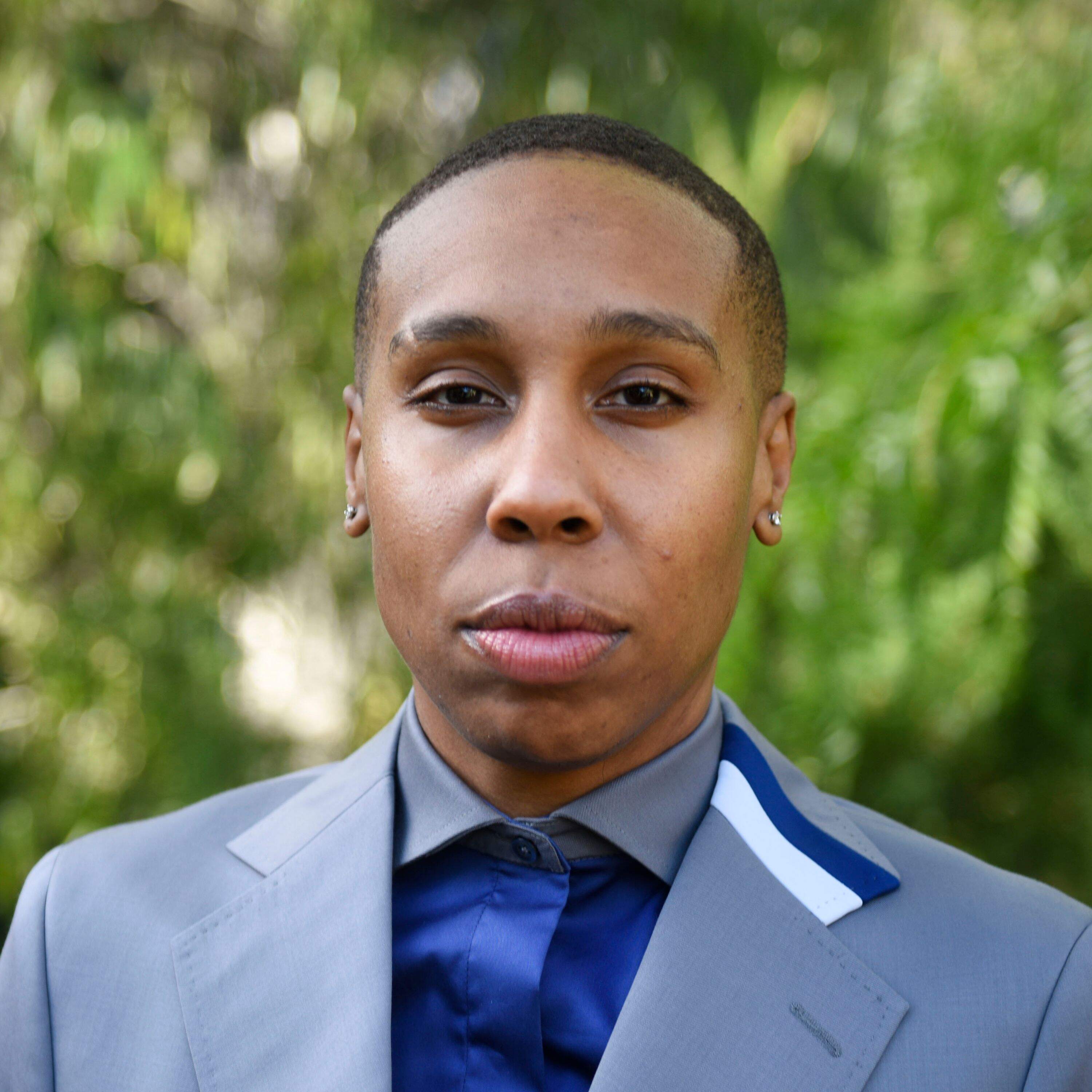
Hey, it's Rachel. This week we're going way back into the Wildcard archives to bring you one of my favorite episodes with Lena Waithe. Lena was one of the first guests that I wanted to bring on when we launched the show. She is a creative powerhouse who doesn't just have big ambitions. She's got massive amounts of talent and curiosity and compassion. I loved talking with Lena Waithe, and I hope you enjoy listening to the conversation. What makes you irrationally defensive?
- [00:47]
C
Irrationally defensive? Oh, my gosh.
- [00:53]
B
I'm Rachel Martin, and this is Wildcard, the game where cards control the conversation. Each week, my guest answers questions about their life, questions pulled from a deck of cards. They're allowed to skip one question and to flip one back on me. My guest this week is actress and producer Lena Waithe.
- [01:12]
C
It's my least favorite thing is getting something wrong. And that can be in many ways, you know, it could be a relationship. You know, some trivia. You know what I mean?
- [01:22]
B
I love that those are in the same breath. Lena Waithe knows what she wants, and what she wants is for people to look outside of their own lives to try and understand other people and the choices that they make. Lena Waithe's TV shows and films are these powerful little empathy engines. Lena became the first black woman ever to win an Emmy for comedy writing on the show Master of None. She's also the creator of the comedy series Boomerang. In 20s, she wrote the film Queen and Slim and was the producer on the movie Dear white People. But for me, Lena's real triumph is the shy. The show takes place where Wythe grew up on the south side of Chicago. It's about black people living at the margins of society with little to no room for error. It's also about family and loyalty and joy. And I love this show because every character is given their full humanity. You cannot put anyone in a tidy column of good or bad or say this person is worthy of respect and this person's not. People are complicated, beautiful, and they are broken. And Lena Waithe doesn't want you to look away because if you do, you're gonna miss the truth that she's putting out into the world, which is that judging people is harder when you start to understand them. Lena Waithe, welcome to Wildcard.
- [02:40]
C
Oh, wow. Thank you so much. For that. That means so much to me. Every word you said really permeated my heart. So thank you very much.
- [02:47]
B
Thank you. Sometimes I make these big statements about artists, and I'm like, God, I hope they feel that way about their work. But for me, it's like a through line through all the stuff that you do. It feels like there is a purpose in what you're doing to make other people understand how other people live.
- [03:05]
C
Yeah. I think what writing has taught me is that I cannot judge anyone because I can't judge these characters. So who am I to not judge characters, but then walk through the world and judge people? And so it's a writer's job to witness humanity. I'm still a human being. You know, I don't love every person. I don't, like, get along with every person. But I have to step back and try to understand why a person is who they are and why they are the way they are. Yeah.
- [03:35]
B
So I gotta. I owe you a huge debt of gratitude. Not just because you made great stuff that I got to watch, but hello, A Different World. So this was, like, my big excuse for me to go back and watch old reruns of A Different World.
- [03:51]
C
That's my favorite thing to do.
- [03:52]
B
All the young people, they're like, what even is that?
- [03:55]
C
Oh, my gosh.
- [03:56]
B
For those who don't know, we should just say, A Different World was this Cosby show spinoff from the 1980s. I was obsessed with it growing up. It was so awesome. And you were, too, because you named your production company after the school that the show was centered on. It was this fictional college called Hillman University. Your production company's called Hillman Grad. Yeah, I totally wanted to go to Hillman, and I love that show so much. So thank you for giving me an excuse to go back and watch all those episodes.
- [04:26]
A
And.
- [04:26]
B
And I love that you are representing with A Different World hat on today.
- [04:31]
C
Yes. Yes. You know, I say I wear this hat a lot. It's a. It's a vintage hat that I was gifted because obviously, people know how obsessed I am with the show and how much of an impact it had on me. And I didn't know anything about HBCU because I was very young. Even though I was a black kid growing up on the south side of Chicago, I just didn't. I wasn't at that age where I was thinking about college or even high school yet. So for me, it was also normal. And to see these characters that were so clearly defined, I think, you know, you know, Dwayne, Wayne and Freddie, and obviously Whitley and Kim and Mr. Gaines and Ron. Like, the fact that I can just sort of riddle off these names. And so I didn't even realize I was getting an education. I'm really grateful to that show because of, you know, the impact they had. And just with through.
- [05:26]
B
I've got a deck of cards in front of me. Okay. Each one has a question on it that I'd love for you to answer.
- [05:32]
C
You ready? Yeah.
- [05:33]
B
All right, let's go. We're in the memories round. Three Cards. Pick a card. One, two or three?
- [05:39]
C
Okay, I'm gonna go with two.
- [05:41]
B
Two. Where would you go to feel safe as a kid?
- [05:48]
C
My grandmother's room. I grew up in my grandmother's home, where my mom grew up as well. So we were three. And my grandmother's room was very much the center of the house. Cause she had the TV with cable in her room. And she had this really big bed and this chair next to her bed by the window. And it was this amazing old wooden chair that you could just sit in for hours. And so I would always sit there, you know, while she'd be sitting in the bed. And we'd be watching whatever she wanted to watch. Cause it was her tv, it was her remote. It was her call. So I would sit there and watch all the shows she used to watch. You know, we would watch Hunter, Matlock, Murder, She Wrote. And we would just, like, talk about the TV shows on television. And she would always say, you're always analyzing these shows. If there's anyone that wouldn't be surprised that I'm in this business, it would be her. May she rest. Because I would just sit and talk to her all the time. Like she couldn't enjoy the shows. Because I would be trying to figure out what was gonna happen or what was gonna go down or what was going on with this character. But that was always a safe space, just being in that room with her and just spending time with her. Yeah.
- [06:58]
B
Okay. Moving on.
- [07:00]
C
Yeah.
- [07:00]
B
Three new cards.
- [07:01]
C
All right, I gotta go with one now.
- [07:03]
B
One, two, three.
- [07:04]
C
One. Yeah.
- [07:06]
B
When did you feel like you found your people?
- [07:09]
C
Oh, man. I think you know Michael Svoboda, who was a writer's PA on the Game when I was an assistant at Girlfriend's. He and I just really vibed, and he's just like, yo, I got a writer's group that I do where we sit and we, like, write original pilots that we're working on to kind of help us get some stuff done. And I walked into that writers group. And I met Justin Simeon, who was working on something which ultimately would become Dear White People. And then Justin and I just really clicked and bonded and became friends. So that's really when it happened. So I just, like. I landed in there, and I just, like, found all these amazing people that I'm still tight with today.
- [07:47]
B
Tell me how that jibes with Chicago and your experience there. Because it sounds like this. Your people were writers. Like, you needed to find your writer people.
- [07:57]
C
Yeah.
- [07:59]
B
Did you not have that in some way in Chicago?
- [08:05]
C
You know, I was a bit of a oddball, you know, in Chicago. Cause I was obsessed with tv. Obsessed with, like, movies. Like, people go to the movies and watch TV shows. It's a pastime. And I think my family could tell it was more than that for me.
- [08:22]
B
Was it moving you in a different way than it was your peers?
- [08:24]
C
I would be just enthralled by it and be thinking about it. Like, I have, like, some chest tattoos. I have, like, a power line from Goofy Movie and Jack from Nightmare Before Christmas over here, like. Cause those are two very important movies for me. I have, like, a Wizard of Oz tattoo. I have Judy Garland here. You know, I have the lion. I have the scarecrow. I have all of it, like. Because that movie was more than a movie for me. It was almost like a bible to life. It's like, where you are. You always think there's something out there that's better than where I'm at right now. But the truth is, when you go out there and get to the Emerald City and meet the wizard, you realize it's all. It's not really what you thought it was. And then all you long for when you're in the Emerald City is to go where, Home. Exactly. And it's a lesson none of us really learn still, you know, we still are trying to go, like, I gotta get to the Wizard. If I could just get to the Emerald City. If I could just. You know, I'm gonna keep. Everything will be fine. And then you get there, you're just like, I'm still not fine. And so I think what. The big reason why wizard of Oz is such a religion and a reminder for me is that there is no Emerald City that will feel like home.
- [09:42]
B
Was that sad for you? Was there a grief attached to that, or, like.
- [09:45]
C
No, I think what it did was it helped me to stop. It helped me to slow down and to. I'm still, you know, driven and ambitious. But I've learned that there's no there there. Yeah, you know, it's like we're all chasing something. Cause the truth is there's always something you want, and that's fine. You know, you need that thing to make you want to go. But you got to remember that it'll be nice if it happens. It'll be cool. But you don't want it to be a thing that if you don't get it, that you can't find happiness.
- [10:33]
A
This message comes from Intuit TurboTax with TurboTax Expert. Full service match with a dedicated expert who will do your taxes for you from start to finish, getting you every dollar you deserve. It's that easy. Visit turbotax.com to match with an expert today.
- [10:50]
D
This message comes from LinkedIn ads. One of the hardest parts about B2B marketing is reaching the right audience. That's why you need LinkedIn ads. You can target your buyers by job title, company role, seniority and skills. All the professionals you need to reach in one place. Get a $250 credit on your next campaign so you can try it yourself. Just go to LinkedIn.com nprpod that's LinkedIn.com nprpod Terms and conditions apply only on LinkedIn ads.
- [11:22]
A
This message comes from Midi Health, a virtual care platform for women in perimenopause and menopause. CEO Joanna Strober shares the mission behind working with women in midlife. It's not just about hormones. It's not just about weight loss medications. We are very much a holistic care platform and our job is to figure out whatever medications are appropriate for you and offer you those medications. Midi Health committed to helping women in midlife with perimenopause and menopause care. Accessible via telehealth visits at. Join MIDI.com
- [11:58]
B
hey everybody. Ever since we launched Wildcard, there is one thing that you have asked about more than anything else. Where can I get the Wildcard deck? We hear it constantly. You've been very patient and I'm so excited to finally announce that it is here. The Wildcard Deck. It's available at the NPR shop. You can find it@shopnpr.org and we've selected some of our very favorite questions from the show and we made this custom deck for you, our audience. It is just a phenomenal way to think about your own memories, insights and beliefs over dinner with the family, maybe on a road trip with friends. It's a way to connect and learn new things about people you were just meeting or people you have known all of your life. Check it out@shopnpr.org. we are so excited for you to try it out again. Shopnpr.org. Okay, round two. This is insights. Things you have learned or things you are learning?
- [13:00]
C
All right.
- [13:00]
B
One, two, three.
- [13:02]
C
I'm gonna go with three.
- [13:04]
B
Three. What's a hard truth you've had to learn about yourself?
- [13:10]
C
Oh, man. A hard truth.
- [13:15]
B
You have a skip and a flip.
- [13:17]
C
I know you're like, Lena, if you wanna. Okay, you know what? I'll do a flip and have you answer first. Then I'll go. Yeah, okay. Yeah. Give me some time to think about it.
- [13:28]
A
That's right.
- [13:28]
C
I mean, it is the hard truth.
- [13:30]
B
It's a little hard about myself. Oh. I mean, there's so many.
- [13:37]
C
I know, right? I'm starting to think which one I want to share.
- [13:40]
B
So what is the one that we
- [13:42]
C
could say that we could talk on npr, Right.
- [13:46]
B
I am more selfish than I. Than I like to think I am.
- [13:54]
C
That's good. That's good. I can relate to that for sure.
- [13:58]
B
And sometimes it comes in the. I wrap it in the package of not really like, self care, but like, I can't manage this. I can't manage this social situation. I can't manage the intense emotions over here of this. And that's just me. Sorry, guys. It's just me. So I gotta like, walk away from it. And I think it's a cop out. And I think when I do that, it can. Sometimes that's true. And sometimes it's an excuse and I'm putting my own self ahead of other people. And I think I do that too often.
- [14:40]
C
That's really good. I also totally relate to that completely. So you're not alone in that hard truth. I think one for me is that I. I think I can tend to care more about what feels good to me then maybe what's best for everyone involved.
- [15:17]
B
Say more.
- [15:18]
C
I think that I have a hard time not getting everything I want. And I think a hard truth I've had to learn about myself is that I can become obsessive. I can become upset, I can become frustrated. I can become moody and possessive. You know, like, you're mine, that's mine. I want that. And even when it comes to people, and that is not okay.
- [15:53]
B
Has that burned you in romantic love?
- [15:55]
C
For sure. And I think it's something that I have not figured out. Because the truth is we all want to meet someone, fall in love and have that be it. And that would be great. But the truth is love is here to teach us things. Love is here to, I believe, lift us and Destroy us. Whoa. I think that's what it is. And I think when we think that we don't want it to destroy us, I don't know if it necessarily teaches us anything.
- [16:37]
B
Yeah, but, Lena, people are gonna hear. I mean, I get what you're saying. Like, it's gonna tear you down. But there's a violence in that language that you chose to destroy you. Cause then what's left?
- [16:53]
C
I mean, I love the title of Mikaela Cole's show, I May Destroy youy.
- [16:58]
B
I love that show. I love that show. Forever. Forever.
- [17:02]
C
It shifted something in me. Love has that power to, you know, to illuminate and to destroy. And. I don't know. I haven't known a love that didn't make me feel like I was in heaven. But I also haven't known a love that I didn't feel. Like some days I was in hell. And I think that is actually. Some people could argue, like, hey, love should never feel painful. It should never be destroyed. It should never feel bad. That's not been my experience.
- [17:39]
B
And maybe not what you're actually looking
- [17:40]
C
for, but, you know, I don't. I don't. I'm grateful for the things that I've learned and for the stuff that I've been through, because it's helping me to see myself, and it's also helping me to have a better sense of the human experience, because that I can't be good at. I just have to live it.
- [17:59]
B
Yeah. Thank you.
- [18:02]
C
That's a good one. I'm telling you, like, we gonna go there, Kamoy.
- [18:06]
B
I know.
- [18:06]
C
I like it.
- [18:07]
B
That's good. Sheesh. I like you.
- [18:11]
C
I like you.
- [18:11]
D
I know.
- [18:12]
B
Let's hang out.
- [18:13]
C
Come on. I mean. I mean.
- [18:16]
B
Last one in Insights.
- [18:18]
C
Okay, I'm gonna do one.
- [18:20]
B
What makes you irrationally defensive?
- [18:24]
C
Irrationally defensive? Oh, my gosh. I think this the irrational part. I know.
- [18:39]
B
You know?
- [18:39]
C
You know, I can be. I can be. I can get defensive, you know, about just the idea because of being wrong about something. Like, I don't like to be wrong. I don't like being proved wrong. I don't like. So I realize, like, oh, what? I wasn't right about that. What it's my least favorite thing is getting something wrong. And that can be in many ways, you know, whether it be a relationship, you know, some trivia. You know what I mean? It's like, I don't want to get this wrong. I want to get it right. I know. It's like, relationship. Like, taboo. You know what I mean? Yeah. I think Yes. I realized I'm not good at not being good at things. Yeah. So I can get defensive when I'm not, like, succeeding at something. Yeah.
- [19:27]
B
I mean, that's the nature of an ambitious, successful person.
- [19:30]
C
Right.
- [19:31]
B
Like, if you were happy with it, then you just stopped trying.
- [19:34]
C
This is true. You gotta keep doing stuff that scares you. Yeah, yeah, yeah.
- [19:38]
B
When's the last time you were wrong about something?
- [19:40]
C
Oh, recently I thought a particular actress was in Game of Thrones and she wasn't. This is my favorite game. Ticked.
- [19:47]
B
Right.
- [19:48]
C
Cause I was like, are you sure that's not her? And my. Yeah, she's like, that's. No, you're getting that wrong for something. I was like. And I looked it up, too. Let me see. Let me see. I was like.
- [19:59]
B
Cause you believed with every fiber of your being that she was in being trust.
- [20:02]
C
I really did. I really did. That's what I'm saying. Like, I was so not happy about that in that moment, because I never get that stuff wrong. But it's okay. I never get that stuff wrong.
- [20:12]
B
I'm really, like, the child actor. I don't want to brag, but I'm really good with. Like, that kid was in whatever. Season two of Diff'rent Strokes and now their guest appearance on cs.
- [20:24]
C
We are connected because that's what I do all the time. And so that's why I was really ticked at myself, because I was like, what? Okay. I wanted to find the actress that it was. I'm like, okay, okay.
- [20:35]
B
We're gonna forget you were wrong about that one. No one has to know. No one has to know.
- [20:39]
C
Not everybody knows.
- [20:49]
D
This message comes from Schwab. Everyone has moments when they could have done better, like cutting their own hair or forgetting sunscreen. So now you look like a tomato. Same goes for where you invest. Level up and invest smarter with Schwab. Get market insights, education, and human help when you need it. Learn more@schwab.com this message comes from Jerry. Most drivers overpay for car insurance because the system is needlessly complicated. Jerry fixes that by handling all the insurance shopping legwork for you. Compare 50 plus insurers side by side and purchase your policy directly in the app. No spam calls, no hidden fees. They'll even monitor price trends and can alert you to better rates. Drivers who save with Jerry could save over $1,300 a year. Download the Jerry app or visit Jerry AI, NPR.
- [21:43]
A
Today, this message comes from Capella University. That spark you feel, that's your drive. For more Capella University's flexpath learning format lets you earn your degree at your pace without putting life on pause. Learn more at Capella. Edu. This message comes from bombas. When you're playing sports, you're focused. Your socks should be too. Bombas engineers socks to fight sweat and cushion impact for every sport. Visit bombas.com NPR and use code NPR for 20% off your first purchase.
- [22:21]
B
Okay, round three. Okay, final round. This is the beliefs round. Okay. So we're getting into beliefs that shape the way you see the world.
- [22:28]
C
All right, let's start with 2.
- [22:30]
B
2. Oh, you already knew.
- [22:31]
C
You didn't even need. I'm learning it now. I'm learning the process.
- [22:35]
B
You're so smart. Do you think about the legacy you will leave behind?
- [22:41]
C
I do. I think about that every day.
- [22:43]
A
Okay.
- [22:43]
B
This is fascinating to me.
- [22:45]
C
Yeah. And I think that, you know, our work outlives us. I know that. And so when I go, people will revisit Queen is Low. And they may see it through different eyes. They'll revisit the shy. They'll revisit 20s. They'll go back to these things like you do when, you know, when Prince dies, when Whitney Houston dies, when Michael Jackson dies. What do you do? You go back and listen to the music. Because that's what we have. But I also am believing that the people that come through the Hillman Grant mentorship lab and the directors who would give an opportunity to make their first film, whether it be Rotte Blank, A.V. rockwell, or Justin Simeon, they are my legacy. Like, they, to me, represent what I was about. But I also know that the work that I put out is how I will be remembered. And so I really. When I think about what I want to be a part of, that's what I'm thinking about. Like, do I want someone to look back at this and say, this was a reflection of who she was?
- [23:51]
B
So a legacy is an idea, a construct that's bound by time. Right. It's happening. When you think about it, when you're gone, are you okay with the idea of being gone?
- [24:01]
C
Yes.
- [24:02]
B
Have you made your peace with that?
- [24:03]
C
Yeah, yeah, yeah, yeah. For sure. Because what I know is, especially as we lose, you know, we've lost people, and, you know, some people can be sanctified. You know, I feel like when you die, all your sins kind of wash away. For some, you know, I think about the book about Steve Jobs life. It's literally a series of he's pretty much ever met or interacted with telling a story about what their experience was. With him. And everyone's experience could not have been more different. But that to me is such a reflection of someone's life, is that there may be a person who loved you, there may be a person that didn't like you very much. And I believe that both of their opinions are valid, Both of their experiences are true to them. So when you go, I always say there'll be a person that will mourn at your grave and there'll be a person that will dance on it. And that's why I'm okay. Because both people have a right to do what they doing. You can mourn, you can celebrate, and that's just life. Yeah.
- [25:12]
B
Last question.
- [25:13]
C
All right.
- [25:16]
B
One, two, three. Three new cards. Three last cards.
- [25:19]
C
I'm going to go with, with two.
- [25:24]
B
What's your best defense against despair? Oh,
- [25:33]
C
I love this Baldwin quote. He says, nikki Giovanni in a beautiful conversation they're having. She thinks she's a pessimist. And he says, no, you're a realist, you're cool, but. But you're not a pessimist. He's like, because you're alive. And I think my greatest, my biggest defense against despair is the fact that I'm alive is that I'm here. And even though it can be, it can feel like a curse, it is the greatest gift to be earthside at this time. And you can't run away from despair. You can try. Yeah, you can try. I love the Solange song Cranes in the sky because it's all about ways in which we try to run away. So you can try to shop it away, smoke it away, like sex it away. You can't, you know, and many people, I think, try to.
- [26:46]
B
So in the particular, like, for you. Cause we've all had it for sure. The chapters are varying lengths of despair, but when it has come for you, how do you just sit there and like say an affirmation like, I'm alive. You look in the mirror, you pinch
- [27:04]
C
yourself like, no, I'm still like you. I will. I'm a sleeper. I try to sleep it away. I try to watch the comeback, you know, which is my favorite. Go to Lisa Kudrow, Michael Patrick King, like hbo. It is like if you ever sleep,
- [27:21]
B
it brings you back from the brinks of despair.
- [27:23]
C
No, it just reminds me of like a character that is so flawed, but yet I love and root for so much. Like Valerie Cherish is a game changing character for me. When I watch that show, you can't help but look at Valerie Cherish and go, all right, I'M all right. I'm okay. I'll be all right. You know, it's like. It's like I just. That character and that show, the Comeback, ladies and gentlemen. Go find it on Max. Go find it. Despair everywhere.
- [27:53]
B
Despair everywhere.
- [27:54]
C
If you are in despair, go watch the first season of the Comeback, okay? And you will be like, what am I experiencing? And I feel better now because I'm laughing and also, like, completely have secondhand embarrassment.
- [28:10]
B
You won the game.
- [28:12]
C
Just want to tell you I won. Okay, you won. Fantastic.
- [28:16]
B
You won the game.
- [28:17]
C
What do I win?
- [28:17]
B
Yeah, what does she win? So you get a prize, and the prize is a trip in our memory time machine.
- [28:26]
C
Oh, okay.
- [28:28]
B
Okay.
- [28:28]
C
It's a magical.
- [28:29]
B
It's a magical prize. In the time machine, you get to revisit one moment from your past.
- [28:37]
C
Oh, man.
- [28:37]
B
A moment you would not change anything about. It is just a moment where you want to linger a little longer.
- [28:45]
C
Oh, all right. Dang. A moment I wouldn't change.
- [28:51]
B
I mean, you're producing this right now.
- [28:53]
C
I'm producing in my head. I'm like, which moment do I give? Geez Louise.
- [28:57]
B
Just go with the one that's, like, in your brain right now.
- [29:00]
C
Boom.
- [29:00]
B
Stop it. Stop the wheel.
- [29:01]
C
Just be okay. I'm stopping it. I'm stopping it. I think I gotta go with. I was, like, in my apartment, and I got a call from my then agent telling me that I got master of none, and we went to, like, the 711 to get some snacks to, like, celebrate.
- [29:29]
B
Wait, with your agent?
- [29:30]
C
No, no, no, no. He called me on the phone, you know, with my ex.
- [29:33]
B
But you said we went to the ex.
- [29:35]
C
Okay, we walked. And I think what I like about that moment is that it was so innocent, and there was nothing on. Wasn't like, oh, this is gonna do this for me or this, I wonder. Or I bet it was just, oh, okay. All right, so I'm gonna go do this thing. And, yeah, you know, my ex and I, like, we're just really happy, and it was just exciting, and. But there was no pressure, and that was really a beautiful moment. And I just remember feeling just happy and calm and curious about what was to come. And.
- [30:24]
B
Yeah, what were the snacks?
- [30:27]
C
What were the snacks? That's why I wish I could probably sunflower seeds, you know, Sunflower seeds. Flavored sunflower seeds. And like. Like, barbecue, probably for ranch or something. You know what I mean? And, like, some. A drink and, like, some candy. You know, it's just all three food groups. Oh, yeah.
- [30:47]
B
Soda.
- [30:48]
C
Yeah, it was right there. You know that 711 got a lot of traffic from me.
- [30:55]
B
Lena Waithe this was such a pleasure. Thank you so much for doing this.
- [31:00]
C
Thank you so much for pulling so much out of me today. I appreciate it. I hope, I hope this conversation spark something in somebody.
- [31:06]
B
Yeah, me too. Me too. This episode was produced by Cher Vincent and edited by Dave Blanchard. It was fact checked by Cecile Davis Vasquez and mastered by Robert Rodriguez. Wildcard's executive producer is Yolanda Sangweni and our theme music is by Ramtin Arablouei. You can reach out to us@wildcardpr.org we're going to shuffle the deck and be back with more next week. Talk to you then.
- [31:41]
A
This message comes from Midi Health CEO Joanna Strober shares the personal experience that led her to start a virtual care platform for women in perimenopause and menopause. I was having anxiety, I had gained weight, I wasn't sleeping, and my primary care doctor never once said that perhaps I was in perimenopause and that all these things could be related to my hormones. So I had a really tough time for quite a while and a friend recommended that I try a concierge doctor. She prescribed hormones for me, a combination of estrogen, progesterone and testosterone. And I felt very relieved that I had this care. And I also had a lot of sadness that I had spent such a long period of time going through this and not getting the right care. And so essentially what we really want to do at MITI is democratize the access to this type of care. Midi Health committed to helping women in midlife with perimenopause and menopause care. Accessible via telehealth visits@join MIDI.com this message comes from Kachava.
- [32:43]
D
That wellness goal you set at the start of the year. It's not too late to stick with it and make your future self proud, especially with the all in One Nutrition Shake from Cachaba with 25 grams of protein, 6 grams of fiber, grains, adaptogens and more. No fillers, no nonsense, just the highest quality ingredients. Stick with your wellness goals. Go to kachava.com and use code NPR for 15% off. That's K A C H A V A COM code NPR.