Loading summary
Transcript165 lines
- [00:00]
Rachel Martin
Support for this podcast and the following message come from Dignity Memorial. For many families, remembering loved ones means honoring the details that made them unique. Dignity Memorial is dedicated to professionalism and compassion. In every detail of a life celebration, find a provider near you@dignitymemorial.com when do you think about your smallness in the universe?
- [00:26]
Malala Yousafzai
All the time. Yeah, I think that's. I think, you know, you feel small when you think for a second how big the universe is. And we ourselves, you know, are small and we feel small, but when we join hands, we are very strong and we are more impactful.
- [00:43]
Rachel Martin
I'm Rachel Martin, and this is Wildcard, the show where cards control the conversation. Each week, my guest answers questions about their life. Questions pull pulled from a deck of cards. They're allowed to skip one question and to flip one back on me. My guest this week is Malala Yousafzai.
- [01:01]
Malala Yousafzai
You know, I have had titles and these introductions that I hear. I'm introduced at a conference or I see my bio somewhere and I take a moment and wonder, is this who I am?
- [01:15]
Rachel Martin
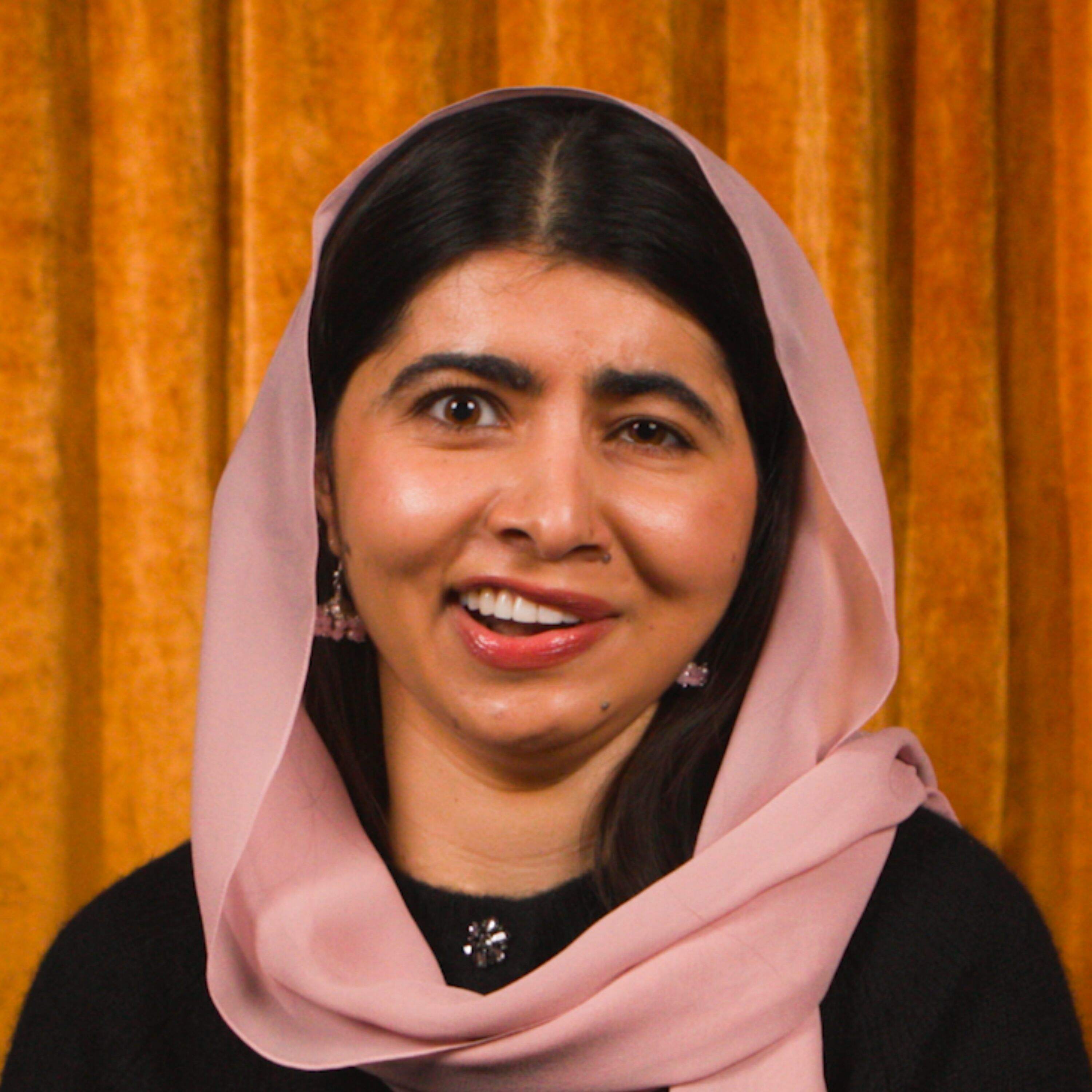
You know, how famous actors or musicians will sometimes talk about how hard it is to lose their anonymity, having every detail of their lives dissected and interpreted to fit someone else's narrative. It's the trade off, though, for getting to do that kind of work. And they understand that. Devil's bargain. But Malala Yousafzai never agreed to this deal. It was forced on her after the Taliban shot her for talking publicly about why girls should get to go to school. After the attack, she was put on this pedestal by the entire world. She was awarded the Nobel Peace Prize when she was just 17. She wasn't just a survivor. She was a hero on the global stage. But when does a hero just get to be a human trying to figure herself out like the rest of us? Malala Yousafzai's new memoir tackles that question. It is called Finding My Way. And I am so very happy to welcome Malala Yousafzai to Wildcard. Hi.
- [02:08]
Malala Yousafzai
Hi, Rachel. Thank you so much.
- [02:14]
Rachel Martin
Round one Memories. I'm just gonna hold up three cards randomly. You pick Malala. One, Two or three.
- [02:23]
Malala Yousafzai
Three.
- [02:23]
Rachel Martin
Three. Okay. What's a routine from your childhood that you miss.
- [02:35]
Malala Yousafzai
As a kid? I remember I used to stand on a stool in the toilet in front of the toilet mirror and. And would start giving speeches about different topics.
- [02:46]
Rachel Martin
Did you really?
- [02:48]
Malala Yousafzai
Yes. And then in the mirror, I would just sort of like, imagine that I am speaking to people, and I would just pick up a different Topic every day. So now that I'm living this real life of giving speeches at global platforms, speaking to people, leaders, it just feels surreal that as a kid I would have that moment to myself in the toilet.
- [03:12]
Rachel Martin
That is a joke.
- [03:13]
Malala Yousafzai
And give a speech in front of the mirror. Yes.
- [03:15]
Rachel Martin
Do you.
- [03:16]
Malala Yousafzai
That's a memory that I have. Yeah.
- [03:18]
Rachel Martin
I mean, that's a long time ago, so I'm putting you on the spot. But can you give me an example of a topic? Like, do you remember something that you would hold forth on in the toilet mirror?
- [03:29]
Malala Yousafzai
I mean, in our school, you know, the topics would vary from cleanliness is a good habit and we all should follow. You know, I was like, yes, of course. Oh, you know, what could we say in opposition?
- [03:44]
Sponsor/Announcer
Right.
- [03:45]
Malala Yousafzai
Or democracy? You know, give a speech in favor of democracy. Kids used to do that.
- [03:50]
Rachel Martin
Wow.
- [03:51]
Malala Yousafzai
And why mobile phones should be banned in school. That was a topic that also, like, came on later.
- [03:59]
Rachel Martin
So these were assignments that were given in school, but you were so into this that you would practice.
- [04:03]
Malala Yousafzai
Yes. At home. Yes, yes. But so the situation. So terrorism started in Swat Valley when I was just 10 years old. So my speeches quickly changed to speaking about. Wanting to speaking about the importance of girls education and why girls should be in school. So I also remember practicing those words as well. In front of the mirror. Yeah.
- [04:29]
Rachel Martin
We should just remind people, Swat Valley, you grew up in a remote part of Pakistan, which is beautiful. Part of Pakistan. That's a wild thing to know that it took root so young in you, that desire to, like, change.
- [04:42]
Malala Yousafzai
I know. From my bathroom to the un.
- [04:44]
Rachel Martin
Yes.
- [04:44]
Malala Yousafzai
That's an exciting journey.
- [04:47]
Rachel Martin
Few steps in between.
- [04:49]
Malala Yousafzai
Yes.
- [04:49]
Rachel Martin
Okay, next? Three. One, two or three?
- [04:53]
Malala Yousafzai
I'm gonna go for two this time.
- [04:55]
Rachel Martin
Two. What's a piece of advice you were smart to ignore?
- [05:06]
Malala Yousafzai
I have ignored many, many things. Advice, feedback. When I was in college, that's when I ignored advice. Because, you know, if I had listened to the advice that my mom or other people had given me, I would not have had the college experience that helped me grow and learn who I am as a person. So my dad just wanted me to study and get the top marks in college, maybe run for some Oxford union president's role.
- [05:43]
Rachel Martin
You went to Oxford? Yeah. We should just say yeah.
- [05:46]
Malala Yousafzai
But I knew that I could come back to these textbooks anytime. I could read them at any point in my life. But I am with friends who are my age and they're all doing fun stuff. They're going to events and I want to be with them. So I remember one day in the library. I was looking at these books and thinking about my assignment, and I saw my friends giggling and laughing outside, and I said, you know what? I want to be with them. So closed, my book went off, and I decided that I can learn better when I'm with friends. This is an exposure I have not had before. So in that case, I ignored my father's advice. There were, you know, events and opportunities where I was thinking about my mom and, like, what would my mom say? So, for example, There was this Aerobics, 80s Aerobics theme party.
- [06:40]
Rachel Martin
Oh, yeah. You wrote about this in the book. I love this. Yeah.
- [06:43]
Malala Yousafzai
Yes. And, you know, I was, like, so excited. I said, like, you know, we should go. But then when I thought about the theme and how would I dress up for it, I said, okay, maybe 80s.
- [06:53]
Rachel Martin
Aerobics is not, like, super modest attire.
- [06:56]
Malala Yousafzai
And, like, what would my mom say? Because my mom is of the view that I should be wearing more of the traditional Pakistani shalwar kameez. That's because what, you know, the community expects us to be representing the culture, but, you know, it's then less about representing the culture and more about the men's misogyny who are judging you for what you wear. So in that moment, I said, you know, do I want to be myself in this moment and have this experience that any college student should. Should have a chance to experience? So, yeah, I, you know, I put on. I put on this, like, bright yellow top and a lot of glitter on my face, big yellow earrings and put on some sunglasses and a cap, and I burned off.
- [07:46]
Rachel Martin
80S fitness superstar.
- [07:48]
Malala Yousafzai
Yes.
- [07:50]
Rachel Martin
Also, I just think people should understand. It's not just that you were getting advice on how to live from your family, which could feel oppressive at times. Anyone online was inundating you, and probably still does, was like, why are you doing xyz? Malala, you need to be doing this instead, and you're not setting a good enough example here. You should be doing this.
- [08:13]
Malala Yousafzai
I mean, I have been hearing it almost every day, and what I focus on is my work, my dream for the world, which is that girls should have a right to education. It is hard to process all of that. I think in the end, we are all humans, and these things do affect us. So I'll be honest in that I have been affected by the comments in the past especially, but with time, I have learned to cope with it, and I just focus on the work that I do. Yeah.
- [08:52]
Rachel Martin
This is the last question in the memories. Round one, two or three.
- [08:59]
Malala Yousafzai
I'm gonna go for one.
- [09:01]
Rachel Martin
For one, what's the biggest risk you've taken?
- [09:09]
Malala Yousafzai
I think the biggest risk would be deciding to climb my college rooftop with a stranger.
- [09:18]
Rachel Martin
I love this.
- [09:19]
Malala Yousafzai
I don't know what I was thinking, but I want to be this rebellious student. Yes. So I'm at Oxford, I'm in college, and the stranger comes to me and offers that, you know, there's this exciting thriller experience that only the most rebellious college students are experiencing and is climbing the rooftop. So I remember like at midnight, going up to the top floor, and then.
- [09:46]
Rachel Martin
You did not know this person.
- [09:48]
Malala Yousafzai
No, no.
- [09:49]
Rachel Martin
But you were just in a sense of, you know, carpe diem, let's go, let's be in college. And being in college means climbing this roof with this rando guy. We're doing it.
- [09:59]
Malala Yousafzai
Yes, exactly. You know, like one misstep and you fall off the rooftop. Like, it's a disaster. But I made it up there and I was so. I was under the bell tower and it was such a surreal moment, and I'm so glad I did that. And then I became an advocate for it. So I would offer it to other students, even strangers. I said, do you want to have this amazing experience that nobody else has had, and only you get to experience it and join me at midnight.
- [10:35]
Rachel Martin
What kind of footwear did you wear for this? I feel like the footwear choice would be important.
- [10:39]
Malala Yousafzai
Do you know? That's such a good question. So I wore sandals.
- [10:44]
Rachel Martin
That seems very, very dangerous.
- [10:46]
Malala Yousafzai
And at that time, I was so insecure about my height. So I'm just five foot tall. That's it. Five foot. And I would wear high heels. I would wear sandals. And even if I wore boots, it would be with a wedge. So flat shoes were not for me. I had never worn sneakers.
- [11:04]
Rachel Martin
Wait, so you wore sandals with a heel?
- [11:06]
Malala Yousafzai
Yes, I took that risk, yes. Now I wear flat shoes. It changed for me when I met my husband. So Aasar, he's taller. So he's like much, much taller. And to be honest, like me in heels and me without heels. It just made no difference. Then I said, you know what? It's fine. I think I'm also getting older and I need flatter shoes and sneakers.
- [11:30]
Rachel Martin
Can we just tell women everywhere to stop wearing heels? They are not good for you. Just own yourself and be comfortable and don't use them to climb on roofs either. Especially Malala. That is very risky. And now you've said it out loud. And I'm sure your parents were horrified to learn of that. Honestly.
- [11:47]
Malala Yousafzai
Yeah, yeah. I mean, I'm so grateful I am alive.
- [11:52]
Rachel Martin
There are many things you have lived through so much and so much risk. But really that was the real risk. That was self induced.
- [12:00]
Malala Yousafzai
That was the real risk. Foreign.
- [12:12]
Sponsor/Announcer
This message comes from Charles Schwab. When it comes to managing your wealth, Schwab gives you more choices like full service, wealth management and advice when you need it. You can also invest on your own and trade on thinkorswim. Visit schwab.com to learn more.
- [12:27]
Rachel Martin
Support for this podcast and the following message come from Dignity Memorial for many families, remembering loved ones means honoring the details that made them unique. Dignity Memorial is dedicated to professionalism and compassion in every detail of a life celebration. Find a provider near you@dignitymemorial.com this message.
- [12:48]
Sponsor/Announcer
Comes from Saatva, official mattress and restorative sleep provider for Team usa. All athletes have to clear hurdles at some point, one of which is the need to get quality restorative sleep to perform at their peak. That's why Saatva is proud to be providing athletes with mattresses and bedding for the LA28 Olympic and Paralympic Games. You can enjoy that kind of sleep too. Visit saatva.com NPR and save $200 on $1,000 or more. This message comes from Progressive Insurance. You chose to hit play on this podcast today. Smart Choice. Make another Smart Choice with Auto Quote Explorer to compare rates for multiple car insurance companies all at once. Try it@progressive.com, progressive Casualty Insurance Company and affiliates. Not available in all states or situations. Prices vary based on how you buy.
- [13:41]
Rachel Martin
Let's talk about your book Finding My Way. This is a beautiful book, Malala. It is centered around your time at Oxford when you were in college. Because as you said earlier, this was, this was really the first time that you, you got a sense of freedom and like who did you want to be in this place for these years? And you still had a lot of, I mean, immeasurable pressure because you were going to college. But at the same time you were still working as this global education advocate. You were still giving speeches all over the world and you were also dealing with PTSD from the attack itself. And you desperately just wanted to be a girl in college, like making mistakes and climbing roofs and living life. I love that you found such dear friends at school because you can imagine, I mean you do have this anecdote in the beginning when you get there and you're like at this meet and greet mixer for new students and you've just met. I think this is the right timeline. You've just Met like this young woman. You're like, oh, I like her. I feel like reviving. We could be friends. And then like, there's a poster of you in the same room or something.
- [14:59]
Malala Yousafzai
Yeah. So she was the first friend that I met at college. We were studying the same subjects, so I said hello, and it was really nice. And then we were, like, exploring the different societies and clubs that were open for new students and figuring out who wants to sign up for what. And then there was this Oxford Union stall. Oxford Union is this famous debating society at Oxford. So I was like, yeah, sure, I'll sign up. But then on the poster behind, there were photos of all of the famous people who had spoken there before. And I'm just scanning through it. Yes, I had spoken there many, many years before. And I said, oh, this is a disaster. I just wanted to, like, disapp. I said, oh, like, go remove. Can I undo any of this? And just feeling so embarrassed. And I was like, oh, shit, this friend is going to leave me right now. But she was supportive. Yeah, she, you know, like, I think for me, I knew that she was the right friend. And all the other friends who I made because they just wanted us to talk about college stuff. Totally. And the next assignment. And let's get groceries. What are you doing tonight? And it was nothing about, you know, what happened to you when you were attacked or what was the Nobel Peace Prize. Like, none of those questions. And that's why I found those friendships valuable. And I will treasure them forever.
- [16:31]
Rachel Martin
Yeah, I mean, they were. And they were there when you would make mistakes. Like everybody who is in their late teens, early 20s, when you have, in some instances, I hope it's okay that I say this, you would be out late or you would be broken hearted over someone, or even once you took some kind of substance you thought was maybe more benign, you thought it was maybe pot and turned out to be something worse and had like a whole panic attack. And your friends were just like, it doesn't matter how famous you are. We are just here for you through all of these things.
- [17:11]
Malala Yousafzai
Yeah. So I remember when I had the bong experience, it triggered the whole Taliban attack, you know, visuals right in front of me. I felt like I was reliving that moment. So, you know, it was flashbacks. It was flashbacks. Time froze. Like, I froze. And then after that, I started having panic attacks. And all of these things I was experiencing for the first time seven years after the attack. I just could not, like, process that. You know, I went through all of it. And why am why do I feel so weak and fragile right now? Why can't I cope with it? And I remember in that moment how, like, my friends. So these college friends made sure that they were there for me. They would make me feel like things are going to be okay. They even did sleepovers in my room.
- [18:02]
Rachel Martin
Because they didn't want to leave you alone. Because they knew that you were going to be. They didn't want to leave me alone.
- [18:06]
Malala Yousafzai
I mean, I could finally, like, close my eyes and. And fall asleep and didn't feel scared. And then one of my friends actually suggested that I see a therapist. And if she had not said that, I do not know if I would be in the same place that I am right now. She made me feel comfortable that it's okay to.
- [18:22]
Rachel Martin
Let me just tell you. I had not seen a therapist in a significant way before this, which is.
- [18:26]
Malala Yousafzai
No. It was offered initially around the bullet recovery time, but I sort of rolled my eyes and I said a question like, so how are you feeling today? Gonna help me through this? And I wish I had received therapy a lot sooner, but you got it. Yeah, but I got it, and I'm so grateful for it.
- [18:48]
Rachel Martin
Yeah.
- [18:49]
Malala Yousafzai
Yes.
- [18:50]
Rachel Martin
So it's also the story, this book, about falling in love.
- [18:56]
Malala Yousafzai
Yes.
- [18:56]
Rachel Martin
Which you mentioned, which is a beautiful part of this story, because in that timeframe, he wasn't a student at Oxford, but you met him through mutual friends in that time of your life.
- [19:06]
Malala Yousafzai
Yes. I mean, I was in love with Ashr, so I knew he was the right one. He was handsome and funny and charming, and he found me funny as well. But growing up, I had seen girls married off at such a young age, and I just didn't like marriage. I didn't want to be married. You know, child marriage is a big issue, and it would just, like, scare me, of course. But, you know, so I was doing my research. I was talking to my friends a lot about this. I was even reading books. I was reading bell hooks and, you know, Dolly Alderton and many others. Virginia Wolf, I'm like, give me an answer, please. Somebody give me an answer.
- [19:54]
Rachel Martin
Is this gonna be my undoing to, like, tether myself to this man?
- [19:57]
Malala Yousafzai
Yeah. And I spent some time with my husband. We were at Lake Placid, and, you know, just when I had these conversations with him and when I spent some time with him, I knew that he was the right one. Yeah. Then we got married.
- [20:15]
Rachel Martin
It is a phenomenal book.
- [20:16]
Malala Yousafzai
Oh, thank you.
- [20:18]
Rachel Martin
Okay, you ready to do more game?
- [20:20]
Malala Yousafzai
Yes.
- [20:20]
Rachel Martin
Okay, this is round two. This is the Insights round.
- [20:25]
Malala Yousafzai
Okay.
- [20:26]
Rachel Martin
Okay. Three new cards. One, two or three?
- [20:31]
Malala Yousafzai
One. One.
- [20:33]
Rachel Martin
What are you secretly obsessed with?
- [20:38]
Malala Yousafzai
I am obsessed with learning languages.
- [20:41]
Sponsor/Announcer
Are you?
- [20:41]
Malala Yousafzai
I like. Yes. I like to learn a new language. Yes.
- [20:45]
Rachel Martin
Wait, just like you like to learn, you know, pickleball. Like, you just pick them up. What are we talking about here?
- [20:52]
Malala Yousafzai
So, you know, I speak English, Urdu, and Pashto. Pashto is my mother Tong. I've been learning Swahili and a bit of Arabic. So I just. I like learning new languages. Yeah, yeah. Just like, in my own free time, I'm sometimes on duolingo, maintaining my streak. Yes.
- [21:11]
Rachel Martin
Why Swahili?
- [21:16]
Malala Yousafzai
You know, if you ask somebody, they will always say, like, French, Spanish, German or something like that. And I said, I just want to learn a different language. Like, so I was looking up all of these different languages, and Swahili is spoken in quite a few parts of Africa, in Kenya, Tanzania. So I said, okay. Like, that is a cool language. It's very cool. Like, when you start exploring Swahili, it's very cool. It's a bit hard to learn, but it's very well structured. Once you learn it, there's some magic to it.
- [21:48]
Rachel Martin
What does it open up for you in your imagination or what do you love about it?
- [21:54]
Malala Yousafzai
I feel connection with the people. When you learn their language, you understand their emotions, their culture, and there are phrases you can never translate into another language. And we all feel that in our language. And I speak a Pashto language, so there are things I can never translate. But when you learn another language, you. And you can feel that instant connection with them because you can understand what they are saying, and you could also communicate that in the same way. It's the connection. It's closeness to people. You just say hello in their language, and they immediately embrace you. So I love that they're like, we are one now. Yeah.
- [22:41]
Sponsor/Announcer
Right.
- [22:41]
Rachel Martin
So you've tried this out. They speak Swahili in Tanzania, right?
- [22:46]
Malala Yousafzai
Yeah. So, like, we do Malala fund projects in Tanzania. So when I went to Tanzania this summer, it was amazing because sometimes they would be, like, chatting, and I could figure out what they were saying.
- [22:59]
Rachel Martin
Do you tell them that you understand? So they can't.
- [23:02]
Malala Yousafzai
No. You don't tell them immediately? No, you do not tell them immediately. Sort of like when they say something nice, then you can acknowledge you said. I think I understood what you said. Of course, when they speak, they speak so fast that it's really hard to break it down that I understand, like, a few words here and there, but, well, you know, The Lion King. Like, it has a lot of Swahili words like hakuna matata and all of that.
- [23:28]
Rachel Martin
Hakuna matata. I don't think. I don't think I can say that.
- [23:31]
Malala Yousafzai
It means no worries. It actually means no worries. I know this. You guys just know the lyrics, but I know the actual meaning.
- [23:40]
Rachel Martin
Okay, next. Three. One, two, or three three? What are you like when no one is around?
- [23:49]
Malala Yousafzai
I want to flip it.
- [23:53]
Rachel Martin
Okay. I'm comfortable, I guess, is my answer. It didn't used to be that way. I lived in Japan after college. I went and took a teaching position in a really small town. And I remember thinking about that question a lot. Who am I when there's. When no one is around? Because I was so alone. I didn't know anyone felt very isolated in the culture. And I was like, I just feel like everything's been stripped away because how much of ourselves is just defined in opposition to other people? And when all those people were gone and I was just like a stranger in this strange land, I was like, who am I at my core? And I've lived a lot of life, and I've gone through enough mini existential crises to know who I am now at my core. And I feel content. And you and me.
- [24:58]
Malala Yousafzai
Yeah, I think I'm usually at peace with myself when I'm on my own. I actually. I feel like I'm everything and nothing at the same time. It's quite a fascinating experience. But, you know, I have. I. It's really strange when you're also, like, defined by people for who you are.
- [25:23]
Rachel Martin
Right.
- [25:24]
Malala Yousafzai
That's what I was thinking. You know, I have had titles and these introductions that I hear. I'm introduced at a conference or I see my bio somewhere and. And I take a moment and wonder, is this who I am? Or is my experience, all that defines me is my education, all that defines me, or some titles and awards I have received, all that defines me. But I think I feel like the person I am at heart, a part of that, has always felt the same. And when I'm on my own, I just take myself back to my childhood and wonder if I still connect with that part of me. And there's something in my heart that I think has always been there, always been there, that there's a part of me that is very consistent and constant, that it's been there. So I feel the connection. But I also, at the same time, can see the change in the transition as well, and in a good way. So I'm grateful for the Alone times I have had. But I also realized that, you know, it's more the experiences that I needed and the college experience, getting that exposure to be with people of my age and be in these safe spaces where I do not feel judged by people, where I don't have to think twice.
- [26:52]
Rachel Martin
About what I'm a Lalala Nobel Prize winner.
- [26:55]
Malala Yousafzai
You can be silly and funny, and you could talk about astrology, and you can just say a random thing and people can laugh off. And those things have helped me grow as a person, that I truly value that. And I think, yeah, just like feeling the love, feeling the immense love from friends, from my husband, those things have actually changed me as a person.
- [27:23]
Rachel Martin
Okay, this is the last question in this round. 1, 2 or 3?
- [27:33]
Malala Yousafzai
Let's go with 2.
- [27:36]
Rachel Martin
What is something you think very differently about today than you did 10 years ago?
- [27:45]
Malala Yousafzai
Because I became an activist at such a young age, I was asked about my opinion on different topics at the time that I thought I'm supposed to have fixed views, that you cannot think differently. You cannot just, like, you know, say, you know what? I changed my mind. But I just thought that there was, like, one way of being a good person, and that means you sort of listen like, that your parents are happy with you, your community is happy with you, and everybody is approving you, and, you know, you are meeting the cultural and the religious and the traditional expectations. That opinion of mine changed, yes, but it changed because I saw more people from my own culture, from my own faith, having different opinions. When somebody who says, I'm from the same village as you, I have had the same experiences as you, or, you know, I have the same faith as you, but I think differently. And here's why that opens up your mind. So I have, like, in college, I was meeting, like, Muslim people. Some would drink, some would not. Some would cover their ha, some would not. Some would mind if it's pork, and some would not mind or some wanted to be open to dating, Some were saying, you know what? I'm gonna let my parents decide. I don't want dating and any of that. I don't want to have a boyfriend. And I said, this is fascinating. This is truly, truly fascinating how everybody thinks differently. And initially I would have said, this is right, this is wrong. But I said, who am I to decide who's right and who's wrong? Like, have I put myself in somebody else's shoes and thought about it? So, like, it is truly such a powerful learning experience when you try to understand other people's perspectives.
- [29:39]
Sponsor/Announcer
This Message comes from Babbel. Babbel's conversation based language technique teaches you useful words and phrases to get you speaking quickly about the things you actually talk about in the real world with lessons handcrafted by over 200 language experts and voiced by real native speakers. Start speaking with Babel today. Get up to 55% off your Babel subscription right now at babbel.com NPR spelled B-A-B-B-E-L.com NPR rules and restrictions may apply.
- [30:12]
This message comes from Paramount plus streaming November 16th on Paramount. It's the return of Landman from Taylor Sheridan, co creator of Yellowstone. Academy award winner Billy Bob Thornton is back, featuring an all star cast including academy award nominees Demi Moore, Andy Garcia and Sam Elliott. Tensions come to a head as Thornton's Tommy and Moore's Cammy Miller struggle to maintain control of Emtech's oil Landman. New season streaming November 16th only on Paramount Plus. This message comes from Progressive Insurance and the name your price tool. It helps you find car insurance options in your budget. Try it today@progressive.com, progressive Casualty Insurance Company and affiliates. Price and coverage match limited by state law. Not available in all states. This message comes from Instacart Bringing magic this holiday season to the people who make it magic for others. Get delivery and deals on everything you need this season. Whether it's a last minute holiday decor, emergency coverage for the holiday party, or just avoiding going out in the cold. Instacart is here. Plus, November 24th to December 23rd is deal month with savings from your favorite retailers and deals on grocery, electronics, beauty, toys and more. Download the Instacart app to get a little magic delivered today.
- [31:34]
Rachel Martin
This is our last round.
- [31:36]
Malala Yousafzai
Okay.
- [31:37]
Rachel Martin
Beliefs. Okay. Okay, we can do it. Three new cards. One, two or three?
- [31:48]
Malala Yousafzai
How do I know that? It's like different questions. What if it's the same question?
- [31:51]
Rachel Martin
You are trusting me. But I promise they're all, they're so different that like, I look at them and I'm like, oh, I really want you to pick that one. But if you pick this one, we're just going with this one. They're all different. You can. I'll show you.
- [32:04]
Malala Yousafzai
I'm gonna. Okay, okay. Okay. I trust you. Okay. Number three. Number three.
- [32:08]
Rachel Martin
They would be also so bad if I like made this whole game and lied to everyone. I feel very badly about that. Okay, number three. Where do you feel most free?
- [32:23]
Malala Yousafzai
Ooh. Do you know? It's going to be a strange answer, but I feel most free when I'm with my husband, there's something about it that's strange answer that he is with me and around me, I'm just more of myself. And it's maybe it's like a sense of safety. It's a sense of security and ease. It's just a mix of that. But, you know, when I see his face, when I'm, like, doing a serious event, it just gives me an immense joy. When I see him in a room where I'm just, like, talking to friends, it makes me just so happy and I. And more of myself.
- [33:08]
Rachel Martin
This is so interesting because how you prefaced your answer, right, you said, this is gonna be a strange answer, but I feel most free when I'm with my husband. And that reminds me of your original idea of marriage. Like, you thought it was not going to be free. You thought that this was an institution completely defined to limit your freedom. And you found this person that unlocks your ultimate freedom, which is so beautiful.
- [33:34]
Malala Yousafzai
And I do want to clarify this, that I still do not say that marriage is the right decision for a woman or it's the wrong decision for a woman. I think it's up to a woman to decide for herself. I think she knows best. And I feel more free with my husband. I think it should be for everybody out there. When you feel freer with your partner, you should know that you have married the right person. You are with the right person now. When I compare myself from the day of marriage to now, I'm a completely different person. Aasar has introduced me to sports. I play golf. Who would have thought I played golf. I go to the gym. I am doing weightlifting. I do, like, Romanian deadlifts.
- [34:20]
Rachel Martin
What?
- [34:21]
Malala Yousafzai
Yes. I don't really know what that means.
- [34:23]
Rachel Martin
But attaching the word Romanian to it makes it sound really intense.
- [34:28]
Malala Yousafzai
Yes, I do these workouts, and I can do very heavy weightlifting. I am running. And it's because I remember, like, he would just say, let's just give it a try. Why do you think you can't do it? He says. He told me that men are, like, not naturally good at any of these things. Men actually go and practice. They give it a try. They get this exposure. Girls are not given the exposure. They sort of assume that, you know, it's just for boys, right? So I said, okay, fine. But I remember those mornings when he would take me to the gym, and I would just have this grumpy face, and I would give him this look, like, why have you brought me to the gym? I hate gym. And he's like, don't worry. You would fall in love with it in the end. And now I'm in love with gym. I'm like, can, you know, I'm gonna go to the gym. Like, you know, if you want to come, fine. If you don't, like, I'll be deadlifting, you know? Yes, yes.
- [35:20]
Rachel Martin
Do my thing. You know, I'm pretty sure if you started an Instagram channel that was just Malala working out with heavy weights.
- [35:29]
Malala Yousafzai
Yep. It would go off on it.
- [35:32]
Rachel Martin
Not that you need any more Instagram followers, but I'm just saying. Okay, three more. One, two, or three?
- [35:40]
Malala Yousafzai
Let's go with two.
- [35:44]
Rachel Martin
What truth guides your life more than any other?
- [35:51]
Malala Yousafzai
I think seeing yourself in others is the truth that guides my life. I took a Taliban bullet when I was a child, and since then, I just have one truth in front of me, and that is no child should take a bullet for daring to be in school, and no girl should be left behind for daring to be in a classroom. And this is the mission that I now work for. Yeah, I think it's just when you go through a physical pain yourself, you just do not want it to happen to anybody else. I have built values of forgiveness, empathy. Through that, I have become more open to, you know, understanding other people's emotions. And, yeah, I just, you know, it's just this dream that can this world be a peaceful place? Can we. Can we stop wars? Can we stop violence? And can children have a life in peace where they can be in schools and have a future and can have a life that they can live in dignity?
- [37:07]
Rachel Martin
You said empathy and forgiveness, that you've cultivated those since the attack. I hesitate to ask this because I don't feel like there should be any expectation on you to forgive the people who shot you at all. But since you said those words, I wonder what that means for you, and has it been a necessary part of your healing.
- [37:30]
Malala Yousafzai
So, you know, I cannot process, like, harm for others. I think that is something that all my life experiences have taught me. Like, when you see violence and harm happening to others or to yourself, you just. You just want it to end. You do not wish it to happen to anybody else, and even if it means the people who harmed you. And if forgiveness can be a pathway that can make a difference, yes, I would choose forgiveness. But for me, the most important thing is the future of other girls right now. So what I'm not saying is that we normalize relations with perpetrators like the Taliban or accept them like the Taliban are now in control of the whole country. In Afghanistan, I I had a conversation with Afghan girls on Zoom, and they were telling me how they're learning in secret. They are trying to use these online platforms, but the Taliban are still threatening them. They do not allow them to be in a classroom. And it's been four and a half years for them. They still have their dreams to become something, but they do not see a future under the Taliban.
- [38:41]
Rachel Martin
That is where your empathy is applied to those girls who are still suffering, to the girls.
- [38:46]
Malala Yousafzai
I want the girls to have a voice. I want the girls to be heard. And that's why. So I'm part of this campaign that Afghan women are leading, and that is to codify gender apartheid in the Crime Against Humanity treaty, because they are recognizing what's happening in Afghanistan as gender apartheid, that it is a systemic oppression, and that the Taliban should be held accountable for that. So, yes, I think for me, it's like forgiveness and kindness, but also being more proactive in bringing peace and sustaining peace and protecting human rights so that we avoid and we prevent these violations of human rights, and we prevent the harm from happening.
- [39:30]
Sponsor/Announcer
Right.
- [39:31]
Rachel Martin
Your voice has been amplified through their violence. Your voice actually got amplified and the effect got amplified of girls learning. Okay, this is the last set of three questions. One, two, or three?
- [39:51]
Malala Yousafzai
I don't know. I'm getting this feeling about the numbers. Do I like one? Do I like two? Do I like three?
- [39:57]
Rachel Martin
Go with it. Go with it.
- [39:58]
Malala Yousafzai
Let's go with number one.
- [40:00]
Rachel Martin
Number one. When do you think about your smallness in the universe?
- [40:07]
Malala Yousafzai
All the time. Yeah, I think that's. That's so easy to answer. I think, you know, you feel small when you look around. When you look at nature, you feel small. When you think for a second how big the universe is, you feel small. When you even think about yourself and how complex we are, it's just truly a fascinating experience. And I have met incredible people around the world. They have inspired me. I have met girls activists, and when I look at the work that they're leading in Tanzania, in Ethiopia, in Pakistan, Afghanistan, Brazil, Nigeria, it gives me this reminder that we are all working collectively for the change we want to see. And we ourselves are small, and we feel small, but when we join hands, we are very strong and we are more impactful.
- [41:05]
Rachel Martin
And isn't that a lovely. I think about that idea a lot. Like the smallness, the infinitesimally smallness of our existence in the universe. And humans, how much are we of time? And for me, anyway, the feeling of smallness is a comfort. It's like feeling individually Insignificant is a comfort to me in some way, but I love what you said. But then the power becomes. In collaboration with others, then the power grows and grows and grows. But there is comfort and perspective in knowing that you're not the center of the universe and that, yeah, 100% things are ephemeral and they will come and they will go. And you try to love people and make change where you can on your little patch of it.
- [42:01]
Malala Yousafzai
Yes.
- [42:07]
Rachel Martin
We end the show the same way every time with a trip in our memory time machine. In the memory time machine, you revisit one moment from your past. It's not a moment you want to change anything about. Okay. It's just a moment you'd like to linger in a little bit longer. What moment do you choose?
- [42:32]
Malala Yousafzai
It would be my. I always want to go back in time and spend more time in my school in Pakistan with my friends, with my best friend Muneeba. I remember every moment that I spent there. You know, we loved our time in school. We loved our education. I just missed the giggles, the laughter, just talking about, you know, the life ahead of us and just. We know how lucky we were that we could even be in a school. And like, you know, we would be, like, eating crisps and then we would want to play cricket and sometimes like, badminton on the school rooftop and just run around. They hide and seeks. I know. Yeah. I have a thing for rooftops. Yes. Yeah. It's my childhood memories with my friends. One time we went for this school picnic and we were in the middle of the mountains and there's a waterfall behind us, and it was just such a stunning, beautiful place. And my friend and I decided that we want to sing, and we sang Taylor Swift's Love Story song together in front of our friends and our school teachers. That's amazing. And I. Yeah, we had so much confidence. I don't know where that came from, but, yeah, it's those moments that I want to relive. Just re. Experience.
- [44:10]
Rachel Martin
Yeah. I feel like Taylor Swift would be really flattered to hear that story.
- [44:16]
Malala Yousafzai
Yeah. Aw.
- [44:22]
Rachel Martin
Malala Yousafzai. Her new book is a memoir, and it is called Finding My Way. It's out now. It is a wonderful, wonderful read. It's been a great joy to get to talk to you, my dear. Thank you.
- [44:36]
Malala Yousafzai
Thank you. Thank you so much.
- [44:44]
Rachel Martin
Hope you enjoyed this conversation. If you'd like to watch Wildcard, you can do that on our YouTube page. We are P RWildcard. We've got so many of our favorite episodes there, like my conversations with Brandi Carlisle, Brett Goldstein, Michelle Obama, John Green, and so many more. Again, our YouTube page is NPRWildcard. This episode was produced by Lee Hale and edited by Dave Planchard. It was mastered by Patrick Murray and Robert Rodriguez. Wildcard's executive producer is Yolanda Sangweni. And our theme music is by Rock. We're going to shuffle the deck and be back with more next week. Talk to you then.
- [45:25]
Sponsor/Announcer
This message comes From NPR Sponsor, 1Password Secure access to your online world, from emails to banking, so you can protect what matters most with 1Password. For a free 2 week trial, go to 1Password.com NPR this message comes from Mint Mobile.
- [45:43]
Starting at $15 a month, make the switch@mintmobile.com Switch $45 upfront payment for 3 months 5GB plan equivalent to $15 a month Taxes and fees Extra first 3 months only.
- [45:56]
See terms this message comes from Vanguard. Capturing value in the bond market is not easy. That's why Vanguard offers a suite of over 80 institutional quality bond funds actively managed by a 200 person global team of sector specialists, analysts and traders. They're designed for financial advisors looking to give their clients consistent results year in and year out. See the record@vanguard.com audio that's vanguard.com audio all investing is subject to risk. Vanguard Marketing Corporation Distributor.