Loading summary
Transcript257 lines
- [00:00]
Sponsor/Advertisement Voice
This message comes from USC Norris Comprehensive Cancer Center. World class expertise, advanced treatments, clinical trial access, and personalized care. Request an appointment@keckmedicine.org usccancer or 1-800-usc-care.
- [00:19]
Rachel Martin
Are you good at being alone?
- [00:21]
Oprah Winfrey
Oh, my God, I'm a master at it.
- [00:24]
Rachel Martin
Tell me more.
- [00:25]
Oprah Winfrey
That's a card designed for me. I learned as a child how to be alone and how to be, how to feel full alone because there wasn't anybody. So there's no longing for something else other than what I actually had.
- [00:40]
Rachel Martin
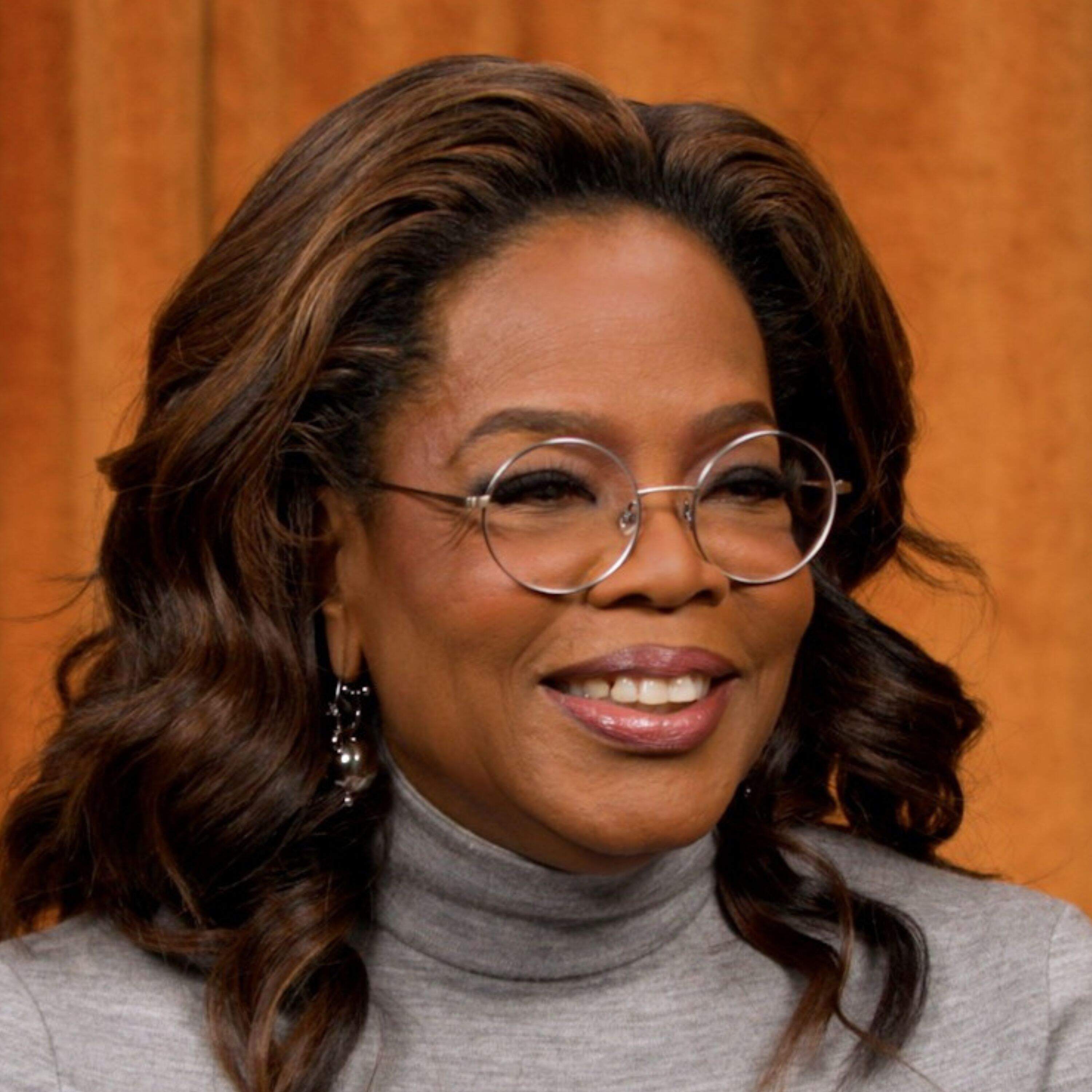
I'm Rachel Martin, and this is Wildcard, the show where cards control the conversation. Each week, my guest answers questions about their life. Questions pulled from a deck of cards. They're allowed to skip one and to flip one question back on me. My guest today is Oprah Winfrey.
- [00:58]
Oprah Winfrey
The reason why I'm so empathetic and, and have such understanding and curiosity is because, wow, that happened to me, too. I lived through that.
- [01:10]
Rachel Martin
These days, everyone is all about intimacy and authenticity. But this is what Oprah was all about way back, Starting in the 1980s, she let her audience in on some of the most personal parts of her life, and it changed media forever. Along the way, she inspired generations of young girls to find their own voice, myself included. Oprah's got a new book out. It's called Health, you, Weight and what it's like to Be Free. She's written it with Dr. Anya Yastroboff. And it is my huge pleasure to welcome Oprah Winfrey to Wild Card.
- [01:40]
Oprah Winfrey
Wild Card. Yay. Rachel Woo. Wild card. Here we are, girl.
- [01:47]
Rachel Martin
Oh, my God, this is happening. So this is like building a car in front of, in front of Henry Ford, who invented cars. I just have to say, I mean, truly, my intro is truthful. You invented modern interviewing. I mean, you really did.
- [02:05]
Oprah Winfrey
Well, as you were saying that, I was thinking, oh, yeah, I think we did. We actually did do that. I don't sit around thinking about, oh, what we did or what you've accomplished. But, yes, when I started, there wasn't the level of certainly nobody was being themselves. No, it was all television. And you put on a face for television and you go on television, you act like you own tv. And I think what our show did, and before our show, who was the. Whose shoulders I stand on is Phil Donahue. And I actually stopped watching Phil Donahue when I became a talk show host myself because I found myself imitating him.
- [02:48]
Sponsor/Advertisement Voice
Right.
- [02:48]
Rachel Martin
You had to do your own thing
- [02:49]
Oprah Winfrey
and I had to do my own thing. Yeah. So I stopped watching When I started
- [02:52]
Rachel Martin
doing it myself, it worked out.
- [02:54]
Oprah Winfrey
It worked out.
- [02:55]
Rachel Martin
So pleased for you. So we're gonna play this game. All right, first round is memories. Oprah. 1, 2 or 3?
- [03:04]
Oprah Winfrey
2, 2.
- [03:05]
Rachel Martin
Right in the middle.
- [03:06]
Oprah Winfrey
Okay.
- [03:07]
Sponsor/Advertisement Voice
Okay.
- [03:09]
Rachel Martin
Were you intimidated or excited about leaving your parents house?
- [03:14]
Oprah Winfrey
Oh, 100% excited.
- [03:16]
Rachel Martin
Yeah.
- [03:16]
Oprah Winfrey
Yes. I remember leaving at 19 and I was leaving because I had a boyfriend and my father. No 25 year old's gonna be coming in this house and no 25 year old just wants to go to the park and feed the ducks. Because the boyfriend before that was my
- [03:33]
Rachel Martin
age, 16, and this boyfriend was 25.
- [03:36]
Oprah Winfrey
And this boyfriend was 25.
- [03:37]
Rachel Martin
Older. Older guy.
- [03:38]
Oprah Winfrey
And I left my father's house because I wanted to be able to spend time with a boyfriend and not have to be home by 11 o'. Clock. And also because I was already an anchor woman on television and having to be home by 11 o'. Clock. I did the 10 o' clock news
- [03:56]
Rachel Martin
when you were 19?
- [03:57]
Oprah Winfrey
Yes, I did the 10 o' clock News when I was 19 and my father was like, you have to be home by 11, dad. The news isn't over to 10:30.
- [04:06]
Rachel Martin
Get a car to get home.
- [04:08]
Oprah Winfrey
It gives you 30 minutes to get home. So, yes, I was really excited to leave home.
- [04:15]
Rachel Martin
You were obviously, I mean, you had success young in your life.
- [04:20]
Oprah Winfrey
Yes.
- [04:22]
Rachel Martin
Did you feel prepared, though, to be an adult at such a young age?
- [04:26]
Oprah Winfrey
I felt I didn't. You know what? I got immediately in debt because I ended up with a credit card and I ended up with $1,800 worth of debt. And I remember taking out a consolidation loan and at the First national bank because I didn't know how I was ever gonna get. I was gonna ever get myself out of $1,800 worth of debt. Because with the interest payments. Oh, yeah, no, the interest payments. And I was only making like $100 a week. And so bottom line is, yeah, I felt prepared. I've never felt like an imposter anywhere, ever. And the reason is, is because my faith is so strong. I was raised to believe that I was God's child. From the time that I was a little girl, I remember standing on the back porch watching my grandmother. Cause y', all, I was raised like Abraham Lincoln. Okay. So when I go to speak at schools, which I don't do so much anymore, but I remember the first time I was speaking at a school and the third grader said, did you know Abraham Lincoln? And I said, no. But I was raised like him. So I understand why my story Feels like Abraham Lincoln. No running water. Raised with no running water, no electricity. Outhouse. Literally a bedpan that I would have to empty in the morning after, you know, my grandmother and I would, you know, use if we would go to the bathroom overnight. And so growing up in a rural environment, I watch, remember watching my grandmother boiling clothes, because no washing machine, obviously no electricity, boiling clothes. She was a domestic worker and she was doing these sheets in the backyard for this white family that she worked for. And I remember her saying to me, oprah, Gail, you better watch me now, because one day you going to have to learn how to do this for yourself. And I distinctly remember the feeling that. No, I won't. I remember it was a feeling that came over me. No, I won't. Watching her with the moisture from her breath and the cold and pulling the sheets out of this big pot, I thought, this will not be my life. And I don't know how I knew that.
- [06:39]
Rachel Martin
How old were you again?
- [06:41]
Oprah Winfrey
I was between 4 and 5.
- [06:42]
Rachel Martin
Oh my God.
- [06:43]
Oprah Winfrey
Because I left when I was 6. But I don't know how I knew that. I just could feel inside myself that this is not going to be my life. And because by that time I'd already been raised in the church by my grandmother, who was really strict religiously. And I didn't know that I had a father or mother other than God. So I was told that God is your father. So I thought Jesus was my brother.
- [07:13]
Rachel Martin
I mean, and if Jesus is your
- [07:14]
Oprah Winfrey
brother, then you can do anything.
- [07:16]
Rachel Martin
The sky's the limit. The sky's the limit.
- [07:18]
Oprah Winfrey
So I, when I moved from my grandmother, after my grandmother became ill, I was sent to Milwaukee to live with my mother, whom I did not know, right. And she had moved to Milwaukee as a part of what I now know, great migration, people going for, looking for a better life there. But. And she was also a domestic worker and living in rooming with this woman who was a very light skinned black woman. And I think I'm healed from it, but my eyes still water when I tell the story. Very light skinned black woman who saw the color of my skin and, and told my mother that I was not allowed to come in the house. And I was 6 years old and it was the first night away from home and they, including my mother, made me sleep on this little porch that was the entryway to the house. And I knew, and I also knew, having never experienced racism before, I knew instantly it was because of the color
- [08:21]
Rachel Martin
of my skin, which must have seemed confusing if you were a child of God, because how is this happening?
- [08:26]
Oprah Winfrey
How is this happening? Right, right. And so what got me through it, though, Rachel, was I would pray to God to protect me. I was very scared out there on that little porch and also had never slept alone. I'd always slept with my grandmother. And I couldn't believe that my mother didn't say, this is my daughter, and she has to come in with me. So it was me and God and I created this angel named Melinda that was protecting me, that was gonna. Was standing out on the porch and protecting me. So all in my imagination. But I would pray to God because I could see that I felt like I was in danger, but the only thing that was gonna really save me was the protection of something bigger than myself. So you had sense of that feeling of faithfulness has been with me my whole life. And although my vision and certainly belief about what God is and what the universe is has been magnified, and I know that God is in all and all people, in all religions and all things, it's still the thing that has been the most profound guiding force in my life. And so therefore, I walk into a room just as cool as you please. And to a man, the fellows either stand to fall down on their knees, and then he starts swarming all around me like a hive of honeybees. And they say, I say it must be the fire in my eyes, the flash of my teeth, the swing of my waist, the joy in my feast. Cause I'm a woman, phenomenally phenomenal woman, that is Maya. Maya Angelou. So I just feel like, also, as Maya said in one of her poems called Poem to my grandmother, I come as one, but I stand as 10,000. And so I never walk into any, any space where I've been the only woman. I've been the only black person within a 500 mile radius. I never feel like I don't belong there because I'm walking in with all the people who've prayed me up and wished for a better day. And I come with not just my mind and body, but I come with the spirit that are also living inside, around, above and through me.
- [10:48]
Rachel Martin
We're done. Oprah has answered all the questions in the wild card deck after the first one. That was good. So the bottom line is you were prepared as all get out to leave your parents house.
- [11:01]
Oprah Winfrey
I was prepared to leave my parents house. I wanted to so much.
- [11:05]
Rachel Martin
Next three cards. 1, 2 or 3?
- [11:07]
Oprah Winfrey
3.
- [11:07]
Rachel Martin
1, 2, 3. Where would you go when you wanted to feel safe as a kid?
- [11:16]
Oprah Winfrey
Oh, Depending on what stage I Was in. So if I was at my grandmother's house, there's a little. There was a little side porch. There was a swing on the porch, and then there was a little. There was a hydrangea bush, and there was a little space between the hydrangea bush and the house where the chickens would go. The chickens would go in there sometimes, and it was just a little, little, little, little, little, tiny space. And if it was thundering and lightning or if I felt unsafe, that's where I would go. I would go there and I would hide. Yeah, with the chickens.
- [12:09]
Rachel Martin
Really? Mm. Were they friendly? I mean, I know some chickens, and they can be sort of nasty.
- [12:13]
Oprah Winfrey
Well, our chickens were really very friendly because, you know, you're feeding the chickens every day. The chickens get to know you. The chickens.
- [12:21]
Rachel Martin
You're right. The chickens. I've been around. I've been, like, the stranger. I've been the interweaver.
- [12:24]
Oprah Winfrey
I've been a stranger to the chickens. I was no stranger to the chickens. Okay. The chickens knew me. The chickens were my. Chickens were my first pets. Okay, got it.
- [12:34]
Rachel Martin
I got it. Okay, last one in this round.
- [12:36]
Oprah Winfrey
I think it's funny. Those are strange chickens.
- [12:39]
Rachel Martin
Yeah, that's right. Yours were friends, friendly chickens. 1, 2 or 3? 1. When have you felt the most homesick?
- [12:49]
Oprah Winfrey
I felt the most homesick just recently. I was way in Australia, and my dog Sadie, who's 17, who had just turned 17, developed a bladder infection and also went into kidney failure. And I thought she was going. Yes. And I thought she was going to pass. And I told the folks who were helping to take care of her for me, just keep her alive until I get there. And so I literally got off the stage speaking in Australia and flew home. But every day I was, like, getting FaceTimes, and she won't get out of bed, and she won't. I was just. Hold on, hold on, hold on.
- [13:31]
Rachel Martin
She's okay now.
- [13:31]
Oprah Winfrey
She's okay now. Yes. And now we have to give her injections every day. But I've done this before. I've had 21 dogs.
- [13:37]
Rachel Martin
What?
- [13:38]
Oprah Winfrey
Sadie is my 21st dog.
- [13:40]
Sponsor/Advertisement Voice
Wow.
- [13:40]
Oprah Winfrey
So I've had 20. My dad didn't want me having dogs growing up, and so I made up for it.
- [13:44]
Rachel Martin
Oh, that's right.
- [13:45]
Oprah Winfrey
So you left.
- [13:46]
Rachel Martin
Did you have a dog when you were 19, when you first walked out of the house? You're like, get my own apartment.
- [13:50]
Oprah Winfrey
And I got my first dog, and I got an Afghan Hound, which. Really? Yes. I needed an Afghan Hound. Like, I needed a hole in my foot. I Mean, the worst possible dog for me to get is my first dog, Shannon. Listen. And they're not that smart, but they were beautiful. So if you're in the car with the window down, their hair, they look like Farrah Fawcett. Okay, but so I've had 21 dogs.
- [14:13]
Rachel Martin
What do dogs teach you about loving, caretaking?
- [14:18]
Oprah Winfrey
Well, they teach me a lot about spirit. They've taught me a lot about spirit because each one of them, as they've passed, I feel the essence of their spirit in different ways. And some have big ones and some have little ones. Some have teeny, tiny little spirits, and some have bigger spirits. I mean, I had a dog, golden retriever, white cream golden retriever named Luke, who passed away in 2018. I'd have married Luke. I would have married. I would have married that dog. That dog. That dog. I still, I love that dog. Why? And I'm so sorry that I didn't clone that dog. Because at the time, people were cloning their dogs and I'm like, who clones their dogs? And now every time I see his picture, I like, I should have cloned you.
- [15:05]
Rachel Martin
I feel like you do. I feel like if anyone's going to clone a dog, I mean, I feel like you could clone a dog.
- [15:10]
Oprah Winfrey
I know, but at the time it was like, no, but now I think I would do it. Yeah. Yeah.
- [15:17]
Rachel Martin
But that has been important to you as your recipe for what home is to always have.
- [15:22]
Oprah Winfrey
Like, well, home for me is having. I don't know if one of the cards is going to say this, so I don't want to answer it, but one of my, my favorite memory in life is walking through the woods. I had 11 dogs at one time and I had a farm in Indiana that was just an hour and 20 minute drive from the show in Chicago. So every Thursday, I'd get in the car and drive down there. And I remember walking through the woods with 11 of my dogs at one time. And I remember thinking, this is the happiest I've ever been surrounded in the woods. You're hearing the birds and all the dogs. There are four still with me, and the rest of them are scattered. The other seven are scattered. But walking in the woods with my dogs, dogs teach me a lot about patience and presence. They're always just 100% present with whatever's happening in front of them.
- [16:19]
Sponsor/Advertisement Voice
Foreign. This message comes from LinkedIn ads. One of the hardest parts about B2B marketing is reaching the right audience. That's why you need LinkedIn ads. You can target your buyers by job title, company role, seniority and skills. All the professionals you need to reach in one place. Get a $250 credit on your next campaign so you can try it yourself. Just go to LinkedIn.com NPRpod. That's LinkedIn.com NPRpod. Terms and conditions apply only on LinkedIn ads.
- [16:58]
This message comes from USC Norris Comprehensive Cancer Center. For years, cancer patients and their families have relied on top ranked USC Norris Comprehensive Cancer center, part of Keck Medicine of usc. They've helped thousands of individuals achieve better outcomes with their world class expertise, the latest treatments and a truly personalized approach. Learn why they're a top tier cancer program. Request an appointment@keckmedicine.org USCCancer or call them at 1-800-USC CARE this message comes from Bombus.
- [17:34]
You need better socks and slippers and underwear because you should love what you wear every day. One purchased equals one donated. Go to bombus.com NPR and use code NPR for 20% off.
- [17:54]
Rachel Martin
So let's talk about the book. Enough is what it's called your health, your weight and what it's like to be free. What are you free from? Describe what that is.
- [18:03]
Oprah Winfrey
Number one, I'm free from food noise. I didn't know. And if you don't have obesity or never had a issue with your weight, you're listening to us, you don't know what I'm talking about. But for those of us who've lived with chronic obesity, meaning our body holds onto more fat than is necessary because of our biology and because of the environment, you won't know what I'm talking about. But food noises I had, I would have, let's say I'd have a piece of toast and I'd put jam on that toast. And I'd be thinking about how many calories is in the jam. Or if I put honey on that toast, I'm thinking, oh, teaspoon of honey, that's gonna be a hundred. Or if I add butter, that's gonna be another hundred. Okay, if I now have a piece of bacon, that's gonna be 30. If I can do two pieces of bacon squeezing, squeeze in that every day I do it. They're not every day. Oh, I just ate that now. How long is it gonna take me to work that off? Oh, if I eat that now, I can't eat lunch. If I eat lunch, then I can't have any more bread. Cause I already had the bread, right?
- [19:07]
Rachel Martin
So I'm tired hearing you have the food. Now take that off. I can't imagine living It.
- [19:12]
Oprah Winfrey
All the time. All the time. Yeah. Okay. Thanksgiving's coming. Oh, my God. How much food's gonna be there? Okay, I'm only gonna eat the dressing. I'm not gonna eat the. I'm not gonna eat the mashed potatoes, but maybe I can have the scalloped potatoes. And I'm thinking this two weeks before Thanksgiving. Okay? So the food noise, for those of you who've never experienced it, but those of you who do, is just the constant running in your head. What you ate, how much you ate, you shouldn't have eaten it. How much is it gonna take me to work it off? How much? What am I gonna eat later on?
- [19:40]
Rachel Martin
It's not the same, but it's like I reframed my relationship with Alcoh,
- [19:46]
Sponsor/Advertisement Voice
and
- [19:46]
Rachel Martin
there's something about that that resonates with me of like, oh, if I'm gonna drink two drinks tonight, then tomorrow night, I better not drink at all. But I really want to. Cause I got this birthday party, and then I need to plan to sleep longer. And it just takes up real estate in your head.
- [20:01]
Oprah Winfrey
Rachel, I find this incredible that you're mentioning this, because yesterday I get a call. I get a text from someone I've known for a long time who said, I saw you with Jane Pauley talking about the food noise. And he said, oh, I've experienced the same thing because I've been sober for three years. And so the alcohol noise is a real thing. And I said, oh, gee, I never thought about alcohol noise, but of course. And then the person explained, it's the. Should I have the drink? Should it be two drinks? Can I have the drink? The constant negotiation. The constant negotiation. Of course there would be alcohol noise because of alcoholism. And so.
- [20:42]
Rachel Martin
So you're free from that now.
- [20:43]
Oprah Winfrey
Free from that. That's what I'm. I'm free from. And that has left just a clean space for so many other things to flow in and flow through.
- [20:55]
Rachel Martin
So how'd you get there?
- [20:57]
Oprah Winfrey
And I got there when I was doing an interview and interviewing a panel of doctors. And someone said on the panel, at the time, I was struggling with my weight. Was always struggling with my weight. But at the time, I was thinking, okay, God, Now I'm at 175, and I'm hiking, and I'm doing everything I can. And then this doctor said, obesity is a disease. And I went, what? Obesity is a disease. How long have we known that? And how do we know that? And tell me why it is a disease? And so understanding that obesity is a Chronic condition that many people throughout the world have also, many people do not. And so they can work out and eat healthily and change the set point, or enough point, as Dr. Anya likes to call it, in their brain, and they're fine. I have friends who can do that. I am not one of those people. And, you know, you're not one of those people if you've done it and then you go back to. Your body wants to keep going back. For me, the weight is 211 pounds. So when I pulled out the wagon of fat in 1988, I was wagon
- [22:11]
Rachel Martin
of fat on the oprah winfrey show. 67 pounds. You wheeled it out there to represent this massive.
- [22:15]
Oprah Winfrey
When I did that thing, I was £211. When I did my first marathon, I was £211. When I did. Every time I.
- [22:23]
Rachel Martin
Before you lost the weight, you were 201?
- [22:24]
Oprah Winfrey
Yes. Yeah. Yeah. Before I lost the weight to 211 pounds. Then I gained the weight back and then went back to £211 and then did a marathon, and then it went back to 200, you know, 220 pounds. I mean, it's just my body is always trying to get between 211 and 220, 218.
- [22:41]
Rachel Martin
So now, with the help of this new.
- [22:44]
Oprah Winfrey
So I'm free from that. I'm free. Yeah. They're revolutionary because it changes the set point in your body. Everybody calls them weight loss drugs, and you do lose weight, but really, it is changing the set point in your brain so that your brain isn't trying to get to 211. Your brain maybe is trying to get to 160 or 145 or whatever the set point is for you, depending upon the dosage that you're taking.
- [23:11]
Rachel Martin
And you're marrying that with consistent exercise and.
- [23:14]
Oprah Winfrey
Well, not only am I mirroring it with exercise, Rachel, it actually has made a difference in the way I feel about exercising, because now I can't believe it. I'm going to the gym in the rain. I'm going to the gym in the rain. I'm the first one in the gym. I am the one who is, you know, like, okay, let's see if we can go harder. Let's see if we can do more. And I never would have. I don't even recognize myself. I don't recognize it because I'm a person who's always said, I just hate exercise. So it's changed the way I feel inside my body and the way my body feels moving. So. Because I can be more successful with the Exercise. I can do more. I can do more. I can do more. I can strengthen more. So the freedom comes from not having the food, noise. And the freedom comes from finally recognizing that all these years that I blamed myself because I didn't have the willpower. I couldn't. You know, I was like. I fasted for four months. I didn't put one morsel of food in my body. When I did that wagon of fat, I didn't eat for four months. So I thought I'd proven that I have the discipline. I've proven that I have the will. Why does the weight keep coming back? It keeps coming back because that is my biology.
- [24:32]
Rachel Martin
I couldn't believe in the book. When you wrote this memory, it wasn't just the guilt you heaped on yourself. People were mean.
- [24:40]
Oprah Winfrey
People were mean.
- [24:41]
Rachel Martin
You did this interview. It was your first interview on the Tonight Show. Joan Rivers sat in as the guest host, and she said on national TV that you needed to lose 15 pounds and you needed to do it now. And you couldn't come back to the show till you did.
- [24:52]
Oprah Winfrey
Yeah, she did.
- [24:54]
Rachel Martin
That is wild.
- [24:55]
Oprah Winfrey
So how'd you gain the weight?
- [24:56]
Rachel Martin
I ate a lot. No, no, no, no, no, no, no.
- [25:01]
Oprah Winfrey
You said £50. You shouldn't let that happen to you. You're very pretty. You know what? No, I don't want to hear. Let me tell you this.
- [25:06]
Rachel Martin
Let me tell you.
- [25:07]
Oprah Winfrey
A pretty girl, and you're single. You must lose the weight. But what is wilder. I wasn't even upset with her about it. I wasn't even upset with her about it because you. I felt such shame about it that I thought. Well, she has told me. I thought. I thought she was doing me a favor. Like, she's going to let me come back if I lose the 15 pounds. I didn't think, how dare you speak to me that way. I thought, wow, okay. So it finally caught up with me. It was shame that I already felt for myself. So it didn't make me feel any kind of way toward her.
- [25:39]
Rachel Martin
She was just affirming.
- [25:40]
Oprah Winfrey
Affirming what I already knew. I thought I looked pretty good that night, though. Cause I'd bought my Stuart Weitzman shoes, and I got the dress made and had my hair done, and it's the night show. And then she. And then I thought, oh, God. It still didn't cover up the fact that I'm fat.
- [25:58]
Rachel Martin
This was tied to your public identity, though, from the beginning. Like, in your first episode, you know, you said, I'm Oprah Winfrey. This is the Oprah Winfrey Show. And you introduced the segment by talking about how your thighs were always problematic to you. That clearly had been a choice, though. You've been open about regrets around what you saw as your promulgation of extreme diet culture.
- [26:24]
Oprah Winfrey
Yeah, I have regrets about it, but I also feel. This is what I feel. I feel like I contributed to it because I was at the center of it. I mean, I was living in a world where every single week there was a tabloid story about my weight. And all the comedians just used me as sort of like their punching bag. And, you know, I was a joke for David Letterman for a whole year. He used to call me Mrs. Butterworth. And, you know, so I just felt like I was in the middle of it and had to deal with it as best as I could. And I was always frustrated about it. No matter what I look like or where I was, I can look at any picture and tell you what my weight is.
- [27:10]
Rachel Martin
There was a big body positivity movement.
- [27:12]
Oprah Winfrey
Did you wish that you could just. I could not.
- [27:14]
Rachel Martin
I'm okay. This is who I am.
- [27:16]
Oprah Winfrey
And I would have people on talking about it and I would say, God, I wish I could feel that way. I wish I could feel that way. I wish I could feel like it's okay. But I think it's really hard to feel okay when everything in society is telling you something's wrong. Including on the Tonight show, including every tabloid, including every magazine, including everywhere you look. Yeah.
- [27:36]
Rachel Martin
What's the number one thing you want people to take away from this?
- [27:38]
Oprah Winfrey
Number one thing I want people to take away from the book. Enough is number one, you are enough. And you don't have to take a GLP1. But if you choose to take a GLP1, what the GLP1s do is allow you to feel full enough without overeating. Number two thing I want people to realize is you don't overeat and cause yourself to have obesity. It is because you have obesity that you overeat. I will also like to say this. I want people to know that I thought that just like every time you've ever been on a diet, you reach the goal and you think, that's it. I'm just now gonna be in maintenance mode. Well, when I turned 70, I decided, okay, I've gotten to the weight. I think I can hold this weight if I just continue to eat less, eat all my meals by 4 o', clock, continue hiking, continue doing all the things. And I gradually started to put the weight back on. So after I got 20 pounds, up. I thought, okay, I'm headed back to that 2 11. So I got back on the medications. So I have proven that for myself. I need to remain on the medications the same way I remain on blood pressure medication. I have high blood pressure in my family. My mother had it, my aunts have it, my father had it.
- [29:06]
Rachel Martin
It's a chronic condition.
- [29:07]
Oprah Winfrey
It's a chronic condition. And I get. My blood pressure was 117 over 80 the other day. Wonderful blood pressure. If I stop taking the blood pressure medication, that blood pressure is going to shoot up. And the same thing is true with the GLP1 medications. And that's how people have to look at it. It's not a weight loss tool.
- [29:27]
Rachel Martin
Right. It's not One and done.
- [29:28]
Oprah Winfrey
Yeah. You're fighting a disease, you're not fighting weight, you're fighting a disease.
- [29:37]
Rachel Martin
We're going back into the game.
- [29:39]
Oprah Winfrey
Let's go back to the cards. Round two.
- [29:41]
Rachel Martin
These are insights. Three new cards. One, two, three.
- [29:44]
Oprah Winfrey
Middle card.
- [29:45]
Rachel Martin
Middle card. Are you good at being alone?
- [29:48]
Oprah Winfrey
Ooh, my God, I'm a master at it.
- [29:51]
Rachel Martin
Tell me more.
- [29:53]
Oprah Winfrey
That's a card. That's a card design for me. Yes. You know, I think. I think, I think being in Mississippi with my grandmother on the side porch, on that little cubby hole with the chickens, I learned as a child how to be alone and how to be. How to feel full alone, how not to long for. Cause there wasn't anybody. So there's no longing for something else other than what I actually had. And so I am really good not only at being alone, but I cherish it. I revel in it. I can't wait to be alone.
- [30:35]
Rachel Martin
And also inherent in that answer is a recognition from an early age. It gets back to the title of the book, but that what is in the outline of your body and in your interior is all you need. And it can be enough, you know?
- [30:55]
Oprah Winfrey
Well, I think it comes from recognizing that you are enough. I think looking for external anything leaves you feeling empty because all the external things eventually fade and also no longer feels the same. I remember, you know, my father was so strict that when I started college and was out on my own, I remember thinking, I can't wait to stay out all night long. I can't wait. I'm gonna party and I'm gonna stay out all night. And I remember being in a party and it was like looking at the clock and it's 3:30. Oh God. Okay. I'm gonna try to make it to dawn. It's now 4:00. Oh, God. And realizing it wasn't what I thought it was, you know, that it so rarely is. It rarely is.
- [31:47]
Rachel Martin
You're talking to the wrong person. 3:30 is not a place I want to be away from.
- [31:51]
Oprah Winfrey
Yeah, yeah, yeah, yeah. It didn't fill me the way I had thought it would, you know? And so.
- [31:58]
Rachel Martin
But also, it's important to know how to be alone. I imagine when I think of you in your life. I guess I'm going like this on purpose. Because when you're at the top of a mountain, it can be lonely.
- [32:09]
Oprah Winfrey
I've never been lonely. No, no. It's interesting. I was talking to a friend who was saying, well, of course you've been lonely. I go, what does that feel like? I don't know what that would feel like. Because I'm so comfortable being alone. And have been since I was a little girl. And because I believe, first and foremost. That I am a universal human. That I belong to the universe. I belong to the body of God. By all the names that you call that so my creation. And being here, just like your creation. I don't think I'm any special. I think mine and yours and everyone else who's listening to us right now. Is of this mystery that I call God by all the names in the universe that we call God. And that you are a part of that. And so you come from that. That is what's supporting you and lifting you and guiding you. If you pay attention. And I pay attention. The reason why I am who I am. And I've been able to beat every odd. I mean, my grandmother used to say, I want you to grow up and have some nice white folks like I have. Cause they give you food and get to bring home food. And they give you the clothes. And if the clothes are not too worn, the clothes are good. I hope you get some good white folks. She had no idea that I would be leading the life that I do lead. With wonderful, good white folks who are working for me. That's an inconceivable idea to her. But I know I did not do that alone. There are forces at work in my life that I've been guided by and led to. That allowed me to come from, literally a Mississippi dirt road. Carrying the urine pot out and dumping it in the morning as a little girl. And going to the well to draw water as a little girl. Has led me from that space to living in Montecito. So every time I walk in a bathroom and I flush the toilet, I'm still like, wow.
- [34:18]
Rachel Martin
And What I love about that answer is that a lot of people say, well, that's Oprah's life. Oprah's life is exceptional. She had exceptional trauma. She's had exceptional success. But what you're saying is that anyone can pay attention to your own legacy, to your own ancestors, to your own story and all the people who have lifted you up.
- [34:35]
Oprah Winfrey
And I would like to say I would not take one thing for the journey that I've been on, even the going through all these years of struggle with fat. Cause you're right. It's also what made me relatable to people, being able to tell the truth about it and confessing I can't do it, and let's try another diet. And y', all, let's try this one. And now let's do this one. But it's also recognizing that everybody's story and everything in your story is valuable to who you are now. And not one thing that has ever happened to you has happened not also for you. So everything happens to you also is happening for you, because it leads you to a strengthening within yourself. So you think of all the terrible things that you've been through and all the things you thought you wouldn't get through, and look at how all of those things actually brought strength into your mind, your body, and your spirit, even though you might have felt destroyed at one time or felt like you couldn't go on. Nothing is wasted. Not one single thing is wasted. So all the years that, you know, abuse and sexual assault and all that stuff, all of that came to a beautiful fruition for me. In all those years of being able to talk to people, the reason why I'm so empathetic and have such understanding and curiosity is because, wow, that happened to me, too. I lived through that. And if I did, I know you can.
- [36:10]
Rachel Martin
Right?
- [36:11]
Oprah Winfrey
Yeah.
- [36:12]
Rachel Martin
Three more.
- [36:13]
Oprah Winfrey
Okay.
- [36:13]
Rachel Martin
One, two, three.
- [36:14]
Oprah Winfrey
Okay, three. Hope it's good. Rachel Martin. Oh, God.
- [36:21]
Rachel Martin
Ah, it's a nice one. What's a sound that instantly puts you at ease?
- [36:28]
Oprah Winfrey
Any kind of water sound. It instantly puts me at ease. And I have my best thoughts in the bathtub. So my best thoughts are in. Best thoughts are in the bathtub. Always do it with. Listen. That's why Favorite things always has a bubble bath on it for me. Because when I was a kid, it was my job to clean the tub. But I thought if you use Mr. Bubble, which we couldn't afford, so I would use joy liquid or ivory liquid in the tub. I've always used bubbles. Okay. But if you leave the Water trickling. It's like being by a creek. Oh, yeah. Okay, just a little bit.
- [37:02]
Rachel Martin
I used to get in trouble when I was little because I would keep the water going. Cause I wanted the constant sound. And my mom would be wasting water.
- [37:11]
Oprah Winfrey
Yeah, yeah, yeah. Well, my father did, too. But now I pay my own water bills, so I can do it. Okay, listen. My father was so bad. It was like, don't flush the toilet unless you have number two. Because we need to say water. So I lived in that household. So. But my bottom. Bottom line is. Bottom line is water. Water. Sound of water.
- [37:32]
Rachel Martin
Last one in this trailer.
- [37:33]
Oprah Winfrey
I love this game.
- [37:34]
Rachel Martin
You do?
- [37:34]
Oprah Winfrey
I love this game. I'm gonna be playing this game in my house.
- [37:38]
Rachel Martin
1, 2 or 3?
- [37:41]
Oprah Winfrey
2.
- [37:45]
Rachel Martin
What feels unreachable to you, Oprah?
- [37:48]
Oprah Winfrey
What feels unreachable to me?
- [37:54]
Sponsor/Advertisement Voice
Mm.
- [37:57]
Rachel Martin
Really?
- [37:58]
Oprah Winfrey
Nothing that I'm reaching for? No, no, nothing feels unreachable to me. But I'm not no longer reaching. I'm just. Just. Really just in a space of contentment. Yeah.
- [38:08]
Rachel Martin
There were years when you were reaching. It's another word for trying.
- [38:17]
Oprah Winfrey
Or do you see them as being. Here's the thing. I don't. I don't. I don't actually think I was reaching. I think I was just in every moment. This is the thing. When I did Color Purple after I got the Color Purple dream fulfilled. Cause I never wanted to do anything more than the Color Purple. After that dream got fulfilled for me, I started to think, God can dream a bigger dream for me than I can dream for myself. So here's the story that I love to share with people. I went to my friend's house who was a producer on the Oprah Show. Arlene Wiener. And her husband was very wealthy. Still is. They live in Baltimore. And he was a big time lawyer. And Arlene had, like, all these different cars in her driveway. Her son had a Stingray. She had a BMW. Her husband had a Mercedes. Like, whoa. Arlene is rich. But I wasn't as impressed with the cars as I was the trees. When I went inside her house, there were all these trees outside in the yard. And I counted from her kitchen window, six trees. And I thought, that's what rich people do. They have trees. Okay? So I remember being in my house in Montecito. This is like two decades later. And I looked out the window,
- [39:41]
Sponsor/Advertisement Voice
and
- [39:41]
Oprah Winfrey
there were the six trees. But beyond the six trees were hundreds and hundreds of other trees. Because I basically live in a forest. And I realized, wow, I could dream of the six trees. I Had a dream for the six trees. I always said, when I get a house, I'm gonna have me six trees in the yard. Forget about them BMWs. I'm gonna have six trees. Or 60 or 60 or 600 trees. And so I could have never dreamt that I could have never.
- [40:15]
Rachel Martin
How do you possibly appreciate all that you have? It is. It's so much.
- [40:21]
Oprah Winfrey
Yeah, it is.
- [40:21]
Rachel Martin
Do you know what I mean?
- [40:22]
Oprah Winfrey
But you know what it does? It leaves me in a state of constant gratitude, wonder and awe because I am a black woman born in racist, apartheid Mississippi at the time that I was born in 1954, born exactly the right time of Brown versus Board of Education, but many years before that was instituted. And the fact that I could come out of Mississippi and not be covered in bitterness and anger and confusion about where I belonged or didn't belong. You know, that is God. That is something bigger than myself. So I feel that, you know, there are a lot of, you know, there's a phrase that we use in the church. Blessed and highly favored. I feel like I have been blessed and highly favored by the hand of God and have been blessed because I humbly understood what to do with it. So I wasn't reaching for more. Everything I ever had, I was using it as an offering to bring the audience along with me. The same thing is true with this book, is the only reason I'm doing a book is because I've now discovered that it's not about willpower. And I want all the people who are suffering right now who started on Monday, the next diet, who started right after the new year. This is gonna be the year to know you're not gonna do it with willpower.
- [41:56]
Rachel Martin
So you're still thinking about your audience.
- [41:58]
Oprah Winfrey
Yeah, yeah. It's all about the audience. And the reason the show is so successful is not because we were ever thinking about ourselves. That show was successful because it was built on the intention of the audience. I remember calling the producers in one day after we'd done a show where we were all just. Where I was embarrassed for myself. We did a show where we got. The producers were so proud of themselves. They'd gotten a guy who. We were doing a show on affairs, and they got a guy who was having an affair to get his mistress to come on with him and also bring his wife.
- [42:32]
Rachel Martin
Oh, Lord.
- [42:33]
Oprah Winfrey
And on that show, the husband says on national television, he says to his wife, on national television, my show, I'm standing in the audience there on the stage. And he says, well, what you don't know is she's pregnant. And the audience gasped, and so did I. And I saw her face. I saw her face, and I said, that will never happen to me again. I will never be in a position where I put somebody in my space where they're gonna be humiliated. And so I went to the producers and said, that's it. We're not doing that anymore. They go, what do you mean? I go, do you know how hard it was to get that guy? I know, but we're not doing that anymore. And then we had just recently done members of the Ku Klux Klan. And I went, we're not doing that anymore. And they're like, well, what are we gonna do? And I literally sat down and said to them, what we're gonna do is we're gonna. We're gonna allow the audience to tell us what they want. So I started talking to the audience after every show. That became my focus group for like, a half an hour, 45 minutes after every show. And we're gonna be guided by where they are. We're gonna meet them where they are. And women started saying in the audience, you know, I've done everything right. I did the schooling, I went to. I got the degree, I got the husband, I got the kid. But I feel like there's something more. I said, oh, people are talking about there's something more. What is that something? People are missing something in their spirit. There's something missing. So we started talking about it, and that's.
- [44:12]
Rachel Martin
And this is. This is where we are today, too.
- [44:14]
Oprah Winfrey
This is where we are.
- [44:15]
Rachel Martin
Here we are. Still looking for the missing piece.
- [44:18]
Oprah Winfrey
Yes, still looking for that. So it was always, always being guided by the audience. I love that audience so much. If you. If you would ask me the question of, you know. You know, I knew it was time to end the show, but what I missed the most was the audience and not the. Oh, my God, there's an audience. But just sitting down talking to the audience every day. Yeah.
- [44:48]
Rachel Martin
Hey, everybody. Ever since we launched Wildcard, there is one thing that you have asked about more than anything else. Where can I get the wild card deck? We hear it constantly. You've been very patient, and I'm so excited to finally announce that it is here. The wild card deck. It's available at the NPR shop. You can find it@shopnpr.org and we've selected some of our very favorite questions from the show. And we made this custom deck for you, our audience. It is just a phenomenal way to think about your own memories, insights and beliefs over dinner with the family, maybe on a road trip with friends. It's a way to connect and learn new things about people you are just meeting or people you have known all of your life. Check it out@shopnpr.org we are so excited for you to try it out again.
- [45:35]
Sponsor/Advertisement Voice
Shopnpr.org Wildcard Deck this message comes from MITI Health co founders Dr. Kathleen Jordan and CEO Joanna Strober discuss why they started a virtual care platform for women in perimenopause and menopause.
- [45:52]
Rachel Martin
The symptoms and experiences that women have in midlife I think were underappreciated or possibly even trivialized. The changes of perimenopause and menopause create a broad spectrum of symptoms and can actually lead to to long term health issues, but too few clinicians are trained in it.
- [46:09]
Sponsor/Advertisement Voice
I also want to add often the type of care that women are needing is very iterative. It requires trying different medications, learning about their body and learning how to take care of themselves. And so what we've tried to do at MIDI Health is create a new type of care system that is responsive to women's needs and helps them take care of themselves and stay healthy instead of just treating disease. Midi Health committed to helping women in midlife with perimenopause and menopause care accessible via telehealth visits@joinmidi.com this message comes from Redfin.
- [46:45]
You're listening to a podcast, which means you're probably multitasking, maybe even scrolling home listings on Redfin, saving homes without expecting to get them. But Redfin isn't just built for endless browsing. It's built to help you find and own a home with agents who close twice as many deals. When you find the one, you've got a real shot at getting it. Get started@redfin.com own the dream this message comes from Instacart.
- [47:12]
Let's talk groceries. Specifically your groceries. With Instacart, you want your groceries just the way you like them, right? Well, the Instacart app lets you do just that. They have a new preference picker that lets you pick how ripe or unripe you want your bananas. Shoppers can see your preferences up front, helping guide their choices. Instacart get groceries just how you like.
- [47:38]
Oprah Winfrey
Last Round Beliefs Last round beliefs beliefs 1, 2 or 3 I love this game.
- [47:45]
Rachel Martin
Keep saying it.
- [47:46]
Oprah Winfrey
I love, I love this game. Okay, so when I'm playing it at my house, I'm gonna absolutely send you a video of us playing it. I will take a Picture and send it to you. Okay.
- [47:56]
Rachel Martin
What are you feeling?
- [48:00]
Oprah Winfrey
I'll take one.
- [48:03]
Rachel Martin
How do you think your life should be judged?
- [48:05]
Oprah Winfrey
Oh, that is just the best question, and I have the best answer.
- [48:13]
Rachel Martin
If she does say so.
- [48:15]
Oprah Winfrey
I have the best answer for you, girl.
- [48:19]
Rachel Martin
Give it to me.
- [48:19]
Oprah Winfrey
Okay. When I had done my finished opening my school in South Africa, and Maya Angelou wasn't allowed to come because she had the flu. Wasn't allowed to come. She didn't come because she had the flu. I flew directly from South Carolina, from South Africa to North Carolina to sit at Maya's table to tell her about the opening of the school. And I said, oh, Maya, Maya, Maya. This school is going to be my greatest legacy. And she said, you have no idea what your legacy is going to be. I said, oh, no, no, no, no. I know this school's going to be it, because the girls. The girls, you know, they're just so smart, and they believe in education, and they want it, and they're hungry for it. And she said. I said, you have no idea what your legacy will be, because your legacy is not one thing, and it certainly isn't your name on a building. And even though the girls will go on and they will do great things in their lives, your legacy is every life you have touched. So how will I be judged? I will be judged by every life I have touched. Just recently, Gayle said to me, you know, all these people are doing memoirs, and you still haven't done a memoir. And I said, you know, I think about it. I've had contracts to do it and then backed out of the contracts to do it. I go, but I'm not worried about it, because the real story to be told, the real judgment of the life, which is the question from the wild card, the real judgment is, whose life did you touch? What did you do when you were here? That's how you will be judged. And the people whose lives have been touched, they know that story. And I think of the impact of the Oprah show. It continues to manifest and live on by people who watch the show, who raise their children differently. And that's what Maya said. It's every woman who decided to go back to school. It's everybody who saw it and said, today I leave my abusive relationship. Today I'm gonna do something about my health. Today I'm gonna go get my blood pressure checked. Today I'm gonna make the decision to go to visit my estranged father, whom I've not seen. It's every person who made a decision by Watching and hearing something that you've said. And so the judgment isn't what the press says. The judgment isn't what other people who are hating on you or online are saying.
- [51:00]
Sponsor/Advertisement Voice
You.
- [51:00]
Oprah Winfrey
It's every life you have touched. And I can live with that judgment.
- [51:07]
Rachel Martin
One, two or three?
- [51:08]
Oprah Winfrey
Three.
- [51:10]
Rachel Martin
How do you tap into something bigger than yourself?
- [51:13]
Oprah Winfrey
Oh, well, everything's bigger than myself. My whole life is based on tapping into what is bigger than me. I don't do anything without the guidance of universal energy, spirit, God, divine presence, the forces of life. Sidney Poitier and I used to get into all these. If you were to ask me what regret I had, my biggest. One of my biggest regrets, which isn't a big thing, but every Sunday I used to talk to Sidney. And Sidney Poitier was one of those people who, when I was. I was a little girl, I was 10 years old, and he won the Academy Award. And I remember thinking, in that moment, we called ourselves colored people. Then that's a colored man. A colored man did that. If he did that, I wonder what I could do. And I grew up to meet that man. And he was one of the few people on the planet who really, really, really got me. So on my 42nd birthday, Quincy Jones had a birthday party for me because my name was not allowed on the poster for the Color Purple at the time that I did the Color Purple because I wasn't famous enough to have my name on that. And so Quincy had a party and he presented me with a poster with my name on it for my 42nd birthday, even though I did the movie when I was 30 years old. And I walked down the stairs and he knew how much I admired Sidney Poitier. And I walked down the stairs and there is Sidney Poitier.
- [53:00]
Rachel Martin
You hadn't met him before?
- [53:01]
Oprah Winfrey
I had met him before. And he said, my dear, I have been longing to meet you. And he comes on my show
- [53:15]
Rachel Martin
and
- [53:16]
Oprah Winfrey
we had a conversation on my show. And then afterwards, I went into the control room and I bawled into a towel, like, oh, my God, I can't believe it was Sidney Poitier. I can't believe it. I was such an idiot. I don't even know what I said. I was so out of my body. I dunno. And then two days later, he called me and he said, my dear, I didn't feel that I was completely myself. I would love to have another conversation with you, just the two of us, and would you like to join me for dinner? And I went and I met him for dinner. And then after that, every Sunday, for years, we spoke every Sunday. And my regret is I didn't record the conversations and that I didn't. I didn't even write it down that. I mean, I think I could have done a whole book now on Sundays with Sidney because he. So he just imparted so much wisdom and care. And I think of him because he and I used to get into these ongoing arguments about. He would say, the forces of life. And I would say, why don't you just call it God? Why don't you just call it God? He goes, I'm not comfortable saying God, but if you're comfortable saying God, I can accept that. So he called it the forces of life. Now I'm comfortable with whatever name you want to use it. And so I would want to say to Sidney, I regret that I didn't record it in some way.
- [54:38]
Rachel Martin
But he. It was interesting that that was the story that queued up in your brain when asked about, how do you tap into something bigger. He helped you. I'm sure there are many, many people who are that for you, who help you get to that place.
- [54:49]
Oprah Winfrey
Well, it was not only just Sydney, but, you know, when I first started, I was so overwhelmed. And I see this with young people. I remember interviewing Justin Bieber when he turned 18, and I said to him, I really feel for you. Because it's really hard when you get discovered on YouTube at 12, and you think, this is the life. You think that, you know, people telling you how wonderful you are, that that's the life, and where are you gonna find the space to figure out yourself who you are in all of this? So one of the great things for me is that it happened. The whole attention thing came when I was already 30 years old, but I was still like, how do you do this? And what should you do about that? And I had Quincy, I had Sidney Poitier, and I had Maya Angelou.
- [55:38]
Rachel Martin
That's pretty good.
- [55:38]
Oprah Winfrey
Pretty good.
- [55:39]
Rachel Martin
That's pretty good.
- [55:40]
Oprah Winfrey
Yeah.
- [55:41]
Rachel Martin
Last 1.
- [55:42]
Oprah Winfrey
Yeah.
- [55:43]
Rachel Martin
1, 2 or 3?
- [55:45]
Sponsor/Advertisement Voice
2.
- [55:45]
Rachel Martin
2. Have you made peace with mortality?
- [55:49]
Oprah Winfrey
Oh, yeah, I think I have. I feel like, oh, my God, y' all went deep. You get to the mortality question. Yes. I feel like there's something about the seventh decade that's very different than all the others. You know, you're closer to the end.
- [56:10]
Rachel Martin
Yeah.
- [56:11]
Oprah Winfrey
And you value the time that you've had, but also hold greater value for how you spend the time that is remaining. And I feel that what Walt Whitman said with Leaves of Grass, that death is going to Be such a surprise.
- [56:33]
Rachel Martin
Isn't it, though?
- [56:34]
Oprah Winfrey
It's gonna be such a surprise.
- [56:37]
Rachel Martin
Who knows what's gonna happen?
- [56:38]
Oprah Winfrey
It's gonna be a delight. You're gonna get to the other side and you're gonna go, what? All this time we were fighting, getting over here. This is the good side. So, no, I feel. Because I do feel and have sensed the presence of my 21 dogs. I've gotten to experience it every time a dog leaves, especially if you're putting the dog down, so you have the dog in your arms, and then there's life, and then suddenly there's death. And anybody who's gone to a funeral and you're looking or has had a loved one pass, you know that the spirit. Spirit has left the body. You know that this is just a casing for who was here. And where are all of those spirits? I think that I don't know where they are, but there are times when I can feel the presence of some of them and I feel that I was here to earn my wings. And I actually do think this is my last trip here. That's what I think that means.
- [57:47]
Rachel Martin
You believe you've been here before?
- [57:48]
Oprah Winfrey
Oh, definitely. Definitely. Yeah. Yeah, I believe in some. Yeah. I just. And so I believe that this.
- [57:55]
Rachel Martin
Wait, but if you think this is the last go round, that means I'm okay with that.
- [58:00]
Oprah Winfrey
You're.
- [58:00]
Rachel Martin
You're done?
- [58:01]
Oprah Winfrey
You're. Well, no, I'm going to the next realm.
- [58:03]
Rachel Martin
The suffering is over. I mean, the suffering.
- [58:06]
Oprah Winfrey
I don't know what the next realm is. Yeah, who knows what the next realm is? Who knows what that is? But I think a lot of humans aren't gonna pass this test. I see a lot of them not passing the test, but I think that I've paid attention, I've been observant, I've tried to be as honorable as I know, honored to be. I've never done a thing that I consciously know of that has ever harmed another person. You know, I've. I haven't.
- [58:37]
Rachel Martin
That's pretty huge.
- [58:38]
Oprah Winfrey
And so I think that the lesson,
- [58:41]
Rachel Martin
or if you did, you took accountability for it.
- [58:43]
Oprah Winfrey
I mean, I'm just thinking the example
- [58:44]
Rachel Martin
you gave of the guy on the stage and the girl, the young woman and the.
- [58:48]
Oprah Winfrey
That I consciously tried to hurt, but. But to consciously go out and try to hurt somebody. No, no. So I might have made mistakes and people were harmed or they, you know, felt like I should have done one thing or another or. You spoke to me and I didn't speak to you that day or whatever. But I think I've. You know, one of the things that Maya said to me after we first met, she goes, I can see who you are, girl. I can see who you are. And what you are is obedient. You are obedient to the call. That's what Maya Angelou said to me. And so in the midst of all the craziness and hateration and stuff, I still feel that I'm obedient to the call, the call of my life. That is a call like no one else's. You have a call. Everybody listening to us right now has it. Are you obedient to the call, or are you resistant to the call? Are you fighting the call? Are you trying to tell the call that it needs to be something other than it is? Are you in some way rejecting it? And so I have leaned into the calling of my life and being able to.
- [60:00]
Rachel Martin
The word obedient. There's like a servant love in that. There's like a.
- [60:04]
Oprah Winfrey
It's also a surrendering. It's a surrendering to why you're really here and not trying to fight that. Yeah, it's leaning into what the forces of life have intended for you, and understanding that every choice leads you in the direction of your highest calling if you're willing to be obedient to it. What is that for you? What is that for you? And a lot of people today were so confused by what TikTok says and what Insta says and what social media says and what other people say that you cannot hear the voice of your own calling. It's not out there. You're not gonna find it out there. It only comes in the stillness of your own being. And you can only get it by being quiet enough to discover it for yourself. And that's what I wish for people. I wish for everybody to have this kind of peace, that I have, this kind of contentment. Because not only, you know, what people like to talk about is the external wealth. Well, the external wealth is not even a match for the internal wealth that I feel from the appreciation and the gratitude of the life I've been able to lead.
- [61:23]
Rachel Martin
And a constant awareness of that.
- [61:26]
Oprah Winfrey
I'm never not aware of it. I'm never not aware. There's not a morning that I wake up that I'm not aware of the road from Mississippi to Montecito. Not a morning, not a morning, not a day. And every time I enter, you know, the front lawn, I come through the gates of my house. I literally have a mantra that I say, jesus loves me. Every time I pass the fountain. Because how did this happen? Cause Jesus loves me. This I know. So growing up, there's this song called Jesus loves me. This I know. You know? Oh, the Bible tells me so. So I know this to be true. How, how else could I have this life? I have leaned.
- [62:11]
Rachel Martin
I hear the people saying, though Jesus loves a lot of people who are still real poor.
- [62:15]
Oprah Winfrey
Yeah, but I have leaned. But I acknowledge that I am blessed. Blessed. And as the Bible said, blessed and highly favored. Blessed and favored. I acknowledge that. But I have only been blessed cause I leaned into what was intended for me by a power greater than myself. You know, I couldn't have dreamed this. I was just gonna be happy being a fourth grade teacher. I was gonna be happy being a fourth grade teacher.
- [62:47]
Rachel Martin
You would have been a damn good fourth grader.
- [62:50]
Oprah Winfrey
Oh, my God, I was gonna be the best. I had decided that I was gonna win the teacher of the year award as the fourth grade teacher. I was gonna be a great fourth grade teacher. I think it could have happened. It could have happened.
- [63:04]
Rachel Martin
Oprah. We end the show the same way every time with a trip in our memory time machine. Okay, this is where you go back. You pick one moment from your past that you would like to revisit. It's not a moment you would change anything about. It's just a moment you would like to linger in a little longer. Which moment do you choose?
- [63:26]
Oprah Winfrey
I would choose being on the porch in Mississippi in the rocking chair in my grandmother's arms and watching the lightning and thunderstorm off in the distance and having her rocking me and hugging me. Because that is the one and only time I ever remember being hugged and rocked by my grandmother. And the one and only time I ever remember feeling my grandmother loves me. That is a beautiful memory. Yeah. Yeah. Thank you. Because I've, I. I haven't thought of that in. Since it happened. I hadn't thought of that. So thank you for that. Yeah.
- [64:25]
Rachel Martin
It's been a real pleasure to get to talk to you.
- [64:29]
Oprah Winfrey
Thank you. Thank you. Wild card. Wild card. Rachel.
- [64:32]
Sponsor/Advertisement Voice
Mark.
- [64:34]
Oprah Winfrey
That was fun.
- [64:35]
Rachel Martin
Oprah's newest book is called Enough, you, Health, you, weight, and what it's like to be free. Thank you so much.
- [64:40]
Oprah Winfrey
It was great. Thank you.
- [64:48]
Rachel Martin
Thank you so much for listening. And if you're new to the feed, welcome. Come on in. I am so glad you're here. If you like this conversation, I would recommend going back and checking out our episodes with Brene Brown, Michelle Obama, and John Green. And if you'd like to watch those interviews you can do it. Check out our YouTube page. Just search for NPR Wildcard. My conversation with Oprah is up there too. This episode was produced by Alicia Zhang and Lee Hale. It was edited by Dave Blanchard. It was mastered by Becky Brown. Wildcard's executive producer is Yolanda Sangwetti. And our theme music music is by Ramtin Arablouei. We'll shuffle the deck and be back with more next week. Talk to you then.
- [65:31]
Sponsor/Advertisement Voice
This message comes from Midi Health Co founders Joanna Strober and Dr. Kathleen Jordan discuss why they started a virtual care platform to empower and educate women in perimenopause and menopause. Historically, perimenopause and menopause have been very stigmatizing. So people haven't wanted to admit that they are in perimenopause and menopause as though it was like embarrassing, which is insane. It's just something happening to your body. So one of the things that we're trying to do is destigmatize these topics. Perimenopause and menopause are just women's health. So we try to educate women all the time. Maybe it's your hormones and we would like to help you.
- [66:10]
Rachel Martin
Yeah. And I find women actually want to talk about it. It's one of the things they always comment at MIDI is that they finally feel heard. One of the ways that women find MIDI is actually from other women and I think it's meaningful.
- [66:24]
Sponsor/Advertisement Voice
Midi Health committed to helping women in midlife with perimenopause and menopause care. Accessible via telehealth visits@joinmidi.com this message comes from Cachava.
- [66:37]
Sometimes you crave a treat while prioritizing your wellness goals. Cachava's newest coffee flavor is the perfect treat. This all in one nutrition shake delivers bold flavor from decaffeinated Brazilian beans with 25 grams of protein, 6 grams of fiber, greens and more. Treat yourself to the flavor and nutrition your body craves. Go to cachava.com and use code NPR. New customers get 15% off their first order. That's K A C-H-A-V-A.com code NPR.