Loading summary
Transcript174 lines
- [00:00]
NPR Sponsor Announcer
This message comes from Sony Pictures Classics presenting the President's cake. A young girl in Iraq has been selected to prepare a cake to celebrate the President's birthday. She sets out on a journey in search of the ingredients. Now playing in select cities.
- [00:16]
Rachel Martin
Have you ever experienced some divine power?
- [00:19]
Wagner Moura
There's some moments on the stage that there is a connection. Something happens. It's like there's something going on that's.
- [00:28]
Rachel Martin
Not focused between you, the audience. The third thing that becomes.
- [00:32]
Wagner Moura
And the third thing.
- [00:33]
Rachel Martin
Yes, the third thing exactly.
- [00:34]
Wagner Moura
That. It's divine.
- [00:36]
Rachel Martin
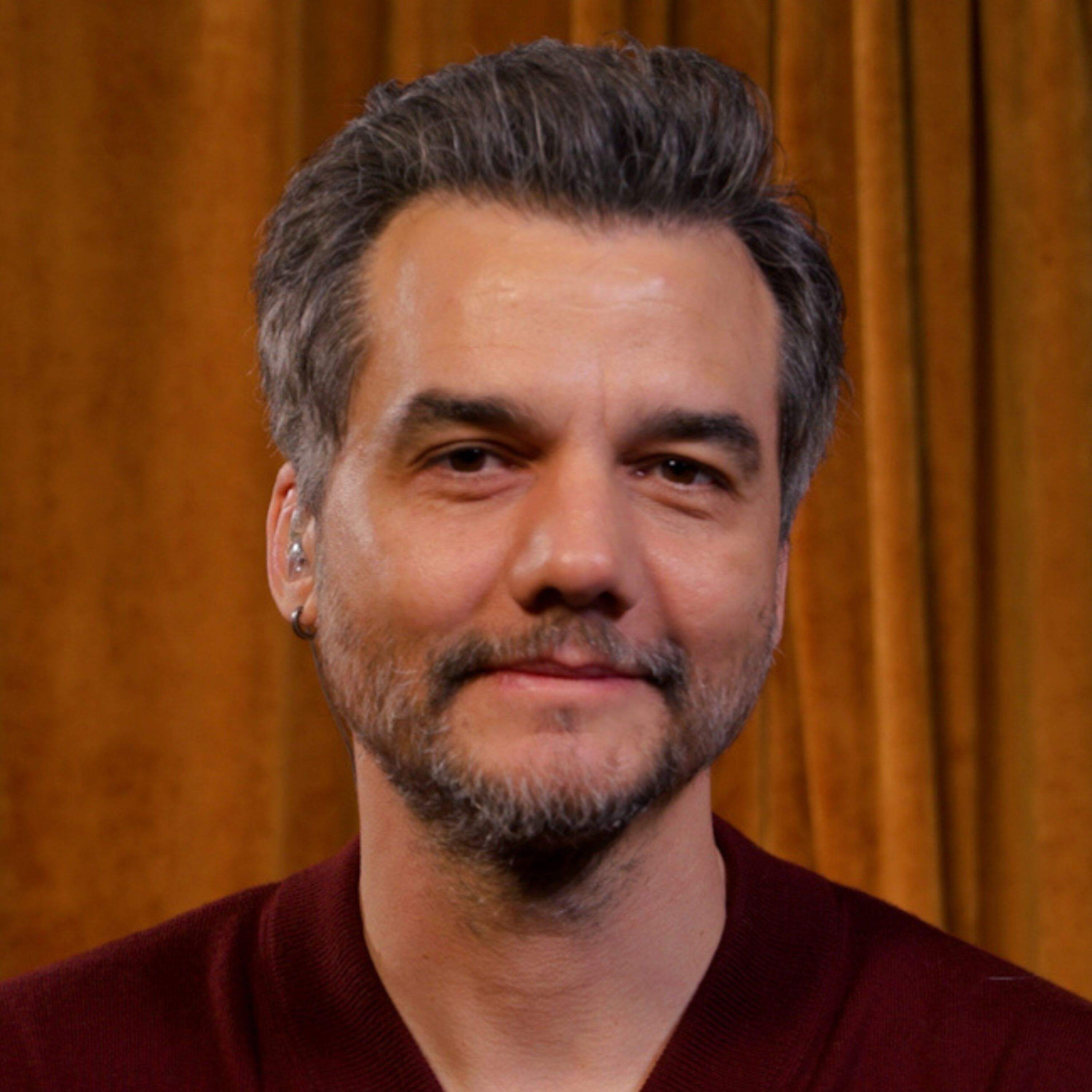
I'm Rachel Martin, and this is Wildcard, the show where cards control the conversation. Each week, my guest answers questions about their life, questions pulled from a deck of cards. They're allowed to skip one question and to flip one back on me. My guest this week is Wagner Moura.
- [00:53]
Wagner Moura
There were moments where I was like, oh, I really need that money, man. You know? But I'm like, I can't do this. I can't do that, because otherwise I'll be miserable.
- [01:03]
Rachel Martin
After watching the Brazilian film the Secret Agent, I came away with a deeper appreciation for how much fear, resolve, and longing can be communicated through a person's eyes. Wagner Mora subtly conveys all those emotions as a man on the run in a military dictatorship. Yes, there are powerful moments of dialogue, but so much of Wagner's talent as a storyteller and an actor comes in what is left unsaid. How he uses the negative space to make us feel and to make us think. I am so very happy to welcome Wagner Mora to Wildcard.
- [01:38]
Guest or Additional Interviewee
Hi.
- [01:40]
Wagner Moura
That was a thoughtful introduction. Thank you.
- [01:43]
Rachel Martin
Well, I'm very pleased to have you here, and many congratulations are in order because the film itself has been nominated for several Academy Awards, and you yourself have been nominated, the first Brazilian male actor to be nominated in the best acting category for this film. Congrats.
- [02:03]
Wagner Moura
Thank you. Thank you so much. We're very happy.
- [02:06]
Rachel Martin
Well, we'll talk more about the movie in a few minutes, but we're just gonna go. You ready to play this game?
- [02:12]
Wagner Moura
Yes, I am. I'm excited about it. Let's do it.
- [02:15]
Rachel Martin
Let's try it out. First three cards. Wagner, you pick. 1, 2 or 3.
- [02:20]
Wagner Moura
3.
- [02:21]
Rachel Martin
3. What's this one? What did your parents teach you to love.
- [02:30]
Wagner Moura
Elderly people. Elderly people, yeah, he was. My parents were very serious in, like, that we should always respect people that were older than we were. And that ended up translating to me for what I do, the admiration and respect that I have for actors, especially in Brazil. That opened space for younger actors, you know, like, in terms of, like, work opportunities. And it was, like, it was hard to be an actor back in the. In the. In the beginning of the 20th century.
- [03:08]
NPR Sponsor Announcer
Right.
- [03:09]
Wagner Moura
You know, so every time I meet up an actor that looks like in their 85 90s right now, I know there is a reverence that I have towards these. These people that it's. Yeah, that's very important to me.
- [03:24]
Rachel Martin
Who was the elder person who they made sure you had connection with? Like, can you think of a person who.
- [03:30]
Wagner Moura
Oh, yeah. There was this director that I worked with who was such an important person, theater director. Such an important person in my life as an artist. Unfortunately, he passed two, three years ago. His name is Adebao Freddy Filho. Theater directors, it's interesting because they have this amazing careers, but their work, as its theater, it disappears. You know, if you go to the theater and you see a play, it's gonna be in your memory and in your heart, and it's gonna be there forever. But it's not record. It's not like, movies that you can. Oh, let's go and see the work of that director. Theater directors, like, they're. Art just burns.
- [04:18]
Rachel Martin
Ephemeral.
- [04:19]
Wagner Moura
It's ephemeris. He directed when I played Hamlet in Brazil. He was the director. And that was such a pivotal moment of my life. We've worked together many other times, but this one is very special. Like, he gave me so many. And I was hanging out with him. Exactly. To hang out with someone that you would go out, like, just the two of us. He was like, I was in my 30s back then, and he was. He was, I guess, 79, 80, and we would go to bars, you know, and, you know, and talk and spend the night together, drinking and talking. Life. And then. And I really, really miss him.
- [04:57]
Rachel Martin
Yeah, I love that. Okay, three new cards. Three different cards. You pick again. One, two or three?
- [05:05]
Wagner Moura
Two.
- [05:06]
Rachel Martin
Two.
- [05:08]
Wagner Moura
Hmm.
- [05:09]
Rachel Martin
Similar, but different. What's something someone told you that changed your trajectory?
- [05:23]
Wagner Moura
I don't think it's something that someone told me, but I think that in the last three or four years, the universe was sort of telling me to just to relax, you know, because we are all ambitious, and we all have plans and we all have goals, and we all have. But at some point, I think I wish I had more time to, you know. Yeah. To have joy. And did you feel joy? To feel joy in my daily life, you know, And I think that at some point, like. And to have joy, especially in this thing that I do, it's so important, because sometimes we forget about the joy of it all, you know, the joy of doing what we do and became like a pragmatic thing. You know, I was watching a couple of years ago, a couple of years ago, the documentary about the Beatles, you know, the one that Peter Jackson directed, and they were like, oh, they were fighting and it was, like, horrible. Everything was not going well. And one of them was about to leave the band. I think it was George. But when they played then, when they played together, they had so much fun and joy, and they were messing around with the music and they were playing, like. And they were looking at each other and they were laughing and they were having fun. I've been telling myself, like, just, yeah, have fun. Enjoy, you know, enjoy each moment of your life. Like, it's here, we're here. I'm here with you. And let's enjoy this moment.
- [07:14]
Rachel Martin
It's hard, though, I imagine in your creative work, too, you get momentum, right? Like, and people talk, oh, you've caught fire now. And so now more projects are gonna come and more directors come to you, and the scripts get better and better and your choices get better. And if you don't keep moving, right, Like a shark in the water, like, you got to keep moving and taking the opportunities or else, oh, no, Wagner, they're gonna go away. You're gonna. You know, you gotta act now. Do you feel those kinds of pressures? Is it hard to say no before?
- [07:43]
Wagner Moura
It's interesting because I have felt that before with other things. Because I've been doing this since I was 15. Right. For example, when I did Narcos, it was a thing. And everybody was like, you should do. And I was like. But I always, I have to say, always rejected that kind of thought. You know, I always kind of did the opposite of what was expected. Like, for now. Now, for example, I'm gonna go to Brazil. I'm gonna do a very independent film there. After that, I'm gonna tour with my play in Europe. I'm gonna be doing theater, you know, and then in the end of the year, I'm gonna direct my film, also a very small independent film. That doesn't mean that I'm not aware of, like, the new possibilities are coming because of the moment, but they're not gonna go away.
- [08:33]
Rachel Martin
And you're gonna center Joy in all these projects, right? And you're not gonna work too hard.
- [08:37]
Wagner Moura
And I'm gonna privilege Joy and to do what I wanna do, what I feel, not what expected for one to do, but what. What you want to do. What's. Yeah.
- [08:55]
Rachel Martin
Last one in this memories round one two or three?
- [08:59]
Wagner Moura
One. One.
- [09:01]
Rachel Martin
What's an early experience of appreciating beauty?
- [09:07]
Wagner Moura
I remember when I was many one I was coming back. I lived in this very small town in Brazil and I was, I think I was already like 15 and I woke up at night and I don't know why, it was like three in the morning. I skipped through the window of my, of my bedroom and I don't know exactly why. I started to walk around the city by myself. I was walking, walking till the day started to. The sun started to shine and I was by myself. I was alone and I could see the sun. I could see the light changing over me and I could see to look at the sky. There were some stars already still there. But I could see like the curve somehow the curve of the earth. I don't know how I could see the curve of the, of the atmosphere. I don't know what it was. You know, it was, it sounds like.
- [10:14]
Rachel Martin
A vaguely mystical experience.
- [10:16]
Wagner Moura
Mystical experience. And I was by myself. I felt a very strong feeling of happiness and connection to the universe and.
- [10:29]
Rachel Martin
To like which is a beautiful thing to happen especially at a young age.
- [10:34]
Wagner Moura
And I was a kid. Exactly. Yeah. And I also felt that, oh, there was so much ahead of me, you know, like I'm gonna, you know, I'm still like, I don't know, I think I was, I don't know, 13, 14, I don't know, I don't remember. But there's so much ahead of me, you know, I'm gonna live so for so long. It's also true that it passes real fast. That feels like, that feels like not as a long sometimes I still feel that I still have 13 years old.
- [11:23]
NPR Sponsor Announcer
This message comes from NPR sponsor, LinkedIn Sales Navigator. Finding the right leads can feel like an endless search for sellers. What if you could get to the right conversations faster? From finding new leads to strengthening existing relationships, LinkedIn Sales Navigator is your strategic AI powered partner. It cuts through the noise with real time data and insights backed by LinkedIn's network of over 1 billion professionals. Try it free for 60 days@LinkedIn.com NPR that's LinkedIn.com NPR terms and conditions apply.
- [11:56]
Rachel Martin
This message comes from Apple Card. It's a great time to apply for an Apple Card. You'll love earning unlimited daily cash on every Purchase. That includes 3% daily cash when you buy the latest iPhone, AirPods and Apple. Watch at Apple through this special referral offer. When you get a new Apple Card, you can earn bonus daily cash to qualify, you must apply at Apple co getdailycash Apple card issued by Goldman Sachs bank usa Salt Lake City. Branch offer may not be available elsewhere. Terms and limitations apply.
- [12:26]
NPR Sponsor Announcer
This message comes from Bombas. You need better socks and slippers and underwear because you should love what you wear every day. One purchased equals one donated. Go to bombas.com NPR and use code NPR for 20% off. This message comes from Kachava. That wellness goal you set at the start of the year, it's not too late to stick with it and make your future self proud. Especially with the all in One Nutrition Shake from Cachava with 25 grams of protein, 6 grams of fiber, greens, adaptogens and more. No fillers, no nonsense, just the highest quality ingredients. Stick with your wellness goals. Go to kachava.com and use code NPR for 15% off. That's K-C-H-A-V A.com, code NPR.
- [13:17]
Rachel Martin
Hey everybody. Ever since we launched Wildcard, there is one thing that you have asked about more than anything else. Where can I get the Wildcard deck? We hear it constantly. You've been very patient and I'm so excited to finally announce that it is here. The Wild Card deck. It's available at the NPR shop. You can find it@shopnpr.org and we've selected collected some of our very favorite questions from the show and we made this custom deck for you, our audience. It is just a phenomenal way to think about your own memories, insights and beliefs over dinner with the family, maybe on a road trip with friends. It's a way to connect and learn new things about people you were just meeting or people you have known all of your life. Check it out@shopnpr.org we are so excited for you to try it out again. Shopnpr.org. Let's talk more about the movie. Yeah, the Secret Agent. I understand this was a project that actually was a long time coming, right? A collaboration with the director. The two of you have been working on this script for a while. Can you tell me kind of the genesis of it?
- [14:29]
Wagner Moura
Yeah, the genesis. I mean I met him long time ago. I met him in Canmen. He used to be a critic back then, but we hit it off in a festival because we are also from the same region. He sees him from Salvador, both cities from the northeast of Brazil.
- [14:46]
Rachel Martin
I'm going to misstate his name, so I was hoping you would just do it. But I'll try. Kleber Mendonca Filho Mendoza. Mendoza, can you Just say it for me.
- [14:55]
Wagner Moura
Yeah, Club Mendoza Filho. Yeah, but you did a pretty good job. And I met him, and I was like, dude, I want to work with you. And then he invited me to be in his film Bakural that he directed in 2018, but I couldn't be in it because I was directing my own film. And so we created this, and we were both always very. So we, Klaber and I, we are very different people. But we see Brazil and we see the role of an artist in a very similar way. We think that art and politics, they are not separated. But this film is openly a political film because it comes from our shared perplexity over what was going on in Brazil from 2018 to 2022, when Brazil elected democratically a fascist president. And we were both very Bolsonaro, and we were both very vocal against him, and we both suffered consequences of that. So I think that the secret agent came from that. From, like, how can we. We wanted to work together. We wanted to do something together. And so it's like the film about this man that is sticking with the values that he has when everything around him is saying the opposite. It felt something that related a lot, resonated a lot with Clubber and I.
- [16:22]
Rachel Martin
Right. Your main character is living and running from this military dictatorship that has, you know, as military dictatorship. They've got a war on truth. They're issuing propaganda left and right. There's corruption rampant, and your character's just trying to live a life and survive, really. But it's interesting, you mentioned the 2019 movie that you did that was very critical of the Brazilian government at the time. That could have cowed you. You could have absorbed all that criticism coming from pretty high up in Brazil and separated yourself and said, I've learned my lesson. I'm not gonna touch that third rail anymore. And instead you decided to lean in. Was it an easy decision for you, or was there a moment of pause, like, maybe this isn't how I'm gonna make the most impact?
- [17:15]
Wagner Moura
No, it was a very organic decision for me because I was making a film about. The film's called Marigela, and it's about the leader of the armed res in Brazil against the dictatorship. And that film that I directed and was censored by Bolsonaro and all that. And I couldn't. I mean, how could I be doing a film about a freedom fighter, you know, and not to fight for that film to be released and to, you know, to have a proper release in the country? So I engaged in that Fight with lots of energy. It was hard, you know, because, you know, it's. This polarization is just really hard. It's really hard. It's really difficult because people are living in different mental states. That's what's separating us. It's like we are not living in the same world. We are not seeing reality in the same way.
- [18:22]
Rachel Martin
Right.
- [18:23]
Wagner Moura
The hardest thing for me, when I engaged in that fight against the government in Brazil, to have my film released, and against the government itself and against everything that that government represented, it was hard. But the hardest thing was because I felt that we were not talking the same language, that we are not talking about the same reality, which comes through.
- [18:51]
Rachel Martin
In the way that you play this character, Armando, because you see him struggling to make sense of something that's not sensible. The facts on the ground don't matter anymore. As a viewer, you sort of see for him how words fail ultimately, like it's not gonna make a difference, and then he's just trying to survive.
- [19:16]
Wagner Moura
Yeah. I think this is also a film about infamy, you know, because it's how he was treated and how. And we shouldn't give any spoilers here, but the way he's treated in the end of the film and the way it's displayed, who he was, you know, in the newspaper, it's so unfair. And so. And that happens so often, you know, like right now when the government and people are trying to discredit the man I forgot his name, that got killed. The nurse, Alex Preddy. Yeah. So they start all this campaign against him, like, saying people are inventing lies about his life, and it's so cruel, because you kill him twice. You killed him, and then you try to kill his reputation, and then you try to kill his memory. You know, that is a grim parallel.
- [20:24]
Rachel Martin
That I hadn't thought of with your film.
- [20:26]
Wagner Moura
Yeah, yeah, yeah. But that's how fascism works, unfortunately. You know, and sometimes I get scared because as a Brazilian, I can see those signals very clearly, because I come from a country that we had, unfortunately, not only one, but some dictatorships, a history of coup d' etats and authoritarian regime. So it's crazy how the signals are the same throughout history.
- [21:10]
Rachel Martin
You know, I want to just acknowledge you mentioned your role as Pablo Escobar in Narcos earlier. And, I mean, this was a huge show. This was a huge role for you. And I read several times in preparing for this conversation that you came out of that experience, and you were very grateful for it, but you were not gonna take roles that reinforced Latin Stereotypes. And I imagine you had a lot of other similar offers, because people are constrained by their imagination. People are not imaginative. And they were like, oh, this is what Wagner does. He does this so well. Let's keep casting him there.
- [21:51]
Wagner Moura
Let's keep casting. That's how it works everywhere, right? Yeah.
- [21:55]
Rachel Martin
Yeah. And so it must feel all the sweeter to have achieved this Oscar nomination not having done that.
- [22:04]
Wagner Moura
Yeah, exactly. I think that's the main thing for me is, like, I really. I like to think that I was always very coherent with what I thought was the artistically, what I did. That was all that always mattered to me. Even when I. There were moments where I was like, oh, I really need that money, man. You know? But I'm like, I can't do this. I can't do that, because otherwise I'll be miserable. You know, I'll feel so. It feels good to look back and go, like, I thank God it didn't bend. Yeah, it feels coherent. It feels good. Yeah.
- [22:45]
Rachel Martin
Good. Well, congratulations again. Let's play more game. Round two insights. Three new cards. One, two or three?
- [22:58]
Wagner Moura
And they're blue now, too.
- [23:00]
Rachel Martin
They're blue. Okay. What's a sound that instantly puts you at ease?
- [23:10]
Wagner Moura
Yesterday? I'm not very used to cats, right. Like, I'm a dog guy, and I love. We have a cat and a dog, and the dog is, like, already eight, and I love him. It's like the most beautiful little thing. And the cat showed up, like, a year ago because of my kid, and I'm not getting. Cats don't care about, you know, the whole thing about cats. They don't really care about you, and they stay. You know, you call them. They don't come. But yesterday. I was upset about something. I was sad about something that had happened, and I laid on. On the. On my sofa in my living room, and the cat came, and he literally, like, lay down all over my chest like that and started to do that purring thing.
- [24:15]
Rachel Martin
Yeah. Yeah.
- [24:18]
Wagner Moura
And that was so therapeutic. I felt like a connection between us, and I was so grateful for him. I think he was like, really like, hey, let me share some energy with you. I don't know what he was. And I was looking at him, and in my mind, I closed my eyes and was like, thank you, man. Thanks for doing this. And he was purring, and that little noise is so nice to hear.
- [24:53]
Rachel Martin
Yeah.
- [24:54]
Wagner Moura
You know, and he stayed there for a moment, like, for a good, like, 20 minutes. And then he stood up and went away and was like, that's. That's it created a connection to that cat that I didn't have before. But every time I see him now, it's like, hey, man, thanks for that.
- [25:18]
Rachel Martin
We had that also, as you were describing, I was feeling not just the sound and how comforting that is, but the weight and the reverberation of the sound through the cat's body on you. What a. He was just. He was.
- [25:35]
Wagner Moura
Our bodies together, and it was warm, you know, and it was a cold day, and it was very warm. My chest was warm.
- [25:44]
Rachel Martin
And he sensed it.
- [25:46]
Wagner Moura
And we were exchanging energies, I thought, you know, because I realized that there was something happening. I was like, I'm gonna send him good energy, too. So it was like a very interesting and cool moment.
- [26:00]
Rachel Martin
So now you're cool with him, the cat?
- [26:02]
Wagner Moura
Oh, we're great. We're great now. I see him now and go like, hey, what's up, man? You're cool. Go. Just do your thing.
- [26:11]
Rachel Martin
What's his name, by the way?
- [26:13]
Wagner Moura
Evie. Because we thought he was a girl when we got him. So he has this girl's name.
- [26:19]
Rachel Martin
You know, gender's a construct. Yeah, whatever.
- [26:21]
Wagner Moura
Yeah, yeah, yeah, exactly, exactly.
- [26:24]
Rachel Martin
Well, I'm really glad to give Evie his moment. Okay. Three more cards. One, two or three?
- [26:30]
Wagner Moura
Three.
- [26:32]
Rachel Martin
What's a disappointing experience that now feels like a blessing?
- [26:38]
Wagner Moura
You know, I like to write scripts, right? Like, I work on the scripts that I direct. And always, always when I'm working on a character, a character really wants something. Like, a character always have a drive and wants something, and always, like, always what he wants, it's not what he needs. Yeah, right. Usually a character wants something, but he needs something else. And the beautiful part of any character is a curve, is when the character realizes that, like, oh, that's not what I. That's not what I need. That's what I wanted. And I don't know, I think I've been around this thing for so many years, too, to understand that, like, sometimes when you relax, that's when things happen to you because you go through so many as an actor, it's like, so. So full of ups and downs. Your career. I don't even like to say career because it's my life.
- [27:48]
Rachel Martin
Can you give me an example of a moment in your life when you felt that more acutely?
- [27:53]
Wagner Moura
During the pandemic, because I just moved to the west for many reasons, but one of them was like, to. Because my agent was like, you should be here. You should be more in Los Angeles. In Los Angeles. Just moved to la. And then the pandemic hit and then I was not really doing what I was supposed to be doing here, which is like, to be connecting, working. But then the pandemic gave me a relationship with my family that I had never had before.
- [28:25]
Guest or Additional Interviewee
Really.
- [28:26]
Wagner Moura
You know, I spent time with them in a way that I had never done it before. I could look at each one of them separately and spend time with them separately and really listen to them because we had all the time in the world, and that was very special for me.
- [28:48]
Guest or Additional Interviewee
Yeah.
- [28:49]
Rachel Martin
How old were your kids at the time?
- [28:51]
Wagner Moura
At the time?
- [28:52]
Rachel Martin
Like, were you trying to do virtual school at the same time?
- [28:55]
Wagner Moura
Yeah. Which was good for you for finding.
- [28:58]
Rachel Martin
Moments of joy through that.
- [28:59]
Wagner Moura
Oh, my God, that was hard. That was so hard. Poor kids. One of my kids were doing the things in his pajamas and his, you know, in the blankets like this. And I was like, what? Like, what are you doing, man? This is school.
- [29:14]
Rachel Martin
Oh, I know.
- [29:14]
Wagner Moura
And I was like, no, it's not.
- [29:16]
Rachel Martin
And we would try to teach. Like, my kids don't want to hear. They don't want to hear anything from me. They don't want to take any instruction from me. It became painfully clear that was not like a good dynamic during COVID but if we could separate school and like, really lean into what makes our family beautiful, then it was a lovely experience. But I wouldn't go back to Covid learning at all.
- [29:38]
Wagner Moura
How many kids you have?
- [29:39]
Rachel Martin
I have two boys. They are 11 and 13.
- [29:43]
Wagner Moura
Oh, it's about the age of my. I have three boys. They are 19, 15, and 13.
- [29:49]
Rachel Martin
Ah, yeah, we're in it. That's a lot of dude energy in your house. I mean, I. Yeah, It's a beautiful thing. Boys are a beautiful thing. Okay, 1, 2 or 3?
- [30:05]
Wagner Moura
1.
- [30:07]
Rachel Martin
What have you found surprising about getting older?
- [30:12]
Wagner Moura
That my body is not the same, you know, that I do jiu jitsu, for example. Brazilian jiu jitsu is my sport and the thing that I love. And I've been doing this since I was my 20s and it kind of sucks when I go and I have to train with a 20 year old kid and I see that that kid has more strength, is faster, you know, it's more full of energy than I am. And then I have to come up with, okay, I have to come up with a plan to roll with that kid. As a 50 year old man, you know, how can I, you know, make him tired? How can I just, like, how can.
- [30:57]
Rachel Martin
I, like, do some Jedi mind tricks?
- [30:59]
Wagner Moura
How can I wait for him to. Because I can't really beat him on the mat.
- [31:08]
Rachel Martin
Yeah.
- [31:09]
Wagner Moura
The energy that a kid like that has and that is a little like, oh, that sucks. But also I feel that I'm a better person now, a better human being now than I was. Not that I was a bad kid, but when I was 20 and you know, I don't know how my life I was all over the place. But like I think that's it's good to I like myself say more. I like myself a lot. You know, I'm at a and I'm not ashamed of saying that. Like I don't I like who I am. I'm happy with the kind of person that I am and the things that I have to say. Work on it. I'm aware of it and I'm, you know, and I'm working on it. Like I want to, you know, but I feel more. Yeah. Secure and calm and aware of what other things that really matter, you know, in life, I guess.
- [32:31]
Guest or Additional Interviewee
Yeah.
- [32:33]
Rachel Martin
Approaching 50 will do that to you.
- [32:36]
Wagner Moura
I guess so. Right. Like it's. Yeah. It's like what's important? What's not that important.
- [32:42]
Rachel Martin
Yeah.
- [32:43]
Wagner Moura
What's important. But it's okay if it doesn't happen, you know?
- [32:53]
NPR Sponsor Announcer
This message comes from Schwab. Everyone has moments when they could have done better. Same goes for where you invest. Level up and invest smarter with Schwab. Get market insights, education and human help when you need it.
- [33:07]
Guest or Additional Interviewee
This message comes from MITI Health CEO Joanna Strober shares why they started a virtual care platform for women in perimenopause and menopause. Our goal at MITI is to make sure that all women have access to really expert care starting around 35, 5 and 40, making sure that they get access to all the things that can help them thrive as they're growing older. MIDI Health committed to helping women in midlife with perimenopause and menopause care accessible via telehealth visits@joinmidi.com this message comes from Babbel.
- [33:42]
NPR Sponsor Announcer
Babbel's conversation based language technique teaches you useful words and phrases to get you speaking quickly about the things you actually talk about in the real world with lessons handcrafted by over 200 language experts and voiced by real native speakers. Start speaking with Babbel today. Get up to 55% off your Babbel subscription right now at babbel.com NPR spelled B-A B-B-E-L.com NPR rules and restrictions may apply.
- [34:16]
Rachel Martin
Beliefs First Question 1, 2 or 3 1. Have you ever experienced some divine power?
- [34:31]
Wagner Moura
Yeah, I think so. You know, I'm not. Listen, I don't believe in God. I'm not like. But I grew up, like, in many. My grandmother was very Catholic, and Brazil is a very Catholic country. My parents were spiritualists, you know, that they had, like, relationship. You know, they were, like, having these experiences with, you know, with deceased people through, like, mediums and all that. So I grew up seeing this thing in Brazil from where I come from. There was this Afro Brazilian religion that's really powerfully beautiful, culturally extraordinary, called Candon Blair, which I love. And I see it as a cultural beauty. And also I can see the energies going on. And Hamlet has this phrase that he says, like, there are more things beyond heaven and earth than we could. You know, that our brains can't. Something like that cannot. That our philosophy can't even dream something like that. And I truly believe in these things. And. And, yes, I've experienced things, you know, like, the things I.
- [35:55]
Rachel Martin
Can you tell me something that felt close.
- [35:58]
Wagner Moura
I was just doing theater in my hometown, Salvador, Bahia, three, four months ago. And it's not all the time, but there is one moment, there's some moments on the stage that there is a connection. Something happens, you know, something happens there. And many artists will say like this. I mean, it's not always, but there is a moment. There's like. Oh, it's like you. You know, there's something going on that's not between you.
- [36:26]
Rachel Martin
The audience.
- [36:27]
Wagner Moura
The audience.
- [36:28]
Rachel Martin
The third thing that becomes your.
- [36:30]
Wagner Moura
And the third thing.
- [36:30]
Rachel Martin
Yes, the third thing, exactly.
- [36:32]
Wagner Moura
It's me. It's an actor, the audience. And this third thing, whatever that is, that it's divine.
- [36:39]
Rachel Martin
Yeah.
- [36:40]
Wagner Moura
There are things going on. For sure. There are things going on. There are things going on everywhere. All the dimensions. I don't know what it is.
- [36:50]
Rachel Martin
Three more. One, two, three or three. Three.
- [36:53]
Wagner Moura
Yeah.
- [36:54]
Rachel Martin
Is there anything in your life that feels like praying?
- [37:01]
Wagner Moura
Well, I think theater is. You know, I think I see very many similarities between the liturgy of theater and of some religions, especially. Especially Catholic religion. I think that when a play starts, you're commanding some sort of ritual there, because you're saying those same words every day, but differently. You know, like, as a priest would go up there and say parts of the Bible, or there is a liturgy where he. You know, I don't know, like when he holds the cross and he takes the wine and he gives the. I think that this sacrament. When you repeat a gesture and you repeat an action, for many, many, many, many, many times, those actions, they gain meaning and they gain, like the ritual.
- [38:05]
Rachel Martin
Of it creates the richness.
- [38:06]
Wagner Moura
The ritual. The ritual. It can change. It can change throughout time. And your perception of the ritual can change, but it's meaningful and you find different meanings of it. But it's.
- [38:22]
Rachel Martin
When you're practicing that when you were doing theater and you were repeating lines night after night in this way that becomes like a meditation, like a prayer, does it help or hinder your effort at acting? Like, does it get harder because the words take on this different meaning, or does it get easier?
- [38:48]
Wagner Moura
It gets amazing. It gets like. It's like. Because it's interesting, because you feel like, oh, it's the same words and it's gonna be the same thing. No, every day is different because every day you discover something different to those things. Every day you like, and your colleague is gonna throw up something different to you. And then it's. That's the beauty of acting. For me, that's the most valuable thing about acting. You know, if acting was something that was stiff and you were supposed to be there and say these things and go back home, I wouldn't like to be doing that. That's why it's hard for me when I work with directors or actors that stick with. They think that a scene should be. This is how the scene should be, and they want the scene to be exactly how they thought. And they lose the opportunity of, like, going to. To so many different directions. You know, each single take can be different. You know, each. Depending on. You know, Sometimes. Yeah. Depending on how the other actor looked at you or said something or you yourself discovered something else. When you're saying that those words. It's the most beautiful and exciting thing about acting. I think it's like how.
- [40:04]
NPR Sponsor Announcer
How.
- [40:06]
Wagner Moura
Yeah. How electric it can be when you, like. It's not the same. It's the same words, but it's different.
- [40:12]
Rachel Martin
And if you're not opening yourself up to that possibility, then the spiritual component of it is lost on you and the audience. And then that gift is never given. That gift is never delivered.
- [40:22]
Wagner Moura
Exactly. That's exactly right. So that spiritual component goes away because then it's just like, you know. Yeah.
- [40:32]
Rachel Martin
Last 1. Wagner. 1, 2 or 3.
- [40:36]
Guest or Additional Interviewee
3.
- [40:37]
Rachel Martin
3. How often do you think about death?
- [40:52]
Wagner Moura
Not often. I feel that I'm gonna die really, really old. I think I'm gonna get. I want to be at least a hundred.
- [41:05]
Rachel Martin
Yeah.
- [41:06]
Wagner Moura
You know, so I think it's a nice number.
- [41:08]
Rachel Martin
Yes. Round.
- [41:09]
Wagner Moura
Yeah, round.
- [41:10]
Rachel Martin
Three digits. I'm into it.
- [41:12]
Wagner Moura
Yeah. And I don't want to romanticize that moment, but therefore, I don't think about that often. But I want to, of course I want to die, you know, feeling good about the life that I lived. And we have to understand, like, this is the only certainty that we all have, is that we all are going to die. And somehow we should be grateful for that, you know, because that's what gives meaning to our lives.
- [41:48]
Rachel Martin
Exactly.
- [41:49]
Wagner Moura
You know, if we lived forever, that would kind of suck, you know, because you wouldn't. Like, you wouldn't. How are you gonna live your life in full if you knew that, you know, there were.
- [42:02]
Rachel Martin
We need these limitations.
- [42:03]
Wagner Moura
We need these limitations.
- [42:05]
Rachel Martin
We do for all kinds of reasons. Much has been written on this. Yeah, you have to have some kind of finite nature to the thing to create meaning. But I don't know if I want to go to 100. It's interesting. I don't know. It depends on what that hundred looks like. It depends.
- [42:19]
Wagner Moura
Looks like for sure. I don't want to be like, listen, I don't want to get sick. I was just talking to some friends yesterday. I have a friend that he discovered early symptoms of Alzheimer and he went to the Netherlands and he did the assistant death thing. You know what I'm talking about?
- [42:45]
Rachel Martin
Physician assisted death.
- [42:47]
NPR Sponsor Announcer
The physician assisted death.
- [42:48]
Rachel Martin
He ended his life.
- [42:49]
Wagner Moura
And I respected that so much. And his husband was totally on board with that. And he went there and he did it. He was like, I don't want to live my life not remembering anything, not knowing who my people are. I mean, of course, it's like, of course I want to know how that. But when I mentalize and when I foresee that 100 year old, I see myself in good shape for a hundred years.
- [43:15]
Rachel Martin
I mean, you got the jujitsu, but.
- [43:17]
Wagner Moura
You guys, I want to keep working. I want to keep. I can't. I don't want to stop working. I want to work till the last. The last. My last days.
- [43:25]
Rachel Martin
Yeah. We end our show the same way every time with a trip in our memory. Time machine. In the time machine, you go back and revisit one moment from your past. It's not a moment you would change anything about. It's just a moment that you'd like to linger in a little longer. What moment do you choose?
- [43:59]
Wagner Moura
That's when my first kid was born, my first son. Bam. Because that was. That was another mystical experience. That was a moment that was a divine. That was. That was one of the things that I like. And it was difficult because it was difficult. I was traveling. I had to. I took an airplane and my wife was in, you know, she was like, you have to come. And it was very stressful. And I got there and, you know, and she was in pain. It was very, and when, and when he finally, when I finally was able to grab him and to see him and to see that he was okay and to heaven, like in my, in my, my chest, like that it was, I don't know. I don't know. That was, can you describe that feeling? I don't know. You know, it's like it was very, I would linger, I would, I would do everything to do to just to feel that again. I don't think I'll ever have other, other kids. And you see your kids growing up and it's beautiful because they're like, it's each moment of their lives. But sometimes like, oh, I miss those little things.
- [45:22]
Rachel Martin
Yeah.
- [45:23]
Wagner Moura
And also if you give me another one, I would go back to the last conversation I had with my dad, you know, before he passed. It's interesting, right? Like death and birth, you know, the birth of a son and the death of a parent, those were the moments that I would be going back to.
- [46:07]
Rachel Martin
Wagner Mura. You can see him in the Oscar nominated film the Secret Agent. It was such a pleasure. Thank you.
- [46:14]
Wagner Moura
It was such a pleasure. Thank you very much.
- [46:23]
Rachel Martin
If you liked this episode, check out my conversation with Padma Lakshmi. Like Wagner, Padma talked about the joy that can come with aging and how she feels more confident in middle age than she has at any other point in her life. You can watch that conversation with Padma Lakshmi along with this one with Wagner Mora or any of our recent conversations on our YouTube channel. Just search for NPRWildcard. Today's episode was produced by Annabelle Edwards and Summer Tumade. It was edited by Dave Blanchard, mastered by Becky Brown. Wildcard's executive producer is Yolanda Sangwenny. And our theme music is by ramt, our Bluey. Reach out to us, why don't you? @wildcardpr.org we'll shuffle the deck and be back with more next week. Talk to you then.
- [47:16]
NPR Sponsor Announcer
This message comes From NPR sponsor 1Password. Anyone else feel like 99% of your emails and texts are password reset codes, passwords trusted by millions of users and over 175,000 businesses? 1Password lets you skip the resets and sign in securely with strong, unique passwords that autofill across all your devices. You can safely share logins, store cards and files. And finally, stop using your pet's name as a password. Try it free for two weeks@1Password.com NPR.
- [47:51]
Guest or Additional Interviewee
This message comes from Capella University. That spark you feel. That's your drive. For more Capella University's flexpath Learning format lets you earn your degree at your pace without putting life on pause. Learn more@capella.edu.
- [48:05]
NPR Sponsor Announcer
Support for NPR and the following message come from Indeed hiring Do it the right way with Indeed sponsored jobs. Claim a $75 sponsored job credit to get your jobs more visibility@ Indeed.com NPR terms and conditions apply.