Loading summary
Transcript65 lines
- [00:02]
A
Wild Tales is sponsored by Cotswold Outdoor. When we're out in the elements, we're in our element. And outside retail expert Cotswold Outdoor is helping more of us to get out with the right kit. Thanks also to their support. The National Trust is helping walking communities to access the UK's outside spaces and we're working to fix 15,000 kilometres of paths and trails by 2030 for everyone to enjoy. Find your element with Cotswold Outdoor.
- [00:35]
B
I was just having my morning coffee
- [00:37]
C
in the kitchen and I heard this distant kind of goose like honking outside, so I ran outside.
- [00:42]
B
Ah yes, and there they are, my first Hooper swans of the autumn.
- [00:47]
C
Ah, they're quite a long way away but ah, that distinctive sound.
- [00:50]
B
I haven't heard it for six months
- [00:52]
C
but there they are, fresh from Iceland. I oh, it's so good to see them. Welcome back, swans.
- [01:05]
A
Did you know that the UK is home to three different species of swan and that one crosses the Siberian tundra to get here? Well, today swan fan and wetland ranger Ajay Tagala is taking us to the ooze washes at Wellney in Norfolk to see if we can find this increasingly rare and hard working swan amongst thousands of its hooping cousins. Welcome to Wild Tales. Finding the tundra swans.
- [01:38]
B
Every autumn over my house, I hear resonant calls that sound a bit like a brass band tuning up. The arrival of hundreds of wild Hooper swans is, is an anticipated and celebrated moment in my calendar. But there is one swan species I very rarely see. A swan that has eluded me for the last few winters. I'm determined that this year I'll see them again. The Buick Swan. Back in January 2021, I spotted a flock of swans in the field next to my house, looking through a telescope from the kitchen window. The were two Buick swans, sometimes known as the tundra swan for its epic migration, or the small swan. The once populous bird is becoming increasingly rare. I wanted to speak to someone who knew Buick swans in extraordinary detail, someone who might understand why I was so desperate to see them again.
- [02:42]
D
I remember drawing the birds outside my father's studio window when I was quite small, and that eventually led to painting.
- [02:51]
B
This is Daphila Scott, an artist and zoologist. She spent her childhood at Slimbridge, a wetland wildlife reserve, as her father, Sir Peter Scott, was the founder of the Wildfowl and Wetlands Trust. So from a young age, birds were a big part of her life. We sit in the cafe on the edge of Wicken Fen with the wetlands out the window and the bustle of warm life surrounding us.
- [03:16]
D
February 1964. My father decided to bring the tame whistling swans from the collection to the pond in front of his house. And almost immediately the wild Buick swans, which had been coming to the Severnestry for some time, came down onto the pond in front of his house. And this was very exciting. And he noticed that the one that came the first day was different from the one that came the second day, and that the pattern of the black and yellow on the bills was different. And so he drew them. He then started to record all the individuals that came that winter. So there were 24 that first winter. And he gave them names because that was easier to remember than numbers. And then the next year when they came back again, some of them brought their signets with them. I think it was that year that I was ill and from school and I had to convalesce indoors. And so what was to do but look out of the window at these wonderful swans? And I got completely hooked identifying them and drawing the patterns and recognizing them, watching their behavior, seeing, you know, who had cygnets, who didn't, who was mated with who, and who was dominant on the pond anyway, it was completely riveting.
- [04:31]
B
For Dafila, drawing the swans was a necessity as well as a love, because
- [04:36]
D
in those days there weren't cameras that would focus in on individuals, you know, halfway across the pond. So you had to look through a telescope or large binoculars and then draw the pattern. And my father had devised a sort of cyclo styled face. So you drew the two sides and the front view as meticulously as you could. And he was very precise about it. You had to get it right. But it was very good practice for looking and then drawing. So now I'm a painter, but I also like watching the behavior of animals still very much. And Bewick swans are of course, my favorite animal.
- [05:16]
C
And so the ones that you knew as individuals, it was obviously this precise pattern of black and yellow that you were drawing. And that's how you got to know them. By their bills.
- [05:25]
D
Yes, that's right. And also just the way the animal carries its head. So some of them. We used to have one called pussycat, which had her head in the air all the time. She was always looking around with her head in the air. So they have their individual characteristics and you get to know them and that's, it's, it's very good for them. I mean, if you, you know, if you, if you're really watching a flock and you get to know them all, it's it's just wonderful following them. It's very exciting.
- [05:52]
C
I guess it's quite similar to. I'm lucky. I work with the grazing livestock here at Wicken and it's that sense of when you have that time to spend with these individuals, you get to know their personalities and they are all unique. It's a lovely. It's a lovely way to spend time, isn't it, watching animal behaviour?
- [06:06]
D
It's so lovely. I mean, I. I get fond of the wild ducks that come to the bottom of my garden and I. I feed them a little bit, but I couldn't tell if. If there was a different one coming. Whereas, you know, with the Buicks you can look at them and you can so quickly recognize individuals. It really, it, it.
- [06:26]
B
After talking to Daffola, I'm even more determined to see them again. At Wicken Fen, I see or hear Hooper swans most days throughout the winter, but never Buicks.
- [06:36]
C
And I don't think I'll get quite so lucky with my kitchen window.
- [06:40]
B
So I head to WWT Wellney, where the Ouse washes provide a winter retreat for thousands of swans.
- [06:51]
E
I think early morning in the winter is really special, particularly when you get that nice misty Fenland morning and the skies are clear and you have the sun rising and the swans are waking up in the morning. So they start getting really talkative to one another, flapping their wings and you kind of sense their excitement that the day is starting. And then they'll lift off the washes and then fly over your heads in like big flocks of, like, bees calling and then go out to the fields and feed during the day. And if you're lucky, you'll pick out the Buick. Swap wand.
- [07:23]
B
This is Lizzie Bruce, the site manager of Wellney. We meet in the heated bird hide with panoramic windows that give views across the wetland. It's the perfect place for spotting winter visitors.
- [07:36]
C
Of course, the stars at this time of year are the swans. And your work involves a lot of monitoring of the swans.
- [07:42]
E
Yes. So Wellney and the Oozewashes are internationally important for its wintering. Buick swans and Hooper swans. So here at wwt, we've been monitoring the populations along with our partners for decades. So the washes are really important for a safe roosting place for the swans at night. And then in the morning they'll go off to feed. So we will get up at Cracker Sparrows and count all the swans coming off the washes and going out into the fields. And then during the day we then go Driving around the fens, across the farmland and in small teams, we then count the birds again. So we'll count the total flock size, so how many hookah swans and how many Buick swans are in each flock. So we can then understand what is the population doing, but also identifies where there are important feeding and roosting locations that we can then protect to ensure they can winter here and undisturbed.
- [08:39]
C
I always used to get teased that all I did was counting birds. How hard can that be? But actually, it can be quite challenging.
- [08:45]
E
Yeah, on this scale, it can be really challenging. And last week we were doing the swan count out in the arable fields and it was one of those really windy days where it's really gusty. So we're setting up a tripod to scan through the flocks that can be several hundred meters away and the scope is rocking from side to side, so you're seeing almost like doubled through the scope and then you've got the wind blowing and your eyes are watering. It can be, yeah, on those days, quite a challenge. But, yeah, it's still good.
- [09:11]
B
The swans we're talking about here aren't the sort you'll see in your local park. The Hoopers and the Buicks are distinct species and can be distinguished from each other by their size and behavior. At first glance, they may look very similar, but Lizzy has a good way to tell them apart. For the Hooper swans, the yellow extends further along their bill.
- [09:35]
E
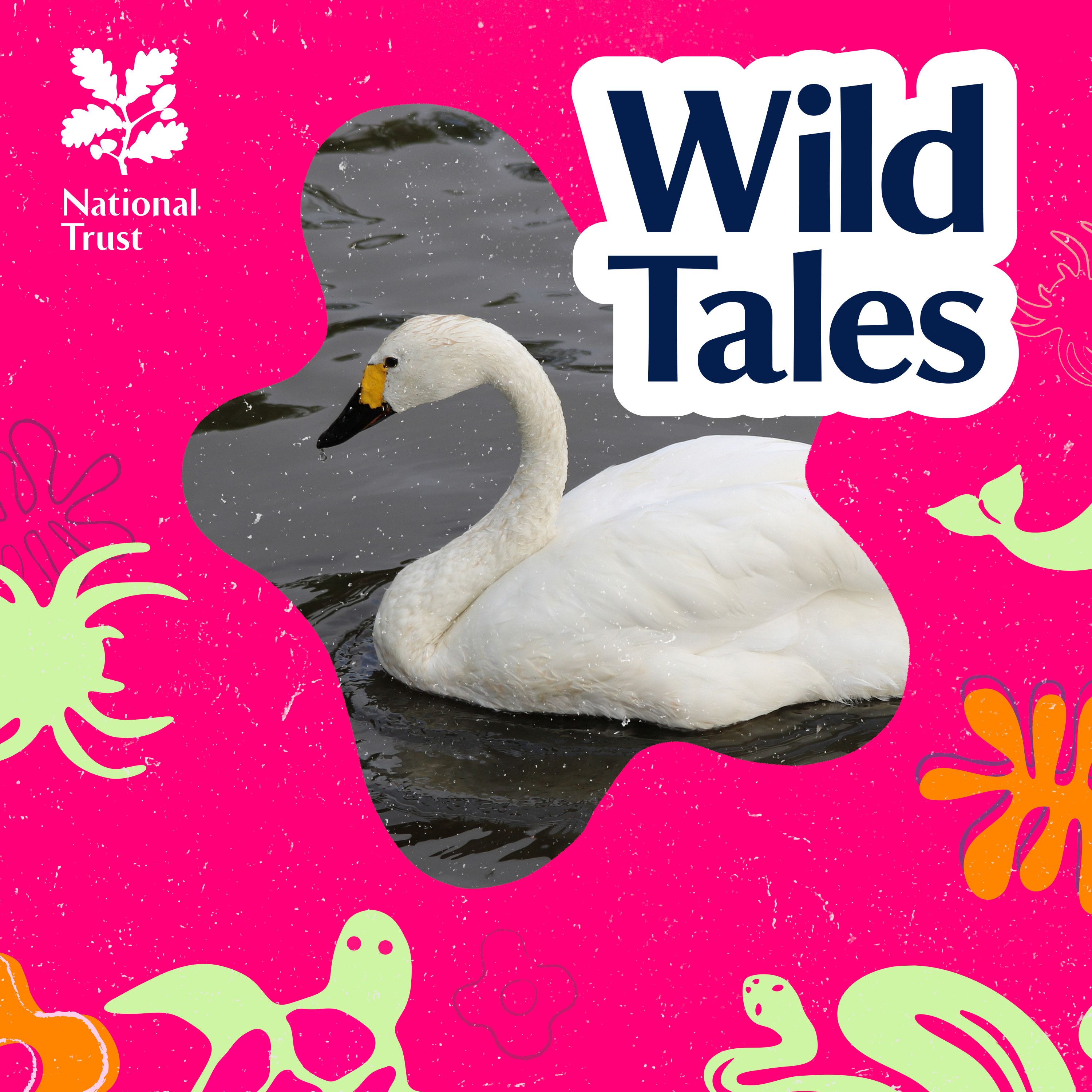
It's almost like a wedge of cheese. That's kind of the easiest way we describe it. And then the Buick swans, their bill is predominantly black with a very small sort of spot of yellow, and it's more like a knob of butter.
- [09:45]
C
Brilliant. I love that analogy.
- [09:47]
B
Both Hooper and Buick swans spend their winter here with us, but their journeys are very different.
- [09:53]
E
The Hooper swans here in Britain have all come from Iceland, so we get the entire Icelandic population wintering in Britain and Ireland. And the Buick swan, and they've come from Russia, so the tundra up in Russia, and they have a three and a half thousand kilometer migration.
- [10:07]
C
And of course, they come here for a couple of reasons. The climate, the availability of food, like the sugar beet tops and this important wetland that you manage, because I live nearby. I just love it when they arrive in the autumn and you think they've come all the way from Iceland and they're coming here to my home patch. It's really exciting.
- [10:23]
E
It's so magical. I know when we first hear the Hooper swans, we all get really excited. It's really heartwarming as well to see some of those birds come back and know that they've, you know, had a successful migration back home to breed. And then they come back and even better if they've got cygnets with them. Yeah, it just makes you all feel warm and fuzzy inside. It's lovely.
- [10:44]
C
So you get quite an insight into their lives with the monitoring work as well. And I know that you've just been number crunching over the last few days from, from the latest count. Can you tell us a bit more about that?
- [10:53]
E
Yes. So it's a team effort. So while WMT lead on it locally here, you, you know, we have, we work with RSPB and National Trust and we all are wetlands. So our numbers are for Hooper swans. Last week we counted about 8,600 birds roosting on the Ooze washes at night and they were joined by about 50 Buick swans. And then when we went out around the fields around the Oozhwashes and Neen washes, we then counted a total of 13,000 Hooper swans and they had about a thousand juveniles in those flocks. And then Buick Swans, we found 68 Buick swans and 14 juveniles. So while Hooper swans are going up, we are sadly seeing the Buick swan population decline. So these counts we did last week are the lowest Buick counts we've had on record. And a research was just published in the last week that suggested that the Buick swan population has actually, European population has actually declined by 56%. So since 1995, which partly reflects why we're seeing such low numbers here. But what we're also seeing Buick swans do is something called short stopping. So this is when the Buick swans are not migrating as far as they used to. So historically they would have moved as the cold weather sort of pushed them westwards. But now we've got warmer winters. The Buickswans are favoring Germany, so they are seeing more and less here.
- [12:19]
B
Behind us in the hide, a huge map with yellow lines draws out a migration that spans the entire length of Europe from the Russian tundra.
- [12:29]
E
So you can see on here the Buick swans. And then they'll head west mainly by night, following the coast. And they can cover about 2,000 miles before they get to us here at Wellney. And they can stop off at places like Netherlands, Germany, Denmark, Belgium. And it's not a quick migration, you know, it can take about six weeks from their breeding grounds to reach their final wintering grounds here at Wellny or increasingly in Germany. It's really fascinating to see where they've come from, but also some of the challenges that they face during their migration. So up in Russia, they're particularly faced by climate change and the warming of the tundra, making it wetter and less favorable for them. As you go further west, there's sort of change in food availability. They also do face illegal hunting along their journey. So because they're the size of a goose, they can be mistaken for a goose, so they can be illegally shot. And then as they come more towards Europe and us, they then can encounter power lines. So, yeah, there's quite a lot of challenges beyond it just being 2,000 miles.
- [13:40]
C
Of course, you've been here relatively short period of time, but you've seen extremes in water levels and weather and temperature, haven't you?
- [13:47]
E
Yeah. So, you know, we all know that we're kind of in this climate crisis. The climate is changing. And so, yeah, I've been at Wellney for about two years now. It started off with our wettest year with prolonged winter flooding well into the sort of breeding season and then starting again really early in September. And, you know, it's important to say the ooze washes is flood storage, so it is doing what it's meant to do, it is protecting farmland and homes from flooding. However, what we are seeing is that it's becoming more extreme, more prolonged, which has a negative impact on the wildlife. And then this year we've had, now had our driest year and looking at the long range forecast, it looks like we're going to go into next year on some of our sites with really low water levels, which, again, has an impact on our wildlife. So, yeah, we are working with farmers, with landowners of how can we create more wetlands and manage the water more sustainably, have a more coordinated, joined up approach so that it benefits everybody and everything.
- [14:48]
C
Yeah, that's something we're involved in at Wicken Fen as well, and the importance of kind of holding back that water to see us through the summer. And so creating reservoirs is something we're doing in partnership with some of the farmers as well.
- [15:00]
E
Around here. The farmers really welcome the swans. Some of the farmers say that if they're nibbling away on the wheat, winter wheat, it actually makes it better. The following year, it kind of adds a bit more rigorous growth to the wheat. So as long as the swans aren't trampling them when it's really wet. Yeah, the farmers are quite happy for swans out on their winter wheat. Locally, what's really great is that we work really closely with National Grid and UK Power and trying to Fit sweet deflectors to the power lines and this has been really successful. So they've kind of evolved over time, but they're basically just a small plastic disk with reflectors on both sides that will just clip onto the cables. And this immediately makes such a big difference to the swans. They can immediately see them. And once they're on those power lines, the swans instantly kind of, we stop seeing those collisions.
- [15:51]
C
I think that just highlights that to look after species that migrate it is about teamwork, it is about working together and yeah, different industries getting involved to
- [15:59]
B
make a real difference.
- [16:00]
E
A lot of birds are losing their wetlands. So if we can create more wetlands, more safe areas for them to roost and feed and then yes, some of the other challenges such as power lines and yeah, we can reverse some of the negativity. And as you can see with heaver swans, their population is now thriving.
- [16:15]
B
The threats to the washes feel far away as we sit drenched in sunlight, looking at the expanse of blue trimmed with green edges. There are hundreds of chestnut headed potshard, a dozen pintails, ducks with needle like tails, a tumbling flock of lapwings and of course a familiar sight.
- [16:36]
E
So we also have a few swans out here. So we've got mute swans and looper swans. They're just drifting up and down at this time of day. A lot of the swans have all gone off into the fields to feed. But then we do a commentator swan feed in the afternoons during the winter, about half three. And this is when we start. We give the swans and the ducks a small amount of grain. It's a little treat for them and you'll start to see more swans coming in and it's really magical just seeing them kind of drift, drift around and they'll come in closer to the hide and it's really special.
- [17:07]
B
With sunset and the swan feed a few hours off, I'm determined to use this time to search for Buick swans.
- [17:15]
C
And I know that they're out there
- [17:17]
B
somewhere in the fields that stretch out in front of us. But our chances aren't good as there are only a very small number dotted across the fens.
- [17:30]
C
So we're just about a mile away from Wellney. We've headed south and there's a field with about 200 swans. And I've just scanned through with my telescope and they are all Hooper swans. They've all got that wedge of cheese rather than the knob of butter. But there's definitely some juveniles you can pick out the greyer ones. I guess it must be winter wheat. There's Just the kind of green shoots coming through. You got the really black peaty soil and then the lush green shoots coming through and they're just kind of. Well, most of them are sat, some of them are waddling around. But in the winter sun the green looks so bright. And then also the whiteness of the swans glowing in the sun. Yeah, it is a really distinctive call. I mean they sound just like geese. They're kind of honking a little bit. So yeah, very different to mute swans, which don't say a lot and they have that kind of high pitched call when you do hear them. Here it's this kind of deep, grunty kind of hooping call, gives them the name. But yeah, it is very goose like. It's funny because they look so elegant and beautiful and yet they just sound a little bit less like they look, I suppose. But I love that sound. I absolutely adore it. So we've been driving around quite a few miles on bumpy roads and we were sort of beginning to give up hope and we've just stumbled upon another field with another couple of hundred swans in. We're on the kind of a remote farm track, very windswept on the side of a minor road and I'm just going to scan across and see if we can pick out, fingers crossed, some Buicks. I really, really want to see them. I really want to see them.
- [19:12]
B
This happens a few more times. We spot a flock of white in the distance, pick our way down increasingly narrow roads, then get out the scope. But each time all that's in front of me are wedges of cheese and hooping.
- [19:30]
C
We've just spent a couple of hours literally driving all over the fens looking for Buick swans. We didn't see any, but there's this gorgeous sunset, everything's turning orange and we're heading back to Wellney for hopefully the highlight of the day.
- [19:51]
B
We return to Wellney just in time for the dusk. Swan feed. Despite hundreds of criss crossing pot chard ducks, there is just a single hoopa swan. It floats gracefully, bending its neck to scoop up its nightly treat. But afterwards we take a stroll to the final hide. A great white V shoots over our head, softly hooping through the fading light. There's not really much colour, just kind of greyness, but silver to the water on which there's lots of silhouetted ducks. I can hear lots of widgeon whistling. Every now and then a few Hooper swans are dropping in and we're expecting over the next few minutes more and more to come in to roost here on this water for the night. Leaving Wellney, I was sad not to see any Buick swans, but it's hardly surprising with so many challenges facing them. I was starting to give up hope of seeing any Buick swans this year. But on a frozen morning, I take one last trip to Wellney. I'm in the Lyell Hide on Wellney,
- [21:00]
C
and it's a few weeks after I spent a whole day looking for Buick swans.
- [21:04]
B
And since then there's been this cold snap. There's a lot of frozen water on the washes here, there's a few little areas that aren't frozen, and that's where the swans are gravitating to. And as if by magic, there's a distant group of about 10 and I've just, through a telescope been watching one
- [21:20]
C
and literally it's had its head tucked into its wing for ages, tantalizing. But it looked a bit smaller and
- [21:27]
B
eventually it showed its head and I
- [21:30]
C
could see that just like it was described. The bill is mostly black with like
- [21:35]
B
a little knob of butter. And there it is.
- [21:37]
C
A Buick swan. At last. After so much searching, it's so exciting to finally see a Buick swan, hey. Even though it's quite a long way away through a scope not, you know, not visible with the naked eye at all, hardly. It's just really exciting to finally, finally see one. And worth heading out in the cold to witness.
- [21:58]
B
There it is. There it is. Yes.
- [22:00]
C
Yes.
- [22:21]
B
Thanks for listening to this episode of Wild Tales. To find out more about Wellney and the swan Counts, you can go to our show Notes and join us on Instagram at wildtailsnt. See you next time.
- [22:47]
A
Wild Tales is sponsored by Cotswold Outdoor, your outside retailer and epic guides to adventure, quick breathers, calming walks or heart pounding hikes. We feel better when we get out more. Find quality kit and 50 years of outdoor wisdom. Plus National Trust supporters get 15% off walking kit in store and online. Feel in your element in the elements at Cotswold Outdoor.