← Windows Weekly (Audio)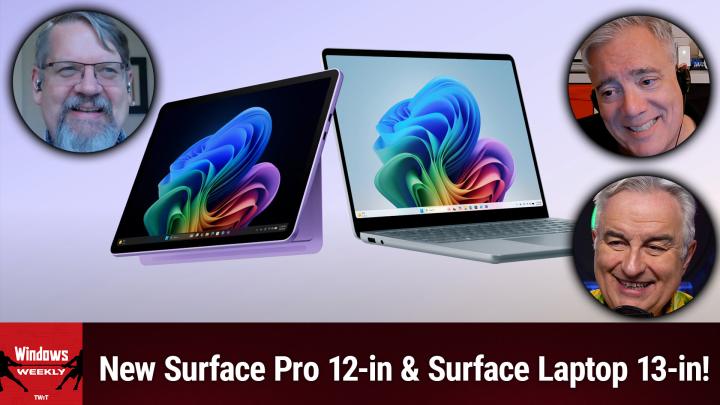
Windows Weekly (Audio)
WW 931: The Eaglet Has Landed - New Surface Copilot+ PCs, Xbox raises prices
02:48:29
New Surface Copilot+ PCs, Xbox raises prices
Loading summary
Transcript1,098 lines
- [00:00]
Leo Laporte
It's time for Windows Weekly. Paul Thurat's here. Richard Campbell is still in New Zealand, but he's heading out right after the show to come back home. We will talk about big changes in Windows 11, a new start menu, believe it or not. We'll also have a little to say about Apple's spanking earlier this week from the the judge in the Apple epic case. And yes, maybe our long nightmare is over. Activision Blizzard, Microsoft. I think the FTC has received the final nail in the coffin. All that and more coming up next on Windows Weekly. Podcasts you love from people you trust.
- [00:42]
Paul Thurrott
This is Twit.
- [00:50]
Leo Laporte
This is Windows Weekly with Paul Thurad and Richard Campbell. Episode 931, recorded Wednesday, 5-7-20. The Eaglet has landed. It's Ty.
- [01:10]
Paul Thurrott
Oh, my God.
- [01:11]
Richard Campbell
He's doing a deadly do right.
- [01:12]
Paul Thurrott
LAUGHTER I gotta stop taking so many drugs.
- [01:15]
Richard Campbell
Go on. These are all heavily medicated.
- [01:18]
Paul Thurrott
Oh, my God.
- [01:19]
Richard Campbell
You know how I avoid allergies? I go to the other hemisphere. It works like a lot.
- [01:23]
Paul Thurrott
The time to say goodbye.
- [01:25]
Leo Laporte
They're behind the curtain, but they can't wait to get out on the stage. Ladies and gentlemen, winners and dozers, the time has come once again to gather together and celebrate all that Microsoft has brought us. Paul Thurat can't stop laughing. He's back in Makunji. That's why he's so happy.
- [01:44]
Paul Thurrott
There you go, a little punchy.
- [01:45]
Leo Laporte
Little punchy. Did you just fly in?
- [01:50]
Paul Thurrott
I don't want to talk about it, Leo.
- [01:51]
Richard Campbell
Boy, are your arms tired.
- [01:53]
Paul Thurrott
Yeah.
- [01:54]
Leo Laporte
And there he is.
- [01:55]
Richard Campbell
Newark in New Zealand.
- [01:57]
Leo Laporte
But he's about to head for home. Richard Campbell. Hi, Richard.
- [02:01]
Richard Campbell
Hey, man. And so three weeks on the road, right? We did a Sydney and a Melbourne and now a Taronga. And did you take your.
- [02:09]
Paul Thurrott
I was on the road for four months. Give me a break, man.
- [02:12]
Richard Campbell
You weren't on the road, you were home for four months.
- [02:15]
Leo Laporte
Is Taronga near Tarabathia? That's my question.
- [02:18]
Richard Campbell
No, not even close.
- [02:20]
Leo Laporte
But.
- [02:21]
Richard Campbell
But this place is very much like home for me too.
- [02:23]
Paul Thurrott
Right.
- [02:23]
Richard Campbell
I literally was born down the road from here. Yeah, I'm on the family born here. I was born here. Literally down this street like this.
- [02:32]
Paul Thurrott
That's convenient. You're going to die there too. You know, it's like a. We've been just doing. We just been doing Star wars quote.
- [02:38]
Richard Campbell
Sorry, One quote after another. Never mind.
- [02:41]
Leo Laporte
It's May 7th and you know what that means.
- [02:44]
Richard Campbell
Yeah, we missed the fourth again.
- [02:48]
Paul Thurrott
It means we're old and we don't Know what day it is?
- [02:50]
Leo Laporte
What day is it? It's a Wednesday. Time to talk. Microsoft, let's. You know, I read your headline. I thought Microsoft's changing the name of Windows 11.
- [03:01]
Paul Thurrott
No, that's not the big change. Yeah.
- [03:03]
Richard Campbell
What are you going to Change it to?
- [03:04]
Paul Thurrott
Windows 12.11.1. That seems to have worked out well for them in the past, so.
- [03:11]
Leo Laporte
But there are big changes are coming. Yes.
- [03:13]
Paul Thurrott
Yeah, I mean, I've been talking about changes all year. Really. And there's been the speculation we're going to go into 25H2 anytime now, maybe Windows 12. Microsoft just announced a bunch of new features coming to Windows 11. But they declined to say, you know, this will be the next version. This will be an all version. I mean, I guess they're all tech. Everything they do is technically going everywhere. So maybe, I don't know, maybe this is something only I worry about. But the big one is the rumored new Start menu, right? And we had seen that leaked a couple of builds ago. A couple weeks ago, I guess we'll call it. I actually had it running on my Surface laptop before I blew it away.
- [03:54]
Leo Laporte
What is new about the Start menu?
- [03:56]
Paul Thurrott
What is it new, Leo?
- [03:58]
Leo Laporte
Is it in the middle still?
- [04:00]
Paul Thurrott
Yeah, it's in the middle still. That hasn't changed. It's bigger, taller. It has that phone thing on the side, the phone companion. But the big thing is right now there's two sections in the Start menu, right? Pinned and recommended. And you can't do much to configure it. You can give more space to Pinned, more space to Recommended, keep it equal. If you delete everything from pinned, you just have a big blank space up at the top. But they're change. Yeah, they're changing the bottom so that instead of recommended, it's going to be different views of all apps. So there's like groups by default, but you can also just do the all apps list right there. So they're making it all about apps, basically. I mean, you can still have some of the recommended stuff in there, but weird.
- [04:41]
Richard Campbell
Start Menu is all about apps. I always thought it was about ads.
- [04:45]
Paul Thurrott
Yes. They're going retro. The default view down there looks a lot like the app library in iOS, if you're familiar with that. The big kind of rounded rectangle folders or whatever. But I like the all apps view and you could do it by category or however, in groups or whatever.
- [05:05]
Leo Laporte
So when do we get this lovely new.
- [05:08]
Paul Thurrott
You would think. Well, so Microsoft announced this, so there's no way to know. My guess is I'M not joking. My guess is this week we'll see it in the Insider program and then where it appears will help us figure out where it's going to end up. Probably. My guess is actually it will be one of the things they roll out with the next version, but it could be before then. I mean, they just announced it, so it seems like they're ready to go. There's other stuff too. So if you have a Copilot plus PC, there's a bunch of new stuff coming. Nothing major, but updates to existing features for the most part. Notepad. Of course, they can't stop updating that.
- [05:47]
Leo Laporte
It's funny, you neglect it for years and then suddenly you just can't keep your hands off of it.
- [05:51]
Richard Campbell
Wham, wham, wham, wham. Yeah, yeah, somebody figured out how to recompile it again and now they're just having fun.
- [05:57]
Paul Thurrott
Yeah, they found the source code. They're like, finally, wow, look at that.
- [06:03]
Richard Campbell
Look at it go.
- [06:04]
Leo Laporte
Did Bill write this?
- [06:07]
Paul Thurrott
There's new features coming in. Paint and photos in snipping tool. You know, all the usual suspects. A lot of this stuff is Copilot plus BSP plus Copilot plus PC specific. But yeah, there's not a lot of. Well, actually, most of the Copilot plus PC stuff at least is going to be rolling out first to insiders over the next month. So I think this is 25H2. They're not saying, is this change for.
- [06:35]
Leo Laporte
Change sake or is it like an improvement? Is it like something.
- [06:39]
Paul Thurrott
The start menu is an actual improvement, honestly. Because that's been something that to me has been borderline useless since they did Windows 11. And I actually do like those changes. They do seem to just touch stuff now a lot. You know, just change for change's sake, I guess.
- [06:56]
Richard Campbell
Touching stuff a lot.
- [06:57]
Paul Thurrott
Yeah, well, everybody does that.
- [06:59]
Leo Laporte
Apple's gonna redesign iOS, Google does that. Yeah, we have this new material design, they call it. They leaked. Some of that's just so that you feel like you have to get the new thing or some of it's just to keep it, keep you excited. I don't know, it feels like car. I mean, you know, companies do.
- [07:15]
Paul Thurrott
The basic Windows UI is not changing from, you know, what we got in 11 to begin with. I mean, unless there's something coming we don't know about. But. But yeah, I mean, the last year, two years have been defined by this kind of chaotic, steady addition of new features.
- [07:30]
Leo Laporte
I guess it's important, you know, they. One of the reasons they say Tesla sales have fallen off is that they haven't done a redesign in years. You know, that's.
- [07:39]
Paul Thurrott
Because they didn't add CarPlay to the screen.
- [07:41]
Leo Laporte
That stops me, I'll be honest. That's like, that's it for me.
- [07:45]
Paul Thurrott
That's almost like the number one, you know, CarPlay, Android, Auto. Like.
- [07:48]
Richard Campbell
Yeah.
- [07:49]
Paul Thurrott
And then it's like, okay, so we have that. Is it going to be gas or is it going to be like. After that?
- [07:54]
Leo Laporte
You're like, that's the only check mark that matters.
- [07:56]
Paul Thurrott
Yeah. Yeah. Couldn't care less after.
- [07:58]
Richard Campbell
I am angry with this rental car because the. The Android CarPlay or Auto won't work. Just keeps failing. It's like, this car is defective.
- [08:07]
Leo Laporte
It's nice because you got the maps and they're up to date. You know, they're up to date. You've got your music, you've got all your.
- [08:12]
Paul Thurrott
Everything's right there. It's. Yep. No, it's really nice. I love it. I really like cars. They don't have a car with it. So every time I get a rental car, I'm like, oh, my car's sold. It has like an orange kind of amber screen and Bluetooth that works sometimes. And it's. Oh, it's just.
- [08:30]
Leo Laporte
I, you know, I commend you because you're doing your part for sustainable.
- [08:34]
Paul Thurrott
Oh, no. I'm actively campaigning to get rid of this. You can commend my wife. She's the one who puts the brakes on this. But, like, I. I would have replaced this thing five years ago.
- [08:42]
Leo Laporte
We have perfectly good car at home. You don't need car.
- [08:47]
Paul Thurrott
I wouldn't say perfectly good. We have a vehicle that has four tires. It did start right up when we got home. That was pretty cool.
- [08:55]
Leo Laporte
That's pretty amazing, actually. I did that for months.
- [08:58]
Paul Thurrott
I know. Neglected, you know, you didn't.
- [09:01]
Leo Laporte
You didn't drain the sump and put it up in blocks or anything? You just left it there.
- [09:05]
Paul Thurrott
Yep. But it's like the piece of garbage. It is.
- [09:08]
Leo Laporte
Did you have somebody come over and move it around every once in a while?
- [09:12]
Paul Thurrott
No, but.
- [09:12]
Leo Laporte
Nothing. No, I mean, your tires.
- [09:16]
Paul Thurrott
Right. I mean, this was offered to. I mean, it's possible, like one of our nieces or nephews, somebody might have.
- [09:21]
Leo Laporte
Taken it without your.
- [09:22]
Paul Thurrott
No, I mean, we. We offered this. Like, we. In fact, we kind of. It would. We kind of would prefer someone to move. Sure.
- [09:27]
Leo Laporte
You want somebody to drive it?
- [09:28]
Paul Thurrott
Yeah. Yeah. But I don't think anyone did.
- [09:32]
Leo Laporte
On it. It's a. It's a trooper. It's reliable.
- [09:36]
Paul Thurrott
Yeah. It refuses to die like most annoying things. And how old is it? I think it's a 2013. Wow, a 12 year old car. Yeah, it's not.
- [09:47]
Leo Laporte
It's really interesting how much cars have changed in that.
- [09:52]
Paul Thurrott
I know, I know. We missed the whole hybrid thing that came and went. I guess that was a big deal for a little while, Prius and all that stuff. And then. Yeah. Now we're doing electric cars apparently. I, I don't know. I don't know what's happening. The next step of my vehicle will be a horse pulling it on a rope or something. I don't, I don't know.
- [10:08]
Leo Laporte
Well, you are in.
- [10:09]
Paul Thurrott
You know it would look normal here. Yeah, exactly. You could just wear a big black hat.
- [10:14]
Leo Laporte
Wear a nice little hat. Yeah.
- [10:16]
Richard Campbell
Now, now every time I'm down here I see a holding ute and I want one so badly. Like you've got to Google this.
- [10:23]
Leo Laporte
Like a Holden Ute.
- [10:25]
Richard Campbell
Yeah. H O L D E N U T E Holden Ute.
- [10:29]
Paul Thurrott
What is it?
- [10:30]
Leo Laporte
It's a cheap car probably.
- [10:32]
Richard Campbell
No, no, it's. It's like. It's like an El Camino but Australia size. Oh, it's a two seater with a bed. Yeah, that's it. That's a whole.
- [10:41]
Leo Laporte
It is like an El Camino.
- [10:42]
Paul Thurrott
It's got a uick. El Camino. What is.
- [10:45]
Richard Campbell
No, it's a Pontiac El Camino, to be clear.
- [10:48]
Leo Laporte
That is hysterical.
- [10:50]
Richard Campbell
I love them. I just love them. That's so cool.
- [10:52]
Leo Laporte
All it needs is a snorkel. There is. This is in Hamilton, this picture. So have you.
- [10:57]
Paul Thurrott
Do you. Do they have the Chinese electric cars down there like BDY and so forth.
- [11:02]
Richard Campbell
BYD's, they're all over. They're all over the old holding here in New Zealand.
- [11:07]
Leo Laporte
FJ utility. That's a pickup truck too.
- [11:09]
Richard Campbell
Not the same thing, you know.
- [11:10]
Leo Laporte
Oh, that's disgusting.
- [11:11]
Richard Campbell
There is very ugly. That's.
- [11:13]
Leo Laporte
That's a Taurus with a pickup on the back.
- [11:16]
Richard Campbell
Try a Holden Ute Malou.
- [11:17]
Paul Thurrott
That's color. That's a Pontiac front end there.
- [11:21]
Leo Laporte
Mustard color.
- [11:22]
Paul Thurrott
So this is a GM vehicle.
- [11:24]
Richard Campbell
It's. Well yeah, Holden was the Australian line. But that little truck bed in the back like and it's all. And they're rear wheel drive and you get them in a V8.
- [11:32]
Leo Laporte
So hideous.
- [11:35]
Richard Campbell
I need one of these.
- [11:36]
Leo Laporte
They just make me home. Just imagine a Pontiac with a pickup truck glued on.
- [11:41]
Paul Thurrott
When Steve Jobs introduced the first imac, he showed like a piece of junk.
- [11:46]
Leo Laporte
With a dial, right? An ipod with a dial from the.
- [11:49]
Paul Thurrott
Compact computer he compared it to. That's what this is. This is the.
- [11:52]
Leo Laporte
Yeah.
- [11:53]
Paul Thurrott
A compact computer as a car.
- [11:56]
Richard Campbell
Every time I see one, I'm like, I gotta have one of those.
- [11:58]
Leo Laporte
Are there a lot of them?
- [12:00]
Paul Thurrott
It's ugly and they're very rare.
- [12:01]
Richard Campbell
They haven't been made in. In 15 years. Something like that.
- [12:04]
Leo Laporte
It is. It's the El Camino of New Zealand.
- [12:06]
Richard Campbell
Of New Zealand, yeah. In Australia. It's really. I hold it and it wasn't. It was an Australian car company. It's defunct now.
- [12:12]
Paul Thurrott
Oh, now this. It's gone.
- [12:13]
Leo Laporte
Well, that's it.
- [12:14]
Paul Thurrott
It definitely looks like a Pontiac front end.
- [12:16]
Richard Campbell
Well, and it's Pontiac Parts 100.
- [12:19]
Leo Laporte
While I'm looking at the Utes, Windows very kindly has popped up a little thing that says, hey, we noticed you have some unused printers. Would you like us to. Oh, guess I can't. It offered remove them and then now it hit it.
- [12:31]
Paul Thurrott
Well, click the clock. You can probably get it.
- [12:33]
Leo Laporte
Click the clock. Is that the secret?
- [12:36]
Paul Thurrott
Well, it's not a secret. It's just a.
- [12:38]
Leo Laporte
We noticed you have some unused printers. Would you like to remove them? No, no, That's.
- [12:43]
Paul Thurrott
Actually, no. But.
- [12:46]
Leo Laporte
But those are my printers.
- [12:47]
Paul Thurrott
We notice you have printers. And it's 20, 25. Would you like.
- [12:49]
Leo Laporte
What do you have printers for?
- [12:51]
Paul Thurrott
What do you have that.
- [12:53]
Leo Laporte
Well, they saw me looking at the holding Utes and they figured this guy's a loser.
- [12:57]
Richard Campbell
You get. You should get rid of the printers.
- [12:58]
Leo Laporte
Yeah, get rid of the printers.
- [13:00]
Richard Campbell
But merely says you have print. You haven't printed in so long. We think you don't have these printers anymore.
- [13:06]
Leo Laporte
Yeah, but I do. That's my printer. But you're right, I don't. I only print tickets. I don't usually print much else.
- [13:11]
Paul Thurrott
Yeah. Yeah.
- [13:12]
Leo Laporte
Holy ute.
- [13:14]
Paul Thurrott
I can't. Yeah, I don't print.
- [13:16]
Leo Laporte
Also called the Chevrolet Lumina or the Pontiac G8 Sport track.
- [13:23]
Paul Thurrott
So are these. These are custom things like they cut the back off and.
- [13:26]
Richard Campbell
No, no. They were made in a factory, man. They were.
- [13:30]
Paul Thurrott
Someone made this on purpose, you say? Yeah, so.
- [13:32]
Richard Campbell
And people bought them in droves. They are.
- [13:36]
Paul Thurrott
They are beloved blind people.
- [13:38]
Leo Laporte
Or look, here's an article from GM Authority. How to import a real Holden Ute into the United States.
- [13:47]
Paul Thurrott
One. Number one, throw away all common sense.
- [13:50]
Leo Laporte
Number two, you really. Oh, look, here's somebody doing burnouts with blue smoke and a Holden Ute. I don't know how they did that. Wow.
- [14:00]
Richard Campbell
There you go. Oh, I haven't. You have been enlightened.
- [14:05]
Leo Laporte
It's illegal. In the United States. That's the problem.
- [14:09]
Paul Thurrott
I mean, they're illegal everywhere, but.
- [14:11]
Richard Campbell
Well, they're right hand drive, so you have to get them converted.
- [14:14]
Leo Laporte
Oh, they're right handed drive. Okay. Yeah, yeah, that makes sense. Illegal to have a right hand drive car in the US Apparently.
- [14:23]
Richard Campbell
Unless it's in the classic category.
- [14:25]
Leo Laporte
Right. You can do anything in the classic. I see people driving the craziest cars around here because, you know, this is car town usa.
- [14:31]
Richard Campbell
Sure.
- [14:33]
Paul Thurrott
It's probably related to, see safety regulations or whatever they.
- [14:36]
Richard Campbell
Yeah. I'm sorry, I may have completely derailed the conversation with this ridiculous vehicle.
- [14:41]
Leo Laporte
Dr. Dew says the blue smoke means there's a new car Pope. So that's. That's good to know. I'm sorry for the sacrilegiousness, but I'm just following in the footsteps of our president, which is. Yeah, it's kind of hard to actually be more outrageous. By the way, you didn't say a word about my shirt.
- [15:05]
Paul Thurrott
No, we did. As soon as you go. As soon as you signed in. We made fun. We both made fun of it.
- [15:10]
Richard Campbell
Yeah. Didn't have your earpieces in yet.
- [15:14]
Leo Laporte
Collection from a Brazos design.
- [15:16]
Richard Campbell
That's an epic color. That's really.
- [15:18]
Leo Laporte
It's corn.
- [15:19]
Paul Thurrott
It's good.
- [15:19]
Richard Campbell
There you go.
- [15:20]
Leo Laporte
It's corn color or as they say in San Miguel, elote.
- [15:25]
Paul Thurrott
That's right. It's. I was waiting for an Uber with a friend of mine about a year ago and he looked at me and he goes, maize. You know that means corn. And I was like, thank you. Why are you telling me this? Which is apropos of nothing. Yeah. Okay. I saw those butter ads in the 1970s as well.
- [15:50]
Leo Laporte
Oh, yeah, it's Indian for corn. Yeah, I remember that.
- [15:55]
Paul Thurrott
Wow.
- [15:56]
Leo Laporte
All right. We have really gone far afield. Let's talk about the new Surface stuff. They had a big announcement this week.
- [16:03]
Paul Thurrott
Yeah. So at the same time as the. Microsoft announced these new features coming to Windows, Microsoft announced two, I'm going to call them additive Surface devices, Surface PCs. So new Surface Pro and Surface Laptop models that are different from the existing versions, but also not replacing them. Right. So they're both smaller, they're both less expensive, they both have lower end Snapdragon, you know, plus chips or whatever.
- [16:32]
Richard Campbell
Right.
- [16:33]
Leo Laporte
I honestly, this could be about your car. Can we talk about your laptop?
- [16:40]
Paul Thurrott
What's going on?
- [16:41]
Richard Campbell
You got an orange screen in it.
- [16:44]
Leo Laporte
So this is this. This is their. They're trying to push it as an upgrade.
- [16:49]
Paul Thurrott
Well, these are. They don't say it this way. It's sort of like when Apple introduced the 16e and they didn't say, well, this is going to replace the se. These replace like the Go products they used to have. So there was a Surface Go, which was a little laptop, a little tablet, and then a Surface Laptop Go, which is a little laptop. So these are more, they're full size, but smaller. Right. So 13 inch on the laptop as opposed to 13.8 and 15 on the existing versions. And then 12 inches on the Pro and Fanless, by the way, which is nice. And the first for a Snapdragon, as opposed to 13 inches. So they kind of have this, you know, broader family of both these products. And actually if you look at the consumer lineups now, this is it. They have Surface Laptop, they have Surface Pro.
- [17:35]
Leo Laporte
Oh, that's interesting.
- [17:36]
Richard Campbell
All right.
- [17:36]
Leo Laporte
And this, these are Copilot. These are ARM based copilot, copilot plus PCs.
- [17:41]
Richard Campbell
But this is the post Panos hardware now.
- [17:44]
Paul Thurrott
Yeah, this is, you know, Mike, look, I'm sure Satya, Nadella, whomever, someone Namey Hood, whatever it was, came to them and like they went to a lot of Microsoft and said, you're gonna have to cut back. You know, we're doing this other thing now. It's a little bigger and Windows and Surface, you know, both, especially Surface, because Surface is just, you know, not a profit center. Right. I'm sure there, you know, there were a lot of aspirations, but you know, it's not making any money. So I think these make sense, honestly, I think these are cool computers. I think these will be really nice for students, obviously, but also for people who travel a lot and need the battery life above all else. I don't know what the performance is like on a. I've never used one of the plus chips.
- [18:28]
Richard Campbell
I was also thinking this is the last hurrah of the first generation Snapdragon Ultras.
- [18:34]
Paul Thurrott
Yeah, yeah. So I just met with Qualcomm interestingly and they were kind of talking about. They're on a. Their schedule is basically September. They didn't say this outright, but they're having an event in September. So obviously and this confirms rumors we've heard. So let's say September for V2. Focus on the GPU. The focus on the first version was performance per watt efficiency and then with Microsoft and Prism emulator compatibility. Right. Even with those apps that are not native, although that, that situation has improved dramatically. So, you know, they started out with the kind of the, the core part of the market, which is that kind of premium laptop went down market to Less expensive computer. So 600 and under now. And the next phase that is rolling out right as we speak is targeting the enterprise. Right. They're going after the business customers as well.
- [19:30]
Leo Laporte
So these, I mean these are definitely, if I look at the ad aimed at the consumer market, the younger consumer market.
- [19:36]
Paul Thurrott
Yeah. But these same products are going into the business line as well. So starting in, I think that happens June or July. But yeah, today they're launching for consumers, but these exact products are going to launch for business as well.
- [19:49]
Leo Laporte
Interesting.
- [19:50]
Paul Thurrott
Yeah.
- [19:51]
Leo Laporte
Got rid of that fancy charging doohickey and it's just a USB port.
- [19:55]
Paul Thurrott
Yeah. And actually on the Surface Pro they got rid of the brick entirely. Like you're on your own, you know. Yeah, the expert. Yeah. Because the Go products had shipped with a 45 watt. It was USB. I don't remember if it's USB or Surface Connect, but a power adapter you can use either obviously with whatever wire. But these don't even have the Surface Connect.
- [20:16]
Leo Laporte
Yeah. It's dead then.
- [20:18]
Paul Thurrott
Well, it's hard to say. So they might still offer it. It's one of those things because this business makes that a little tricky. So we'll see what they do next. I mean the previous Surfaces they've announced for business and the ones they did last year for Copilot PC were all Surface Connect. So it's. They didn't say that. You know, we'll see what the next gen looks like. But I don't know that this is unique. Like I'm not 100 sure that some of the Go products didn't ship without Surface Connect at one point. Another as well. But obviously most if not all Surface products have had Surface Connect. But anyway, USBC is the right way to go. This is one of those areas where to make this thing hit a certain price point. And these are pretty cheap too. Like 799, 899. You know, you have to make compromises. Right. So the screens are slightly low res. Obviously there's no Surface Connect. The USB is not Thunderbolt 4, it's USB 3 point something. I don't know, I don't know this for a fact, but I bet it's 10 gigabits per second, not 20 or it's certainly not 40. UFS storage instead of SSD.
- [21:29]
Leo Laporte
But that's good, right?
- [21:31]
Paul Thurrott
Or no, I think it's good for efficiency, it's good for battery life. Like it's probably fine. Like it's not going to be the highest performance thing, but it's another good cost cutting.
- [21:40]
Leo Laporte
Measure.
- [21:40]
Richard Campbell
It's how you keep the thing under a grand.
- [21:42]
Paul Thurrott
Yeah. Richard, I will say, because I know you've been concerned about this, I asked about your desktop computer, build it yourself kind of thing. And they don't see going into this market. Yeah.
- [21:52]
Richard Campbell
I don't think there's going to be a Snapdragon ATX board like you should not.
- [21:56]
Paul Thurrott
Yeah, there are going to be desktops. Right now all we have is that little mini mini PC thing. But yeah, they're like, it wasn't. I mean, these aren't the decision makers I talked to, but the feeling was like, look, we're going after the volume part of the market. You have to start where most of the people are. I know they have certainly heard this call, but it's always from people like us, like technical people who kind of want to do our own thing and whatever. And they're like, yeah.
- [22:28]
Richard Campbell
The testing cost is not small. Like, this is not a little thing to get into.
- [22:33]
Paul Thurrott
Yeah. And this isn't so much Qualcomm, but from Microsoft's perspective, these things are secure core PCs. They have pluton processors. They are Windows. Hello. Essentially, you can't really do that in a build. You can't literally do that in a build. Your own system. There's no way to certify that. Right.
- [22:51]
Richard Campbell
So you have to have a bunch of hardware requirements that the typical hand builder is not going to follow anyway.
- [22:56]
Paul Thurrott
Yep. So I maybe that should have been the clue that this probably wasn't going to happen. But it's probably not going to happen, I think. Yeah. Well.
- [23:08]
Leo Laporte
Well, jeez. How important is this business to Microsoft?
- [23:12]
Paul Thurrott
I think this is the future of Windows. I think Microsoft is sending a message here in some ways. Obviously there will still be these Intel AMD Surface devices occasionally. We saw that with the business line where they did that rev last year. Or was it earlier this year? Whenever it was. But a lot of that I feel like, is partner service. I mean, one of the things they were kind of hammering about these devices was like this notion. They always say things like, in the past we used to put these AI workloads on GPUs, but it's actually way more efficient to do that at an MPU. And it's like, okay, but that past was like 10 seconds ago.
- [23:53]
Leo Laporte
Welcome to the future.
- [23:55]
Paul Thurrott
Yeah. So Surface has always had this kind of weird stigma. They want to be leaders, they want to be perceived as leaders. They want to innovate on form factor.
- [24:05]
Richard Campbell
I always thought they were reference machines.
- [24:07]
Leo Laporte
That's what I always thought.
- [24:08]
Paul Thurrott
But well, that's actually been part of it. Right. They want to inspire PC makers to adopt these designs, you know, and they've only really been successful with that one Pro tablet design. Right. That's the one. A lot of PC makers did, at least at one point, make versions of the convertible. Yeah. But I think now they have that, and now they have a laptop. You got to have a laptop. So that makes sense. But I think, like, the. The way they can kind of show leadership, so to speak, because they're never going to, like, win the market. They're not. You know, which might be best for their relationships with these other companies.
- [24:44]
Leo Laporte
OEMs are really important to their business.
- [24:46]
Paul Thurrott
Yes. And just, you know, in the past, Microsoft would say, hey, we would like you to make a computer like this. And they were like, oh, that's really fun. And then they would make their standard laptops and stuff. And, you know, this is something. This goes back 30 years.
- [25:00]
Leo Laporte
I mean, well, 20 years left, you go make.
- [25:03]
Paul Thurrott
Well, even. Even when PC makers were on board, like, HP was the first company, and HP was often the first company to adopt anything. Right. So they would come up with the first media center PC, and you go to launch on the first day, and it's like this tower. And they were like, yeah, we were sort of thinking about something that looked like a stereo. And they were like, yeah, we were thinking about a tower. And, you know, like, they just. So I feel like Surface gives Microsoft a. A way to be like, look, this is what it could be like, you know? And, you know, the laptop's the best seller.
- [25:34]
Leo Laporte
Yes.
- [25:35]
Paul Thurrott
By far, actually. I think the Pro is the best seller.
- [25:38]
Leo Laporte
Really? Oh, interesting. They haven't really talked about people want that convertible.
- [25:41]
Paul Thurrott
Yeah. The laptop's never done great, per se, that I know about, anyway. But I. But they have. Like I said, you have to have a laptop, but you have to have that traditional form factor.
- [25:51]
Leo Laporte
Yeah. You know, but people like the detachable keyboard.
- [25:56]
Paul Thurrott
Yeah. And then they complain that they don't get one with the computer. And it's like, dude, the point of it is you can choose the one you want. And it's like, yeah, but it doesn't come with one. You're like, okay, listen, this would raise the price of this thing. You know, you could. You could pick the one because it's all different versions. Right. And unfortunately, this one. One of the other differences with this one is that keyboard is not compatible with the other keyboards. Right. So it's a smaller size. It doesn't have the magnets in the machine. So it doesn't do that thing where it kind of clips up and you can have the angled typing surface or whatever. So it's smaller physically, but it also just lays flat. Which by the way is interesting because it sort of positions this little computer tablet thing better against an iPad with a keyboard attached to it, like an iPad Pro. And I would say until and unless Apple does improve iPadOS, this is actually, I would say this is probably better for most people that want an iPad pro type computer in the sense that it's thin, like it's great battery life, but it actually runs real apps. And if you render a video and go check your email, it doesn't stop rendering the video. It's a real computer operating system I've.
- [27:08]
Richard Campbell
Definitely seen in the Microsoft dev community. This is the tablet reference device is the Pro.
- [27:15]
Paul Thurrott
Yeah. Yeah. It seems to be their one real success for whatever reason, which is why they keep looking.
- [27:22]
Richard Campbell
What's funny is like they really did build a good commercial tablet that almost nobody talks about.
- [27:28]
Paul Thurrott
Yep, yep. Yeah.
- [27:31]
Leo Laporte
Because it's not thought of as a tablet, it's thought of as a Windows device, right?
- [27:35]
Paul Thurrott
Yep.
- [27:35]
Leo Laporte
But it is a tablet. I mean, obviously.
- [27:38]
Paul Thurrott
Yeah. But you know, if you go back to the original RT idea, you know, and by the way, the Surface RT was the computer in the beginning, there weren't two. There was just going to be that one. And then they ended up realizing like, okay, we got to make a pro version. It runs real Windows 8, whatever, runs all, you know, because RT just wasn't there yet. And ultimately, of course was never there. But this was going to be that, you know, mobile, it can run that stuff. You can plug in a USB drive, you can attach a monitor, you can do all that stuff if you want. But this was about the mobile app platform. And this thing is a device and kind of iPad compete. And you know, flashing forward now, what is it? Thirteen years later, it's not so much that that's what this is, but it does have the platform underneath it that is more efficient. Right. So it's running on Snapdragon, which is good. There's no fan. That's cool. It runs all your apps. It's just about 100%. On that note now, there's not a lot missing.
- [28:34]
Leo Laporte
So this is the coming of age of Snapdragon, of Windows, of arm.
- [28:38]
Paul Thurrott
Yeah, I think so. Yep. Yep. So I think this is Microsoft sort of subtly saying this is what we always wanted. And the previous little ones, they had little Surface computers were all intel based, but they were like garbage Intel. Like, even in the scheme of intel, they were garbage. Like. Yeah. Like. Yeah. Celeron, I think it was on one of them. And just terrible.
- [29:00]
Richard Campbell
Yeah. But it sounds like this fall, like, if I'm coming at this from an IT perspective, this fall with the new chipset is really the first time I'd seriously consider inside my organization.
- [29:11]
Paul Thurrott
Yeah. Yeah. That's the big push for these guys. So, like, as businesses and meeting those compatibility issues. So, like, I don't have the numbers right here in front of me, but they're super high. 90 percentage and native and then 1, maybe 2% that, like, don't work at all. But mostly it's just native and then some emulated. And the emulated stuff runs great and almost nothing doesn't work. So it's. It's there.
- [29:42]
Leo Laporte
What's. What's this Surface Connect port that they.
- [29:46]
Paul Thurrott
That's the thing they don't have anymore. That's that blade. It's their version of MagSafe. But they.
- [29:49]
Leo Laporte
But they say it's on the 13 inch.
- [29:51]
Paul Thurrott
It is. That's the one that already exists. So this one is the old one.
- [29:55]
Leo Laporte
The new one is the 12 inch.
- [29:56]
Paul Thurrott
I mean, they're still. They're not getting rid of the old one. Right. The. The. The old one, so to speak, is. It is a year old, but it's. It's.
- [30:03]
Leo Laporte
I see. Bigger. So the new thing is the 12 inch.
- [30:07]
Paul Thurrott
Yes.
- [30:09]
Leo Laporte
Okay.
- [30:09]
Richard Campbell
And that. That mag safe has saved my bacon this week because we have little, Little boys running around here. They try to be careful around me, but they've tripped over that wire and it just pops off very nicely. And then they hand it back to me and I click it back in again like it. It does its job.
- [30:25]
Leo Laporte
Yeah. When Apple introduced the MagSafe, that was a huge.
- [30:29]
Richard Campbell
Right.
- [30:30]
Leo Laporte
Improvement. I'm glad everybody's adopted that now.
- [30:33]
Paul Thurrott
The thing they used to have still, I still feel like no one has solved is the Apple for a while had those disc charges where you would coil the cable. Remember?
- [30:42]
Leo Laporte
Oh, yeah.
- [30:43]
Paul Thurrott
Because those. It's like, what do you do with all this? Yeah. You know, like, it was always kind of a problem, but still. Still is a problem.
- [30:50]
Leo Laporte
Price point is. Is good. 799 puts it right square in the. In the iPad.
- [30:56]
Paul Thurrott
Yep. Yeah. IPad Air.
- [30:58]
Leo Laporte
IPad Pro category. Yeah.
- [31:00]
Paul Thurrott
Yep. Yeah.
- [31:01]
Leo Laporte
It's a size of. And the price of an iPad Pro.
- [31:04]
Richard Campbell
Mm.
- [31:07]
Leo Laporte
Does it come with a stylus? No. That's also added.
- [31:09]
Paul Thurrott
No. Everything's.
- [31:10]
Leo Laporte
It doesn't even come with a watch or all extras.
- [31:13]
Paul Thurrott
Yeah.
- [31:13]
Leo Laporte
Yeah, they want.
- [31:14]
Richard Campbell
It's a couple hundred bucks for the pen. Right. Like, it's not a cheap thing, but so is Apples.
- [31:20]
Leo Laporte
Yeah. Yeah. In fact, when I, when I bought my daughter's birthday present was an iPad Pro, it ended up being more than the laptop.
- [31:28]
Paul Thurrott
Yeah. I mean, you could spend three grand on an iPad Pro, by the way, if you wanted to.
- [31:34]
Leo Laporte
Yeah.
- [31:34]
Richard Campbell
Just load it.
- [31:34]
Leo Laporte
Practically did. Yeah.
- [31:35]
Paul Thurrott
I mean you really could. Like over three. Yeah. It's crazy. Yeah.
- [31:39]
Richard Campbell
But I'd also say it's not a winning game for Microsoft just to try and go line by line with Apple. Apple still has the cachet any day of the week.
- [31:48]
Paul Thurrott
Oh, yeah. But again, Microsoft and Apple, even though it's not like they got together and agreed on this, but they both in their own separate ways were like, look, this, we'll call it ARM based, but this device based PC is the future. And they've worked toward that in different ways. We talked a couple of weeks ago about how Apple maybe again is going to finally do what they should do with iPadOS. And we'll see what happens there. Microsoft, they only did the one rev, really. So they kind of just went back to, okay, we're doing PC and they kind of stuck to that. I mean, they still have the mobile app store, but it's all kinds of apps now, obviously. And then the mobile app platform is a desktop app platform now. So they've kind of come full circle on that. But I guess this is in that space. Like I said, for someone that wants this form factor and wants to run real apps like Apple's, there's some decent apps for iPad Pro, obviously. But these are literal the same app. So if what you really care about is battery life and you want the touch for whatever reason, and maybe some, you know, maybe you're on a plane, it's cramped and you want to watch movies, it's easy. You can control it with your finger. It's good. Whatever.
- [33:01]
Leo Laporte
You know, the pen's only 129.
- [33:03]
Richard Campbell
There you go.
- [33:03]
Paul Thurrott
Yeah.
- [33:04]
Leo Laporte
So I added the pen and I added the keyboard and I got the high end processor and that's still only 1200 bucks.
- [33:15]
Paul Thurrott
That's. Yeah, that's iPad Pro. That's iPad Pro.
- [33:17]
Leo Laporte
Yeah.
- [33:17]
Richard Campbell
Well, yeah, Pro moderate spec, right?
- [33:23]
Paul Thurrott
Yeah, yeah. Well, maybe, maybe the better. Like you got this is like 13 inch iPad Air with whatever the magic keyboard's called. And the pen.
- [33:31]
Leo Laporte
Okay. Maybe it's closer to that than the.
- [33:32]
Paul Thurrott
Probably right in that price range.
- [33:33]
Leo Laporte
Yeah. Because the Pro now has an M5 and or M4 Yep.
- [33:39]
Richard Campbell
Which I think is still the best chip made right now.
- [33:41]
Leo Laporte
Like it's absolutely for. Especially for AI.
- [33:43]
Paul Thurrott
I wish it would could be freed from Apple's terrible operating systems. But you know, what are you going to do?
- [33:50]
Richard Campbell
Are you going to advocate for Windows here? Is that what you're doing? Okay.
- [33:54]
Paul Thurrott
It is a matter of taste, but some people have good tastes and some people like Apple products. I don't. You know, it just depends.
- [34:00]
Leo Laporte
Oh, the fight rages on.
- [34:03]
Richard Campbell
Honestly.
- [34:04]
Leo Laporte
I give you, I'll tell you. Hey, let's take a break and we have more to talk about with Windows. We've got some AI. We got everything. Xbox news.
- [34:12]
Paul Thurrott
A lot, a lot of Xbox.
- [34:14]
Leo Laporte
Today I saw a big chunk of Xbox News and a brown liquor pick of the week. Are we going to do something local?
- [34:21]
Richard Campbell
No, not this time.
- [34:23]
Paul Thurrott
No.
- [34:24]
Richard Campbell
No, I'm sticking with. It's one of the ones I missed on the list for a while. But the problem is that I can't take. Once I open a bottle, I'm not going to put it in the suit.
- [34:33]
Leo Laporte
You're leaving?
- [34:34]
Richard Campbell
Yeah, so. And I'm leaving. So it's a bottle that I've opened here and is staying here.
- [34:38]
Leo Laporte
Staying here.
- [34:39]
Richard Campbell
I have another weird Australian that was given to me literally on my way out the door in Melbourne and so.
- [34:44]
Paul Thurrott
A little, a little man of some sort, it was dropped off with a basket.
- [34:51]
Leo Laporte
All right, let's take a break.
- [34:52]
Paul Thurrott
Back of that stupid Buick Pontiac thing, whatever it was called, the Ute or whatever. He just riding the back.
- [35:01]
Leo Laporte
More Windows Weekly to come. So glad you're here and so glad to have our sponsor with us. We've had them for some time now. US Cloud. I hope you're considering US Cloud. They are, after all, the number one Microsoft Unified support replacement. We've been talking for a few months about US Cloud. I think we've introduced them. They are the global leader in third party Microsoft support for enterprises, growing all the time, now supporting 50 of the Fortune 500. Why? Well, for a number of reasons. One, switching to US Cloud can save your business 30 to 50% over Microsoft Unified Premier support. But it's not only less expensive, it's better. It's faster, twice as fast. Average time to resolution versus Microsoft. And they may help you out with things that Microsoft may be a little reluctant to help you out with. For instance, US Cloud now has a new offering, their Azure cost optimization services. Why would you want to optimize your Azure costs? Well, let's be honest. When was the last time you evaluated that Azure usage? If it's been a while. You probably have some Azure sprawl, a little spend creep going on. But good news, saving on Azure is easier than you think with US Cloud. US Cloud offers an eight week Azure engagement. It's powered by VBox. It will identify key opportunities to reduce costs across your entire Azure environment. You're going to get expert guidance too, from US Cloud's incredible team of senior engineers. An average of over 16 years with Microsoft products. I mean, these are the pros from Dover. At the end of those eight weeks, your interactive dashboard will identify, rebuild and downscale opportunities and unused resources. Which means you can take those dollars, reallocate those precious IT dollars right toward needed resources. And oh, by the way, I might put this in a little plug. If you want to continue the savings, invest that Azure savings in US Cloud's Microsoft support. That's what a few of the many US Cloud customers do. And then you completely eliminate your unified spend and the savings continue. Just ask Sam. He's the Technical Operations manager at Bede Gaming B, E, D E. He gave US Cloud five stars out of five saying, quote, we found some things that have been running for three years which no one was checking. These VMs were, I don't know, 10 grand a month. He says, not a massive chunk in the grand scheme of how much we spend on Azure. But once you get to 40 or $50,000 a month, it really started to add up. That's a lot of savings. It's simple. Stop overpaying for Azure, identify and eliminate Azure creep and, and boost your performance all in eight weeks with US Cloud. Visit uscloud.com, book a call today, Find out how much your team can save. That's uscloud.com to book a call today. Get faster, better Microsoft Support for less US Cloud. Thank you US Cloud for supporting Windows Weekly and Mr. Paul Thurat and Mr. Richard Campbell. What else is there? There's some more insider news, I think.
- [38:17]
Paul Thurrott
Yeah, we didn't get builds last Friday. That's actually kind of unusual. Usually Fridays are pretty busy. But other than that, we did get one more set of beta and dev builds, possibly Monday night. I don't remember. But you know, again, they're on the same path. They did tell people in the beta program, the beta channel, that they will be dropping support for 23H2 soon. So those people haven't opted into 24H4. Hello, 24H2 there. Did I mention a little tired are going to be pushed over to that eventually, but for now, at least you can stick on 23H2. So if you did go to 24H4, nothing major, but they're breaking out some HDR features so that you can configure them individually. Now, some improvements to the little. What was the term? They had an awesome term for the. On the taskbar. If you look down at the taskbar and you've got apps running, there's a little bit pill of a sort. I think of that as a status indicator. Right. So normally you'll have a little tiny. Not quite a. It's not a circle, but it's like a little tiny rounded rectangle if the app is running.
- [39:24]
Richard Campbell
I think pill is a good description.
- [39:25]
Paul Thurrott
Pill is. Pill is apparently the official term if it's the selected app. The current app, it's. It's longer and it also shows status. So if you have like a File Explorer download or, you know, file copy happening, you'll see like a tiny little progress bar in there.
- [39:42]
Richard Campbell
Yeah, right. It's a little colored bar. Right. Like, yeah, you'd have to really notice that the corners are rounded on it. But it's a.
- [39:49]
Paul Thurrott
This is all I do. Richard is looking at this stuff. I.
- [39:53]
Richard Campbell
You got a magnifying glass.
- [39:54]
Paul Thurrott
He's like, you have to be particularly mental, too. Yeah. And I'm like, yeah, no, I am. And so I think of it as like app shortcut status indicator. In the Windows Insider post, they referred to it as the needy state pill, which honestly I don't think is cool in 2025. I thought we were over the mental health thing. A little needy. But anyway, they're making those things bigger and wider so they're more visible, I guess. Big deal. I don't know. Then we're going to be seeing little changes to recall and click to do, I think for the rest of our lives. But one of the things that's a little bit goofy about. Well, there's a couple of call aside from the controversy, is kind of a terrible user interface and also a terrible user experience in the sense that you have to. Still, I got to check this on a clean install now that. Now that it's going ga, you know, it's sort of generally available, but definitely will be as of next Tuesday, is what the process looks like for installing the four SLMs, like the small language models that you need that this feature needs to work. Because the way it's worked for me to date and this, and I mean up until about two weeks ago, is you enable it and then you try to run it. It says, oh, and it tells you, it shows you this terrible marble, kind of like a marble rolling through a thing animation and says, oh, hold on, you gotta, you gotta install something. First check Windows Update. You're like, all right. And then you check Windows Update. You're like, yep, I have this SLM to install. So you do that. Takes a while, you go back, run it again, it's like, oh, you got check it again, you got to look again. You do this four times. It's really bad. So apparently they are now experimenting with different. They're calling them UI treatments. And this is the ui, literally the UI for how you go back and forth in the timeline and look at each snapshot. It's a lot like file history if you've ever used that feature. Which is kind of legacy now, but probably dating back to Windows 7, I'm guessing, if not Windows 8, but probably Windows 7. You know, traditional desktop UI. This thing is more of a modern app. It's gross looking, it's terrible. They're looking at fixing that, but I hope they fix the UX as well. And the UX is that install part. Like this stuff should just happen in the background, like it should. Or here's an idea, how about installing all four of them at the same time? And you know, common sense, I don't know. Anyhow, we're going to be dealing with that for a while. So this isn't big stuff, but Dev beta, it's 24H2 ostensibly, but probably 25H2. And I think these things and whatever the new stuff is that I talked about earlier with the start menu especially, I think this is the shift to this next release. And also like I said, if there isn't a major secret pending, I would say 25H2 is probably the right name for this stuff. Right?
- [42:50]
Richard Campbell
Yeah, you would think. And they're little overdue. It is almost H2 and now you're going to bring it out.
- [42:57]
Paul Thurrott
Okay, I know, it's just whatever.
- [43:02]
Richard Campbell
Oh, well, you know, why would we maintain a naming convention that takes all the fun out of it, really?
- [43:06]
Paul Thurrott
Yeah. Consistency is overrated, which is why I.
- [43:11]
Richard Campbell
Make it an adventure.
- [43:14]
Paul Thurrott
Yeah, right, exactly. So last year Microsoft started talking About Windows Server 2025 and then they released it in early November. If I remember correctly, one of the marquee features of that release is hot patching, which is a little bit misunderstood. But now we understand it all too well because now we found out they're actually going to charge us per core for it on server, which is crazy. But I think we talked about that last week, the first hut patch update for Windows 11 is coming out in next week's Patch Tuesday. So at ignite last year, as part of that Windows Resiliency initiative, or whatever they called it, this was one of several new features, security features they talked about for Windows on the client. So it's the same thing as what they have on server. It's only for enterprise. You have to opt into it as an organization. You have to be using intune to manage your environment. And of course you have to have some specific kind of enterprise agreement with Microsoft. There's a list of things that are compatible. But the way hot patching works, if you have all those things and you want this is quarterly, you will get a normal cumulative update. Cumulative update could be is the Patch Tuesday update could be any combination of what they call quality and security updates, meaning new features plus security updates. Right. And fixes. But the interim months will be these hot patch. And this is hot patch one word which I don't like and no spell checker on earth likes. But the hot patches are the interim releases that come out. So those two months between each quarterly release and they're just security updates, which sounds pretty good to me. And they don't require updates. But you have to opt in.
- [44:59]
Richard Campbell
They don't require reboots.
- [45:01]
Paul Thurrott
Reboots, Right. What did I say? Did I not say updates? Updates. Sorry. They don't require reboots. So you have to have the previous quarter's baseline update, which is the normal cumulative update. You will have rebooted. The next two will be hot patched only security updates. Awesome.
- [45:17]
Richard Campbell
And only if you choose to pay the fee.
- [45:20]
Paul Thurrott
The fee doesn't apply on client.
- [45:22]
Richard Campbell
Oh, so far okay.
- [45:23]
Paul Thurrott
Yeah. Well, so far, yeah. So apparently April, the April Patch Tuesday update was the one is the baseline for the first hot patch, which is coming out next week. So you're paying. Look, you are paying for this, right? You have Windows 11 Enterprise E3.
- [45:37]
Richard Campbell
Don't know why you want hot patching on a client machine like that just seems odd.
- [45:42]
Paul Thurrott
Yeah, I think this feels like one of those checkbox bullet points on a slide type of deal because I forget the exact term for this. Stephen Snofsky used to use a term for features you had to have because people were going to ask and it was like a complaint answer. Basically. It's not the right term. But so you hear, you're like, okay, so you're adding hot patching on Windows Server. Got you. Gotcha. So it's the same code base as Windows 11 yes. Okay, we're going to get that on client as well. And the answer is yeah, I guess. But you have to meet all these requirements and you're paying them a lot of money.
- [46:20]
Richard Campbell
Right?
- [46:20]
Paul Thurrott
It's not tied to it being a copilot plus PC.
- [46:23]
Richard Campbell
I mean, honestly, we can debate the need for hot patching on server too, especially at a cost. Just because for years now, just got into the practice of you run these machines in pools, you roll them off the pool to patch them and roll them back in. And how to do a rolling update. And so you have 100% uptime. You just do it with multiple instances of clever scripting. Now, I don't know. My instinct is not to trust it. Like, I don't.
- [46:47]
Paul Thurrott
Oh yeah. This is like hot swapping a drive. Like, I get it, this works. I believe you. I'm turning it off.
- [46:53]
Richard Campbell
But you know what else?
- [46:54]
Paul Thurrott
Yeah, shut it off, turn it around. I am positive you're correct. I am not doing it. You know, because I've done, I've listened, I've touched the CPU on a computer and had it literally explode. Like I've had it burn with a little fire. So I've seen hardware problems. I'm not kidding. Like, I've been, I've been slightly electrocuted by these things. Like I don't trust it. And look, I'm not celebrating this, but Windows reboot is pretty quick. I mean, what's the big deal? You know, it's not. You know, again, I'm not. Yeah, I don't know. I also find it odd that we can do hot swap hardware and we haven't had hot patching in. In software ever. What?
- [47:33]
Richard Campbell
Come on, it's way more teams involved, right. As soon as there's that many moving parts, it's like, listen, you're gonna need a boot sequence.
- [47:40]
Paul Thurrott
Yeah, yeah. I don't know.
- [47:44]
Richard Campbell
Listen, let's talk about, you know, not being able to fix network stacks without rebooting the machine. Like there's a bunch of decisions that were made in Windows very early on that we are still paying.
- [47:53]
Paul Thurrott
Oh my God. I. I've absolutely told the story on this podcast, but this is one of the most beautiful moments I will never forget in my life. We doing the round of for XP of interviews with different people from different teams. And it was a Russian guy who was in charge of the network stack. And the big thing in XP was they were adding WI FI support for the first time, which infamously went out the door with no security controls whatsoever. And at the micro at the launch for this event, I connected to all of their backend systems from the audience. Like, it was so insecure, it was ridiculous. But anyway, months before this, I met this guy. And the big thing at the time was you could have. This is so stupid today, when you think this limitation will make no sense to anybody. But you could have the WI FI connection configured for two different WI FI networks. So if it detected one, it would connect to that, and if it saw the other one, it would connect to that. And the idea was, you're going to have one at home and you're going to have one at work. And I was like, okay, but there are going to be WI FI networks, hotels, Starbucks, whatever. I mean, why can't you. If you can have two, why can't you have an arbitrary number? Like, why you couldn't have three or four or five, whatever the number might be. And he goes, no, it's impossible. All right, sorry. Never. He was really upset about this. I was like, okay.
- [49:09]
Leo Laporte
But sure enough, if you understood the problem, Paul, you wouldn't have asked that stupid question.
- [49:14]
Paul Thurrott
You don't know how bits fly through space. I. Yeah.
- [49:19]
Leo Laporte
Wow.
- [49:20]
Paul Thurrott
Yeah, I was very upset about that. Anyway, yeah, now we. Anyone with any device on Earth, my God, they switch seamlessly between everything. It's crazy. It's awesome. I mean. Anyway, what are we talking about? All right, so that was the end. That was Enterprise 2024 H2. I actually, I would have. I have. In fact, I do. I definitely have here. I have some laptop here, is running Enterprise, but you have to be on one of these plans and use intune. So I can't. You can't just. Well, maybe this. Probably a. I bet this is a Registry hack I could do, but I'd like to see this. I'm kind of curious about hot patching, just to see what it looks like and then realize I don't need it, basically. Which is pretty much everything in technology.
- [50:02]
Richard Campbell
You know, you're going to test it and you're going to be frustrated by it. I know your path.
- [50:08]
Paul Thurrott
Oh, speaking of which. So I had that blue screen thing on my Surface laptop and couldn't get Ubuntu going, right. So I came home. I'm like, all right, here we go. Out. You got all kinds of laptops here. Break them out, get them all charging and everything. Yeah, it doesn't work. So I talked to them about this. Well, I talked to them because they brought it up. They were talking about all the milestones they've hit this year. It's great. Everything's going great. They got the Sabuntu thing. I'm like, yeah, let me stop you right there. I know you made an announcement about this and maybe it's me. And they're like, yeah, it doesn't work. It turns out you actually have to modify the bootloader for this particular machine. And it's super technical. It's not something you would ever know how to do.
- [50:53]
Leo Laporte
Not just turning off secure boot, more than that.
- [50:56]
Paul Thurrott
Yeah, no, it's not secure, but it's not that. I mean, in fact, if anything, the impetus for this honestly was you don't have to turn that stuff off anymore. Before with Linux, you would turn off secure Boot for sure, but you also had to make sure BitLocker wasn't on if you wanted to do a dual boot. Once it is there, you could re enable it as long as you didn't want to access the files from Linux. But one of the advances in 2504 was, is it understands BitLocker like it's secure. Boot's not a problem anymore. That's been a little while, I guess. But it actually sees and understands BitLocker and respects it and works with it. It's fine. And I was like, okay, I got to see that. And I've gotten it working on an intel computer. But I mean, I would, I would give that to my worst enemy. I want this on a real computer. And it turns out this is still early days, so I may still frig with it, like on a different computer, because I have a couple I could use. But there's a different set of things that don't work on every computer. They're all a little bit different.
- [51:58]
Leo Laporte
Is this an Ubuntu issue or what?
- [52:01]
Paul Thurrott
It's the integration or the interaction, I'll call it, between Ubuntu and the underlying hardware. So this is something Qualcomm is working on with Ubuntu and they have this community site where people kind of are solving problems and all this stuff. But like Surface Laptop, there's some list of a couple things that just don't work on that side. But the biggest known issue is the one I experienced, which is it will not boot from that disk. It will not boot like you. You can make it boot. There's. You have to edit a file, like I said, do all these things.
- [52:30]
Leo Laporte
But yeah, that pretty much stops you cold if you can't boot from the.
- [52:34]
Paul Thurrott
Yeah, it's, it's. Yeah. And I. Listen, I tried everything. I, and I brought this up on an HP, I think OmniBook Elitebook. I don't remember which one, but I got the same exact problem. Blue screen. And I was like, okay, so now I'm starting to. I've gotten so comfortable with this blue screen. It's no longer shocking to me. It's just like, yep, there it is, my old friend. Hello, darkness.
- [52:56]
Leo Laporte
Hello, blue screen. My old friend.
- [52:58]
Paul Thurrott
Yep. So I don't know. Anyway, I'm going to keep working on that.
- [53:02]
Leo Laporte
So is that the only distro that works on Snapdragon that I'm not sure of.
- [53:08]
Paul Thurrott
I just eventually feel like they're mostly one of the mainstream ones. Will like, a lot of them build off of Ubuntu or Debian or whatever. And in time I think this will be more. It's early days. Yeah, but it's early days. Yeah.
- [53:19]
Leo Laporte
Yeah.
- [53:21]
Paul Thurrott
It's still early days. I thought this was. I was like, this is. You know, we're going to do this.
- [53:25]
Leo Laporte
And it's like, yeah, it says only bleeding edge or rolling release distros like OpenSUSE, Tumbleweed or developer Preview builds of Ubuntu are likely to work at all. Huh.
- [53:35]
Paul Thurrott
Well, they moved it into mainstream, so. I know. I think it was 2410 maybe, or even 24, I don't remember. But you could. This is when it started to work. But this was the first time they released a, like a general purpose GA ISO.
- [53:49]
Leo Laporte
Right.
- [53:50]
Paul Thurrott
But it's still not. It's not there.
- [53:52]
Leo Laporte
So according to my AI, yeah, there are issues like Tumbleweed will boot on some devices.
- [54:00]
Paul Thurrott
Yep. Yep.
- [54:02]
Leo Laporte
I don't have Arch has possible with heavy tweaking Fedora Rawhide experimental limit.
- [54:07]
Richard Campbell
Yeah.
- [54:07]
Leo Laporte
You really don't have a lot of choices for Snapdragon Elite.
- [54:11]
Paul Thurrott
There is a.
- [54:11]
Leo Laporte
It's too bad because I would like that nice little.
- [54:15]
Paul Thurrott
Yeah. So there's an Ubuntu community site that. It has very detailed information about how to get this stuff working. It's disgusting. I mean, it's really hard.
- [54:22]
Leo Laporte
It's hard. Yeah.
- [54:23]
Paul Thurrott
Yeah.
- [54:24]
Leo Laporte
On the other hand, you still have wsl. I mean, if you really. I mean, probably the best way to do it put WSL on your. On your Windows install. Right. Wouldn't that be.
- [54:36]
Paul Thurrott
It's the easiest way to do it right now. And it has good support for. Obviously all the command line stuff works, but it also is good support for desktop apps if you need that for some reason. Maybe if you're a developer, you're testing whatever it might be, maybe you want the.
- [54:51]
Leo Laporte
I just want Emacs, man. I just Want Emacs?
- [54:54]
Paul Thurrott
Yeah.
- [54:56]
Leo Laporte
Emacs is life, my friend.
- [54:59]
Paul Thurrott
I. Listen, I can't argue the point.
- [55:05]
Leo Laporte
You wouldn't want to argue the point.
- [55:06]
Paul Thurrott
No, I mean, I feel like for everyone there is that one thing that it's so out of date.
- [55:13]
Leo Laporte
But you can run Docker on wsl, right?
- [55:16]
Paul Thurrott
Yeah. Oh, yeah, yes, sure.
- [55:18]
Leo Laporte
Yeah, that would be another one. Emacs and Docker would be. Kind of give you most of what you need, I would think. But it depends what you need.
- [55:26]
Paul Thurrott
Well, it depends what you need. Right. Some people are literally looking for. I don't want Windows on this computer anymore. Right. And I don't know, look, if you're dual booting on a physical computer, you're not getting a lot of work done is what I'm hearing. You know, you're kind of going back and forth a lot. But I'm just. This is a little experimental for me. I just want to try it. I just want this to work. I feel like this Snapdragon platform, which has done wonders for Windows. I mean, think about what it could do for a lighter OS like Linux or Chrome os. Right. Where these things are already more efficient than Windows and not more modern necessarily. Although I guess arguably Chrome OS might be. I just think it's incredible what it's done for Windows. Like, what could it be like?
- [56:13]
Leo Laporte
I don't know if you're following this, but we have black smoke now.
- [56:16]
Paul Thurrott
Black smoke, yeah. So you gotta, you gotta open up the flume a little more. You're opening kind of a backdrop.
- [56:22]
Leo Laporte
You keep putting wet straw in. It seems to be a bad idea. I know.
- [56:25]
Richard Campbell
They had a holding youth then they could have blue smoke.
- [56:28]
Leo Laporte
Yeah.
- [56:29]
Paul Thurrott
Yep.
- [56:29]
Leo Laporte
It's only had a ute.
- [56:31]
Paul Thurrott
Yeah. Throwing some of those crystal things to get the multi colors going.
- [56:34]
Richard Campbell
There you go.
- [56:36]
Leo Laporte
It's interesting. New York Times have has a live feed of that chimney.
- [56:40]
Paul Thurrott
Sure. That's. Yeah, it's exciting.
- [56:43]
Richard Campbell
That's the thing.
- [56:45]
Leo Laporte
It's nighttime in exciting times.
- [56:48]
Richard Campbell
In the Vatican.
- [56:49]
Leo Laporte
Yeah. Yeah.
- [56:50]
Richard Campbell
Shall we Skype it?
- [56:52]
Paul Thurrott
Yeah. So the day came and it went.
- [56:56]
Richard Campbell
Nobody noticed.
- [56:57]
Leo Laporte
You know, I feel like I should have done something on Sunday to mark this because we wouldn't exist without Skype.
- [57:04]
Paul Thurrott
Even the people who kind of mock it, I don't know that they remember correctly because everyone relied on this for a long time. It was really good for a long time.
- [57:13]
Richard Campbell
Net rocket depended on it for a lot. For ages.
- [57:15]
Leo Laporte
Yeah.
- [57:15]
Paul Thurrott
Oh my God.
- [57:16]
Leo Laporte
Twit literally started because somebody called me on the radio show with Skype and I said, what are you Using you sound so good. And they said, it's this thing called computer.
- [57:25]
Paul Thurrott
I'm a nerd.
- [57:25]
Leo Laporte
I'm on my computer. And I said, shut up.
- [57:28]
Paul Thurrott
I'm on the radio.
- [57:29]
Leo Laporte
If I'd had a light bulb in my. Over my head, it would have gone off because I said, wow, that means I can do a podcast with my far flung friends.
- [57:37]
Paul Thurrott
Yeah.
- [57:38]
Leo Laporte
And it will sound good. It didn't sound all that good, but Zoom Zoom has really improved on that.
- [57:44]
Richard Campbell
So, yeah, we migrated off of Telos one plus ones and landlines to Skype.
- [57:50]
Leo Laporte
Yeah.
- [57:50]
Richard Campbell
And then. And then, then I rent, you know, then the multi laptop Skype before the NDI version. And then suddenly it was over. It's like the. And you realize it from the guests. When the guests would. Suddenly I'd say, okay, well, we're using Skype. And it's like, oh, yes, Skype. I wonder where that is.
- [58:06]
Leo Laporte
People who've been watching this show for a long time may remember how perturbed Paul would get when we called him, when we Skyped into him and all of his devices.
- [58:19]
Paul Thurrott
Oh, my God. Listen. There are certain repetitive sounds that just like. It's like trauma now.
- [58:31]
Leo Laporte
Yeah, I'm gonna give Paul just a little ptsd.
- [58:35]
Paul Thurrott
I would be like an orc to of these things. Yeah. And they wouldn't stop. So I would be on the call, but they'd still be ringing. Guys, come on.
- [58:47]
Richard Campbell
I mean, the good news is that team still does this and I've got about four devices.
- [58:50]
Leo Laporte
It doesn't make that sound though, does it? No, but it still rings. Every phone, every device.
- [58:55]
Paul Thurrott
It should be under the rings, though, like under classic or whatever. You go down and there it is.
- [59:04]
Leo Laporte
Just a little.
- [59:05]
Paul Thurrott
You're trying to make a little cry and it's gonna work.
- [59:07]
Leo Laporte
You can have a little parade, you know, kind of a New Orleans style.
- [59:13]
Paul Thurrott
This is like a rave club version, you know, like.
- [59:15]
Leo Laporte
Yeah, it is. It's a remix. Yeah. Oru music. Ah, Skype. We hardly knew ye. Actually, that was the problem. We really knew ye way too well.
- [59:26]
Paul Thurrott
There's a. The kid. There's a baby who lives below us in our apartment. He's not there all the time, but when he is there, he makes the. I might have referred to this before. He makes screams and I call him the Eaglet. So I'm already traumatized by this because, like, we were on a trip somewhere. We were flying home. We were out in the world the other day and some kids crying in the restaurant. I'm like, the Eaglet has found us.
- [59:52]
Leo Laporte
Eaglet has landed.
- [59:55]
Paul Thurrott
I just can't. It's like you can't escape these sounds. Anyway, okay, so Skype. Yeah, Skype's dead. So sorry. Skype. If it makes you feel any better, they didn't certify it. Right at the end there. There's a. Oh, it had been going AI bot built in. It's a vector for spam. Or now it's gets.
- [60:13]
Leo Laporte
It really became a spam.
- [60:15]
Paul Thurrott
Oh, my God.
- [60:15]
Leo Laporte
I mean, I stopped logging in because.
- [60:17]
Paul Thurrott
It was like a flood until Microsoft wasn't paying attention.
- [60:21]
Richard Campbell
I would only use it for the test. My audio thing, right? Like, I had a really good test thing where you and I kind of.
- [60:26]
Paul Thurrott
Like the Skype before you were in a call, which maybe they fixed in teams. I don't remember. I don't know. But this was a problem with teams for a long time when they first came out was you had to be in a call before you could test the audio or video.
- [60:39]
Richard Campbell
That's not right. No. Now, I noticed that it's in Windows 11, one of the patches of Windows 11. Now when you get down to the audio section, there is a make a call where it'll record you and play it back to you. So I really didn't have a use for Skype anymore. But I noticed every time I would fire it up to do that, it just was getting worse. And more ads, more stuff.
- [61:00]
Paul Thurrott
It's always like, I would be part of a bitcoin group and I'd been added to something how. Jeez, guys, come on. 101.
- [61:07]
Leo Laporte
You know, you can test your microphone, speakers, camera. I want to see if this on end.
- [61:13]
Paul Thurrott
Test call when you're done.
- [61:16]
Leo Laporte
Will it have the audio?
- [61:17]
Richard Campbell
What's up with the music?
- [61:19]
Leo Laporte
Oh, this is some YouTube. Thanks for watching the video. This poor guy has made a whole bunch of Skype tutorials which have died along with Skype. Although because it's YouTube, nothing ever.
- [61:33]
Richard Campbell
Nothing ever.
- [61:34]
Paul Thurrott
Except for my channel, apparently. But.
- [61:37]
Leo Laporte
Well, it can be killed.
- [61:38]
Paul Thurrott
It just.
- [61:39]
Leo Laporte
Just doesn't.
- [61:40]
Paul Thurrott
It doesn't die a natural death.
- [61:41]
Leo Laporte
No natural deaths. I just want the Skype call, test audio. I want to find it somewhere. I miss her. Remember the Skype lady?
- [61:49]
Richard Campbell
Yes.
- [61:50]
Leo Laporte
What was the accent? It wasn't. It was.
- [61:53]
Richard Campbell
Yeah. I think it might have been azi. Right. Like it was.
- [61:56]
Leo Laporte
It may. Or maybe. Maybe South African. It was a very strange. What I really think it was. It was an Estonian who had learned.
- [62:04]
Richard Campbell
English from an Australian.
- [62:07]
Leo Laporte
Australia.
- [62:08]
Paul Thurrott
From watching Friends over Skype with an Australian.
- [62:10]
Leo Laporte
And so it had a strange. Because it wasn't quite an accurate accent. It was like a learned accent of some kind.
- [62:18]
Richard Campbell
I don't know.
- [62:20]
Leo Laporte
Anyway, we'll miss it. We'll miss it. Sad day. What does the team's ringtone sound like? Is it good?
- [62:31]
Paul Thurrott
It's just a farting sound.
- [62:33]
Leo Laporte
It's kind of like a.
- [62:34]
Paul Thurrott
It's a long flatulence.
- [62:38]
Leo Laporte
I gave you a real softball there.
- [62:41]
Paul Thurrott
It's a balloon deflating.
- [62:42]
Leo Laporte
You know, like, talk about a setup.
- [62:45]
Paul Thurrott
It's like. You ever. Like, I had to set an alarm the other day. I don't set an alarm normally. Right. You ever go through every alarm on your phone or device?
- [62:53]
Leo Laporte
Terrible. No, they're all terrible.
- [62:54]
Paul Thurrott
Every one of them. It's like, oh, every one of them. Like, is this grading?
- [62:58]
Leo Laporte
Well, furthermore, I have PTSD from every one of them because Lisa's used every one of them. And so, yeah, you know, I found.
- [63:06]
Paul Thurrott
The most pleasant one I could. And I woke up to me going. And it's like, oh, right. I set this.
- [63:12]
Leo Laporte
I did this to myself.
- [63:13]
Paul Thurrott
This is the worst.
- [63:14]
Richard Campbell
Anyway, so, yes, no audio alarms, please. Just the vibrating wrist.
- [63:18]
Leo Laporte
That's not a bad one. If you want. If you don't mind wearing a watch to bed. Just have.
- [63:21]
Paul Thurrott
Yeah, I do wear watch the bed, but I don't trust anything. Like, I always have to set two of these things. That's the other thing that happens. Like, you actually get up with an alarm. You're like, nice, I did it. And then the other one goes off. You're like, kill me, please.
- [63:31]
Leo Laporte
My goal in life is to never have to use an alarm.
- [63:34]
Richard Campbell
There you go.
- [63:35]
Paul Thurrott
Exactly.
- [63:35]
Leo Laporte
I will have made it. When I never have to use an alarm. Pretty much.
- [63:38]
Paul Thurrott
I never use an alarm except if we're traveling in the morning.
- [63:41]
Leo Laporte
Right.
- [63:41]
Paul Thurrott
Or like on Monday I had to drive into New York and. Or Tuesday, whatever it does.
- [63:46]
Leo Laporte
Yeah. Sometimes you have to get up early sometimes.
- [63:48]
Paul Thurrott
And they don't want to do that anymore. There's an affront. You know, it's the worst.
- [63:53]
Richard Campbell
Sometimes you've got to do a live stream at 3 o' clock in the morning.
- [63:56]
Leo Laporte
Oh, so sorry.
- [63:58]
Richard Campbell
Sometimes, you know, I signed up.
- [64:00]
Leo Laporte
You should just stay up all night and then you don't have to have an alarm.
- [64:03]
Paul Thurrott
I could do that. I know. It's like, what's worse than four hours of sleep? Me on 28 hours of awake. Yeah, you know, like. Or whatever the number is, you know, this is. No way.
- [64:15]
Leo Laporte
One more little piece before we take a break. Something new from Google.
- [64:20]
Paul Thurrott
Google. Yeah. So I referenced this a little bit Earlier. But you know, if you're testing Android 16, if you have a pixel or whatever, it's on this truncated development cycle because they're moving the launch back for their partners, primarily Samsung, who wants to launch the new folding devices.
- [64:38]
Leo Laporte
Oh, at the same time. Yeah, that makes sense. Yeah.
- [64:42]
Paul Thurrott
So that's fine. But that also means that this one's on the shortest development cycle they've ever had, which is fine, but there's really no major new features in here. The only thing I've seen that's kind of interesting is this, like Apple has those live notifications that are part of the dynamic island, which is super useful. And actually Samsung has some stuff like that of their own in one ui, but other than that, not much going on. But it turns out they're actually secretly working on two different things which could be pretty big. Now, it might not be in Android 16 right at the launch, but later in the cycle they do quarterly updates maybe. So there's a major new UI thing coming, which looks a lot like one UI actually, which I think is very pretty. And then also a dex like desktop environment. Right. Where this thing could be plugged into a dock and keyboard, mouse, big display, et cetera, et cetera. So like, that's kind of cool. And yeah, that's why, you know, for 25H2 with Windows, it's like, I kind of hope there's something hidden in there that we haven't seen. Like it doesn't have to be major new features, but like just a. A refresh, something.
- [65:46]
Leo Laporte
Feeling a little Android jealousy, are you?
- [65:49]
Paul Thurrott
Well, I don't know, like, compared to iOS, Android's been kind of on the slow boat for a while now as far as like big new features and stuff. Like every release is kind of like, eh, Leo, you're on the wrong side.
- [66:02]
Leo Laporte
They're doing for the first time ever at Google I O the week before the Google I O keynote, they're going to do an Android Keynote.
- [66:09]
Paul Thurrott
Right. So interestingly so, Microsoft just did the Surface thing ahead of build, where last year they did it at Build. They didn't announce a new Windows version, but they did announce new features ahead of build. Android is doing this sort of. Right. I mean, so it's interesting. I mean that's a really good point. It might just be they want to focus on AI at these shows.
- [66:32]
Leo Laporte
It's probably what it is. Absolutely. You just nailed it. Yeah. Build is the 19th, 9am we're going to stream that a little point of order. We're only going to do that in the discord because. And that's not Microsoft's fault, it's not Google's fault, it's Apple's fault. Let's call a spade a spade. The Apple lawyers have tried to take us down on both YouTube and Twitch in the past. So we decided we're not going to stream any of this stuff on YouTube on our normal platforms. We're just going to stream it to the club and the Club Twit, which is good if you're a Club Twit member. It means you can participate. Not so good if you're not. So join the club. Seven bucks a month.
- [67:11]
Paul Thurrott
Yeah.
- [67:11]
Leo Laporte
Ad free versions, all the shows.
- [67:13]
Paul Thurrott
Did you look into just doing it? Like we're doing it live with the event, but we're not going to broadcast the event. You can have.
- [67:19]
Leo Laporte
We tried that last time and that was so weird.
- [67:22]
Paul Thurrott
Yeah.
- [67:23]
Leo Laporte
Oh, wait a minute. Paul's now in the wrong spot. I got to rotate everybody.
- [67:26]
Paul Thurrott
I wasn't going to say anything because I.
- [67:27]
Leo Laporte
Okay. Yeah, we did that last time. We just talked along and then said, you know, if you want to watch it.
- [67:34]
Paul Thurrott
Yeah.
- [67:35]
Leo Laporte
But it doesn't. The other problem with that is if you're watching it later, you, it's really hard to do. So we just. I, I, first of all, my opinion is it's fair use. We're doing commentary. Yeah. And so it's fair use to stream that. So I don't think there's any reason.
- [67:54]
Richard Campbell
You'Re not ready to lawyer up for that.
- [67:56]
Leo Laporte
But I'm not going to go to court over it, you know. And you. We've appealed it in the past and, and succeeded, but it's just not worth it.
- [68:02]
Paul Thurrott
It, it's absolutely.
- [68:04]
Leo Laporte
And it would be terrible to lose our YouTube channel. Just ask Paul Thurat.
- [68:09]
Paul Thurrott
So I was slightly traumatized by that.
- [68:12]
Leo Laporte
So I don't want to take the chance. This is a chance to join the club. You can. We're going to do build on the 19th. We're going to do Google I O on the 20th. Actually, if you join the club and you say you really want us to do the Android event. I wasn't planning on it. But if you really want us to do Join the club and say, Leo, do the Android event. We're going to DO WWDC on June 9th. So all the keynotes now will be in the Club Twit Discord.
- [68:37]
Paul Thurrott
It's definitely going to be an Android 16 announced like.
- [68:40]
Leo Laporte
Yeah.
- [68:40]
Paul Thurrott
You know, like RTM and Yeah, they might.
- [68:43]
Leo Laporte
I wonder if they'll do any hardware. Probably not though, right?
- [68:47]
Paul Thurrott
I don't know. I mean it's not time.
- [68:49]
Leo Laporte
It's not the normal time, but.
- [68:51]
Paul Thurrott
Well, but they've done that before, right? Didn't two years ago. I think they announced all the new devices at I think or maybe some of them, maybe the fold and way.
- [69:00]
Leo Laporte
Back when they used to. Because they used to put a phone under your chair.
- [69:04]
Paul Thurrott
Yeah, well they used to do the the A series then but they released that. So. Yeah, I don't know.
- [69:10]
Leo Laporte
Twitter Club Twit if you're not a member.
- [69:14]
D
Like your favorite startup's growth curve, T Mobile's coverage keeps scaling because T Mobile helps keep you connected from the heart of Portland to right where you are on America's largest 5G network switch. Now keep your phone and T Mobile will pay it off at the $800 per line via prepaid cart. Visit your local T Mobile location or learn more@t mobile.com backslash keepandswitch up to 4 lines via virtual prepaid card left 15 days qualifying unlock device credit service port in 90 plus days device knowledgeable carrier and timely redemption required card is no cash access and expires in six months. Ryan Reynolds here from Mint Mobile with.
- [69:45]
Paul Thurrott
A message for everyone paying big wireless way too much. Please, for the love of everything good in this world, stop with Mint.
- [69:52]
D
You can get premium wireless for just $15 a month.
- [69:55]
Paul Thurrott
Month.
- [69:55]
D
Of course, if you enjoy overpaying.
- [69:57]
Paul Thurrott
No judgments. But that's weird.
- [69:59]
D
Okay, one judgment anyway, give it a try. @mintmobile.com Switch upfront payment of 45 for 3 month plan equivalent to 15 per month required intro rate first 3 months only, then full price plan options available, taxes and fees extra.
- [70:12]
Paul Thurrott
See full terms@mintmobile.com let us continue on.
- [70:16]
Leo Laporte
With the program of which you are listening to and talk about antitrust action.
- [70:24]
Richard Campbell
I can't believe this is back in conversation again. But okay.
- [70:27]
Leo Laporte
Well the other thing is it's such an unknown. I mean, you know, Google and Apple, those cases are over. But Microsoft supposedly under investigation. There's new investigations of Apple.
- [70:40]
Paul Thurrott
Nothing is ever over in this space.
- [70:42]
Leo Laporte
Well, that's the thing is, and because of the new administration, everything is topsy turvy. So I don't know what you can say about anything except that Apple got really spanked.
- [70:51]
Paul Thurrott
Oh my God, they got reamed. If you had said to me, listen, we're gonna pay you a lot of money. I want you to write this complete fantasy version of antitrust coming down hard on Apple or whatever, I'd be like, okay, I would not have Come up.
- [71:05]
Leo Laporte
She said, you lied Apple.
- [71:05]
Paul Thurrott
Oh my God. She has referred this case to the Attorney General to go after an individual from Apple who lied on the stand. And this is the most blisteringly. I've never seen anything like this. This is outrage.
- [71:22]
Leo Laporte
There were three words in the decision by Judge Yvonne Gonzalez Rogers that really stood out for me. She was talking about how Apple CEO Tim Cook had a choice between doing what she said, listening to Phil Schiller as Marketing director doing what she said, or listening to that liar and doing what he suggested. And then the three words were, Cook chose poorly.
- [71:49]
Paul Thurrott
Yeah. She said Apple has done the right thing at any step of the way. Instead, they chose the most anti competitive path every single time.
- [72:03]
Leo Laporte
It was, as we said at the time, malicious compliance.
- [72:06]
Paul Thurrott
Yes. But it's amazing to finally. So look, look, we live in the United States, we've been looking at the EU saying, dear God, we're never going to get this here. What's going on? And then this happens. You're like, oh my God, this is amazing. And this is how you turn mostly a victory for Apple into oh God, you just lost control of the App Store. Now they're going to, they're going to appeal.
- [72:29]
Leo Laporte
And actually we talked about this yesterday on MacBreak Weekly and Alex Lindsey pointed out that Apple did comply to the letter of the law. Maybe they didn't comply to what Judge Rogers felt was the spirit of it, but they did comply. And the fact that she doesn't like it doesn't mean they did something wrong necessarily. Right.
- [72:51]
Paul Thurrott
I think they did something wrong.
- [72:52]
Leo Laporte
I do. But they charged. They said, okay, you can have your store, but Instead of charging 30%, we're going to charge 27%.
- [73:01]
Paul Thurrott
And the judge was like, I have an idea. How about 0%? How about you don't charge any money for stuff that there's all this just basic stuff. Walmart has an app and you can buy a sweater and Apple doesn't take a cut. But Amazon has a Kindle app and they try to sell an ebook and Apple wants 30%.
- [73:18]
Leo Laporte
Apple doesn't even want. Well, this was, the point was Apple wouldn't even let the Kindle app say that you could buy it.
- [73:23]
Paul Thurrott
No, I know that.
- [73:25]
Leo Laporte
Which is ridiculous.
- [73:26]
Paul Thurrott
You had to sell it through the app in the original. You couldn't even, you couldn't sell it in the App Store.
- [73:29]
Leo Laporte
Amazon decided, no, we're not going to do that. So they. I just didn't mention that you could buy books. That's just unbelievable.
- [73:36]
Paul Thurrott
So this is what I wrote. So today, if you live in the United States, open the Kindle app, click on a book, there's a link, it's called get book, buy it. And there's no extra fee. And this is the thing. There are these Apple fans who are like, oh, this company's the best. They do everything great. They're wonderful. And I feel I'm doing the right thing. I support this company and blah, blah, blah. I'm sorry, I don't care what you think about this company. You can't look at this and be like, oh, no, there's a reason, there's a rationale. There isn't. And that was one of the things that the judge pointed out was I asked you repeatedly to explain how you got to 30%. You don't have an answer. There is no answer. It's an arbitrary number that was invented 15 years ago, never revised. And it doesn't make any sense. Credit card companies charge 2% or 3% on transactions. What are you doing? Exactly. That is over and above what they're doing. Please explain this. And they can't also, I mean, how do you, like, you know, Microsoft went to them and said, all right, we're going to do game streaming. And like, yeah, okay, we'll just charge you a fee for every game that your players stream. They're not buying the games, they're streaming them. Yep. No, we understand you still have to pay a fee, but Netflix streams movies and Spotify streams music and you don't charge them a per stream fee. They're not streaming through you, they're streaming from us. Like, what's the.
- [75:00]
Richard Campbell
It costs you? Nothing.
- [75:01]
Paul Thurrott
Just. And the reason is Apple has a game service called Apple Arcade and it competes and it's. That's anti competitive. That's just all it is. It's. Why does Apple want to charge Kindle 30, another 30%? Because Apple has something called books and they have their own bookstore and they want you to buy books there. And so as soon as this thing went down, a bunch of companies were like, all right, we're just doing this now. And all these companies that make these announcements like, we're going to lower our prices by up to 30%. Nice. This stuff drives me crazy. I love that a judge in the United States, not in Europe, came down like this because this is what we've needed, someone just to point out the obvious. And man, was she. She was ripped. She's pretty. Used a lot of all caps. This injunction is effective immediately. It's not a negotiation. I was just amazing and then the. The list of restrictions is so beautiful. She just stripped away everything that Apple wants to do. It's like all Apple had to do is, if Apple had come back, I'll even go as high as 10%. But if Apple had come back and said, we're going to charge what credit card companies charge.
- [76:20]
Richard Campbell
Right.
- [76:21]
Paul Thurrott
I don't think anyone would have said anything. I think we would have been happy for this win. I think they could have gone as high as 10%. We could just make numbers up. Because we're just making numbers up. Who cares? But they were like, no, we're going to do 27. Because they know that once we tack on the credit card fees now it's basically 30% and you have to jump through all these hoops and we still didn't let you communicate with it the way you want. And, you know all that stuff. And she just made Apple look like the asses that they are. They. They're just so terrible. So terrible.
- [76:52]
Richard Campbell
Well, it's a group of people working there whose measure of their quality, of their work is the amount of money the store makes.
- [76:58]
Paul Thurrott
And so, yeah, no, it's. It's absolutely. I think that was part of the problem. I don't think they. Because they didn't really understand what 30 even meant when they did it. And then it became a real generator of revenue and they were like, yeah, made billions.
- [77:12]
Richard Campbell
Literally billions.
- [77:13]
Paul Thurrott
Yikes. You know.
- [77:14]
Richard Campbell
Well, Apple doesn't have that many revenue streams, let's be clear. And the margin on the store is nearly 100%.
- [77:21]
Paul Thurrott
It's. I think it's literally, this is the thing. It's like, this thing isn't free. It's like, it actually kind of is pretty close. You understand? Like, I don't know if you.
- [77:30]
Richard Campbell
But for what is really a hardware company.
- [77:32]
Paul Thurrott
Yep.
- [77:33]
Richard Campbell
This is the highest margin business they've ever had.
- [77:36]
Paul Thurrott
Yep. Yep. It's incredible. So anyway, we'll see what happens there. But. But this is that thing I was talking about with Google, but it applies to Apple equally well, which is like, look, you need to come to the table and work with these people, because then you have a say in the outcome. This is the most extreme example I've ever seen of that. I mean, where, like I said, if 10% or lower, I don't think anyone would have said a word. It would have been like, okay, you know what? These guys. We'll take it.
- [78:05]
Richard Campbell
Yeah, they misread the room.
- [78:07]
Paul Thurrott
Oh, my God. Big time.
- [78:09]
Richard Campbell
Yeah.
- [78:10]
Paul Thurrott
So that's happening. And then speaking of revenues that Apple will soon be losing USV Google. There's two versions, right? There's the search one and then the ad one. This is the final week of remedy hearings for the search trial. Eddy Q. Is up there today.
- [78:28]
Richard Campbell
This is the one that wants Chrome.
- [78:30]
Paul Thurrott
Taken out of the divesting of Chrome, et cetera, et cetera. I haven't published this yet, but you know, I'm trying to contort this into something that actually makes sense to this case. But the better outcome for the world in that case would honestly be to take Chromium away from Google. You can keep Chrome, take away Chromium, right? Make it an open standard, literally, because, right, it's open source and it's free.
- [78:56]
Richard Campbell
Open source, but Google controlled by Google.
- [78:58]
Paul Thurrott
It'S not like it's not really owned by Google. It's kind of fuzzy, but.
- [79:02]
Richard Campbell
But other companies, you are the maintainers.
- [79:04]
Paul Thurrott
Yeah. And even though they would complain about this, I almost have the perfect company to take it from them as well. And that would be Mozilla. Let them control this and this is their mission. The Mozilla foundation is open web, open standards, freedom, privacy, blah blah, blah.
- [79:22]
Richard Campbell
I mean, one would argue all Mozilla needs to do is fork it and everybody go, right? It is GitHub for granted.
- [79:27]
Leo Laporte
Last about.
- [79:29]
Paul Thurrott
Yeah, okay, yeah, fair, right. So, well, anyway, I'm trying to work through like how could this even apply to this case? Because this case is very specifically about advertising. But if you, when you talk about denying Google the fruits of their ill gotten gains, et cetera, they're going after the distribution. Distribution is primarily Chrome, Android, et cetera.
- [79:50]
Richard Campbell
And I still see this as a negotiation. As much as the other judge said no, it's like, okay, well we'll take Chrome from you now. Come to the table with a consent decree where you're going to stop buying.
- [80:01]
Paul Thurrott
That's right. That could very much happen. I hope they're looking at this Apple thing and being like, let's go, maybe we should work with these guys. I hope they're getting the message, but they could have a say in the outcome. And look, Chrome, they could still build all the tracking and nonsense that they have in Chrome, but they would just do it at the Chrome level. Some of that is actually in Chromium. Right? So Chromium browser makers will strip out the Google stuff and put in their own stuff that shouldn't be there to begin with. Let's make this.
- [80:31]
Richard Campbell
Well, any argument for us all working together on Chromium is so that we all have a compliance standard that we all contribute to. Right. And so if you fork this and everybody went with the fork rather than. And just Google was left behind. Now Google has the problem of there's a better version of Chromium being built now over on that fork.
- [80:50]
Paul Thurrott
There's still small examples of this. I mean, Microsoft, we talked about this, I think last week, had contributed back the text rendering that they did for Edge to Chromium. Until that happened, text looked much better on Edge than it did on other Chromium browsers, including Chrome. Right. So on Windows. But Mozilla is freaking out because they're going to lose their payment from. Probably going to lose their payment from Google because of this. This is Google's version of Netscape in a way where. No, not Netscape, or of Apple, where Apple kind of was like, oh, let's invest in Apple. Look, we have competition for our antitrust trials. I told you there's competition. They're kind of keeping these guys around. There's no way that Mozilla is worth a damn to them. I mean, they have no market share at all. And Mozilla is like, we got to have open state. We have to have competition. It's like, yeah, but not at that level. You know, the worst thing about being a developer is having to support multiple platforms. And, you know, we have Android, iOS, we have Windows and Mac. We have different versions of the web now. I mean, or you have this small company with no resources trying to keep up with Chromium and to a lesser degree, Safari, Gecko, whatever it's. Or no whatever. What's Safari's rendering engine? I don't remember. It doesn't matter. Trying to keep up with the big guys. These are platform makers like, that have agendas, you know.
- [82:12]
Richard Campbell
Well, and get back to the rendering engine is no longer a competitive advantage.
- [82:16]
Paul Thurrott
Right? That's right. It shouldn't be this. You compete on features. You know, I'd like to see Apple use this thing and build their privacy stuff on top of it. Google could build their tracking stuff on top of it. I don't care. They can do whatever they want. You know, you can look at any browser, Opera, Brave, which does the privacy security thing, or Edge, whatever, they build features on top of this thing. That's how they compete. No one is saying our version of the rendering engine is 8%. Actually, Microsoft just said that. But usually no one is saying that. The point is this stuff is all 100% compatible and that's what it should be. We don't compete for different kinds of electricity. Doesn't Mean, we don't have different electrical providers.
- [83:01]
Richard Campbell
We also have different electrical systems in different parts of the world.
- [83:04]
Paul Thurrott
World. That's right. But I mean, within, like in. In where you live, you know, you don't have like. Well, Bob's electricity runs at whatever wattage or volts, and this one runs at something different. Like, you don't. We. That's not where you compete. This is infrastructure anyway.
- [83:20]
Richard Campbell
It's not plumbing. And so maybe it needs to be that way.
- [83:24]
Paul Thurrott
Yep.
- [83:24]
Richard Campbell
The fact that a company's managed to leverage that to control the market is a separate issue. Really?
- [83:30]
Paul Thurrott
Yep.
- [83:31]
Richard Campbell
The remedy doesn't make sense except in the context of forcing a consent decree.
- [83:37]
Paul Thurrott
Yeah, yeah, it's. It is tricky. The judge laid out rules for them for their proposed remedies, and they were very specific. Right. The goal is to prevent these abuses from continuing in the future. We don't want them to expand them into AI. It was. So it's like, you have to kind of work in this framework. And a lot of people look at like, oh, these guys are idiots. They're telling them to take away the browser. It's like, hold on a second. They're not like, you know, they're looking at how they get this stuff out into the world. Right. Like, how do they get here? You know, they have these deals with Apple, Samsung, Mozilla. They have this monopoly that they've been able to extend or whatever or increase through these illegal means, like, how do we stop this? And it gets hairy, unfortunately. But they were going to break up Microsoft. Right. That's pretty clean, this one. It's like, well, we're only going to take away one of your apps. I mean, it's not that big of a deal. I mean, not comparatively.
- [84:40]
Richard Campbell
Well, then the argument was, you've been leveraging Google to do these questionable things, or you've been leveraging Chrome to do these questionable things. So we'll pull Chrome from you.
- [84:49]
Paul Thurrott
Yep. Yeah. Sundar Pichai said something to the effect of, well, you're making this so that this isn't a viable business. Like, we might not want to invest in this anymore. And they're like, right. That's the point. We're trying to make this right.
- [85:02]
Leo Laporte
Wait a minute. You mean we can't make infinite amount of money from this now?
- [85:06]
Paul Thurrott
Yeah, I mean, but what have we been doing? We're just stealing everyone's personal data. What's the problem? I don't know. So we'll see.
- [85:13]
Leo Laporte
Out of sync in our Discord said. What about making Google create a new nonprofit company to maintain Chrome instead of selling it and requirement provide support for say, five years. That's actually a good remedy.
- [85:26]
Paul Thurrott
Yeah. This is actually what I just said in a sense. Right. Like I specifically said Mozilla, but I mean to me what you take away from them is chromium. Like, yeah, you can have your stupid.
- [85:35]
Leo Laporte
Browser, but that's the thing is you can't. If you're going to do that, you have to somehow make it not just worse.
- [85:41]
Paul Thurrott
Right.
- [85:42]
Leo Laporte
Just not. Don't give it to perplexity.
- [85:44]
Paul Thurrott
No, no, no, no, no. It has to be an open standard. That's the point. A truly open standard. Yeah. Where the, everyone that, all the companies that are part of that organization get, get some kind of a vote on whatever features or whatever goes into the thing that the point of this is to benefit the web, to benefit the people that use it, to keep this thing open.
- [86:05]
Leo Laporte
But if you look at who wants it, it's OpenAI, perplexity, Yahoo, which is.
- [86:10]
Paul Thurrott
A great reason to take that away.
- [86:12]
Leo Laporte
Don't let them do that. Yeah, that would not be a good remedy.
- [86:15]
Paul Thurrott
Yeah, you're right. We're going to trade one Dragon for another, basically.
- [86:20]
Leo Laporte
And Puchai said, and you can't make us sell our, give away our search secret sauce because then that's all we got. Which is a good point. And I don't think you want to take away 20 billion a year from Apple, but maybe you do, don't you? 100 million from Mozilla means they're out of business is what Mozilla says. I know, but Firefox.
- [86:39]
Paul Thurrott
Listen, there's a really good argument to be made that if you as a business only exists because you're being paid off by the devil, maybe your business is not great. You're being paid by a company, you don't use any of their stuff, you don't use their rendering engine, you don't use any of their browser stuff. You're just taking Money, which at 2% of the web browser market, I think Google's overpaying them.
- [87:06]
Leo Laporte
Whatever they're paying is that the browser doesn't make money unless you do these egregious things.
- [87:13]
Paul Thurrott
Right, right. So you can't charge people for a browser.
- [87:18]
Leo Laporte
We know you can't sell a browser anymore.
- [87:20]
Paul Thurrott
No, no, of course, but, but the other companies that make browsers that are not platform makers, so not Apple, not Google, not Microsoft, they're in a very different position. Opera, Vivaldi, Brave, Mozilla, whatever, these are small companies, these are not big tech companies. And they all have. Not altruistic.
- [87:49]
Leo Laporte
They may all be being supported by Google. You realize, I mean, the revenue sharing from sending Google search traffic is probably what's keeping them alive.
- [88:01]
Paul Thurrott
Well, but the thing is, that shouldn't actually go away. Right. The deals that they're trying to get rid of, they're these pay per play. The point of the deals is to keep competitors out. You know, one of the things Apple suggested was like, well, maybe, or maybe it was Google suggested you could have like a different provider for incognito searches or whatever. And it's like you're missing the point. The point is you're paying a lot of money to be on that platform. In Mozilla's case, I think you're overpaying. I don't think that's worth a damn. I don't think it's worth anything. If they were just doing revenue sharing on search, whatever, people would just pick Google. It would be fine for the short term. By the way, that's about to change. That's the other problem. People are starting to turn to AI now for search. And that was one of the things Eddie Q. Talked about today.
- [88:47]
Richard Campbell
Well, and there's always been the pressure on how many people search within Facebook or search within Amazon, depending on what they're doing. Right. In some ways, search markets are already fragmented. And that's not necessarily a bad thing. The point here is if your product is competitive, then you don't need to do these underhanded things to continue to compete successfully.
- [89:05]
Paul Thurrott
That's right. Right. And if your product was competitive, you wouldn't have your one income stream. You know, the way the CFO of Mozilla put it was, if I remember correctly, was Firefox is 90% of Mozilla's revenues. 85% of those revenues come from Google.
- [89:22]
Leo Laporte
Right.
- [89:22]
Paul Thurrott
Just giving them money.
- [89:24]
Richard Campbell
But the other side of this is.
- [89:25]
Paul Thurrott
That'S not a business, that's a charity.
- [89:26]
Richard Campbell
Yeah. And Google has been hooked on their ad revenue. They haven't. And they haven't improved the product. Like one of the reasons they got caught with their pants down over all this AI stuff is because they refuse to disrupt their primary revenue source of that homepage. On one of the.
- [89:43]
Paul Thurrott
I, I think I mentioned this last week. If not, it was probably two weeks ago. But this comes up from time to time. One of the things that people have a hard concept or a hard thing under hard thing understanding is, sorry, my phone just started ringing. That's curious. Are these sort of theoretical situations. Like you'll say, google has the best search engine in the world.
- [90:05]
Richard Campbell
Yep.
- [90:05]
Paul Thurrott
However, it could be way better if Google wasn't constantly stopping competition from occurring. And you're like, like how? I don't know. You can't really explain it because what you don't see is what doesn't happen because of what they're doing. Right. So if you look at what just happened with Apple, it may be temporary, whatever, but if you look at it, you can see the real world outcome of Apple not being allowed to do everything they want. All of a sudden these services are like, oh, now we can allow you to buy stuff on your iPhone because we. Or now we are going to lower our prices by up to 30%. And oh, you're like, oh, that's, that's way better. Yeah, I know. It's not always good for big tech to do exactly what they want all the time.
- [90:51]
Richard Campbell
Yeah.
- [90:52]
Paul Thurrott
So it's hard to imagine when it's theoretical, but with the Apple thing, you can look and say this is what it could look like. And you're like, this looks pretty good. I know. And it's like, but what about the children? What about the. No one's talking about the safety and security features built into the store. Right. Because I'm buying a book from Amazon, you frickin idiot. And that has nothing to do with what you're talking about. You're not providing a service here. I have a direct connection with this company. Why am I giving you some of that money? That's crazy.
- [91:23]
Richard Campbell
You're the medieval lord with the castle that hungs a chain across the river and.
- [91:30]
Paul Thurrott
Exactly. Right. And extracts and. Yep.
- [91:33]
Richard Campbell
And has no choice. If it wants to do its business, it has to pay.
- [91:36]
Paul Thurrott
Which is why when the Microsoft trial happened, we brought back that term vig, which comes out of Shakespeare, basically. And it's from that era. And that's what that was. It was a vig, you know, so when you're in power and there's no controls on you, this is what you do. You behave terribly.
- [91:50]
Richard Campbell
So anyway, stop innovating on your product because it's more profitable. Just keep controlling your money market.
- [91:54]
Paul Thurrott
Yeah. So Google's got some problems. They've also, they've lost even worse to Epic, if you can imagine that. And they've lost in Search and now they've lost in ads. And the ads trial, the ads case, the antitrust case, that will have a similar remedy hearing to what we're seeing now with Search, but that's happening in September. So in both cases, some months will go by after that and then the judge will issue a final decision. And I don't think it's going to be pretty. No, we'll see then.
- [92:26]
Richard Campbell
And then the next round will start.
- [92:29]
Paul Thurrott
Yeah. Yep. Or if these companies are smart, there'll be a consent decree that both sides agree to. And they.
- [92:36]
Richard Campbell
Yeah. You know, it took Ballmer over a year to negotiate that consent decree. It was pernicious monopoly in December of 99 and consent decree was. Was November of 2000.
- [92:50]
Paul Thurrott
Oh, was that okay?
- [92:51]
Richard Campbell
It took a year.
- [92:53]
Paul Thurrott
Yep. Yep. Yeah. So. But.
- [92:57]
Richard Campbell
But one would argue that was why the C specification was public as an ECMA specification. Like a lot of behavior that Microsoft was doing at that time was signals to this is why the consent decree will work.
- [93:11]
Paul Thurrott
Yep. And honestly it was stuff that I don't think anyone cared about. This notion of we can put any language into. Net because we're all using pl1.net now and cobol.net or whatever.
- [93:24]
Richard Campbell
22 languages, one platform. That was the pitch.
- [93:28]
Paul Thurrott
Every language, one platform for pretty much everybody.
- [93:31]
Richard Campbell
Well, and a couple of thousand F people are happily in the corner doing their own.
- [93:36]
Paul Thurrott
And a couple of disgruntled VB guys. We're still here. Shut up, man. Not.
- [93:43]
Richard Campbell
Cobalt. Net still maintained.
- [93:45]
Paul Thurrott
No.
- [93:46]
Richard Campbell
Fortran.net still maintained. Like, you know, really for certain niches, you know.
- [93:52]
Paul Thurrott
Okay, I'm not going anywhere until they make assembly language.net and then we can talk.
- [93:57]
Richard Campbell
Well, you know there is managed C, but nobody uses that either, so.
- [94:01]
Paul Thurrott
No. Goddamn.
- [94:02]
Richard Campbell
All right.
- [94:05]
Paul Thurrott
So there's no reason to be today death a lot of the earnings that have occurred since then. But let's just say that Apple made a buttload of money and incredible growth in services. And I would keep my eye on that one. That one might be going down.
- [94:19]
Richard Campbell
Yeah. 10%.
- [94:21]
Paul Thurrott
We'll see. This is the first quarter that Amazon Web Services made less in revenues than Intelligent Cloud, which is the part of Microsoft that hosts Azure.
- [94:35]
Richard Campbell
Right.
- [94:36]
Paul Thurrott
So that happened. Qualcomm's doing great. AMD is doing great. Amd. Most of their money now comes from Data center. They had unbelievable growth. 30, 36% in revenues, but 476 in profits.
- [94:53]
Richard Campbell
Wow.
- [94:53]
Paul Thurrott
476%. I should say.
- [94:55]
Richard Campbell
That just means they're selling more chips of the same design. So their margin get improving for that. I think I called that one at the beginning of the year where it's like, I don't know if I could buy intel right now on a five year warranty, I think I would buy amd.
- [95:07]
Paul Thurrott
I wouldn't touch anything. Intel makes it It's a tough time.
- [95:10]
Richard Campbell
Yeah. For anything long haul.
- [95:12]
Paul Thurrott
AMD's client business, which is PCs, the revenues in that business are up 68% now, relatively speaking compared to intel chips. Obviously they're the minority player here but. But that's amazing and well deserved. Like those latest Zen 5 chips are amazing. So good for.
- [95:33]
Richard Campbell
I think that's probably the new machine since you keep reminding me I'm not going to get a Qualcomm.
- [95:37]
Paul Thurrott
Yep, that would be the one I. You're going to love this thing even like just gaming off of the internal graph. Like the. They don't call it this but the integrated graphics. They have a different term. It's integrated graphics. Like awesome. It's awesome. It's crazy.
- [95:50]
Richard Campbell
I'm going to put a big hunking video card in there anyway but.
- [95:55]
Paul Thurrott
So because of the timing, I was flying home last week and they announced their quarterly earnings while we were doing a show. I usually do a big analysis piece but the one thing I want to point out for this quarter was going into the after earnings call, which I listen to live. I don't always do that. I always read the transcript after the fact but this time I actually listened because that's when I had the time. There were reports that Microsoft's. Well, actually it's a fact, I should say they spent less on AI infrastructure in that quarter than they did in the quarter a year ago. It's the first time it's declined in. I want to say I think it was 10 quarters in a row, something like that. So I was like okay, it's finally happening. And we heard the reports about Microsoft had these initial agreements to, you know, acquire capacity and kind of walked away from it. So something's happening. But during the call they could not have been clearer. That is not happening. And they said nope, you can expect it to go up again in the coming quarter, this current quarter and it will keep going up. We have not taken our foot off this pedal. We cannot meet the demand that we have of there's back to.
- [97:14]
Richard Campbell
They need data centers regardless of whether it's AI workload or not. And yet they have backed away from a few of them. Makes me wonder if they think they've got better deals elsewhere so they don't need to sign them all. Like they. I think a lot of land grab there.
- [97:28]
Paul Thurrott
I think it might be OpenAI is a big chunk of it. I mean there were these stories that have been coming out where OpenAI supposedly has gone to Microsoft and said okay, we need this. And they're like, yeah, we're not doing that.
- [97:38]
Leo Laporte
Yeah, we're not doing that.
- [97:39]
Richard Campbell
And that's where the. That's where, where the Stargate thing came from. And now there seems to be more of that. And I've also just seen the piece where OpenAI wants to restructure the deal now and put them into the regular share pool rather than the shared revenue model, which you could see that relationship evolving, which also makes sense.
- [97:57]
Paul Thurrott
It's like you're getting a divorce and your relationship is evolving. It's moving into a new phase.
- [98:02]
Leo Laporte
Well, you saw that there. That OpenAI has decided not to go for the.
- [98:07]
Paul Thurrott
Yeah, so that's actually the. Right. So there is now a theory that Microsoft might have been the one that put the stop to this. They mentioned very well, not specifically. They vaguely mentioned OpenAI that they had. I got to get the term right, because it's crazy how they said this. Civic leaders have expressed concern. I don't know. Civic leaders? What are you talking about, civic leaders?
- [98:33]
Leo Laporte
The mayor. Are they talking about the mayor?
- [98:36]
Paul Thurrott
We heard from civic leaders. Yeah, exactly. It was the guy who runs the local OpenAI user group. He was like, I don't know, I don't like the sound of this.
- [98:47]
Leo Laporte
Maybe they're talking about the administration.
- [98:49]
Paul Thurrott
I don't know. I have no idea. But they also mentioned, oddly having discussions with the offices of the Attorneys general of California and Delaware. Why would they say that? Well, it turns out that there is a big group of employees inside of OpenAI that has been opposing them going into become a profit, for profit company. And they reported the company to those attorneys generals to try to prevent it.
- [99:17]
Leo Laporte
So, yeah, Delaware, where they are incorporated, also was not real excited about the prospect.
- [99:24]
Paul Thurrott
Yeah. So this is not going to happen now. So. So it's still going to change in a way. Right. So there's still the parent company that is this nonprofit foundation, which by the way is a little bit like Mozilla, except they make a lot of money and then they have this for profit subsidiary. Right. Which we think of as OpenAI. Stan Altman in a letter.
- [99:45]
Leo Laporte
It's going to be a public benefit corporation now, right?
- [99:48]
Paul Thurrott
Yeah. So he's. Yeah, this is very Google statement. OpenAI is not a normal company and never will be. Right?
- [99:54]
Leo Laporte
Well, that's true.
- [99:55]
Paul Thurrott
That is the first thing you said where I'm like, yeah, 100%, I agree with you. But he's talking now the way open I used to talk, which is like, our goal is to create artificial general intelligence AGI that will benefit all of humanity. We're committed to this path. This is the best way forward and.
- [100:15]
Richard Campbell
It'S what it was formed for in the first place.
- [100:17]
Paul Thurrott
But this is not how he's been talking for the past year or so. Right. This guy has been very clear for us to do what we want, we have to be unfettered and well.
- [100:26]
Richard Campbell
And what he wanted to do was raise a lot of money. And it's easier to raise money with a legal, with a, with a business architecture that people understand.
- [100:35]
Paul Thurrott
That's right.
- [100:35]
Richard Campbell
And now that it doesn't matter because he's raised a lot of money.
- [100:39]
Paul Thurrott
That's the thing. And I think I, I, they've raised a lot of money and will, I bet, will continue to raise money. I think people pretty much get it like, no, you guys are going gangbusters. It's fine.
- [100:48]
Richard Campbell
Yeah. So why I don't need the restructuring to raise money because I've already raised money. Money.
- [100:52]
Paul Thurrott
Yeah. Right. So I think OpenAI is the weirdest company. I, I, I used to think when Google first, you know, this only gets.
- [101:03]
Richard Campbell
Ugly when it goes wrong. Like that's when it's going to get right.
- [101:05]
Paul Thurrott
Oh, this ends badly. There's no doubt about it. But, but one of the things that came out over the past two weeks leading up to this was this notion that Microsoft could had the power as part of their partnership agreement to nick this deal. Like if OpenAI said, yep, we're going to do it, we're going, we're going to be for profit, Microsoft could say, nope, no, you're not. And they could have stopped it. And I wonder now if Microsoft didn't play a role, that's something they wouldn't have said publicly. Right. Because that would make the relationship look bad. Those two companies are very dependent on each other. Obviously.
- [101:38]
Richard Campbell
I would imagine they come to the table with a deal like, here's what we want if we do this.
- [101:43]
Paul Thurrott
Yeah, right.
- [101:43]
Richard Campbell
And the fact that there was some kind of motion there to put them in to normal shares rather than ownership makes sense because you just want to levelize the structure of the company. But they might even do a preferred share option. There's a bunch of ways to do this, but at the same time, this entity was formed to yank all those AI scientists out of Google under the guise of it'll be better for the.
- [102:11]
Paul Thurrott
World, it's better for humanity.
- [102:12]
Richard Campbell
Yeah, right. Which is all sus to me with a bunch of tech billionaires say this is what's better for the world.
- [102:21]
Paul Thurrott
Yep. No 100%. I don't know, I look, I, this is the, like people say about the weather everywhere, if you don't like it, just wait 50 minutes. It's going to change. Like if you don't like open as corporate structure, don't Worry, just wait 50 minutes. It's going to change again. Like, I think we're going to be going through this kind of thing for a while and I, I feel like for Satya Nadella, the way that my reaction to the Skype ringtone is his reaction to OpenAI now he's like, it's triggering. It's like you, I don't think you understand what it was like for me to bet this entire company on this thing and have you guys.
- [102:53]
Richard Campbell
The way that I publicly said I'm betting the company.
- [102:57]
Paul Thurrott
Yep. Thanks. You waited till that and then did what you. It's like, yeah.
- [103:00]
Richard Campbell
Without calling me first.
- [103:01]
Paul Thurrott
Oh, we're going to end you. Yeah. So I keep saying this, but I think the Microsoft OpenAI thing ends badly. I think OpenAI might end badly.
- [103:12]
Richard Campbell
Either way disagree. Because they're missing the actual key asset.
- [103:16]
Paul Thurrott
Which is compute having a human soul. Oh, no, I'm sorry, Richard. Yes.
- [103:22]
Richard Campbell
I think it's also important to recognize that Microsoft's no longer the same company. Like they're not a micro computer software company anymore. They're a computing utility company with much lower margins like that. You know, they don't make money the way they used to make money money. They make money selling computer resources and, and I don't know that half the company's clued into that, much less the rest of the world.
- [103:46]
Paul Thurrott
Yeah, I, I, they're almost like a licensing, a tech slash capacity licensing company maybe is the way to put it. Like they have enormous revenues coming in every month. Technically they could be volatile. Right. Like you might planning out more than six, nine months might be difficult for them at this point because they, you know, when they move to Office 365 and before then actually to Windows licenses for businesses, the goal was let's, you know, we used to do this up and down thing. Let's, let's kind of smooth that out. And they got there and then of course now they're, you know, going up. But I feel like a lot of this stuff is a little more volatile while potentially so well in the part.
- [104:32]
Richard Campbell
Series that scale provides stability. Right?
- [104:36]
Paul Thurrott
That, yes. Yeah, that's right.
- [104:40]
Richard Campbell
I mean I also noticed in those, you know, getting back to the corporate report, they still did 10 billion in buybacks.
- [104:46]
Paul Thurrott
Yes.
- [104:46]
Richard Campbell
You know, like the, the old company's still in there, they keep saying they're all in on AI. It's like, okay, you're mostly in on AI.
- [104:54]
Paul Thurrott
Yeah, that's right. Yeah, yeah. Look, there's no reason for them to give up or whatever the. These traditional money makers they have. You know, Windows OEM licensing is still a bunch of money.
- [105:10]
Richard Campbell
Still billions.
- [105:11]
Paul Thurrott
Yep. Microsoft 365, the part that is, you know, you're selling productivity services to businesses that are rolling out Fortune 5, arguably.
- [105:18]
Richard Campbell
The largest SaaS product in the world.
- [105:20]
Paul Thurrott
Yep. Big money. You don't like to talk about server. You know, it's in the same place, sort of Azure. It's like Azure, but not quite Azure. They don't like to talk about it. I get that, too. But this stuff is still. It's big. It's like when you look at Google and you're like, all right, let's pretend this is never going to happen, but we're going to strip away all the money they make from ads. Not impossible. It's not going to happen. But let's say they did. The company that's left over is much smaller, but it's still tens of billions of dollars a quarter. It's a big company. You know, Microsoft, the part of Microsoft that's not directly tied to. I'm going to call it Azure AI is pretty freaking big. It's a lot bigger than that part of Go for sure.
- [106:03]
Richard Campbell
But I do think there's this shift. You know, the thing that's compelling about the software business is the 90% margin. It's just the incremental cost is so small and that, you know, the one thing you cannot see in that public report in any way is the marginal cost of everything Azure.
- [106:18]
Paul Thurrott
Right. Because that would. Yeah, please. If there was a version of history where one month, one time, one quarter, I guess Microsoft said, here are the hard numbers on Azure, we would be able to figure out where they are now. You know, if you look at a company like Apple, you can't get it exact, but Apple used to report the exact number of devices that they sold every quarter. So you can kind of extrapolate a little bit. You have to do some guesswork involved because the app average selling price per whatever number of iPhones they sell now is, you know, it could be all over the map. We don't know exactly, but you can look at the channel, you can talk to different companies and, and get a rough idea of the mix of phones and say, okay, the average selling price has gone up a couple of bucks or down a couple bucks, and that means compared to say 10 years ago, they're selling whatever it is, 75% more iPhones or something like you can actually kind of do that math. Yeah, it's not 100% accurate. Never is. But I mean the Microsoft.
- [107:12]
Richard Campbell
But it's also, it speaks to the fact that Apple's largely a one product company.
- [107:17]
Paul Thurrott
No, yes, but I mean, I guess, but what? I mean, yes, but they literally are. But, but what I mean by that is in Microsoft's case, there was never a quarter where they said, okay, it costs us this much to roll out the Azure infrastructure. We made this much in profit, this much in revenue, whatever our capex is this and blah blah, they never spelled it out one time, so we can't even extrapolate. So when they say something like Azure revenues are up 31% in the quarter, we're like, yay. From what compared to what? We're not really talking about that.
- [107:47]
Richard Campbell
Apparently they're meeting AWS now. Yay. But again, with no baseline and no real cost centers and you know they have them, they're just not required to report them to their shareholders.
- [107:59]
Paul Thurrott
I wonder about that. I feel like they're Microsoft and everyone else in Big Tab and a lot of companies probably too. I just follow this one market. I've specifically been rolling back what they divulge every quarter to see what they can get away with this. Turns out they can get away with anything because they don't provide almost any hard numbers. If you look at an Amazon earnings announcement, it's a 30,000 word report about all the new products they shipped that quarter, whether they're a new type of DVD case or a doll that they're selling or some stupid whatever. It's like, like this range of nonsense and you're like, okay, but how's the ad business doing? Or well actually that number they do give you. But you know, like what it's, it's hard to understand where the money's coming from. Plus Amazon's business is extremely volatile. Most of their money comes from retail.
- [108:49]
Richard Campbell
And very tight margins. Right?
- [108:51]
Paul Thurrott
Yep. And sometimes they don't make any money. Sometimes they do, I mean profit and some. But sometimes it's pretty high and you're like, well why is it higher?
- [108:58]
Richard Campbell
But all of the, all of these corporate reports, Amazon, Amazon, Microsoft, Google, Apple, so forth, they always have that element of look over here, look over here, look over here. Like you're trying to destroy, like a.
- [109:08]
Paul Thurrott
Magician doing a trick, but there's a puff of smoke and, and server is running over into the Corner. Because don't. Don't look at me. Don't look at me. I didn't make any money.
- [109:16]
Richard Campbell
Don't look behind that curtain. That's not a thing.
- [109:17]
Paul Thurrott
Yeah. Yep.
- [109:20]
Richard Campbell
All right. I think you managed to get me ranty today, Paul.
- [109:24]
Leo Laporte
Good job, Paul.
- [109:25]
Richard Campbell
Yeah. Yeah.
- [109:25]
Paul Thurrott
I love dubbing people down to my level. It's. I'm sorry.
- [109:32]
Richard Campbell
That was fine. It's been. This. This has been eating at me for a while. It's like this company is becoming completely transformed. And I don't know that it's even admitting it. It's certainly not showing in its reporting.
- [109:43]
Paul Thurrott
I. Yes. So in the. I don't. I don't go to like a. A therapist or whatever, but I sort of imagine, like, I've been told maybe.
- [109:51]
Leo Laporte
You should consider it.
- [109:53]
Paul Thurrott
Yeah, no, I've been told that. So I. But. But if I did, I mean, a big part of. I was doing this. One of the little traumas in my life is trying to understand when Microsoft shifted from being this company that made stuff I really cared about to making stuff I don't care about at all. Stephen Sinofsky approaches this in his book a little bit. He talks about when Office shifted from being about people to being about companies and how horrible that was for him. He's like, I want to do all these. These things benefit people. Burke might need to be stopped. I'm just saying Burke might literally be an AI at this point. I don't know what's happening. I think he's HAL 9000 US or something. So that won't make sense to anybody listening to this later. But Microsoft turned into this company serving businesses. That was a shift. They've done this stuff in consumer. That's never taken off licenses. And then Cloud was one of the. I was like, cloud? I'm like, really? I mean, like, who cares? And then AI, at least there's an element to AI where this is going to benefit people in the sense that it will be added to productivity tools. And I can kind of see this, you know, but, yeah, this has been like a. I'm, you know, trying to understand the company. It's so many years later. It's like, I don't even know what I'm doing anymore. Like, what is this company like? Which is sort of what you just said. It's like you wake up one day and you're like, I.
- [111:24]
Richard Campbell
You guys aren't the same guys.
- [111:26]
Paul Thurrott
Or people will ask me, like, people just.
- [111:28]
Richard Campbell
Name is incorrect.
- [111:29]
Paul Thurrott
Like, what do you. What do you do? And I'm like, A writer, blah, blah, blah. What do you write about? You know, technology, primarily Microsoft and like Microsoft, like those guys still around. And I'm like, yeah, they're the second biggest company in the world first. But that's that. Okay, but that's like saying this is what we would have said about IBM back in the day. It's like the. Oh yeah, no, I mean I've heard of this company. Like I, I guess I vaguely understand they're behind some computing thing that's occurring out in the world, you know, but they don't understand it.
- [112:01]
Leo Laporte
You know, you should say, I write about Windows. People would say, oh yeah.
- [112:05]
Paul Thurrott
And they would say the same thing. That's still around. I mean, you know, like, yeah, I know, I know you're using a MacBook, I get it. But the, you know, some of us still use Windows. I mean by choice or does your company make you. Is that why it's like. No.
- [112:20]
Leo Laporte
Oh, the discussions you must have.
- [112:22]
Paul Thurrott
No, it's the worst. I want to be so bad. I want someday I'm going to be like, you know, I'm a writer. It's like, what do you write? I'm like, I write books like Stephen King, kind of like horror novels about. It's mostly horror. Yeah, Horror stories about bad things happening to good people. Yeah, that's pretty much Windows user base. Yeah.
- [112:38]
Richard Campbell
Okay.
- [112:38]
Paul Thurrott
It's very similar to Stephen King.
- [112:40]
Leo Laporte
Yeah.
- [112:41]
Richard Campbell
I think he already did the first AI topic because we've definitely hammered on open AI today.
- [112:45]
Leo Laporte
How about Google's little language lessons? Whatever.
- [112:48]
Paul Thurrott
Did you see this? This is cute. So this is an experiment. This is some engineers inside of Google. You know, Google went to their company just like Microsoft did and said, hey, this is happening. Figure what can we do with this? And this group of engineers just created prompts in Gemini to do little language lessons. It's not like a replacement for Duolingo or Rosetta Stone or anything like that. Not yet. You know, but it's a fun little webpage. You should check this out if you haven't. It's really cool. And they just have little, they're not completely random per se, but basically random lessons. You can pick little topics and it just does a little bite sized, like language lessons. There's like three or four different types of lessons.
- [113:34]
Leo Laporte
They want me to log in.
- [113:35]
Paul Thurrott
It's kind of a fun little presentation. It's nice.
- [113:39]
Leo Laporte
I'm not gonna log in. I'll go in the other.
- [113:41]
Paul Thurrott
It's just, it's, it's a nice, it's, it's Worth looking at.
- [113:44]
Richard Campbell
And didn't we see that Duolingo has been using AI to make their lesson plans now? And like the exploded.
- [113:51]
Leo Laporte
Yeah, everybody was so pissed off when they said this. We're getting rid of all the contractors who used to design our lessons.
- [113:58]
Paul Thurrott
Oh no, we're not getting rid of you guys. Not yet. I mean, we're talking about the contractors. You guys are fine. I mean, work hard, by the way, but you're fine. Yeah, but yeah, the story with Duolingo was something to the tune of. It took us 10 to 12 years, I don't remember the number, to do like 150 languages. And then we'd used AI, not language lessons. And then we used AI and it happened in eight weeks or whatever.
- [114:23]
Richard Campbell
The time frame made another 300 or something.
- [114:26]
Leo Laporte
Let's do Mexican. This would be helpful to.
- [114:28]
Paul Thurrott
You do Mexican. That's. Yeah, look for Mexican in that list.
- [114:30]
Leo Laporte
Because that's not a Latin American Spanish. Pardon me.
- [114:34]
Paul Thurrott
Yes.
- [114:34]
Leo Laporte
And then you are in Mexico. So let's generate some slang, see if Paul recognizes it.
- [114:41]
Paul Thurrott
Says tomolo, which means take it, which is like suck it.
- [114:45]
Leo Laporte
Suck it. Two strangers, Mariana and Javier, find themselves stuck in a broken down cable car high above the city.
- [114:53]
Paul Thurrott
Specific scenario, Mariana.
- [114:55]
Leo Laporte
Local artists come while Javier, here, a tourist from Guadalajara, is visibly nervous. They've been waiting for rescue for over an hour. Colas, she said, would you like a pina colada? No, she says, so what are we supposed to do now? No hablo spanol.
- [115:19]
Paul Thurrott
No hit space. I think the. Start the. It's going to continue.
- [115:22]
Leo Laporte
You okay?
- [115:23]
Paul Thurrott
More tantito.
- [115:26]
Leo Laporte
Is that a. That's a slang phrase?
- [115:29]
Paul Thurrott
Well, anything with ito on the end is small. So it's like tantar, probably.
- [115:41]
Leo Laporte
I read your mother's book and I.
- [115:45]
Paul Thurrott
Still use Windows Vista.
- [115:46]
Leo Laporte
I still use Windows Vista.
- [115:49]
Paul Thurrott
You admire Windows Vista. What about Project, what was it called? Project.
- [115:56]
Leo Laporte
So this is AI generated?
- [115:58]
Paul Thurrott
Yeah, yeah. They actually. So if you go. They have a blog where they actually show the exact prompts they use to create this.
- [116:05]
Leo Laporte
Wow. Yeah, I'm impressed.
- [116:07]
Paul Thurrott
Which is the cool part.
- [116:08]
Leo Laporte
Yeah, I'm impressed. That's really neat. That was the slang hang. They have others. They have very.
- [116:14]
Paul Thurrott
This is not, you know, this is not like a world changing something something. But it's kind of a cool example of how this kind of generative AI could be used. And like I said, there are blog posts that they've created that explain how they made this. Which I think is the cool bit, right?
- [116:33]
Leo Laporte
European, French for taking a taxi.
- [116:37]
Paul Thurrott
I like the. Oh, no, there Is a different. I guess it could be Canadian. French.
- [116:43]
Leo Laporte
Yeah, that had Canadian.
- [116:44]
Richard Campbell
Well.
- [116:53]
Leo Laporte
This is good. Garde la Monet. You know what that means?
- [116:58]
Paul Thurrott
I know it's not what that sounds like.
- [117:00]
Leo Laporte
Car de la Monet.
- [117:01]
Paul Thurrott
Watch your money. Spanish has the same word. Like gardar is like, it means to.
- [117:05]
Leo Laporte
Protect or keep an eye on, whatever. Yeah, yeah, yeah, yeah. Nice.
- [117:08]
Paul Thurrott
It sounds like you're putting it in a vault.
- [117:10]
Leo Laporte
This is great. This is. This is fun.
- [117:12]
Richard Campbell
Fun, yeah.
- [117:13]
Leo Laporte
You've got vocabulary, you've got phrases, you've got some tips. Using Vouloir to make polite requests when taking a taxi. Being polite is always a good idea.
- [117:23]
Paul Thurrott
You know what the difference between French and Spanish really is? It's in. In French, everything is formal by default. If you don't know someone is formal.
- [117:32]
Leo Laporte
Right.
- [117:32]
Paul Thurrott
In, at least in Mexico, in Spanish, it's always like the two form of the verb. It's like we're going to be very familiar right away.
- [117:39]
Leo Laporte
Yeah.
- [117:39]
Paul Thurrott
You know?
- [117:40]
Leo Laporte
Yeah, that's actually a whole cultural.
- [117:42]
Paul Thurrott
Yeah, that's. That's. Yeah, that's. That. That is the primary right there.
- [117:46]
Leo Laporte
Yeah. Isn't that interesting? Well, that's cool. Tiny language done with AI. It does validate what the Duolingo guy was saying, right? Like you don't need. You don't need.
- [118:00]
Paul Thurrott
No, I think it's cool. I think it's cool. It looks like a cool little. I think, I guess this was mentioned in the post earnings conference call, but GitHub put up a post about it. It. They now have 15 million users of GitHub Co Pilot thanks to forex year over year growth. And then they talk about all the stuff, you know. The code review feature has already handled over 8 million GitHub pull requests. And this is the thing that's like that cursor. AI editor. Right. So this is built into Visual Studio code. It's not yet built into Visual Studio proper, but you can open your thing there. I mean, GitHub Copilot is built in. You can still. You can use it right inside Visual Studio. But if you want that full, you know, solution code review, which by the way is a blisteringly abusive like, look at your. Like, it's especially for me.
- [118:57]
Leo Laporte
Did you.
- [118:58]
Paul Thurrott
It's like you can see it shaking its head. It's like, yeah, no, no. As it goes down, it's like, no, oh, no, no, no, no, no, no. It's bad.
- [119:09]
Richard Campbell
I don't know what you were thinking here.
- [119:10]
Paul Thurrott
Yep. I spent much of the past week with my own app moving stuff into a Class, like a C class to isolate it from the rest of the app. Let me tell you, this is like file operations, right? So there are terms that I have not heard in 20 years that have come come up in this conversation with AI, not with AI, with the debugger. Because the errors I get, it's like they talk about STA threading and how you can't change the UI from another thread. And it's like, I am. What are you talking about? I'm not trying to do that. I mean. What do you mean? This has never come up. I've been doing WPF now for a long time and I'm like, I, I, I am taking your advice and now you're telling me that I'm not doing it right. It's like, it's like a double whammy, you know, it's brutal.
- [120:05]
Leo Laporte
So, Paul, Paul, again with the STA3 threading.
- [120:10]
Paul Thurrott
STA threading? What are you talking about? I swear, don't actually tell me what you're talking about. I've looked it up and I know what it is, but I just don't care. It's brutal. Like, it's brutal. No, I actually, I know what it is, but it's like what the, like.
- [120:24]
Leo Laporte
I don't want to talk about that.
- [120:26]
Paul Thurrott
Put it there. Like I, you know, and all I just say, I just Tom alone. That's all I say. Back to it now.
- [120:31]
Richard Campbell
So what'd you write in the prompt for the, for the re architecture? Hey, can you aggravate me with my new software architecture?
- [120:37]
Paul Thurrott
Right, right. I would like this to be as time consuming and aggravating as possible. Yeah, it just like. Oh, no problem. Your code is terrible. That's going to be easy.
- [120:46]
Richard Campbell
It's going to be.
- [120:48]
Paul Thurrott
Yeah, I was already going there. You didn't even have to say that.
- [120:51]
Richard Campbell
That nice.
- [120:52]
Paul Thurrott
Yeah, it's brutal.
- [120:53]
Leo Laporte
It's pretty funny. I have to say.
- [120:56]
Paul Thurrott
It will probably make it better. I don't know. Or I'll just give up. I don't know.
- [121:00]
Leo Laporte
So much better.
- [121:01]
Paul Thurrott
I'm going to just start doing like command line apps now. I can't stand this anymore. It's ridiculous.
- [121:07]
Leo Laporte
I've been using Claude code. I told you that last week on the command line. I love it. It's amazing.
- [121:12]
Paul Thurrott
No, that stuff is all great. These tools are amazing. And, and I, this is, I, I think this is the eye opening thing for me because like I said a week or two ago, whenever it was, I don't literally ever use it for writing or for my main work. Or whatever, but I see what it can do in the coding and it's impressive. I mean, we need this oversight. I don't know what to call it. I mean, it's brutal, but it's asking.
- [121:41]
Leo Laporte
It to look at some code I wrote and see, say, give me. Give me some suggestions from.
- [121:46]
Paul Thurrott
Did Child write this? What is this?
- [121:49]
Leo Laporte
I think Claude's pretty friendly, but maybe not, I don't know. Eliminate redundant calculations. Use a hash table list. Memoize the loop function. Optimize the equal test.
- [122:03]
Paul Thurrott
I love. Use a hash table.
- [122:06]
Leo Laporte
Yeah, use a hash.
- [122:07]
Paul Thurrott
Idiot.
- [122:08]
Richard Campbell
Idiot.
- [122:08]
Leo Laporte
Dummy. Avoid repeated map copying by using a change restore approach. Actually, this is good. The biggest improvement, Leo, would come from a more algorithmic approach that avoids testing each position individually.
- [122:24]
Paul Thurrott
Wow.
- [122:24]
Leo Laporte
Well, okay.
- [122:26]
Paul Thurrott
There you go.
- [122:27]
Leo Laporte
This is good advice. You could learn a lot. I mean, honestly, if. This is incredible, if you, if you weren't. If your feelings didn't get hurt, you could learn a lot.
- [122:35]
Paul Thurrott
Yep. Well, yeah. I mean, in my case, what happens is I spend days converting like file operations, in this case to a class that is completely isolated from the rest of the application. You have to pass things back and forth and then you're like, all right, it's working. I guess. Reanalyze. It's like, man, you're passing a lot of stuff between classes here. And like, dude, you told me to do this. Like, what the. Like, serious. What would be.
- [123:02]
Leo Laporte
Well, it doesn't have much of a memory. I do notice that, like he could tell you to do stuff and then say that was a bad idea.
- [123:08]
Paul Thurrott
Like, do you really have to pass that thing? Yeah, I do. Because it's.
- [123:10]
Leo Laporte
You said so. Yeah, yeah, yeah.
- [123:14]
Richard Campbell
It's going to ask you. It's going to suggest you flatten it all out now.
- [123:17]
Paul Thurrott
Yes, yes. You know, here's what we recommend. Yeah. Put everything in one class. Oh, you think? You mean the thing I had four years over in what you're doing? Sounds good. Yeah.
- [123:28]
D
Like your favorite startups growth curve, T Mobile's coverage keeps scaling because T Mobile helps keep you connected. Connected from the heart of Portland to right where you are On America's largest 5G network Switch now keep your phone and T Mobile will pay it off up to $800 per line via prepaid card. Visit your local T Mobile location or learn more@t mobile.com keepandswitch up to four lines of your virtual prepaid card. Allow 15 days qualified unlock device credit service report in 90 plus days device knowledgeable carrier and timely redemption required card is no cash access and expires in six months.
- [123:59]
Leo Laporte
Hey everybody. So glad to have you. Paul thurat here from thurrott.com Richard Campbell. Campbell from runisradio.com and you know what you've been waiting for. I know what you've been waiting for. Everybody's been waiting for the Xbox segment. Thank God Paul Thurat is here with our Xbox, right?
- [124:17]
Paul Thurrott
Yep.
- [124:17]
Leo Laporte
Yep.
- [124:19]
Paul Thurrott
So this story just happened right before we started the show. There isn't. Oh, now there's more information on. So the only article I could find about it was from Reuters. It was two sentences, but now it's bigger. So I believe that I don't want to read this in real time, but the way I took this was a federal appeal court on Wednesday rejected a legal challenge by the FTC to Microsoft's purchase of Activision Blizzard. It upheld a lower court ruling from last. Actually might have been 2023 from a while ago. And yeah, so I believe this is probably the end of this. Right. So the ftc, despite being slapped down repeatedly Right when they were trying to prevent this from happening in an unprecedented move, decided to move forward with trying to prevent this acquisition from occurring even though it had already occurred. I believe. I don't want to say, but I believe this is, this might be the end of it, I hope. But yeah, this newer, longer version of the article says that the FTC was unlikely to succeed on its claims that a merger would restrict competition. In fact, I don't have this in the notes. We didn't write about this, but the top three downloaded games on the Sony PlayStation last month were all Microsoft owned games.
- [125:49]
Leo Laporte
The spokesperson for the FTC stomped off without saying a word.
- [125:54]
Paul Thurrott
Wait, does this say no? Oh, that would be amazing. Amazing. Lisa Khan slowly or quietly stewed in the corner.
- [126:04]
Leo Laporte
I think this sounds like it's over.
- [126:06]
Paul Thurrott
Yes, I think so too.
- [126:07]
Leo Laporte
Yeah.
- [126:07]
Richard Campbell
It also makes you wonder if this is what was holding Microsoft back from really doing much with Activision Blizzard. And like, until this is resolved.
- [126:14]
Leo Laporte
Yeah, now, now the anti competitive behavior can begin.
- [126:18]
Paul Thurrott
I refuse to give this company that credit. I mean, maybe, maybe, maybe I'd like to believe that, but I don't know. That would be nice if that was true. I don't know. I don't know. Anyway, all right, so that's good.
- [126:34]
Richard Campbell
Yep.
- [126:35]
Paul Thurrott
So let me just catch up here with my notes. Where am I? Here we go. Okay, so a bunch of stuff. So I can't remember if this was a leak or this is. I believe it was a leak, but Microsoft is working with Asus to put out the first Xbox branded game and handheld this year sometime. But now we've seen leaks of the images of this device because it has to clear fcc. Fcc? What regulatory. What's the term I'm looking for here? I don't know, for, you know, emitting radio stations.
- [127:09]
Richard Campbell
Yeah. Emissions restrictions, like it's got it. So.
- [127:12]
Paul Thurrott
Yeah. And oftentimes we get these leaks. Right. And so it looks like what you think it looks like. Like a Switch or Steam deck style, single, whatever.
- [127:21]
Richard Campbell
PlayStation Portable defined this form factor 15 years ago.
- [127:24]
Paul Thurrott
There you go. Yeah, exactly. So. Yeah, just bigger but yes, exactly. Right. So the question here, of course is whether this thing is literally Windows, which is the most likely. But Phil Spencer has talked about how Xbox, the OS is built on top of Windows and we, you know, we're trying to. To work through this. Right. Like there may be this version of the future where Xbox and Windows are basically the same, the games are the same and they run that kind of thing. So we'll see. So assuming this comes out in time for the holidays, which by the way, it will. It's going through the fcc. We're going to learn more about this soon.
- [128:04]
Richard Campbell
So if they're doing FCC in April, then they're trying to get ready for October.
- [128:10]
Paul Thurrott
This will be time. Well, in time for the holidays, I would say. So. So it doesn't look great. I mean it looks, you know, looks like these things all kind of looks like another one.
- [128:19]
Leo Laporte
Yeah, yeah, but I like the kind of the game like the Nintendo Y kind of. Yeah. Side handles.
- [128:26]
Paul Thurrott
It's like an Xbox controller you cut in half with an ax. Like an 8 or 9 inch screen, whatever that is, and then slapped it back on like by the way, I know Lena Khan. I'm sorry. So Lisa Khan probably left the fcc. Yeah, I know that.
- [128:39]
Leo Laporte
Yeah. She's gone. You don't have to.
- [128:40]
Paul Thurrott
But she's. It doesn't mean she couldn't be in the courtroom. Crazy crying. It was a joke. Relax. Anyway, as far as this goes, this part of the market is clearly done well enough that Microsoft's like, okay, we got to do something. There have been calls for an Xbox portable gaming something. Something for ever since we were.
- [129:02]
Leo Laporte
So they would call this an Xbox probably.
- [129:04]
Richard Campbell
Huh.
- [129:04]
Paul Thurrott
Well, this is the question, right?
- [129:05]
Richard Campbell
This was the ad.
- [129:06]
Leo Laporte
It's not an rogue.
- [129:08]
Paul Thurrott
Everything's an accurate. Yeah. So Xbox. Yeah. Yes. But what does that mean? Is it really a Windows PC? You know, we'll see.
- [129:15]
Leo Laporte
Either way, 36 watt TDPS, it's not going to. Can't have the greatest battery life. I mean.
- [129:22]
Paul Thurrott
Yep, yep.
- [129:23]
Leo Laporte
Holy cow.
- [129:24]
Richard Campbell
It's portable but you need it plugged in.
- [129:26]
Leo Laporte
Yeah, maybe that's it, right?
- [129:28]
Richard Campbell
I mean, we're getting back to the Dave Cutler esque mindset of Windows kernel.
- [129:33]
Paul Thurrott
Yeah.
- [129:34]
Richard Campbell
Because the Xbox definitely Windows kernel with a different UI on it. So this might be a different ui.
- [129:38]
Paul Thurrott
Yeah, strip down. They've been talking about adapting the X Xbox app on Windows to be the ui. They want it to be a front end for all the other stores you might use. Right. Like Epic Games and Steam and so forth and. Okay, that's cool. And that's by the way, that says PC to me. But I think we're going to see a lot of these. Like, I think this is interesting. I think this is kind of interesting. I do think the key to this is going to be getting Windows to the point where it makes sense on this kind of device. Like, you know, the Steam Deck went with Linux for all kinds of reasons. But one of the good reasons is it takes up a lot fewer resources and you know, it's more efficient or you know, to run on this kind of a low end device. I feel like Windows could get there. But this is that argument, you know, like when Apple was making the iPhone or Windows was doing Windows Mobile and big Windows and it's like, so you're going to take something big and strip stuff off, make something small or you're going to take something small and build it out to be something more sophisticated. At what point do you strip away, strip away, strip away from Windows and it just becomes an Xbox. I mean if the Xbox OS today or a console is essentially Windows, it's really like what I would call Hyper V and a very simplified model for switching between open apps or whatever. Not too many. Where do we land on this? I don't know, but I'd like to see. This is obviously like a. Well, I shouldn't say obviously. Yeah, no, it is, it is an X64 machine. Right. So that's fine. That's what you need today. This is what works. But September's going to come around. Snapdragon is going to come out with G2.
- [131:18]
Richard Campbell
How do you build this? Not arm that?
- [131:21]
Paul Thurrott
Because it's not ready right now. That's the problem. Because the lead time on this stuff is like a year. Right. So.
- [131:26]
Richard Campbell
But Asus is about to get crucified. They're going to get this out the door just in time. Yeah.
- [131:31]
Leo Laporte
Then there's, well, it's 36 watts and then they're going to say here's a 5 watt version.
- [131:36]
Paul Thurrott
Yeah, yeah, but what does it run? You know the Snapdragon stuff has to run these games. There's also this thing hiding in the corner which is Nvidia or maybe Nvidia plus mediatek where those guys enter the ARM market and have their graphics thing and maybe that is going to be more suitable for this kind of a device for all the obvious reasons. Right. And so, so we'll see. But I bet Microsoft is waiting to put their name on a device for that and I think this is tied into the next gen Xbox stuff. So in the meantime this still looks pretty interesting. I mean I'm glad they're going with AMD by the way.
- [132:16]
Richard Campbell
That's something at least. But yeah, this is just a timing issue. Boy oh boy, there's a strong incentive not to buy the verse version of this product.
- [132:24]
Paul Thurrott
I know. Which stinks because you want it to do well and then yeah, you know what I mean, you want it to keep going.
- [132:30]
Richard Campbell
You've, you've trapped your vendor too.
- [132:32]
Paul Thurrott
Like I know but God, I mean God bless him for even trying.
- [132:37]
Richard Campbell
I, I But you know, there's a larger argument here Paul Phil jumping on it's like you should be making a new Xbox and it should be an ARM device.
- [132:46]
Paul Thurrott
Yeah 100 but again, I, I think we're waiting I this is the Microsoft came with these Surface devices and people like oh, what about intel and amd? And it's like yeah, what about them? I mean that part of the market is well served by Snapdragon right now. The gaming part of the market is not and a lot of things have to change. They've done work that they can do given what they have. I think the Auto SR stuff is pretty amazing frankly and the emulation stuff's pretty good given and completely different architectures. The fact that anything works is kind of amazing. GPU needs to get better like we said. But we also need to get games onto this platform and one of the ways we can do that collectively is for Microsoft to embrace it as the platform for Xbox. Right.
- [133:35]
Richard Campbell
Yep.
- [133:36]
Paul Thurrott
And so we'll see. Again we, we're kind of in a holding pattern here but I, yeah, I keep, I just, I keep coming back to this. There's no way I if well and.
- [133:47]
Richard Campbell
There'S a ton of of develop of game developers working on arm. They're called mobile developers.
- [133:53]
Paul Thurrott
Yeah, there you go. So this is right, this will come up at the end of the show but I've been, I play a lot of Call of Duty Right. But I play a lot of Call of Duty Mobile and that experience has all the mobile garbage. Right. There's a lot of the. In game, we want you to buy chess and do all that crap. This is like, it's bloated with stuff.
- [134:15]
Richard Campbell
Yeah.
- [134:16]
Paul Thurrott
You know, but the gameplay, free to.
- [134:19]
Richard Campbell
Play, pay to win, right?
- [134:21]
Paul Thurrott
Yeah, I mean there's some of that, but it's the best levels that have ever existed for Call of Duty. So they're well understood, they're beautiful. And if you have like a high res, like an iPad or something, gorgeous looking, you know, sound is amazing. If you have a, if you're using an Xbox controller, which is what I would use or whatever controller. It's. There are moments where you're like, I think I'm. This is like on the PC. Like, I mean this is, it's so close. And you know, mobile games aren't Flappy Bird and Angry Birds anymore, right? I mean they are, but, but there can be very sophisticated. There are very sophisticated games and they're.
- [135:00]
Richard Campbell
Not always just like mostly sophisticated taking money off you. But. Yes.
- [135:04]
Paul Thurrott
Yeah. I mean, Apple's done a small job or some job trying to get bring games down to their mobile devices where you get like what is essentially the map. Probably the Mac version Of Resident Evil 7 or whatever version it is, and it runs on your iPad and it looks like the, you know, the Mac version, you're like, wow, this is. Okay, this is pretty impressive. And yeah, that's cool. But the thing about Call of Duty Mobile that's interesting to me is that's a brand new game like that was created for mobile. Mobile and it is a War zone version as well. Like, it's actually kind of awesome and it shows the way, at least graphically and play wise, that mobile could do it. You know, so ARM could do it. No doubt about it. Yeah.
- [135:46]
Richard Campbell
Now they could, they, they could. Excuse me, they've made new hardware before. Right. Like there's, this is not a weird thing in the industry. If you actually wanted to make Xbox interesting again, you would go with the best chips that you lay your hands on.
- [136:01]
Paul Thurrott
Yeah. And if you want to make it uninteresting again, what you could do is stick with the same crap and then raise the price. And that's what they just did. Sadly, now this isn't their fault necessarily. I mean, this is the, you know, the tariff stuff kicking in, I guess at some point. But we have this hardware business that has not been doing well. I don't know if you guys have been paying attention but past several years, pretty much consistently making less money, less revenues, never really been profitable. Quarter over quarter. Well, year over year, every quarter. And in the United States, depending on the system, some of these are really expensive. Like a lot more expensive than they were. Like I said, depending on the unit, depending on the exact model, anywhere from 50 to a couple hundred bucks more expensive.
- [136:49]
Richard Campbell
Six months ago they were cheaper. Yeah.
- [136:51]
Paul Thurrott
Yep. It's like, yikes. And you know, honestly, this was somewhat telegraphed. I feel like we all knew this was coming, you know.
- [136:59]
Richard Campbell
Yeah.
- [137:00]
Paul Thurrott
But we, we've gotten to the point now where like, this will have to change. It will change. But for now we're in this weird time where like some PS5 models are less expensive than the roughly equivalent Xbox, whatever. And it's like, that's not good, you know, So, I mean, it will change. I'm. Sony's probably gonna have to raise their prices too. But.
- [137:23]
Richard Campbell
Likely and always the question is how much of this is tariffing and how much of it is new. Hardware costs and supply issues or just profit opportunity.
- [137:37]
Paul Thurrott
Yeah, I would like to think at this point, I mean, I can't even almost get this sentence out, but I'd like to think that Microsoft is not profiteering off of this notion of people sort of understand the prices are going to go up and so we might.
- [137:51]
Richard Campbell
As well just now is the opportunity to slide that through again.
- [137:55]
Paul Thurrott
It's not like these things were going gangbusters before they, they didn't sell great during the holidays. So, like, what, you know, raising the prices isn't going to help. It's like, oh, these things must be really good. They're like more twice as expensive now. Like, that's not how people think. You know, like this is, you know, in our community, sadly is so negative now and so distraught by everything. It's like, okay, we're. Well, I'm just going to buy a gaming PC now. It's like, yeah, because the prices of those aren't going to go up. You're going to be fine. Like, come on, dude. Like, this is not, you know, it's going to impact everything. Sorry. Yeah, I don't know, who knows? Maybe these things revert. I. That's the problem. How do you do you lower prices at some point, six months from now when you've raised prices or do you leave them where they are?
- [138:37]
Richard Campbell
You know, you see a lot of price decreases as inflation came down. Not so much much.
- [138:44]
Paul Thurrott
I could. Maybe my memory is wrong. In fact, I'm positive it is. But if you go back to 2005, when the 360 launched, like, what was the average selling price of a game? Like, when. When did games become 59.99? Right? Yeah, a while ago, a long time ago. So somewhere year ago, two years ago, max. Somewhere year, 18 months, whatever it was, we started talking about these 69.99 games, you know, so now we're talking about 79.99 games for this coming holiday season. Not all of them, but some of the bigger, better.
- [139:12]
Richard Campbell
Yeah, your big titles are going to be $80.
- [139:14]
Paul Thurrott
And it's hard to look at that and be like, come on, are you kidding me? Because in that case, you can make a really good argument that what they really want you to do is get on Game Pass because that's the model that they want and that's what benefits them the most because it's good, solid income over a long period of time. And one of the ways you can get people there is to make the physical media, or I guess we'll call it standalone game, the on prem version of the game, I guess, more expensive, you know, Even though why? I don't know. Anyway, there's that. So that's bad in the good news department. It is. It's May. We have a new month. So we've got a new set of games. There's a bunch of them. It's like 10 or 12 of them coming in the first half of the month. The big one being the one we already knew about, which is the new Doom. Right. So Doom, what's it called? The Dark Ages is arriving across everything on May 15th. So next week, yay. Finally have something that's not Call of Duty to play. So I'm looking forward to that one. It's going to be Game Pass PC, Xbox Series X and S. And you'll be able to stream it over cloud streaming if you have Xbox Game Pass Ultimate. So that's good. And then there's a bunch of other stuff. And I find myself in a very familiar position looking through this list, like, who cares? Don't know what any of these are. A lot of them. Okay, this one sort of came out of the blue, but not really. But Microsoft is remaking Gears of War again. This is the second time they've done this. This is a game that launched on the 360 million years ago when I want to say the first version of this game, I Bet it was 1280 by 720, something like that. And it looks.
- [141:03]
Richard Campbell
This is a reread. Remastering.
- [141:05]
Paul Thurrott
Yeah. So it looked great. And then when they did that, there was a brief push around Vista for game, what we now call Xbox, but was Games for Windows Vista or something. What is it called? Game, Windows Live Games or whatever the heck. It was basically Xbox on Windows. And at that time, they remastered Gears of War to run on the PC and they went up to 1080p and then they put that back on the console, the same thing. So it was like, like probably 30 frames a second, 1080p kind of thing. So now they're remastering it again and this time they're bringing it everywhere, because that's what we do now. So it's Xbox Series X&S, PlayStation 5, PC and Game Pass coming out in August. We'll support crossplay, cross progression, all that stuff. But the big thing is the graphics, right? So depending on the system, up to 4K120 frames per second in multiplayer, which is astonishing. Like, that's crazy. So we'll see. Multiplayer OG Gears is not great, honestly. It's like running around with a loaded diaper. But some people. Some people like that. I don't know. It's a great game. And this is, you know, this is sort of like. I'm trying to think what other games like this, like Halo is like this. Gears of War. Yes. Especially the first two, maybe three, where it's just like, replayable. Like, every once in a while you go back, it's like. Like the original Star wars movies. Like, every once in a while you're like, yeah, I'm just going to watch these all again, you know, like. And every time you do, you're like, yep, like this. Now I remember why this was so awesome. You don't have that moment where you're like, oh, this isn't that good. Like, no, Gears of Wars is great. Like, they especially. The first two, especially, I would say, are just fantastic. So I'm actually kind of looking forward to this. I'd like to see them do, like, you know, on Halo, we have the Master Chief collection, and we're talking, by the way, about doing a Halo remaster as well. Where they were, we'll put it out across platform, but before that. And now what we have is the Master Chief collection. That's an amazing collection of games, Xbox and PC and same thing they, you know, they better assets, faster graphics, et cetera. I'd love to see them do that for the. I'm not sure which Gears games exactly, but at least the original trilogy would be kind of amazing, so really cool. That's good. And then we'll get into a weird spot where more people are playing Gears on PlayStation. It's okay. Okay, what are we. And then in the bad news department, we're kind of going back and forth. Mojang announced that it's going to remove support for VR headsets from Minecraft Bedrock Edition starting in October. So it's, I guess it supports, it's VR. Mr. Mr. Is mixed reality. Mixed reality is the Windows platform. Right. So, yeah.
- [143:48]
Richard Campbell
The inexpensive goggles.
- [143:50]
Paul Thurrott
So yeah.
- [143:51]
Richard Campbell
I mean, I'm surprised they don't maintaining support for Quest because that's still made. You know, Microsoft's.
- [143:57]
Paul Thurrott
Yeah.
- [143:58]
Richard Campbell
Dropped all the Mr. Headsets now. So I, I get that but.
- [144:02]
Paul Thurrott
Right.
- [144:03]
Richard Campbell
Way to make people angry.
- [144:05]
Paul Thurrott
Yeah.
- [144:06]
Richard Campbell
I mean, I guess the real question is how many people are playing it?
- [144:08]
Leo Laporte
Exactly. How many people are you making angry here?
- [144:12]
Paul Thurrott
Both guys are Minecraft, they're Minecraft guys. What are they gonna do? Write a sternly worded letter?
- [144:17]
Richard Campbell
They're moving to Roblox. Yeah.
- [144:20]
Paul Thurrott
Yeah, I think, well, you know, look there is that vibrant update coming, that kind of graphical update. That's pretty cool. I, I, I think we're gonna, I think we're gonna see further advances with Minecraft, which is amazing given the age of this game. But, but yeah, I, yeah, it's, it's, it's, it's one of those things like for me it's kind of vague. It's like, it's too bad, but it's like I, I don't, I've never, I'm not going to do this anyway. Who cares?
- [144:45]
Richard Campbell
Yep.
- [144:46]
Paul Thurrott
GTA 6, supposed to come out this year. That has been delayed until March 26 next year.
- [144:53]
Richard Campbell
Do you believe that number?
- [144:54]
Paul Thurrott
I don't, I mean, I believe it's not coming this year, so that doesn't surprise me.
- [145:01]
Richard Campbell
I, I, I'll bet it's out Christmas next year if you're lucky.
- [145:06]
Paul Thurrott
You know, we just wanted to get it right. Right. We will ship no game before it's time or something.
- [145:11]
Richard Campbell
It's already been a decade, boys. Come on.
- [145:14]
Paul Thurrott
I know.
- [145:16]
Richard Campbell
Largest game in the world.
- [145:18]
Paul Thurrott
I know. Yeah. Yeah. I mean between it, if it and Minecraft and then maybe Fortnite is pretty much, it's got to be like 90% of the gaming industry right there. Right. I mean, it's kind of crazy like y, how popular these games are. Okay.
- [145:31]
Richard Campbell
And then I guess the bigger part is like GTA 5 is still making money. Money.
- [145:35]
Paul Thurrott
I know you are just, you have to wonder. It's like, you know, maybe it's not such a bad thing. To push this out. We're still kind of milking this thing. Like it's working good for us.
- [145:45]
Richard Campbell
Yeah.
- [145:47]
Paul Thurrott
Backbone. You may remember they. They did a recent Xbox edition of. This is the controller where you pull it apart with your phone and slap it back together. So it gives you that kind of effect of that all in one portable gaming thing, but with a.
- [145:59]
Richard Campbell
Forget about a portable. But instead you got phone.
- [146:01]
Paul Thurrott
Yeah, yeah. Now I'm old enough where I'm like, I. For me to play a game on my phone, I have to put my, like the cheetah glasses on. You know, I huddle in front of it like an old guy, but nice.
- [146:10]
Leo Laporte
I know, it's the worst. Getting old is the best.
- [146:13]
Paul Thurrott
Look at Gramps. What are you playing over there, Gramps? Minecraft. I'm like, screw you, buddy. I'm playing Call of Duty. Anyway, so. But they just came out with a Backbone Pro model. And this is actually really exciting. And this one works in two different ways. You can put your phone in there before and you get that direct connection with USB C. But you can also connect any device to it using Bluetooth. And that means you could use it as a controller for a tablet, like an iPad, a computer of any kind, a smart tv where you might be streaming games, whatever. And it supports multiple device connections, of course, seamless swapping between them and also profiles. So you can map the keys and buttons and, well, buttons, I guess, to whatever the game might be, if you want to customize that. So. So I actually have one of these in to review and I can tell you, like, so far, this is amazing.
- [147:01]
Richard Campbell
I just try and realize what your new gamer handle has to be is teabagging with readers.
- [147:06]
Leo Laporte
Oh, God.
- [147:09]
Paul Thurrott
It's like McLovin but teabaggin.
- [147:13]
Richard Campbell
But it's the readers that's the important part.
- [147:16]
Paul Thurrott
Yeah, with the readers. Yeah, exactly. I just. How else would I see it properly?
- [147:21]
Richard Campbell
Otherwise I'm not going to dunk in the right spot. Come on.
- [147:25]
Paul Thurrott
So I've tried this so far with two phones in the device, but I've also tried it Bluetooth connected. And by the way, you can also. They don't really say this, but you can connect it to like an iPad or a computer with the USB cable and you still get that direct connection. Right. So when you use it with the phone. Let me think about that. Yeah, I think it has its own batteries, but it also works off the battery. It can, you know, take some of the battery from the phone as well. So it doesn't go down as fast, but you can direct connect it with a cable and it's just, you know, works like a controller. The only thing I don't like about it is you can't make it a little smaller. Like, I like the. It's a little further apart, like the two sides than are on a traditional controller. But having one controller that works with everything is pretty amazing. And it works great. Like, it's. It's actually really nice. Even in Bluetooth. Like the. I was just doing normal Call of Duty off the. No, I'm sorry, that's not true. I was. It was. Was Call of Duty Mobile on the iPad, but I did it. Bluetooth. Yeah. And wired. And even on Bluetooth it was like this is actually works really well. And I love that because that's the type of thing I could picture doing on a plane, assuming I had connectivity, I guess is, you know, playing like a. Like a game. Like a. Like a good game. Not like a Pangu birds thing, but like a arcade, you know, 3D shooter, whatever. Like Call of Duty. So. So pretty cool. Anyway, something to look forward to or look to look for or look at. What am I talking about? It's nice. It's a good. It's a good.
- [148:53]
Richard Campbell
Yeah. Okay.
- [148:54]
D
Like your favorite startup's growth curve, T Mobile's coverage keeps scaling because T Mobile helps keep you connected from the heart of Portland to right where you are on America's largest 5G network switch. Now keep your phone and T Mobile will pay it off at the $800 per line via prepaid card. Visit your local T Mobile location or learn more@t mobile.com KeepAndSwitch up to four lines of your virtual prepaid card. Left 15 days. Qualified unlock device, credit service port in 90 plus days Device Knowledgeable carrier and timely redemption required card is no cash access and expires in six months.
- [149:24]
Paul Thurrott
This podcast is sponsored by Talkspace.
- [149:27]
Leo Laporte
May is mental health awareness month and Talkspace, the leading virtual therapy provider, is.
- [149:31]
Paul Thurrott
Telling everyone let's face it in therapy by talking or texting with a supportive licensed therapist at Talkspace. Face. You can face whatever is holding you back, whether it's mental health symptoms, relationship drama, past trauma, bad habits, or another challenge that you need support to work through. It's easy to sign up.
- [149:48]
Leo Laporte
Just go to talkspace.com and you'll be.
- [149:50]
Paul Thurrott
Paired with a provider, typically within 48 hours. And because you'll meet your therapist online.
- [149:55]
Leo Laporte
You don't have to take time off work or arrange childcare.
- [149:58]
Paul Thurrott
You'll meet on your schedule. Plus, Talkspace is in network with Most major insurers and most insured members have.
- [150:04]
Leo Laporte
A $0 co pay.
- [150:06]
Paul Thurrott
Make your mental health a priority and start today.
- [150:09]
Leo Laporte
If you're not covered by insurance, get.
- [150:10]
Paul Thurrott
$80 off your first month with Talkspace.
- [150:13]
Leo Laporte
When you go to talkspace.com and enter promo code SPACE80. That's S P, a CE80 to match.
- [150:19]
Paul Thurrott
With a licensed therapist.
- [150:20]
Leo Laporte
Today, go to talkspace.com and Enter promo code SPACE80. Well, we got through that almost painlessly.
- [150:30]
Richard Campbell
My blame is.
- [150:31]
Paul Thurrott
Well, I. There was, I felt a little pressure from last week. There was only one Xbox.
- [150:35]
Leo Laporte
Oh, you made up for it.
- [150:38]
Richard Campbell
Xbox like crazy.
- [150:40]
Paul Thurrott
We got Xboxed.
- [150:42]
Leo Laporte
All right guys, we have 18 minutes left. So this means the back of the book's gonna be jam packed with excitement. You're watching Windows Weekly with Paul Thurat, Richard Campbell. And now let's kick things off on the back of the book with Paul's tip of the week. And actually Steve Gibson was talking about this last week or yesterday rather. And very exciting.
- [151:02]
Paul Thurrott
Yeah. So I'm gonna make this one quick. Supposedly if you create a new Microsoft account now, it will be passwordless by default. That has not been my experience. I've been trying to create a new Microsoft account ever since they announced this. And I'm always prompted to create a password. So I don't know what's going on there. But anyway, any way I know. So if you go to account.Microsoft.com, log in with your Microsoft account, obviously go into security and privacy. You can set up these other ways to authenticate. So you should have two F.A. going there. You should have a Microsoft authenticator or whatever, authenticator, app, pass keys, et cetera, et cetera. You can remove your password from your account. This is a vector for attack. It's not a bad idea. Now that this stuff has become mature enough, we have all these other ways to authenticate. So it's something to look into. I'm going to look at this more. I'm probably going to do a hands on Windows episode about this soon, assuming I can ever actually make this account. But we'll look at that one in the future.
- [152:00]
Leo Laporte
So basically they're talking passkeys here.
- [152:02]
Paul Thurrott
Yes, well, passkeys and two fa. Like remember a couple of weeks ago I made the comment that Microsoft would like you to come to it to create an account with like a Gmail account or a whatever account. Because that account already has security built on top of it. So there's already this layer for them. Like it's less to worry about with this Microsoft account. Supposedly, though this is for new Microsoft accounts. So you come and you're like, I want to make an Outlook.com account or Hotmail. You can make a Hotmail account if you wanted to. Right now it's supposed to let you do it in a passwordless way. So you have to create up these second they call them, I can't remember the exact term, but it's like secondary authentication, essentially. So you have to have a recovery email or a recovery phone number or an authenticator app or whatever it might be. Ideally you have all those things. Right. But you don't have to have a password, supposedly. That's not been my experience.
- [152:54]
Leo Laporte
But soon, so I see under additional security, in managing my security, I see turn it on. Turn on passwordless accounts. So I should turn that on.
- [153:04]
Paul Thurrott
I'm not saying. Well, maybe I am.
- [153:06]
Leo Laporte
Sorry. Yeah. Well, I mean, Steve says better.
- [153:09]
Paul Thurrott
Leo's going to email and be like, so I just lost access to my Microsoft account. Thanks for that.
- [153:16]
Leo Laporte
Yeah. So I'm approving this in the authenticator.
- [153:18]
Paul Thurrott
Yeah. So I did this with my account to see what it looked like. And you're going through this now.
- [153:22]
Leo Laporte
So my password's gone.
- [153:24]
Paul Thurrott
Yeah.
- [153:25]
Leo Laporte
I don't have a password.
- [153:26]
Paul Thurrott
That's right. So you live in the dream less.
- [153:29]
Leo Laporte
Wow.
- [153:30]
Paul Thurrott
Yep.
- [153:31]
Leo Laporte
But I do have two step on which I want still.
- [153:33]
Paul Thurrott
Right. Of course. Yep.
- [153:35]
Leo Laporte
But nobody can guess my password now or hack my password and get into my account. That's the theory of it. Right. That's good.
- [153:43]
Richard Campbell
There's no way to get there on.
- [153:45]
Paul Thurrott
The flip side of this equation.
- [153:47]
Leo Laporte
Yeah.
- [153:48]
Paul Thurrott
Microsoft has an authenticator app called Microsoft Authenticator, which I use for Microsoft accounts.
- [153:53]
Richard Campbell
I, I It's what I usually recommend if, if you're all in, if you're in M365 and so forth, use Microsoft Authenticator.
- [154:00]
Paul Thurrott
It's. They just do that stuff. Right.
- [154:02]
Richard Campbell
It's much easier with their products. It's a regular authenticator for everything.
- [154:06]
Paul Thurrott
I actually like Google Authenticator better for every other account, but for Microsoft accounts, it's the best.
- [154:10]
Richard Campbell
And that's the advice of if you're not in M365, don't bother. Use Google.
- [154:15]
Paul Thurrott
Yep. So. So one of the things it's done to date is it also supports password management and then does autofill on phones. You can also do that through the Edge app. So if you don't use Microsoft Authenticator, the same database of passwords and stuff is available to you from Edge and you can set Edge to be your password, autofill et CETERA they're actually getting rid of the password management and autofill features from Authenticator sometime I think by the middle of the summer. Summer, which is making a lot of people upset. But I feel very strongly maybe you should be using a third party password page.
- [154:50]
Richard Campbell
Yeah. This is an opportunity for the One Passes and the Bitwardens of the world to say, hey, we have a migration tool from Microsoft Authenticator for you. Yeah, that would be my recommendation when I got off of LastPass because LastPass and moved to Bitwarden, it was far less painful than I thought. Thought like the hard part is getting into a password manager. Once you're there, move into another one. It's just not that tough.
- [155:14]
Paul Thurrott
Yeah, this is like the first time you change like a cable or like a high speed Internet provider. The first time you're like, oh, I don't want to screw with this. And then you do it. You're like, okay, now I can do this.
- [155:23]
Richard Campbell
Yeah, you know, I do it every day. Well, and in reality is there's a moment where all your passwords are spit out in like a CSV format or some kind of very unprotected format for you to upload into the other thing.
- [155:35]
Paul Thurrott
Oh, I don't like this being out.
- [155:36]
Richard Campbell
You hate everything about that. And then you've got to delete those files like as soon as you're up.
- [155:40]
Paul Thurrott
That's the thing. This is the thing. No one does. And by the way, that CSV file, if you wanted to save that, I mean, if you use Microsoft stuff, consider OneDrive as a that.
- [155:51]
Leo Laporte
Encrypt it first, please.
- [155:53]
Paul Thurrott
Well, but this is. No, this is what encrypts it. Like you can put it into the personal vault.
- [155:58]
Leo Laporte
Oh, put it in the personal vault. I still would encrypt it locally.
- [156:01]
Paul Thurrott
Encrypt it and then encrypt. Put it in. Get rid of it. Okay.
- [156:04]
Leo Laporte
Basically get rid of it. Why are you saving it?
- [156:06]
Richard Campbell
Yeah, create it. Made the migration.
- [156:07]
Paul Thurrott
I was trying to give you one out. I know for people like. Oh, I don't, you know, one of the big arguments against password managers. But now we only have like one place where everything is right. Yeah, that's the point.
- [156:16]
Leo Laporte
That's the point.
- [156:18]
Paul Thurrott
You want it to be a secure. That should have two F.A. and you know that stuff.
- [156:22]
Richard Campbell
All those things.
- [156:23]
Paul Thurrott
Yes. And that's pretty much it. And mobile, I mentioned Mozilla last week, said you use Brave Brave for Android now does content removal from individual websites like it does on desktop. That's awesome, by the way. But also Opera for Android, which is based on chromium and really good, has really sophisticated tab management stuff if that matters. Matters to you, but I won't beat that to death. I'm sorry, Richard. You should probably.
- [156:54]
Leo Laporte
Now, ladies and gentlemen, it's time to go searching for the one honest man.
- [157:00]
Paul Thurrott
Runisradio Wow, I thought it was Steve Gibson. Ladies.
- [157:06]
Richard Campbell
This is a show that was requested by a listener who's like, hey, how do I get into the careers in it? And it happened to be that a regular on run as radio. Yuri Dud, who's been at Microsoft for 20 something years, has always been in the security space and literally wrote the book how to have a career in Cybersecurity Security. So I'm like, Yuri, you want to talk about this? I go, oh, I thought you'd never ask because we usually talk shop, like talk about the products he works on rather than the books he's writing on the side. And Yuri had a lot to say, not surprisingly, like it was a really fun conversation because starting with, I mean the term cybersecurity is ridiculous. It covers such a vast array of roles of different kinds of work you might be doing. And so we sort of had to break all that down. Like what are we talking about when we even say that this. And he got to the essence of it very quickly. The main doesn't matter what you're doing if you are a white hat just trying to defend a system or you're working on the, on the red team trying to do penetration testing, so forth, or your consultant. There is one common attribute to anybody interested in security which is insatiable curiosity. Just trying to figure out how things work, why they behave the way they do. Why did that thing happen? Because if you're not interested in root cause analysis, analysis, this is not the job for you. This is, what is valuable is that you will grind away at a problem until you pin it down and can really work the whole flow out. So if that's some, if that's something in your nature, you, it's like it almost can't be taught. You have, if you have that you can harness the rest of the skills and you can, you know, go to some interesting places, have an interesting career without a doubt. So super fun conversation. I was very pleased with the way it came out. Nice, we enjoyed it, we enjoyed chatting about it.
- [158:49]
Leo Laporte
Now before the clock strikes 12, now.
- [158:54]
Richard Campbell
I have to get, I, I fly in five hours.
- [158:57]
Leo Laporte
Oh, you got time.
- [158:58]
Paul Thurrott
That's crazy.
- [158:59]
Richard Campbell
That's three. I got a three hour drive before I Fly.
- [159:02]
Leo Laporte
Oh, let's get this done then. What's your whiskey pick of the week?
- [159:06]
Richard Campbell
My whiskey pick of the week? Sitting right here. I've been drinking it all week. It's the Jira 10 them. I'm not going to call this a filler whiskey per se in terms of our schedule, but I, I have another Australian bottle I'll deal with next year, next week, because I didn't want to travel with it. But Jura is the only distillery on the Isle of Jura. And Jura is just northeast of Islay, so it is part of the Inner Hebrides. It's small island, 150 square miles. That's it. There are quote unquote mountains on the island, three of them that are about 2,500ft high. They're called the Paps of Jurassic, they're conical Quartzites. Otherwise this island has a little bit of forest, lots of peat bog, because again, suffering from the same weather conditions that Islay is, because it's right nearby, there's evidence of humans being on that island for a very long time, Mesolithic and Neolithic. There are ruins, there are monuments, there are cairns, all kinds of cool stuff.
- [159:59]
Leo Laporte
There are empty whiskey bottles.
- [160:01]
Richard Campbell
There are more whiskey barrels on Jura than there are are people.
- [160:05]
Leo Laporte
Wow.
- [160:06]
Richard Campbell
By a lot.
- [160:07]
Leo Laporte
Wow.
- [160:08]
Richard Campbell
Like Islay, these islands were largely controlled by the Gaelic peoples, what we generally would call Irish, until of course then the, the Vikings came through and killed everybody and kept control of those islands for hundreds of years until the Treaty of Perth in 1266. And after that it was part of the Scottish kingdom. So this, the, these islands were controlled by the McDougalls, the McDonald's and the McCrory, although after a couple hundred years they were fomenting an insurrection against the King. And so the lands were taken away from them, this 146 square mile island, and given to the Campbells of Craiginish, who controlled the island until the 1700s. As you start to form the conventional state and the concept of the United Kingdom and so forth. The peak population of the Isle of jura was in 1831 at a whole 1300 people. Today it's a little less than 200. There really are more barrels and people on this island. There is exactly one town. It is called Craig House. It has a general store, church, a primary school, a gas station, a tea room. The only hotel that also has a bar and just a little bit out of town is the distillery of Jura.
- [161:18]
Leo Laporte
Have you visited?
- [161:19]
Richard Campbell
I have not. No, I have not been down there. There's the easy way to get there is via a ferry out of Talbot which is a pasture only ferry during the summer. It's about 30 pounds to take a ride across to Craig House. And your main thing you would do there is go to tea and. Or go taste whiskey. There is the. The all year round transport is from Islay on the west side the Port Askaig ferry, which is a five minute ferry. You're expected to be in the line on the Jurasside before the ferry leaves Port Askaig because they just go over, they pick you up and they take you back.
- [161:52]
Paul Thurrott
It's very quick.
- [161:53]
Leo Laporte
You got five minutes, baby, get on that boat.
- [161:55]
Richard Campbell
The claim to fame for Jura is that George Orwell wrote 1984 while renting a house on the island.
- [162:02]
Leo Laporte
No kidding.
- [162:03]
Richard Campbell
In 1947. 48. He finished it in late 48 and then sent it off the publisher and immediately left the island to get treated for tuberculosis. And he did die of tuberculosis a few months later, but not before he saw that his great masterwork would be published. And that house by the way is still for rent essentially in the same condition that Orwell left it, preserved it and you can rent it if you would like to have that experience. Back to the whiskey side of things. So in Craig House there was a distillery first formed in 1810. And on this bottle it talks about 1810, established 1810, which is a complete lie because the distillery, well formed by a Campbell, an Archibald Campbell, it changed name several times over the the next 90 years. It was called Small Isles, it was called Kll Island. Finally it was called Jura. But it went bankrupt and was shut down in 1901 and stripped of parts. All the equipment, stills, everything was removed when it sat empty for another 60 years. 1963, Robin Fletcher and Tony Riley Smith with backing from the McKinley and Company group rebuilt the distillery. So really new of the 60s. Their first production was in 74. They did well enough that by 78 they doubled from two stills to four. They were bought out by Invergordon Distillers in 85, which became white and McKay in 93. And white, white McKay, you know of, we've talked about them before. They own Dalmore, Tamnavulin, Brookladdock and and Tolibardine. And then United spirits bought White McKay in 2007, which has now been merged into Emprador as of 2014. That's a Filipino liquor distribution organization. And this particular edition of Jura, their whiskeys again is contemporary. This is a 2018 redesign of the bottle and the product. Product, which speaks to the fact that it is not heavily peated, considering where it's from. Because they use a carry style yeast which is a little bit different. Typical in the south, only a 54 hour fermentation which is short. Many are much longer than that. They got six stainless steel washbacks, about 50,000 liters each and then just two sets of stills, 24,000 liter wash stills and 15,000 liter spirit stills. But what they are famous for is being extremely tall, 28ft high. At the time that they were put into production in the 70s, they were the largest stills in the world. It's not true anymore and certainly they stayed the largest stills in Scotland. Jack Daniels has the biggest stills now, but a couple of the Scottish distillers now have larger stills. They're what they call lantern style. So great big bulb on the bottom that chokes up into a tighter neck with a second bulb and a high lie arm that then has a slight decline. So lots of reflux which is makes for a very light whiskey. And they use standard rack warehousing which you're used to the wooden structures, barrels on their sides, dirt floors. They make a lot of different whiskey. Again, they're very much a contemporary whisky company now. So their signature range of which this is the base product, they actually have 14 variations in. Some are peated, some are not. They have a bunch of different barrelings, including. I mean most stuff is aged in bourbon because it's inexpensive. But they also do finishes in wine, in beer, in sherry, in port and rum. And then they have a set nine varieties of what they call travel exclusives, which are duty free, which universally I loathe. Just generally speaking, duty free whiskies are a mistake. Don't do it. Nobody's, you know, don't do it.
- [165:31]
Leo Laporte
Pay the duty or just drink it.
- [165:32]
Richard Campbell
There, there is then one. The third line is called what they call the rare and limited lines, which they do special editions of here and there. The ultimate rare and limited, if you care to try and find it, is the 1984 edition made in Austin, honor of Orwell. So distilled in 84 and then bottled 30 year old. Last time one up went up for auction because there was none for sale. It was over a thousand. I was gonna say, jeez, you're not gonna find that now. Don't worry about it. So the Jura 10, this is the baseline of the signature line, aged in bourbon cast. Not surprising inexpensive. It's got a tiny, tiny bit of peat in it and if you don't think I'm going to drink whiskey at nine o' clock in the morning in New Zealand, you are mistaken. This is my job. I'm here.
- [166:14]
Leo Laporte
It's his job. They don't call him Campbell for nothing. I just put two and two together. You come from a long line of scotch whiskey drinkers for sure.
- [166:25]
Richard Campbell
So just the tiniest hint of Pete. It's 0.5 ppm, which is really just enough to go just how we like it. Yeah, yeah, I might have been there. It does have a finish in sherry so it's been a little less than a year at sherry at the end. So that a lot of color for a 10 year old old and so tasty.
- [166:42]
Leo Laporte
I like sherry finished, I think.
- [166:44]
Richard Campbell
Yeah, it's a good way to go. And this is an expensive bottle, 40% ABV. You can find it at BevMo. Less than $40, not a big deal. Here's what's fun about this because I've been drinking it all week with my cousins. It evolves in your mouth as you drink it. So the initial hit from it is still a potent Whiskey. It's only 40% so it's not real heady like you're not going to, you're not being clubbed over the head or anything. It's got that little smoky flavor which you rapidly forget about and then it just gives you a bit of heat and a bit of fruitiness and sugariness because it's, it's light. It's a very light tasting, light drinking whiskey. So it's a friend. You can keep this around. It's an everyday drinker. It's not expensive, but it's proper Scottish whiskey from the Inner Hebrides. And that's an awesome thing made by.
- [167:25]
Leo Laporte
A tiny island community and that's what you're looking for.
- [167:29]
Richard Campbell
You're probably talking a dozen people work at the distillery and that. That's it.
- [167:32]
Leo Laporte
That's really cool, I have to say. That is really cool.
- [167:35]
Paul Thurrott
I'm just glad it's not called Jira, you know what I'm saying?
- [167:40]
Richard Campbell
Honestly.
- [167:41]
Leo Laporte
And if they say the bottles are designed for, you know, travel on ship to, to export, is, does that make sense or is it a little flattened? Yeah, it's kind of a cool.
- [167:53]
Richard Campbell
I mean this is not your standard Scottish bottle, which is great because this is a better, I think it's better looking bottle.
- [167:57]
Leo Laporte
It's not round and it's got little indentations so you know exactly where to hold it.
- [168:00]
Richard Campbell
Bottom. Yeah, he's got scrippy the 1810 on the back. I already told you that. You know, that's like, come on guys.
- [168:06]
Leo Laporte
Not really.
- [168:07]
Richard Campbell
Nah. This was designed in 2018 and it shows because it's so drinkable.
- [168:13]
Leo Laporte
Sounds good. Yeah, sounds good. As some of our sponsors say, if I were a whiskey drinker, this is what I'd be drinking.
- [168:19]
Paul Thurrott
There you go.
- [168:20]
Leo Laporte
Yes. They always, for some reason they put that this line in our ads. Now if I were to use this product, this is the product I would use. Okay. Okay. If you say so. That concludes this is thrilling, gripping edition of Windows Weekly. You'll find Richard Campbell@runisradio.com and now he's going to runtothe airport.com I'm gonna take.
- [168:43]
Richard Campbell
This rig down, get it all back in the bag, get in the car, get out of here, get out of.
- [168:47]
Leo Laporte
Here, get out of here. The rod is@therot.com and of course leanpub.com for his books. We are at Twitch. We do this show every Wednesday, 11am Pacific, 2pm Eastern Time, 1800 UTC. You can watch us live in our club Twit Discord if you're a club member. Otherwise YouTube, Twitch, X.com, tikTok, Facebook, Finkton.
- [169:09]
Paul Thurrott
And Gig, Thinkton and Gick. So we just.
- [169:14]
Leo Laporte
I'm trying to get through this and. And after the fact. You can also get a copy of the show, download audio or video from our website, Twitter, tv ww or share a clip with your friend. Spread the good word about Windows weekly using our YouTube channel dedicated to Windows Weekly. All the videos are there or best thing to do, subscribe in your favorite podcast player. That way you'll get it automatically and you can watch and listen whenever you should choose. Thank you, Paul. Thank you Richard. Have a wonderful, wonderful flight home. We will see you in Mad park next week.
- [169:49]
Paul Thurrott
Watching on Gick.
- [169:51]
Leo Laporte
I hope you have something to occupy your time.
- [169:55]
Richard Campbell
Nice lie. Fly flat seat with a 17 inch screen. I'm not going to be suffering too.
- [169:59]
Leo Laporte
Oh, that's nice. Catch up on all those crappy movies you missed.
- [170:03]
Richard Campbell
Yeah.
- [170:04]
Leo Laporte
Thank you Paul. Thank you Richard. Thank you to all our winners and dozers. We'll see you next Wednesday on Windows Weekly. Bye bye. Hey buddy, are you a geek? Are you a tech enthusiast that I would love to invite you to join a tech community like no other. You can gain exclusive access to our incomparable quality tech content with Club Twit as a member you'll Enjoy all twit TV shows ad free, plus access private video feeds for insider shows like iOS Today, home theater geeks and so much more. Dive into the members only Twit plus bonus feed for behind the scenes content, content club discussions and special events. But here's the best Join our incredible Discord community to watch live show productions, chat with hosts and participate in exclusive members only activities. It's your backstage pass to the world of twit. Whether you're a tech enthusiast or a lifelong learner, Club Twit elevates your knowledge while entertaining your interests. Get two weeks free when you sign up now and unlock unparalleled access at TWIT TV Club twit. That's Twit TV Club Twit. And from the bottom of my heart, thank you and welcome to the club.
- [171:29]
D
Like your favorite startups growth curve, T Mobile's coverage keeps skipping because T Mobile helps keep you connected from the heart of Portland to right where you are on America's largest 5G network. Switch now keep your phone and T Mobile will pay it off up to 800 per line via prepaid card. Visit your local T Mobile location or learn more@t mobile.com KeepAndSwitch up to four lines via virtual prepaid card. Last 15 days qualifying unlock device credit service port in 90 plus days device and eligible carrier and timely redemption required card is no cash access and expires in six months.
- [172:00]
Leo Laporte
Time is precious and so are our pets. So time with our pets is extra precious. That's why we started Dutch. Dutch provides 247 access to licensed vets.
- [172:09]
Paul Thurrott
With unlimited virtual visits and follow ups for up to five pets. You can message a vet at any.
- [172:14]
Leo Laporte
Time and schedule a video visit the same day. Our vets can even prescribe medication for many ailments and shipping is always free. With Dutch, you'll get more time with.
- [172:24]
Paul Thurrott
Your pets and year round peace of.
- [172:25]
Leo Laporte
Mind when it comes to their vet care.
- [172:29]
Paul Thurrott
Marketing is hard, but I'll tell you a little secret.
- [172:33]
Leo Laporte
It doesn't have to be. Let me point something out. You're listening to a podcast right now and it's great. You love the host, you seek it out and download it. You listen to it while driving, working out, cooking, even going to the bathroom. Podcasts are a pretty close companion. And this is a podcast ad. Did I get your attention? You can reach great listeners like yourself with podcast advertising from Libsyn Ads. Choose from hundreds of top podcasts offering host endorsements or run a pre produced ad like this one across thousands of shows. To reach your target audience in their favorite podcasts with Libsyn ads, go to Libsynads.com. that's L I B S Y N ads.com today.