← Windows Weekly (Audio)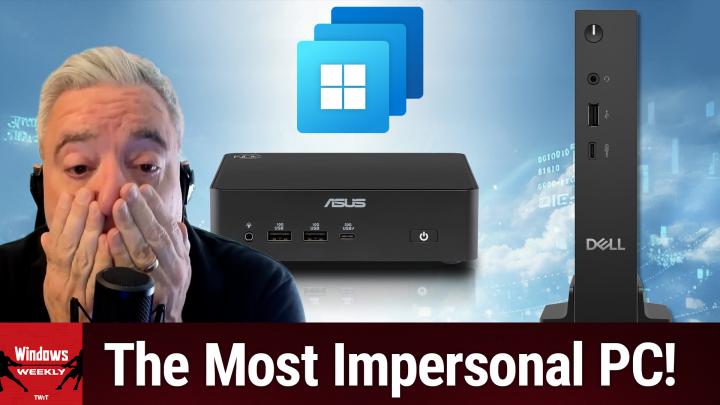
Windows Weekly (Audio)
WW 973: Bob's Rumor Store - ASUS & Dell Unveil Windows 365 Cloud PC Devices
01:52:01
ASUS & Dell Unveil Windows 365 Cloud PC Devices
Loading summary
Transcript354 lines
- [00:00]
A
Coming up on Windows Weekly, I, Micah Sargent, am subbing in for Leo Laporte, who's in Florida at the moment. I join Richard Campbell and Paul Thurrott and we kick off the show with the latest updates to the Windows Insider program and Asus and dell selling Windows 365 Cloud PCs. Then in AI, we talk about Copilot tasks and Google making app functions for Android. As for you devs, build 2026 happening in San Francisco in June. Wait, June? Will it overlap with wwdc? Afterward, Paul tells us about his time playing Resident Evil Requiem and tells better secure your PC. All of that and more coming up on Windows Weekly.
- [00:39]
B
Podcasts you love from people you trust. This is Twit.
- [00:51]
A
This is Windows Weekly, episode 973 with Richard Campbell, Paul Thurot and me, Micah Sargent. Recorded Wednesday, March 4, 2026. Bob's Rumor Store hello and welcome to Windows Weekly. The voice you're hearing is not Leo Laporte's because it is instead Micah Sargents. Yes, I am subbing in for Leo, who is in the ever so humid Florida. I don't know if it's humid right now, but we'll find out. This, of course, is Windows Weekly, the show where we talk about Windows and so much more. Joining us from Mexico City, currently Corre, Paul Thurat.
- [01:31]
B
Hello, Paul. Hello, Leo, or whoever you are.
- [01:37]
A
Are you sitting in that daybed right now or are you sitting in front of it?
- [01:40]
B
No, I'm sitting in front of it. Yeah. This is my wife's office. We've been trying to experiment with using the same space for this kind of thing and it's sort of working out. I don't know.
- [01:55]
A
You sound very thrilled.
- [01:58]
B
Yeah.
- [01:59]
A
Joining us live from the show floor at the Threat Locker conference in Florida. So you can tell us if it's humid there. It's Richard Campbell. Hello, Rich.
- [02:10]
C
Hi, Matt. Of course it's humid here. It is always humid in Florida. It's only degrees of humid. There's humid and really, really humid.
- [02:18]
B
It's like the, the salsas they serve in Mexico City. It's like, this one's hot. This one. Yeah, don't touch that one.
- [02:25]
C
That is not for you.
- [02:26]
B
Yeah, we'll just put that. We're going to move that over to the other side of the table.
- [02:31]
A
Well, as you know, this is the show where we talk about Microsoft, not just Windows. And that said, we'll kicking things off with Windows 11. What's the latest in Windows 11?
- [02:46]
B
So this is literally the latest. I just added it to the notes, and we haven't written it up yet. We're waiting for a comment from Microsoft, but apparently if you install Edge Canary, which is two, three versions out, and you click in the text box in any AI chatbot, OpenAI, ChatGPT or Cloud or Gemini, it gives you Copilot writing help tools. When the guy I work with showed me this and I said, no, this has got to be something they're just doing to all text boxes. You know, let's not make too much out of this. And he's like, yeah, I know. That makes sense. And then he came back and he goes, you know, actually, it's just happening in the AI programs, so apparently they're up to some shenanigans. So we'll see what happens there. We haven't heard back yet. There's still a chance this is a, you know, one of those horrible mistakes. Just kidding. We didn't really mean to USURP Other people's AIs, you know, they would never do anything like that. I mean, everyone, everyone loves Copilot and stuff. So anyway, we'll see what happens there. I don't know.
- [03:59]
A
Everyone loves Copilot. Yeah, that's. That's what I hear. Anyway, I'm going with it.
- [04:07]
B
Okay, so there's that. I. We haven't written this up yet. I think we're probably going to when we hear back from Microsoft. But I thought this might be of interest to people because, you know, everyone loves Edge and everyone loves Copilot.
- [04:18]
C
But if it's the Canary version, it's far enough out for them to, you know, change their minds.
- [04:22]
B
Oh, yeah, yeah, yeah, yeah. You know, feedback indicated something, something, something, something.
- [04:30]
A
Well, moving along, I think very exciting that we're seeing a third party password manager. Add some. Yeah, add a good new feature.
- [04:39]
B
I need to test this because I'm not 100% sure I'm reporting on this accurately. I just. This just came in right before I went to lunch early today because we're doing the show at a different time and, you know, obviously now we're doing the show, so I'm gonna, I'm gonna test this. But if you are familiar with signing into Windows 11 at all, you know that if you have an online account of any kind, Microsoft account, Enter id, whatever. Well, those are the two online accounts. You know, you have to create a pin. You can use Windows hello if you use an enter ID or a Microsoft account. My Windows 11 creates what's called an on device or a device bound passkey, which is then used to pass through authentication to, you know, OneDrive, Edge, whatever, store apps, et cetera, et cetera. But most people, including myself, would recommend actually what you want to use is a third party password manager that is portable and will bring those passkeys everywhere. The first time you sign into Windows 11 on a new PC or a newly reset PC, you don't typically have to enter a password of any kind. You'll usually use your Microsoft Authenticator app with a code or maybe you'll scan a, a PIN or whatever it might be to get into the system. So we have all these third party passkey managers, but they can't handle that part of the equation. They can't handle that initial sign in, they can't handle future sign ins. And I think most people are familiar with this idea that you have a passkey manager or whatever authenticator on your phone and you'll sometimes get a QR code on the screen on your computer and you can use that. You take a photo and sign in with the passkey. So Bit Warden is one of the, was one of the early adopters of passkeys across the board. And as new passkey capabilities appear, they've been adding support for that stuff as well. So they support, for example, portable passkeys, like I was saying, and this one is, I'm a little iffy on, but I believe they are the first third party password manager to support passkey based sign inside to Windows 11, the operating system. So among the options that you would get when you try to sign in, however you're doing it would be to use a passkey or security key and then they'll pop up a dialogue with a QR code. And you use your phone because you have Bit Warden on your phone and that would sign you into Windows. That I'm clear on the part I'm unclear on and I believe that if this is true, this is the first I've ever heard of this is if you have Bit Warden, the app installed in Windows, you should be able to sign in with Windows hello, facial or fingerprint recognition directly from the lock screen. Wow.
- [07:18]
C
How is that going to work? That's interesting. Like how do you get Bit Warden running that early? You're not even logged in, right?
- [07:27]
B
Yep. So this is, that's why I'm not 100% sure it's possible. Well, if you think about it, I mean, think about how Windows Pillow works with your device bound passkey from Windows. You know, you have this. Yeah, I don't know. I really, I'm trying to understand this, they work with Microsoft on this. I, there will be others that do this, that's for sure. I know that the phone based thing I described is accurate. The Windows hello part. I, I need to test this. I need to see if this is, you know, possible. Obviously the very first time you sign into a new computer there's no app installed so. And you haven't signed into it even if you're it put it there. So you would have to use your phone and that's fine, that's very, that's standard. But you know, you want to make this as seamless as possible. It's kind of an, you know, it's not a big deal. I don't think most people would care. I'm just trying to think of this scenario here like in other words, the point. Well, the problem with the device bound passkey. In other words, the type of passkey that Windows 11 itself creates is that it's only on that device.
- [08:27]
A
Right.
- [08:28]
B
If you lose the device, you can't, you know, it doesn't work anywhere else. Or even if you don't lose the device, it doesn't work anywhere else. If you lose your phone and that's how you're signing in, that's okay because it's still in your bitlock. You're a bit warden vault. So you could use any other device. Right. You could get a new phone, you know, get that going. You know, you don't have to worry about it. It's portable. So.
- [08:51]
A
Yeah, I'm not asking portability.
- [08:53]
B
Yeah, yeah, I'm not. Yeah, I need to test this anyway. This just happened so I could be, you know, partially wrong anyway. But I believe what's happening here is actually really interesting. So we'll see.
- [09:05]
A
All right, we'll have to keep an eye on that.
- [09:08]
B
Yeah, I'm going to try to test this today actually. I'm kind of curious about this now.
- [09:12]
C
Yeah, and I'm a bit word user too. I'm all over this. If it works. Yes sir, please.
- [09:16]
B
It will definitely work from the phone. But yeah, the thing is, if it could work on the device itself, that's amazing, right? That would be great.
- [09:23]
C
That's zero code running in system level, which always makes me nervous.
- [09:28]
B
Yeah. If you think about the progression of passkey capabilities in Windows, they cut two versions ago they added just passkey support. It did almost nothing. And then in the most recent version they added the ability to extend or replace that essentially with a third party passkey manager. So it kind of makes sense now that the next step beyond that would be. This would in essence, fully replace that. Right. It also opens up the possibility that you could create a local account, create a password, create a pin, use Windows hello, and then install your Bitwarden password manager and then use that to authenticate yourself, which would add a new layer of security to an account type that frankly, it's not very secure. So that's interesting if that's true. So again, like I said, I need to test this.
- [10:20]
A
Yeah. Because I love terminology I don't understand. And so the first thing is your device is Microsoft Entra ID joined.
- [10:31]
B
Yeah. So that's not Microsoft account. So that's a. What might. Well, what we might call a Microsoft work or school account. Ah, okay.
- [10:39]
A
Okay.
- [10:39]
B
Yeah. So this is for like a managed environment. Yeah.
- [10:42]
A
Like a. Microsoft says, in order to use Bitwarden to log into your Windows device, there are three prerequisites. Your devices, Microsoft Entra ID joined. Your organization has enabled FIDO 2 security key sign in. And then of course lastly that you have that registered passkey in the Bitwarden vault.
- [10:56]
B
Yep. All right, There you go. Yeah, so that's going to limit it,
- [10:58]
C
but I mean, business class M365.
- [11:01]
B
Yep. So that is, you know, that's not going to be super interesting to a lot of individuals, obviously. But I feel like the next step is Microsoft will allow this for Microsoft accounts as well. But either way, I can test it. Now I'm just curious about the on deviceness of it, if that makes sense. Absolutely. Being able to securely authenticate against your Bitwarden vault without needing a phone is interesting. That's a little tedious. I mean, obviously you sit down in front of a computer, if it has facial recognition, it's just gonna boop and you're in. That's nice. Having to do that additional step with the phone where you can scan the code. It takes a little while. It's not ideal, but whatever it is secure. But it'd be nice to be able to do that right from the device and authenticate with Windows love. So I believe that's what's happening. They specifically mentioned Windows. Hello. So we'll see. I need to experience it, but we'll find out. All right.
- [11:57]
A
We also have some news from the Windows Insider program with new builds. Anything exciting going on in the. In the new builds? No, but, you know, every time I come on the show, that's, that's. That's the answer.
- [12:13]
B
Well, yeah, there are big weeks and small weeks, and this is a small
- [12:17]
A
week, but this is a small one.
- [12:18]
B
Canary has got a bunch of features that we've already seen everywhere else, including this past Tuesday in Stable. Right. Which is one of the weird things about the Canary channel. You would think this is the most furthest out stuff you're going to get stuff first, et cetera, but that's not how that works. And so looking through these features, I see things that are older than this past week, but some that are just new to this past week, like the network speed test, the quick machine recovery improvements, tilt and pan in camera settings, etc. Etc. So this is just stuff we've talked about a bunch. It's not new, but it's new to Canary. And then if you're in dev and beta, which today are both testing 25H2 features, you know, nothing major. There's some improvements to Shared Audio, which is a feature that's very common on mobile. And now it's starting to become kind of a Windows thing as well. And then small other things, you know, narrator. Improvements. And then for IT pros or for anyone writing or implementing policy in a managed environment, there's a new, more secure mode for processing bash files, batch files. It's like 40 years old, 40 year old technology, but they're almost 50 year old. But whatever it is, 40, we'll call it 40 year old technology, whatever. So yeah, that's it. That's all we've gotten from the Insider program other than that there was a paint update that is kind of inconsistently rolled out across the Insider program. It's available in, I think it's the beta channel, which is the freeform rotate capability, but basically. So that's basically everywhere. And I think we can assume that's going to come to patch Tuesday or I'm sorry to Stable this month sometime. We'll see. And then I think I lose track of when things happen, but I feel like maybe Richard, remember last year at Ignite or the previous year at Ignite, I don't remember. But Microsoft announced the Windows 365 link. Actually that might have been two a year ago at build. So about a year ago now. And this is the Windows 365 Cloud PC device. It looks kind of like a nuc. It's, you know, mostly a. Like a cloud streaming type device. So that's kind of sat there by itself for quite a while as the only device that does this, I guess. And now Asus and Dell have both announced cloud PC devices, which are essentially nuc like devices that don't have a lot going on locally. Right. Because you're mostly streaming like a Windows environment from the cloud. Although this, you know, CPU and RAM and obviously WI fi, Bluetooth, Ethernet, blah blah, blah, whatever. But these are, these are just, you know, for. I don't know who these are for, to be honest. I mean for, obviously for huge organizations. But it's, it's the type of thing I think enthusiasts look at. Like, oh, that's awesome, I want one of those. And it's like, yeah, you can't really run Windows on it. And it's like, oh, that's. Why don't they have a version like that? I don't know.
- [15:30]
C
But yeah, it was Ignite 2024 when they announced it.
- [15:35]
B
Okay.
- [15:36]
C
Yeah, that's. And it's very much the, you know, slim PC mindset where there's no compute. Basically it's just an interface that runs back to, to a cloud. So you're completely cloud dependent. Like your actual instance is a virtual machine in the cloud.
- [15:51]
B
Yeah, this was like, was it Citrix back in the day and then eventually Microsoft got there with terminal services as well. But back then that was. You had a data center of your own and that's where you were hosting servers that were running these remote instances and you would stream and today we're doing it over the Internet. Obviously.
- [16:08]
A
The number of times I've heard when you talk about cloud PC devices that this is the future is I can't count how many times Are we still feeling that? Is that still the situation somewhere?
- [16:22]
B
Scott McNeely, who is not dead, is rolling in his grave. Because when he was running Sun Microsystems, this was their vision, remember the. It was. What was their. They had this tagline like the network is the computer. You know, the network of that day was largely dial up networking, which was not much of a computer.
- [16:40]
C
They talked about it as an Internet PC and now we're talking about as a cloud PC. But it's the same thing. Like there's plenty of organizations where you don't want the end user to have access to the computer. Like the computer literally isn't there. It's just a, it's just an endpoint. It's a slim PC thing that has nothing in it. So you can't take any data out of it. You can fully secure it.
- [17:03]
B
Yeah, I mean it's. Right. So in a highly managed environment, there's call for this kind of thing. It's not, I wouldn't describe it as the future. It is one of many ways to run Windows apps on a local screen with a local keyboard and Mouse. But in this case, not. I mean, there's enough RAM and processing to make that, you know, display and you know, the performance is reasonable, etc. But it's just one of many ways to do that, you know, alongside things like an actual physical device, obviously, or virtualization or whatever, whatever else is out there.
- [17:37]
A
I feel like if you're. Yeah, because it feels a little bit that if you are investing, if it still needs to have a certain amount of local processing power and then you need to get the peripherals for it to go along with it, then it's coming to a point where you're going, why not just build a laptop?
- [17:56]
B
Yeah, because. Well, it's a support. It's a support that makes sense idea. And like, you know, you're really locking this thing down. This might be for people.
- [18:05]
C
It's also security angle. Right?
- [18:07]
B
Yeah. You just show up, maybe you're there for a week because you're on some site or something, you do this work and then next week you're somewhere else. I mean, it's not, it's not designed well. I mean you could, I suppose a business might give it out to employees to bring home. I don't know.
- [18:21]
C
But I more likely call this the most impersonal PC.
- [18:25]
B
Yes. Like, yeah, it's the ipc and the I does not stand for Internet, it stands for impersonal. Yeah. Yep.
- [18:34]
C
But you know, the other side with the virtual machine and so forth, I can, as the administrator, just reset them. Right. So you're literally back to a standard template. Like, this is actually not a bad solution for a student lab where they can't mess with them. You can take a snapshot image to rebuild all the virtual machines immediately and just stand them back up again.
- [18:53]
B
So are you suggesting that walking around a classroom with a USB key to reset Windows 10 S computers is a bad idea?
- [19:01]
C
Yes, yes, I am.
- [19:02]
B
Why? Class will start in 40 minutes.
- [19:05]
C
Yeah, just please stand by. Now it's the idea that now I can run a script that literally just hops all those. Makes a new set of virtual machines so they can get to work and kill zeal.
- [19:16]
B
Yeah, yeah, so there's that. A lot of this stuff is sort of indirect Windows news in a way. Google announced, I think yesterday that they're going to move Chrome from a four week development schedule for each version to a two week development schedule. I only mentioned that here because. Well, I should mention too, I think they switch from six to four weeks. I want to say five years ago.
- [19:42]
C
Three.
- [19:42]
B
Three to five years ago. If I Remember correctly. But when they, when they made that schedule change last time, everyone that made a Chromium based browser followed, followed suit. Right. And so that's very common in the industry. Mozilla is also on a four week schedule. Apple, you know, because they're. Apple still ties Safari development to like OS versions, which is kind of bizarre frankly in the, in this 21st century we live in. But I assume we're going to see Microsoft someday. Some now, you know, between now and September when this change is going to occur, announced that they too will be moving edge to a.
- [20:22]
C
I mean the implication here is that if you're going to go to a two week build of Chrome, it means you have to do a two week build of Chromium.
- [20:28]
B
Yes.
- [20:28]
C
And so that's right, everybody uses Chromium, pretty much has to push out a build.
- [20:32]
B
Either you're going to skip a version or. Yeah, yeah, so I expect they will. I. The little asterisk here is that one of the things we talk about basically every single week is the chaos that occurs from all the frequent updates we get in Windows 11 now. And you hear that they're escalating this schedule and it's like, oh, I don't like that. That doesn't sound good to me. But the way Google described it was this means that each version will not be as big of a deal.
- [21:00]
C
Right.
- [21:02]
B
The more you do, the smaller the changes are going to be and that this should actually be less chaotic. And of course browsers update pretty quick anyway. I will also just point out because I've complained about this also just about every week on the show that I'll come in here, turn on my computer, bring up Notion and I this is not an exaggeration. I think every time I run Notion now it says, oh, there's an update like every time, every day.
- [21:26]
C
Same for me. Everything I open now is updated almost every time.
- [21:29]
B
Yep. So I mean, honestly, if anything, Google's moving too slow here. I don't know what they're doing. But yeah, I, I only mention it like I said, because I think Microsoft will probably do the same. I think they're gonna have to.
- [21:43]
C
But yeah, I don't really have a choice. You don't skip versions of Chromium, you don't know what's going to fix it. It's usually the other thing with this cadence is there's no longer security patches, there's just updates.
- [21:53]
B
There's just updates. Yeah, that's.
- [21:55]
C
Why would. You don't need to do a special
- [21:56]
B
update if you Know you got one
- [21:57]
C
coming every two weeks. Really?
- [21:59]
B
Yeah. I mean, this is again, Apple a little bit of an outlier. But the way that Google has changed the Android development schedule is kind of speaks to this kind of thing as well. But there are, they were always late these annual releases and there still are. But there are also quarterly releases which are usually new features. But there's always security updates that are part of that. And then there are monthly security updates across the board. And then of course, zero day, whatever, you know, you, you roll out security updates as needed and that's our world. Like we're in a world of just constant updates. So I'm not worried about it. It's not in certification. Don't even, I don't even know why. Did anyone even mention that?
- [22:38]
C
Imagine why you would think such a thing. That's crazy.
- [22:40]
B
It's crazy. This is all done for our benefit. We should thank our overlords, wherever they may be.
- [22:48]
A
Okay, I do need to briefly mention we kicked off the show with talking about Bitwarden and Bitwarden is a sponsor of the network. So there's just a little disclosure. Paul was talking about Bitwarden because it's a new feature.
- [23:06]
B
Yeah. Regardless of them being a sponsor. I mean, Bitwarden is one of two password managers I can recommend to anybody without reservations. So I mentioned them because they're relevant. Yeah, yeah, absolutely not because they're a sponsor.
- [23:24]
A
If you want to hit those semi related points. And then I believe we will take a break and Leo will join us.
- [23:33]
B
So you've missed all the fun with earnings, Mike. I'm sorry.
- [23:36]
A
Oh, man.
- [23:37]
B
Yeah, we went through the big guys, the Microsoft's Apples, Google's, all that kind of stuff. And then the PC makers start chiming in and usually it's Lenovo and HP usually racked up next to each other. You got like chip makers like intel and AMD and Qualcomm. And now we got the bringing up the rear. So we're kind of hitting the end of the season for the big companies. Dell, which is the third largest PC maker in the world, somehow still announced their earnings this past week. They're doing great, but not because of PCs necessarily. Mostly most of that growth is coming from their AI data center server offerings. Right. As you would expect these days, that business is bigger than their PC business already, but it's also experiencing really big growth. So for example, the PC part of that business was 13.5 billion in revenues, which is up 14%. But the infrastructure group, which is the data center AI stuff is 19.6 billion, up 73%. And they're already talking about this year like just be. We're, it's like we're basically sold out. Like we're gonna, we'll build as many of these as we can, but we're gonna sell all of them and more. So they had kind of a nice outlook for the rest of the year. So, you know, unlike a lot of these companies, like they're doing pretty good. And then Nvidia, which is doing better than anybody in some ways, or at least in this space. Record revenues of $68 billion in the quarter, up 73% year over year income.
- [25:16]
C
Didn't do that a year, two years ago.
- [25:19]
B
Oh, they didn't. They did one quarter of that a year not that long ago. I mean it's ridiculous. But the thing that really strikes me is like how profitable this business is. Like net income was 43 billion on 68 billion. Their profit or their margins are like 65. I mean I'm just doing this, my head. It's not really exactly that, but it's like 65% ish. I mean it's crazy. Like that's better than Apple. I mean that's crazy. For the fiscal year, 120 billion. Straight up profit on revenues of 216 billion. Again, just a killing.
- [25:58]
C
Makes you want to invest in AI companies if you got.
- [26:01]
B
Well, not AI companies, AI company. Because in this kind of circle jerky kind of world of AI in the data center and all this capex spending, all these companies are going, are making the point I've made from Microsoft side, which I would make from all of the software provider sides meaning OpenAI Anthropic and then Amazon, Microsoft, Google is. They're paying real money to build real infrastructure and they're building it on the promise that they're going to get revenues someday from companies that have promised to pay them, that may or may not be able to pay them. But when Nvidia posts revenues, they've sold hardware like they sold, they made something and they sold it. So they're on the other side of that equation. Right. To give you an idea of how small they used to be, they're gaming and AI PC business. 3.7 billion in revenue. So I'm, I'm gonna, I'm tough on math, but that's 1/2 of 10%. Well I guess that's 5%. You know what I'm saying? Like, like that part of the business is tiny.
- [27:10]
C
Yeah.
- [27:11]
B
But the data center, you know, whatever the Blackwell NVLink all that stuff is just. Still, I don't know how they every quarter. I think this is going to be the one where it's going to be under 70% growth. Nope. Mm, not yet. It's incredible. So they're doing okay?
- [27:30]
A
I was gonna say. Yeah, I think they're doing all right.
- [27:34]
B
They're gonna be okay.
- [27:36]
A
Well, I believe it is now time for a brief little moment with Leo, who is here to tell us about the sponsor of this week's episode.
- [27:46]
D
This episode of Windows Weekly is brought to you by Threadlocker. Threadlocker Zero Trust platform takes a proactive deny by default approach block blocking every unauthorized action to protect you from both known and unknown threats. Modern attacks hide inside the endpoints. Attacker controlled virtual machines, sandboxed environments or VM based malware evade traditional antivirus software, not Threat Locker. Threat Locker Zero Trust prevents VM based attacks before they can launch. Threat Locker's innovative ring fencing constrains tools and remote management utilities so attackers cannot weaponize them for lateral movement or mass encryption. Threat Locker works in every industry. They have great 24. 7 US based support. They support Windows and Mac environments and they enable comprehensive visibility and control. Just ask Emirates Flight Catering. They're a global leader in the food industry, 13,000 employees and they use Threat Locker. Threat Locker gave them full control of apps and endpoints, improved their compliance, and delivered seamless security with strong IT support. The CISO of Emirates Flight Catering said this quote the capabilities, the support and the best part of ThreatLocker is how easily it integrates with almost any solution. Other tools take time to integrate, but with Threat Locker it's seamless. That's one of the key reasons we use it. It's incredibly helpful to me as a CISO. Threat Locker is trusted by global enterprises like JetBlue, Heathrow Airport, the Indianapolis Colts in the port of Vancouver. ThreatLocker consistently receives high honors and industry recognition, G2 high performer and best support for Enterprise Summer 2025. PeerSpot ranked them number one in application control and Gitapp gave them their Best functionality and features award last year. Get unprecedented protection quickly, easily and cost effectively with ThreatLocker. Visit threatlocker.com TWIT to get a free 30 day trial and learn more about how ThreatLocker can help mitigate unknown threats and ensure compliance. That's threatlocker.com TWIT how appropriate that Threat
- [29:52]
A
Locker should be the sponsor on this week's episode of Windows Weekly with Richard Campbell coming to us from that Threat Locker conference this Go ahead.
- [30:04]
C
Yeah, absolutely. And Let me, let me just pan up and show you that we're here. It's the, here's the big logo of the Threat Locker Conference. It's been a ton of fun. These guys are really great.
- [30:16]
A
Awesome. Glad to hear that. Now we, of course, before the break, we're talking about Windows 11. We're back from the break. And now it's time for everyone's favorite AI.
- [30:30]
B
I mentioned the unfortunate phrase circlejerk earlier, and now I will refer to OpenAI in that context. They disclosed a 110 billion funding round, which values them at $730 billion, up from 500 billion in October. You know, they have an annualized revenue run rate of about 20 billion, so I don't see any problem with them ever paying that back or whatever. But 35 times, 40 times, it's. It's normal, it's fine.
- [31:03]
C
It's really not.
- [31:06]
B
I know. I'm curious, you know, the way Anthropic is kind of been making inroads lately. You know, chat GPT, for example, now has 900 million weekly active users. So it's closing in on that billion number, which is so important. But this, like, the Nvidia growth stuff, it's like, okay, so this is gonna have to slow at some point. And I wonder now if Anthropic or cloud or whatever we're calling it, has such a good impression among people out in the world that maybe, I don't know, we seem to understand that we have options that are just as good or better, depending on what it is you're doing.
- [31:41]
C
So Anthropic is really focused on the enterprise. Right. Which is, I mean, a tougher sell, but a sticky sell when you get it done.
- [31:49]
B
This is, yeah, it's almost like the Apple Google thing, you know, where Apple is like, look, we're going to be a little more expensive, but you get what you pay for and you get this kind of level of quality. And that's the Anthropic angle, where Google is like, yeah, we have expensive stuff, but we also have this really cheap stuff and it's, you know, you have this kind of range of options. And so that's the OpenAI angle in a way. Yeah, we'll see. Anthropic so far has somehow managed to thread this needle pretty well.
- [32:18]
C
Yeah, well, we've been talking about, you know, who's going to be Netscape and who's going to be Google in this story, and Anthropic's looking way more googly.
- [32:28]
B
Yeah, we'll see. I'm curious I mentioned earlier how beloved Copilot was. One of the other themes in AI is that everyone is doing it, I think is the way to look at it. And in this case what I'm referring to is we have AI agents that to my knowledge have never done anything for anybody. But now we have this notion of AI that kind of spins off agents to go do individual tasks and then come back and you can have multiple agents going at the same time. And so we see this across all the AIs. Microsoft has implemented something called Copilot Tasks and I believe that's been available for a while if you were a business customer or developer, but now it is also available as a preview for consumers. So if you have a consumer version of Copilot, you have that thing like OpenAI has an agent mode on its paid plans and propic. I think that's part of the whole co work or code, you know, cloud code offering where part of it is you, you spin up these agents and you're working on something but you. It's doing these little subtasks and it will come back and say, okay, this thing's done and whatever. But I, I don't, I. Aside from the Copilot branding problem or whatever you want to call that marketing, whatever, this feels like a complex thing to me. I'm not really sure how normal people are going to react to this.
- [34:10]
C
Yeah, we've yet to see good user interfaces for these sorts of things. The folks that can. Yeah, the average person can get into it. It's tough enough for tech.
- [34:18]
B
Yeah. And this is, this was centered to the controversy last October, November, when, you know, Pavan Avaluri was talking about Bill, or I'm sorry, Ignite at the time and that he was going to have be part of a presentation about how they were going to add agents to Windows and everyone lost their minds, you know, and look, whether anyone wants this or you know, likes the idea of agents in Windows or whatever you want to frame this. The UI that they came up for Windows is one that I think makes sense in the sense that you think about. Well, they're calling them apps. I think of these agents as more like background tasks. And then the app itself is the kind of the front end that does the runs, those background tasks. Right. And so but they'll present themselves as icons in the taskbar, they'll pop up notifications if they need you to interact with it for some reason to approve something or say yes or no to some decision it wants to make or whatever. It might be, or when it's just done. And you know, in the context of Windows and how Windows works and how people who use Windows are used to things working, it's like, yeah, okay, I mean that makes sense. But I don't know, there's a lot of AI from day one, day one being like two and a half years ago or whatever that was. You know, the modern AI era has been kind of drowning in terminology that I think is intimidating to normal people, frankly. So, you know, agents, it's like, what, what are we doing here? I don't know.
- [35:48]
C
Everything's an agent, it seems these days. Or everything's at least agentic.
- [35:52]
B
Right, exactly. Which I'm going to skip ahead. One, just because it's kind of tied to this in a way. One of the things I keep talking about is that I refer to this as like programmatic apps, right? So if you think about Windows, because you know, that is what we think about here, and the way that apps in Windows, whether they're apps built into Windows or third party apps or whatever it is, can expose their functionality to AI and especially AI agents so that those agents can run some task that is a feature of the app. To me that I'm trying, you know, I was for a long time trying to find a word for that. So to me it's like programmatic. It's, it's, you know, the app is basically exposing an interface that the AI or agent or background service or whatever can consume. And I think the right term is semantic, but you don't actually see that a lot for some reason that AI agents functionality in Windows that's coming or Copilot tasks is sort of that thing. If you right click on documents or images and Windows, you'll see AI actions and individual features from individual apps. Right? And so that's like a way to make that makes sense in the UI that we're familiar with. Google just announced that the next version of Android, which just hit beta 2 this past week and will be out by mid year, we'll have a similar feature. They're calling it App Functions. They're comparing it to MCP, which is how AIs interact with each other. But in other words, we're going to give that kind of functionality but to apps running in Android. And so of course all the Google apps will do this, but it will be basically the same thing where you have, in this case, maybe you're using Gemini and you are on an Android device and you're researching something or whatever it might be and that in this case, Gemini might fire off agents to go run tasks against individual apps. And it will be this functionality that allows that to happen at kind of a system level. Right. It'll just be a system function. Right. And this is. All operating systems are going to do this. So I mean, I'm not surprised. But the fact that they announced this, Google IO is in May and they announced this in. It might have been still late February at the time or very early March. They want to get developers going on this stuff. So it's just interesting to me that it's so similar to what Microsoft is doing in Windows. But then again, of course it is.
- [38:19]
C
Right.
- [38:19]
B
I mean, it makes sense.
- [38:22]
C
It's almost one right way.
- [38:24]
B
Yeah. I kind of wish these companies would settle on terms.
- [38:29]
A
Yeah, I would like that as well.
- [38:30]
B
Yeah. Because it's confusing enough already. But okay, whatever. I don't know. It's good luck. Yeah.
- [38:36]
A
Well, because they've settled on what is it, the, the, the model that lets them communicate.
- [38:43]
B
Mcp.
- [38:44]
C
Yeah.
- [38:44]
B
They said MCP became a standard. That was something anthropic invented and kind of gave to the world. And everyone else said, yep, we're doing it. And this is based on that. But you know, micro. I don't sure what Microsoft's calling it, but I'm going to guess it's not going to be called App Functions. It's such a Google name. But whatever. And then Apple will have to do its own thing. Or will it? I don't know. No, it will. Of course it will. It will have to do its own thing. The way Apple works is they'll do it for themselves first. So you'll see some. Whatever it is, iOS27 will have all these integrations with the built in apps in the phone. And then the next year they'll probably bring it to everyone else or the way they do things. But that's fine. Let's see, was it January? February. Whenever it was maybe January, Microsoft confused me by releasing something called the Windows App Development cli. This is a command line interface for software development projects. Now the initial release was mostly Electron Web projects and it was like, I don't what's the point of this? But in the latest release, this is still an early preview. So this is like version 0.2. They've added support for. Net projects. Right. And that's like including when UI3, but Windows Presentation Foundation, Windows Forms, net console apps, whatever. And okay, this is the type of thing I think if they had mentioned this was coming and I was like, okay, but now That I see that I'm like, all right, this is starting to make a little bit of sense. I also questioned why we needed a Windows Store cli. That was something that came out last month very quietly, which is yet another command line interface to the apps that are available in the Microsoft Store.
- [40:30]
C
Right.
- [40:30]
B
So we already have winget, which the Windows Package Manager, which handles store and web based web repository based apps. The Microsoft CLI only handles Store apps, which have certain advantages or whatever. But it's also a smaller list of apps, but I guess it's kind of a curated list. So the Windows app development CLI actually integrates with the Microsoft Store CLI and not winget. So in this case you do the. The command line is Win app. So you can actually just type Win App Store and then whatever the store commands or arguments are. And it will, it will just pass that through. And that might be actually why the Microsoft Store CLI even exists now that I'm thinking about it. But this is starting to come together. The idea here is that you're a developer, maybe get a new PC, you have to fire up a new project or whatever it is anyone has ever used. Visual Studio especially. But I guess Visual Studio code as well, depending on what you're doing with it. There's a lot of prerequisites, there's a lot of versioning issues, packaging issues, all things. This sets that up for you. I've not used it, so I don't do anything complex enough to need this. I'm basically using Tinkertoys. But this is interesting because you can just literally initialize a new project from the command line and it will just do all the right Windows SDK version targeting the NuGet references you need. It's going to generate all the XML and assets and blah, blah, blah, whatever it might be, depending on the type of project you're doing. So it's, it's interesting. It's. I don't know, I feel like it's going to click eventually.
- [42:13]
C
We got a Net rock coming up where we talk about clis in general.
- [42:17]
B
Yeah.
- [42:17]
C
And the sort of key part to know is that LLMs work way better with CLS.
- [42:23]
B
Yeah. Okay.
- [42:24]
C
So one of the driving forces of this is the automation tools.
- [42:27]
B
Yep.
- [42:28]
C
That are coming.
- [42:28]
B
Okay, that's, that's a good point. So I haven't written about this yet, but I've been using AI to work on a programming project and one of the weird issues I ran into was trying to get it to build successfully from the gui. And eventually the thing Came back to me and said, would you just go to the command line and type this in and it's going to work fine. And I was like, that's not how I do things. But okay. And then it did work and I was like, okay, you suck. But I. But I think that's the point, because you can do what is essentially. Or it can do what is essentially like screen scraping for guis that have like a dialog or an error message that's inside, like an IDE or something. But the CLI stuff is exactly the way it communicates, and the output is something it can just read natively. You don't have to worry about whatever gui. So, yeah, I think that actually that's a good point. That's almost.
- [43:27]
C
Yeah. And it's. The whole push in that show is like, CLI should be your first interface when you're building out an application, which has interesting consequences when you start thinking about what your interface is ultimately going to look like from a GUI perspective or any of those things. But, you know, this is the worst first.
- [43:44]
B
All of us, except for Micah, are old enough that we have now experienced the same things at least three or four times. And it's starting to get irritating.
- [43:53]
C
Right?
- [43:54]
B
Yeah.
- [43:54]
C
So, for example, age thing.
- [43:57]
B
But yes, it's literally an age thing. So if you go back and Richard will have a better memory of this. But I want to say it was probably exchanged 2003, but maybe 2007. At that time Monad or PowerShell had occurred, and Microsoft was going to do the opposite of what they did traditionally, which was build a GUI for whatever. And then later, when they realized they might need some kind of command line way to access those functions, write that separately, and maybe hit the same underlying code or however they did it. And then for whatever version of Exchange, they said, no, we're going to do this completely the opposite way. We're going to create everything from the command line first and the GUI is just going to run that stuff. It's going to be a front end for that.
- [44:43]
C
They did that with Internet Information Administrator too.
- [44:47]
B
Okay, so that makes sense to me, with the caveat that I don't believe I ever heard much about it. After a couple of years, like, you know, new versions of Server, Windows Server and other servers came out, and then eventually, obviously, we go to the cloud and whatever happens there. But I just don't follow this world as closely. But to me, from a software development perspective, it actually does make sense in my stupid little ape brain that you would build all of this Stuff to be accessible from either a scripting or programming language first. First and then build your goi on top of that. Like, to me, that makes sense. So whether or not that is what has happened, I actually have no idea. But as we head into this AI space now, it makes even more sense for all.
- [45:33]
C
It's even more driven. But that's, you know, where that really ended up was Win Admin center, when Admin center was a set of web interfaces over top of generating remote executing PowerShell.
- [45:44]
B
Yeah. And. And which I think speaks to the reason why that approach makes so much more sense. Right? It is it enable. Well, it more easily enables those kind of remote scenarios, which is every admin scenario. I mean.
- [46:01]
C
Yeah.
- [46:02]
B
Now, I mean, the notion that you're not saying, yeah, you're on the computer logging in, it's like, no, no, no, you are not, you know.
- [46:10]
C
Well, and the reality is they were trying to get rid of RDP and they couldn't because there's some admin tasks and some security profiles where it's like, we count on RDP as a way
- [46:20]
B
to jump because they're just in GUI and thus you have to remotely access that desktop.
- [46:27]
C
It is not easy to do remote access PowerShell, like, it is definitely a challenge. And so as much as Microsoft pushed us to do that, it's just a certain group of tasks and a certain group of people are like, nope, I cannot give up rdp. And so they still do remote in. That's just reality. You want to powershell all things. I mean, the most important powershell script in my life is the one that remotely mutes my wife's computer because she leaves the music on and walks away. It makes me crazy. And I'm not going over there. Like, I'm not doing it. So I wrote them. I wrote with a great effort.
- [47:03]
B
You're like, look, I could get 10 seconds of exercise twice a week, or I could spend three hours writing a PowerShell script.
- [47:10]
C
More hours than that. Remote execution without a domain controller. My God, Yes. It was not easy to do, but, you know that little icon sitting on my desktop that makes that machine go quiet? It's my favorite icon, man. It's a goodie.
- [47:23]
B
Sometimes I just trigger it when I'm on the road just to mess with
- [47:26]
C
it, just to be happy.
- [47:29]
B
That's funny.
- [47:32]
C
Yeah. Remote Execute PowerShell is not simple, but it is a core skill when you think about administrating, especially at scale. You know what the amazing thing about PowerShell is? Pipelining. Saying, okay, I now have to send this command to 100 machines needs. You're going to do that in RDP, you're there for days.
- [47:49]
B
I know this is going to cause like, you know, tingles down everyone's back, but I mean, obviously with the Windows app development, cli, we're talking about, you know, app development or software development, but yeah, I mean, the. This remote capability is, you know, there are going to be AI assisted admin tasks as well. Right. Of course there are. I mean, so, yeah, this just makes sense. I don't know. Hopefully they were kind of doing this all along. I kind of feel like they weren't, but I feel like there are two sets of interfaces, right? There's the. I guess what we'll call the CLI interface for now and then the gui. Right.
- [48:29]
C
But if you go back through the catalog of 2000 or so. Net Rocks episodes 2000 is coming up real soon now. You're going to see a whole. Just search on the phrase first. Right? Because we've done Internet first and web first and mobile first, and now we're doing CLI first. And I just, you know, there are days where I, like, I'm clearly.
- [48:48]
B
Just. So you see this? You just. You said it better than I said it. But you just spoke to what I was speaking to, which is like, when you've been around long enough.
- [48:57]
C
Yeah.
- [48:57]
B
You're like, we've done this before. You know, we've done this many times. Yeah. And after a while it's like, this is just irritating now. When I was 20 years younger, this was exciting. And now I'm like, no, just stop. Like, enough. Yeah, it's a different.
- [49:13]
C
Not gonna.
- [49:13]
B
No, Yeah, I know, I know.
- [49:16]
C
And I made that. I've made that show again. I have a CLI first show now. It's like, am I. Am I sad about it? No, we're not wrong. Right? Things evolved again.
- [49:25]
B
Well, like I said, I mean, this, regardless of AI, although this amplifies it, I. This, to me always when they talked about, that's 25 years ago, it's 20 years ago. Anyway, I was like, yeah, no, this is the right way to do it. I think the rejection there was. That was the way it worked on unix. Everything in UNIX starts from a command line. And then eventually they build these really terrible UIs over time, and then eventually they get better. But they came at it from a different perspective. Microsoft's thing, Windows NT and then just Windows Server was always like a response to unix and it was, you know, trying to fix some of the things they perceived as the Problems with, with unix, which, with a little bit of hindsight, maybe not all of them were correct, but it was always like a,
- [50:10]
C
Everybody, everybody was experimenting, man. We were all trying to figure stuff out.
- [50:13]
B
Yeah, I'm not pointing any fingers at, you know, Dave Color or anything, but I, I'm just saying, you know, we, we came at it from a different perspective.
- [50:24]
C
Hey, UNIX went units, went command line first because that's what they had. You know, it's not a crime division, it's what they had.
- [50:31]
B
No, I, absolutely. And look, Dave Cutler and that team came up out of deck. I mean, they came from that world too. I suspect that the requirement to do GUI first, only really first, but let's call it GUI only, came from above. Right? I mean, this was like, you know, at some point it was like, this thing has to look like Windows. This thing has to run Windows apps, this thing has to be Windows, you know, and that's, I'm sure, left to his own devices, Dave Cutler might have in that team, it's not just one guy, but might have gone in a different direction from an interface perspective. Meaning there would have been a gui, of course, but they probably would have. It might have been a more kind of a thorough PDP or what are UNIX style kind of command line interface. Maybe. I don't know. Yeah, but we got, you know, we got.
- [51:23]
C
My experience with extra. Yeah, My experience with senior people is that they tend to go back to fundamentals, and that fundamental is going to be command line. That's what they knew. It's where they started. That's how I, I can't remember if
- [51:35]
B
I mentioned this, but I think I might have two, three, four weeks ago. Like, Microsoft last year announced a command line editor called Edit, Right. Which harkens back to the great DOS editors of, you know, yesteryear. And, you know, it's like, what's the point of this thing? Right? It's going to be included in Windows 11. Allegedly. I believe it's not in there yet. You can Download it from GitHub or whatever. You might be able to even get it from the store. I'm not sure how you get it, but it's wonderful. I mean, it's wonderful, right? It works like all the keyboard shortcuts
- [52:08]
C
were aimed at you. I know.
- [52:10]
B
I, I, I, I'm in love with this thing. And I think this might be another aspect of aging where you. I'm regressing to a baby eventually, but for now I'm, you know, I've gotten to the point where, like, when I first discovered computing and it's like, you know, command lines were the thing and I. I love it. I figured out how to add it to the Open with menu.
- [52:31]
C
PM out there with a big note that says nostalgia interface. And they're making sure they hit your.
- [52:37]
B
Oh, my God. And you have to hit the. It's got to have that exact DOS font, you know, from back in the day where it was just. You, like, you see it and you're like, oh, my God, this is awesome. It really is awesome. I. I love it.
- [52:48]
C
Does it do green text on black background?
- [52:52]
B
Well, I mean, you run it in Terminal, so you can. Yeah, you could have it be anything you want. Well, there you go. The editor interface has its own thing, but. But it looks, you know, if the colors are kind of like. Well, it depends on the. Actually, it depends on Terminal. So, yeah, you could. I'm sure you could. I haven't. But yeah, you can. I'm sure you could. Scott Hanselman probably has this going already.
- [53:09]
C
Inevitably. You know, he does all right.
- [53:12]
B
For sure. Just apropos nothing. I just love this thing. I text editor. It's beautiful. I really do. I love it. We had been speculating or wondering what's going on with Build this year, given what happened last year with Build and. Well, and then Ignite before that, they had moved Ignite to San Francisco. The guest was, they were probably going to move Bill to San Francisco as well, out of Seattle. And normally that's the complaint about.
- [53:39]
C
Seattle was too much homeless, too much drug use. So they went to San Francisco.
- [53:44]
B
Yeah. Yep.
- [53:44]
A
Okay. Interesting choice.
- [53:47]
B
That's like saying, Mars is too hot. Let's go to Mercury. You know, it's one way to do it.
- [53:54]
A
As you say, I just adore.
- [53:56]
B
I just. It's just a mental. But so they just announced that, yes, it will be in San Francisco, as we expected, but it's going to be in June, which we did not expect.
- [54:07]
C
It's also not going to be at Moscone. It's at.
- [54:09]
A
For June during wwdc.
- [54:12]
B
That's the thing. So.
- [54:13]
C
Oh, man.
- [54:14]
B
For years, and I mean over a decade, the issue with Build has been that it often fell right on top of or literally at the same time as Google IO. The one of the issues with having a show like this is you have to find a venue that has an opening that can take that many people, etc. Etc. And I suspect for San Francisco, like the Moscone center was probably pretty full booked up or whatever, and they were trying to figure that out. But It. But now they're going to overlap, I think or very, if not be very close to wwdc. And you know someone, I know someone on some Twitter, whatever social network was like, oh, that's kind of a bold move. You know, I'm like, no it isn't. They didn't want that. They know that anything they announce will be overshadowed by, by a stupid color bauble thing that Apple announces. So you know, like they do not want that thing overlap with wwdc. This is like wwdc, it's a developer show. Allegedly. But it's the keynote and whatever they announce is on the nightly news locally. I mean Microsoft will announce, they could announce the greatest thing we solve, quantum computing. It won't even be on the news. I mean, not if there's a new Apple device or a new whatever it is, iOS27 or whatever we're calling it. So no, I don't. This is not them being bold. This is them taking what they can do. You know, they heard the feedback.
- [55:39]
C
Only a two day show, which is small.
- [55:41]
B
Yeah.
- [55:41]
C
And the Fort Mason is a smaller venue I think.
- [55:45]
B
Is it like at a community college or something? Like what is this?
- [55:48]
C
Like it's an old army base.
- [55:51]
B
Yeah.
- [55:51]
C
But you know, GitHub did a GitHub universe there a few years ago.
- [55:56]
B
Okay.
- [55:56]
C
And I think it was 2,000 people. So I, I've also heard it is, well, it's cheap and well, it is invite only. You have to apply essentially.
- [56:06]
B
Oh, nice. Okay, look, the problem for anyone that wants to attend the show, aside from the obviously obvious cost logistical stuff, is that Microsoft has not communicated. Here's what we're going to talk about because why would they. Depending on where you are as a developer, you may or not want to be at this thing. Right. I mean if you're. We've spent, God, decade and a half, I don't know, wondering why Windows wasn't a bigger deal at this show. I don't think we wonder anymore. But depending on where you are in life, this may be incredibly relevant or not. And I wish there was a little more guidance there, but we'll see.
- [56:45]
C
But a thousand dollar ticket for a Microsoft show is half. That's a bargain.
- [56:50]
B
Yep.
- [56:51]
C
But I don't know that it's a good look.
- [56:55]
B
Are they going to offer like hotel accommodations that will also be half price for San Francisco or what I would call a normal price anywhere else?
- [57:03]
C
Also look at how close Fort Mason is to any hotel. So I hope they've got a bus shuttle set up too it's on the waterfront.
- [57:10]
B
I. We all both have had enough experience with these kind of shows, like, say, Chicago, to say that the bus thing's going to work out great. What's your problem?
- [57:20]
C
Boston, you know, like, we've been there before. I just don't. There's anybody working there that worked on a show with bus service at this point. It's been a long time.
- [57:29]
B
I mean, Boston. South Boston was only connected to Boston proper about 17 years ago, so it's no wonder that didn't work out. But there's still no. I mean, there's never going to be a subway there. Right. Like, it's. It's all buses, so that's the way it is.
- [57:42]
C
It's gonna have to be busy is.
- [57:44]
B
I don't know.
- [57:45]
C
It's interesting. I don't know if I'm going. That's a great.
- [57:48]
B
You know, I mean, unless something dramatic changes for me, I can't imagine going to this. Yeah, it's too far to go for too short of a period of time for too much stuff. I just don't think I'm gonna care about that much, I think. But I don't know. You know, I don't know.
- [58:03]
C
But this show is also scaled like the old Connect show, where it's literally just gonna be a streaming event with an applause. Trash.
- [58:09]
B
Yeah. Kind of like build was before they started letting people back, you know, after the pandemic, that kind of thing.
- [58:16]
C
Yeah.
- [58:17]
B
You know, the first year, there are two where they only had, like, a very small local audience, and the new part of the convention center. And then most of it was just streaming, you know.
- [58:28]
A
All right, up next, it's going to be time for Xbox Corner. Xbox is up next. All right, Paul, tell us what's going on in the land of Xbox.
- [58:42]
B
There's a lot. I've added a couple of items since I originally posted the notes, but I'll start with the stuff that was already there. So it's March, in case you didn't know. My favorite headline of the year is always daylight savings is coming. Here's what you need to know, and what you need to know is when is it it? That's it. That's the whole thing.
- [59:08]
A
So I like that.
- [59:10]
C
That's good.
- [59:10]
B
Yeah. Yeah. You know, so. But twice a month, typically, sometimes more often, we get new drops of game pass titles across console, PC and cloud. And they just did the first one for March, and the big one to me is Cyberpunk 202077 is coming to console, and I think Cloud but not PC. And it's like I actually kind of want to play this, but. But maybe it's already on PC. I'm not. I should look this up. But that's the big one. But Final Fantasy 3 is in there. Kingdom come, Deliverance 2 we talked about, I think at one point, EA Sports F1.25, which I assume is a racing game and not yet another soccer game. Or as the rest of the planet might call it, football game. Football. Hollow Knight, Silk Song. That was kind of a big one. And Gabby's Dollhouse. Ready to party.
- [59:59]
A
Oh, good.
- [59:59]
B
It's either gonna be awesome for a guy like me or the worst experience of my entire life. It's kind of hard to say, but based on the name, that could be anything from Jeffrey Epstein's island to some little girls playing with the Dollhouse. I have no idea. Which I guess is Jeffrey Epstein's island. Anyway, I'm sorry, I'm off track. So that's happening. This wasn't in the notes originally. Microsoft pinged me right before the show. And this is kind of tied to something I'm going to talk about in the back of the book. But they're highlighting, I guess they do this every month, but they have an indie program obviously through Xbox. Every month they do an Indie select where these aren't necessarily brand new games, but they're indie games that they recommend. And a lot of them are pretty inexpensive, which is kind of cool. The thing that's really shocking about indie games these days, and I think this is only going to get better and better, is how high quality they are. There's a term I've not really thought about too much since the 1990s, but if you think about the advent of CD ROMs right back in the day and there were CD ROM kind of add ons for computers and consoles even, and there were some consoles that were just original like CD32, like the Commodore thing or CDI, remember that, that were CD based.
- [61:18]
C
Right.
- [61:19]
B
And back then the. The height of technology in this space was FMV full motion video, which was probably 320 by 240 or maybe 600 by 400 or something. One of these games is a horror title called Heart of the Forest. It's completely full motion video. So it looks like you're watching a movie. Whoa. And I'm kind of curious about it. It's 13 bucks. It's kind of. Like I said, it's going to tie into something I'll talk about later. But if you look through these games by and large. I mean, some of them are, you know, gamey and kind of cartoony looking, but some of them are like, wow. Like these guys, you know, these are small teams of people making incredible high quality games. Like it's worth worth looking at if you hag. I'm losing where I am in the notes here. No, that's not it. I'll find it eventually, I promise. I guess they won't. I think I have the wrong link. That's why. So, yep, I always do this at least once. So if you have an Xbox Rog Ally gaming handheld, which you probably don't, but eventually this is the type of stuff that's doing both of you guys or some other gaming handhelds like this Lenovo Go 2, which is the version I reviewed last fall, which is kind of a little bit bigger than the Rog Ally, but will become an ally device, meaning they'll get the front end UI and all that kind of stuff. They are now pushing AI based game recaps, which is, how do I say this? If you're in the Xbox Insider program, you can see this on any computer. So I've actually seen this in Call of Duty, which is goofy because I launch Call of Duty and I play multiple multiplayer games and then I close the app, right? Or close the game and then this thing comes up from the Xbox app. It's like, hey, you did great that game. It's like, shut up you idiot. So it's that kind of thing. It's like I just played 17 games and you're gonna have a commentary about one of them. Like what is, what are you doing? But anyway, that's now shipping in stable, I guess for Xbox Rog Alley. You don't have to be an insider program. I didn't mention this up at the top of the show, but this week is Mobile World Congress in Barcelona. So lots of mobile and even PC kind of announcements. Lenovo always announces a bunch of computers. So there's a bunch of new thinkpads and they have concept PCs and it's all very interesting, but to me the big one is a concept for that Lenovo Legion Go gaming handheld, right? So the way that thing works today is it's like, you know, like any gaming handheld, it's got the controllers on the side of the screen which you can pop up if you want, but nobody ever would they have a version. This is a concept, not a shipping computer, but it's basically a folding screen computer. I mean like, like the, you know, see a lot of like a laptop Essentially. Right. So in its unfolded dimensions, this is like a 7.7-inch display, which is a lot like gaming handhelds, about roughly 7, 8 inches. But you can unfold it to 11.6 inches and you can do it vertical or horizontal. Now obviously for game, most games you're going to want horizontal. Of course, then you played it out here or something. But this is kind of a cool idea. I think that the central advantage of any hybrid device, if it's successful, is that it can replace two devices. Right. So if Apple comes out with their folding iPhone, it's like, okay, this is like an iPhone and an iPad mini maybe. Right. It's like, okay, that's interesting. You know, a folding laptop or whatever can be like a giant screen with a detachable keyboard. And it's a cool. But when you transport it, it's a smaller thing. And so this is something you could tuck in your bag. It's the same size as a gaming handheld, but when you're actually playing, you can fold that thing out. It's like this awesome, huge screen. I'm like, yeah, no, this, this actually sounds like kind of a cool idea. So.
- [65:22]
C
And, and to be clear, when you unfold it like that, it goes seamless, right?
- [65:26]
B
Yeah, it's one screen. It's not like there's no border. It's. It's just one screen.
- [65:29]
C
Okay.
- [65:30]
B
Yeah. Yep.
- [65:32]
C
That's. That's crazy.
- [65:33]
B
It's interesting. Yeah, it is crazy. Yeah.
- [65:35]
C
But that's Lenovo. They are the ones who go nuts on innovative machines. Like, they, they're fun.
- [65:40]
B
Yeah, they've taken that mantle for sure. And they have different versions, but they're fun. Yeah. Well, I mean, they are now shipping one rollable screen device like in, like to the world. There's the version, you know, that you kind of pull up on it like a shade and it's like a tall screen which, you know, depending on certain, certain scenarios, like I could kind of see. But you also want the version where it rotates and then you open it kind of like this way and then it becomes more of a traditional laptop screen. But the, the goal there is you have hopefully a full size keyboard and a trackpad. And then this screen can be whatever, it could be like kind of small. If you're in like a tight little coach seat on a plane or if you've, you know, if you're home or wherever you are, you could just kind of open this thing up. It's kind of, it's a cool idea. It's. Yeah, there's no reason not to try this with gaming. I think that's a good idea.
- [66:30]
C
I love these guys, they're innovative. I'm not going to buy all their crazy things, but I am delighted.
- [66:37]
B
But yeah, no, it's still interesting. Yeah, this also just, this happened since we started the show. But there is a rumor, it's in Bloomberg, so it's not like Bob's rumor site or anything, but apparently look at all my rumors. Me too. There was Sony, like Microsoft. But you could make the argument for Microsoft, this makes sense because this is their platform has been porting a lot of their PlayStation 5 games to the PC. Last year they released at least one game and possibly two or three that actually shipped on PlayStation 5 and the PC on the same day. And in fact, one of those games I think shipped on Xbox later, which is like, wow, it's like weird, weird place. Apparently there's a rumor, well, not apparently, there is a rumor that Sony is apparently considering only shipping first party PlayStation games on PlayStation, like not bringing any of them to the PC. And I don't know if that means like day one or just later. It's kind of a, it's a weird backtrack because to me, when you're a game publisher, which Sony is, you know, you want those games to be as many places as they can be. That's how this business will be the most successful.
- [67:58]
C
The conflict of interest of owning the console and also being the game publisher. It's like you want the guys who have the console wanted to just be on the console and game publisher wants it everywhere.
- [68:09]
B
I think the argument you could make. So the one thing that's been generally true across the board is that a new game comes out. It doesn't matter who makes it. If that thing is on the Xbox and the PlayStation, it always looks better on the PlayStation, right? Pretty much. Especially if there's a PlayStation 5 Pro optimized version.
- [68:25]
C
Right.
- [68:25]
B
It's just gonna be better frame rates, better graphics, et cetera. Like they'll be the one, they always show off. But when you get to the PC, things get interesting because PC scale basically infinitely.
- [68:35]
C
Bigger screens, more horsepower.
- [68:37]
B
There's all this. Yeah, you can always make it look better on the PC if you want. And so I suspect from Sony's perspective, like Microsoft, this would not bother them. Right? Make it look great on the PC, fantastic, who cares? But from Sony's perspective, you don't want something overshadowing the best console that you make.
- [68:55]
C
Right. And that's impossible because PCs get new hardware every couple of months and consoles come out years apart.
- [69:03]
B
Yep, yep. And the one thing I've noticed, you know, playing games pretty exclusively on PC over the past couple years now is that you get a new PC with a new graphics card and it's like, oh, my God, you know, it's like you have new eyes. All of a sudden, like everything looks better. You see things again. Yeah. No, it's insane.
- [69:19]
C
So here's the question. You know, Sony's done this a few times now. They did the dual release. Have they now come to the conclusion that the PC sales were undermining their PlayStation sales?
- [69:28]
B
I don't this.
- [69:29]
C
And that's why.
- [69:30]
B
Yeah, that's a good.
- [69:31]
C
If they're really doing it. Like I said, it's only a rumor.
- [69:34]
B
So the author of this article, who, by the way, now that I'm seeing his name, I, I believe is the author of that book about Activision Blizzard or Blizzard. I get the Blizzard part of Activision. Jason Schreier says that one of the reasons they might be doing this is that the next Xbox is going to be a PC.
- [69:56]
C
Right.
- [69:58]
B
By making the Xbox a PC, that makes targeting the PC less attractive to Sony. Because now what you're basically saying is Microsoft's platform is the PC and that's where it looks best. And you don't want that.
- [70:14]
C
Right.
- [70:14]
B
I mean, we've seen this with Xbox games. I mean, there have been Xbox games that look better on.
- [70:20]
C
Now, we're not going to talk about the hypocrisy in this of, you know, Sony screaming at the ftc. You can't let Microsoft buy Activision because they're going to make it all, you know, unique titles.
- [70:32]
B
I'm going to talk about the hypocrisy of this. I. I feel like, like, no, this was always, like, during the Activision Blizzard antitrust stuff, Sony was just harping on this constantly. And it was the most. It was ridiculous. It didn't matter how many people from Microsoft, no matter who they were at any level of the company who would say it would be insane for us to buy this company for all these billions of dollars and then restrict where the games go. Like, that's not. That's not a business. That's stupid. And, you know, and look, whatever anyone thinks about them buying Activision Blizzard, they follow through on this, right? Like, PlayStation 5 is still the PlayStation in general, still the biggest platform for, like, Call of Duty, you know, for example, like, that was the big failure. They're going to take away Call of Duty. It's like we're not taking away Call of Duty. You crazy. Like that doesn't make any sense. It's also possible maybe that, that Sony's PC games just haven't sold as well. You know, maybe, maybe this, the investment hasn't worked.
- [71:35]
C
Having collected this data, now they say, well, how much did it cost us to implement for the PC and what
- [71:39]
B
did we, what was the payoff? Yeah, maybe it's not enough. Look, I will never. Look, my opinion can change with the new evidence. I don't mean it that way, but I feel very strongly that from like a gamer's perspective, like from the person playing the game game, it's always better to have this thing, be the game, be on as many platforms as possible every time. Like there's no, there is no downside to that.
- [72:03]
A
I think part of, well, I mean, I guess it depends again, but part of the experience is often getting to then talk to other people about it or at least know, have a bigger
- [72:14]
B
audience out there that's doing the thing you're doing. And it's especially true of multiplayer games where I always use this example because it's. Oh yeah, Call of Duty. If you flash back to 2005, 2010, whatever year, if you were playing on an Xbox 360 in that time, whatever version of Call of Duty and you were online, you were playing against people with an Xbox 360, that was, that was the audience and it was millions of people, I mean potentially. But at some point they opened it up to cross platform play where it was basically all consoles, which at that time was just PlayStation, Xbox. So the audience more than doubled. Right, because the PlayStation audience was actually bigger than the Xbox audience. So let's say it went up like whatever, 65% or I guess that would be 165% or whatever it is now when you play Call of Duty modern versions, you're playing against people on PC console. Well, Xbox and PlayStation. Right. And so that doubled it again. I mean it's just, it's wonderful. So if that's what you want, what you don't want is to sign into a two or three year old copy of Call of Duty in this case or whatever game and get online and there's no one there, you know.
- [73:20]
C
Right.
- [73:20]
B
You want, you want the biggest, you want the biggest possible audience. So I don't know, but these get the games, they're talking about things like, well, that one was canceled. What's the big. What's that not? Guess not. Gears of Worse. I got this stuck in my brain now. The Something of war again, whatever those games are.
- [73:39]
A
Oh, shoot.
- [73:39]
B
You remember? You know what I'm saying?
- [73:41]
A
Yes.
- [73:42]
B
It was like one of the first big games they brought over to the PC side. I mean, I. Maybe it's more of a single player experience. Maybe it doesn't. Maybe that type of thing doesn't matter.
- [73:51]
C
God of war.
- [73:52]
B
God of war. Thank you.
- [73:53]
A
That's.
- [73:54]
B
I don't know. I don't know.
- [73:58]
C
PS2 game.
- [73:59]
B
I guess it might literally just be the Xbox Windows thing. You know, we just don't want to see. We don't see that game on Xbox. You know, they're still, that. They're still in that world where exclusives matter. I don't know. Maybe, maybe. And then this just in literally. Well, a bunch of stuff happened right as we started the show.
- [74:21]
C
Yeah.
- [74:23]
B
A couple of months back, I think November, Epic and Google announced they agreed to settle their antitrust case. This was curious on a number of levels because Epic had gone into antitrust cases against Apple and Google. They destroyed Google. I mean, it was a route. They fared less well against Apple, but Apple, through their belligerent behavior, kind of turned the tables on that. And now their behaviors have triggered this opening of that app platform as well. And so they kind of came out of this in a very, you know, decidedly victorious state. So why on earth would Epic and Google agree to settle? It's kind of hard to explain, but again, from the perspective of like a gamers in this case, but people on the outside, the requirements that Google would have faced legally in the United States are now going to be worldwide and they're going to be for a longer period of time than what's required by this court case. It's like, wait, what? It almost doesn't make sense, but there were some complaints that part of this deal, these complaints were made in such a way as if this was illegal. But as part of this agreement, they're going to be more partners than enemies now. And Epic will promote Android as the open, safe, best place to play games on mobile. And it's like, oh, that's not right. And it's like, no, that is right. That's what partners do. It's fine, there's nothing wrong with that. But for this to work, it would have to be settled or the settlement would have to be agreed to by the judge, which is Donato, what's his name? James Donato. So I believe what just happened literally is the judge agreed that the settlement will occur. So I haven't had a chance to read through this, but Google has an announcement about it on their Android developers blog that I did link to in the notes and I'm going to go look at this. But basically what this amounts to is that developers can use Google Play's billing system or not. They're not going to get charged exorbitant fees. If they do not, they will allow third party stores like epics right. To appear on Android, etc. Etc. So this is, this is kind of the outcome you want. The fact that they settled after Google lost to me is still the weird bit.
- [76:46]
C
But why isn't that judge saying all along, you guys need to settle this, you guys.
- [76:50]
B
Yeah, he literally said, said before he went to he decide on the case when the case closed or whatever, he said, listen, you do not want me to rule. You need to settle with this company. And he required them to meet with a mediator. They did not reach a settlement at that time. And so he issued his ruling which was the most scathing, I mean just brutal one sided victory for Epic in this case that I've ever seen him.
- [77:15]
C
But at the same time this is actually beneficial for the consumer.
- [77:18]
B
More stores, 100%. Yeah.
- [77:20]
C
You know the store that's going to win out of this, you got every. Well, the Steam store.
- [77:24]
B
Right, right. And yeah, they didn't even get in a fight.
- [77:28]
C
They stayed out of it entirely. This is not. If this is the new deal and you can, you know how quickly everyone's going to load a Steam Store out of their phone? Are you kidding?
- [77:37]
B
I know, it's interesting. I mean it's definitely consumer friendly and the right thing for people and all that kind of stuff. Google, you got to remember, they fought this all the way to the Supreme Court and the Supreme Court told them to go screw themselves. They were like, no, no, no thank you.
- [77:53]
C
Supreme Court refused to hear it. Right? Like it didn't.
- [77:55]
B
Yep. So they tried everything they could. They tried to get an emergency stay. There was all this stuff and they were at every step of the way it was like, no, this is, this is absolutely legally correct. There's nothing. Sorry.
- [78:08]
C
And you could have settled this two years ago for much less of what's about.
- [78:11]
B
Which is the thing I, as, as mobile has become a bigger and bigger thing and it's personal computing, which used to be all Microsoft and Windows has become a bunch of things like a heterogeneous world. I've often made this point, you need to learn from the past. And one of the things you'll learn from the past is you don't act belligerent to antitrust regulators and then governments and then courts. You work with them and you can have some outcome or some say in the outcome. If you allow court come back to you. Yeah, you'll get what happened to Apple, which is they won, I know, two thirds or three quarters of that case and then lost it completely, like, by being dicks. You know, I mean, it's just ridiculous. It's like you basically won and you screwed it up. Yeah, I, it's. I, I don't know. I don't know. There's no way in baseball to face the other direction at the plate and a home run for the other team. But it's like doing that, it's like, what are you doing? Like, what is that? It doesn't make any. You just won the game. Why? What are you doing? But that, you know, you, you, you need to work with these. You need to work together. And this is the type of thing. I'm not 100% sure why Google agreed to this, but I don't know. Dramatically lower fees for developers, way more openness. And then to me, what Android has been historically and should always be, which is that kind of open alternative to the Apple ecosystem, whatever people can choose, whichever one they like.
- [79:35]
C
Telling you, man, is going to be a Steam source.
- [79:39]
B
I think you're right.
- [79:40]
C
Yeah. Those guys are going to be the winners in this because people trust Steam.
- [79:45]
B
I want Bob, Bob's Rumor store. I want that story.
- [79:48]
C
And then I thought when you're talking about Bloomberg, it would have been Michael's rumor Store.
- [79:52]
B
But okay. Yes. Yep.
- [79:56]
C
Unbelievable.
- [79:57]
B
Yeah.
- [79:57]
C
What an outcome. Weirdly, outcome positive for the consumer.
- [80:01]
B
The last thing I have to really, I have to go through this. I, I need more information. But this, like. Did I put this in the. No, I didn't. There are these tweets from Tim Sweeney, who's the CEO of Epic Games, where it's like, rah, rah, Android love Google Play. And you're like, yikes, what are you doing? But I guess what he's doing is he settled and he got what he wanted. So what are you going to do? Let me see if I can. So he said, yeah, Fortnite will return to Google Play worldwide soon. Epic Games Store continues supporting Android worldwide alongside Windows and Mac. Installation on Android will become much easier this year. And then the other one was. Oh, because, yeah, Sameer Samat, that's the guy from Google, wrote that. Whatever he wrote, we're in the forefront of how developers distribute apps and games on billions of devices globally. But Tim Swinney's comment to this, Google is opening up Android all the way with robust support for competing stores, competing payments, and a better deal for all developers. So we've settled all of our disputes worldwide. So, I mean, this is Epic. It's not amusing. It's distressing to me that people complained about Epic doing what they did. There are some people who believe, like, Epic is a big company, which is like saying, yeah, Germany is a big country, but they're still not going to attack the United States today. They're not the same size as Google. They're not even close. They are to Google what I am. To Epic. They're nothing. So the fact that these guys fought this fight not just for themselves, which, by the way, they could have done, but to get this for all competing stores, not just their own, is what makes this amazing to me. And what makes what they did, no matter what anyone thinks of Tim Sweeney or his company, to me, is a net positive literally for the world.
- [81:58]
C
It's crazy. How did you get here from this? We don't want you to charge 30% on Fortnite.
- [82:05]
B
This is all dating back to any attempts at Walled garden and activity when Microsoft came up with Windows 8. Tim Sweeney was a big critic of that because this thing was going to have a mobile like app store and this was going to be Microsoft's way to collect whatever percent vig on every transaction. And this is what he's been against basically since that time. I mean, he has a store that also charges fees, by the way. It's just that they don't charge 30%.
- [82:32]
C
Right.
- [82:34]
B
Anyway, look, I wish these companies had just worked together. I wish they had done this on their own. I wish this was the way the world evolved. It did not. But it required these very expensive antitrust cases which most companies would just have said no to because they couldn't afford to do it. So he, he could afford to do it and again, like I said, didn't just do it for himself. That's, that's the amazing thing. Yeah, because he could have very easily.
- [82:58]
C
Yeah. And Gabe Newell could have funded all of this out of Valve, but he's not. Didn't need to. Somebody else did it from his luxury
- [83:05]
B
yacht in the Mediterranean or wherever he is.
- [83:08]
C
Exactly. Yep. You know, lifted one arm from a single silken road and said, make it so. But he didn't have to. He just waited and now he's just going to say, deploy to the phone.
- [83:19]
B
I love that he's turned into like, oh God, Brian Wilson from the 1970s. This is walking around a beach in a bathrobe. You know, billions of dollars. No idea what he's doing.
- [83:31]
C
Well, he seems to be making his own console. But you know what Gabe wants to do?
- [83:37]
B
Yeah.
- [83:37]
C
Unbelievable.
- [83:38]
B
It's classic.
- [83:40]
C
This is astonishing.
- [83:42]
A
Right, folks, I do believe that we've got our tips and picks up next. Or as Leo calls it, the back of the book. The back of the book is next. Before we get there though, let me remind you about Club Twit. Twitter tv. Club Twit is where you go to join the club. When you join the club, $10 a month, $120 a year, you will help support the work we do here on the network. But that's not all. No. We also offer you ad free content. All of our shows ad free. We also offer access to some special feeds that you won't find anywhere else. We have a feed for behind the show or before the show, after the show, behind the scenes. We have a feed that has our live coverage of tech news events. And we have a feed that has all of our club shows, like my crafting corner, the recent D and D adventure I ran with some of the hosts, as well as as Stacy's book club, our camera time, our photography time, I mean our coffee time, and so much more. If that's not enough for you, well, I understand. Don't worry. I've also got your single invite and access to the Discord server, a fun place to go to chat with your fellow Club Twit members and those of us here at Twit. If all of that sounds good to you, well, head to Twitter TV club TWiT, or use that little QR code in the top corner to join the club. And we look forward to seeing you there. All right, let's head back to the show for the tips and picks. I'm excited about this first app pick.
- [85:14]
B
I have to small interlude here. This just in opened. I know, I'm so sorry, this day has been kind of weird. The Codex app is now available on Windows finally. So they released that I believe originally only on the Mac and this is their way to build and ship agents, of course. So it's a first class Windows experience, they tell me. I guess I'll take a look at it. I don't know. So if you're waiting for that, I guess it's there. Okay. I swapped my tip and app order here because the app is really a game and it kind of ties into the Xbox stuff. But I've been trying to wean myself off of just playing Call of Duty all the time, right. So over the past, I guess we call it several months now, I, I have pretty big game collections across Steam, Epic, Xbox, Windows and Gog and wherever else maybe, but I bought, I probably bought more games in the past, I don't know, three to four months that I have since 20 years plus ago. I mean, it's kind of hard to say. But the thing that like really strikes me because I, I'm lucky or unlucky enough to be part of the generation that was the first to get home video games, right? So we got arcade games and then we got the first, you know, the Magnavox Odyssey, the Atari, well, the standalone Pong type games, you know, Atari 2600 and television, et cetera, and then the first home computers. So I've been playing games my whole life and I can tell you that games today look unbelievable, you know, compared to like the, you know, like Pong or something back from 50 years ago. I guess it is now. But I, I am also like, I'm kind of blown away that some of the game mechanics have not changed in the slightest, right? So if you play like, I've been trying these like, like horror titles like Silent Hill F, which is the latest one in that series, the Silent Hill 2 remake. And then just last week Resident Evil Requiem came out. I mean, the presentation on these games by and large is pretty incredible. Yeah, stories are pretty good, you know, whatever. Of those, I really, I think the Resident Evil game is probably the better one. I'm only, I'm not maybe a third of the way through or whatever, but it's good. But one of my, one of my big memories in gaming was the shift from, you know, video game. We didn't call them consoles, but video game systems back in the 80s or things like the Amiga or the Atari ST or whatever that were really good for games, unless you were playing a flight simulator, in which case the PC was pretty much it. But the PC became like a first class game system when VGA occurred and when ID software occurred with John Carmack and all that. So There was Wolfenstein 3D, of course, and then like a year later Doom, like really. And then Doom two and a Curse and Quake. And so with the span of like 3 to 5 years, it just went like off the charts. But the one thing those games all have in common, which I always found to be very irritating, was you have to find things to get to some section, right? So you have, you're in a level, there's like key cards or keys or something and you got to find them and so. And then there are secrets you have to find. And it knows that this is not going to be possible for me to imitate on camera accurately. But like I had a friend who imitated what it would be like if the Doom guy was in real life and he would like walk up to the side of a door and bump into it and then you go like. And you hit it again and then you come over. Yeah, and it was really accurate. But people who played games, those games at that time spent days and days and days running. Like they would run around a level, kill all the bad guys and then just bump into walls trying to find like a secret door or something. It was just the, just the basic play mechanic and it was just so stupid really. I mean, but we were trying to get to a more sophisticated place. But you play these games and it's like you go up to door and you're like choo choo kook. And then, and it's stupid. It's always like the stupid ui. Like it zooms in on the lock and it's like you might need something to open the store. You're like, no, no, no kidding, you know, like, like seriously. And so you walk around this dark mansion or whatever you're in, trying to find like a key or a, a screwdriver or whatever it is and it's like this. Or then you get to a thing where it's like a little, it looks like a slot machine and you have to like, it's like moon, sun, sun, moon. And you're like, am I seriously doing this? And for me at this stage and at this point it's like I'm trying to wean myself off of this addictive knee jerk game and I just want to kind of enjoy the story and kind of step through it. And I don't really want the difficulty of fighting the bad guys and making it really difficult and whatever. But then the puzzles are still there and so I just find myself, I just look for walkthroughs and I'm like, what's the moon, sun, sun, moon grade? You know, Like I don't, I don't want to find the clue behind a piece of paper that's in a dark room with a jump scare and like whatever. Like I just want to experience the game. You know, it's bizarre to me that this is still how these games are made. Like they're beautiful, like they're completely different. Like if you showed me a scene from any of These games, like, as a child, my head would have exploded. Like, I can't. You can't believe how good these things look. You know, but we still, you know, we're not bumping, you know, we're not doing that exactly. But it's still. It's still like, find the yellow card now we can go to the yellow area now. Find the red card. You know, now you finished the level, now you go to the next level. It's like, come on.
- [90:35]
A
It's really funny that you bring that up because I was thinking about it watching my significant other play Resident Evil Requiem.
- [90:43]
B
Okay. So you know what I'm talking about. Like, you've seen this.
- [90:46]
A
Oh, yeah, I've seen it. And it made me think. I'm like. As the game designers, how they try to figure out when they're like, okay, in this one, we're going to do a security card puzzle.
- [90:58]
B
Like, how is this the. Yeah, it's bizarre to me.
- [91:01]
C
Right?
- [91:01]
A
And it's been that way because in leading up to it, I was watching some of the earlier Resident Evil games and yeah, as you said, it's exactly the same.
- [91:10]
B
They just don't look as good.
- [91:12]
A
They just look much better these days. Yeah.
- [91:14]
B
Yeah. I don't understand why I. There was a. I mentioned the indie game thing earlier. There was an indie game that came out, maybe this could be five or eight years ago now, called Firewatch, which is fantastic, made its way across platforms. The voice of the main character was a guy who was in Mad Men. It was one of those voices where I can know this voice, but I can't place it. It's a great game. It's one of the few games I've ever played where I thought to myself, my wife or someone who's a non gamer might actually be interested in at least sitting there with me on the couch going through it. But it also has those little puzzle things you have to solve and there's a mystery you're trying to figure out, what's the story here? And, and the ending isn't necessarily great, but it's a fantastic game overall. And it is this type of thing where it's maybe, you know, it's not the, you know, billions or, well, not billions, but millions of dollar blockbuster game, you know, with a team of hundreds working on it. It was probably a very small team, a local, small company, but. But, you know, basic, you know, same sort of thing. It's. I just wish there was a different way. I just. I kind of just want like the interaction, active story part. Of it. Right. I don't want to be. I, it's not fun for me to solve a puzzle or to wander around in like a Resident Evil 2 remake. It's like a whole city that you have to wander around. I'm almost 100 positive. I have done this thing where I've gone through some building. The fire escape collapsed, but I didn't get the object I need. But now I can't get to it because it collapsed. And now I can't actually get to the next section. Like, I'm pretty sure I screwed it up. Like, it's just. And then that's bad game design. Like I, or I'm missing the point. Maybe it's me, I don't know. But I worry about that kind of thing. But I just, it's like if I, if I, I don't remember the wording of it, and each of these games a little different, but it's like, no, I don't want to hack and slash. I don't want any difficulty. I just want to enjoy the story. You're like, yep, that's what I want. And it's like, nope, here's a stupid puzzle. And you're like, okay, I, I, I, look, I do a CrossFit puzzle every day. I don't mind puzzles, Puzzles, like, but
- [93:16]
A
it's a puzzle thing.
- [93:17]
B
I just, what I want is something that's a little more interactive than sitting in front of a TV and watching a TV show or movie. But not as, not me, you know, fighting a bad guy the whole time. Like, I, I wanna, I wanna see the story evolve or unfurl or whatever and enjoy it. And, and I do think Resident Evil Requiem is maybe the best of this group. I, I did finish, I think it was Resident Evil 7. Yeah, biohazard. I actually did finish that one. I didn't finish the one that came after. And I'll try to finish this one. We'll see how it goes. I don't know, but it seems, it seems good. There's that. Okay. Sorry. All good.
- [93:57]
A
No, I, I, I was curious to hear, especially for you, as I know you mostly play that for the first person shooter game. Right? So it is interesting.
- [94:06]
B
Yeah.
- [94:07]
A
Stuff that you've been getting.
- [94:07]
B
Actually playing a game requires time and effort, right? Like the, the. One of the appeals of a Call of Duty type game is that in the middle of the day, it's like, I need a little break. I could play a couple of multiplayer levels, but it's something like, during the show, all this stuff has happened Right. And I could be like, nope, Putting that aside, I'm going to work on this stuff. This is important. I can go back to this later. If you're invested in this single player experience and you have to keep this stuff in your brain, you have to remember what's happening.
- [94:31]
A
True.
- [94:32]
B
Yeah, it's. I can't. I don't have that. That attention span right now. I just, I can't, you know, so I have to really dedicate time to it.
- [94:38]
C
And.
- [94:38]
B
And I don't, you know, I don't mind trying, but I don't know. I'm trying, I guess, is what I'm saying.
- [94:44]
A
And that's what matters.
- [94:47]
B
I guess so.
- [94:48]
A
Well, let's try and. Oh, no, no. Jim Moore. I was gonna say.
- [94:52]
B
Yeah, sorry. So I usually do the tip first. So I've been, you know, the book that I did, or I'm doing the D and should If I. Windows 11 book is out. I finished the security chapter as soon as I published it. One of my readers was like, I don't use BitLocker. Like true troll.
- [95:12]
C
It's free.
- [95:13]
B
God help me.
- [95:14]
A
Listening. There were two hands placed onto Paul's face as he sort of rubbed them down in a face, palm into temple massage.
- [95:24]
B
It's hard to do like a face punch, but. But so God help me, you know, I asked why and I asked God why. And the answer was basically that he doesn't trust Microsoft, which begs the question why you're using Windows. He's worried that some law enforcement agency in the United States will compel Microsoft to hand over the keys to BitLocker so that someone could then I guess physically take his laptop from him, him, access the hard drive and get to his data. To which my reply is, you don't have to store that with Microsoft. You could store it locally. You could print it out. You could print it and put it in the vault. You could put it in a little. A physical safe. Microsoft doesn't have to have the other key. This is a convenience for people signing with a Microsoft account. It's in your OneDrive and you can go get it if you ever get locked out of your computer. But. But the chance of some government agency or some malicious actor getting your PC and then getting the BitLocker key from Microsoft so they can break into that
- [96:30]
C
thing opposed to what he's doing now where he doesn't have the BitLocker key, which is wide open machine and access the file just fine. Yeah.
- [96:36]
B
It's unbelievable. Yeah. Anyway, so that and other bits of advice are in that chapter. Yikes. So I don't know. And then this is Apobe. Nothing. But Audible, thanks to Spotify, I believe, has a new cheaper plan that's more like a streaming type plan. So you don't get a credit for a book that you keep every month, you get a credit for a book you can access every month. And then that book stays in your library until you don't have a membership anymore. So you never have that thing you keep and walk away with. But I think for a lot of people you read or in this case listen to a book and you're done, you're not going to go read it again, right? I mean, I have multiple books I have read multiple times myself, but I think most people kind of read a book and you're like, all right, I'm done. This is the book I'm reading and I'm moving on. And so I don't know, maybe it makes sense, but it's out there. So Audible, I think it's called premium, is 14.95amonth. And then this new Audible standard plan is 8.99amonth in the US and it's in, I don't know, UK, Germany, France probably, and maybe one other country. But it will expand soon. But. But if Audible, it was too expensive. That's something to consider if you like audiobooks. And I do.
- [97:52]
A
Me too.
- [97:54]
C
Awesome.
- [97:56]
A
All right, I do believe then it's time for Run as Radio. What are we working with here, Rich?
- [98:05]
C
I was at the NDC conference in London in January and got a chance to sit down with Susie Edwards Alexander who does hiring for Gee thoughtworks the Dave, the, you know, the. One of the best software development groups in the world, extraordinary group of people. And hiring for the. Getting into that company is virtually impossible. And the hiring process, you know, is a whole thing. And so with the infusion of AI and just sort of the craziness that's been around hiring, it just seemed like a great time to have this conversation about what is it? Because it's not only bad for people trying to find a job in tech right now, it is bad for folks trying to hire people in technology room. And CZ Edwards Alexander has been all over this for a while. So we had this really fun conversation about how do you make it better for hiring and how is it better to get hired? Like why do we get that sort of mutually constructive, mutually beneficial relationship, you know, not coming up with esoteric tests that have nothing to do with your job, more about how you're actually going to work with people. How are you with learning new things and, you know, diving into the problem space, like getting away from the buzzwords concept. So she was, she was compelling just to go, you know, we can be better. We can do a better job on all of this sort of thing and talk through some really great ideas for tackling the problem.
- [99:34]
A
Very cool. And up next, everyone get ready because it's time for the brown liquor pick of the week. The brown liquor pick of the week is next. Richard Campbell, I hear you've been roaming Florida for the brown liquor pick of the week.
- [99:54]
C
I got here on Monday and straight down to the bar, as one does. And very fortunately, they actually had some genuine Florida bourbon, which is relatively rare. This One comes from St. Augustine, and literally not just the name, it's from the town. And if you don't know the story, St. Augustine is considered the oldest continuously occupied settlement of European origin in the continental U.S. it's a very precise description because there's clearly been people living in the area for 12, 12,000 years. You know, we talk about the Timucua peoples, so there's, you know, there's always folks around this area. But when the Spanish came out this way, arguably Ponce de Leon was the first in 1513 and claimed it for the Spanish crown. But the founding of St. Augustine is Pedro Menendez de Alvarez in 1565. So a couple of hundred years before, the colonies of all of that stuff. Now, they weren't. The Spanish weren't the only ones. The French were around as well and also trying to colonize along the coast and had some conflicts there. Up more in the area around the Carolinas. The English show up in the form of Francis Drake in 1586, who raids and captures St. Augustine, sending the settlers into the wilderness. Then realize he doesn't have the resources to actually hold the fort, so he withdraws, heads north to the colony of Roanoke, and, you know, things go back to the way it was. The conflicts in this area go back and forth literally for another century or so. You don't really settle down until what they call the Treaty of Paris in 1763. This is the end of the Seven Years War with Spain ceding Florida and St. Augustine to the British. In exchange, the British give up control of Havana, Cuba to the Spanish. But then 20 years later, we have another treaty, also called the Treaty of Paris, because that's not confusing at all, which is the treaty that was signed around the. In the American Revolution. This is when the English grant the thirteen colonies independence from the British. And at that point they give Florida back to Spain because. And Florida will actually stay under the Spanish rule until 1821, until the Adams Honest Treaty, which actually turns the Spanish provinces of Florida over to the what is now the United States. And Florida will actually become a State in 1845. So that's sort of setting the stage relative to where I am right now in Orlando. It's about a two hour drive north and towards the coast. The St. Augustine Distillery is a much more recent thing. So this is the efforts of two people, Philip McDaniel and Mike Diaz, neither one of which had a background in. In booze in any way. McDaniel came from retail sales and marketing. He ran the company CEO of USI Promotions, which primarily work with convenience stores. And when he retired he got heavily involved in St. Augustine's cultural and tourism and he saw an opportunity. He thought that a distillery would be a good addition to St. Augustine, mostly to do with the building. His co founder, Mike Diaz, who is more in the background of accounting and taxation. So the Florida liquor laws are quite difficult to deal with. And so he was not a big fan. But they had this building, it's called the Ice Plant. So this was a building built in 1907 by Florida Power and Light, and this is back when they would ship ice to Florida for cooling. That's how refrigeration was done back then. So 15,000 square foot concrete structure and this would provide the ice for shrimping and farmers and residents. But of course, when modern refrigeration comes along, and by the 50s, it's basically the ice business is out of business, it's no longer necessary. And so the building sat empty for many, many years, controlled by fpnl. But it was an ideal, it was sort of a regeneration of the waterfront. It was an ideal location, the right size for a distillery. And so they had to get through the legal process. Took them about a year and a half staff to actually acquire the building and start a renovation out of it in 2011. And this ties into some earlier shows that you weren't a part of. Micah. So I'm sorry about this, but we talked about the craft distillery movement in the early 2010s that started on the west coast, largely California and so forth. And the group behind that was a group called the American Distilling Institute, ADI. And so McDaniel and Diaz went to a ADI conference in Portland, Oregon and happened to connect with one Dave Pickerel, which we've mentioned before. Pickerel had been the master distiller baker's Mark and was a big driving force behind the craft distilling movement. And so in 2012, McDaniel and Diaz got local funding from a bunch of local investors, acquired the ice plant start renovations took them a year and a half. They started distilling in 2013. They were only the third distillery ever in Florida. They also then pursued trying to improve the liquor laws because the right at the time in 2013, the only way to sell booze as a producer, as a distiller was through distributors. You could not sell them yourself in any way. And so if you're going to do craft distilling, the whole business of craft distilling is that tasting room effect. And legally at the time, you couldn't even do that. And so by the time they opened the doors in 2014, they actually are now allowed to sell a bottle to individuals, but only one per year. So they're required to keep records of who buys any bottles directly. Event gradually get those laws eased off. Now whiskey takes time to make. So even when they started production in 2013 and laid up their whiskey cast, so they had to actually make some money and so made some quick distill products, like a product they call Florida Cane vodka, which is vodka made from sugar cane, not rum. Rum is made from molasses. This is vodka. They also made a gin called they called New World gin, where they use local Floridian botanical citrus and things like that, that they were also pressured because of the part of the world they're in to make rum. By 2015, they did start making rum, which they then aged in their bourbon casks. The first release of rum, the first relief of Bourbon was in 2016. It was called Florida double cask. And as they started to do some finishing ages, they had a tough time getting sherry casks. But as it turns out, the San Sebastian winery, which is literally just down the road from them, makes a port. And so they started doing port cast finishes. By 2022, they finally got what we would expect as craft distilling laws, which are common more on the west coast. Now, the often in the west coast when you talk about places like Portland or Oregon and Washington, they actually have serious breaks on their excise taxes. So if they stay under certain production level, like 25,000 gallons, no excise tax. And as they scale up the excise tax, scale up with them. That never happened in Florida, no tax breaks at all. But they did finally got rid of the limits of come bottle and buy the glass sales, which now means that there's distilleries In Florida, and there's now 80 of them 10 years later are allowed to actually have a bar on premises. The St. Augustine Distillery did not do this. They have a local bar right next to them that sells their product routinely. Didn't want to step on their products. It's like you want the bar, the bar's next door. By all accounts, these are very nice men. They won Distillery at ADI Distillery of the Year in 2024. They support their local community hugely. Their tours are are there's a massive variety of them. You could make your own bottle of whiskey. You can learn to make cocktails that they're very much into the sort of great parts of what it takes to make a great distillery. And the bottle I got my hands on and had a chance to taste and I don't have it with me because I'm in the conference center, is the Florida Straight Bourbon. So it's a bourbon, which means it's at least 51% corn. In this case, it's 60% corn. And the normal bourbon mash bill is you'll always have have 51% corn and then some amount of barley to provide the amylase that allows for the corn to be broken down into ethanol rather than methanol and then a flavor grain in between. Typically in bourbons, this would be a rye. On a few, it's wheat, not this Whiskey. This is 60% corn and 22% malted barley and then 18% wheat. So we would normally think that the wheat is a flavor grade, but it's actually more barley than and wheat. So they're sort of doing a unique flavor combination now. They do their own milling and mashing on site. They use their own yeast and the closed top fermenters. They use ven dome stills. These are proper American stills, relatively small. Their shipping still or the first distilled is a 2,800 liter. It's about 750 gallons. And then the spirit still is 550 gallons or 2,000 liters. So those are not huge, but they're proper size stills. They're spent grain. After that, extraction is sent off for cattle. So they're doing their best to reuse water and not waste any materials. Very contempor sty distillery. And that product then is put into new oak barrels. So they're not there. They are bourbon cast. So they've been fired, but they've not been previously used. They get it from the Kelvin cooperage in Louisville and that's that connection through pickerel to actually do that. And then three plus years aging, which is of course the rules. What did I get from drinking this? It's very warm here in Florida and very humid. And that combination means that they tend to lose alcohol quickly over water. Right. If they were in low humidity like typically happens in Kentucky, Kentucky actually has a problem where they will tend to lose water and the ABV will go up in the barrel. That's not a problem here. So they're not going to do long aging here. So you're talking three to maybe five years. Not too long. Just because it ages so quickly and they have so much contact in that way. So a lot of fruity, sort of tropical fruit and citrus flavors on their, in their whiskey drinks very nice at 43% and young. It's not a complicated whiskey. This is very, very drinkable. The problem is only sold in Florida because they're a craft distiller. They don't have those big distribution connections and they don't produce the quantity. They're just not in the pipeline. So you gotta come to Florida to get it. But a bottle of Florida Straight will cost you $50
- [109:51]
A
for just 50 bucks.
- [109:53]
C
That's it's very reasonable. But if you're in Florida, make an effort. Now they have some high end versions, especially like 200 bottles. They want to go that way. I got nothing bad to say about Florida Straight. This is legit bourbon. It drinks really nice. It's got its own character to it from a company you will like. And I that to me, you know, I like the craftsmanship and I like good people. And these guys got them both.
- [110:16]
A
Nice. Well, folks, that is the end of this episode of Windows Weekly. Thank you for tuning in today. I told you about Club Twit, Twitter tv. Club Twit. Of course you can head to Twitter TV WW to find the show notes and to subscribe. If you're not currently subscribed to the show. Show publishes every Wednesday. We record it live on Wednesday so you can tune in to watch it. Subscribe to audio and video formats, get it across YouTube, everywhere else else and be sure to check it out. All that's left is to thank our wonderful hosts. Richard Campbell. Thank you for being here even when you're at a conference.
- [111:01]
C
Pleasure.
- [111:03]
A
And Paul Thurat, thank you for joining us all the way from Mexico City.
- [111:08]
B
I didn't do it. Oh, wait, yes I did. You're welcome.
- [111:12]
C
Thanks for hosting, Micah.
- [111:14]
B
Yeah, absolutely.
- [111:15]
A
Always a good time. Always a pleasure. I. You can check out my other shows to those of you listening on the network. So just head to Twitter TV to check it out. Leo will be back next week and I think I'll be joining you all again near the end of the month, if I'm not mistaken.
- [111:32]
C
But we'll see.
- [111:34]
A
In any case, goodbye and have a wonderful rest of your week. If you like what you heard and you want more of this week's top story stories in tech, well, subscribe to Tech News Weekly. Every Thursday I talk with the journalists making and breaking the tech news.