← Women & ADHD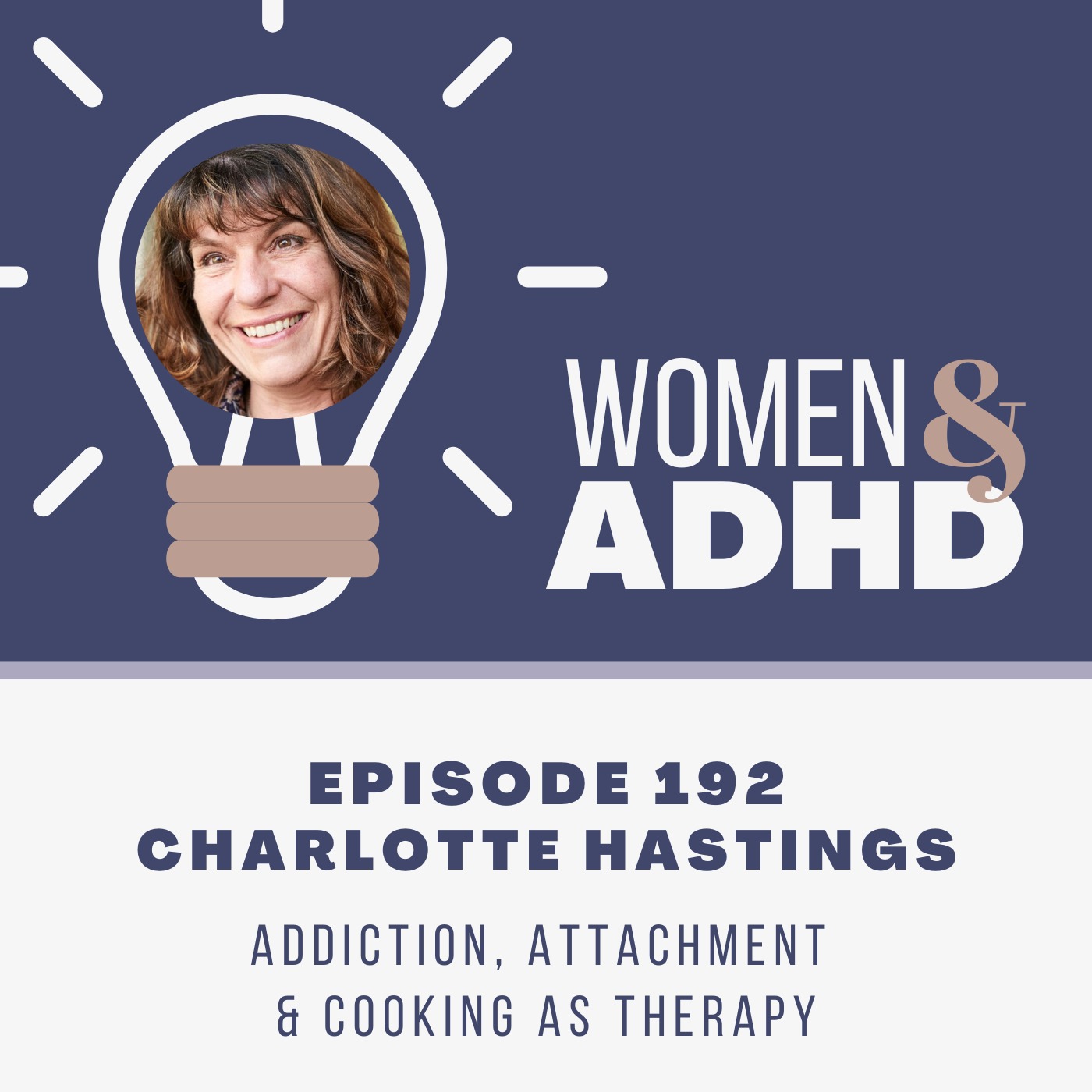
Loading summary
Transcript105 lines
- [00:00]
Grainger Advertiser
If you're a maintenance supervisor at a manufacturing facility and your machinery isn't working right, Grainger knows you need to understand what's wrong as soon as possible. So when a conveyor motor falters, Grainger offers diagnostic tools like calibration kits and multimeters to help you identify and fix the problem. With Grainger, you can be confident you have everything you need to keep your facility running smoothly. Call 1-800-GRAINGER clickgrainger.com or just stop by Granger are the ones who get it done.
- [00:30]
Charlotte Hastings
It's not these great big efforts. It's not that. It's the simple things, you know, and giving kids something where they can break it up and feel tactile with it and feel alongside you. This is the key thing of which is what you've just said. Actually, in that cooking scenario, what humans need is to feel alongside one another. They don't want to be told what to do. None of us do, really. We want to be helped and enabled, but we want to be alongside each other as equals.
- [01:07]
Podcast Announcer
Hello and welcome to the Women and ADHD Podcast.
- [01:10]
Katie Weber
I'm your host, Katie Weber. I was diagnosed with ADHD at the.
- [01:14]
Podcast Announcer
Age of 45, and it completely turned.
- [01:17]
Katie Weber
My world upside down. I've been looking back at so much of my life, school, jobs, my relationships, all of it with this new lens, and it has been nothing short of overwhelming. I quickly discovered I was not the only woman to have this experience, and.
- [01:32]
Podcast Announcer
Now I interview other women who, like.
- [01:35]
Katie Weber
Me, discovered in adulthood they have ADHD and are finally feeling like they understand who they are and how to best lean into their strengths. But both professionally and personally. Hello. Hello.
- [01:48]
Podcast Announcer
It is so great to be back. And before we begin, I would love to share with you this review from a listener named Al Naught on the Apple Podcast platform in Ireland. It's called Insightful. This podcast is a fabulous resource for women with adhd. I have gained so much insight listening to Katie's conversations, I've yet to get through an episode without nodding vigorously in agreement.
- [02:09]
Katie Weber
Should I doc a star for neck cramps? It feels like Katie has guided me.
- [02:13]
Podcast Announcer
Through my awakening doubts, diagnosis, and the slow process of learning to live well with neurodiversity. I cannot recommend this highly enough.
- [02:21]
Katie Weber
Well, thank you so much, Alnot. I. You know, I still get so emotional every time I receive a review like this. I mean, I'm sorry we're giving you neck cramps, but I could not be.
- [02:30]
Podcast Announcer
Happier that you have felt validated and seen and that you're learning to rewrite your story, as are so many of us diagnosed in adulthood all around the world.
- [02:39]
Katie Weber
So. So if you are a listener of.
- [02:41]
Podcast Announcer
The podcast and you have found these interviews to be helpful, the best way to pay it forward is to leave a review so that other women like you can find this podcast and these conversations and know that they are not alone and they're not simply lazy or just depressed or broken, but they have adhd. Please take a moment to head to Apple Podcasts or Audible and you can now leave feedback on individual episodes on Spotify. And if that feels like too much right now, and I totally get it, you can can just quickly hit those five stars. In fact, why don't you just pause right now and do it before you forget. I promise we will all wait for you. Okay, well, here we are at episode 192 in which I interview Charlotte Hastings. Charlotte is a trained psychodynamic counselor as well as a nutrition and cookery instructor and a former head of drama at a boarding school for dyslexic, autistic spectrum and ADHD students in the uk. Charlotte's recipe of personal and professional experience, skills and passions have all fed into her creation of Therapy Kitchen. Charlotte integrates therapy with cooking to enhance personal and social well being in individuals, families and groups. Her new book, Kitchen how to Become a Conscious Cook was published this past summer and is a cookbook and psychotherapeutic adventure all in one. Exploring the psychological, social and spiritual dimensions.
- [04:03]
Katie Weber
Food holds for us.
- [04:04]
Podcast Announcer
Charlotte and I talk all about how she uses cooking and kitchen therapy to support neurodivergent clients and students, as well as her own journey of unraveling the ties between addiction, attachment and her adhd. We also talk about the role of trauma and childhood development in ADHD and the extreme importance of connection and nourishing our brains in the kitchen and everywhere else. Okay, let's get right into it, shall we? Here is my conversation with Charlotte.
- [04:31]
Katie Weber
I would love to hear about your personal diagnosis journey because you have such an interesting past and so, I mean obviously the signs were there all along in terms of how many different fields you've worked in, but also just you worked with neurodivergent kids and teenagers before your diagnosis, I'm assuming, correct?
- [04:52]
Charlotte Hastings
Yeah, yeah, absolutely. I went, I was a secondary school teacher by a little bit by accident and I was incredibly bad at it actually. But I mean in some, some instances I, you know, the pastoral side of it I really enjoyed and I was always drawn to what the neurodivergent side side of working Which I understand now that they were actually ADHD students. When I, that I really sort of bonded with and, and felt drawn to helping, obviously having no idea. This is in my 20s and I'm now 56. I had no idea at that point what ADHD was at all. But I went on to teach dyslexic people and I worked in a specialist school, which was a boarding school, and it was absolutely, for me, amazing. I was going back to teach what I really first wanted to do, which was drama, and I started to learn about adhd and I just thought, oh well, yeah, to be honest, you know, the difficulties around the dyslexic students was one thing, and then we had some autistic spectrum people there as well. And it was the first time that I'd come across any of this. But I. What one thing I did feel was I felt so at home and you know, this way of working. I was given a lot of freedom to use drama as I wanted to. I was employed largely as an English teacher, but here I was specializing in improvisation and creative projects and really being free to get people to work alongside one another. So I started to intuitively learn about developing their creative intuition alongside my own. And I, I realized later I developed something called what I've called a dynamic feedback because they would give me a piece of information like, I just can't bear to be touched. I've got to move around everywhere. And then others are, I've got to stay completely still. And, and I. There were only eight in a class. You know, you'd think that would be simple, right? But no, they took. Completely took up the space, but it would just be sort of feeling my way through these different needs and different presentations that were in the class. And you know, I just found myself, as I say, very at home without any idea at that point why.
- [07:17]
Katie Weber
Yeah, yeah. You know, and I often, especially with, I guess some of my clients that I work with, that we try to articulate what that feels like, that comfort. Right. The, you know, and when I'm, especially with this podcast, like the amount of at home feeling that you talk about when we talk, when we are with other neurodivergent minds is something that's really difficult to describe to other people who may not, you know, we, we don't have that same relationship with. And I've often tried to talk about it like, it's like, you know, unbuttoning a too tight pair of pants or taking off a pair of shoes or like taking off your bra at the end of the day. Right. Like, it's all of these feelings that we liken to just, ah. Like this exhale where we really just connect on a level that feels tremendous. But also I think connecting that to ADHD and neurodivergence takes us so damn long sometimes.
- [08:11]
Charlotte Hastings
Oh, ab. Absolutely. I mean, there's a whole other sort of side of the story there with my family, but it was just, yeah. Just not having any idea at that point, just learning about the condition and seeing one of the students and I just thought, oh, okay. Well, you know, to be honest, I just thought, yeah, this is great. You know, I can work as I want to work. And I, Yeah. Just never. I've only. Just as we're talking about it now, although I've talked about it in the past, I'm just getting such a sort of, you know, just a bit of an overwhelm of emotion actually, because I had never felt that I belonged anywhere. And it was an amazing job for all sorts of reasons. It was the most incredible place. But to see young people blossom in this place where, as I say, it was mainly around dyslexia, but we, we took an increasing range of different types of needs and to see them arrive with their shame and can't do things and being felt that they were just in the, you know, round peg in a square box and to see them just gradually blossom and just realize that they weren't alone and that there were ways of actually really developing the incredible gifts and skills that these young people had. And, and the fact that I just felt. Yeah, just. So. Yeah, it was just that huge sigh of relief. So I just thought, yeah, I'm not the only one. But I still hadn't connected at that point with, with having, you know, a neurodiverse brain at all. I. I just thought I was extremely special and different, actually, and was holding a lot of shame through that.
- [09:58]
Katie Weber
Yeah, well, you know, even just to point out, like you started out by saying what a terrible teacher you were, right. You said I suck at it. Which is such an ADHD thing to say. Right. Because you're a true. Obviously we're a tremendous teacher, you know, and gift to these children and being able to see them and work with them was such a gift, really, which is the essence of teaching. But you're thinking about the administrative stuff or, you know, all of the things that were difficult. And so we always seem to lead with that, you know, what's wrong with us as opposed to what's right with us.
- [10:31]
Charlotte Hastings
So, yeah, it was, it was before I found this way of teaching that I really felt awful. Do you know what I mean? Yeah, it was. But. But, yeah, I did lead with that, and I often will. So it'd be great if you keep picking me out on that. Thank you very much. Katie. Call me out.
- [10:48]
Katie Weber
Well, and, you know, and one of the things I love looking at, you know, a CV like yours with all of the different. All of the different, you know, the Patchwork Quilt, as I like to call it, that brings us to where we are today. And it's so tremendous because it gives us such insight into so many seemingly disconnected ideas. And, you know, and then being able to see how, like, your history, your. Your theater background, your teaching background, your therapy background all leads you to this wonderful place that you're at right now. And so we can appreciate that. But at the same time, I, you know, and I'm speaking from my own experience, is that feeling of like. But at the same time bringing so much of that shame, like I couldn't stick with one thing long enough. Right. Or, you know, if only I. If only I was one thing. Like, you know, this. This weird feeling that we have of inadequacy because we do so many things.
- [11:42]
Charlotte Hastings
That's actually really funny, isn't it?
- [11:44]
Katie Weber
Right. And yet at the same time, it's like, if we could only step outside and look at what a gift that is to be able to say, like, this perspective that we're bringing to the world right now. Yeah, it's so tremendous. So, yeah, I really love to, I guess, just see all of the things that you brought. And anyway, I lost my train of thought, but let's move on. I'm curious. When you were diagnosed, what were some of those things that you most related to, either in your students or just looking back over the course of your life where you were sort of like, oh, the signs were there all along. What were some of those things that really hit you?
- [12:22]
Charlotte Hastings
Well, I have chosen not to become diagnosed, actually. So what happened? The way it all kind of came about was after, as I was trained to be a therapist, I had a real drinking problem. And during that process, something happened, and I managed to stop drinking. And I really thought, that's it. I've sold it. And I really felt like I'd sort of fought the Devon and won, to be honest. But the drinking came back. And by. But in that interim period, I'd written a paper about addiction as an attachment disorder, so I'd become aware of my drinking problem to do with my early attachment issues. And when I so when I fell into this deepest depression, I can't describe how. I mean, I suffered with depression all of my life around the things that we've just been talking about, really, but this was really bad. So I typed in addiction as an attachment disorder around about 15 years ago, I suppose. And up came Gabor Matte, and he basically told my story. And the relief in that moment of really, because he, you know, he talks about being a war baby, a Hungarian Jew in Nazi Germany, and his mother was very frightened and angry, I guess, and. And quite absent in herself. And so I really understood something about an attention deficit disorder. You know, there's been a deficit of attention in the early attachment situation and all of the behaviors then from school of pretty much never being able to pay attention, but then driving everybody mad. Because when something interested me, I was, to be honest, quite brilliant at times, you know, just come up with exactly the right answer. So everybody and myself just thought I was doing this on purpose. You know, I used to pray every day, please let me sit on my seat. Please don't let me shoot my mouth off. Please just let me be a good girl. You know, I just so wanted to be a good girl. Just so want you to be like everybody else and be able to, you know, access this part of my brain that seemed to know what she was doing. And then there seemed to be this other part that was just like running around just chatting lots of rubbish and, well, I don't know, just. Yeah, out of control. And so hearing Gabor Mate talk about that and. And helping me understand that, yeah, this was an attachment disorder, perhaps, or that actually, this I can see now. My father was an alcoholic and he was violent towards my mum, which is where I related to Mate's story, because my mu was in a war zone and she was very scared and she. And we had an attachment break as well. She had to go away. So I related that to the experience of an attention deficit. But also, I think my father was always in fights and. And I imagine that he had an ADHD mind, which I'd inherited, but the environment that I was in really triggered it. And so I'm taking a long sort of circuitous journey to explain that. I chose not to go down the diagnosis route because I knew by that time the problems that I had with addiction. And I knew there was medication because I suddenly thought, oh, I never understood why they gave these kids Ritalin. Now I get it because I bloody love amphetamines. They work perfectly for me. You know, suddenly, you know, drink would be an escapism. But the amphetamines just help me to live. You know, they help me to see really clearly, to feel motivated to feel actually myself. And so I knew that if I went down the diagnosis route, I'd have a very easy route to be given medication. And I knew that for me that would be really dangerous because I just don't have an off switch. I abuse things if they're given to me.
- [16:40]
Katie Weber
Interesting.
- [16:41]
Charlotte Hastings
Yeah.
- [16:42]
Katie Weber
You know, just as a side note, because that's such a fascinating, much debated topic in terms of addiction. You know, there are so many studies that actually show that the use of stimulant medication reduces the likelihood of substance use because you aren't self medicating. But anyway, I feel like that's another episode. But yeah, I think that for many of us who have history of addiction, myself included, there is that fear, right? That fear of amphetamines because whereas when used properly and with, when and properly prescribed, as somebody with adhd, oftentimes the use of amphetamines can reduce your likelihood of using any, any other substances. So it's fairly interesting research on that topic. You know, I really liked what you said about your take on the attention deficit because usually when we talk about attention deficit, we're thinking of squirrel. You know, that, that, that's a stereotype of somebody with ADHD who can't sit still and can't focus. And you know, and oftentimes like you said, we can focus brilliantly if it's something that interests us. But to talk about attention deficit in terms of our childhood and just the kind of welcoming home, you know, that feeling of nurturing that many of us felt like we didn't have, right? That feeling of otherness that many of us grew up with, that feeling of what's wrong with me? That feeling that there's something we're missing, you know, that that part of ourselves that we can't access and, and looking at it in that way is so fascinating. I think also, you know, with Gabor Mate and he, he's one of the few psychologists or a few experts who will touch trauma and that as it relates to adhd. And I really appreciate that about him because I think, you know, we're talking about how do we distinguish between a neurodivergent brain and just the trauma of life, right? And the trauma of living a life undiagnosed and the trauma of feeling like you are other and feeling like there is something wrong with you that in itself creates a lot of these trauma based behaviors. Right. That look like adhd. So, I mean, I don't think anybody has the answer and we're certainly not going to find it in the next hour. But I think it's, I love the fact that Gabor Mate goes there when a lot of experts don't. They stick to the DSM and they stick to, you know, they stick to what is clinically significant and they don't explore, I think some of those areas that really need to be explored in terms of overlap in behaviors.
- [19:16]
Charlotte Hastings
Absolutely. And I have been listening since I came across your podcast through the podcast you did with Sarah Collins, who's whose Wonder Bag I absolutely love and hopefully, you know, talk a little bit about that later on. But it's been really helpful for me to start thinking about this because I think I've been quite attached to the idea of attention deficit. Like there was a deficit of attention in my home life and that really helped me feel compassionate and understanding towards myself. But I know that there was a piece missing because it wasn't just that, because clearly, you know, there is a way. Now I, you know, I haven't had a drink for coming up for eight years or, or used any other substances to fix myself, although coffee's a bit of a thing. But we'll leave that there for now. But it's been really helpful to start reconnecting with actually it's not just a trauma, as you said, you know, how do we distinguish? And I think we, it's like distinguishing between nature and nurture. And for human beings that's a totally irrelevant conversation because we're born, you know, four years more or less premature. So those first four years of development are absolutely, you know, nature and nurture intending to work together. And you know, Mother Nature had her plan for how that was going to go. And then of course humans came along and thought, yeah, we could do that so much better. And in the meantime messed quite a few things up. But yeah, anyway, sorry, I go on a bit.
- [20:56]
Katie Weber
During the early days of my diagnosis, as I was deep into hyperfocus ADHD research mode, I kept searching for some kind of all in one, everything you ever needed to know about ADHD in Women Health Handbook that I could reference and keep at my fingertips. But I never really found anything that suited me. That's why I've taken everything I've learned about ADHD in women and adults who are socialized as girls and I've gathered it into a concise, easy to access, self guided and self paced course. So you can feel like you've got everything you need at your fingertips. It's called hey, it's adhd. And it has everything you need to.
- [21:30]
Podcast Announcer
Start loving your brain and living amorphous, fulfilling, gratifying life.
- [21:34]
Katie Weber
I built this course to be helpful wherever you are on your ADHD journey. I am so excited to finally be able to offer this course, and I truly hope this will help you develop.
- [21:42]
Podcast Announcer
A deeper understanding of your ADHD brain.
- [21:45]
Katie Weber
And how to embrace it as you build yourself a toolkit for your own life. So head over to women and ADHD.com and click on the hey, it's ADHD course tab for more information and to get started. So I am really curious about how, how this all comes into the kitchen, because food and kitchen therapy, I think it's a wonderful marriage, especially, you know, talking about our relationship with ourselves and our hunger and our intuitive intuition and also the number of neurodivergent adults who have eating disorders and really, really struggle with caring for themselves. I mean, there's so much that we could talk about. But I'm curious, you know, one of the things when you were talking about your book and you were talking about Winnicott's concept of indwell, which I wasn't familiar with, so I looked him up and, you know, he sounds like a textbook neurodivergent. You know, just in terms of what we were talking about with that feeling of belonging and that feeling of outsiderness. And I was like, oh, that's so fascinating. Here's a person who probably had no idea he had adhd. But anyway, tell me about kind of, you know, you mentioned that your work and kitchen therapy and your book especially was. Is informed by this concept of indwelling. And so I'm just curious if you could tell me a little bit more about that. And as we get into talking about your work.
- [23:10]
Charlotte Hastings
Well, thank you. When we spoke a moment ago about nature and nurture, working together, and I said that Mother Nature has set things up. So what she set up is a situation where when the baby is born and they're fed normally by the mother, if all goes well, so important that if it's possible, the breastfeeding, where we feed the gut and so on. But what is happening here, and it's a really. This is where my work begins with, with this idea is that Winnicott describes the baby when the psyche is being introduced to the soma and that to the body. So your mind and your body are being introduced to each other. And for me, when I talk about this, it's all go a Little bit goosebumpy because, you know, this is the miracle of life and it's so exquisite. So when a baby is born, I remember when I had my first daughter, as you can imagine, I just thought, well, I'm just going to make a few calls, I'll make a few notes, I'm just going to. She'll be popped there and I'll just blah, blah, blah, blah. No, you won't, because that, number one, is extremely rude. And number two, I'm going to hold on to your eyes into something that's called the maternal gaze. And your, the baby's eyes will lock into the person who's feeding them onto those eyes. And what's happening there is the brain is scaffolding the adult's brain, the carer's brain is scaffolding for baby's brain to grow. So in that space you have got, the neural pathways are being developed and this is where if something goes wrong in those early attachment relationships where the mother cannot be present either psychologically or physically, or, you know, or a caring parent, then some of those pathways don't, don't get fixed, don't get worked out. And it is just such an intense feeling when that is happening, you know. And so that's where the psyche is being introduced to the soma. So that's going into the gut, which is why at the moment we've got so much talk about the importance of your gut health, 100%. But it is not what you feed it, it's how right. I was feeding my baby really great milk and then I thought I could go and do something else. That's not true. I needed to hold her and let her know I was absolutely present and adoring her and perhaps adoring myself too, because I was becoming a mother. I mean, you know, it's an incredible gift. I never thought it was going to happen for me, you know, I didn't think I, you know, I thought I was subhuman, to be honest, to have this baby, you know, it was just so, you know, real sense of coming home to myself as a person. And then there was this little child, this little person growing in front of my eyes. It was extraordinary thing to be part of. And so that is where I was dwelling in myself and she was learning to. That's the indwelling. So the brain that, where we all ironically live up here in our brains and we are quite detached in that Cartesian split between the mind and the body. But that early feeding scenario links the, the gut, which is Our first brain, the digestive brain, that we share with every other living thing, and then that links through the heart, which is the second brain, another neural neurological system where we can feel delight and pleasure and enjoy and then come through into the. Into this. Into the psyche, where we kind of live. But it's, you know, we are. We are a whole person. And so that's where this idea of kitchen therapy begins.
- [26:53]
Katie Weber
Well, and I also often will talk about the tongue as a wisdom center as well, in terms of our. In terms of our, you know, our gut, our heart and our tongue are like the trustworthy wisdom centers, and our brain is the wisdom center that is the least trustworthy.
- [27:08]
Charlotte Hastings
Yes.
- [27:09]
Katie Weber
What I've talked, when I work with children. Right. And talking about, like, how those are the. Those are the wisdom centers we need to listen to the most and give the most centering to. So I'm curious, with this parental gaze, and I'm assuming with, you know, with a modern take on this, we can talk about any parent, either, you know, mother or father, and whether it's breast milk or bottle, I mean, it seems like there's still that gaze is the important thing, right?
- [27:33]
Charlotte Hastings
Yes.
- [27:33]
Katie Weber
And that there's something. And maybe I'm misunderstanding this, so let me know. But is there something about just associating eating and nourishing with. With that love, that connection that. That.
- [27:45]
Charlotte Hastings
A hundred percent.
- [27:46]
Katie Weber
Right. And so there's something about that time in our life where we start to associate nourishment with love and, you know, and how those wires can get a little crossed when we are eating over the sink, as mothers tend to do, or children, you know, eating alone or in front of a television or all the ways in which we've broken that sense of, like, sacred nourishment and connection that we have around food. Is that. Am I understanding that correctly?
- [28:14]
Charlotte Hastings
No, that's exactly it. That, you know, that we can have food. Right. And that will keep us to survive. But the Romanian orphans at the 90s, I don't know if you. But they were. They were kept in very poor conditions, and they were fed, but they weren't loved. They weren't played with, they weren't talked to, they weren't gazed at, they weren't adored. They weren't just cherished. There wasn't the time, there wasn't the attention. There was an attention deficit, and they weren't able ever to learn language. You know, many of them that, you know, those. Those pathways got cut off, and there's a certain space in which that can't be brought back. So, you know, as a human being, we're a profoundly social creature. So nature has organized it. You know, when we're fed, which is this kind of, you know, hopefully we love feeding ourselves. Yeah, most animals, you know, want food. So what she's done is attach that into our social behavior. So when we cook a meal, it requires a huge coordination of effort and energy and gifts to bring to that pot. So just like a casserole is made up of, you know, eight or nine different ingredients. Same as a social group, you know, we need somebody to hunt, to gather, to chop, to sell it, to grow it. You know, all these different things all have to come together into that pot. So just that, that's mirroring that early attachment between the, in the dyad, between the parent and the child. So there's, there's the initial bond and then our word company comes from the Latin con panis with bread. So we have this just, you know, it, you have to have the love with the food to make a whole meal. Otherwise it. And so I think for me, a lot of eating disorders are around this confusion that's happening here. And we have this constant language about what you're eating, this supplement, and whether you're, you know, eating this. Right. Food for your mood and so on. Obviously those things are helpful. It's really important to understand about the different nutritional content of different foods. But unless, especially for ADHD people who, I think, well, maybe I don't know, I think for all of us, but you know, some people are quite sensitive to saying, well, the thing is that if you just tell me to eat that orange, it doesn't make any sense to me. Right. I don't get it. Right. If you start telling me about the delicious kind of feeling that that squirt is going to feel over my face and just how beautiful that orange is. And just enough. Imagine all of that grooviness going into your tummy. And at the same time I'm explaining and playing with you at that time, then maybe I'll do it. But I need to know that the nourishment is happening at a playful level. This is, you know, something else that Winnie talked about is that it's all about play. And you know, you see any animal, they learn how to be who they are through playing and making food and, you know, feeding people. It's essentially a communication. Before we had language, this is how we would have communicated with one another. And we communicate our need for one another essentially around the campfire. Yeah, I could go off Onto a big tangent. I feel like I might come back to you. It's your turn now.
- [31:45]
Katie Weber
I just think also, too, it's such a sense of connection that we're seeking through that ritual, too. And as you were talking, I was thinking about binge eating, because I worked a lot with binge eating before my ADHD diagnosis. I was a binge eating recovery coach. And, you know, one of the things about binge eating is the fact that we, you know, it's very rarely done when other people around, Right. It's always done in isolation in a sense of shame. And there's also a feeling of you're compensating for some sense of, you know, some sort of restriction that is happening in your life. Right. And so there is a sense of, like, self care that is involved in binge eating because you're looking to feed yourself in this way. Right. And so a lot of the work is around, like, where is that restriction and what is lacking? And. But again, thinking of how so, you know, with ADHD and I think just in neurodivergence in general, I think many of us tend to be very social creatures. Maybe not what you would typically think of as social. You know, I think a lot of us might be introverts or, you know, have difficulty with socializing because of so many of the, you know, ways in which we felt like we've stood out. But I think at the end of the day, there's many things that indicate how deeply we see connection. And, you know, and so when you talk about the campfire and you talk about this wonderful, luxurious way in which we can break bread and cook together, and I just. One of my oldest and dearest friends who is a chef, was just visiting me, and we were. So much of our time together was spent going to the market and picking out food and thinking about what we were going to eat and cooking together and just, you know, it was so wonderful. And, you know, I think I just used this word already, but I can't think of another word like luxurious. Right. It felt indulgent. And then I think about, you know, life in general and how many of us just can't. Can't get there, right? That so many times the meal has become this chore and this awful thing that we avoid. And it's because, you know, we. We're so overwhelmed and the grocery store is overwhelming and like, all of these things, all of that wonderful thinking about the, like, Italian countryside and just sitting at this long, wonderful table and having your whole day wrapped around meals Like a lot of that just feels so inaccessible to so many of us. And. And how do we find that. That balance?
- [34:10]
Charlotte Hastings
So I'd really like to come back to that particular question, but I suppose that I just want to take a little step back about that word you used, indulgence. Because I just think it's so important that when you look after a child, one of the things we want to do is indulge them. Right. Do you know what I mean? Without. But I'm not doing all the time. But, you know, indulgence is such an important feeling. It's about being enjoyed. And so we do need to feed that back to ourselves. And I think that the binge eating is very. Is in the same. You know, we. We go down these different routes. Mine was drinking, but. And that I would absolutely want to do on my own. You know, as. As it got progressive and it is. I've realized. Yeah, just. Yeah, it's just kind of gone down to another level of my gut understanding of what it means to self soothe. You know, when something has. And I think if you've got a different brain type and you're not able to make a connection with the people around you, that you will make a deep connection with yourself. It's coming from such a young place that it can go off on a bit of a tangent. And so by bringing it back, and that's what I'm doing in the cooking. So I think this is kind of coming back to where. Where you'd left off. So in what I think about in. In terms of using kitchen therapy was I started to realize as I trained as a therapist, that my. When I cook, that was the one place where I would feel quite at home, you know, And I guess I do quite like cooking on my own, but I would be playful with the ingredients and my creative intuition would have a chance to really just enjoy this space. It connected with my grandmother, who was a wonderful cook, and I spent a lot of time with her. So those feelings of connection came through and just learning from her and. And kind of igniting what she'd showed me, but then doing it my own way. So the. The gut has got this feeling of desire, like I'm always hungry. And so you've kind of got this feeling of, you know. Yeah, desire, which I think is really important. And then in my heart, I've kind of got this feeling of delight because you just watch these ingredients come together and it's so beautiful because they kind of just know what to do. They see each other and they go, oh, hello, I know how you get on with me. I love you the way you do. That's great. And you see all these colors playing with each other and getting on. And then that works into the dopamine center in my head where I start to feel a sense of reward because of my relationship with the food that I'm developing, not just what I'm eating, but how I'm eating, right, how I'm getting there, the journey of getting there. So I kind of feel like this goes back into the maternal gaze, where it isn't just about giving that food and grabbing that food at the end. It's about that whole process of loving the food into being. And then I am feeding that nourishment back to myself. So I'm feeding my sense. I've made something I did that, you know, I came up with that idea and those ingredients played along. And so that is a way of working that I found really helpful with my neurodivergent clients for different types of reasons. And I think because of the way I work, I really enjoy finding out which is the road in. But really what I'm doing is connecting the brain centers so that there's a sense of coordination and alignment, which, as I said, this is the first and potentially only place I felt that other than in writing and in therapy.
- [38:00]
Sponsor Announcer
This podcast is sponsored by Talkspace. You know, when you're really stressed or not feeling so great about your life or about yourself, talking to someone who understands can really help. But who is that person? How do you find them? Where do you even start? Talkspace. Talkspace makes it easy to get the support you need. With Talkspace, you can go online, answer a few questions about your preferences, and be matched with a therapist. And because you'll meet your therapist online, you don't have to take time off work or arrange childcare. You'll meet on your schedule wherever you feel most at ease. If you're depressed, stressed, struggling with a relationship, or if you want some counseling for you and your partner or just need a little extra one on one support, Talkspace is here for you. Plus, Talkspace works with most major insurers and most insured members have a $0 copay. No insurance, no problem. Now get $80 off of your first month with promo code space80 when you go to talkspace.com match with a licensed therapist today at talkspace.com save $80 with code space80@talkspace.com so I'm curious, how does.
- [39:03]
Katie Weber
That translate then for say, an ADHD mother who is working, who comes home, it's 5:00pm you know, like you wrote about your mother coming home and immediately having to make tea for the family and, you know, thinking about, like, many neurodivergent parents have neurodivergent children who might have food sensitivities, you know, pickiness, you know, how many times did I make dinner and my children ate one bite and said, no, thank you, and then we ended up making chicken nuggets again, you know, so it's like, how does that sense of that ritual, that connection, that, that playfulness translate for somebody who, you know, who really. All the joy has been taken out of. Of cooking? Right. You know, asking for a friend.
- [39:47]
Charlotte Hastings
Yeah, yeah.
- [39:48]
Katie Weber
You know, but just thinking about how many times, especially when my children were younger, how just what a chore it was, and, and it just felt, you know, I didn't even know what the term executive dysfunction was at the time, but now thinking about how exhausted and how just so few spoons I have at the end of the day to have to really rally and, and make dinner just felt so difficult. And it was always so much easier to just say, screw it, let's get takeout yet again. And so I'm curious, like, what do you say to that? To that mother who's really struggling or the father?
- [40:22]
Charlotte Hastings
Yeah, whole families, isn't it? So there's, there's different approaches depending on, on the person and lifestyle. So one of them is the, the wonder bag that Sarah Collins has invented. This, I find, is fantastic for me because I can make the meal in the morning and then I can leave it stewing during the day, and I can come back and actually feel quite parented because that is all ready for me and it tastes kind of relaxed and without this kind of, you know, get this done, get this over with. So I put that effort in at the beginning, and that food cooked in that way can taste great. So that, that, that's, that's one way which I think can really help a sense of feeling prepared and not just having to hit the ground running all the time, but kind of getting into some sort of routine where I can say, well, this is the half hour or 20 minutes in which I can prepare this food and then it can be ready later. The other approach that I use with families is actually saying, well, the cooking is part of the feeding, you know, so when I am working and a lot of the families that I work with, I have a massive range of different needs in all sorts of directions, but we cook together, you know, and There can be jobs that people can do, and it is not. Not being frightened of the mess. It is not being attached to the outcome. It's that this is what's really important. Remembering that if you are just playing with this food and just finding that. That dynamic feedback that I talked about at the beginning, that with. With my students, it's like, you know, just feeling our way through this and knowing that actually I can do this. I think it's kind of coming back to a sense of I can do this, because the feeling, you know, as. As you called me out on so importantly, I've just got such a I can't do anything script in my head.
- [42:26]
Katie Weber
We all do.
- [42:27]
Charlotte Hastings
You know, I. I've got such a kind of I'm at this and I can't do this and blah, blah, blah. So it's actually. And, you know, for me, cooking is the one place that I feel like I can. So it's my mission in life to try to share this with others, because, to be honest, if I can do it, I really feel like it's there. You know what I mean? And I know that it's what nature intended for us. You know, we're the only species that cooks. It's cooking that gives us consciousness. So we go from the. The raw through the action of the cooked into the elixir. You know, it's our first alchemy. This is what. This is powerful, powerful stuff to be involved with. So I really have, you know, when I'm working with children, we're sort of. Everybody adds a little bit in because they're adding their own particular magic. And we try things as we go along, and we get to know the vegetables and. I don't like peasants. No, no, I know you don't like peas, but did you know that peas were the first thing that humans ever made? And did you know that these are the things it's got in them? And when you eat a pea, you're actually ingesting all of this power. So just thought I'd put it out there and maybe you could just eat one today. And so we just get to know the ingredients as we're going along and trying to get people involved so that, you know, and then I have found that children and the adults that I have who also don't want to eat this food, you know, the vegetables, things that they have not got attached to, they haven't learned to get along with. You know, it's. It's a whole new area. But by just freeing up some space to Say, let's have a go. And if it doesn't, I mean, I cannot even describe. One of your questions is what's your favorite thing about adhd? And one of them would be the amount of mistakes I make because I am, you know, I'm always dropping things, I'm always forgetting things in my classes. Things don't go well, trust me, but we get by. There's always a solution. Because I'm so used to making mistakes and to things going wrong and forgetting stuff, I've actually got sort of, you know, a way of managing that. And so I think it's kind of connecting with that, those skills that we have of managing our chaos and actually it's kind of where we do best. So maybe we need to rethink about what is a good meal. And yeah, as I say, be less attached to the outcome. So it's great. We will have a meal that people eat.
- [45:00]
Katie Weber
I.
- [45:01]
Charlotte Hastings
But if we've all got involved and we've spent some time together and we haven't just shouted and felt like, oh, this isn't right. This is, you know, we. You haven't eaten this right food. If we let go of that stuff and just be a bit more playful and creative and have some fun, I feel like things will work out the other end.
- [45:21]
Katie Weber
Yeah. No, I think that's a beautiful way of talking about just meal time, right? That like you said that it's not just sitting down and eating, it's everything from the market to the wash up and everything in between. That that is part of the sort of family connection, right? And that's what we were talking about. And when we talk about how all the, all the studies that about, you know, families that eat together and how their children perform better. And for me, I always felt like, well, that's just, you know, that's just talking about, you know, certain socioeconomic families and access and all of that. But I think there is something there in terms of the connection and how can we expand that connection to involve cooking and the preparation and all of that? Because I was certainly one of those mothers who never wanted the mess because I knew I was the one who was going to have to clean it up. So when I would see people, you know, involving their very young children in the process of cooking, I was always like, oh, God, no, thank you. But I love the fact that, you know, really a lot of this comes to just embracing that and embracing everything that goes with it and remembering that that's what happened when I was a child. Right. Like I had I was involved in. In the cooking a lot more and had a lot fewer food aversions than my kids do. And I'm sure there's probably a reason there.
- [46:44]
Charlotte Hastings
Yeah. I think it's so important to get on. Yeah. To. To everyone have. Because everyone then has a little job. You know, if you have a potluck party and everyone then I think they go so well because everybody feels like they've contributed. And I think often we're just so kind of thought. I think we've got an idea about what parenting is, and it's different for everybody. You know, we all parent, you know, from our heart, which is slightly different from everybody else. And I lost my train of thought now, but I think it is just about thinking that it's. We're just worried. We're just very worried that it ought to be like this. And I. One of the things that happened was a very organized, creative, skillful parent came around to my house to pick her kids up. I was so embarrassed because my kitchen literally looked like I just given them all a packet of flour and just told them to chuck it everywhere. And I had every machine going out. And she looked around, I thought, oh, this is so embarrassing. And I looked down, she went, this is amazing. This is such an industrious kitchen. And I thought, oh, it is. There's always a different way of looking at things.
- [47:57]
Katie Weber
Yeah.
- [47:57]
Charlotte Hastings
And what I think in my head, like I think you said earlier, you know, your head is the least reliable source. What I was imagining she was saying or thinking or what was happening was the least reliable source. And, you know, we did all have a lot of fun making these kind of. Yeah. These nice burgers that I still. That I wrote about in the book.
- [48:18]
Katie Weber
Well, and also, I think there's just. When one person is doing all of that for the rest of the family, there's going to be some sense of bitterness or. Or, you know, just that feeling of. Of, you know, not being appreciated enough. Right. Or I'm so exhausted. Why am I doing this? And when everybody's involved and we're all doing it together, there's less of a sense of. What's the word I'm looking for? It's like. Yeah.
- [48:43]
Charlotte Hastings
Well, it has been described as being a burnt martyr.
- [48:46]
Katie Weber
Right. Yeah, exactly. And I think, you know, there's always one parent who. Who takes that on. And also, you know, it's funny because my. My husband loves baking, and I can't stand baking much. You know, like you were saying, because there's so many rules, and I'M I cannot follow rules. And there's not a lot of intuition involved in baking. He loves following rules to the T and then being rewarded at the end. Right. And that's his gold star. Whereas I'm the person who's like, this needs more of this and this needs more of this, and we don't have this, this, so what can I do? And so it becomes. It's more playful for me. But I. Thinking about all the times I've exploded something in the oven because I tried to bake and couldn't follow directions.
- [49:27]
Charlotte Hastings
Me too. Me too.
- [49:29]
Katie Weber
Now I want to get a little bit more specific, too, about the five A's of kitchen therapy. We've talked around it, and I know we've talked a lot about it, but just, you know, this is something that's in the book, I'm assuming, right? The five A's and of kitchen therapy. And can you tell me a little bit more about those and what they are?
- [49:46]
Charlotte Hastings
Actually, I thought of the five A's as I've been promoting the book. So it's. It's hot off the press and I'd forgotten I told you about that, actually. Is that super exciting. Thanks very much. Just trying to kind of think about how do I put what I've, you know, it's quite a long and long book. How do I put it across? So the five A's. The first one is alignment. So I was talking about connecting the desire and the delight and the sort of dopamine rewards of the brain matters. So I'm. I'm aligned in this task. Every part of me is being rewarded and on board with it. The next one is awareness. So I start to look at myself as a cook. So where. Where you were talking about the, you know, the resentment. I. I was asked to. Well, I think I offered actually to cook my daughter something to take to a party. And I went, yeah, I could do that. I can do that. And when it came to, I thought, why am I always neither? And I, fortunately, was in the process of writing and I thought, you know what? You need to put a smile on it, Charlotte. So I went and put some perfume on, go in a party mood, put my apron on and just reminded myself how lucky I was to have this ability to be part of her party and be asked for this. So I was able to be aware of myself and understand and respond. So there's, you know, that's really important. And then appreciation. So I appreciate myself for, like I've just said, for. For the action and effort that I'm putting in, but I also really appreciate all those ingredients and how they work together and just really send that kind of gratitude to them as well, and. Yeah, enjoy them for that. And. And of course, you know, the. The kind of key thing is the attention I am putting. I am attending to that dish. And so in that time, I find meditation. And when I do practice meditation now, that is my key medication. But before I was able to do that, and still cooking will be a meditation is the one place, as I say, I'm feeling connected, but I'm really putting the attention in. So all of that food is being filled with that maternal gaze that I talked about at the beginning, and I am filling that hole in the soul that I was trying elsewhere. You know, I'm. I'm filling that with my. With all of those things, and it really does come to action. You know, it's my effort that make something, you know, that's the. That's the how. It's the. It is the food. I can't wait to eat the meal that I make, you know, or somebody else has made for me or that I've got on takeaway. I love food, but I know that it is the effort and the imagination and the connections that have gone into creating that. That is what I really need that is going to sustain me. Because every meal, as you and I both know horribly, is over and done very quickly. And then some little sod is saying, I'm hungry. It's like, no, we just ate. So what we have to say is, relax. It's okay. What is ongoing is all the attention, because the recipes and the meal times that I've been fed to me over my childhood, they are still very much with me. You know, I'm often making a kind of tomato sauce with my families. That was tomato sauce that my grandmother made me, a tomato soup from her homegrown tomatoes. And I. I've developed it, and it's something a bit more now, but she's there with that incredible taste of this soup. So this is ongoing. Right? You know what love that we put in, you know, our children, and we will be nourished by. Until we die. And possibly beyond that, you know, it's. It's ongoing. So when they say they're hungry, it's like, okay, but I just filled you with all this attention, so you'll be fine.
- [54:04]
Katie Weber
Well, that's very inspiring in terms of getting my children back into the kitchen and getting them more involved, because I think there is so much of that, that. That Sense of. Of resentment. That was the word I was looking for earlier around, you know, making this, you know, this. This act, this chore of this everyday chore. And so much of the time, especially during the pandemic, with that feeling of like, I just fed you. I can't believe you're asking me. And yet one of the. One of the greatest things that happened during the pandemic was, was my children really had to step up and. And make meals for themselves. My older daughter started making. Making meals for my son. You know, and so those were those beautiful moments of taking ownership of that ritual for themselves and, like, looking at meal time as some as. Like you said, this way of taking care of yourself and nurturing yourself and. And it's so much more than just getting rid of your hunger pains. Right. That this is really a way in which you take care of yourself.
- [55:01]
Charlotte Hastings
Absolutely. And I do think that it's so connected with our addiction stories because we, I think, think often we're looking for more because we haven't got the attention and those, you know, those five A's, you know, the key thing is we haven't got that attention put in it. There's part of us that's going. There's something missing here. And I do. I mean, you know, that thing when you have made a meal, then quite often you're not hungry. And I think. Or not as hungry. And I think part of that is, you know, we need to satisfy our emotion, our imaginations and our, you know, as humans, our creators, creative ability. The link between our hands as we're making things and our minds is very powerful, and it needs to be ignited. And without that feeling of ourselves being connected to it and also perhaps what's being fed to us. You know, thinking about, I. I wasn't part of making that soup, but I can tell you I really tasted it. And I could see how proud she was of having grown these tomatoes for the first time and how much effort she put in. I could really taste that. And it was, you know, immensely satisfying. So maybe they'll. Maybe we'll all stop hunting the shelves for more.
- [56:13]
Katie Weber
Right. And, you know, I was just reminded of Linda Yee, who I interviewed ages ago, who started her business during the pandemic where she wanted to get back in touch with her Chinese roots and Chinese cooking. And she was feeling very lonely and isolated in her apartment. And. And so she would have these zoom sessions with her mother and her relatives to learn more about Chinese cooking. And then she started these zoom sessions for neurodivergent clients who they would, they would cook together because of that sense of connection that comes from, you know, if it's just me at home alone, I'm gonna eat a bag of popcorn for dinner. Right. You know, that feeling of like, I'm just gonna grab something, like self care becomes so difficult to access when we are alone. And so if you are feeling like this is, you know, so beyond your grasp, if you're listening to this and thinking, are you kidding me? How am I going to get, how am I going to feed myself? How am I going to feed my kids with this sense of joy and play, really get back to this idea of connection. How can I not do this alone? How can I get somebody with me even? And what does that look like? And so I was thinking about Linda Yee's approach, which is so unconventional, but really hit the, this nerve, I think, with a lot of people, which is like, if I'm doing this with other people, if, if I am showing up for others, I can show up for myself as well. And, and it was just so beautifully symbiotic, I think, to, to have something like that. So what are some ways we can get creative about meal prep if we are stuck alone or really struggling with just like finding that joy? I think connection seems to be, be the, the key that kernel.
- [57:50]
Charlotte Hastings
Absolutely. It really is finding those ways of connection and also maybe trying to connect with the food itself. Right?
- [57:57]
Katie Weber
Yeah.
- [57:57]
Charlotte Hastings
So your time in of really getting to know what those ingredients are and how they're working together and just taking time out from the kind of, you know, there's the Kronos time, you know, of get this done by this time. And then there's the time of Kairos, you know, the, the God of just kind of, of the right brain side of everything is all about relationship. So it is about that relationship and with the food that you're making itself. And I think I really want to draw attention to that. It doesn't have to take. We're not necessarily talking about loads of time. Okay. Sometimes, yes. But I'm thinking about making a cup of tea and just, you know, when you're putting that tea bag in, I've just taken a moment just to add some cold water to sort of soften the leaves for a little bit. You know, just, just these tiny little steps where you've just thought, I'm just going to take care of those leaves a little bit and not make them shock with boiling water. You know, I'm just going to do this tight. I'm Just going to put this tiny little bit of loving attention in, because that is huge potentially. Do you see what I mean? It's not. It's not these great big efforts. It's not that. It's the simple things, you know, and giving kids something where they can break it up and feel tactile with it and feel alongside you. This is the key thing of which is what you've just said, actually, in that cooking scenario, what humans need is to feel alongside one another. They don't want to be told what to do. None of us do, really. We want to be helped and enabled, but we want to be alongside each other as equals.
- [59:37]
Katie Weber
Oh, so beautifully said. Now, back to the topic of cooking as natural medicine.
- [59:43]
Charlotte Hastings
Yes.
- [59:43]
Katie Weber
For adhd, is there anything we haven't touched on that you want to make sure we address in terms of this connection with kitchen therapy and a neurodivergent brain?
- [59:55]
Charlotte Hastings
I think it is taking that, enjoying who one is, you know, And I think it is the place where I have found myself. You know, this is my happy place. And of course, we're all different and we've all got different happy places, but feeding ourselves is really important. It's essential and it's very powerful and meaningful. So just, you know, being aware of ourselves in the kitchen and. And using that time, because we do have to eat and using that time to build up that kind of. To pour in some powerful attention and to coordinate ourselves and accept there's another A. There's just tons of A's. It's just a stuff, but it is around accepting ourselves as we are and.
- [60:44]
Katie Weber
You know, that reparenting ourselves too. Right. When you talk about the left. The left brain and the right brain and the. And working together, but also you talk about the adult and the child working together. Right. And. And that's in inside of us as well. Especially for those of us who have been diagnosed in adulthood and are really sorting through the morass of our whole life. And that feeling of disconnection and that feeling of confusion and otherness, so much of this is how we are learning to reparent ourselves.
- [61:13]
Charlotte Hastings
It's exactly right.
- [61:15]
Katie Weber
Oh, this is great. Thank you so much. How can we get so emotional around food? I'm like, well, I mean, food is everything, right? What's that quote? How we eat is how we live. And I think it's. It's really true. Well, okay, so how can people. I guess, first of all, your book is called Kitchen Therapy, but your website is Therapy Kitchen, right?
- [61:36]
Charlotte Hastings
Yes.
- [61:37]
Katie Weber
Okay, so the book I'll have a link to the book in the, in the show notes, of course. And then Your website is therapykitchen.co.uk that's right, yeah. Is there anything exciting that's coming up for you and your promoting the book? And you do. So you, you work with clients in the kitchen, but also behind, you know, on the couch.
- [61:59]
Charlotte Hastings
Yeah, yeah. So I have a studio where I see couples and individuals and then I'm building a community. What's it called? Cic, which is a. I'll think of what it is in a moment. But it's basically a nonprofit, so it's called Kitchen Sessions. And I have opened this company so that I can do my work more with, you know, wider groups of people and attract some funding. I felt like I will be able to hopefully use the book to explain, you know. Yeah. To be my kind of ambassador and saying, you know, this is a very simple win, win. You know, we can feed people well. We can, you know, build people's skills and build their creative confidence and for them to kind of really take charge of their own health and feel quite that, you know, dynamic and able. I really want to instill, you know, a can do culture. And I think food is the primary place where we can do that. So Kitchen Session CIC is any company's house. Now, just building the website so that I feel is very exciting. And I'll perhaps explain you more about that another time. And yeah, just. Yeah, my big thing on the agenda was meeting you today. So that was really exciting. And I've got the Cake foundation, which is another podcast in the States on the 16th of August. So I'm really excited because they're the first group of people that seem to be doing the same thing as me of using cooking as therapy that I've really connected with. So I'm incredibly excited to be building this community. I think I felt very alone and so having this chat, but also listening to your conversations with your other guests has really been. Yeah. A huge part of my journey. So thank you so much for the work you do. I think it's amazing. Really kind of hats off.
- [63:56]
Katie Weber
Thank you. Yeah. Well, and. And I think like you said, it's. It's about finding our people and finding that connection and. And, you know, there's so many ways in which we can access that, and then the ripple effects are felt in so many other elements of our lives. So we can start in the kitchen. We can start with a single podcast episode, you know, conversations or, you know, a Facebook group or wherever. But, you know, it's really about that connection and finding each other and feeling like there's nothing wrong with us that we were never, they're never, never was. Right.
- [64:29]
Charlotte Hastings
Absolutely. Absolutely.
- [64:31]
Katie Weber
Well, it's so inspiring what you're doing and really, really appreciate the taking the time to chat with me. It was really lovely. So thank you. Charlotte.
- [64:40]
Charlotte Hastings
Thank you so much. Thank you.
- [64:47]
Katie Weber
There you have it.
- [64:48]
Podcast Announcer
Thank you for listening and I really hope you enjoyed this episode of the Women and ADHD Podcast.
- [64:53]
Katie Weber
If you'd to like to find out.
- [64:54]
Podcast Announcer
More about me and my coaching programs, head over to womenandadhd.com if you're a woman who was diagnosed with ADHD and.
- [65:01]
Katie Weber
You'D like to apply to be a.
- [65:02]
Podcast Announcer
Guest on this podcast, visit womeninadhd.com podcastguest and you can find that link in.
- [65:08]
Katie Weber
The episode Show Notes. Also, you know we ADHDers crave feedback.
- [65:12]
Podcast Announcer
And I would really appreciate hearing from you, the listener. Please take a moment to leave me a review on Apple Podcasts or Audible.
- [65:19]
Katie Weber
And if you that feels like too much and I totally get it. Please just take a few seconds right now to give me a five star.
- [65:25]
Podcast Announcer
Rating or share this episode on your.
- [65:27]
Katie Weber
Own social media to help reach more.
- [65:29]
Podcast Announcer
Women who maybe have yet to discover and lean into this gift of neurodivergency.
- [65:34]
Katie Weber
And they may be struggling and they don't even know why. I'll see you next time when I interview another amazing woman who discovered she's.
- [65:41]
Podcast Announcer
Not lazy or crazy or broken.
- [65:43]
Katie Weber
But she has ADHD and she's never on the path to understanding her neurodivergent mind and finally using this gift to her advantage.
- [65:50]
Podcast Announcer
Take care.
- [65:50]
Katie Weber
Till then.
- [65:56]
Sponsor Announcer
Say what you want about AI, but it's here and it's helping businesses get more done in a day. Wix's website builder is infused with AI so you can stay ahead. Create a beautiful, functional website just by describing your idea. Track how your site appears in AI search results, create custom images on demand, or launch an entire campaign in a matter of minutes. WIX gives you AI wherever you need it. Try it now for free@wix.com Sick of.
- [66:24]
Grainger Advertiser
Procurement bottlenecks, Endless back and forth and last minute surprises? Get the cure with Bill Procurement Bill is the all in one platform trusted by nearly half a million businesses to simplify and automate their financial operations. And now they've introduced Bill Procurement, which pairs seamlessly with accounts payable to automate procure to pay workflows in one place. Every step from submitting a purchase request to reconciling payment happens in Bill Procurement, you'll know whether spend is approved before you buy. And Bill's AI powered automation helps reduce errors so you can make purchasing decisions with confidence. Plus, Bill Procurement puts everything you need to match and pay invoices right at your fingertips. So dump your clunky procurement process and keep your business moving and growing with Bill Procurement. Purchase, pay, and on with your day. Right now, score $200 when you see Bill Procurement in action with a demo, just go to bill.com procurement200 don't wait, that's bill.com procurement200.