← Women Designers You Should Know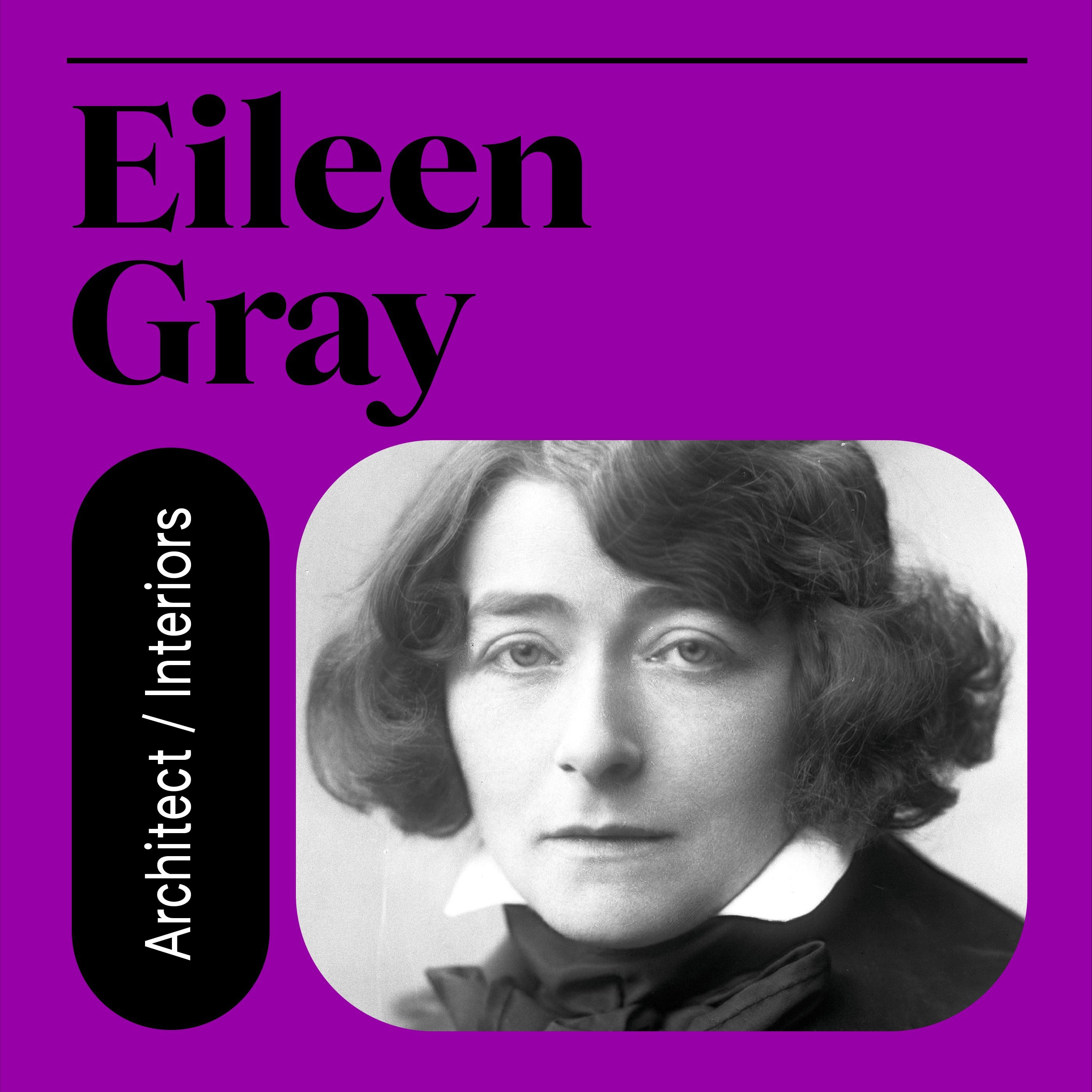
Women Designers You Should Know
025. Eileen Gray: The Self-Taught Architect (w/ Emily Farnham)
01:05:32
Learn about the life of self-taught architect Eileen Gray, whose groundbreaking modernist designs faced vandalism, loss, and ultimate rediscovery, with reflections from guest architect Emily Farnham.
Loading summary
Transcript111 lines
- [00:10]
Amber A.C.
Hello and welcome back everyone to Women Designers. You should know the podcast where we explore the legacies of forgotten women. I'm your host, Amber A.C. and today's episode is an exciting one as we dive into the remarkable life of Eileen Gray, an artist, designer and architect who whose work shaped modernism in ways we're still unpacking today. And joining me for this journey is none other than Emily Farnham. An architect and powerhouse in her own right. She leads her own architecture and design practice in Los Angeles, blending aesthetics with function in ways that are both forward thinking and deeply rooted in the craft. We'll hear about her journey, her insights into Eileen Gray's legacy, and the art of balancing history with innovation in architecture. Before we dive in, I want to take a moment to highlight something that's really close to my heart. This podcast, which has truly become a part time job for the last seven or so months. Countless hours going into researching, creating reels and building each episode so we can bring these incredible stories to life. I've covered so many women, but there are still 100 plus more on my list that I want to share with you. And to keep this going, I've added a donation link in the show notes where you can create a monthly ongoing donation, even a two dollar a month donation or a five dollars a month donation. All the small contributions will help support the time, resources and educational content that go into each episode. I really want to keep this going and I need your help to do that. So thank you so much for listening and supporting the journey so far, for rating and reviewing the podcast, sharing it with others, seeing more and more people jumping onto this PODC is so exciting for me and I'm just so excited to keep this going. So with all of that said, let's dive into my discussion with Emily Farnham and talk all about Eileen Gray's legacy. Welcome, Emily, to the podcast.
- [02:28]
Emily Farnham
Thank you. Thank you so much for having me. Amber, I've been listening to the POD and I really appreciate what you're doing, so it's an honor to be on with you.
- [02:38]
Amber A.C.
Well, likewise. I'm so excited to chat through your career and it's so exciting to me to talk to a female architect and so I'd love to go through your whole career from beginning to end. Can you tell us a little more about your journey into becoming an architect? What sparked your interest in the field and how did your early experiences shape your approach to design?
- [03:03]
Emily Farnham
So I knew very early on I had some very creative parents and I had a very creative, chaotic childhood. I Literally grew up inside of a building site.
- [03:16]
Amber A.C.
Oh.
- [03:17]
Emily Farnham
My dad was kind of a hobby builder and he tore apart our house when I was a child. And it was under construction in one way or another into my adult years. So I was fully immersed in how things come together. And he was very inventive in the way that he did construction. He didn't really have formal training, so I did learn a lot from him. And also a can do spirit. And then my mom is also very creative. She is a jigsaw puzzle designer, which actually there's a really strong link between puzzles and spatial thinking. And also she was very invested in play for all of her children and still is for her grandchildren. And we got these big water deliveries when I was growing up in these boxes that were the size of a CMU brick. And these became our literal building blocks that we were allowed to make child sized homes with inside our house. And definitely a core memory of mine. So, you know, in the high school, I did know that I wanted to pursue something in the design world and I was definitely excited to apply to architecture schools when I was getting ready for that. And I attended the University of Virginia's School of Architecture for college and was immediately indoctrinated into the studio culture, which is a lot of camaraderie and late nights and bouncing ideas off of each other. And it was a lot of work for an undergraduate student, but I loved it enough to stick with it. And then I went on to get my master's at Harvard after doing a little bit of interning. And from there I entered the workforce. And I might not have gotten into this at the very outset if I understood how much education there was. But then actually, your real practical education doesn't even begin until you're working in an office. And in that way, architecture is still very much an old school apprenticeship. Like, you really do have to go through all these stages and check the boxes. And it can be kind of a barrier to entry for a lot of people. But I pushed through and I'm very happy that I did today.
- [05:40]
Amber A.C.
Yeah, I mean, that's what I've heard too. Like, it can be like a telling period early on in your career of do I keep going or does it turn out that this is not for me? And so in school, I actually didn't even know Harvard had architecture at their school. Yeah, that's really impressive.
- [06:00]
Emily Farnham
Thank you. Only at the graduate level. So they have an entire building that's dedicated to the Graduate school of Design. And that is an incredible environment because they have Planners, landscape designers, architects, all under one roof. Theoreticians. And it's this very unique glass building that's in an otherwise very Gothic and traditional campus and in a very international population as well. So it's a real mixing pot. And the relationships that I got there are very lasting.
- [06:39]
Amber A.C.
Yeah, I bet. I'm curious to know what was the education or even just the students around you? Were you one of a bunch of men? Were there other women there? Were you learning about women architects? What was all of that like at Harvard? We had probably 50.
- [06:57]
Emily Farnham
50. I think it was a pretty equal population at the school level. And we did cover, especially in the world of theory and architectural theory. I think we had some more coverage of some of the more notable female architects, but certainly not to the extent that we covered the classic early modernism architects and the mid century architects.
- [07:26]
Amber A.C.
Mm. Did you learn about Eileen Gray in school or was that after.
- [07:31]
Emily Farnham
Not at all. I did not. We didn't cover her at all in school. I'm sure there was somebody there who was writing a thesis paper on her or something, but it was not a common name at all.
- [07:41]
Amber A.C.
Yeah.
- [07:42]
Emily Farnham
And I didn't learn about her until quite recently, like maybe 10 years ago, maybe less. She's certainly new on my radar.
- [07:51]
Amber A.C.
Yeah. Isn't that interesting? It's like a lot of women going to school for design and architecture. We're not really learning about other women in those environments or, you know, maybe 10% is rushed on kind of a thing. And then we all discover the women after our education and then we're like hungry for that. And at least that's what happened to me too. It was just like, wait, how did we not learn about these women in school? And this is so interesting and new and fresh information.
- [08:25]
Emily Farnham
Yes. And I think there is recorded history about them if you look for it, especially with Eileen, when we, when we started talking about her, I was surprised that there were even a couple of films that I could watch about her life. So it's. The information is available, it just needs to. And you know, it's been a minute since I've been in school, so I would hope that it's making its way onto the classroom agenda now.
- [08:51]
Amber A.C.
Yeah, we can only hope. I'll have to talk to someone in school recently, find out. And so as you mentioned, you worked in various major cities at renowned firms before starting your own practice. How did those experiences in New York and Boston and San Francisco influenced your work and the way you approach projects now in la?
- [09:14]
Emily Farnham
I've consistently practiced in these very dense urban infill environments. And I think that's taught me to always take cues from the environment and to highly value context. And of course, Los Angeles is completely its own animal when it comes to our urban context.
- [09:35]
Amber A.C.
And lots of hills.
- [09:37]
Emily Farnham
Lots of hills, yeah. I mean, the topography is an opportunity in itself. And also the relative spaciousness when you compare it to some of these other world class cities. And one of my mentors when I was in San Francisco, he told me, you know, if you come back to the west coast, consider Los Angeles, because San Francisco, while it's a spectacular city, it's hard to expand here. We've done it, we're at capacity and there's just a little bit more the relative openness that comes with Los Angeles and the opportunity that's there. And I kept that with me when I was going through school. And then when I made the decision to move here, that was in the back of my mind.
- [10:26]
Amber A.C.
Yeah, that's really impressive that it was really about coming to LA and discovering new land and new ground and all of that.
- [10:36]
Emily Farnham
Like the gold rush.
- [10:37]
Amber A.C.
Yeah. And so your firm takes a very holistic approach to residential design, including everything from custom millwork to detailed construction documents. What's the design philosophy you bring to every one of these projects?
- [10:55]
Emily Farnham
I know that I am a process driven designer. When I tour a home with a client, I don't off the bat present them with a overriding vision or a signature style. I just know that we're going to go on a journey together and I want to get to know the intricacies of their everyday home life. And then I want to improve that life through design because I really do think that's possible. That's not an overstatement. I do think that design can change a life in a very subtle but very satisfying way. I also do think it's essential to examine a space from the interiors first, from the most human scale of the way a space will be used. To even begin to design the exterior of a building, I think you need to know what's happening inside it and consider how the people are going to move through the space and occupy it. And then that usually translates to how it's going to be furnished. And that is really something that resounded with me when I started reading about a little bit more about Eileen, because that is exactly how she practices. And that was kind of an aha moment for me when I read her words on that. I thought, yes, this is me too. And without a doubt I respect that process.
- [12:15]
Amber A.C.
Yeah. And like thinking about la too. There's so many different architectural styles here and you're probably surrounded by a lot of rich history in coming out of one city too. And not necessarily like hundreds of year old homes and like that kind of a history. I mean, we're not like set up from the 1800s, but you know, like you just go on one street and there's Craftsman style and there's Spanish style and mid century modern and a Tudor and there's just a melting pot of architecture.
- [12:55]
Emily Farnham
And I love that they can all be positioned right next to each other and that's just how we do it in la. I did have a chance to work on my first Tudor home last year and I loved that opportunity because it was getting a chance to kind of understand in depth this new style of architecture to me and also to bring a new perspective to it in a respectful way. But I do love branching out. You know, I'm kind of known for mid century restorations. That's definitely how I got my start. And it comes quite naturally to me. I understand the systems in place. I can very fluidly complete the sentence that's been started by a mid century designer. But getting my hands on some other classic California housing styles has been a real education. And Spanish style architecture, Tudor homes, the classic bungalow, the modest workhouse bungalow. I've talked a lot about how much I love the very simple bungalow plan and how it's probably. I'm in Echo park right now and it's probably 90% of Echo park is this very sacred bungalow that is kind of austere, but houses, so many of us. I'm sitting in one right now.
- [14:16]
Amber A.C.
That's so fun. Yeah. I especially love even the cottage homes around too. Like when you go through Silver Lake or there's even some in Pasadena and they have those like really charming roofs. I don't know what that roof style is called.
- [14:34]
Emily Farnham
The storybook. Yes.
- [14:36]
Amber A.C.
Yes.
- [14:38]
Emily Farnham
And I don't know if you see that anywhere else. I think that's probably just a Los Angeles housing type. Yeah, it's very magical.
- [14:45]
Amber A.C.
There's like one on Rowena that I've had my eye on for a while and I'm just like, will someone ever move out of that home? Because it has the funnest roof I've ever seen. But speaking of mid century homes, in fact, this is how I first found out about you was you worked on Mandy Moore's historical mid century home and you worked on it with Sarah Sherman Samuel. Tell me more about that project.
- [15:14]
Emily Farnham
So that was Carol Zuck. I'VE since become more familiar with his work. But I love restoration projects. It really does begin with a lot of detective work and ideally pouring through the old plans and photographs, if they're available. And I've even tracked down old owners to hear about their lives in the home and how certain decisions were made. In the case of Mandy's home, we did have some really great historic photographs to work with, and there had been a lot of work done to the home throughout the 90s that erased parts of it. But luckily there were still some core elements remaining, and we were able to strip away some of the less compatible insertions and introduce a more both contemporary but also compatible architecture, interior architecture that worked with the Herald Zuck moments throughout the house. And I think that project was really fulfilling because in the end, it felt like it had been there in a way. But we also got this really important tension and excitement from the juxtaposition of the old meets the new. And also, when we're changing a space like that, we are always taking a bit of a license with the bathrooms and the kitchens, simply because the social dynamics of how people live in a home have changed so much since the 50s and 60s. And it's important to remember that the original architects, I think, would also have evolved the way they designed those spaces as the social dynamics change. So you don't have to be literal when you're restoring a home like that. You have to upgrade it in a way that's livable and exciting for the new owners, too.
- [17:06]
Amber A.C.
I think I remember something about the roof line. It kind of has this, like, stair step roof line. And wasn't it hidden or covered? And you guys, like, revealed that it.
- [17:17]
Emily Farnham
Had been boxed out in a really chunky, unfortunate form. And I think we found one detail of what it had previously looked like, and we had to re approach that with today's building standards. And we completely reconstructed this more stepped cornice that had a. That really became the strongest architectural feature of the exterior of that home. And it had just been lost where it really lost its elegance when that important crown that ran around the entire perimeter was masked over.
- [17:58]
Amber A.C.
Yeah. So, like, you had to rebuild some of it. It wasn't.
- [18:01]
Emily Farnham
It wasn't there? No, it was no longer there. So we had to redesign it and recraft it.
- [18:07]
Amber A.C.
Wow.
- [18:07]
Emily Farnham
Completely.
- [18:08]
Amber A.C.
That's impressive. And I also have to talk about the case study home that you worked on. You also restored an actual case study home. There's only, I think, 26 that have ever been built. So you got your hands on one of 26 homes. And you restored this one for Lily Collins. Tell me more about that project. I imagine there were a lot of restrictions and all sorts of research you had to do. And what's nice about a case study home, I imagine, is there is more documentation on that than probably some random one off mid century home. But. Yeah. How did you manage to like keep that original design integrity while also breathing new life into it?
- [18:54]
Emily Farnham
We were really fortunate that everybody that ever passed down that case study home, it was case study number 10 by Kemper Nomlin, junior and senior, a father and son team.
- [19:05]
Amber A.C.
Okay. So they.
- [19:06]
Emily Farnham
So everybody that experienced living in that home understood its value.
- [19:12]
Amber A.C.
That's good.
- [19:12]
Emily Farnham
So there were very few unrecoverable changes that were made throughout the years. When we got the house, it was some surface treatments that we adjusted to feel more in line with the mid century architecture that was already there. We took out some of the floors and revealed the original concrete. And we were actually able to strip those out and polish up the concrete and do a micro topping so that it felt probably like the original state of the home. And we also did some work to take off a fireplace cladding that had been added. So we brought that back to the original state.
- [19:53]
Amber A.C.
Oh, good.
- [19:54]
Emily Farnham
And then we were able to also bring some new materials into the mix that the clients were really excited about using. We wanted to feel more wood in the space. And there were. There were a couple of moments where we brought a lot of white oak and even some walnut into the interiors and kind of wrapped them around some of these rooms to give more of that kind of California modernism vibe, which is more of a recent interpretation of California modernism, But it still feels like a cohesive whole even when those new insertions. And you're right, we had the most fantastic resources to work with. Julia Shulman photographed the home. It's been included in the case study documentation. And those photographs are cherished by the new owners as well.
- [20:44]
Amber A.C.
Wow, that's cool. I always love sometimes when homes like that also have old images or old plans on their walls. Did anything like that happen here?
- [20:56]
Emily Farnham
One of the insertions that we created was a library for the home in this kind of cozy den, the back part of the house. And we created a large display bookshelf where they have some of the case study books open to display the original plans and the original photography. It's always really exciting when a homeowner knows the value of the historic asset that they have. And with Charlie and Lily, there was never any doubt. And the same with Mandy and Taylor, when they acquired their mid century home, even though we didn't know as much about that architect, we knew it was something really special that. And it was our duty to bring it back.
- [21:38]
Amber A.C.
I bet that makes that client relationship even easier or better is when they really value design and cherish it and all of that.
- [21:48]
Emily Farnham
It's a hard conversation to have telling somebody, no, don't. You can't paint over that.
- [21:53]
Amber A.C.
Yeah.
- [21:54]
Emily Farnham
You can't remove that. And I never had to have that conversation with them.
- [21:58]
Amber A.C.
That's good. I'm so excited to talk about Eileen Gray today too. When we were talking back and forth about recording Today and everything, it seemed like Eileen Gray was a very easy decision for you to make on who you wanted to talk about. Is she someone you've admired for a while? Yeah.
- [22:18]
Emily Farnham
So I came across some photographs of E1027 probably about 10 years ago. And that home luckily still exists today. And it's been on my mustache ever since.
- [22:31]
Amber A.C.
Oh yeah.
- [22:32]
Emily Farnham
And I'm dying to go see it in person also, because that region of the coast of France seems pretty enjoyable. So maybe in the next year or two I'll make it there. But I was immediately struck by some of the images of that project and just the sensitivity and consideration that that designer had, who I was not as familiar with then as I am now. Things like a balcony built just for one hammock or the way she used sailcloth I thought was just really charming. And the way that it was so integrated with the architecture, that caught my eye. And then also some of the nautical curves that she introduced into the architecture. And I learned about her furniture much more recently. But it definitely shares some of the same consideration and sensitivity toward the user. And I just couldn't wait to dive in deeper and learn about her background and how she became so versatile.
- [23:32]
Amber A.C.
Yeah. In fact, I took a. I think a furniture design class or furniture design history class at one point. And I don't even remember if we even covered Eileen Gray. Like, that's what's sad is for whatever reason, she stands out so much to me now. But I'm like trying to recall all those chairs I learned about way back when. And I'm like, I don't know that we even covered any Eileen Gray furniture.
- [24:02]
Emily Farnham
Which is kind of so crazy. Yeah, it's so crazy. And if Marcel Breyer came up, she probably should have come up because he may be responsible for bringing chrome into the world of early modernism furniture. But I think there's documentation that Eileen was doing it at the Same time.
- [24:21]
Amber A.C.
Yeah.
- [24:22]
Emily Farnham
All of that chrome work, they echo each other. And I think it might have been simultaneous.
- [24:27]
Amber A.C.
Yeah, that's true. Because he's in Germany at the Bauhaus while she's in France. And that's like the twenties. I read about that too, and I thought that was so interesting that she was just creating that on her own and so impressive. And she's so ahead of her time. And so to talk through some of the at least a couple of sources or one big source today, there's an a documentary. It's already 10 years old. Someone needs to make a new one about her. But there's a documentary called Gray Matters and that's a really good watch. So I'll link that in the show notes along with a few other sources. But for those of you who don't know Eileen Gray, I'm gonna paint a very quick picture for you before we dive into her life. It's a name that you should know if you love modern design, but probably don't know enough about. Eileen was an Irish born designer and architect who, without formal training, became a pioneer in modernism. But don't let that fancy word scare you off. She was a rebel with a cause, blending furniture, architecture and art into pieces that people still marvel at today. And we'll talk about her iconic E1027 house and the drama that came with it. And Eileen's story isn't just about sleek lines and design accolades. It's a tale of resilience, love, rivalry and rediscovery. So buckle up. This one is full of twists. But let's start with Eileen's childhood as the foundation of her story, which set the tone for her independent life.
- [26:09]
Emily Farnham
Eileen's story starts in 1878 in County Wexford, Ireland, where she grew up surrounded by both art and aristocracy. Her dad, James McLaren Smith, was a landscape painter. Not exactly a big shot in the art world, but he was passionate enough to leave a mark on Eileen. And James wasn't just dabbling. He corresponded with major artists that were, you know, of the time. Art was in the air that she breathed.
- [26:38]
Amber A.C.
Yeah. And life at home was a mix of privilege and upheaval. Her mother, Evelyn Pounden, was a baroness with a title, but that didn't shield them from turmoil. When Eileen was 11, her parents divorced and her father left Ireland to paint in Europe. And that kind of abandonment left a mark on her and it set the stage for fiercely independent streak that we see later in her life. And by the time she was in her early 20s, she'd lost both her father and her brother. And that kind of loss shapes you. It's no wonder she carried a sense of solitude and determination throughout her career.
- [27:21]
Emily Farnham
Eileen's path to art wasn't the cookie cutter Victorian route. She went to the Slade School of Fine Art in London. And this was a place known for its bohemian atmosphere and co ed classes. So quite progressive. So here she is, a young woman from an aristocratic background living elbow to elbow with free thinking artists and radical thinkers. It was at Slade that she started to see beyond the conventional.
- [27:50]
Amber A.C.
And I understood it as even her going to school back then in an aristocratic family, it was still very unusual for her to go to school and all of that. Right. I thought that was so interesting that she was just like, I'm gonna have this.
- [28:06]
Emily Farnham
How did she convince them it was considered improper? And she wasn't even at her home base. She was traveling abroad to go to this very cutting edge school. And I wonder if her parents were supportive or were they as free thinking as she was, or was it a real struggle for her?
- [28:25]
Amber A.C.
I imagine that it was somewhat of a struggle because they probably had a very different picture in their minds what her life would be like and that she would be in the home and maybe living that aristocratic life kind of a thing. And yeah, I bet school was a very unusual path for her. And it was in 1901 she met Dean Charles, a furniture restorer, who introduced her to the meticulous art of lacquering. And if you didn't know, I had to research this a little more too, and understand lacquer work. It involves applying multiple layers of resin based finish to surfaces like wood, metal or fabric to create a durable, glossy, and often richly colored finish. And this process is intricate and it requires significant skill because each layer essentially needs to dry and harden before the next layer is applied, sometimes taking weeks to complete a single piece. And it wasn't just an artistic technique. It was an obsession that would define her early career. Eileen's expertise in this area allowed her to create high end furniture and screens. And she had so much dedication, she worked relentlessly that she even contracted lacquer disease, which is a painful rash on her hands. Ugh, I can't imagine. And it's because it's made from SAP of the lacquer tree, which contains rouge oil. And so she just kept getting exposed to the substance as she worked on her lacquer pieces over and over, and it was leading to painful allergic reaction. She had a rash and itching and swelling, but she didn't quit. She would just keep going and work on a new piece and a new piece. And for whatever reason, she loved the end result so much that she just pushed through the pain to get there.
- [30:29]
Emily Farnham
It was worth it to her. And by 1910, she had set up her own lacquer workshop with Sugawara, who I think started out as her mentor. So they set up their own lacquer workshop in Paris, and he was always by her side, helping her perfect her technique and work on these pieces. And the pieces that they would tackle were not just decorative trinkets. She was creating art pieces for the elite and sometimes at a really large scale. And this was especially groundbreaking because women, especially those from high society, weren't typically running their own workshops. She was taking a real risk in doing that. And one of the most standout creations of her work that you see in this world of lacquer is the brick screen. And this was a modular movable wall that was made up of lacquered panels. And you could change how you positioned it, and it was self supporting. It wasn't just beautiful, it was practical, embodying that blend of function and art that became her trademark. And one could also argue that this was her first architecture on a most basic level, because by placing the screen, she was creating a space. I see this as a very pivotal moment in her career when she started to turn the lacquer into these foldable screens. I think it's really the takeaway also is that this was not an era that celebrated or even allowed female entrepreneurs. She was breaking barriers, often quietly, but breaking them nonetheless.
- [32:12]
Amber A.C.
And in fact, this brick screen shows up in one of these really big, notable projects of hers, an interior design project. And so this is post World War I. And Eileen's big break came with this commissioned project that would put her name on the map. It was Juliet Levy's Rue de Lada apartment. And it's this very art deco dream home, but with Eileen's unique modern twist. And here's where things get interesting. The apartment wasn't just filled with beautiful furniture. It was filled with Eileen's innovations. She took this opportunity to get creative and to create her own dream furniture pieces. So one of those pieces is the Bibendum chair. It's bold, tubular design was inspired by the Michelin man, which is so funny. I don't think I knew that pillowy marshmallow mascot was actually that old. But, of course, I had to go down a rabbit hole for a minute and look it up. So the tire mascot had been around since it was Introduced at the lion exhibit in 1894, where the Michelin brothers had a stand. And by the 20s, it was famous. In fact, he's one of the world's oldest trademarks still in active use. It's kind of funny and bold and cheeky of her to take this familiar mascot and created these rounded tire shapes and turning it into a chair that was really comfortable and iconic, and it's just, like, so special. I think it's one of the coolest chairs ever. And it was her way of blending industrial influence with high design, proving that inspiration could come from anywhere, Even a mascot that sold tires. It was a playful nod to industrial modernity. And apparently, at one point, she even joked that this was her response to, as a feminist, to the Le Corbusier's grand confort, which is funny to think about because that was designed by Charlotte, actually. But that's a very boxy steel and cushion chair. And it's true. The Bibendum chair is basically like the circular, rounded version of that.
- [34:34]
Emily Farnham
I just love that. I think we can glean that Eileen had a good sense of humor and definitely a spirit of playfulness, like you said. I look at the Bibendum chair, and I see a break from all chairs preceding it. And the geometry that it brought to the table was probably a new world of geometry for chairs. And there are a lot of contemporary examples that I could see through lines originating from the Bibandum chair.
- [35:06]
Amber A.C.
When you look at that apartment and you see how historically ornate and art deco some of the elements within that apartment look, the Bibendum chair is, like, all of a sudden, this stark modern contrast to everything that's in there. And it all of a sudden looks like it's an apartment with a mix of different decades of design put into it, like it's 40 years ahead of its time. Looks like it could have been designed in the 6th. And here she is designing it in the 20s.
- [35:40]
Emily Farnham
Yes, she was a chameleon. Another iconic chair that came out of that art deco apartment was the pirogue daybed, which looked like a sleek lacquered boat with 12 legs. And it felt as luxurious as it looked. And again, this was another form that I feel like had no predecessor. She just dreamed it up. She was inspired by Polynesian dugout canoes. Here she was taking an inspiration totally outside of furniture and turning it into something uniquely her own. And this Pirogue daybed is a delicate, feminized piece, recalling these exotic designs and historical French forms all melded into one and it was also quite comfortable. It was just something that had not been done or seen before. It's worth noting that this project wasn't just well received, it was transformative for her career. It led to more commissions and it solidified her reputation as a desire to watch.
- [36:44]
Amber A.C.
Yeah. In fact, it was the success of this apartment that she ended up taking a bold step into opening her own shop. And the name of the shop was Jean Desert, however, you'd say that in French. And it's on rue de Faubourg St. Honore in 1922. And so let's talk about the name of the shop for a minute. There's some mystery around it. John was a nod to an imaginary male owner in order to create a facade of credibility in a male dominated field. And this was a strategic move at the time, but unfortunately needed to mask the fact that it was a woman owned business. And so it's important to remember that at this time in the 20s, women faced so many barriers to owning their own business, like legal constraints, limited access to credit and societal expectations. In fact, I looked it up. Women didn't even have the right to vote in Paris during this time. It would be 22 more years before she could start voting. So that's like. To put perspective of how people viewed women back then and for context, in the U.S. women secured the right to vote in 1920. And in France, women did not gain the right to vote until 1944. And in Ireland, where she was technically still a citizen, women gained the right to vote in 1918, which was just four years prior to her opening a shop. So there's all of that happening and still yet to happen around her. And here she is opening her own shop and naming it after a man for a reason.
- [38:27]
Emily Farnham
Yeah, and Deser, a reflection of her love for the North African desert. And this shop. Jeanne Deserres was no ordinary shop. Eileen designed the facade of the shop herself. Again, she was stepping into the world of architecture. It was both a showroom and a statement. She filled it with pieces, her pieces, that pushed the boundaries of what furniture could do. She sold abstract geometric rugs. She'd also gotten into rug design and she designed and wove these rugs herself. The store did attract some heavyweight clients, people like James Joyce and Elsa Schiaparelli. And she even got frequent mentions in Harper's Bazaar. She had arrived. Her shop showcased her cutting edge lacquer pieces and her furniture designs, really emphasizing how much she was pushing the boundaries of modern design. These bizarre articles all helped cement her status As a leading designer of her time, they were really good press, and it brought her work into the mainstream culture and gave her a platform that most women in design back then could only dream of. But even with these high profile coverages and the patrons that they brought to her, the financial side of the shop did not hold up. And the shop eventually closed about eight years later in 1930. So it's a sad reminder that even groundbreaking talent isn't immune to practical challenges of running a business.
- [40:00]
Amber A.C.
And her work is so eclectic. I imagine that shop was full of all sorts of different styles and types of things, and she never adhered to one style or trend. And if that shop was around today, I bet it would be thriving, of course. And everything would be so expensive. And that would be so cool to walk into, like, an Eileen Gray shop where it's all of her work. Yeah, I just think that's so interesting.
- [40:31]
Emily Farnham
I know her insistence on all of these unique, one of a kind pieces probably did get in the way of her being a business owner. So it sounds like she needed to charge a lot more for these pieces, but they. And then maybe we would still have some form of her shop today.
- [40:49]
Amber A.C.
Okay, so here's the period where Jean Badavici enters. He is a Romanian architect, writer, and Eileen's muse, collaborator, and love interest. He wasn't just a partner. He was the catalyst that pushed her into the realm of architecture. And here's the thing. She had no formal training in architecture. She was completely self taught, which is wild when you think about it. She learned architecture by reading architectural manuals and shadowing professionals and traveling to study buildings. Like, she basically set up her own apprenticeship of sorts and really figured it all out. And I think that says a lot about her intellect too, that she just soaked it up, understood it, and ran with it. And Badavocci's support and their shared love for modernist ideals culminated in a project that would define her career. It was the house called E1027. And it's important to note that while Badavocci played a key role in pushing her towards architecture and convincing her to dream bigger and all of that, Eileen was the true visionary behind their most famous project.
- [42:16]
Emily Farnham
Absolutely. And for her, E1027 wasn't just a house. It was a coded love letter in architecture. The name E was for Eileen, 10 was for Jean, J is the 10th letter, 2 is Badavici, and 7 was for Eileen. And I think that's quite cute. They had this little code name for their house. And just to help with Context of how impressive this was that Eileen had entered architecture just informally and hit the ground running. She was 48 when she began working on this building. This was her first building, and she was learning a whole new trade halfway through her life. So the villa was essentially a white rectangle perched on the Cap Marten cliff face. And it's clearly a modernist building. You can see all of the influences from her modernist peers. Everything in his structure had a purpose, from the open floor plan that invited light to the multifunctional furniture. And she did set up the furniture so that you could move it around and change the relationship of these spaces. Construction of the house took her three years, and it really was Eileen's role. She remained on site while Battavici visited occasionally. He was taking on the role of a client more than a full time collaborator. I'm sure he was influential in the design as well. But this was Eileen's baby. There was a tea trolley that she had lined with cork so that the cork would muffle the sounds of the teacups. And she did things like position mirrors so that you could see the back of your head. Just these kind of practical ingenuities.
- [44:06]
Amber A.C.
Was no one doing that at the time? Like, I love stuff like that all the time, being able to, like, see my hair when I'm doing it. But we also have to Talk about the E1027 table, which was also another example of her ingenuity in this project. So she designed this table for her sister so she could eat breakfast in bed without getting crumbs in the sheets. And it's an iconic, classic piece of modern furniture. If you look at the photo of it, you'll probably recognize it. It's a table comprised of two steel tube circles, and the base fits around the bedpost. And the design's height is also adjustable so the table can hover over the bed. And I've seen it used as like a side table next to a couch, too. And the attention to detail for this is unmatched. The E1027 project embodied Eileen's belief that the interior should guide the architecture, not the other way around. It was modern, but it was also human centric, and that set her apart from her contemporaries. So this is where it starts to get very heated. It was up until 1967, so basically for nearly 40 years, that the house had been credited as entirely the work of Bottovici and even Le Corbusier. And it was after Eileen and Badavici split, that Le Corbusier, the Powerhouse of modern architecture, couldn't resist making his on E27.
- [45:45]
Emily Farnham
Yeah, this really makes my blood boil.
- [45:49]
Amber A.C.
Yeah, a lot of design. A lot of the design community hates this story.
- [45:55]
Emily Farnham
And I remember reading about this because it is really where tabloid meets architecture. It's just such a emotional story. So the story goes that Badovici, he remained the official owner of the villa. It was registered in his name. And Le Corbusier, who was friends with Botovici, he frequently visited the home and admired it for its modernism and for its strong design. And it really aligned with his own principles. He ended up painting murals on the pristine white walls, even though Eileen had explicitly stated that she wanted no decoration. These murals were bold, colorful, and depicted abstract scenes, including nude figures. And they completely took over the rooms that they were painted in. So imagine that you've carefully curated this masterpiece and it's being intruded upon by one of the biggest names in modernism. And while some saw them as artistic contributions, others viewed them as an intrusion and a form of territorial assertion. One critic even called it an act of vandalism, or like a urinating dog all over its territory.
- [47:11]
Amber A.C.
Honestly, it was a total power play. And Le Corbusier was known for dominating spaces and asserting his vision, and this was no exception. In fact, we talk at length about how he dominated over a lot of Charlotte Perryann's work and career on episode 22 of the podcast, even though, behind closed doors, he respected her design eye. So it doesn't surprise me that here he is showing up in Eileen Story 2, and his move to add murals to her minimalist space has sparked debates for decades. Was it an homage, an ego trip, or something more complex? And it's interesting because Le Corbusier basically begged Barovici to let him paint on these murals, and he let. And so I think that Badavici also is to blame in this story, too. He was the owner, and he was the one who gave him permission. And for whatever reason, Le Corbusier likes to act all innocent and basically saying he felt like the space needed it. And it was his philosophy at the time was to put art into blank walls. But what's ironic is he even called them lifeless walls where nothing is happening. And so it's interesting because critics have described his actions as an example of phallocratic behavior, implying that it was a way for him to assert dominance over a space designed by a female architect, which wasn't normal at the time. Like, all of a sudden, a woman builds this building, and it's so iconic and so well designed, and he was so jealous of that. I think there was envy in there that he really felt the need to claim some of it as well. And whatever the intention, it underscored how women's contributions were overshadowed by their male counterparts. He even documented his work in photographs, some showing him nude while painting, which further fueled the view that it was an act of ego and conquest. He published those photographs too. He sent them to the press, and people were publishing these things at the time and also saying that it was his home that he designed and is now painting on. And he never corrected the press or those comments. He never clarified that this wasn't a place he designed. He just let it be and probably scoffed at all of that. And there's no definitive record of Eileen's response to all of this, but it's through word of mouth and all of that. We know that she was deeply disrespected by his murals and was very angry about it and was also mad at Badavici for letting him do it. And I think she even at one point made him write a letter to Le Corbusier about it all too. And there was definitely a lot of like this major, like three way conflict happening.
- [50:24]
Emily Farnham
It was the ultimate dis such. Such a unique kind of dis as well. But even after all of that, after E 1027, Eileen was not done with architecture. She built Tampa Paya, a smaller house that showcased her knack for space saving designs. It was practical, but it had a certain poetic touch. And she again designed furniture that could morph, like a dining banquette that could fold and turn into a table. I saw somebody operating the mechanics of this piece. I think there was one in an auction house. And it was quite clever the way that it worked. And every space that she designed in this house, she was imagining that every piece could have multiple lives within that space. And that's just the kind of thinking she brought to her projects. Unlike E1027, this house leaned more into defined spaces rather than a big open floor plan. You know, it was all Eileen's way of balancing modernist principles with livability. It was always very important to her.
- [51:30]
Amber A.C.
Yeah. And of course, more sadness and loss comes into her life again. So World War II now started to take place, and it had a profound impact on Eileen's life and legacy. As an Irish citizen living in France, she was considered a foreigner. And it was during the war that her life was disrupted and her homes were affected. E1027, that iconic masterpiece wasn't spared German soldiers, used her home as a barracks and even engaged in target practice against its walls, causing significant damage. And the war also led to the loss of many of her architectural drawings and models and personal papers due to bombings and even lootings. And on top of that, many of her architecture drawings and models and all of her notes were lost or destroyed because of that, too. And so it's so sad to think that that probably affected her legacy for a while and us being able to really view her work and get all of the we need about her career.
- [52:47]
Emily Farnham
Her archive was completely destroyed. It's really heartbreaking to think about all of this meticulous work that she had done, years of dedication, all of it in ruins. But Eileen, resilient as ever, she continued to move forward, even if much of her earlier impact was forgotten and erased. This period underscores the fragility of legacy, how easily it can be threatened by forces beyond one's control. You know, especially before the Internet. But Eileen Gray wasn't somebody who faded easily. Her spirit and contributions were rediscovered in the decades that followed. In 1967, something remarkable happened. Joseph Reichwert, a historian, wrote an essay in Domus magazine all those years later that shined a spotlight back onto her achievements.
- [53:39]
Amber A.C.
And I love that. It was maybe it took a man to do that too, in the 60s, but he's basically saying, hey, don't forget about this incredible woman. Or maybe even introducing her to a lot of people who'd never heard of her before. And it was that article that started a renaissance for her legacy. And by the early 70s, there were exhibitions in London and Dublin celebrating her work. And now she's in her 90s, and imagine being that far into your career or into life, basically, and suddenly becoming a star in the design world. She was never recognized like this before. In fact, Yves Saint Laurent even bought one of her pieces at an auction in 1972, reigniting public interest. Was that the Dragon chair?
- [54:35]
Emily Farnham
I think that must have been the Dragon chair, because, yeah, that same chair in 2009, that is the chair that sold for $21 million in an auction. Yes, 21 million euros.
- [54:50]
Amber A.C.
I don't know what the conversion was.
- [54:52]
Emily Farnham
You're right.
- [54:52]
Amber A.C.
In 2009, I don't know if euros were more valuable than dollars, but I have never heard of a chair being auctioned for that amount. That is an insane amount. I even asked my husband the other day to guess that amount, and he's 30,000. I was like, you are far off. He's like 100,000. Like you can't even fathom that amount.
- [55:17]
Emily Farnham
And somebody was speaking about sitting in the chair before the auction.
- [55:20]
Amber A.C.
And I was just like, could you sit in the chair?
- [55:24]
Emily Farnham
How was that allowed?
- [55:26]
Amber A.C.
And so her talent wasn't just rediscovered. It was finally acknowledged and revered. And it wasn't just about fame. It was about her contributions being recognized as integral to the history of modern design. We always talk about all of these men in modern design, and really there are women there and we just don't talk about them enough. And it's just because women weren't respected in the 70s, and now she was coming to light. And people really finally seeing that women had a role in modern architecture as well.
- [56:04]
Emily Farnham
Yeah, they did. So it's comforting to know that Eileen got to experience this renaissance, this discovery for so many people before she passed away. But she did pass away shortly after, in 1976. And here's where things get a hopeful twist. E1027. Battered as it was, it did not fade into oblivion. In 1999, the Conservatoire de Littoral, a French government agency, bought the villa and started preserving it. So fast forward and later a non profit called Cap Moderne stepped in to manage it and restore it. And they knew this house was more than a structure. It was a piece of design history. The restoration efforts focused on bringing back her vision right down to the custom designed furniture she had originally crafted. It wasn't just about fixing the walls. It was about reviving a legacy. And today you can visit and see firsthand the genius that is Eileen Gray, experiencing the clever design elements that she poured into every corner. And I do really want to go visit this home. Me too. I don't know how far in advance you have to plan for this, but it's on my must see list.
- [57:24]
Amber A.C.
Yeah. In fact, there was this really weird gray period where nobody really owned it up until 1999. And I heard it said that it was the murals that really kept it untouched, or nobody tore it down because people were valuing the fact that there might be artwork in there and that maybe it shouldn't be touched. And so it's so ironic to think that full circle, that vandalism really is what saved her structure. And nobody would have thought of that, obviously, or that was not his intention going into it. But it's just so ironic to think that in the end is what saved her building and why it still stands today is because nobody wanted to tear down that supposed valuable artwork that was inside. And so thinking about her legacy today, the fact that her pieces, like the Bibendum chair and the E1027 table are still in production today. And even that brick screen that we were talking about, and it's the ultimate testament to a designer's impact, is when your work outlives you and continues to inspire people. And one of her most powerful quotes that comes to mind is she said the interior plan should not be the incidental result of the facade. It should lead to a complete, harmonious and logical life. And really, that's what she was all about, was function and beauty seamlessly intertwined. She showed that design could be playful, practical, and profoundly human all at once. And maybe that's why, despite everything, the wars, the challenges, the overshadowing, that her legacy continues to rise. She's no longer just a hidden name in the margins. With all of that said, I of course have to ask you, what is your favorite part about her journey or her work?
- [59:23]
Emily Farnham
It's just all so inspiring. She, from the jump, she was just extremely determined to carve out her own path, dating back to her earliest education, convincing her family to let her pursue such an independent and academic life. And then she went on to squeeze her way into the male dominated field of interior design in France. I wasn't aware of this, but in the 20s and even earlier, interior design was a male field. It was not typical for a woman to practice interior design, much less own a shop and trailblaze and take on important clients. And then when she finally did enter architecture at mid life, she then had the confidence to say, no, you're doing it wrong. You should design the interiors first and then the architecture, design the house with the humans in mind. And that's much more meaningful than designing the exterior of a building as a composition in a vacuum. That in itself is something that really resounds with me.
- [60:31]
Amber A.C.
Yeah. And like, I see that as a recurring theme with a lot of the women that we talk about is this idea that they're thinking about people and human experience and the end user. And that feels like a very unique trait to a lot of these women designers is they're aware of those things and they're thinking of their designs as a service to life and to living. And it's so impressive to think about that. But then also another thing that just is mind blowing to me about Eileen Gray is there was nothing she couldn't conquer. Like everything she touched turned to gold. Like she dabbled in lacquer work and then became a trending person in lacquer work in the modern world. And that was not done before and then she dabbled in furniture design, and even her lacquer work was very artistic with these beautiful masterpieces and kind of mural like stories that took place in some of her work, too. And then she goes on to do architecture, and it just. It felt like whatever challenge you handed her, she just faced it head on and was like, I'm going to figure this out, and then I'm going to be like, the best at this kind of a thing. And that's just what's so impressive about her is she just took on more and more design challenges and they just got bigger and bigger. And I felt. I feel like if she had the opportunity to keep going, she would have just continued to create amazing things. And that's what I love so much about her.
- [62:12]
Emily Farnham
Yeah, she really was her own person, just remarkable and trailblazing.
- [62:20]
Amber A.C.
When you see her whole catalog of work altogether, there's so much character in it. There's so much personality, and I love that, too. It's like design doesn't have to be so geometric and by the numbers and rigid and all of that. There really can be a lot of beauty in design and a lot of creating very iconic pieces. And I feel like that's very much her, too.
- [62:49]
Emily Farnham
Nothing she did was derivative in any way. She was not easy to influence. She educated herself and was very aware of all of the design movements going on around her. But she was strategic in the elements that she took for inspiration, and she only used what really resounded with her. And then she would turn it into something completely unique and her own.
- [63:12]
Amber A.C.
Yes. She's so amazing. And another bucket list is to go to Ireland and go to the museum that is completely set up, housing her work and telling her story. That's what I heard on the documentary as well, is that's basically the Eileen Gray Museum.
- [63:34]
Emily Farnham
Amazing. So, okay, add it to the list.
- [63:36]
Amber A.C.
France and Ireland. It's going to be an Eileen Gray trip.
- [63:42]
Emily Farnham
I won't tell my family. I'll just be like, we're going to Europe.
- [63:45]
Amber A.C.
I'm going on a sabbatical. It's research. This is for work. But thank you so much for joining me today and chatting through Eileen's life.
- [63:57]
Emily Farnham
Thank you, Amber. Thank you for having me. It's been an honor.
- [64:00]
Amber A.C.
Maybe someday we'll own one of her pieces, too. Oh, 19 maybe. Or 21 million euro pieces.
- [64:08]
Emily Farnham
Maybe.
- [64:10]
Amber A.C.
Maybe. One can only dream. That brings us to the end of today's episode. Thank you so much to Emily Farnham for joining us and sharing her incredible insights into Eileen Gray's life work and enduring impact on the world of design and architecture. It's always a pleasure to hear from someone who truly, truly understands the art of blending history with innovation, and Emily's work is such a testament to that. To follow what she's up to, be sure to check out her Instagramly Farnham Architecture, and you can also check out her website emilyfarnham.com to see all of her amazing architectural work. And once again, I want to remind you all about the donation link in the show notes. Each episode takes hours of research, editing and creating reels, and your support will help ensure that I can keep bringing these stories to life. Think of it as a way to keep this project going one episode at a time and to bring even more incredible women designers into the spotlight. Thank you for listening and I can't wait to bring you another story until next time. Remember, let's redesign history by celebrating women SA.